Luxury Red Coral: The Story of a Royal Material, Its Rarity, and How to Spot the Real Thing
Why a branch of red coral takes a century to grow
Red coral adds between one and five millimetres a year. A branch the length of a palm, the kind that yields a large pendant with no cracks, spent one or two hundred years growing in the dark, far below the reach of sunlight. This is not a stone that sat in the ground for millions of years. It is the skeleton of a living organism, and in luxury quality there is very little of it on the market.
What follows covers what noble red coral actually is from a biological point of view, where it comes from, how Sicilian coral differs from Tunisian, how to read colour and density, how to tell genuine coral from dyed plastic, and how to care for it so that it outlives you.
If coral is a new material for you, start with the overview piece coral in jewellery: it covers the types, reef ecology, and the basic rules for wearing it. Here we are talking about top-grade noble red coral.
Wear the symbol, don't just read about it. These are in stock:
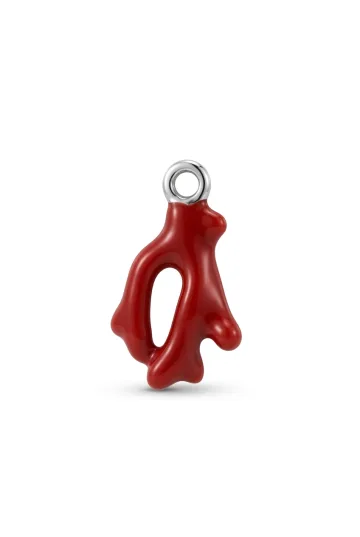


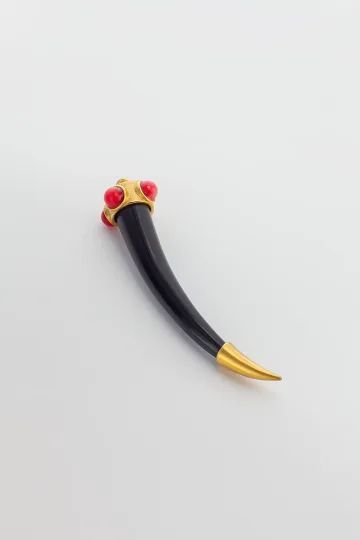



What red coral is: the biology of the material
Red coral is neither a mineral nor a crystal. It is Corallium rubrum, a colonial calcareous eight-rayed coral (Octocorallia) that lives in the Mediterranean Sea and the eastern Atlantic. A colony of thousands of tiny polyps builds a shared skeleton of calcium carbonate (calcite) with a trace of magnesium carbonate and a small amount of organic matter. The density of noble coral is around 2.6 to 2.7 g/cm3, with a Mohs hardness of 3 to 4, noticeably softer than quartz, ruby, or sapphire. That is why coral scratches easily and dreads a knock.
The red colour comes from carotenoid pigments, the same family that colours carrots and tomatoes. The shade depends on the concentration of pigment and on the conditions the polyp grew in. The living coral itself is covered in soft tissue; only the hard core is used, and that is what the branch is harvested for.
Each polyp catches plankton with its tentacles. Unlike tropical reef corals, Corallium rubrum does not depend on symbiotic algae and photosynthesis, which is why it can live in darkness at great depths. It grows slowly: the annual growth of a branch rarely exceeds a few millimetres, and large colonies form over decades and centuries.
Where it grows
Red coral occurs in the Mediterranean and along the Atlantic coast from Portugal down to Cape Verde, at depths of roughly 7 to 300 metres, and by some accounts deeper still. The most prized branches come from depths of about 100 to 300 metres: there the polyps build a dense skeleton with a saturated, even colour. The most famous fisheries have run for millennia off Sicily, Sardinia, and Naples; coral is also harvested off Spain, Tunisia, Algeria, Greece, and Croatia.
Italian coral, Sicilian above all, has historically been treated as the benchmark thanks to its dense, uniform red and consistent quality. Tunisian and Algerian coral is often lighter and pinker. This is not a strict hierarchy but a rule of thumb: colour and density matter more than a label naming a country.
Not one coral, but several species
In the trade, the term "noble coral" covers several different species of the genera Corallium and Pleurocorallium, and the species drives both colour and price. Mediterranean Corallium rubrum gives an even red and that famous oxblood, but its branches are thin, so a large, solid pendant cut from it is rare. Pacific species are harvested off Japan and Taiwan, and they carry their own trade names:
- Aka (Corallium japonicum), a dense dark-red Japanese coral, closest to the Mediterranean in saturation. It often has a white core down the centre of the branch, which carvers work around when cutting.
- Momo (Pleurocorallium elatius), larger branches ranging from salmon to orange-red, frequently with uneven colour. Momo is the one most often turned into large beads and carvings.
- Boke and "angel skin", a soft pink and pinkish-white coral (Pleurocorallium elatius/konojoi); the lightest, most even "angel skin" samples are prized separately and command high prices.
- Sciacca, a particular Sicilian coral from underwater beds off the town of Sciacca: the branches are already dead, having lain on the seabed, so the colour is muted, from brick to brown, and the material is softer than living coral.
The practical takeaway for a buyer: the same words "red coral" on a price tag may mean thin Mediterranean rubrum, large Pacific momo, or muted sciacca. The species affects the price far more than it seems, so for a serious purchase ask not simply whether it is coral, but exactly which kind.
Over the twentieth century, stocks of Mediterranean coral shrank sharply because of intensive harvesting. Today the catch is regulated through quotas, minimum branch sizes, and closed zones. The Corallium rubrum fishery is governed not by CITES but by national rules, EU regulations, and the GFCM (quotas, minimum sizes, seasons), and legal trade comes with documents of origin. That is precisely why high-grade coral has become noticeably more expensive and harder to find.
Oxblood coral belongs on a bare collarbone with a glass of red in hand, never buttoned under a turtleneck. Hiding it is a crime, don't argue.
What to wear red coral with
Coral has been through hundreds of looks with me, from an office shirt to evening silk, and here is what actually holds up.
What do I wear coral with day to day? For everyday I recommend a mid-red coral pendant in silver or white gold over a white shirt or beige knitwear. A calm, light backdrop hands all the attention to the colour, and one piece pulls the whole look together. I suggest an open or V-neck: the pendant sits on skin rather than fabric, and the red reads cleaner.
How do I build an evening look? Evening is oxblood territory. I go for a dark dress, black or wine-coloured silk, velvet, and a large pendant or earrings right by the face. Against a dark background coral looks deeper, almost like a smouldering ember. For the occasion I add a ring or a bracelet, but never everything at once.
Which metal does coral get on with? Both cool and warm. I recommend silver and white gold when I want the contrast to underline the warmth of the red; I reach for yellow gold when I want the classic pairing worn for centuries. The one rule: coral should be the only bright spot of colour, and I keep the rest neutral.
Can I layer coral with other chains? Carefully. Red coral is strongest as the single accent. Fine chains and small pearls nearby act as a neutral frame, and a stack of bracelets works only when the coral one stands alone. Five pendants around it kill it outright.
Who does coral actually suit? It flatters warm skin and dark hair obviously, but on fair skin it gives an even brighter contrast, so do not talk yourself out of it. This is jewellery for someone who does not mind attention. Two parting tips: if you are taller than average, choose a long chain to lengthen the silhouette, and remember that one expressive coral piece always beats three modest ones.

Turn on your camera, pick earrings, a pendant or a ring, and see the piece on yourself in real time.
Switch items in one tap.
Everything runs in your browser: no photo or video is ever uploaded.
The history of red coral
Ancient Egypt and Rome
Red coral is one of the oldest jewellery materials of all. It turns up in the burials of Ancient Egypt and Mesopotamia: coral was carried along the trade routes of the Mediterranean and valued for its bright, fade-resistant red.
In Rome, coral was a familiar amulet. Pliny the Elder, in his "Natural History" (first century), describes Mediterranean coral in detail: where it is harvested, how it is worked, and why Romans hung coral pendants on children. By his account, Indian traders prized coral no less than Romans prized pearls and gemstones from India. Part of what he wrote reflects the beliefs of his time: there is no evidence that coral "heals" or "protects in battle". But the fact remains that coral was a status material and a busy item of international trade.
The one rational kernel in these practices is this: coral is calcium carbonate. Ground to a powder, it was later used in folk medicine as a source of calcium, which explains why it was credited with "strengthening" properties. A piece of jewellery, of course, has no such medical effect.
The Middle Ages and the Renaissance
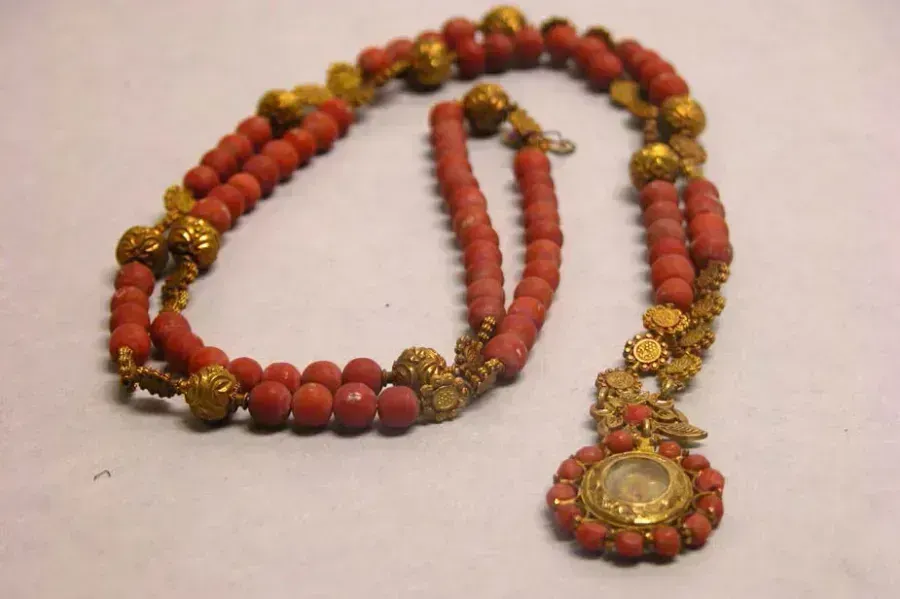
In Christian Europe, red coral was linked to the blood of Christ, so it was eagerly set into rosaries, pectoral crosses, and children's amulets. Coral was an expensive import, and ownership was largely confined to the nobility and the clergy.
In the Renaissance, coral passed into the hands of carvers. The workshops of Trapani in Sicily became famous for filigree coral carving and for pieces that combined coral with gold, enamel, and mother-of-pearl. Venetian and Neapolitan jewellers made sets for noble families. Those pieces are kept today in Italian museums and are regarded as the high point of the technique of their day.
The Victorian era
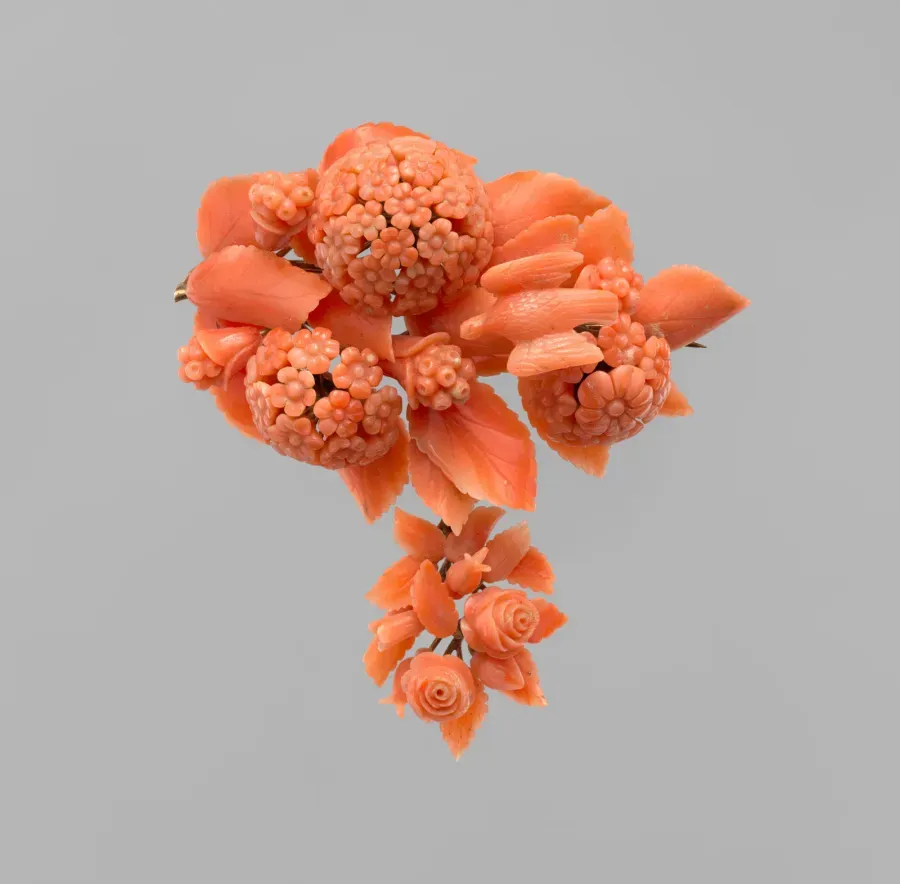
The nineteenth century was the golden age of coral in jewellery. Naples and Torre del Greco became the heart of the coral industry: thousands of craftsmen cut beads, cameos, brooches, and parures (matching sets in a single style). Coral swept into fashion across Europe; it was worn with day and evening dress, given at christenings, and passed down through families.
It was then that the tradition of giving a newborn a coral pendant as a protective charm took firm hold. Victorian coral sets with carving and gold mounts still surface on the antique market and in museum collections, like the brooch with pendant in the photograph above.
Red coral in India and Tibet
In India red coral, praval or moonga, occupies a place closer to a status object than to ornament. Vedic astrology ties it to the planet Mangal (Mars), and it is worn in a ring on the third finger of the right hand, set in gold or copper. For centuries the demand of the Indian market decided what was harvested in the Mediterranean at all: a substantial share of the best Neapolitan branches went to India, and that trade route held for hundreds of years.
In Tibet and the Himalaya red coral, turquoise and amber form a traditional set of status materials. Large coral beads go into women's headdresses and chest ornaments, pass down through families and serve as household capital. The darker and denser the branch, the higher its standing in that hierarchy, which is why old Tibetan coral of a deep tone is valued separately by collectors.
Red coral in Japan and the Pacific
The Pacific fishery rose later than the Mediterranean one, largely from the nineteenth century, when rich beds were found off Japan and Taiwan. Japanese workshops developed a carving school and a grading system of their own: aka, momo, boke. It was Japanese aka that became the dark red benchmark the western trade usually means by oxblood, though strictly speaking those are different species.
Today Pacific coral fills the niche the Mediterranean material physically cannot: large solid beads and carving at scale. Mediterranean rubrum gives colour and history, but the branches are slender; Pacific momo gives volume. Understanding that geography helps you avoid paying over the odds for a label, and avoid disappointment on receiving an honest material that simply comes from elsewhere.
Customer reviews
Zevira is a real jewellery shop. Genuine payments, deliveries and customer thank-yous.
🥰🥰🥰 gracias
Ok, ¡gracias! 🙂
How to read quality: colour, density, size
Colour
Red coral runs from pale pink to deep dark red. The trade recognises several loose levels:
- Light pink and "angel skin", a soft pink with a faint orange undertone. Delicate and calm, prized in its own niche, but within the "red" segment it counts as the gentle option.
- Mid-red (cherry, salmon), an expressive, even red. This is the workhorse of noble coral: vivid yet not impossibly rare.
- Dark red, "oxblood", a saturated, deep red that glows like a smouldering ember in the light. The rarest and most expensive shade, produced by dense branches from great depths.
The colour should be even, without a suspiciously uniform "plastic" fill and without streaks of dye pooling in the cracks. A slight natural unevenness is normal and a mark of authenticity.
Density and clarity
Dense coral polishes to a deep shine and holds it for years. Under a loupe you can see the fine structure of annual growth, concentric layers, and faint lengthwise grooves. Porous coral looks matt and loose, holds a polish poorly, and may dull over time.
Small natural inclusions, dots, and microcracks are normal and even welcome: they confirm that you are looking at an organic material rather than a casting. Absolutely "sterile" uniformity is precisely what should put you on guard.
Size
Price rises with size disproportionately fast. Small beads (4 to 6 mm) are common. Large even beads (10 to 12 mm and up) and solid pendants (from 20 to 25 mm) without cracks are rare, because they need a thick branch that grew over many decades. The larger and more uniform the piece, the higher it is valued.
Documents of origin
Because the Corallium rubrum fishery is regulated by quotas and national rules, legal coral comes with documents covering its origin and the legality of the catch. This is not a "stone authenticity certificate" but confirmation that the material was harvested and sold within the rules. Antique pieces (pre-regulation) follow separate rules and are usually backed by their age and provenance.
How a branch becomes a piece of jewellery
Understanding the working of coral explains what you are paying for. A coral branch is first cleaned of soft tissue and sorted by thickness and colour. From there, two paths open up. Cabochons, beads, and smooth plates are cut and ground down, with a great deal of material lost: to get an even round bead you grind away everything that lies outside the sphere inscribed in the branch, which is why a large uniform bead costs disproportionately more. Carving (cameos, flowers, figures) uses thicker pieces and pays not only for the material but for the hours of the master's work, hence the historic fame of the Trapani and Torre del Greco workshops.
Coral is polished by stages with finer and finer abrasives to a mirror shine without coatings or lacquers: quality dense coral shines on its own. If the gloss sits as a thin film and wears off on the edges, that is reason to suspect a lacquer or wax "enhancement" of the shine rather than a natural polish. Carved pieces with thin openwork need extra care in wear: it is along the thin bridges that carving most often cracks on impact.
Upload a photo of your pet, someone you love, or an object. We'll build a 3D model and hand-cast it in pewter.



Ethics and sustainability: what honest coral means
Red coral is a living organism that grows by millimetres a year, so the question of origin here is not a formality but part of what the piece is worth. Across the twentieth century uncontrolled harvesting thinned the Mediterranean colonies badly, and high-grade material is scarce today precisely because the catch had to be reined in. Buying coral with a clear story buys both a quiet conscience and the assurance that what you have really is the noble material rather than the scrapings of a stripped seabed.
There is one more reason to take this seriously. Corallium rubrum is assessed by the IUCN as Endangered, its populations having fallen sharply over the past decades, and colonies that survive in shallow water are largely young, thin growth rather than the century-old branches the old jewellery was cut from. That is the honest background against which any new Mediterranean coral should be considered, and it is why a good deal of the trade has shifted to Pacific species, to reclaimed material and to the antique market.
CITES and red coral
There is a great deal of confusion here, so the terms are worth separating. Tropical reef-building corals of the genus Acropora and their relatives are listed in the CITES appendices, and moving them across a border requires permits. Mediterranean Corallium rubrum is not currently in the CITES appendices: its fishery is governed not by the convention but by the national laws of the Mediterranean states, EU regulation and the decisions of the GFCM, the General Fisheries Commission for the Mediterranean. Proposals to list the precious corals have been raised more than once, but no decision to place the Mediterranean species on the protected list has been taken.
The practical conclusion for a buyer: a seller pointing to a "CITES certificate" for Mediterranean coral is more often revealing unfamiliarity with the subject than proving authenticity. The right paperwork is confirmation of a legal catch under the quotas and national rules of the country where it was taken.
For a British buyer there is a further wrinkle that came in after leaving the EU. Coral species that are listed, and worked items containing them, now need CITES documents to move between Britain and the EU, applied for through APHA, the Animal and Plant Health Agency, and cleared at a designated point of entry rather than at any port. Antique pieces can qualify for exemptions on age, but the exemption has to be evidenced rather than assumed. So if you are bringing a coral piece back from a holiday in Naples or buying at a continental auction, check first which species it is and what paperwork travels with it. For unlisted Corallium rubrum no CITES permit applies, but a legal-catch document and an invoice naming the species are still what a customs officer will want to see.
Quotas, sizes and seasons
Legal harvesting of Corallium rubrum sits inside a tight frame. A minimum working depth is set, and a minimum diameter at the base of the branch below which it may not be taken, so that young colonies have time to recover. Annual tonnage quotas apply, the number of licences is capped, and closed zones and closed seasons are in force. Hand collection by divers at limited depth counts as the gentler method; the destructive bottom dredges with which the last century scraped coral off the seabed along with the sediment are banned across most fishing areas.
How to buy with a clear conscience
The most sustainable coral is coral that already exists. Antique Victorian and Neapolitan pieces, old Tibetan and Indian coral, family jewellery on the secondary market create no new demand for harvesting and carry a history besides. From newly worked material, choose stock with transparent origin and legal-catch documents. Pressed chip and reconstituted coral, for all the arguments about how honestly they are named, put cutting waste to use and in that sense give a second life to what would otherwise be lost. Suspiciously cheap "natural" coral with no story at all, on the other hand, is the very thing that most often turns out to be either poached or a dyed imitation.



What coral meant in tradition
Coral is one of the most "protective" materials in history. Around the Mediterranean a red branch was hung on children and brides to ward off the evil eye; in the Christian tradition it was tied to protection and the blood of Christ; in Indian astrology (where coral is called praval) it was associated with Mars and the energy of action. This is part of the cultural history of the material, and wearing coral as a symbol of courage or family memory is perfectly fine.
It is worth keeping tradition apart from fact. There is no evidence that coral affects health, blood pressure, sleep, or "energy". The one thing red coral objectively does is draw the eye: a saturated red near the face brings a look to life. That is enough to love it without any mysticism.
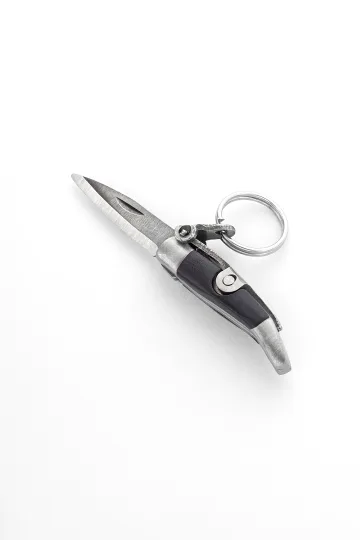
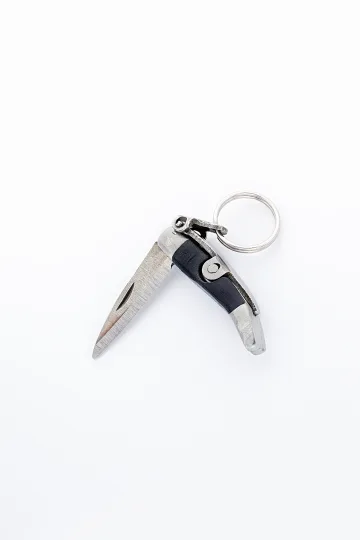
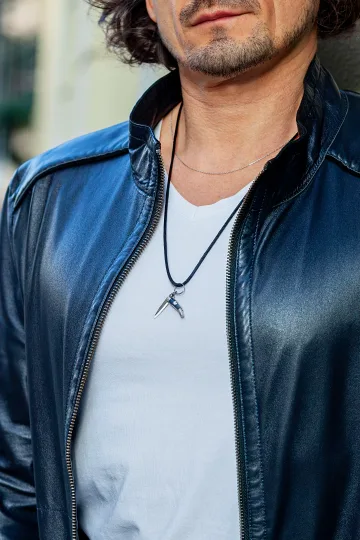
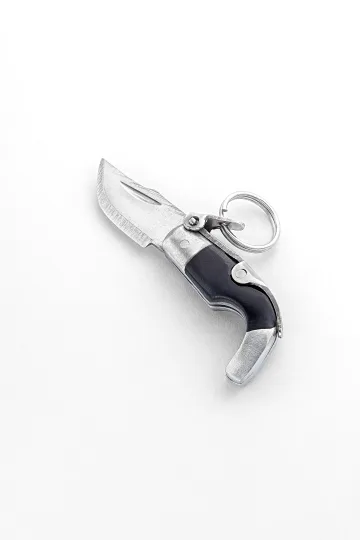
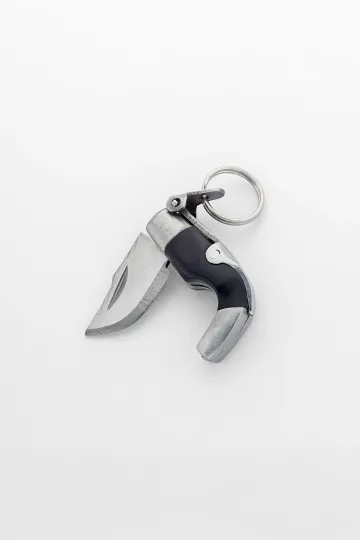
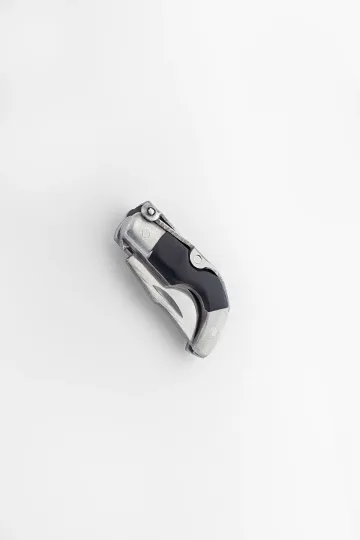
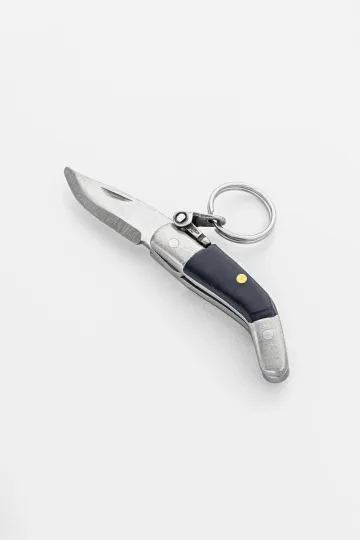
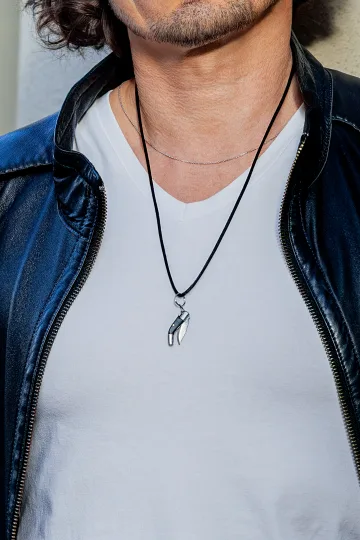
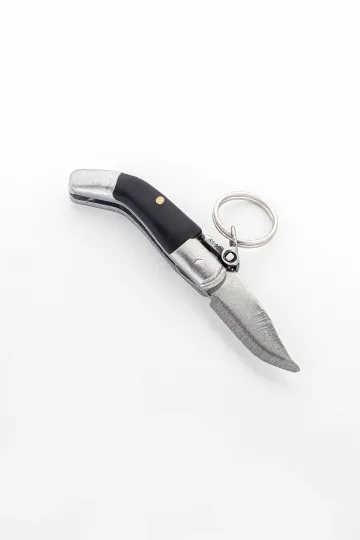
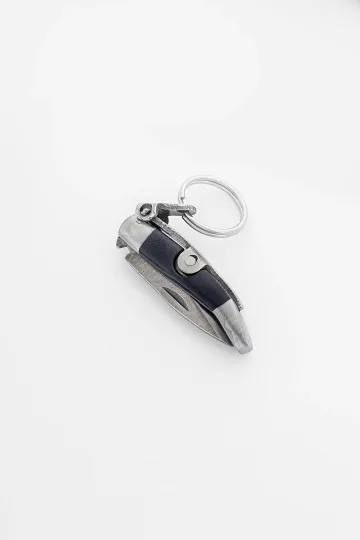
CAPAORA mini knife pendant
The 18th-century Spanish navaja in miniature: 40 mm of stainless steel, a real folding mechanism and a Palanquilla lock that clicks. An affordable gift to remember.
Authentic · Ships from Spain · 14-day returns
Red coral in painting and culture
Coral left its mark in art as much as in jewellery boxes, and those images say a good deal about how the material was seen. In the Renaissance masters a coral branch or a string of red beads appears again and again in paintings of the Christ Child: red coral read as an amulet and at the same time as a hint of the sacrifice and the blood to come. So painting fixed a double meaning on the material, protection and remembrance, which follows it still.
In genre and formal portraiture coral worked as a marker of means and of care for a child. A coral teething rattle with a silver handle and bells was a christening gift across much of Europe, Britain included, where such rattles were made by London and Birmingham silversmiths well into the nineteenth century, and these objects turn up in family portraits as a sign of a household doing well. In still life a red branch sat among shells and other exotica as a curiosity from distant seas, a collector's piece and an object of a naturalist's interest.
Carving is a chapter of its own. The workshops of Trapani and later Torre del Greco turned coral into cameos, garlands of flowers and miniature scenes, and the best of those pieces now sit in museum cases alongside work in stone and metal. A coral cameo is prized twice over: for the rare material, and because cutting relief into a brittle branch without chipping it is within the reach of very few hands.
The psychology of red: why the colour pulls so hard
The pull of red coral is in good part about the psychology of colour. Red is the most conspicuous signal the human eye has: it is bound up with blood, with fire, with ripe fruit, with the things that demanded instant attention across the whole history of the species. A piece in that tone near the face works as a focal point. A companion's gaze returns to it again and again, and the look reads as assured.
Coral red is softer than pure scarlet, though. It carries a warm orange undertone and a matte, unglassy texture, so it attracts without shouting. That is what sets coral apart from transparent red stones: a ruby or a garnet sparkles and argues with the light, while coral lies on the skin as a warm patch, closer to flesh than to jewellery brilliance. Perhaps that is why it was chosen for centuries as an everyday amulet rather than only as formal finery: it decorates without turning the wearer into a shop window.
There is also a side of the choice bound up with memory. Coral is often inherited: a grandmother's beads, a mother's brooch, a christening pendant. A warm red tone on such a piece gathers a personal history quickly, and people choose it not for carat weight but for the link between generations. In that respect coral stands nearer to pearl than to gemstones: it is valued not as an investment but as an object with a biography, pleasant to wear and no trouble to pass on.
Leave your email, we'll send your discount code. No spam, unsubscribe anytime.
The code arrives by email, valid on your first order.
Red coral jewellery
Pendants
The pendant is the most flattering format for coral. A single expressive stone or a carved plate in a restrained mount of sterling silver, white or yellow gold looks complete in itself. It hangs by the face, and the red lights up the skin. Classic cuts: oval, drop, cabochon; carved and sculptural elements are rarer and prized for the maker's work.
Earrings
Earrings work like a pendant: red by the face gives contrast and sharpens the features. Take a pair of stones or carved elements matched for colour. Because coral is soft, earrings are best kept for occasions rather than an active day.
Bracelets
A bracelet is usually strung from mid-sized beads on a thread with knots between them, so they do not rub against one another. The wrist is in constant motion, so a coral bracelet likes a calm rhythm of life: the office, meetings, evenings, rather than sport and a heavy bag slung over the arm.
Rings
A coral ring is a bold choice and at the same time the most vulnerable: hands knock against everything, and coral's hardness is low. If you want a ring, wear it carefully and take it off for any physical work.
How to tell real coral from a fake
Red coral is one of the most faked of all jewellery materials. The usual stand-ins are dyed bone, dyed howlite or magnesite, pressed coral powder, plastic, resin, and glass. A few checks that genuinely work:
- Structure under a loupe. Real coral shows fine lengthwise grooves and concentric growth layers. The surface of plastic and resin is "dead", sometimes with air bubbles; glass can have mould seams.
- The acid test (carefully). Calcium carbonate reacts with acid. A drop of lemon juice or vinegar on an inconspicuous spot will produce a faint fizz on genuine coral. Bone, plastic, and glass do not react. Do this only on a disputed, inexpensive piece and rinse it off at once, since acid harms coral.
- Dye in the cracks. On dyed imitations the pigment gathers in hollows and pores, and the colour is spread unevenly. A cotton bud with alcohol or acetone may leave a red trace on a dyed fake.
- Feel and temperature. Coral is cool to the touch and warms in the hand more slowly than plastic. Plastic is noticeably lighter and warmer.
- Too even a colour and too low a price. A perfectly uniform "tomato" red with not a single natural variation, plus a suspiciously affordable price, is an almost sure sign of an imitation or heavily dyed material.
For an expensive purchase it makes sense to ask for documents of origin and an opinion from an independent gemmologist: some imitations (pressed powder or dyed howlite, for example) can only be told apart reliably under a microscope and with instruments.
Treatment: what is done to coral honestly, and what is hidden
Imitation is one thing; the treatment of genuine coral is another: a piece can be authentic yet processed in a way the buyer is never told about. What you may come across:
- Dyeing. Pale or whitish coral is tinted to pass it off as a saturated red. This is exactly the dye that gathers in pores and cracks; a cotton bud with alcohol lifts the pigment. Under the rules, the colour of such coral should be disclosed by the seller as induced.
- Wax and resin impregnation. Porous pieces are soaked with wax or colourless resin to hide micropores and lift the shine. Under a loupe the impregnation sometimes gives itself away with a greasy gloss, and the shine holds only until the first warming.
- Reconstructed (pressed) coral. This is coral powder and dust glued with resin and pressed together. The material is technically coral, but it is not a solid stone; it is valued below beads and is often sold as natural. Under a loupe you see a uniform mass with no growth layers and sometimes grains in the binder.
- Stabilisation. Weak, loose coral is reinforced with polymer. This improves wearability, but such a piece no longer counts as naturally dense coral.
Treatment in itself is not deceit; the deceit lies in keeping quiet about it. So with "top-grade noble coral" it is reasonable to put a direct question to the seller: is the colour natural or induced, is there any impregnation, is this a solid branch or pressed powder.
Caring for red coral
Coral is soft and afraid of acids, so it needs gentler care than minerals.
What to avoid:
- Acids. Coral is calcium carbonate, and acid eats into it. Sweat, vinegar, lemon juice, acidic creams, and acid peels all damage the surface.
- Cosmetics and perfume. Perfume, hairspray, deodorant, and sunscreen spoil the shine over time. The rule is simple: jewellery goes on last, after make-up and scent.
- Knocks and scratches. With a hardness of 3 to 4, coral scratches easily against other jewellery and cracks if dropped on something hard.
- Long sun and dry heat. Direct sunlight and overly dry air can dull the colour over time. Do not keep coral on a sunny windowsill or by a radiator.
How to clean:
- Wipe with a soft cloth (cotton, microfibre).
- If needed, a little lukewarm water, with a drop of mild soap if you wish.
- Blot it and let it dry at room temperature.
- No stiff brushes, no ultrasonic or steam cleaning, which destroy coral.
How to store: apart from other jewellery, in a soft pouch or compartment, in a cool place out of direct sun. That way coral easily outlives more than one generation, as Victorian pieces prove.
Send a friend a discount code, they save on their first order.
Comparison with other red materials
Coral and ruby
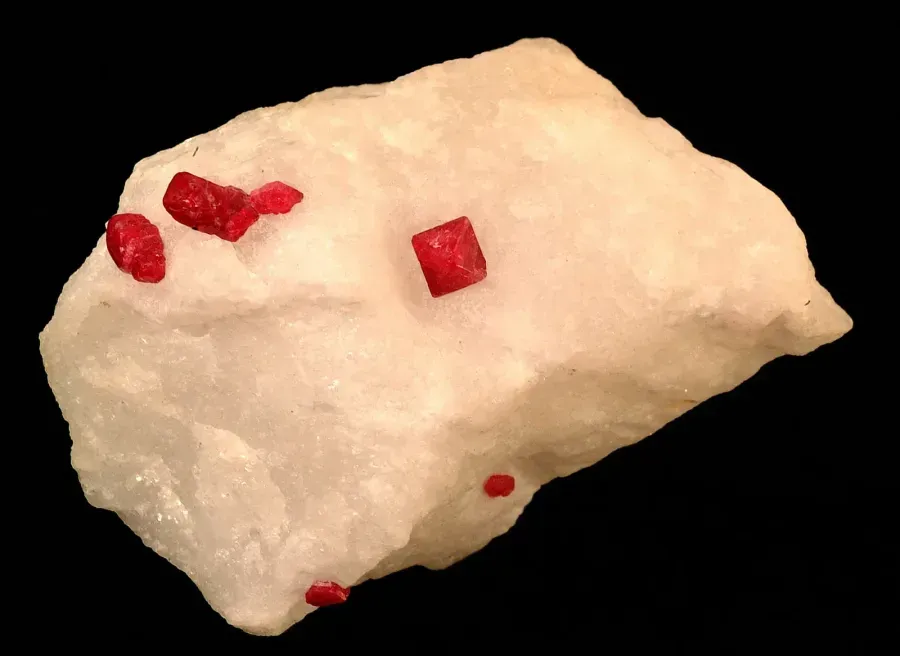
Ruby is corundum (aluminium oxide), one of the hardest of gemstones (9 on Mohs), it crystallises in rock over millions of years, it is transparent, and it exists in synthetic form. Coral is organic, opaque, soft (3 to 4 on Mohs), and you cannot grow it in a laboratory the way you grow a ruby. These are different materials for different tasks: ruby is a hard stone for everyday rings, while coral is a warm, opaque red with a history that asks for careful handling. There is a separate piece on how one red stone was confused with another for centuries, about red spinel. We work through the same logic of "colour and origin decide everything" with the example of sapphire as a luxury stone.
Coral and pearl
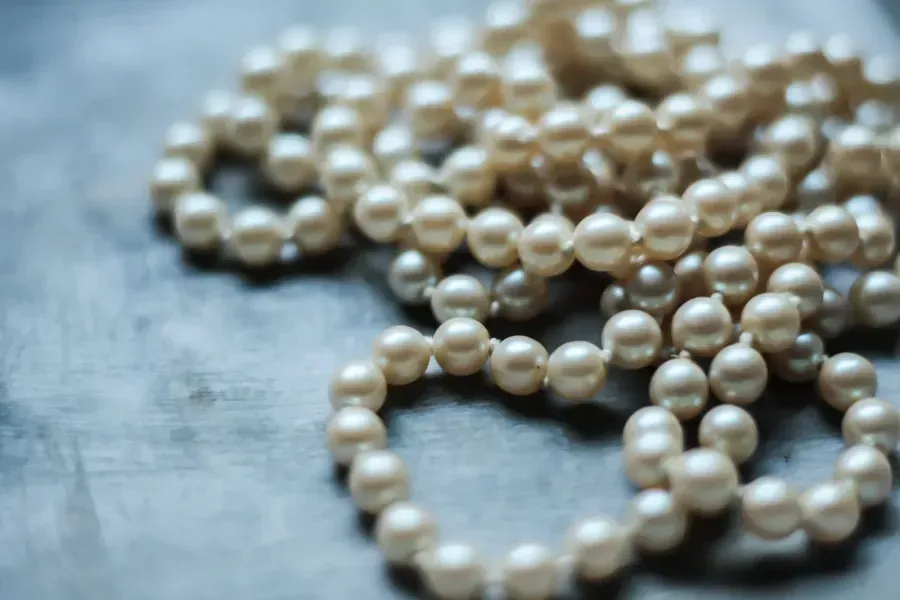
Both pearl and coral are organic and come from the sea, both are soft, and both fear acids and cosmetics. Pearl is nacre, which a mollusc builds up; coral is the skeleton of a colony of polyps. Pearl is sensitive to dryness and can lose its lustre over time; coral, with its denser structure, holds a polish longer. In spirit they are close and look well together: a warm red beside a cool pearly shine.
Facts that take people by surprise
Red coral gathers stories about itself as readily as any gemstone, and some of them upset the usual assumptions about what a "stone" is.
- It is not a stone at all. Coral cannot be called a mineral: a red branch is the skeleton of a colony of animals, relatives of sea anemones and jellyfish. Gemmology files it under organics, alongside pearl, amber and jet, rather than with ruby and sapphire.
- Its colour comes from the same pigments as a carrot. The red tone is produced by carotenoids, kin to those that colour carrots, tomatoes and prawns. Calcium carbonate on its own is colourless.
- The ancients argued over whether it was a plant or an animal. Classical authors treated coral as a puzzling creature, soft in the water and hardening in the air. Science only settled its animal nature in the eighteenth century.
- A whole town still lives by coral. Torre del Greco near Naples made coral working its trade back in the nineteenth century and remains the world capital of coral carving, with its own schools of craftsmen and a museum.
- There is a "dead" coral with a name of its own. Sciacca is a Sicilian coral taken from underwater beds of long-dead branches lying on the bottom. It is a muted brick tone and softer than living coral, and it has a following precisely for that quiet colour.
- The palest grade is called angel skin. Delicate pink angel skin is valued on a par with deep red, though by the logic of "the redder the dearer" it ought to cost less. The rarity of an even pale pink tone turns the hierarchy upside down.
- India dictated what Italy harvested. For centuries the demand of the Indian market decided which branches went into work off Naples: the best coral sailed east, and the trade route outlasted a good many empires.
- A large bead means a mountain of waste. To turn an even sphere out of a branch, everything outside the inscribed sphere is ground away, so a large uniform bead costs disproportionately more: most of an expensive material goes to dust.
Buying it as a gift? Each one arrives ready to give.
 A branded Zevira box and a little card come with every order.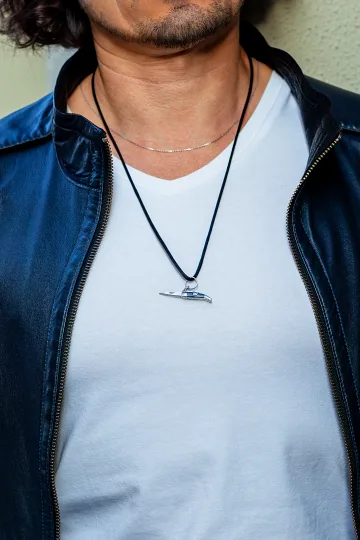






Frequent questions about red coral
How does noble red coral differ from ordinary coral? By quality, not by a separate "grade of nature". Noble is the name for dense coral with an even, saturated colour (from mid-red to oxblood), free of visible pores and cracks, that polishes well and holds its shine. Ordinary coral can be pale, porous, cracked, and often dyed.
Why is red coral expensive? It is rare and slow-growing: the annual growth of a branch is measured in millimetres, and large colonies form over decades. Stocks of Mediterranean coral are heavily depleted, the catch is limited by quotas and national rules, and you cannot synthesise coral the way you do a ruby. Less supply against steady demand means a higher price.
Can coral be grown or synthesised? There is no laboratory synthesis as there is for ruby. There are imitations of plastic, resin, glass, dyed bone, and pressed coral powder, but these are not coral and have none of its value. There are mariculture farms where coral is grown in the sea, but it is still a slow process.
How do you tell real coral from a fake? Under a loupe look for growth structure (grooves, layers); check whether dye gathers in the cracks; real coral is cool, heavier, and denser than plastic. Calcium carbonate fizzes under a drop of acid, while imitations of bone, plastic, and glass do not. For expensive pieces, get a gemmologist's opinion.
Which coral is considered the most valuable? Dense dark-red (oxblood), large in size, even in colour, free of visible cracks, with confirmed origin. Carving by a known workshop and provenance add value.
Can coral be worn every day? A mid-sized coral pendant or earrings, yes, if you protect them from cosmetics, water, and knocks. A bracelet, and especially a ring, wears out faster: better kept for quiet days and occasions.
Can coral be worn in water, in a pool or the sea? No. Chlorine, salt, and the water itself harm coral; it can dull and grow brittle. If coral does get wet, wipe it with a soft cloth and let it dry at room temperature, without a hairdryer or a radiator.
Can coral be combined with other stones? Yes: with pearl (a warm vintage look), with diamonds and white gold (the classic), with silver (minimalism). The main thing is that coral should be the only bright coloured accent, otherwise the look becomes overloaded.
Can you bring back the shine of dulled coral? Light dulling can be lifted by gentle polishing at a jeweller who works with organic materials (not with mineral abrasives). But if the coral has faded or been damaged by acid, the colour cannot be fully restored.
What does coral mean in jewellery? Historically it is an amulet: it was given to children and brides, tied to protection and the blood of Christ in the Christian tradition. Today it is above all a warm red material with a thousand-year history; it is worn as a symbol of courage, family memory, or simply for the bright colour by the face.
Wear the symbol, don't just read about it. These are in stock:


About Zevira
Zevira makes jewellery that carries a story. Red coral is one of the oldest jewellery materials of all: from Ancient Egypt and Rome to the Neapolitan workshops of the nineteenth century, it has gone with people as an amulet and a sign of taste.
We choose coral by what truly matters: an even, saturated colour, density, the absence of visible cracks, and honest origin. Fakes and dyed imitations never make it into the catalogue. Mounts of sterling silver, white and yellow gold, in restrained forms that hand all the attention to the coral itself.
Pendants, earrings, and bracelets with red coral in sterling silver and gold, with a note on origin and a guarantee of authenticity.