Coral in Jewelry: History of a Sea Stone and Modern Jewelry
Three thousand years ago, ancient Roman sailors didn't just believe that coral saved lives in storms. They placed branches of red coral in port pockets as insurance. Centuries later, Queen Victoria of England wrote in her diary about the beauty of coral bracelets, which were given to celebrate the birth of children. And in the 19th century, European jewellers paid enormous sums for the right to trade in red coral from the Mediterranean Sea. This is not glass and not plastic. It is a living organism that grows in the ocean depths and transforms into jewellery that you can wear for a lifetime.
Coral in jewellery is a rare case where beauty, history, and ethics intertwine into one material. But wearing coral correctly, with an understanding of its uniqueness and fragility, requires learning.
History of Coral in Jewellery: From Amulet to Precious Stone
Origin: What Grows on the Ocean Floor
Coral is not a stone in the classical sense. It is the skeleton of a colonial polyp, a sea organism that lives in the ocean and secretes calcium carbonate, creating a hard structure. The colour of coral depends on the pigments in the polyp's body: red comes from carotene, black from melanin, white from absence of pigmentation, and pink from a mixture of red and white shades.
The difference between coral and stone is that coral is an organic material, like pearl or amber. It doesn't grow for millions of years, but rather for several hundred years for a single colony. The main sources of commercial coral are the Mediterranean Sea, the Red Sea, the Sea of Japan, and the ocean around Europe.
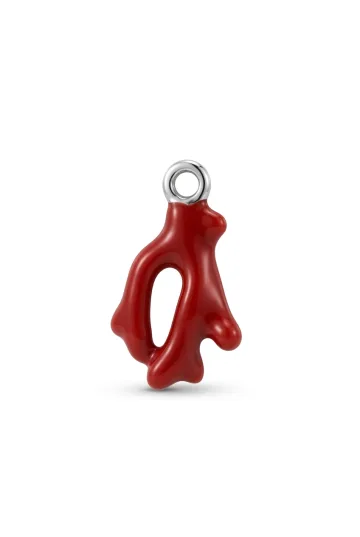
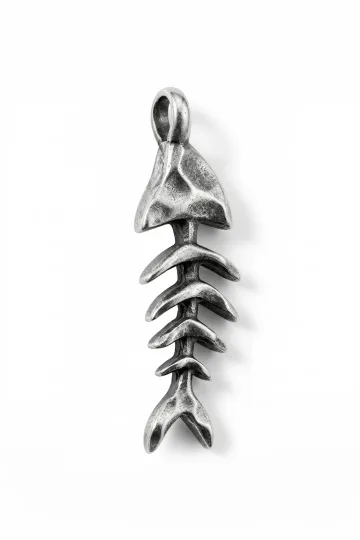
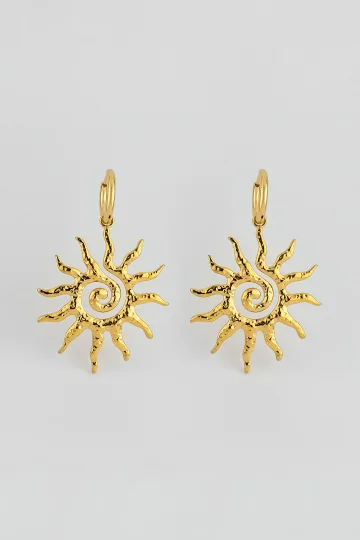
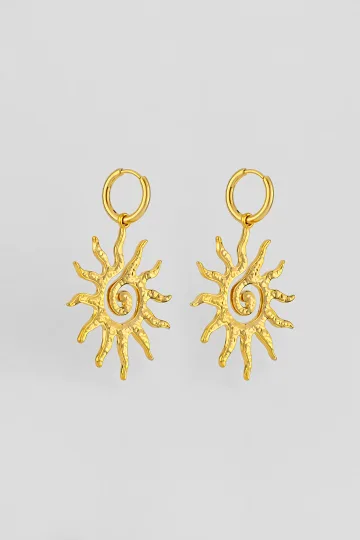
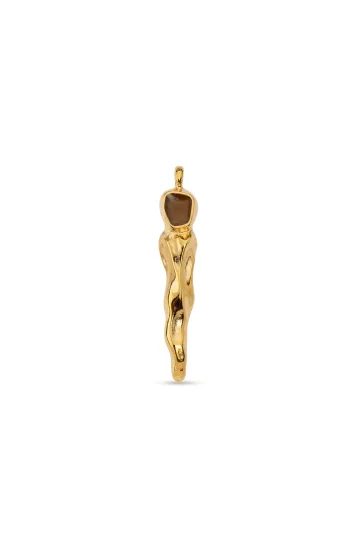
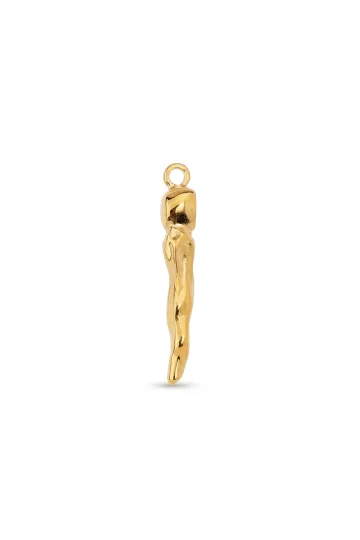
Wear the symbol, don't just read about it. These are in stock:

From Ancient Civilisations to the Victorian Era
Ancient Egyptians valued coral more than gold by weight. In clinics in Dresden and Rome, coral amulets were recommended to pregnant women as protection against miscarriage. This tradition lived for two thousand years and reached the 19th century virtually unchanged.
In the Roman army, coral medals were worn exclusively by high-ranking officers, a symbol of power and military skill. Pliny the Elder in his "Natural History" wrote that coral hardens in air and becomes stronger from pain, which of course is not true, but reflects respect for the material.
The Victorian era brought a flourishing of coral jewellery. Red Mediterranean coral was used in expensive jewellery for wealthy women. Bracelets, brooches, earrings: coral was woven into sets with gold and silver. Queen Victoria, after Prince Albert's death, wore mourning jewellery made of black coral, giving it the status of a symbol of eternal fidelity and memory.
20th Century: Mining, Fashion, First Environmental Questions
In the early 20th century, demand for coral reached its peak. Mining was conducted without restrictions. Divers literally tore pieces of reefs by hand. Shell collectors from Italy and Spain developed deposits in the Mediterranean Sea, working at depths where it was non-trivial to even survive.
By the mid-century, art deco jewellery with coral and mother of pearl became fashionable. Black coral, rare and expensive, was considered a symbol of sophistication. White coral was worn as an alternative to pearl, pink coral was an intermediate option.
After the 1970s, ecologists began raising questions: reefs are being destroyed. Coral reef ecosystems are homes to a quarter of all marine fish, even though the reefs themselves occupy less than 1% of the sea floor. Mining has since become controlled, and in some countries it is completely prohibited.
Where Coral Comes From: Sardinia, Naples, Japan and Hawaii
Geography decides both the colour and the reputation of the material. An experienced eye can often place a bead by tone and texture alone, because every fishing ground produced its own shades and its own school of carving.
The Mediterranean Bank: Sardinia, Sicily and the Red Branch
Corallium rubrum, the noble red coral of the Mediterranean, has been the benchmark for two thousand years. It grows on rocky overhangs and in submarine caves from roughly forty metres down to several hundred, off Sardinia, Sicily, Corsica, the Spanish and Tunisian coasts. The Sardinian material is prized for being dense and evenly toned, a warm wine red that takes a waxy polish and holds it. Alghero on the north-west Sardinian coast is still called the Coral Riviera, and the branch appears on the town's coat of arms.
The trade around this one small animal shaped whole coastal economies. Fleets from Naples, Livorno, Marseille and Barcelona worked the same banks for centuries, and disputes over fishing rights ran through Mediterranean politics the way fisheries disputes run through the North Sea today. What you hold in a Victorian brooch is the end product of that long, quarrelsome industry.
Torre del Greco: The Town That Carved Europe's Coral
A small town under Vesuvius, Torre del Greco, became the beating heart of the European coral trade and has never quite let go of it. Local boats worked the banks with the ingegno, a heavy wooden cross dragged along the seabed with nets attached, a crude tool that broke far more coral than it recovered. From the early nineteenth century onward, family workshops in the town turned the raw branches into cameos, flower brooches, graduated bead strands and complete parures.
Neapolitan carving became famous across Europe for its sheer nerve. Carvers cut rose petals and grape clusters so thin they seemed impossible to lift, and courts across the continent bought them. The same tradition produced the cornicello, the little red horn worn against the evil eye, which is still made in coral and still sold on every street in Naples. The town keeps a coral museum with the old tools and the best of the carving, and it remains the place where a serious coral bead is most likely to have been worked.
India, Tibet and the Far East
Outside Europe, coral led an entirely separate life. In Indian tradition red coral, praval, belongs to Mars and is worn set in a ring as the stone of action and courage, a practice tied to jyotish astrology rather than to fashion. Mediterranean branches travelled east through Arab merchants for centuries to feed that demand, which is why so much of the coral in South Asian jewellery originally grew off Italy.
In Tibet and across the Himalaya, red coral paired with turquoise became the backbone of formal dress. It was sewn onto women's headdresses, set into gau amulet boxes and strung into heavy necklaces, and the red and blue together read as fire and sky. In imperial China coral was a court material: a red coral bead on an official's hat marked a senior rank in the civil hierarchy, and carved coral trees and figures were given as wishes for long life. The Far Eastern preference for the palest pink, the shade the trade calls angel skin, has never faded.
Pacific Waters: Momo, Angel Skin and Hawaiian Black
Japanese and Taiwanese waters yield Corallium japonicum and its relatives, including the pink and white momo and the pale, almost translucent angel skin that commands the highest prices in Asian markets. These beds were worked seriously only from the nineteenth century, and Japanese carving developed its own repertoire of figures and netsuke-scale work.
Hawaii and the seamounts of the central Pacific are the domain of black and gold coral, growing at depths where light never reaches. Black coral is the state gem of Hawaii, and the beds there were fished commercially from the 1950s under a permit system that has tightened steadily since. Coral from these grounds is legally quite different from Mediterranean material, and the paperwork attached to it differs accordingly.
Red coral wants sun-warmed skin and an open collar. Under a grey office suit it sulks, so don't you dare.
How to Wear Coral
Over years on shoots red coral has passed through dozens of looks for me. Here is what actually works, sorted by occasion.
How do I wear coral every day? For daytime I recommend pink or red coral over a plain top: a white shirt, beige knit, sandy linen. The calm fabric does not fight the stone, while an open top button or a V-neck leads the eye to the centre. One restrained piece reads as taste, not as a loud statement.
How do I build an evening look? For the evening I suggest red coral against black: the dark fabric mutes everything extra and leaves only the warm glow of the stone. I add either drop earrings or one expressive pendant, but never both at once. One accent, the rest in support.
Gold or silver with coral? I choose yellow gold for red and pink coral and for warm, golden skin: that is how the Mediterranean classic works. I recommend silver and platinum for black and white coral, since they give contrast and a modern edge. If you wear several pieces, keep to one metal so the look stays pulled together.
What length should I pick for my neckline? I fit the length to the neckline, not the other way round. For an open neck I suggest a short necklace at the collarbone; for a high, closed top, a longer strand down to the solar plexus. The coral needs to sit in the open zone, otherwise it hides in the fabric.
Who does coral suit, and where should I start? Coral suits a warm colouring and anyone who wants a bit of character and history in an outfit. If you are unsure about the shade, start with pink: it is softer, more versatile and forgives pairing mistakes. And remember it is fragile: put coral on last before you leave and take it off first when you are home.

Turn on your camera, pick earrings, a pendant or a ring, and see the piece on yourself in real time.
Switch items in one tap.
Everything runs in your browser: no photo or video is ever uploaded.
Types of Coral: Colours and Their Origins
Red Coral: Energy and Strength
Red coral is the classic. This is what you'll see in museums and at auction houses. The most valuable red coral is mined in the Mediterranean Sea, off the coasts of Italy, Spain, and Tunisia. The shade depends on the depth at which the polyp grows: at 200 metres the red is more saturated, closer to blood-red, at 400 metres there are pinkish streaks.
Red coral lightens with age. A red coral piece that you wear for 20 years will be lighter than it was at first. This is not a defect, but a natural change that speaks to the age of the piece.
The price of red coral is high, so it is often combined with silver or gold plating in jewellery. A bracelet made entirely of red coral is an extraordinary piece, usually custom work or an antique.
Black Coral: Symbol of Protection and Mystery
Black coral grows deeper than all others, at 600-900 metres. There is very little of it, and harvesting is technically difficult. It is a species protected under international law: black coral (Antipatharia) is listed in CITES Appendix II, and in the EU, UK, and US its trade is tightly restricted or, in many cases, prohibited. For this reason it is rarely seen in contemporary jewellery, and any item must come with full legal documentation appropriate to the country of sale.
Black coral was never considered a funeral stone in European tradition, contrary to myth. It was used in ancient Egyptian amulets as protection from evil and black magic. Victorian mourning is different: it is red coral in a black setting, not black coral itself.
Because of these legal protections, black coral is best understood today as a historical and cultural material rather than something to buy casually. If you ever encounter a vintage or licensed piece, the rules around it differ from country to country, and selling or importing it may simply not be allowed.
Pink Coral: Balance of Energies
Pink coral is a transition option between red and white. It grows at medium depths in the Mediterranean Sea and the Red Sea. In jewellery tradition, pink coral is often called "peachy" or "angelic" because of its delicate shade.
Pink coral has softer energy than red, but is more active than white. A piece of pink coral jewellery is suitable for everyday wear because it is in the middle ground for both fragility and vibrancy.
Pink coral requires less care than red coral and costs less, making it more accessible for a first coral piece.
White Coral: Purity and Calm
White coral grows at great depths where there is almost no pigmentation. It is also called "ice coral" because of its cold, almost transparent shade. In jewellery, white coral is often combined with a black setting to create contrast.
White coral has softer energy. It is worn by those seeking calm, protection from excessive emotionality, and balance in life. In ancient times, white coral was not distinguished from red, but in modern jewellery it is a separate category.
White coral is also rare, but cheaper than black, because mining is more accessible.
Customer reviews
Zevira is a real jewellery shop. Genuine payments, deliveries and customer thank-yous.
🥰🥰🥰 gracias
Ok, ¡gracias! 🙂
Ecology of Coral Reefs: Why It Matters When You Wear Jewellery
Reefs as an Ecosystem: Numbers and Facts
Coral reefs occupy less than 0.1% of the sea floor, but house a quarter of all fish species on Earth. One cubic metre of reef is a city for hundreds of species. If a reef dies, an entire ecosystem disappears.
Over the past 30 years, reefs have been dying at an alarming rate. The causes include warming water (corals are sensitive to temperature and begin to "bleach", losing pigments and dying), ocean acidification, overfishing, pollution, and physical damage from mining.
By many scientific estimates, a large share of the world's coral reefs has been lost or severely degraded in recent decades, and in some regions of the tropical Pacific the losses are described as especially heavy. This is not metaphorical. It is a real loss of an ecosystem.
Ethical Mining: What It Means in Practice
Wherever coral is fished, whether that is the Mediterranean banks, Japanese waters or the Pacific seamounts, the material that crosses a border falls under the international CITES agreement (Convention on International Trade in Endangered Species of Wild Fauna and Flora). Trade is monitored, quotas are set nationally, and a legitimate piece can be traced back to a document of origin.
Ethical mining means:
- Harvest limits: only a certain percentage of the population per year is collected
- Mining depth is controlled, so surface reef layers are not destroyed
- Seasonality: mining is prohibited during polyp breeding season
- Alternative methods: some countries have switched to farms where coral is grown in shallow pools
In Europe and Israel, coral farms are developing actively. Farm coral grows for 5-7 years before it can be cut for jewellery. This is not as fast as plastic, and not as long as wild coral, but it is a compromise between beauty and responsibility.
Choosing Jewellery: How Not to Be a Predator of the Sea Floor
If you buy coral jewellery from a marketplace, pay attention to the origin. A good seller indicates:
- Country of origin of the coral
- Type of coral (red, pink, white)
- Depth of mining
- Appropriate legal documentation, including a CITES certificate where required
A CITES certificate is not a guarantee that trade is unproblematic. Import, sale, and ownership rules differ widely between countries, and some forms of coral may be banned outright in your jurisdiction regardless of paperwork. Check the local regulations before you buy.
If the origin is unknown, that is a red flag. It may be a copy or even plastic masquerading as coral.
Farm coral is cheaper than wild coral, but that doesn't mean it's worse. Visually they are indistinguishable. Farm coral is the choice of a person who wants beauty without guilt.
Upload a photo of your pet, someone you love, or an object. We'll build a 3D model and hand-cast it in pewter.



Conservation Status and CITES: What the Rules Actually Say
Coral is the one jewellery material where the legal position is part of the buying decision rather than a footnote. It is worth understanding the framework properly, because a lot of what gets repeated in shops is either out of date or simply invented.
CITES in Plain English, and What It Covers
CITES is an international convention regulating trade in wild species across borders, signed by well over 180 countries including the UK, which now runs its own permit system through the Animal and Plant Health Agency since leaving the EU regime. Species are listed in three appendices. Appendix I is a near-total commercial ban. Appendix II, where the precious corals sit, allows regulated trade with export permits and national quotas.
For coral this matters in a specific way. All black corals (Antipatharia) and all stony reef-building corals have been on Appendix II since 1985 and 1990 respectively. The red and pink Corallium species, the ones that make classic Mediterranean jewellery, have been proposed for listing several times and repeatedly voted down, so at the time of writing most of them are not CITES-listed at the international level. They are instead governed by regional rules: in the Mediterranean the General Fisheries Commission for the Mediterranean sets minimum branch diameters, licensed diver limits, depth restrictions and closed areas, and EU member states apply their own harvest quotas on top.
The practical upshot for a buyer in Britain: a black coral piece needs paperwork and may be refused entry outright, while a red Mediterranean piece usually does not need a CITES permit but should still come with a clear statement of where it was fished and by whom. Antique pieces worked before the relevant listing dates generally travel under separate antique provisions, but the burden of proving the age falls on the owner. If you are bringing coral back from holiday, check the current UK guidance before you buy rather than at the airport.
Why Red Mediterranean Coral Is a Contentious Buy Today
Red Corallium rubrum is legal to buy, and it is still the most contested purchase in this whole category. The reason is not the law but the biology. The species adds a fraction of a millimetre to a millimetre a year and does not reproduce until it is around ten years old, which means a colony worth harvesting has been growing for decades. Centuries of fishing have removed the large old colonies almost everywhere in the shallow Mediterranean, and what remains in accessible water is mostly small, young and thin. Populations have been assessed as depleted across much of the basin, and the IUCN has red-listed Corallium rubrum as endangered, with the note that the shallow stocks have declined severely.
Divers responded by going deeper, which is where the human cost enters. The remaining dense colonies sit at depths that push far past safe recreational limits, and the coral fishery has a grim record of decompression injury and death. Some fisheries have moved to remotely operated vehicles, which is safer for people but does not slow the removal of coral.
None of this makes red coral forbidden. It makes it a purchase that deserves a straight question and a straight answer. Ask where the branch was fished, under what national licence, and whether the seller can show the chain back to a permitted vessel. Ask whether the piece is antique, because a Victorian brooch removes no living coral from the sea at all and is by some distance the least contentious way to own the material. And be sceptical of very large, very even, very cheap red beads, since that combination is far more likely to mean dyed bamboo coral than a lucky find.
Reef-Building Coral Is Not the Same as Precious Coral
This is the confusion that derails most conversations about coral jewellery. The vast warm-water reefs that bleach in the news are built by scleractinian corals, which host symbiotic algae, need sunlight and are structurally too porous and chalky to carve. They are almost never used in jewellery, and buying a coral necklace does not put a scratch on the Great Barrier Reef.
Precious coral is a different order of animal entirely. Red, pink and black corals are deep-water species that live below the sunlit zone, feed on plankton rather than farming algae, build no reef and form dense, carvable skeletons. They do not bleach, because they have nothing to bleach. What harms them is fishing pressure and physical damage from dragged gear, not sea temperature.
The distinction cuts both ways. It means the guilt many buyers feel about bleaching is misdirected. It also means precious coral has its own serious problem, one that is entirely about how much is taken and how fast it grows back, and that problem is not solved by anything happening on the tropical reefs. Aquaculture is beginning to help: transplanting fragments onto artificial substrates and growing them on protected banks is now routine in several Mediterranean and Israeli projects, and farmed material is visually indistinguishable from wild.



Energy of Coral by Colour: History and Modern Understanding
Red Coral: Activation and Protection
In Ayurveda, red coral (praval) is associated with the planet Mars and the energy of action. It is given to pregnant women as protection, but not from spirits. As a source of iron and calcium, it had real value, and people understood its beneficial properties long ago.
In the European magical tradition, red coral is protection from storms, accidents, and curses. Soldiers wore red coral in battle as an amulet. This is not superstition, it is a psychological anchor. When you know you've put on protection, you're in a more confident state, and this works.
Modern approach: red coral is worn by people who need to activate their energy. It is not a healing stone in the medical sense, it is a stone that helps you be in a more awakened, active state.
Black Coral: Protection from Excess
Silver, gold, engagement rings, symbolic jewellery, paired sets.
Black coral appears rarely in ancient texts because it is rare. But when mentioned, it is always in the context of protection from black magic, from envy, from the "evil eye."
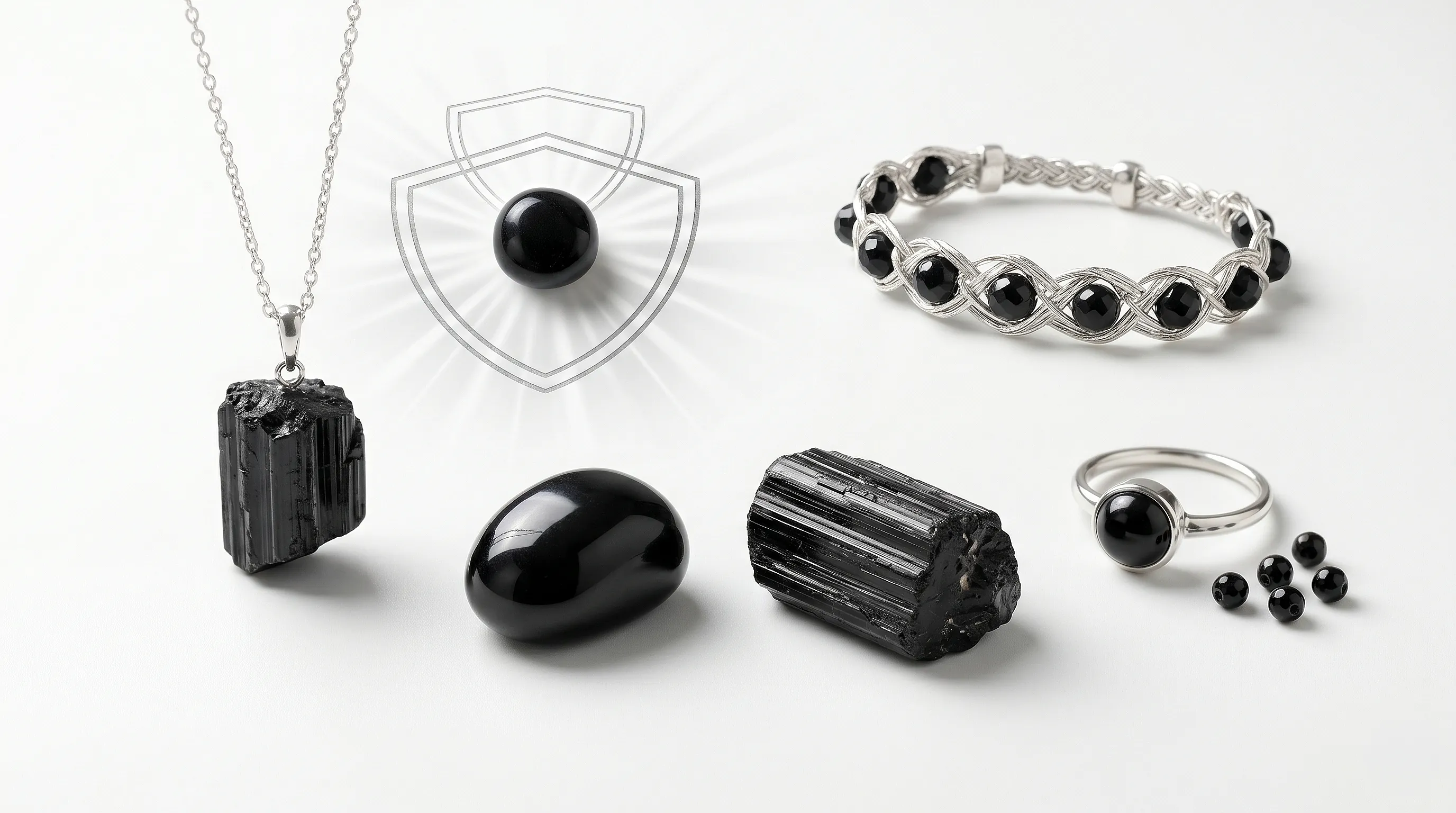
Black coral in jewellery is the choice of a person who wants to separate from bustle, create an energetic shield, not be visible to other people's problems. Psychologically this works: a person wearing black coral can feel more protected and independent.
Men sometimes choose black coral for its masculinity. Black coral is jewellery that doesn't shout about strength, but is silent about it.
Pink Coral: Heart Balance
Pink coral is the balance between the activity of red and the calmness of white. In crystal therapy (a paramedical approach), pink coral is associated with the heart chakra, with the ability to love and be loved.
A pink coral bracelet is often given to young women as a symbol of entering a new phase of life, when you need a balance between activity and softness.
White Coral: Calm and Enlightenment
White coral in Eastern traditions is associated with the moon, calm, with feminine energy in its contemplative aspect. This is not passivity, but the ability to be at peace and observe.
People going through a stressful period often choose white coral. White coral jewellery is an anchor to calm when everything inside is boiling.
Coral in Jewellery: From Beads to Pendants
Coral Beads: A Classic That Never Gets Old
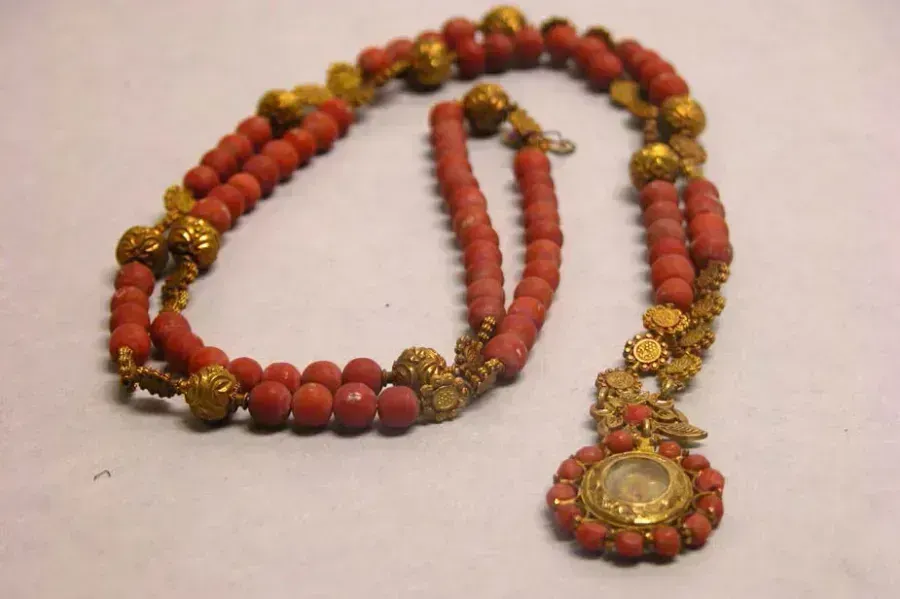
Coral beads are jewellery that was fashionable 200 years ago and remained fashionable now. Red beads with a gold fibula (clasp) hung on the necks of kings and peasants alike. This jewellery was universal.
Modern coral beads are usually a string of red or pink coral beads threaded on golden silk or monofilament, with a clasp of silver or gold plating. The stringing follows the same logic as any natural gemstone bead necklace, where the thread, the knots, and the matching of the beads matter as much as the material itself. Length varies from 40 (short necklace, to the collarbone) to 70 centimeters (long, to the solar plexus).
The problem with coral beads: they're fragile. Beads can crack if the string breaks and they fall. That's why coral beads need to be worn carefully: not in the gym, not in the shower, not in a crowd.
The cost of coral beads depends on the size of the beads, the quality of the coral, and the length of the string. From a medium bracelet (size of a coffee cup) to premium (size of a dinner out).
Coral Pendants: Less Fragility, More Expression
A coral pendant is a single piece of coral, cut and placed in a silver or gold setting. A pendant is less fragile than beads because the risk of falling is lower. It is one piece, not many.
A red coral pendant in the shape of a drop or heart is a classic piece of jewellery for a woman. A black coral pendant in the shape of a skull or cross is a darker choice, but very stylish.
The size of a pendant varies from 2 centimetres (discreet, barely noticeable) to 5-6 centimetres (assertive, expressive). Larger is no longer a pendant, but a medallion, jewellery for a formal occasion.
Coral Earrings: Risk of Loss, But Sometimes Worth It
Coral earrings are the most fragile option because there is a high risk of loss. Drop an earring on tile and it cracks or breaks. If an earring gets caught in hair, it may break.
But coral earrings look incredible. A red drop of coral by the ear is immediate style. A stud earring made of pink coral is delicate, feminine jewellery.
If you choose coral earrings, choose small ones (up to 2 centimetres) and wear with caution. Or choose an imitation. Modern plastic coral looks just as good and won't break if you accidentally hit your head on a door.
Coral Bracelet: Balance of Beauty and Practicality
A coral bracelet is a compromise between beauty and functionality. Soft bracelets made from coral beads are very delicate and can deform from pressure. Rigid bracelets made from solid coral are rare, expensive, and look like a masterpiece.
If you choose a coral bracelet, pay attention to the clasp. A good magnetic clasp doesn't press on the beads. A poor clasp made of thin wire can break, and the bracelet will be lost.
A coral bracelet is jewellery for a calm day, not for work, not for sports. It is jewellery for an evening, for visiting friends, for a date.
Leave your email, we'll send your discount code. No spam, unsubscribe anytime.
The code arrives by email, valid on your first order.
What Drives the Value of Coral
The price of a coral piece is built from several parameters, and knowing them turns a vague sense of "this seems dear" into an informed judgement.
Colour and its evenness. The most valuable noble red coral has a deep, uniform tone the trade calls oxblood. Below it come bright red, salmon, pale pink and near white. Evenness is what is being paid for: patches, light veining and abrupt tonal shifts pull the value down. Natural material almost always carries some slight variation, and suspiciously perfect uniformity is more often a sign of dye than of quality.
Density of the material. Good coral is dense, without cracks, pits or soft porous zones. Chalky white specks, cavities and micro-fissures are defects, and a cutter either hides them in the setting or rejects the piece. Dense coral polishes to an even waxy sheen; loose, porous coral stays dull whatever you do to it.
Size and integrity. Coral grows as thin branches, so a large solid piece of even colour is genuinely rare and priced out of all proportion to a small one. A big smooth bead or a whole cabochon with no glue lines is worth considerably more than something assembled from offcuts.
Matching within a set. In a strand or a pair of earrings, consistency is the skill. Beads of one tone, one density and one size, and a symmetrical pair for the ears, take real sorting out of naturally variable material. A well matched necklace costs more than a randomly assembled one for exactly that reason.
Origin and treatment. Mediterranean Corallium rubrum traditionally sits above Pacific material. Solid undyed coral sits above pressed and dyed. Lawful origin and documentation are part of the value rather than a bureaucratic extra, because coral without them is harder to sell on legitimately.
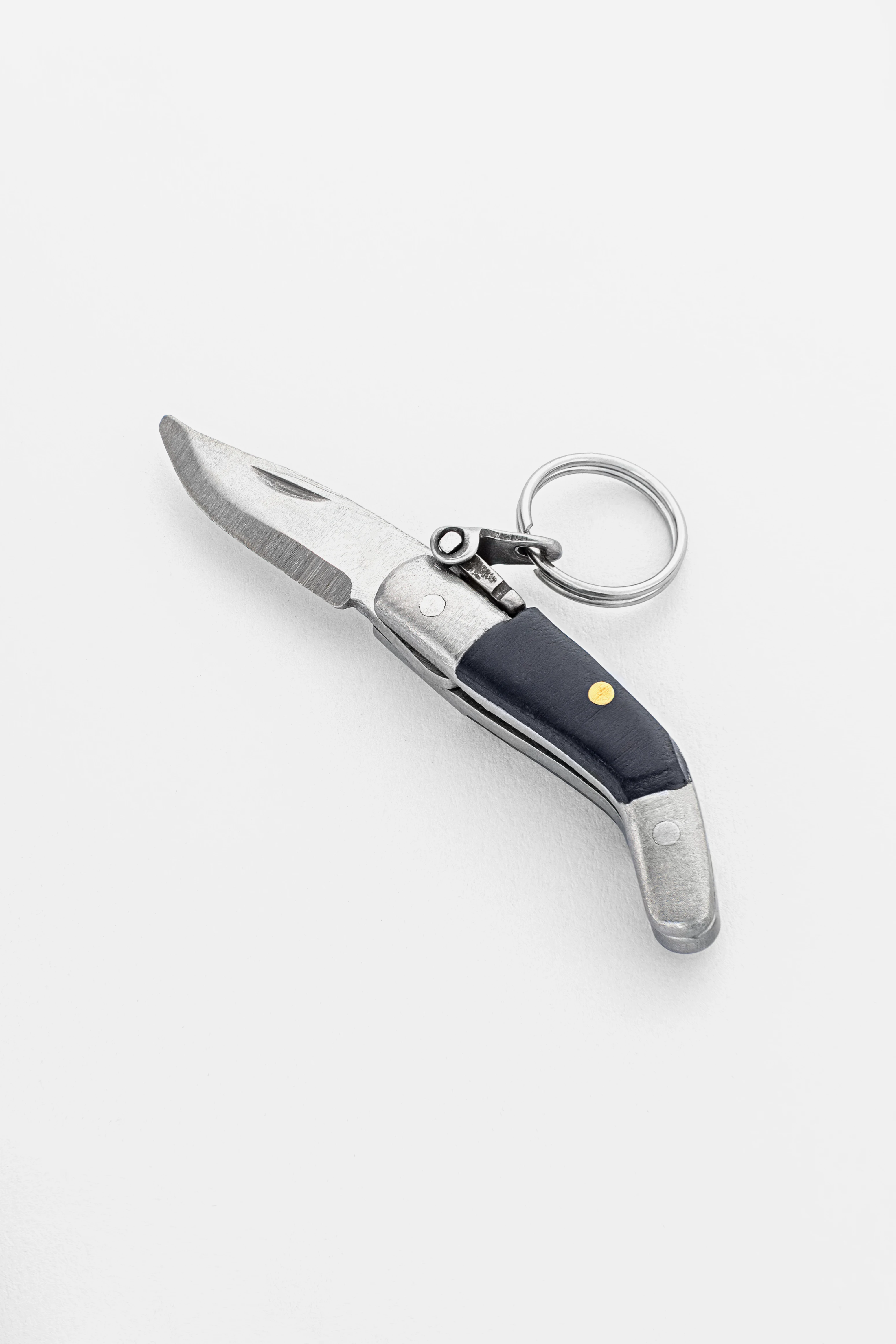
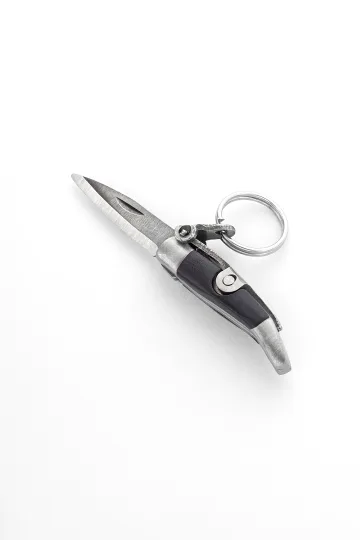
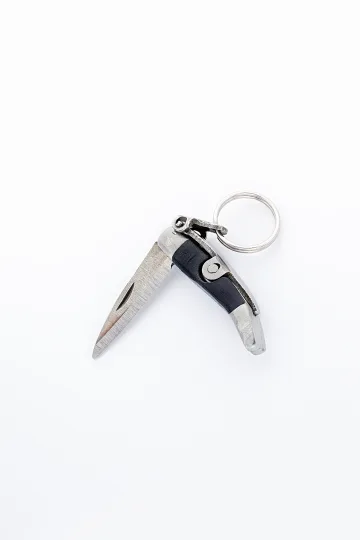
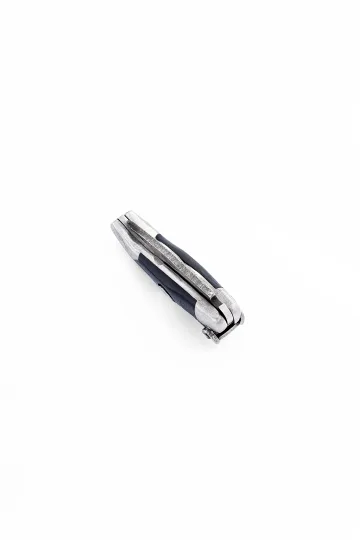
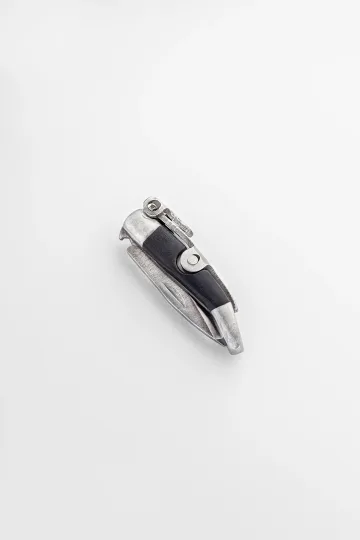
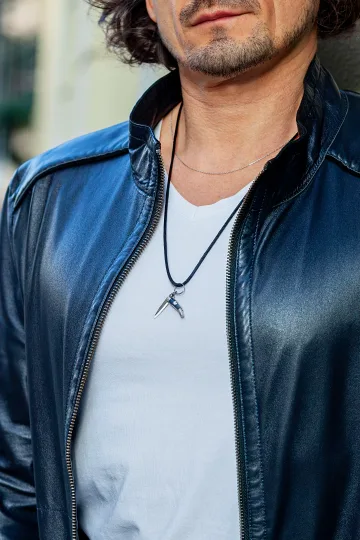
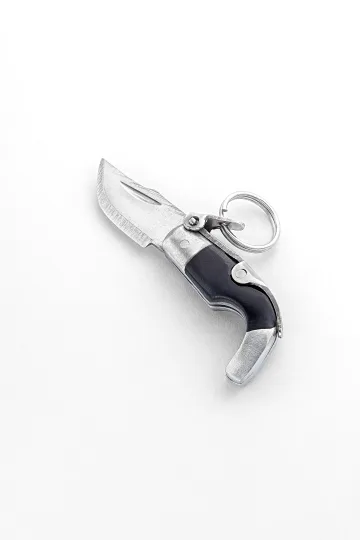
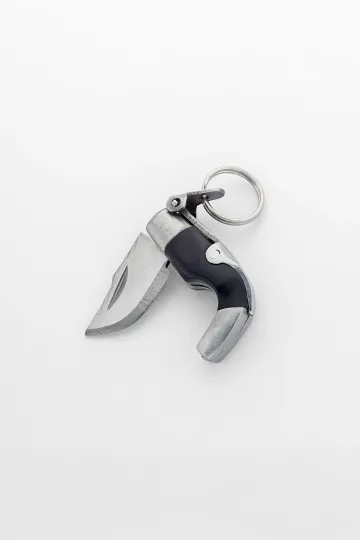
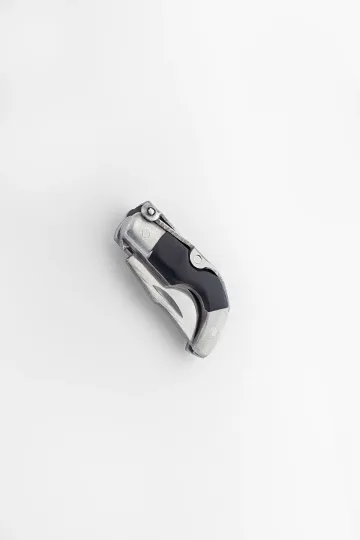
CAPAORA mini knife pendant
The 18th-century Spanish navaja in miniature: 40 mm of stainless steel, a real folding mechanism and a Palanquilla lock that clicks. An affordable gift to remember.
Authentic · Ships from Spain · 14-day returns
Telling Real Coral from Dyed, Pressed and Imitation
The coral market is thick with substitutes, and most of the useful checks need nothing more than a loupe and good daylight. The one test everybody quotes, warm coral against cold plastic, is the least reliable of the lot: dyed bone and pressed coral warm in the hand just as readily. Judge on the combination of signs, never on one.
Growth Structure Under a Loupe
Natural coral shows fine concentric or longitudinal growth lines under magnification, rather like tree rings, along with small surface pores. Plastic and glass have neither. Plastic is either flat and featureless or carries a moulded texture that repeats identically from bead to bead. Glass gives itself away with round trapped air bubbles inside and a cool, noticeably heavy feel.
A drop of lemon juice or vinegar on a hidden spot will fizz on real coral, because calcium carbonate reacts with acid the way chalk does. Treat this as a last resort, since it etches the surface permanently, and remember it only rules out plastic and glass. Bone and pressed coral will fizz too.
Dyed Coral and the Bamboo Coral Trick
Most of the "coral" in high-street and holiday markets is bamboo coral, from the Isididae family. It is real coral, it grows far faster than Corallium, and in nature it is a pale creamy beige with a porous structure and dark joints that segment the branch exactly like the nodes on a bamboo stem. Those nodes are the giveaway under a loupe, and no amount of dye hides them completely. Sold honestly and named honestly it is a perfectly reasonable material at a fraction of the price. Sold as Mediterranean red it is a straightforward deception.
To spot dye, rub a hidden area with a cotton bud dipped in surgical spirit or acetone: cheap dye leaves a pink smear on the cotton. Even good dye betrays itself by looking too even and too bright, and by pooling darker in the cracks, drill holes and pores than on the smooth faces. Look inside the drill hole of a bead, which is where dyed material most often shows a pale core under a coloured skin.
Pressed and Reconstituted Coral
Pressed coral is genuine coral dust and chippings bonded with resin and moulded into beads and cabochons. It is coral in the sense that the raw ingredient came from the sea, but there is no solid branch in it. Under a loupe you see a granular structure with no natural growth banding, sometimes visible particle boundaries and small bubbles of resin. It is markedly cheaper than solid coral, it should never be sold as solid, and it behaves differently in wear, chipping in flakes rather than cracking cleanly.
The simple rule that catches most problems: the more even, brighter and larger the coral for a suspiciously modest price, the higher the chance of dye or pressing. Natural noble coral nearly always carries slight tonal variation, small chalky specks or a lighter core, because that is the trace of a living structure. For any coral where the money is significant, ask for a statement of origin in writing, and for cross-border purchases ask about permits before you pay.
Caring for Coral: How to Keep Jewellery for Life
Enemies of Coral: Acid, Sunlight, Dryness
Coral is afraid of acid. Vinegar, lemon juice, hydrochloric acid dissolve coral. If you eat an orange and juice gets on your finger, and you have a coral bracelet on your finger, wash quickly with water and soap.
Coral is afraid of direct sunlight. In the sun, red coral lightens and loses brightness. If you have coral jewellery sitting on a window, move it away from the ray. Or accept this process as natural aging, which many people want.
Coral is afraid of dryness. If the air in the house is very dry (winter with central heating), coral can develop microcracks. That's why coral jewellery is stored in a box with slight moisture, not in a completely dry place.
Cleaning Coral: Gently and with Respect
Cleaning coral is simple: soft cloth, water with soap, gentle wiping. No ultrasonic cleaners, no aggressive cleaning agents.
If dirt gets on coral jewellery, soak it in warm water with liquid soap for 5-10 minutes, then gently wipe with a soft cloth. If the dirt is caked on, repeat the procedure.
Never use a brush, even a soft one. Coral is porous, and bristles can damage the surface.
Storage: Properly Put Away Jewellery So It Doesn't Lose Moisture
Coral is stored separately from other jewellery so it doesn't scratch against gold or silver. Wrap in soft fabric: natural cotton or linen, not synthetic.
Coral is stored in a cool place, protected from direct sunlight. A closed box is the ideal option. A dresser drawer, hidden from the window, works fine.
If coral jewellery will hang in the air for a long time without being worn, place a damp cloth next to it (not wet, damp). This will help the coral not dry out completely.
What to Do If Coral Cracks or Chips
If a small crack appears on coral, this is not the end of the jewellery's life. A crack will not widen on its own if you don't pull on the jewellery.
If a piece of coral chips off, don't throw away the jewellery. A jeweller can remake the pendant, reflow it into a new setting, or make an earring out of it.
If a coral string (beads) breaks, it's easy to reassemble. Take it to a workshop, they'll restring the coral on new silk for a small fee.
Send a friend a discount code, they save on their first order.
Coral in Art and Famous Pieces
Coral left its mark on painting as firmly as on jewellery boxes. In Renaissance altarpieces a coral branch or a string of red beads round the neck of the Christ child was a settled symbol: the red hinted at the sacrifice to come, and the coral itself read as a guard against harm. Italian painters of the fifteenth century used it constantly, and to a viewer of the period it was a legible sign rather than an incidental piece of dress.
Coral in the Old Masters
The red thread of coral turns up in dozens of altarpieces and family portraits. On children's portraits, coral beads or a rattle with a coral handle announced that the child was being kept safe from illness and the evil eye. On women's portraits of the Renaissance and Baroque it spoke of family means and of a connection to sea trade. Painters also liked coral for a purely technical reason: warm red plays beautifully against dark fabric and pale skin, and a single strand can lift an entire composition.
Cameos, Flowers and the Carvers of the Nineteenth Century
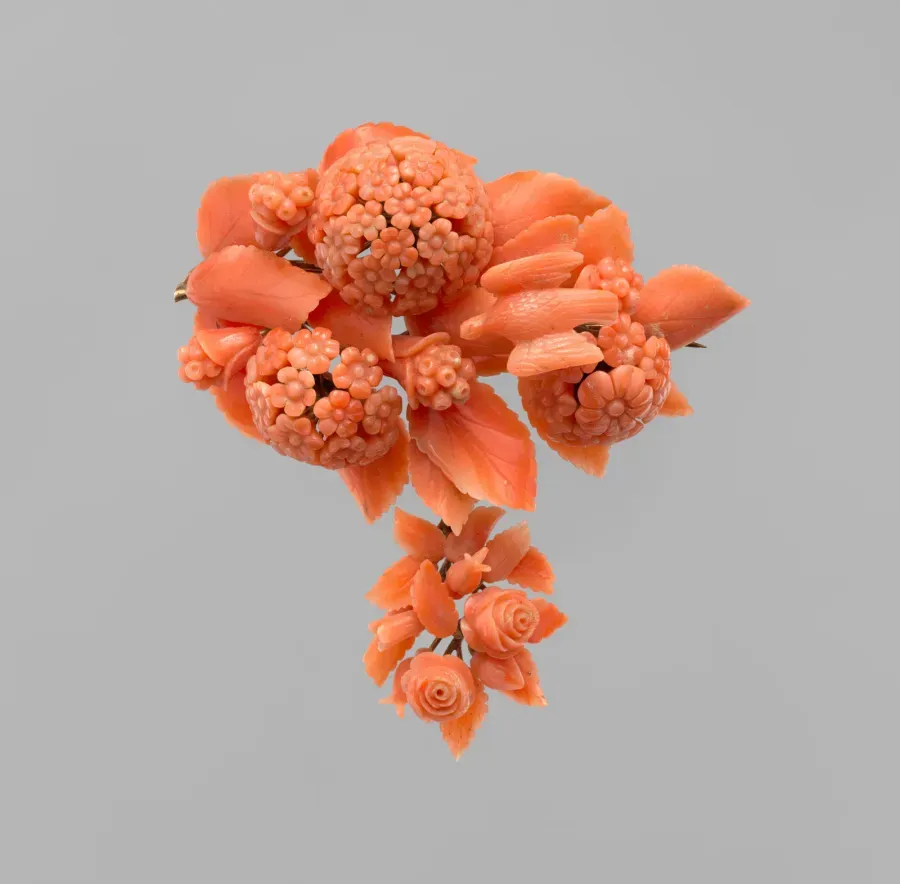
Coral carving peaked in the nineteenth century. Dense branches were cut into miniature cameo profiles, into bouquets of impossible delicacy, into grape clusters and full parures where earrings, brooch and bracelet formed one set. The Neapolitan masters took roses and leaves to the edge of what the material could hold, and European courts bought the results. Many of those sets now sit in museum collections, and a complete surviving parure is one of the more sought-after things in the antique jewellery world.
Coral in Royal and Museum Collections
Coral belonged to the wardrobes of European courts and survives in public collections accordingly. The Victorian taste for it left brooches, tiaras and tiered necklaces that now hang in jewellery galleries, including in British museums where mourning and sentimental jewellery is well represented. In the Far East the prize pieces are imperial carved trees and figures in pink coral. Ethnographic collections hold the other half of the story: Tibetan headdresses and Berber ornaments where a red branch sits beside turquoise and silver. Set side by side, these objects show how differently one material was read from one culture to the next.
Facts About Coral That Surprise People
Even people who grew up by the sea find that coral has a few things held back. Here are the ones that change how you look at a red branch in a pendant.
Coral Is Older Than Most Trees in the Forest
Deep-water black coral adds less than a millimetre a year, and individual colonies live for thousands of years. Researchers have dated specimens at roughly four thousand years old, meaning they started growing while the Egyptian pyramids were new. Even a modest branch of noble red coral in a piece of jewellery is frequently older than the oak in your local park.
To the Greeks It Was the Petrified Blood of a Gorgon
The myth held that red coral was born from the blood of Medusa, hardening in seawater after Perseus laid her severed head on the weed at the shoreline. This is not idle decoration: the Greek name for the material and the whole belief in its protective power grew from that story. The amulet on a child's neck carried an echo of it for the next two thousand years.
Coral Fizzes in Vinegar Like a Seashell
Noble coral is calcium carbonate, so a drop of acid makes it release bubbles of carbon dioxide. Chalk and eggshell do exactly the same thing. This is precisely why coral must be kept away from vinegar, cola and citrus juice: they are not staining the surface, they are dissolving it.
The Costliest Shade Is Named After Ox Blood
In the trade, deep saturated dark red coral is called oxblood. That even, dense tone is rare and prices above every other shade. The deeper coral grows, the paler it becomes, which is why the darkest branches were always the hardest to reach and the most dangerous to fish.
Bamboo Coral Is Named for Its Stem
Pale bamboo coral takes its name from the dark joints dividing the branchlets into segments, exactly like the nodes on a bamboo stem. In nature it is creamy and pale, and the bright red only arrives with dye. Under a loupe those joints identify it immediately.
In China a Coral Bead Marked Your Rank
In imperial China, officials wore a finial bead on the formal hat, and a red coral bead denoted one of the senior grades in the civil service. The ornament worked as something close to an official insignia rather than as fashion.
Coral Glows Under Ultraviolet Light
Many living corals carry fluorescent proteins and flare green, orange and pink under blue or ultraviolet light. It is not a trick but a defence against excess light and a lure for the algae they depend on. That is why ultraviolet footage of reefs looks so unlike anything else filmed underwater.
Frequently Asked Questions About Coral in Jewellery
Can I buy coral if I'm an activist protecting reefs?
Yes, if it's farm-raised coral or coral with a CITES certificate. Ask the seller about the source. If the origin is unknown, don't buy. Farm coral is not a compromise, it's a choice.
How much does real coral jewellery cost?
It depends on the type. A red coral bracelet costs about as much as an average trip (weekend budget size). A pink coral pendant runs like a nice dinner out. A piece made from black coral compares to a vacation abroad. Coral beads land around the price of a premium keyboard for a computer.
Can I wear coral in water, in the sea, in a pool?
Salt water can dry out coral. Chlorinated water can damage the setting. You can wear coral in water, but it's not recommended. If you're going swimming, take off the jewellery.
If I buy coral and later change my mind, can I sell it?
Coral jewellery is something to buy because you love it, not as an investment. Like most jewellery, it should not be expected to hold or grow in value, and resale prices depend entirely on the buyer, the condition of the piece, and the market at the time. Black coral in particular cannot be freely resold because of trade restrictions. If you want to part with a piece later, treat any return as a bonus rather than a plan.
Is coral superstition or real protection?
Coral is a material with a 3,000-year history in culture. The protection it gives is a psychological anchor, not magic. When you wear coral jewellery and know that long ago people wore the same, it creates a sense of connection to history. And this works.
How to distinguish real coral from fake?
Real coral is warm to the touch. Plastic is cold. Real coral has small pores and unevenness on the surface. Plastic is perfectly smooth or perfectly textured. If you're unsure, ask for a certificate or buy from a trusted seller.
Buying it as a gift? Each one arrives ready to give.
 A branded Zevira box and a little card come with every order.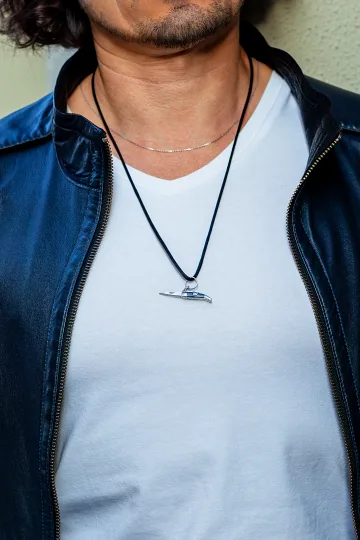






About Zevira
In our collection of jewellery with sea energy, you'll find coral, pearls, sea symbols, and jewellery for people who feel a connection to the ocean. Each piece is selected with respect for the origin of the material and understanding that we wear a piece of sea history on ourselves.