Rose Quartz in Jewellery: the Stone, Its Chemistry, History and Care
Heat rose quartz a little above 575 degrees Celsius and it turns colourless. The blush everyone loves rests on microscopic inclusions and a fragile arrangement inside the crystal lattice. Change the conditions and the pink simply leaves. That is exactly why genuine rose quartz is almost always a touch hazy, slightly cloudy, never perfectly clear. A "quartz" in the display case that is flawlessly transparent and an even, candy pink is a reason to slow down and look harder.
This is the most common of the pink gem materials and one of the most affordable. Let us go through it properly: what it is made of, how it forms, where it is mined, how to tell the real thing from dyed stock and synthetics, how to care for it, and what it pairs with. We will touch on the symbolism too, but honestly, without promises a stone cannot keep.
Chemistry and physics: what rose quartz is made of
Rose quartz is a variety of quartz, that is, silicon dioxide with the formula SiO2. The same mineral species as rock crystal, amethyst or citrine; the only difference lies in the impurities and in how they shape the colour.
Composition and the source of the pink
For a long time the pink was credited to traces of titanium, iron and manganese dissolved in the lattice. Modern mineralogy has refined the picture: the colour of massive rose quartz is more often produced by extremely fine fibrous inclusions of a mineral in the dumortierite group (a borosilicate). These fibres scatter light, give the soft pink tone and, at the same time, the milky haze that almost always sets this stone apart. That is why large transparent crystals of pure pink are a rarity, while the bulk of the material comes through opaque or translucent.
Wear the symbol, don't just read about it. These are in stock:

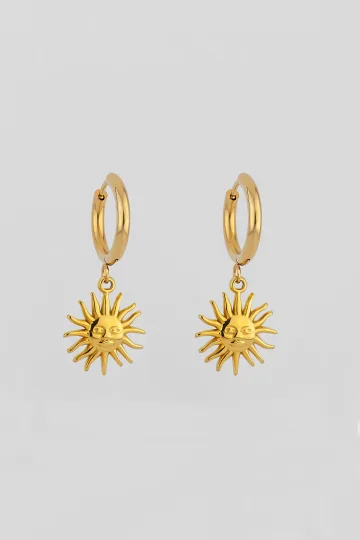
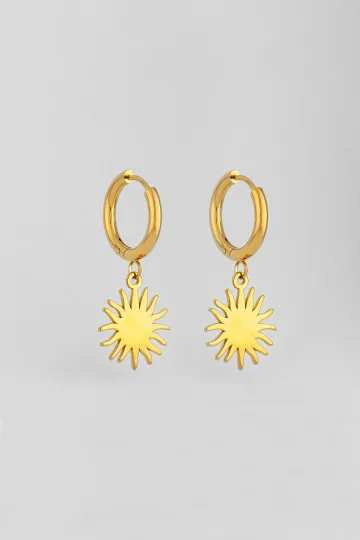


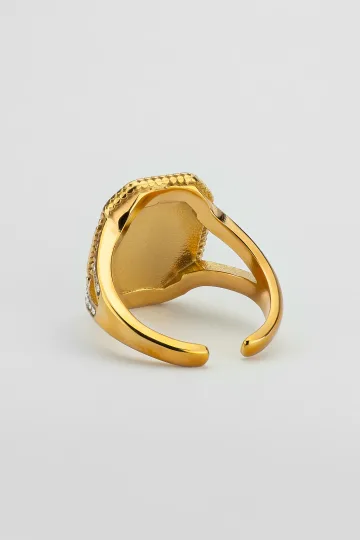
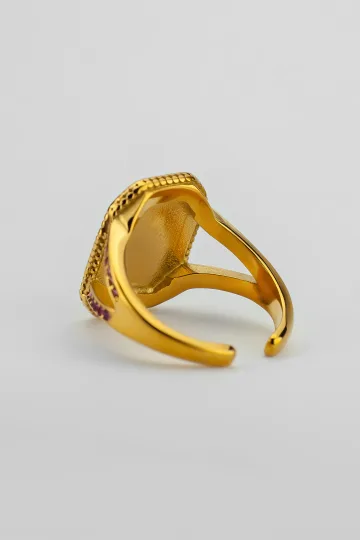
The colour is not surface deep and not applied; it sits inside the stone. Its stability, however, is limited. Above roughly 575 degrees Celsius the colour disappears, and under strong sunlight a pale rose quartz can fade slightly over years and decades. That is a normal property of the mineral, not a flaw.
Hardness, density, optics
- Hardness 7 on the Mohs scale. Quartz scratches glass but yields to topaz, corundum and diamond. For jewellery that is a good figure: the stone holds a polish and shrugs off accidental contact with most household surfaces.
- Trigonal crystal system (trigonal trapezohedral class). In well formed crystals this gives the characteristic six sided prism with a pyramidal cap, but whole crystals are rare in rose quartz; far more common is a massive granular habit.
- Density around 2.65 g/cm3. The stone feels a little heavier than its size suggests, and that is one of the everyday signs that tells it apart from lightweight plastic.
- Conchoidal fracture, no cleavage; quartz does not split along flat planes, it breaks with curved chips.
- Vitreous lustre, which on massive pieces often looks faintly greasy. The refractive index is low (about 1.54), birefringence is weak, dispersion negligible, so do not expect the strong fire of a diamond.
- Transparent crystalline varieties show faint pleochroism, but in cloudy massive material it is barely visible. Some pieces, on the other hand, show asterism, a star effect when cut en cabochon, again thanks to those same oriented fibrous inclusions.
How it forms in nature
Quartz is one of the most ordinary minerals in the Earth's crust, and its pink variety is born mainly in pegmatites: coarse grained igneous rocks that crystallise from residual, volatile rich melts in the late stages of granite bodies cooling down. Slow, steady cooling gives the trace elements and fibrous inclusions time to settle into the rock so the pink tone can appear. Massive rose quartz usually forms large vein bodies in the cores of such pegmatites; individual cut crystals (so called "crystalline rose quartz") turn up at a few deposits and fetch higher prices.
Why massive and crystalline rose quartz are two different stones by nature
Gemmologists noticed the oddity long ago: pale transparent pink crystals and cloudy pink mass behave differently, even though both are called rose quartz. The answer lies in how each one gets its colour. In massive material the tone comes from fibrous borosilicate inclusions scattered through the whole volume; this colouring is optical and indifferent to ultraviolet. In the rare crystalline rose quartz the tone is produced by point colour centres in the lattice itself, associated with aluminium and phosphorus. That kind of colouring is light sensitive and fades noticeably under long exposure.
The practical consequence is straightforward. Transparent pink crystals are kept out of direct light and are not worn on a sunny holiday every year of their life, while cloudy massive stone is far more robust. One appearance, one name, two different behaviours, because the physics behind the colour is not the same.
Asterism: how a star appears inside the stone
The six rayed star on a rose quartz cabochon is not a polishing artefact or a trick of light on facets, it is a strict optical effect. Inside the stone sit minute needle inclusions oriented along three directions of the trigonal quartz lattice, at roughly sixty degrees to one another. Each family of needles reflects a narrow band of light, and the three bands combine into a six rayed star.
Two conditions are needed for it to show. The stone must be cut as a cabochon with the dome axis aligned to the crystal axis, and it must be lit by a single directional source: sunlight, or a spotlight. Under the diffuse grey light of a British winter afternoon the star goes flat and almost vanishes, which surprises people who bought the stone in a bright shop. The same effect occurs in sapphire and ruby, but in rose quartz the star is often broad and soft, and it reads well against the pale ground.
Cat's eye and the milky effect
Besides the star, the same fine inclusions occasionally produce a cat's eye: one bright band flaring across the dome of a cabochon and sliding as the stone turns. For that, the needles must be aligned in one direction rather than three. The effect is rare and collectors pay for it.
The familiar milky haze of rose quartz is the everyday version of the same internal filling. Light passing through a cloud of submicron fibres scatters in every direction, and the stone glows from within with a soft, even light rather than sharp highlights. The trade calls this opalescence by analogy with opal, though the mechanism is its own. It is worth saying plainly: this haze is the stone working correctly, not a sign of poor quality.
Geology and deposits
Rose quartz has a wide geography, but a handful of sources set the market.
Brazil is the main supplier. The state of Minas Gerais yields most of the world's material; the local pegmatites are ancient, quartz is abundant, and the blocks can be large, cut into beads, cabochons, pendants and even sizeable decorative objects. Brazilian material is, as a rule, affordable.
Madagascar is the second source of note. The stone from there is often a gentler, watercolour shade, sometimes zoned, where paler and more saturated patches sit side by side in a single piece.
The United States (especially South Dakota and Maine) is historically known for finds of the rare crystalline rose quartz, the kind that occurs as individual crystals rather than a solid mass.
Industrial and collector specimens also come from Namibia, Mozambique, India and Sri Lanka. Some deeply saturated material reaches the market from parts of Central Asia, but volumes there are unsteady.
Why geography barely affects the price
With many coloured stones the country of origin is part of the reputation and part of the price tag. Rose quartz works differently. The stone is so widespread that what matters to a buyer is not a line about provenance but the particular piece in front of them: its tone, its clarity, whether it is free of cracks. Brazilian and Madagascan material of equal quality will cost the same, and two Brazilian blocks can differ several times over in price purely because one is saturated and one is washed out. Loud labels like "rare Himalayan" or "elite African" on a strand of rose quartz beads are far more often marketing than a genuine price factor.
From boulder to bead
It helps to picture how the stone reaches the counter. Large blocks are broken out of pegmatite veins, sorted by colour and by how badly they are fractured, then cut. The cleanest pieces go to cabochons, spheres and carving; poorer material goes to faceted stones and large beads; the cracked remainder is tumbled or crushed. The bead you are holding may have come from a block weighing tens of kilograms, of which only a small clean core was usable for jewellery.
That is the whole explanation for why an even, deep pink without haze costs noticeably more than a pale mass market bead. Nobody is charging a premium for a name. They are charging for the fact that a great deal more rough had to be cut away to find it.
One pendant at the collarbone, full stop. A fistful of pink beads is not romance, it is a jumble sale.
What to wear rose quartz with
Over years on shoots I have tried rose quartz in every form, from a tiny bead to a large cabochon on an open neckline. Here is what actually works, occasion by occasion.
What do I wear rose quartz with every day? For daytime I recommend a fine chain with a pendant up to 10 mm over a white tee, a linen shirt or a soft pastel jumper. The stone reads as a warm accent at the collarbone and argues with nothing. Silver deepens its cool, lunar note, so with a cool skin undertone I usually choose silver.
Does it work at the office? It does. I suggest clean drop earrings or a single pendant without a scatter of beads: the pink softens the strict line of a shirt and blazer and adds warmth to a businesslike look without turning it romantic. Cream, beige, grey, dusty blue and deep wine keep the whole thing composed.
How do I build an evening look? For evening I play on a contrast of textures: rose quartz on an open neckline, next to silk or velvet in deep shades, looks dearer than its price. Here I choose a larger stone, 12 to 15 mm, or a brooch you can spot across the room. Warm gold balances the pink and reads more grown up.
Which colour of stone should you pick for your wardrobe? Pale milky quartz is quieter and lives with anything; a deep saturated pink is louder and asks for calmer clothes around it. The stone clashes with a bright red or a shrill pink, so I steer clear of those. If you want something rarer, look for a star specimen with a six-rayed star: it catches directed light and holds all the attention on its own.
How many pieces should you wear at once? One expressive piece is enough. A pendant, earrings and three bracelets at once turn tenderness into noise. I choose the accent and leave the rest quiet; with rose quartz that rule never fails.
Turn on your camera, pick earrings, a pendant or a ring, and see the piece on yourself in real time.
Switch items in one tap.
Everything runs in your browser: no photo or video is ever uploaded.
History and culture
Quartz has a long human biography, and its pink variety is present in it, though more modestly than marketing would like. Beads and small objects of rose quartz turn up in ancient burials; in Mesopotamia and Egypt the material went into beads and amulets in deep antiquity. The ancient world prized quartz highly, and carving the stone was a developed craft.
Mesopotamia and the oldest beads
The earliest traces of worked rose quartz lead to Mesopotamia, in what is now Iraq. Archaeologists date individual beads to the third millennium BC, the age of the Sumerian and Akkadian cities. The stone was drilled by hand then, with flint and copper drills fed with abrasive, and strung on threads alongside carnelian, lapis lazuli and shell.
Rose quartz was not the lead player in these sets but one colour among several: its soft tone set off the bright carnelian and the deep blue lapis. Even at that date it was valued for being easy to come by and for drilling cleanly without splitting along flat planes, which is a real advantage when your drill is a stick and a handful of sand.
Egypt and amulets
In ancient Egypt quartz in all its varieties went into beads, scarabs and amulets. Pink material is less common than the carnelian and turquoise the Egyptians loved best, but it appears in grave goods and in jewellery. The stone was linked with youth and with the renewal of the skin, and there are references to cosmetic preparations in which powdered rose quartz was used for its colour and for the soft texture it gave a paste.
Separating genuine practice from later retelling is difficult here, so a note of caution is in order. That the stone was worked and worn is well established. The recipes for eternal youth belong to the category of good stories.
Rome and stone carving
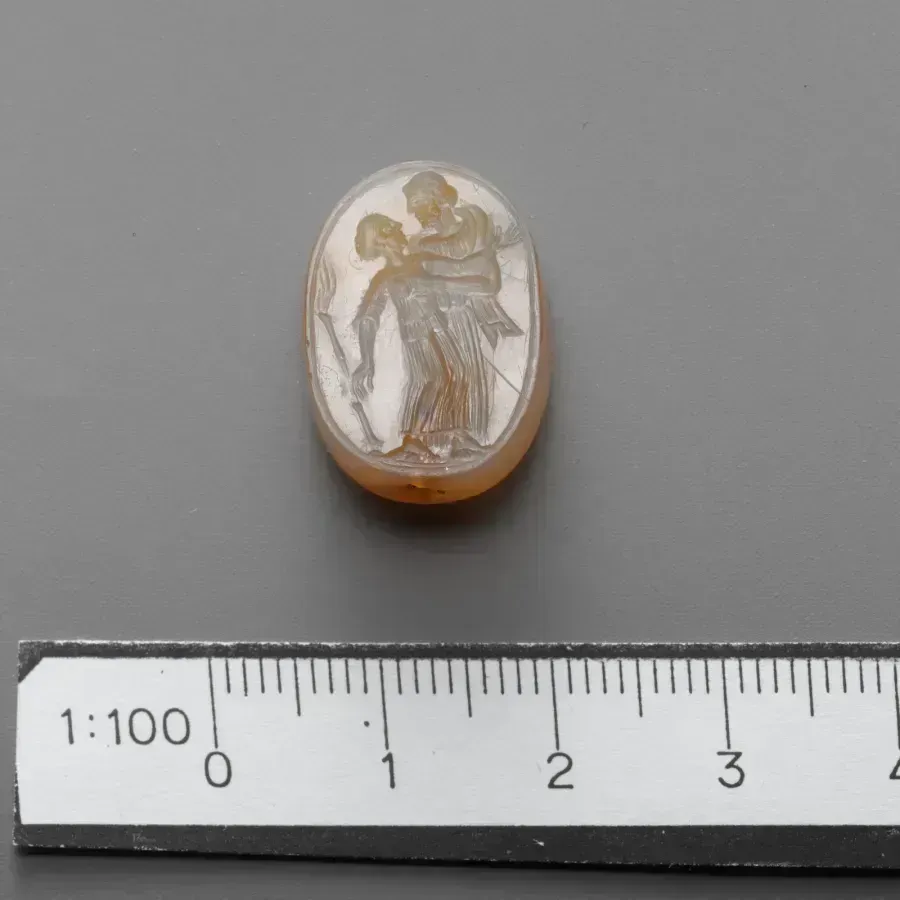
The Romans raised quartz carving to a high craft. Seals, intaglios, flasks and gems were cut from rock crystal and the coloured varieties, and pink material took its place in that line as one of the affordable coloured stones. A carved seal was not an ornament for its own sake but a personal mark: it was pressed into wax or clay to authenticate a letter or an agreement, doing the job a signature does now.
Soft rose quartz was taken less often than hard clear crystal for a fine intaglio, but it held its ground firmly in beads, pendants and ring stones. It is from the classical tradition that the lapidary craft passed on into medieval and Eastern jewellery.
Amulets of love and marriage
The link between rose quartz and love is often presented as ancient knowledge, but the honest version is different: the settled association of the stone with tenderness and feeling is largely a phenomenon of the past century and a half, taking shape alongside the Victorian and later vogue for crystal healing. In antiquity the pink stone was worn as ornament and as a general charm, without the narrow romantic specialism attributed to it today.
This does not make the tradition worse. Cultural meanings always accumulate and shift, and a meaning a century old is still a real meaning to the person wearing it. It is simply worth holding the difference in mind between what archaeology can verify and what grew up later.
A strong tradition of its own is the Chinese one. For centuries small sculpture and household objects were carved from rose quartz: pendants, figurines, bottles. This was an independent branch of the lapidary art, unconnected to later Western ideas about "talisman stones".
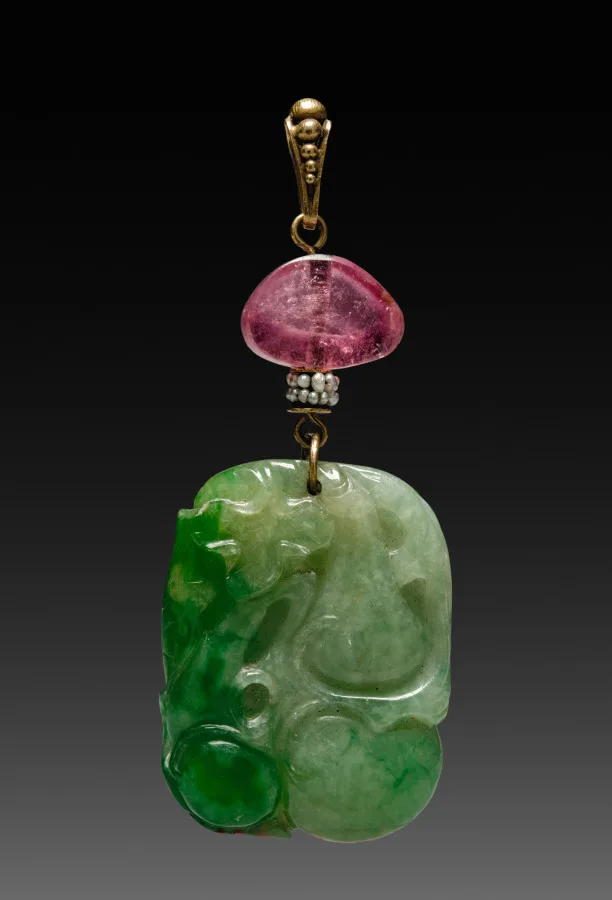
In jewellery, rose quartz long remained a second tier material: too common and too cheap to compete with transparent precious stones. The mass fashion for it arrived in the twentieth century, when mining in Brazil made the stone cheap and available to a wide buyer. That was when it settled into the semi precious niche: beads, cabochons, inexpensive set stones.
It is worth separating fact from pretty legend. Popular texts credit rose quartz with a place in crowns, regalia and the private collections of historical figures, often with precise dates and names. Reliable, widely accepted confirmation of such a role is thin: rose quartz is a common, inexpensive stone, and it never entered high royal jewellery in any systematic way. So here we stay with the verifiable: ancient beads and amulets, yes; a developed Chinese carving tradition, yes; loud tales about specific crowns belong to folklore.
Customer reviews
Zevira is a real jewellery shop. Genuine payments, deliveries and customer thank-yous.
🥰🥰🥰 gracias
Ok, ¡gracias! 🙂
Rose quartz in art and everyday culture
The stone rarely became the hero of a famous work, but it has a quiet role of its own in the decorative art of several cultures.
Chinese small carving
The Chinese tradition of carving rose quartz deserves separate attention, because it is an independent high school rather than an imitation of Western jewellery. Carvers cut peonies, branches, animal figures, snuff bottles and finials from large clean blocks. Rose quartz was valued because its soft tone rendered flower petals and the skin of fruit convincingly, and because its milky translucency gave depth without glare. The work was done without machinery, with hand tools and abrasive paste, and a substantial object could take a carver months. Pieces like these still turn up in museum collections of decorative art, including in British ones.
The stone in interiors and household objects
In the twentieth century, when Brazilian mining made rose quartz a mass material, it stepped outside jewellery altogether. It was turned into spheres, pyramids, stands, handles, bowls and heart shaped figures, exactly the souvenir range by which most people recognise the stone. Large polished blocks are set out as interior accents.
This domestic niche is a good part of why the stone reads as something cosy and peaceful. Most people meet it not in a strict shop display but on a shelf, on a desk, in the hand.
The image of the "pink stone" in popular culture
Rose quartz has settled firmly into the visual language of softness, partly through the colour itself and partly through its heavily promoted reputation in crystal healing. Pastel pink became a marker of calm and self care, and the stone slotted neatly into that code; it has been a recurring colour of the year in interiors and fashion forecasting.
A cool head helps here. An aesthetic association is one thing and the real properties of a mineral are another. The stone is beautiful and pleasant to look at, which is quite enough for it to work as an image, without crediting it with powers it does not have.
Upload a photo of your pet, someone you love, or an object. We'll build a 3D model and hand-cast it in pewter.

Varieties of rose quartz
Within a single mineral species there are noticeable differences in colour and optics.
Massive rose quartz
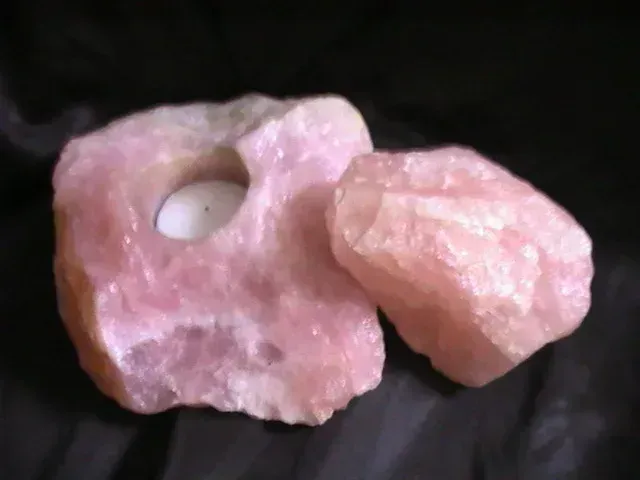
The main and most common form: a solid granular mass from pale pink to a richer tone, usually cloudy and translucent. It goes into beads, cabochons, pendants and carvings. This is what people most often see in jewellery.
Crystalline (rose) quartz
A rare form that grows as separate transparent or translucent crystals. The colour is usually paler than in the massive type and less stable to light. Gemmologists often separate the two materials precisely by the origin of the colour. The crystalline material is valued by collectors.
Star rose quartz
Pieces with asterism: cut en cabochon and lit from the right angle, a six rayed star appears across the surface. The effect comes from oriented fibrous inclusions. Such stones are valued above the ordinary ones.
Materials close in colour
Other stones give a pink in jewellery that is easy to mix up:
- Morganite is pink beryl, clearer and harder (7.5 to 8 on Mohs), noticeably dearer. If you are curious about exactly how pink beryl differs in price and rarity, it helps to compare them side by side.
- Kunzite is a pink lilac spodumene, transparent, with marked pleochroism.
- Pink tourmaline (rubellite) is bright, transparent, dearer than quartz.
- Pink topaz and pink sapphire are harder and dearer.



How to tell it from fakes and look alikes
Rose quartz is faked and imitated for two reasons: it is popular and recognisable, and its hazy gentle colour is easy to mimic with glass or dyed white quartz.
What to look at:
- Evenness of colour. Natural rose quartz is almost always uneven: cloudiness, zones of different density, faint banding. A perfectly even, "sweet shop" pink is a typical sign of dyed quartz or glass.
- Transparency and lustre. The norm is a slight haze and a vitreous, sometimes faintly greasy lustre. A completely transparent, bright pink, cheap "quartz" is almost certainly glass, morganite or a synthetic.
- Bubbles. Gas bubbles inside the stone give away glass; natural quartz does not contain them (its inclusions are solid and fibrous).
- Temperature and weight. Quartz is cool to the touch and noticeably heavier than plastic of the same size (density 2.65).
- Hardness. Quartz (7 on Mohs) scratches glass and is not scratched by a steel knife; dyed glass and plastic are softer.
- Dye. Crudely dyed white quartz sometimes betrays itself when wiped with a swab dipped in alcohol or acetone; the dye can leave a trace. Do this carefully and only with a stone you already suspect.
A separate topic is synthetic quartz. It is grown in autoclaves and is chemically identical to the natural stone (the same SiO2). It is not a fake but a laboratory stone, which should be sold as synthetic and cost less. The problem arises when synthetics are passed off as natural material. Telling them apart reliably is often possible only in a gemmological laboratory, by the character of the inclusions and growth zones.
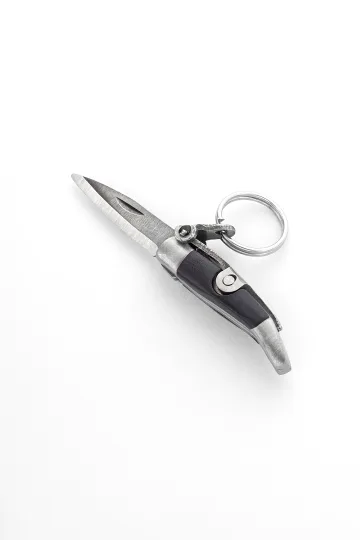
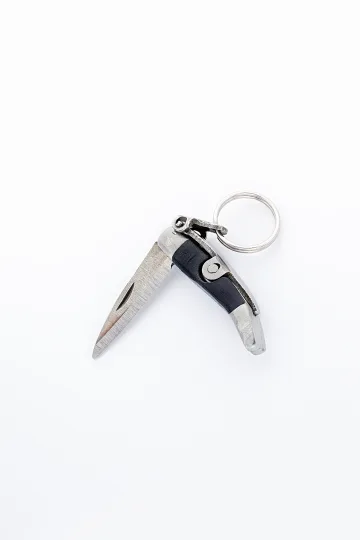
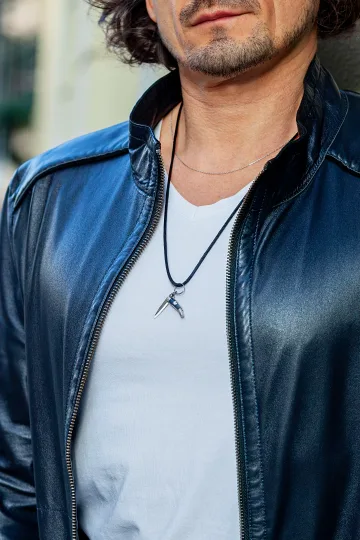
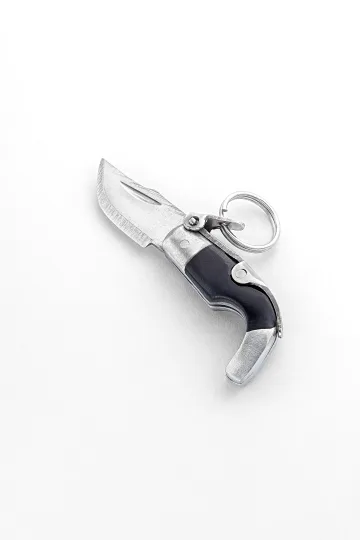
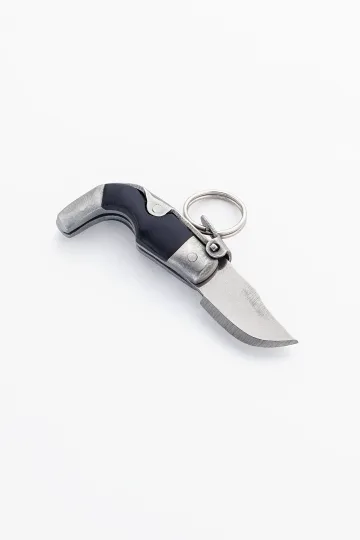
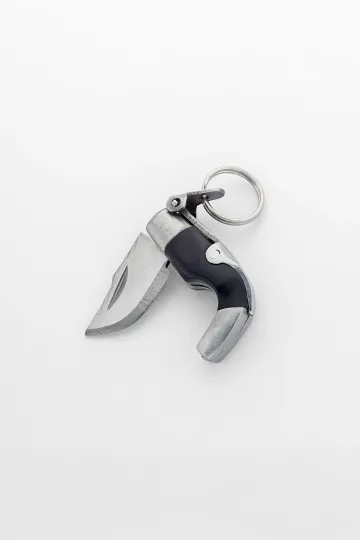
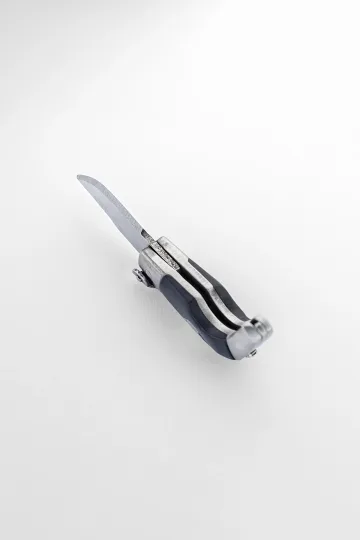
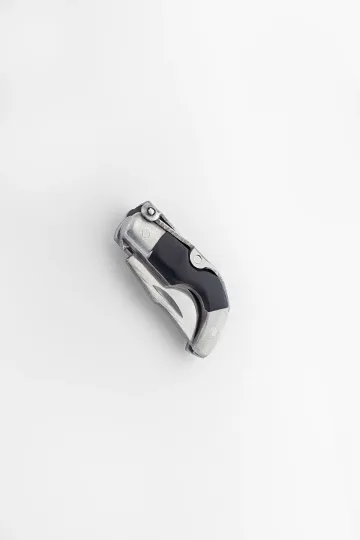
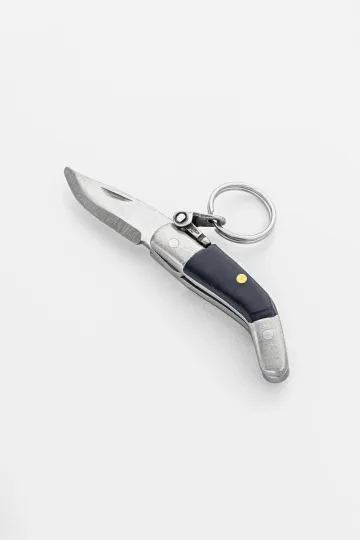
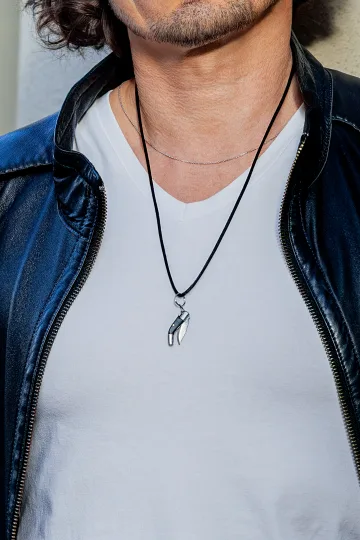
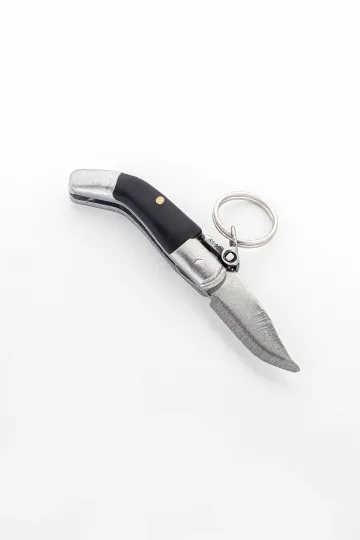
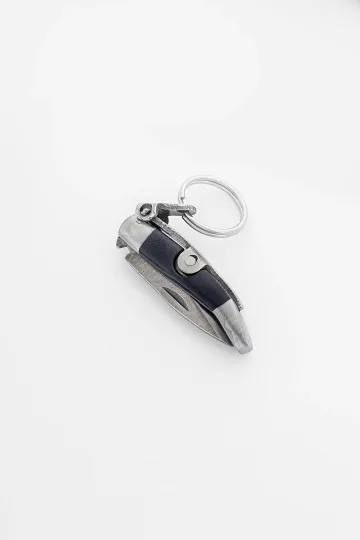
CAPAORA mini knife pendant
The 18th-century Spanish navaja in miniature: 40 mm of stainless steel, a real folding mechanism and a Palanquilla lock that clicks. An affordable gift to remember.
Authentic · Ships from Spain · 14-day returns
Treatments: what is done to the stone honestly
Natural rose quartz rarely needs serious treatment, and that is one of its strengths. Yet the market still slips in tricks a buyer does well to know about.
- Dyeing. The most common trick at the cheap end. Colourless or white quartz is taken (often porous and cracked), soaked in dye and sold as pink. The sign: a suspiciously even, saturated colour, with dye pooling more thickly in cracks than on a smooth surface. In a natural stone the colour is spread through the mass, it does not settle into the flaws.
- Irradiation and heat. The colour of rose quartz rests on fragile inclusions, so irradiation cannot reliably draw out a saturated pink, while heat does the opposite and kills the colour: above roughly 575 degrees the stone turns colourless. So there is no mass market in "heat treated" rose quartz, unlike, say, citrine, which is often produced by roasting amethyst.
- Impregnation and stabilisation. Heavily cracked blocks are sometimes soaked in colourless resin to strengthen the material before beads are cut. This changes the weight and the behaviour during cleaning: an impregnated stone tolerates solvents and heat poorly. It cannot be spotted at home, but it explains why cheap beads sometimes cloud over from alcohol or acetone.
The conclusion is simple: natural rose quartz is prized precisely because it does not need "improving". If a seller is keen to praise brightness and a perfectly even tone, that is more often a reason to doubt than to rejoice.
Marketing names: where the traps are
Stones with pretty trade names are often sold for pink in the display case, and some of them have nothing to do with rose quartz, or with natural stone at all.
- "Strawberry quartz". Sometimes this is genuine quartz with inclusions (hematite, lepidocrocite) that give reddish "sparks". But under the same name there is a flood of glass with copper or other glitter inside. The sign of glass is the usual one: perfect transparency, even colour, gas bubbles.
- "Cherry quartz". Almost always artificial glass rather than a mineral. The name sounds like a stone; in essence it is dyed glass.
- "Rose quartz" as flawlessly transparent bright beads. Natural massive rose quartz is hazy by definition. Transparent, even pink beads at the price of quartz are a signal of glass or synthetic.
- Synthetic quartz passed off as natural. Chemically, laboratory quartz is the same SiO2, and on its own it is an honest material. The deceit begins when it is sold as natural without a word. The price should be lower, and in doubtful cases only a laboratory can confirm the origin.
A rule for the buyer: look not at a pretty name but at the three signs of natural rose quartz, uneven colour, soft haze, and a cool, slightly heavy surface.
Leave your email, we'll send your discount code. No spam, unsubscribe anytime.
The code arrives by email, valid on your first order.
Care and wearability
A hardness of 7 makes rose quartz fairly practical, but not invulnerable.
- Wearability. For earrings, pendants, brooches and beads quartz is an excellent fit; they take almost no knocks. Rings are harder: a stone in a ring catches surfaces more often, and over time the edges of a faceted cut can wear down, while a polished cabochon may pick up fine scratches from harder dust (household dust almost always contains quartz particles of the same hardness). For an everyday ring it is better to choose a cabochon or a protected setting.
- Cleaning. Warm water, mild soap, a soft brush or cloth. That is enough. Ultrasonic and steam cleaning are best avoided: the stone often contains cracks and inclusions along which a chip can run.
- Heat. Avoid sharp temperature swings and strong heating; quartz dislikes thermal shock, and at high heat it loses its colour entirely.
- Light. Pale specimens can fade slightly in strong sunlight over years. Do not keep the piece permanently on a sunny windowsill.
- Storage. Apart from harder stones (topaz, sapphire, diamond), so they do not scratch the quartz. A soft pouch or a compartment in a box will do.
Hard water, limescale and where you live
This is the practical detail nobody mentions in shops, and in Britain it matters. Much of the south and east, from London through the Home Counties and across to East Anglia, sits on chalk and limestone and runs genuinely hard water. Wash a cabochon under the tap, leave it to dry on its own, and the dissolved calcium stays behind as a dull film on the polish. On a milky stone this is easy to mistake for the stone itself going cloudy.
The fix is simple. Rinse in cool water, then dry the piece straight away with a soft lint free cloth rather than letting it air dry, and give the setting a gentle wipe where water collects behind the stone. If a film has already built up, a wipe with a cloth barely damped with distilled water usually lifts it. Do not reach for limescale remover: those products are acidic and will attack the metal, the glue in a closed setting, and any pearls or organic stones sitting near it in the box.
Soft water areas, most of Scotland, Wales, Cornwall and the north west, have the opposite problem, which is soap film rather than limescale. Use less soap and rinse longer.
Symbolism, briefly and with a healthy scepticism
In the tradition of crystal healing, rose quartz is called the "stone of love" and linked with tenderness, calm and self acceptance. This is a long standing cultural belief, and it deserves to be treated as exactly that. The stone has no proven physiological or medical effect: it does not cure illness, and it does not influence sleep, blood pressure or mood on its own. If a pretty object in the hand helps a person pause and settle, the credit belongs to the pause and the habit, not to special powers of the mineral.
So it is more honest to choose rose quartz for what it really is: a pleasant, warm looking, affordable stone with a soft colour. That is enough to like it, without crediting it with miracles.
Facts that surprise people
Even a stone this familiar has sides to it that never make it onto a price tag.
The commonest pink stone in nature, and rare in transparent form
There is a great deal of rose quartz in the ground; it is one of the most widespread coloured quartzes. But large transparent crystals of a clean pink tone are genuinely scarce: nature turns out cloudy mass readily and is stingy with clear crystals. The result is a paradox. The same stone is both a mass market material and, in its best form, a collector's item.
The colour can be switched off with heat
Heat rose quartz above roughly 575 degrees Celsius and the pink disappears; the stone goes colourless. The colour depends on fragile inclusions and colour centres that the heat destroys. This is why, unlike citrine, rose quartz is not produced by baking: fire does not deepen the tone, it kills it. It is also why a rose quartz ring should come off before any repair involving a torch, and why a jeweller will normally unset it first.
The star inside is lattice geometry
The six rayed star on star rose quartz is not a matter of chance. The needle inclusions line up strictly along the axes of the crystal lattice at about sixty degrees, and so there are always exactly six rays, never five and never seven. The stone is quite literally displaying its own internal geometry.
Rose quartz fluoresces more weakly than you would expect
People assume that a stone with an "energy" reputation ought to glow brightly under ultraviolet. In fact rose quartz usually gives a weak or barely visible response, noticeably duller than many other minerals. Its lovely reputation and its actual physics part company at this point.
The milkiness is not cloudy water but millions of needles
What looks like a light haze inside the stone turns out under strong magnification to be a forest of submicron fibres. Light hits them, scatters, and the stone glows from within. Without those inclusions rose quartz would be transparent and washed out rather than the comfortable milky pink people actually love.
Powdered stone went into cosmetics in antiquity
Finely ground rose quartz was added to salves and pastes for its colour and its soft texture. It did nothing to make skin younger, but the pleasant pink shade of the preparation was valued. The modern fashion for facial rollers and cooling stones is, in essence, a new reading of a very old habit of adorning yourself with this particular material.
The romantic reputation is younger than it looks
The narrow link between rose quartz, love and relationships took shape mostly over the past century and a half. In antiquity it was worn as ornament and as a general charm, with no romantic specialism. So "the ancient stone of love" is a successful later image rather than literal archaeology.
Send a friend a discount code, they save on their first order.
What drives the value
Rose quartz is an affordable stone, but inside the category the price still swings a lot, and it pays to understand why before you buy.
- Saturation and purity of colour. The main factor. Pale, almost whitish material is the cheapest and most common. An even, deep pink with no greyish or brownish undertone is rarer and valued higher. At the same time the natural colour is always a touch uneven; a perfectly even tone is already a signal of dyeing.
- Transparency. The higher the translucency while the colour holds, the dearer. Wholly cloudy, "stony" material goes into large carvings and cheap beads, the clearer stuff into faceting.
- Star effect. Star rose quartz with a clear six rayed star on the cabochon costs noticeably more than the ordinary kind, and the more even and centred the rays, the dearer it is.
- Crystalline form. The rare crystalline rose quartz, growing as separate transparent crystals rather than a solid mass, is a collector's story and a price level of its own.
- Size and uniformity of the block. Large clean blocks without cracks are needed for seamless carving (hearts, figurines, spheres), and they fetch more than the same volume as small beads.
- Treatment. A natural undyed stone is valued above a dyed one. Impregnated or dyed material should cost less, even if it looks brighter.
What barely moves the price: origin in itself. Brazil yields the bulk and is not considered "worse" than Madagascar; the specific colour and clarity of a piece matter more than a line in the description.
How to choose a piece with rose quartz
- Size. Up to 8 mm means quiet earrings, beads, small everyday pendants. 8 to 15 mm is the all rounder range for pendants and earrings: the stone is visible but does not dominate. From 15 mm it is a bid for attention, brooches and large pendants.
- Colour. Pale or saturated pink is a matter of taste and budget: saturated and star specimens are rarer and dearer. The main thing is that the colour be naturally uneven, not suspiciously even.
- Transparency. A slight haze is the norm and a sign of authenticity. Perfect transparency in a cheap stone is a reason to doubt.
- Cut. Most rose quartz comes as cabochons and polished beads, which is comfortable on the skin and practical. Faceted stones give more sparkle but cost more; for a ring a cabochon is usually more practical.
- Setting. For everyday wear, especially in a ring, choose a setting that shields the edges of the stone.
Buying it as a gift? Each one arrives ready to give.
 A branded Zevira box and a little card come with every order.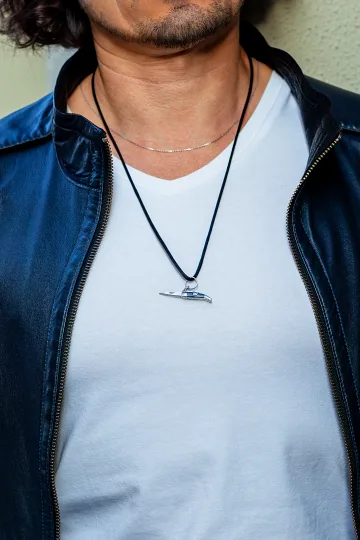




Common questions
What is the hardness of rose quartz? 7 on the Mohs scale, like all quartz. It scratches glass but yields to topaz, sapphire and diamond. For earrings and pendants that is reliable; in a ring fine scuffs are possible over time.
What is rose quartz made of? It is silicon dioxide (SiO2). The pink comes from extremely fine fibrous inclusions (a mineral of the dumortierite group) that scatter light; the same inclusions cause the characteristic haze.
Why is it almost always cloudy rather than transparent? Because of those fibrous inclusions. Transparent pink crystals are a rarity; the bulk of the material is translucent or opaque. That is the norm, not a defect.
Does rose quartz fade? Pale specimens can fade a little in strong sunlight over years. Do not keep the piece permanently on a sunny windowsill and there will be no trouble.
Where is rose quartz mined? The main source is Brazil (Minas Gerais). Also Madagascar, the United States, Namibia, Mozambique, India and Sri Lanka.
How do I tell real rose quartz from glass or dyed quartz? A natural stone is uneven in colour, hazy, cool and a little heavy to the touch, and scratches glass. A perfectly even bright colour, bubbles inside, lightness and a warm surface point to glass or plastic.
How does rose quartz differ from morganite? Morganite is pink beryl: clearer, harder (7.5 to 8) and noticeably dearer. Rose quartz is more massive, cloudier and more affordable.
Is there synthetic rose quartz? Yes, it is grown in autoclaves. Chemically it is identical to the natural stone, so it is not a fake but a laboratory material; it should be sold as synthetic and cost less. Telling natural from synthetic quartz is often possible only in a laboratory.
Can I clean rose quartz with ultrasound? Better not. The stone often has cracks and inclusions along which a chip can run. Warm water with mild soap and a soft cloth is enough.
Is rose quartz suitable for an everyday ring? It can be, with an allowance for wear: the edges of a faceted cut wear down and the surface is scratched by household dust. For an everyday ring a cabochon in a protected setting is more practical.
What does rose quartz mean? In the crystal healing tradition it is linked with tenderness and calm. That is a cultural belief, not a proven property of the stone. The mineral has no medical effect, so choose it for its looks.
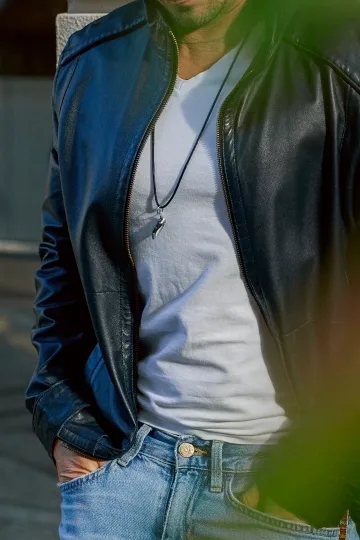
Does rose quartz suit men? That is a question of taste, not of gender. The stone is neutral in composition and suits any jewellery equally.
Wear the symbol, don't just read about it. These are in stock:
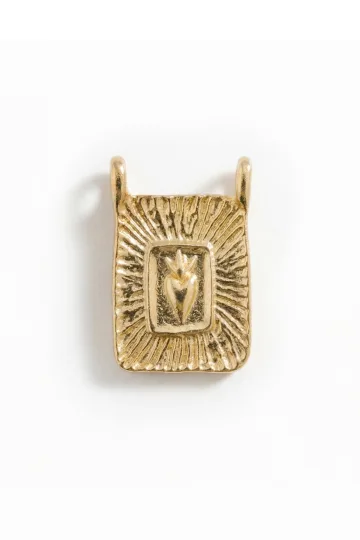
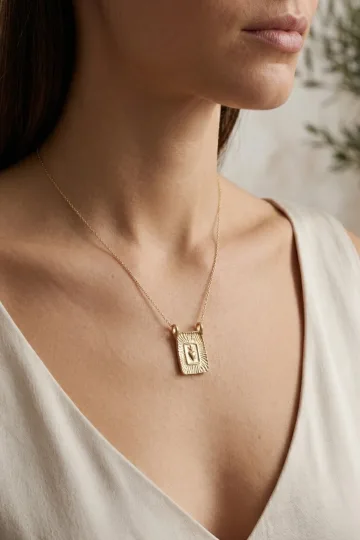
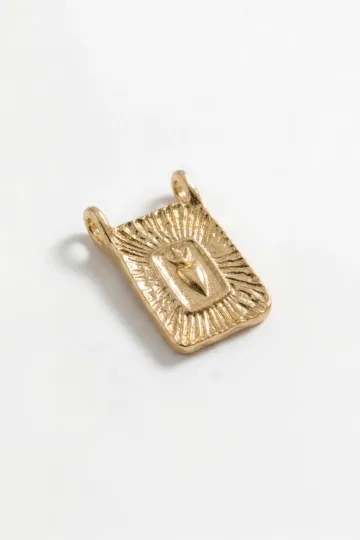
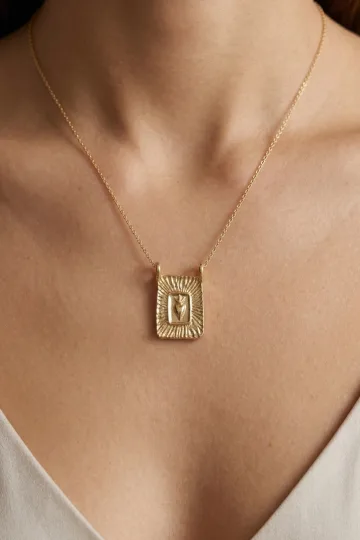
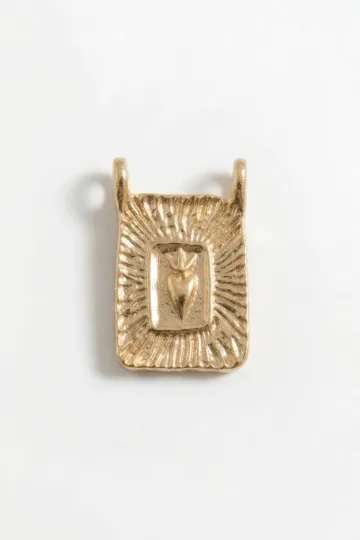

About Zevira
In the Zevira collection rose quartz appears in pendants, earrings, beaded bracelets and sets. We work with trusted suppliers, mainly from Brazil and Madagascar, and we never pass off dyed or synthetic material as natural stone.
We value rose quartz for what it is genuinely good at: a soft natural colour, a pleasant warm feel and affordability. It is an everyday stone that slips easily into any wardrobe and asks for no special occasion.
Heart pendants, beaded bracelets and earrings with real rose quartz from Brazil and Madagascar.