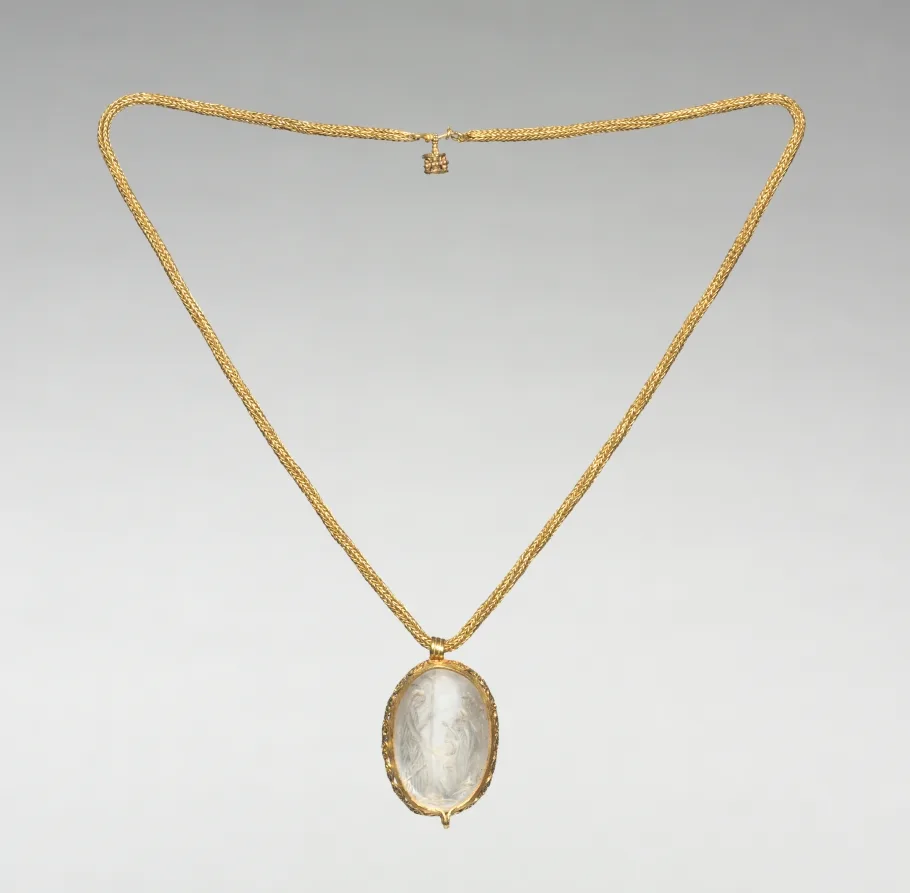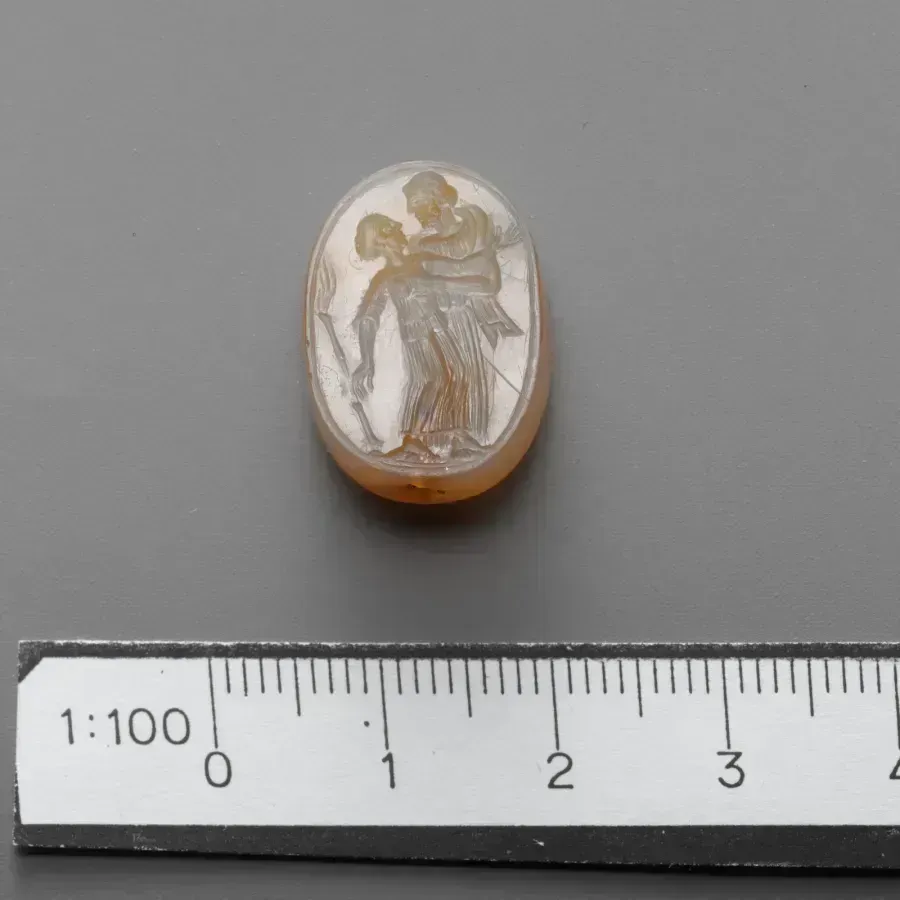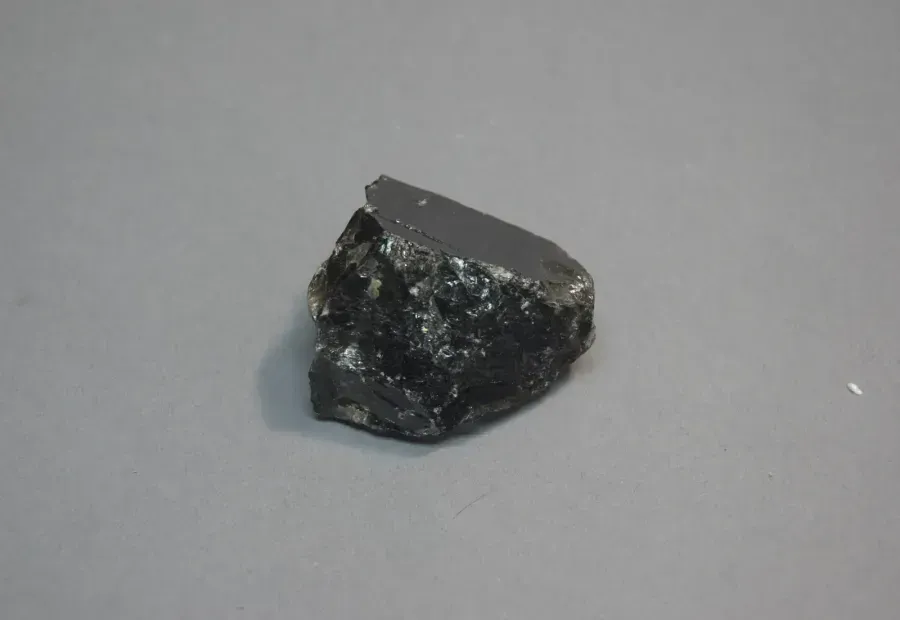
Smoky quartz: the gem whose colour was made by radiation
Smoky quartz is the one popular gemstone whose colour was literally born from radiation. Clear rock crystal sat for millions of years next to rocks carrying traces of uranium and thorium. The faint natural radiation slowly rearranged the crystal lattice, and the colourless stone turned smoky: from a light grey to almost black. The finished stone is completely safe; it stopped emitting anything long ago.
That is what makes smoky quartz interesting. It is neither rare nor expensive, but its physics is honest: every shade is the trace of a real geological story. Let us look at what it is made of, how it forms, where it is mined, how to tell the real stone from glass and fakes, and how to care for it.
What smoky quartz is: chemistry and physics
Smoky quartz is a variety of quartz, that is, crystalline silicon dioxide with the formula SiO2. Chemically it is almost indistinguishable from clear rock crystal, amethyst or citrine: all of these are the same mineral wearing a different colour.
The key difference between smoky quartz and the rest of the family lies in how its colour appears. In the quartz lattice, some silicon atoms are replaced by aluminium atoms. On their own, these impurities give no colour. But when the crystal takes a dose of natural radiation from neighbouring rocks rich in uranium, thorium and potassium-40, electrons are knocked loose near the aluminium atoms and so-called colour centres form. They absorb part of the passing light, and the stone begins to look smoky. The longer the irradiation lasted, the darker the result.
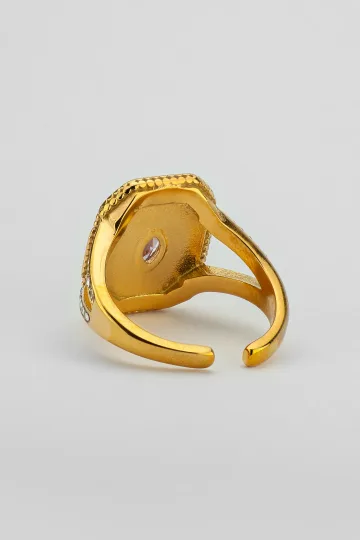
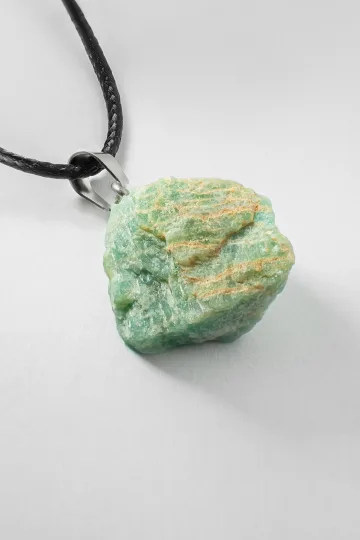
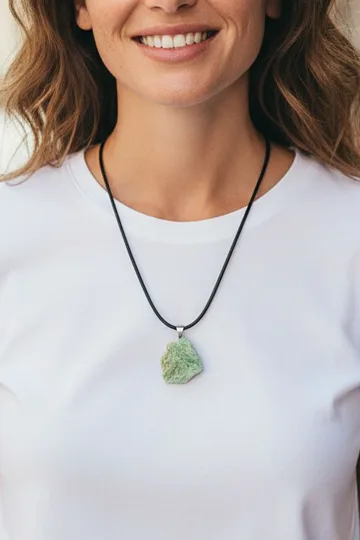
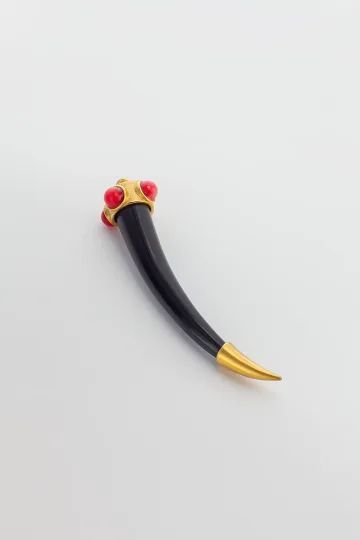
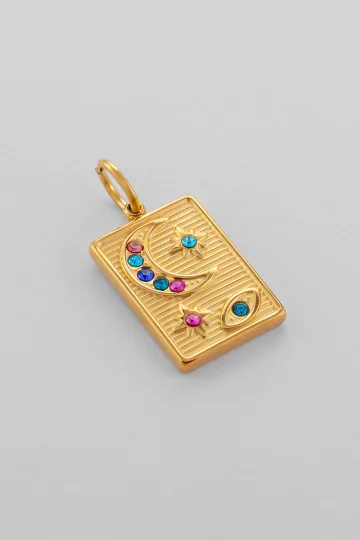
Wear the symbol, don't just read about it. These are in stock:






Core physical properties
- Composition: silicon dioxide, SiO2, with an aluminium impurity and traces of radioactive elements.
- Mohs hardness: 7. That is harder than window glass and most household surfaces, so the stone holds its polish and does not scratch in ordinary wear.
- Crystal system: trigonal. Crystals grow as six-sided prisms with a pointed tip, the same shape as rock crystal.
- Density: about 2.65 g/cm3. Glass is noticeably lighter, which is why a quartz stone feels heavier than a glass imitation of the same size.
- Refractive index: roughly 1.54 to 1.55. The birefringence is weak, around 0.009.
- Fracture: conchoidal, like glass; quartz has no cleavage, which matters for cutting.
- Lustre: vitreous.
- Transparency: from transparent to translucent, and in the case of morion, nearly opaque.
Smoky quartz shows no noticeable pleochroism: the colour barely changes as you rotate the stone. Under strong heat, though, the smoky colour fades and can disappear entirely as the colour centres break down. That is why a stone is usually removed during jewellery repair and soldering of the setting.
Where the smoky shade comes from
The intensity of the colour depends on two things: how much aluminium sits in the lattice and the total radiation dose the stone has accumulated over its geological life. Light smoky quartz either grew in rocks with a low background, or is relatively young. Dark stone, right up to morion, spent hundreds of millions of years next to radioactive minerals.
This also explains why the smoky colour can be produced artificially: pale quartz is irradiated in a lab, and it darkens. Such a stone is not a fake, but more on that below.
How smoky quartz forms: the geology
Smoky quartz grows in the same places as rock crystal: in cavities within granite, in pegmatites and in hydrothermal veins. These rocks are themselves richer than average in uranium, thorium and potassium, which is why quartz so often picks up its smoky colour there.
Put simply, the process goes like this. First, crystals of quartz start to grow in the rock cavities, either from a cooling granite melt or from hot mineral-rich solutions. In pegmatites the melt cools slowly, so the crystals have time to grow large, sometimes tens of centimetres across. Once the crystal has formed, the long part of the story begins: the surrounding rocks keep supplying a faint radiation background, and over geological timescales the stone darkens.
What matters is that the dose accumulated over millions of years is long spent by the time the stone is mined. A stone in a piece of jewellery is not radioactive to any meaningful degree; its colour is a trace of the past, not an active process.
The main deposits
- Brazil (Minas Gerais). The largest modern supplier. Stones of every tone, in big volumes, so most of the mid-range smoky quartz comes from here.
- The Swiss and Austrian Alps. Alpine smoky quartz is mined from mountain veins alongside rock crystal. It is prized for its clarity and transparency, and often goes to faceting rather than cabochon work.
- The Scottish Highlands. The historical home of smoky-stone amulets. Mining today is modest, but it is Scottish quartz that the old legends cling to.
- Madagascar. A source of large crystals, on the market since the 1990s.
- The United States (Colorado). Local smoky quartz often grows intergrown with green amazonite, a natural pairing that collectors love.
Origin affects tone and price, but it does not make one stone fundamentally better than another. It is wiser to choose by shade and quality of cut than by the prestige of a name.
Smoky quartz is a dusk stone. Drown it in gold under a noon sun and it reads as a dirty ashtray, not a jewel. Don't.
What to wear smoky quartz with
Over years of styling shoots I have run smoky quartz through dozens of looks. Here is what actually holds up, case by case.
How do I wear smoky quartz every day? For daytime I recommend a thin pendant on a long chain over grey cashmere, a plain tee or a linen shirt. The stone sits below the neckline and reads as a quiet detail. A muted palette, graphite, olive, sand, navy, lifts the smoky tone better than busy prints. For a mid-shade stone I reach for silver first.
Does it work at the office? It does. I choose restrained shapes: a medium cabochon ring in silver, or a bracelet of small beads under a shirt cuff. I keep the pendant on a 45-50 cm chain so the stone tucks under the top button. Beneath a blazer it reads as a calm detail, not a loud accent.
How do I build an evening look? For evening I change the scale. A large morion in dark metal, drop earrings or a signet ring over a solid dress pull the look together without glare. Silk, velvet and heavy knit in a deep colour, wine, emerald, black, show off the stone's translucency. Gold or platinum I save for the darker stone.
Can I layer it and mix metals? Yes, and it is a strong move. I stack two or three pendants at different lengths, or build a set of thin rings alternating silver and warm gold. Mixing metals here is deliberate, not a slip. One rule: give each pendant its own length so they do not tangle.
Who does this stone actually suit? Anyone who likes a calm, slightly bookish style and muted tones over showy shine. Two guides that never fail. First: for day, take a mid shade and silver; for evening, a dark stone and gold. Second: one clear piece works harder than three at once.

Turn on your camera, pick earrings, a pendant or a ring, and see the piece on yourself in real time.
Switch items in one tap.
Everything runs in your browser: no photo or video is ever uploaded.
How to choose smoky quartz
Quartz is transparent and inexpensive, so the choice runs not by price per carat but by three things: tone, clarity and the geometry of the cut.
Tone. The most useful and versatile shade is a medium brownish smoke that reads clearly when held to the light. A stone that is too pale gets lost in a large setting and looks murky grey; a very dark one, closer to morion, just looks black in a small piece, with no play of light. For a ring or earrings, pick a tone you can still see the outline of your finger or the background through: then the stone "breathes".
Clarity. For jewellery-grade quartz the norm is full transparency with no inclusions visible to the eye. Quartz grows in large, clean crystals, so there is no point paying for a stone with haze or cracks; clear material is plentiful. The exception is collector specimens with striking rutile needles or phantoms: there the inclusion is the value, but that is no longer about everyday jewellery.
Cut and the window effect. The buyer's main trap is a deep stone. Smoky quartz darkens with thickness: the longer the light's path through the stone, the denser the colour. To make pale material look richer, it is cut with a tall, "bellied" pavilion. The downside of that cut is the weight and a tendency to "window", a pale patch in the centre where the stone looks empty. A well-cut quartz reflects light evenly across the whole table. The test is simple: lay the stone face up on printed text. If you can read the letters through the centre, you are looking at a window, and in wear that area will look watery.
Size. Here smoky quartz is generous: large clean crystals are common, so a stone two or three centimetres across costs incomparably less than the same size in a scarce gem. This is one of the rare cases where you can afford a striking stone in a ring or pendant without a leap in price. What you pay for is the cut and the metal, not every extra carat.
History and culture
People have used quartz for thousands of years, but the smoky variety was long left out as a stone of its own; it was either confused with other dark gems or written off as spoiled crystal.
In antiquity, dark quartz was called morion. The root of the word is tied to darkness, to gloom. Pliny the Elder, in his "Natural History", mentions dark transparent stones of this kind among the varieties of rock crystal. There was of course no clear division on a chemical basis back then: mineralogy as a science appeared much later.
In Scotland, smoky quartz was part of folk culture. It was called the smoky stone and set into traditional jewellery and the hilts of dirks. In the nineteenth century, on the wave of a Europe-wide fascination with all things Scottish, such jewellery came into fashion far beyond the Highlands. Smoky quartz was a favourite of Victorian jewellery: restrained, affordable, fit for the everyday and mourning pieces that people wore for long stretches in that era.
The systematic study of the stone began in the Renaissance and later, when mineralogists started to classify gems by composition and properties. That is when smoky quartz finally took its place as a coloured variety of quartz rather than a mineral of its own.
By the way, the mineralogical "morion" and the medieval "morion" helmet are accidental namesakes. The names came from different roots and are not connected at all; the confusion is purely verbal.
Customer reviews
Zevira is a real jewellery shop. Genuine payments, deliveries and customer thank-yous.
🥰🥰🥰 gracias
Ok, ¡gracias! 🙂
Kinds and varieties
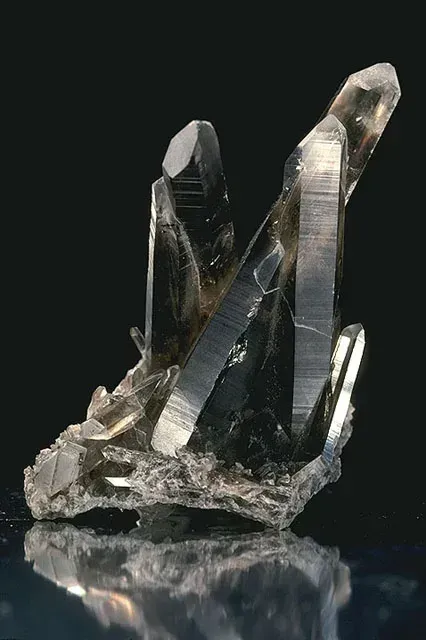
All the varieties differ, essentially, only in the saturation of the smoky colour; the chemistry is one and the same.
Classic smoky quartz. Transparent or translucent, in a colour from light grey to brownish smoke. The most common kind. Lay such a stone on text and the letters show through. A medium tone is the favourite in jewellery: dark enough to be noticed, transparent enough to look refined.
Cairngorm. In Britain the warm, honeyed smoky quartz from the Cairngorm Mountains gave its name to the stone, and the name still carries the old Scottish association. By substance it is the same smoky quartz; the word survives from the old trade.
Morion. The darkest version, almost black or fully opaque. The result of especially strong and prolonged irradiation. It turns up more rarely and so costs more than ordinary smoky quartz. It looks good in men's pieces and in high-contrast designs.
Quartz with inclusions. Sometimes you can see fine mineral needles inside the stone, films of iron, or droplets of ancient water sealed in the crystal. Such inclusions lower the clarity but make the stone one of a kind; collectors value them.
A word on colour under different light. Smoky quartz does not shift tone as dramatically as alexandrite, but in bright daylight it looks a touch warmer, and under cool artificial light a touch greyer. That is the normal play of a transparent stone, not a defect.
Kinship with citrine and amethyst
It helps to know one thing about the whole quartz family: colour in it is governed by impurities and temperature, and these varieties are interconvertible. Heat smoky quartz and the colour centres break down, and the stone lightens, right up to colourless. Some smoky and amethyst material, when heated, turns not colourless but yellow-orange, and that is how a large share of the citrine on the market is produced: natural deep-yellow citrine is rare, while heated amethyst or smoky quartz gives a similar colour more cheaply.
For the buyer the conclusion is simple. Smoky quartz, cairngorm, morion, many citrines and some amethysts are one mineral in different states, not different stones. A set of smoky quartz and citrine in a single piece is therefore not a random pairing but, quite literally, kin by the lattice.
How to tell smoky quartz from look-alikes and fakes
Smoky quartz is easy to confuse with a few stones and imitations. A few markers.
Glass. The most common imitation. Glass is warmer to the touch and heats up faster in the hand; quartz stays cool longer. Glass is lighter (lower density), often too "clean", without a single inclusion, and inside it you can find round gas bubbles, which natural quartz never has. By hardness, quartz (7) scratches glass, not the other way round.
Smoky topaz and andalusite. Similar in tone, but these are different minerals with a different density and optics. Telling them apart reliably means refractive index and density, which is a gemmologist's job with instruments.
Black tourmaline and dark obsidian. These are sometimes confused with morion. Tourmaline is almost opaque and often shows lengthwise striations on its faces; obsidian is volcanic glass, lighter and warmer.
Irradiated quartz. Pale quartz whose colour was boosted in a lab. Formally this is real quartz, not a fake, but the colour is sometimes too even and saturated, and over time it can fade. It is cheaper than the natural stone, and honest sellers state this plainly.
Dyed or tinted quartz. The most obvious deception. The dye is unstable, gathers in cracks and rubs off in wear. Under a loupe you see the colour spread unevenly across the surface rather than through the whole body.
Pressed dust. Ground quartz bonded with resin. Under magnification you see a mass of small fragments and bubbles in the binder instead of a single crystal.
A simple home set of tests: hold the stone in your hand (quartz is cooler and warms more slowly), look at it against the light (even colour through the body, natural inclusions), weigh up its heft for its size. The final word on a disputed stone still comes from a gemmological lab.
Upload a photo of your pet, someone you love, or an object. We'll build a 3D model and hand-cast it in pewter.

Care and storage
A hardness of 7 makes smoky quartz convenient for everyday wear: it does not scratch against clothing and skin and holds its polish for years. But it has no cleavage, while it does have brittleness to a sharp blow, so a fall onto a hard floor can chip or crack it along the conchoidal fracture.
Cleaning. Warm water, mild soap, a soft brush for the gaps between stone and setting. That is enough. It is better not to use ultrasonic and steam cleaning, especially if the stone has inclusions or microcracks, which can spread.
What to avoid. Strong heat (the smoky colour fades at high temperature), sharp temperature swings, aggressive chemicals and bleach. It is sensible to put jewellery on after applying perfume and cosmetics, so no film settles on the stone.
Storage. Apart from softer stones and pearls, which quartz will scratch easily. In a dry place, if the setting is silver, since the metal then tarnishes more slowly. It is also best to spare the stone long, bright sun: ultraviolet very slowly lightens the smoky colour.
Setting. With older jewellery, check now and then whether the stone has come loose in its setting. If it has, take it to a jeweller.


Symbolism: what the stone is credited with, and what is true
In various traditions, smoky quartz was cast as a protective stone and a support for a clear mind. In Scottish belief it warded off the evil eye; in twentieth-century esoterics it was tied to grounding and stability.
It is worth being plain about it: the stone has no proven physical or healing effect. The idea of "grounding" appeared in the New Age movement of the second half of the twentieth century, not in antiquity, and it works as a psychological anchor; a familiar object on the hand helps you gather yourself exactly as much as you yourself put into it. The mineral has no influence on blood pressure, sleep, anxiety or illness, and it must not replace a doctor. The stone is a beautiful object with a history, and the honest way to treat it is precisely as that.
Kinds of jewellery with smoky quartz
Smoky quartz looks equally good in rings, pendants, earrings and bracelets. A hardness of 7 lets it be cut both as a cabochon and in complex step and brilliant cuts, ovals, pears, cushions.
In rings, a cabochon or a faceted stone of medium size is the usual choice; in men's pieces, dark quartz or morion in a wide setting works well. Pendants are the most versatile option for everyday wear, especially a polished drop or bead on a fine chain. Stud and drop earrings are gathered into a set with a ring of the same stone. Bracelets are made both with faceted stones and as a strand of polished beads.
Metal is chosen by contrast: cool silver or white gold underline the warm smoky tone, while yellow gold gives a softer, "sunset" pairing.
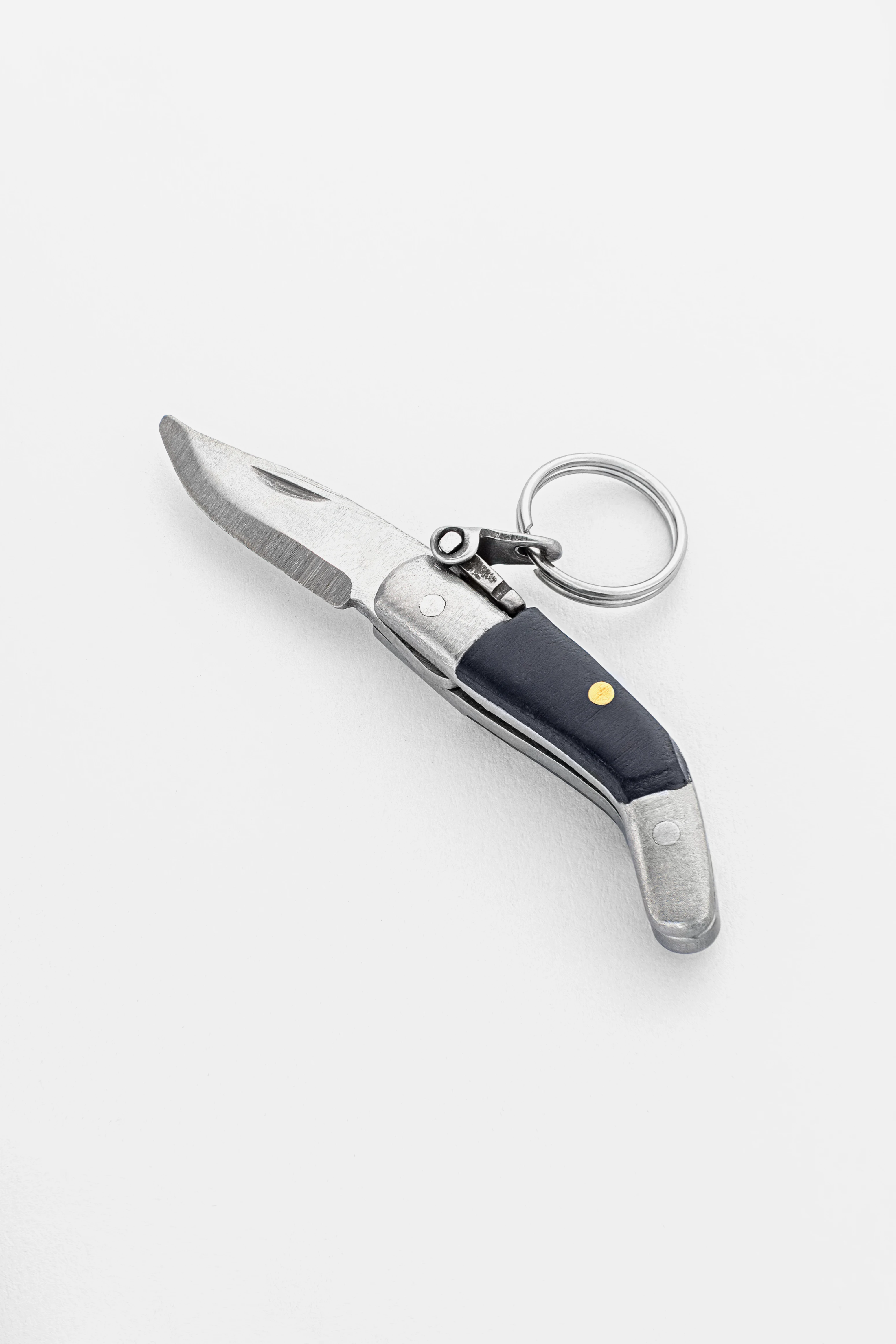
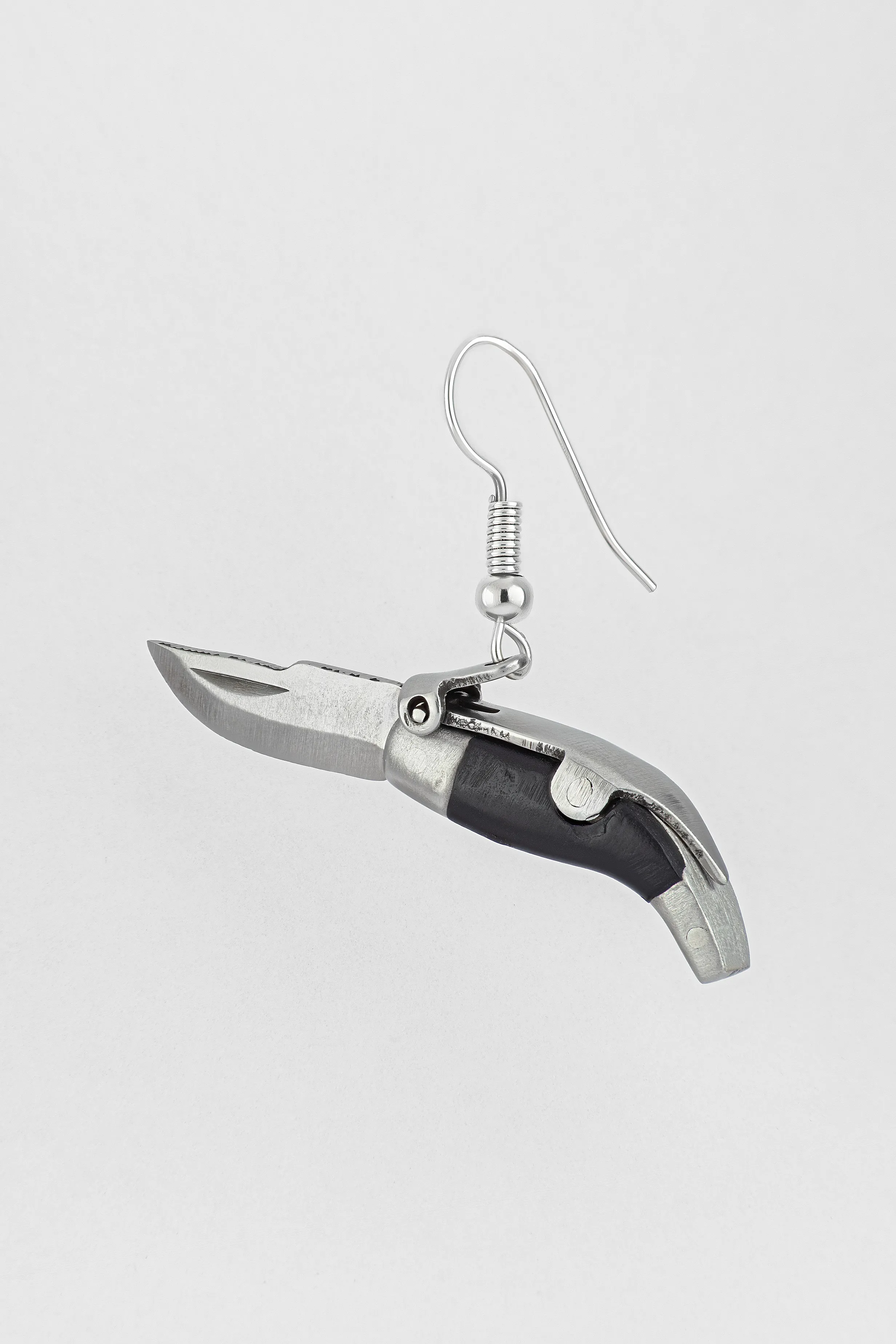
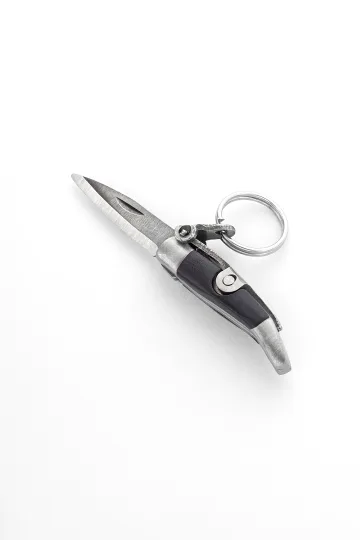
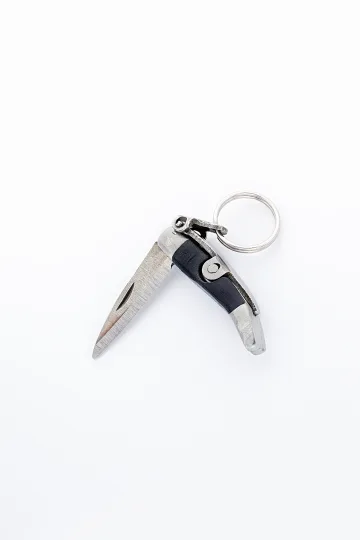
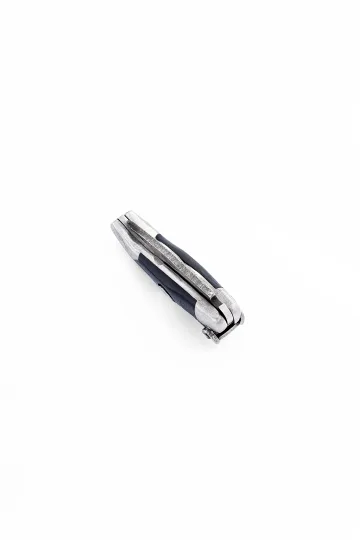
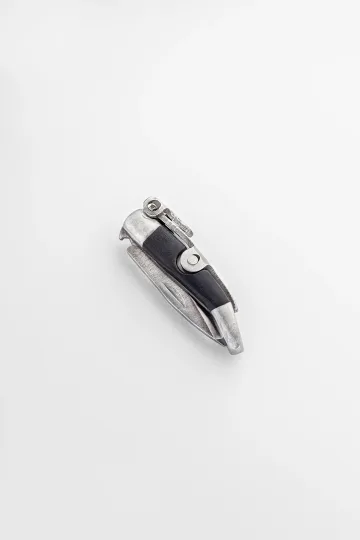
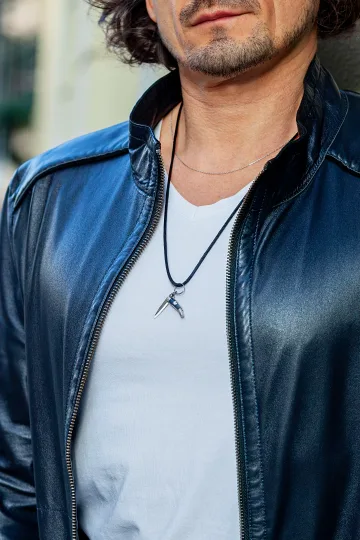
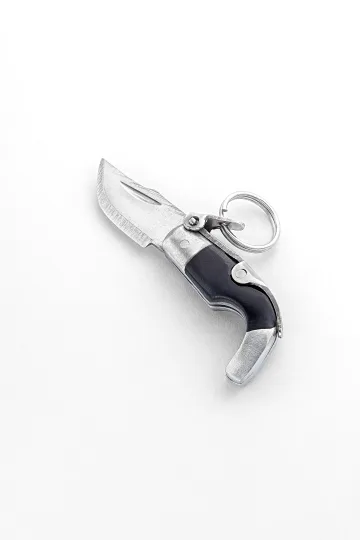
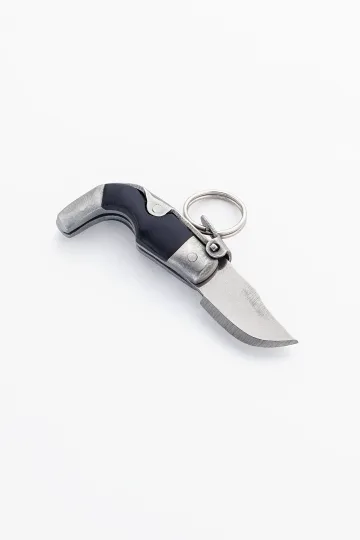
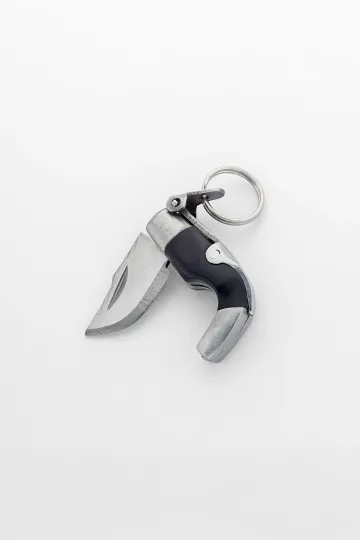
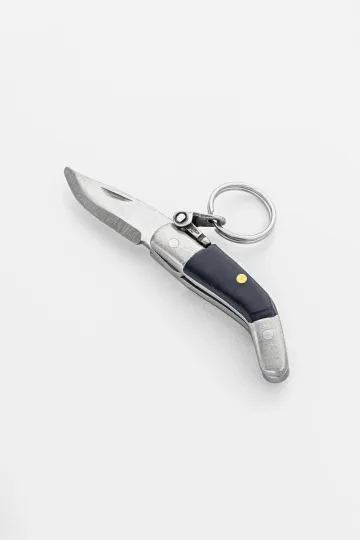
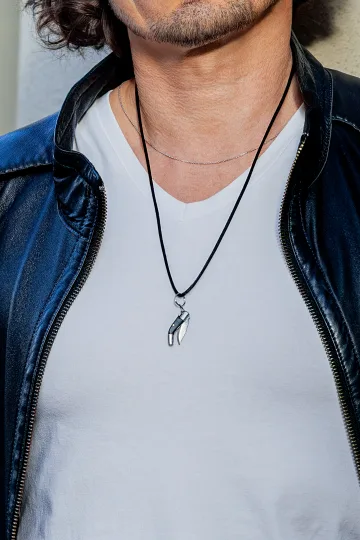
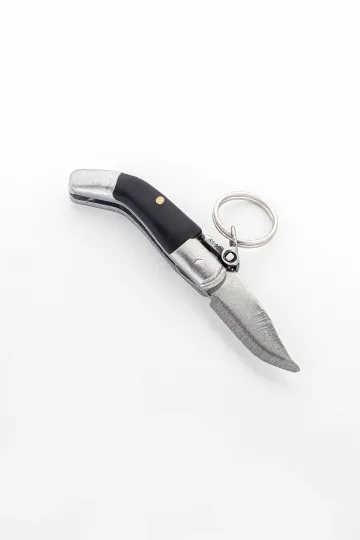
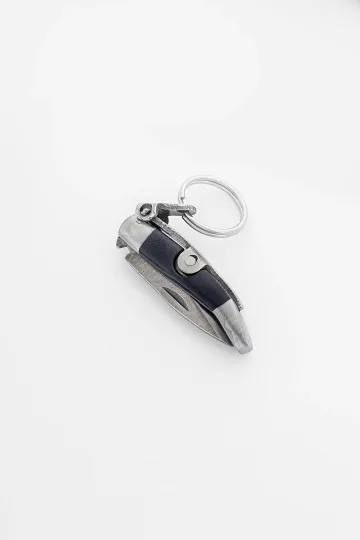
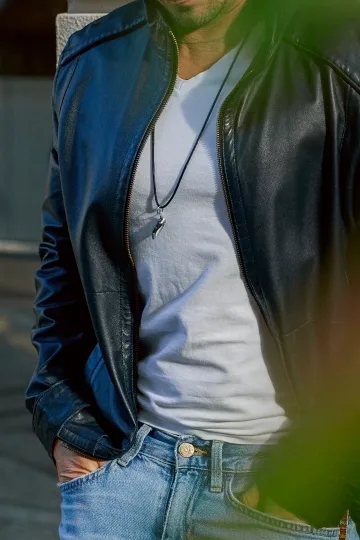
CAPAORA mini knife pendant
The 18th-century Spanish navaja in miniature: 40 mm of stainless steel, a real folding mechanism and a Palanquilla lock that clicks. An affordable gift to remember.
Authentic · Ships from Spain · 14-day returns
Price and tiers
Smoky quartz is an affordable stone. It occurs often, it does not depend on commodity exchanges and it is not an object of collector speculation, so its price is stable for years on end. That is a plus for jewellery: you pay mainly for the maker's work and for the metal, not for the name of the stone.
In finished pieces the bulk of the cost comes from the silver or gold and the complexity of the cut. A faceted stone is dearer than a simple cabochon, morion is dearer than light quartz, and antique pieces are valued for craftsmanship and history. But even the upper tier of smoky quartz stays within reasonable bounds; it is jewellery that needs no insurance and serves for decades.
Pairings with other stones
In terms of looks, smoky quartz is a calm, neutral stone that gets along easily with others.
With clear rock crystal it gives the classic contrast of dark and light. With rose quartz, a soft pairing of warm translucent tones from one mineral family. With amethyst, the violet variety of the same quartz, smoky reads as a kindred match. A warm duet comes with citrine; and if you want yellow and violet in a single stone, look at ametrine, the natural blend of citrine and amethyst. With black tourmaline and hematite, smoky quartz forms strict, dark combinations.
One note on composition: do not put smoky quartz next to very bright stones such as ruby or emerald, against which the restrained smoky tone will be lost.
Leave your email, we'll send your discount code. No spam, unsubscribe anytime.
The code arrives by email, valid on your first order.
Why "smoky topaz" is the wrong name
The most stubborn confusion around this stone sits inside its most flattering trade name. Victorian and Edwardian shop windows sold it as "smoky topaz", "Scotch topaz" or "Spanish topaz", and the label was handsome enough that it survived into modern online listings. The problem is that smoky quartz has nothing to do with real topaz at all.
What quartz and topaz have in common (almost nothing)
Topaz is an aluminium silicate carrying fluorine and hydroxyl, Al2SiO4(F,OH). Quartz is plain silicon dioxide, SiO2. Different composition, different crystal lattice, different hardness: topaz sits at 8 on the Mohs scale against 7 for quartz, and topaz has one direction of perfect cleavage, a weakness quartz simply does not possess. They are two unrelated minerals that ended up in the same display case only because some specimens look similar when light passes through them.
Where the wrong name came from
The name was born of ordinary counter trickery. In the nineteenth century topaz was ranked as the nobler and dearer stone, so a pale brown quartz sold far better under a label containing the word topaz. British jewellers were not alone in this: the same habit produced "Bohemian ruby" for garnet and "Cape ruby" for pyrope. Trade bodies have been trying to retire these names for decades, and the current guidance both here and across Europe is blunt: a mineral name may not be borrowed for a different mineral. National trading standards guidance on jewellery description follows the same line, since a misleading name touches consumer protection law as well as good manners.
Why it matters to a buyer
The difference is not cosmetic. It shows up in what you pay and in how you look after the piece. Genuine topaz costs more, is harder, and because of that cleavage plane it can part cleanly under a sharp knock in the wrong direction. Smoky quartz costs less, gives up a point of hardness and, having no cleavage, takes an accidental blow more forgivingly. Buy one believing it is the other and you have overpaid, and you may also be treating a stone with the wrong kind of caution.
How to react to the word in a description
On its own it is not proof of dishonesty. Plenty of decent workshops still write "smoky topaz" out of long habit while meaning exactly smoky quartz, and the stone in the box is entirely honest. What should make you pause is the old name combined with a price and a sales pitch pitched at real topaz. Ask one direct question: is this quartz or topaz. A serious seller answers in one word and does not take offence. Evasion, or a reply about "the topaz family", tells you what you need to know.
Smoky quartz and its irradiated relatives
To understand smoky quartz properly it helps to line it up beside its nearest relatives. Every one of them is the same mineral, quartz, and they differ only in which impurity sits in the lattice and how much radiation the crystal absorbed while it was growing.
Morion: the far end of the dark
Morion is smoky quartz taken by irradiation to the very edge. The colour is so dense that the stone looks black and passes almost no light; only a thin edge or a strong torch reveals the brownish smoky depth underneath. Cutters use it for signet faces, beads and heavy cabochons where an opaque dark stone is wanted without the cost of a true black gem. Curiously, the same name belongs to a sixteenth century military helmet, and the two words come from different roots entirely.
Citrine: what heat leaves behind
Natural deep yellow citrine is genuinely rare, and the great bulk of what sells under the name is produced in a kiln. Amethyst and some smoky quartz lose their colour centres when heated and settle into a warm yellow to orange brown. This is a long accepted treatment, disclosed by any careful trader, and it explains why so much shop citrine shares the same slightly burnt orange note. If you have ever wondered why a smoky crystal and a citrine bead can feel like siblings, that is because they often are.
Amethyst: the same trick, a different impurity
Amethyst is coloured by iron rather than aluminium, but the mechanism is recognisably the same: an impurity plus natural irradiation creates a colour centre that swallows part of the spectrum. Iron delivers violet, aluminium delivers grey brown. Both centres are fragile in heat and both bleach under long ultraviolet exposure, which is why the care advice for the whole quartz family reads almost identically.
Ametrine and prasiolite: hybrids and derivatives
Ametrine is a natural stone in which violet amethyst zones sit alongside yellow citrine zones inside one crystal: a single specimen carrying two temperature histories. Almost all of it comes from a single Bolivian deposit, which makes it a genuine geological oddity rather than a marketing category. Prasiolite, the leek green quartz, is usually made by heating particular Brazilian amethyst to around five hundred degrees, and the natural green material is scarce enough that most jewellers will never handle a piece.
The Scottish thread: cairngorm and Highland tradition
If smoky quartz has a cultural homeland, it is the Scottish Highlands. There the stone even carries its own name, cairngorm, after the Cairngorm mountains where it was worked out of granite veins for centuries.
What cairngorm is
Cairngorm is Scottish smoky quartz, running from honey yellow to a deep peaty brown. The local material often leans warm rather than grey, and that warm haze became the signature of Scottish jewellery. Crystals were gathered from weathered pegmatite pockets in the high corries, and by the eighteenth century collecting them was a small seasonal trade in its own right. Native cairngorm has been scarce for a long while, so most stones sold under the name today come from Brazil or Madagascar and are Scottish only in style.
The stone in Highland dress
Cairngorm settled firmly into Highland costume. It fastened the plaid brooch, capped the pommel of the dirk and sat in the hilt of the sgian dubh tucked into the stocking. A large smoky quartz in silver read as a mark of belonging: the stone had come out of the hills at home, not off a ship. Because the settings were usually generous and the metal was silver rather than gold, the effect was bold without pretending to be courtly, which suited the whole idiom of the dress.
Druids, Celts and folk belief
A layer of belief gathered around the dark stone in Celtic and later Highland tradition. It was carried as a guard against the evil eye, tucked into travelling bags for protection on the road, and credited with turning trouble away from the house. Antiquarian writers of the eighteenth and nineteenth centuries enthusiastically attached druids to all of this, though the evidence for any specific druidic use is thin and mostly romantic invention. The honest summary is that the stone was valued, worn and talked about; the rest is a cultural layer worth knowing and worth holding lightly.
The Victorian craze for all things Scottish
In the nineteenth century Britain fell hard for Scotland. The Waverley novels made the Highlands fashionable reading, the royal household bought Balmoral in 1852, and tartan, cairngorm and Celtic ornament followed into every drawing room in the country. So called Scottish pebble jewellery, silver set with smoky quartz, agate and bloodstone in geometric panels, was produced in quantity in Edinburgh and Birmingham. Good Victorian examples still turn up in British salerooms, and they are the reason a great many people meet smoky quartz first as an antique rather than a new stone.
Irradiation and treatment: where honesty ends
Smoky colour can be deepened or created outright, and a good deal of misunderstanding surrounds the practice. It is worth setting out calmly where treatment is normal and where the sharp practice begins.
Why stones are irradiated
Pale or colourless quartz carrying the right aluminium impurity is irradiated in a facility and darkens, repeating in hours what nature needed millions of years to do. It is done because an even, saturated smoky tone sells better than a patchy one, and because a great deal of cheap colourless quartz is available while good natural smoky material of a matched colour for a set is not. Gamma sources from cobalt are the usual method; electron beam treatment is also used and tends to produce a slightly different, greyer note.
Is irradiated quartz safe
Treatment uses sources that leave no residual activity in the stone, or the material is held back until any induced activity has decayed to background. In Britain the handling of irradiating equipment falls under the Ionising Radiations Regulations, and the trade of irradiated gem material is monitored in most major markets, with the United States requiring a specific licence for distributors. Stones that reach a shop counter through normal channels are not a radiation concern. The dose you receive from a smoky quartz ring is nil; the granite worktop in a good many British kitchens emits more.
Is it a fake
No. Irradiated quartz is still quartz, with natural composition and a natural lattice; only the intensity of the colour has been altered. It is a recognised treatment, in the same category as heat for sapphire. It becomes deception only when it is hidden, and disclosure is exactly what the trade codes require. A seller who says "colour enhanced by irradiation" is behaving properly. A seller who insists that every stone in a tray of forty identical dark ovals is untreated natural material is either uninformed or hoping you are.
How to suspect enhanced colour
Telling irradiated from natural quartz by eye is not reliably possible; it is laboratory work. There are soft hints, though. Treated stones often carry a suspiciously even, saturated, chemically clean colour with no zoning at all, and they arrive in large parcels of matched hue at a price that natural material of that consistency could never support. Natural smoky quartz much more often shows uneven distribution, a colour concentrated towards the crystal tip, or faint phantom banding. None of this is proof either way, which is precisely why disclosure matters more than detective work.
How the stone behaves over time
Smoky quartz has one quirk worth knowing before you buy: its colour, unlike its hardness, is not permanent, although it is very durable in practice.
Fading in light
The smoky colouring slowly pales under ultraviolet. Slowly is the operative word. To see a difference the stone needs years of constant strong sun, and ordinary wear under British skies plus indoor lighting will not touch it. Even so, there is no reason to leave a smoky quartz ring on a sunny windowsill for a decade, and a box or a pouch is the sensible resting place for anything you wear rarely.
Sensitivity to heat
Heat destroys the colour far faster than light does. Strong heating breaks down the colour centres in minutes, and a dark stone can go pale during careless soldering of the setting. This is why any torch work, resizing, retipping or reshanking, must be done with the stone out of the mount. A competent British workshop will do this without being asked; if a jeweller offers to size a smoky quartz ring with the stone in place, take the piece elsewhere. The same rule rules out steam cleaners and hot ultrasonic tanks.
Reversibility and stability
Natural smoky quartz is chemically stable in ordinary life and holds its colour for decades. If your stone suddenly lightens with no heat and no sun involved, the cause is almost always the treatment history rather than the quartz itself, since some hastily irradiated material is less stable than natural stone and drifts back. It is also worth knowing that a bleached stone can in principle be re irradiated back to colour, which tells you how physical rather than chemical the whole phenomenon is.
Send a friend a discount code, they save on their first order.
Smoky quartz in art and interiors
The stone found uses in jewellery and well beyond it, and that second life shows its character clearly.
Carving and glyptics
Large clean crystals and the total absence of cleavage make smoky quartz a comfortable material for a carver. It was turned into seals, cane handles, desk figures and inlay panels for caskets. Smoky translucency suits carving particularly well, because light entering the piece picks out the undercuts and gives depth that an opaque stone cannot. Continental workshops in the nineteenth century produced quantities of it, and museum collections in London hold good examples among their hardstone holdings.
Optics and the curiosities of early spectacles
Quartz occupies an odd page in the history of optics. In China dark lenses for spectacles were ground from smoky quartz long before tinted glass existed, and judges are said to have worn them in court so that no one could read their expression while evidence was given. The natural haze dulled glare, which made the lenses genuinely useful as well as usefully inscrutable. Rock crystal was also ground into reading lenses across medieval Europe, so quartz served the eye long before it served fashion.
The stone in a modern interior
Today large clusters and polished slices of smoky quartz are set out as objects in their own right: on a shelf, on a desk, in an alcove. The warm translucency catches lamplight well and does not argue with a restrained interior the way a bright mineral would. Bookends, coasters and lamp bases are cut from the coarser material, and the grey brown reads as a neutral in almost any room, which is a large part of why designers reach for it.
The psychology of choice: why the smoky stone appeals
It is worth separating the real reason for the attraction from esoteric promises. People choose smoky quartz less from a belief in grounding than for reasons that are entirely legible.
A calm neutral colour
Grey brown haze is close to a perfect neutral: warm but muted, visible but never loud. It sits happily against almost any wardrobe and does not tire the eye, unlike vivid stones that need a mood to carry them. For anyone who wears mostly navy, charcoal, camel and cream, which describes a great deal of British dressing, it is the easiest coloured stone there is.
The "honest stone" effect
Smoky quartz makes no attempt to look dearer than it is, and that appeals to people who are uneasy with conspicuous luxury. A large, visible, affordable stone lets you wear something expressive without any subtext of status. There is also a practical version of the same feeling: a stone you are not frightened of is a stone you actually wear, and jewellery that stays in a drawer gives nothing back.
An anchor and a ritual, without mysticism
The idea of grounding works as a psychological anchor: a familiar object on the hand helps a person gather themselves to exactly the degree that they invest in it. There is nothing supernatural about this. The same effect belongs to a worn wedding band or a pen kept for important work. Understood that way, the habit is useful and entirely honest, and it needs no claims about energy to justify it.
Buying it as a gift? Each one arrives ready to give.
 A branded Zevira box and a little card come with every order.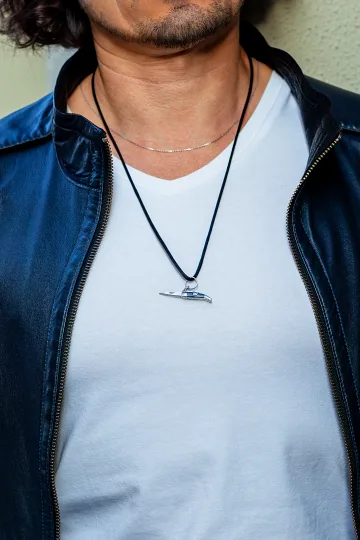




Facts that surprise
A few things about smoky quartz that rarely make it into ordinary descriptions.
Its colour is literally fossilised radiation
Smoky quartz is one of very few gems whose shade is created wholly by natural irradiation. Every tone, from the faintest haze to black morion, is a precise measure of how much radiation the crystal absorbed over its geological life, filtered through how much aluminium was available to record it. A dark crystal is, in a real sense, a dosimeter that has been running for millions of years.
You can switch it off in an oven
Heat smoky quartz hard enough and the colour centres break down, leaving the stone pale to colourless. The colour can be erased with warmth. This is precisely how some dark quartz is converted into an imitation of citrine, and it is also the reason jewellers remove the stone before any torch work.
Most citrine on sale is a heated relative of smoky quartz
Deep natural citrine is rare, so the yellow quartz in shop windows has usually been produced by heating amethyst or smoky quartz. Buying a citrine and a smoky quartz often means holding two states of the same crystal, separated by a few hundred degrees rather than by geology.
"Smoky topaz" does not contain a single atom of topaz
Despite the name, there is nothing of topaz in smoky quartz: different composition, different lattice, different hardness, different cleavage. The label is the fossil of an old counter trick, when quartz sold better under a dearer mineral's name.
It was made into early sunglasses
In China dark spectacle lenses were ground from smoky quartz long before tinted glass was invented. The natural haze softened the light, and the darkened lens conveniently hid the wearer's eyes, which mattered as much as the glare did.
Nature glues it to green amazonite
In Colorado smoky quartz frequently grows intergrown with vivid green amazonite in a single mineral pairing from the granite of the Pikes Peak region. The contrast of dark haze against strong green is striking enough that collectors prize the specimens uncut, and good plates from those pockets never reach a cutting wheel at all.
Highlanders wore it in a knife hilt
Cairngorm, Scottish smoky quartz, was set into the pommel of the dirk and the hilt of the small knife carried in the stocking. The stone was part of national dress and read as a statement that it had come from the hills at home rather than off a trading ship.
The morion helmet and the morion stone are namesakes by accident
The mineralogical morion, a near black quartz, and the sixteenth century morion helmet share a word but come from different roots. There is no link between them. The coincidence is purely verbal, and it has been confusing catalogue writers for a very long time.
Wear the symbol, don't just read about it. These are in stock:

Frequently asked questions
Is smoky quartz a precious stone? Formally it is classed as semi-precious, or as a jewellery-and-ornamental stone. The strict category of precious includes a narrow circle of stones such as diamond, ruby, sapphire and emerald. None of this affects the beauty and durability of smoky quartz.
Is smoky quartz radioactive? Is it dangerous to wear? No. Natural irradiation over millions of years created the stone's colour, but the stone itself emits practically nothing. The dose from a piece of jewellery is negligible and safe.
Can you wear smoky quartz every day? Yes. A hardness of 7 and resistance to water make it convenient for constant wear. Protect the stone from sharp blows and strong heat.
Does smoky quartz fade in the sun? Very slowly. The smoky colour lightens under prolonged ultraviolet, but a noticeable effect needs years of constant sun. The colour goes far faster under strong heat.
How does smoky quartz differ from amethyst? They are two coloured varieties of one mineral, quartz. Amethyst is violet, its colour given by iron and irradiation; smoky quartz is grey-brown, its colour given by aluminium and irradiation.
How can I tell smoky quartz from glass at home? Quartz is cooler to the touch and warms more slowly in the hand, heavier than glass of the same size, scratches glass (hardness 7) and usually has natural inclusions, whereas glass can hold round bubbles. A disputed stone is checked in a gemmological lab.
Why did my smoky quartz change colour? A natural stone is stable. A change of colour almost always means treatment: washed-off dye, a degraded resin in pressed dust, or faded artificial irradiation.
What are cairngorm and morion? Cairngorm is an old name for light smoky quartz, after the Scottish mountains; it has nothing to do with any other stone. Morion is the darkest, almost black smoky quartz.
How often should I clean smoky quartz? With daily wear, about once a week; with occasional wear, once a month. Warm water, mild soap, a soft brush, no special products.
Is smoky quartz magnetic? No. If a seller insists the stone is magnetic, that is a reason for caution: there may be an admixture of metal dust, or it is simply a deception.
About Zevira
In the Zevira collection, pieces with smoky quartz are made for everyday wear. The maker chooses the stone by clarity and tone, and the metal, 925 silver, white or yellow gold, so that it underlines the depth of the smoky colour.
We love this stone for its honesty: it does not pretend to be dearer than it is, it bears daily wear well and serves for years without special care. It is jewellery for every day, not for one season.
Rings, pendants and bracelets with smoky quartz in silver and gold, assembled by hand for everyday wear.