Amethyst in Jewellery: the History of the Calm Stone
In Greek, "amethyst" means "not drunk". The ancient Greeks believed the stone guarded against intoxication, and they drank their wine from amethyst cups. The name stuck for thousands of years, though the secret was probably simpler: a purple goblet filled with red wine looked, from across the table, as if it held water, so the drinker seemed perfectly sober.
Ever since, amethyst has carried a reputation as the stone of a clear head. In the tradition of crystal healing it is treated as a stone that helps the mind settle, credited with shielding you from racing thoughts and worry. The mineral itself has no proven effect. But the habit of picking up a familiar object, slowing your breath and taking a pause genuinely helps a lot of people gather themselves. That is the power of the ritual, not a property of the stone.
What follows, in order: where amethyst comes from, how its purple colour is born, how to tell a natural stone from a synthetic one, and how to wear it in jewellery.
The History of Amethyst: from Ancient Rome to Royal Courts
Amethyst has one of the longest biographies among gemstones, and it weaves together religion, power and trade.
The Ancient World
Amethyst turns up in the jewellery and amulets of Ancient Egypt: purple quartz went into signet rings and burial goods. Its present name came from the Greeks, amethystos, from a + methystos, "not drunk". A Greek legend goes with it: the god Dionysus was slighted by a maiden named Amethyst, and the goddess Artemis turned her into a clear crystal to protect her; the vexed Dionysus poured wine over the stone, and so it turned purple.
In Ancient Rome amethyst was the stone of sobriety and level-headedness, and it was set readily into rings. Pliny the Elder, in his Natural History (first century AD), described amethyst and repeated the belief that it wards off drunkenness, noting plainly that he did not believe a word of it himself. That is perhaps the earliest honest scepticism aimed at the stone.
Wear the symbol, don't just read about it. These are in stock:





The Middle Ages: the Bishop's Stone
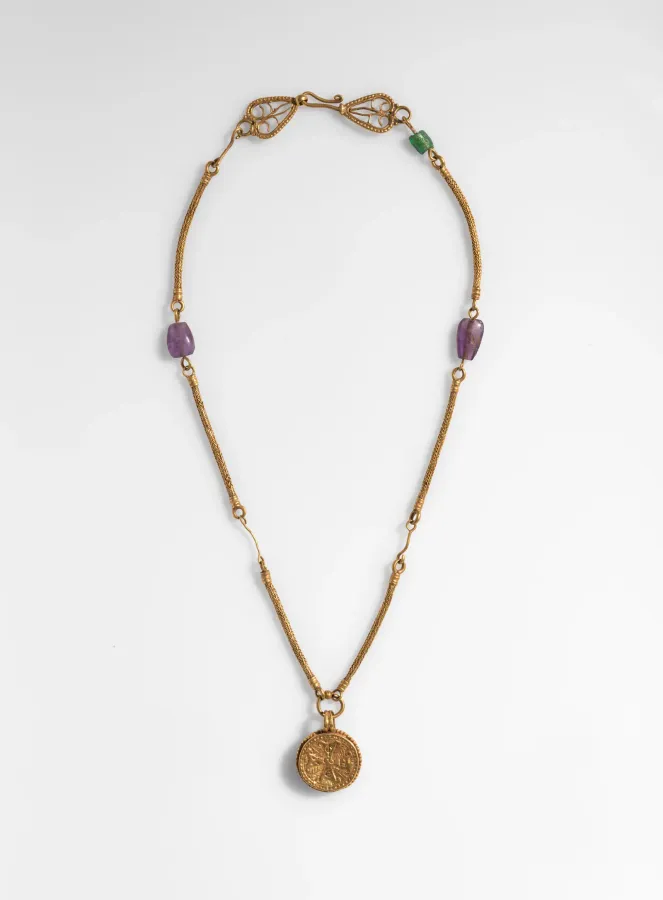
In the Middle Ages amethyst became a church stone. Bishops and cardinals wore amethyst rings as a mark of office, which earned the stone the nickname "the bishop's stone". Purple read as a symbol of holiness and spiritual purity, and amethysts were set into chalices, reliquaries and vestments. Jewellery made from it was costly and available mainly to the clergy and the nobility.
The Royal Houses of Europe
In the Renaissance amethyst became a material for monarchs: its deep purple read as "regal". For a long time the major source was the Bohemian deposits of central Europe, which yielded a dark, clean stone that spread through the courts of the continent.
The turning point came in the nineteenth century. Before mass mining in South America, amethyst was prized on a par with the costliest gems, but when huge deposits were found in Brazil and Uruguay, the price fell and the stone became affordable. From that moment it went from a symbol of exceptional luxury to an everyday gem, without losing any of its beauty.
Where Amethyst Is Born: Deposits and Quality
The quality of amethyst is largely set by where it comes from: different deposits give different shades, clarity and saturation.
Brazil
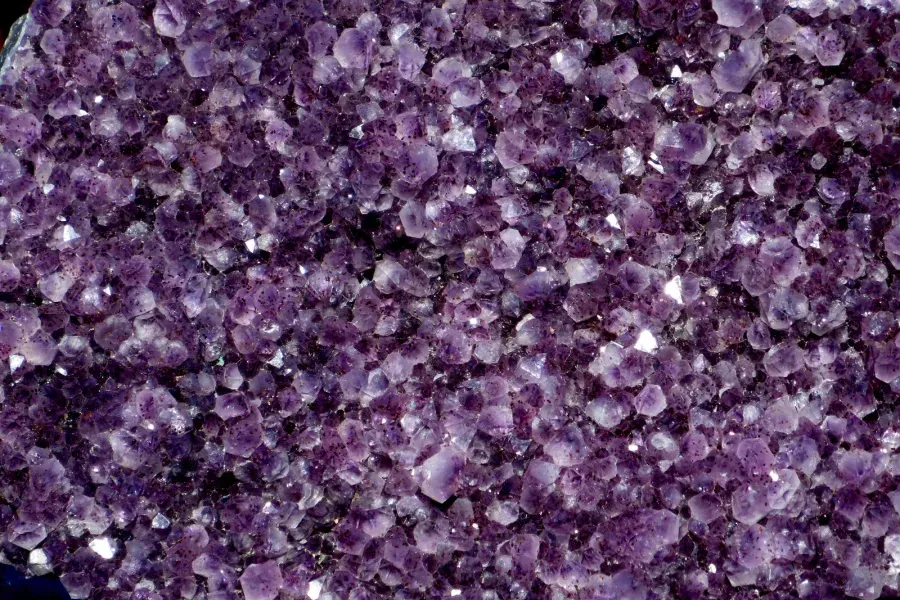
Brazil is one of the largest suppliers of amethyst in the world. The main deposits sit in the states of Rio Grande do Sul, Bahia and Minas Gerais. Brazilian stone runs in colour from pale lilac to deep purple, the crystals can be large, and the hollow geodes lined with crystals are often the size of a person. Thanks to its availability and steady quality, this amethyst is the backbone of the mass jewellery market.
Uruguay
Uruguayan amethyst is reckoned to be among the best for colour. The deposits lie in the Artigas province, on the border with Brazil. It is marked by a deep, saturated purple, often with a bluish undertone, and good clarity. Such stone is dearer than Brazilian and tends to go into premium pieces.
The Urals and the Far North
The Ural mountains have their own long history of amethyst mining, and so does the Kola Peninsula in the European north. Ural amethyst was prized for a beautiful purple colour; stones from the Tersky shore of the Kola Peninsula are known for their distinctive crusts on a dark base. Today this is more collectors' and regional material than mass raw stock.
Other Deposits
Notable amethyst comes from Zambia (a dark, saturated stone, close in colour to the Uruguayan), Madagascar (often lighter, but expressive), Mexico and the United States (the Four Peaks deposit in Arizona). Historically amethyst was also mined in Scotland, where it was called "Scottish topaz", but those deposits have long been exhausted.
To make it easier to compare shades and character by deposit, here is the main information in a table.
Amethyst wants silver and a bare collarbone. In yellow gold it looks cheap, and I won't hear otherwise.
What to Wear Amethyst With
Over years on shoots I have taken amethyst apart look by look. Here is what actually holds up, sorted by occasion and by the colour of the stone.
What do I wear amethyst with every day? For daily wear I recommend a pale lavender stone in silver or white gold on a thin chain. It settles easily over a white shirt, a grey roll-neck or denim and reads as quiet colour rather than a going-out piece. An open neckline shows it best: I suggest a shorter length so the stone sits at the collarbones.
Does purple actually suit my skin? Almost everyone, and especially a cool or neutral undertone. For cool skin I suggest silver and a deep purple with a blue cast; for warm skin, rose gold and a softer lavender stone. If in doubt, hold the stone to your wrist in daylight: the shade that does not grey your face is yours.
How do I build an evening look? For evening I choose a large, saturated amethyst against dark smooth fabric: black silk, dark green velvet, plum satin. The texture catches the light and the purple beside it looks richer. Earrings and pinned-up hair give the very effect for which the stone was once brought to court.
Is amethyst right for the office? Yes, as long as you keep it restrained. I recommend a small ring, discreet studs or a pendant under a shirt with a formal jacket in graphite, charcoal or navy. Just enough colour to keep the look from turning sterile, and not a carat more.
How do I wear amethyst in layers? In layers I pair amethyst with moonstone, rose quartz and pearl, all cool, calm company. Next to warm bright stones (citrine, carnelian) a fight for attention starts, and I keep those for other days. The rule is simple: one amethyst on a clean chain beats one squeezed between five pendants.

Turn on your camera, pick earrings, a pendant or a ring, and see the piece on yourself in real time.
Switch items in one tap.
Everything runs in your browser: no photo or video is ever uploaded.
The Purple Palette: Why Amethysts Come in Different Colours
Amethyst is the purple variety of quartz (SiO2). Its colour is born from a trace of iron and from natural irradiation that went on for millions of years.
From Pale Lavender to Deep Purple
Amethyst shades run across the whole purple spectrum:
- Pale lavender, almost light violet, sometimes with a pink undertone. The most common and affordable option, soft to look at in jewellery.
- Medium purple, an even, deep colour with no lean towards pink or blue. Considered the best balance of saturation and clean tone.
- Deep purple with a blue undertone, a sign of high iron content. A beautiful and comparatively rare shade.
- Dark purple, almost black in low light, but opening into a deep purple against the light. Highly valued.
Truly black amethyst does not exist: if a stone looks completely black, it is either another quartz or smoky quartz. "Green amethyst" (prasiolite, usually produced by heating amethyst) is no longer amethyst in gemmological terms; it is a trade name.
Gemmologists describe colour by three parameters: hue (the shade itself), saturation (intensity) and lightness (from light to dark). The most prized amethyst is of medium lightness, high saturation and a clean purple hue.
The Colouring: Iron, Irradiation and Heat
The colour of amethyst is one of the most curious stories in mineralogy, and it comes down to three things.
Iron. Pure quartz is colourless. When traces of iron get into the lattice as the crystal grows, the iron starts to absorb light in its own way, and the basis for colour appears. More iron, potentially a richer colour.
Natural irradiation. Iron on its own gives only a faint yellowish tint. What makes the quartz purple is the natural radiation from the surrounding rock, which over the years "switched" the iron ions into a special state (so-called colour centres). The longer and stronger the irradiation, the deeper the purple. This largely explains why stones from different deposits differ in colour.
Heat. If amethyst is heated above roughly 400 °C, the purple fades and turns yellow, and the stone becomes citrine. When purple and yellow zones sit side by side in one crystal, you get ametrine, a natural purple-and-yellow quartz, which forms in nature with no furnace at all. Most of the citrine on the market is, in fact, heated amethyst. The seller is obliged to disclose whether a stone has been heated.
Trade Grades by Colour
In the trade, amethyst shades are tied to settled names, and it pays to know them so you understand what you are paying for.
- Rose de France. The lightest, a pale lilac with a touch of pink. Cheap, soft in look, good for delicate jewellery, but the colour "washes out" easily in the sun.
- Siberian. Not a geography but a top grade of colour: a deep purple with red and blue flashes. Historically the Urals gave this, hence the name. Today the "Siberian" label more often covers top Brazilian or Zambian stone.
- Deep Russian. The rare summit: a saturated purple that does not darken to black and keeps its fire. The most expensive per carat.
- Bahia / Uruguayan. Dark, bluish-purple, with a dense tone. The premium middle of the market.
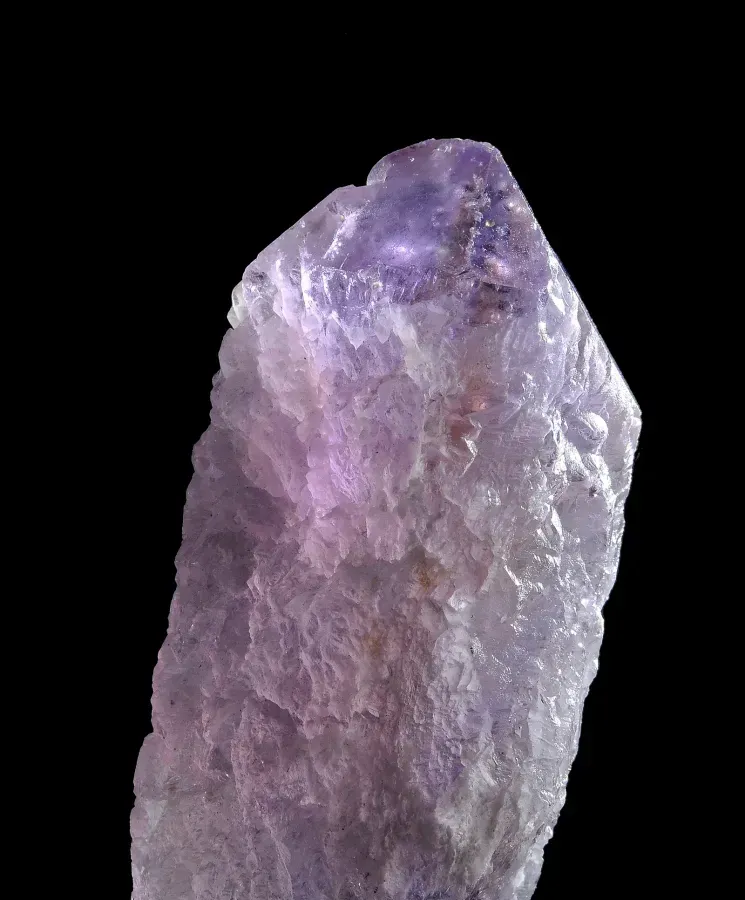
Colour in amethyst is often distributed unevenly: the intense colour sits in zones, nearer the tips of the crystal. The cutter turns the stone so the saturated zone faces up, into the table. That is why the same weight in carats can look quite different.
Cut and Shape
The cut decides how the stone shows its colour and catches the light.
- Faceted (oval, pear, emerald, cushion, round) brings out the brilliance and suits clean, transparent rough. A deep pavilion gathers the colour and makes the stone look darker, while a shallow cut lightens it.
- Cabochon (a smooth dome with no facets) is chosen for stone with inclusions or for beads: it shows an even colour rather than the play of facets.
- Fantasy cuts and carving go into collectors' and signature pieces.
Pale amethyst (Rose de France) is better in a large faceted cut: the facets add the depth it lacks. A dark stone, on the contrary, should not be made too thick, or it "closes up" and looks almost black in room light.
Customer reviews
Zevira is a real jewellery shop. Genuine payments, deliveries and customer thank-yous.
🥰🥰🥰 gracias
Ok, ¡gracias! 🙂
The Science of Purple: What Geologists Know About Amethyst
Step away from the legends about sobriety and towards mineralogy, and amethyst turns out to be more interesting still. It is one of the best-studied gems there is, and every one of its quirks has a clear physical answer.
Zoning, and Why the Colour Lies in Bands
Saw through a large amethyst crystal and you will often find that the purple does not sit evenly but in layers: some zones are densely coloured, others nearly colourless. These are traces of growth. The crystal built up face by face, like the annual rings of a tree, and in different periods it took in different amounts of iron. Those crisp purple chevrons that repeat the shape of the tip are what gemmologists call growth zoning along the pyramidal sectors. The cutter reads that map and tries to turn the stone so the densest zone ends up under the table.
This has a plain consequence in a finished ring. Look at a set amethyst from the side, through the girdle, and you may see that the deep colour is a wedge rather than the whole stone. That is normal and not a flaw; it only becomes a problem when the cutter has left the dark zone off-centre, so the stone looks lopsided from one direction.
Tiger-Stripe Effects and Moiré Patterns
In some amethysts a pattern shows up at a certain angle, resembling a thumbprint or fine ripples. These are Brazil-law twins, intergrown regions of quartz with opposite handedness to the lattice. Under crossed filters they give a handsome moiré figure by which a gemmologist recognises natural quartz at once: a grown stone usually has no such pattern.
Why the Purple Fades
The colour centre of amethyst rests on a fragile balance: an iron ion holds an extra charge knocked into it long ago by natural irradiation. Sunlight works the other way; ultraviolet pumps energy in and gradually returns the iron to its original state. The colour goes. The process is slow, years and decades on a windowsill, but it cannot be reversed without fresh irradiation. The same mechanism explains why a faded amethyst can only be brought back in a laboratory and never in the sun.
For anyone in a bright flat this is worth acting on. Amethyst is not a stone to leave in a dish on a south-facing sill, and it should not live in a display case by a window. A drawer or a pouch costs nothing, and the difference over ten years is visible side by side. The same goes for a summer holiday: a pale Rose de France worn every day on a beach fortnight will come home a shade weaker than it left.
Green Amethyst, Prasiolite, and Where the Green Comes From
Purple is not the only thing heat will do to amethyst. Warm certain iron-bearing amethyst, chiefly material from a few Brazilian localities, to a moderate temperature and instead of yellow it comes out a soft leek-green. That stone is prasiolite, and almost every piece of it on the market began as amethyst in a furnace. Truly natural prasiolite exists but is rare enough to be a collectors' matter.
Two things follow. First, "green amethyst" is a trade nickname rather than a species: the honest name is prasiolite, and any seller using the older phrase should say plainly that the stone is heated quartz. Second, the green is a good deal shyer than the purple, a pale mint that reads almost grey in dull weather, so it wants a bright metal and a cut with a deep pavilion to hold what colour it has.
Ametrine: Purple and Yellow in One Stone
When a purple amethyst zone and a yellow citrine zone sit side by side inside a single crystal, the result is ametrine. In nature it is very rare, and the main source is one mine in Bolivia, worked since colonial times. The boundary between the two colours runs sharply along a growth plane: on one side of the lattice temperature and irradiation added up to purple, on the other to yellow. Cutters like ametrine because a single stone holds two moods at once.
Hardness, Brittleness, and Why They Are Not the Same Thing
Amethyst is hard, 7 on the Mohs scale, and it scratches glass without trouble. But hardness is resistance to a scratch, not to a blow. In toughness quartz is middling: a sharp knock against the edge of a sink or a drop onto a tiled floor can chip or crack it, especially in a stone carrying internal strain. So a hard amethyst still deserves protection from impact, and a ring set with one is best taken off before rough work.
Upload a photo of your pet, someone you love, or an object. We'll build a 3D model and hand-cast it in pewter.



Famous Amethysts and Historical Finds
Like any old gem, amethyst has its legendary specimens, and they show how its fortunes changed.
Amethyst in Crowns and Regalia
Purple stone went readily into royal regalia, because the colour read as regal. Amethysts adorn European crowns and ceremonial objects, where they sit alongside pearls and rubies. Before the Brazilian deposits were found, such stones were valued on a par with expensive gems, and a large clean amethyst in a crown was a direct statement of the owner's wealth. In Britain the taste survived into the nineteenth century, when amethyst parures were among the pieces a family could show without appearing showy.
The "Delhi Purple Sapphire"
One of the best-known amethysts carries a misleading name, the Delhi Purple Sapphire, though it is an amethyst through and through. The stone earned a reputation as cursed because of a run of misfortunes that rumour attached to its owners. The story is almost certainly inflated, but it shows neatly how easily a gem acquires a dark legend. The stone is kept today in a museum collection in London along with a warning note from a former owner.
Urals Stones and the Cutters Who Worked Them
Amethyst from the Urals, with its deep purple and reddish flashes, was highly prized by lapidaries. The best material went into costly jewellery and decorative objects, and the grade name Siberian became shorthand for the finest colour. When the Urals veins ran out, the name stayed on as a trade label, and today Siberian means top colour regardless of where the stone was actually dug.
The Giant Geodes of South America
In Brazil and Uruguay amethyst grows in enormous cavities inside cooled lava. Some geodes lined with purple crystals stand taller than a person; they are sawn open and displayed as objects in their own right. It was these deposits that collapsed the price of amethyst in the nineteenth century and turned it from a stone for the few into a gem for every day.
Amethyst or a Similar Purple: How Not to Confuse the Stones
Besides glass and synthetics, amethyst is confused with other purple stones, sometimes honestly, sometimes not. A few pointers.
- Purple sapphire. Heavier and harder (9 on the Mohs scale against 7), shinier, and it scratches amethyst. It is also noticeably dearer, so the substitution usually runs the other way.
- Iolite (cordierite). Gives a blue-violet and changes colour sharply when turned: from purple to almost colourless and yellowish. In amethyst the shift in shade is far gentler.
- Fluorite. Soft (4 on the Mohs scale), scratched easily even by a knife, often multi-coloured in one crystal. It is rarely set in a ring precisely because of its fragility.
- Spinel and garnet (rhodolite). Give purplish-pink tones, but are usually smaller and lack the cool purple that is typical of quartz.
There is one everyday pointer: a hardness of 7 in amethyst means it scratches glass and is not scratched by a steel needle. But only a gemmologist can reliably tell close gems apart, by refractive index and density.
Three types of amethyst turn up on the market: natural, natural with treatment, and synthetic (grown in a lab). Their prices differ several times over, so it is worth being able to tell them apart.
Simple Checks at Home
Inclusions under a loupe. A natural amethyst almost always has tiny inclusions: small cracks, bubbles, growth lines. If under a loupe (even a 10x is enough) the stone is perfectly clean and uniform, that is reason to suspect a synthetic.
Pleochroism. Amethyst changes shade as you turn it towards the light, looking a touch redder from one side and bluer from another. In synthetics the colour is often too even from every angle. The test takes some practice.
Price and perfection. A synthetic amethyst is several times cheaper than a natural one of the same size and colour. If a flawlessly clean, vividly coloured stone is offered at costume-jewellery prices, it is most likely from a lab. A natural stone often lightens slightly towards the tip of the crystal and has unevenness of colour.
Treated Natural Amethyst
Natural stone is sometimes heated or irradiated for colour. This is still natural amethyst, just improved, and telling it apart from a synthetic matters more than fearing the treatment itself.
- Heated. A dark, saturated amethyst from originally plain rough is often the result of heating.
- Irradiated. In a lab the stone is brought to a very deep, almost black-purple colour. This is noted on the certificate.
- Dyed. A rarity and effectively a fake: a pale quartz is dyed. Sometimes the dye shows if you rub the stone with cloth.
How to protect yourself: ask the seller directly, check the certificate, and match the price against the claimed quality. An honest seller does not hide treatment.
What to Watch For
A few typical market traps:
- "Siberian amethyst" at a knock-down price. It simply is not mined in those quantities; more often a lab stone hides under that label.
- "Uruguayan" that is too cheap. Good Uruguayan amethyst is never a bargain-bin item.
- A swapped species. Purple quartz is sometimes confused with other purple stones. Hardness helps indirectly: amethyst is exactly 7 on the Mohs scale.
Cheap jewellery of dubious origin is a separate risk: low-grade dye and settings can irritate the skin of sensitive people. It is safer to buy from trusted jewellers.
Certificates
For a dear stone (a large amethyst or a premium piece) it makes sense to request a certificate from a gemmological lab. Points of reference: the Gemological Institute of America (GIA) and the established European gemmological laboratories. The certificate confirms the stone is natural, along with its size, quality and any treatment.
Forged certificates exist too, so it is worth checking the document number on the lab's official website. If the number does not come up, it is a fake.



The Energy of Calm: from "Not Drunk" to Clarity of Mind
The ancients understood the name "amethyst" literally, as protection against clouding: against drunkenness, against worry, against the bustle of thoughts. Strip away the mysticism and a simple observation remains: the habit of stopping, taking a familiar object in hand and pausing helps you ease the pace. The pause does the work, and the stone is the excuse to slow down.
Meditation and the Third Eye
In the yogic tradition amethyst is linked with the sixth chakra, Ajna, or the "third eye", which is credited with intuition and clarity of vision; the stone's purple matches the colour of this chakra in the iconography. This is cultural symbolism, not anatomy. For those drawn to the idea of composure and focus, fluorite, a stone of clarity and focused thinking, is often paired with amethyst by the same logic.
Where the Feeling of Comfort Comes From
The idea of "grounding" and "centring" is more honestly kept in the column of beliefs: there is no basis for thinking the stone sends the brain some signal. Tactile comfort, on the other hand, is quite real. Quartz conducts heat well, so amethyst feels slightly cool, and a smooth polish is pleasant under the fingers. A sea pebble gives the same effect. Tradition assigns a similar soft, soothing role to amazonite, a stone of calm and balance.
The Colour of Power and of the Spirit
Purple did not attach itself to amethyst as a regal and episcopal shade by accident. For centuries purple dye was expensive and available to few, so any purple object read automatically as a mark of high standing. Amethyst delivered that colour in stone, hard and lasting, and so became a convenient language for those whose office required them to show rank and authority. The symbolism of sobriety was laid over the symbolism of status, and the stone came to say two things at once: a clear head and a high place.
The Stone of February and the Zodiac
In the western tradition of birthstones amethyst belongs to February, and in astrology it is more often tied to Aquarius and Pisces, the signs of winter. That is a late commercial arrangement rather than ancient knowledge, but it is convenient as a ready reason for a gift. It is more honest to treat it as a pleasant convention: a purple stone suits a person because the colour suits them, not because they were born in February.
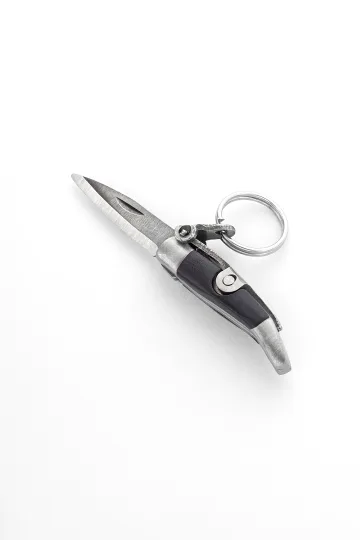
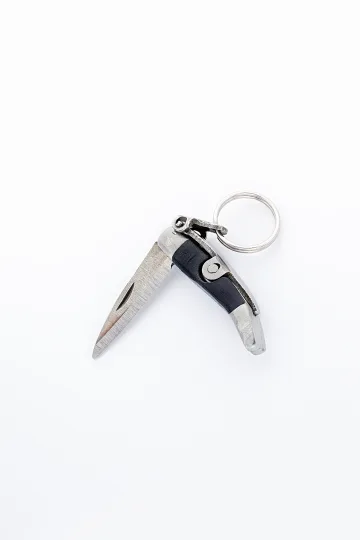
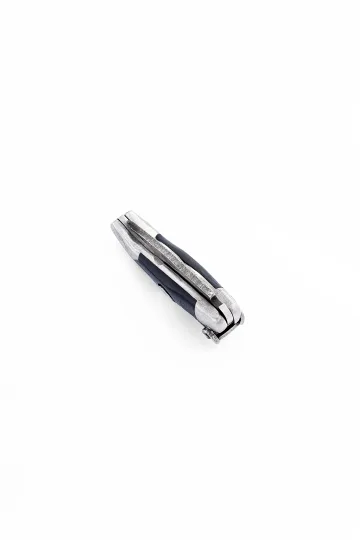
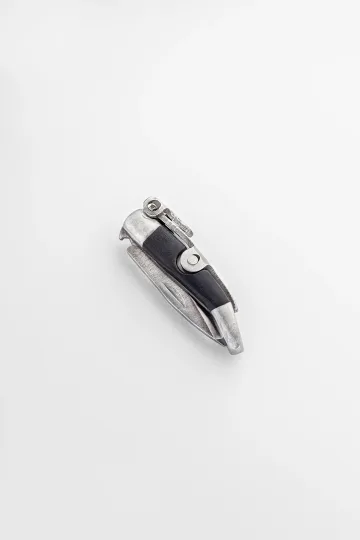
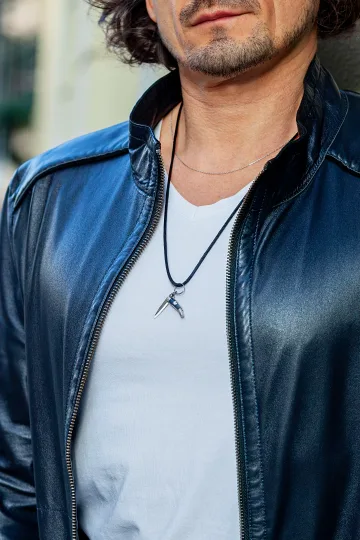
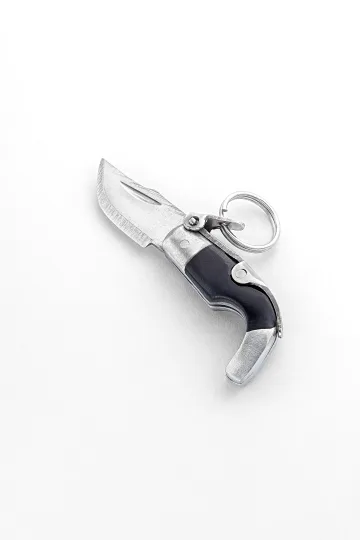
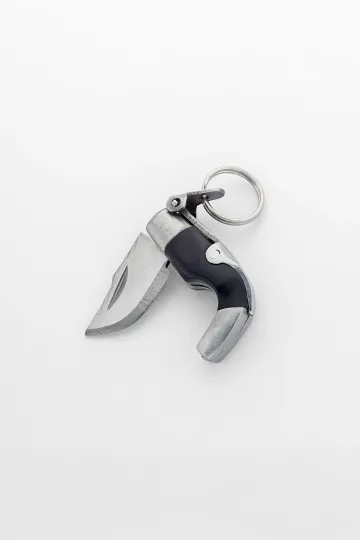
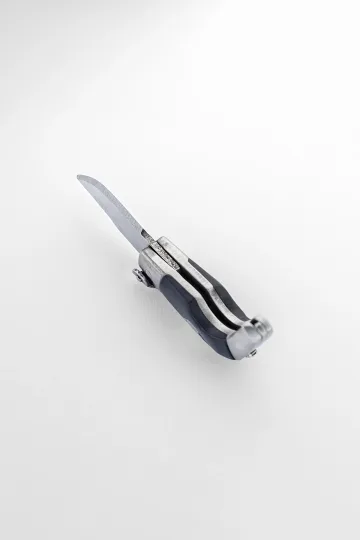
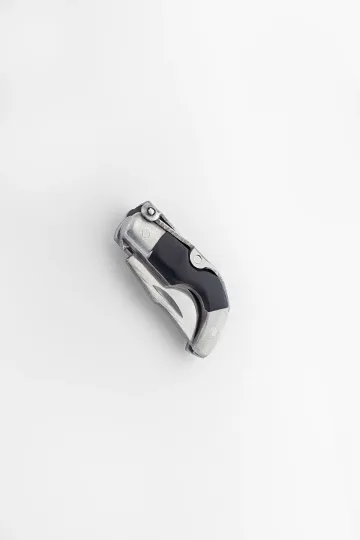
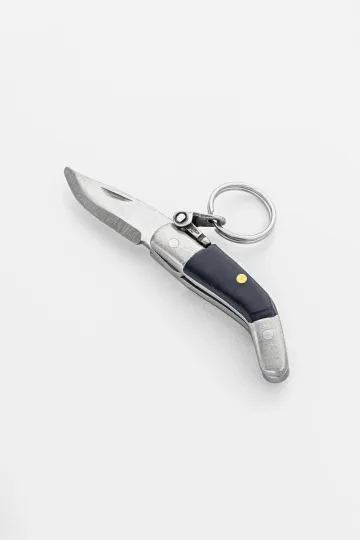
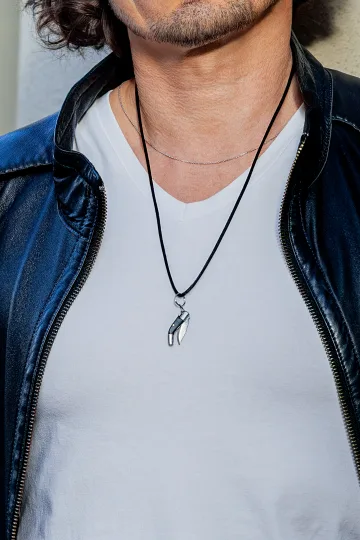
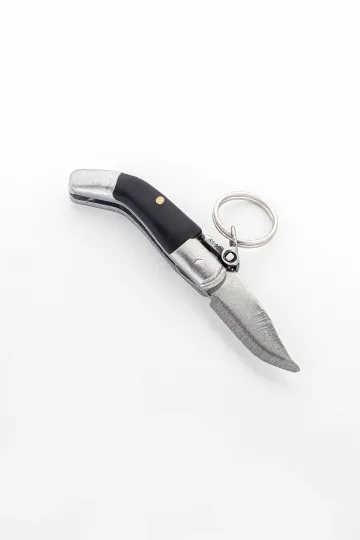
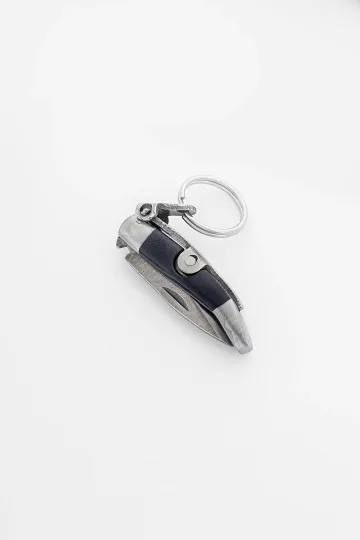
CAPAORA mini knife pendant
The 18th-century Spanish navaja in miniature: 40 mm of stainless steel, a real folding mechanism and a Palanquilla lock that clicks. An affordable gift to remember.
Authentic · Ships from Spain · 14-day returns
Amethyst in Culture and Art
A stone with a biography this long was bound to settle into the art and everyday traditions of many peoples.
In Church Art
In the Christian tradition purple is the colour of fasting, of penitence and of preparation for the great feasts. Amethyst duly became a church stone: it was set into the rings of senior clergy, into book covers, into liturgical plate. In medieval and Renaissance images of the clergy a purple stone in a ring was read instantly by the viewer, the way a badge of rank is read today. It was not decoration but a sign that needed no caption. The custom outlived the Reformation in England, where a bishop's ring remained part of the office.
In Carving and Glyptics
Amethyst suits a carver: it is hard enough to hold a fine line and clear enough to play in transmitted light. It was cut into cameos and intaglios, into seal rings with a coat of arms or a scene engraved in the stone. The impression of such a seal in wax authenticated a document, so the purple stone was not an ornament but a working instrument of authority and correspondence.
In Folk Belief
Beyond palaces and cathedrals, amethyst lived on in simple beliefs. It was slipped under a pillow against bad dreams, carried as a charm on a journey, given for luck. Much of this follows the same logic as the sobriety stone: a person feels steadier with a familiar object of good reputation about them. The stone does no work on the owner's behalf, but it serves as a quiet reminder and a point to hold on to.
The Return in an Age of Mindfulness
In the twentieth century amethyst slipped into the shade for a while, crowded out by brighter and more fashionable stones. New life came from the wave of interest in meditation, in quiet ritual and in natural materials. Today it is chosen for its quiet beauty and its history rather than for any promise of a miracle, and in that it is more honest than many fashionable gems: it has something to say without any mysticism at all.
Leave your email, we'll send your discount code. No spam, unsubscribe anytime.
The code arrives by email, valid on your first order.
How to Wear Amethyst: Jewellery for Meditation
Amethyst works best when you see it and touch it regularly. Jewellery is a convenient way to keep the stone close.
Pendants
A pendant with amethyst is a classic for those who are after calm. It is always to hand: you can take the stone out during the day, hold it in your palm, use it as a visible "anchor" that reminds you to pause.
Size to suit the purpose: 1 to 2 cm is discreet and handy for work, 2 to 3 cm is more noticeable and good for home, 3 to 5 cm is an expressive evening option. The setting shapes the mood: 925 silver and white gold underline the cool, clear side of purple; rose gold makes the look warmer and softer.
Bracelets
A bracelet keeps the stone in view on the wrist, and every touch works as a quiet reminder to slow down. Options:
- With a single stone. A simple, restrained choice for those who love minimalism.
- From beads. Strand bracelets of amethyst beads (often 8 mm) are traditionally chosen for practice; sometimes they are used as prayer beads, telling them off under an affirmation.
- Mixed. Amethyst with rose quartz, moonstone or lapis lazuli, for those who like to combine stones.
A bracelet should sit comfortably: not pinching the wrist and not sliding off.
Rings and Brooches
A ring with a small amethyst (around 0.5 to 1.5 carat) works as a constant visual reminder and looks well on the index or ring finger. A brooch is a restrained option for a formal look: a purple accent on the chest that stays appropriate in the office.
How to Choose a Setting
A few simple rules:
- Minimalism wins. The simpler the setting, the more the stone itself "speaks".
- Silver is the safe choice. The cool metal pairs well with purple; 925 silver is the sturdier option.
- Size by scenario. For every day a stone of 1 to 3 carats is comfortable; larger for special occasions.
Caring for Amethyst
Amethyst is hard enough (7 on the Mohs scale), but it still needs attention. Nothing complicated, only consistency.
Cleaning. A soft brush (a toothbrush will do) and warm water with a mild soap. No hot water and no harsh chemicals. Gently clean around the stone, rinse, and dry with a soft cloth. A heavily soiled piece can be soaked for an hour in warm soapy water. Polish a silver setting from time to time with a special cloth.
Light. Amethyst can fade in long, direct sun, a process that runs over months and years. Keep the piece in the shade and do not leave it on a windowsill.
Storage. A soft pouch of natural fabric or a lined box will protect against scratches and dust. Several pieces are best kept separately. Avoid sharp swings in temperature, which can provoke micro-cracks.
The Psychology of the Choice: Why People Are Drawn to Purple
Behind the choice of a stone there is usually not geology but a feeling. Amethyst attracts for understandable reasons, and they say more about the person than about the mineral.
A Colour Halfway Between Warm and Cool
Purple is assembled from warm red and cool blue, and psychologically it reads as intermediate, calm without being indifferent. It does not shout the way pure red does, and it does not hold you at arm's length the way an icy blue can. For many people that balance comes closest to the mood of composed quiet for which the stone is bought in the first place.
A Pull Towards Ritual
Part of the appeal of amethyst lies not in the stone but in the gesture. Taking a cool smooth object into your hand, turning it over, breathing out, that is a short ritual which helps you change gear. The stone works here as an anchor for a habit: you catch sight of it on your wrist and remember to slow down. The same mechanism sits behind prayer beads and behind the habit of turning a ring on a finger.
A Wish for History Behind the Beauty
Amethyst is also chosen by people who care about the biography of an object. A stone that has passed through Roman rings and bishops' vestments feels weightier than an anonymous trinket. It is a calm, unshowy form of self-expression: to wear something with a memory attached, without explaining it out loud.
Amethyst as a Gift: for Whom and on What Occasion
Amethyst has several ready-made occasions that make it a convenient gift.
- The February stone. In the Western tradition of birthstones, amethyst belongs to February, so it is a logical choice for those born in winter and for February birthdays.
- Anniversaries. It is traditionally linked with the sixth wedding anniversary, and in some lists with the seventeenth and thirty-third. A gift "by the stone" looks considered, even if the occasion is a formal one.
- Universal across gender. Purple suits men's and women's jewellery equally: for him, a signet ring or a bracelet with a dark stone; for her, a pendant or earrings.
- An occasion with no date. A stone with a reputation for calm is fitting to give to someone in a tense period: cufflinks, an anchor pendant, a strand bracelet, as a quiet gesture rather than a loud one.
If you give it with the meaning "the stone of a clear head", it is more honest to present this as a fine tradition rather than a promise of effect. That way the gift does not turn into an imposed belief.
Send a friend a discount code, they save on their first order.
Facts That Catch People Out
Even a familiar stone has turns in its story that rarely come up.
- The citrine in the window was probably an amethyst. Natural yellow quartz is scarce, so most citrine is produced by heating amethyst above roughly 400 °C. Purple and yellow are, in effect, two states of one mineral.
- The green stone in the next tray may also have been an amethyst. Prasiolite, sold under the trade nickname green amethyst, is nearly always heated purple quartz from a handful of Brazilian sources. Natural prasiolite exists but is a collectors' rarity.
- You can fade an amethyst on your own windowsill. The very ultraviolet that once helped build the colour slowly discharges it. Over years, a bright stone on a sunny window visibly pales.
- Siberian amethyst has long since stopped coming from Siberia. The name survives as a label for top colour. Today it more often covers the best Brazilian or Zambian stone.
- The Greeks drank from amethyst cups to stay sober. The name of the stone literally means not drunk, and a purple cup of wine looked from a distance as though it held water, which added to the illusion of abstinence.
- There is no such thing as black amethyst. If a stone looks completely black, it is a different quartz. A genuine amethyst always opens up purple when held to the light.
- Two colours can live inside one crystal. Ametrine, a natural intergrowth of purple and yellow zones, comes chiefly from a single Bolivian mine.
- Geodes can stand taller than a person. Hollow stones lined with amethyst reach adult height in South America; they are sawn open and set up as objects in their own right.
- Perfect clarity is a reason to look twice. A natural amethyst almost always carries small inclusions. A flawlessly clear, evenly coloured stone at costume-jewellery money has usually been grown in a lab.
Buying it as a gift? Each one arrives ready to give.
 A branded Zevira box and a little card come with every order.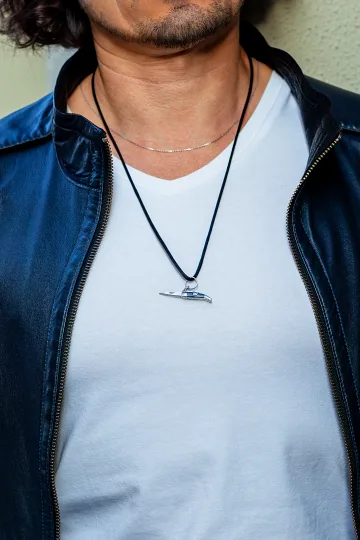





Frequently Asked Questions
Is amethyst a precious stone? In the strict sense, diamond, ruby, sapphire and emerald count as precious, and amethyst is reckoned semi-precious (a jewellery and ornamental stone). But a quality Uruguayan amethyst is valued highly.
Why does amethyst fade in the sun? Its colour was created by natural irradiation, and ultraviolet gradually "discharges" the colour centres. This is a natural process and an indirect sign of being natural.
How do I tell amethyst from purple glass? Glass is softer: amethyst (7 on the Mohs scale) scratches it. Glass is usually evenly coloured and free of inclusions, while a natural stone has a slightly uneven colour.
Can I wear amethyst in water? Yes, it does not fear moisture. Avoid only sharp swings in temperature, which can provoke micro-cracks.
Does amethyst have healing properties? There is no scientific evidence. Amethyst does not cure illness, and it must not be treated as a medicine. One honest thing can be said: for many people a piece of jewellery with the stone becomes a pleasant ritual and an excuse to take a pause.
Does amethyst need its "energy cleansed"? Esoteric traditions speak of this, but it is a matter of belief. In practice the stone needs only physical cleaning: a soft brush, warm soapy water, careful storage.
How long does a piece of amethyst jewellery last? With normal care, decades. The stone is hard and reluctant to scratch; the setting usually needs repair sooner than the amethyst itself.
Amethyst Today
In the twentieth century interest in amethyst quietened, but with the wave of fashion for mindfulness, meditation and crystals it has come back. Today it is chosen by those who meditate, who look for a calm ritual in the rush of things, or who simply love the purple colour and the stone's ancient history.
And in that, perhaps, lies the main point. You can value amethyst without believing in the energy of stones at all: for its beauty, for a biography thousands of years long, and for the simple tactile gesture of taking a cool, smooth stone in your hand. A stone that saw the rings of Romans and the vestments of bishops lives today, quite calmly, in an ordinary everyday pendant.
Handmade pendants, bracelets and rings with natural amethyst, for meditation and calm every day.
Wear the symbol, don't just read about it. These are in stock:


About Zevira
In the Zevira catalogue you will find jewellery with natural amethyst, from minimalist pendants to expressive bracelets. Every piece is made with an understanding of the stone's history and its energy of calm.