Sapphire: chemistry, geology, history, and how to care for the stone
What a sapphire really is
A sapphire and a ruby are the same mineral. The only difference is the trace element inside: add chromium to corundum and you get a red ruby, add iron and titanium and you get a blue sapphire. Everything else is identical: the same formula, the same crystal lattice, the same hardness. A sapphire is simply coloured corundum of any colour except red.
That is the first thing worth grasping before you read about "stone energy" or engagement rings. A sapphire is neither magic nor an investment asset with a guaranteed return. It is a very hard, very stable crystal of aluminium oxide that passes light beautifully and almost never scratches. Below we go through it properly, shelf by shelf: what it is made of, how it grows underground, where it comes from, how to tell the real thing from glass, and how to look after it.
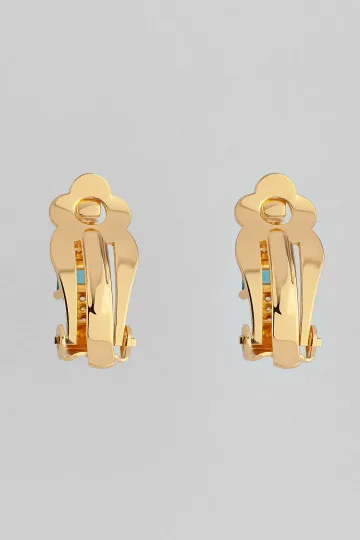
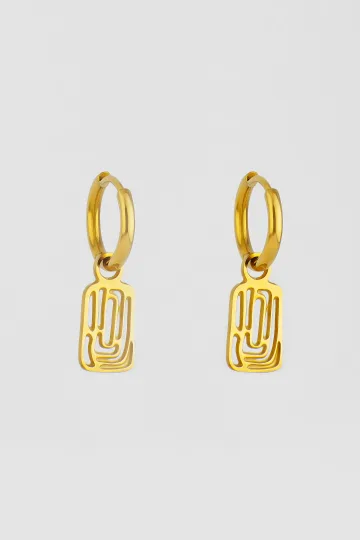
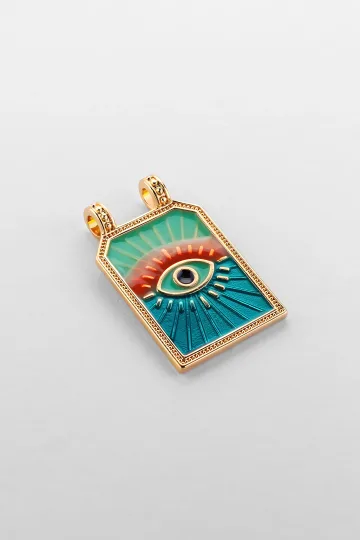
Wear the symbol, don't just read about it. These are in stock:




The chemistry and physics of sapphire
Composition and formula
Sapphire is crystalline aluminium oxide, corundum, with the chemical formula Al₂O₃. In its pure form corundum is colourless (a colourless sapphire is called a leucosapphire). The colour comes from microscopic traces of foreign elements that slot into the lattice in place of individual aluminium atoms:
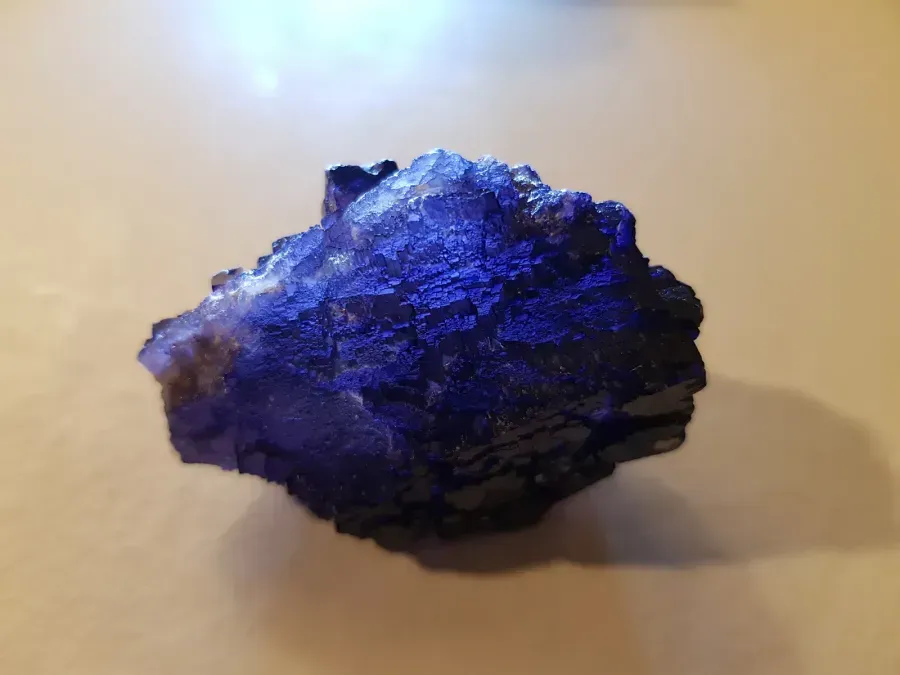
- Blue, the joint presence of iron and titanium. An electron "hops" between iron and titanium ions, and at that instant the crystal absorbs part of the spectrum, leaving blue for the eye. This mechanism is called charge transfer.
- Yellow, iron.
- Pink, chromium in a small concentration (with a lot of chromium the stone becomes a ruby).
- Green, iron in a different proportion.
- Violet and lavender, a mix of chromium and iron.
- Padparadscha (pinkish-orange), a rare combination of chromium and colour centres tied to lattice defects.
A fraction of a percent of an impurity is enough to change the colour of the stone. That is why two sapphires from the same deposit can differ in shade.
Hardness and toughness
On the Mohs scale sapphire scores 9 out of 10. Only diamond is harder. In practice that means nothing in daily life can scratch it: not sand (quartz, hardness 7), not metal, not glass. That is why corundum is used in jewellery as well as in watch crystals, bearings, and abrasives.
An important caveat: hardness and toughness are different things. Hardness is resistance to scratching, while toughness is resistance to impact and chipping. Sapphire has no pronounced cleavage (planes along which a crystal splits easily), so it is tougher than many stones. Yet a sharp point blow to the edge of a facet can still leave a chip, especially if the stone already holds a crack. Calling sapphire "indestructible" is wrong: it is simply very wear-resistant.
Structure and density
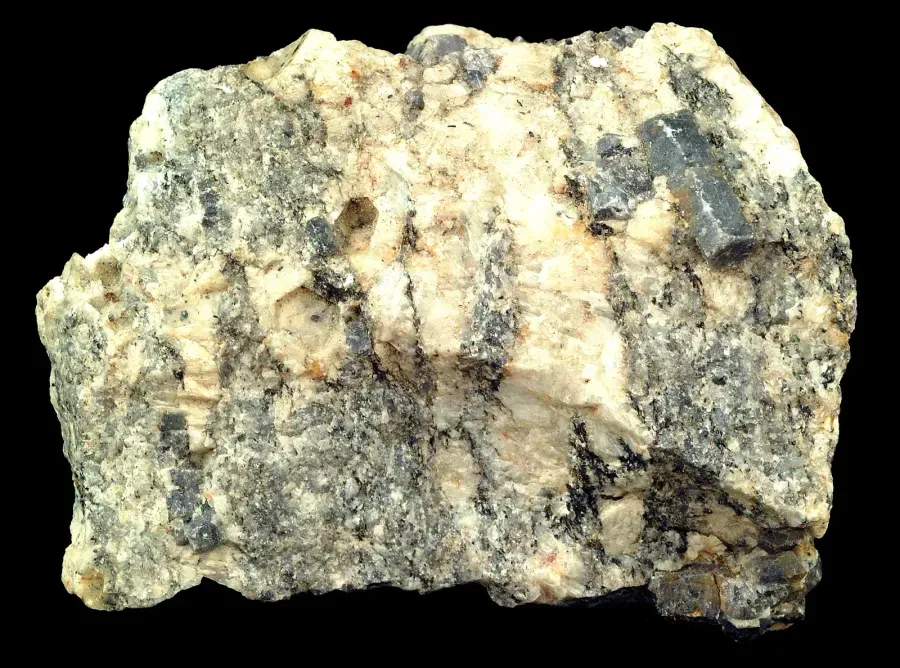
Corundum crystallises in the trigonal system (often grouped with the hexagonal family). Natural crystals usually take the shape of an elongated six-sided prism or a barrel-like bipyramid. The density of sapphire is roughly 3.95 to 4.1 g/cm³, meaning the stone is noticeably heavier than glass of the same size. This is one of the simple tells when checking: a glass imitation feels distinctly lighter in the hand.
Optics
- Refractive index around 1.76 to 1.77. Sapphire bends light more than glass, so a well-cut stone looks "deep" rather than flat.
- Birefringence, corundum is optically anisotropic: a ray of light splits in two inside it. Under a loupe you can see a faint doubling of the back facets through the stone.
- Dispersion (the splitting of light into spectral colours, the "fire") in sapphire is low, around 0.018. So it does not "spark with a rainbow" like a diamond; it glows with an even colour. That is its nature, not a flaw.
- Pleochroism, a sapphire looks slightly different from different directions. A blue stone can appear either a saturated blue or a bluish-green depending on the angle you view it from. The cutter takes this into account so that the best colour shows from the top.
A separate optical effect is asterism, the "star". When a stone holds many fine parallel needle-like inclusions (usually rutile), a correctly domed cabochon cut produces a six-rayed star on the surface. That is how a star sapphire is made.
A blue sapphire belongs in cool metal. Next to yellow gold it smells of the pawnshop, and don't argue.
What to wear sapphire with
Over years on set I have taken sapphire through dozens of looks, from denim weekdays to evening exits. Here is what actually works, occasion by occasion.
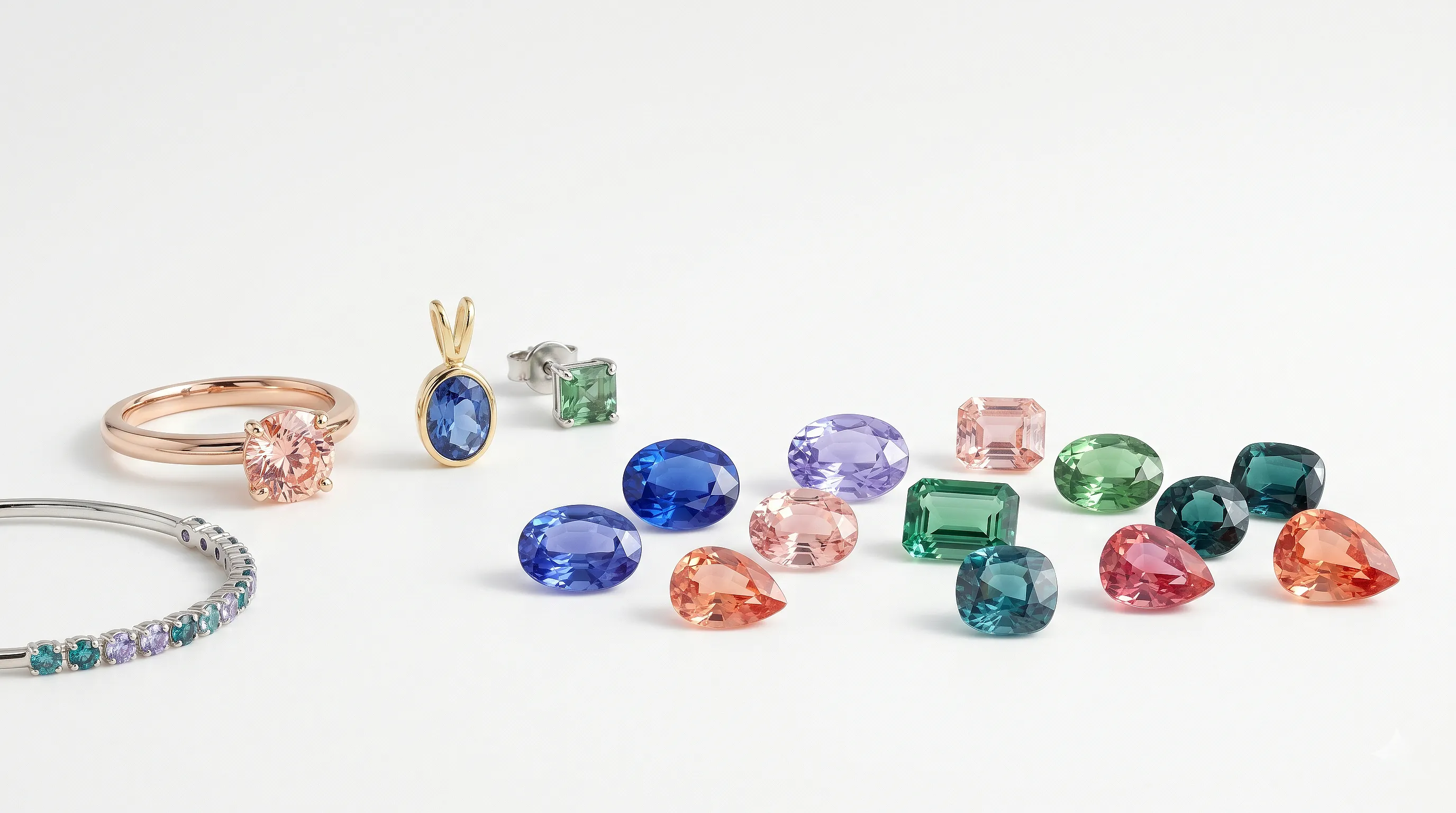
What do I wear sapphire with every day? For daily wear I recommend a slim ring with a small blue stone or a pendant on a short chain. I set them against a white shirt, grey cashmere, jeans, a linen dress in a neutral colour: the blue reads as the single point that pulls a calm palette together. If you want it softer, I suggest a peach or lavender sapphire; they get on with beige, olive and powdery tones.
Is sapphire right for the office? It is, and that is its strength: it looks expensive without shouting. I recommend a blue stone in white gold or small stud earrings, which read as quiet confidence. I pair them with deep cool shades: navy, graphite, wine.
How do I build an evening look? For the evening I choose an open neckline, a dark smooth dress with a faint sheen (silk, satin) and a sapphire necklace or large earrings. White metal and a border of small clear stones give the formal accent. If the dress is plain and dark, the blue sapphire becomes the only spot of colour, and that is enough.
Which metal should I pick for sapphire? I match the metal to your skin's undertone. A cool undertone I steer towards white gold and platinum; a warm one opens up in yellow and rose gold. Blue and violet stones look more composed in white metal, while I send a peach sapphire or a padparadscha into a warm setting, where a white metal beside them turns washed out.
How do I wear a coloured sapphire without overdoing it? I keep one simple rule: no more than two noticeable sapphire accents at once, or the look overloads. Restraint suits this stone. If you want to work out which shade suits whom, see the breakdown in sapphire colours in jewellery. Drawn to warm red stones? That is a separate story, ruby and its properties, chemically a mineral close to sapphire; the same centuries-old love of saturated colour shows up in red coral as a luxury material.

Turn on your camera, pick earrings, a pendant or a ring, and see the piece on yourself in real time.
Switch items in one tap.
Everything runs in your browser: no photo or video is ever uploaded.
How sapphire forms in nature
Corundum is born where there is plenty of aluminium and little silicon. Silicon is aluminium's "rival", and if a rock holds a lot of it, ordinary feldspar or mica forms instead of corundum. That is why sapphire occurs in specific geological settings.
Two main routes of formation:
- Metamorphic. Aluminium-rich rocks (bauxites or clay sediments, for example) sink to great depth, where high temperature and pressure recast them. Under such conditions aluminium recrystallises into corundum. Most classic sapphires formed this way, over millions of years.
- Magmatic. Corundum crystallises directly from alkaline basaltic magma or related melts. When such basalts break down at the surface, the crystals wash into rivers.
After that, simple physics takes over. Sapphire is hard and heavy; it does not break down as water carries it and settles to the bottom alongside other dense minerals. So placer deposits form: river and beach sediments from which sapphires are recovered by washing, just like gold. Historical mining in Sri Lanka has mostly been exactly this kind of placer work.
How long a sapphire takes to grow
A corundum crystal does not appear within a human lifetime. A metamorphic sapphire gains its size over spans measured in tens and hundreds of millions of years: the rock heats slowly at depth, aluminium and oxygen atoms rearrange themselves into a dense lattice, and the crystal adds material layer by layer. Those colour zones inside a stone, alternating bands of stronger and weaker blue, are the record of that growth: each band answers to a period when the composition of the feeding solution shifted slightly. A gemmologist can sometimes read the history of a crystal from those zones the way you read growth rings on a cut tree.
Why Kashmir sapphire is special
The Kashmir deposit high in the Himalayas produced stones with a velvety blue that is still called the benchmark. The secret lies in the finest inclusions scattering the light: minute needles and cloudlets inside the stone soften the shine and give the colour depth, as though the blue were seen through a light haze. The deposit was found after a landslide in the early 1880s, worked hard for a handful of decades, and by the start of the twentieth century the rich seam was effectively exhausted. So a Kashmir sapphire is less a matter of geography than of a specific historical material that is barely mined any more, which is where the legendary reputation comes from.
Where fancy colours come from
The same corundum from a single deposit can come out blue, yellow, pink, or greenish; everything depends on which impurity entered the lattice during growth and in what concentration. Where the feeding solution carried iron and titanium together, the crystal turned blue. Where iron alone prevailed, the result was yellow or greenish. A drop of chromium gave pink, and the rare pairing of chromium with lattice defects produced orange-pink padparadscha. That is why the rich palette of fancy sapphires comes precisely from placer deposits such as those of Ceylon and Madagascar: water carried crystals there from rocks of differing composition, and stones of every shade end up together in a single washing pan.
Customer reviews
Zevira is a real jewellery shop. Genuine payments, deliveries and customer thank-yous.
🥰🥰🥰 gracias
Ok, ¡gracias! 🙂
Geography: where sapphire is mined
A handful of regions have been known for centuries and produce stones with a recognisable character:
- Sri Lanka (Ceylon), one of the oldest sources. Ceylon sapphires are prized for clean, often light and transparent blues, as well as for a rich palette of fancy sapphires: yellow, pink, padparadscha.
- Myanmar (Burma), stones of a deep, saturated blue.
- Kashmir (the north of the Indian subcontinent), historically the source of a velvety cornflower blue. The deposit was small and effectively ran out in the early twentieth century, so Kashmir sapphires are a rarity.
- Madagascar, one of the largest modern sources, yielding stones of every colour.
- Australia and Thailand, dark blue and greenish sapphires; Thailand has also historically been a major centre for cutting and treatment.
- Montana (USA), known for its sapphires, including those from placer deposits.
Origin influences a stone's colour and reputation, but you cannot judge it "by eye": gemmological laboratories do that work by reading the inclusions.
Sri Lanka: the oldest gem field on the planet
The island has been producing sapphires for longer than most modern countries have existed. Ancient writers knew of the blue stones of Ceylon, medieval Arab merchants carried them across the Indian Ocean, and the same gravel is being washed to this day. A Ceylon sapphire is usually lighter than a Burmese one, with a clean transparent blue, and after careful heating it often opens up into a bright cornflower tone. The island also yields almost all of the world's padparadscha and the lion's share of yellow, pink, and lavender sapphires. Local mining remains largely manual: small teams sink shaft-like pits and wash the gravel in woven baskets, much as they did centuries ago.
Myanmar: the deep blue
The Burmese deposits, above all the Mogok area, are celebrated for a dense, saturated blue that reads even in weak light. The same district simultaneously produces the finest rubies in the world, which makes sense: both stones are corundum, and one geology gives rise to both varieties. Burmese sapphires are less often pale and watery; their strength lies in the density of the tone.
Madagascar: the new giant
The large deposits on the island were opened up in the 1990s, and within a couple of decades Madagascar became one of the principal suppliers to the world market. The local placers yield stones of literally every colour, from classic blue to yellow, pink, and padparadscha, and often so close to Ceylon material that only a laboratory can separate them by the fine differences in their inclusions.
Montana and other sources
In Montana, sapphires have been washed from river gravel since the late nineteenth century, and the local stones are recognised by their coolish steel and greenish-blue tones. Australia and Thailand yield dark sapphires, frequently with a green cast, while Thailand has historically grown into the largest centre for cutting and heating other people's stones. Sapphires also turn up in Africa beyond Madagascar and across South East Asia, but it is the regions listed here that set the tone of the market and of reputation.
Kinds and varieties of sapphire
The main division runs by colour:
- Blue sapphire, the classic, what most people mean by the word "sapphire".
- Fancy (coloured) sapphires, yellow, pink, violet, lavender, green, orange. The same corundum, simply with a different trace element.
- Padparadscha, a rare pinkish-orange sapphire whose colour is compared to a lotus flower. One of the most cherished among the fancy stones.
- Colourless (leucosapphire), corundum with no colouring impurities.
- Star sapphire, a cabochon with a star effect created by needle-like inclusions.
- Colour-change, a rare variety that looks different in daylight and artificial light.
Treatment is worth knowing about. The overwhelming majority of sapphires on the market are heated (heat-treated): the stone is warmed to a high temperature to improve colour and clear away cloudiness. This is a long-standing, accepted practice in the trade, and a heated sapphire remains a natural stone. Untreated stones with good colour are scarcer and valued more highly. There are also more serious treatments: diffusion and glass filling of cracks. A seller is obliged to disclose these, and a laboratory to state them in its report.
Upload a photo of your pet, someone you love, or an object. We'll build a 3D model and hand-cast it in pewter.



Treatments: what happens to a sapphire before it reaches the counter
The question of treatment decides whether you are paying a fair price, so it deserves a section of its own. Most sapphires on the market have been through a furnace or something more invasive, and there is no deception in that as long as the treatment is stated out loud. Deception begins where a treated stone is presented as untouched natural material and priced as a rarity.
Heating: the commonest and most accepted treatment
Heat treatment has been known for centuries, and it spread in industrial form during the second half of the twentieth century. The stone is brought to a temperature close to the melting point of the surrounding rock, most often between a thousand and nearly two thousand degrees, and held there. The heat dissolves the cloudy "silk" of minute needles, redistributes the iron and titanium impurities, and makes the blue cleaner and brighter. A dull greyish crystal can come out of the furnace as a ringing cornflower blue. A heated sapphire remains a hundred per cent natural stone, and this treatment counts as standard, but it must still be declared.
Diffusion: colour from the surface
This is a more serious intervention. The stone is heated together with substances that penetrate the crystal at high temperature and create colour. With shallow diffusion the colour sits in a thin layer near the surface, and if such a sapphire is repolished or a facet is chipped, a pale core shows through under the coating. There is also deep beryllium diffusion, which colours a stone all the way through. A diffusion-treated sapphire costs noticeably less than natural material of the same appearance, and a seller is obliged to warn about it plainly.
Glass and oil in the cracks
Cracks that reach the surface are masked by filling them with glass or oil of a similar refractive index: the flaw becomes almost invisible and the stone looks cleaner. The drawback is that the filler is brittle and short-lived. Acid, ultrasound, or the heat of a setting repair can damage it, and the crack shows again. A stone with substantial glass filling is no longer a solid natural sapphire, and the price should reflect that.
Irradiation and how poorly it lasts
Irradiation is sometimes used to strengthen yellow and orange tones. The trouble is that colour induced this way is often unstable: sunlight or simple warmth can fade it within months. So a bright yellow, inexpensive sapphire with no laboratory report is treated with caution.
How to find out about treatment
The only reliable route is a report from an independent gemmological laboratory. Under a microscope and a spectrometer a laboratory sees the traces of the furnace (melted inclusions), the boundary of a diffusion layer, filler inside cracks. In a serious purchase the wording of the report matters more than a seller's pretty phrases: "heated" is normal and honest, "diffusion" or "filling" should be reflected in the price, and "no indications of treatment" on a large, bright stone lifts its value sharply.



How to judge the quality of a sapphire
For a blue sapphire the main driver of price is colour, which accounts for most of the stone's value. Gemmologists break colour into three parameters, and it is worth asking the seller about each one.
Tone is how light or dark the stone is. The best is usually a medium-dark blue: deep enough for the colour to read, but not so dark that the stone looks inky indoors and kills its sparkle. Too light a stone looks watery; too dark a one loses life under artificial light.
Saturation is the purity and strength of the colour. The most expensive sapphires show a bright, open blue with no grey or greenish veil. A grey or brown undertone, which Australian and Thai stones often carry, noticeably lowers the price. Check the stone under different lighting: a daytime window, a lamp, shade. A good sapphire holds its blue in all three, while a mediocre one clearly greens or blackens under a lamp.
Hue. The benchmark is a pure blue, or a blue with a faint violet cast. A greenish lean is valued lower.
Clarity in a sapphire is judged more gently than in a diamond: natural inclusions are the norm here and are not counted as a defect, as long as they do not catch the eye and do not weaken the stone. In fact a faint haze of the finest needles (called "silk") gives blue a velvety quality, which is exactly what Kashmir stones were prized for. What should worry you is not the inclusions themselves but cracks reaching the surface, along which a stone can split over time.
The cut of a coloured stone matters not for brilliance, as with a diamond, but for how it reveals colour. A good cutter orients the stone so the best hue faces up, and keeps an even depth: too shallow a stone "drops out" with a pale window in the centre, too deep a one darkens. A skewed, weight-saving cut often gives away that the seller chased carats at the expense of looks.
Weight affects price non-linearly. The per-carat price jumps at round thresholds (around one and around two carats, say) and rises more steeply for large clean stones, because big sapphires of good colour are rare. Two one-carat stones are almost always cheaper than a single two-carat stone of the same quality.
What ultimately decides the price
Put all of it together and the spread of sapphire prices is enormous, decided not by size on its own but by a combination of factors. At the entry segment sit dark or greyish stones, visibly treated, with no report; those are within reach of almost anyone. The middle segment brings clean Ceylon and Madagascar sapphires of decent blue that have been through ordinary heating. At the top, in the premium segment, are large stones of rare origin, especially ones with no treatment at all or with a legendary Kashmir pedigree, and here a single crystal can carry the value of a car. The main conclusion is simple: origin and the absence of treatment sometimes matter more than size, and a laboratory report is the thing genuinely worth paying for in an expensive stone.
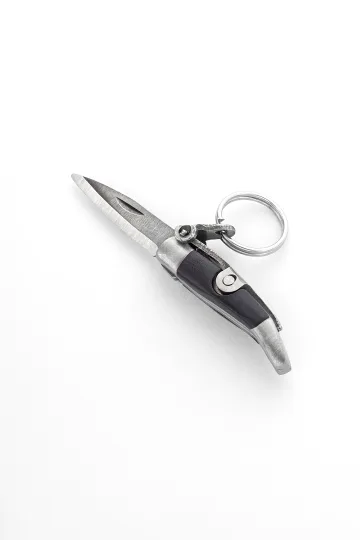
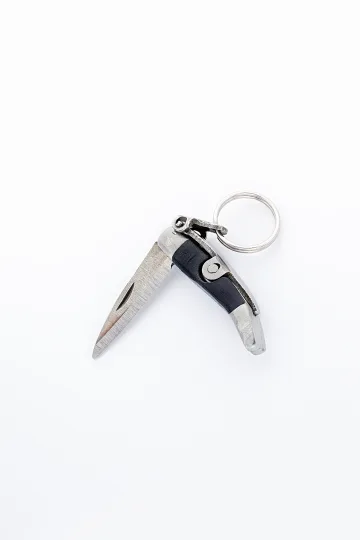
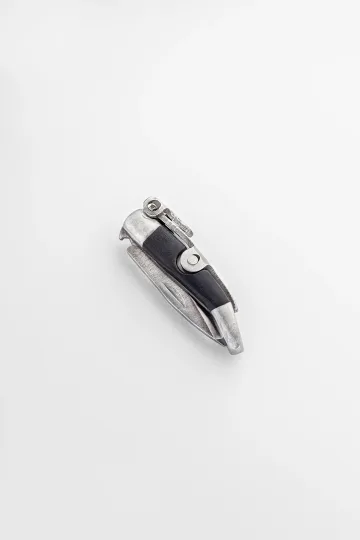
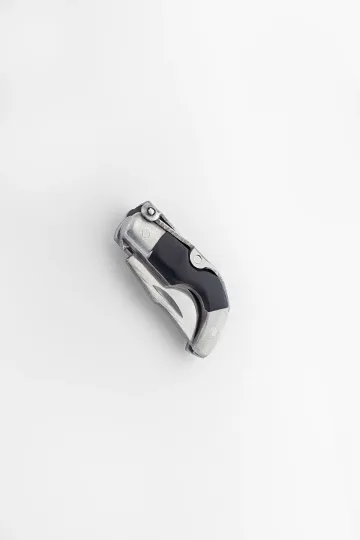
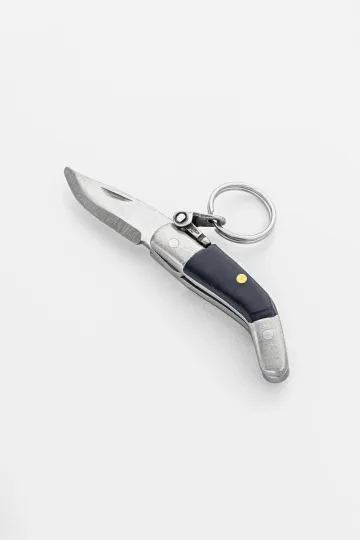
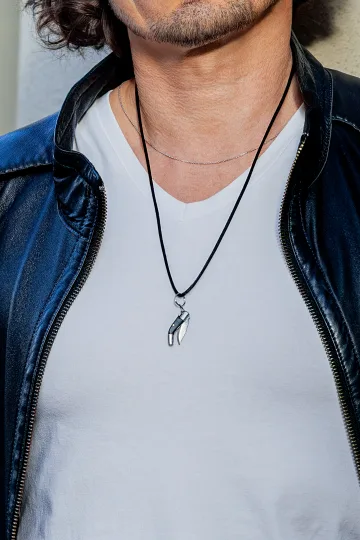
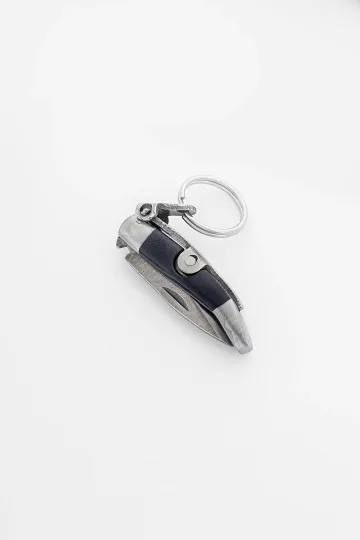
CAPAORA mini knife pendant
The 18th-century Spanish navaja in miniature: 40 mm of stainless steel, a real folding mechanism and a Palanquilla lock that clicks. An affordable gift to remember.
Authentic · Ships from Spain · 14-day returns
The history of sapphire
Corundum has been known to people for thousands of years, though in antiquity a word resembling "sapphire" was often applied to other blue stones as well, lapis lazuli for instance. Even so, blue corundum was used in jewellery and seals from deep antiquity in the Near East, India, and the Mediterranean.
Sapphire in antiquity
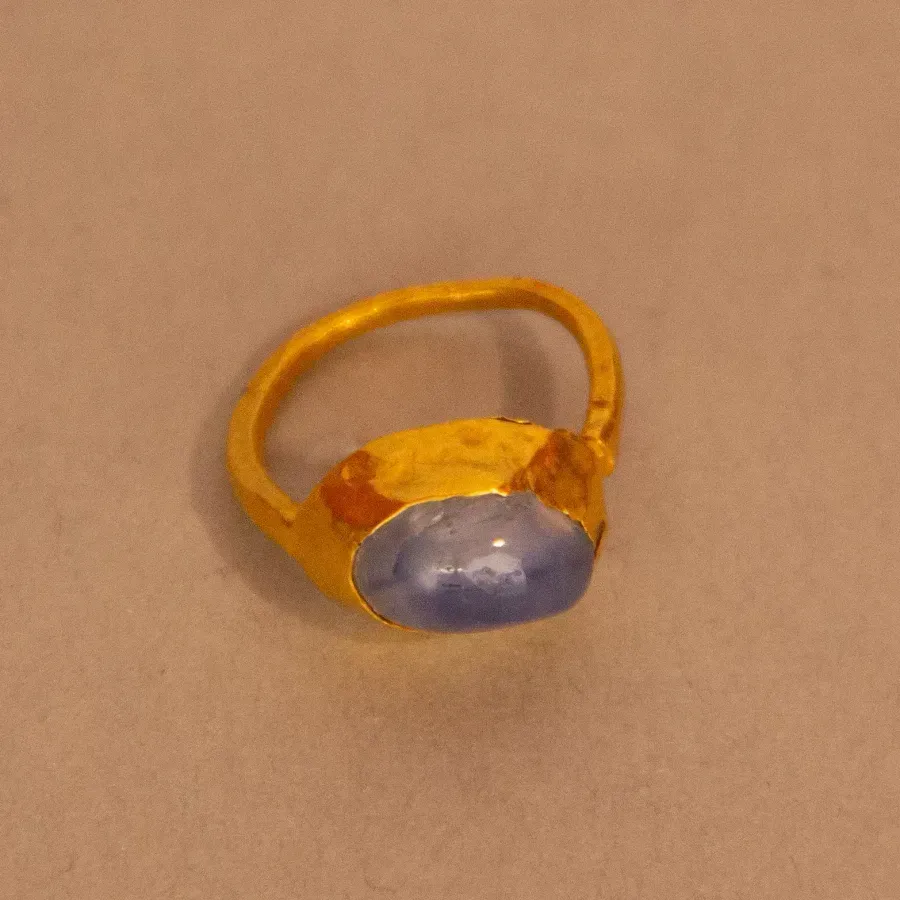
In India and on Ceylon, blue corundum was prized of old, both as an ornament and as a material for seals. The Greeks and Romans also knew blue stones of this type. Pliny the Elder, in his "Natural History", describes a blue stone that many scholars identify with what we now call lapis lazuli, which shows nicely how names got muddled in antiquity.
Medieval Europe
In medieval Europe sapphire was firmly tied to the Church. Blue read as the colour of the sky, and therefore of the heavenly and the spiritual. The highest church figures wore sapphire rings, and the stone became a symbol of purity and constancy. A large clear sapphire was a rarity and cost a great deal, so owning one was also a mark of high standing.
Around this era Ceylon became the main source of quality blue stones for Europe, while the gem trade was held in the hands of merchants from the Mediterranean cities.
Sapphire in regalia
Blue sapphires appear in the historic crown regalia of various countries; they form part of the jewels passed down from one generation to the next. One of the most famous historic sapphires is a stone in the British Crown Jewels, linked by tradition to a medieval English king (the so-called St Edward's Sapphire). Such stones were prized precisely for their durability: a piece could outlast several centuries and several owners while changing almost nothing in appearance.
Famous sapphires in history
Large sapphires often carry a biography of their own, longer than a human one. A few stones have become close to legend.
The Star of India
One of the largest star sapphires in the world, a bluish-grey stone of more than five hundred carats, recovered by tradition on Ceylon several centuries ago. It shows a crisp six-rayed star on both sides of the cabochon, which is rare. In the early twentieth century the stone passed to a major natural history museum in New York, where it remains one of the star exhibits. Its history includes a notorious mid-twentieth-century theft, after which the stone was safely recovered.
The Logan Sapphire
A deep blue Ceylon sapphire of around four hundred carats, one of the largest faceted blue sapphires in any museum collection. It is mounted in a brooch surrounded by a scatter of colourless diamonds and kept in the national collection in Washington. The stone shows how saturated the colour can stay even in a very large crystal, which is in itself a great rarity.
Sapphire engagement rings
A separate thread of the story is sapphire as a betrothal stone. Blue corundum was chosen for engagement rings by European courts for centuries, read as a sign of faithfulness and constancy. A widely reported engagement of the early 1980s, with a large Ceylon sapphire framed by diamonds, returned the stone to mainstream fashion and made blue sapphire one of the most recognisable alternatives to a diamond in an engagement ring. That tradition is alive today.
Leave your email, we'll send your discount code. No spam, unsubscribe anytime.
The code arrives by email, valid on your first order.
Sapphire in culture and art
Blue corundum is both a mineral from a textbook and a durable cultural image that runs through religion, language, and craft.
The colour of sky and spirit
In medieval Europe the blue of sapphire was read as the colour of the vault of heaven, so the stone was bound firmly to faith, purity of intention, and detachment from earthly things. The same blue was prized for "resting the eye": sapphire settings appeared in altar crosses, book covers, and the rings of senior clergy. The image of blue as the high and the spiritual survives in the language, where "sapphire" means a noble deep blue.
Sapphire in astrology and folk belief
In the Indian astrological tradition blue sapphire is matched to the planet Saturn and considered one of the most potent stones, worn with care and on an astrologer's advice. In European lapidaries, the medieval treatises on stones, sapphire was credited with cooling the passions, healing the eyes, and warding off envy. These are monuments of culture rather than medicine, but they explain why such a long train of meanings follows the stone.
Sapphire beyond jewellery
Corundum also has a strictly technical life. Synthetic sapphire is made into ultra-hard watch crystals, protective windows for instruments, and substrates for microchips and light-emitting diodes. A laser using corundum with a chromium impurity (in other words ruby) was among the first working lasers in history. The same hardness that makes the stone all but eternal in a ring turns it into an indispensable material for engineering wherever resistance to scratching and heat is needed.
Symbolism: what is attributed to sapphire
Here it pays to separate tradition from fact straight away. In various cultures sapphire has been credited with a whole host of properties: it was tied to faithfulness, wisdom, clarity of thought, and protection. In the European tradition it was considered a stone of honesty and constancy; in Indian astrology blue sapphire is linked to the planet Saturn.
All of this is cultural belief, not a proven effect. No confirmed influence of the stone on health, sleep, blood pressure, anxiety, or luck exists. Sapphire neither heals nor "charges" anything: it is a mineral. If you like the symbolism and invest personal meaning in a piece, that is fine and pleasant. But buying a sapphire as a cure or a guarantee of good fortune is not the way to go.
The stone of September and of anniversaries
In the European tradition of birthstones by month, sapphire is fixed to September, so blue corundum is often given to those born in early autumn. It also counts as the stone of several round wedding anniversaries, which is where the custom of marking a long marriage with a sapphire piece comes from. The logic here is rather appealing and honest: a stone that holds its colour and shine for decades works well as an anniversary gift, a symbol of constancy with a material basis behind it rather than superstition alone.
Why sapphire became the stone of faithfulness
The symbolism of constancy did not grow out of nothing. Blue read as the colour of the sky and of the unchanging, and the sheer durability of the stone suggested the image: a piece of jewellery outlives its owner almost unaltered. Add together the colour of the heavens, the church tradition of purity, and physical indestructibility, and it becomes clear why sapphire was chosen for centuries as the mark of a word kept and a promise made, including in engagement rings.
How to tell sapphire from similar stones and fakes
Blue colour turns up in many stones, and several of them resemble sapphire. The main practical guide is hardness and optics.
- Glass (imitation). The most common "fake sapphire". Glass is softer (easy to scratch), lighter in weight, and often holds round air bubbles visible under a loupe. Glass has no birefringence and no pleochroism.
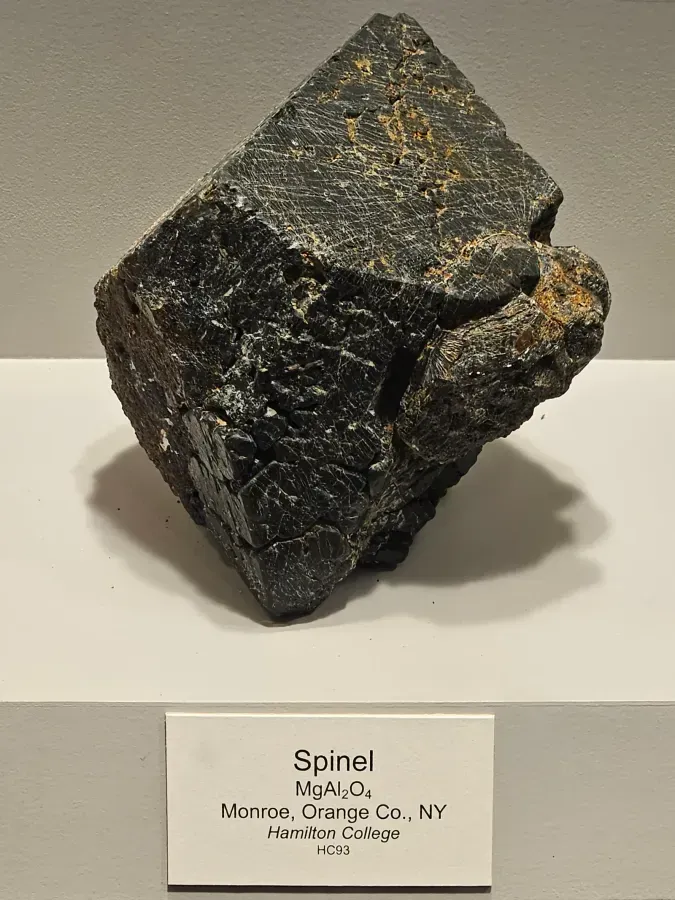
- Blue spinel. A natural stone that is genuinely similar, but softer (hardness around 8) and optically single-refracting, with no pleochroism.
- Tanzanite. Strong pleochroism (it plays blue and violet), but noticeably softer than sapphire (around 6.5) and more brittle.
- Blue topaz. Softer (8), different optics, and most often gets its colour through irradiation.
- Kyanite. Very distinctive in that its hardness differs along and across the crystal.
What sets a synthetic sapphire apart. It is real corundum grown in a laboratory, with the same composition, hardness, and optics as the natural stone, and in the strict sense it is not a "fake". What distinguishes it is its origin and the character of its internal inclusions: synthetics often show curved growth lines and rounded gas bubbles, whereas a natural stone holds "native" mineral inclusions, rutile needles, and growth marks. Only a gemmologist can reliably tell a synthetic from a natural stone.
Practical warning signs:
- A stone too light for its stated size is probably glass.
- A perfectly even colour with no zoning and no inclusions in a large, cheap stone is more often a sign of synthetic or glass; a natural sapphire usually shows colour zoning.
- Perfect clarity at a low price, it does not happen.
- A seller who talks only about "energy" and dodges questions about origin, treatment, and the presence of a laboratory report.
A serious purchase should always come with a report from an independent gemmological laboratory, stating the weight, dimensions, colour, and, above all, any detected treatments.
How synthetic sapphire is grown
Understanding the growing methods is useful, so that the word "synthetic" stops being frightening while you also avoid paying for a laboratory stone as though it were natural. The oldest and cheapest method is flame fusion: aluminium oxide powder with the required impurity is fed through a burner, the droplets melt and build up on a rod into a carrot-shaped boule (the technique has been known since the start of the twentieth century). Such stones give themselves away through curved growth lines and round gas bubbles under a loupe. Costlier and better material is grown from a flux melt: it grows slowly, over months, and is harder to separate from natural stone because the inclusions in it look more like natural ones. What matters is that by composition, hardness, and optics any such stone is genuine corundum; the difference lies only in origin and in price.
A few rules for a sensible purchase
Before a serious purchase, keep a simple order of operations in mind. Colour first: look at the stone by daylight near a window, under a lamp, and in shade, since a good sapphire holds its blue in all three. Then treatment: ask directly whether the stone has been heated or subjected to diffusion and filling, and ask for that in writing. Then the report: for an expensive stone an independent laboratory is essential, and without one you are paying for words. And finally the setting: even a perfect sapphire is lost in a crooked or insecure mount, and weak prongs are the leading reason stones go missing. If a seller dodges questions about origin and treatment and leans on "energy", that is a signal in itself.
Caring for sapphire
Thanks to its hardness of 9, sapphire is one of the most low-maintenance stones to wear. Household dust will not scratch it, it does not dull from water or sweat, and it can be worn every day.
Cleaning is simple:
- Warm water, a drop of mild soap, a soft brush (a child's toothbrush works).
- Gently work around and under the stone, where skin oils and cream collect.
- Rinse and pat dry with a soft cloth.
A few limits:
- Do not use ultrasonic or steam cleaning on stones filled with glass or oil (crack treatment); they may not survive it. If you are unsure of the treatment, clean by hand.
- Guard against a sharp blow to the edge, despite the hardness a chip is possible.
- Take off sapphire jewellery during rough work and sport, not for the stone's sake but for the setting and the softer stones beside it.
Storage. Since sapphire is harder than almost everything, in a shared box it will easily scratch other pieces. Keep it apart, in a soft pouch or its own compartment. Once every year or two it makes sense to show a ring to a jeweller to check whether the prongs of the setting have loosened: with daily wear a stone can work loose and fall out, and this is a far more common cause of loss than anything else.
How hardness affects wearability. It is precisely this resistance to scratching that makes sapphire well suited to everyday rings, the pieces that suffer the most wear. The stone keeps the shine of its facets for decades, whereas softer settings wear smooth over time. That is why sapphire is so often chosen for engagement and wedding rings, the ones worn without ever taking them off.
Send a friend a discount code, they save on their first order.
How to choose a sapphire for a particular piece
The same stone behaves differently in a ring and in earrings, and each type of jewellery has its own logic of choice.
A ring for daily wear. Here it is the setting, not the stone, that decides. The hand constantly catches on things, so a tall "crown" setting on thin prongs is the main cause of a lost stone. A bezel setting, where the sapphire is hugged by a rim of metal around its edge, is safer, as is a half-bezel with protected corners. The sapphire itself is impact-resistant, but prongs bend, and it is worth having them checked by a craftsman about once a year. For an everyday ring a stone of half a carat to a carat and a half is sensible: anything larger gets in the way in daily life and stands too proud of the finger.
Earrings and a pendant. Here you can take a stone larger and more saturated than in a ring: earrings and a pendant do not rub against surfaces and barely risk a chip. What is critical instead is an even matched pair: two sapphires in earrings should agree in tone and hue, otherwise the mismatch catches the eye more than it would in a single stone. In a pendant near the face a slightly lighter, brighter stone works well: a deep dark blue away from direct light can look almost black.
Star sapphire. It is cut as a cabochon, and the star shows only in directed light (the sun, a spotlight), while under diffuse daylight it blurs. It makes sense to buy such a stone only after turning it under a lamp: the ray should be even, centred on the dome, with no splitting. A cabochon with no facets is cheaper than a transparent stone of the same weight, but it is also better worn where it will not catch, in a pendant or earrings rather than an everyday ring.
Colour to match the metal. Cool blue and violet sapphires look more composed in white gold and platinum. Warm stones, yellow, peach, padparadscha, open up in yellow and rose gold, where a white metal beside them often looks washed out.
Buying it as a gift? Each one arrives ready to give.
 A branded Zevira box and a little card come with every order.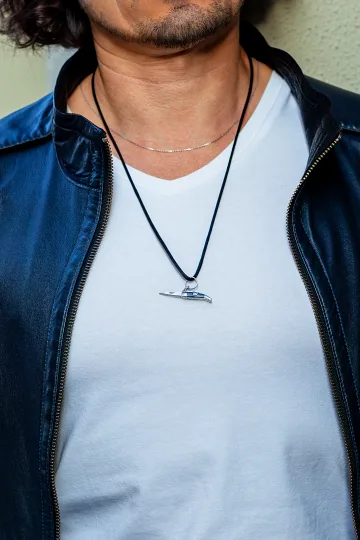








Facts about sapphire that surprise people
A few things about this stone are far from obvious even to those who have worn it for years.
Sapphire comes in every colour except red
That is a definition rather than a turn of phrase. Red corundum is called ruby by convention, and corundum of any other colour, blue, yellow, green, violet, colourless, counts as sapphire. There is even black sapphire. So "pink sapphire" against "pink ruby" is an argument about where a shade boundary falls, not about two different minerals.
The sand of the Sahara will not scratch it
Ordinary dust and sand are mostly quartz with a hardness of seven. Sapphire is two steps harder on the scale, so the grains that scratch a watch glass and a spectacle lens leave sapphire untouched. That is exactly why synthetic corundum is used for protective windows that stay clear for years.
The star inside the stone is a flaw that became a virtue
The six-rayed star on a star sapphire arises from a mass of the finest rutile needles, the very inclusions that would count as a nuisance in a transparent stone. Light reflects from three systems of parallel needles and converges into three intersecting streaks, which is where the six rays come from. The cutter turns a growth defect into the main effect by bringing it out over the dome of a cabochon.
The first laser ran on corundum
The device that opened the laser age used a rod of synthetic ruby, that is corundum with a chromium impurity. The same mineral that sits in a ring opened an entire field of technology in another form, from reading discs to surgery.
Sapphire and ruby can be born in the same rock
Since they are one mineral distinguished only by an impurity, at some deposits (the Burmese Mogok, for instance) both blue sapphires and red rubies come out of the same gravel. A drop of chromium caught in the crystal during growth decides the colour.
The Kashmir benchmark is nearly impossible to buy new
The deposit that gave the most famous velvety blue was worked out roughly a century ago. Kashmir sapphires that change hands today are almost always stones from old collections, hence their half-legendary standing and the special line they get in any report.
The blue is born from an exchange of electrons
The blue of sapphire is not a "dye" but a quantum effect: an electron hops between neighbouring iron and titanium ions in the lattice and, in that instant, absorbs part of the visible spectrum. Blue is what reaches the eye. Change the pair of impurities and the colour changes too, which is why fractions of a per cent are enough to repaint a stone.
Common questions about sapphire
Are sapphire and ruby really the same mineral?
Yes. Both are corundum, aluminium oxide. Red corundum (thanks to chromium) is called a ruby, corundum of any other colour a sapphire. Their composition, hardness, and structure are identical.
What is sapphire's hardness?
9 on the Mohs scale. Only diamond is harder. In daily life sapphire is practically unscratchable, which is why it suits everyday wear.
How does sapphire differ from similar blue stones?
First of all by hardness and optics. Blue topaz and spinel are softer, tanzanite is noticeably softer and more brittle, glass has no birefringence or pleochroism and is lighter in weight. A gemmologist reliably tells close stones apart.
What is a heated sapphire, and is that bad?
Heating (heat treatment) is a common treatment that improves colour and clarity. A heated stone remains a natural sapphire. Untreated stones are scarcer and valued more highly, but a heated sapphire is a normal, honest product as long as the treatment is disclosed.
Is a synthetic sapphire a fake?
No. It is real corundum grown in a laboratory, with the same properties as the natural stone. What sets it apart from the natural is its origin and the character of its inclusions. The word "fake" applies to imitations made of glass or other materials.
Can I wear a sapphire ring every day?
Yes, it is one of the best stones for everyday rings precisely because of its hardness. The main thing is to have a jeweller check the security of the setting once a year and to guard the stone from hard point blows.
How do I clean sapphire at home?
Warm water, mild soap, a soft brush. If the stone might be filled with glass or oil, avoid ultrasound and steam and clean only by hand.
Does sapphire protect or heal?
Various traditions credited it with protective and healing powers, but there is no proven physical or medical effect. It is a beautiful, durable mineral, not a medicine and not an amulet in the literal sense.
Why does sapphire not "spark" like a diamond?
Sapphire has low dispersion; it splits light into spectral colours only weakly. So it glows with an even, saturated colour rather than rainbow flashes. This is a feature of the stone, not a flaw.
Where do the best sapphires come from?
Historically Kashmir, Myanmar, and Sri Lanka are the celebrated names. Today Madagascar yields many stones, and there are also Australian, Thai, and American (Montana) sapphires. Colour and reputation depend on the deposit, but origin can only be determined in a laboratory.
What is a padparadscha?
It is a rare pinkish-orange sapphire whose colour is traditionally compared to a lotus flower. The shade arises from an unusual pairing of chromium with colour centres tied to lattice defects. Padparadscha counts as one of the most cherished of the fancy sapphires, and the name itself is disputed: only a narrow band of warm pinkish-orange is properly called padparadscha, not every peachy stone.
Is sapphire suitable for an engagement ring?
Yes, and it is one of the more sensible choices. A hardness of 9 lets a ring be worn for years with no visible wear on the facets, and a blue stone is the historic alternative to a diamond with a symbolism of faithfulness all its own. The main thing is to invest in a secure setting and have the prongs checked by a jeweller once a year.
Is a star sapphire dearer than an ordinary one?
Not necessarily. The price of a star stone depends on how sharp and how well centred the star is, on the transparency of the background, and on the colour. A cabochon with no facets is usually cheaper than a transparent faceted sapphire of equal weight, but a rare stone with a crisp, dead-centre star and a good blue can be very expensive indeed.
Does sapphire change colour?
Most sapphires do not. There is, though, a rare colour-change variety: by daylight it looks blue or blue-violet, and under an incandescent lamp it shifts towards violet or purple. This is a natural effect tied to a particular set of impurities, and such stones are valued for their rarity.
Wear the symbol, don't just read about it. These are in stock:


About Zevira
Zevira makes jewellery in the artisan tradition of Albacete, Spain. For us a sapphire is a stone meant for decades, so we set it in sturdy mounts that will survive daily wear and pass calmly to the next generation.
What you can find with us in sapphire and the sapphire palette:
- Rings with a blue sapphire in a classic setting with a row of stones along the sides
- Earrings with coloured sapphires: peach, lavender, pink
- Pendants with a single large stone on a strong chain
- Yellow sapphire in a warm setting
- Matching and engagement rings with sapphire
- Minimalist everyday pieces with a small stone
Every piece can be personalised with engraving, with the option of personal engraving. 925 silver and 14 to 18K gold.
Rings, earrings, and pendants with sapphires and the sapphire palette: blue, peach, yellow, pink, lavender.