The Scallop Shell: A Symbol That Unites Venus, Saint James, and Baptismal Water
Around the year 813, a shepherd named Pelayo watched a strange cluster of stars hover over the same patch of Galician field night after night. The bishop he told dug there and found a tomb. From that discovery grew the cult of Saint James and the whole network of roads we now call the Camino de Santiago. The scallop became the sign every pilgrim carried. Yet the same shell had already cradled Venus in Botticelli's painting, poured baptismal water over newborns, and decorated Greek brides a thousand years before the first pilgrim set out. One small fan of ribbed calcium carbonate, four civilisations, and a single recognisable form.
The Biology of the Scallop Shell: Species, Differences, and Forgeries
Before any of the meaning settled on it, the shell was simply a beautiful object that craftsmen could not leave alone. Greek silversmiths cast it, Roman jewellers struck it in gold leaf, and Galician fishermen still engrave it by hand. That long love affair with one form is the reason a scallop reads instantly across cultures, and it is also why the market around it is worth understanding before you buy.
A scallop shell in a jewellery display looks like ordinary stock. Underneath one familiar shape lies the biology of three oceans, three quite different price segments, several harvesting ethics, and a genuine risk of paying for silver and receiving moulded plastic. Sort the question into layers and it becomes simple: which species actually reach the workshop, what to read in the anatomy, and how to spot a fake in under a minute without a laboratory. The shell has carried symbolic weight for two thousand years, but the object in your hand is still a biological thing, and knowing the creature behind it changes how you choose.
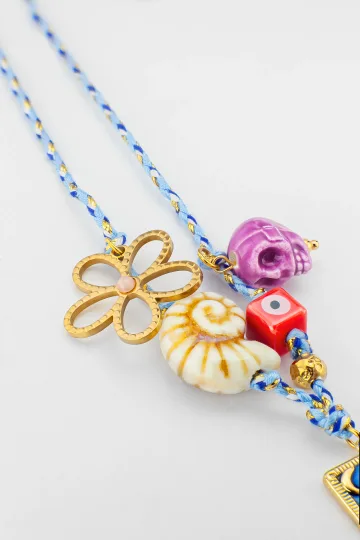
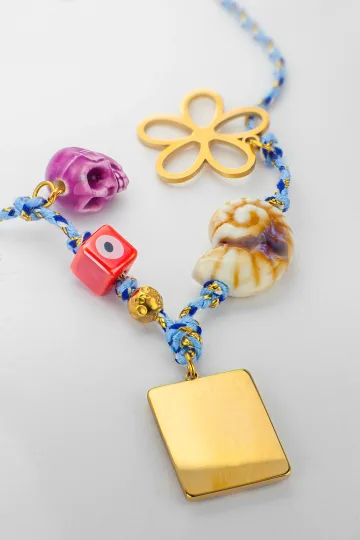
Wear the symbol, don't just read about it. These are in stock:
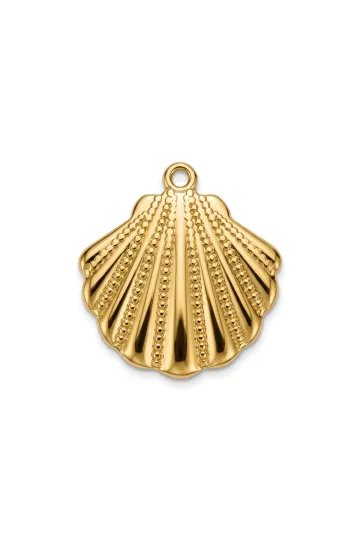
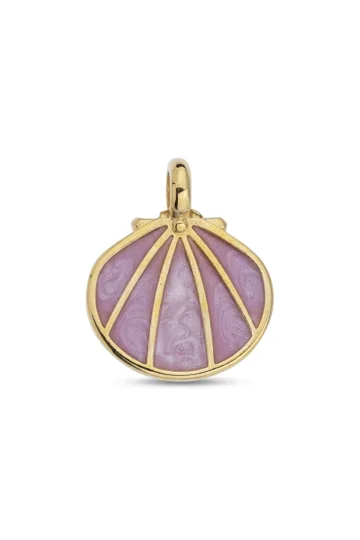
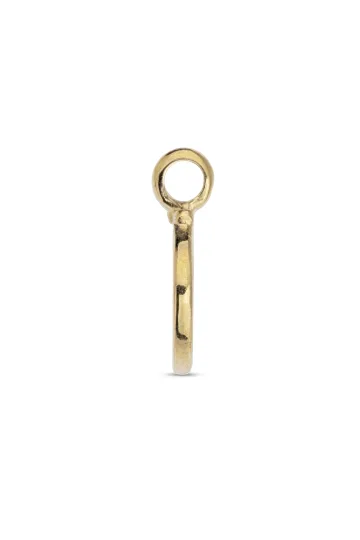
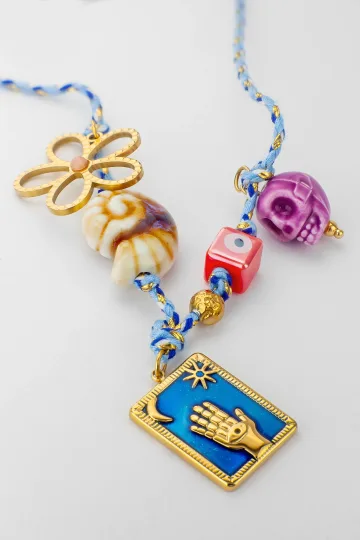


The Three Main Species
Pecten jacobaeus, the Mediterranean scallop. Ten to fourteen centimetres across, coloured anywhere from white through pink and orange to deep red brown. Its signature is sixteen radial ribs with sharp peaks that feel like tiny ridges under a finger. It lives across the whole Mediterranean, from Catalonia to Turkey, including the Adriatic. This is the shell counted as the original symbol of the Santiago pilgrims, because medieval travellers walked up through Italy and southern France, and in the early centuries the tradition used whatever species was locally to hand. Jewellers prize jacobaeus for its pronounced relief: even in a black and white photograph every rib reads clearly.
Pecten maximus, the Atlantic scallop, called vieira along the Galician coast. It grows up to fifteen centimetres, with some specimens reaching eighteen. Colour runs light pink, cream, ochre, to a dark brown with an almost violet cast. It carries fourteen to seventeen ribs, more softly drawn, set wider apart, and the surface feels smoother. Its range is the eastern Atlantic from Norway to the Canaries, taking in the Bay of Biscay and the Galician shore. On the Atlantic coast of Spain this is the local shell of Saint James, because a pilgrim reaching Santiago was given maximus: jacobaeus does not survive the cold Atlantic. The species differs biologically, and tradition treats both as equal. Buy a souvenir shell in Galicia and you almost certainly hold maximus, even when the seller says Saint James.
Argopecten irradians, the bay scallop, also called the American scallop. Modest in size, six to nine centimetres, grey brown and sometimes almost black, speckled and flecked. Its shape is rounder, its ribs lower and more tightly packed. It lives along the eastern coast of the United States from Massachusetts to Florida and into the Gulf of Mexico. Its pilgrimage symbolism is weaker: for Latin American and Caribbean buyers a shell from Chesapeake Bay is not the right one. More often irradians serves beach aesthetics, boho style, and ocean themes, rather than the road to the cathedral.
Extra Species You Find in Jewellery
Beyond the big three, three more species reach the market, often with no label naming them at all. Patinopecten yessoensis, the Japanese scallop, is harvested mostly off Hokkaido. It is roughly the size of maximus, paler, with a dense bright nacre inside. In Japan and Korea it is first and foremost food, and most of its valves enter jewellery as a by-product of the dinner table. Mimachlamys nobilis, the noble scallop, comes from Taiwan, southern Japan, and the shallows of the South China Sea, in vivid crimson, orange, lemon, sometimes striped, seven to ten centimetres. It appears in Asian pieces and rarely travels to Europe. Aequipecten opercularis, the queen scallop, lives in the North Atlantic, especially off Britain and Ireland, five to eight centimetres, grey to coppery pink. In Scotland its shells feed a local tradition of Celtic shell jewellery. Knowing these names protects you at the counter, because a shell sold as a Santiago souvenir may quietly be a Pacific dinner leftover.
Shell Anatomy
To speak the same language as a jeweller, learn five parts. The valves, upper and lower, make up the shell: the upper one flat or nearly flat, the lower cupped like a saucer. In jacobaeus the difference is stronger, the upper almost flat, the lower a deep spoon; in maximus the upper is gently curved. Workshops usually mount the flat valve because it sits more easily in a frame, though Galician makers often choose the cupped one for its deeper relief. The hinge is the straight line at the top where the two valves once joined; on finished pieces it becomes the spot for a bail or chain loop. The auricles, or ears, are the two projections beside the hinge, and they are almost always unequal, the front one larger and more prominent. That asymmetry is so reliable that it tells species apart and even reveals whether a valve is left or right. The radial ribs fan out from the hinge to the lower edge and form the main decorative element; rib counts are species specific, roughly sixteen for jacobaeus, fourteen to seventeen for maximus, and seventeen to twenty three for irradians, which is why irradians feels finer ribbed. Finally the growth lines run across the ribs parallel to the lower edge; each full line marks a year, because a scallop grows fast in summer and almost stops in winter, leaving a dark band at the boundary. A twelve centimetre shell carries five to seven years of life written across it, and the inner surface keeps a pearly glow with thin radial stripes echoing the outer ribs, usually paler than the outside.
How to Tell a Real Shell From a Fake
The market floods with plastic, especially among the cheap souvenirs sold along the Camino. Seven checks work without any laboratory. The weight test: a genuine scallop ten centimetres across weighs thirty to sixty grams depending on species and thickness, while a plastic copy of the same size weighs ten to twenty. The real shell sits in the hand; plastic seems to float. The sound test: tap the edge lightly with a fingernail and a real shell answers with a dull bony note, short and without ring, while plastic clicks brighter with a faint echo. The break test applies only if you already own a cracked piece: a real shell splits cleanly along its growth lines in a smooth arc, while plastic breaks at random with whitish zones along the crack. The heat test: hold the shell five to ten seconds; calcium carbonate conducts heat well, so a real shell stays cool as the warmth of your hand drains into it, while plastic reaches skin temperature within seconds. The ultraviolet test: under a 365 nanometre lamp a real shell glows pale lilac, yellow, or greenish, weak and uneven, while plastic fluoresces brightly in white or blue from dyes and optical brighteners. The acid test, used only on a broken fragment, drops a little vinegar on a fresh break: a real shell fizzes as carbon dioxide escapes, while plastic does nothing. And a jeweller's ten times loupe reveals the tiled aragonite layers of a true shell, where plastic shows a flat surface with casting bubbles. Two tests out of seven settle it; usually weight and heat are enough, because anything both light and quick to warm is plastic.
Pecten jacobaeus or Pecten maximus
For those who want to split the two main species, four signals work. The ribs: jacobaeus is sharper, felt under the finger as little crested ridges with clean edges, while maximus is softer and rounded, read more as waves. The ears: jacobaeus carries a stronger asymmetry, one auricle clearly larger, while maximus has nearly equal, symmetrical ears. Size: maximus runs larger on average, a typical adult twelve to fifteen centimetres against ten to twelve for jacobaeus, and any shell over sixteen centimetres is almost certainly maximus. Where you buy says a lot too: in Galicia, Brittany, and Normandy you will nearly always be sold maximus, while in Italy, southern France, Greece, Turkey, and Croatia jacobaeus dominates. Mexican workshops serving Latin American pilgrims deliberately import Mediterranean jacobaeus, because for their buyers it is the correct shell.
Regional Traditions
Galicia uses the local Pecten maximus, and the white valve often carries the cross of Santiago painted in red or enamelled: a stylised sword whose crossbars widen toward the ends. That emblem appears on shells, on signs, on paving tiles, on flags. In France the route begins at several departure points, chief among them Saint-Jean-Pied-de-Port, where makers use maximus and call the shell coquille Saint-Jacques, frequently leaving it unpainted to show the natural texture. In Italy, Adriatic pilgrims carried jacobaeus for centuries, especially out of Venice, the launching point over the Alps, and Italian souvenir shells are still usually the Mediterranean species. In Japan, Patinopecten yessoensis enters jewellery with no religious context, treated as material rather than symbol, in clean understated brooches and hair clips. In Mexico and across Latin America pilgrims prefer Mediterranean jacobaeus and consider the local irradians the wrong shell, despite its close kinship.
The Ethics of Harvesting
Most scallop species fall outside the CITES convention, so their shells trade freely across borders. Local rules are stricter. In Galicia, scallop gathering needs a licence, runs only in season, and carries a size limit, with shells under ten centimetres returned to the water. In Brittany you may freely collect empty valves from the beach, but taking live molluscs is licensed. In the United States the bay scallop fishery is regulated state by state, and recreational gathering usually allows a daily limit of a bucket per person in season. Biologically the scallop is a filter feeder: a medium animal cleans up to ten litres of seawater an hour, straining out particles and microalgae, so the population matters to the ecosystem. The ethical path is to take already empty valves from the beach rather than kill a living animal for a pretty shell, or to buy from suppliers carrying an MSC certificate, since those shells are a by-product of the food industry. The meat goes to restaurants, the valves once went to waste and now reach jewellery, and that cycle adds no pressure to the population.
How to Buy a Shell
A jeweller worth trusting has a document of origin: an MSC certificate, a supplier invoice, a photograph of the gathering beach, a note of species. If no paperwork exists, ask where the shell came from, and treat silence or a vague wave toward the ocean as a reason to find another maker. Region matters when the shell is meant as a pilgrim gift, and for the Camino the Galician maximus or the Mediterranean jacobaeus is preferable, while an Atlantic bay scallop is lovely yet carries a different meaning. Size follows the format: a medium pendant runs three to five centimetres, earrings one to two, a brooch five to seven, a decorative hair clip four to six. As for colour, the natural range stretches from white to dark brown through pink, ochre, and orange, and anything dyed an unnatural blue, bright green, or glittered black usually hides a flaw and lowers the perceived value.
Hybrid Formats
Several constructions combine shell and metal. The most common puts a natural valve in a silver, gold, or steel frame, which protects the edges from chipping and holds the chain loop while keeping the shell genuine inside. Resin or epoxy casting pours clear material over a valve, sometimes with dried flowers, sand, or small pebbles; the protection is decent, but the cold rough surface gives way to warm smooth plastic, which is a matter of taste. A cast metal copy in silver or bronze contains no shell at all: cheaper, tougher, indifferent to sweat and acid, less authentic, yet fully functional as a symbol. Nacre inlay glues mother of pearl plates (often from other molluscs, not the scallop) onto a silver or wooden base, imitating the form at a price between cast metal and a real valve.
Storage and Wear
The shell is calcium carbonate, so it reacts with acids: vinegar, lemon juice, heavy sweat in the heat. Household chemicals like dish soap and shampoo slowly damage the surface too. Worn daily, a natural shell ages on a predictable curve. For the first two or three years nothing shows. Between three and five years the ribs soften slightly and a faint matte appears on the high points. Between five and ten years the colour dulls, especially on any red cross the maker painted, the ribs sink lower, and the edge may wear a little. That is the honest path of a natural material. To slow it, a workshop applies a thin coat of colourless jewellery lacquer, invisible, protecting against sweat and acid, adding five to ten years of fresh appearance, and renewable every few years. Take the piece off before sleep, showering, sport, and any cooking with vinegar or lemon, and store it in a soft box away from metal that could scratch it. With good care a natural valve lives twenty to thirty years in jewellery before the relief smooths over, while the recognisable scallop form remains.
Scallops in British and Irish Waters
The species at the centre of the whole story is a British animal as much as a Galician one. Pecten maximus, the king scallop, ranges from Norway down to Iberia and is fished commercially all round the British Isles, with the main grounds off the west of Scotland, around the Isle of Man, in the western English Channel off Devon and Cornwall, and in the Irish Sea. Alongside it lives the queen scallop, Aequipecten opercularis, smaller at four to nine centimetres, thinner in the shell, and more equally domed on both valves, which is why a queen makes a poor baptismal vessel and a very good pendant. Anyone in Britain wanting a genuine Pecten maximus valve for a piece of jewellery does not need to import one from Spain. A fishmonger in Brixham, Oban, Peel or Kilkeel will hand over the cleaned valves for nothing, since the shell is a by-product of the meat, and the valves that come off a British boat are the same species that medieval pilgrims carried home from Galicia. Two practical differences are worth knowing. British king scallop valves tend to run slightly thicker and duller than Galician ones because of colder water and slower growth, which makes them tougher in a frame and less translucent at the rim. And the beachcombing rules differ from the Spanish ones: on most of the English and Welsh coast an empty shell picked up on the strandline is legally yours, while collecting on a Site of Special Scientific Interest, within a Marine Conservation Zone, or on National Trust foreshore may be restricted, and taking live shellfish anywhere requires the local fishery rules to be followed to the letter. The tidal ranges around Britain, among the largest in the world in the Severn estuary and Morecambe Bay, mean the strandline after an autumn gale is unusually rich, and most of the shells worth having are found in the first hour after high water has turned.
Venus and Ancient Iconography: The Deep Layer
When Botticelli painted his Venus in 1485 he invented nothing. The motif of a goddess on a shell already carried almost two thousand years behind it. The Pompeian frescoes precede the Florentine master by fifteen centuries, and coins from the island of Kythera, now held in London, were struck twenty centuries before he was born. If the scallop meant anything in the Mediterranean world, it meant it long before Christian pilgrimage and long before Santiago. That first pre-Christian skin of the symbol never fully shed; it merely gathered new layers of meaning over it.
Aphrodite Against Venus: One Goddess, Two Worlds
The Greeks called her Aphrodite. The name traces to aphros, foam, and links to the myth of her birth from sea foam after Kronos overthrew his father Uranus. From that foam rose the goddess of desire, bodily beauty, and attraction. In the Greek mind Aphrodite stayed erotic but not political. Sculptors loved her, brides prayed to her, sailors sacrificed to her, yet she rarely served as a symbol of state. The Romans took the goddess and renamed her Venus, and behind the renaming sat a change of function. Venus became patroness of lineage, of fertility in the broad sense, of military victory, and above all of the empire. Julius Caesar traced the Julian line to her through Aeneas, the Trojan hero, son of Anchises and Venus, which made him a direct descendant of a goddess. One ancient canon ties straight to the shell: Venus Anadyomene, Greek for rising from the sea, a type the painter Apelles set in the fourth century BCE at the court of Alexander. By ancient accounts his lost picture showed the goddess standing on a giant scallop, wringing her wet hair, and the model was copied for centuries.
Kythera: The Island Where It Began
If you look for a geographical home for the image, the road leads to Kythera, a small island between the Peloponnese and Crete. By one version of the myth the waves carried the newborn Aphrodite here; another points to Cyprus, but Kythera holds the lead in archaeology. The foundations of a temple of Aphrodite Urania survive on the island, dated to the eighth century BCE, four hundred years older than Apelles. A silver coin of Kythera, struck around 540 BCE, carries the profile of Aphrodite on one side and a scallop on the other. It is the first documented image in history where goddess and mollusc meet on a single object, small at about two and a half centimetres, yet enormous in meaning: it proves the link between Aphrodite and the shell was already settled and widely recognised by the sixth century BCE. No one explained to the viewer why those two elements appeared together, because there was nothing to explain.
Pompeii: A Gallery That Managed Without Botticelli
The most striking layer of ancient Venus images lies under the ash of Vesuvius. At Pompeii archaeologists counted around two hundred surviving images of Venus across techniques, in frescoes, mosaics, reliefs, and small bronzes, and at least fifteen of them show the goddess on a scallop. In a modest provincial town of the first century, the subject was mass produced, repeated in homes from luxurious villas to humble craftsmen's quarters. The best known example sits in the Casa dei Vettii, dated roughly 60 to 79, where the fresco shows Venus reclining on an open valve while two small winged putti hold its edges. Other frescoes of the same subject appear in the Casa di Venere in Conchiglia, named after the painting, and in the Casa di Romolo e Remo. Each varies the canon, but the recognisable element stays constant: the valve as platform, as boat, as throne. This happened in the first century, fifteen hundred years before the Uffizi. Botticelli did not invent the subject. He canonised it and lifted it to a new level of technique.
Botticelli and the Birth of Venus: A Close Look
The painting hangs in the Uffizi in Florence, an imposing 172.5 by 278.5 centimetres, a whole wall. Venus stands at the centre on a giant scallop. On the left two winged Zephyrs blow her toward shore, their bodies entwined, roses flying from their mouths; on the right one of the Horae waits with a flowered cloak. Venus takes the antique pose of Venus Pudica, the modest or chaste Venus, one hand at her breast, the other lowered, a pose descending from the Capitoline Venus, a Roman copy of a fourth century Greek original. So Botticelli borrowed both the shell motif and the pose entire, like a quotation lifted from marble into paint. A curious detail concerns the species. Look closely and it does not resemble the Mediterranean jacobaeus that later became the Santiago symbol; the valve is larger, denser, with a different rib character. Several art historians read it as Pecten maximus, the larger Atlantic kind, possibly arriving in Florence along the Florence to Lyon to Atlantic trade routes that brought rarities to the city. The detail is not finally proven, but it is telling: even in the fifteenth century the choice of shell was deliberate. The patron, Lorenzo di Pierfrancesco de' Medici, hung the work at the family villa, and for the Medici the subject carried a triple meaning: the rebirth of ancient beauty, the Neoplatonic idea of Marsilio Ficino that earthly beauty reflects the divine, and a likeness to Simonetta Vespucci, the Florentine beauty who died young in 1476 and became an ideal for a generation of artists.
Ancient Jewellery Finds: The Shell in Gold and Silver
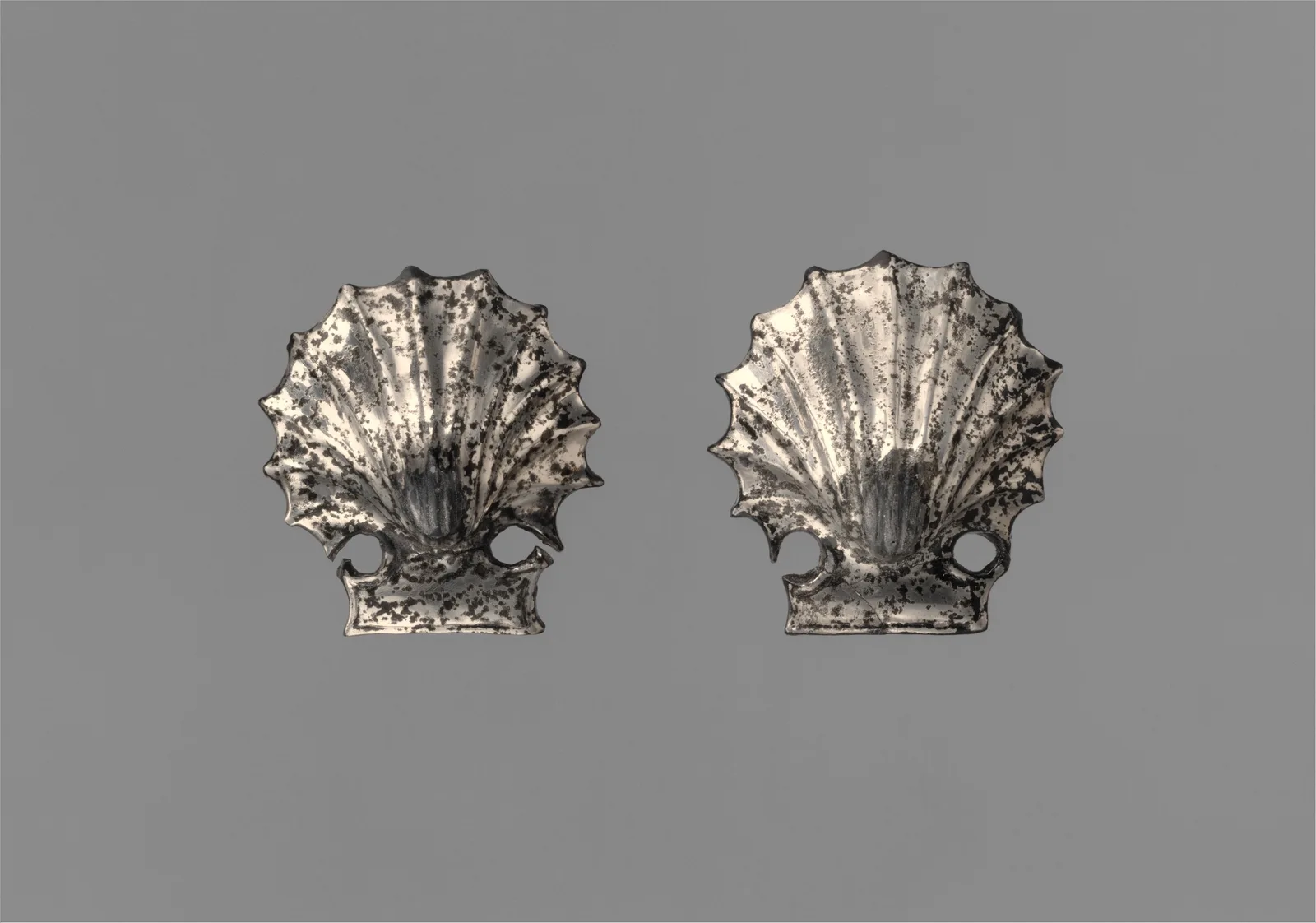
Beyond painting, the scallop runs through ancient jewellery as a dense unbroken layer. At Herculaneum, the neighbour of Pompeii buried in 79, archaeologists found gold pendants shaped like the shell, first century work, about two centimetres tall, in thin gold leaf with the ribs of the valve struck into the metal, worn on a chain or as part of earrings. Pompeii itself yielded silver shell brooches four to five centimetres across, chest ornaments that pinned the fabric of a peplum. The Etruscan tradition reaches deeper still: in the necropolis near Cerveteri, north of Rome, sixth century BCE burials gave up gold scallop ornaments worked in granulation, the technique that solders microscopic gold spheres around a tenth of a millimetre across into a pattern, a craft so fine that modern jewellers struggle to reproduce it. Deeper yet lies the Minoan layer: at the palace of Knossos on Crete a shell appears as a wall ornament around 1500 BCE, the earliest recorded Mediterranean use of the scallop in decoration, before the goddess, before Aphrodite, before any canon, simply a beloved form. Mediterranean people fell for this shape two thousand years before Venus Anadyomene.
Greek Wedding Rites
In Greece the shell lived in temples, on coins, and in everyday ritual, above all in weddings. A Greek bride received a marriage gift, and among the accepted objects was a scallop, a direct reference to Aphrodite as patroness of love and fertility. The shell was woven into the wedding wreath, hung from the belt, or carried in the hand during the procession. In the Archaic period, the seventh and sixth centuries BCE, a rite of bathing the bride in the sea ran the evening before the wedding: the girl waded in while her companions poured seawater over her from a scallop valve, the shell serving as a ritual ladle, which explains why it appears so often in the iconography of womanhood: water, cleansing, passage into a new state. In Athens a bride brought a shell with a small offering inside, grain, honey cakes, a lock of her own hair, to the temple of Aphrodite, and archaeologists in the agora district find such shells with sooty traces inside, marks of ritual use.
The Phoenicians and Astarte: The Eastern Thread
The link between shell and love goddess is older than Greece. The Phoenicians, the seafaring people of the eastern Mediterranean, worshipped Astarte, goddess of fertility, love, and war, the direct prototype of Aphrodite, whom the Greeks borrowed through trade at the start of the first millennium BCE. At Sidon, on the coast of what is now Lebanon, a temple of Astarte yielded offering shells engraved with the name of the giver, so each worshipper left a personal trace. The Phoenicians spread the cult across the Mediterranean through their seamanship, from Carthage in North Africa to Cadiz at the southern tip of Spain. At Cadiz, whose ancient name was Gadir, a temple of Astarte was founded around 1100 to 900 BCE, older than all Roman history in Spain by eight centuries and older than Christianity by a thousand years, and there too the shell served as a ritual attribute of the fertility goddess. Spanish soil knew the scallop as a sacred object a thousand years before the cult of Saint James arrived on the same ground.
Venus and the Roman Empire
As Rome grew from city to empire, Venus received a promotion. From a private goddess of passion she became a symbol of state. On Caesar's coins Venus appeared with a shell, and the sign worked as a heraldic mark of divine descent: every coin spreading across the empire repeated the same message, that the ruler had divine roots and the shell bore witness. In 46 BCE Caesar dedicated the temple of Venus Genetrix, Venus the Ancestress, in the Forum of Caesar, the heart of the cult of Venus as founder of the Julian house, with a statue by the Greek sculptor Arkesilaos inside. Under Augustus the reform continued, and Venus settled as patroness of the imperial family and of the Roman matron herself. The homes of well born women kept a shell ornament in the jewellery box as a personal amulet of the goddess, and archaeology confirms it: gold and silver shell pendants turn up with remarkable frequency in women's burials of the imperial period, a necessary item of a woman's adornment.
The Late Empire: Mosaics and Villas
In the third and fourth centuries the shell moved from painting into mosaic and lived on as decoration with a religious aftertaste. At Antioch, in what is now Turkey, a complex of Roman villas gave up mosaic floors where the shell serves now as a frame, now as a subject, now as a background for Venus, and the Antioch mosaics are scattered today across museums. At Aquileia, a Roman town in northern Italy, a fourth century basilica holds a floor mosaic with shells as a decorative motif, interesting because it sits in an early Christian building while the motif still reaches back to pagan iconography. The passage of a symbol from one religion to another shows itself here, on the floor. At Piazza Armerina in Sicily, a fourth century imperial villa frames its famous hunting and mythological scenes with shells used as wall and vault decoration, the shell by now almost an ornament, something like a meander, though its ancient meaning still shows through.
The Transition to Early Christianity
In the fourth and fifth centuries Christianity absorbed ancient symbols selectively. Some were rejected as pagan, some reinterpreted and taken in. The shell landed in the second category. It lost its direct link to Venus and gained a link to baptism, because the valve suits perfectly as a vessel for water poured over the head of an infant or an adult convert. Augustine of Hippo left a famous line on the sea and beauty that carries the thought beneath: the sea from which pagan beauty was born now became the element in which the Christian soul is reborn. The sea remained, the symbolism of birth remained, but the content changed, and the shell travelled the same path. The earliest Christian shell vessels for baptismal water date to the fifth and sixth centuries, found in the catacombs of Rome and the basilicas of Ravenna, and the valve appears in the stone carving of fonts, the basin shaped like an open shell. The pagan Venus quietly became a Christian font.
The Twentieth Century: A Return Full Circle
In the twentieth century the ancient Venus on a shell returned through the Surrealists. Salvador Dalí used the image of the shell and of Venus repeatedly as a symbol of metamorphosis, of emerging from the unconscious into light, and his work of the 1930s and 1940s contains direct references to Botticelli, sometimes ironic, sometimes literal. Surrealism as a whole revived the iconography of the goddess on the shell, reading it through the unconscious as the sea, birth from the elements, the passage from chaos to form. In contemporary jewellery the scallop is worn without religious or mythological undertone, simply as a cultural sign of beauty, the sea, and the feminine. That may be the chief result of its long road: a symbol that survived four civilisations, Minoan, Greek, Roman, Christian, stepped clear of every theological dispute and became a pure form you can wear without explaining. Botticelli, the Pompeian frescoes, Kythera, Astarte at Cadiz, the Aphrodite of Apelles, all of it rests in one small valve on a chain, even when the wearer never thinks about it.
Customer reviews
Zevira is a real jewellery shop. Genuine payments, deliveries and customer thank-yous.
🥰🥰🥰 gracias
Ok, ¡gracias! 🙂
A scallop belongs on a bare collarbone over open linen. Pile an anchor and a skull beside it and you are a harbour gift shop, not a person.
What to Wear the Scallop Shell With
I have styled this shell for wedding shoots, coastal lookbooks, and once for someone heading out on the real Camino. Here is what actually works, occasion by occasion, no guesswork.
What do I wear the shell with every day? For daytime I recommend silver or pale gold, a pendant of two to three centimetres on a forty five to fifty centimetre chain so the valve sits just below the collarbones. Over open linen or a cotton dress it reads on its own; I choose a plain background with no busy print so the ribs of the shell stay legible. As neighbours I keep a single pair of thin studs and clear the rest away.
Is it fine for the office? It is, as long as you hold the tone. I suggest a smaller shell of one and a half to two centimetres on a long chain of fifty five to sixty centimetres, so it slips under a jacket and appears in movement. That is the level of a hint, not a statement, and it does not argue with a serious meeting room. Under a roll neck I choose a solid fabric so the valve does not disappear.
How do I build an evening look? For evening I go for a deep V neck, silk or satin in a dark tone, and one larger valve of three to four centimetres on a short chain that lands in the neckline. Gold gives a warm glow, silver a cooler graphic line; I match it to the fabric. Bracelet stacks and rings come off this time so the eye holds one point.
And for the Camino or the road? Here I recommend the most honest version: a natural valve in a thin frame on a linen cord, or a sturdy metal shell clipped to a rucksack pull. This one is not about shine, it is about the path, and next to a trekking jacket it sits better than any fine chain.
Who does the shell actually suit? Anyone drawn to the sea, the road, and a calm manner without flourish. It settles perfectly into a romantic or coastal mood and quarrels, by meaning, with Gothic and heavy metal. Two rules to close on. First, I match the length to the neckline and not the other way round, since the valve should land in the open zone. Second, when layering I leave one shell as the accent and let the other chains stay thinner and quieter.

Turn on your camera, pick earrings, a pendant or a ring, and see the piece on yourself in real time.
Switch items in one tap.
Everything runs in your browser: no photo or video is ever uploaded.
Early Christian Symbol: Baptism, Ritual, Regions
The valve was chosen for baptism not for beauty but for use. It was the most practical vessel available across the Mediterranean and the Atlantic. The radial ribs lie under the fingers like a ready handle, the palm holds it steady even when wet, and the rounded bowl, a centimetre and a half to two deep, takes enough water for three sprinklings of an infant and no more. The edge narrows toward the hinge, so water leaves in a thin controlled stream without splashing, which matters when the head being christened belongs to a three day old child who could not bear a ladle or a jug. Nature sized it well too: an adult Pecten maximus yields valves eight to fourteen centimetres across, exactly the span a priest holds comfortably in one hand while the other stays free. Early communities tried abalone, beautiful inside but too flat, water sliding off too fast; mussels, too small at four to six centimetres; oysters, crooked and asymmetric. The scallop won on geometry. The biology helped as well: a scallop valve is calcite and aragonite, inert to fresh, salt, or blessed water, releasing nothing, where copper greens and silver darkens. And theologians noted early that the valve is a natural vessel, not made by human hands, fitting the logic of baptism as an act of grace independent of human craft.
John the Baptist and the Western Canon
John the Baptist appears holding a scallop in his right hand from roughly the fifth century, and this is a Latin, Western convention. The earliest surviving images include a fresco fragment in the Lateran in Rome, a mosaic at San Vitale in Ravenna, and miniatures in ninth century Carolingian gospel books, all showing John in camel hair with a cross staff in the left hand and a valve in the right, pouring water over Christ at the Jordan. In Orthodox iconography John is never shown with a shell: among Greeks, Serbs, Russians, and Georgians he holds a scroll of prophecy or an eight pointed cross, and the shell reads as a purely Latin sign. The reason is simple. Eastern Christianity baptises by full triple immersion of the infant in a font fifty to seventy centimetres across, sometimes a metre, and the shell serves no function there, so it never entered the canon. The West adopted a different practice: by the fifth and sixth centuries the Gallo-Roman and Hispano-Roman churches baptised by sprinkling, aspersio, or pouring, infusio, with water on the brow rather than the body, and for that form the shell proved the ideal instrument, becoming an obligatory attribute of bishop and parish priest in France, Italy, and Spain.
Clovis, Reims, and the Legend of the Royal Shell
The single event that fixed the shell inside the political imagination of western Europe was the baptism of Clovis, king of the Franks, at Reims around 496, performed by Bishop Remigius. The rite converted a pagan warlord into the first Catholic king north of the Alps, and every later French coronation at Reims reached back to it as its charter. The legend that grew around the ceremony has a dove descending with a phial of chrism, the Sainte Ampoule, and in the medieval retellings the water itself is poured from a shell held in the bishop's hand. Whether a shell was physically present in 496 is not something any source can settle. What matters is that from the twelfth century onward the story was told and illustrated that way, and the illuminators of coronation books drew the valve into the scene because by then no reader could imagine a baptism without one. From that image the escallop moved sideways into heraldry, where it appears in French and then in English arms as a mark of pilgrimage, of a crusading ancestor, or simply of a family that wished to claim one. The consequence for anyone wearing a shell today is that the object carries two overlapping meanings at once: a sacrament and a claim to lineage. Medieval families understood the second perfectly well. A shell carved on a tomb chest or worked into a coat of arms said that the man beneath had gone to Compostela, or that his house wished it remembered that someone had.
Vasculum: The Latin Name and the Standard
Modern Catholic liturgy uses the term vasculum, a small vessel, the official name of the baptismal shell, defined as a scallop valve, with the ear removed, flat inside, smoothly polished, ten to fifteen centimetres in size. The ear is taken off because it interferes with a controlled pour. Materials follow the means of the parish: a silver vasculum, often gilded inside so the water never touches silver that might tarnish, serves cathedrals and large parishes; a porcelain one, usually white with a gold cross at the rim, stands in poor village parishes and mission churches; a patinated bronze one is typical of nineteenth century Italian and French cathedrals; and some old Spanish churches keep natural shells rimmed in silver for strength. Inside the vasculum a parish often engraves its monogram or the date of consecration, and the vessel is kept near the baptistery, rinsed in warm water after the rite and dried with a linen cloth blessed for liturgical objects.
What Sprinkling Through a Shell Means
The triple sprinkling carries the Trinitarian formula: the priest pours water on the brow three times, naming Father, Son, and Holy Spirit. The shell delivers water three times in measured portions, and by Catholic rite that suffices, neither full immersion nor heavy pouring required, the minimal water touching the brow and running down the skin to wash away original sin in symbol. The symbolism layers up. Water as the element of birth echoes the ancient Venus rising from the foam, which Christianity rereads as the soul reborn through the water of baptism. The shell as a natural vessel underlines that grace comes from above and is not made by human hands. The thin stream means sufficiency, exactly as much as needed and no more: three drops, three sprinklings, three persons of the Trinity. Medieval treatises on liturgy described the scallop as a mirror of creation in which the Maker's intention to fit the world for the sacrament was reflected, theological language for a plain idea: the shell was ready for baptism before Christ came to the Jordan.
Santiago: The Apostle James and the Baptism of Iberia
By Western tradition the apostle James the Greater preached in Iberia in the thirties and forties of the first century, was beheaded in Jerusalem around the year 44, and his body, by legend, was laid by his disciples in a stone boat without oars or sail that reached the Galician coast on its own, guided by angels. The burial was found early in the ninth century, traditionally 813, by the shepherd Pelayo, who saw strange stars above a field, and the name Compostela traces to campus stellae, field of stars. Bishop Theodomir of Iria recognised the remains as the apostle's, and a chapel rose over the grave, then a cathedral. In the ninth and tenth centuries the cult of Santiago took shape as patron of the Reconquista, the struggle of the Spanish kingdoms against the Moorish caliphate, and the apostle earned the epithet Matamoros while his shell became a sign of the crusading movement. From the twelfth century the scallop settled as the pilgrim's attribute in the Codex Calixtinus, around 1140. The link to baptism runs through the same logic: the apostle was said to baptise the pagans of Iberia with water from shells found on the Atlantic shore, and so the cathedral keeps a relic of the shell of the apostle, while pilgrims reaching Santiago may request a special baptismal sprinkling, usually for families who have walked to christen a child at the end of a vow.
Regional Baptism Traditions
In Galicia most parishes kept shell baptism unbroken since the early Middle Ages, using local Pecten maximus, preferably a large valve of twelve to fourteen centimetres, often engraved afterward with the child's name and date and kept by the family as a relic. In some villages the fishermen do the engraving themselves and pass the craft down the generations. In Brittany a parallel maritime tradition runs: the coquille Saint-Jacques of local catch is required at christenings in the region's Catholic parishes, and afterward the shell becomes a family relic stored with the baptismal candle and gown, with old families keeping baptismal chests where such shells have passed down four or five generations. In southern Italy, in Calabria and Sicily, an older custom of the Easter shell pours water blessed on Holy Saturday into a scallop to sprinkle homes and fields. Latin American countries took the tradition through Spanish missionary work, and it runs strongest in families of Galician descent, where the godparents' shell gift to the godchild remains a fixed element of a christening. The Anglo-Norman tradition used the shell until the sixteenth century Reformation, after which most Anglican parishes dropped the papist sign, keeping it only in a few old cathedrals and in the nineteenth century Oxford Movement that restored many medieval practices. The whole Eastern Christian world never used the shell, baptising by full triple immersion.
The Shell as a Baptismal Gift
In Spanish speaking families of Galician descent the christening gift to a godchild nearly always includes a scallop in some form, most often a silver shell pendant engraved with the child's name, the date, and the name of the godfather or godmother, occasionally with the church and parish. The engraving font is chosen deliberately large, four or five points, because a child only begins to read by six or seven and the pendant should be legible at once, without a loupe. Such a gift is usually kept in a box with the other christening objects, the candle, the gown, the lock of hair from the first cut, until the child comes of age, and many families pass these pendants on along the line of godparents, so that over two or three generations a small family chain of shells accumulates. The shell here is one of the rare liturgical forms that crossed fifteen hundred years of Western Christianity without principal change, the same valve, the same triple pour, the same gesture described in the ninth century repeated today in a Galician village and a Californian cathedral alike.
The Shell in English and Scottish Fonts
The English relationship with the baptismal shell has a break in the middle of it, and the break is the Reformation. Before the 1530s the shell sat in English parish practice exactly as it sat in French and Spanish practice, and English medieval fonts, of which several thousand survive, were built for the affusion rite the shell serves. After the break with Rome the object fell out of use in most parishes as a papist sign, together with a great deal else, and for three centuries an English christening used the priest's cupped hand or a plain ewer. The revival came in the nineteenth century with the Oxford Movement, whose members set about restoring medieval ceremonial to Anglican worship, and silver shells reappeared in high church parishes and in cathedral baptisteries, a good number of them made by Victorian silversmiths in Birmingham and London and hallmarked accordingly. Scotland took a different path again: the Presbyterian tradition kept baptism deliberately plain, with water from an ordinary bowl and no vessel of symbolic shape, while the Scottish Episcopal Church retained more of the older ceremonial. The result is that a shell at a British christening today reads differently depending on the church door you walk through. In a Catholic parish it is unremarkable and always has been. In a high Anglican one it is a deliberate restoration of something medieval. In a Presbyterian or Baptist setting it would be out of place at the font altogether, which does not stop a shell pendant being an entirely appropriate gift from a godparent afterwards, since the gift belongs to the family rather than to the rite.
The Return to Old Rites
Across Catholic Europe the past two or three decades have seen families ask for elements that had quietly disappeared from parish practice after the liturgical reforms of the 1960s, and the shell is one of the most requested. Priests report the pattern consistently: a couple arranging a christening asks whether the water can be poured from a shell rather than from the modern jug, often because a grandparent remembers it, sometimes because the family has walked to Compostela, sometimes for no reason more complicated than that the object is beautiful and the jug is not. The request is easy to grant, since nothing in current liturgical law forbids it and the vasculum never ceased to be a permitted vessel. Alongside that, a second custom has revived on its own: the family brings its own shell rather than using the parish one, has it engraved afterwards with the name and date, and keeps it. In Galicia and Brittany that never stopped. In England, Ireland, the Low Countries and North America it has come back, and jewellers now see a steady trade in silver shell pendants commissioned for christenings by families with no Galician connection at all. What is being reached for here is not doctrine but continuity, the wish for a christening to look like something older than the parents. A shell is an efficient way to reach for it, because the gesture it enables, three small pours from a valve held in one hand, is demonstrably the same gesture used in the same rite twelve hundred years ago.
Upload a photo of your pet, someone you love, or an object. We'll build a 3D model and hand-cast it in pewter.


The Seven Routes of the Camino de Santiago: A Detailed Breakdown
The Camino is not one path but seven main roads, with dozens of regional branches, all converging on a single point: the western façade of the cathedral of Santiago de Compostela. Each road has its own character, its own history, its own ache in the knees, and its own reward. The choice of route decides everything: which landscapes pass before your eyes, how many times the pack soaks through, the moment you want to quit and the moment you want to weep because it is ending. On every route the shell works the same way, but it attaches differently: on the Francés it is painted on every post, on the Primitivo you have to hunt for it.
Route 1: Camino Francés (the French Way)
Around 790 kilometres, walked in thirty to thirty five days. It starts at Saint-Jean-Pied-de-Port, a small town in the French Pyrenees at the Spanish border, reached by train from Paris through Bayonne. The terrain is mixed: a hard first day over the Pyrenees climbing to 1430 metres, then the hilly vineyards of Navarre, the table flat Castilian meseta, and finally mountainous, fog wrapped Galicia. Difficulty rates three out of five; the classic, though the first day floors even the fit and two hundred kilometres of plateau wear you down mentally with one unchanging horizon. The season is April to June and September to October, since summer turns Castile into an oven and winter snows close the passes. The budget sits in the low segment if you sleep in albergues, the pilgrim hostels, roughly what a week of plain grocery shopping for one person costs, stretched across a day, as long as you skip the tourist restaurants. This is the busiest road, chosen by around sixty percent of all pilgrims, which means dense infrastructure and crowds, with the last hundred kilometres feeling like a rush hour escalator. It suits the first time pilgrim and the sociable walker who wants to meet the same faces each evening, packs a credencial (the pilgrim passport, without which the hostels turn you away), well broken in shoes, a light rain jacket, and trekking poles for the descents into Galicia. Famous stops include Roncesvalles with its monastery and the legend of Roland, Pamplona, Logroño in the heart of Rioja, Burgos with its Gothic cathedral, León, and O Cebreiro, the round Celtic pallozas that mark the gateway to Galicia.
Route 2: Camino del Norte (the Northern Way)
About 825 kilometres over thirty five to forty days, starting at Irún on the Bay of Biscay. The terrain is mountainous, hugging the northern coast, so every bay is a descent and every headland a climb. Summer here is mild, rarely above the mid twenties, but the rain comes often and can last three days. Difficulty is four out of five, demanding from the height changes and the weight rain adds to a pack. The season runs May to September; winter is effectively impassable. The budget falls in the middle segment, since thinner infrastructure pushes food prices up. This is a wild road, with five or six times fewer pilgrims than the Francés, often repeat walkers who finished the Francés and wanted something else. It suits the experienced walker who loves the sea and does not fear long silent days, and the kit list runs to waterproof footwear, thermal layers even in summer against the Atlantic wind, poles, and a rucksack cover. Famous stops include San Sebastián, Bilbao, Santander, Llanes, Oviedo, and Lugo with its complete Roman city walls.
Route 3: Camino Portugués (the Portuguese Way)
Around 610 kilometres in the full version from Lisbon, or 240 in the short and more popular version from Porto, walked in twelve to fourteen days from Porto. The terrain is gentle, mostly flat with light climbs and river valleys, the kindest of all the main Caminos, difficulty two out of five. It walks nearly year round except December and January, since the Atlantic softens the summer heat. The budget sits low, Portugal being cheaper than Spain. It crosses the border at Valença over an iron bridge above the Minho, the only main Camino through two countries, and a coastal variant along the ocean has grown popular. It suits the beginner, the walker with physical limits, the unhurried traveller, and a family with older children, who can travel light without a full sleeping bag if they plan to sleep in guesthouses. Famous stops include Coimbra with the oldest Portuguese university, Porto with the port cellars of Vila Nova de Gaia, Pontevedra, and Padrón, where legend says the boat carrying the apostle's body came ashore.
Route 4: Camino Primitivo (the Original Way)
About 321 kilometres over fourteen days, starting at Oviedo, the Asturian capital. The terrain is mountainous with constant ascents and descents reaching fifteen hundred metres of change in a day, crossing the Hospitales ridge where medieval shelters once stood for pilgrims dying in the fog. Difficulty is five out of five, the hardest of the main routes physically. The season is June to September. The budget sits in the mid to high segment, since infrastructure in the mountains is sparse. Historically this is the very first Camino, walked in 814 by Alfonso II the Chaste from Oviedo to the newly found tomb, and when people say the beginning of the Camino, this is the road they mean. Around four or five percent of pilgrims choose it, and those who do usually know why they came. It suits the experienced, fit walker who loves history and medieval roads, with a kit of stiff soled boots, poles, a light sleeping bag, an offline map for the weaker waymarks, and a day's water in reserve. Famous stops include Oviedo with the cathedral of San Salvador and its relics, Pola de Allande, and Lugo, the only city in Europe entirely ringed by surviving Roman walls.
Route 5: Camino Inglés (the English Way)
Around 118 kilometres over five to seven days, starting at Ferrol or A Coruña, both ports on the northern Galician coast. The terrain is mixed, mostly gentle, with a few inland climbs but no serious mountains, difficulty two out of five. It walks year round except deep winter. The budget sits low. Historically this was the road of English, Irish, Scandinavian, and northern European pilgrims who reached Galicia by sea, since the overland route through France was costly and dangerous, and walked inland from the port. It is the shortest of the official routes that earns the Compostela certificate, provided you start from Ferrol, because A Coruña falls under a hundred kilometres and requires extra kilometres walked at home with a parish stamp. It suits the time limited walker on a single week of holiday, the older pilgrim, anyone wanting a taste of the Camino before a long route, and a family with teenagers. The kit is minimal: a rain jacket for Galicia and comfortable shoes. Famous stops include Ferrol with its eighteenth century naval arsenal, Pontedeume, Betanzos, and the finish through the northern doors of the cathedral.
Route 6: Vía de la Plata (the Silver Way)
About 1000 kilometres over forty plus days, starting at Seville, the Andalusian capital. The terrain runs through the hot plateaus of Extremadura and Castile, then over the Galician massif in the north, with significant but stretched height changes, difficulty five out of five: length plus heat plus solitude make it the hardest path of all. The season is spring and autumn only, since Andalusian summer reaches well into the forties and the Galician mountains turn cold and damp in winter. The budget sits in the low to middle segment, with few tourists keeping prices down in provincial inns and the local markets of small Extremadura towns allowing very cheap eating. It is the longest and loneliest road, following the ancient Roman Via Augusta from Seville to Astorga, chosen by under five percent of pilgrims, and on some stretches you can walk a whole day and meet three people. It suits the experienced walker who has finished at least one long Camino and loves silence and Roman history, with a kit of a two litre water reserve, a wide brimmed hat against the Andalusian sun, thermal layers for the Galician mountains at the end, strong sunscreen, and salt tablets. Famous stops include Seville with the Alcázar and the Giralda, Mérida with the best preserved Roman amphitheatre in Spain, Cáceres, Salamanca with its thirteenth century university, Zamora with its twelve Romanesque churches, and Astorga.
Route 7: Camino Aragonés (the Aragonese Way)
About 165 kilometres over seven days, starting at Somport, a pass on the French border at 1632 metres in the Pyrenees. The terrain is mountainous, beginning at altitude, descending into the valley of the river Aragón, then crossing the foothills to join the Camino Francés at Puente la Reina, difficulty four out of five, less from the length than from the height and the thin infrastructure. The season is June to September, since winter and the shoulder seasons close the Somport pass with snow. The budget sits in the middle segment. It is the alternative entry into the Francés from the French side: those who cross at Somport merge with the main flow at Puente la Reina and continue as ordinary Francés, and historically pilgrims from southern France, Catalonia, and northern Italy walked it. It suits the lover of the Pyrenees and high ground, and anyone who already walked the Francés and wants a different start, with a kit of mountain footwear, poles, a membrane jacket, a sleeping bag for the sparse mountain shelters, high energy food, and sunglasses for the snow glare at the start. Famous stops include Jaca with its eleventh century cathedral, Sangüesa, and Eunate, an octagonal twelfth century chapel that remains one of the most mysterious places on the whole Camino, since no one knows for certain who built it or why.
What Unites All Seven Routes: The Compostela Document
The Compostela is the certificate the Pilgrim Office in Santiago issues on completion. The conditions are simple: at least a hundred kilometres on foot or two hundred by bicycle, proven with at least two stamps a day in the credencial, the pilgrim passport, collected in hostels, churches, cafés, and town halls. On long routes the credencial becomes a collector's artefact, and some pilgrims gather stamps for a lifetime. The Compostela records the pilgrim's name in Latin and the date of arrival, and a separate distance certificate naming the kilometres walked is also available for a small additional sum.
The Scallop: How It Works on Each Route
At the start, on the Camino Francés a new shell is handed out at the pilgrim office in Saint-Jean-Pied-de-Port along with the credencial; on the other routes you buy one in the first grocery you pass or in a pilgrim outfitter in the starting town. It costs next to nothing, yet without it on the first day you feel like an impostor, as if something is missing from your pack. On the road, the shell attaches to the rucksack, usually the top flap, or hangs from the neck on a cord. Some pilgrims wear several, one from the start, one given on the way, one from friends, which is allowed, though the meaning lives in the single shell that walked the whole way. At the finish, after the cathedral and the ceremony at the apostle's tomb, many continue ninety kilometres to Cabo Fisterra, the end of the world in the medieval Galician imagination, where a tradition burns the worn out clothing and leaves a shell on the rocks. Funerals and weddings in Galicia also bind to the shell: an open valve laid on a pilgrim's coffin marks a completed road, and a bride in a Galician village is given a shell threaded with a gold strand, a sign of the shared road beginning.
Choosing a Route From Britain
For a walker setting out from the United Kingdom the choice narrows quickly once three practical constraints are applied: how much leave you can take, how much flying you are willing to do, and whether you want company on the road or solitude. A single week, which is what most people can actually manage, points at the English Way from Ferrol, reached by a flight to A Coruña or Santiago and a short transfer, and it has the advantage of being the road the English historically walked. Two weeks opens the last stretch of the Portuguese Way from Porto, which has cheap direct flights from several British airports, flat coastal walking and a genuine sense of arrival. Two weeks also covers the final three hundred kilometres of the Francés from León or the last hundred from Sarria, which is the busiest walking in Europe in high summer and much pleasanter in April or October. A month, which usually means a sabbatical, a redundancy, a retirement or a deliberate gap, opens the full Francés from Saint-Jean or the Northern Way along the Cantabrian coast. Two further British specifics are worth planning around. Galician weather is closer to Devon or the west of Ireland than to any stereotype of Spain, with real rain in every month, so the waterproof that works on Dartmoor is the right one to pack. And the return leg is the part people neglect: arriving in Santiago on the day of your flight home removes the whole reason for finishing, and a spare day, ideally two, spent in the city or out at Fisterra is what turns the end of the walk into an ending rather than a scramble for a bus.
Año Santo Compostelano: The Holy Year of Saint James
A special category of time for the Camino. The Holy Year falls when 25 July, the apostle's day, lands on a Sunday, and the next one is 2027. In a Holy Year the Holy Door in the eastern façade, walled up in ordinary years, opens; a pilgrim who walks the road and confesses in the cathedral receives, by Catholic tradition, full remission of sins; the number of pilgrims rises two or threefold; prices for hostels climb and beds must be booked half a year ahead; and routes that are usually quiet, the Primitivo, the Vía de la Plata, grow noticeably busier. Anyone planning a first Camino should glance at the Holy Year calendar, because 2027 will offer a special atmosphere and special difficulties at once, with the last hundred kilometres walked shoulder to shoulder.



The Shell in Britain: English Pilgrims, Badges, and Graves
Most accounts of the scallop treat it as a Spanish object with a French approach road, which leaves out the fact that England and Scotland sent pilgrims to Compostela in large numbers for four hundred years, and that the physical evidence for it lies in British soil, British rivers, and British churches. The shell is not a foreign borrowing here. It is part of the archaeological record of these islands, and for anyone in Britain thinking of wearing one, the local history is more immediate than the Galician one.
Pilgrim Badges from the Thames Foreshore
The largest single body of evidence for medieval English pilgrimage is not written but metal, and most of it came out of the mud of the Thames. Cheap badges of lead and tin, cast in their thousands at every major shrine, were sold to pilgrims to sew onto a hat or a cloak as proof of a journey completed. They were made to be worn and then, apparently, to be thrown into the river: the concentration of finds along the London foreshore between Southwark and Blackfriars is so heavy that archaeologists take a deliberate act of deposition as the likeliest explanation, a votive throw at the end of a journey or on the return home. Among the Canterbury ampullae and the Walsingham badges, the scallop of Santiago appears constantly, sometimes as a cast lead copy of the valve, sometimes as a small figure of the apostle with a shell on his hat, sometimes as a shell pierced for stitching. The Museum of London holds a substantial collection, and the pattern it shows is unambiguous. Compostela was not an exotic destination for the English. It was one of the three great goals, alongside Rome and Jerusalem, and the badge trade around it was industrial in scale. Anyone who has spent a low tide walking the foreshore under licence knows how ordinary these things were: mass produced, worth almost nothing individually, and treated as the record of the most significant thing the owner had ever done.
Scallop Shells in British Graves
The second body of evidence is funerary. Excavations at cathedral, priory and parish sites across Britain have produced medieval burials in which a scallop valve was laid on the body, usually on the chest or beside the head, and in a number of cases the grave held the whole pilgrim kit: a staff, a scrip, the remains of hobnailed boots, and the shell. Worcester Cathedral produced one of the best known of these, a burial with staff and boots preserved by the ground conditions. Whithorn in Galloway, itself a major pilgrimage centre and the traditional cradle of Christianity in Scotland, has produced shells from its priory cemetery. Similar finds have come from Winchester, from York, from Norwich, and from smaller sites where the identification rests on the shell alone. The meaning of the gesture is not disputed. A man or woman who had walked to Compostela was buried with the sign of it, so that whatever came next would know. What is striking, standing over a photograph of one of these graves, is the ordinariness of the objects. The shell is not a fine one. It is a scallop valve, drilled with two holes for a cord, the sort of thing anyone could pick up on a Galician beach or buy for a coin at the cathedral door, and someone thought it important enough to carry across a continent and then take into the ground with them.
Sailing to Galicia from Bristol, Plymouth and Southampton
The English mostly did not walk. They sailed, and they did so in organised numbers that the crown recorded because it taxed and licensed the traffic. Ships left from Bristol, Plymouth, Dartmouth, Fowey, Southampton and the Cinque Ports for A Coruña, a passage of a few days with a fair wind and a fortnight of misery without one, and the medieval accounts of the crossing are among the least romantic pilgrimage literature ever written. A famous English poem of the fifteenth century describes the pilgrim ship in detail: the seasickness, the crush below decks, the bilge, the passengers begging the master to keep close to land. Royal licences for pilgrim ships survive in quantity for the Holy Years of the fifteenth century, when demand spiked, and the numbers involved run to dozens of vessels and thousands of passengers in a single season. The economics were straightforward. A West Country merchantman that carried wine and cloth in one direction filled its hold with paying pilgrims in the other, and a shipmaster with a licence could clear a good profit on a run that took a fortnight. The route explains why the Camino Inglés is short: an English pilgrim landing at A Coruña or Ferrol had only the last stretch to walk, and that is precisely the road that survives today.
William Wey and the English Pilgrim's Account
The best English witness is a fellow of Eton College named William Wey, who travelled to Compostela in 1456 and twice to Jerusalem, and who wrote down what the journey actually involved. His itineraries are practical rather than devotional: what a passage cost, how long the sailing took, what to take, what the accommodation was like, which prices were extortionate, what phrases were worth learning. He recorded that his ship was one of many in the harbour at A Coruña that season, and he counted them. Reading Wey next to a modern guidebook is an oddly familiar experience, because the concerns are identical, and it is a useful corrective to any idea that medieval pilgrimage was a haze of piety. It was a journey undertaken by people who worried about money, weather, food and beds, and who wanted a token at the end of it that proved they had been. Wey brought his own material home and left it to his priory, one of the few cases where an English pilgrim's souvenirs and his written account can be read together.
Chaucer's Pilgrims and the Road to Galicia
English literature registered Compostela early. In the great fourteenth century poem of English pilgrimage, the pilgrims riding to Canterbury include a much travelled woman whose curriculum vitae is listed in a few lines: Rome, Boulogne, Cologne, Jerusalem three times, and Santiago in Galicia. The point of the list, in the poem, is partly comic. Long distance pilgrimage had become something a person could accumulate, boast about and be measured by, and the author knew his audience would recognise the type. That single line is worth more than any amount of theory for understanding how the English saw Compostela around 1390. It was familiar enough to be a punchline, expensive enough to be a status marker, and common enough that a well off townswoman could have done it. The shell in the same period appears in English wills, brasses and tomb sculpture, and in the arms of families who wanted a pilgrimage remembered. The Galician road, in other words, was part of ordinary English life long before anyone thought of it as a foreign curiosity.
The Escallop in British Heraldry
Heraldry preserved the shell after the pilgrimage traffic dwindled. In English and Scottish arms the charge is called an escallop, drawn with the ribs radiating from a small hinge and the ears squared off, and it appears in hundreds of coats. Its original meaning is a journey to Compostela, either by the man who bore the arms or by an ancestor whose achievement the family wished to keep on display, and it was also granted to men who had taken the cross. Over time the specific meaning thinned into a general sign of a long voyage or of service abroad, which is how it reached the arms of families with no pilgrim in the pedigree at all. Church monuments repeat it: escallops on a tomb chest, on a memorial brass, carved into a font, worked into the tracery of a window. Anyone walking round a medieval English parish church with an eye for it will find shells in stone and glass in a surprising proportion of them. The practical value of knowing this is that it removes any sense of appropriation from wearing one in Britain. The escallop has been a British device, on British buildings and British arms, for eight hundred years.
Reading Abbey and the Hand of Saint James
England had its own domestic focus for the cult, and it was at Reading. The abbey founded there by Henry I in 1121 acquired as its principal relic a hand said to be that of James the Greater, and around that relic grew a pilgrimage of national importance, with royal patronage, indulgences and a steady flow of visitors who could not afford or could not risk the voyage to Galicia. For much of the Middle Ages Reading functioned as a Santiago in miniature within a few days' travel of London, and the scallop was as legible there as it was in Compostela. The abbey was destroyed at the Dissolution and the relic's later history is contested, but the medieval reality is not: a man who could not sail could still go to Reading, and the shell he brought back said the same word. This matters for how the symbol is read in Britain today. The scallop here does not exclusively signal a Spanish journey. It signals the cult of James, which had a substantial English home of its own.
The Confraternity of Saint James and the Modern English Revival
The modern English return to the Camino has an identifiable centre. The Confraternity of Saint James, founded in London in the early 1980s, spent the following decades doing the unglamorous work that turned a nearly forgotten route into something an English speaker could attempt: surveying and describing the roads, publishing the practical guides in English that did not previously exist, keeping a specialist library, issuing pilgrim credentials, and eventually running a refuge on the Camino in Galicia staffed by volunteers from Britain. When the confraternity started, the number of pilgrims arriving in Santiago in a year was measured in the hundreds. It is now measured in the hundreds of thousands, and the English speaking share of that is very large. There is a direct line between a small London society producing typewritten route notes and a British walker today deciding, over a winter, that next spring will be the year. Anyone in Britain preparing to walk should know that the practical infrastructure in their own language, the credential, the guides, the advice on feet and packs and stages, largely came from that source.
Walking the Camino Inglés Today
The English Way is the shortest of the recognised routes and the one with the most direct claim on British pilgrims, since it is the road their medieval predecessors actually walked after landing. It runs from the north coast of Galicia inland to Santiago, from Ferrol at roughly 118 kilometres or from A Coruña at roughly 75. That difference matters administratively: the cathedral requires 100 kilometres on foot for the Compostela certificate, so a start at Ferrol qualifies outright, while a start at A Coruña qualifies only if the walker documents an additional stage walked in their own country before travelling, a provision introduced precisely to honour the historical shape of the English pilgrimage, which began at an English port. The route takes five or six days, crosses estuaries and inland hills, passes through Pontedeume, Betanzos and Bruma, and is far quieter than the Francés. For a first Camino taken as a week's holiday from Britain, with direct flights into A Coruña or Santiago, it is the most practical option there is, and the shell fixed to the pack has a specific meaning on this road that it does not have elsewhere: it retraces a journey that left from a home port.
British Pilgrim Routes That Feed the Camino
A pattern has emerged among British walkers of treating domestic routes as preparation and as a form of pilgrimage in their own right. The old road to Canterbury across the North Downs, the way to Lindisfarne across the sands, the route through the Scottish Borders associated with Cuthbert, the road across the Llŷn peninsula to Bardsey, the pilgrim way to St Andrews and the long approach to Whithorn all existed as medieval pilgrimages and all have been surveyed, waymarked and walked again in recent decades. Several of them are used as training for Galicia, which is sensible: four days on the North Downs in November teaches a person more about their boots and their pack than any amount of reading. Some walkers now carry the same shell on both, hanging it on the pack for a domestic route and again for the Spanish one, which gives the object a specifically British layer of meaning. Others have their shell engraved with a home route on one face and Compostela on the other. This is not a tradition with any medieval authority behind it. It is a living use of an old sign, and it is exactly how such signs have always acquired new meanings.
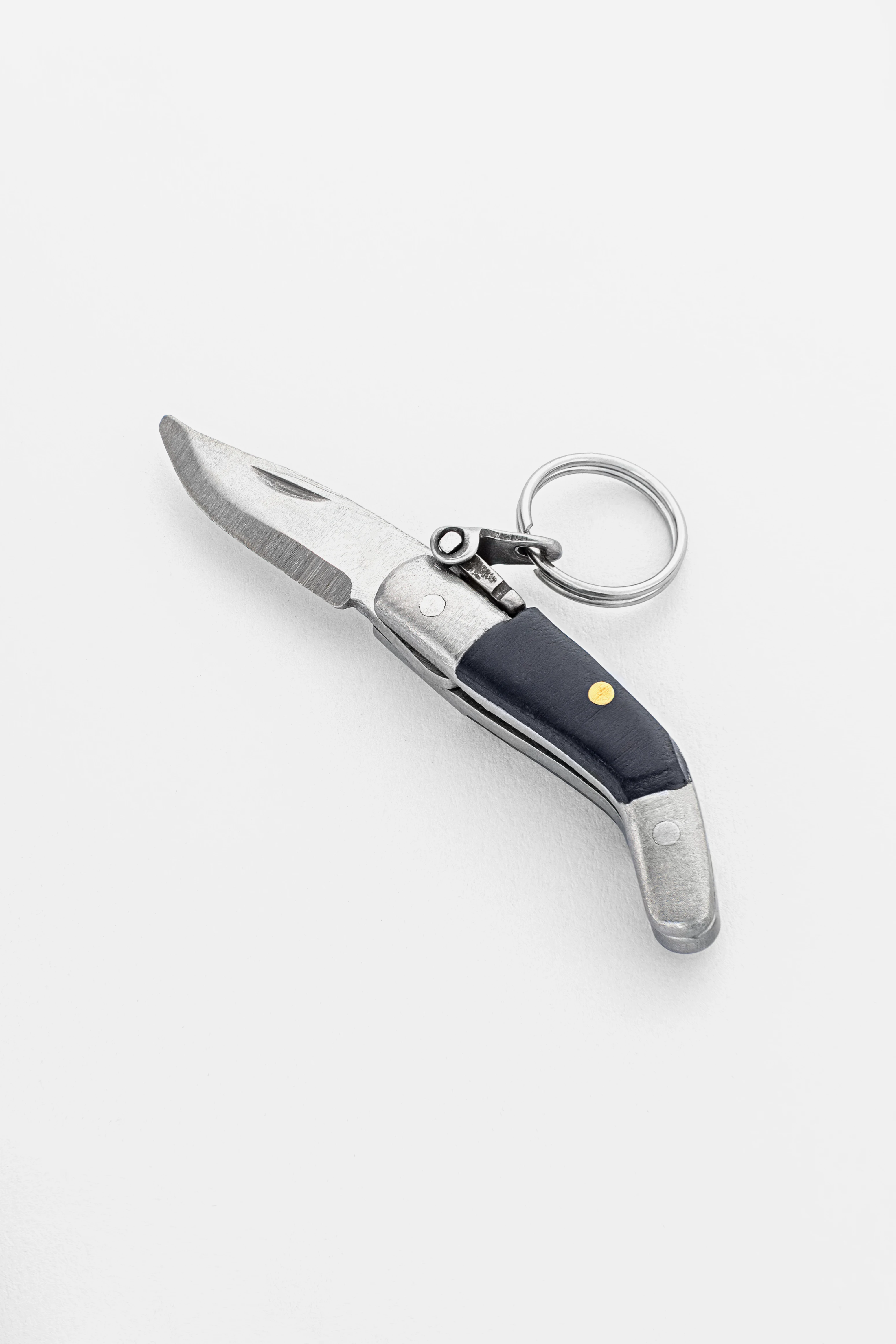
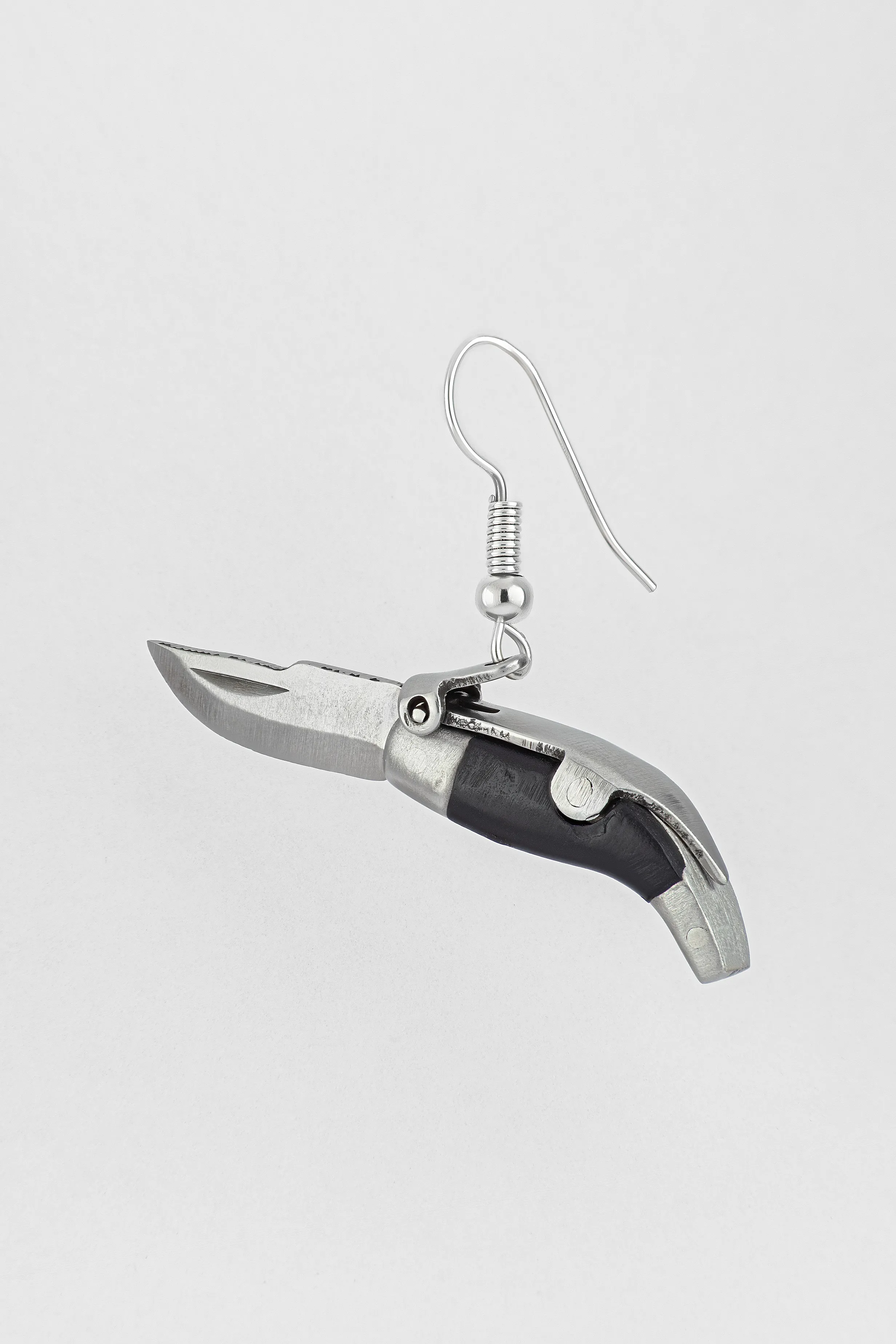
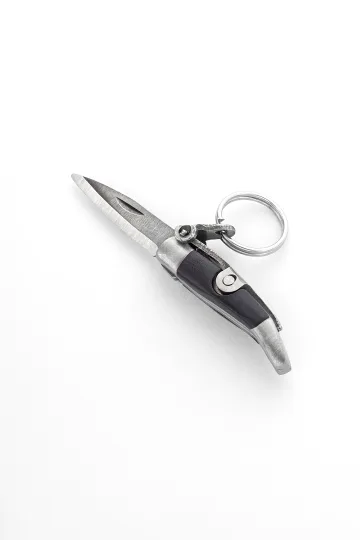
CAPAORA mini knife pendant
The 18th-century Spanish navaja in miniature: 40 mm of stainless steel, a real folding mechanism and a Palanquilla lock that clicks. An affordable gift to remember.
Authentic · Ships from Spain · 14-day returns
A Gift to a Pilgrim: Before, During, and After the Path
The Santiago shell, the vieira, is given in three different ways, and most mistakes start from confusing the three moments. A gift before the start, a gift on the road, and a gift after the return solve different problems: one strengthens intention, one supports through a crisis, one seals the achievement. You cannot pick a shell for the Camino in general; there is always a precise point on the timeline, and from it follow the size, the metal, the engraving, and even the words you say when you hand it over.
A Gift Before the Path: A Sign of Intention
The recipient has decided to walk. The gift before the path works as a visible anchor: every time they open a wardrobe or pack the rucksack, they see the shell and confirm the decision. The size is large, four to five centimetres, a deliberate choice so the shell reads from a distance as a pilgrim's mark, the size visible on a dark fleece, on a pack strap, on the chest under an open jacket, because on the Camino everyone wears large shells precisely to recognise one another on the trail. The material is 316L steel, the same used for surgical instruments and marine fittings, or 925 silver, both of which take the rain of Galicia, the sweat of twenty kilometres on foot, and the swing from a Pyrenean morning to a midday on the plateau. Gold does not suit, not because it is a poor metal but because eight hundred kilometres pass through shared hostels of fifty to a hundred beds with open niches and showers without locks, where an expensive piece creates needless risk. A natural sea shell in a pendant is ruled out too, because the first knock against a buckle chips it, and losing a talisman on the road hits harder than it looks from outside; a metal copy that survives knocks is what is needed. The engraving runs to at least two lines, the start date in a plain format and the route with its endpoints, which turns a generic souvenir into a personal document, and you may add an arrow or the coordinates of the cathedral as a promise of the point on the map being walked toward. As for what to say when handing it over, not good luck, since the Camino needs endurance rather than luck, but precise phrases: I am with you in this, this road is yours and I am near, come back. For a believer the old pilgrim greeting Ultreïa et Suseïa, onward and upward, fits even those far from the church. A concrete case: a wife gives her husband a shell before his retirement pilgrimage, the route engraved on the face, the coordinates of their home on the back, the simple strong idea that he carries the point of return in his pocket.
A Gift During the Path: Support on the Road
The pilgrim is already walking. The first euphoria has passed, blisters and tendinitis have arrived, and the gift works as a signal that they are not alone and home remembers, reaching them at the physical moment it is needed most. The size is a miniature, one and a half to two centimetres, because the large shell already hangs from the pack and a second large one is pointless, while the miniature is light, fits a jacket pocket, and can be attached to the existing shell. The material is silver or steel again, gold ruled out for the same reason. A useful function is replacing a lost shell, since shells are often lost after the first week when the pilgrim starts shifting gear at rest stops, and a quiet replacement, with no I told you to take care of it, works as a second chance. The engraving can mark a stage with the coordinates of the last city reached, which arrives like a medal for a leg of the journey. What to put in the parcel: the miniature, a note with one phrase and no lecture, and one tactile thing from home, a small photograph of someone close, a folded child's drawing, a scrap of cloth carrying a familiar scent, since touch and smell outlast text. As for when to send, the psychology of the Camino runs on a known schedule: days seven to ten bring the first serious crisis, often as the meseta begins; days fifteen to twenty bring a second wave of doubt; and five to seven days before Santiago a gift works in reverse, as a brake so the last stretch is walked consciously rather than rushed. The Spanish post works with hostels along the whole route, and a specialised pilgrim service carries packs and parcels between points, used to unusual addresses like a municipal hostel in a tiny village.
A Gift After the Path: Sealing the Achievement
The pilgrim has returned. They already own the shell they carried, worn, scratched, sometimes cracked and taped, its engraving dulled, with a story attached, and that one is not to be touched. The gift after the return takes another place: memory plus proof of achievement. The size is medium, around three centimetres, the size for everyday wear back in ordinary life, since the road shell is too loud for an office and a miniature gets lost on clothing. The material is silver or gold, and here gold is finally appropriate, the pilgrim safe at home, the shell living in a box rather than a hostel, so if they wore silver on the road the move up to gold reads as a symbol of completion. The engraving is the final arrival date, the exact distance, and the route name, a report rather than a promise. The strongest device of all is to recast the profile: the very shell carried on the road, often a cheap plastic or natural one bought at the start, is scanned in three dimensions with every scratch and chip preserved, and a metal copy is made in silver or gold carrying each scar one to one, a shell with a biography, unique in the world. Other formats work too. A reliquary pendant, a hollow shell capsule holding a fragment of stone from a precise point on the route, a pebble from the square before the cathedral, sand from the Fisterra beach, earth from O Cebreiro, so the pilgrim wears a literal fragment of the path. Paired bracelets, one for the pilgrim, one for the person who waited at home, both carrying the route and the dates, because the wait was a journey too and deserves its mark, which works powerfully for couples where one walked and one could not for reasons of health. A brooch with the shell and the cross of Santiago for families where the Camino sits inside a religious context, worn at christenings and weddings in the Galician tradition of passing the symbol down the generations.
A Gift to a Non-Pilgrim: Who Else It Suits
The shell works for several audiences. For the lover of Spanish history, medieval legend, and Gothic architecture, since the Camino is one of the longest continuous cultural corridors in Europe. For the artist or designer, since the scallop is a powerful visual sign of radial symmetry and ideal proportion that inspired makers from antiquity to art nouveau. For the sea traveller, the sailor, the yachtsman, the diver, where the accent shifts from pilgrimage to marine symbolism and the living Atlantic and Mediterranean creature itself; from the same marine family, the seahorse as a sign of patience and fatherhood sits well when you want to move from the pilgrim reading toward a purely oceanic one. For the bride at a Galician wedding or with Galician roots, where the shell means fertility and the blessing of marriage. For a child's christening, where the scallop is the canonical baptismal sign. And for the lover of Botticelli and ancient myth, where the shell reaches back to Venus and Aphrodite. The accent shifts with the recipient: Venus and aesthetics for the artist, the marine layer for the sailor, the Christian layer for a christening, fertility and the metaphor of a life walked together for a wedding.
A Gift for Someone Who Will Never Walk It
There is a category of recipient that the pilgrim gift guides tend to skip: the person who wanted the road and will not get it. Illness, age, a knee that has finished, a life with a dependent in it who cannot be left. For them a shell is not a souvenir of something they failed to do, provided it is framed correctly, and the framing is entirely in what is engraved and what is said when it is handed over. What works is a piece that records the intention rather than the achievement, a name and a date they chose, or a phrase in the future rather than the past. What also works, and works very well, is a shell brought back by someone who walked in their name, engraved with the route and the walker's name alongside theirs, because it converts the gift from a reminder of an absence into evidence that someone spent a month of their life on the recipient's behalf. What does not work is a shell handed over with commiseration attached, or a piece engraved with a distance the person could never have covered. The distinction is small and it decides everything. A shell can say what a person meant to do, or it can say what they did not do, and the same object does both depending on the sentence that accompanies it.
When Not to Give a Santiago Shell
Not everyone will take this symbol. A deep atheist who reads the shell only as a religious sign, with no cultural or historical layer, may receive it as an imposition of faith. A recipient who practises Islam or Orthodox Judaism, for whom Christian symbolism is foreign, since the Santiago shell binds too tightly to the Catholic tradition. A repeat pilgrim with a drawer full of shells from ten routes, for whom an eleventh adds little and a paired bracelet or a recast profile works better. And any occasion with no link to the road, the sea, Spain, or baptism, a promotion at work, a thesis defence, a school graduation, where the shell would be pretty but carry no connection and read as the first thing grabbed off the shelf.
Paired Pilgrim Gifts
Couples often walk the Camino, and for them identical shells are dull, while linked but different objects, whose meaning unlocks only together, work far better. A biological pair gives one a Mediterranean jacobaeus and the other an Atlantic maximus, two species, one road. A metal pair sets silver against gold on identical forms. A geographical pair engraves the coordinates of Saint-Jean on one and Santiago on the other, two ends of one path divided between two people. A linguistic pair engraves Ultreïa on one and Suseïa on the other, so the full greeting, onward and upward, is cut in two and shared, joining into one phrase when the wearers meet.
How to Wear the Shell: Spanish Tradition, Everyday Style, Pilgrim Kit
The scallop lives in three style worlds at once: the Galician wedding, the everyday coastal, and the pilgrim. Each world sets its own sizes, metals, and combinations, and confusing them means wearing the piece out of place.
The Spanish Bride: Galicia and Cantabria
In Galicia the scallop has entered the bride's costume since roughly the nineteenth century, though its roots run deeper, a blend of two cults: the ancient Mediterranean line of Aphrodite, for whom the shell signalled fertility and love, and the Christian cult of Santiago, whose shell blesses any road, including marriage. For Galicians a marriage is a pilgrimage for two, and the shell on the bride's chest says so as plainly as the one on a pilgrim's hat. In Cantabria a similar custom shifts the accent, the groom sometimes carrying the shell as an invitation to join the bride's family. The Galician bride's basic set settled by the mid twentieth century: a shell pendant of three to four centimetres on a silver or gold chain worn on the wedding day, drop earrings with miniature shells added by choice, and a brooch with a larger valve reading as a more mature, deliberate piece for an older bride or a second marriage. The shell sits naturally among a white or ivory dress, often with handmade lace, a veil or short mantilla, white lilies and roses sometimes joined by a sprig of olive as a sign of peace between two families. One scenario has the bride carry the shell in her hands and lay it on the altar after the vows, the shell becoming an offering, and at Fisterra a special custom leaves the shell at the foot of the lighthouse as a promise to the sea.
For a modern wedding away from the lace and the Galician village, four directions work. Minimalist: a large silver shell on a thin chain, no other jewellery but the wedding ring, a plain dress, the shell the single intentional statement. Classic white: a gold shell on a medium chain with small stud earrings, the shell built into the canon without argument. Bohemian: a natural valve in a thin silver or brass frame on a linen cord instead of a chain, a loose dress and wildflowers, made for a beach or garden wedding. Vintage: a silver shell with small pearls or tiny stones at the rim in a Victorian spirit, with a high neck or sweetheart dress and a low bun, made for historic houses.
Everyday Wear: The Coastal Aesthetic
Coastal jewellery came into fashion in the 2010s as a counterweight to cold urban minimalism, grown from the look of seaside regions, the Mediterranean, California, the Australian east coast. The materials are durable and not cheap: 925 silver, antiqued brass, blue and white enamel, mother of pearl, natural shells in frames, with principles of lightness, sea associations, and no formal strictness. There is an important difference here: beach bead strings on elastic for a couple of coins are a cheap, short lived category, while coastal style means serious material in an informal form, a silver shell pendant that costs about as small a household purchase, worn for years, tarnishing handsomely. Proven combinations: with a linen dress the shell reads naturally on a forty five to fifty centimetre chain, a two to three centimetre pendant in silver or pale gold; with high waisted jeans and a white shirt a two centimetre shell on a forty five centimetre chain works as the single accent, the shirt unbuttoned so the pendant rests on the collarbones; with a casual sundress a medium shell on a short chain sits in the neckline; with a relaxed blazer over a tee a small shell on a long chain hides under the jacket and appears in movement, the level of a hint rather than a statement; with a silk turban the shell becomes the only ornament, its metal matched to the silk.
Combinations with other marine symbols deserve their own note. A sailor's knot brooch complements the shell well, one sign meaning movement and the other completion. An anchor is possible but redundant, both signs heavy in meaning and reading together as a themed souvenir set, so one accent is better. A seahorse pairs beautifully in a single coastal style, the symmetry of living forms working together. A compass or wind rose builds a meaningful line, the compass answering where and the shell answering why. Gothic elements, skulls and dark spiked enamel, should not be combined, since the aesthetics dissonate. As for seasonality, summer is the shell's main season, asking for a light dress and bare collarbones, though it should come off before swimming, since sea salt harms silver and a gold clasp can open in a wave. Autumn gives the shell a nostalgic reading among darker tones, winter favours gold against grey wool, and spring allows light combinations though the true peak is still summer.
British Coastal and Country Dress
The scallop belongs to a wardrobe that Britain already has, which makes it easier to wear here than most symbolic jewellery. Against navy and cream, the standard palette of coastal clothing from Cornwall to the east coast, a shell in silver reads as a piece of the same vocabulary as a rope bracelet or an anchor, and it works with the plain knitwear, deck shoes and weatherproof layers that people on this coastline actually wear. Against tweed, moleskin and waxed cotton, the country register, the shell wants to be warmer and heavier: oxidised silver or yellow gold, a natural valve in a substantial frame, on a longer chain or a leather cord, where it sits alongside a horn button and a worn strap without any of them looking out of place. Two combinations are worth avoiding. Bright polished silver against a formal dark suit reads holiday, because the finish carries a summer association that the setting contradicts. And a large natural valve over a fine silk or a delicate knit drags the cloth and looks heavier than it is. The one context in which the shell is unequivocally correct in Britain regardless of what else is worn is a christening, a memorial or a wedding where the road means something to the family, and on those days nobody will be assessing the metal against the cloth.
The Pilgrim Kit: Historic and Modern
The historic pilgrim set of the twelfth to fifteenth centuries is fixed by sources and stained glass: the bordón, a staff up to two metres with an iron tip, for walking and for fending off dogs; the calabaza, a dried gourd water flask tied to the staff; the wide felt hat onto which the shell was sewn after the pilgrim proved arrival; the esclavina, a dark cloak with shells sewn along the hem; leather sandals worn to ruin; the credencial, stamped at every night's lodging; and the shell itself, the chief mark of status. The modern set shares almost nothing with the old: a trekking rucksack of thirty to forty litres replaced the cloak, a membrane jacket the wool, trekking boots the sandals, a wide brimmed synthetic cap the felt hat, a reusable bottle the gourd, carbon poles the staff. Only the scallop survives unchanged across eight hundred years, the same valve sewn to a rucksack at Roncesvalles that a thirteenth century pilgrim wore on his hat. The modern pilgrim wears it, in order of frequency, on a rucksack zip pull, on a chain over the jacket, in a pocket as a quiet talisman, sewn to a cap as a vintage gesture, or tied to a staff for the rare romantic still walking with a wooden bordón.
When the Shell Is Out of Place
Not every context accepts it. In a strict office with demanding dress codes the shell looks foreign, tied too clearly to holidays and the sea, so a hidden pendant under the shirt works better as a private sign. At sporting events the shell comes off, since sweat harms silver and gold alike, with yoga the exception for a light silver shell on a thin chain. At a funeral the shell is unsuitable, its base meaning being joy, road, and blessing, with one exception: the funeral of a pilgrim, where Galician custom lays a shell on the coffin to mark a completed earthly road. And in ceremonial situations, a state reception or a diplomatic dinner, the shell is too specific in meaning and disturbs the protocol evenness, where neutral classics are required.
Set Solutions
A three piece bridal set gathers a shell pendant of three to four centimetres as the main accent, drop earrings with small shells of the same series, and a bracelet with one central shell, all from one material and ideally one collection so the proportions match. A two piece everyday set is more economical and universal: a pendant for every day and stud earrings, covering most wardrobe scenarios. A single accent for a mature woman is often a brooch with a large valve of five to seven centimetres on a coat lapel or a thick silk scarf, one piece carrying maximum meaning, favoured by those who wear jewellery as a statement.
Leave your email, we'll send your discount code. No spam, unsubscribe anytime.
The code arrives by email, valid on your first order.
Care for Shell Jewellery: Seawater, Sweat, Perfume
A scallop on a chain or in a ring looks sturdy, but it is a composite of two very different materials. The metal, silver, gold, platinum, or steel, lives by the laws of metallurgy, while the nacre and the valve, calcium carbonate, live by the laws of a biomineral. Their enemies overlap in part and diverge in part. Anyone wearing the shell as a pilgrim amulet usually carries it into every environment: seawater, sweat, perfume, the pool, the sauna. Here is what each does and how to add a decade to the life of the piece.
Seawater: The Chief Enemy and Why
Seawater holds about three and a half percent dissolved salts, mainly sodium and magnesium chloride, which work as an electrolyte and speed the corrosion of almost any porous or active material. Silver reacts hard, forming the black sulphide film many mistake for dirt, and a silver shell left unrinsed after the beach darkens within a day or two. Gold of 14K and 18K behaves calmly, the alloy protected by the high gold content, while 9K and 10K carry only thirty seven to forty two percent gold and slowly darken. Platinum is indifferent to natural waters. 316L steel resists too, though sand in the surf works as an abrasive and matte sets in over a season. Enamel suffers not from salt itself but from salt crystallising in microcracks and widening them. The natural shell is the most vulnerable point, its porous calcium carbonate taking up salt that crystallises on drying and dissolves on the next wetting, the wet dry cycle slowly washing out the pigment until the colour fades in a year or two. After the sea, rinse the piece in fresh cool water within thirty minutes, two to three minutes under the tap, then lay it on dry microfibre. No hairdryer, which dries enamel and shell unevenly, and no towel rubbing, which leaves microscratches on polished silver.
Perfume: The Second Front
Perfume is a solution of ethanol, essential oils, and often aldehydes, and each component works against the piece. Ethanol speeds the oxidation of silver by dissolving the protective film, essential oils leave a sticky layer that draws dust, and aldehydes break down lacquer and enamel coatings. On gold the effect is milder and 14K holds for years, on platinum there is almost no trace, and on enamel the damage shows strongest as matte, yellowing, and small chips. The rule is simple: apply perfume before jewellery, at least five minutes before fastening the chain, the time it takes for the alcohol to evaporate and the oils to sink into the skin. If the order is reversed, wipe the piece with dry microfibre rather than water, which would smear the oils.
Sweat: Quiet but Constant
Sweat carries sodium chloride, urea, ammonia, and amino acids, and in heat and sport the salt concentration rises and the sweat turns more acidic. On silver the result is predictable oxidation within a week or two of intensive wear, especially on the inner chain and the back of the pendant; gold reacts little, though 9K shifts tone over time; enamel suffers in its micropores. The answer: take the piece off for intensive training, long hot walks, the sauna, and running, and after an ordinary hot day rinse it thirty seconds in fresh water and wipe with microfibre, which takes less time than brushing your teeth and multiplies the life of the polish.
The Pool: A Separate Category
Chlorine in a pool reacts aggressively with silver, forming a whitish silver chloride film that ordinary polishing will not lift, slowly eats the alloy of gold under 14K until a ring can crack at the band, and degrades enamel within months of regular swimming. The single rule: take the piece off before the pool, with no exceptions, not even for fifteen minutes to cool down.
Sauna and Steam Room
Temperatures of eighty to a hundred degrees with high humidity speed every chemical reaction many times over. A silver shell darkens within two or three visits, enamel cracks as it expands and contracts at a different rate to the metal, and a natural shell dries out, loses the elasticity of the organic bonds between its calcium carbonate crystals, and grows brittle. Do not wear jewellery into the sauna; take it off in the changing room.
Sleep
It seems harmless, but eight hours gather the whole complex: sweat builds up, micromovements rub the piece against the pillow, and bedding soaked in detergent and fabric softener leaves a film on silver that speeds oxidation. Take the piece off every night, not when you remember but every night, onto a bedside dish or straight into a soft pouch.
Storage
Each piece in its own microfibre pouch, since a silver chain and a steel pendant in one box scratch each other within a week. Keep the box in a dry place, not the bathroom, away from direct sun, which fades enamel and yellows nacre. Slip in a sheet of anti tarnish paper with activated carbon that absorbs the hydrogen sulphide causing silver to darken, replacing it every six to twelve months, and never store jewellery in a plastic bag, which releases compounds that speed oxidation.
Regular Cleaning by Metal
Silver: every two to four weeks with a soft cloth and tooth powder, not paste, since paste contains abrasives, in light circles, then rinse in warm water and dry with microfibre. Gold: a warm mild soap solution, a soft brush for the recesses, rinse, microfibre, every two to three months. Platinum: home soap and a soft cloth, with annual professional cleaning since restoring its polish needs a specialist. 316L steel: mild soap and warm water, very resilient, no special care needed. Enamel: only dry soft microfibre, no chemicals or abrasives ever, and at most a slightly damp cloth followed at once by drying.
The Natural Shell: A Special Regime
A shell in jewellery is best not wetted at all, even a protected nacre inlay, since calcium carbonate reacts over time with water and carbon dioxide and the surface clouds. If it gets wet, blot at once with a soft cloth, never rub, and let it dry naturally. No perfume reaches the shell, no cleaning agents are used, only dry microfibre or a soft natural bristle brush. A protective coating applied in a workshop, an ultrathin jewellery lacquer that fills the pores of the calcium carbonate, extends the life of the shell for five to ten years depending on wear.
When the Shell Is Already Damaged
A microcrack takes a thin layer of jewellery grade epoxy chosen for calcium carbonate, with an experienced maker leaving an almost invisible seam, never to be tried at home where ordinary superglue yellows. A chipped edge calls for restoration in a workshop, either a matching fragment of the same shell or a polymer inlay under the original. A full break cannot be restored as before, and the solution is to replace the shell in the same frame. It is worth being clear about what restoration means with an organic material. Metal can be returned to its original state; calcium carbonate cannot, because the damaged crystal structure does not regrow. What a good workshop achieves is a repair invisible at arm's length and stable for years, not a shell that is as it was. That is usually enough, and it is a better outcome than the two common alternatives, which are living with a crack that widens every time the piece warms and cools, or throwing away a frame that took a craftsman a day to make.
Signs a Piece Needs the Workshop
Silver that has lost its shine even after a full clean means the surface layer is spent and needs repolishing. A stone or shell that wobbles in its setting means the prongs have loosened, and a piece in that state is a piece about to lose its centre down a drain. A chain that has stretched, so that the pendant hangs lower than it used to, is a chain with worn links and a limited life. A shell dulled beyond recovery calls for replacement rather than treatment. Two further warnings are easy to miss: a bail that has worn into an oval where the chain passes through it, which fails without notice, and a clasp whose spring has gone soft, which can be tested by opening it and feeling whether it snaps back or merely returns. A yearly visit to the maker for gold and platinum pieces with stones or shell, and every two or three years for daily silver, lets the piece live for decades rather than seasons.
Prevention: The Habits That Keep a Shell Intact
Almost all serious damage to shell jewellery is preventable, and the preventive habits take seconds rather than minutes. Put the piece on last, after clothing, fragrance and hair products, and take it off first, before undressing. Wipe it dry with a soft cloth at the end of the day, which removes the film of perspiration that does the slow work of etching. Keep it in a dedicated pouch or a lined compartment where nothing metal can rest against it, since a chain lying across a valve overnight scratches it as effectively as deliberate abrasion. Take it off for the gym, the sea, the pool, the shower and the kitchen sink, and take it off before gardening or any work with the hands, where a single knock against stone ends the piece. Do not leave it on a windowsill or near a radiator, because heat and dry air shrink the organic binder between the mineral layers and craze the surface. Check the setting once a month by holding the piece to the light and pressing the shell gently with a fingertip to feel for movement. And build in one deliberate annual moment, the same week each year, when the piece goes to a jeweller for a look. A shell treated this way outlives the person who bought it, which is the entire point of an object meant to record a journey.
Engraving for a Pilgrim Gift
A scallop without a line of text is a souvenir. A scallop with the right engraving is a document, holding what would otherwise live only in a diary or memory: the route, the date, the name of a companion, a phrase pilgrims greeted one another with eight hundred years ago. The chief mistake of givers is to load the shell with text on the principle that more is more valuable. A silver or gold frame the size of a coin will not bear paragraphs; three or four meaning blocks at most, a phrase, a route, a date, a name, with everything else moved to the back or a gift card.
Classic Pilgrim Phrases
Buen Camino (Galician and Spanish, good road) is the most common inscription, the greeting pilgrims have exchanged on the trail for centuries, working as a universal code even for someone who has never heard of the Way, a foolproof choice for a first time walker. Ultreïa et Suseïa (Old Castilian and Occitan, onward and upward) is the ancient pilgrim cry recorded in the Codex Calixtinus around 1140, paired in structure, which gives an elegant solution for two gifts at once, Ultreïa on one and Suseïa on the other. Camino de Santiago is simple, clear, and sufficient, closing the question without pretension. Compostela, from campus stellae, the field of stars, reads as a certificate of the finish, good for a gift after the return. Iter Sancti Iacobi (Latin, the Way of Saint James) is the formal, documentary wording, suited to a believing Catholic or an older pilgrim, rarer on modern jewellery and weightier for it. Bonus Iacobus, good James, is the warm folk Latin nickname for those who want to leave the pathos aside.
Coordinates of Key Points
Coordinates work as a quiet, precise language that needs no translation, the figures reading the same in any country and giving the gift the status of a document. The cathedral of Santiago at the finish; Saint-Jean-Pied-de-Port at the start of the Francés; Roncesvalles, the first point past the Pyrenees; O Cebreiro, the gateway to Galicia; Cabo Fisterra, the end of the world; Padrón, where the boat with the apostle's body came ashore; Burgos at the midpoint; León. The logic of choice depends on when the gift is given: before the path, the start and finish, a map of intention; on the path, the start and the current point, a map of progress; after the return, the start, finish, and the furthest point reached, such as Cabo Fisterra, historically the end of the known world, to which many pilgrims walk on after the cathedral to close the route with the ocean.
Routes as Engraving
The route name, the start and finish points, the length: a formula that fits one line and reads at once, such as the Francés from Saint-Jean to Santiago at 790 kilometres, or the Portugués from Porto at 240. Add the completion date when the shell is given after the return. An arrow between the points reads better as movement than a pause.
Quotes From the Codex Calixtinus
The Codex Calixtinus is a manuscript of the mid twelfth century, effectively the first pilgrim guidebook to Santiago, compiled for the abbot Calixtus, holding liturgical texts, pilgrim songs, descriptions of the roads, and warnings about everyday risks. Quotes from it work on the shell as a reference to a genuine medieval tradition rather than a marketing reconstruction. Inter ostia non ostium, between the ways the way, an old metaphor of pilgrimage as a thing in itself. Ego sum via, veritas et vita, from the Gospel of John, I am the way, the truth, and the life, fitting a believing pilgrim before the start. Ad limina Apostoli, to the threshold of the apostle, the formal phrase of one walking to a saint's burial, best in a Latin face.
Personal Elements
Personal data goes in small type, usually on the back, so it does not break the clean main inscription: the pilgrim's name, the start and end dates, the age at the time of the walk (especially valuable for the older, a living document of persistence), and a companion's name. Beyond the obvious four there is a set of elements that people who commission these pieces regularly wish they had included. The daily distance in kilometres, or the total, which turns an abstraction into a number that means something to the person who covered it. The name of the place where the walk almost ended, the hostel or the hill where quitting was seriously considered, which for many walkers is the sharpest memory of the whole road. A weather note, one word, for a route walked in an exceptional season. The name of a dog that walked part of it. A blood relation the walk was undertaken for, in the form por and a name, which is the Galician usage and carries no explanation and no sentiment beyond the fact. What should be resisted is a full account. The engraving is an index to a memory, not the memory itself, and every line added past the fourth reduces the weight of the first.
Where to Engrave on a Shell Pendant
The scallop has two faces and a frame, and each surface serves a different audience. The outer convex side is seen by everyone and suits large public inscriptions, the route, the coordinates, Buen Camino. The inner flat side is seen only by the wearer when the pendant comes off, and takes an intimate message, a private quote, a date, a child's name. The frame rim carries a thin line around the edge, usually a name and date at around one and a half to two millimetres. The back of a medallion, when the shell sits on a round base, holds the full text. And the chain or clasp can carry a micro inscription, one word or initials, a private code only the wearer notices.
Size and Legibility
Reading a line on metal follows simple physical limits. The minimum legible letter height for a serif face is around one and a half millimetres, for a script face two, because thin connecting strokes merge at a smaller scale. The standard for long text is two to three millimetres, and on a shell eighteen to twenty two millimetres across that holds a line of twenty to twenty five characters, while purely decorative engraving runs larger at four to five. Two further constraints apply to a shell in particular. Curvature eats legibility: on a convex valve the letters at the outer edge of a line sit further from the eye than those at the centre and read smaller, so a long line set across the dome of a shell should be shortened or curved to follow a rib rather than run straight. And contrast decides everything at small sizes. A laser line on polished silver is a shallow grey mark on a mirror and can be almost invisible in bright light; the same line oxidised black, or cut into a matte surface, reads at twice the distance. Anyone commissioning small text should specify a darkened or matte finish inside the letters and ask to see a sample photographed at arm's length rather than under a macro lens, which flatters every inscription ever made.
Fonts for Each Language
The font works as a second phrase over the first: Latin in a serif like Garamond or Trajan to sound as if from the ninth century; Galician and Spanish in a clean sans like Helvetica or Futura so a living greeting does not turn into a museum label; coordinates and figures in a monospace like Courier so they read as a navigational note; names in a soft italic for personal warmth.
What Not to Engrave
Emoji and pictograms on precious metal look cheap and date fast, and hashtags age within a few years. Names of departed partners create pain if a new person arrives in life. Words that could read as blasphemy in the traditional Catholic regions of Spain, especially Galicia and Navarre, are best left off. Shortenings like I LOVE U are clichés that lower the whole piece, and any brand or commercial slogan on a pilgrim object reads as a misprint.
The Technology of Engraving on the Shell
Each surface needs its own technique. A natural scallop is brittle and takes only fine laser engraving five to twenty microns deep, with text set on the smooth central zone near the hinge where the material is denser, since a graver splits the ribbed surface. A metal copy holds any depth from five to two hundred microns, a graver giving a more tactile hand relief and a laser the finer geometry, so laser suits long inscriptions and a graver suits large letters and ornament. A frame around a natural shell takes classic graver or laser work like any jewellery, the text running the metal rim while the shell stays clean, which is the most common scenario. An enamel coating is engraved beneath the enamel, the lines cut into the metal and a translucent layer laid over, so the inscription shows through as a fine pattern that shifts with the light, an old technique used since Byzantine and Romanesque work. As a budget guide without figures: a plain twenty to forty character inscription sits at the level of a café lunch, artistic graver work with complex typography nearer a restaurant dinner, and a multilayer composition with ornament, coordinates, and a quote at the level of a week's seaside holiday.
Language Combinations for Paired Gifts
A gift made of two objects, two pendants for a couple, a shell for a parent and a shell for a child, a set for two friends who walked together, gains a great deal from splitting the languages rather than repeating one. The principle is that each half carries a different register and the pair completes a sentence neither half finishes alone. The most robust combination sets Latin against a living tongue: Ultreia on one and Suseia on the other, the old pilgrim call and its answer, which are meaningless apart and complete together. A second pattern splits a place: the coordinates of the start on one shell and of Santiago on the other, with the shared completion date on both backs. A third splits register rather than language, with the public greeting on the outer face in Spanish or Galician and the private line in English on the inner face, so that the two people involved can read something the world cannot. For families with an English side and a Spanish side, engraving each half in the language of its wearer is the version that gets worn, because the sentiment lands in the tongue the person actually thinks in. Two cautions. Do not mix three languages on one small object, which reads as indecision. And have any Galician or Spanish line checked by a native speaker before it is cut, because an accent dropped from a short phrase changes the meaning far more readily in those languages than in English, and metal does not forgive a correction.
Ready-Made Examples That Work
For a walker setting off, the outer face carries Buen Camino and the back a single date, the day of departure, with nothing else, because nothing else has happened yet. For a walker returning, the outer face takes the route name and the year, Camino Inglés MMXXVI, and the inner face the total distance in kilometres. For a pair who walked together, one shell reads Ultreia, the other Suseia, both backs the date they reached the cathedral. For a christening gift, the front takes the child's name, the back the date and the parish, in letters large enough for a six year old to read without help. For a wedding in Galicia, the front takes a short Galician endearment and the back the coordinates of the place the couple met. For a memorial piece, for a person who intended the walk and never made it, the front takes their name and the inner face a single line in Latin, with the walk completed in their place and the shell given to whoever loved them most. For someone who wants no religious reference at all, Iter ad astra, the road to the stars, reaches the campus stellae etymology and leaves the apostle entirely out of it. And for a walker who has done more than one road, a rim engraved with route names in the order they were walked, one line added at each return, which is the only version of a shell inscription that is designed to remain unfinished.
Historical Cases, Legends, and Modern Stories
The scallop did not become a symbol in a day. Its road to the status of the chief sign of the Camino took twelve centuries, and in each one people added a layer of meaning, emperors and peasants, nuns and writers, medieval scribes and modern couples in their forties who walked the road together.
Charles V and the Quiet Abdication of an Emperor
Charles V (1500 to 1558), emperor of the Holy Roman Empire and king of Spain, did in 1556 what shook Europe: he abdicated, not from war or plot but by his own will, a tired man worn by gout and by an empire on which the sun never set, retiring to the monastery of Yuste in Extremadura. The documents of abdication survive well; those of a pilgrimage to Santiago afterward are fragmentary, but Habsburg oral tradition and the Yuste archives note that the emperor spent months on the road and that among his effects after death lay a scallop in a silver frame, a relic known as the shell of Charles, passed down the Habsburg line as a reminder that even an emperor becomes a pilgrim in the end, walking the dusty road beside the shepherd.
Aymeric Picaud and the First Guidebook
Around 1140 the French monk and pilgrim Aymeric Picaud finished the manuscript that would enter the Codex Calixtinus, whose fifth part, the road for pilgrims to Compostela, became the first European guidebook in history, describing roads, bridges, dangerous stretches, local customs, languages, and the character of innkeepers. In Aymeric we find the first clear written mention of the scallop as the pilgrim's sign: he writes that on the Atlantic shore the pilgrim who has reached the edge of the known world picks up a shell and fixes it to cloak or hat, a gesture marking achievement, not intention. First the road, then the sign, not the reverse. Eight hundred years were enough to flip the order, and many now put the shell on at the start, a promise to themselves rather than a trophy.
Bridget of Sweden and the Northern Road
Bridget of Sweden (1303 to 1373) was a Swedish noblewoman, mother of eight, and one of the most influential mystics of her time. Between 1341 and 1343 she walked with her husband to Santiago from Sweden, a road of thousands of kilometres through hostile climates and unknown tongues. Widowed on her return, she founded the Bridgettine order and wrote the scallop into the sisters' habit, where it survives in the order's symbolism still. For Bridget the shell meant readiness to walk any distance for an inner promise, a reading that holds for women who choose the road alone today.
Louis VII of France and the Crown With a Shell
Louis VII (1120 to 1180) walked to Santiago in 1154, shortly before deciding to join the Second Crusade, and returned with a shell that craftsmen set into the royal crown. From that moment an unwritten tradition of the French monarchy asked every king to touch the road to Santiago at least in symbol, some travelling in person, some sending a representative, some giving a shell to Reims cathedral. When a monarch wears a shell in the crown it becomes politics, a signal to subjects that the ruler remembers he answers to something larger than necessity of state.
Francis of Assisi and the Wooden Frame
Francis of Assisi (1182 to 1226), founder of the Franciscan order, by tradition walked to Santiago in 1213. The documents are thin, but Assisi keeps the so called shell of Saint Francis, a natural scallop in a plain wooden frame. The wooden frame matters: Francis preached poverty, and his shell without silver or gold became a sign of the Franciscan attitude to the material, that the symbol is strong in itself and a costly frame adds nothing. For a modern buyer of jewellery the thought may seem a paradox, yet it holds: the value of a shell is set not by the weight of silver but by what it means to its owner.
Barcelona and a Façade With Biologically Accurate Reliefs
A basilica built in Barcelona in 1216 carries shell reliefs on its façade, and the striking thing is that each one exactly repeats Pecten jacobaeus, the Mediterranean scallop. The thirteenth century sculptors worked from life, not from a stock pattern: they knew how a real shell looked and did not simplify the form. The basilica was a place of prayer and a gathering point for pilgrims heading to Santiago through France or by sea, and the shells on the façade were a recognition sign understood without words in any language.
Isabella of Castile and Gold Before Granada
Isabella I of Castile (1451 to 1504), the queen who united Spain with Ferdinand of Aragon, walked to Santiago in 1486, six years before the end of the Granada war, and brought to the cathedral a gold shell set with rubies, which is kept in its treasury still. Her gesture was layered, a personal renewal of faith before the final phase of the Reconquista, a political statement, and a confirmation that the queen walked the same road as her subjects. The gold shell in that context stops being a jewel and becomes the crown of a pilgrim, brought rather than worn.
The Shepherd Pelayo and the Field of Stars
Around 813 the Galician shepherd Pelayo saw a strange cluster of stars over one spot in a field, night after night, and told the local bishop Theodomir of Iria, who dug there and found an ancient grave identified as the tomb of James the Greater. From that find grew the cult of Santiago and the whole Camino, and the name Compostela traces to campus stellae, field of stars, the place name fixing the moment of discovery. Historians have long noted the political convenience of the timing. A Christian Iberia pressed hard by the caliphate acquired, at exactly the moment it needed one, an apostolic tomb on its own soil, the only one in western Europe outside Rome, and a rallying point that no Muslim army could claim. That does not make the find a fabrication, and the archaeology under the cathedral has produced a late Roman cemetery and a small mausoleum which is certainly what the ninth century diggers encountered. What it does mean is that the shell, from the very beginning, carried a political charge alongside the devotional one, and every later use of it, heraldic, royal, national, drew on both.
The Stone Boat That Carried the Apostle
A parallel legend tells how the body reached Galicia: the apostle's disciples laid it in a stone boat without oars or sail and trusted it to the sea, and it crossed the Mediterranean, rounded Iberia, and came ashore at Padrón, whose name local tradition links to padre, father, meaning the apostle. When the boat landed, the shore was covered in marine life, oysters, mussels, and scallops, and the shells marked the place of arrival. The stone boat is a motif with deep roots in Atlantic folklore, appearing in Irish, Breton and Welsh saints' lives, where a holy man is carried across the sea by a vessel that cannot float and does so anyway. Read that way the Galician version is not an isolated miracle but the western seaboard telling a story it had told about its own saints for centuries, attached to the greatest name available.
The Miracle at Padrón
A twelfth century story adds that a pilgrim once drowned near Padrón, was thrown ashore covered in a layer of scallops, and survived, so the shell came to be seen in Galician folk tradition as a saviour and a talisman of the road. The church at Padrón keeps the stone of James, a stone altar bearing the marks of shells, over whose origin geologists and archaeologists still argue while for local people the question was settled long ago: the stone remembers the boat, the boat remembers the apostle, the apostle remembers the shells.
San Adrián and the Galician Bride
From the same Galician soil comes the legend of San Adrián, in which the Virgin appears at a peasant's wedding in the guise of a pilgrim and gives the bride a scallop as a promise of fertility and a long marriage, the root of the Galician wedding custom that survives today. The structure of the tale is the oldest one there is: a stranger arrives at a feast, is treated well by people with little to spare, and turns out to be more than a stranger. What is specific to Galicia is the object left behind. Not gold, not a blessing spoken and gone, but a shell, the cheapest thing on that coastline and the one thing a fisherman's daughter would have handled every day of her life. The gift works precisely because it is ordinary. That is why the custom survived the centuries in which peasant weddings had no money for jewellery at all, and why it is still legible now. A Galician bride given a scallop on her wedding day, whether a natural valve tied with ribbon or a silver pendant from a jeweller in Santiago, is receiving the same message the legend delivers: that what sustains a marriage is not what it costs. Outside Galicia the custom travels well, and the shell has become a quietly popular wedding gift among couples with no Spanish connection, usually given by someone who has walked the road and understands what they are handing over.
A Daughter Who Walked the Path for Her Mother
A daughter walks the path for her mother. The mother, seventy eight, has dreamed all her life of the Camino, but arthritis and a clear no from the cardiologist rule it out, so the daughter, working in Barcelona, decides to walk it in her place, thirty four days from Saint-Jean to Santiago, with a video diary each evening, the view from the hostel step, the face after the shower, a short account of the day. On her return she gives her mother a silver shell engraved with the coordinates of every night's lodging and a drive of the recordings, and the mother walks the path for the first time through the shell and the videos, wearing the pendant every day. The case shows that the road need not be walked on one's own feet; sometimes love walks it for you.
Two Paired Pendants After a Shared Road
A couple in their forties, children grown and gone, walk the Francés together, their first serious journey after years of parenting, and on return commission two paired pendants from a single piece of silver, one casting split in two, the coordinates of Saint-Jean on one and Santiago on the other, the same completion date on both backs. Together the pendants join mechanically into one form; apart, each carries an end of the road, and the memory works physically, without words.
A Christening and a Pinch of Sand
A godmother from Galicia, living abroad, brings to a christening a silver shell medallion engraved with the child's name and the date of the rite, with a pinch of sand from the Fisterra beach hidden inside, invisible from outside, kept in a box until the child comes of age. The shell becomes a time capsule whose value is measured not by material but by what is placed inside it.
A Bride With Galician Roots Marrying Abroad
A bride from one country marries a Galician, the wedding set in Santiago, and the groom, knowing the San Adrián tradition, gives her a Pecten maximus shell pendant in gold, engraved with a Galician endearment on the face and the coordinates of the café where they met on the back. She wears it to the wedding, the Galician guests smile in recognition, and for the guests from her own country it becomes one of the most memorable moments of the evening, the shell doing the work of a cultural bridge between two families.
An Atheist Lecturer and a Latin Quote
A friend, an atheist, teaches medieval history at a university, and the religious subtext is for him a matter of professional interest rather than personal belief, so the gift is a shell engraved with Compostela, with no reference to the apostle, and the Latin line Iter ad astra, the road to the stars, which reaches the etymology of the field of stars while stepping around the figure of James. He wears it to lectures on the twelfth century, students notice it and ask, and he speaks of the Codex Calixtinus, of Aymeric Picaud, of Charles V. The shell becomes a teaching tool, working for an atheist mind as a cultural artefact, a fully legitimate form of its existence.
The Connecting Thread
From the shepherd Pelayo in the ninth century to a couple in their forties who walked the road in our own time, the scallop has crossed twelve hundred years, each century adding a layer: the sign of achievement in Aymeric, the symbol of poverty in Francis, the political statement in Isabella, the promise of marriage in the Galician bride, the cultural bridge in modern couples. The base structure stayed untouched, a road, a promise, and a blessing packed into a form recognised everywhere, so that to hold a shell is to hold twelve centuries of unbroken memory, and there lies its real value, independent of the weight of silver or the turns of fashion.
Send a friend a discount code, they save on their first order.
Facts That Surprise
A few things about the shell that catch even people who think they know it. The first documented image joining the love goddess and the scallop is a silver coin of Kythera struck around 540 BCE, roughly two thousand years before Botticelli, which means his painting quotes a tradition older than Rome itself. A single medium scallop filters up to ten litres of seawater an hour, so the creature behind the symbol of the road is also a small water cleaning machine, and the population matters to the whole ecosystem. The growth lines crossing the ribs are an annual record, and a twelve centimetre valve carries five to seven years of the animal's life written across its surface, readable like tree rings. The shell of John the Baptist is a purely Western sign: in Orthodox iconography he is never shown holding one, because Eastern Christianity baptises by full immersion and the shell has no function there. The scallop began as a man's symbol long before it became universal, worn by medieval male pilgrims, sailors, knights, and physicians as a sign of safe return from a journey. And the species in Botticelli's painting is most likely the Atlantic Pecten maximus rather than the Mediterranean jacobaeus that became the Santiago sign, a detail suggesting that even in the fifteenth century the choice of shell was deliberate. The simplest test of authenticity is also the cheapest: a real shell stays cool in the hand while plastic reaches skin temperature within seconds, because calcium carbonate carries the warmth away.
Silver, gold, engagement rings, symbolic jewellery, paired sets.
Buying it as a gift? Each one arrives ready to give.
 A branded Zevira box and a little card come with every order.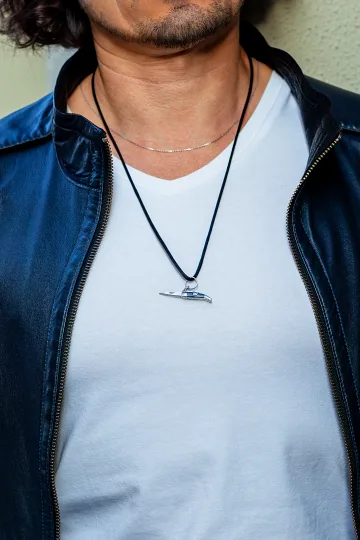
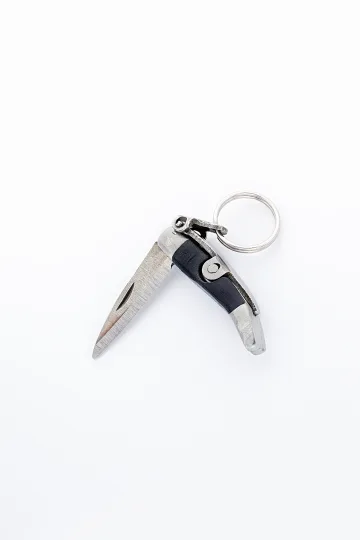


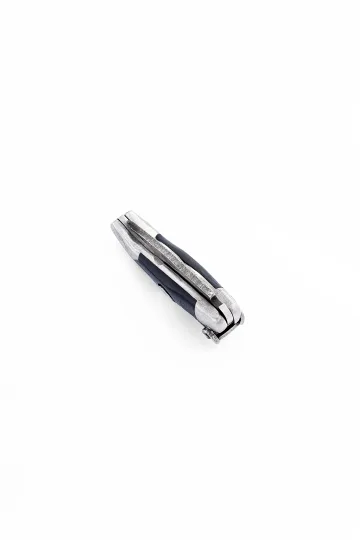

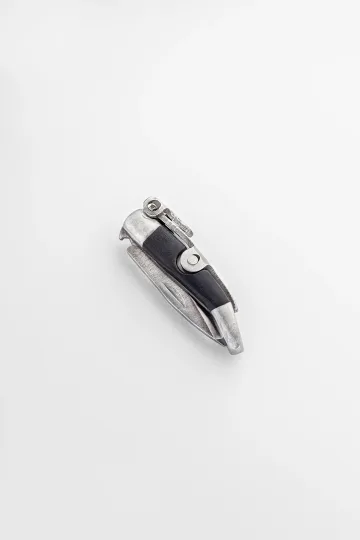
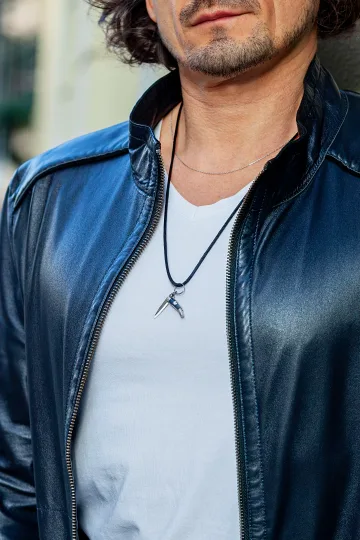

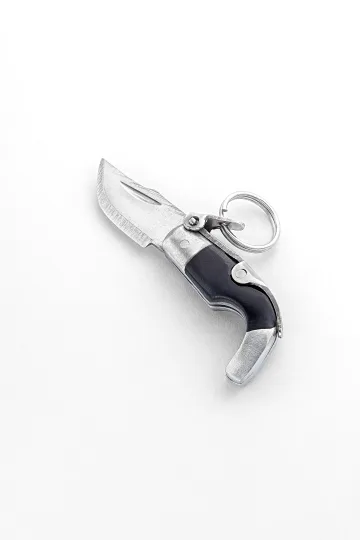
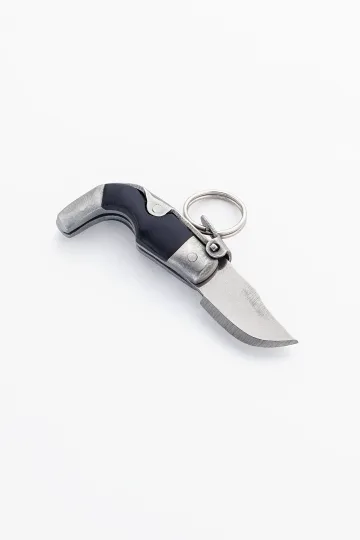
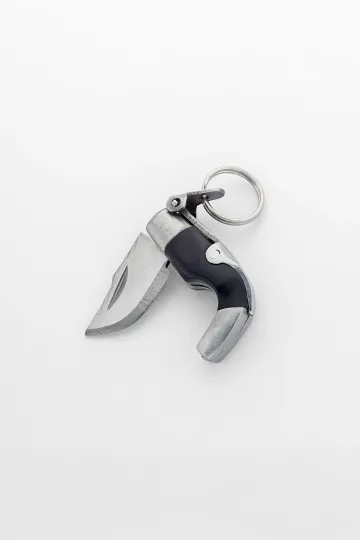
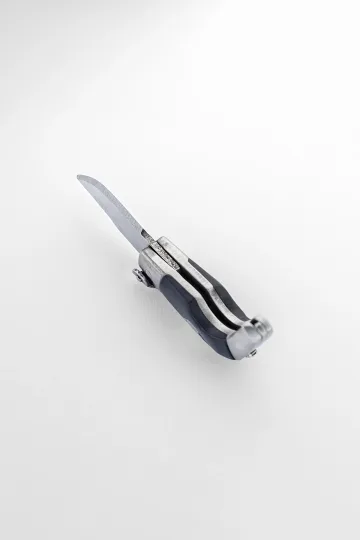
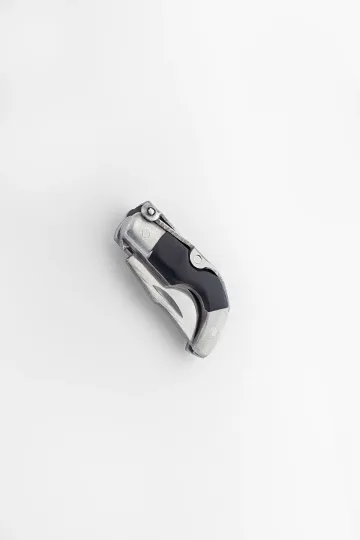
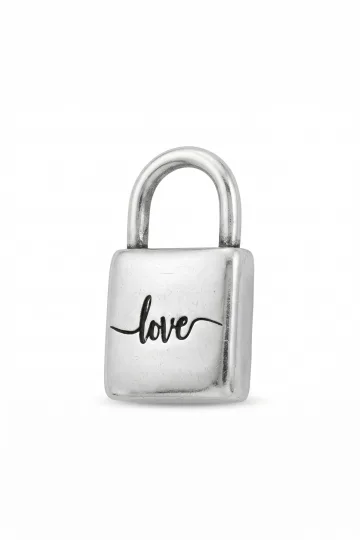
Frequently Asked Questions
Can you wear a Santiago shell if you are not a pilgrim?
You can. The shell of James stopped being a strictly pilgrim sign in the Middle Ages, when merchants, physicians, and sailors wore it as a mark of safe return from a journey. Across Galicia and Spain today, people wear it who have never walked a single kilometre of the Camino. If someone asks, it is enough to say it is a marine symbol of northern Spain, tied to protection on a journey and the culture of the region. No stranger owes anyone an explanation; an inner resonance with the idea of the road, the sea, or Galician roots matters more than any formal right to the symbol.
How does a scallop differ from an oyster in jewellery?
Two different stories. The scallop has a fan shaped ribbed form with two symmetrical ears at the hinge, eight to eighteen centimetres across, in colours from white to red brown, and its symbolism is the road, birth, and blessing. The oyster is asymmetric, coarser, and tied to pearls and the luxury of feasts. In jewellery the scallop is usually cast in metal as a medallion or pendant with engraving, while the oyster appears rarely, its role often played by a pearl set inside a frame. A metal scallop copy sits in the segment of an everyday purchase, while oyster motifs in artisan pieces cost more for the difficulty of working nacre.
Which metal should you choose for a shell?
It depends on the scenario. 925 silver is the base option, giving the right texture for the relief, taking daily wear, and patinating to underline the ribs, which suits the pilgrim and christening angle. Gold of 585 or 750 suits the Venus reading, with its warm tone and gift status for a wedding or anniversary. 316L steel is the budget and coastal option, never darkening, taking salt and sweat, and good for active people and teenagers, and for a child steel or silver works best. For engraving, silver or gold is better, since letters look less alive on steel.
Can you give a shell to an atheist?
You can, and it works. The religious layer is secondary, preceded by the ancient Venus, by Minoan and Phoenician marine symbolism, and by Roman wedding rites. If the recipient is far from faith, present the gift through the cultural angle: the shell as a sign of a journey, a passage, the start of a new stage, a symbol of the sea and northern Spain. It fits a graduation, a move, a new job, a return from a long trip. An atheist often takes such a gift more easily than a believer, because for them history and aesthetics stand behind the object rather than dogma.
How long is the Camino Francés?
The classic distance from Saint-Jean-Pied-de-Port to Santiago de Compostela is around 790 kilometres. An average pilgrim walks it in thirty to thirty five days at twenty five to thirty kilometres a day; the well prepared finish in twenty four to twenty eight, while those walking slowly with rest days stretch it to forty or forty five. Most of the route has a moderate profile, with the two hard sections being the Pyrenees at the start and the mountains of León near Galicia, and hostels every five to ten kilometres let you tune the daily distance to your form.
Do you need a permit to collect shells on the Galician coast?
In most coastal zones, yes. Galicia protects its shore fauna with strict rules, because the region lives on seafood and ecotourism. Gathering live molluscs without a licence is forbidden and fined. Picking up empty valves washed ashore after a storm is usually allowed in small amounts for personal use, but natural parks like the Cíes Islands ban removing any natural object at all. Check the local rules before gathering, or simply buy a shell from a local craftsman, which supports the regional economy.
What does the shell mean at a christening?
A direct reference to the sacrament of baptism through water. The scallop was historically used as a ritual vessel: the priest scooped water with it from the font and poured it over the infant's head, the valve being ideal in shape, holding water and sitting comfortably in the hand. The gesture is fixed in Catholic liturgy from the early Middle Ages, which made the shell the emblem of John the Baptist and of baptism itself. At a modern christening the shell is given by the godparents or family, often engraved with a name and date, sometimes with a small cross on the valve.
How do you tell a real shell from a plastic one?
Four simple tests. Weight: a natural shell is two to three times heavier than a plastic one of the same size, especially Pecten maximus. Sound: a light tap on the rib gives a dull mineral note from a real shell and a higher, hollower ring from plastic. Heat: a shell stays cool in the hand for a long time, while plastic quickly reaches skin temperature. Ultraviolet: natural calcium carbonate fluoresces a soft greenish yellow, while plastic often glows bright blue or not at all. And on a break, a natural shell shows a layered structure where plastic is uniform.
Does the shell suit men, and can children wear it?
Both, yes. The scallop was a man's symbol long before it became universal, worn by medieval male pilgrims, sailors, knights, and physicians, and on a man's chest it reads as a sign of a road walked and of marine culture, working well paired with a compass, an anchor, or the cross of Santiago, in a larger size of three and a half to five centimetres on a longer chain in matte or oxidised metal, with a leather cord also fitting. For a child, a metal shell pendant on a short chain with a safety clasp suits from three or four years, two to three centimetres without sharp edges, best in silver or steel, while a natural valve without a frame is left until school age because untreated edges can be sharp.
What size of shell works best for a pendant?
For everyday wear on a woman, two to three centimetres across is the workable range: large enough to be recognised as a scallop rather than a generic disc, small enough to sit flat under a collar and not swing. For a man, three and a half to five centimetres on a longer chain of sixty centimetres or more. Anything above five centimetres is a statement piece for occasions rather than a daily object, and anything under one and a half loses the ribs, which are the whole visual signature of the species. A natural valve in a frame always reads larger than a metal copy of the same measurement, because the material is matte and the eye reads it as bulk, so drop half a centimetre from your instinct when choosing a natural shell.
Can you wear a scallop shell every day?
A metal one, yes, indefinitely, and it will look better for it as silver develops a patina in the ribs. A natural valve is a different proposition. Calcium carbonate is soft, roughly three on the mineral hardness scale, and daily contact with clothing, seat belts, bag straps and other jewellery wears the surface within a few years. If you want a natural shell for daily wear, choose one fully framed in metal so the rim is protected, keep it clear of a chain that can rub it, and accept that it will age. Many owners regard that ageing as the point, since a shell that records a road may reasonably record the years afterwards too.
Does the shell suit a darker or gothic wardrobe?
It does, and better than most maritime symbols, provided the metal does the work. In oxidised or blackened silver, with the shell itself cast in metal rather than natural, the radial ribs read as an austere geometric form with an unmistakably medieval provenance, which sits naturally alongside crosses, reliquary forms and heavy chain. What does not work in that register is a white natural valve in bright polished silver, which reads holiday rather than solemn. The historical grounding helps here too: the shell spent four centuries as a funerary object in European graves, which is a genuine claim to gravity rather than a borrowed one.
Does a shell have to be engraved?
No. An unengraved shell is a symbol, and symbols function perfectly well without captions. Engraving does one specific thing: it converts a symbol into a record, tying the object to a named person, a date and a road. Whether you want that depends on the purpose. A pendant bought because you like the form should stay clean. A pendant marking a completed walk, a christening or a wedding should carry the minimum text that fixes it, usually a date and one word. The mistake in both directions is the same: engraving a piece that was never about an event, and leaving unmarked a piece bought precisely to remember one, which in twenty years leaves a family holding a shell and no idea why it mattered.
Can a shell picked up on a beach be used in jewellery?
Yes, with three conditions. First, legality: on most British beaches an empty shell on the strandline is yours to take, but protected sites, nature reserves and some private or National Trust foreshore restrict collecting, and taking live shellfish anywhere is a separate matter governed by fishery rules. Second, condition: a valve that is chalky, worn thin or drilled by boring organisms will not survive setting, and the test is to hold it to the light and look for translucence at the rim, which indicates the layers are intact. Third, preparation: it needs cleaning in fresh water, thorough drying over days rather than hours, and usually a workshop consolidation before a jeweller will mount it. A shell found on the beach where something happened is the most personal version of this object there is, and it is worth the extra process.
What should you give someone who has just finished the Camino?
Something that fixes the specific walk rather than the general idea of walking. The strongest options are a shell engraved with the route name and the completion date, a piece carrying the coordinates of the cathedral or of the place they started, or a frame for the Compostela certificate, which most people otherwise roll into a tube and lose. What tends to fall flat is anything generic with a shell printed on it, because the recipient has spent a month among shells and has developed a very fine sense of which ones mean something. If you cannot commission an engraving in time, give a plain silver shell and a note saying the engraving is theirs to choose, which also solves the problem of guessing what they will want on it.
What is a good gift on the anniversary of a completed Camino?
Anniversaries suit additive gifts, pieces that build on what already exists rather than duplicating it. A second engraved line on the rim of the shell they already wear. A chain that suits it better than the one it came on. A charm or small pendant marking a second route, to hang alongside the first. For a tenth anniversary, a remake of the original piece in a better metal, keeping the same design and the same inscription, with the first version kept in the box. The principle is that the object should grow with the years in the same way the memory does, which is also the reason a shell inscription is best left with room on it.
Can you commission a shell piece from a jeweller?
Yes, and it is the normal way these are made rather than an exotic request. A workshop will need three things from you: the form, natural valve in a frame or a metal copy, the metal, and the exact text with any accents marked, ideally typed rather than handwritten to avoid a transcription error cut permanently into silver. Ask to see a proof of the layout at actual size before anything is cut. Allow several weeks, more before Christmas and before the summer walking season. And if the piece is a gift with a deadline, agree the date in writing, because the single most common failure in commissioned jewellery is not quality but timing.
How do you explain the shell to someone who has never heard of the Camino?
In one sentence: it is the badge worn by pilgrims walking to the tomb of the apostle James in north west Spain, a road people have walked for twelve hundred years, and the shell is how they recognise each other. If they want more, the second sentence is that English pilgrims sailed to it from Bristol and Plymouth in their thousands in the Middle Ages and were buried with the shell afterwards, which usually surprises people who assume it is a purely Spanish thing. If they want more than that, you have found the rare person who wants the whole story, and you now have an article's worth of it.
Wear the symbol, don't just read about it. These are in stock:
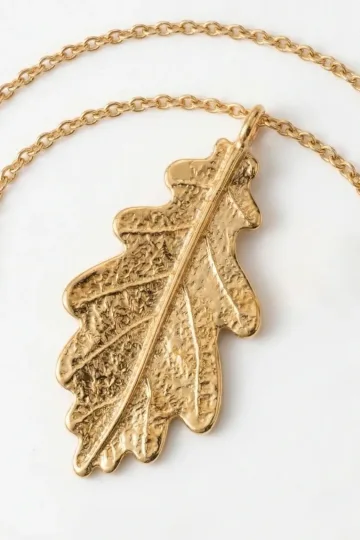
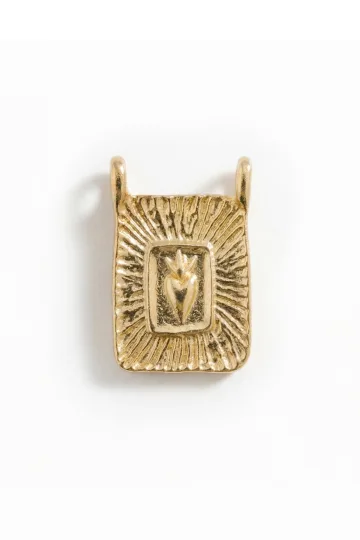
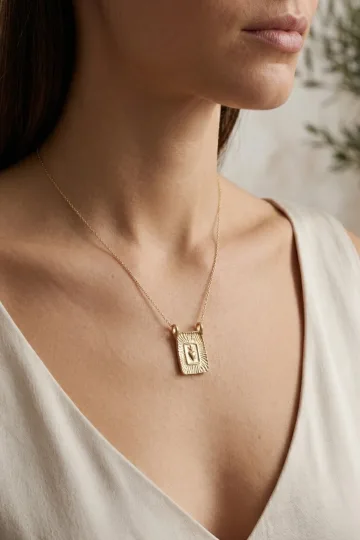
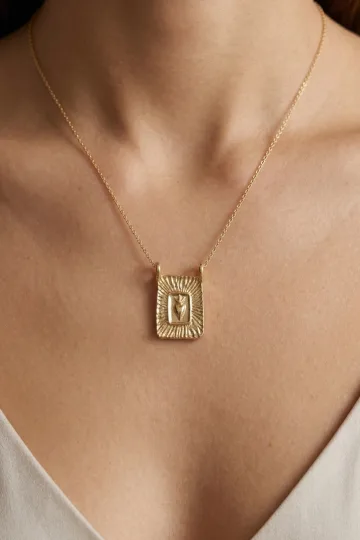
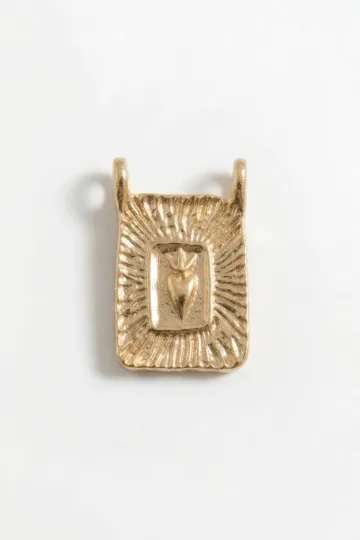
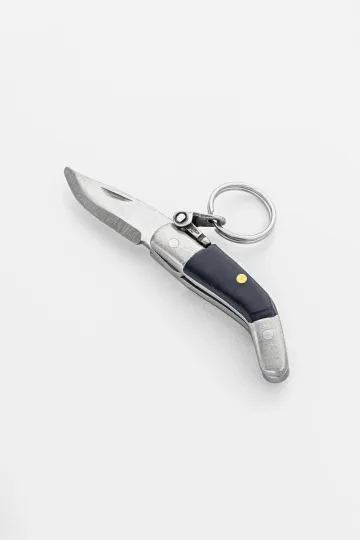
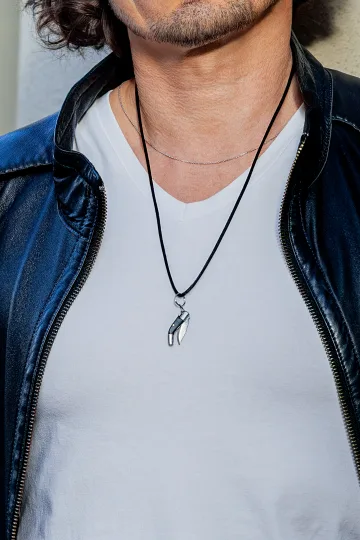
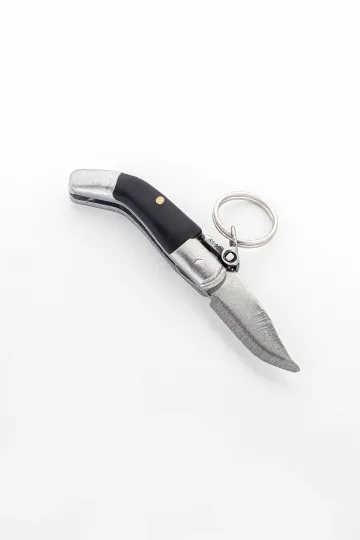
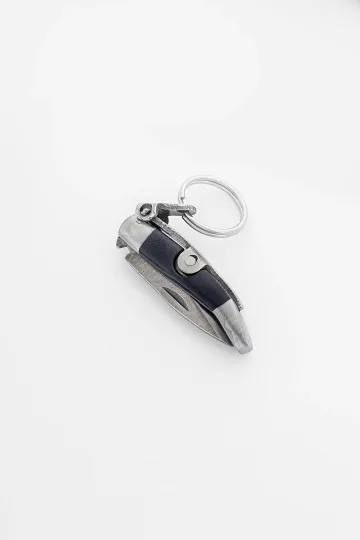
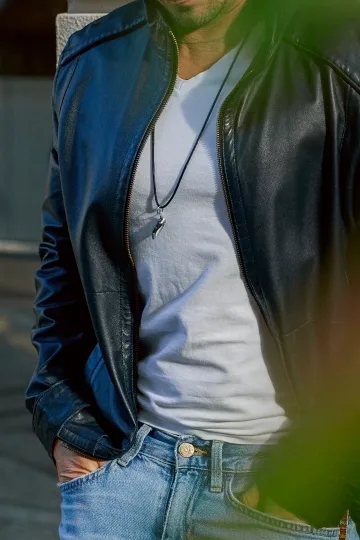
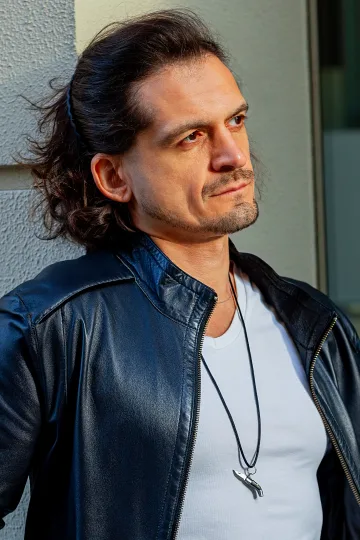
About Zevira
Zevira is a Spanish brand rooted in the metalworking tradition of Albacete, working in 925 silver, 585 to 750 gold, and 316L steel. We work with marine symbols: the scallop shells of Santiago, seahorses, anchors, pearls, and coral. We take custom orders with engraving of names, dates, coordinates, and personal inscriptions, and for a shell carrying the date of a Camino, a christening, or a wedding we accept individual commissions. If you want to see how a chain plays with a pendant, our complete guide to chain types helps you match the weave, and for those drawn to protective sea and folk amulets the Italian cornicello horn sits in the same family. Each piece passes a final assembly and a master's inspection before it ships.