Chain Types Guide: How to Choose the Right Necklace Chain
The part nobody thinks about (until it breaks)
You spent an hour choosing the perfect pendant. Agonised over the symbol, the metal, the size. Then you clicked "add chain" and picked whatever was cheapest. Three weeks later the chain snapped, the pendant fell into a storm drain, and you learned the most expensive lesson in jewellery: the chain matters more than the pendant.
A chain is not a string. It is an engineering decision. The wrong chain tangles every morning. The right one disappears on your neck and does its job for years without a single thought. The difference is knowing what you are buying.
This guide covers every chain type you will encounter, what each one does well, what it does badly, and which one matches your pendant, your style, and your patience level.
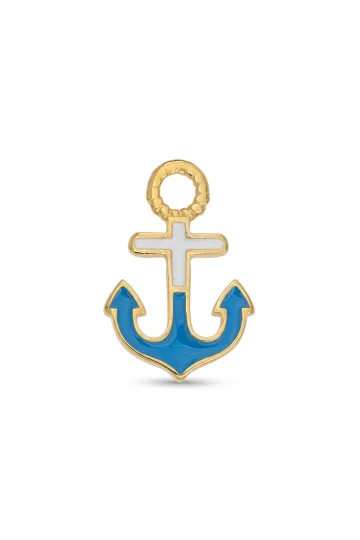
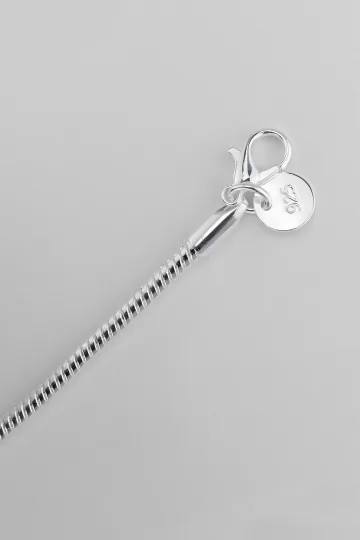
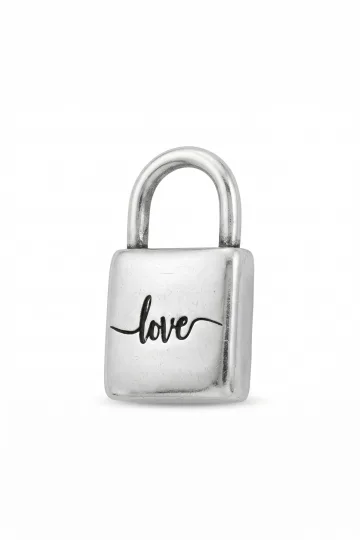
Wear the symbol, don't just read about it. These are in stock:

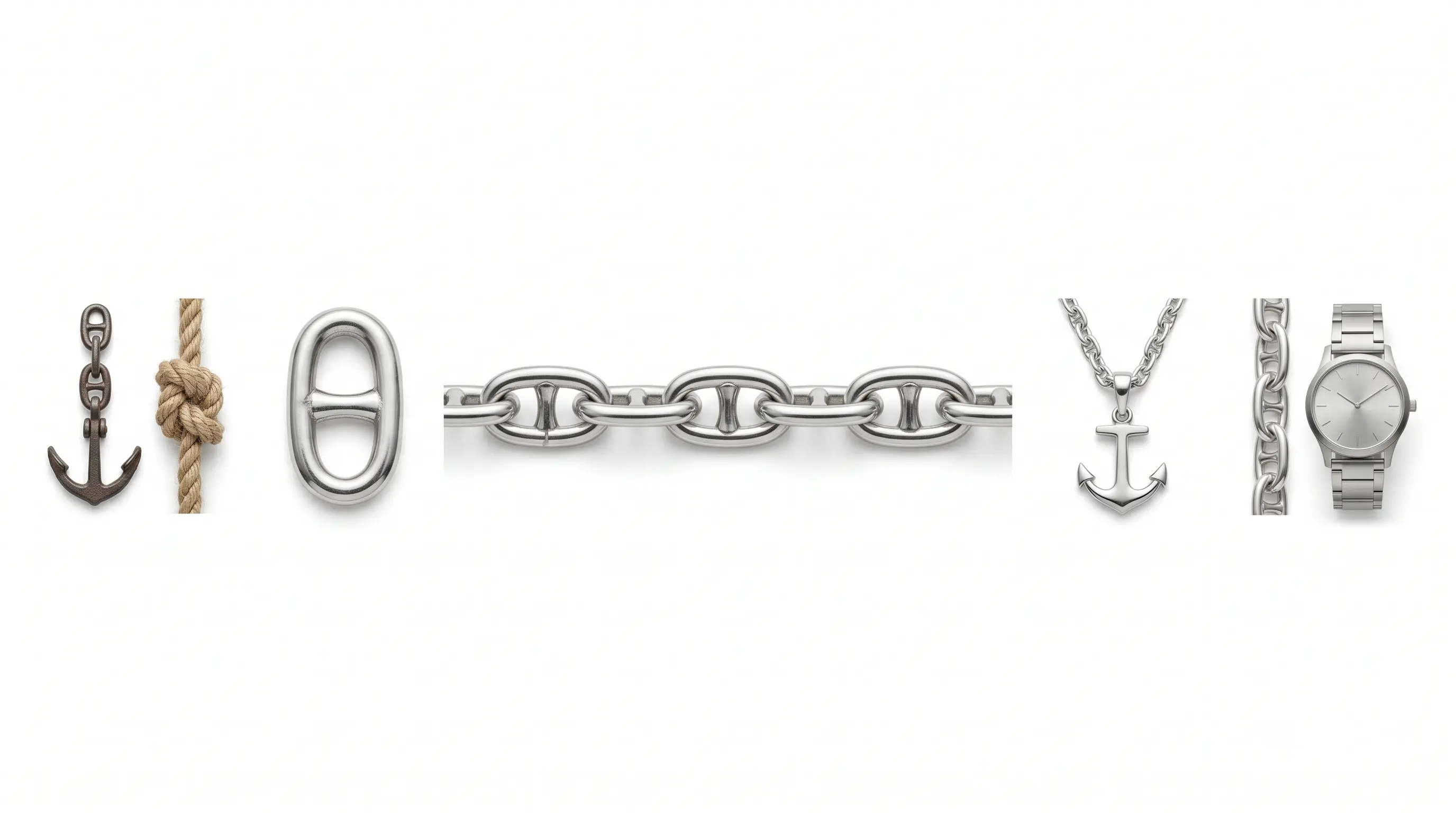
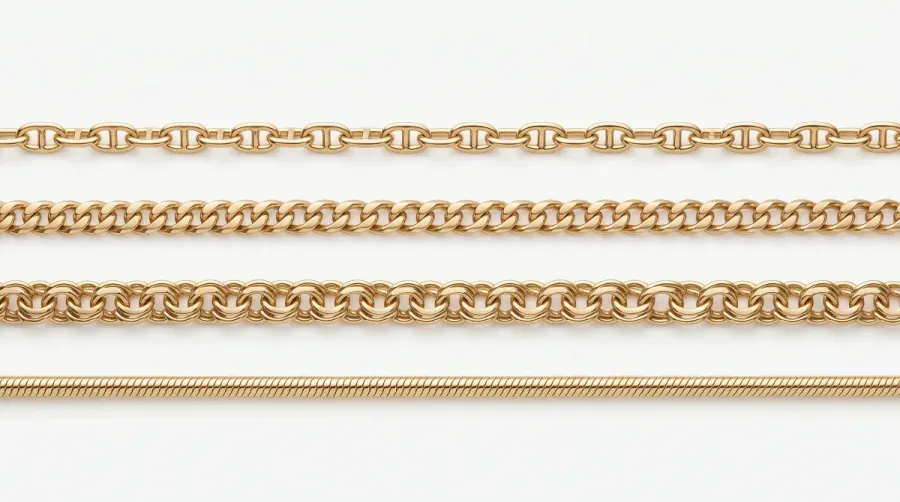
Anchor chain (cable chain)
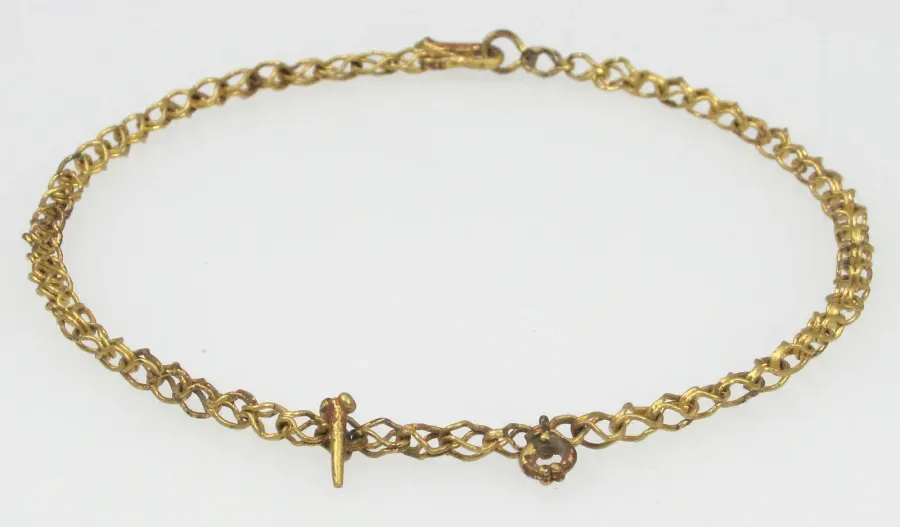
The default. The one you picture when someone says "chain." Simple oval or round links, each connected to the next at 90 degrees, alternating horizontal and vertical. That alternation is what gives it flexibility.
Why it works: universal compatibility. An anchor chain works with any pendant, any neckline, any occasion. It does not compete with what hangs from it. It is the blank canvas of chains.
Strength: moderate. The links distribute weight evenly, but each individual link is a potential failure point. Thicker gauge means stronger. Below 1.5mm width, an anchor chain is decorative only. For pendants with real weight (anything over 5 grams), go 2mm or thicker.
Tangling: low. The alternating link pattern resists knotting better than most chains. You can throw it in a drawer and untangle it in seconds. Try that with a snake chain.
Best for: everyday wear, pendants of any type, people who want one chain that works for everything. If you own one chain, make it an anchor.
One chain on a bare collarbone beats five stacked. Five isn't a look, it's a pawnshop window.
How to wear different chains
Over years on shoots the chain has passed through hundreds of looks with me, from a bare tee to a black-tie entrance. Here is what actually works, sorted by occasion.
What do I wear a chain with every day? For daily wear I recommend a thin anchor or box chain, 1.5 to 2 mm on 50 cm, over a tee, a long sleeve or a plain shirt. A chain like this does not fight your clothes, it quietly gathers them. Light cotton and linen lift steel and silver; a dark top turns the chain into the accent. A pendant is optional, and it reads honestly without one.
Which chain suits the office? For the office I suggest clean lines and restraint: a box or snake chain under a collared shirt, a turtleneck or fine knit. I keep the length at 45 to 50 cm so the chain shows in an open collar and disappears under a buttoned one. One metal, no layers, no shine.
How do I build an evening look? For evening I choose a snake or rope chain: they catch light and work on texture. Open neckline, smooth fabric, a dark backdrop. Under a deep neckline I recommend a shorter length so the chain rests on skin. In warm evening light gold and gold-tone beat silver.
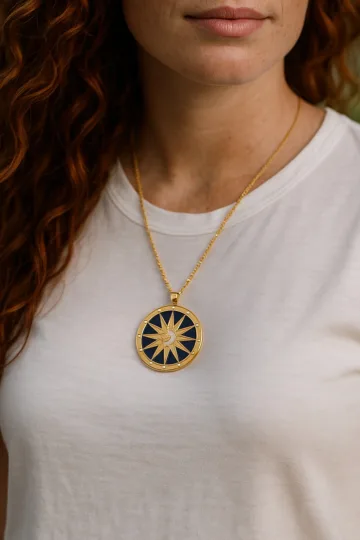
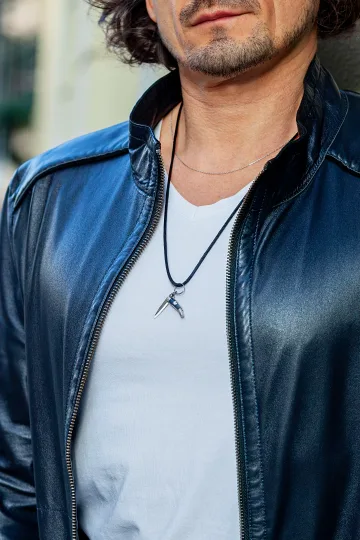
How do I wear a chain with a pendant? For a pendant I pick a chain thinner than the pendant is wide: a fine anchor or snake for a light charm, a curb 2 to 3 mm or a cord for a heavy, three-dimensional piece. The chain carries the weight without arguing with the shape. I keep the chain and the pendant bail in the same metal tone.
When does a chain work on its own? Without a pendant the textured weaves take over: Figaro, rope, Bismarck, a thick curb. I wear them under a plain top with a clean neckline, as jewellery in their own right. One chain like that on a bare collarbone beats five thin ones stacked.

Turn on your camera, pick earrings, a pendant or a ring, and see the piece on yourself in real time.
Switch items in one tap.
Everything runs in your browser: no photo or video is ever uploaded.
Curb chain (gourmette)
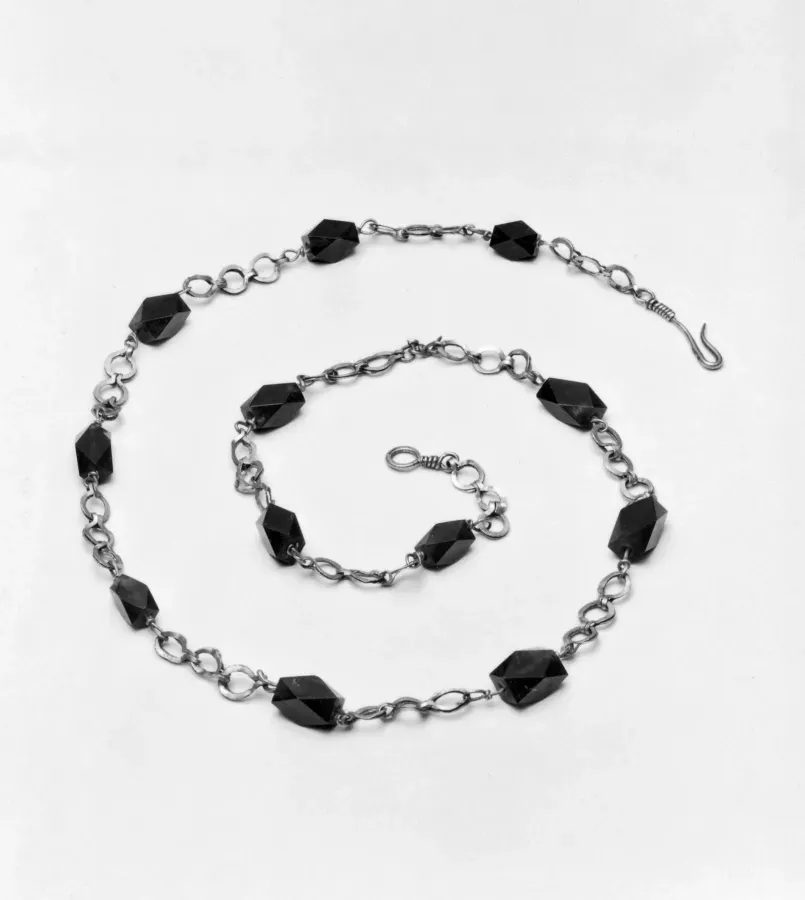
The tough one. Flat, interlocking links that lie flush against the skin. Each link is twisted so the chain sits flat rather than round. Originally used for horse bridles (that is where the name comes from), then adopted by jewellers who liked the look.
Why it works: it lies flat. No twisting, no flipping, no uncomfortable lumpy feeling on the neck. A curb chain drapes like fabric. It also catches light along its flat surface, which gives it a subtle shine that round chains do not have.
Strength: high. The interlocking flat links create a strong, flexible structure. A well-made curb chain in stainless steel or sterling silver can handle heavy pendants without worry. This is the chain you pick when durability matters more than delicacy.
Tangling: very low. Flat chains resist tangling naturally. The links want to lie flat, not twist into knots.
Best for: men's jewellery, heavy pendants (knife pendants, large amulets), streetwear looks, anyone who wants a chain that looks good without a pendant too. A thick curb chain worn solo is a statement piece on its own.
Variations: Cuban link (thicker, tighter curb), diamond-cut curb (faceted for extra shine), pave curb (with stones set into links).
Snake chain (round snake)
The sleek one. Not actually made of links in the traditional sense. A snake chain is constructed from tightly fitted metal bands or plates that form a smooth, round tube. The result looks and feels like a flexible metal tube. Or, well, a snake.
Why it works: elegance. A snake chain has a liquid quality that no other chain type achieves. It flows, it catches light along its entire length, it feels silky against skin. For formal wear and minimalist aesthetics, nothing beats it.
Strength: low to moderate. Here is the catch. Snake chains are beautiful but fragile. If kinked (bent sharply), the damage is usually permanent. The tiny plates separate and create a visible bump that cannot be repaired. You cannot unbend a snake chain the way you can straighten a link chain.
Tangling: almost zero (when it works). A snake chain is too rigid to tangle. But if it does get kinked or crushed, the damage is worse than a tangle.
Best for: lightweight pendants, formal occasions, minimalist style, people who treat their jewellery carefully. Not for gym, not for sleep, not for tossing in a bag.
Warning: never store a snake chain loose in a jewellery box with other pieces. The pressure can kink it. Hang it or lay it flat in its own compartment.
Box chain
The geometric one. Square links connected at each corner, creating a chain with a distinctly angular, modern look. Like an anchor chain but with square cross-section links instead of round ones.
Why it works: it does not twist. A box chain hangs straight every single time. No matter how you put it on, it falls the same way. This predictability is its superpower. Pendants hang centred, always.
Strength: good. The square links distribute force well. Not as strong as a curb chain but significantly stronger than a snake chain. A solid box chain in 2mm width handles most pendant weights comfortably.
Tangling: very low. The rigid square links resist tangling almost completely.
Best for: pendants that need to hang perfectly centred (anything with a front face, like an evil eye or hamsa), modern and minimalist aesthetics, people who hate adjusting their chain throughout the day.
Figaro chain
The Italian classic. A pattern chain: typically three short links followed by one long link, repeating. Named after the opera character (debatable) or the Italian word for "figure" (also debatable). What is not debatable: it looks distinctly Mediterranean.
Why it works: visual rhythm. The alternating short-long pattern creates a visual interest that plain chains lack, without being as loud as a Cuban link. It is decorative but not aggressive.
Strength: moderate to high. The mix of link sizes actually helps with strength because the longer links distribute stress across a wider area.
Tangling: moderate. The mixed link sizes can catch on each other more than uniform chains.
Best for: wearing without a pendant (the pattern is the point), Mediterranean and classic styles, gold jewellery (Figaro is traditionally Italian and looks best in gold tones). Works with pendants too, but the pattern competes with the pendant design. Choose simple pendants with Figaro chains.
Customer reviews
Zevira is a real jewellery shop. Genuine payments, deliveries and customer thank-yous.
🥰🥰🥰 gracias
Ok, ¡gracias! 🙂
Rope chain
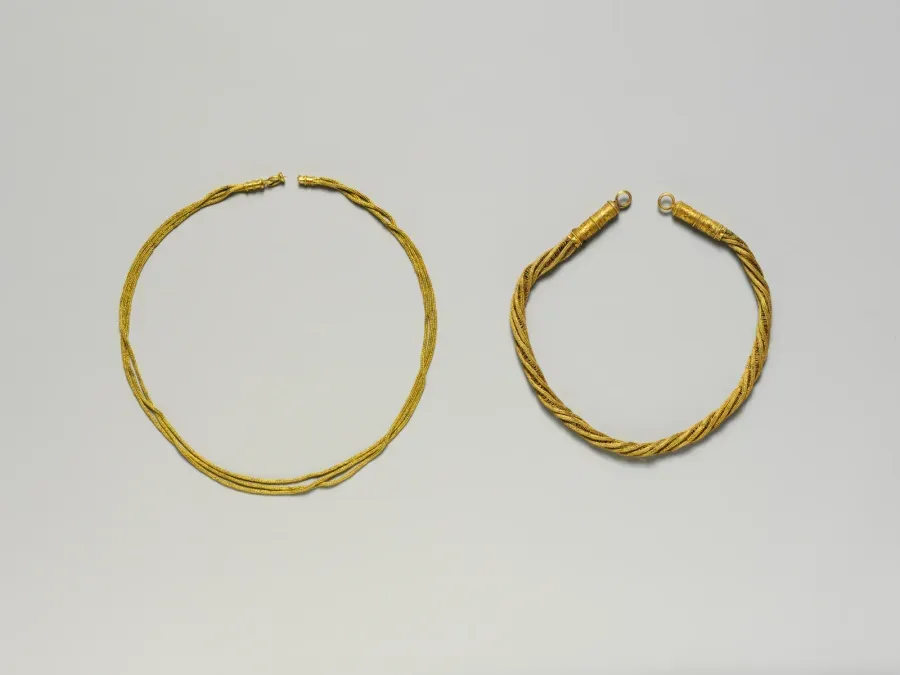
The textured one. Two or more strands of metal twisted together like actual rope. The result is a chain with a spiralling surface that catches light from every angle.
Why it works: sparkle without stones. A rope chain is one of the shiniest chain types because its twisted surface reflects light in multiple directions simultaneously. It has visual weight without being heavy.
Strength: high. The twisted strands reinforce each other. A rope chain is stronger than its individual strands would suggest. Difficult to break, difficult to kink.
Tangling: moderate to high. The textured surface can catch on fabric and other chains. Not ideal for layering unless you are patient.
Best for: solo wear (the texture is the statement), people who want shine without gemstones, gold-tone jewellery (rope chains in gold are a classic look that has been popular for decades).
Bismarck chain (Byzantine)
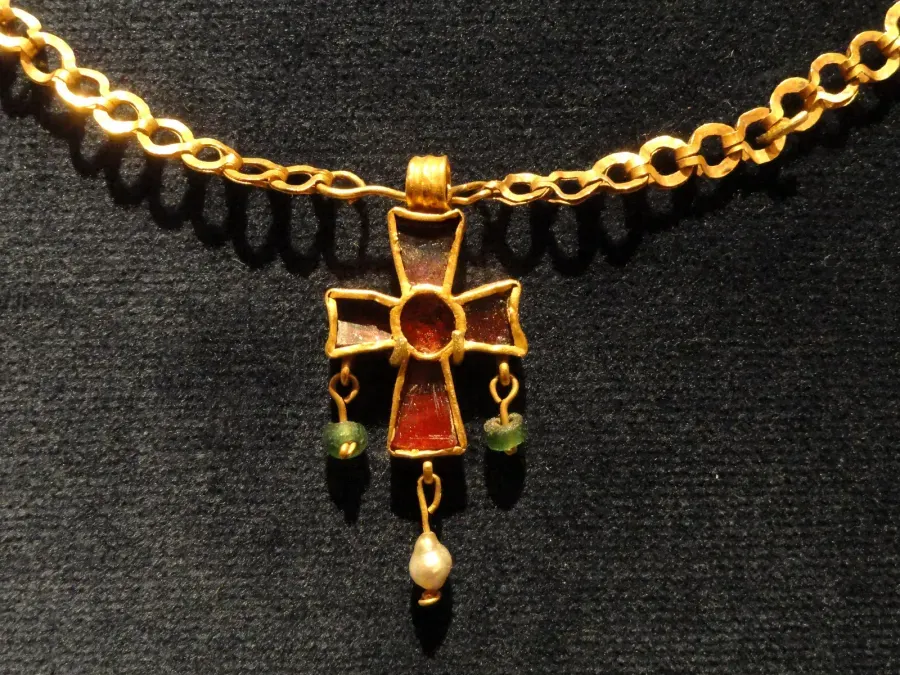
The heavyweight. An intricate pattern of interlocking links that creates a dense, flexible, rope-like chain with a distinctive woven texture. Named after Otto von Bismarck (supposedly his favourite chain style) or the Byzantine Empire (depending on who you ask).
Why it works: presence. A Bismarck chain has a gravitas that lighter chains cannot match. It sits on the chest with authority. The woven pattern catches light in complex ways, and the weight on the skin feels substantial and reassuring.
Strength: very high. The interlocking pattern distributes force across multiple links simultaneously. A Bismarck chain is one of the strongest chain constructions. It is nearly impossible to break through normal wear.
Tangling: almost zero. The dense weave is too rigid and heavy to tangle.
Best for: wearing without a pendant (the chain IS the jewellery), men's necklaces, anyone who wants their chain to be the statement piece, Russian and Eastern European jewellery traditions (where Bismarck chains are particularly popular).
Note: Bismarck chains are heavier and use more material than most chain types. They sit in a higher price range for the same length compared to simpler chains.
Upload a photo of your pet, someone you love, or an object. We'll build a 3D model and hand-cast it in pewter.



Rubber and leather cords
Not technically chains, but worth covering because they solve problems chains cannot.
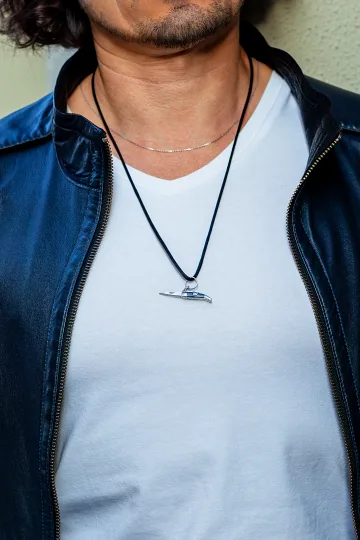
Rubber cord (caucho): waterproof, lightweight, flexible, and easy to replace. Perfect for beach, gym, outdoor wear. A knife pendant on a rubber cord is the default choice for daily carry. The cord disappears visually and lets the pendant do all the talking. Typical diameter: 1.5-2mm. Close with a simple metal clasp.
Leather cord: warmer, more organic feel. Develops patina over time. Not waterproof (leather degrades with repeated water exposure). Best for pendants with an earthy, rustic or Viking aesthetic. A Mjolnir on a leather cord looks right. The same pendant on a delicate silver chain looks wrong.
How to choose: the decision tree
What pendant are you hanging?
Heavy pendant (over 8g): curb, Bismarck, thick anchor (2.5mm+). Nothing else will last.
Light pendant (under 5g): anything works. Choose by aesthetic, not strength.
No pendant: Figaro, rope, Bismarck, thick curb. The chain is the jewellery.
What is your lifestyle?
Active (gym, outdoor, manual work): rubber cord or thick curb in stainless steel. Forget snake and fine anchor.
Office/formal: snake, box, fine anchor. Clean lines, no bulk.
Everything: anchor chain 2mm in stainless steel or sterling silver. The universal answer.
What metal?
Sterling silver 925: cool tone, traditional, needs occasional cleaning. Best with: anchor, box, curb.
Stainless steel 316L: maintenance-free, indestructible, slightly less lustrous. Best with: curb, anchor, rubber cord.
Gold/gold plating: warm tone, formal, eye-catching. Best with: Figaro, rope, Cuban link.



Chain length guide
This matters more than chain type. The wrong length ruins the look regardless of style.
40-42 cm (16 inches): sits at the collarbone. Choker territory. Works on women, tight on most men. Good for small pendants that should be visible above necklines.
45-50 cm (18-20 inches): the universal length. Pendant sits at the upper chest, visible in an open collar. This is what most people should buy as their default.
55-60 cm (22-24 inches): pendant sits at mid-chest. Visible with a T-shirt or open shirt, hidden under a buttoned shirt. The "personal" length, pendant is for you, not for display.
65-70 cm (26-28 inches): pendant sits at the lower chest or stomach. Usually hidden under clothing. For pendants worn as personal talismans, not fashion accessories.
Rule of thumb: if in doubt, 50 cm. It works for 90% of people and 90% of situations.
Care by chain type
Anchor, curb, box, Figaro: rinse with warm water, mild soap, soft cloth. Once a month is enough. These chains are forgiving.
Snake: never bend sharply. Wipe with a soft cloth only. No ultrasonic cleaners. Store flat or hanging, never coiled.
Rope: can trap dirt in the twists. Soak in warm soapy water for a few minutes, rinse thoroughly, dry completely. If you skip the drying, water trapped in the twists accelerates tarnishing.
Bismarck: same as rope but even more important to dry thoroughly. The complex weave traps moisture.
Rubber cord: rinse with fresh water after ocean or pool. Replace when it starts to crack or harden.
Leather cord: wipe with damp cloth. Never submerge. Apply leather conditioner once in a while if you want it to last. Accept that leather ages and that this is a feature, not a bug.
Leave your email, we'll send your discount code. No spam, unsubscribe anytime.
The code arrives by email, valid on your first order.
FAQ
Which chain type is strongest? Bismarck (Byzantine), followed by curb and rope. For everyday reliability, a 2mm curb chain in stainless steel is practically indestructible.
Which chain tangles the least? Snake (but fragile) and Bismarck (but heavy). For a good balance: box chain. Almost never tangles and much lighter than Bismarck.
Can I shower with my chain? Stainless steel and rubber: yes, every day, no problem. Sterling silver: occasionally fine, but daily exposure to soap and water accelerates tarnishing. Gold plating: avoid, water shortens the life of the coating. More in our water and jewellery guide.
What chain for a knife pendant? Rubber cord for casual daily wear. Curb chain in stainless steel for a more finished look. Snake chain if the pendant is very light. See our knife pendant guide for more.
What chain length for men? 50-55 cm is the sweet spot. Pendant sits at upper-mid chest, visible in an open collar, hidden under a buttoned shirt.
Can I layer different chain types? Yes, but stick to two or three chains max and vary the lengths by at least 5 cm between each. Mixing an anchor with a curb works. Mixing a snake with a rope creates visual chaos.
Box chain or anchor chain? Anchor is more traditional and slightly more flexible. Box is more modern and hangs straighter. Both work for everyday wear. Choose by aesthetic preference.
Is a thicker chain always better? Not always. A thick chain overpowers a small pendant. Match the chain weight to the pendant weight. A delicate lotus pendant on a 4mm curb chain looks absurd. The same pendant on a 1.5mm anchor chain looks perfect. Proportion matters more than thickness.
What is a bail and why does it matter? The bail is the loop at the top of the pendant where the chain passes through. If the bail is too small, thick chains will not fit. If the bail is too large, the pendant slides around on thin chains. Check bail width before buying a chain separately. Most pendants fit chains up to 2.5mm. Anything thicker, check first.
Chain types comparison table
| Type | Strength | Tangling | Weight | Best with pendant | Best solo |
|---|---|---|---|---|---|
| Anchor | Medium | Low | Light | Yes | Okay |
| Curb | High | Very low | Medium | Yes | Yes |
| Snake | Low | None | Light | Light only | Yes |
| Box | Good | Very low | Light | Yes (centred) | Okay |
| Figaro | Good | Medium | Medium | Simple only | Yes |
| Rope | High | High | Medium | Not ideal | Yes |
| Bismarck | Very high | None | Heavy | Not ideal | Yes |
| Rubber cord | N/A | None | None | Yes | No |
| Leather cord | Low | None | Light | Rustic only | No |
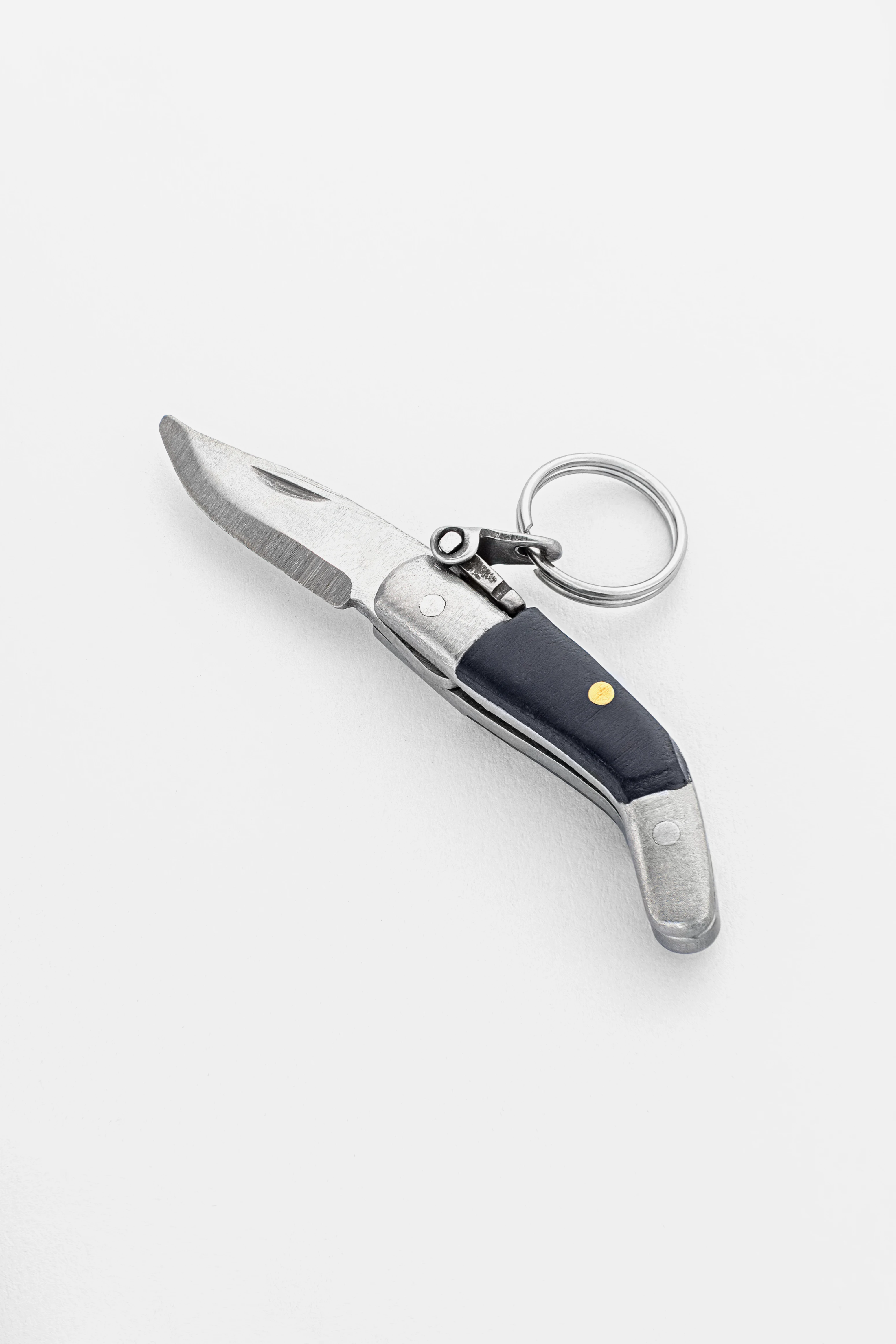
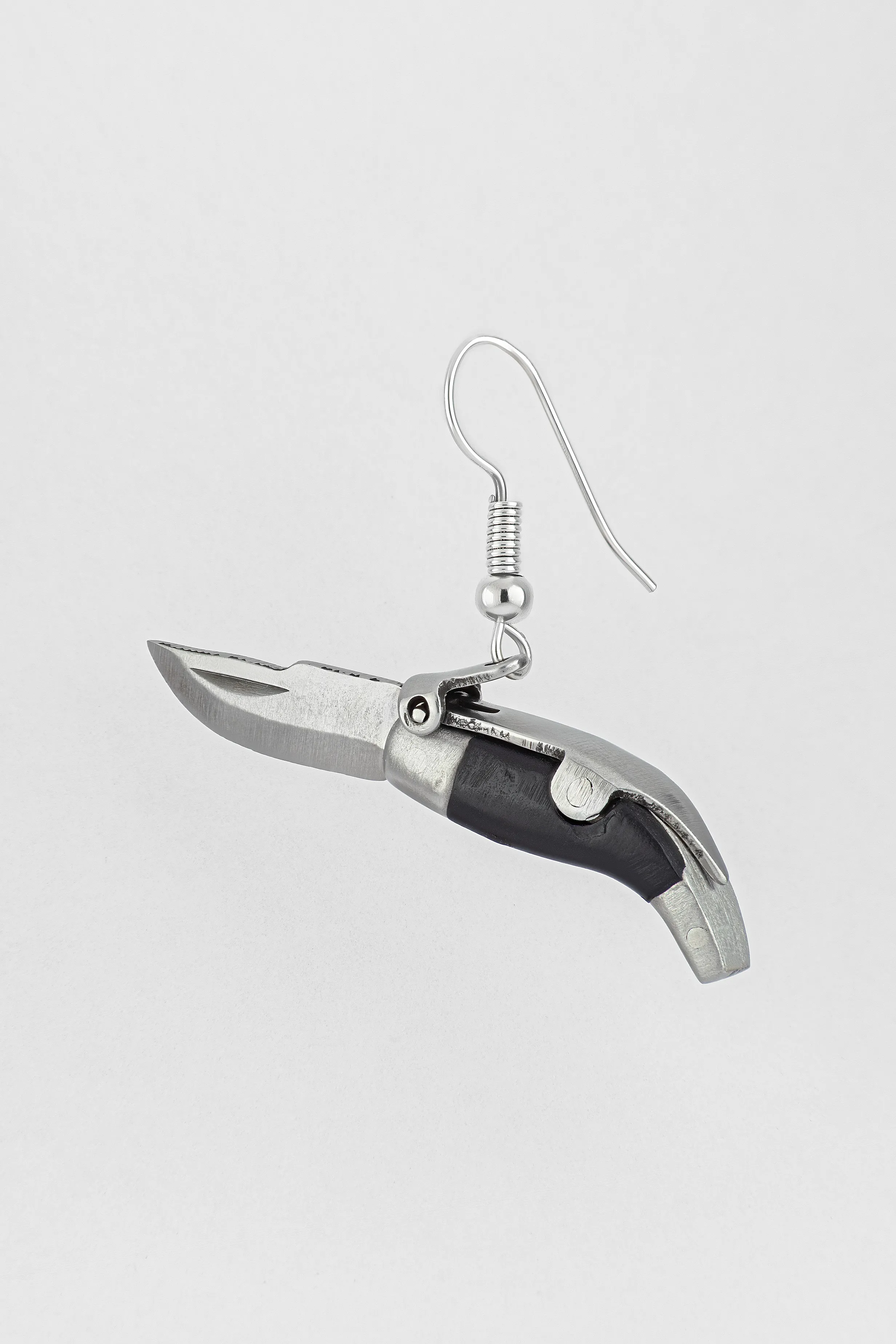
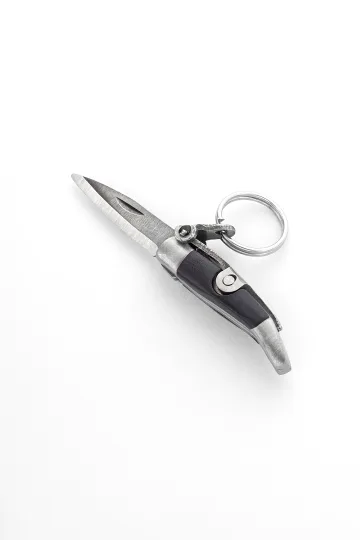
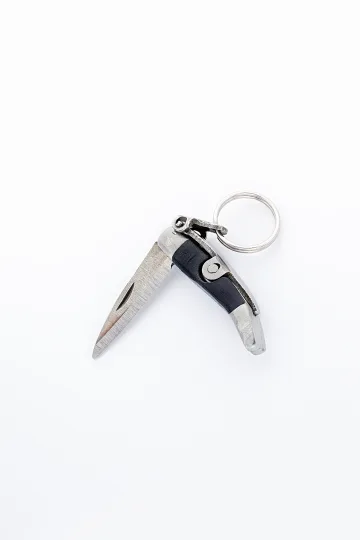
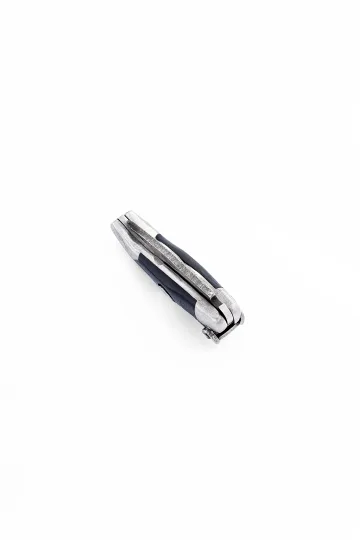
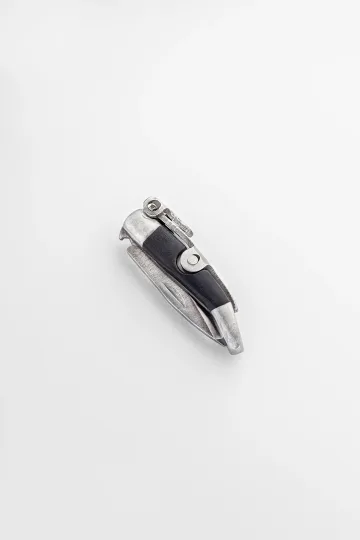
CAPAORA mini knife pendant
The 18th-century Spanish navaja in miniature: 40 mm of stainless steel, a real folding mechanism and a Palanquilla lock that clicks. An affordable gift to remember.
Authentic · Ships from Spain · 14-day returns
The history of chains (short version)
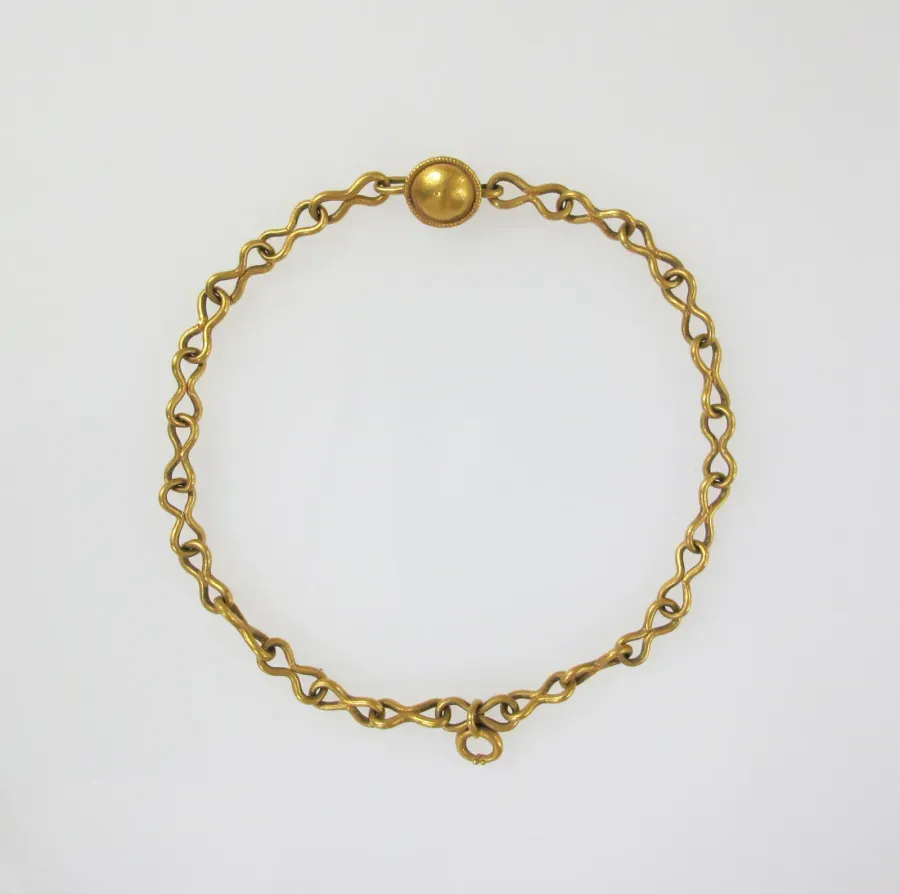
Chains are older than writing. The earliest gold chains found by archaeologists date to roughly 2500 BC in ancient Ur (modern Iraq). Those chains were simple loop-in-loop constructions, basically the ancestor of the modern anchor chain. The technique has not changed in four and a half thousand years because it works.
The Romans perfected chain-making and introduced most of the link patterns we still use. A Roman soldier wore a chain around his neck not for fashion but for function: it held his identification tags. The military origin of chain wearing persists in modern dog tags and, by extension, in pendant necklaces.
In medieval Europe, chains became symbols of wealth and rank. The thicker your gold chain, the higher your status. Henry VIII was painted wearing chains that weighed several kilograms. That tradition echoes in modern hip-hop culture, where heavy chains communicate the same message they did in the 1500s: I have arrived.
The industrial revolution made chains accessible to everyone. Machine-made chains replaced hand-linked ones, dropping the price dramatically. By the early 1900s, a simple silver chain was affordable for a factory worker. Today, a stainless steel chain costs less than a meal.
Chain materials and what they mean for your choice
Stainless steel 316L. The workhorse. Does not tarnish, does not corrode, does not react with skin. Heavier than silver but cheaper and more durable. The default choice for people who want to wear their chain every day without thinking about maintenance. Every chain type is available in stainless steel.
Sterling silver 925. The classic. Beautiful cool-toned lustre that no other metal quite matches. Tarnishes over time (needs cleaning), softer than steel (can scratch), but the aesthetic is worth the maintenance for many people. Silver chains feel different on skin, lighter and cooler. More in our silver 925 guide.
Gold plating. A thin layer of gold over a base metal (usually brass or steel). Looks like gold at a fraction of the cost. The trade-off: the plating wears off over time, especially on chains because they rub against skin and clothing constantly. Expect visible wear within a few months to a year of daily use. Good for occasional wear, not ideal as your everyday chain. Our gold plating guide covers this in detail.
Solid gold. Beautiful, traditional, holds value. But at jewellery-grade karats (14K, 18K), gold is softer than steel and scratches more easily. Solid gold chains sit in a completely different budget range. For most people buying their first or second chain, stainless steel or sterling silver makes more sense.
Titanium. Lightweight, hypoallergenic, strong. Rare in chain form because titanium is difficult to work into small links. When available, titanium chains are usually simple designs (anchor, curb) in limited sizes.
Layering chains: the rules
Layering (wearing multiple chains at once) is one of the biggest jewellery trends of recent years. But it goes wrong more often than it goes right.
The length rule. Each chain should be at least 5 cm longer than the one above it. If your first chain is 42 cm, the second should be 47-50 cm, and the third 52-55 cm. Without this spacing, chains bunch together and look like a tangled mess.
The thickness rule. Vary the thickness. Two identical 2mm chains at different lengths look intentional. But a thin chain with a thick chain creates better visual contrast. The thinnest chain goes closest to the neck.
The type rule. Mix types but keep it to two or three. An anchor chain with a box chain works. Add a curb and you have three distinct textures that complement each other. Add a snake and a rope on top and it becomes costume jewellery.
The pendant rule. Maximum one pendant when layering. Two pendants on two chains compete for attention and look cluttered. If layering three chains, let one carry a pendant and keep the other two bare.
The metal rule. Mixing metals (silver and gold) is fine and currently fashionable. But commit to the mix. One gold chain among three silver ones looks like a mistake. Two gold and one silver (or vice versa) looks intentional.
When to replace your chain
Chains do not last forever. Here are the signs:
Stretched links. If individual links have elongated visibly, the chain is weakening. An anchor chain with oval links that have become almost circular is ready to break.
Clasp issues. If the lobster clasp does not close securely, or a spring ring has lost its spring, replace the clasp or the chain. A pendant lost to a faulty clasp is a preventable tragedy.
Discolouration that does not clean off. If silver has turned black and the foil-soda method does not restore it, the tarnish has gone too deep. The chain will look perpetually dull.
Kinks in a snake chain. Once kinked, always kinked. If you have more than two visible kinks, replace the chain. It will only get worse.
The feel test. Hold the chain and run it through your fingers. If it catches, if links feel rough or uneven, if there is any sensation other than smooth flow, inspect closely. Something is damaged.
Common mistakes when buying chains
Buying too thin. A 1mm chain looks delicate in photos. On your neck with a pendant, it looks like it is about to snap. And it probably will. For anything other than the lightest earring-weight pendants, start at 1.5mm minimum. For daily wear, 2mm is the sweet spot between visible and practical.
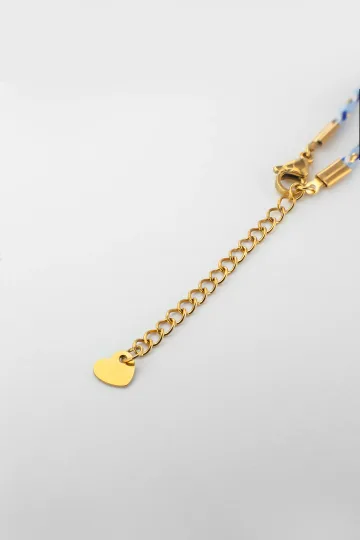
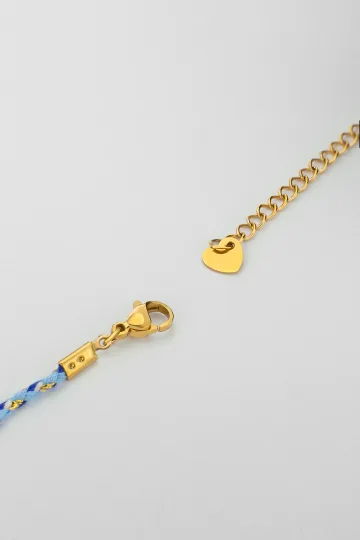
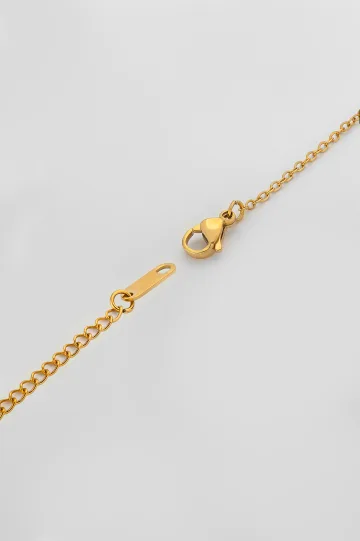
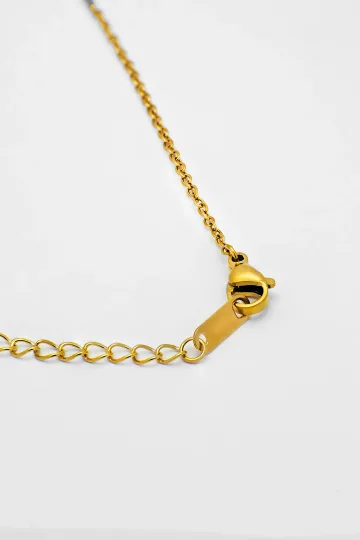
Ignoring the clasp. The chain is only as strong as its weakest link, and that link is usually the clasp. Lobster clasps are the most secure for necklaces. Spring rings are cheaper but harder to operate with one hand. Barrel clasps look clean but can unscrew with movement. For chains you plan to wear every day, insist on a lobster clasp.
Matching metal wrong. A sterling silver pendant on a gold chain looks like a mistake, not a fashion choice. Match the chain metal to the pendant metal. If you want to mix metals, do it intentionally with layered chains, not by mismatching a single chain and pendant.
Forgetting about neckline. A 42cm chain with a scoop-neck dress means the chain sits above the neckline. A 55cm chain with a turtleneck means nobody sees it. Think about what you actually wear most days and pick the length that works with your wardrobe, not just with the mirror.
Skipping the weight test. Order a chain online, hang your pendant on it, and it droops pathetically because the chain is too light for the pendant. Or the opposite: a tank chain that overpowers a delicate pendant. If you cannot see and feel the chain before buying, at least check the weight in grams. A stainless steel anchor chain at 50cm should weigh roughly 5-8 grams. A curb chain of the same length, 8-15 grams. A Bismarck, 20-40 grams. If the listing does not mention weight, ask.
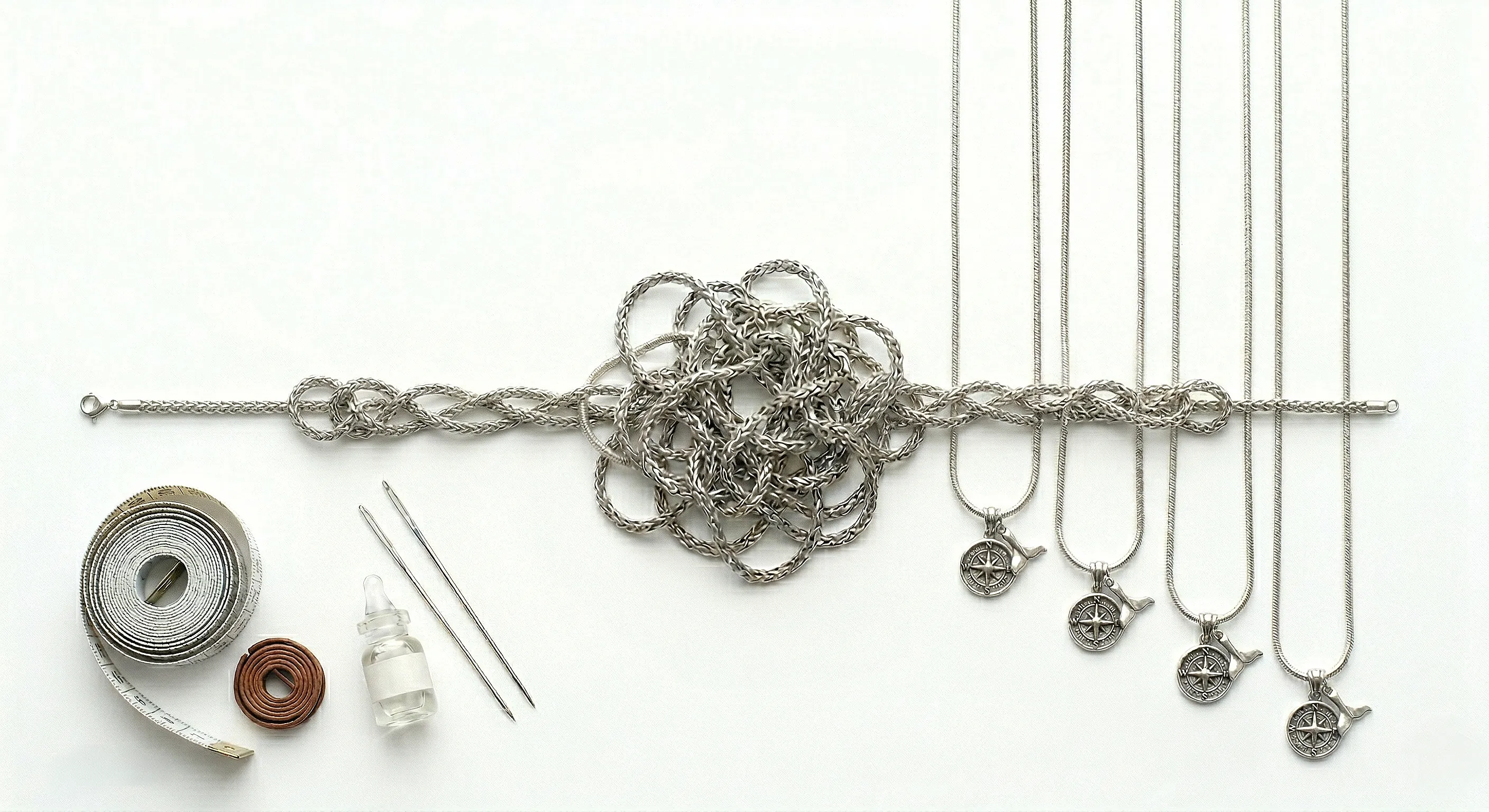
Buying "one size fits all." There is no such thing. A chain that looks perfect on someone with a thin neck looks like a choker on someone with a thick neck. Measure your neck with a tape measure (or a string and a ruler) and add 5-7 cm. That is your comfortable chain length. Do not guess.
Send a friend a discount code, they save on their first order.
Chains and pendants: the pairing guide
Not every chain works with every pendant. Here are the combinations that work best.
Small, flat pendants (evil eye, hamsa, coin-style): box chain or fine anchor. The chain should be thinner than the pendant is wide. The pendant is the focus.
Heavy 3D pendants (knife pendants, large crosses, chunky amulets): curb chain 2-3mm or rubber cord. The chain needs to carry weight without stretching.
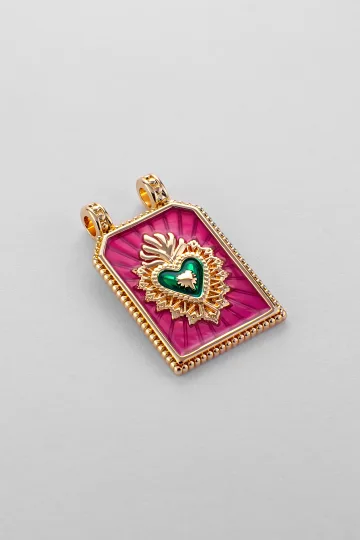
Delicate, detailed pendants (sacred heart, filigree, enamel work): fine anchor 1.5mm or snake chain. The chain should not distract from the pendant's detail.
Statement pendants (oversized symbols, art pieces): leather cord or thick anchor. Something with presence but without visual competition.
No pendant (chain as jewellery): Figaro, rope, Bismarck, thick Cuban link. Pick a chain with enough visual texture to stand on its own.
A good chain in stainless steel lasts years. A good chain in sterling silver lasts years with care. A plated chain lasts months to a year of daily wear. A rubber cord lasts until it cracks or hardens. Budget accordingly and think of cheaper chains and cords as consumables, not investments.
Silver and gold jewellery, wedding bands, symbolic pendants, paired sets.
Popular chain myths
A handful of claims get repeated in shops and online until they sound like facts. Most of them are not.
"Thicker means stronger." Only within the same weave. A 3 mm rope chain and a 3 mm box chain do not fail at the same load, and a hollow chain of any diameter is weaker than a solid one half its width. What actually determines strength is whether the links are soldered closed, and how much metal sits at the joint. Ask about solid versus hollow before you ask about width.
"Gold chains do not break." Gold is soft. Pure gold is far too soft for a chain, which is why everything on sale is alloyed, and a 9ct or 14ct chain is harder than an 18ct one for exactly that reason. High-carat gold chains bend and stretch under a heavy pendant, and stretched links are the usual cause of a chain that suddenly parts one afternoon for no obvious reason.
"Silver turns your neck green." Silver tarnishes black, not green. Green skin comes from copper, which means either a plated chain whose base metal has been exposed or a low-grade alloy sold as silver. Sterling can leave a faint dark mark on skin in humid conditions, and that washes off.
"A magnet tells you if it is real." Only in one direction. Gold, silver, copper and aluminium are all non-magnetic, so a chain that ignores a magnet could be any of them, or a non-magnetic base alloy plated to look precious. A magnet is useful for spotting steel cores in supposedly gold chains and useless for anything else.
"Snake chains cannot be repaired." They can, but rarely economically. The repair means replacing a section rather than resoldering a link, and on a fine snake chain the cost of the work often exceeds the cost of the chain. That is a good argument against snake chains for heavy pendants, and not an argument that they are disposable.
"Layering ruins chains." Layering damages chains only when the weaves are mismatched. A diamond-cut curb chain rubbing against a fine cable chain will saw through it eventually, because the faceted edges are effectively a file. Same-weave layering, or layering with a clear length gap, causes no meaningful wear.
Chains and character: what your choice says
None of this is a personality test, and anyone selling it as one is having you on. What is true is that people gravitate to particular weaves for reasons that are easy to identify once you look at them.
The anchor chain wearer wants the pendant to be the subject. The chain is infrastructure, chosen to disappear, and the same person usually owns one chain and several pendants rather than the reverse.
The curb chain wearer wants weight. This is the chain you feel while wearing it, and people who choose it generally like the reminder that they are wearing something. It also photographs well, which is not an accident of why it is popular.
The box chain wearer likes precision. Sharp geometry, no movement, no drape. It is the choice of people who iron their shirts, and it sits particularly well with a minimal wardrobe.
The snake chain wearer is choosing texture over structure. It moves like fabric rather than like metal, and the appeal is tactile more than visual.
The rope chain wearer wants light. Rope is the weave that catches the most reflections for its width, and people who choose it are usually comfortable being noticed.
The Bismarck wearer has decided. This is not a subtle chain and nobody buys one accidentally. It is a statement about presence, worn deliberately, and it works best on people who are not going to apologise for it.
The cord wearer is opting out of the metal conversation entirely, usually because the pendant is the point and metal would compete with it.
How to size a chain without trying it on
Almost everyone buys chains without ever putting one on first, so it is worth having a method that works at home.
Use a piece of string. A shoelace, a phone charging cable, a strip of ribbon. Hang it round your neck at the length you think you want, mark the point with your fingers, then measure it flat against a tape. This gives you the total circumference, which is exactly how chains are sold.
Measure over what you will wear. A chain sized against bare skin will sit differently over a jumper or a collared shirt, and the difference is easily two or three centimetres. If the chain is for winter, measure in winter clothing.
Know the standard drops. For most adults, 40 to 42 cm sits at the base of the throat, 45 cm sits just below it and is the most common pendant length, 50 cm falls to the top of the breastbone, 55 to 60 cm reaches the sternum and sits over most necklines, and 70 cm and up sits at or below the bust and is usually worn over clothing.
Add for the pendant. A pendant hangs below the chain's resting point by roughly its own height. A 3 cm pendant on a 45 cm chain sits where a bare 48 cm chain would sit, which is why so many people find a new pendant hangs lower than expected.
Check the clasp travel. An extender chain of 5 cm turns one length into a range and is the cheapest insurance against getting it slightly wrong. If a chain is sold without one, they can be added later by any jeweller.
When in doubt, go longer. A chain that is slightly too long reads as a deliberate choice. A chain that is slightly too short reads as a mistake, and it is also the one that catches when you pull a jumper over your head.
Buying it as a gift? Each one arrives ready to give.
 A branded Zevira box and a little card come with every order.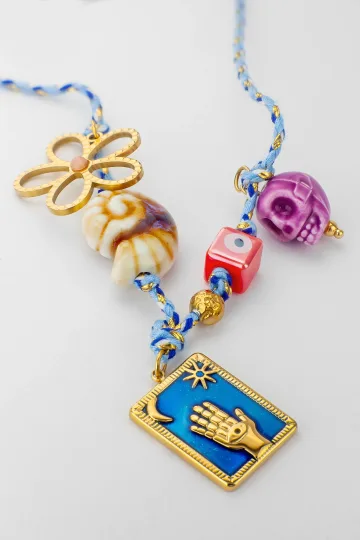




The one chain everyone should own
If you read this entire guide and still cannot decide, here is the answer: a 2mm anchor chain in stainless steel, 50 cm long, with a lobster clasp.
Why this specific chain? Because it works with everything. Every pendant, every outfit, every occasion, every season. It does not tangle, it does not tarnish, it does not break under normal use. It is invisible when it should be invisible and present when it should be present. It costs less than a dinner out and lasts longer than most relationships.
Start there. Wear it for a month. Then you will know what you want for your second chain, because you will have learned what you like and what you do not like about this one. The anchor chain is not the most exciting choice. It is the most correct one. And in jewellery, correct beats exciting every time.
After that, if you want something with more character, a curb chain for weight, a box chain for precision, a Bismarck for authority, you will be choosing from experience rather than guessing from a screen. And that is the difference between a chain that lives on your neck and a chain that lives in a drawer.
About Zevira
Zevira makes jewellery in the artisan tradition of Albacete, Spain. We make our chains in house, from a fine 1.5mm anchor to a hefty Bismarck, and match them to the weight and character of the pendant they will carry.
Here is what you will find with us:
- Anchor chains in a range of gauges for everyday wear
- Curb and Cuban link weaves built to hold heavy pendants
- Snake chains for light, minimalist pieces
- Rubber and leather cords for knife pendants and Viking-inspired looks
- Chain-plus-pendant sets matched on proportion
Every piece can be personalised with engraving by one of our makers, with personal engraving available. We work in sterling silver 925 and 14 to 18K gold.