The Ladybird in Jewellery: Meaning, Luck Symbol and Amulet
Why a Spotted Beetle Carries the Name of Our Lady
In almost every European language the ladybird is named after the Virgin Mary. The English ladybird and ladybug, the German Marienkäfer, the French bête à bon Dieu and the Spanish mariquita all lead back to Our Lady, and medieval farmers linked the seven black spots on the red back to the seven sorrows of the Mother of God. A beetle the size of a fingernail became one of the most revered creatures in folk belief.
This is no accidental play on words. When aphids ravaged the fields of Europe and the harvest decided whether a family would survive the winter, red beetles landed on the rows and devoured the pests by the hundred. Salvation seemed to come like an answered prayer, and people saw a hand from above in it. The little red cloak with black dots became a small sign of heavenly protection that you never had to buy, because it settled on your hand by itself.
From that belief grew the tradition of wearing the ladybird as an amulet: a brooch on a coat, a pendant on a chain, a tiny figure on a child's bracelet. In this article we will look at what the beetle stands for, where its name came from across different languages, why it became a children's talisman, which stones and enamel best carry the red and black palette, and how to wear and give such a piece.
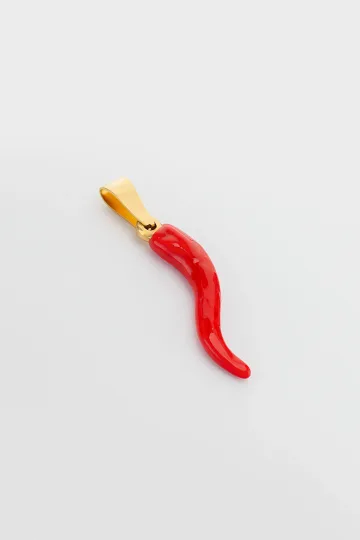
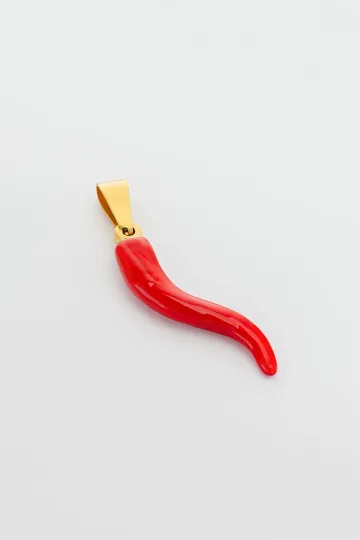
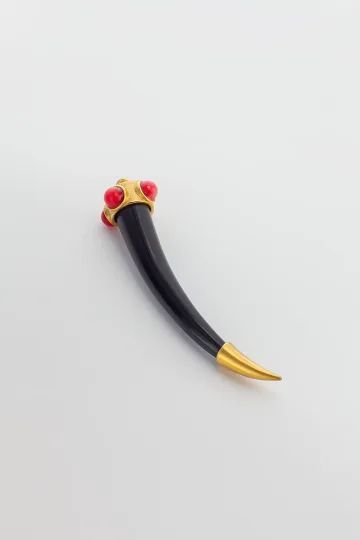
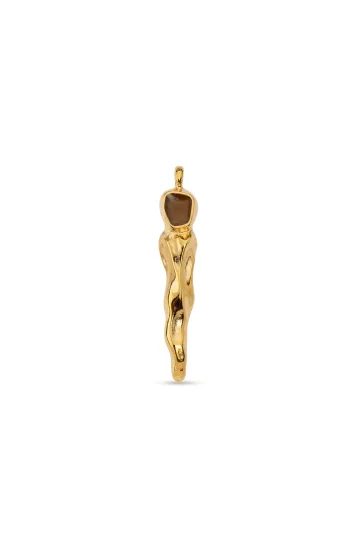
Wear the symbol, don't just read about it. These are in stock:



What the Ladybird Symbolises
This tiny beetle has a bigger reputation than many of the lordly animals of heraldry. A set of meanings has gathered around it over centuries, and they still live on in the folk sayings of different peoples. We will take them one by one, because each has its own logic.
Luck and Unexpected Joy
The first thing ascribed to the ladybird is luck. A beetle that flies in and settles on your shoulder of its own accord was, in the farming mind, a good omen: the day will go well, the work will move along, the rain will hold off during haymaking. The luck here is not abstract but everyday and domestic, tied to the weather, the harvest and good health. So a piece of ladybird jewellery is given not as a charm for wealth but as a wish for an easy stretch, when everything falls into place by itself.
Protection and Guarding the Harvest
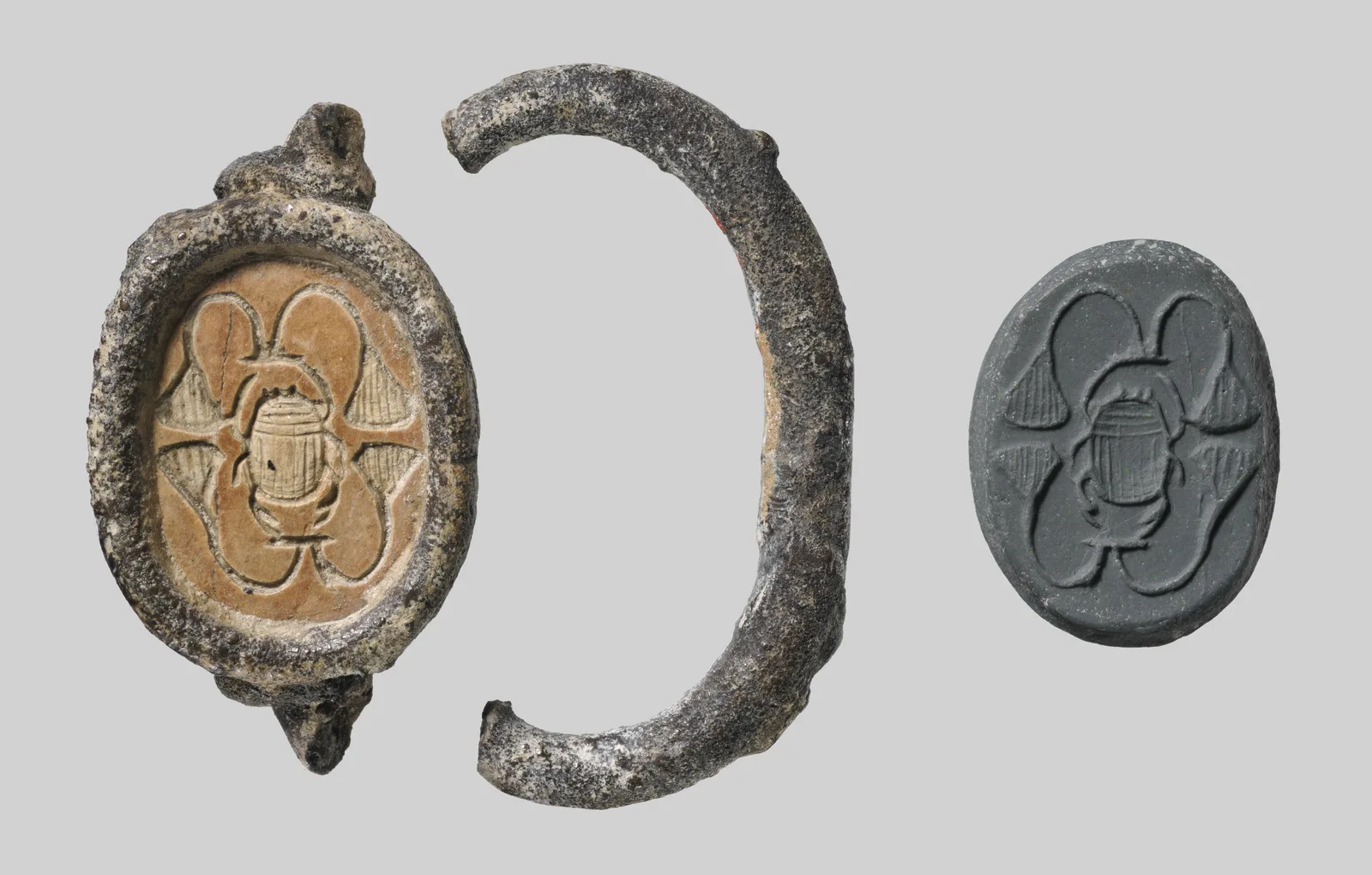
The second meaning follows straight from biology. The beetle protected the fields, so it became a symbol of protection in general. Killing a ladybird was thought a grave fault that brought misfortune, since it worked for people free of charge. Over time this guarding role passed onto the person: an amulet with the red beetle was worn so it would chase off small troubles the way it chased aphids off the cabbage. In that sense the ladybird stands alongside other protective motifs that we cover in our guide to protective amulets and talismans.
Granting a Wish
A separate belief ties the beetle to a wish made. If a ladybird lands on your hand, you should make a wish and wait until it flies off: the direction it takes is where your wish will come from, and if it rises straight up, the wish will come true quickly. This childhood game has survived almost unchanged to our day, and a piece with the beetle is often given precisely as a "wear it and wish", especially before an important event.
Herald of Love and a Wedding Soon
In girls' folklore the ladybird foretold marriage. Girls would set the beetle on a finger and recite a rhyme: the way it flew off was the direction where the intended one lived. By the number of spots they guessed how many years remained until the wedding or how many children there would be. So the red beetle entered wedding and maiden symbolism as a kind herald of love, and a ladybird pendant often becomes a gift for an engagement or a coming of age.
The Link with Our Lady and the Number of Spots
The deepest layer of meaning is religious. The beetle's name in honour of the Virgin Mary turned it into a small sign of grace. The seven-spotted ladybird, the most common species in Europe, was read as an image of the seven sorrows and seven joys of the Mother of God, and the red of its back was compared to her cloak. The number of spots itself was given meaning in folk belief: seven for luck and spiritual fullness, while a beetle with fewer dots was said to bring small everyday blessings. This number game gave jewellery a reason to vary the pattern and build a hidden code into it.
Plenty and a Good Harvest
Another everyday meaning of the beetle is fullness and plenty in the home. Since it saved the fields, its arrival promised full storerooms, and the rhyme about "bring us bread" asks directly for food. In farming belief the ladybird stood closer to domestic wellbeing than to great wealth: it promised not a chest of gold but what mattered more each day, bread, healthy livestock and a calm winter. In a piece of jewellery this shade reads as a wish for stability and comfort rather than showy luxury.
A ladybird belongs on a black coat, not on a busy print. A print swallows her whole, and don't argue.
How to Wear and Give the Ladybird
After years on shoots I have learned one thing about this symbol: its whole character rests on colour, so I choose both the clothing and the occasion to keep the red back in charge. Here is what actually works.
What do I wear a ladybird with day to day? I recommend a plain, calm background where the red becomes the only bright spot: a black coat, a white shirt, beige knitwear, a grey scarf. I suggest a brooch on outerwear or a bag, a pendant under an open collar, stud earrings near the face. I never pair the beetle with a busy print or other red pieces, or it simply dissolves.
How do I choose a ladybird for myself? If you are picking one for yourself, take your cue from the belief about a wish made. I choose a pendant you can see yourself: the red point reminds you each day of what you hoped for and works as a personal anchor before a move, a new job, a turning-point year.
What should I give a child? For a small child I suggest a pendant on a soft chain or a figure on a bracelet; for a schoolchild stud earrings are ideal. The symbol is kind and clear, easily explained through the old rhyme about the sky and bread, so the gift is at once an ornament and a small lesson in care for living things.
Does the beetle work as a gift for an occasion? Yes, and this is my favourite line. I give it at the start of something important: an exam, a defence, a first day at work, an engagement, an anniversary. Such a gift reads as a promise of luck and often becomes the talisman someone carries on the most nerve-racking day.
Who does the red beetle suit? Anyone who loves things with meaning and a story rather than bare shine. Age is no obstacle: the red beetle is equally at home on a child's bracelet and on the lapel of an elderly woman. It sits especially warmly on those tired of strict minimalism who want a little colour and kind irony.

Turn on your camera, pick earrings, a pendant or a ring, and see the piece on yourself in real time.
Switch items in one tap.
Everything runs in your browser: no photo or video is ever uploaded.
The History of the Symbol from Antiquity to Today
The spotted beetle has a long biography in human culture. To understand why it became jewellery, it is worth tracing its path through the ages, because in each one it meant something slightly different.
Ancient Roots and the Cult of the Heavenly Beetle
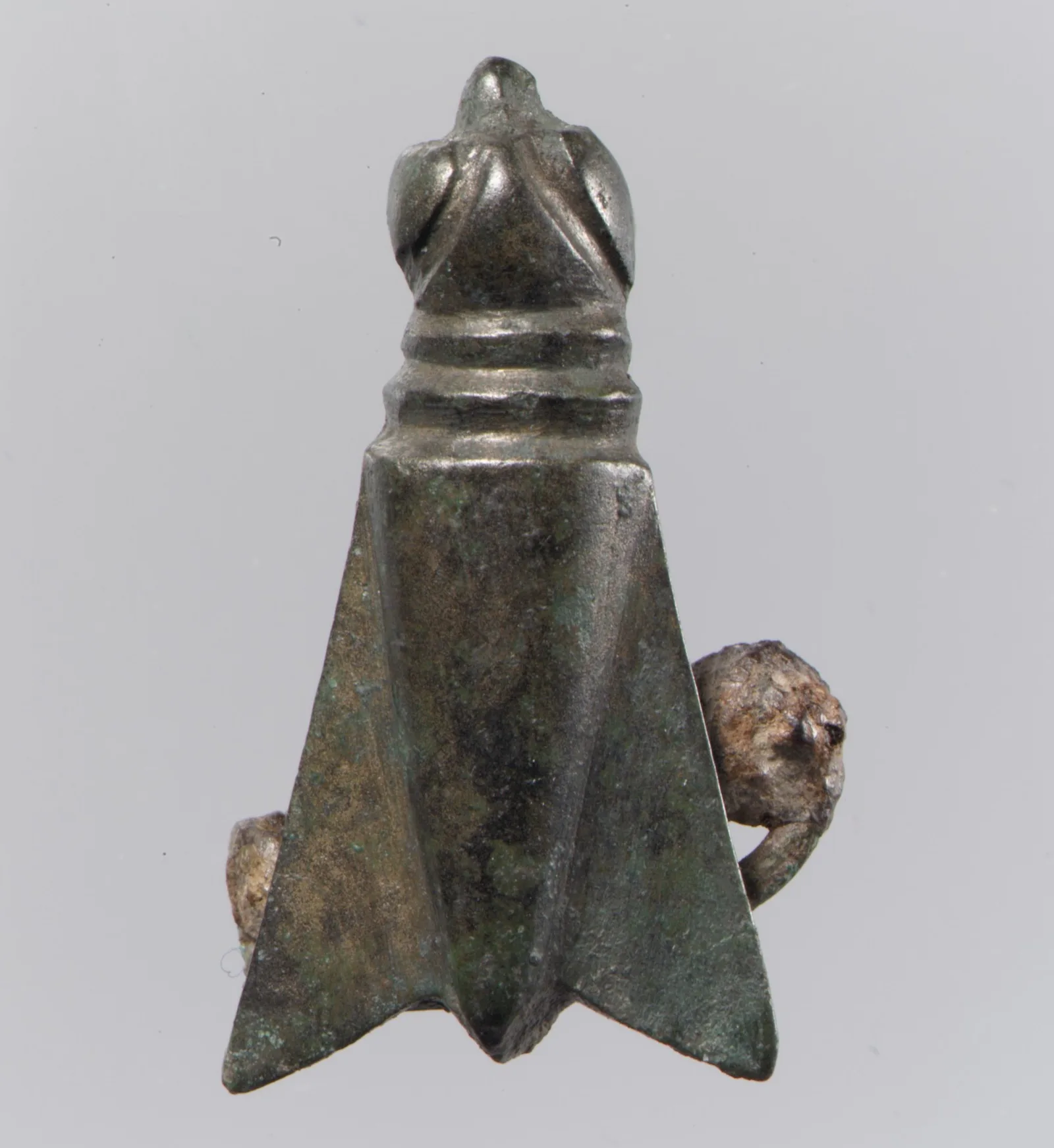
Reverence for the ladybird is older than Christianity. Among several ancient farming peoples the red beetle was linked with the sun and fertility because of its round shape and fiery colour, and its appearance in spring was read as a sign of the earth waking up. Archaeologists find small beetle figures in ancient cultures, and although not every one can be named a ladybird with confidence, the very idea of a beetle amulet that saves the harvest is clearly older than written history. A farmer who depended on the fields could not fail to notice a tiny ally.
The Middle Ages and the Christian Reading
It was in the Middle Ages that the beetle received the name of Our Lady and became established as a religious symbol. Legend tells that farmers prayed to the Virgin Mary for deliverance from pests, and in answer red beetles flew onto the fields. The gratitude found its way into the name in almost every European language. From that moment the ladybird stopped being merely a useful insect and became a small image of heavenly mercy, one that appears in medieval manuscripts and folk prayers.
The Nineteenth Century and the Flowering of Insects in Jewellery
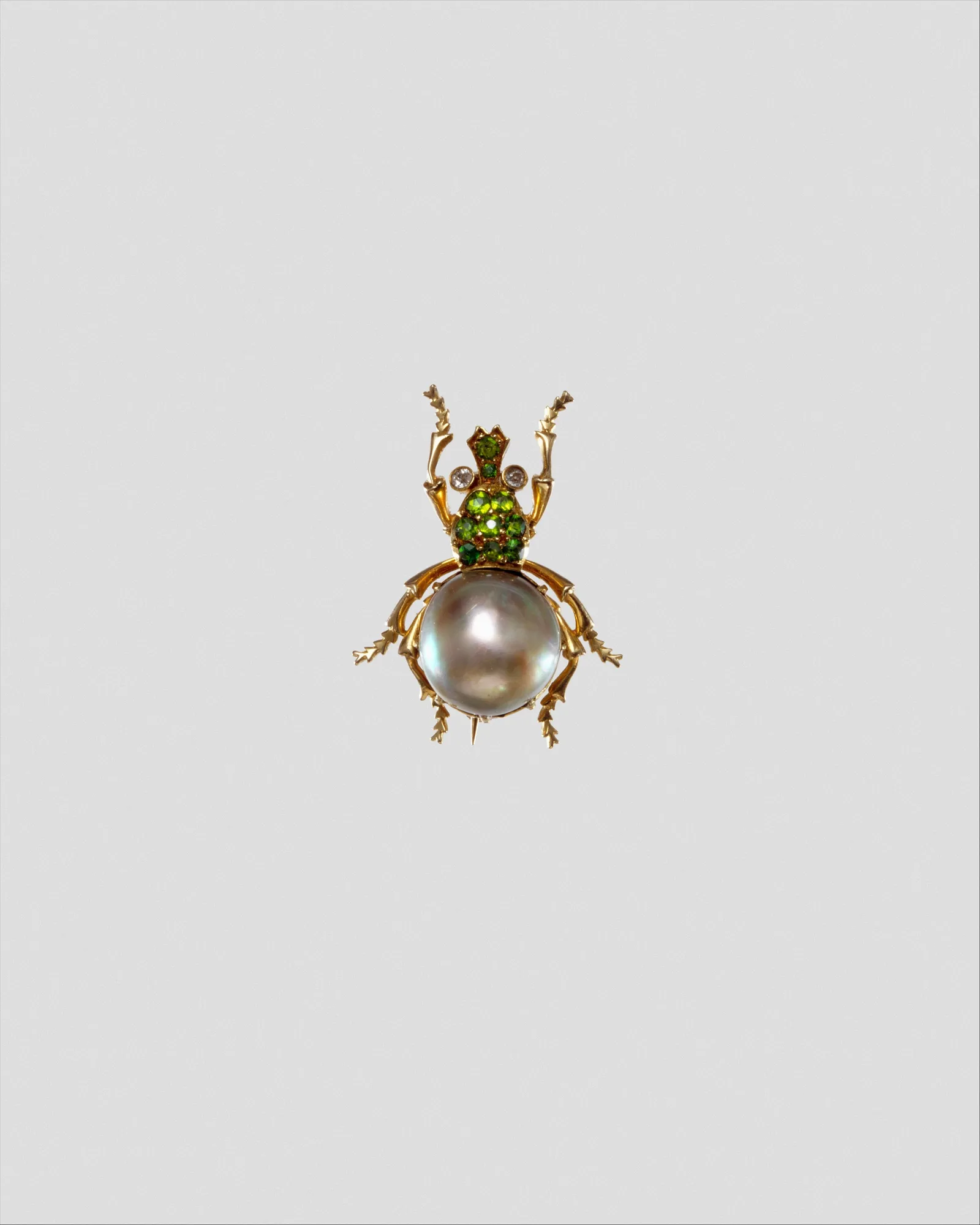
The real boom of beetles and insects in jewellery came in the nineteenth century. A taste for natural motifs, the growth of enamelling and an interest in natural history made brooches shaped like beetles, dragonflies and butterflies one of the great hits of the era. The ladybird, with its convenient round shape and ready red and black palette, sat perfectly on the new technique of hot enamel. That is when the beetle settled into the role of a kind, homely, unthreatening ornament, unlike the fearsome snakes and spiders of the same period.
The Twentieth Century and the Children's Theme
In the last century the ladybird moved firmly toward being a childlike and warm-hearted symbol. It became a character in fairy tales, songs and rhymes, a recognisable kind figure, and jewellery picked up the image. From a strict religious sign the beetle turned into a warm "for luck" amulet given without occasion. Today the ladybird lives in two registers at once: as a naive children's talisman and as a stylish brooch or pendant for an adult, and both readings sit happily on the same red back.
Customer reviews
Zevira is a real jewellery shop. Genuine payments, deliveries and customer thank-yous.
🥰🥰🥰 gracias

Ok, ¡gracias! 🙂

Where the Beetle's Name Came From in Different Languages
If you go through the European languages, almost everywhere the beetle's name hides the name of Our Lady or of God. This is a rare case where folk etymology agrees across the whole continent, and it says a great deal about how deeply the symbol grew into culture.
Our Lady in English, German and the Romance Languages
The English ladybird literally means "the bird of Our Lady", and ladybug "the beetle of Our Lady", where Lady is the Virgin Mary, as in Notre Dame. The German Marienkäfer translates word for word as "Mary's beetle", and the Scandinavian names follow the same logic. Among the Romance peoples the motif is the same: the Spanish mariquita is a diminutive of the name Mary, and in many dialects the beetle is simply called "the little cow of Saint Anthony" or "the hen of Our Lady".
A Creature of God in French and the Southern Dialects
The French went a step further: one of the old names for the beetle is bête à bon Dieu, that is "the little creature of the good Lord". It carries no particular saint's name, but it names the Creator directly. In the southern dialects of France and Italy you find versions that mention the sun and Our Lady together, which ties the beetle both to heavenly light and to protection from above.
The Little Cow in Russian and the Slavic Languages
In Russian and other Slavic languages the logic is different, though still heavenly. The Russian "God's little cow" means a small beast belonging to higher powers that must not be harmed. From it comes the well known children's rhyme "ladybird, fly up to the sky, bring us bread". In it the beetle acts as a go-between for earth and sky, asked for food, and that request for bread echoes the pan-European image of the harvest guardian.
An Eastern View: a Luck Beetle Without the Name of Our Lady
Beyond Christian Europe the beetle has its own reputation. In a number of Eastern cultures the ladybird is also counted a good sign, but it is linked not with Our Lady but simply with happiness and good news: to see the beetle means luck, guests, or a pleasant message soon. There is no name of a higher power in the word, yet the main thing survives, the sense that the red beetle brings joy. This shows how universal the symbol is: even without a religious backing, people in different parts of the world agreed that the ladybird means good.
"Fly Up to the Sky, Bring Us Bread"
It is worth saying a word about the rhyme itself, because it is the folk reading of the symbol in pure form. It holds three layers at once: the beetle is tied to the sky, it is asked for something, and what it is asked for is bread, that is the most necessary thing. Children repeat it as they let the beetle off the palm, and through that simple game they take in both kindness toward living things and the belief that a small creature can bring a great good. Jewellery inherits exactly this tone: it is about modest, homely, warm happiness.
Upload a photo of your pet, someone you love, or an object. We'll build a 3D model and hand-cast it in pewter.




Why the Ladybird Became a Children's Amulet
No protective symbol has taken root in the children's theme as firmly as the red spotted beetle. There are several reasons, and they came together at once.
A Safe and Friendly Image
Most amulets carry sternness or unease in them: the eye against the evil eye, the horn against the curse, the skull as a reminder of death. The ladybird is free of that weight. It is bright, rounded, it does not bite, it settles on the palm and flies away leaving joy behind. A child is not afraid of such a beetle but reaches toward it, so a piece of ladybird jewellery is felt as a friend rather than a formidable charm.
An Amulet That Teaches Kindness
In children's culture the beetle is tied to the rule "you must not kill". Through the ladybird a small child first learns care for living things: this tiny creature is not crushed, it is let go, it is spoken to with a rhyme. A piece of jewellery cements the lesson, turning abstract kindness into a small object that is always near. So the figure is often chosen for a christening or a first birthday, and we talk about such gifts in our piece on jewellery for a child's christening.
Red as a Signal and as Joy
Children make out red earliest of all. The bright back draws the eye, and the contrast with the black dots makes the image recognisable at first glance. For a children's piece this is ideal: the beetle reads even from a distance, does not get lost on clothing and brings a smile at once. So practical brightness met the symbolism of luck, and the ladybird took hold as the first amulet in many families.





Folk Beliefs and Customs
A whole body of rules grew up around the beetle, and they are surprisingly alike among different peoples. These beliefs are worth knowing, because they explain why a piece of ladybird jewellery is worn one way and not another.
You Must Not Kill It
The main prohibition is one: a ladybird must not be killed. By all beliefs this draws misfortune, a quarrel, a loss of money or rain on an important day. The logic is simple: the beetle does good and stands under heavenly protection, so harm to it turns back against the person. From this prohibition grew the custom of wearing the beetle as an image, since the living one must not be touched, while a silver or enamel one can always be kept close.
Make a Wish When the Beetle Lands on Your Hand
The second custom is a kind one: a ladybird that lands on the hand is not shaken off but asked to stay, while you make a wish and wait. The longer the beetle sits, the surer the wish will come true, and the direction of its flight hints where the luck will come from. A piece of jewellery works as a constant reminder of this belief: the beetle has "already landed" and will not fly off again, so it can be worn with a ready wish in mind.
Count the Spots
The third game is a number one. By the count of dots people guessed at different things: how many happy months lay ahead, how many years until the wedding, how many ventures would succeed. Seven spots were counted the best sign. In jewellery this belief is played on deliberately, laying out exactly seven dots in black enamel or black stones to build the right code into the piece.
Leave your email, we'll send your discount code. No spam, unsubscribe anytime.
The code arrives by email, valid on your first order.
The Red and Black Palette: Colour as Signal and as Luck
The ladybird's colouring is no accident, and that makes it a rewarding subject for a jeweller. Red with black works on two levels at once: in nature it is a warning, while in culture it is luck and strength. A piece of jewellery inherits both meanings.
Why Nature Chose Red and Black
In the living world a bright red and black colouring is the signal "do not eat me". Biologists call such colouring aposematic, or warning: the beetle hangs out a flag, as it were, that it is unpleasant and toxic to a predator. A bird that has once tasted a bitter ladybird remembers the red mark and leaves it alone after that. So a beetle that looks defenceless is in fact protected by its own colour, and this idea of "brightness as armour" sits beautifully on the meaning of the amulet.
Red and Black in the Symbolism of Luck
In human culture the same pair reads differently. Red is life, blood, love, energy and luck in many traditions, while black is depth, protection and the outline that holds the image together. Together they make a strong, far from neutral piece that announces itself. So the ladybird is rarely modest: even a small pendant with a red back looks like a point of colour on clothing.
How the Palette Looks in Metal
To carry this contrast into a piece, makers combine a warm metal with a saturated red. Yellow gold or gilded silver gives the back a warm glow, while a white metal underlines the cool graphic of the black dots. The red surface itself is built up either in enamel or in a red stone set in, and the spots are laid in black enamel, onyx or oxidised silver. The choice of material shapes both the character of the piece and what it costs.
CAPAORA mini knife pendant
The 18th-century Spanish navaja in miniature: 40 mm of stainless steel, a real folding mechanism and a Palanquilla lock that clicks. An affordable gift to remember.
Authentic · Ships from Spain · 14-day returns
Stones and Enamel for the Red and Black Palette
There are several ways to render a ladybird in metal, and each gives its own character. Let us look at the materials that best hold the red and black palette.
Garnet
A red garnet is the most noble way to make the beetle's back. The stone gives a deep wine-red tone with an inner fire that does not fade or dull over time. Garnet is hard, unafraid of everyday wear and plays beautifully in the light, so a pendant with a garnet back looks finer than an enamel one. We write in more detail about the properties and shades of the stone in our separate guide to garnet in jewellery.
Coral
Red coral gives a warmer, matte, almost orange-red colour that is associated with the sea and the Mediterranean tradition of amulets. Coral is softer than garnet, so it is kept from acids and scratches, but it is light and warm to the touch, and its red is counted one of the most "alive". A beetle with a coral back looks softer and more folk in spirit, closer to the folklore image. The material and its care are covered separately in our article on coral in jewellery.
Red Enamel
The most common and most vivid option is hot or cold enamel. Enamel gives an even, saturated, glossy red with no inclusions, exactly like a real beetle's back. It is convenient for covering large smooth surfaces and for finely laying out the black dots, so it is the enamel ladybirds that look the most "alive". There is one drawback: enamel calls for care, which has its own section below, while a full account can be found in our guide to enamel jewellery care.
Onyx and Oxidised Silver for the Spots
The black dots set the whole character of the beetle, and three approaches work here. Black enamel gives even glossy circles, onyx adds depth and a stony shine, and oxidising on silver creates a graphic, slightly aged outline. Often the spots are made precisely of onyx or oxidised silver, while the red back is built up in enamel or garnet, so as to join the shine of a stone with the density of enamel.
The Base Metal: Silver and Gold
Beneath the red and black painting lies a no less important choice of metal. Silver is the most common and democratic option: it is coolly white, holds oxidising well and underlines the graphic of the dots, and it costs little, which matters for children's pieces. Yellow gold and gilding give the back a warm frame and make the red deeper, finer, closer to the old brooches of the nineteenth century. White gold and rhodium-plated silver, on the contrary, add a cool austerity. The metal shapes both the cost and the character of the piece: the same beetle in silver reads as a naive children's amulet, while in gold it reads as a grown-up piece with a history.
How Stone and Enamel Go Together
The most expressive ladybirds often mix materials. A back of red garnet is framed in oxidised silver, while the head and dots are made of onyx; smooth red enamel is set off with garnet eye inserts; a coral back is seated in warm gold. The point of such a combination is the contrast of textures: matte coral beside a faceted stone, the gloss of enamel beside matte oxidising. The beetle is small, so each texture reads, and it is exactly this play of materials that tells a fine maker's piece apart from a flat stamping.
Children's and Adult Jewellery
The same symbol sounds different in a child's piece and an adult's. Let us look at how the piece changes depending on who it is meant for.
Children's Jewellery
For a child the ladybird is made small and rounded, without sharp edges or long pendants that can catch on something. More often it is a silver pendant on a short chain, stud earrings or a figure on a bracelet. Red enamel is preferable here to a costly stone: a child needs a bright, sturdy and inexpensive amulet that there is no fear of scratching. The main task of such a piece is to be cheerful and safe.
Women's Jewellery
On a grown woman the ladybird turns from a children's figure into a stylish accent. It may be a slender pendant with a garnet back, a brooch on the lapel of a coat, a ring or earrings with an enamel beetle. The red and black palette works as a bright point in a calm look, and the symbolism of luck makes the piece personal. Adult jewellery allows a large stone, complex enamel and a costly metal, because it is worn not as play but as a statement of taste.
The Brooch as a Motif in Its Own Right
The brooch deserves a separate word. It is in the brooch format that the ladybird unfolds most fully: on a coat lapel, a scarf, a bag or a hat the red beetle reads as a considered detail. A brooch needs no pierced ears, suits any age and moves easily from one item to another, so it is often given as a universal amulet worn at ten and at seventy alike.
Men's and Paired Variants
The beetle is usually counted a women's and children's motif, but it works more widely. In a restrained form, a small figure on a cufflink, a tie clip or the lapel of a formal jacket, the ladybird reads as a personal luck talisman without any childishness. It is also a rewarding paired subject: two beetles on one twig, a pendant and a brooch in one style, "mother and daughter" earrings. So the luck symbol turns into a shared sign for two people or for a family, without losing its lightness.
How the Ladybird Differs from Other Luck Symbols
There are many luck talismans, and each has its own character. The horseshoe and the clover promise luck as a stroke of fortune, a chance smile of fate. The elephant and the coin pull toward plenty and stability. The eye and the horn first of all protect, warding off the bad. The ladybird stands apart: its luck is warm, alive and homely, mixed with joy and kindness rather than money or fear. It is not about "getting rich" or "fending off an enemy" but about the day going well, the wish coming true and the heart growing lighter. That is why it is given where the wish is for happiness rather than a win.
How to Combine It with Other Jewellery
A red and black beetle is a bright accent, so it is best to keep quiet around it. One noticeable beetle on plain clothing looks stronger than a scattering of small pieces. The rule of one colour works well: if you are wearing silver, choose a beetle in silver, and if gold, a warm setting. A garnet back is supported by other warm stones, while a coral one is set off beautifully by pearl and turquoise in a Mediterranean palette. The beetle is best not combined with a busy print or other large jewellery, so the red point does not get lost in the clutter.
Caring for Enamel
Since most ladybirds are made with enamel, it is worth knowing how to keep its colour for years. Enamel is glass fused to metal, and for all its beauty it calls for care.
What Enamel Fears
The main enemies of enamel are knocks and sharp swings of temperature. A strong knock against a hard surface can leave a chip or crack on the enamel, while boiling water or frost, especially with a sudden change, can sometimes crack the thin layer. So a piece with an enamel beetle is taken off before sport, cleaning and washing in hot water, and it is stored apart from metal items so they do not scratch the gloss.
How to Clean It
Enamel is cleaned gently: warm water, a drop of mild soap, a soft cloth or cotton pad. No abrasives, no stiff-bristled brushes, no alcohol, acetone or harsh chemicals, because they cloud the shine and eat into the coloured layer. After washing, the piece is wiped dry with a soft cloth. Perfume, hairspray and cream are applied before putting the piece on, not after. A detailed look at all the nuances is in our guide to enamel jewellery care.
Storage
An enamel ladybird is kept in a separate pouch or compartment of a jewellery box, away from hard stone-set pieces and direct sun. A dry dark place preserves both the metal and the colour. With careful handling enamel holds its red for decades, so such a piece can well outlast a childhood and pass to the next generation as a family talisman.
Send a friend a discount code, they save on their first order.
Facts That Surprise
Behind the sweet look of the ladybird hides a rather fierce creature. A few facts about its biology change how you feel about this beetle and at the same time explain why it became a symbol of protection.
A Voracious Predator
The main secret is that the ladybird is a predator. Over its life one beetle eats several thousand aphids, and its larva devours pests even more actively than the adult. That is exactly why farmers have welcomed red beetles for centuries and still buy them by the thousand to protect gardens and greenhouses. The sweet luck amulet is in fact one of the most effective natural exterminators of pests.
Wintering in a Huge Swarm
Before the cold the ladybirds gather into dense clusters and winter together, sometimes tens of thousands under bark, in rock crevices and in the corners of houses. A huge red carpet of sleeping beetles is a striking sight, and they gather in the same places year after year, leaving a special scent mark for the generations to come. Alone the beetle would survive the winter worse, so collective wintering is a survival strategy of the species.
Releasing Fluid When in Danger
When the beetle is seized, it releases an acrid yellow fluid with a sharp smell and bitter taste from the joints of its legs. This trick is called reflex bleeding, and it serves to make the predator spit out the prey and remember that the red beetle is unpleasant. Together with the warning colouring this makes a creature that looks defenceless almost untouchable, and in the symbolism of the amulet such a "bitter defence" reads especially precisely.
The Spots Do Not Count Age
A common myth holds that you can tell a ladybird's age by the number of spots. This is untrue: the number and pattern of dots depend on the species, not on the years lived, and they do not change after the shell has hardened. By the number and shape of the spots, though, a biologist can easily tell the species, and several dozen different ladybirds live in Europe, from the familiar seven-spot to yellow and black ones.
Frequently Asked Questions
What does the ladybird symbolise in jewellery?
First of all luck and unexpected joy, and also protection, the granting of a wish and a kind prediction of love. The roots of the meaning lie in the beetle saving the harvest from aphids and bearing the name of Our Lady, so a piece with it is given as a wish for a happy stretch and a little heavenly care.
Why was the ladybird named after Our Lady?
Because in the Middle Ages the beetle cleared the fields of pests as if by prayer, and the salvation was credited to the Virgin Mary. From this come the English ladybird, "the bird of Our Lady", the German Marienkäfer, "Mary's beetle", and the French "little creature of the good Lord", while the seven spots were linked with the seven sorrows of the Mother of God.
What does the number of spots mean?
Most often seven spots are shown, and this number reads as luck and spiritual fullness, a reference to the seven sorrows and joys of Our Lady. In jewellery the number of dots is played on deliberately: seven black circles are counted the kindest sign, so those are the ones laid out in enamel or stones.
Can a ladybird be given to a grown woman?
Yes, and it is a long tradition. For a grown woman the beetle is made as a stylish accent: a pendant with a garnet back, a brooch on a coat, a ring or earrings. The red and black palette works as a bright point in a calm look, and the symbolism of luck makes the gift personal and warm.
Which material is best for the red back?
It depends on the aim. Enamel gives the most even and vivid red, like a living beetle, and costs less. Garnet looks finer, does not fade and is unafraid of wear. Coral gives a warm matte red with a sea-side character. The black dots are made of enamel, onyx or oxidised silver.
Is the ladybird suitable as a children's amulet?
Yes, it is one of the best children's symbols: bright, kind, safe and clear. It does not frighten, is easily explained through the rhyme about the sky and bread, and along the way it teaches care for living things. For little ones an enamel pendant or a figure on a bracelet is chosen, and stud earrings for schoolchildren.
How do you care for an enamel ladybird?
Keep it from knocks and sharp swings of temperature, take it off before sport, cleaning and hot water. Clean it only with warm water, a drop of mild soap and a soft cloth, without abrasives, alcohol or acetone. Apply perfume and cream before the piece, and store it apart from hard items in a dry dark place.
On what occasion is ladybird jewellery given?
For luck before an important stretch, to a child for a christening or birthday, before an exam and the start of a new venture, and as a kind hint of love for an engagement or a coming of age. It is a meaningful gift that reads warmly and without pathos.
A Small Amulet with a Big History
The ladybird is luck, protection and a kind wish gathered into one red point. Choose a pendant, brooch or earrings with a red and black beetle for yourself for luck, or as a gift for someone you wish an easy stretch.
See amulet jewelleryBuying it as a gift? Each one arrives ready to give.
 A branded Zevira box and a little card come with every order.













About Zevira
Zevira makes jewellery in which meaning matters more than shine. We gather symbols from all over the world, from protective amulets to kind heralds of luck, and render them in silver, gold, stones and enamel so the piece is one you want to wear every day. The ladybird in our collection is careful work with the red and black palette: deep garnet, warm coral, dense enamel and clear black dots. Each piece comes with the story of its symbol, because we believe an amulet starts to work once you know what it means.