The Brown Scapular of Carmel: Meaning of the Scapular and the Virgin of Carmen
Two small squares of brown wool on a cord, slipped over the shoulders, make up one of the most widely worn Catholic signs in the world. Millions carry it, from Spain to Latin America, and its history reaches back to the monks of Mount Carmel in the Holy Land.
This article is about how the long shoulder cloth of a monastic habit turned into a small image worn near the heart, about the vision of 1251 and the scapular promise, about the Virgin of Carmen and her sailors, and about why today the cloth scapular is more and more often worn as a blessed medal or a fine pendant of silver and gold.
What a Scapular Is: From a Monk's Shoulder Cloth to a Small Sign
Most people picture the scapular as two pieces of cloth on the chest and back, but the thing comes from the monastery, and its path from working dress to a sign worn on the body explains almost everything about its present shape. Let us take it in order, because without this backstory the meaning of the brown scapular reads only halfway.
The Carmelite Monastic Shoulder Cloth
In its origin the scapular is a part of the monastic habit: a long rectangular piece of cloth with an opening for the head, falling freely over the chest and back on top of the tunic. The Latin scapula means shoulder blade, shoulder, and hence the name, a garment that lies on the shoulders. For monks such a shoulder cloth served as a working apron put on over the tunic during physical labour, and over time it became a mark of belonging to the order and a symbol of the yoke of Christ taken up freely. Among the Carmelites, an order that grew out of the hermits of Mount Carmel, the scapular was brown, and it was this monastic garment that gave rise to the whole later tradition of the small scapular for lay people.
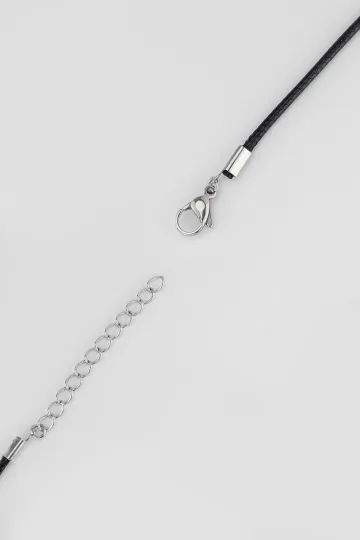
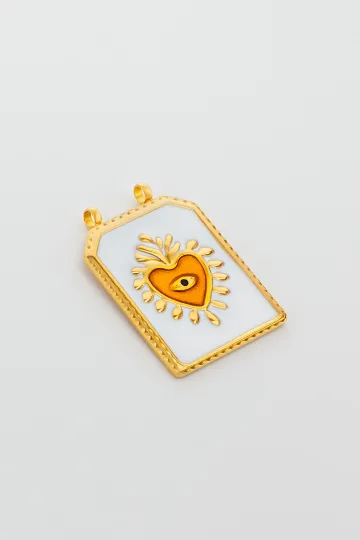
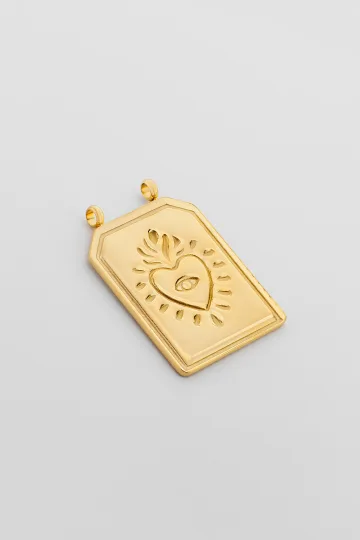
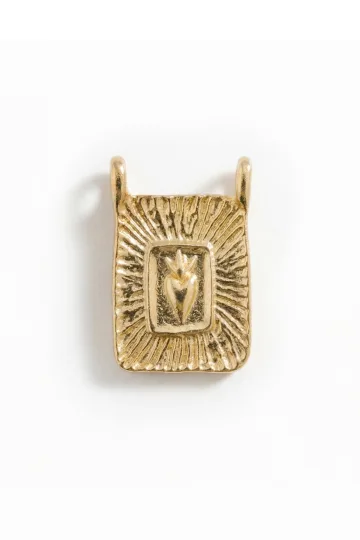
Wear the symbol, don't just read about it. These are in stock:


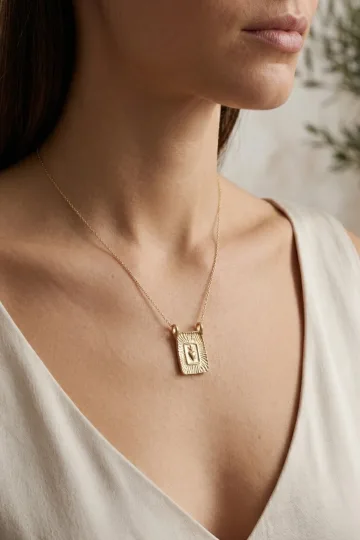
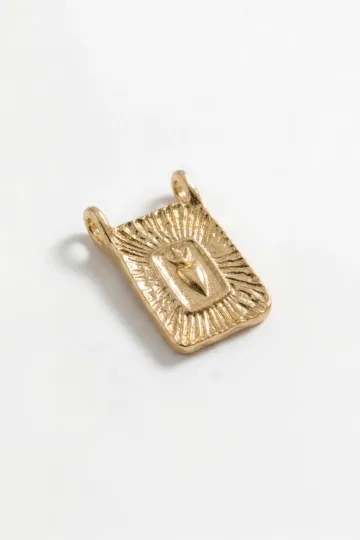
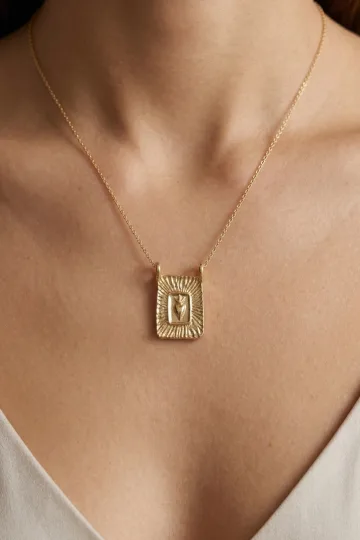
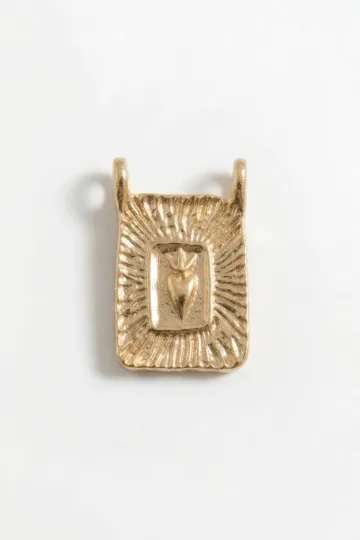
Two Rectangles of Cloth on Bands
It is awkward for a lay person to wear the full monastic shoulder cloth, so a reduced form took shape over time: two small rectangles of cloth joined by two bands or cords. One rectangle lies on the chest, the other on the back, and the bands are slipped over the shoulders, repeating the arrangement of the large shoulder cloth in miniature. On the cloth plaques the Virgin of Carmen is usually shown on one side and the Sacred Heart of Jesus or another image on the other. This small scapular became a sign of belonging to the spiritual family of the Carmelites for those who live in the world, a way to share their devotion without entering a monastery. It is precisely this form that is most often called the scapular of Carmen.
How the Scapular Differs from a Devotional Token or Medallion
The scapular is easy to confuse with a devotional token or a small image worn against the body, but it is put together differently. A devotional token is a broad idea for a small protective insert or an image kept near the body, and that format has its own separate treatment in the guide to protective amulets, talismans, and devotional jewelry. A medallion is a single pendant on a chain. The scapular, by contrast, is fundamentally two-part: two plaques, front and back, joined by bands over the shoulders, and that doubling is not accidental, it directly repeats the monastic shoulder cloth. The sign does not hang on the neck as a single piece but is, as it were, put on the person, taking them in from two sides, and in that lies its difference from any single worn image.
What the Brown Colour Means
The colour of the scapular of Carmen is not a decorative detail but part of its identity, hence its second name, the brown scapular. Brown is the colour of the Carmelite monastic habit, earthy, humble, far from luxury. It speaks of poverty, simplicity, and the refusal of vanity, of that very spirit of the hermits of Mount Carmel out of which the order grew. In putting on the brown scapular, a lay person is symbolically clothed in the same humble cloth as the monks, taking on the sign of their spiritual family. That is why the classic cloth scapular is precisely brown, and when it is rendered in metal, that colour is often recalled in the patina, the enamel, or the warm tone of bronze and gold.
The history of this sign begins not with cloth and not with a band, but with a mountain on the coast of the Holy Land and a handful of hermits seeking solitude. To understand why a piece of brown wool became an object of veneration for millions, it helps to go back eight centuries.
History: Mount Carmel, Simon Stock, and the Vision of 1251
Behind the scapular stands a long and well-documented history of the Carmelite order and a tradition about a vision that gave the small scapular its particular meaning. Here it is important to separate the historical facts from pious tradition without breaking down respect for a devotion that has lived eight hundred years.
Mount Carmel and the First Hermits
Mount Carmel is a mountain ridge in the north of modern Israel, by the coast of the Mediterranean, long connected with the prophet Elijah, who, by the biblical account, stood here against the priests of Baal. In the late twelfth and early thirteenth century Latin hermits settled on the slopes of Carmel, come to the Holy Land in the age of the Crusades and seeking a solitary life of prayer after the example of Elijah. They built a chapel in honour of the Virgin Mary and gradually took shape as a community. So was born the order that took its name from the mountain, the Carmelites, and the Mother of God was considered its patroness and sister from the very beginning. The brown shoulder cloth of this community's monastic dress is the distant ancestor of all the later scapulars.
Simon Stock and the Vision of 1251
When military pressure forced the Carmelites to move from the Holy Land to Europe, the order lived through hard years of establishing itself. To this period belongs the tradition of Saint Simon Stock, an Englishman, one of the early generals of the order. By the pious account, in 1251 the Virgin Mary appeared to him holding a brown scapular in her hands, and, giving it to him, spoke a promise of particular protection to those who would wear this sign and die in it. It was out of this tradition that the so-called scapular promise and the whole practice of lay people wearing the small scapular grew. Historians are cautious with the dating and the details of the vision itself, but it is beyond dispute that veneration of the scapular among the Carmelites took shape early and put down roots for centuries.
The Spread of the Devotion and Papal Recognition
From monastic use the scapular gradually reached lay people through confraternities and societies that gathered those who wished to share the spirituality of the Carmelites. The Church in time secured this practice, established the rites of reception connected with it, and confirmed it in many papal documents over the centuries. Confirming privileges, liturgical texts, and rules appeared, and the image of the Virgin of Carmen with the scapular in her hands became one of the most recognisable in Catholic art. So a private monastic object turned into a mass phenomenon of popular devotion, spreading across all of Catholic Europe and then around the whole world with missionaries and settlers.
From the history of the order it is natural to move to the figure around whom everything turns, the Virgin of Carmen herself. Her veneration long ago went beyond the walls of monasteries and became part of the coastal culture of whole countries, where on the sixteenth of July the image of the Mother of God is carried out to the very edge of the water.
Customer reviews
Zevira is a real jewellery shop. Genuine payments, deliveries and customer thank-yous.
🥰🥰🥰 gracias
Ok, ¡gracias! 🙂
For the Carmelite scapular, go with a silver medal on a short chain. Cloth under the shirt, metal on top, and skip the golden shine.
How to wear the Scapular of Carmen: what to pair it with, metal and chain length
The scapular is first of all a thing of prayer, so I put the look together carefully: the sign should read as a personal consecration, not a fashion accent. I have gathered here what I advise when a person wants to wear the scapular every day and to do so with respect for the Carmelite tradition.
Cloth under the shirt or a medal over it? Here I choose by way of life. The brown cloth scapular I recommend wearing hidden, under a shirt or a T-shirt: it is light, does not bulge, and stays a personal sign at the heart. The metal scapular medal I advise for those who want to wear the sign constantly and not fear water and sweat; it can be left under clothing or shown discreetly on top. Many combine the two: cloth underneath, a blessed medal on a chain over it.
Which metal to choose? I match the metal to the occasion and the tone of the look. Sterling 925 silver I advise as a calm middle ground for every day: a cool shine, sharp relief of the two images, and a light patina in the recesses even emphasises the design. Gold and gold plating I choose for a baptism, a confirmation, or a large family event, when the medal is meant as an heirloom. One metal across the whole look keeps the picture together, so I do not advise mixing silver and gold in one set, and I steer away from a bright gold gloss in an everyday look.
How to choose the chain length? I set the length by how the sign is worn. Under an open collar I recommend a short chain of about 45 cm: the medal lies at the collarbone and reads closer to the face. Under a closed top I advise lowering the pendant to 50-55 cm, closer to the heart, so it lies under the shirt. If a cross and a rosary are nearby, I separate them by length: I leave the cross as the centre of meaning, and the scapular a little differently, so the images and chains do not tangle.
What size to take? I choose the size by the recipient. A very small image, less than a centimetre, I take for a child or for someone who wants to wear the sign quite unnoticed. The medium, around one and a half to two centimetres, is the most common: on it both images read well, Carmen and the Sacred Heart. A large medal closer to three centimetres I advise for someone to whom a conspicuous chest sign matters.
Every day, the name day of Carmen, or the road to sea? The occasion suggests the format. For every day I choose practical silver or a modest cloth scapular under the clothing. For the name day of Carmen on the sixteenth of July I recommend a fine pendant or a medal with good relief, as a warm and precise gesture. For someone who puts out to sea or leaves for a far place I advise a sturdy metal medal that does not fear water, or a simple cloth scapular under the coat, put on with words about protection on the way.

Turn on your camera, pick earrings, a pendant or a ring, and see the piece on yourself in real time.
Switch items in one tap.
Everything runs in your browser: no photo or video is ever uploaded.
The Virgin of Carmen: Patroness of Sailors and Fishermen
The Virgin of Carmen, in Spanish Virgen del Carmen, is the Mother of God under the title of the Virgin of Mount Carmel, and in the popular devotion of Spain and Latin America she has long become, above all, the patroness of those who put out to sea. This connection deserves its own treatment, because it is precisely what makes the feast of Carmen so alive and crowded on the coasts.
Why Sailors in Particular
There is no straight line from the hermits of Carmel to fishing boats in the tradition; the connection of the Virgin of Carmen with the sea took shape later, in the popular devotion of coastal communities. The logic here is simple and human: the sea is an unpredictable and dangerous element, and the work of the fisherman and the sailor was for centuries an affair from which not all returned. People whose lives depended on the will of the waves needed a heavenly protectress to whom they could turn in a storm, and the image of the Mother of God extending her protection fit this need. The scapular a sailor wore under his coat became a visible sign that he was under protection. So the Virgin of Carmen became the star of the sea for the fishing villages of whole countries.
The Sixteenth of July and the Sea Processions
The feast of the Virgin of Carmen is kept on the sixteenth of July, and in the seaside towns of Spain and Latin America it is one of the brightest days of the year. The image of the Mother of God is carried out of the church, decked with flowers, and borne through the town to the port on people's shoulders, then set on a decorated boat and taken out to sea accompanied by a whole flotilla of fishing vessels. Sailors count it an honour to carry the statue and to take part in the sea procession, and crowds gather on the shore. This custom of carrying the image out to the water and into it plainly seals the role of Carmen as the guardian of sailors, and in many port towns it remains the chief local feast, uniting believers and simply fellow townspeople.
Carmen in Spain and Latin America
Veneration of the Virgin of Carmen is deeply rooted both in Spain and across the ocean. In many Spanish, Chilean, Peruvian, and Colombian coastal towns she is the official patroness of the fleet, of fishermen, and of whole regions, and the name Carmen has for generations remained one of the most common women's names in the Spanish-speaking world precisely because of her. In Latin America the image of Carmen often weaves together with local traditions and takes on its own colours, while remaining recognizably the same Mother of God of Mount Carmel. For many families the scapular of Carmen is not an abstract symbol but a thing worn by grandfathers and great-grandfathers, part of a family and local identity bound up with the sea and with faith.
Behind the festive processions and the sea romance stands the reason the scapular is worn at all, the idea of protection and promise. This should be spoken of carefully and precisely, separating what tradition truly puts into it from superstitious oversimplifications.
Upload a photo of your pet, someone you love, or an object. We'll build a 3D model and hand-cast it in pewter.


Meaning and the Scapular Promise
The meaning of the scapular of Carmen rests on the tradition of the vision and on the promise of the Mother of God connected with it. The theme must be opened up with respect for the Catholic tradition of the Carmelites and at the same time honestly, without promises of a guaranteed result, which the Church itself does not give.
What Tradition Puts Into It
By the tradition of the vision of 1251, the Virgin Mary, in giving the scapular, promised particular maternal protection to those who wear this sign with faith. The tradition of the Carmelites understands the scapular as a sign of consecrating oneself to the Mother of God and entrusting oneself to her intercession, as a visible reminder that a person wishes to live in a Christian way and to be under her protection. To this was added in time the so-called Sabbatine promise, a tradition of particular help to those who honour the scapular. For a believer the scapular is above all an expression of trust in Mary and a mark of belonging to her spiritual family, not a magical object with a power of its own.
Conditions and a Sober View
Here is what popular retellings often forget: the promise in the Catholic understanding never sounds like an automatic guarantee. Church texts and the Carmelites themselves stress that the scapular presupposes a person's answering effort, a life of faith, prayer, faithfulness to the commandments, and not merely wearing cloth on the body. The scapular is a sign and an obligation, not a talisman that works of itself regardless of the owner's life. A sober view here does not contradict faith but coincides with the official position: to wear the scapular and live carelessly is to hollow out its meaning. That is why serious tradition always speaks of the scapular together with the inner disposition of the one who wears it.
The Scapular as a Sign of Consecration, Not an Amulet
The word amulet is applied to the scapular in everyday speech, but with the same reservation as for other Christian signs. In ordinary language an amulet is any object worn for protection, and the scapular formally falls under that idea. The Church's understanding is different: the scapular is a sacramental, an auxiliary sign of faith that points to God and to the intercession of Mary, not something that acts like a charm with its own power. The difference is fundamental. An amulet in the pagan sense works of itself, while the scapular only expresses a person's consecration to the Mother of God and their trust in her prayer. So it is more correct to call it a sign of consecration and a devotional, not a talisman, and it is precisely this line that separates healthy devotion from superstition.
The cloth scapular wears out, gets soiled, and tears, yet people want to wear it constantly, and it was from this practical difficulty that its most durable form was born, the metal one. How cloth gave way to the blessed medal and the fine pendant is worth looking at separately.



The Scapular as Jewellery: The Scapular Medal and the Pendant
The scapular has long existed both as cloth and as a piece of jewellery, and this is not a designer's liberty but a decision fixed by the Church. Let us look at how the brown scapular became a medal and a pendant and what was kept of the original sign in the process.
The Papal Permission to Replace Cloth with a Medal
At the beginning of the twentieth century Pope Pius X, meeting the practice halfway, permitted the cloth scapular to be replaced by a single blessed medal, the so-called scapular medal. The reason was strictly practical: cloth wore out quickly, especially for soldiers, sailors, and workers, while metal lasted for years and did not fear water and sweat. On the condition that such a medal must bear the image of the Sacred Heart of Jesus on one side and the image of the Virgin Mary, usually the Virgin of Carmen, on the other. The medal had to be blessed, and then it received the same status as the cloth scapular. This decision opened the way to all the later metal forms of the sign.
The Two-Sided Medal: Carmen and the Sacred Heart
The classic scapular medal is two-sided, and this follows directly from the condition of its appearance. On one side is placed the image of the Virgin of Carmen, often with the Child and with the scapular in her hands, on the other the Sacred Heart of Jesus, crowned with a crown of thorns. This two-sidedness repeats the very nature of the cloth scapular with its two plaques, chest and back, and keeps the image whole: Marian protection and the love of Christ drawn together in one small object. The oval or round medal lies conveniently on a chain and reads from both sides, and so it is precisely the two-sided format that became the most recognisable for the metal scapular.
The Escapulario Pendant Today
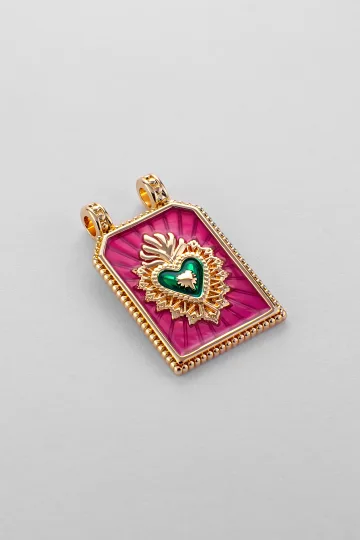
Out of the strict two-sided medal grew a freer form as well, the escapulario pendant, where the image of the Virgin of Carmen is presented as a modern ornament: a relief medallion, a fine pendant, sometimes a stylised depiction of the scapular with tiny plaques and chains. Such a pendant may be a blessed scapular medal by all the rules, or it may be worn simply as an ornament with meaning, a sign of veneration of Carmen or of family memory. The line here runs by the blessing and by the owner's intent, not by the outward richness of the thing. For many it was precisely the pendant that became a way to wear the sign of Carmen every day without taking it off, and at the same time discreetly, as a personal ornament rather than a conspicuous religious attribute.
The choice of a particular thing comes down to material and format, and those in turn depend on for whom and on what occasion the scapular is meant. Let us go through the main options, from the classic cloth to gold.
Materials and Formats
The scapular of Carmen is made in a very wide range, from nearly weightless cloth to a gold medal at the level of a family heirloom. The material affects the look, the durability, and how the sign is worn, so it makes sense to go through the formats one by one.
The Cloth Scapular
The classic cloth scapular is two brown woolen plaques on two bands, with embroidered or printed images of the Virgin of Carmen and the Sacred Heart. It is light, almost weightless, worn hidden under clothing, and costs little, and so it remains the most widespread in the world. Its drawback is its short life: wool wears down over time, gets soiled, and fades, especially with constant wear and contact with water. Many keep a spare at home to replace a worn one. For a believer the value of the cloth scapular has nothing to do with the price of the material, and a worn brown scrap means no less to its owner than a gold medal.
The Scapular Medal in Silver and Gold
The metal scapular medal is a durable alternative to cloth, and here the noble materials come into play. Sterling 925 silver gives a classic, cool shine, holds the fine relief of the two images well, and is fit for everyday wear; over time it darkens, but it cleans easily, and the patina in the recesses even emphasises the design. Gold and good gold plating raise the medal to the rank of an heirloom passed down by inheritance: gold does not darken and outlives generations, which is valuable for a gift on a large occasion. Such a medal is usually blessed, and then it replaces the cloth scapular by all the rules, joining the strength of metal to the meaning of the brown cloth.
Sizes and How They Are Worn
The scapular medal and the pendant are made in different sizes, and the choice depends on who will wear them and how. Very small images, less than a centimetre, are taken for children and for those who want to wear the sign unnoticed under clothing. The medium size, around one and a half to two centimetres, is the most common: on it both images read well, and it lies comfortably on the chest. Large medals, closer to three centimetres, are chosen as a conspicuous chest sign. The scapular medal is worn on a chain around the neck, at the heart, under clothing or over it, while the cloth scapular is put on over the head so that one plaque lies on the chest and the other on the back.
Engraving and a Named Gift
The metal scapular, like any medal, is often turned into a personal thing by engraving. On the back or around the rim the owner's name is added, the date of a baptism, confirmation, or the name day of Carmen, sometimes a short wish. Engraving ties a standard image to a specific person and day, and that is precisely why the scapular medal is so often given at important milestones. On a two-sided medal there is little free space because of the two images, so people more often engrave around the rim or choose a version with a smooth field. Such a named thing works well as a future family heirloom: years later the inscription can tell exactly to whom and on what occasion it was given.
The choice of material is essentially a choice between durability and the character of the thing, while the occasion suggests exactly what to take: humble cloth, practical silver for every day, or a gold medal for a large event. The occasions are worth speaking of separately, because the scapular is one of the most traditional religious gifts.
Leave your email, we'll send your discount code. No spam, unsubscribe anytime.
The code arrives by email, valid on your first order.
Whom the Brown Scapular Is Given To
The scapular is given for specific occasions connected with the milestones of a Christian life and with the veneration of Carmen, and the occasion determines both the choice of format and the tone of the gift. Let us go through the main situations.
For a Baptism
The baptism of a child is a classic occasion to give a scapular medal. Godparents or relatives give a silver or gold medal with the images of Carmen and the Sacred Heart as the first spiritual sign in a newborn's life, often with the expectation that the thing will survive and pass to the child as an adult. On the back people often engrave the name and date of baptism, turning the image into a keepsake. The cloth scapular is usually not put on an infant but kept until a suitable age, while a metal medal is conveniently set aside in a box as a future heirloom. For families with maritime roots or Spanish traditions such a gift is especially fitting and understood.
For Confirmation and First Communion
Confirmation and first communion are important steps of growing up in the faith, and the scapular is given for them very often. Here the gift is addressed to a child or teenager who is already aware, so people choose a format that can be worn right away: a silver scapular medal on a sturdy chain or a cloth scapular with a rite of reception. The point is to mark an independent step in faith with a visible sign that stays with the person. This is the moment when the scapular first becomes the recipient's personal thing rather than a kept object, and so its choice is approached with particular care, often timing the reception of the scapular to the feast itself.
For the Name Day of Carmen and the Feast of the Virgin of Carmen
The name Carmen in the Spanish-speaking world is directly connected with the Mother of God of Mount Carmel, so the sixteenth of July is both a church feast and a name day for a great many women called Carmen, Carmela, Maricarmen. To give a scapular or a pendant with the image of Carmen on this day is a warm and precise gesture that acknowledges both the person's name and their faith. For an adult people more often choose silver or gold with good relief, and for someone who values an ornament, a fine escapulario pendant. Such a gift is delicate: it does not impose but shows attention to what is important to another, and it is especially fitting where the veneration of Carmen is part of the family culture.
For Sailors and Those Setting Out on a Journey
A separate and the most historically precise occasion is support for someone who puts out to sea or sets off on a long road. It was precisely from maritime use that the role of Carmen as the patroness of those who sail grew, so a scapular for a fisherman, a sailor, or simply someone leaving for a far place is a gesture with deep roots. Here the sign works as a send-off and prayerful support, a thing put on with words about protection on the way. For such an occasion a sturdy metal medal that does not fear water and sweat will do, or a simple cloth scapular under the coat. The meaning here is not in the price but in the gesture: I remember you and I pray for you, come back.
The scapular rarely exists alone: alongside it in Catholic culture live the medal, the devotional token, and the rosary, and they are often confused or worn together. It is worth putting these signs in their places, to understand what is what.
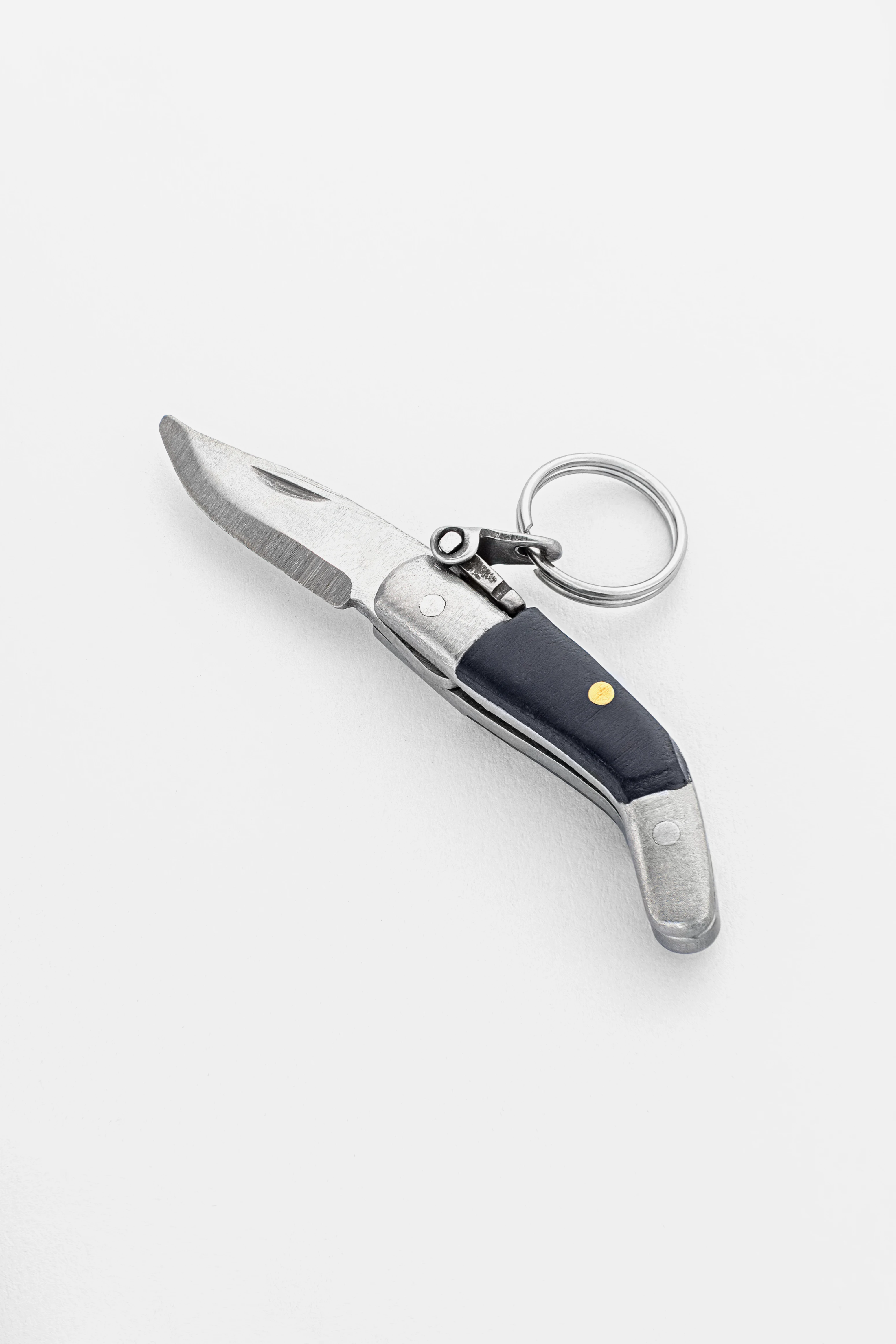
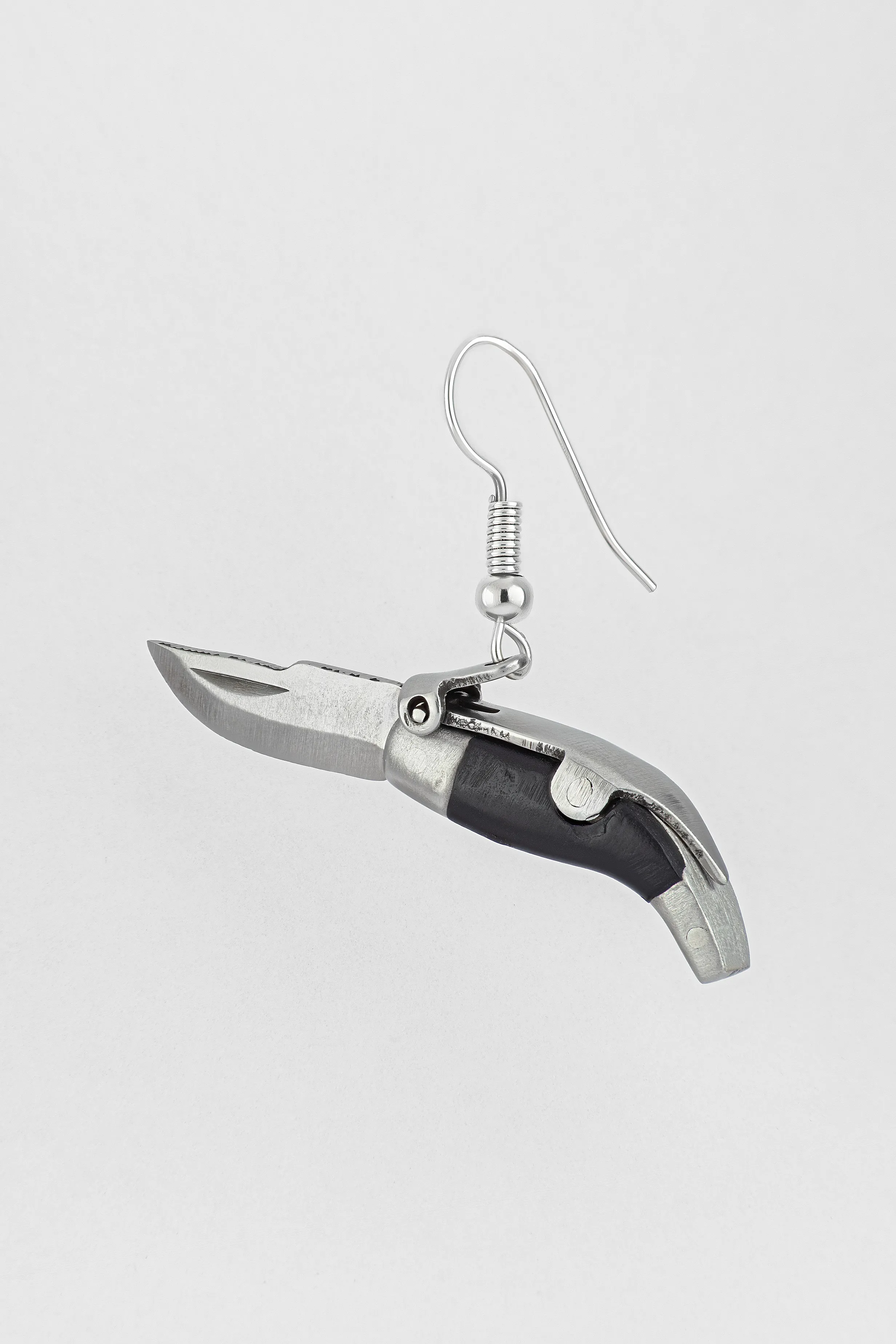
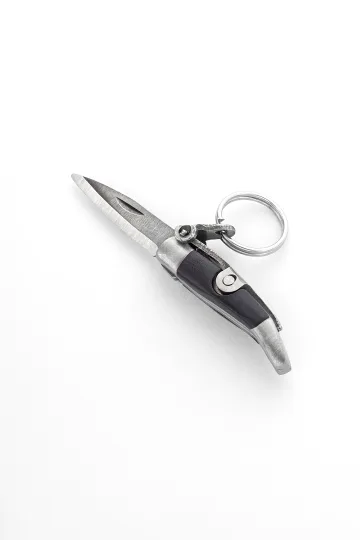
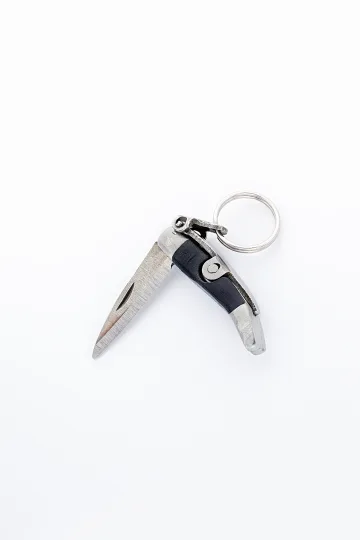
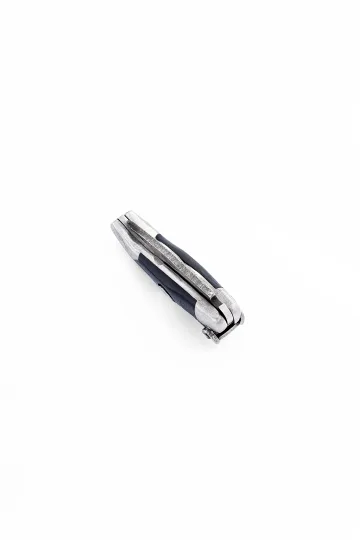
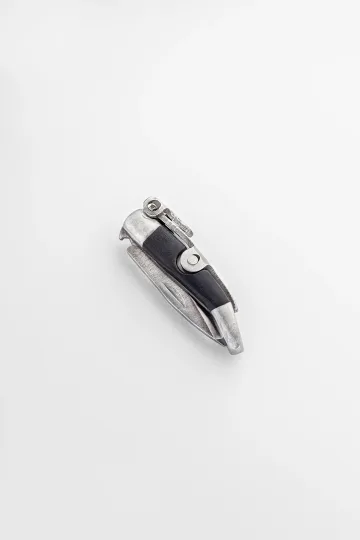
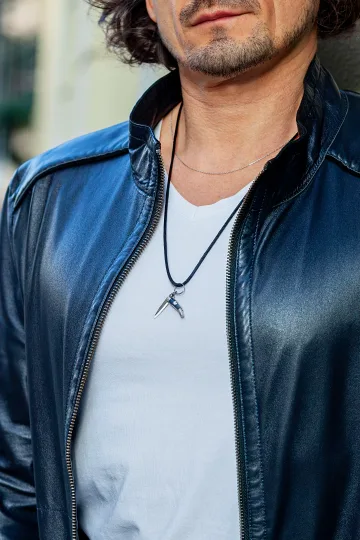
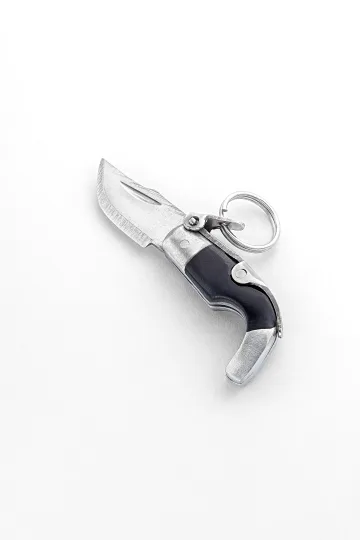
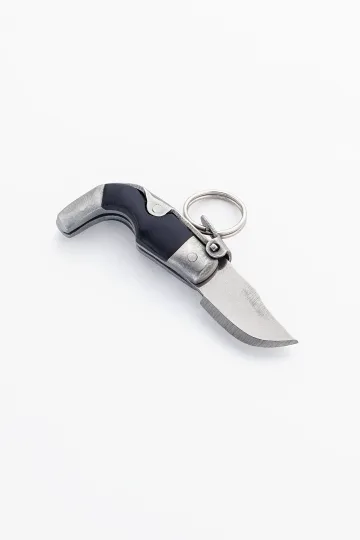
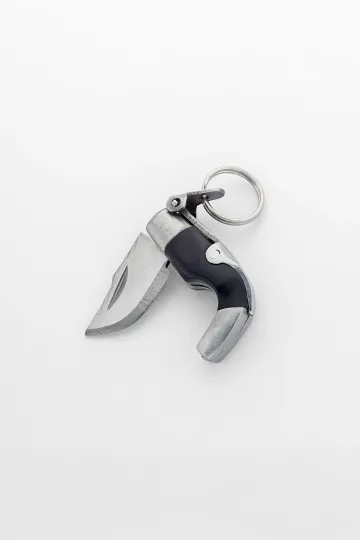
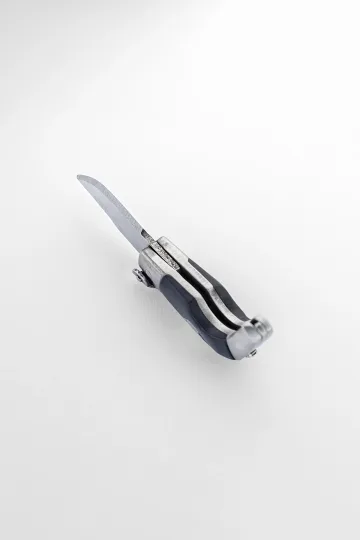
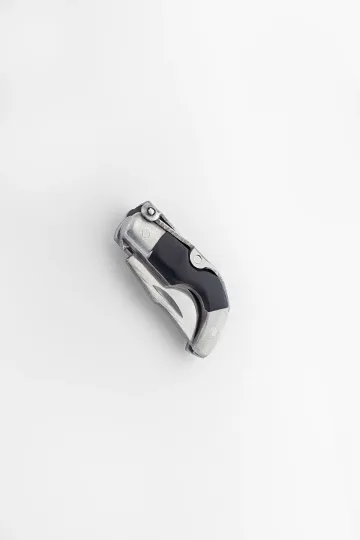
CAPAORA mini knife pendant
The 18th-century Spanish navaja in miniature: 40 mm of stainless steel, a real folding mechanism and a Palanquilla lock that clicks. An affordable gift to remember.
Authentic · Ships from Spain · 14-day returns
The Scapular and Neighboring Signs
The scapular of Carmen belongs to the family of worn Catholic signs, and it is easier to understand in comparison with its nearest neighbours. The differences here are no trifle: each sign has its own form, its own tradition, and its own way of being worn.
The Scapular and the Devotional Token
A devotional token and a small image worn on the body are single objects: a little pouch insert or a saint's image worn against the body on a cord or chain. The scapular is put together differently, it is two-part and is, as it were, put on the person, taking in the chest and back, repeating the monastic shoulder cloth. A devotional token can carry any image and any tradition, while the scapular is firmly tied to the veneration of the Virgin of Carmen and the spirituality of the Carmelites. Put simply, a token is about a worn image in general, while the scapular is a specific sign of consecration to the Mother of God of Mount Carmel, with its own history and rite of reception.
The Scapular and the Medal
A medal is a single pendant with a fixed image, such as the Miraculous Medal, the Medalla Milagrosa or the medallion of Saint Christopher, the patron of travelers. The scapular in its cloth form is not a medal but two scraps on bands. The subtlety is that the scapular medal joins both worlds: by form it is a medal, by status and meaning it is a blessed scapular, officially replacing the cloth. So it is correct to say this: every scapular medal is a medal, but not every medal is a scapular. An ordinary image of Carmen without the observance of the conditions about the two images and without a blessing remains simply a medal, not a replacement for the cloth scapular.
The Scapular and the Rosary
The rosary is a string of beads for prayer, a counting cord with beads, and not at all a worn image, although it too is often put on the neck as an ornament with meaning, on which there is a separate treatment in the guide to the rosary and prayer beads as jewelry. The scapular and the rosary often go as a pair in the Carmelite tradition; they are even called the two signs of devotion to the Mother of God, but their roles are different. The rosary is an instrument of prayer, a sequence of beads for counting, while the scapular is a sign of consecration and belonging. To wear them together is natural and meaningful, but their purposes should not be confused: one is about how to pray, the other about whose you acknowledge yourself to be.
Around the scapular over eight centuries a good deal of half-truth and outright myth has gathered, and before moving on to the unexpected facts, it helps to sort out where tradition is, where history is, and where later superstition is.
Having dealt with the myths, we can calmly look at what in the history of the scapular truly surprises. Some details change the usual view of a piece of brown wool.
Facts That Surprise
A great deal of the unexpected has gathered around the scapular of Carmen, and these details deserve a section of their own. Many of them cast the familiar sign in a new light.
The Order Is Named for a Mountain, Not a Founder
Unlike most monastic orders named for their founder, such as the Franciscans or the Benedictines, the Carmelites bear their name from a geographic place, Mount Carmel. The order has no single founding person in the usual sense: it grew out of a nameless community of hermits who settled on the slopes of the mountain. As their spiritual father and model they held the Old Testament prophet Elijah, who acted on Carmel many centuries before Christianity. Few orders trace their beginning so far back and to so unusual a figure, and this makes the Carmelites among the most distinctive by origin.
The Metal Medal Is Officially Equal to the Cloth
One of the most practical details in the history of the scapular: since the beginning of the twentieth century a single blessed medal has been officially made equal to the cloth scapular by a pope's decision. That is, a small piece of metal with two images carries exactly the same status as the brown scraps on bands. The reason was ordinary, cloth did not stand up to service for soldiers and sailors, and the Church met life halfway. It is a rare case in which a purely practical difficulty with the wear of a garment led to an official Church decision that changed the look of the sign for millions of people.
The Scapular Is Worn Far Beyond the Church
Although the scapular of Carmen comes from a strictly Catholic setting, its brown scrap long ago went beyond the narrow circle of the churchgoing. In seaside countries it is worn by people of the most varied degrees of religiosity as part of local and family culture, a sign of belonging to a fishing community and of the memory of ancestors. For many it is a thing that came down from a grandmother or is connected with their home port town, and not strictly an object of rigorous devotion. So the sign of the Carmelites became also a cultural marker of whole coastal regions, recognisable far beyond the church.
The Feast Has a Sea Continuation Right in the Water
The feast of the Virgin of Carmen on the sixteenth of July is unusual in that its climax happens not in the church and not on the square, but on the water. The image of the Mother of God is loaded onto a decorated boat and taken out into the open sea surrounded by a whole flotilla of fishing vessels, and sometimes the statue is even lowered toward the very surface of the water. Few Catholic feasts exist where the venerated image is literally sent off to sail. This custom plainly shows how firmly Carmen is bound in the popular mind precisely to the sea and to those who make their living from it.
The Scapular and the Rosary Are Called the Two Signs of One Devotion
In the Carmelite tradition the scapular is rarely thought of alone: it is set as a pair with the rosary, and together they are called the two signs of devotion to the Mother of God. One is put on the body, the other held in the hands at prayer. Such a settled pairing is not found with every Marian symbol; usually objects of devotion live apart. Here a whole doubling took shape, in which wearing and prayer complete each other, and a person who has received the scapular often gets with it the habit of the rosary as a natural continuation of one and the same consecration.
The Brown Colour Is a Refusal of Luxury
We are used to religious signs being gold and shining, but the original scapular is pointedly humble: the earthy brown of monastic wool was chosen precisely as the opposite of glitter. It speaks of poverty, simplicity, and humility, of a voluntary refusal of vanity. There is a quiet challenge in this: the most widespread worn sign of the Mother of God in whole countries is by design not an ornament at all, but a scrap of humble cloth. And when it is nonetheless rendered in silver and gold, the warm brown tone is often kept in the patina or the enamel, so as not to lose this original meaning.
Send a friend a discount code, they save on their first order.
Frequently Asked Questions
What is the scapular of Carmen in simple words?
It is the small brown scapular, a sign of veneration of the Virgin of Carmen and of belonging to the spiritual family of the Carmelites. In its classic form it is two rectangles of brown wool with images of the Virgin of Carmen and the Sacred Heart, joined by two bands: one plaque lies on the chest, the other on the back. Today it is often worn as a blessed scapular medal or a pendant of silver and gold. In essence it is a reduced copy of the Carmelite monastic shoulder cloth that became a sign for lay people.
How does the scapular differ from an ordinary medal or a devotional token?
The scapular is two-part and is, as it were, put on the person, taking in the chest and back, whereas a medal and a token are single objects on a cord. Besides, the scapular is firmly tied to the veneration of the Virgin of Carmen and the spirituality of the Carmelites, while a medal or a token can carry any image. A special case is the scapular medal: by form a medal, but by status and meaning a blessed scapular, officially replacing the cloth when the conditions about the two images and the blessing are met.
What does the scapular promise mean?
That is the name for a tradition going back to the vision of 1251, by which the Virgin Mary promised particular maternal protection to those who wear the scapular with faith. Tradition never reads this as an automatic guarantee: the promise presupposes a person's answering effort, a life of faith and prayer, not merely wearing cloth. The scapular is a sign of consecration to the Mother of God and of trust in her intercession, not a talisman that acts of itself.
Can the cloth scapular be replaced with a medal?
Yes. At the beginning of the twentieth century Pope Pius X officially permitted the cloth scapular to be replaced by a single blessed scapular medal. On the condition that such a medal must bear the image of the Sacred Heart of Jesus on one side and the image of the Virgin Mary, usually Carmen, on the other, and that it be blessed. After that the medal carries the same status as the brown scraps. The decision was made for the sake of durability: metal lasts for years and does not fear water and sweat, unlike wearing cloth.
Why is the Virgin of Carmen considered the patroness of sailors?
There is no direct connection with the sea in the original tradition; it took shape later, in the popular devotion of coastal communities. The sea was a dangerous element, and the work of the sailor and the fisherman an affair from which not all returned, and people needed a heavenly protectress. The image of the Mother of God extending her protection fit this need, and the scapular under the coat became a visible sign of protection. In time Carmen became the star of the sea for the fishing villages of whole countries, and her feast on the sixteenth of July the chief day of many port towns.
Which material should you choose for the scapular?
It depends on the occasion and on how you will wear it. The brown cloth scapular is the most traditional, light, and inexpensive, but short-lived. Sterling 925 silver is a sensible middle ground: a noble look, sharp relief, fitness for everyday wear. Gold and gold plating are taken as an heirloom for a large event and for passing down. For a sailor or a person leading an active life, a sturdy metal medal that does not fear water is more practical. The value of the sign for a believer does not depend on the price of the material.
Can the scapular be worn together with a cross and a rosary?
Yes, and this is a long-standing and natural practice. The cross is the general sign of faith, the scapular a specific Marian consecration to the Mother of God of Mount Carmel, and the rosary a cord for prayer, and together they do not argue but complete each other. In the Carmelite tradition the scapular and the rosary are even called the two signs of one devotion. To keep the images and chains from tangling, they are given different lengths or worn in a thought-out order, often with the cross as the centre of meaning.
Is the scapular given for baptisms and name days?
Yes, these are among the most frequent occasions. For a baptism people more often give a silver or gold scapular medal, often engraved with a name and date, with a future heirloom in mind. For the name day of Carmen on the sixteenth of July a scapular or a pendant with the image of Carmen is given as a warm gesture that acknowledges both the person's name and their faith. The scapular is fitting for confirmation too, and for sailors setting off. In every case the meaning is one: to mark something important with a visible and lasting sign.
Conclusion
The scapular of Carmen is a rare example of how the working dress of monks turned into one of the most widespread worn signs of the Mother of God in the world. Behind two small squares of brown wool stands a long history: the hermits of Mount Carmel, the tradition of the vision of Simon Stock in 1251, the promise of maternal protection, and eight centuries of popular devotion that reached down to fishing boats and the sea processions of the sixteenth of July.
The strength of the scapular is that it stays a sign honest in its meaning: not an amulet with a guarantee, but a consecration of oneself to the Mother of God and a reminder to live by faith. Today it is worn both in its original cloth form and as a blessed two-sided medal and as a fine pendant with the image of Carmen, from humble wool to gold at the level of a family heirloom. For some it is a deep faith, for others the memory of ancestors and a home port town, and both these lines live in one brown scrap.
The scapular of Carmen in our range is medals and pendants in sterling 925 silver and gold with relief images of the Virgin of Carmen and the Sacred Heart, with room for engraving on the back. A good gift for a baptism, a confirmation, the name day of Carmen, or for the road for someone close.
The choice here always comes down to the occasion and the person: one is closer to a humble cloth scapular, another to practical silver for every day, a third to a gold heirloom medal for a baptism or a fine pendant for a name day. To take the guesswork out of it, above in the text is a short selection based on a few simple questions about the occasion, the taste, and the conditions of wear.
Buying it as a gift? Each one arrives ready to give.
 A branded Zevira box and a little card come with every order.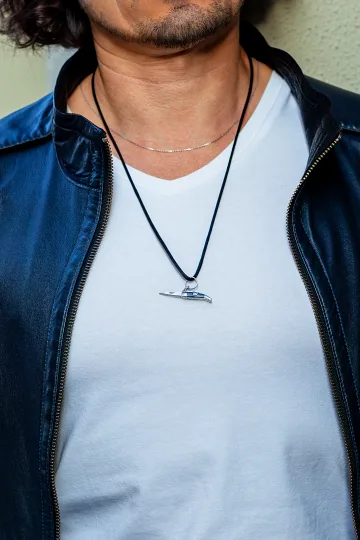




About Zevira
Zevira is jewellery with character and meaning, not shiny objects for the sake of shine. We make charms, symbols, and medals in sterling 925 silver, steel, and gold, with attention to relief, history, and the option of engraving. Every object is meant to be worn every day and passed on. If you need something that means something to a specific person and occasion, we help you find it.