The Miraculous Medal (Medalla Milagrosa): Meaning, Symbols, and the Story of the Apparition
Within two years of the first striking, hundreds of thousands of identical oval medals had spread across Paris. They were handed out during the cholera epidemic of 1832, and the city began to talk of healings and conversions. People gave the object a name that was never part of the original plan: miraculous. Officially, it is the Medal of the Immaculate Conception.
This is the story of how a young nun in a Paris convent saw the Virgin Mary standing on the globe with rays of grace streaming from her hands, and received the charge to strike a medal after that image. It is about the letters, hearts, and stars on the reverse, each with a precise meaning. About the French inscription running around the rim, and about why millions of people still wear this small oval close to the heart.
What the Miraculous Medal Is and What People Call It
The Miraculous Medal is a small oval devotional medal, most often in silver, showing the Virgin Mary on the front and an interlacing of letters, hearts, and stars on the back. The Spanish name Medalla Milagrosa and the French médaille miraculeuse translate the same way: miraculous medal. It is one of the most recognisable Catholic medals in the world, and it is worn far beyond the circle of the deeply devout, though more on that below. The object carries a strict official name and a popular one, and the difference between them is the key to the whole story.
The Official Name: Medal of the Immaculate Conception
By design and by Church documents, this is the Medal of the Immaculate Conception. The name points directly to the doctrine that the Virgin Mary was conceived without original sin, and to the inscription running around the rim of the front, where that idea is set in words. The image the nun described is built entirely around the theme of Mary's purity and her intercession. The official title underscores the theological substance: the medal is not an amulet with some abstract power, but a visible profession of a specific article of faith. That is why a church shop often labels it strictly, while ordinary people call it something warmer.
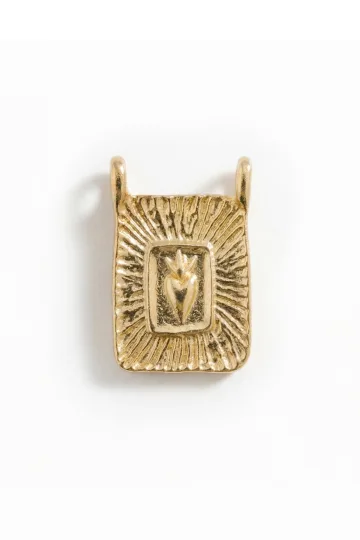
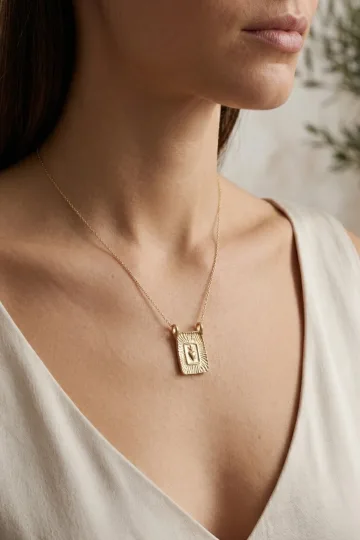
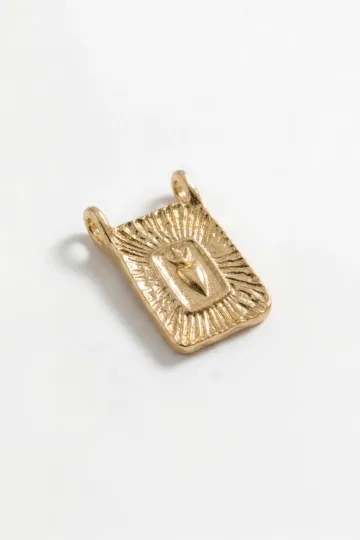
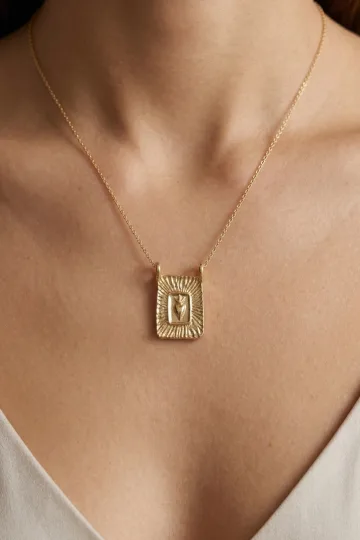
Wear the symbol, don't just read about it. These are in stock:

Why People Nicknamed It Miraculous
The popular name grew out of the experience of the first years. When, after the 1832 striking, the medal spread rapidly through Paris and then across France, a stream of accounts quickly gathered around it: healings, consolations, sudden returns to faith. People connected changes in their lives with wearing this small image and began to call it the miraculous medal. The Church never introduced the term officially, but it did not argue with it either. The name took hold on its own, from below, out of living devotion. And so the strict Medal of the Immaculate Conception acquired a second, warmer name, under which far more people know it.
How the Medal Differs from a Devotional Pendant or Scapular Medal
The medal is easy to confuse with an ordinary devotional pendant or a scapular medal, but there is a difference. A small devotional medallion is a broad category for a little protective token or image worn against the body, and that format has its own separate treatment in the guide to saint medals and devotional medallions. The Miraculous Medal is put together more strictly: it has a fixed iconography, set by the apparition of 1830, and both sides read as a single statement. It is not just any image of the Mother of God on metal, but a specific composition with the globe, the rays, the letter M, two hearts, and twelve stars, which cannot be altered at will.
What the Miraculous Medal Means, in Short
If the meaning is reduced to a single paragraph, the Miraculous Medal is a visible appeal to the Virgin Mary as intercessor and a reminder of prayer. The front shows Mary pouring grace over the whole world; the reverse draws into one sign her bond with the Cross of Christ and with the mystery of redemption. The popular name speaks of trust in help through prayer; the official name, Medal of the Immaculate Conception, fixes the theological substance. For a believer it is not a talisman with automatic power, but a way to keep a profession of faith before one's eyes every day. The whole meaning of the medal is built on the idea of Mary's purity and her intercession for people, and the rest of the details serve that idea.
How Medalla Milagrosa Translates
The Spanish Medalla Milagrosa translates literally as miraculous medal: milagrosa means miraculous, and medalla means medal. The French name médaille miraculeuse carries exactly the same sense, since miraculeuse means miraculous. In Italian it is called medaglia miracolosa, in English the Miraculous Medal, and in every language the root points back to a miracle and to the accounts of healings from the first years. The adjective milagrosa should not be confused with the plural noun milagros: the first describes the medal itself, while the second refers to entirely different votive figures, discussed below. The single meaning of the name across all languages underscores that this is one and the same Parisian medal of 1832, not several different objects.
Further along, it will become clear that almost every element of this composition goes back to the words and images described by one witness. That is why the story of the medal is best started not with the metal, but with what happened on the Rue du Bac in the autumn of 1830.
The Apparitions of the Virgin Mary to Saint Catherine Labouré
The medal did not come from a bookish idea or from an artist's work. Its image was described by a specific woman who said she had seen the Virgin Mary, and who insisted on the striking. This part of the story is documented by witness testimony, a Church investigation, and a later canonization, so it makes sense to go through it step by step, separating the facts from later embellishments.
Who Catherine Labouré Was
Catherine Labouré was a young novice of the Congregation of the Daughters of Charity, founded by Saint Vincent de Paul. In 1830 she lived in the congregation's house in Paris on the Rue du Bac and did the ordinary work of the sisters: caring for the poor, the sick, and the elderly. She came from a peasant family, lost her mother early, was sparing with words, and did not reach for attention. That inconspicuousness matters for the whole story: she kept her identity as the visionary secret almost until her death, and the fact that the medal was connected specifically to her became widely known only later.
The First Apparition in July 1830
By her own account, on the night of the feast of Saint Vincent in July 1830, a child woke her and led her to the chapel. There, according to Catherine, the Virgin Mary came to her, sat in a chair beside the altar, and spoke with her at length about difficult times ahead for France and the Church, and about the intercession granted to those who ask. This first apparition set the intimate tone of the whole series: the young novice described not a thunderous vision but a conversation, a quiet exchange in which she was entrusted with a future task not yet named directly.
The Second Apparition in November 1830 and the Image of the Medal
The decisive apparition took place in November 1830. Catherine described how she saw the Virgin Mary standing on the globe, her hands lowered, with rays of light streaming from them in every direction. Around the figure an oval frame appeared with a golden inscription. Then, by her account, the picture turned, like a medal, and the reverse opened: the letter M with a cross above it and two hearts beneath. She was told to strike a medal after this image and promised that those who wore it with trust would receive abundant grace. In effect, the nun described a finished object, front and back, and all that remained was to carry the vision into metal.
The Role of Her Confessor, Father Aladel
Catherine herself could neither commission a medal nor approach the Church authorities: the rule and her own reticence would not allow it. Everything fell to her confessor, the priest Jean-Marie Aladel. At first he treated the novice's accounts with reserve and waited, testing whether it was self-deception. Only after some time, having weighed Catherine's steadiness and level-headedness and the content of the visions, did he pass the matter to the Archbishop of Paris and obtain permission for the striking. The confessor's caution later worked in the medal's favour: the decision was made not in haste but after examination, which is essential for the Church's recognition of visions.
The Rue du Bac: Where the Apparition Took Place
All of it happened in Paris, in the house of the Daughters of Charity at 140 Rue du Bac, on the Left Bank of the Seine. It was in the chapel there, by Catherine Labouré's testimony, that the apparitions of 1830 occurred. Today it is a working Chapel of Our Lady of the Miraculous Medal, one of the most visited places of pilgrimage in the city: millions of people come each year to pray at the altar where, according to tradition, the Virgin Mary spoke with the young novice. The chair in which she is said to have sat, and the preserved relics, have become part of the devotion. A precise address and a living chapel make the story of the medal not an abstract legend but something tied to a specific Paris street you can find on a map.
What the Virgin Mary Asked and Promised
The meaning of the apparitions did not come down to a beautiful picture. By Catherine's account, she was given a clear charge: to strike a medal after the image she had seen and to spread it. Bound up with that charge was a promise that people who wore the medal with trust and prayer would receive abundant grace. It was particularly stressed that one must ask with faith, because the dark, unlit stones on Mary's hands stood for the graces people forget to ask for. So the medal turns out to be an answer to a specific request placed inside the vision, not an abstract keepsake. Understanding this charge matters, because the whole later history of striking and distribution grew precisely out of these words, not out of an artistic idea.
There is one detail worth keeping in mind. Everything we see on the modern medal is a transfer of the vision as described: the posture of the figure, the rays, the frame with its inscription, the letters and hearts on the back. So an analysis of the symbolism is essentially a decoding of what one witness described, not a jeweller's free invention.
Upload a photo of your pet, someone you love, or an object. We'll build a 3D model and hand-cast it in pewter.


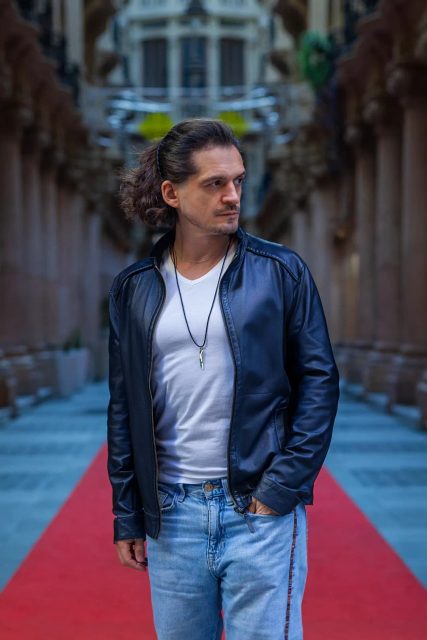
The Milagrosa wants a fine chain and an open collar. A thick curb link chokes her.
What to Wear the Miraculous Medal With
Over years of work this medal has passed through dozens of looks for me, from strict everyday to festive. I have gathered here what actually helps it sit right, by occasion. Delicacy matters: this is a medal with meaning, and the clothing around it should work toward calm, not noise.
What do I recommend wearing the medal with every day? For an everyday look I recommend a silver medal on a thin chain over a plain shirt, a turtleneck, or a cotton dress. A thin chain is almost a law here: the medal is oval and in relief, it needs a light line, and a thick curb chain mutes it and argues with the design. A light top brings up the silver, a dark one turns the medal into a quiet accent at the throat.
Silver, gold, or blue enamel, which should you choose? I advise starting from the skin undertone and the occasion. Silver suits a cool undertone, yellow gold a warm one, and both read as noble and do not compete with the clothing. I recommend blue enamel to those who want colour and mood: the deep blue background around the figure is softer than austere metal and brings the look to life. For a large event I choose gold, for every day silver.
What neckline does the medal ask for? An open one. Under a V-neck or an unbuttoned collar the medal lies evenly at the centre, near the collarbones, and the relief reads best of all. Under a high closed collar I advise a shorter chain, so the medal lies over the fabric rather than sinking beneath it. A calm background around the medal always works better than a busy one.
What chain length do I recommend? I choose the length to suit the neckline, not the other way around. Under an open collar I recommend about 45-50 cm, so the medal lies near the collarbones. Under a deep neckline for going out you can go shorter, 40-45 cm, and then the medal sits high and reads against open skin. If you wear the medal hidden under clothing, I advise a longer length, so it slips calmly under the shirt.
How do I put the medal together with a cross? This is a long-standing and handsome pair. I recommend giving the cross and the medal different lengths, so they do not tangle and catch, or stringing them on one chain in a thought-out order. I usually leave the centre of meaning with the cross, and the medal reads as a quiet personal addition beside it. One medal and a cross on a clean line are always stronger than a handful of pendants jumbled together.
And if it is a gift for a baptism? Then I advise gold or silver with room for engraving a name and date on the back. Such a medal is chosen to grow into and to keep, so the object survives and passes to the child as an adult. An infant does not wear the medal itself; it is kept until a suitable age, and it is all the more valuable that over the years silver is easily refreshed and gold does not darken at all. It is a gift that outlives the occasion itself.

Turn on your camera, pick earrings, a pendant or a ring, and see the piece on yourself in real time.
Switch items in one tap.
Everything runs in your browser: no photo or video is ever uploaded.
What Is Shown on the Front of the Medal
The front, or obverse, is a whole picture of intercession, where every detail works toward a common meaning. The composition is strict and has barely changed since 1832. Let us go through it part by part, because the eye usually slides past most of the elements without reading the meaning built into them.
The Virgin Mary on the Globe
At the centre of the front, the Virgin Mary stands on the globe, her foot crushing a serpent. The globe is an image of the whole world, of all humanity, over which her intercession is stretched. The serpent beneath her foot is the familiar biblical image of evil and sin, conquered by purity. Mary's pose is open, her hands lowered and turned palms toward the viewer, as if she were ready to receive and to give to everyone who approaches. Unlike the severe enthroned images of the Mother of God, here the figure stands and is pointedly turned toward people, and that accessibility reads at once, before you notice the other details.
What the Serpent Under Mary's Foot Means
Beneath the Virgin Mary's foot on the front a serpent twists, and this detail carries a meaning of its own. The serpent is an ancient biblical image of evil, sin, and the tempter from the Book of Genesis. Mary crushing it with her foot points to the promise about the woman whose offspring would strike the serpent's head, which tradition connects with the Mother of God and Christ. So the figure on the globe reads not as a decorative pose, but as an image of purity's victory over evil on the scale of the whole world. The globe underfoot and the crushed serpent together form a single statement: Mary's intercession stretches over all the earth, and the power of sin is broken. Not every owner notices this detail, though it is key to reading the front and the image of the Mother of God on the globe correctly.
Rays of Grace from the Hands
From Mary's hands, more precisely from the rings and stones on her fingers, rays stream out in every direction. By the explanation Catherine herself gave, the rays are the grace the Virgin Mary pours out on those who ask. Here there is a subtle and often forgotten detail: not all the stones in the image give off rays. In the visionary's words, the dark, unlit stones are the graces people do not think to ask for. In other words, the picture says that grace is given in exactly the measure a person is ready to receive and to ask for. This thought about unrequested gifts is set right into the metal, though far from every owner of the medal notices it.
The Prayer-Inscription Around the Rim
Around the rim of the front runs an inscription in French: «O Marie conçue sans péché, priez pour nous qui avons recours à vous». It translates as "O Mary, conceived without sin, pray for us who have recourse to thee." It is a short invocatory prayer, and it compresses the whole content of the medal: an appeal to Mary, the affirmation of her conception without sin, and a request for intercession. The words were part of the vision itself: the frame with its inscription appeared around the figure. On modern medals the text is found both in Latin and in the language of the country, but the sense is preserved word for word. It is precisely this phrase that ties the medal's popular name to its strict official title.
The Twelve Stars and Heavenly Symbolism
On many versions the front is bordered with stars, and on the reverse there are exactly twelve. The twelve stars are a direct reference to the image from Revelation, which describes a woman clothed with the sun and crowned with twelve stars. Tradition reads this image as a symbol of the Church and of the Mother of God at once. In Christian symbolism the number twelve is steadily linked with fullness: twelve apostles, twelve tribes, twelve gates of the heavenly city. So the crown of twelve stars places the figure of Mary alongside these images of fullness and completion, giving the medal its heavenly scale.
What Is Shown on the Reverse of the Medal
The reverse is no longer a picture but a sign, almost a monogram. There are no figures here, but there is a dense knot of meanings made of letters, crosses, and hearts. The reverse is canonized just as strictly as the front, and its elements go back to the same vision of November 1830.
The Letter M with a Cross Above It
The main element of the reverse is a large letter M, above which a bar rises with a cross. M is Mary; the cross is Christ and Golgotha. Their joining in one sign speaks of Mary's unbreakable bond with the Cross of her Son, of her share in the redemption. The bar beneath the cross visually rests on the letter, and the whole construction reads as an affirmation: Mary at the foot of the Cross, Mary who brought the Savior into the world. This spare sign became almost the logo of all Marian symbolism and appears far beyond the medal itself, on vestments, stained glass, and gravestones.
Two Hearts: of Jesus and of Mary
Beneath the letter M sit two hearts. The left is the Sacred Heart of Jesus, crowned with a crown of thorns, a symbol of the Passion and of suffering for people. The right is the Immaculate Heart of Mary, pierced by a sword. The sword points to the prophecy of the elder Simeon that a sword would pass through Mary's soul, that is, to her share in the suffering of her Son. Two hearts side by side are an image of a double love and a double sacrifice, of the mother and of the Son, drawn together into one point. The motif of the pierced heart is one of the most powerful in Christian art, and on the medal it is given in the most compressed form, without extra detail.
Twelve Stars Around
The reverse is bordered in a circle by twelve stars. They close the composition and bind both sides of the medal with a single motif. As on the front, the stars point to the woman from Revelation and to the crown of fullness. Set around the letters and hearts, they turn the technical back of the medal into a finished image of heaven surrounding the mystery of redemption. There is nothing accidental in their number: not ten and not fifteen, but exactly twelve, and that number carries the full weight of the biblical associations described above. So the reverse, stripped of figures, turns out to be no less saturated with meaning than the front.
Why There Is No Inscription on the Reverse
A notable feature of the back: there is not a single word on it. The whole meaning is carried by signs alone, the letter M with the cross, the two hearts, and the crown of twelve stars. This is not an oversight but part of the design of the vision, where the back opened in exactly this way. The absence of text makes the reverse universal: it reads the same in any country and in any language, because it is understood without translation. The prayer-inscription is given entirely to the front, while the reverse works as a compressed monogram of faith, a sign rather than a phrase. This division of roles between the sides, picture and words on the front, pure symbols on the back, gives the medal its wholeness and explains why it is recognised even by those who cannot read the French inscription around the rim.
Customer reviews
Zevira is a real jewellery shop. Genuine payments, deliveries and customer thank-yous.
🥰🥰🥰 gracias
Ok, ¡gracias! 🙂
How the Medal Became Miraculous: The 1832 Striking and the Cholera
Between the vision of 1830 and the medal's worldwide fame lies a short and dramatic stretch of two or three years. It was the events of the early 1830s that turned a nun's private charge into a mass phenomenon and fastened the popular name to the medal.
The First Striking in 1832
After the confessor obtained the Archbishop's permission, the first batch of medals was struck in 1832 by a Paris craftsman, from drawings reproducing the vision. The batch was modest by today's measure, on the order of fifteen hundred to two thousand pieces. The medals were handed out and sold through the Sisters of Charity, and at first it was a local Parisian affair. No one planned advertising or mass distribution. The medal was simply released into the life of the city, with the rest left to circumstance. Circumstance did not keep them waiting.
Who Struck the First Medal
The first medals were made by a Paris medallist from sketches reproducing the vision Catherine had described. Her confessor placed the order after obtaining the Archbishop of Paris's permission, and the drawing was agreed so that it would faithfully convey the posture of the figure, the rays, the inscription, and the symbols of the reverse. The work went by the usual method of the time, striking from an engraved die, which allowed the print run to be scaled up quickly. The first batch was small, around fifteen hundred pieces, and was meant for distribution through the Sisters of Charity. The craftsman's name did not become part of the legend, because in the eyes of believers the author of the image was the Virgin Mary herself, while the striker only carried the vision into metal. Even so, it was precisely the technical accessibility of striking that made the future explosive growth of the print run possible.
The Cholera Epidemic in Paris
In 1832 a heavy cholera epidemic swept over Paris, taking thousands of lives in a matter of months. The Sisters of Charity, who worked with the sick, handed out the new medals to the dying and the recovering, to relatives and to simply frightened city dwellers. Against the background of mass death and fear, stories began to accumulate around the medal: the hopeless recovered, the indifferent turned to faith, the desperate found consolation. People linked these changes with the small image in their hand. The epidemic acted as an accelerant: in a short time the medal reached an enormous number of people at the sharpest moment of their lives, and every such case gathered its own account.
Rapid Spread and the Popular Name
Then the effect of word of mouth took over. Demand for the medal grew like an avalanche, the striking was scaled up, and within a few years the count reached millions of pieces spreading across France and beyond. It was at this moment that the Medal of the Immaculate Conception acquired its second name: miraculous. It was given not by Church authorities but by people themselves, who connected wearing the small image with changes in their fate. The speed with which a modest Parisian undertaking became a phenomenon of world scale astonished contemporaries and remains a rare example of how an object of popular devotion spreads without any organised promotion, by the force of word of mouth alone.
How the Medal Spread Beyond France
From Paris the medal quickly spread across all of France, and then stepped abroad. The Sisters of Charity and pilgrims carried it, missionaries took the small images to other continents, and already by mid-century the medal was known in Italy, Spain, the countries of Latin America, and overseas. Cheap versions of base alloys made it possible to hand it out by the thousands in parishes and hospitals, while the simplicity of the image made it understood without words in any country. So within a few decades a Parisian undertaking became one of the most widespread religious objects in the world. The Spanish name Medalla Milagrosa took hold precisely on the wave of this spread in Spanish-speaking countries, where the medal became part of popular devotion on a par with local shrines.



What the Miraculous Medal Is Made Of: Materials
The material of the medal affects its look, its price, and how long it will last. The range here is very wide: from nearly free aluminium medals handed out in parishes to silver and gold versions at the level of a family heirloom. Let us go through the main options one by one.
Silver
Silver is the classic material for religious medals and a sensible middle ground between price and appearance. It gives a noble, cool shine, holds fine relief well, and relief is critical for this medal: on a small oval you have to fit the figure, the rays, the letters, and the hearts. Sterling 925 is a durable alloy fit for everyday wear. Over time it darkens, but that is easily fixed, and the patina in the recesses even emphasises the design. A silver medal suits both a man and a woman, both as a personal object and as a gift with weight that you want to give meaningfully.
Gold and Gold Plating
A gold medal is at the level of an heirloom you want to pass down. Gold does not darken and, handled with care, will outlast several generations, which is valuable for an object given on a large occasion such as a baptism or confirmation. Yellow gold has traditionally been associated with religious medals and looks warm against the skin. A more affordable alternative is quality gold plating over silver: the look of gold for less money, with the caveat that the coating requires care. The difference between solid gold and plating shows above all in durability, and a gold medal is usually chosen precisely when it is meant to last for decades.
Base Metals and Aluminium
A huge share of Miraculous Medals in the world are cheap ones made of aluminium, brass, or other base alloys. These are the ones handed out at pilgrimage centres, tucked into cards, pinned to the clothes of infants. Today it is better not to do this: a pin can open and a medal can come loose and end up in the mouth, so the parents keep a baby's medal. Their point is not the beauty of the metal but accessibility: so that anyone can receive a medal, regardless of means. Such versions are light, weigh almost nothing, and are easily replaced if lost. For many believers the value of the medal has nothing to do with the price of the material, and a simple aluminium medal means no less to its owner than a silver one.
Blue Enamel and Coloured Versions
A separate, recognisable variety is the medal with blue enamel, where the background around the figure of Mary is filled with a deep blue. Blue is traditionally associated with the Mother of God, and the enamel version looks more festive and softer than austere metal. Enamel is applied to the front, and more rarely to details of the reverse. Such medals are a little more delicate to wear, because enamel can chip on impact, but they are more expressive and often appeal to those who choose a medal as an ornament with colour rather than as a strict, restrained religious sign. The form still stays canonical: the same vertical oval.
What Sizes the Medal Comes In
The Miraculous Medal is made in a wide range of sizes, and the choice depends on who will wear it and how. Very small medals, less than a centimetre along the long axis, are taken for those who want to wear the medal discreetly under clothing and for older children. A baby does not wear one, on a chain or pinned to clothes: children have got tangled in chains and swallowed small parts, so paediatricians advise against any jewellery on an infant, and the parents keep the medal for now. The medium size, around one and a half to two centimetres, is the most common: on it the relief of the figure, the rays, and the symbols reads well, and it lies comfortably on the chest. Large medals, closer to three centimetres and more, are chosen as a conspicuous chest piece or for a home icon corner rather than for everyday wear. The size determines both the weight and how sharply the fine details are worked, so for daily wear people usually take the medium option.
A Medal Engraved with a Name and Date
A frequent practice is engraving on the back or around the rim of the medal. The owner's name is added, the date of a baptism, confirmation, or another event, sometimes a short wish. Engraving turns a standard medal into a personal object tied to a specific person and day, and that is precisely why the medal is so often given for the important milestones of a Christian life. There is little room for text on the reverse because of the dense symbolism, so people more often engrave around the rim or choose a version with a smooth field. Such a named medal works well as a future family heirloom: years later the inscription can tell exactly to whom and on what occasion it was given. For a baptism gift, engraving the name and date is considered an almost obligatory detail.
Choosing a material is essentially a choice among durability, price, and the character of the object. Below, in the section on whom the medal is given to, it will become clear that the material is often matched to the occasion: expensive gold for a baptism, practical silver for every day, a simple medal for a christening or a pilgrim.
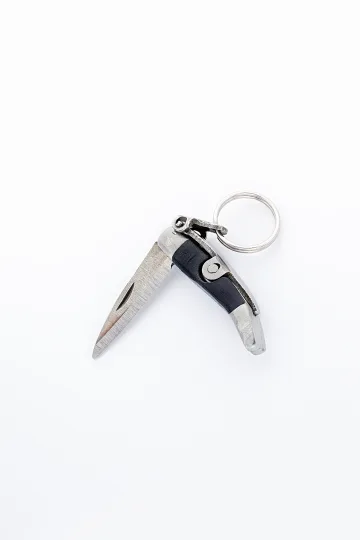
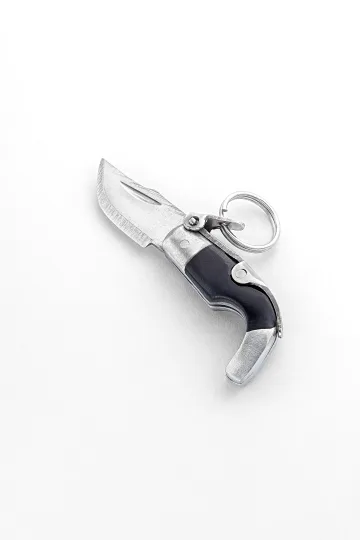
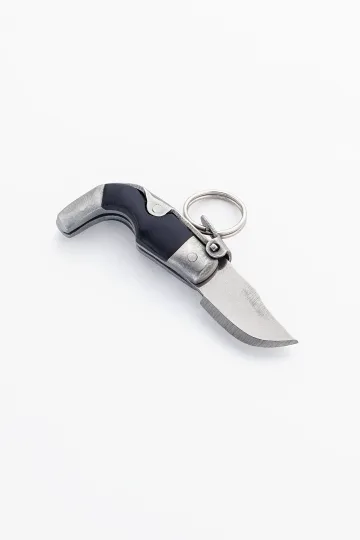
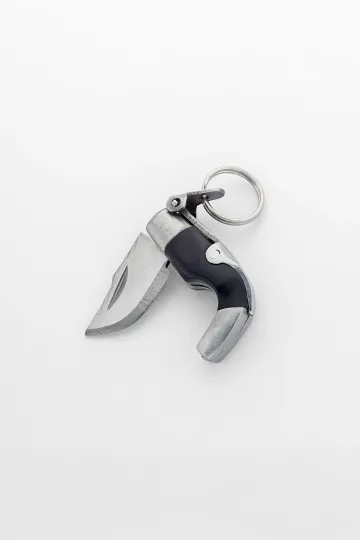
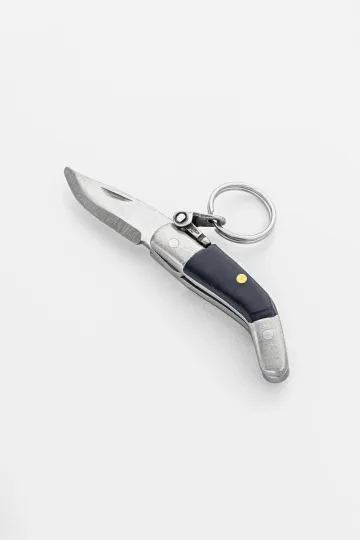
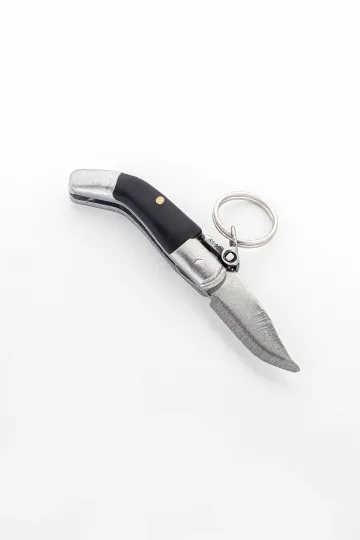
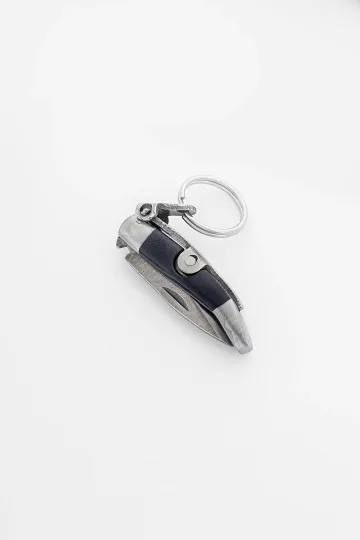
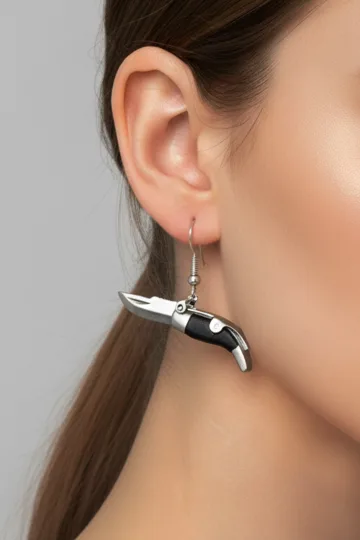
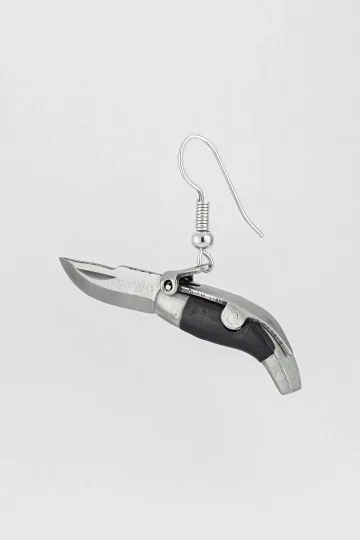
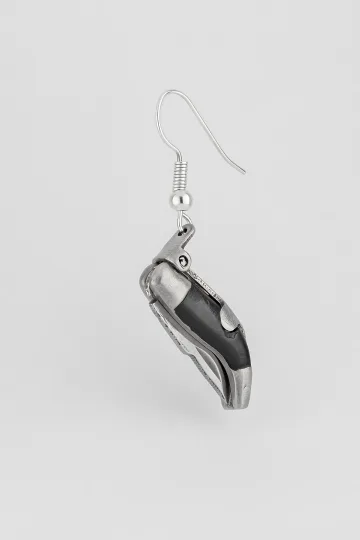
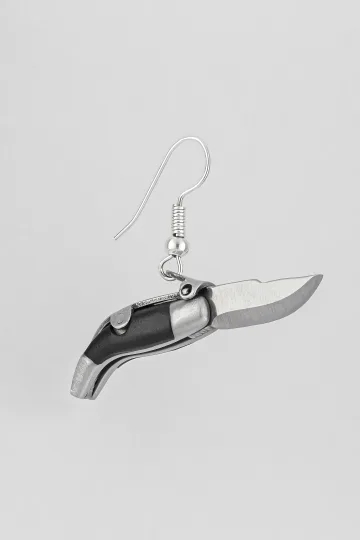
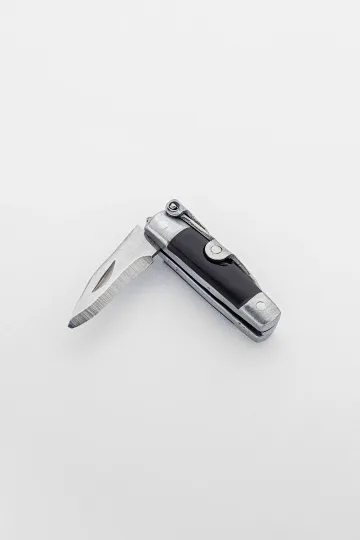
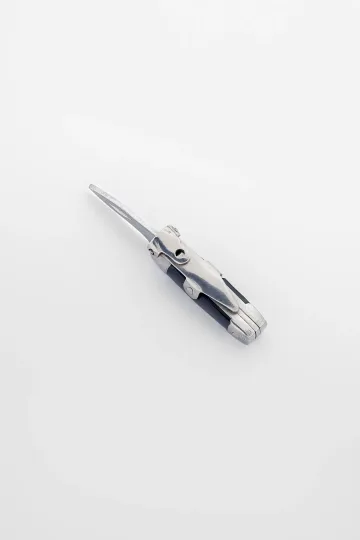
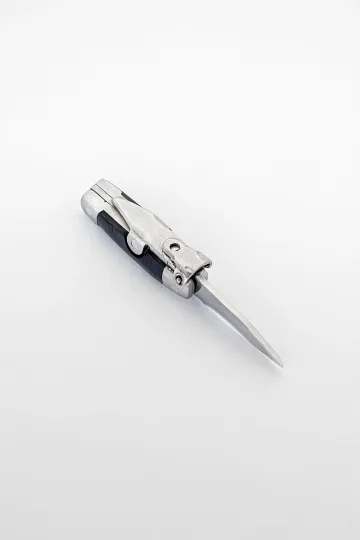
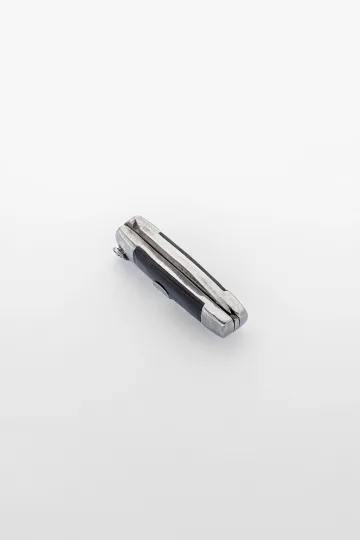
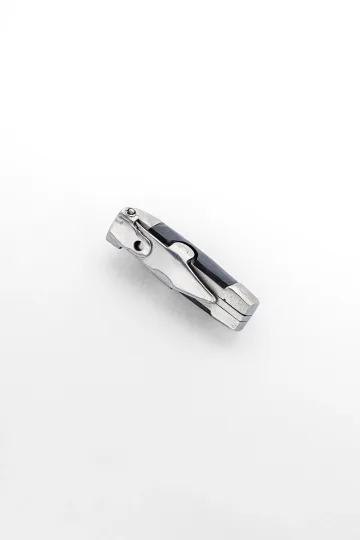
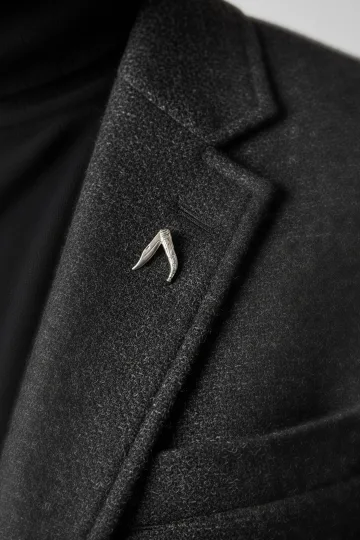
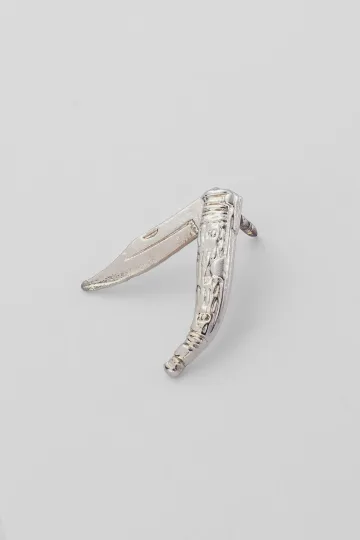
CAPAORA mini knife pendant
The 18th-century Spanish navaja in miniature: 40 mm of stainless steel, a real folding mechanism and a Palanquilla lock that clicks. An affordable gift to remember.
Authentic · Ships from Spain · 14-day returns
Meaning and Symbolism: What People Believe and Where the Line Runs
A discussion of the medal would be incomplete without an honest look at what exactly is attributed to it and how to relate to that. Here it is important to keep a balance between respect for faith and sobriety, without turning a religious sign into a magical talisman.
The Immaculate Conception as the Core of the Meaning
The theological core of the medal is the doctrine of the Immaculate Conception of the Virgin Mary, that is, that she was preserved from original sin from the very moment of her conception. The medal appeared more than two decades before the official proclamation of this doctrine, and its spread is considered one of the factors that prepared the ground for it. The inscription around the rim professes this idea directly. So for a believer the medal is not a charm in a pagan sense, but a visible profession of faith and a way to keep a specific theological truth before one's eyes every day, rather than some abstract luck.
Grace and Intercession, Not Magic
The Church's understanding of the medal is far from magical. The medal itself is held not to act automatically and not to be endowed with power like an amulet. It is understood as a sign of trust in Mary's intercession and a reminder of prayer. The grace spoken of by the rays on the front is given by God through faith and prayer, not pumped out of the metal. The Church's own texts spell out this line: the medal is a sacramental, an auxiliary sign, not a source of power. The distinction is subtle but fundamental, and it is precisely what separates healthy devotion from superstition.
Faith and Healthy Skepticism
A sober view does not cancel out respect. The stories of healings connected with the medal are testimonies of people's faith and experience, not clinical protocols, and the Church itself approaches such accounts cautiously, examining them for years. A skeptic has every right to see in the medal's spread the sociology of the fear and hope of the cholera era, and that is an honest point of view. A believer sees the action of grace. Both positions can coexist without hostility: one describes the mechanics of the event, the other its meaning. The medal remains a powerful cultural and spiritual symbol regardless of which side you look at it from.
Is the Medal a Charm or a Profession of Faith
The word charm is often applied to the Miraculous Medal, but with a caveat. In everyday language a charm is any object worn for protection, and in that sense the medal falls into the category. The Church's understanding is different: the medal does not work as an amulet with its own power; it is a sign of trust in Mary's intercession and a reminder of prayer. The difference is fundamental. A charm in the pagan sense acts on its own, while the medal only points to God and to prayer, through which help is given. So it is more correct to call it not a charm but a devotional or a sacramental, an auxiliary sign of faith. For a believer it is a profession, not a talisman, and it is precisely this line that separates healthy devotion from the superstition described above.
Leave your email, we'll send your discount code. No spam, unsubscribe anytime.
The code arrives by email, valid on your first order.
How the Miraculous Medal Is Worn
The medal is worn in very different ways, from strictly religious use to an everyday ornament with meaning. There are few hard universal rules here, but there are settled traditions worth knowing when you choose how to wear it yourself or to give it.
On a Chain Around the Neck
The most common way is the medal on a chain around the neck, at the heart, under clothing or over it. The oval form and the vertical orientation of the image are meant precisely for this way of wearing: the figure of Mary faces correctly when the medal hangs with its long axis down. The length of the chain is chosen so that the medal lies on the chest and the relief reads. For daily wear people take a sturdy chain of medium weight, so that a thin link does not wear through. Many wear the medal constantly, not taking it off for years, and then the practicality of the fastening matters more than decorativeness.
Together with a Cross and Other Medals
The Miraculous Medal is often worn paired with a cross, and this is a long-standing tradition. The cross is the general sign of faith, the medal a specific Marian appeal, and together they do not compete but complement each other. Sometimes a medal of a patron saint or a small devotional medallion is added. To keep the cluster from turning into a tangled knot, it is better to give the medal and the cross different lengths, or to string them on one chain in a thought-out order. The centre of meaning usually stays with the cross, while the medal reads as a personal Marian addition to it.
Every Day and Discreetly
A significant share of owners wear the medal hidden, under a shirt or a dress, as a quiet personal object rather than a conspicuous sign. For such wear people choose smooth medals that do not catch on fabric and a comfortable length, so the medal does not pop out and get in the way. In this mode the medal works as an inner support: no one sees it, but the owner knows it is with them. This way of wearing is closest to the original idea, in which the medal is an object of personal devotion, not a public statement about oneself.
Can You Wear the Medal Without Taking It Off
Many wear the Miraculous Medal constantly, for years without taking it off in the shower or in sleep, and there is no prohibition against it. The medal requires no special rites and does not lose its meaning because the owner never removes it. In practice the technical details matter more: for daily wear people take a sturdy chain so that a thin link does not wear through, and a material resistant to water and sweat. Silver can darken from constant contact with the skin, but it cleans easily, while base alloys sometimes oxidise faster. If you want to wear the medal literally without taking it off, it is sensible to choose silver or gold and a reliable clasp. For a believer, constant wear is in fact closest to the meaning of the medal as a quiet personal support.
How to Care for the Medal
Care depends on the material. A silver medal darkens over time, and that is normal: the patina is removed with a soft silver cloth or a mild specialised product, taking care not to clog the recesses of the relief, where a dark tone even emphasises the design. Gold requires almost no care; it is enough to wipe it with a soft cloth. Gold-plated and enamel versions are more delicate: the coating and enamel are afraid of impacts and rough pastes, so they are cleaned only gently. Any medal is better taken off before contact with household chemicals, chlorinated water, and cosmetics, which speed up tarnishing. A simple rule: the gentler the handling, the longer the relief of the figure and the symbols stays legible. With good care even an inexpensive medal serves for a long time and keeps its look.
Whom the Miraculous Medal Is Given To
The medal is one of the most traditional religious gifts in Catholic culture, and it is almost always given for a specific occasion tied to the milestones of a Christian life. Let us go through the main situations, because the occasion determines both the choice of material and the tone of the gift.
For a Baptism
The baptism of a child is the classic occasion to give a Miraculous Medal. Godparents or relatives give a silver or gold medal as the first spiritual sign in a newborn's life, often with the expectation that the object will survive and pass to the child as an adult. The medal in this case is both a protective blessing in the Christian sense and a future family heirloom. On the back people often engrave the name and date of baptism, turning the medal into a keepsake tied to a specific day. An infant does not wear the medal itself; it is kept until a suitable age.
For Confirmation and First Communion
Confirmation and first communion are important steps of growing up in the faith, and the medal is given for them very often. Here the gift is addressed to a child or teenager who is already aware, so the medal chosen is often one that can be worn right away: silver on a sturdy chain. The point of the gift is to mark an independent step in faith with a visible sign that stays with the person. This is the moment when the medal first becomes the recipient's personal object rather than something kept in a box, and that is why its choice is approached with particular care.
For a Name Day and as a Gift to a Believer
The medal is fitting outside the great rites too: for a name day, for a patron saint's day, simply as a token of attention to a believer. In this case the gift says that the giver knows and respects the recipient's faith. For an adult people more often choose silver or gold with good relief; for someone who values colour, the blue enamel version. Such a gift is delicate: it does not impose, but acknowledges what is important to another. If you want to understand how the medal fits into a broader range of protective and meaningful medallions, it helps to look at the related discussions of worn signs mentioned above.
For the Sick and Those Setting Out on a Journey
A separate occasion is support for a person in a hard moment: illness, an operation, a long or risky journey. Here the medal works as a sign of care and prayerful support, an object placed nearby or put on with words of blessing. It was precisely from such use during the cholera that the medal's popular name grew. For this occasion any material will do, even a simple light medal, because the value here is not in the metal but in the gesture. A medal in the hand of the sick or in the pocket of someone leaving is a way to say, without pathos: I remember you and I pray.
Can You Give the Medal to an Unbaptized Person
There is no strict prohibition against giving the Miraculous Medal to an unbaptized or non-churchgoing person, and such gifts are not rare. The medal is often given as a sign of care, cultural respect, or family memory, and the recipient is free to wear it however they like. It is only worth remembering that for believers it is a specific profession of faith in Mary, not a universal talisman, so it is fitting to accompany the gift with an explanation of what it means. There are known stories in which a medal given out of friendship became the beginning of a path to faith for someone previously far from it. There is no need to impose the meaning: the medal works delicately, as a quiet token of attention to another's inner life, and the decision of what it will become for them stays with the recipient.
How the Miraculous Medal Differs from the Saint Benedict Medal
The Miraculous Medal is often set alongside another famous Catholic medal, the Saint Benedict medal, and their purposes are confused. There is a fundamental difference between them in origin, in meaning, and it is worth understanding in order to choose a medal knowingly.
Different Origins and Ages
The Saint Benedict medal has its roots in the medieval monastic tradition and is connected with the Benedictine order; its image and formulas took shape over centuries. The Miraculous Medal, by contrast, has a precise date of birth: the visions of 1830 and the striking of 1832. One grew from below, out of centuries of use; the other appeared all at once, out of a specific event with a known witness. The full history of the symbolism of the Benedictine medal is treated in a separate guide to the meaning of the Saint Benedict medal, and even from the dates it is clear how different these things are by nature.
Different Symbols and Purpose
The images themselves differ, and so does the meaning built into them. On the Saint Benedict medal is the saint himself, a cross, and Latin letters forming brief prayer and exorcism formulas against evil. It is traditionally connected with protection and spiritual warfare. The Miraculous Medal is entirely Marian: at the centre is the Virgin Mary, the theme of the Immaculate Conception and of intercession. One medal is turned toward Christ through a monk-saint and places the accent on protection from evil; the other is turned toward Mary and places the accent on grace and maternal protection. You can wear them together, but you should not mix their meanings.
Can You Wear Both Medals Together
You can wear the Miraculous Medal and the Saint Benedict medal at the same time, and many do. They do not compete with each other, because they are turned toward different intercessors and solve different tasks: one toward Mary with an emphasis on grace and maternal protection, the other toward Christ through a monk-saint with an emphasis on protection from evil. Together they form a combination in which the Marian and the protective complement each other. To keep the medals from tangling and catching, people give them different lengths or string them on one chain in a thought-out order, often with a cross as the centre of meaning. Their meanings should not be mixed: each medal keeps its own theme, and the value lies precisely in their being different, not interchangeable.
Buying it as a gift? Each one arrives ready to give.
 A branded Zevira box and a little card come with every order.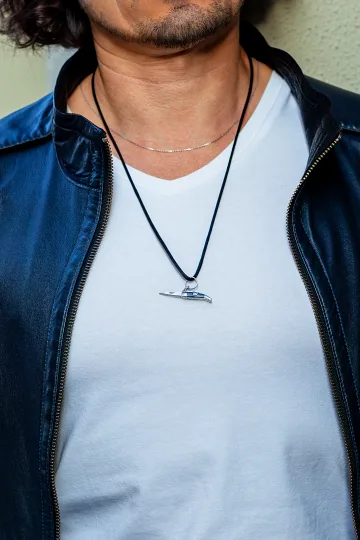





How the Medal Differs from Votive Milagros
Another confusion arises from the Spanish name. Medalla Milagrosa, the miraculous medal, sounds close to the word milagros, which in the Spanish-speaking tradition names votive pendants. These are entirely different things, and they are easy to mix up by their similar sound.
What Milagros Are
Milagros are small metal figures in the shape of a hand, a leg, a heart, an eye, an animal, or a little person, which in the folk Catholicism of Spain, Mexico, and Latin America are brought to images of saints as a votive offering. With them people give thanks for a healing or ask for one, pinning the symbol-figure of the needed body part or sphere of life to the clothing of a statue, to an altar, or to a special board. It is a language of vow and gratitude, laid out in clear little signs. The tradition of votive pendants is treated in detail in a separate guide to milagros and votive charms.
What the Difference with the Miraculous Medal Is
The difference is deep, despite the similar sound. The Miraculous Medal is one strictly set image with a fixed iconography, worn on oneself as a personal sign of faith. Milagros are a multitude of different symbol-figures, which are not worn constantly but brought and left at a shrine as a materialized request or thanks. One is a devotional to be worn at the heart, the other a votive offering, part of a ritual dialogue with heaven. They are related only by the root of the word about a miracle and by a shared Catholic world, while their function, form, and manner of use are fundamentally different.
Facts That Surprise
A great deal of the unexpected has gathered around the Miraculous Medal, and these details deserve a section of their own. Many of them change the way you look at the familiar oval medal.
The Medal Appeared Before the Doctrine
One of the most surprising details in the chronology. The medal with its inscription about Mary conceived without sin began to spread through the world more than two decades before the Immaculate Conception was officially proclaimed a doctrine. So popular devotion and the medal ran ahead of the Church's definition, and the spread of the medal is credited in hindsight as one of the factors that prepared the proclamation. It is a rare case in which an object of devotion turned out to be ahead of a theological formulation rather than following it.
The Visionary's Body Was Found Incorrupt
Catherine Labouré died in 1876, keeping the secret of her identity almost to the end. When, more than half a century later, in preparation for her glorification, her remains were exhumed, witnesses described the body as preserved incorrupt. This fact became part of her devotion and one of the arguments at her canonization. Incorruptibility is considered in Catholic tradition a possible, though not obligatory, sign of holiness, and in Labouré's case it made a strong impression on contemporaries.
The Famous Conversion of an Unbeliever
One of the loudest stories around the medal is the conversion of a young man from a non-Christian family in the 1840s. By his own account, he agreed to wear the medal more out of curiosity and on a dare, being a skeptic, and a short time later experienced a sudden conversion to faith that changed his whole life. This story was actively discussed in its time and became one of the most cited testimonies connected with the medal, strengthening its reputation among contemporaries.
The Visionary Was Silent Almost Her Whole Life
The modesty of Catherine herself is striking. Having received the visions and obtained, through her confessor, the striking of a medal that spread by the millions, she used it neither for fame nor for position. For almost forty years she lived as an ordinary Sister of Charity, caring for the elderly, and only shortly before her death revealed that the medal was connected specifically with her. Such years of silence amid the worldwide fame of the object itself make her figure especially unusual against the background of many other visionaries.
Millions of Copies in a Matter of Years
The speed with which the medal spread in the 1830s astonished contemporaries even then. From a modest first batch of fifteen hundred to two thousand pieces the count reached millions within a few years, and this in an era without any mass advertising or fast means of communication. The engine was word of mouth and distribution through the Sisters of Charity during the epidemic. For an object of popular devotion this is a rare and almost record pace, comparable to the most famous religious symbols of Europe.
The Blue Colour Is Not Accidental
The recognisable enamel version with a blue background rests not on a designer's whim but on a long tradition. Blue and light blue in Christian art are steadily linked with the Mother of God, her mantle, and the sky, and for centuries expensive blue pigments were reserved precisely for images of Mary. So the blue Miraculous Medal is a continuation of a centuries-old colour code, in which blue reads as Marian even before you recognise the figure on the medal.
The Medal Has Its Own Feast
The Miraculous Medal has its own day in the Church calendar: November 27, the date of the decisive apparition of 1830, is marked as the Feast of Our Lady of the Miraculous Medal. On this day, in many churches and especially in the chapel on the Rue du Bac, solemn services are held and new medals are blessed. A separate feast for a devotional is a rarity: more often devotion is tied to a saint or an event, not to the object itself. Here it is precisely the day when, according to tradition, the image of the future medal was shown that is fixed in the calendar. This shows once again how firmly the medal has entered Church life: not as the private devotion of a few, but as a phenomenon with its own date, services, and a settled tradition of veneration.
Send a friend a discount code, they save on their first order.
Frequently Asked Questions
Are the Miraculous Medal and the Medalla Milagrosa the same thing?
Yes. Medalla Milagrosa is the Spanish name of that same medal, and médaille miraculeuse is the French. All of it translates as miraculous medal and means one and the same oval medal of the Immaculate Conception, with the Virgin Mary on the front and the letter M, two hearts, and stars on the reverse. The confusion arises only from the similar sound of the word milagros, which names entirely different votive figures.
Can a non-churchgoing or non-believing person wear the medal?
From the standpoint of respect for the symbol, it is a personal choice. Many wear the medal as a cultural and family sign inherited from loved ones, or as a beautiful medal with meaning. It is worth remembering that for believers it is a specific profession of faith in Mary, not an abstract charm, so it is fitting to treat it with respect for its content. There are no formal prohibitions on wearing it, and the medal requires no rites.
What does the inscription on the medal mean?
The French inscription «O Marie conçue sans péché, priez pour nous qui avons recours à vous» translates as "O Mary, conceived without sin, pray for us who have recourse to thee." It is a short invocatory prayer, professing the Immaculate Conception and asking Mary's intercession. On modern medals the same phrase is found in Latin or in the language of the country, but the sense is always preserved word for word.
Why exactly twelve stars on the reverse?
The twelve stars point to the image from Revelation, which describes a woman clothed with the sun and crowned with twelve stars. The number twelve in Christian symbolism is linked with fullness: twelve apostles, twelve tribes. So the crown of twelve stars around the letters and hearts on the reverse gives the medal a heavenly scale and connects it with the traditional image of the Church and the Mother of God.
How does the Miraculous Medal differ from the Saint Benedict medal?
They are different things by nature. The Saint Benedict medal grew out of the medieval monastic tradition, carries the image of the saint and Latin formulas against evil, and is connected with protection. The Miraculous Medal appeared out of the visions of 1830, is entirely devoted to the Virgin Mary and the theme of the Immaculate Conception, and is connected with grace and intercession. You can wear them together, but their meanings are different.
Which material should you choose for the medal?
It depends on the occasion and the budget. Silver is a sensible middle ground: a noble look, sharp relief, fitness for everyday wear. Gold is taken as an heirloom for a large event and for passing down. Simple medals of aluminium or brass are good when accessibility matters more than the metal. The blue enamel version suits someone who wants colour and a more festive look. The value of the medal for a believer does not depend on the price of the material.
Is the medal given for baptisms and confirmations?
Yes, these are among the most frequent occasions. For a baptism people more often give a silver or gold medal, often engraved with a name and date, with a future heirloom in mind. For confirmation and first communion people give a medal the teenager can wear right away. In both cases the meaning is one: to mark an important step of Christian life with a visible and lasting sign.
Is it true that the medal heals?
The Church understands the medal not as an automatically acting amulet, but as a sign of faith and a reminder of prayer. Stories of healings are considered testimonies of people's experience, which the Church itself approaches cautiously and examines for years. The grace the image speaks of is given through faith and prayer, not pumped out of the metal. So the honest answer is this: the medal is a support of faith and a sign of intercession, not a magical object with a guarantee.
Where did the apparition of the Miraculous Medal take place?
In Paris, in the chapel of the house of the Daughters of Charity at 140 Rue du Bac. There, by Catherine Labouré's testimony, the apparitions of the Virgin Mary took place in 1830, including the decisive November one, where the image of the future medal was shown. Today it is a working chapel and one of the most visited places of pilgrimage in Paris.
What does the letter M on the back of the medal mean?
The letter M is Mary, and the cross rising above it is Christ and Golgotha. Their joining in one sign speaks of Mary's unbreakable bond with the Cross of her Son and of her share in the redemption. Beneath the letter are two hearts, of Jesus and of Mary, and the whole composition is framed by twelve stars.
Is the Miraculous Medal blessed?
It is customary to bless the medal, though there is no strict requirement to wear only a blessed one. Blessing is a consecration of the object in church, after which the medal is considered a sacramental, an auxiliary sign of faith. Many ask a priest to bless the medal before putting it on themselves or giving it, especially if it is a gift for a baptism or confirmation.
Wear the symbol, don't just read about it. These are in stock:





Conclusion
The Miraculous Medal is a rare example of how the private vision of a young nun turned into one of the most recognisable religious symbols in the world. Behind the oval medal stands a precise story: the Rue du Bac, November 1830, the charge to strike a medal, a cautious confessor, the first batch of 1832, and the cholera epidemic that carried the medal across Paris together with a stream of accounts of healings. From there came the popular name, which was never part of the plan.
The medal's strength lies in the fact that every element of it can be read: the Virgin Mary on the globe, the rays of grace, the prayer-inscription, the letter M with the cross, the two hearts, and the twelve stars. It is a compressed profession of faith you can keep at the heart. Some see in its spread the action of grace, some the sociology of hope and fear, and both points of view can get along. The medal remains what it was designed to be: a quiet personal sign, passed on to children, placed beside the sick, and given at the threshold of a new life.
The Miraculous Medal in our range is sterling 925 silver and gold with sharp relief of the figure of Mary, the rays, and the symbols of the reverse, with room for engraving on the back. A good gift for a baptism, a confirmation, a name day, or as a token of support for someone close.
The choice here always comes down to the occasion and the person: one is closer to strict silver for every day, another to a gold heirloom medal for a baptism, a third to a festive blue enamel. To take the guesswork out of it, below is a short selection based on a few simple questions about the occasion, the taste, and the conditions of wear. It will suggest which material and style of medal will fit your task.
Wear the symbol, don't just read about it. These are in stock:







About Zevira
Zevira makes jewellery with character and meaning, not shiny objects for the sake of shine. We make charms, symbols, and medals in sterling 925 silver, steel, and gold, drawing on the metalworking heritage of Albacete, the Spanish town whose long tradition of fine cutlery and metalwork is a lineage we carry forward, with attention to relief, history, and the option of engraving. Every object is meant to be worn every day and passed on. If you need something that means something to a specific person and occasion, we help you find it.