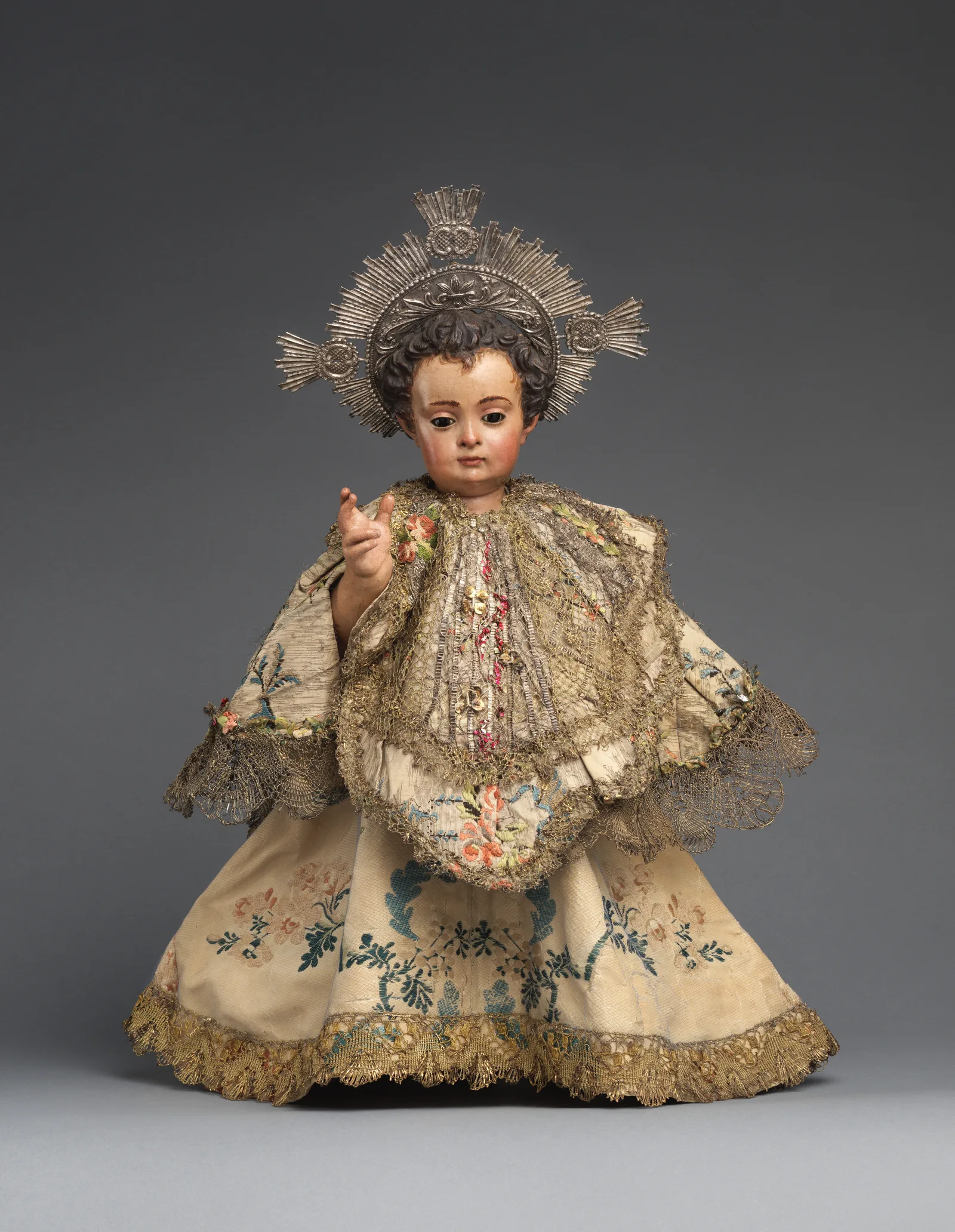
Saint medals and devotional medallions: the holy face worn over the heart
Small metal with a long history
A thousand years ago, the ancestor of the saint medal was not a struck silver disc at all. It was a tiny cloth or leather pouch sewn shut over a relic, a pinch of holy earth, a scrap of blessed bread, worn under the shirt against the skin. What now sits in the jewellery case beside a cross travelled a long road from that fabric knot to the enamelled medallion. And the road is far more interesting than it looks.
People mix up saint medals, scapular medals, reliquary lockets and crosses all the time, and they mix them up with framed icons too. The differences are real, and they are not cosmetic. Below we untangle what a devotional medallion actually is, how it differs from a cross and a reliquary, who is shown on it, what metal it is made from, whether a person who is not baptised may wear one, whether it makes a good christening gift, and how to care for fragile enamel so the holy face does not wear away in a year or two.
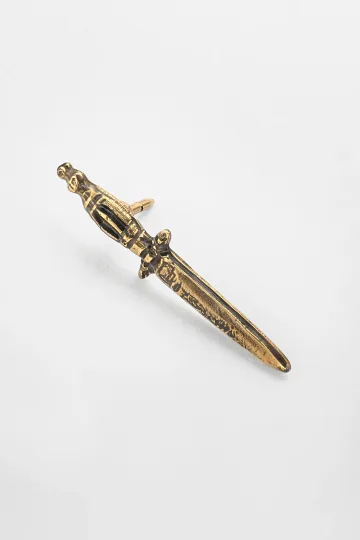
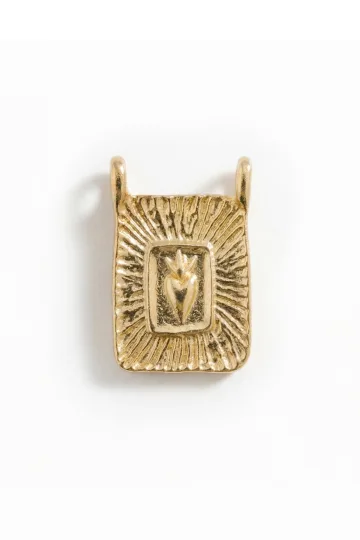
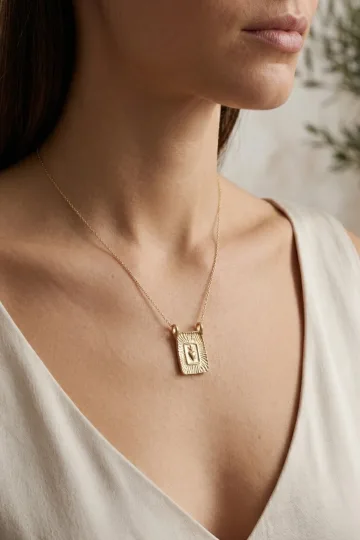
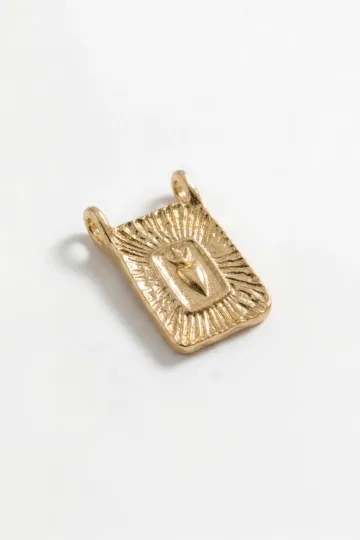
Wear the symbol, don't just read about it. These are in stock:


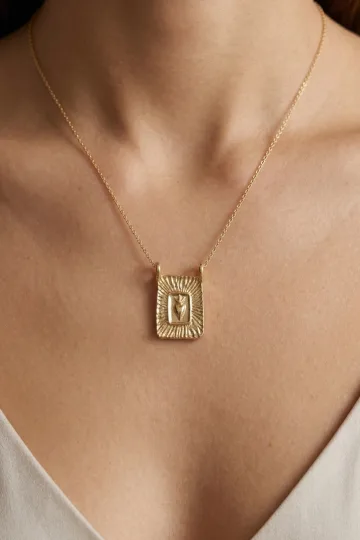
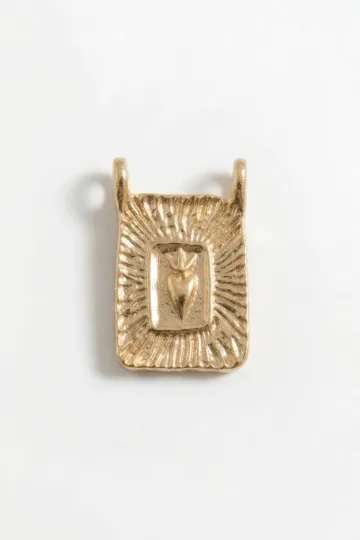
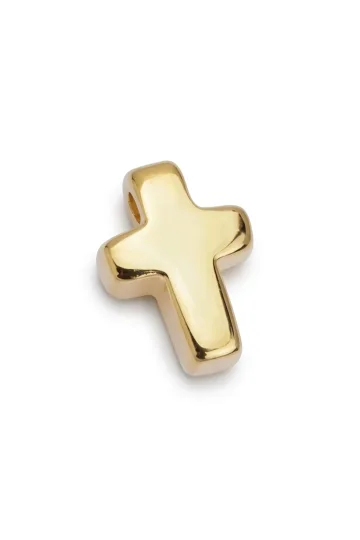




What a reliquary medallion is
Originally it held a relic, not an image
The oldest form of the object was a container, not a picture. Into a small pouch or hollow capsule people placed something they held sacred: a fragment of a relic, a thread from a saint's garment, a grain of earth carried home from a pilgrimage, a slip of paper with a written prayer. The capsule hung on a cord under the clothing, close to the body. The logic was simple. A particle of the holy should stay near the person, reminding them of their faith and keeping them company on the road.
How the pouch became a metal locket
Over time the contents mattered more than the wrapping, and the wrapping grew sturdier. A cloth knot frayed, soaked through, got lost. Craftsmen began making flat metal boxes and hinged capsules that could hold the same relic without fearing water or years. Then the lid of the capsule received an image of a saint, and the line between container of the holy and image of the holy quietly dissolved. That is how a single object came to answer to two ideas at once: a locket that stores something inside and a medallion that shows a face outside.
The devotional medallion today: what people usually mean
In everyday speech, a devotional medallion now means a small flat disc or capsule worn on a chain over the heart. Inside there may be a folded prayer, a relic, sometimes a paper image. Outside there is often an engraved or enamelled face. It is a personal thing, rarely shown off, worn under the clothing and carried on journeys. In spirit it sits closer to a pocket shrine than to a piece of display jewellery.
What people place inside a reliquary capsule
If a medallion opens, the owner faces an obvious question: what goes in. Traditionally it is a slip of paper with a short prayer, a fragment of a relic, a grain of earth or a piece of blessed bread carried back from a holy place, sometimes a tiny printed image. The rule is plain. Inside goes whatever is genuinely sacred to the person, not random trinkets. The capsule is a vessel for meaning, not a souvenir box, and what fills it decides what it will mean to the one who wears it.
A medal belongs against the skin, under the collar, not dangling over a lapel for the room to admire. Quiet faith outclasses the loud kind.
How and with what to wear a medal
Over years on shoots I have chosen more than one of these medals, for everyday and for the road alike. Here is what actually helps: how to wear it, on what, and with what, so the piece lasts for years and never fights your clothes.
What do I wear a medal with day to day? For everyday I recommend a thin but strong chain in silver or steel under a plain top: a T-shirt, a linen shirt, a cotton dress. A light top lifts the metal, a dark one turns the medal into a quiet accent. It is worn under the clothing, against the body, so I suggest a length from the neck to mid-chest, so the face sits over the heart rather than dangling high.
Under the clothing, or over it? By its nature this piece is turned inward, and I suggest keeping it under the fabric, against the body. Worn over a sweater or shirt it becomes a visible sign of faith, but then it changes role into jewellery on view. If you want that, choose a calm everyday look and an open collar rather than a pointedly dressy outfit.
On what chain or cord should it go? A medal is worn constantly, so I choose a sturdy chain: dense links do not kink or catch on fabric. I would not suggest a thin decorative one; it snaps and gets lost. A waxed cotton or leather cord is softer than metal and suits the restrained character of the piece. I match the chain metal to the medal: silver to silver, gold to gold.
Can it be worn with a cross? It can, and it is a familiar pairing: the sign of faith and a personal intercessor side by side. Some hang both on one chain; I more often suggest splitting them onto two, so they do not knock together or scratch. If one piece has fragile enamel or is a different metal, all the more reason to keep them on separate chains.
What do I take on the road, and when do I take it off? For travel I choose a compact, sturdy medal or a folding shrine: merchants and pilgrims carried such things for centuries, and the logic still holds. Before sport, the pool or heavy work, though, I recommend taking the medal off and putting it somewhere safe, so the face is not damaged and the piece not lost.

Turn on your camera, pick earrings, a pendant or a ring, and see the piece on yourself in real time.
Switch items in one tap.
Everything runs in your browser: no photo or video is ever uploaded.
What a saint medal is
A saint medal is a small metal icon
A saint medal, from the Latin habit of striking a small image into metal, is a little disc or oval bearing a saint, the Virgin, an angel or a Gospel scene in relief or enamel. Unlike the reliquary capsule, the medal is usually solid: the face is not hidden inside, it is carried on the front for all to see. It is, in effect, a portable icon, made to stay with a person every day.
How a medal differs from a reliquary locket
Put briefly: a reliquary by origin is a container for the sacred, while a medal by origin is the image itself. In practice the line has blurred, and sellers will call the same object by either word. But if you want precision, a capsule that opens and holds something inside leans toward reliquary; a flat disc with a face that holds nothing leans toward medal. A good jeweller will usually tell you which one is in your hand.
The scapular medal: devotion turned into metal
One distinct and very practical kind is the scapular medal. The cloth scapular, two small woollen panels joined by cords and worn over the shoulders, was for centuries a sign of belonging to a devotion. Because wool wore out and chafed, a single metal medal was permitted to replace the cloth: one face showing the Sacred Heart, the other the Virgin. Closed in metal, the devotion no longer frayed; carried on a chain, it became a small durable token instead of a bundle of fabric. For someone who wanted the sign without the bulk, it was the ideal form: compact, sturdy, and always to hand.
Customer reviews
Zevira is a real jewellery shop. Genuine payments, deliveries and customer thank-yous.
🥰🥰🥰 gracias
Ok, ¡gracias! 🙂
History: from the early Christians to the traveller's medal
Early Christianity and the first body-worn holy things
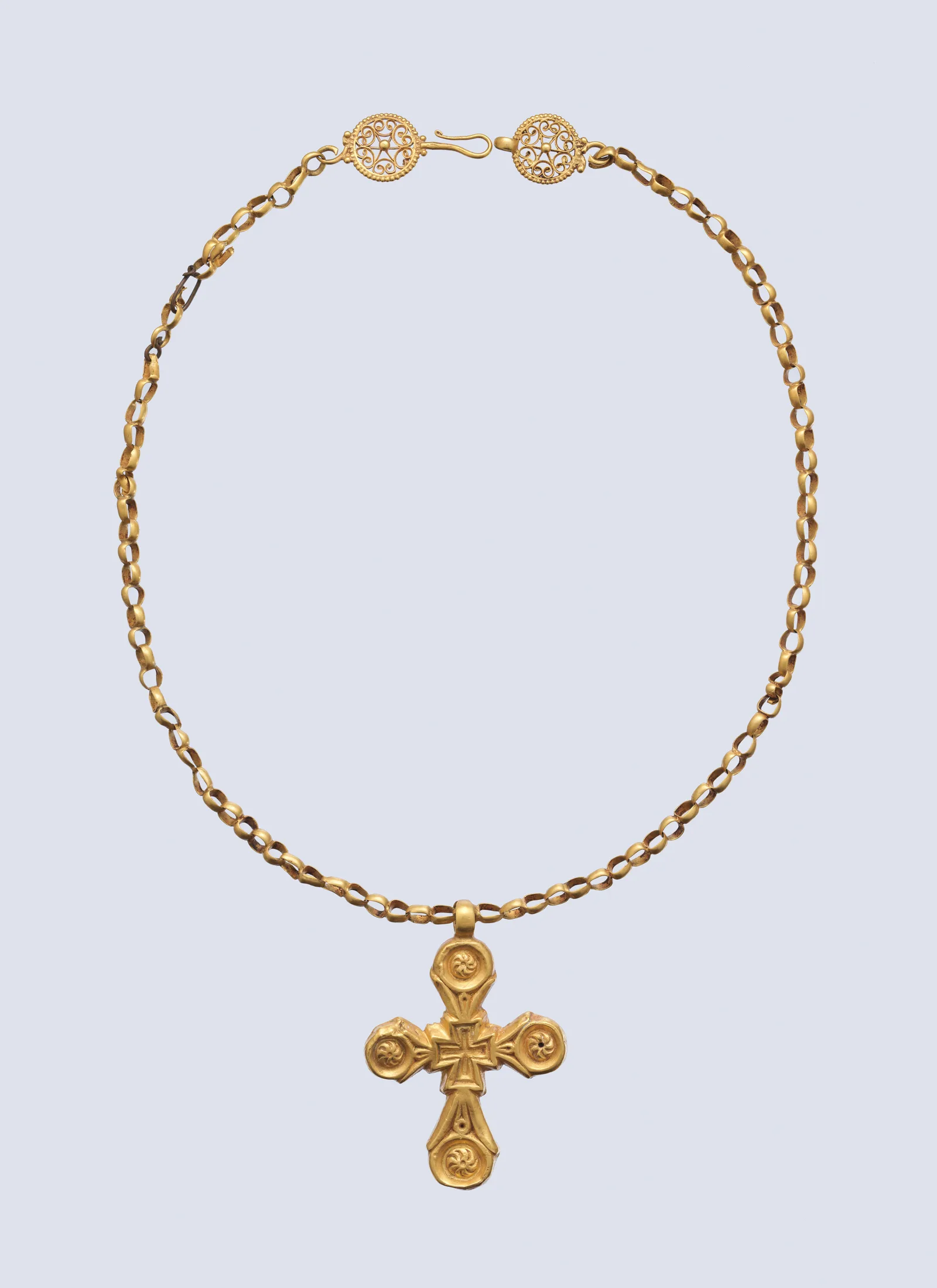
The habit of carrying a sign of faith against the body is older than people assume. Already in the first centuries, Christians wore small objects marked with a fish, an anchor, a good shepherd. These were modest pendants, often in cheap metal or bone, and they were worn discreetly, because faith then frequently called for caution. The idea that the holy is always with me was born in those years and survived every century after without changing.
The encolpion: a reliquary worn on the chest
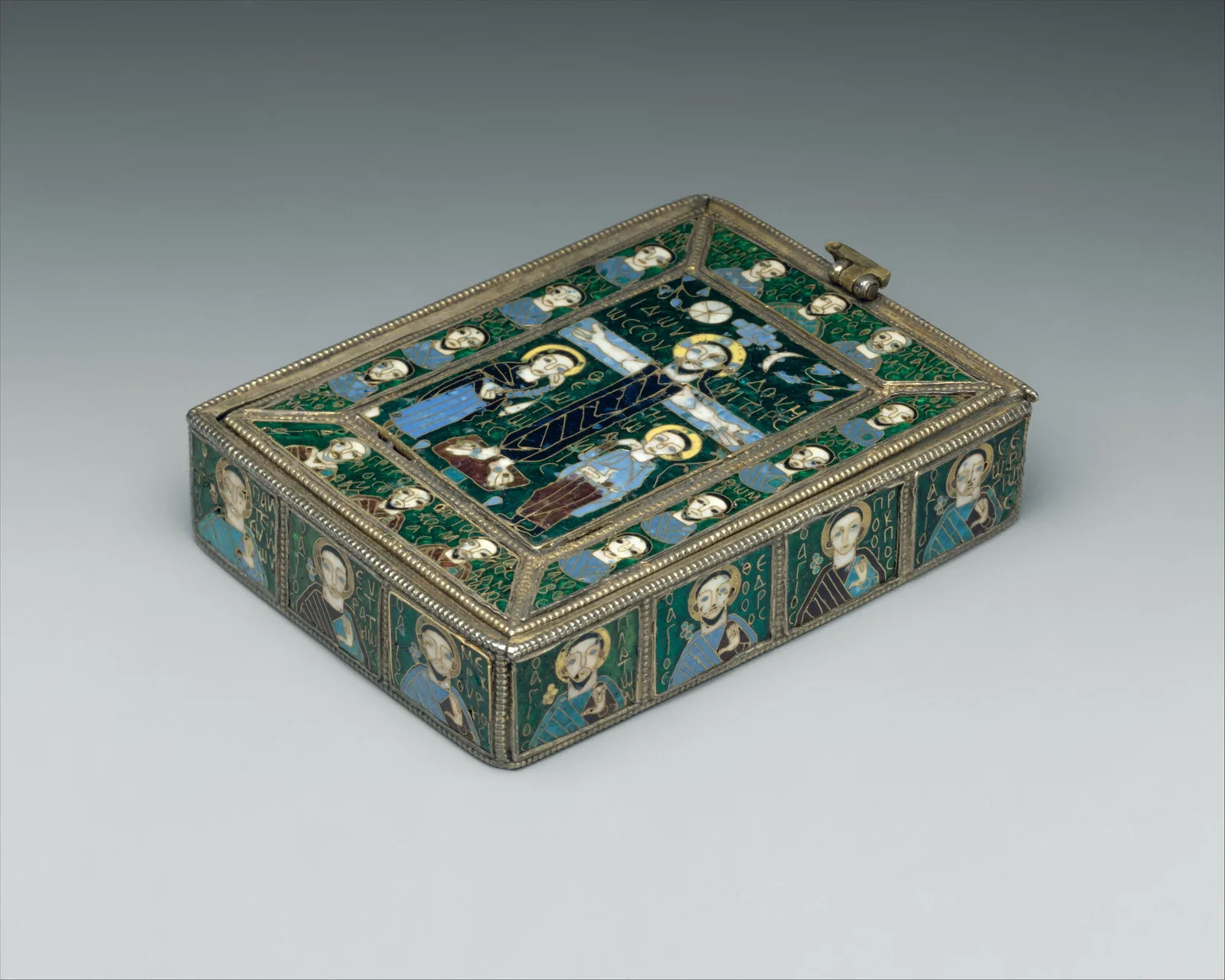
One direct ancestor of the devotional medallion is the encolpion, from the Greek for on the chest. It is a hollow pectoral capsule, most often shaped as a cross, that opened on hinges. Inside went a fragment of a relic, a thread of a garment, blessed earth. The encolpion was worn on a chain over or under the clothing, and it is precisely this object that joined two ideas in one: the sign of the cross outside, the storehouse of the relic within. Many old pectoral crosses that archaeologists pull from the ground are in fact hinged encolpia, not solid crosses at all.
Byzantium as the source of the tradition
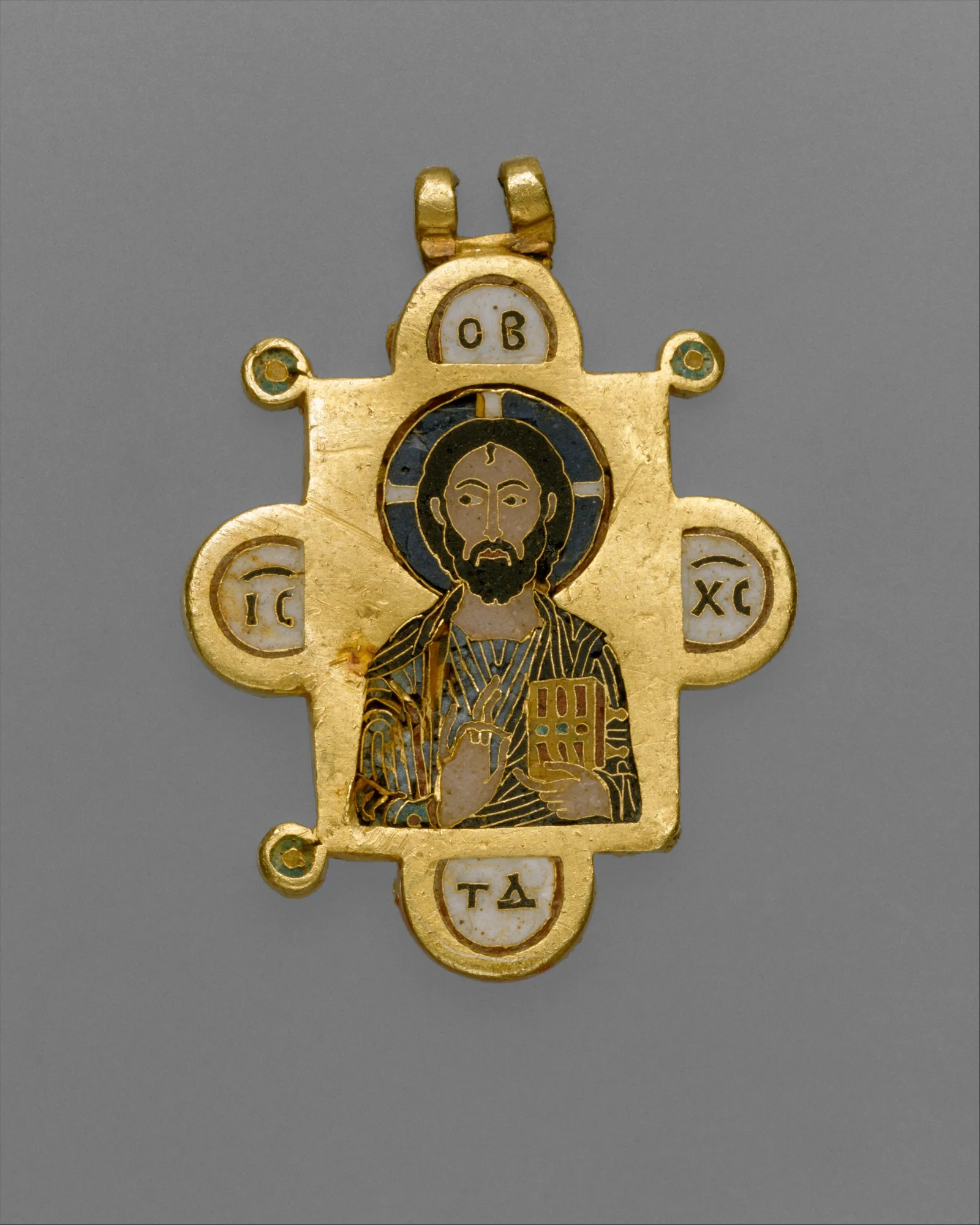
The body-worn holy image spread across the Christian world from Byzantium, and so did its forms: the encolpion, the cast medal, the enamel miniature. Byzantine goldsmiths commanded cloisonné enamel, an exacting technique in which the drawing is laid out in thin gold strips and flooded with coloured glass. These objects set the standard that craftsmen everywhere measured themselves against. Early Western and Eastern pendants alike carry an unmistakable Byzantine trace in the composition of the faces and in the enamelwork, and only later did each regional tradition find its own voice.
The Western tradition: the medal beside the cross
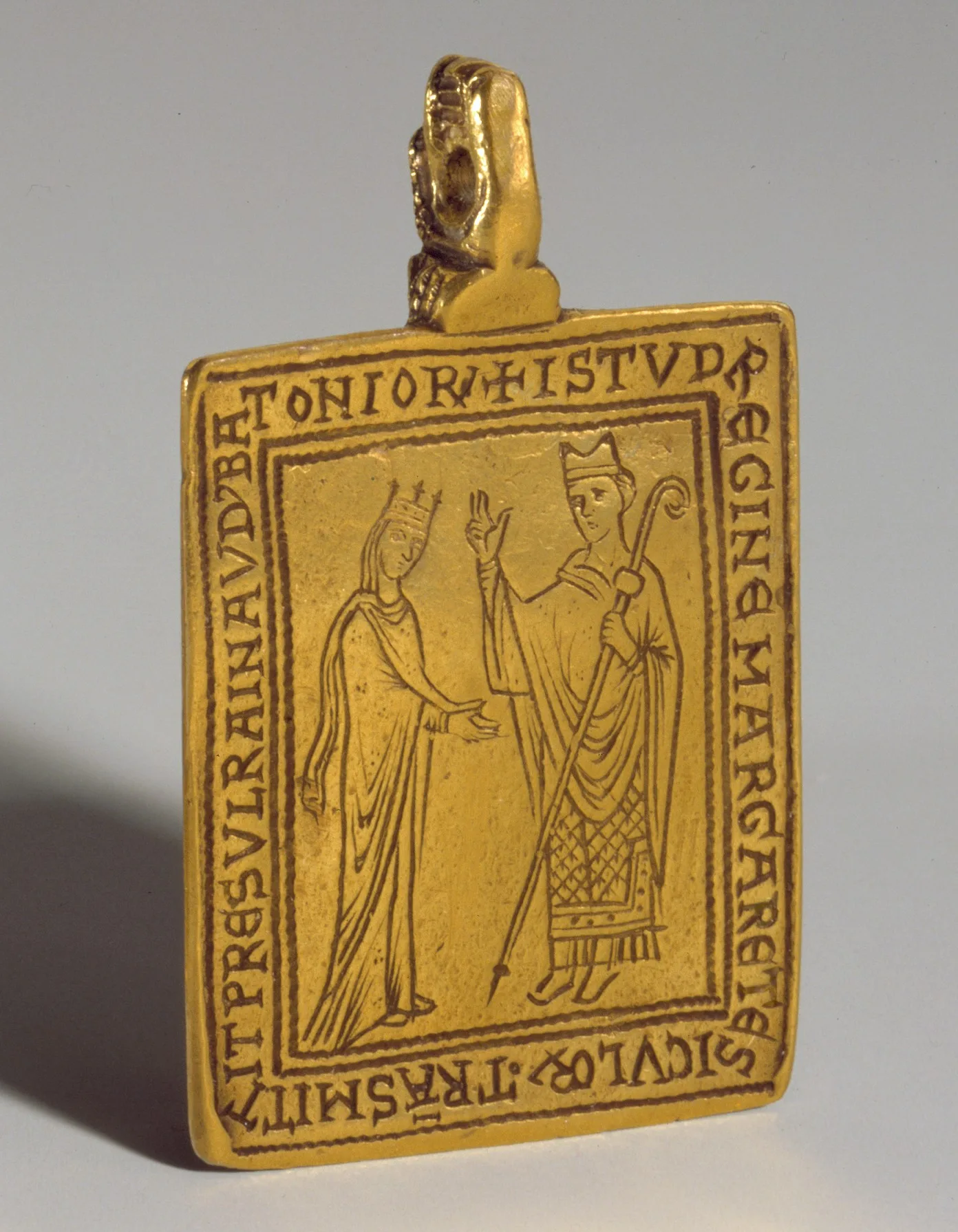
Across Catholic Europe the saint medal settled in beside the cross and became part of ordinary life. Workshops cast them in copper alloy and bronze by the thousand, and medals and small folding shrines bearing the Virgin, beloved saints and warrior saints turn up wherever people lived and prayed. Cheap cast metal made them affordable, so a medal might hang on a labourer, a soldier or a merchant alike. Fine work in silver and gold with enamel was for those who could afford it, but the object itself was never a privilege of the rich.
The pilgrim badge and the traveller's medal
A chapter of its own belongs to travel. The merchant at a fair, the pilgrim on the road to a shrine, the soldier on campaign, the sailor on a long voyage: all of them wanted to carry the holy with them, and you cannot take a panel icon on the road. Here the small folding shrine and the sturdy metal medal earned their keep. Medieval pilgrims pinned cheap pewter badges from a shrine to their hats and cloaks as proof and protection; later travellers sewed a medal into the lining or hung it at the neck. For sailors and soldiers the medal often became the most guarded thing they owned, the single keepsake of home and faith among foreign shores.
Enamel and the flowering of the painted medallion
The painted enamel medallion deserves its own line. Fired enamel is glass-like colour painted onto a metal base and baked in a kiln, so the colours turn vitreous and barely fade. In the workshops of Limoges in France, enamellers carried the miniature to the level of true painting, building faces with shadow and highlight on a surface no larger than a thumbnail. A medallion that small could carry a fully modelled face. Such a thing was prized as a small work of art and handed down through the family.
The medal of the soldier and the sailor
Among those who clung hardest to a body-worn holy thing were people in dangerous trades. The soldier left for the front not knowing whether he would return; the sailor went to sea for months. The medal became their link to home and faith, and it was often the single personal object a man wore at all times. It was sewn into clothing, hidden in a pack, pressed into a son's hand before he left for service. Many old medals that have come down to us went through more than one campaign with their owners, and the wear shows: a softened face, rubbed edges, a mended bail.
Why medals were cast and struck, not made one by one
Technology, too, helped turn the medal into a thing of the people. Casting from a wax model, and later striking from a steel die, let a single matrix produce hundreds and thousands of identical medals without putting a costly master on each copy. Foundries and mints issued whole series with stable subjects: a favourite Marian image on one side, a patron saint on the other. The quality varied, from rough to fine, but the principle itself made the holy reproducible and affordable long before industrial manufacturing.
Upload a photo of your pet, someone you love, or an object. We'll build a 3D model and hand-cast it in pewter.


How a medal differs from a cross and a framed icon
A saint medal is not a cross
This is the first thing to settle, because the confusion here is the most common. A cross is the sign of Christianity itself, the image of the Cross on which Christ was crucified. It may carry no human face at all, only the form of the cross and sometimes the figure of the crucified. A saint medal works differently: its centre of meaning is the face, the image of a particular saint, the Virgin or an angel. You can wear a cross and a medal at the same time, and many people do, because they mean different things: a sign of faith and a personal intercessor. If the cross itself interests you, we have a separate piece on the meaning and symbolism of a cross necklace.
A medal is not a wall icon
An icon in the usual sense is an image painted on a panel, before which people pray at home or in church. A medal is its pocket, body-worn form, made to stay with a person on the road and through the day. The difference lies not in the holiness of the image but in its purpose and size. The icon stays in place; the medal travels with its owner. In essence the medal answers a simple question: how do you take an icon with you without carrying a board under your arm.
How a devotional medallion differs from an ordinary amulet
Here it matters not to muddle the categories. An ordinary amulet or talisman belongs to folk and pre-Christian tradition, where protective power is ascribed to the object in itself. A devotional medallion is a religious thing: its meaning lies not in the magic of the metal but in the reminder of faith and in the prayer through which a person turns to God and the saints. Wearing a medal as a luck charm, with no faith behind it, runs against its whole purpose. If protective symbols in the broader sense are what you are after, we cover those separately in the guide to protective amulets and talismans.



Who is shown on a medal or medallion
The Virgin: the most common image
The face of the Virgin is perhaps the most widespread subject on body-worn medals. She is venerated as an intercessor; people turn to her in anxiety, in illness, before childbirth, on a journey. There are dozens of established types, each tied to a particular devotion or apparition: the Miraculous Medal with its rays and stars, Our Lady of Sorrows, Our Lady of Perpetual Help and many more. Each type carries its own story and its own circumstances in which people are accustomed to turn to it, so the choice of a particular image is rarely accidental.
Saint Christopher: patron of travellers
Saint Christopher is among the best-loved saints to wear, carried above all as a protector on the road, on the water, in difficult journeys. Drivers, sailors and travellers are especially drawn to his image. The historical logic is direct: Christopher is remembered as the giant who carried the Christ Child across a river, and that story made his medal a constant companion for anyone often on the move. Saint Nicholas, the bishop remembered as the helper of those in peril at sea, plays a kindred role in the same tradition.
The guardian angel: an image without a particular face
A medal showing the guardian angel is chosen when a person wants a wearable sign of personal protection not tied to one named saint. In Christian belief a guardian angel is given to each person and accompanies them through life. For that reason such a medal is given especially often to children and godchildren: it is easy to understand, needs no explaining, and sits naturally as a christening gift.
A saint by name: the personal patron
A very common and logical choice is a medal of the saint whose name a person bears, their name patron. By tradition a person receives a name at baptism, and the saint of that name is held to be a personal intercessor. To wear a medal of your own saint means to keep near the one whose name you carry, and to whom you turn in prayer. You can find your patron through the church calendar, by the feast day of the saint of that name nearest your birthday.
Warrior saints and healers
A group of its own are the saints with a folk speciality. Saint George and the Archangel Michael as patrons of soldiers and defenders; Saint Pantaleon and the unmercenary physicians Cosmas and Damian as protectors of the sick; Saint Luke, remembered as a physician. Such medals are often chosen deliberately, for a trade or a situation in life, and in that sense they come close to the idea of a personal, targeted intercession.
The face of Christ
A medal bearing the face of the Saviour stands apart. It shows either the face of Christ or subjects such as the Holy Face, where tradition tells of a miraculous imprint of his features on cloth. This is the most direct image in meaning: not an intercessor before God, but the Lord himself. Such a medal is chosen by those who want to wear the central image of the faith rather than an appeal to a particular saint. In its restraint it comes close to a cross, yet it carries a face and not the sign of the cross.
How different Marian images connect to circumstances
The established Marian types are distinct images, each with its own history, and behind each stands its own circle of appeal. The Miraculous Medal is tied to a nineteenth-century apparition and worn for protection and grace. Our Lady of Sorrows, her heart pierced by seven swords, is linked with compassion and the softening of hardened hearts. Our Lady of Perpetual Help is invoked in trouble and need. The choice of a particular Marian type for a medal therefore often says something about what a person brings to their faith, rather than about a taste for the picture.
Metal: what medals and medallions are made from
Silver: the classic for a face and for enamel
Silver is the most traditional material for a body-worn medal, and not by chance. It is a noble metal, it holds fine relief well, it pairs beautifully with enamel and niello, and a light patina settling into the recesses only sharpens the drawing of the face. Most often the alloy is sterling, hard-wearing and durable. If you want to understand what hides behind the hallmark, we have a detailed look at what 925 silver means. A silver medal looks restrained and quiet, which suits the character of the object.
Gold: for a family heirloom
A gold medal is chosen when the piece is meant as an heirloom for generations, a christening gift, say, that will later be passed on. Gold does not tarnish, needs no frequent cleaning, and calmly survives decades of daily wear. Yellow gold gives a warm, classic look; white gold reads stricter and more modern. For an enamelled medal a gold base is especially fine, because the warm gleam of the metal deepens the colours.
Painted enamel: a small painting on metal
The painted enamel medallion is a category of its own. Layers of enamel are laid on the metal base and fired, and then a miniaturist paints the face onto the finished white enamel and fires it again. The result is glass-like painting that does not fade in the sun and does not fear water. Hand painting costs more than a struck medal, but the result is a small picture rather than an impression. On how to look after such pieces so the enamel lasts, we wrote separately in the guide to caring for enamel jewellery.
Copper and brass: historic casting and affordability
Cast copper and brass medals are the oldest and most widespread tradition. It was from copper alloy that medals and folding shrines were cast by the thousand, and it was the cheapness of the metal that put the holy within everyone's reach. Today copper and brass are chosen for their warm colour, their historic look and their affordability. Warm metals darken over time, and many people prize that living patina: it gives the medal the air of a long-worn, prayed-over thing rather than a shop-fresh novelty.
Niello and engraving: how a face reads
A word on finishing. Niello, a dark compound set into the recesses of the relief, makes the face legible: the shadows sink into the depths, the raised areas stay bright, and the miniature comes alive. Engraving on a plain medal lets you add the owner's name, a baptism date, a short prayer on the back. It is the reverse that most often carries the personal inscription, turning a standard medal into a named, one-of-a-kind piece.
Size and shape: from a thumbnail to a folding shrine
A body-worn medal is usually small, from the size of a thumbnail to a large coin, because it is worn constantly and must not get in the way. The shape is most often oval or elongated, less often rectangular or cut to the outline of the face. A folding shrine can be larger, especially the traveller's kind, meant both to be worn and to be stood up. The smaller the medal, the more it demands of the maker: on a tiny field a recognisable face and a legible miniature must survive, and this is exactly where enamel and fine casting show their class.
The setting and the glass over the enamel
A good enamel medal is often closed under thin glass in a metal rim. The glass shields the painting from abrasion, and the rim holds the fragile enamel plate and keeps it from cracking when it knocks against the body or clothing. This construction is the signature of old enamelwork: the miniature sits in a silver setting like a stone in a bezel. When choosing a medal it is worth noticing how the enamel is secured, because a sound setting is the guarantee that the painting will survive years of daily wear.
Leave your email, we'll send your discount code. No spam, unsubscribe anytime.
The code arrives by email, valid on your first order.
For whom and how: practical questions
May a person who is not baptised wear a medal
Here it is better to speak plainly, without evasion. Saint medals and medallions are religious objects, and their meaning opens through faith and prayer. There is no formal ban on a person who is not baptised wearing a medal, but the object is made for a believer, for whom the face is not a picture but an image to which one turns toward God and the saints. If a person is not baptised yet sincerely drawn to faith and thinking of baptism, wearing a medal is not amiss. To take it as a fashion accessory or a luck charm, with no relation to faith at all, runs against the very purpose of the thing.
How a medal is given at a christening
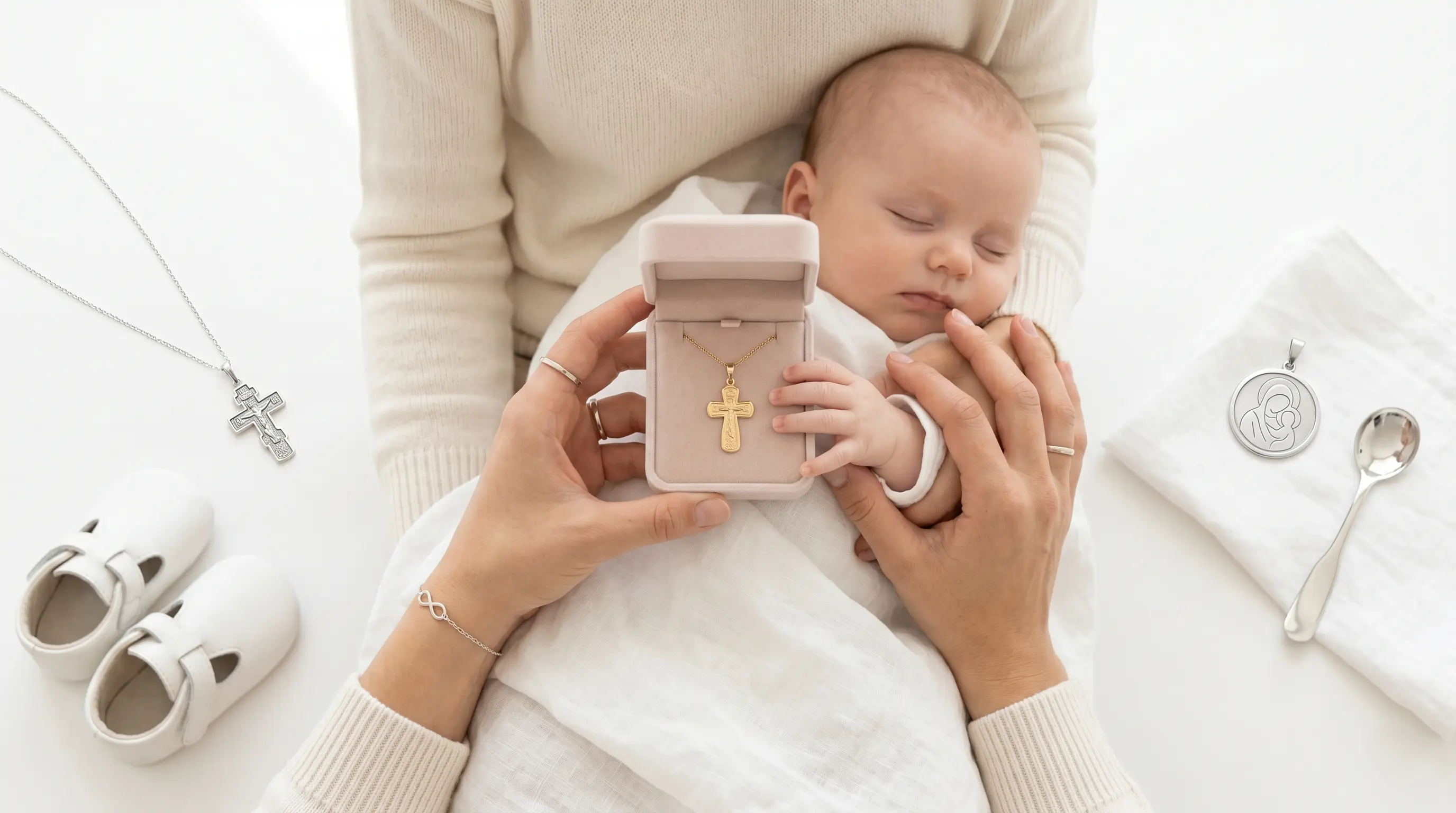
A medal or medallion is among the most fitting christening gifts, alongside a baptismal cross. Most often the godparent gives it: a silver or gold medal of the guardian angel, or of the saint whose name the child receives. Good practice is an engraving on the back with the name and date of baptism, so the piece becomes a named heirloom and accompanies the person through life. For more on what is customarily given on this occasion, we have gathered it in the guide to jewellery for a christening or baptism.
Over or under the clothing
The tradition is unambiguous: a body-worn holy thing is worn under the clothing, against the body, not on show. This is not a prohibition but an expression of the object's character: it is private, turned inward, toward the person rather than toward those around. So a medal is usually hung on a thin sturdy chain or cord and tucked under the shirt. Wearing a medal over the clothing as jewellery is possible, but it shifts the meaning: a thing conceived as a quiet personal holy object becomes a decorative sign, and many believers do not approve.
On what chain to wear it
The chain should above all be strong and comfortable, because a medal is worn constantly. Links that do not kink or catch on clothing serve well. It is logical to match the chain metal to the medal: a silver medal to a silver chain, a gold one to gold, so there is no mismatch and the metals do not react with one another. Many prefer a cord: it is softer, does not chill the skin and looks more modest, which suits the character of a body-worn holy thing.
May a medal and a cross be worn together
Yes, and it is very common. A cross and a medal carry different meanings: the first is a sign of faith, the second a personal intercessor. They are worn on one chain or on separate ones, however a person is used to. There is no contradiction here; on the contrary, the pairing is logical: the general sign of Christianity plus the particular saint a person turns to personally.
A medal as a family heirloom
One of the most valuable qualities of a medal is its ability to outlive its owner. A silver or gold medal with an engraved baptism date passes from grandmother to granddaughter, from father to son, and each generation adds its own story. In this the medal differs from ordinary jewellery: it is not changed with fashion or sent to be melted down, but kept precisely as memory and holy thing. The engraving on the back turns a standard object into a family chronicle, where names and dates read like a small genealogy.
What to give besides a medal at a baptism
If a medal is already there, or you want to round out the gift, a sturdy chain sized to the child, a baptismal cross and, by old custom, a silver spoon all go well with it. The medal itself stays the chief spiritual gift, and the rest is everyday addition. The point is not to duplicate: if the godmother gives a medal, it is logical for the godfather to take on the chain or the cross, so the gifts add up to one set rather than repeating each other.
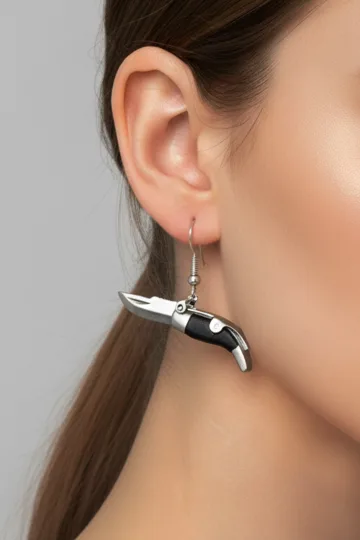
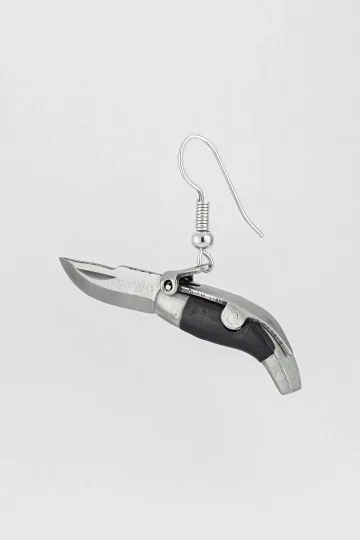
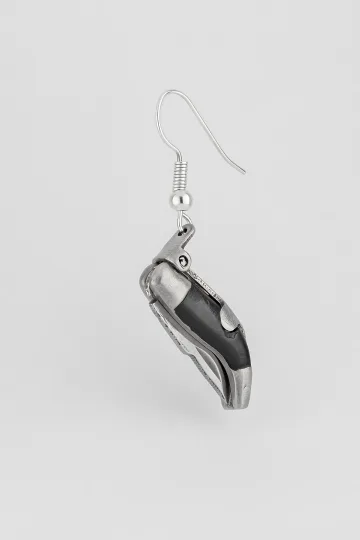
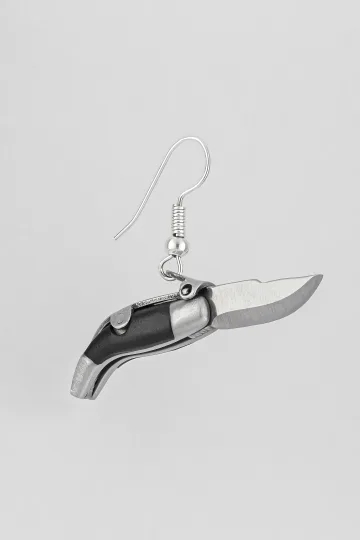
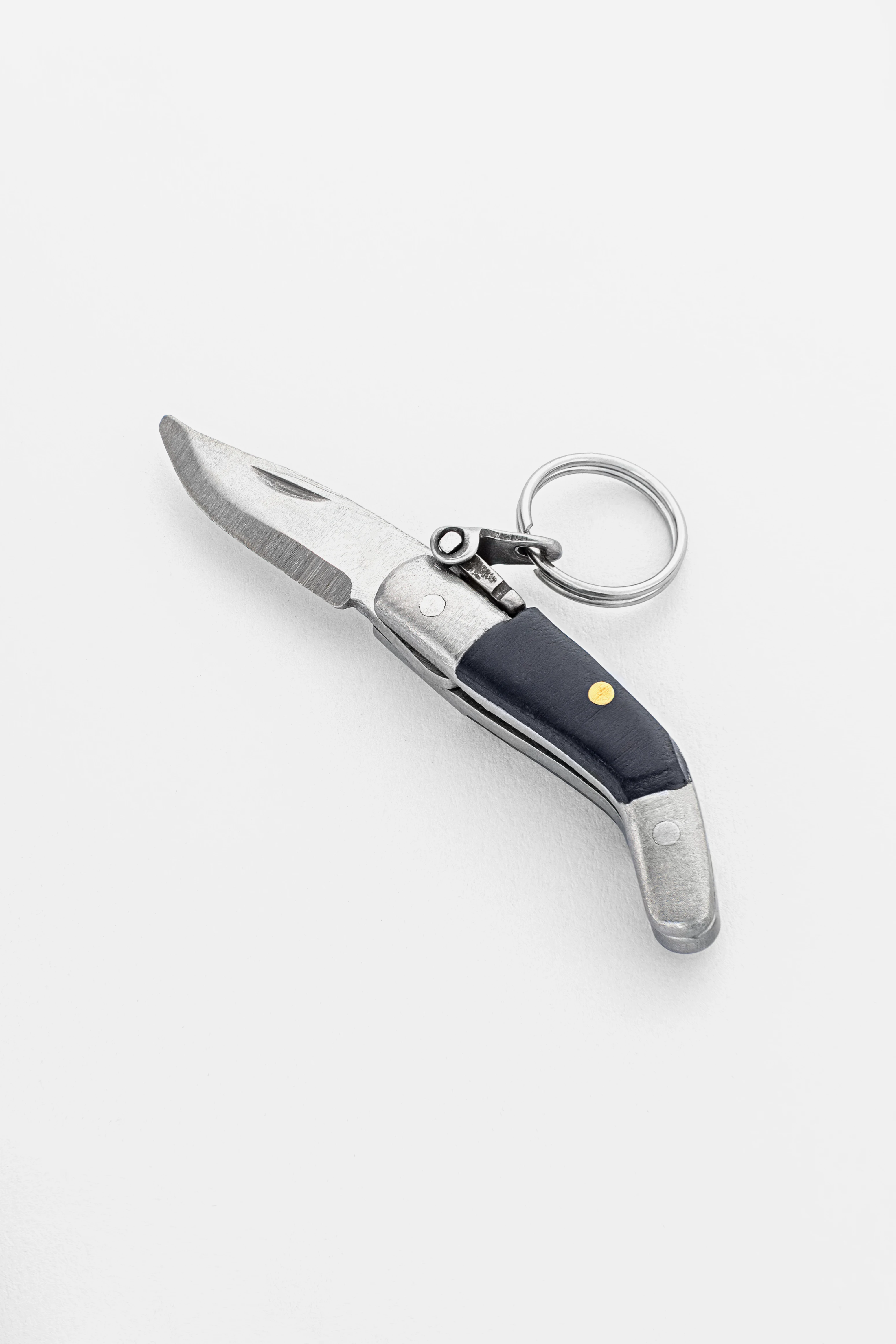
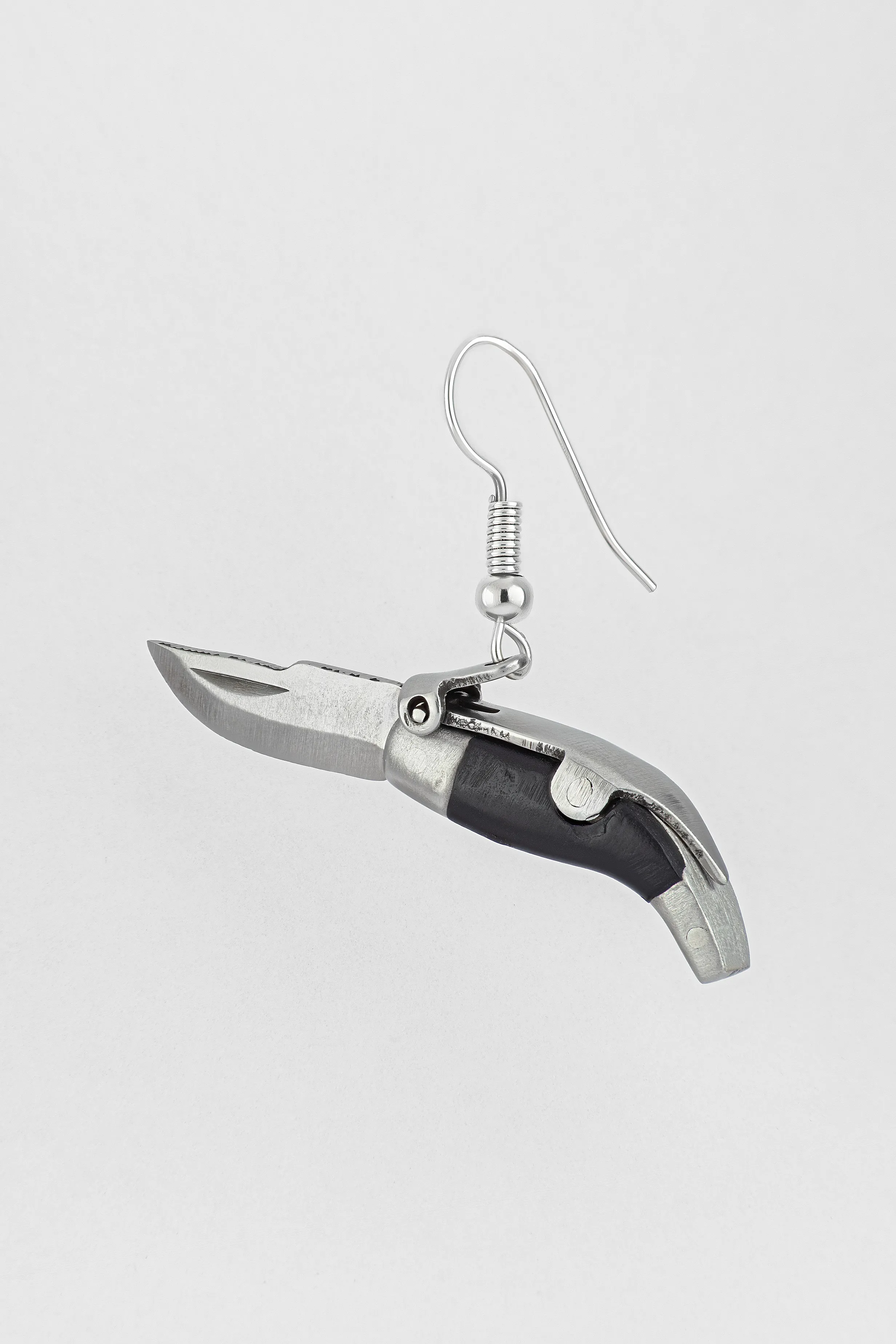
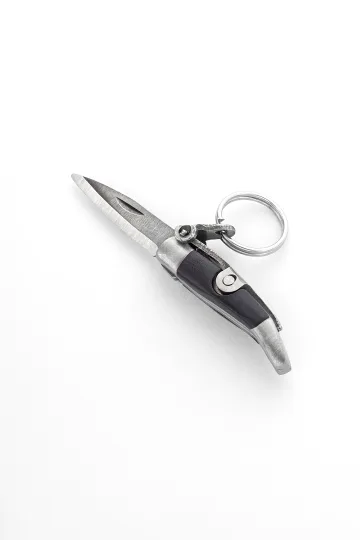
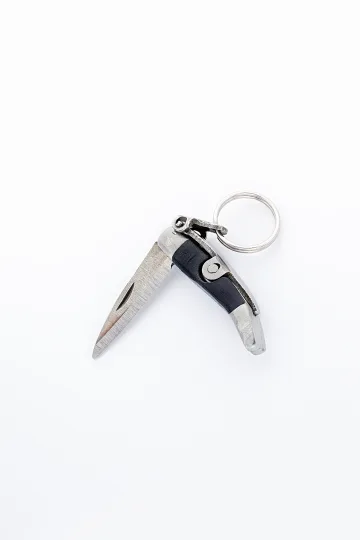
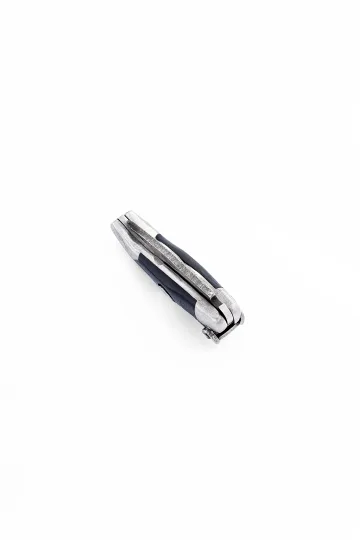
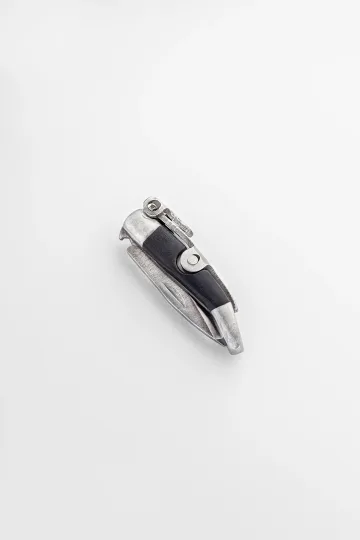
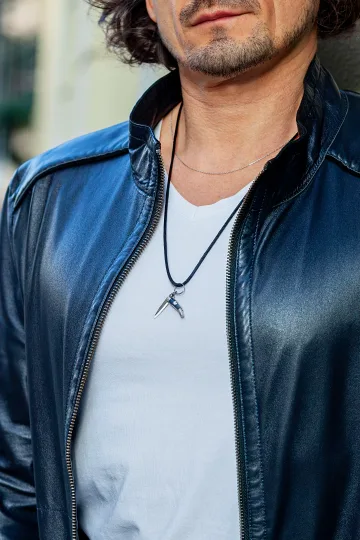
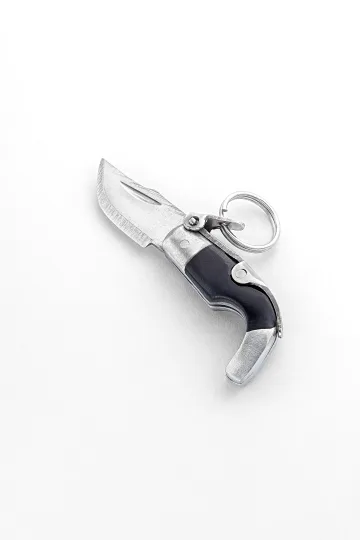
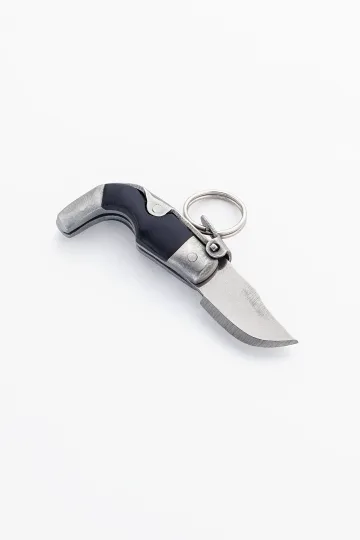
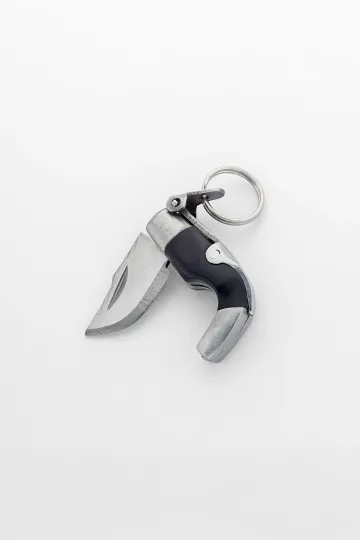
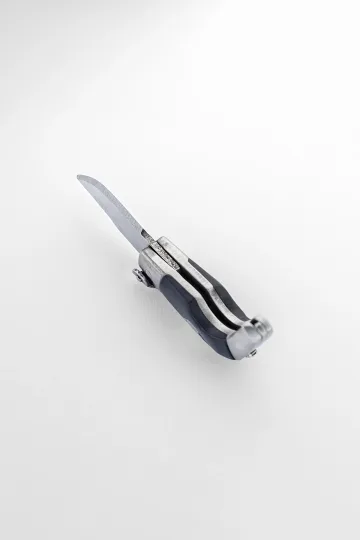
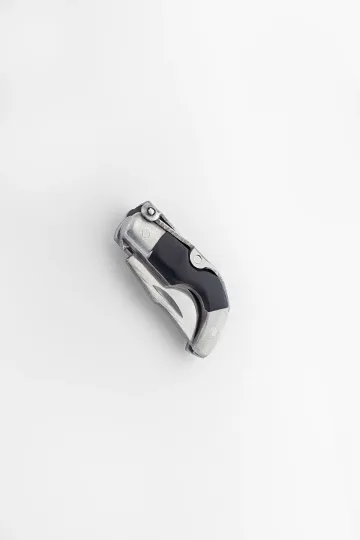
CAPAORA mini knife pendant
The 18th-century Spanish navaja in miniature: 40 mm of stainless steel, a real folding mechanism and a Palanquilla lock that clicks. An affordable gift to remember.
Authentic · Ships from Spain · 14-day returns
Care: so the face does not wear away
Caring for a silver medal
Silver darkens over time; this is natural oxidation, not damage. A little darkness in the recesses of the relief is even useful, because it sharpens the face. If the medal has tarnished all over and gone dull, it is cleaned gently with a soft cloth or a special silver wipe. A medal with enamel must not be rubbed with harsh pastes or abrasives: they scratch the enamel and wear away the painting. The medal is best removed before a shower, the pool and the gym, because sweat, chlorine and cosmetics speed up tarnishing.
Caring for enamel
Fired enamel is as hard as glass, but precisely like glass it fears blows and sharp changes of temperature. The chief enemies of an enamelled medal are a fall onto a hard floor, a knock against the edge of a sink and hot water straight after cold. Enamel is cleaned only with a soft damp cloth, without pastes or brushes. Such a medal is best kept apart, in a soft pouch, so it does not rub against other jewellery and chip. Handled with care, enamel painting outlives several generations, as the old medals in museums confirm.
What to do with tarnished copper and brass
Warm metals darken faster than silver, and here much depends on taste. If you like the dark, prayed-over patina, the medal can be left untouched. If you want the shine back, copper and brass are cleaned with mild agents, but without fanaticism, so as not to wear down the relief or remove the niello in the recesses. A cast medal should not be soaked for long or treated with aggressive chemicals: they bite into the pores of the metal and leave stains.
How to store a medal when it is not worn
If a medal is taken off for a long time, during an illness, say, or a trip without it, it is best kept apart from the rest of the jewellery. Hard chains and hard stones scratch soft silver and chip fragile enamel when everything lies in one heap. A soft fabric pouch or a separate compartment of a box will do. Dry air suits a silver medal, because damp speeds up darkening. An enamel medal fears not damp but blows, so it needs a soft, fall-protected place.
When you need a jeweller rather than home cleaning
There are cases when you should not touch the medal yourself. A chip in the enamel, cracked glass in the setting, a loosened bail that the chain runs through, these are work for a jeweller. An old or inherited medal all the more should be shown to a specialist before any cleaning: clumsy polishing wears down the relief and lowers the value of the piece. Home care suits everyday surface cleaning, while anything touching the construction or the painting is better left to a master.
Blessing: briefly on the main thing
Why a medal is blessed
By tradition a body-worn holy thing is blessed in church. The blessing is not a magic rite that endows the metal with power, but the prayer of the Church that the object may serve its owner for good and remind them of their faith. A bought medal is brought to the church, and a priest blesses it, usually a matter of a few minutes. Many parishes bless medals on certain days or on request after a service, so it is best to ask about the arrangement on the spot.
If a medal was bought as jewellery
If a medal was acquired above all as a beautiful thing, no one obliges you to have it blessed. But if for the owner it is a holy thing rather than decoration, blessing is the logical step. The decision rests with the person and depends on the meaning they themselves invest in the object. There is nothing to impose here: faith is inward, not formal.
Send a friend a discount code, they save on their first order.
Facts that surprise
The first reliquary medals held no image at all
People picture a medal as a struck disc with a holy face, yet the oldest form carried no face at all. It was a sealed capsule holding a relic, a thread, a grain of earth, with nothing on the outside to look at. The image came centuries later, when the lid of the container received a saint and the storehouse turned into a portrait. The familiar object began life as a vessel, not a picture.
Old pectoral crosses often opened
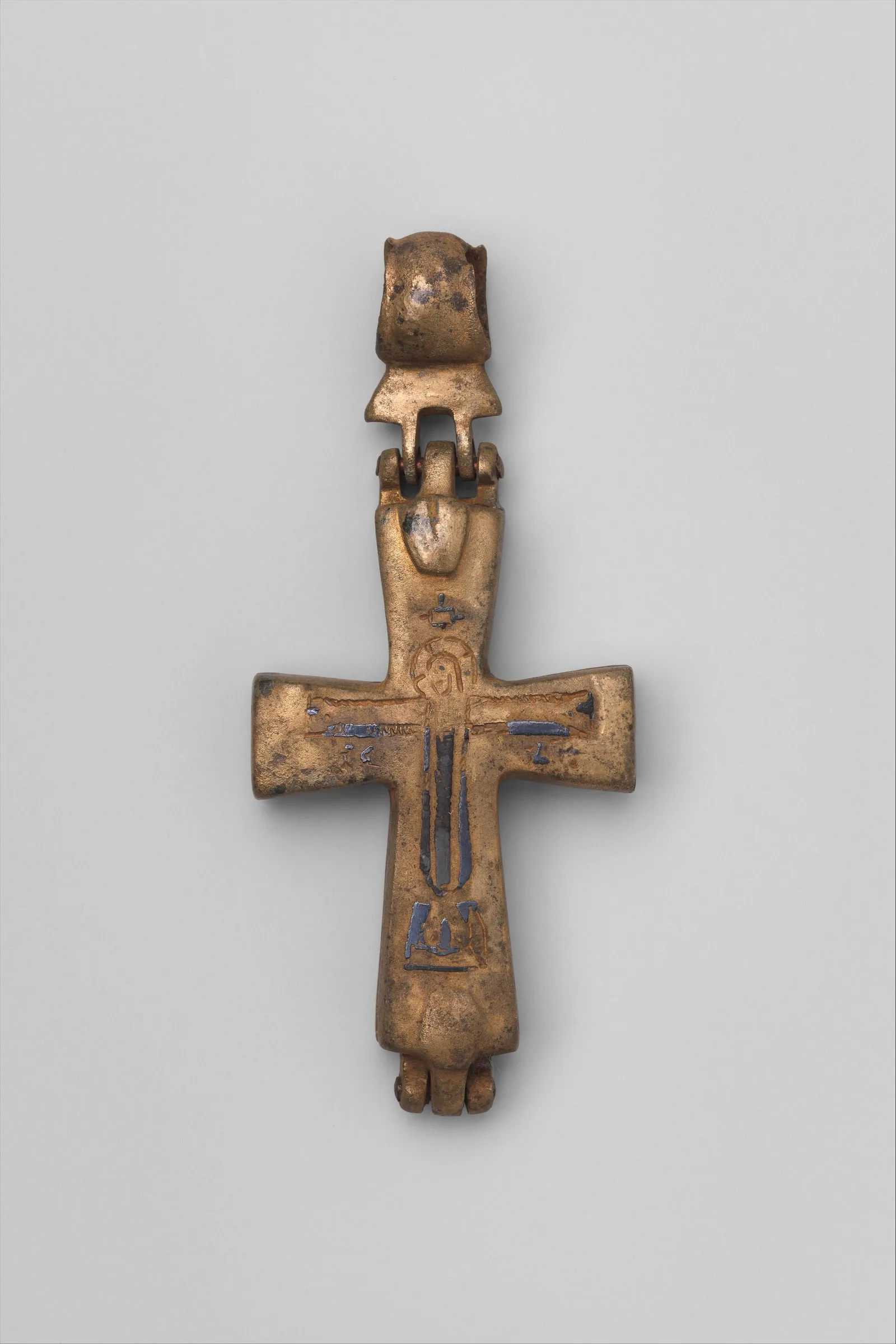
Many people assume the ancient pectoral cross was solid. In fact a large share of the big chest crosses archaeologists recover are encolpia, hollow capsules on hinges into which a relic was placed. The ancestor of the medallion and the ancestor of the cross were frequently one and the same object: a cross outside, a storehouse within.
The copper medal was more affordable than it looks
There is a notion that a body-worn holy thing was a luxury. But copper and bronze casting was so massive that medals and folding shrines were cast by the thousand, and they cost little. Archaeologists find them practically everywhere people lived. The costly things were silver, gold and fine enamel, while the medal itself was an everyday object for people of any means.
Enamel is painted like a picture, under a microscope of patience
A painted medallion the size of a thumbnail is no stamp but a hand miniature. The master paints the face with special colours on fired enamel and bakes the work again, sometimes several times, because different colours set at different temperatures. A slip on the last firing and the work is ruined. That is why good enamel is valued as a small painting, not as a half-finished trinket.
One object could carry two names
The blur between reliquary and medal did not appear yesterday or through the fault of sellers. The same object genuinely travelled two roads: from the relic pouch and from the metal icon, and at some point the two roads merged. A capsule with a face on the lid honestly answers both definitions at once: it is both a vessel for the holy and an image. So there is often simply no strict correct word, and both names describe one thing from different sides.
The folding shrine was a pocket iconostasis
The traveller's folding shrine of two or three panels opened into a real little altar, set up on a table at an inn or in a tent. Closed, it shielded the image from wear and fit in the palm. It was a thought-out piece of engineering: compactness, strength and a complete image in one object, long before the age of folding things.
Frequently asked questions
How does a reliquary medallion differ from a saint medal?
By origin a reliquary is a vessel for the holy, a pouch or capsule, while a saint medal is the image itself, a flat metal icon with a face. In practice the words are often used as synonyms. If you want precision: the thing that opens and holds something inside leans toward reliquary, and the solid disc with a face leans toward medal.
May a person who is not baptised wear a medal?
There is no direct ban, but a medal is made for a believer, for whom the face is an image for prayer rather than a picture. If a person is drawn to faith, wearing one is fine. Taking a medal as a fashion accessory or a luck charm, with no relation to faith, runs against the meaning of the thing.
May a medal be worn together with a cross?
Yes. They mean different things: the cross is a sign of faith, the medal a personal intercessor. They are worn on one chain or on separate ones, and there is no contradiction; the pairing is very common.
Who is best shown on a medal as a gift for a child?
Most often people choose the guardian angel or the saint whose name the child receives at baptism. A medal with an angel is clear and universal, while one with a name saint makes the gift personal. It is good to add an engraving with the name and date of baptism on the back.
Does a medal need to be blessed?
By tradition a body-worn holy thing is blessed in church: this is the prayer of the Church for the owner, not magic. If the medal is a holy thing to you, blessing is logical. If it is above all a beautiful object, blessing is not required. The decision is yours.
What metal should a medal be?
Silver is the classic: noble, holds relief and enamel, within reach for many. Gold is chosen for an heirloom across generations. Painted enamel is hand work, a small painting. Copper and brass are the historic, warm and affordable option. The choice depends on budget and on whether it is an heirloom or an everyday piece.
How do you care for an enamel medal so the face does not wear away?
Clean only with a soft damp cloth, without pastes, brushes or abrasives. Guard it from blows and falls onto hard surfaces, and from sharp changes of temperature. Store it apart, in a soft pouch, so there are no chips or scratches from other jewellery. Handled with care, enamel lasts for generations.
Should a medal be worn under the clothing or over it?
Traditionally a body-worn holy thing is worn under the clothing, against the body, because it is a private object turned toward the person. Wearing it over the clothing as jewellery is possible, but it changes the meaning of the thing, and many believers do not approve.
What it comes to
A saint medal or devotional medallion is not a fashion accessory and not a kind of cross, but a distinct and very old tradition of carrying the face of an intercessor over the heart. Behind a plain-looking object stands a thousand years of history: from the relic pouch and the pectoral reliquary to the enamelled medallion painted like a picture. In choosing a medal, it is worth thinking less about how it looks over a sweater and more about whose face and whose name you want to keep near, and from what metal this thing will outlast the years.
Sterling 925, warm metals, enamel and fine painting, symbols with a history and engraving to order.
Buying it as a gift? Each one arrives ready to give.
 A branded Zevira box and a little card come with every order.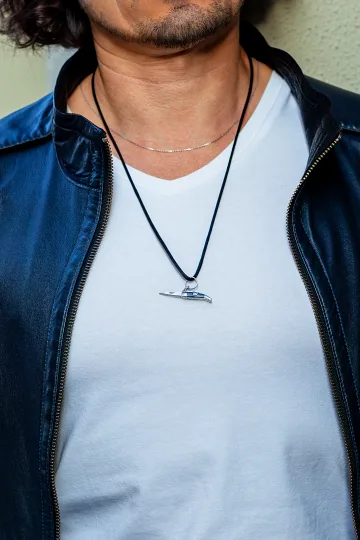




About Zevira
Zevira is a Spanish brand from Albacete, a city of metalworkers. We love objects with character and history: noble silver, warm metals, living enamel and symbols with meaning behind them. If you want to understand the metal, start with the look at what 925 silver means, and the guide to enamel jewellery will tell you about caring for fine painting.