Divino Niño: the meaning of the Holy Child image, the medal and the jewellery
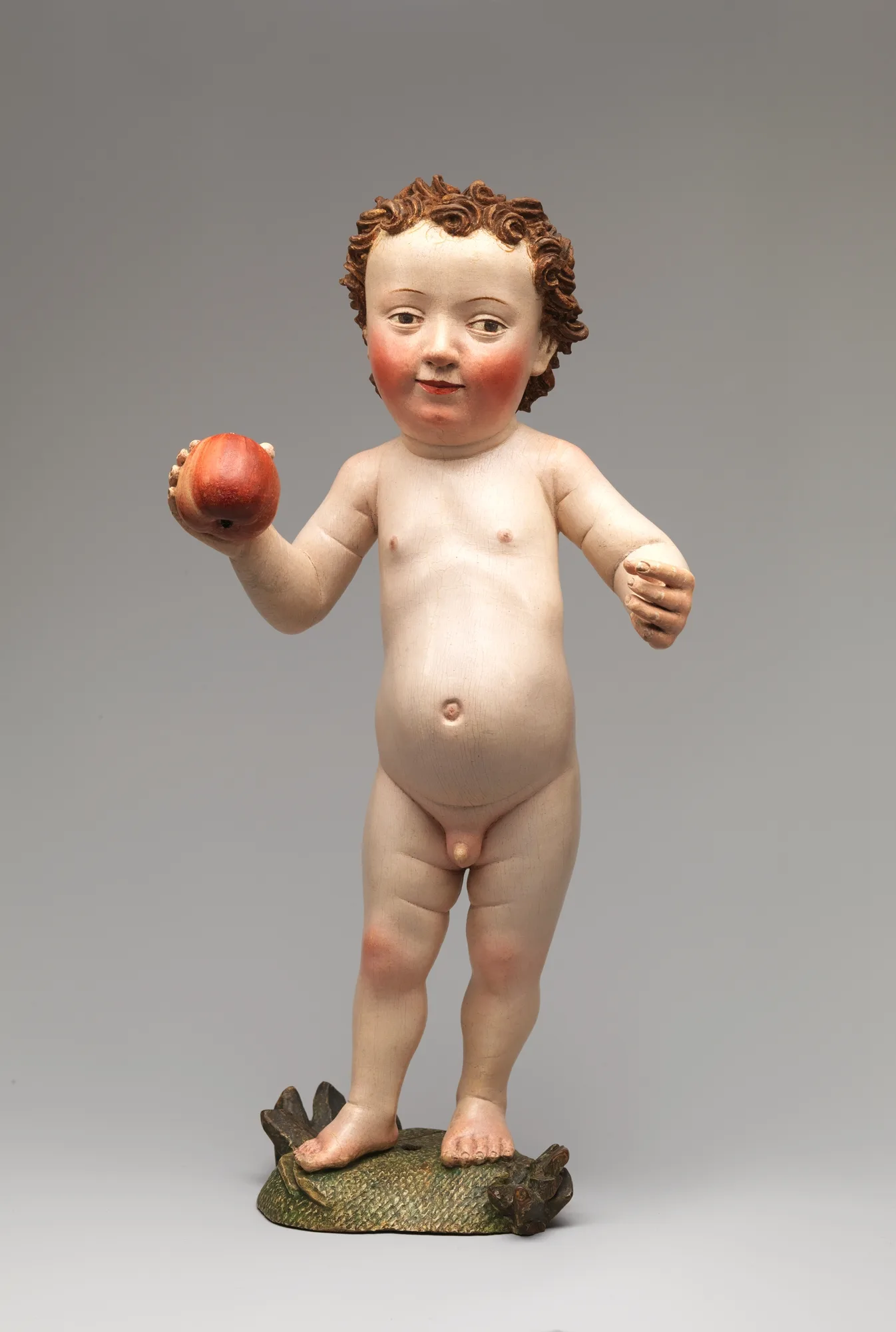
A boy of about six stands in a pink tunic with his arms thrown wide. The image was not invented in medieval Europe. It took shape in Bogotá in the twentieth century, and from there it spread across Latin America. Today the small statues stand on taxi dashboards, next to grocery-shop tills and in home corners set with flowers.
Divino Niño is the Holy Child Jesus, and the devotion to this image is among the youngest in the Catholic world. It has no thousand-year biography, no medieval chronicles, no coronations. It has one city, one parish church in a neighbourhood named after a date, and one gesture that millions of people recognise instantly: two open palms turned towards whoever is looking.
Who is the Divino Niño: the image of the Christ Child
Before unpacking history and symbolism, it helps to agree on what we are talking about. Divino Niño is not a separate saint and not a character from a legend. It is a specific iconographic type showing Jesus as a child, with its own posture, its own colour of clothing and a set of markers that separate it from other child images. Catholic tradition holds several statues that look similar at first glance, and people confuse them constantly.
What the name Divino Niño means
The Spanish Divino Niño translates literally: divino is divine, niño is child, boy. English usage settles on Holy Child or Divine Child Jesus, although the figure is not an infant in arms but a boy of preschool age. The full name under which the image is known in Colombia is Divino Niño Jesús. In Spanish-speaking Catholicism the word Niño works as a marker for a whole family of child images of Christ, and Divino Niño is one of them, the youngest of the group and the most recognisable across the northern part of South America.
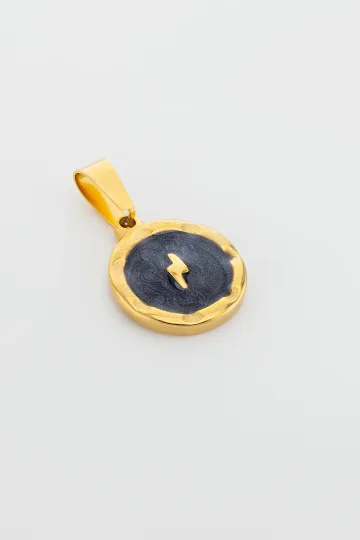
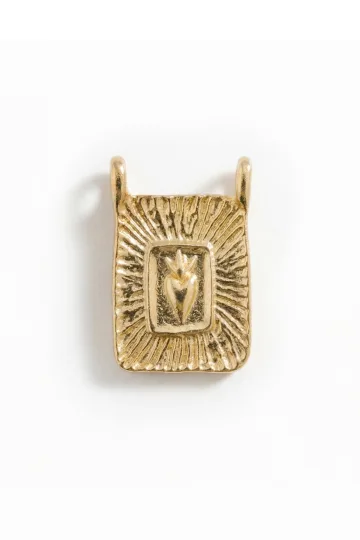
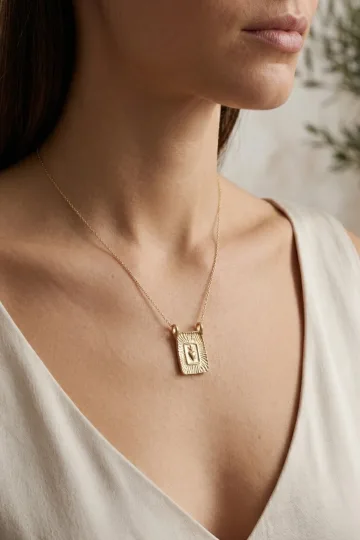
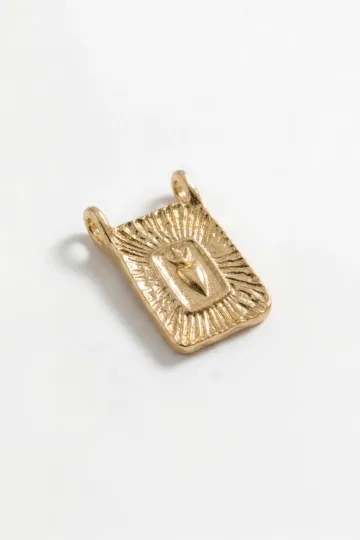
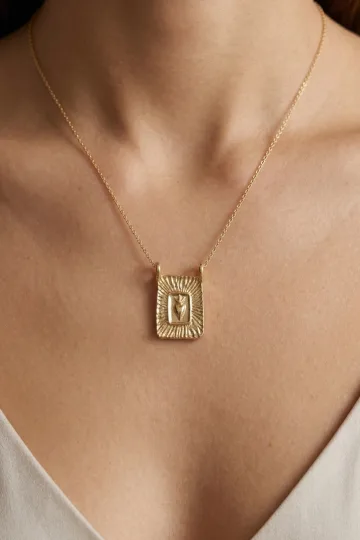
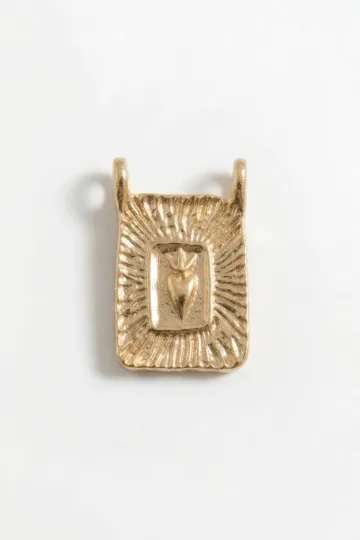
Wear the symbol, don't just read about it. These are in stock:


Who the figure depicts
The figure shows Christ as a child, not some separate holy child and not an angel. This matters, because in popular usage the Divino Niño is sometimes treated as an independent helper addressed on the same terms as a saint. Theologically it is Jesus Christ himself, shown at the age of a child, and the devotion is addressed to him. The childhood here works as a way of talking about accessibility: a person comes to the adult Christ on the cross with repentance, while a child with open arms can be approached without any preparation at all.
How Divino Niño differs from the Infant of Prague
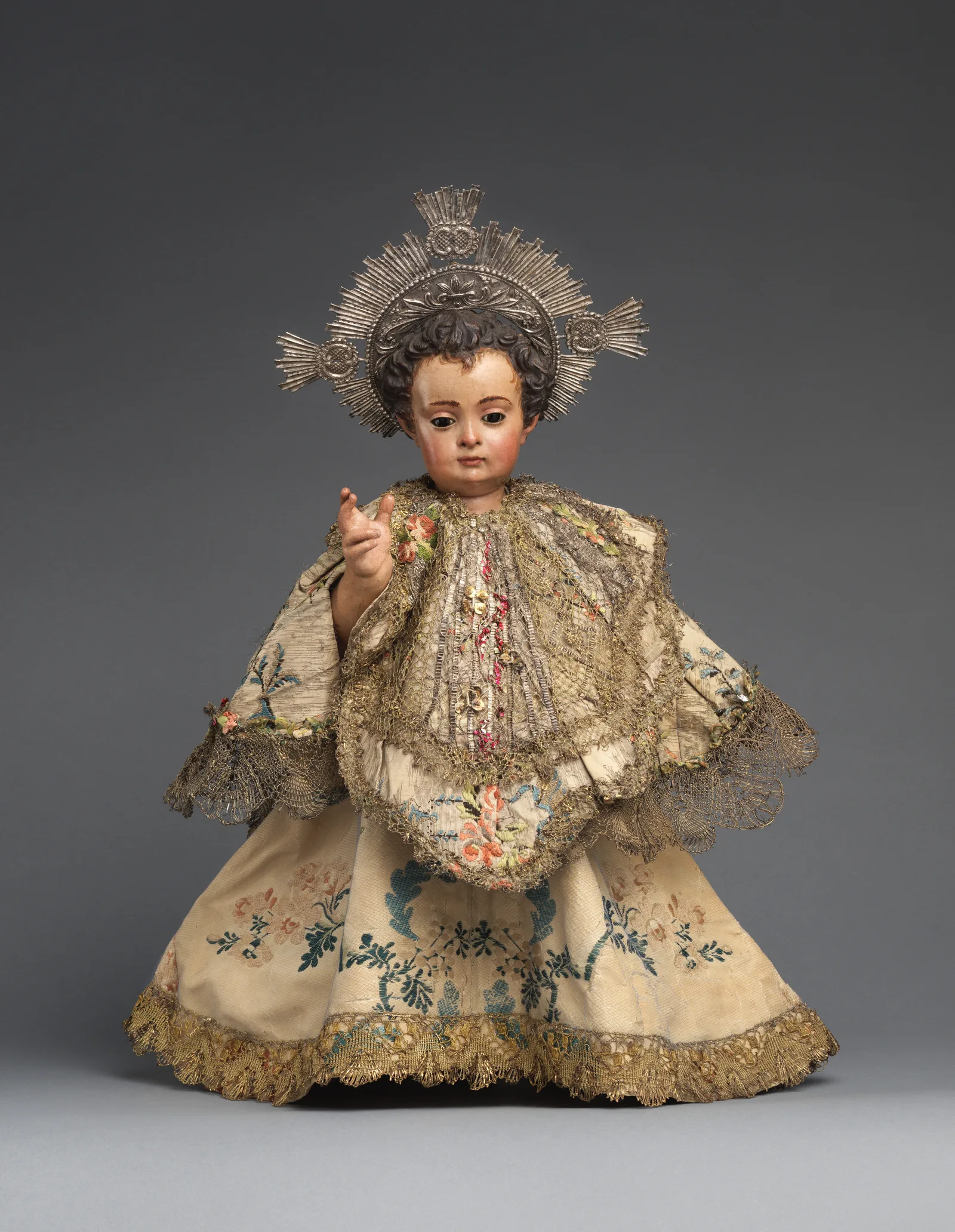
The Infant of Prague, Niño de Praga in Spanish, is a wax figure of Spanish origin that reached Prague in the sixteenth century and has been venerated there since the seventeenth. He is shown in ceremonial dress: a long embroidered robe, a crown on his head, a globe with a cross in his left hand, the right raised in blessing. The Divino Niño is built the opposite way: no crown, no globe, no royal fabrics, only a plain tunic and both arms spread wide. The Prague image speaks of the kingship of Christ, the Bogotá one of his openness. Two different statements about the same child.
How it differs from Santo Niño de Atocha
Santo Niño de Atocha came from Spain and took root above all in Mexico. He is shown seated, in a broad-brimmed hat with a feather, with a pilgrim's staff, a basket and a gourd flask at his belt. This is the image of a traveller, a child on the road who comes to prisoners and wayfarers. The Divino Niño stands, has no hat, no travelling gear, no seated pose. The geography of veneration differs too: Atocha belongs mainly to Mexico and the southern United States, Divino Niño to Colombia and the countries around it. The only feature they share is a child on an altar; in the details they do not overlap.
Why the image is called Colombian
It is called Colombian because that is where the devotion was born. The veneration took shape in Bogotá in the twentieth century, around one specific church and one specific statue, rather than arriving from Europe fully formed like most Catholic images of Latin America. It is a rare case of a devotion with an audience in the millions having a precise address and a datable beginning. For comparison, the Virgin of Guadalupe goes back to the sixteenth century, and the Miraculous Medal to events in Paris in 1830. The Divino Niño is younger than both by whole eras.
The youth of the devotion explains a great deal about how it looks. The image was not designed for a cathedral altar in a gilded frame but for a person walking in off the street. Hence the simple silhouette, the absence of any attribute of power, and a gesture that reads without any preparation. Hence, too, the ease with which the figure moved from the church into flats, cars and shop counters: it needs no special setting and does not look out of place on a dashboard. As the text goes on it will become clear that almost every element of this image answers one question, how to make a holy thing available to an ordinary city-dweller of the twentieth century. One more feature is worth holding in mind. Most Catholic devotions carry centuries of argument, conciliar decisions and gradually fixed iconography behind them, which makes their images nearly impossible to alter without breaking the canon. Here the situation is different: the devotion formed while witnesses were still alive, the iconography still drifts from workshop to workshop, and some details stuck simply because that is how the first statues were made. This gives the image flexibility, but it asks the buyer to pay attention, because things sold under one name in a shop can differ noticeably. Still, the right place to begin is the history, because without Bogotá and one Salesian parish the popularity of this figure cannot be explained.
The story of the devotion: Bogotá, twentieth century
The history of the Divino Niño fits into roughly a century and is tied to the Salesian order, founded in Italy by John Bosco to work with urban youth and poor children. The Salesians arrived in Colombia at the end of the nineteenth century, and it was in their parish in the south of Bogotá that the veneration took shape before spreading across the continent.
The Salesian priest and the birth of the image
The appearance of the devotion is associated with the Salesian priest Juan del Rizzo, Italian by origin, who worked in Bogotá in the first half of the twentieth century. According to the account kept in the parish, he wanted to give his congregation an image of the child Christ that looked friendly and would not frighten children with severity. So came the statue of a boy with arms thrown wide, unlike both the Prague ceremony and the familiar depictions of the Infant in his Mother's arms. The chronology of the early years is known mainly through parish tradition, so details differ between retellings while the general outline stays stable.
The shrine of the Twentieth of July in Bogotá
The centre of veneration became a church in a Bogotá neighbourhood named after the date of the twentieth of July, the day Colombia declared independence in 1810. Hence the popular name of the shrine: Divino Niño del 20 de Julio, the Holy Child of the Twentieth of July. The church sits in the south of the city, in a densely built residential district, and has become one of the country's main places of pilgrimage. On Sundays crowds converge on it, the surrounding blocks turn into an unbroken market of candles, holy cards and flowers, and the queue to the statue stretches to hours. That combination, a church with street trading all around it, is typical of Latin American shrines in general.
How the devotion travelled beyond Colombia
From Bogotá the veneration spread by two routes. The first was internal migration and trade: figures and holy cards were carried to Colombian cities along with the rest of the church-goods stock, and in each new place they landed in shops and homes. The second was emigration. Colombians leaving for Venezuela, Ecuador, Spain and the United States took the familiar image with them, set it up in new flats and brought it into local parishes. So a devotion born in one capital neighbourhood was, by the end of the twentieth century, present everywhere with a noticeable Colombian diaspora.
The Divino Niño works only as a small medal, in gold, on a fine chain. A large image sounds crude here; this is a child's face.
How to wear the Divino Niño medal: what to pair it with, metal and size
A medal with a child's face asks for restraint: the smaller the piece and the finer the chain, the more dignified the image sounds. I build a set like this from the occasion rather than from the clothing, because a religious sign sets the tone by itself. Below is what I advise clients most often.
What do I wear the medal with every day? For weekdays I recommend a medallion of about fifteen millimetres on a fine chain under the collar, so the piece stays a personal sign rather than a statement. I choose a smooth plain top: white, grey, sand, navy. A round medallion with low relief snags on knitwear less than an outline pendant with spread arms, so under a jumper I advise exactly that.
Which metal should I choose for the colour of my clothes? I match the metal to the temperature of the wardrobe. Yellow gold I recommend with warm tones: cream, sand, chocolate, olive. Silver and white gold I advise with cool ones: grey, graphite, blue. One metal throughout keeps the picture together, so I choose rings and earrings in the same tone as the medal. An enamelled version with a pink tunic I place only with calm plain clothing, otherwise the colour argues with the pattern of the fabric.
How do I pick the chain length for a neckline? I match length to the line of the neckline. For an open collar and a shallow neckline I advise forty-five centimetres: the medal sits just below the collarbones, where it reads best. For a closed top, a polo neck or a buttoned shirt I recommend fifty or fifty-five, so the image lies on the chest over the fabric. Sixty and above I leave for those who wear the medal under clothing and do not want it showing. I match the weight of the chain to the medal: a heavy gold medallion needs a dense link, a light steel pendant suits a fine cable chain.
What size of medal should I take? I choose size by age and by the manner of wearing. Twelve to fifteen millimetres I advise for children and for adults who wear the piece under a shirt. Eighteen to twenty is the universal format, where the child's silhouette reads confidently at arm's length. Above twenty-five I recommend only with a plain dark top and on a long chain, otherwise a child's face at that scale looks heavy-handed. If in doubt I take the smaller size: on this subject small always wins.
Baptism and weekdays: how do the sets differ? For a baptism or a first communion I put together the formal version: gold or silver with the name and date engraved on the reverse, a fine chain, no other pendants nearby. For everyday I choose steel or silver without enamel, a smaller size and a sturdier chain, because the piece will live in water, in the gym and under clothing. If there is already a cross on the chain, I advise taking a medal smaller than it: a set should have one main sign.

Turn on your camera, pick earrings, a pendant or a ring, and see the piece on yourself in real time.
Switch items in one tap.
Everything runs in your browser: no photo or video is ever uploaded.
Iconography: pink tunic, open arms, the inscription
The iconography of the Divino Niño is minimal, and that is exactly why it works. The image carries not one superfluous attribute: a child, a tunic, a gesture, sometimes a heart and an inscription. Each element does its own work, and without any one of them the figure would read differently.
Open arms: the central gesture
Both arms are spread to the sides and open, palms forward. This is the detail by which the image is recognised instantly. The gesture reads on two registers at once. The everyday one: this is how a child reaches for an adult, expecting to be picked up, and how an adult receives a child running towards them. The theological one: open palms point to the posture of the crucified Christ, to arms spread on the cross. Combining these two readings in a single child's figure is what makes the image strong. It is about embrace and about sacrifice at the same time, but arranged so that the first reading arrives before the second.
The pink tunic and its colour
The tunic of the Divino Niño is usually pink, sometimes pale red or coral. There is no direct doctrinal explanation for the colour, and it is more honest to say it was chosen artistically rather than by liturgical rule. In Catholic tradition pink belongs to two Sundays of the church year when the strictness of the fast is briefly eased, and the general sense of the colour there is exactly that: restrained joy in the middle of waiting. Pink also sets the Divino Niño clearly apart from the white and gold vesture of the Infant of Prague and from the deep red and blue robes of the adult Christ. The colour works as an identifying mark: a pink tunic is visible from a distance, and it is what picks the image out among a dozen other figures on a shelf.
Posture, bare feet and openness
The child stands upright, weight evenly distributed, feet most often bare. The standing posture separates him from the seated Santo Niño de Atocha and from the Infant on his Mother's lap. Standing means self-sufficiency: this child is not shown as a helpless baby, he is already on his feet and meets the visitor face to face. Bare feet add the motif of simplicity and poverty, familiar from the Franciscan and Salesian traditions, where holiness is tied to giving up what is unnecessary. The overall silhouette comes out open: nothing covers the body, the arms are not pressed in, and between viewer and figure there is no throne, no canopy, no orb.
The heart on the chest and the link with the Sacred Heart
On some depictions a heart is visible on the child's chest, sometimes with flames. This is a direct borrowing from the iconography of the Sacred Heart of Jesus, one of the most widespread Catholic devotions of the modern era. The heart on the chest turns the Divino Niño into a child's version of the same statement: the love of Christ for people, made visible and carried on the outside. Many statues have no heart at all, and that is normal, since a young devotion never settled into a single canon. When the heart is present, it usually means the maker deliberately linked the child figure to the adult devotion.
The inscription Yo reinaré and what it says
Beneath the figure or on the pedestal there is often the Spanish inscription Yo reinaré, which translates as I will reign. The phrase came from the Sacred Heart tradition, where it is tied to promises of Christ reigning in hearts and in nations, and it was used widely in Latin American piety in the twentieth century. Paired with a child's figure the inscription produces a marked contrast: a boy with no crown and no orb announces a kingdom. The meaning here is not political but interior: Christ reigns not by force but through the trust of people. The inscription does not appear on every version of the image, but on medals and holy cards it is a frequent companion.
Unpacking the iconography also has a practical use. When the image is moved onto metal, sculptural detail is inevitably simplified: the pink of the tunic disappears or gives way to enamel, the volume of the folds is reduced to relief a fraction of a millimetre deep, the heart on the chest becomes a small raised mark. What remains is the essential thing, the silhouette of a standing child with arms spread, and that is what has to read on a medal fifteen to twenty millimetres across. A good Divino Niño medal is recognisable at arm's length; a bad one turns into an indistinct blur. So when choosing a piece, look first at how the gesture is worked and how cleanly the arms are separated from the body, and only afterwards at metal and finish.
Customer reviews
Zevira is a real jewellery shop. Genuine payments, deliveries and customer thank-yous.
🥰🥰🥰 gracias

Ok, ¡gracias! 🙂

What the image means: trust, childlike simplicity, home
The meaning of the devotion is easiest to state through what it lacks. In the Divino Niño image there is no threat, no judgement, no demand. There are open arms and an invitation to come closer. All the theological content is built on that foundation, and it makes sense to take it in layers.
Trust as the central motif
The key word of the devotion is trust, confianza in Spanish. People address the figure with open arms not with bargaining and not with promises but with a request, leaving the outcome open. That is what separates it from a magical attitude to an object, where the right action is believed to deliver a guaranteed result. Catholic understanding is strict here: the image does not work as a mechanism, it serves as a support for prayer. A person who sets a statue by the till or wears a medal expresses a disposition rather than concluding a deal. Trust in this frame means accepting that the answer may not be the one expected.
Childlike simplicity and why it matters
The second motif is simplicity. A child image removes the distance that adult depictions of Christ inevitably create: the Pantocrator in the dome looks down from above, the Crucifixion asks for inner readiness. A child with open palms asks for nothing. For someone who rarely goes to church and knows no formulas of prayer, this is often the only available point of entry. Church tradition supports that attitude, leaning on the Gospel words that one enters the Kingdom only by becoming as a child. Simplicity here is not a concession to the poorly educated but a theological idea in its own right.
Home, work and everyday life
The third layer is the tie to daily life. The Divino Niño almost never stays a church-only image: it moves into kitchens, bedrooms, workshops and cars. Its place in the home is usually in plain sight rather than in a hidden corner, often beside a candle, flowers and family photographs. Such a domestic altar turns religion into part of everyday space rather than a separate Sunday occupation. That is exactly why the image moved so easily into the format of jewellery: the logic is the same, a sacred sign next to a person through an ordinary day rather than at a set hour.
What the image does not promise
Honesty matters here. Neither church teaching nor the shrine itself promises that a figure or a medal will secure money, health or luck. Stories of answered requests exist around any popular devotion, they belong to personal experience, and the church approaches them cautiously, testing them over years. Ascribing automatic action to an object means stepping outside tradition into the field of superstition, which the tradition itself condemns. The correct formulation looks like this: the image is a sign of faith and a reminder of prayer, not an instrument with a guaranteed result.
Upload a photo of your pet, someone you love, or an object. We'll build a 3D model and hand-cast it in pewter.

Divino Niño in Latin American culture
The presence of this image in the daily life of Colombian cities is hard to overstate, and it long ago spilled beyond the religious sphere proper. The Divino Niño figure has become part of the visual background of the street on a par with signage and advertising, which is not a common fate for a religious depiction.
Home altars and the corner with flowers
Latin American homes commonly keep a small domestic altar: a shelf, a chest of drawers or a niche holding one or two figures of saints, a candle, a vase of flowers and photographs of relatives. The Divino Niño occupies that place permanently, often in the company of the Virgin Mary and a crucifix. Care for such a corner usually falls to the older generation of the family, and it is one of the few household duties passed down by inheritance along with the figures themselves. A statue that has stood forty years in one spot is felt to be a family object rather than a church item.
Shops, workshops and workplaces
The second typical context is the shop or the workshop. A small figure is set by the till, on a shelf above the workbench, in a barber's, in a garage, in a fruit stall. The formal explanation is simple: work involves money and risk, and the image is a reminder that a person is not alone. The practical explanation matters just as much: the figure marks the space as somebody's own and lived-in, and shows the visitor that behind the counter stands a particular person with a life rather than an impersonal point of sale. A religious object here also works as a badge of belonging to a shared culture.
Taxis, buses and the road
Transport is a distinct and highly visible territory of the devotion. Divino Niño figures and stickers bearing his image turn up on taxi dashboards, in lorry cabs and on intercity coaches. The logic is clear: the road is the most obvious zone of uncertainty in a driver's life, and the image of a child with open arms reads faster than any text. For a passenger the figure carries a message too, if an implicit one: the driver marks himself as a family man and a believer. Car religion is conservative in general, the set of images in cabs changes slowly, and getting into that set means a devotion has taken firm hold.
The twentieth of July and children's celebrations
The date of the twentieth of July, which gave its name to the Bogotá neighbourhood and the shrine, coincides with the national independence holiday of Colombia, and the church is especially crowded that day. Beyond that, the image is firmly tied to family celebrations for children: baptisms, first communions, birthdays. At such events a medal or a small figure is a customary gift from godparents and older relatives. The link between a child image and children's occasions arises by itself and keeps the devotion alive from one generation to the next, because every new child in the family receives an object of their own.





The Divino Niño medal as jewellery
The move from image to jewellery happened naturally. The medal is the oldest way of carrying a holy sign on the person, and Catholic culture has used it without interruption for many centuries. The Divino Niño arrived in this format late but settled in fast, because his silhouette suits striking well.
Formats: medallion, pendant, holy card in metal
There are three main formats. A round or oval medallion with a relief figure at the centre is the classic, the closest to the tradition of Catholic medals. A pendant cut along the outline, where the metal follows the silhouette of the standing child, looks more contemporary and weighs noticeably less. A small plaque, often rectangular or shield-shaped, sits closer to folk tradition and usually costs less. Choose the format to match the habit of wearing: an outline pendant looks better over clothing, a round medallion is more comfortable under a shirt and snags less.
How the image reads on metal
Metal is cruel to detail. At fifteen millimetres across, the child's face reduces to a few lines, the folds of the tunic to a couple of strokes, and the inscription, if there is one, to an almost illegible band around the edge. What works is the silhouette: body, head, two spread arms. A good die gives a noticeable difference in height between the arms and the ground, so the figure reads even in shadow. A poor die flattens the relief and the medal turns into a disc with an indeterminate pattern. When buying, it is worth looking at the piece at an angle and in side light, because that is how the real depth of the relief shows.
Engraving a name and a date
The reverse of a medallion is almost always left smooth, and that is the place for engraving. The standard set for a baptism is the child's name and the date, sometimes with the godparents' names added. Engraving changes the status of the object: the medal stops being a stock item and becomes a record of a particular event, kept afterwards for decades. Technically silver and gold are the easiest to engrave; steel needs a laser and holds a finer line. Decide in advance whether engraving is wanted, because applying it after rhodium plating is harder.
What to combine it with on a chain
Catholic tradition allows several signs to be worn at once, and a single chain often ends up carrying a Divino Niño medal, a cross and an image of the Mother of God. Assemble such a set by one rule: one piece is the main one, the rest smaller than it, otherwise the composition looks overloaded. The medal pairs well with a rosary or prayer beads worn separately, on the wrist or in a pocket, rather than on the same chain. Mixing metals is acceptable but better done deliberately: silver with silver reads calmer, silver with gold needs a larger main element to hold attention.
Materials and formats
Material determines how a piece looks, how long it lives and what occasion it suits. Religious medals have their own specifics: they are often bought for many years ahead, with an eye to passing them to children, so the demands on metal are higher than for ordinary costume jewellery.
Sterling silver 925 as the main option
Sterling silver 925 remains the sensible middle ground for a medal. It holds crisp relief, tolerates daily wear well, takes engraving and polishing, and over time darkens in the recesses, which for a relief image is rather a plus: contrast increases and the figure reads more clearly. Care is simple, a soft cloth and a treated polishing cloth bring back the shine in a minute. For baptisms and first communions a silver medal is the most frequent choice in Catholic countries, because it looks dignified without becoming a piece that is frightening to lose.
Gold and the medal as an heirloom
A gold medal is usually chosen for a major occasion with inheritance in mind. Yellow gold is closer to the traditional look of Catholic medals, white looks more contemporary and pairs with small diamond accents if they are wanted. Gold does not tarnish, holds fine engraving better and survives several generations without losing its look. The other side of that is that such a piece is worn every day less often: it is more often kept and put on for occasions. If the medal is being bought for a child, factor in from the start that the chain will need replacing as they grow.
Enamel and the colour of the tunic
Enamel is the only way to keep the pink of the tunic in metal, the colour that works as an identifying mark in the sculpted original. Hot enamel on silver gives dense colour and lasts a long time; cold enamel costs less but is more sensitive to knocks and solvents. An enamelled version looks more festive and closer to the household statue, a plain metal one is more austere and more versatile. The choice is a matter of taste, but remember that a coloured medal sits less easily with other jewellery and asks for more care when washing hands and cleaning.
Steel and everyday wear
Surgical steel makes sense when a piece is needed for genuinely intensive wear: manual work, sport, water, a teenager. Steel does not tarnish, is not troubled by sweat and barely wears at all, and laser engraving on it lasts longer than mechanical engraving on silver. Relief on steel is usually shallower because the material is harder, so the image on a steel medal is more often carried by engraving or flat stamping than by deep volume. For a first child's medal, which will certainly be scraped along a playground, that is a sensible option.
Medal size and chain length
Common medal diameters run from twelve to twenty-five millimetres. Twelve to fifteen is the child's size and the option for anyone wearing the piece under clothing. Eighteen to twenty is the universal adult format, where the figure already reads confidently. Twenty-five and above is a visible accent worn over clothing and usually on a longer chain. Chain length is chosen so the medal sits below the collarbones: forty-five centimetres for average height, fifty and more if the piece is meant to lie on the chest over a jumper or shirt.
Leave your email, we'll send your discount code. No spam, unsubscribe anytime.
The code arrives by email, valid on your first order.
Who receives a Divino Niño medal
A religious medal is a gift with an address: it assumes the recipient shares the tradition or at least treats it with respect. In Catholic culture the set of occasions settled long ago and barely changes, and the Divino Niño holds its own place in that set thanks to the theme of childhood.
Baptism and the gift from godparents
Baptism is the main occasion. By established custom the medal is given by the godparents, and most often it is silver with the name and date engraved on the reverse. The child does not wear such a medal straight away: it is kept, shown at family gatherings and put on when neck and chain match in size. The point of the gift is not the object as such but the marking of an event, so the quality of the engraving matters more here than the weight of the metal. A child image on a baptismal medal looks more fitting than adult iconography, and that is one reason for the popularity of the Divino Niño among godparents.
First communion and confirmation
First communion is widely celebrated in Catholic countries, and a medal remains one of the most frequent gifts for the day. The logic here is different: a child of seven to ten can wear a piece of jewellery and understands what it means. So the size chosen is one that can be worn at once, and the recipient is often allowed to pick it. Confirmation in the teenage years shifts the choice towards stricter and more universal pieces, because a teenager rarely wants to wear something openly childlike. At that age the Divino Niño usually gives way to a cross or a Marian medal.
The birth of a child and a gift for the parents
A separate occasion is the birth of a child, when the medal is given not to the baby but to the mother. Such a gift reads as a wish for protection and calm for the family, and the child image works directly here. A woman who wears a Divino Niño medal after giving birth usually connects the object not with her own religious practice but with a specific event and person. The same goes for paired gifts, when mother and child receive matching medals and the second is kept until adulthood.
The twentieth of July and family dates
The coincidence of the shrine's name with a national holiday made the twentieth of July a convenient date for gifts within Colombian families and the diaspora. A pilgrimage, a trip to Bogotá or simply a family lunch is arranged for the day, and a medal fits that scenario naturally. Outside Colombia the date more often works as an occasion for those keeping a connection with the country. Beyond it the usual reasons remain: name days, anniversaries and the departure of someone close for a long time, where a medal plays its familiar role as a thing that recalls home.
For an adult: when it is appropriate
Adults receive such a medal less often, and care is needed here. A child image on jewellery for an adult man or woman requires either a personal link with the devotion or a cultural one, such as Colombian origin. Universal options are safer in that case: a cross, the Miraculous Medal or an image of the Mother of God will suit almost anyone from Catholic culture. A Divino Niño goes to an adult when it is known for certain that the image is close to them, for instance if a figure has stood in their home or car for years.
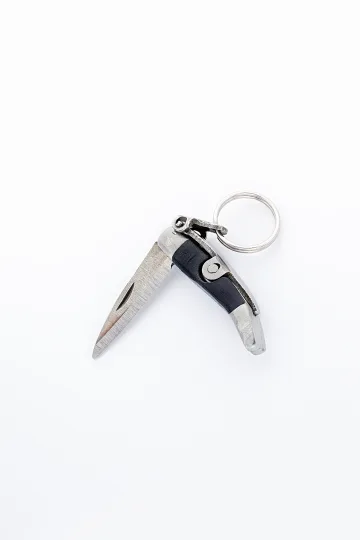
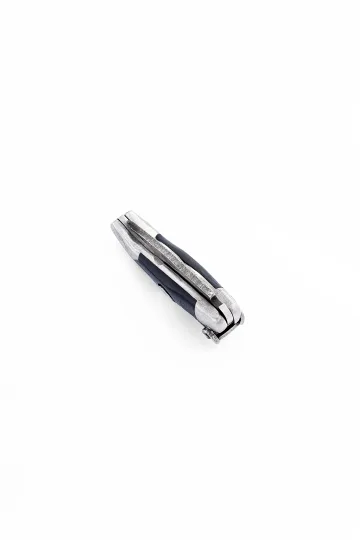
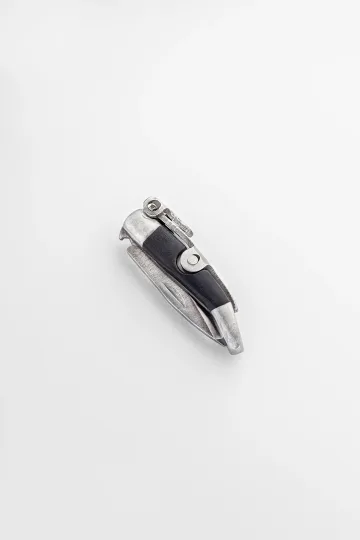
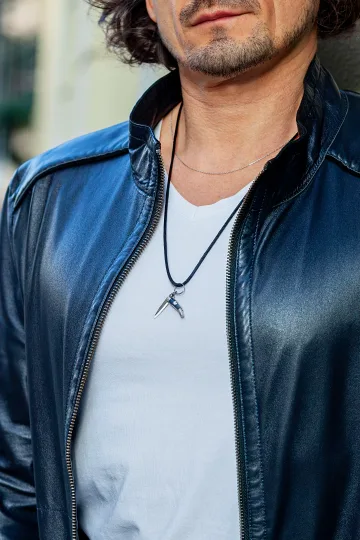
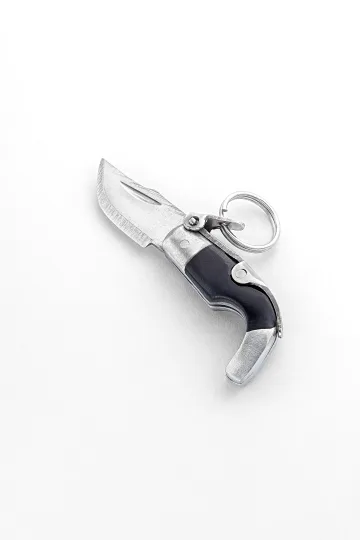
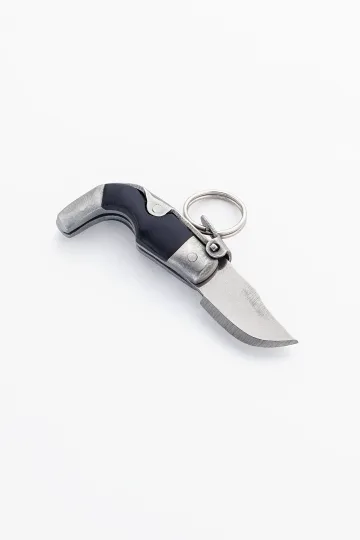
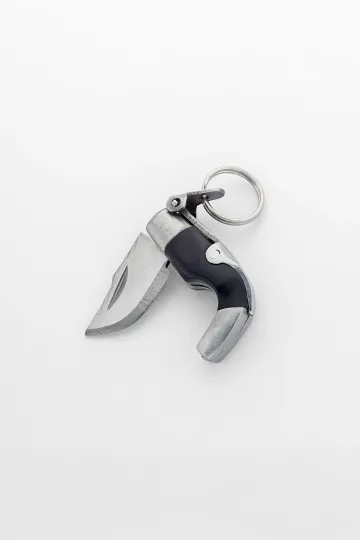
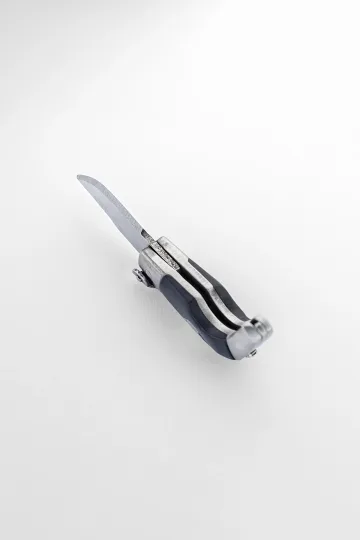
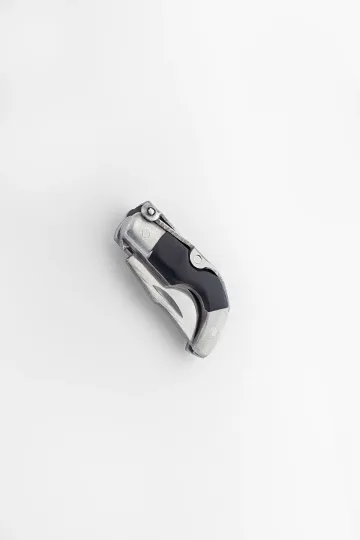
CAPAORA mini knife pendant
The 18th-century Spanish navaja in miniature: 40 mm of stainless steel, a real folding mechanism and a Palanquilla lock that clicks. An affordable gift to remember.
Authentic · Ships from Spain · 14-day returns
Psychology: why a child image works
The question of why a child figure gathers such an audience has both a religious and a fully secular answer. The second is interesting even to people indifferent to the devotion itself, because the mechanisms here are universally human and operate far beyond religion.
A child's face and the reaction to it
People respond predictably to childlike facial proportions: a large head relative to the body, big eyes, rounded cheeks produce softening and a wish to protect. Ethology describes this as the baby schema, and the whole toy and animation industry uses it. Religious sculpture uses the same mechanism, consciously or not. A depiction of Christ as a child lowers wariness faster than any adult image, and the effect does not depend on whether the viewer believes. Hence the ease with which the figure fits into domestic space and is not felt as an alien object.
An open posture and the absence of judgement
The second reason lies in the posture. Spread arms and an open body read as an absence of threat, whereas crossed arms, clenched fists or a stern frontal gaze create distance. Many traditional religious images are built as a meeting with a judge, and that is a deliberate choice with its own logic. The Divino Niño is built the other way round: he does not assess, he waits. For a person arriving with guilt or in a hard moment, the difference between these two types of image proves decisive, and it explains why people who rarely go to church also come to this statue.
Ritual, anxiety and a sense of control
The third layer is the function of ritual. Lighting a candle, straightening the flowers, touching a medal in a pocket before an exam or a journey are simple actions that reduce anxiety by restoring a feeling of at least some control. Psychology describes such practices neutrally: they really do help with uncertainty, whatever the content of the belief. A believer explains the effect by prayer and intercession, a secular person by habit and attention, and the two accounts are not obliged to argue. What matters is something else: in both descriptions, what works is not the object in itself but the action of the person.
Divino Niño and neighbouring devotions
The Catholic world is full of images, and understanding how they differ is useful both to a believer and to someone simply choosing a gift. Below is a comparison of the Divino Niño with four neighbouring devotions that most often sit next to him on the shelf of a church shop.
The Virgin of Guadalupe
The Virgin of Guadalupe is the principal Marian image of Latin America, linked to apparitions in Mexico in 1531 and to the image on the cloak of the indigenous man Juan Diego. Her iconography is recognisable: a female figure in a mandorla of rays, a crescent under her feet, a star-strewn mantle. The centre of meaning there is motherhood and intercession, and also the national identity of Mexico, since the image became a symbol of the country. The Divino Niño carries no national weight on that scale and turns towards the personal, domestic side of faith. There is a separate account of that image.
The Miraculous Medal
The Miraculous Medal was born in Paris in 1830 from the visions of the nun Catherine Labouré and is dedicated to the Virgin Mary conceived without sin. Its distinguishing feature is a strictly fixed composition: Mary on the globe with rays from her hands on the obverse, the letter M with a cross and two hearts on the reverse. It is the most formalised of the four neighbours: its iconography cannot be altered. The Divino Niño, by contrast, exists in dozens of variants, because a young devotion has not had time to grow a canon. The difference is felt in tone as well: the medal is stricter and theologically more precise, the child image softer and closer to home.
The Sacred Heart of Jesus
The Sacred Heart is a seventeenth-century devotion that grew out of the visions of Margaret Mary Alacoque in France and spread across the Catholic world. The iconography is direct: Christ points to his heart, ringed with a crown of thorns and flames. The kinship with the Divino Niño is obvious: the same theme of Christ's love for people, the same motif of openness, and on some child figures the heart on the chest and the inscription Yo reinaré appear outright, borrowed from that tradition. In effect the child image can be read as its softened version for household use.
The Infant of Prague
The Infant of Prague is the closest relative by type, a depiction of Christ as a child, and at the same time a complete opposite in intent. A Spanish wax figure of the sixteenth century that reached Prague and has been venerated there since the seventeenth, it is shown in ceremonial dress with a crown and an orb. It is dressed in changing vestments of different colours according to the church calendar, which is a whole ritual in itself. The Divino Niño is not dressed and undressed, has no crown, no orb and no calendar wardrobe. One image speaks of the child's kingship, the other of his accessibility.
What can be worn together
A practical question: do these images go together on one person. There are no formal prohibitions, Catholic tradition is relaxed about wearing several medals. The limits here are aesthetic: two large relief images on one chain argue with each other and look overloaded. The scheme that works is one main image on the chest and, if wanted, a second small one, either a cross or a plain sign. The combination of the child figure with the Sacred Heart is logical in meaning, and the combination with Guadalupe gives a pair of child and Mother, which also reads coherently.
The comparison shows the main thing: behind each image stands a definite way of speaking to a person, not merely a pretty picture. A strict medal professes a doctrine, a national image gathers a country around itself, the adult devotion of the Heart addresses sacrificial love, and a child figure removes distance. Choosing between them for yourself or as a gift, it is more useful to work from that difference than from the outward beauty of the piece. It also protects against the typical mistake of buying an object as a charm with a promised effect and receiving a thing whose purpose is something else entirely. There is a practical side to the comparison too. Church shops in Latin America and Spain lay these images out side by side, often in the same finish and with the same labels, so the buyer navigates by picture. That is exactly why a figure in a crown is regularly taken for a Divino Niño, and so is a seated child in a hat. If the gift is meant for someone with a settled devotion of their own, the miss is noticeable and unpleasant, roughly like the wrong name in a greeting. Thirty seconds of checking the details, crown, staff, spread arms, removes the question entirely. Below are the most persistent misconceptions around the Divino Niño, because a young devotion collected them especially fast.
Going through the myths reveals a general pattern. The younger a devotion and the wider it spreads through everyday culture, the more layers accumulate around it that have nothing to do with the original content. Some of those layers are harmless, like sayings about where exactly to place the figure in a flat. Others already lead astray: promises of guaranteed results, trade in objects with supposedly special properties, demands to perform certain actions a strictly defined number of times. Telling one from the other is not difficult, by a simple marker: tradition speaks of trust and leaves the outcome open, superstition speaks of a mechanism and promises a result. Everything else in this devotion is checked with the same ruler.
Send a friend a discount code, they save on their first order.
Facts that surprise
The devotion is less than a century old. Most Catholic images worn as medals have roots in the Middle Ages or the early modern period. The Divino Niño took shape in the twentieth century, which makes it one of the youngest mass devotions in the world. Yet in recognisability across the northern part of South America it competes with images five hundred years old.
The shrine's name comes from a revolution date. The Bogotá neighbourhood is named for the twentieth of July 1810, the day the struggle for Colombian independence began. So a religious shrine carries the date of a political event in its popular name, and Colombians say they are going to the twentieth of July when they mean a trip to the church.
The image has no single canon. Unlike the Miraculous Medal with its strictly fixed composition, the iconography of the Divino Niño drifts: the heart on the chest is sometimes there and sometimes not, the shade of the tunic runs from soft pink to nearly red, the inscription is not always present. A young devotion never received a single approved model.
The inscription is borrowed from another devotion. The phrase Yo reinaré did not come from the history of this image but from the Sacred Heart tradition, where it is tied to promises of Christ's reign. It arrived on the child figure later and is in essence a quotation.
The pink has no doctrinal explanation. In Catholic liturgy pink belongs to two Sundays of the year when the fast is eased, but there is no direct link between that rule and the tunic of the Divino Niño. The colour stuck as an artistic decision and became the identifying mark of the image.
Transport turned out to be the devotion's main shop window. Taxi dashboards and lorry cabs spread the image nearly more effectively than parishes: in a day dozens of passengers see a figure in a car, and that is exactly how the devotion travelled to cities with no shrine of their own.
The gesture reads two ways and that is deliberate. Spread arms are at once a child's movement forward and the posture of the crucified. The same detail speaks of an embrace and of the cross, and that double bottom is what separates a successful religious image from a merely charming sculpture.
Emigration made the devotion international. The Colombian diaspora in Spain, Venezuela, Ecuador and the United States carried the image into new parishes along with families. Today the Divino Niño medal is sold in church shops of countries where most buyers have never heard of the Bogotá neighbourhood.
Frequently asked questions
Who is the Divino Niño?
The Divino Niño is the image of Jesus Christ as a child, formed in Bogotá in the twentieth century. He is shown as a boy of five to seven in a pink tunic, standing with his arms spread wide, sometimes with a heart on his chest and the inscription Yo reinaré. This is not a separate saint or an independent character but an iconographic type whose veneration is addressed to Christ himself.
What does the gesture of open arms mean?
The gesture reads in two senses at once. The everyday one is a child's movement towards an adult and an invitation to come closer. The theological one is a reference to arms spread on the cross. Combining embrace and sacrifice in a single child's figure is the central idea of the image, and it is the invitation rather than the suffering that is read first.
How does the Divino Niño differ from the Infant of Prague?
The difference lies in intent. The Infant of Prague is shown as a king: an embroidered robe, a crown, an orb with a cross, and the figure is also dressed according to the church calendar. The Divino Niño is shown open: a plain pink tunic, bare feet, no crown and no regalia, both arms spread. The first image speaks of the kingship of Christ, the second of his accessibility.
Why does the Divino Niño wear a pink tunic?
There is no direct doctrinal explanation, and that is worth admitting honestly. In Catholic liturgy pink belongs to two Sundays of the year when the strictness of the fast is eased, and the general sense of the colour there is restrained joy. For the image itself pink works above all as an identifying mark, setting it apart from the white and gold vesture of the Infant of Prague.
Does a Divino Niño medal help in business and money?
Church teaching ascribes no automatic action to a medal and promises no result. Stories of answered requests belong to people's personal experience, and the tradition itself approaches them cautiously. The correct formulation is this: a medal is a sign of faith and a reminder of prayer, not an object with a guarantee. Promises of a result in exchange for certain actions belong to superstition, which the tradition condemns.
Should a medal be blessed?
It is customary to have a medal blessed, though there is no strict requirement. A blessing is the consecration of an object in church, after which it counts as a sacramental, that is, an auxiliary sign of faith. Many people ask a priest to bless a medal before putting it on themselves or giving it away, especially when it is a gift for a baptism or a first communion.
Which material should I choose for a baptism gift?
Most often sterling silver 925: it holds relief, engraves easily, looks dignified and does not become a thing that is frightening to lose. Gold is chosen when the medal is conceived as an heirloom to be passed down. Steel makes sense once the child is older and will wear the piece actively every day. Engraving of the name and date on the reverse is worth ordering right away, before any plating is applied.
Where is the main shrine of the Divino Niño?
In Bogotá, in the neighbourhood named after the twentieth of July, the day the Colombian struggle for independence began. The church is in the care of the Salesians and remains one of the country's main places of pilgrimage, especially crowded on Sundays. It was around this parish that the devotion formed and from there that it spread across Latin America and the diaspora.
Conclusion
The Divino Niño is a rare case of a mass Catholic devotion with a traceable biography: the twentieth century, Bogotá, a Salesian parish in a neighbourhood named after a date. It has no medieval chronicles and no coronations, but it has a precise place and a clear intention, to give a city-dweller an image of Christ that is not frightening to approach.
The whole force of this figure rests on one detail. Two spread arms read instantly and say two things at once: a child running towards you, and a person standing with arms spread as on the cross. Everything else, the pink tunic, the bare feet, the heart on the chest, the inscription about a kingdom, only supports that gesture. That is why the image works equally in a church, on a taxi dashboard and on a medal the size of a fingernail.
Wearing it makes sense for anyone drawn to that particular tone: trust instead of bargaining, simplicity instead of ceremony, home instead of distance. Like any medal, the piece guarantees nothing and promises nothing. It does something else, keeping a chosen disposition next to a person through an ordinary day, and that is its real purpose.
Medals and pendants with religious images in our range are sterling silver 925, steel and gold with worked relief and a smooth reverse ready for a name and a date. A fitting gift for a baptism, a first communion or the birth of a child.
The choice here always comes down to the occasion and the person: one prefers plain silver for every day, another a gold heirloom medal for a christening, a third sturdy steel for active wear. Size, chain length and the presence of engraving decide no less than the image itself, so it is worth settling those three parameters before buying. If the gift is meant for a child, allow in advance for the chain needing replacement as they grow, while the medal stays the same.
Buying it as a gift? Each one arrives ready to give.
 A branded Zevira box and a little card come with every order.




About Zevira
Zevira makes jewellery with character and meaning rather than shiny things for the sake of shine. We produce amulets, symbols and medals in sterling silver 925, steel and gold, with attention to relief, to history and to the possibility of engraving. Every piece is made to be worn daily and passed on. If you need something that means something to a particular person and occasion, we help find it.