Our Lady of Guadalupe: Meaning of the Image, the 1531 Apparition, and the Medal
Every December, some twenty million people make their way to the basilica in Mexico City, which makes it the most visited Catholic shrine in the world. At the centre of the pilgrimage sits a rough piece of cloth woven from agave fibre, and on it, for nearly five centuries, an image of the Virgin Mary has held fast. Scholars still argue about it, while the faithful see a miracle.
Who Our Lady of Guadalupe Is: The Apparitions of 1531
The story of Guadalupe begins not with an icon painted by an artist but with the account of a simple native man who said he had seen the Mother of God on a barren hill outside Mexico City. Ten years after the fall of the Aztec capital, among the ruins of an old faith and a difficult christianization, an image appeared that both sides accepted: the Spanish and the indigenous peoples alike. Let us take that opening step by step, keeping tradition separate from the details that can be confirmed.
Juan Diego Cuauhtlatoatzin: Who He Was
According to tradition, the witness to the apparitions was a baptized native of the Nahua people named Juan Diego, whose birth name was Cuauhtlatoatzin. He was no longer a young man, of modest means, a widower who lived near Mexico City and walked many kilometres on foot to attend Mass. The Church later numbered him among the saints, and he became the first canonized indigenous person of the Americas. The figure itself matters: not a bishop or a missionary but an ordinary parishioner from a recently conquered people. It was through him, the story says, that the image was given, and from the very start this cast Guadalupe in the role of a Mother turned toward simple people and toward the native population, not toward the conquerors alone.
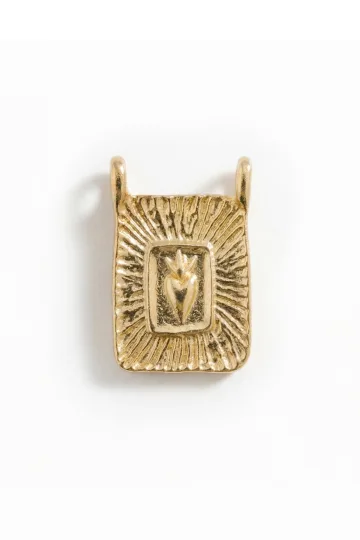
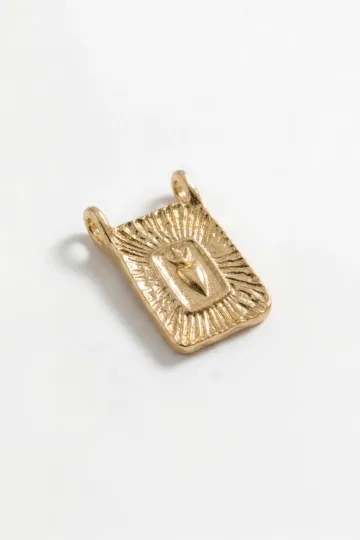
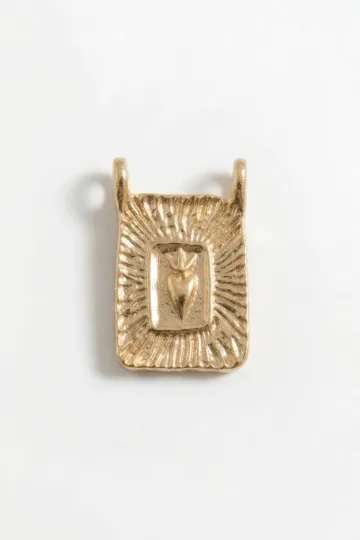
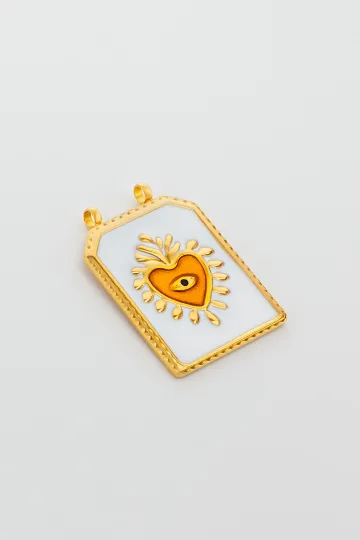
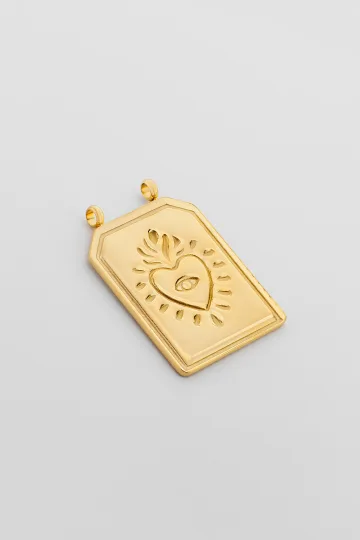
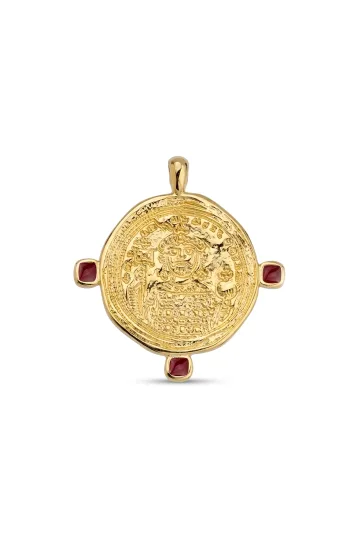
Wear the symbol, don't just read about it. These are in stock:

Four Apparitions on the Hill of Tepeyac
Tradition speaks of several encounters in December 1531 on the hill of Tepeyac, north of Mexico City. The first time, the account goes, Juan Diego heard singing and a voice calling him by name, and on the summit he saw a young woman shining with light, who spoke to him in his native Nahuatl. She called herself the Mother of the true God and asked that a church be built on that spot. Diego carried the request to the bishop, but the bishop doubted and wanted a sign. The Virgin appeared again, sent the native man back, and promised to give a token. This chain of encounters, with the doubt of the Church authorities and the persistence of the poor messenger, follows the recognisable pattern of Marian apparitions and gives the story its drama.
The Miracle of the Castilian Roses in Midwinter
The climax of the tradition is the miracle of the roses. The Virgin told Juan Diego to climb the bare December hill and gather flowers where usually only thorns grew. According to the account, he found on the summit fragrant roses, foreign to that place, Castilian roses that could not have been in Mexico in winter. Diego cut them, folded them into his tilma, the cloak of coarse fibre, and carried them to the bishop as the promised sign. The roses here carry a meaning beyond the beauty of the scene: a flowering winter is an ancient image of miracle and new life, and the Castilian variety tied Spanish and native soil into a single bouquet. This is the moment that leads to the heart of the matter, to what happened when the native man unfolded his cloak.
The Imprint on the Agave Tilma
When Juan Diego opened his tilma before the bishop, the roses spilled onto the floor, and on the cloth itself, tradition says, the image of the Virgin Mary appeared. The tilma was made of agave fibre, a coarse material that usually does not last long. It is this very cloak with the image that is kept today in the basilica in Mexico City and remains an object of pilgrimage and study. The faithful see a miracle in the survival of the cloth and the brightness of its colours, while skeptics look for natural explanations and argue over the dating and the technique. The examination of those disputes is best left to scholars, and for the story of the image something else matters: the relic was not a painting in a frame but the simple working cloak of a poor native man, and from the very start this made Guadalupe close to the people.
From an apparition on a hill to the status of a national symbol, the image had a long road ahead, one that took centuries. It passed through missionary preaching, through a merging with the memory of pre-Hispanic shrines, and through a war in which a banner bearing the Virgin was carried over the army. Let us follow these eras in order, because it was they that turned a local miracle into a sign under which whole peoples of the Americas recognise themselves.
The History of the Image: From Tepeyac to a Symbol of the Nation
The fate of Guadalupe is a rare example of how a religious image outgrows the wall of a shrine and becomes a banner, a coat of arms, and almost a passport for an entire people. The journey took nearly three centuries and passed through several distinct eras, each with its own logic. Let us look at the three key turning points that made the Virgin of Tepeyac the patroness of Mexico and of the whole continent.
The First Decades: Mission and the Conversion of the Natives
In the first years after the apparition, the image worked above all as a bridge between the Spanish missionaries and the native population. The preaching of Christianity was going hard: the recently conquered peoples were in no hurry to change the faith of their ancestors. Guadalupe, who according to tradition spoke Nahuatl and had appeared to a native man, turned out to be familiar and their own. A cult grew up around Tepeyac, pilgrims were drawn to the image, and conversion to Christianity moved noticeably faster. The Church at first treated the popular devotion with caution, testing it for superstition, but the scale was such that a shrine on the hill was built after all and then enlarged. So in a few decades a private miracle turned into a powerful missionary instrument, joining two cultures around a single image.
Tonantzin and the Merging of Traditions
The hill of Tepeyac had its own memory long before 1531. According to the early chroniclers, Tonantzin was honoured there, which in Nahuatl means Our Mother, a female deity of fertility and the earth. The appearance on that same hill of a Christian Mother of God layered over the old cult, and for many natives the transition proved natural: the holy place stayed holy, while the image of the Mother changed her name and her look. Some of the missionaries saw in this a danger of hidden paganism and warned about the blending, but popular devotion went its own way. This layering, in which a Christian Virgin took the place of a pre-Hispanic mother goddess, largely explains why Guadalupe grew so deeply into Mexican soil and came to be felt as native rather than brought in from outside.
The Banner of Hidalgo and the War of Independence
The decisive political turn came at the start of the nineteenth century. When the priest Miguel Hidalgo raised a revolt against the Spanish crown, he came out to the people, tradition says, with a banner bearing the image of Guadalupe. The Virgin who had once appeared to a poor native man became the banner of the fight of Creoles and mestizos for a country of their own, a symbol of the Mexican rather than the Spanish. Rebel columns marched under this image, and her name rang out as a battle cry. From that moment Guadalupe finally ceased to be only a religious shrine and turned into a sign of the nation being born in the war of independence. Tellingly, the opposing sides honoured different images of the Mother of God, and Guadalupe attached herself precisely to those who were building a new independent Mexico.
Patroness of the Americas: Recognition from Rome
Popular devotion gradually gained the backing of the Church as well. Rome recognised the feast, crowned the image, and in the twentieth century officially confirmed for Guadalupe a role as heavenly patroness that reached far beyond the borders of Mexico. She was proclaimed patroness of all Latin America, and then of both Americas, from Patagonia to Canada. The image from Tepeyac became a shared sign for dozens of countries and hundreds of millions of believers of the New World. So the long road came full circle: what began as an encounter on a barren hill outside Mexico City grew into one of the most venerated Marian images on the planet, uniting an entire hemisphere. For millions of people, Guadalupe today is not a local legend but the Mother of the whole continent.
Customer reviews
Zevira is a real jewellery shop. Genuine payments, deliveries and customer thank-yous.
🥰🥰🥰 gracias

Ok, ¡gracias! 🙂

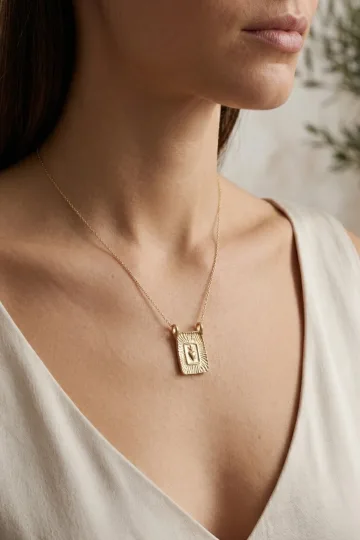
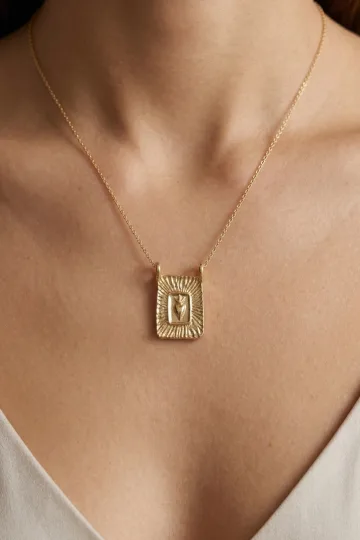
Guadalupe belongs in warm gold and over an open collar. In a fistful of chains she loses her face, so clear away the rest.
How to wear the Guadalupe Medal: what to pair it with, metal and chain length
A medal bearing the image of the Virgin is above all a sign of faith, so I keep the look around it restrained, so that the shrine stays in the foreground and does not get lost among the jewellery. I have gathered here what I advise when the medal is worn every day and on special occasions.
What to wear the medal with every day? For everyday I recommend a calm, plain top and the medal worn over an open collar: a shirt, a fine knit, a dress with a shallow neckline. A busy fabric pattern competes with the fine relief of the image, so I choose a smooth background in neutral tones, where the figure of the Virgin and the starry mantle read cleanly. One medal on the chest is enough; I take away any extra chains nearby so the piece does not get lost.
Which metal to choose for the colour of the clothing and the skin tone? I advise choosing the metal for the temperature of the skin and the clothing. Warm gold or gold plating suits sandy, peachy, and olive shades in clothing, and it settles softly on warm skin. For cool silver I recommend grey, blue, and deep wine, since it reads cleanly on light, cool skin. One metal across the whole look keeps the picture together, so I do not advise mixing silver and gold in a single set.
How to choose the chain length for the neckline? I match the length to the neckline and the weight of the piece. Under an open collar and a shallow neckline I advise a short chain of about 45 cm: the medal lies at the collarbone, where the image is seen best. Under a closed top I recommend dropping it lower, to the upper chest, to 50 to 55 cm. A thin chain suits a light piece, while a large, heavy medal needs a sturdier chain so it does not pull the clasp to the side.
Which size of medal to choose? I choose the size for the task and the occasion. A small piece is good for unobtrusive daily wear and under a shirt, when the image of the Virgin stays a personal sign close to the heart. A medium medal reads clearly on the chest and works both for everyday and for a service. A large one I keep as a noticeable pendant for those to whom it matters that the image be seen. The larger the field, the finer the relief is worked, so I advise looking at the sharpness of the striking first of all.
Everyday or a special occasion: baptism and feast day? Here I take my cue from the occasion. For everyday I choose a restrained silver piece on a thin chain, which sits quietly under clothing and does not compete with a working wardrobe. For a baptism, first communion, or the feast of December 12 I recommend a gold or a large silver medal with a name and date engraved on the back: such a thing is put on for the celebration and kept as a family heirloom. A clean, plain background suits formal festive clothing, on which the image of the Virgin opens up calmly and with dignity.

Turn on your camera, pick earrings, a pendant or a ring, and see the piece on yourself in real time.
Switch items in one tap.
Everything runs in your browser: no photo or video is ever uploaded.
Iconography: How the Image Is Read
The image on the tilma is not a chance picture but a dense language of signs, in which every detail carries a meaning that was clear to the contemporaries of the apparition. Part of the symbolism reads in a Christian key, part points back to the pre-Hispanic culture of the Aztecs, and the strength of the image lies in that double reading. Let us go through it element by element, because the eye usually slides past most of these details without catching the meaning set into them.
The Mandorla and the Rays of the Sun
The figure of the Virgin is surrounded by an almond-shaped glow of golden rays fanning out in every direction. In Christian art such a glow around a holy figure is called a mandorla, and it stands for radiating light and heavenly glory. But for the Nahua natives the rays read another way as well: the Virgin stands against the sun, blocking it with her own body. The sun was the chief deity of the Aztec pantheon, and a woman who eclipses it with her light, yet is not extinguished within it, was seen as one who stands above the old gods. So a single detail works at once in two languages: for a Christian it is the glory of the Mother of God, for a native a sign that the new Mother is stronger than the old solar cult. This double nature was built into the image from the start and explains its rapid success.
Forty-Six Stars on the Mantle
The Virgin's turquoise mantle is strewn with golden stars, and they are traditionally counted at forty-six. A starry veil is an old image of the Queen of Heaven, clothed in the sky. Some researchers have tried to see in the arrangement of the stars a map of the constellations as they stood over Mexico at the winter solstice of 1531, though such readings are disputed and not generally accepted. For the natives the stars on the mantle also meant that the Virgin holds sway over the night sky, just as the rays over the sun spoke of power over the day. Together, the sun behind her and the stars on her mantle compose the image of one who stands above both the daytime and the nighttime lights of the old faith, while remaining a humble Mother.
The Black Sash: A Sign of Awaiting a Child
One of the most important details is the dark sash tied high beneath the Virgin's breast. In Nahua culture such a sash, tied in just that way, was a sign of pregnancy. For the natives the image read unambiguously: the Virgin is awaiting a child, she carries in her womb the One who is to be born. Over the sash, at the level of the belly, sits a small sign, a four-petaled flower, which in Aztec symbolism was linked with fullness, the centre of the world, and life. So the image spoke to the native population in its own language: before you is a Mother bringing the world a new God. This detail makes Guadalupe the patroness of expectant mothers, and it is to her that people often turn in prayer for the awaiting and the birth of a child.
The Crescent Moon Beneath Her Feet
Beneath the Virgin's feet a dark crescent moon can be seen, its horns turned upward. In Christian iconography a crescent under the feet of the Mother of God points back to the image of the woman from the Book of Revelation, clothed in the sun, with the moon under her feet. For the Aztecs the moon was tied to the nighttime deities, and the Virgin treading on the crescent read as one who stands above the lunar cults as well. There is a linguistic guess too: a word close to the name of the place was linked with the image of the trodden moon, though the origin of the name Guadalupe remains disputed. As with the sun, a double reading is at work here: victory over evil and darkness in a Christian sense, and superiority over the old nighttime gods for a native. The crescent completes the vertical of the image, where the Virgin stands between heaven and earth.
The Angel Bearing Her at the Base
At the very bottom of the image, beneath the crescent, sits a winged angel who seems to hold the whole figure of the Virgin on his arms and wings. His wings are often shown in colours that echo plumage, which for the natives pointed back to the sacred quetzal bird and to the feathered serpent of their mythology. The angel carrying the Virgin underscores that she belongs to heaven and came from above, rather than rising from the earth. He also visually lifts the figure off the crescent and the sun, setting her in her own space of glory. This lower detail completes the composition and links the Christian idea of angelic powers with the local imagery of winged beings, once again joining two cultures in a single picture.
The Colours: Turquoise and Rose
The palette of the image is no accident either. The Virgin's mantle is turquoise-green, and her undergarment a deep rose-red. In Aztec culture turquoise was the colour of the highest power and divinity, worn by rulers and linked with the sky, so a mantle of that colour spoke at once of the Virgin's royal dignity. The rose-red dress pointed to the earth, to flesh, to life. The pairing of a heavenly top and an earthly bottom draws a Mother who joins heaven and earth in herself. To a Christian eye the same colours read as symbols of faithfulness, purity, and love. So even the palette of the image works on two cultural codes at once, and this makes Guadalupe intelligible to both the Spaniard and the native without a single written word.
Once the signs are deciphered, it becomes easier to understand why the image entered people's lives so firmly and what exactly the faithful invest in it. Iconography is a language, but behind the language stands a living relationship, prayer, hope, and a sense of belonging. Let us turn to what Guadalupe means to those who pray to her, trying to speak of it with respect and without oversimplification.
Upload a photo of your pet, someone you love, or an object. We'll build a 3D model and hand-cast it in pewter.




Meaning: Protection, Motherhood, Identity
The conversation about the image would be incomplete without a look at what exactly the faithful invest in it. Here it matters to hold the balance between respect for living faith and sobriety, turning a venerated image neither into an ethnographic curiosity nor into a magical talisman. For hundreds of millions of people Guadalupe is above all a Mother, and around that motherhood three main meanings take shape.
Mother and Intercessor
At the root of the devotion lies the image of a Mother to whom one can come with any trouble. The words that tradition places in the Virgin's mouth, addressed to Juan Diego, sound like a promise of protection: do not be afraid, am I not here, I, your Mother. It is to this maternal closeness that the faithful turn, asking for intercession before God, for healing, for help in family and everyday hardships. Guadalupe is felt not as a distant queen but as one who bends toward a person, hears him in his own language, and takes him under her mantle. Expectant mothers turn to her especially, since the image speaks directly of awaiting a child. This role of a warm and accessible Intercessor explains why even those far from strict churchliness come to her.
A Sign of Mexican Identity
The second layer of meaning grew out of history and became almost secular. Guadalupe long ago outgrew the frame of faith alone and turned into a sign of belonging to Mexico and to the Latin American world. Her image is worn as part of oneself by people of every degree of churchliness, and at times by those entirely distant from the Church, for whom it is above all a symbol of the native land, the language, and a shared memory. In emigration a Guadalupe medal often becomes a small piece of home, a sign by which one's own are recognised. Here the image works like a flag: it speaks less of doctrines than of where a person comes from and to which large family of peoples he belongs. This double nature, religious and national, makes Guadalupe unique among Marian images.
Comfort in a Hard Moment
The third meaning is the most personal. People turn to Guadalupe in moments of fear, illness, loss, and a dangerous journey, when what is needed is support rather than theology. The image is placed by the bed of the sick, taken along on the road, given to someone facing a trial. Here the Virgin works as a quiet presence, as a reminder that a person is not alone. The Church, meanwhile, draws a clear line: the image does not act on its own, like an amulet, but serves as a sign of trust in the intercession of the Mother of God, through which help is given by God. A kindred treatment of how the Christian tradition speaks of a loving and suffering heart can be found in the article on the Sacred Heart. Comfort here comes not from metal or cloth but from faith and from the memory that one is loved.
It is out of this living devotion that the object we turn to next also grows. A medal with the image of Guadalupe is a way to carry the Mother with you, and such a piece has its own logic: the form, the material, the occasion for a gift. Let us examine it as carefully as we examined the iconography, because behind a simple oval of metal stands the same history and the same meaning.








The Guadalupe Medal as Jewellery
The Guadalupe medal is one of the most recognisable religious devotional images of the Latin American world, and it is worn far beyond the circle of the deeply devout. Its form, material, and way of wearing have settled into a firm tradition worth knowing when choosing such a piece for yourself or as a gift. Let us take its makeup apart piece by piece.
The Devotional Medal with the Image of the Virgin
The classic medal is a small oval or round devotional piece of metal, on which the whole image of Guadalupe is rendered in relief or engraving: the figure in its glow, with the starry mantle, the crescent, and the angel at the base. Unlike the strict Miraculous Medal with its fixed composition, the image of Guadalupe is more often reproduced as a recognisable icon in miniature, with an effort to keep the main signs. The oval echoes the shape of the mandorla around the Virgin and so suits the image naturally. Relief is critical here: on a small field the figure, the rays, and the fine details must all fit, so the quality of the striking noticeably affects how alive the image comes out. A good medal reads like a true icon shrunk to the size of a child's palm.
Engraving a Name and a Date
A common practice is engraving on the back of the medal. The owner's name is added, the date of baptism, first communion, or another event, sometimes a short dedication from the giver. Engraving turns a standard devotional piece into a personal thing tied to a specific person and day, and this is precisely why Guadalupe is so often given at important milestones. Years later the inscription can tell exactly to whom and on what occasion the medal was given, which makes it a future family heirloom. The front is taken up by the image, so the text is set on the smooth back, where it is easy to see. For a baptism gift many consider the engraving of the name and date almost an obligatory detail.
Silver, Gold, Shape
The medal comes in several formats, and the choice depends on taste and occasion. A silver piece with a clear relief is a sensible middle ground between price and look, fit for daily wear. A gold medal is at the level of a relic that one wants to pass down, and it is more often chosen for a big event. There are several shapes besides the oval and the round: medals come as a vertical rectangle with rounded corners, and sometimes the figure of the Virgin is cut as a silhouette. The size is chosen for the task: small for unobtrusive daily wear, medium for a clear image on the chest, large as a noticeable pendant. The weight, and how finely the details of the image are worked, both depend on the size.
Materials and Formats
The material of the devotional piece affects the look, the price, and how long the thing will serve. The range here is wide, from simple light medals handed out at pilgrimage centres to silver and gold versions at the level of a family heirloom. Let us go through the main options separately, because the material is often chosen for the occasion and for the person.
Silver for Every Day
Silver is the classic material for religious medals and a convenient middle ground. It gives a noble, cool shine, holds fine relief well, and relief matters for the image of Guadalupe: the figure, the rays, and the stars must be rendered on a small field. Sterling silver is a sturdy alloy fit for constant wear. Over time it darkens, but the patina in the recesses even brings out the drawing, and it is not hard to clean. A silver medal suits both a man and a woman, both as a personal thing and as a gift with weight that one wants to give with meaning. For someone who wears a devotional piece constantly, for years without taking it off, silver is a sensible and practical choice.
Gold as a Relic
A gold medal is a thing meant for decades and for passing down by inheritance. Gold does not darken and, handled with care, will outlive several generations, which is valuable for a piece given at a baptism or another big event with the expectation that it will stay in the family. Yellow gold is traditionally associated with religious images and looks warm against the skin. A more affordable alternative is quality gold plating over silver: the look of gold for less money, but with the caveat that the coating calls for care and can wear off over time. A gold medal is usually chosen precisely when the thought is not of a single year but of long memory and of the future owners of the thing.
Medal, Pendant, For a Baptism
The image comes in several formats for wearing too. A medal on a chain is the most familiar option, when the piece lies on the chest close to the heart. A thin silhouette pendant will suit those who like minimalism and wear jewelry in layers. A separate line is the children's medals for baptisms: small, light, often with a bail for a thin chain, given with room to grow into. The image of Guadalupe is often paired with other signs of faith on a single chain, for example with a small cross or with a rosary. On how the rosary turned into a piece of jewelry in its own right there is a separate article on the rosary and prayer beads. The choice of format is essentially a choice among visibility, comfort, and the occasion for which the thing is bought.
Leave your email, we'll send your discount code. No spam, unsubscribe anytime.
The code arrives by email, valid on your first order.
Whom It Is Given To and On What Occasion
The Guadalupe medal is one of the most traditional religious gifts of Latin American culture, and it is almost always given on a specific occasion. The occasion shapes both the choice of material and the tone of the gift, so let us go through the main situations separately. They have one thing in common: such a piece is given as a sign of care, faith, and a bond with one's roots.
For a Baptism and First Communion
The baptism of a child and first communion are the classic occasions to give a Guadalupe medal. Godparents or relatives give a silver or gold piece as the first spiritual sign in a child's life, often with a name and date engraved, in the expectation that the thing will survive and pass to the child as an adult. For an infant the medal itself is usually not worn but kept until a suitable age. For first communion the gift is addressed to a child already aware, so a piece is chosen that can be worn right away: silver on a sturdy chain. The point is to mark an important step of Christian life with a visible and lasting sign that will stay with a person for a long time.
December 12: The Feast of Guadalupe
The image has its own great feast, December 12, the day of Our Lady of Guadalupe, and this is a separate occasion for a gift. In Mexico and other countries of Latin America, on this day millions of pilgrims walk to the basilica, sing serenades to the Virgin, and hold processions. A medal given for the feast reads as a greeting and as a sign of shared faith and a shared homeland. Often it is precisely on these days that medals are bought by whole families, so that each person has one of their own. For those living far from home, such a gift for December 12 becomes a way to keep a bond with home and tradition. The festive occasion gives the medal an added warmth beyond the personal.
For the Road and as a Keepsake
A separate occasion is support for a person on a journey or in a hard moment. The Guadalupe medal is given for a long road, before a move, an operation, or an ordeal, as a sign of care and prayerful support. Here the value is not in the metal but in the gesture: the piece is slipped into a pocket or put on with words of farewell. For this occasion any material will do, down to a simple light medal. Guadalupe is especially often taken along by emigrants, for whom the Virgin is both an intercessor and a piece of the homeland left behind. A medal in the hand of one departing is a way to say without grand words: I remember you, and the Mother is on the road with you. It is from such use that the image draws part of its warmth.
CAPAORA mini knife pendant
The 18th-century Spanish navaja in miniature: 40 mm of stainless steel, a real folding mechanism and a Palanquilla lock that clicks. An affordable gift to remember.
Authentic · Ships from Spain · 14-day returns
How It Differs from the Miraculous Medal and Other Virgins
Guadalupe is often confused with other Marian images and medals, especially with the Miraculous Medal, because of the common Catholic world and a similar purpose. Between them there is a fundamental difference in origin, iconography, and cultural context, and it is worth understanding in order to choose a piece with awareness. Let us go through the main differences, and then bring them together in a table for clarity.
Guadalupe Versus the Milagrosa
The Miraculous Medal, also known as the Milagrosa, and Guadalupe are two different images with different histories. The Milagrosa was born from the Paris visions of 1830 and carries a strictly set composition: the Virgin on the globe, rays from her hands, the letter M and two hearts on the reverse. A full account of its symbolism is in the article on the Miraculous Medal. Guadalupe, by contrast, is tied to the Mexican apparition of 1531 and reproduces a whole icon with the starry mantle, the crescent, and the angel. One medal is European and supranational, the other deeply rooted in Mexican and Latin American identity. They can be worn together, but their meanings should not be blended: each has its own history and its own circle of devotees.
Guadalupe, Pilar, and Carmen
In the Spanish-speaking world several major images of the Mother of God are venerated, and they are easy to confuse. The Virgin del Pilar is tied to Zaragoza and to an apparition to the Apostle James, her image is set on a column, a pilar, and she is patroness of Spain and of the Spanish-speaking peoples. The Virgin del Carmen is tied to the Carmelite order and is venerated as patroness of sailors, her sign being the brown scapular. Guadalupe stands apart as the image of the Americas, born already on the New Continent. All three are the Mother of God, but each is attached to its own history, its own country, and its own circle of occasions. Understanding these differences helps to keep the images distinct and to choose the one closest to a particular person by roots and by meaning.
The difference between the images is essentially a difference of histories and cultural roots, not a rivalry of shrines. For a believer what matters is which story is closer to him and with which land he ties himself. The same principle works with protective medals of another tradition: the Saint Benedict medal, say, grew out of monastic practice and puts the accent on protection from evil, whereas Guadalupe is all about motherhood and intercession. Before moving on to the most unexpected details, it is worth clearing up a few persistent myths around the image.
Myths and misunderstandings around Guadalupe grow largely from a mixing of faith, science, and national pride. Some want to see in the image a strictly proven miracle, others rush to explain everything away, and both extremes oversimplify a living and complicated history. Below are gathered the details that surprise even those who think they know everything about Guadalupe, and that change the way one looks at the familiar image.
Facts That Surprise
A great deal of the unexpected has gathered around Our Lady of Guadalupe, and these details deserve a section of their own. Many of them change the way one looks at the familiar image on the starry mantle and explain why it entered the life of a whole hemisphere so firmly.
The First Native Saint of the Americas
Juan Diego, to whom according to tradition the Virgin appeared, was numbered among the saints only in our own time and became the first canonized native inhabitant of the Americas. Before that the saints of the New World were almost entirely of European origin. The glorification of a poor native of the Nahua people became an important sign that the Church recognises holiness in the indigenous peoples as well as in the missionaries and colonists. For many Latin Americans this event sounded like a recognition of the dignity of their ancestors. So the figure of the humble messenger from the hill of Tepeyac gained, centuries later, a place of his own in the Church calendar, rather than remaining only a shadow beside the famous image.
The Image Speaks in Two Languages of Signs
The most striking thing about the iconography of Guadalupe is its double address. Almost every detail reads at once in two cultural languages: Christian and Aztec. The sun behind her, the moon under her feet, the turquoise of the mantle, the sash of pregnancy, the flower on the belly, all of it carries meaning at the same time for a Spanish priest and for a Nahua native. Such a deliberate double code is a rarity among religious images and largely explains why the conversion of the native population went so fast. The image seemed to translate the Christian message into a language intelligible to those to whom it was addressed, without requiring a single written word and working for two worlds at once.
The Tilma of Short-Lived Fibre Holds for Centuries
The material of the relic is surprising in itself. The tilma is made of agave fibre, a coarse cloth that usually wears out and crumbles within a few decades. Yet the cloak with the image has been kept for nearly five centuries, surviving fires, floods, and time. The faithful see a miracle in this survival, researchers argue over the causes and the conditions of storage. There is also the known case when a powerful explosion took place near the image, bending the metal around it, while the cloth itself, by the testimony, was unharmed. Whatever the explanation, the durability of the simple working cloak of a poor native man remains one of the most discussed puzzles around Guadalupe.
The Name Guadalupe Remains Disputed
Few people stop to think that the very name of the image is a subject of scholarly dispute. The word Guadalupe is Spanish and is tied to a venerated image of the Mother of God in Spain, in Extremadura, where many of the conquistadors came from. But there is a guess that the Spaniards heard in it an echo of a word from the Nahuatl language, which was linked with the image of a trodden moon or serpent. Exactly how the Mexican image received this name is not known for certain, and the versions diverge. So even the name of the Virgin, which seems self-evident, holds within it the same collision of the Spanish and the native world that reads in the image itself.
There Is a Guadalupe in Spain Too
Many are surprised to learn that a Guadalupe exists beyond Mexico as well. In Spanish Extremadura a Virgin of Guadalupe of their own has been venerated for centuries, a dark statue of the Mother of God in a mountain monastery, and it is from there that the name itself came. The Spanish and the Mexican images are different depictions with different iconography, connected only by the name and a shared faith. The Spanish Guadalupe was an important shrine of the age of discovery, and seafarers came to her. So under a single name two venerated images exist on opposite sides of the ocean, and this often comes as a surprise to those who know only the Mexican Virgin of the starry mantle.
The Feast Draws Millions in a Single Day
The scale of the devotion is hard to imagine until one sees the figures. For December 12, the day of Guadalupe, the basilica in Mexico City receives several million pilgrims in the space of just a few days, and over a year their number reaches around twenty million. People walk hundreds of kilometres on foot, and some cover the last stretch of the way on their knees. In the density of pilgrimage it is one of the largest religious events on the planet, comparable to the best-known shrines of the world. Such a flow of people to an image that began with the account of one poor native shows how deeply Guadalupe entered the life of whole peoples, while staying close and personal for every pilgrim.
Send a friend a discount code, they save on their first order.
Frequently Asked Questions
Who is Our Lady of Guadalupe in simple words?
She is an image of the Virgin Mary venerated by Catholics, tied to an apparition of 1531 on the hill of Tepeyac outside Mexico City to a poor native man, Juan Diego. According to tradition, the image appeared miraculously on his tilma cloak, which is kept in the basilica in Mexico City to this day. Guadalupe is considered the patroness of Mexico and of all the Americas and remains one of the most venerated Marian images in the world, joining Christian faith and Latin American identity.
What does the image of Our Lady of Guadalupe mean?
The image reads as a language of signs on two cultural levels at once. The rays of the sun behind her, the starry mantle, the crescent under her feet, and the angel at the base speak of the heavenly glory of the Mother of God in a Christian sense, while for the Nahua natives the same details meant superiority over the old solar and lunar cults. The dark sash beneath the breast is a sign of awaiting a child. On the whole the image speaks of a Mother bringing the world its God, and of intercession for people.
Why is Guadalupe so important for Mexico?
Because she long ago outgrew the frame of faith alone and became a sign of the nation. The image helped the conversion of the native population, layering over the memory of a pre-Hispanic mother goddess, and in the war of independence a banner bearing Guadalupe was carried over the rebels. So the Virgin turned into a symbol of the Mexican rather than the Spanish, into a sign of the native land and a shared memory. Today her image is worn as part of oneself even by people far from strict churchliness, for whom it is above all a symbol of Mexico and of roots.
How does Guadalupe differ from the Miraculous Medal?
These are two different images with different histories. The Miraculous Medal, or Milagrosa, was born from the Paris visions of 1830 and carries a strict composition with the Virgin on the globe, rays from her hands, and the letter M on the reverse. Guadalupe is tied to the Mexican apparition of 1531 and reproduces a whole icon with the starry mantle and the angel. One medal is European and supranational, the other rooted in Mexican and Latin American culture. They can be worn together, but their meaning is different.
What is the best material to choose for a Guadalupe medal?
It depends on the occasion and the budget. Silver is a sensible middle ground: a noble look, a clear relief, suitability for daily wear. Gold is chosen as a relic for a big event and for passing down by inheritance. Simple light medals are good when accessibility matters rather than the metal, for example for the road or as a gift for the feast. For the image of Guadalupe a good relief matters especially, because the figure, the rays, and the stars must be rendered on a small field, so the quality of the striking is worth looking at first of all.
Can a non-Catholic wear a Guadalupe medal?
There is no strict prohibition, and such medals are worn by people of every degree of churchliness, and at times by those far from the Church, for whom it is above all a sign of Mexico and of roots. It is worth remembering only that for believers this is a specific religious image, not an abstract charm, so it is fitting to treat it with respect for its content. The medal requires no formal rites. Many wear it as a cultural and family sign passed down from loved ones, and this is an old and living tradition.
When is the day of Our Lady of Guadalupe?
The feast is kept on December 12. On this day in Mexico and other countries of Latin America millions of pilgrims come to the image, sing serenades to the Virgin, and hold processions. The date is tied to the tradition of the apparitions of December 1531. The feast is considered one of the largest religious events on the planet by the number of pilgrims, and a medal given for this day reads as a greeting and a sign of shared faith and a shared homeland. For those living far from home it is also a way to keep a bond with tradition.
Is it true that the image on the tilma cannot be explained by science?
Here it is more honest to speak of an open question than of a proven miracle or a debunking. The faithful see a sign of miracle in the survival of the coarse agave cloth for nearly five centuries and in the brightness of the colours. Researchers differ over the technique, the dating, and the conditions of storage, and there is no single accepted explanation. The Church, for its part, values the image above all as an object of faith and devotion, rather than as a scientific puzzle. It is reasonable to leave the technical disputes to specialists, recognising that for millions of people the meaning of the image does not depend on their outcome.
Conclusion
Our Lady of Guadalupe is a rare example of how an encounter on a barren hill outside Mexico City grew into an image under which whole peoples recognise themselves. Behind the starry mantle stands a precise history: December 1531, the poor native Juan Diego, the miracle of the Castilian roses, and the imprint on the coarse agave tilma. Then came a long road through mission, through a merging with the memory of a pre-Hispanic Mother, through the banner of the war of independence, to the status of patroness of all the Americas.
The strength of the image lies in the way each of its details reads at once in two languages: the sun and the moon, the stars and the sash of pregnancy, the turquoise and the rose speak to both a Christian and a native. It is a compressed icon that can be kept close to the heart in the form of a medal. Some see a miracle in its history, others the work of cultures and eras, and both points of view can coexist. Guadalupe remains what she became over five centuries: a Mother to whom people come with their troubles, and a sign of the native land that one takes along on the road.
The Guadalupe medal in our range comes in sterling silver and gold with a clear relief of the image, the starry mantle, and the angel at the base, with room for engraving on the back. A good gift for a baptism, first communion, for the feast of December 12, or as a sign of support for someone close on a journey.
The choice here always comes down to the occasion and the person: one is closer to plain silver for every day, another to a gold heirloom medal for a baptism, a third to a light piece for the road. So that you need not guess, above there is a short selection built on a few simple questions about the occasion, the taste, and the conditions of wear, which will suggest which format of medal fits your task exactly.
Buying it as a gift? Each one arrives ready to give.
 A branded Zevira box and a little card come with every order.














About Zevira
Zevira is jewellery with character and meaning, not shiny objects for the sake of shine. We make amulets, symbols, and medals in sterling silver, steel, and gold, with attention to relief, history, and the possibility of engraving. Each piece is meant to be worn every day and passed on. If you need a devotional piece that means something to a specific person and occasion, we help you find one.