The Virgin of the Pillar (Virgen del Pilar): Patroness of Spain, Her Apparition, and the Medal
By tradition, this is the only apparition of the Virgin Mary said to have happened during her earthly life, before her Assumption. Her feast on 12 October became the national day of Spain, and the name Pilar is carried by millions of Spanish women, who all keep their name day on that date.
Who the Virgin of the Pillar Is: The Apparition on the Pillar
The Spanish name Virgen del Pilar means the Virgin on the Pillar, and the whole story is hidden inside that translation. Behind the image stands not an abstract idea but a concrete account of a meeting between an apostle and the Mother of God on the bank of the Ebro in Zaragoza. Almost everyone in Spain knows this part of the tradition, because it explains the name of the basilica, the form of the devotion, and why so many women across the country are called Pilar. Let us take the legend step by step, keeping its core apart from later embellishments.
The Apostle James on the Bank of the Ebro
By Spanish tradition, the apostle James the Greater, Santiago in Spanish, preached Christianity in the lands of the future Spain and reached the city of Caesaraugusta, today's Zaragoza, on the river Ebro. The work went hard, converts were few, and the apostle, the account says, fell into discouragement. It was at that very moment, the legend holds, that help was sent to him from above. The figure of Santiago ties the story of the Pillar to another great Spanish theme, the pilgrimage to his tomb, whose symbols have their own separate treatment in the guide to the cross of Saint James and the knightly order. Already here you can see that the image of the Pillar grows from the very root of Spanish Christianity.
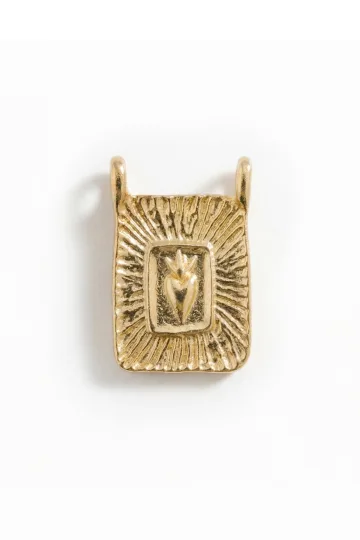
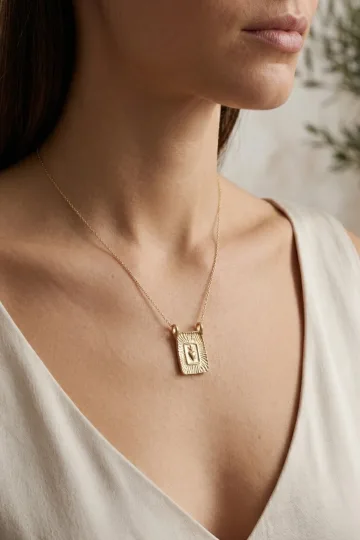
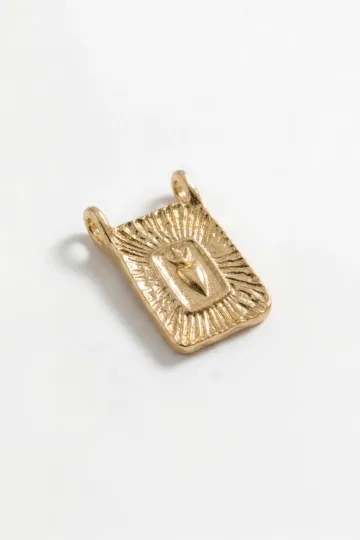
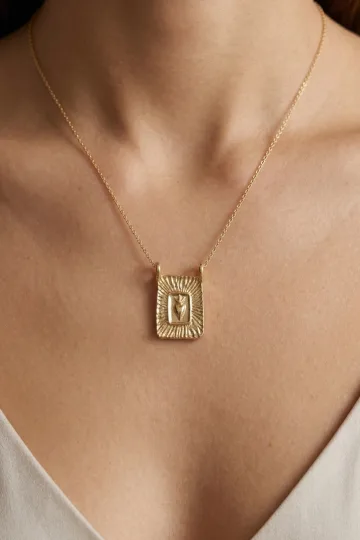
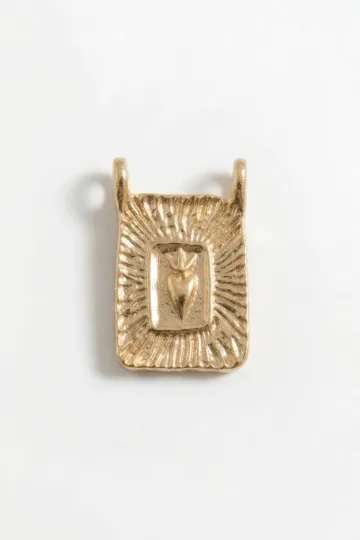
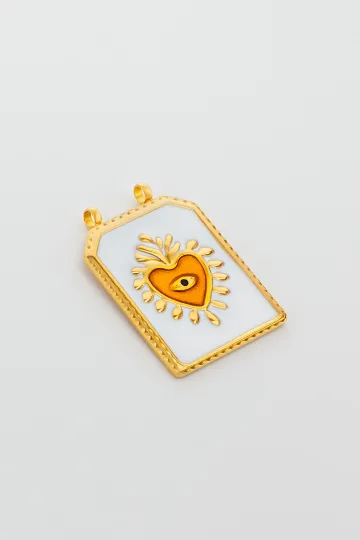
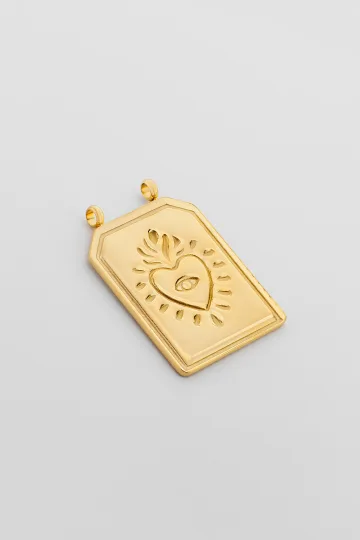
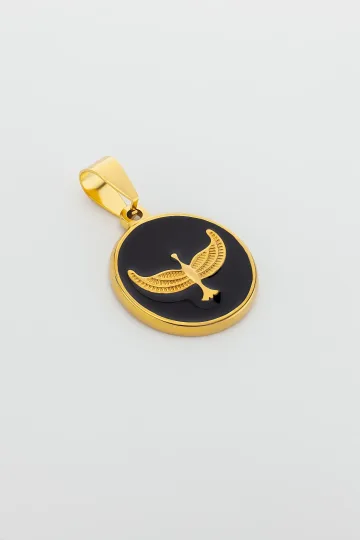
Wear the symbol, don't just read about it. These are in stock:



The Apparition of Mary in the Year 40
Tradition places the apparition in the year 40, when the Virgin Mary, by Church teaching, was still living on earth in Jerusalem. At night, the account goes, the apostle James was praying with his disciples by the Ebro when the Mother of God appeared to him surrounded by angels. It is precisely this detail that makes the story exceptional: it speaks of an apparition during Mary's earthly life, whereas most of the famous apparitions came much later, already after her Assumption. Theologians explain it by the miracle of bilocation, in which Mary remains in Jerusalem and at the same time appears to the apostle in far off Spain. So the account is declared from the very start as exceptional in its time and place.
The Jasper Pillar
The heart of the whole story is the pillar. By tradition, Mary appeared standing on a column of jasper that the angels had brought, and this column became the chief relic. The word pilar in Spanish means a pillar, a support, a column, and from it comes the whole name of the image. The material matters: jasper is a hard, almost everlasting stone, and a pillar made of it reads as a sign of the unshakable faith the apostle brought to these lands. For centuries the faithful have venerated the preserved part of the column in the basilica of Zaragoza. The pillar sets the whole iconography: the small figure of Mary always stands on a tall narrow column, not on a globe or a crescent moon as in other images.
The Charge to Build a Chapel
The meaning of the apparition did not come down to consoling the apostle. By the account, Mary charged James to build a chapel on that spot and promised that faith there would not fade until the end of time. The apostle, tradition says, at once began to raise a modest sanctuary around the column left behind, and it is counted among the first Christian churches dedicated to the Mother of God. From this charge and this promise begins an unbroken line of veneration, by Church reckoning, in one and the same place in Zaragoza. So the Pillar is at once an image and the history of a specific point on the map where, by tradition, everything began almost two thousand years ago.
The tradition sets the tone, but the real strength of the image is that an unbroken, centuries long history of veneration stands behind it, one that can be traced through the stones of Zaragoza. Centuries passed between the first modest chapel by the Ebro and the vast Baroque basilica, and at every step the image of the Pillar gained weight.
History: From the Chapel to the Basilica del Pilar
A legend of an apparition is one thing, a verifiable history of veneration another. And here the Pillar has firm ground: on the spot where, by tradition, the first chapel stood, church replaced church for centuries, and the cult of Mary on the pillar grew from local to nationwide. Let us trace the two great epochs of this history, because they are what turned a legend into a living tradition with an enormous basilica and a stream of pilgrims.
The Medieval Cult and the First Churches
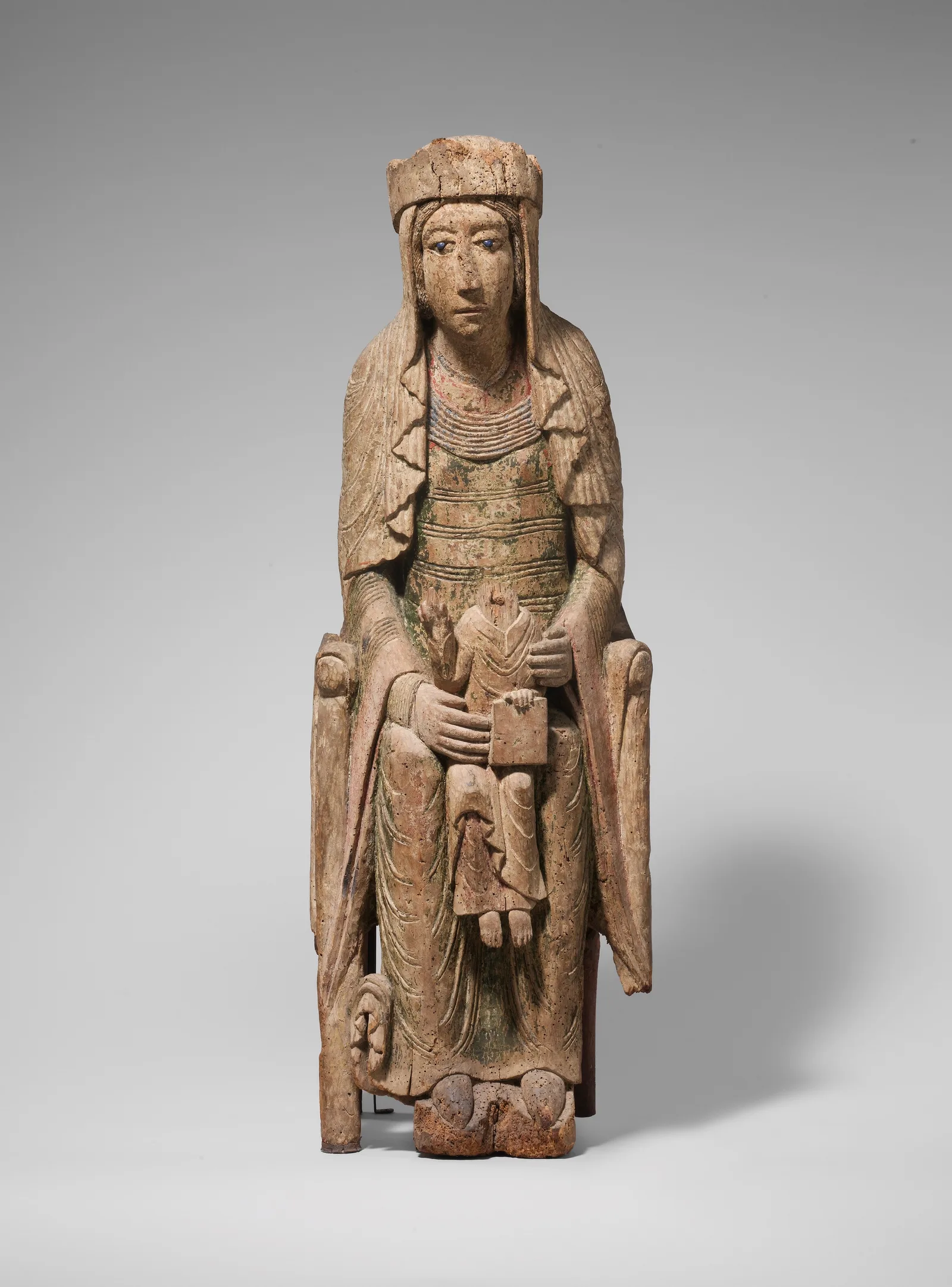
On the site of the supposed first chapel in Zaragoza, one church replaced another. There were early medieval buildings, a Romanesque church, and a Gothic one, each larger than the last as the veneration grew. By the Middle Ages the cult of Mary of the Pillar had spread beyond the city and become an important point on the map of Spanish piety, partly alongside the pilgrimage to Santiago. The kings of Aragon patronized the sanctuary, left endowments, and confirmed its special status. So over the centuries a modest tradition grew into a real institution, with clergy, relics, feasts, and a stream of pilgrims coming to venerate the pillar and the small statue upon it. Scholars date the wooden figure itself to the late Gothic period, around the turn of the fifteenth century, while the veneration of the place, by Church reckoning, is far older than the statue. This is the usual mismatch for great shrines: the relic-pillar and the legend reach deep into the centuries, while the visible image the pilgrims venerate took shape later and was renewed more than once.
The Baroque Basilica and the Statue with Its Mantle
The present look of the sanctuary took shape in the Baroque age. The vast Basilica del Pilar, with its row of domes and high towers, rose on the bank of the Ebro and became one of the most recognisable silhouettes of Spain, mirrored in the river. Inside, in a special chapel, the chief treasure is kept: a small wooden statue of the Mother of God standing on that same jasper pillar. The statue is small, about forty centimetres, but its veneration is immense. The figure is clothed in rich embroidered mantles, mantos, which cover the pillar and the bell shaped base around it. These mantles are changed almost daily, and the shrine has amassed hundreds of them, given over the centuries by kings, orders, cities, and ordinary believers. The vaults of the basilica are covered with frescoes, among them works by the young Francisco Goya, a native of these parts, which tied the chief church of Aragon to the great current of Spanish art as well. Zaragoza keeps two cathedrals, La Seo and El Pilar, but it is the second that became the symbol of the city and of the whole country, its domes reflected in the waters of the Ebro.
From a local shrine of Zaragoza the Pillar in time became a figure of national and even worldwide scale. Her feast reached far beyond the walls of the basilica and grew together with the very idea of the Spanish nation and the Spanish speaking world, and without this part the image cannot be understood.
The Virgin of the Pillar is worn plainly and in silver, close to the neck. A long chain and gold plating turn a holy image into a souvenir.
How to wear the Medal of the Pillar: what to pair it with, metal and chain length
A medal of the Pillar is first of all a sign of faith, so I put the look together with restraint and respect for the tradition. I have gathered here what I advise clients when they want to wear the medal rather than keep it in a box.
What do I recommend wearing the medal of the Pillar with every day? For an everyday look I recommend a small silver piece high at the throat, on a short chain and over a plain top. A busy print argues with the fine relief of the pillar, so I choose a smooth ground: white, grey, deep blue. A medal of the Pillar is worn plainly, as a quiet personal sign rather than a conspicuous accent, and such a restrained look suits it best of all.
Which metal should you choose? I advise matching the metal to the occasion. For everyday wear I choose sterling 925: a cool shine, a clear relief of the figure and the mantle, an honest plainness. Gold I recommend saving for a large event, a baptism or a name day, as a festive piece and a future heirloom. I avoid a long gold plated chain under an open collar: it turns a sacred sign into a souvenir, and the image of the Pillar does not like that.
What chain length should you choose for the neckline? I choose a short length, high at the throat. Under a shallow neckline or a closed collar I advise a chain of about 45 cm, so the piece lies at the collarbone, where it reads best. I do not lower a medal of the Pillar down onto the chest or hang it on a long chain: this image has a quiet, collected voice, and a short chain keeps it plain. I match the weight of the chain to the medal, since a heavy gold piece needs a sturdier chain.
What size of piece should you choose? I choose the size by the task. For everyday wear and under clothing I recommend a small piece on which the silhouette of the pillar and the figure still reads. A medium size I advise when the medal is worn over an outfit and a visible relief is wanted. Large pieces I leave for a home icon corner or as a chest piece for a great occasion, since for every day they are on the heavy side.
What to wear for a name day and a baptism, and what for ordinary days? Here I divide it by occasion. On ordinary days I choose a plain silver piece at the throat, discreet and personal. For the name day of Pilar on 12 October, or for a baptism, I recommend a festive medal, silver with enamel or gold with an engraved name and date on the back, worn over a neat look for church. A festive medal sounds warmer, but stays just as restrained, without long chains or extra shine.

Turn on your camera, pick earrings, a pendant or a ring, and see the piece on yourself in real time.
Switch items in one tap.
Everything runs in your browser: no photo or video is ever uploaded.
Patroness of Spain and Hispanidad
There are many venerated images of the Mother of God, but the Pillar holds a special place among them: her day became a national holiday of all Spain, and she herself is counted patroness of the Spanish speaking world. This joining of the religious and the national made the image known far beyond Aragon. Let us go through the three supports of this status, because together they explain why a medal of the Pillar reads in Spain both as a sign of faith and as a sign of roots.
The Twelfth of October and the Fiesta Nacional
The feast of the Virgin of the Pillar falls on 12 October, and in Spain this is at the same time the Fiesta Nacional, the national day of the country. The date coincides with the day when, by tradition, ships under the Castilian flag reached the shores of America in 1492, and this overlay of a religious feast on a historical landmark made 12 October special. In Zaragoza these days bring the Fiestas del Pilar, one of the largest popular festivals of Spain, with processions, music, and the famous offering of flowers to the image. The Ofrenda de Flores is especially known: tens of thousands of people in folk costume carry bouquets that are built up into a vast floral mantle around the figure of Mary. The Aragonese jota sounds, songs devoted to the Pillar, and for several days the city turns into one continuous celebration. So the day of Mary on the pillar became a point where faith, history, and a national holiday converge, a rare position for a religious image.
Patroness of the Guardia Civil
The Pillar also has a very concrete patronage: she is counted the protectress of the Spanish Guardia Civil. This corps officially venerates her as its patroness, and 12 October is marked in its units as a titular feast. Fixing the image to a state service tied the Pillar even more firmly to the idea of the country and its defence. For many Spanish families in which someone served, a medal of the Pillar carries this shade as well: a sign of belonging, of service, and of protection. The image steps beyond private piety and becomes part of public symbolism, which for the Mother of God on the pillar is quite fitting.
The Bond with the Spanish Speaking World
Through the date of 12 October and the history of seafaring, the Pillar came to be tied to the whole Spanish speaking world, to the idea of Hispanidad, the community of peoples who speak Spanish. The image of the Pillar spread through the countries of Latin America together with the language and the faith, and in many of them it is venerated alongside local Marian images. So a medal of the Pillar reads both as an Aragonese or Spanish thing and as a sign of belonging to a vast cultural space from the Pyrenees to the Andes. For a person with Spanish or Latin American roots, it is a way to carry the memory of home near the heart, where religious meaning is woven together with the feeling of belonging.
To understand why the image of the Pillar is so recognisable, and why a medal repeats this composition rather than another, it is worth looking closely at its iconography. Every detail here works toward the common meaning, and almost all of it goes back to the legend of the apparition on the pillar.
Customer reviews
Zevira is a real jewellery shop. Genuine payments, deliveries and customer thank-yous.
🥰🥰🥰 gracias
Ok, ¡gracias! 🙂
Iconography: A Small Figure on a Column
The iconography of the Pillar is recognised at a glance, and it rests on one strong device: the figure of Mary is pointedly small, while the pillar beneath her is tall and prominent. This is a composition inverted against the usual logic, where it is not the person who dominates the support, but the support that raises the person. Let us go through its key elements, because a medal of the Pillar reproduces exactly these, and understanding the image helps you choose the piece knowingly.
The Figure of Mary on a Tall Column
At the centre of the image the Virgin Mary stands on a tall narrow pillar, and this detail matters more than any other. Unlike images where the Mother of God is enthroned or hovers on clouds, here the figure is raised onto a column, as onto a pedestal. The pillar is drawn out visually upward, and the eye follows it from below toward the figure. This composition points directly to the legend of the jasper column brought by the angels. On a medal the pillar often occupies the lower half of the piece, while the figure sits in the upper half, and by this silhouette the Pillar is told apart unmistakably from other Marian images.
The Rich Mantos and Embroidered Robes
The living statue in the basilica is clothed in lavish embroidered mantles, and this carried over into the iconography. On many images and medals Mary appears in a wide bell shaped robe that hides the pillar down to its base, richly worked with pattern. The manto is at once a garment and a form of veneration: they were and are given as a precious offering, and each one reads as respect for the image. On a metal medal the rich texture of the mantle is conveyed through relief and engraving, and the finer the work, the more festive the medal looks. The Spanish tradition of lavishly robing Marian statues shows here especially clearly.
The Crown and the Child in Her Arms
The head of Mary in the image of the Pillar is usually crowned, a sign of her dignity as Queen of Heaven, and in her arms she holds the Christ Child, often crowned as well. This turns the image from a portrait of the Mother of God into a depiction of Mother and Son, around whom the whole veneration is built. The crown underscores her royal status and links the Pillar with other crowned Marian images of Spain. The Child in her arms recalls that through Mary the Savior came into the world, and shifts the accent from personal intercession to the whole mystery of the Incarnation. On a medal these details are conveyed compactly, but recognizably.
Why a Pillar
It is worth explaining separately why a pillar lies at the base of the image, rather than the familiar globe, crescent moon, or cloud. A pillar is a support, the thing that holds and keeps from falling, and in the context of the legend it reads directly: the faith the apostle brought stands firm and will not collapse until the end of time, just as was promised. The stone column of hard jasper strengthens this thought of unshakableness. So in popular understanding the Pillar became an image of steadfastness and support, something to lean on in a hard moment. The pillar is not a decorative stand but the meaning at the heart of the whole image, and a medal of the Pillar carries this idea of support literally in its very form.
Upload a photo of your pet, someone you love, or an object. We'll build a 3D model and hand-cast it in pewter.
Meaning: Steadfastness, Roots, Protection
A discussion of the image would be incomplete without an honest look at what people invest in it. The Pillar is first of all a Spanish image with a strong national and family colouring, and its meaning is made of several layers. Let us go through them with respect for the tradition, without turning living veneration into a set of magical properties.
Support and Steadfastness
The chief meaning, read straight from the form, is support. The pillar beneath the figure of Mary turns the image into a visible sign of steadfastness, of the thing that holds a person up when everything wavers. For a believer the Pillar is a reminder that there is something to lean on in a hard moment, that faith stands firm as a stone column. From this comes the custom of turning to the Pillar in difficult times, in illness, in anxiety, before a hard undertaking. A medal with this image is worn as a quiet inner support, and here its meaning is closest to the direct sense of the pillar itself.
Roots and Homeland
The second layer of meaning is roots. For a Spaniard, or a person with Spanish roots, the Pillar is an image of home, of Aragon, of Zaragoza, of Spain itself. To wear it is to keep near you the memory of home and of your own, wherever a person may end up. This is exactly why a medal of the Pillar is so often given to those leaving, to emigrants, to people departing the country for a long time. The Spanish jewelry tradition closely ties an ornament to place and lineage, and there is a detailed treatment of this in the guide to the regional schools and techniques of Spanish jewelry. In this sense the Pillar works both as a sign of faith and as a sign of belonging to a family and a native land.
Protection and Intercession
The third layer is protection. As patroness of Spain and protectress of the Guardia Civil, the Pillar is linked in popular understanding with the protection of home, family, and those who are travelling or on duty. A medal with this image is given for the road, to a soldier, to a person in a risky profession, as a sign of prayerful support. Here it matters to keep the Church boundary: the image does not work as an amulet with its own power, but serves as a sign of trust in Mary's intercession and a reminder of prayer. The help that is asked for is granted by God through faith, not pumped out of the metal. This sobriety separates healthy veneration from superstition.
From the meaning of the image it is natural to move to how it lives in an ornament. A medal of the Pillar is the most widespread form of personal veneration of the image outside the church, and it has its own settled rules and traditions worth knowing when you choose a piece for yourself or as a gift.



The Medal of the Pillar as an Ornament
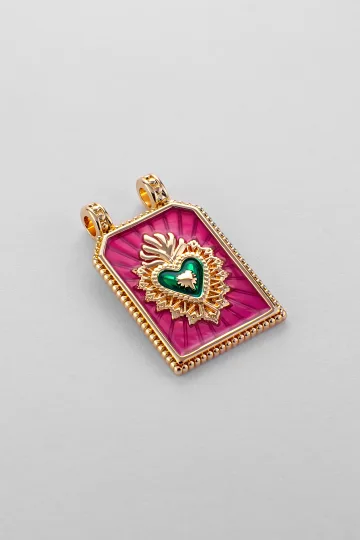
A medal of the Pillar is a small piece, more often oval or round, with an image of Mary on the pillar, worn on a chain at the heart. For millions of Spaniards it is the first and chief religious medal, often received in childhood. Let us look at how it is built and how it is worn, because on this depend both the choice of metal and the occasion for a gift.
The Medal of the Pillar: Form and Relief
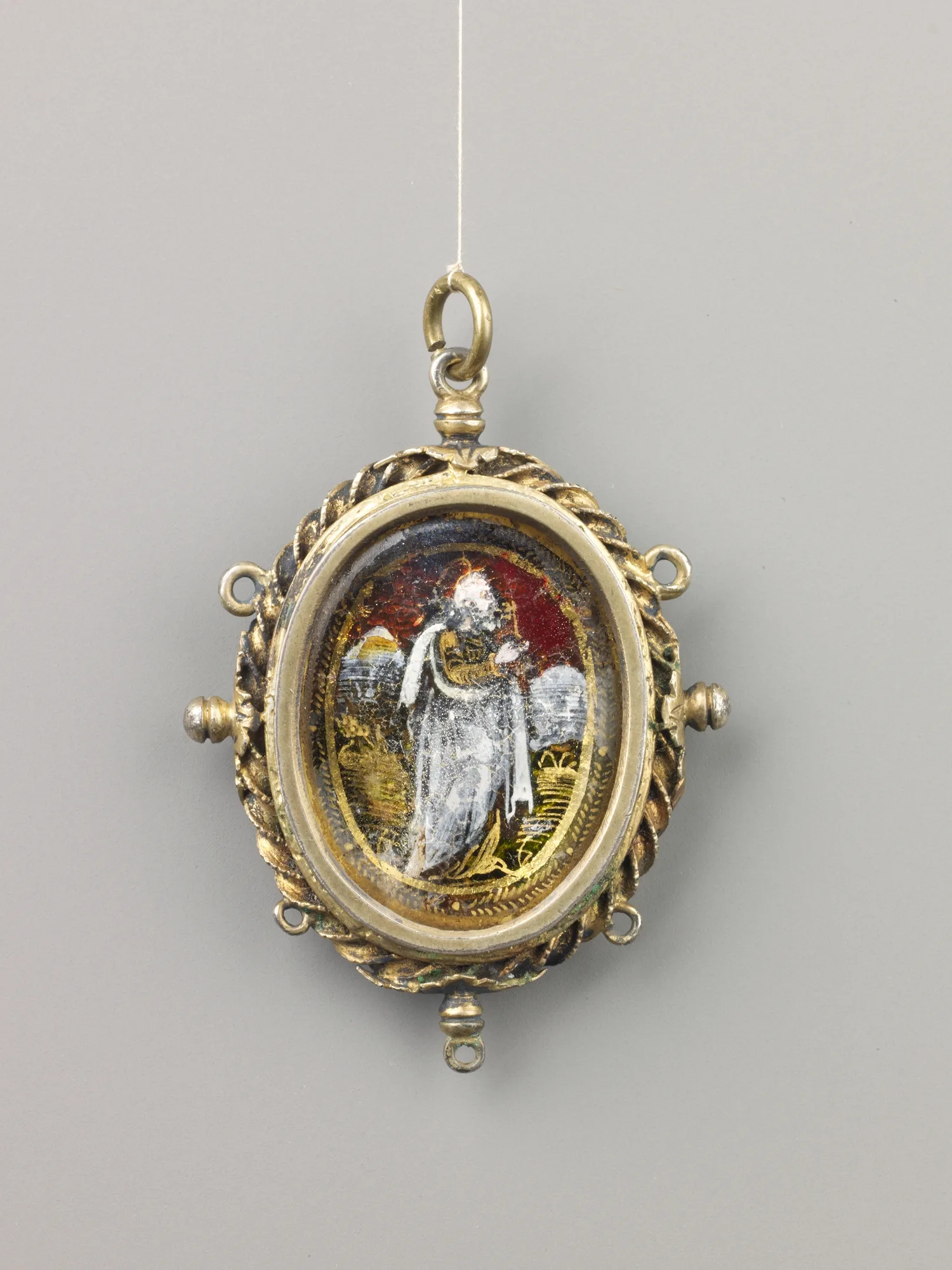
The classic medal of the Pillar is an oval or round piece of silver or gold with a relief image of Mary on the tall column. The maker aims to fit a recognisable silhouette onto a small surface: the pillar in the lower part, the figure with the Child and the crown in the upper, sometimes the rich texture of the mantle. The finer the relief is worked, the clearer the image reads and the more valuable the piece looks. There are also versions with blue or coloured enamel, where the ground around the figure is filled with colour, which makes the medal more festive than austere metal. The form all the while stays canonical and recognisable.
Engraving a Name and Date
A frequent practice is engraving on the back of the medal. The owner's name is added, especially if it is Pilar, along with the date of a baptism, a first communion, or another event, and sometimes a short wish. Engraving turns a standard piece into a personal object tied to a specific person and day, and that is precisely why the medal is so often given for the important milestones. There is usually room enough on the back, because there the field is smooth, unlike the busy relief of the front. A named medal works well as a future family heirloom: years later the inscription can tell exactly to whom and on what occasion it was given.
For Baptisms and the Name Day of Pilar
A special role of the medal of the Pillar is tied to two occasions: baptisms, and the name days of those called Pilar. A girl named after the image is often accompanied by such a medal from birth, and her name day falls on 12 October, the common feast of the Pillar. To give a medal of the Pillar for the name day of Pilar is in Spain an almost obligatory gesture of attention, delicate and understood without words. For a baptism the Pillar is given as the first spiritual sign, often with the expectation that the piece will survive and pass to the child as an adult. In both cases the medal reads as a sign of family, of faith, and of belonging to the Spanish tradition.
Leave your email, we'll send your discount code. No spam, unsubscribe anytime.
The code arrives by email, valid on your first order.
Materials and Formats
The material of the medal affects its look, its price, and how long the piece will last. The range here is wide: from simple everyday silver medals to gold versions at the level of a family heirloom, and festive enamel variants. Let us go through the main options one by one, because the material is often matched to the occasion and to the person.
Silver
Silver is the classic material for religious medals and a sensible middle ground between price and appearance. It gives a noble, cool shine, holds fine relief well, and relief matters for the Pillar: on a small piece you have to fit the pillar, the figure, and the mantle. Sterling 925 is a durable alloy fit for everyday wear. Over time it darkens, but that is easily fixed, and the patina in the recesses even emphasises the design of the pillar and the robes. A silver medal is fitting both as a personal everyday object and as a considered gift with weight.
Gold and Gold Plating
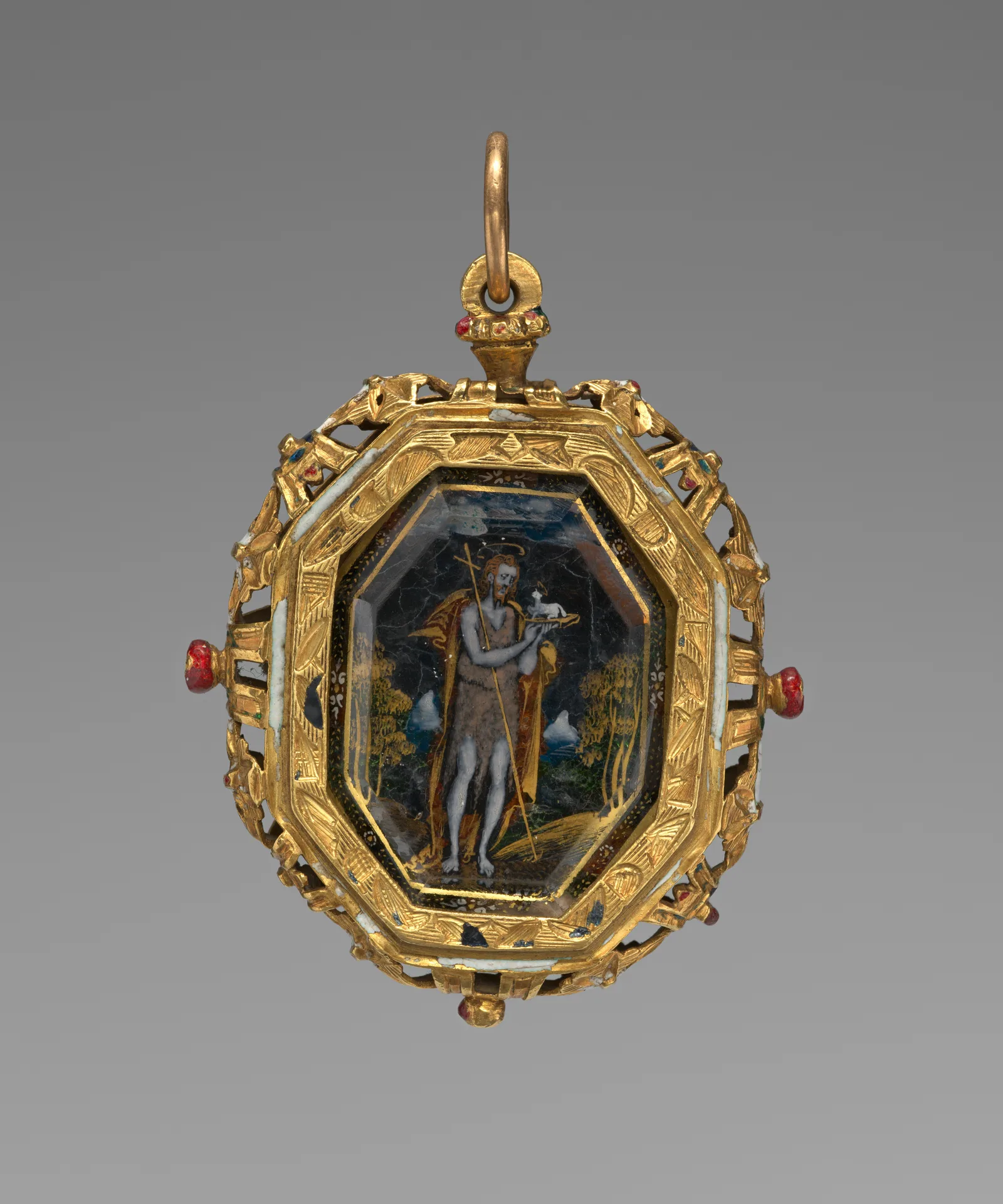
A gold medal is at the level of an heirloom you want to pass down. Gold does not darken and, handled with care, will outlast several generations, which is valuable for an object given on a large occasion such as a baptism or a name day. Yellow gold has traditionally been associated with religious medals and looks warm against the skin. A more affordable alternative is quality gold plating over silver: the look of gold for less money, with the caveat that the coating requires care. A gold medal of the Pillar is usually taken precisely when it is meant to last for decades and to pass to one's children.
The Column Medal and Other Formats
Besides the classic oval piece, the Pillar has other formats. There are vertical medals, drawn out to the form of the pillar, where the figure on the column sits more naturally than in a circle. There are pieces with blue and coloured enamel, and versions with an openwork frame or rays around the figure. Sizes vary too: very small ones for infants and for discreet wear under clothing, medium for everyday wear on the chest, large ones as a conspicuous chest piece or for a home icon corner. For daily wear people usually take the medium size, on which the relief of the pillar and the figure reads well.
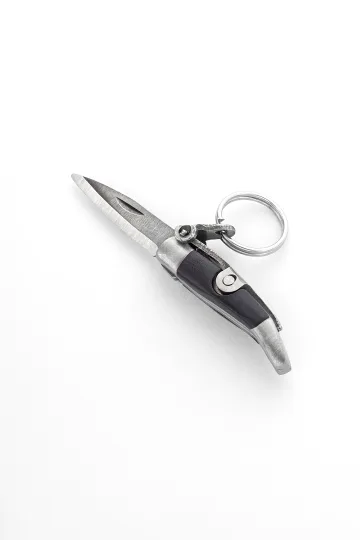
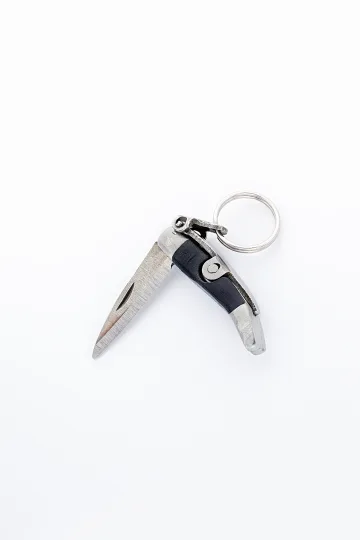
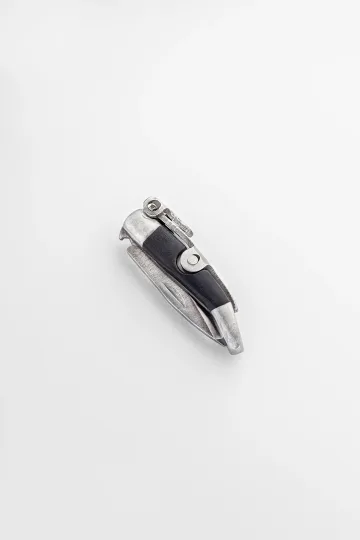
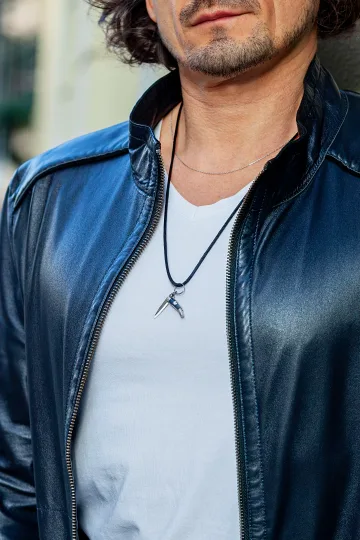
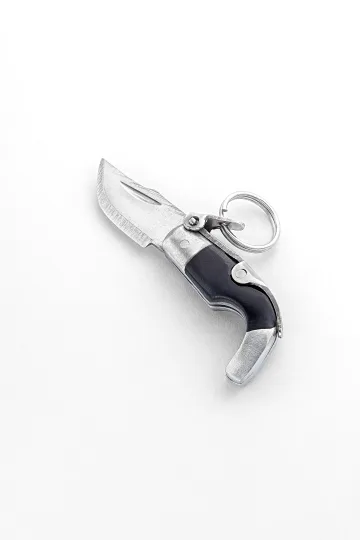
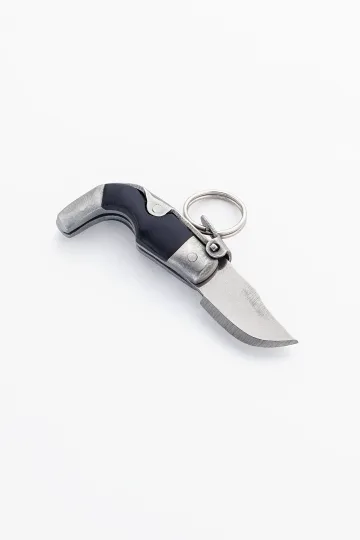
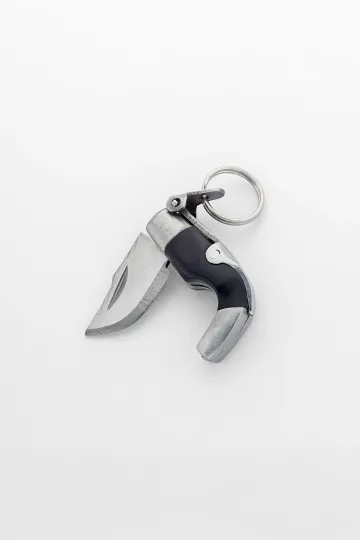
CAPAORA mini knife pendant
The 18th-century Spanish navaja in miniature: 40 mm of stainless steel, a real folding mechanism and a Palanquilla lock that clicks. An affordable gift to remember.
Authentic · Ships from Spain · 14-day returns
Whom the Medal of the Pillar Is Given To
A medal of the Pillar is one of the most traditional religious gifts in Spanish culture, and it is almost always given for a specific occasion. The occasion determines both the choice of material and the tone of the gift, so let us go through the main situations one by one.
For the Name Day of Pilar
The chief occasion is the name day of those called Pilar, and there are very many of them in Spain. The name day of all the Pilars falls on 12 October, the common feast of the image, and to give a medal of the Pillar on that day is a clear and delicate gesture. For an adult Pilar people more often choose silver or gold with good relief, for a girl a smaller piece. Such a gift says that the giver remembers both the person and her heavenly patroness, and it is almost always received warmly, because it binds the name, the image, and the feast into a single gesture.
For Pilgrims and Those Setting Out
The second occasion is the road. A medal of the Pillar is often given to pilgrims, especially those walking the Camino de Santiago, since the two themes are closely interwoven in Spanish piety. There is a separate treatment of the symbol of the pilgrimage itself in the guide to the scallop shell of the Camino de Santiago, and the Pillar is often worn beside it. Such a medal is also given simply to those leaving for a long time: emigrants, students, people departing home. In this case the image works as a sign of the homeland and of prayerful support on the road, an object placed among one's things with words of blessing.
For Spanish Relatives and Family Milestones
The third occasion is family. In Spanish families a medal of the Pillar is given for a baptism, a first communion, a confirmation, a wedding, and passed from grandmothers to grandchildren as an heirloom. For a person with Spanish or Latin American roots such a gift affirms both belonging to the faith and the bond with family and homeland. To give the Pillar to Spanish relatives is to show respect for their tradition and memory. It is precisely at such family milestones that people most often choose gold with an engraved name and date, expecting that the piece will outlive the occasion and become a memory of a specific day.
The Pillar and Neighboring Devotions
The Pillar does not live alone but in a dense row of Spanish and Marian images and symbols, with which it is easy to confuse it or, conversely, useful to compare it. Understanding these neighbours helps you choose an ornament more precisely and not mix meanings. Below is a short comparison of the closest images and signs.
How the Pillar Differs from Our Lady of Guadalupe
Our Lady of Guadalupe is the chief Marian image of Mexico and all Spanish speaking America, tied to an apparition to the native Juan Diego in the sixteenth century. The Pillar, by contrast, is a Spanish, Aragonese image, with a tradition of an apparition to the apostle in the year 40. They are kin through the shared Spanish speaking world and the veneration of the Mother of God, but their iconography and history are entirely different: Guadalupe stands on a crescent moon in a radiance, the Pillar on a jasper column. For a person with Mexican roots Guadalupe is closer, for Spanish or Aragonese roots the Pillar, and this difference is worth keeping in mind when you choose a medal as a gift.
The Pillar, Carmen, and the Cross of Santiago
Within Spain itself the Pillar has neighbours. Our Lady of Carmen is the patroness of sailors and fishermen, venerated on the coasts, while the Pillar is tied to the land, to Aragon, and to the national idea. The Cross of Santiago and the Camino shell are symbols of the pilgrimage to the apostle, whose figure also stands at the source of the legend of the Pillar. All these images often sit together in one family and even on one chain, without competing, because they turn toward different intercessors and answer different needs. Among them the Pillar stands out precisely for its national, all Spanish voice.
Facts That Surprise
A great deal of the unexpected has gathered around the Virgin of the Pillar, and these details deserve a section of their own. Many of them change the way you look at the familiar image of Mary on the pillar and explain why it entered Spanish life so firmly.
An Apparition During Mary's Earthly Life
The most surprising trait of the tradition is its timing. By tradition the Pillar goes back to an apparition that happened in the year 40, when the Virgin Mary was still living on earth in Jerusalem. Most of the famous Marian apparitions came much later, already after her Assumption, while here it is a meeting during her earthly life. Theology explains it by the miracle of bilocation. One way or another, the Pillar is considered all but the only tradition of its kind, and it is precisely this detail that makes the image exceptional among all Marian devotions.
The Mantles Are Changed Almost Every Day
The living statue of the Pillar in Zaragoza is clothed in embroidered mantles, and this is done by a special order. The manto is changed almost daily, its colour matched to the church calendar and the occasion, and on certain days of the month the pillar is deliberately left bare so that pilgrims can see the jasper column itself. Over the centuries the image has amassed hundreds of mantles, given by kings, orders, cities, and ordinary believers. This living wardrobe of the shrine turns the veneration into the continuous care of many generations and explains why the statue is rarely seen twice in the same robe.
The Name Pilar Is Carried by Millions
The Pillar gave Spain one of its most widespread women's names. Pilar, along with its forms such as Pili, is carried by millions of Spanish women, and all of them keep their name day on one date, 12 October. Few Marian images gave a whole country so common a name. This makes the feast of the Pillar doubly popular: it is at once religious, national, and personal for an enormous number of families at the same time. In such a situation a medal of the Pillar becomes an almost obligatory gift, binding the name, the image, and the feast shared by all.
The Feast Coincided with the National Day
It is a rare case in which a Church feast became a state holiday. The day of the Pillar, 12 October, coincides with the historical date of reaching the shores of America in 1492 and is fixed as the Fiesta Nacional, the national day of Spain. So a Marian image ended up at the very centre of the country's civic calendar. Few religious feasts receive the status of a nationwide day, and the Pillar is one of them. This overlay of the religious and the national explains why the image reads in Spain both as a sign of faith and as a sign of the country itself.
The Jasper Pillar as a Relic
At the base of the whole veneration lies not a painting and not a statue, but a stone. The preserved part of the jasper pillar, on which by tradition Mary appeared, remains the chief relic of the basilica, and it is this that pilgrims venerate. The hard jasper was not chosen by the legend by chance: this almost everlasting stone reads as a sign of the unshakableness of faith. The whole composition of the image is built around the relic, where the pillar matters more than the size of the figure itself. Few Marian devotions have as their centre of meaning precisely a stone of support rather than an image.
The Legend of the Bombs That Did Not Explode
Among the stories around the basilica there is one especially well known. In the twentieth century, during civil upheavals, bombs were said to have fallen on the church of the Pillar and failed to explode. The faithful saw in this the intercession of Mary, and the unexploded shells were long shown in the basilica itself as evidence. A skeptic will explain it by technical causes and a misfired fuse, a believer by the working of grace. Both views can coexist: one describes the mechanics, the other the meaning. One way or another, this story became part of the popular veneration of the Pillar and strengthened the image as a protectress.
Send a friend a discount code, they save on their first order.
Frequently Asked Questions
What does the name Virgin of the Pillar mean?
The Spanish Virgen del Pilar means the Virgin on the Pillar. The word pilar means a pillar, a support, a column, and the whole name points to the legend of Mary's apparition to the apostle James in Zaragoza, where by tradition she stood on a column of jasper brought by the angels. The pillar since then has become the chief relic and the centre of meaning of the image, which is why the small figure of Mary on a medal is always shown on a tall narrow column.
Why is the feast of the Pillar kept on 12 October?
The twelfth of October is the day fixed for the image of the Pillar in the Church calendar, and at the same time the Fiesta Nacional, the national day of Spain. The date coincides with the historical landmark of reaching the shores of America in 1492, which is why the religious feast overlaid the civic one. In Zaragoza these days bring the Fiestas del Pilar, a large popular festival with processions and the offering of flowers to the image. On the same day all who are called Pilar keep their name day.
How does the Pillar differ from Our Lady of Guadalupe?
They are different images of different countries. The Pillar is a Spanish, Aragonese image, with a tradition of an apparition to the apostle James in the year 40, the figure standing on a jasper column. Guadalupe is a Mexican image, tied to an apparition to the native Juan Diego in the sixteenth century, the figure standing on a crescent moon in a radiance of rays. They are kin through the shared Spanish speaking world and the veneration of the Mother of God, but their iconography and history are entirely different, and as a gift people choose the image closer to a person's roots.
Whom is it customary to give a medal of the Pillar to?
First of all to those called Pilar, for their name day on 12 October. The medal is also given for a baptism, a first communion, and a confirmation as the first spiritual sign, to pilgrims and those leaving for a long time as a sign of the homeland and protection on the road, and to Spanish relatives as an affirmation of belonging to the family. The material is matched to the occasion: gold with engraving for a great event, silver for every day, a smaller piece for a child.
Can the Pillar be worn together with a cross and the Camino shell?
Yes, and in Spain it is often done. The Pillar, a cross, and the symbols of the pilgrimage to Santiago do not compete, because they turn toward different intercessors and themes. To keep the pieces from tangling and catching, people give them different lengths or string them on one chain in a thought out order, usually leaving the centre of meaning with the cross. Such a cluster reads as a sign of faith, of pilgrimage, and of Spanish roots at once.
Which material should you choose for a medal?
It depends on the occasion and the budget. Silver is a sensible middle ground: a noble look, a clear relief of the pillar and the figure, fitness for everyday wear. Gold is taken as an heirloom for a great event and for passing down. Versions with blue or coloured enamel suit someone who wants a more festive look and colour. The value of the medal for a believer does not depend on the price of the material, so a simple piece means no less than an expensive one.
Is the Pillar a charm?
In everyday language a charm is any object worn for protection, and in that sense the medal falls into the category. The Church's understanding is different: the image does not work as an amulet with its own power, it is a sign of trust in Mary's intercession and a reminder of prayer. The help that is asked for is granted by God through faith, not pumped out of the metal. So it is more correct to call the medal a devotional, a sign of faith, rather than a charm in the pagan sense.
Where is the chief shrine of the Pillar?
In Zaragoza, on the river Ebro, in the vast Baroque Basilica del Pilar. There, in a special chapel, a small wooden statue of the Mother of God is kept on the jasper pillar, whose preserved part the pilgrims venerate. The basilica with its row of domes and towers is one of the most recognisable silhouettes of Spain, reflected in the river. Here, on the feast days of 12 October, hundreds of thousands of people gather for the Fiestas del Pilar.
Conclusion
The Virgin of the Pillar is a rare example of how a local legend of an apparition on the bank of the Ebro grew into the image of a whole country. Behind the small figure on the tall pillar stand the legend of the apostle James, the centuries long history of veneration in Zaragoza, the Baroque basilica with its hundreds of mantles, and the national feast of 12 October, which became the day of all Spain and of the Spanish speaking world. From this comes the special place of the image among the many Marian devotions.
The strength of the Pillar lies in its clear form: a pillar is a support, and a support is the thing that holds a person up in a hard moment. This is exactly why a medal of the Pillar is worn as a sign of steadfastness, roots, and protection, given for the name day of Pilar, for a baptism, for the road, and to Spanish relatives. Some see in the image the working of grace, some the history and culture of their country, and both points of view get along. The medal remains what it was meant to be: a quiet personal sign, passed on to children and taken along from home.
The choice here always comes down to the occasion and the person: one is closer to strict silver for every day, another to a gold heirloom medal for a name day or a baptism, a third to a festive enamel version. Below, a short selection based on a few simple questions about the occasion, the taste, and the conditions of wear will suggest which format of a medal of the Pillar fits your task.
The medal of the Pillar in our range is sterling 925 silver and gold with sharp relief of the figure of Mary on the pillar, with room for engraving on the back. A good gift for the name day of Pilar, a baptism, a first communion, or as a token of support for someone close on the road.
Buying it as a gift? Each one arrives ready to give.
 A branded Zevira box and a little card come with every order.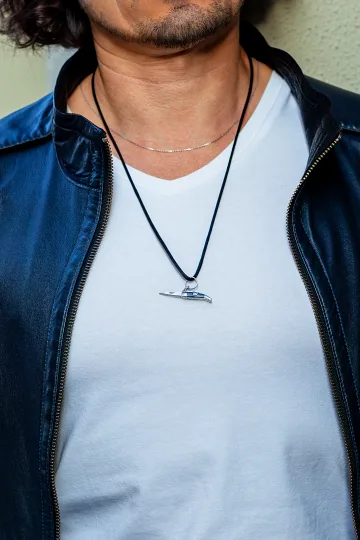





About Zevira
Zevira makes jewelry with character and meaning, not shiny objects for the sake of shine. We make charms, symbols, and medals in sterling 925 silver, steel, and gold, with attention to relief, history, and the option of engraving. Every object is meant to be worn every day and passed on. If you need a medal that means something to a specific person and occasion, whether the Miraculous Medal, the Cross of Santiago, or the Pillar, we help you find it. There is a separate treatment of the most famous Marian medal in the guide to the Miraculous Medal (Milagrosa).