Rosary and Prayer Beads as Jewelry: A Prayer You Wear
Pope John Paul II called the rosary his favourite prayer and almost always kept a set of beads in the pocket of his cassock. Yet the Vatican has reminded the faithful more than once that a rosary is not a necklace and not a fashion accessory. The whole story of prayer beads as jewellery lives between those two facts, where the beauty of a beaded strand has argued for centuries with the seriousness of its real purpose.
Prayer beads appeared earlier than most modern religions took their present shape. A cord with knots or beads for counting a repeated prayer was invented independently in India, in the Middle East, and in medieval Europe. The logic was always the same: hands busy with counting, mind free to focus. And almost everywhere a simple counting tool gathered silver, gemstones, and carving over time, becoming a sign of faith visible from a distance.
This guide covers where the rosary came from and how it differs from the Orthodox prayer rope, the Muslim misbaha, and the Buddhist mala, how a Catholic rosary is built bead by bead, what it is made from, and where the line falls between an object of prayer and a piece of jewellery you can reasonably wear at the neck.
How It All Began: the History of Counted Prayer
Why People Needed to Count Prayers
The idea is simple and older than any world religion: to repeat a prayer a hundred or a thousand times, you need a way to keep count. You can move pebbles from one pile to another, tie knots on a string, or thread beads and pass them through your fingers. The last method turned out to be the most practical, because it needed no table, no light, and no literacy. A beaded strand fit in the palm, worked in the dark, and did not pull at the eyes. From this came a universal object that goes by different names across cultures but is built in much the same way.
India: the Earliest Trace
The earliest evidence of counting beads leads to India. In Hinduism and Buddhism a strand of beads is called a japamala, which literally means a garland for muttering, for repetition. Archaeologists find figures holding such strands on sculptures around two thousand years old, and written references to the practice of japa, the repetition of a sacred word or a deity's name, are older still. The idea of the counting strand is thought to have spread westward along trade routes, though historians will not draw a straight line of borrowing: the thought is too obvious not to be invented twice.
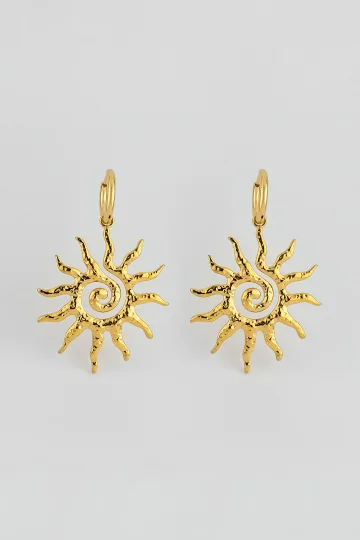
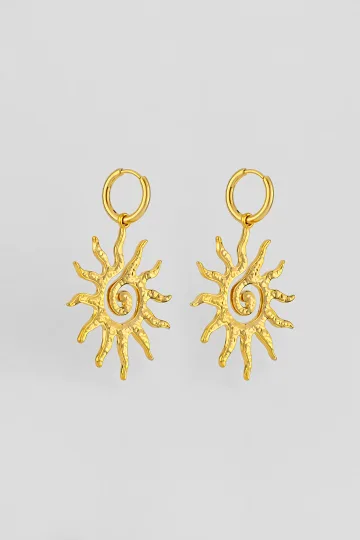
Wear the symbol, don't just read about it. These are in stock:



Early Christianity: the Hermit's Rope
The first Christian hermit monks in the Egyptian and Syrian deserts of the third and fourth centuries recited an enormous number of short prayers each day. To keep count, they dropped small pebbles into a bowl, moving one for each prayer said. Pebbles gave way to a knotted rope that could be carried on the person. This knotted rope survives almost unchanged in the Orthodox tradition. In Western Europe the knots gradually gave way to beads, and from that grew an entirely different branch.
Where the Word Rosary Comes From
The Latin word rosarium means a rose garden or a wreath of roses. Medieval Europe built a lasting poetic link: each prayer addressed to the Virgin Mary was imagined as a rose, and a full circle of prayers formed a wreath laid in the mind upon the head of the Mother of God. From this came the name of the whole practice and the object itself. English says rosary, French rosaire, Italian rosario, Spanish rosario, German Rosenkranz, which translates directly as a wreath of roses. Behind a dry counting tool hid a very tender metaphor.
The Dominicans and the Birth of the Catholic Rosary
Saint Dominic and the Legend of the Virgin Mary
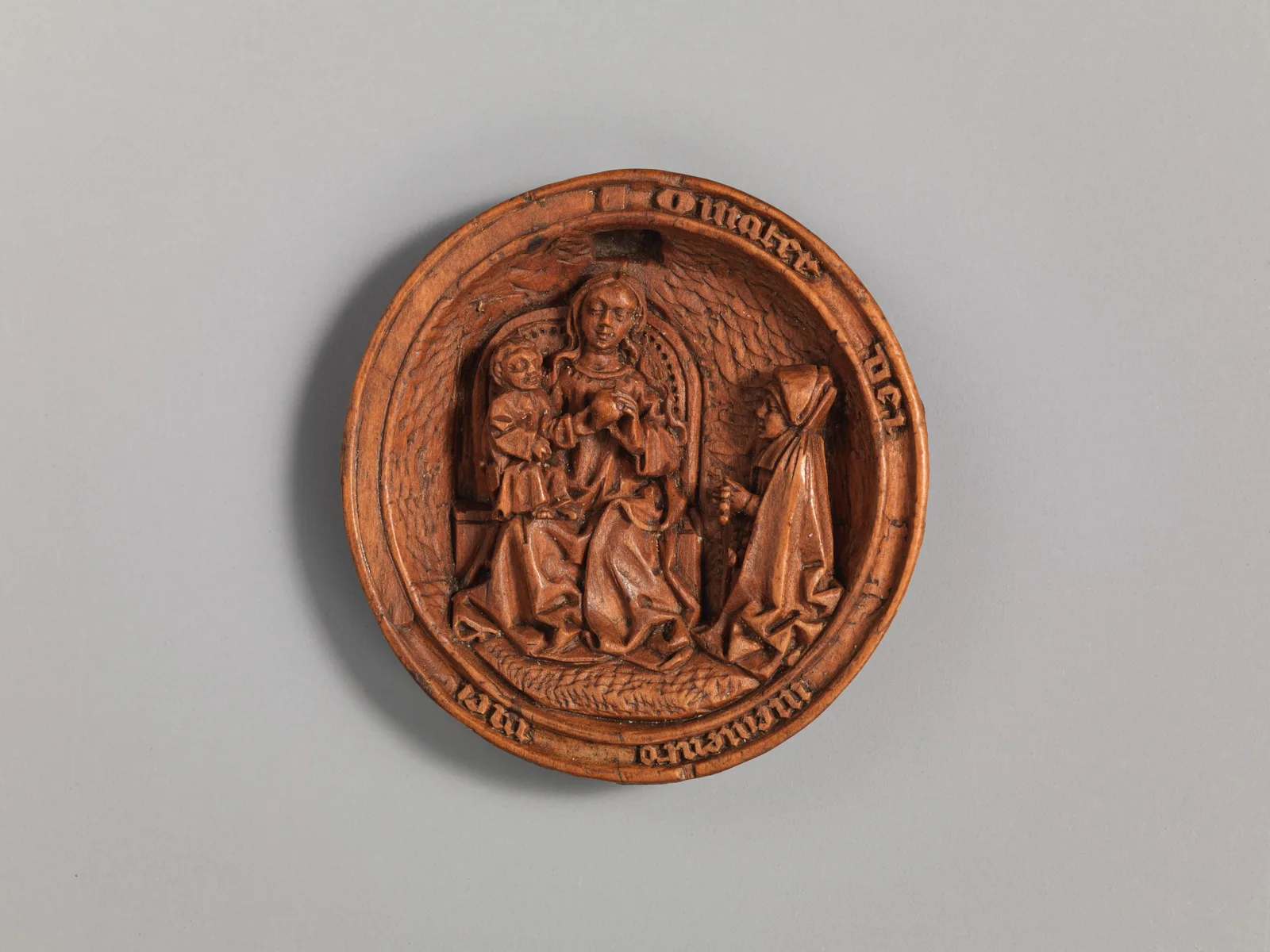
The best known legend ties the rosary to Saint Dominic, founder of the Dominican order, who lived at the turn of the twelfth and thirteenth centuries. As the story goes, during his struggle against heresy in southern France the Virgin Mary appeared to him and handed him the rosary as a spiritual weapon. Historians treat this version with caution: there is no documentary proof that the rosary in its present form existed in Dominic's lifetime. The legend most likely formed later and fixed the order's role as the chief keeper of the prayer rather than describing a real event. Still, the Dominicans did more than anyone to spread the rosary.
How Bead Prayer Found Its Form
The rosary did not take its final shape all at once. In the early Middle Ages, illiterate monks and laypeople who did not know Latin swapped the hundred and fifty psalms of the Psalter for a hundred and fifty repetitions of a simple prayer they knew by heart. Counting those hundred and fifty was exactly what a beaded strand was for. Over time, meditations on events from the life of Christ and the Virgin Mary were added, the wording of the prayers settled, and the number of beads and the order of reading became fixed. By the fifteenth and sixteenth centuries the rosary looked nearly as it does today.
The Dominican Alanus de Rupe and the Rosary Confraternities
In the fifteenth century the Dominican monk Alanus de Rupe preached the rosary energetically and founded the so-called rosary confraternities, associations of laypeople who pledged to pray it regularly. These confraternities spread quickly across Catholic Europe and made the rosary a genuinely popular practice, open to monk and peasant, craftsman and housewife alike. From that point the beaded strand stopped being the property of monasteries alone and entered every home.
The Battle of Lepanto and a Feast in the Rosary's Honour
In 1571 a combined Christian fleet defeated the Ottoman fleet at the naval battle of Lepanto. Pope Pius V, himself a Dominican, credited the victory to the intercession of the Virgin Mary, invoked in those days through the mass praying of the rosary, and he established a feast in her honour. Today it is kept on the seventh of October as the feast of Our Lady of the Rosary. So the prayer strand came to be tied both to quiet domestic devotion and to one of the larger events of history, which added to its weight and recognition.
A crucifix rests on the chest, not swinging at your belt. And for heaven's sake, never over an evening neckline.
How to Wear a Rosary, Tastefully
A rosary is a special case: at once a prayer object and a beautiful thing, and it is easy to overstep. Here is what I recommend keeping in mind so you honour both taste and the feelings around it.
Can you even wear a rosary around the neck? You can, as long as it is done thoughtfully. I recommend a length where the crucifix sits on the chest rather than hiding under a shirt or swinging at the belt. A prayer rosary is best worn so you can slip it off and take it in hand. Over modest clothing it reads as a sign of faith, not a stray accessory.
And if I want to wear it every day? Then I choose a rosary bracelet made of a single decade. Ten small beads, one larger bead and a little cross or medal sit at the wrist and never get in the way of work. It is the most practical way to keep prayer close without looking provocative.
Which material do you suggest for daily wear? For everyday I recommend wood, olive stone or matte silver: they shrug off contact with skin and only warm up over time. Polished gemstones and gilding are lovely, but I save those for rare outings rather than a rush-hour commute.
What if I love the look but not the prayer? There is an honest way. Choose a piece inspired by the rosary in form: a cross chain, a bracelet of neutral design, a strand of decorative beads without a crucifix. That respects your own taste and the feelings of the faithful, and misleads no one.
What should I never do? Do not hang a rosary from a car mirror like a keyring; in Catholic countries that reads outright as profanation. Do not wear it over a revealing or pointedly evening outfit. And do not gift it to someone for whom it means nothing, banking on looks alone. These lines are not about fashion but about people's feelings.

Turn on your camera, pick earrings, a pendant or a ring, and see the piece on yourself in real time.
Switch items in one tap.
Everything runs in your browser: no photo or video is ever uploaded.
Customer reviews
Zevira is a real jewellery shop. Genuine payments, deliveries and customer thank-yous.
🥰🥰🥰 gracias
Ok, ¡gracias! 🙂
Prayer Beads Across Traditions: One Idea, Four Paths
The Catholic Rosary
A full Catholic rosary counts fifty-nine beads: five groups of ten, with single beads set between them, plus a short opening run and a crucifix. Each group of ten is called a decade. On the large beads you say one prayer, on the small beads another, while meditating on certain events known as the mysteries. The material can be anything from plain wood to silver with gemstones, but the structure never changes. That strict geometry is what makes the Catholic rosary easy to recognise.
The Orthodox Prayer Rope and Beads
In Orthodoxy the counting cord goes by several names: prayer rope, beads, and on Mount Athos the komboskini, or komboloi in its secular form. The classic monastic prayer rope is not beads but tight knots of woolen thread, each tied with a special complex knot in the shape of a many-pointed cross. The number of knots is most often thirty-three, fifty, one hundred, or three hundred. On them the short Jesus Prayer is said. Wool is no accident: a soft material does not distract, does not shine, and recalls the sheep as an image of the flock. The knotted rope is deliberately plain and is almost never thought of as jewellery.
The Muslim Misbaha
In Islam the counting strand is called misbaha, subha, or tasbih. It usually has thirty-three or ninety-nine beads, after the count of the beautiful names of Allah. On them short formulas of praise to God are repeated after prayer. Ninety-nine beads are divided by separators into three sections of thirty-three. The materials are traditionally noble: amber, agate, onyx, sandalwood, bone, and in costly examples gemstones and silver. In Islamic culture the misbaha calmly carries both a prayerful and an aesthetic role; it is often held and passed through the fingers outside of prayer, as a way to settle the mind.
The Buddhist and Hindu Mala
A Buddhist or Hindu mala most often counts a hundred and eight beads plus one large bead, called the Mount Meru bead or the guru bead. The number one hundred and eight is held sacred in these traditions and linked to cosmology and breath. On the beads a mantra or a deity's name is repeated. The materials speak: seeds from the bodhi tree, under which the Buddha is said to have reached enlightenment, sandalwood, rudraksha, bone, and in Hinduism often beads of the sacred tulasi plant or of rudraksha, the seeds of a particular tree. The mala is frequently worn openly at the wrist or neck, and in that case the line between an object of prayer and a piece of jewellery blurs more gently than in Christianity.
What the Main Difference Is
If you boil the four traditions down to their essence, the difference is less in construction than in attitude. The Catholic rosary and the Orthodox prayer rope are first of all instruments of prayer, and wearing them on display as jewellery is considered out of place in strict settings. The Muslim misbaha and the Eastern mala allow a double role more easily: they are passed through the fingers idly, worn in view, and given as something beautiful yet spiritually weighted. Grasping this difference matters more than any rule about wearing, because it is what decides how the object reads to the people around you.
Upload a photo of your pet, someone you love, or an object. We'll build a 3D model and hand-cast it in pewter.


How the Catholic Rosary Is Built
The Crucifix and the Opening Run
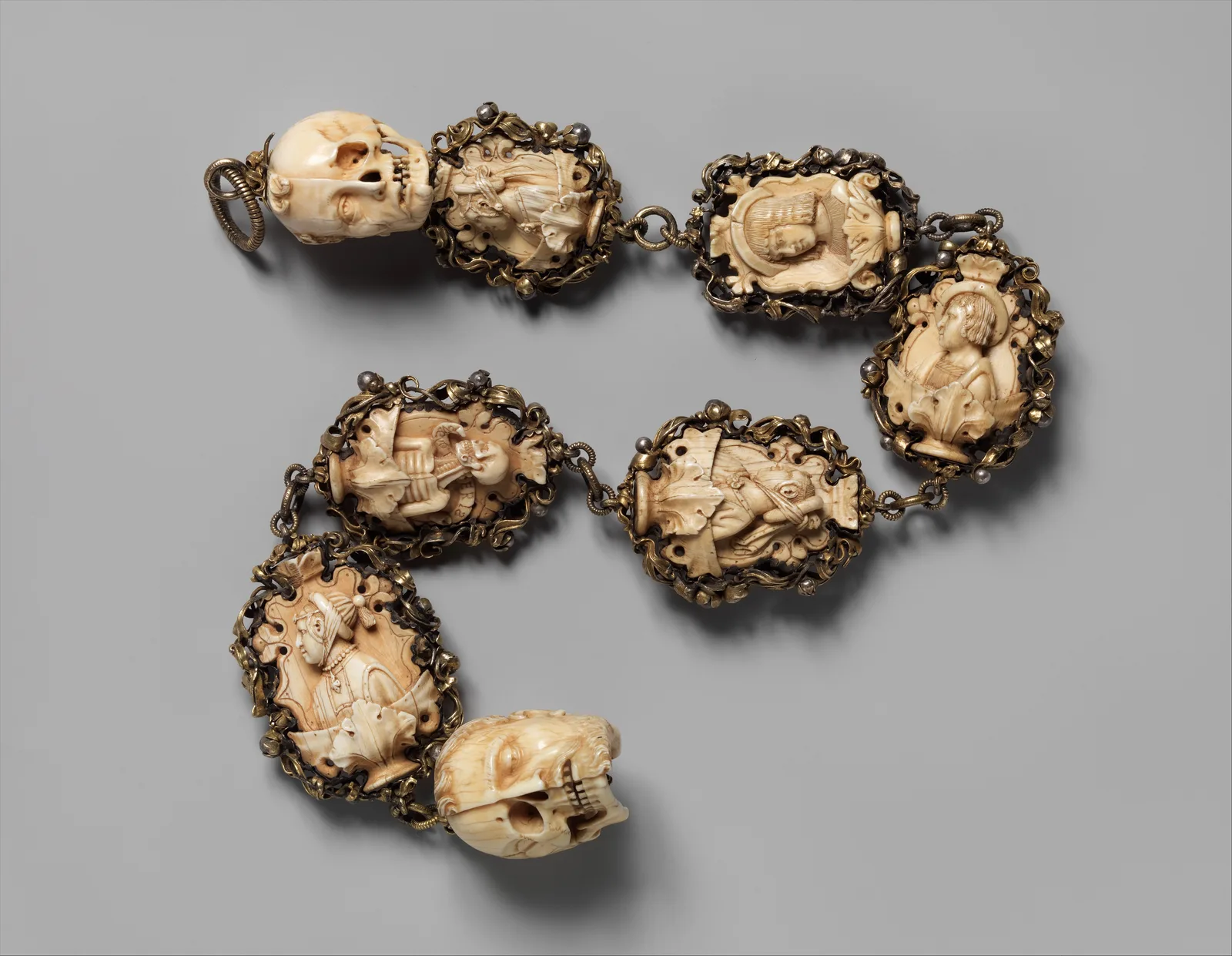
Every Catholic rosary begins with a crucifix, a small cross bearing the figure of Christ. From it runs a short chain or strand with one separate bead, then a set of three beads, then one more separate bead. The reading starts at the crucifix and the circle closes there too. This introductory part, before the one praying reaches the main ring, sets the rhythm and tunes the mind for prayer. The crucifix on a rosary is usually made a little larger and more detailed than the rest; it is the meaning and the visual centre of the whole object.
Decades: Five Groups of Ten
The main ring of the rosary is made of five decades, that is, five groups of ten small beads. On each small bead one prayer addressed to the Virgin Mary is said. Ten identical beads in a row are the decade, the part that gave its name to the most recognisable element of the structure. Five decades together make fifty repetitions of the main prayer in one circle. The small beads are usually made smooth and modest in size, so the finger slides from one to the next without looking.
The Large Divider Beads
Between the decades stand single large beads. On them another prayer is said, addressed to God the Father, and often a short doxology. A large bead serves both as a pause in meaning and as a physical marker: the finger feels that a decade has ended and it is time to change the prayer. For that reason, in a well-made rosary the divider beads clearly differ from the small ones in size, shape, or faceting. This is not decoration but a function the hand uses to orient itself blind.
The Centerpiece, or Central Link
Where the ring of the rosary meets the opening run there is usually a centerpiece, called the centre or central link. Most often it shows the Virgin Mary, sometimes a scene of an apparition or the coat of arms of an order. The centerpiece is the detail in which a jeweller has the most room to work: it is chased, enamelled, ornamented. It is often by the centerpiece that the workshop or region of a rosary's origin is recognised. Functionally it marks the point from which the one praying moves from the opening part to the decades and back.
The Mysteries of the Rosary: What You Meditate On
As the beads are told, the one praying both counts the prayers and meditates on events from the life of Christ and the Virgin Mary, known as the mysteries. They are grouped: joyful, sorrowful, glorious, and in the twentieth century John Paul II added the luminous mysteries, tied to Christ's public ministry. Each decade corresponds to one event. So the rosary turns out to be not a mechanical count but a way to walk in the mind through the key scenes of the Gospel story in about twenty minutes. Here the beads are only a support for memory and attention.



Rosary as Jewellery or Object of Prayer
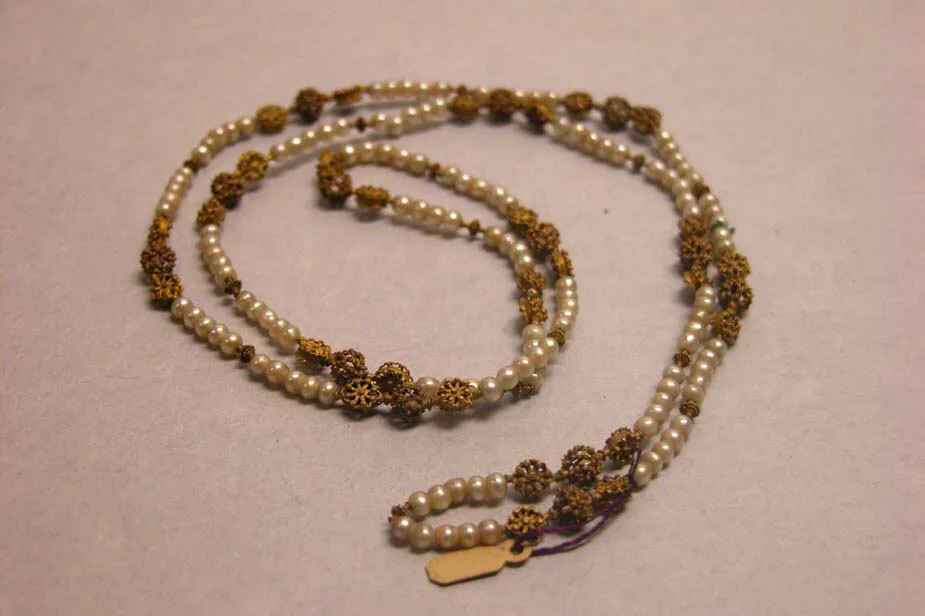
What Tradition Says About Wearing It at the Neck
This is the most delicate question of the whole subject, and the answer does not reduce to a ban or a permission. Historically the rosary was kept on the person at all times: in a pocket, at the belt of a monastic habit, wound around the wrist. It was worn at the neck too, but as a way to keep the prayer close to the heart and always at hand, not as a necklace. The Church does not forbid wearing a rosary at the neck, but it firmly reminds the faithful that this is a sacred object and should be worn with the same respect given to a baptismal cross, not as a decorative chain under an outfit.
Where the Line of the Appropriate Falls
The line lies not in the object itself but in intention and context. A rosary worn as a sign of faith by someone who lives by that prayer raises no questions for anyone. A rosary worn for a good look with no connection to faith reads, in a religious setting, as carelessness, sometimes as an offence. Catholics feel it especially sharply when a rosary is hung from a car mirror, turned into a trinket, or worn over a revealing outfit. A simple rule applies: if the object is precious to you as something holy, wear it with care; if you relate to it only as jewellery, it is better to choose a piece made for that.
When a Decorative Rosary Is the Norm
There are cases where a decorative rosary troubles no one. There is the rosary bracelet of a single decade, designed from the start to be worn constantly. There is the keepsake rosary given at a baptism or a first communion and worn by a child with pride. There is the rosary in cultures where it long ago became part of folk dress, as in some regions of Latin America and Southern Europe. In these contexts the object is both prayerful and visible at once, and no contradiction is felt. The key is always the same: a connection to faith makes wearing it natural, the absence of such a connection makes it contested.
A Respectful Alternative for Those Who Love the Look
For those drawn to the very look of a beaded strand with a crucifix, but with no tie to Catholic prayer, there is an honest way out. You can choose a piece inspired by the rosary in form but not actually one: a chain with a cross, a neutral bead bracelet, a strand of decorative beads without a crucifix or centerpiece. That respects both your own taste and the feelings of believers. And if you are drawn to the cross itself as a symbol, it is worth reading a separate piece on what a cross at the neck means and how to wear it, which covers a close but separate story.
What Rosaries and Prayer Beads Are Made From
Wood: the Most Traditional Material
Wood is historically the chief material for a humble, prayerful rosary. Olive wood from the Holy Land, boxwood, pear, juniper, and rosewood give warm, light beads, pleasant to the touch and never cold in the hand. A wooden rosary is associated with simplicity, poverty in the Gospel sense, and pilgrimage. Beads of olive wood from the Holy Land are especially prized by pilgrims as a keepsake. Wood darkens and polishes over time from the touch of fingers, gaining character, and that is one reason it is loved for daily prayer.
Hematite and Natural Stone
Hematite, a heavy gray-steel mineral with a mirror sheen, has become very popular for modern prayer beads. It cools the hand pleasantly, carries a noticeable weight that helps concentration, and looks restrained and severe without any glitter of precious stones. Besides hematite, agate, onyx, tiger's eye, amethyst, and rock crystal are used. Stone beads are durable, unafraid of moisture, and unchanging over time. As for the properties traditionally ascribed to different minerals, and where the truth ends and the pretty legend begins, there is a separate breakdown in the piece on protection amulets and talismans.
Crystal and Glass
Faceted beads of rock crystal or fine glass give a rosary light and a festive quality. They catch and bend the rays, so such a rosary is often chosen for solemn occasions: a first communion, a confirmation, a wedding. Glass beads come in any colour, from clear and milky white to deep blue and ruby, which lets a rosary be tied to the colour of a liturgical day or simply to the owner's taste. There is one drawback: glass and crystal are fragile, so such a rosary calls for careful handling and a pouch for storage.
Silver and Noble Metals
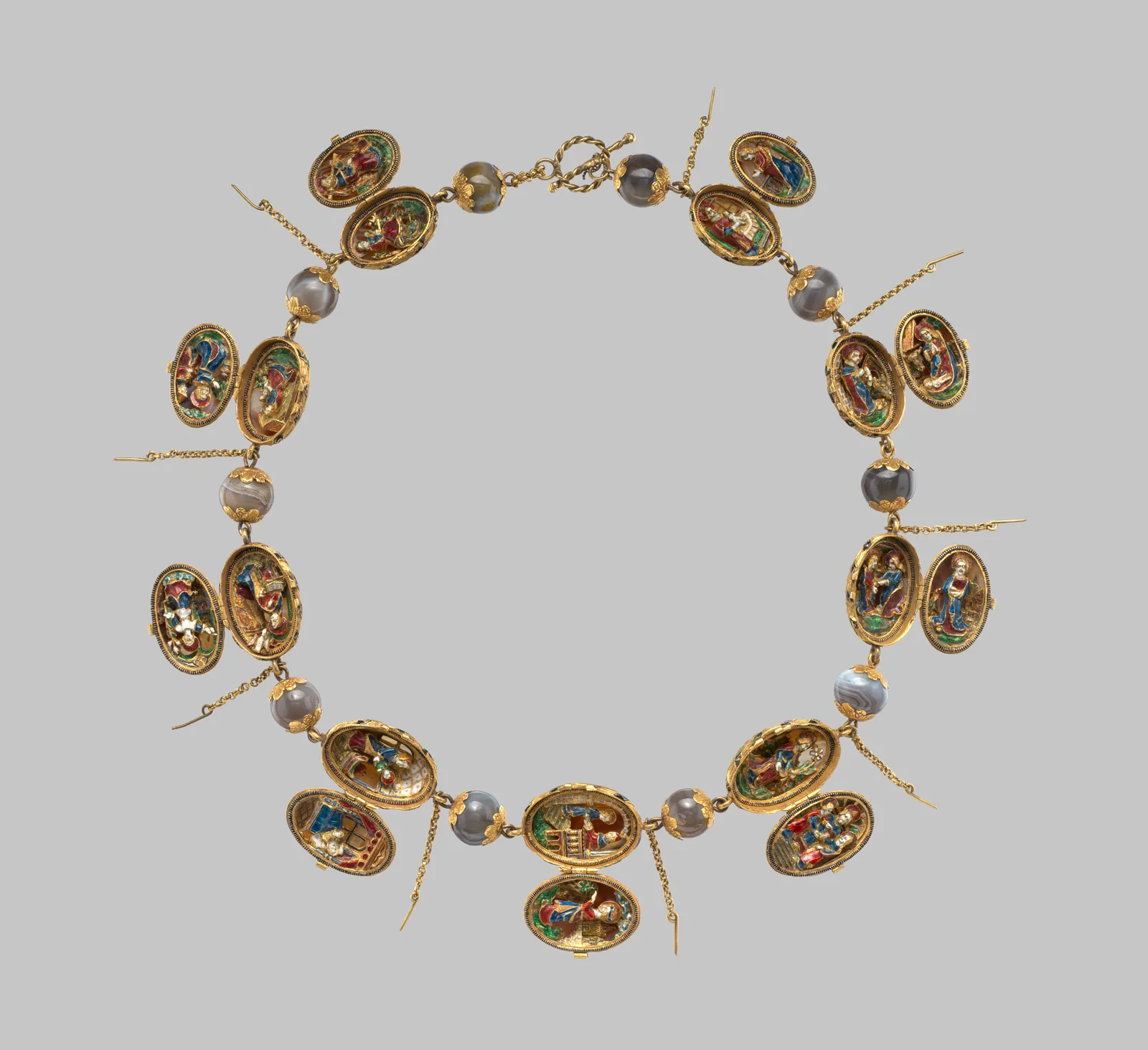
Silver is used both for beads and, more often, for the frame: the crucifix, the centerpiece, the divider links, the chain between the beads. A silver rosary is already a formal object, frequently a family heirloom passed down through generations. Silver ages beautifully, can be cleaned and refreshed, and lasts long with reasonable care. If you are choosing a silver rosary or a decade bracelet, it helps to understand how real silver differs from a fake and how it is hallmarked; that is covered in detail in the guide on 925 sterling silver. Costly rosaries combine silver with gemstones, mother-of-pearl, or enamel on the centerpiece.
Seeds, Bone, and Rare Materials
Across traditions you meet beads of natural materials with a meaning of their own. Seeds of the bodhi tree and grains of rudraksha in Eastern malas, Job's tears in folk Catholic prayer beads, bone and horn in old examples, mother-of-pearl and coral in Mediterranean ones. Each material carries its own story and its own texture. Folk rosaries were often made from whatever was at hand: from knots, from fruit pits, from plain wooden balls, and it is exactly such humble objects that often turn out to be dearest of all to their owners.
Leave your email, we'll send your discount code. No spam, unsubscribe anytime.
The code arrives by email, valid on your first order.
The Rosary Bracelet: a Decade at the Wrist
What a Decade Bracelet Is
A rosary bracelet, or decade bracelet, is a shortened rosary of a single decade: ten small beads, one large one, and a small cross or centerpiece. It is closed into a ring that goes on the wrist, or made as a bracelet with a pendant. The point is to carry the prayer on the person at all times without taking out a full rosary. On a decade bracelet you pray one decade at a time, and you complete a full circle in five rounds, moving along the wrist. This is the most convenient format for everyday life.
Where It Came From
Decade bracelets were worn by soldiers, sailors, and workers, anyone for whom fussing with a long rosary was awkward. In the trenches of the First World War the so-called soldier's rosaries spread, compact decade bracelets of sturdy beads or even of knotted rope, which fit in a breast pocket and did not catch on equipment. This practical tradition survives to this day: the decade bracelet remains the choice of those who need a prayer that does not get in the way of the work.
Why It Suits Daily Life
A rosary bracelet removes almost every question of appropriateness. It is clearly designed to be worn, so it looks neither like a holy object on display nor like a stray accessory. It does not tangle, does not catch, and is not lost as easily as a long rosary. It is convenient to wear under a sleeve or openly, at work and on the road. For many believers it is the first and main everyday rosary, while the full one stays for prayer at home or in church.
How to Choose a Decade Bracelet
When choosing a rosary bracelet, look at three things. First, the size of the wrist: the bracelet should neither pinch nor slip off, since it is used blind. Second, the bead material: hematite and wood are more practical than crystal for daily wear. Third, the strength of the joints: an everyday bracelet should be strung on a strong cord or chain, or it will fall apart quickly. A good decade bracelet survives years of wear and often becomes the very object a person will not part with.
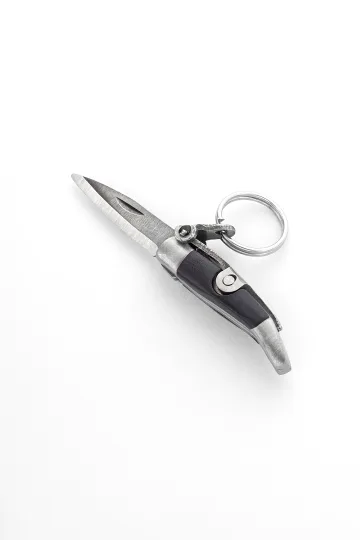
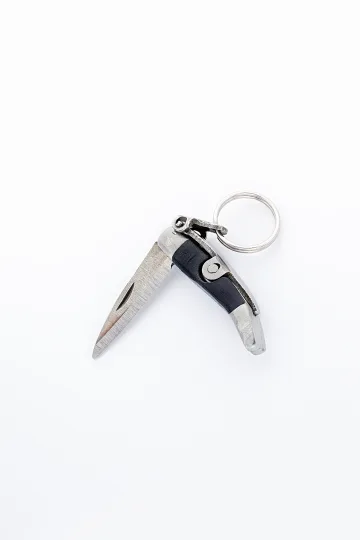
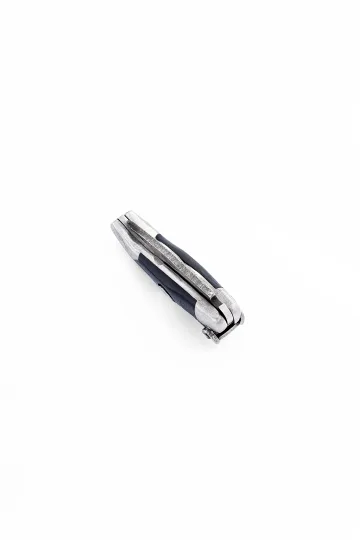
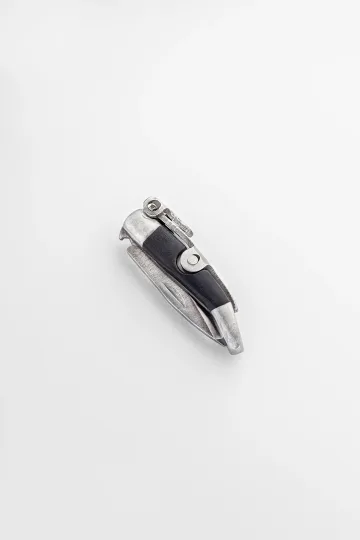
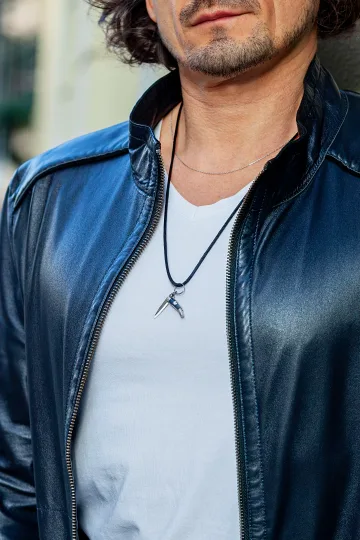
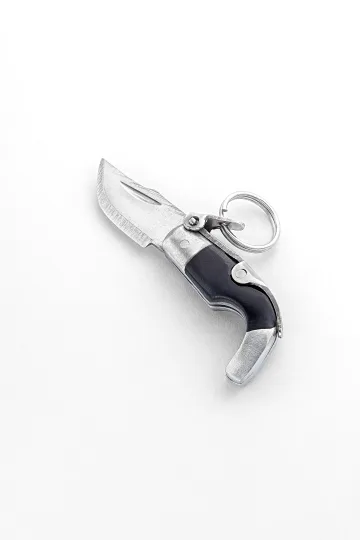
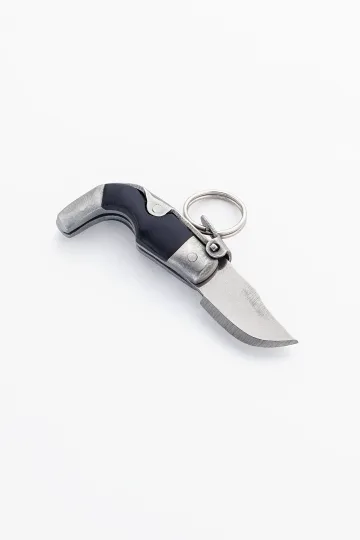
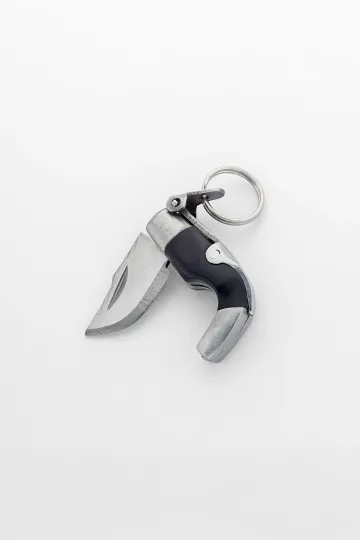
CAPAORA mini knife pendant
The 18th-century Spanish navaja in miniature: 40 mm of stainless steel, a real folding mechanism and a Palanquilla lock that clicks. An affordable gift to remember.
Authentic · Ships from Spain · 14-day returns
Care and Storage
How to Clean Different Materials
Care depends on the material. Wooden beads only need wiping with a dry or slightly damp soft cloth; wood dislikes soaking and harsh chemistry. Stone beads such as hematite or agate can be wiped with a damp cloth and dried off. Silver elements darken over time and are cleaned with a special silver cloth or a mild product, without touching the beads. Crystal and glass are wiped with a soft, non-abrasive cloth. One rule covers it all: less water and chemistry, more gentleness.
How to Store It So It Does Not Tangle
The chief enemy of a rosary is tangling and scratches, especially when several rosaries lie in one box. The best storage is a separate cloth or leather pouch for each rosary, or a soft case. Many keep a rosary in a dedicated little box or in the pocket of a prayer book. If you carry it in a bag, a pouch is a must, or the cross and beads will scratch against keys and loose change. Silver rosaries are better kept in the dark and dry, so the metal darkens more slowly.
When Repair Is Needed
A rosary is an object with moving joints, and over time a cord may wear through and a link may bend open. Do not throw away a broken rosary, especially a keepsake one: it is easy to restring on a new cord or reassemble, keeping the beads, the crucifix, and the centerpiece. Many workshops do exactly this, repairing and restringing rosaries. An old family rosary serves for decades more after restoration, and a renewed cord does not lessen its value in the slightest; on the contrary, it extends the life of the heirloom.
Who Receives a Rosary and on What Occasion
Baptism and Christening
A rosary is one of the traditional gifts at a christening, alongside a baptismal cross and a silver spoon. A child's rosary is made short, of small beads in soft colours, often of wood or small pearls. It is not put into the child's hands at once but kept as a keepsake until they grow and begin to pray on their own. A rosary given at a christening often becomes a person's first in life and accompanies them for many years afterward as a link to the moment of entering the faith.
First Communion and Confirmation
A first communion for children and a confirmation for teenagers are milestones that a rosary suits perfectly as a gift. For a first communion a light, festive rosary of white crystal, mother-of-pearl, or pearl is often given, in keeping with the solemn dress. For a confirmation, which comes at a more conscious age, an adult rosary of stone or silver is fitting, one a person will choose for years. Such a gift marks not fashion but a spiritual coming of age, and so it is valued for a long time.
For a Journey and a Hard Stretch
A rosary is often given before a long journey, a move, an operation, before any event that brings worry. The same logic works here as with any protective charm: an object in the hand helps you gather yourself and reminds you that people are thinking of you and praying for you. A compact decade bracelet or a travel rosary in a pouch is a fitting gift for someone setting out into the unknown. If you are choosing a keepsake for a journey more broadly than a strictly religious object, it helps to look at other protective symbols in the breakdown on protection amulets and talismans.
Wedding, Anniversary, and Remembrance
A rosary is given at a wedding, on round wedding anniversaries, on a retirement, and is sometimes placed in the hands of the departed as a last sign of faith. A silver or pearl rosary in these cases becomes a family heirloom, later passed to children and grandchildren. Many Catholic families have a grandmother's rosary that remembers several generations, and it is exactly such objects, modest in price but vast in meaning, that are valued above any gemstones.
Send a friend a discount code, they save on their first order.
Facts That Surprise
The Rosary Nearly Became a Weapon in the Literal Sense
In the Spanish tradition there was the so-called fist rosary, a heavy chain with large beads and a massive crucifix, used when needed for self-defence by winding it around the fist. Such rosaries were carried by travellers and sailors. The line between prayer and protection here was literally physical: the same object both calmed the soul and, in the extreme case, saved the body.
The Longest Rosary Is Longer Than a Football Field
Enthusiasts have more than once assembled giant rosaries for records and pilgrimages. There are examples tens and hundreds of metres long, with beads the size of a human head, carried in procession by whole parishes. This turns personal prayer into a collective act, where the beaded strand becomes a tangible link between hundreds of people at once.
The Number One Hundred and Eight Is No Accident
A Buddhist mala has one hundred and eight beads, and the number surfaces constantly across Eastern traditions. The explanations run into the dozens: one hundred and eight earthly desires, one hundred and eight kinds of defilement, particular astronomical ratios, a number that is a multiple of sacred figures. No one will name the exact reason anymore, but the persistence of this number across millennia and across different religions is fascinating in itself.
The Komboloi Lost Its Prayer and Survived
The Greek komboloi grew out of the monastic prayer rope but in secular life lost its religious function almost entirely. Today it is simply a beaded strand that Greek men pass through their fingers to calm down, out of boredom, in conversation. A whole culture grew up around the sound and movement of the beads, without a single word of prayer. It is a rare case where a prayer object became pure jewellery and yet offended no one's feelings, because the change came gradually and from within the same culture.
Beads Can Count for You in the Dark
The whole genius of the counting strand is that it works without sight. The finger tells a large bead from a small one, feels a knot, catches the edge of a decade, and the one praying never opens their eyes or lights a lamp. This tactile interface was devised thousands of years before any electronics, and it is still perfect: no prayer-counting app has ever caught on beside a plain strand of beads.
Frequently Asked Questions
Can you wear a rosary at the neck if you are not Catholic?
There is no formal ban, but the context is worth understanding. In a Catholic setting, a rosary at the neck of someone clearly unconnected to the faith reads as carelessness toward something sacred. If you like the look itself, it is more honest to choose a piece inspired by the rosary but not actually one: a chain with a cross, or a strand of decorative beads without a crucifix or centerpiece. That respects both your taste and the feelings of believers.
How does a rosary differ from ordinary prayer beads?
The rosary is specifically the Catholic kind of prayer beads with a strict structure: five decades, divider beads, a centerpiece, and a crucifix, all set to a particular order of prayers. The word prayer beads is broader and means any counting strand, including the Orthodox prayer rope, the Muslim misbaha, and the Buddhist mala. So every rosary is prayer beads, but not all prayer beads are a rosary.
How many beads are in a Catholic rosary?
A full circle has fifty-nine beads: five decades of ten small beads make fifty, plus five large divider beads, plus an opening run of three small and two large beads. A crucifix and a centerpiece complete it. A rosary bracelet, or decade bracelet, contains only one decade: ten small beads, one large one, and a cross.
Which material is the most practical for daily wear?
For daily prayer the most practical choices are wood and dense stone such as hematite or agate. They are unafraid of being touched, do not scratch easily, sit pleasantly in the hand, and only improve over time. Crystal and thin glass are beautiful but fragile, better kept for solemn occasions. Silver is durable but needs cleaning and suits a formal or family rosary instead.
Can you give a rosary to someone who is not baptized?
You can, if you are sure the person will receive it with respect, for example because they take an interest in the culture or the history. But giving a rosary purely as a pretty object to someone for whom it clearly means nothing is not the best idea: for believers it is sacred, and such a gift may ring false. When in doubt it is more neutral to give a piece of jewellery with a cross or simply a nice bead bracelet without any liturgical weight.
How do you store a rosary so it does not get tangled?
Each rosary is better kept on its own, in a cloth or leather pouch or a soft case. That way the beads do not scratch and the cord does not tangle with other chains. In a bag a pouch is a must, or the cross will scratch against keys and loose change. Silver rosaries are worth keeping dry and dark, so the metal darkens more slowly.
What do you do if a rosary breaks?
Do not throw it away, especially if it is a keepsake. A rosary is easy to restring on a new cord or reassemble, keeping the beads, the crucifix, and the centerpiece. Jewellery workshops and beadwork specialists do this. An old family rosary serves for decades more after restoration, and a new cord only extends the life of the heirloom without lessening its value.
Why is the rosary called a wreath of roses?
The Latin rosarium means a rose garden or a wreath of roses. In medieval Europe each prayer to the Virgin Mary was imagined as a rose, and a full circle of prayers as a wreath laid in the mind upon the head of the Mother of God. From this comes the name in many languages: German Rosenkranz translates directly as a wreath of roses, while Italian and Spanish rosario go back to the same image.
Silver, wood, dense stone, sturdy assembly, bead bracelets, and beaded strands.
Buying it as a gift? Each one arrives ready to give.
 A branded Zevira box and a little card come with every order.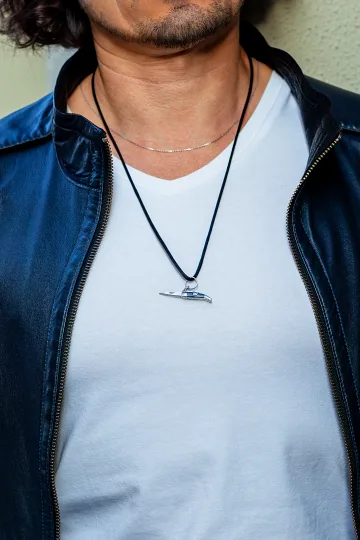




About Zevira
Zevira makes jewellery meant to be worn every day and passed on. We treat symbols with respect for their history, so in our approach a bead bracelet and a beaded strand are objects thought through in material and assembly, not a stray accessory. Beads of dense stone and wood, silver links, and sturdy assembly are built for years of wear and so the object can be refreshed rather than thrown away. If you are drawn to the look of a calm, considered strand held in the hand, look at our bracelets and pendants: among them is one that will become yours for every day.