The Sautoir: Long Pendants and Layering That Lengthen the Silhouette
The word sautoir is French, and it did not start as jewellery at all. It named a sash worn diagonally across the shoulder to carry a medal or a hunting horn. By the early twentieth century that sash had turned into a long strand falling almost to the waist, and in the 1920s a sautoir with a swinging tassel became a badge of new freedom on the necks of dancing women. Length mattered more than the stone.
A sautoir is a genre of its own with its own rules: the strand drops below the bust, the end almost always carries an accent (a tassel, a large pendant, a locket or two hanging drops), and you can wear it a dozen ways, from a strict straight line to a double wrap or a knot at the solar plexus. This piece is about where it came from, how it differs from a lariat and an opera necklace, and how to use it to draw the eye downward and lengthen the figure.
What a Sautoir Is and How Long It Should Be
A plain definition of the sautoir
A sautoir is a long necklace that drops below the bustline, usually to the solar plexus, the waist or even the hips. Two traits define it: real length and an accent at the end of the strand. That accent can be a tassel of threads or chains, a large pendant, a locket, a heavy bead or a pair of hanging elements. Without the accent a long strand stays nothing more than a long chain, while a sautoir is a strand with a final point that holds the whole gaze.
What length counts as a sautoir
On the familiar scale of necklace lengths, the sautoir begins where opera length ends. A choker sits at the neck, a princess lies on the collarbones, a matinee reaches the top of the bust, an opera drops below the bust, and anything longer than about eighty centimetres that clearly falls toward the waist is already sautoir territory. Most often it runs from eighty to a hundred and twenty centimetres, sometimes more. If you are unsure which category your necklace belongs to, the guide to choosing chain length breaks down the whole scale by centimetres.
Wear the symbol, don't just read about it. These are in stock:







Why length is the sautoir's main tool
A short necklace divides the figure horizontally and pulls attention to the neck and face. A sautoir works the opposite way: the long vertical line draws the eye downward, lengthens the neck, visually stretches the torso and slims the silhouette. That is why a sautoir is so loved by petite women and anyone who wants to add a little height. It is not magic but the simple geometry of perception: the eye travels along the line, and the longer and less broken it is, the taller the figure looks.
What a sautoir is made of
Structurally a sautoir has three parts: the strand itself (a chain, a strand of pearls, a string of seed beads or beads), an optional sliding or fixed element in the middle, and the final accent at the end. Classic 1920s models ran to a large tassel. Modern versions may hang a drop pendant, a coin, a locket or a geometric shape at the end. Sometimes a sautoir is closed, sometimes open like a lariat so the ends can be tied.
How a sautoir feels and behaves when worn
A long sautoir behaves on the body differently from a short necklace. It has its own weight, which pulls the strand down and holds it in a strict vertical, so the piece rarely slips sideways or rides up to the collar. At the same time the long strand reacts more visibly to movement: with each step, bend or dance the accent at the end swings. Plan for this in advance: a light thin chain lies delicately, while a heavy strand with a weighty finish will be felt on the neck all day and needs a sturdy clasp or a closed loop with no clasp at all.
The Origin of the Word: From Sash to Neck
The order ribbon and the hunting horn
The French sautoir comes from the verb sauter, to leap, and originally meant a wide ribbon or strap worn diagonally across the shoulder. Such a sash carried a knightly order, a medal, a hunting horn or even a weapon. Heraldry still calls a diagonal Saint Andrew's cross a sautoir, the very X across a shield. The idea of a diagonal crossing the body became the seed of the future ornament.
How the sash became a necklace
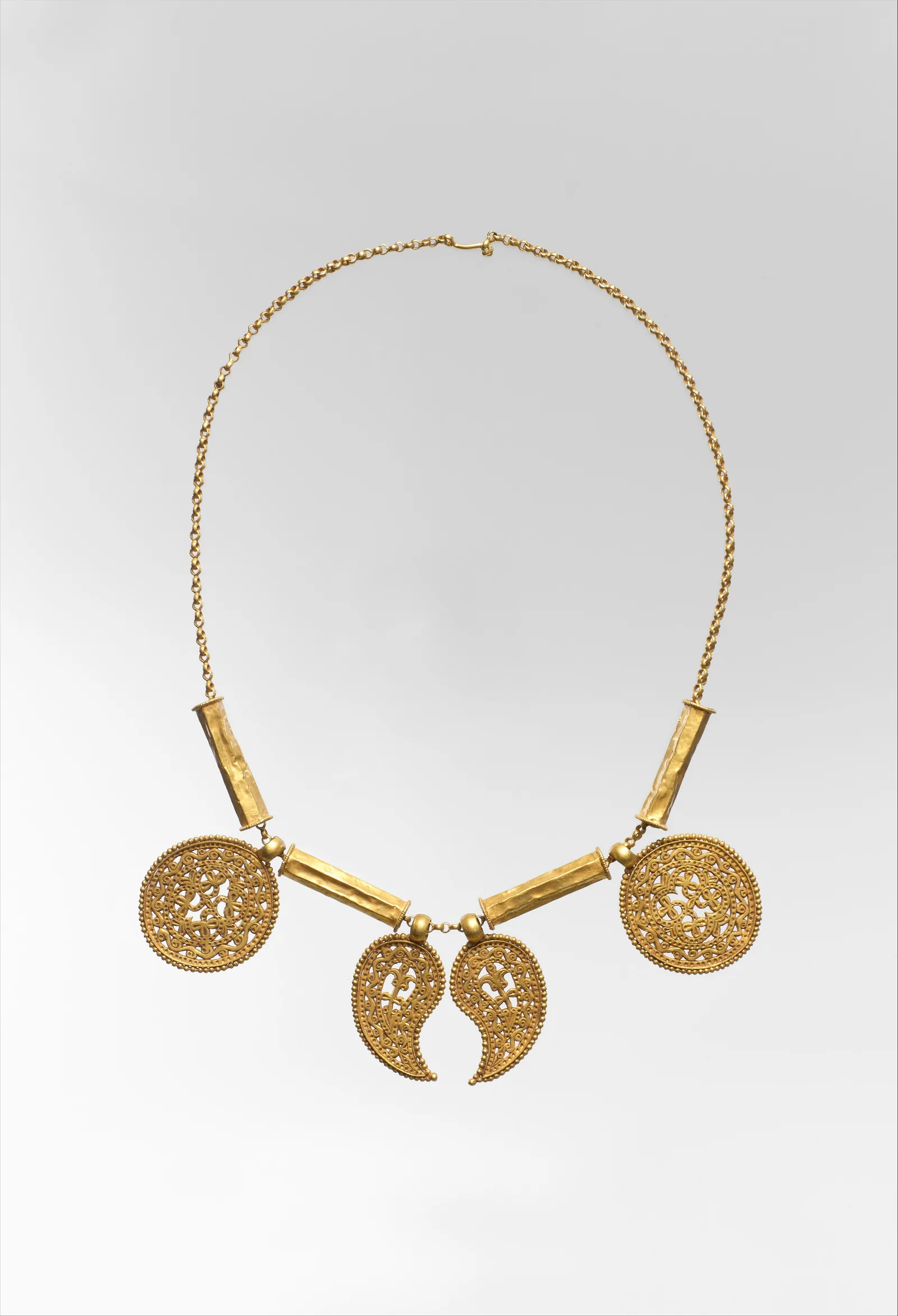
In the nineteenth century the word crossed into the language of jewellery. A sautoir came to mean a long chain or strand worn so that it dropped far down the body. At first it was a practical thing: a pendant watch, a lorgnette, a bottle of smelling salts or a little purse hung from the long chain. The ornament grew out of function, and only later did the function fall away while the length and the pendant remained as pure aesthetics.
Belle Époque: the long strand as a sign of wealth
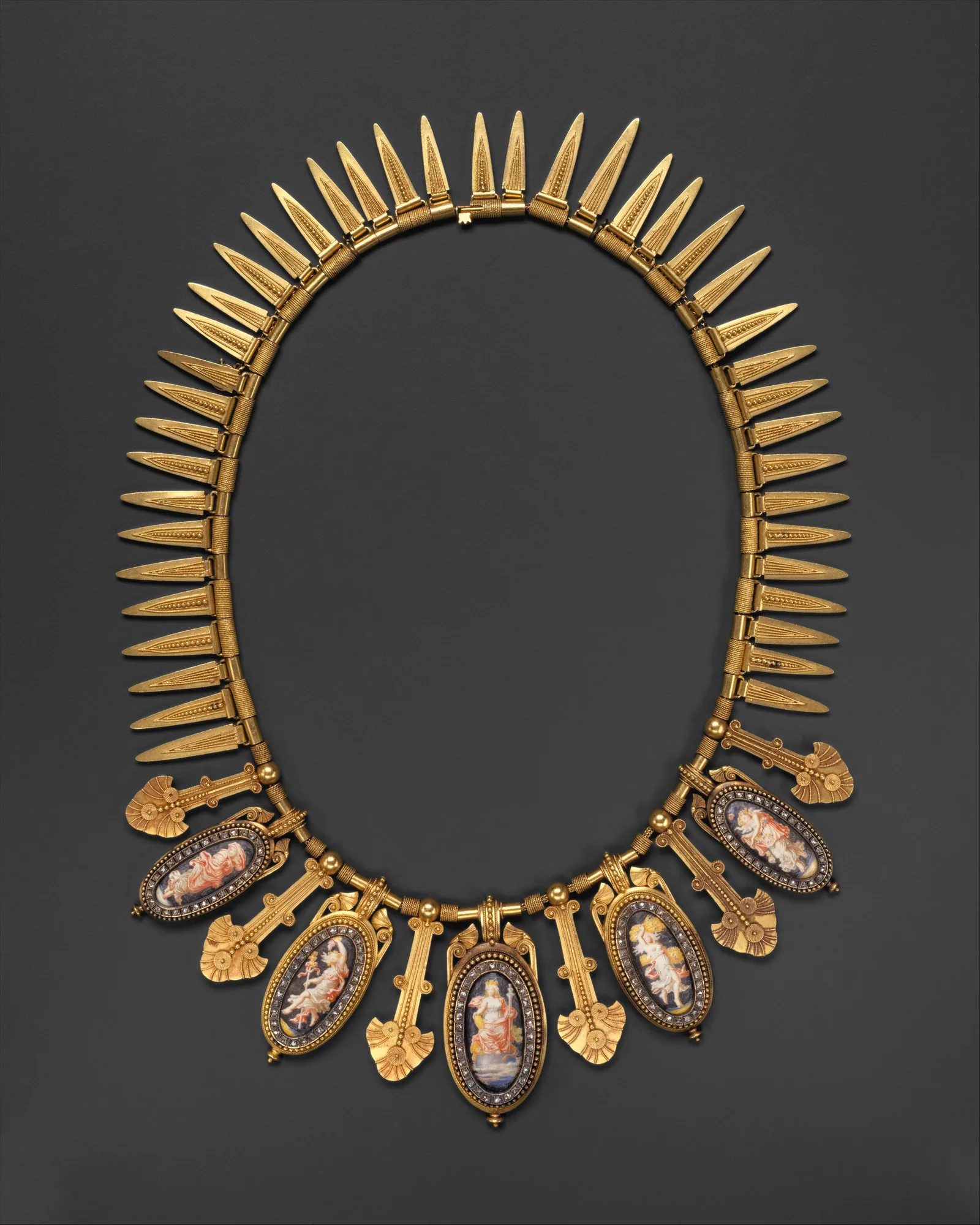
In the Belle Époque, at the turn of the nineteenth and twentieth centuries, the sautoir entered the wardrobe of wealthy women as a symbol of elegance. Long strands of pearls and platinum chains set with diamonds dropped over pale dresses. A pearl strand to the waist was considered the height of taste, since natural pearls then cost a fortune, and a long string spoke quietly of the family's standing. The platinum and openwork of the period made the sautoir light and airy despite its length.
A sautoir wants a straight back and an open throat, never a buttoned collar. Cut it off mid-chest out of shyness and every inch of height it lends goes down the drain.
What to Wear a Sautoir With
Over years on set the long strand has passed through dozens of looks with me: straight, knotted, turned to the back. Here is what actually holds a look together, by occasion.
What do I wear a sautoir with every day? For daytime I recommend a thin chain of medium length with a small accent over a turtleneck, a shirt or a simple dress. A plain top works as a clean backdrop and the vertical line reads at once. Keep the finish light so the strand does not drag the fabric or snag on the go.
Is a sautoir right for the office? It is, as long as you keep it restrained. I suggest a smooth chain with no loud finish, worn to the waist over a turtleneck or a high-neck blouse. Read that way it stays a quiet detail rather than an evening accent and does not argue with tailored clothes.
How do I build an evening look? For evening I choose the longest strand and an expressive finish: a tassel or a large stone. Under an open dress the sautoir becomes the main piece and needs no company. I suggest a deep straight line or a knot at the solar plexus, and for a bare back turn the accent behind you.
How do I layer a sautoir with short necklaces? I build a ladder: a choker at the throat, a mid-length necklace on the collarbones and the sautoir as the longest bottom line. Leave a few centimetres between tiers so the strands do not cling. Keep the visible accent on one strand only, usually the sautoir, and let the rest stay plain.
Which length suits my height and neckline? I choose length for the figure, not the other way round. For a shorter frame I suggest a strand to the waist: the vertical lengthens the silhouette without pulling the proportions down. Under a deep V I make sure the accent ends below the lowest point of the neckline, or the pendant cuts across the line.

Turn on your camera, pick earrings, a pendant or a ring, and see the piece on yourself in real time.
Switch items in one tap.
Everything runs in your browser: no photo or video is ever uploaded.
The History of the Sautoir: From Art Deco to Revival
The 1920s and dancing women
Real fame came to the sautoir in the 1920s. The line of the dress had changed: the waist vanished, the line dropped to the hips, necklines opened the back and the neck. A short necklace looked lost on such clothes, while a long strand with a swinging tassel proved ideal. When a woman danced, the tassel swayed in time with her movements, marking the rhythm. The sautoir became an ornament of freedom: it was worn by those who cut their hair short, drove cars and danced through the night.
Art Deco: geometry and contrast
The Art Deco style gave the sautoir its recognisable look. In place of flowing lines came strict geometry, symmetry, sharp contrasts of black and white, onyx and rock crystal, coral and jade. Tassels were made of tiny pearls or seed beads strung on threads, of faceted beads, of silk threads with metal caps. Eastern motifs and a fascination with Egypt and Japan added exotic notes: strands appeared with carved figures, amulets and large coloured beads.
The tassel as the main element
The tassel, in French tassel, became the calling card of the Art Deco sautoir. A tassel is a bunch of hanging threads, beads or chains gathered at a single point. It moves, catches the light, adds sound and motion. A tassel of tiny pearls whispered with movement, a tassel of faceted beads shimmered, a metal tassel chimed. It was this mobility that made the tassel such an expressive finish for a long strand: a static pendant simply hangs, while a tassel lives. Length mattered too: a short gathered tassel looked strict and graphic, a long full one turned the sautoir into almost a dancing prop. Makers played with the texture of the cap that gathered the threads at the top, turning the very fastening of the tassel into a small piece of jewellery craft.
The lull and the revival
The East and the exotic in the 1920s sautoir
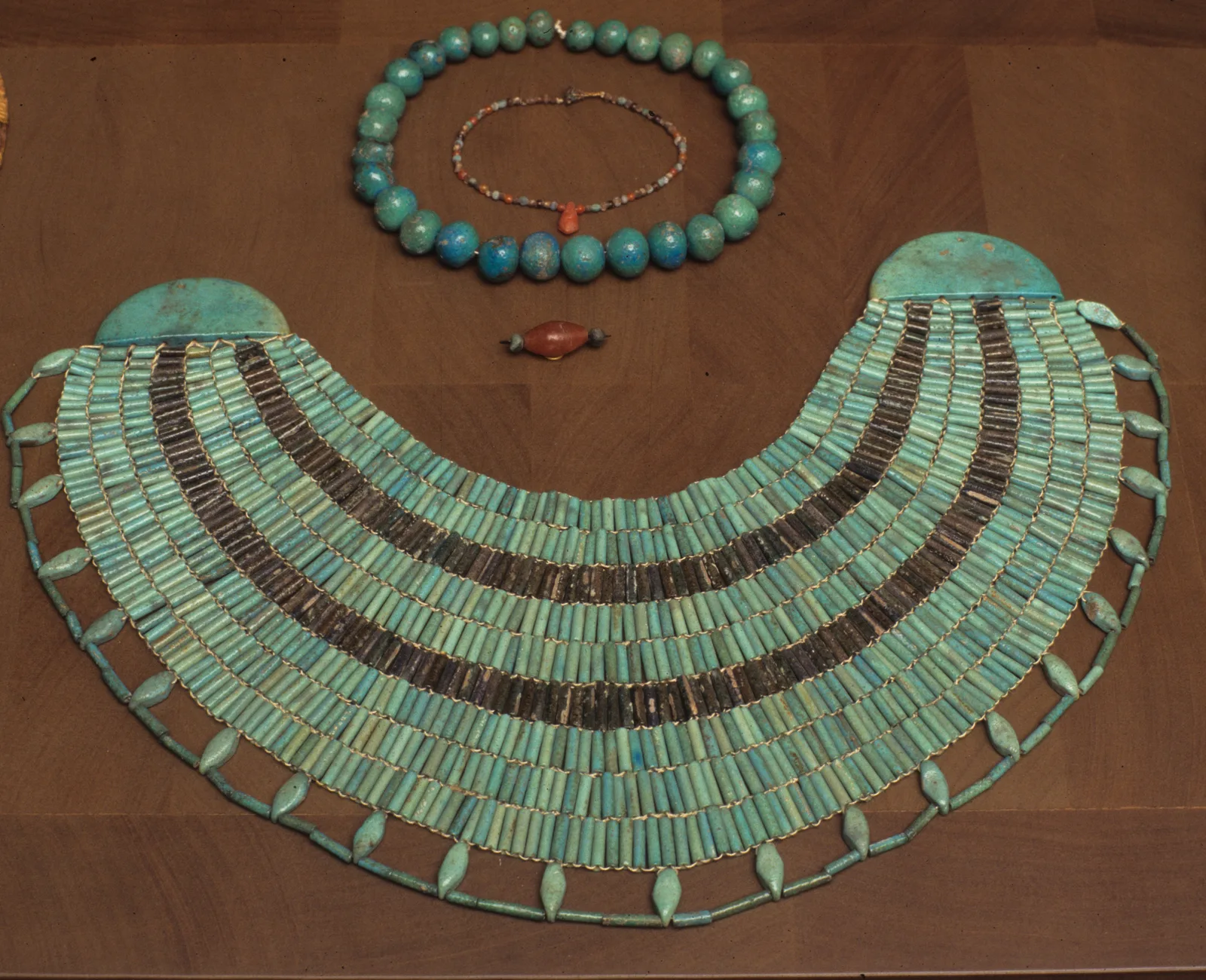
The 1920s were a time of fascination with far-off cultures, and the sautoir absorbed that fashion. After the loud archaeological discoveries in Egypt, scarabs, lotuses and turquoise-coloured faience beads appeared in jewellery. From Japan and China came carved bone, lacquer, jade and the very idea of the tassel, which in Eastern dress adorned sashes and fans. An Eastern sautoir often ended in a carved figure or a large bead of semi-translucent stone, and the strand was strung from contrasting coloured elements. This exotic flair turned the long strand into a little collection of curiosities on the neck.
The mid-century lull and today's revival
After the 1930s the fashion for long strands faded and returned by turns. In mid-century the line raised the waist again, and long pieces stepped back. But the sautoir never disappeared entirely: it returned each time fashion remembered the vertical line and the loose cut. Today the sautoir is back in the wardrobe, and for several reasons: an interest in vintage aesthetics, a love of layering and the practicality of a long piece that does not fight collars or get lost under clothes.
Customer reviews
Zevira is a real jewellery shop. Genuine payments, deliveries and customer thank-yous.
🥰🥰🥰 gracias
Ok, ¡gracias! 🙂
Sautoir, Lariat and Opera: What Sets Them Apart
Sautoir and lariat
These are the two closest relatives, and they are constantly confused. The difference is in the construction. A sautoir is most often closed: it is a long strand with its accent at the end or in the middle, but it needs no tying, you simply slip it over your head. A lariat is open on principle: it has no clasp and no closed loop, its ends are free, and you wear it by threading one end through a loop or tying a knot. Roughly speaking, a sautoir is a piece with a set length, while a lariat is a piece whose length you set anew each time. Necklaces without a clasp are covered in a separate article on the lariat.
Sautoir and opera necklace
An opera necklace is around seventy to eighty centimetres, a strand that drops just below the bust. The opera is about length and nothing more: it can be a smooth strand of pearls or a chain with no accent at all. A sautoir is usually longer than an opera and almost always has a final point, a tassel or a pendant. You could say an opera is length, while a sautoir is length plus character. An opera strand is often doubled into a double choker, while a sautoir does not always suit that folding because of the end accent.
Sautoir and an ordinary long chain
A long chain with a small pendant is not yet a sautoir. The line is drawn by weight and the role of the accent. If the end carries a barely visible symbol that gets lost on the length, you have simply a long chain with a pendant. If the finish is noticeable, holds the composition and works as the meaning and visual centre, that is a sautoir. Sometimes the same piece can be read both ways: it all comes down to the scale of the pendant relative to the length of the strand.
Sautoir and Y necklace
A Y necklace is a strand that forms the letter Y on the chest: the main part goes around the neck, and from a central point a vertical section with a pendant drops down. A sautoir differs in that its whole length is a single strand falling downward, with no pronounced fork. Many modern sautoirs fold into something like a Y when doubled, but a classic sautoir is still a straight long line, not a fork.
Upload a photo of your pet, someone you love, or an object. We'll build a 3D model and hand-cast it in pewter.


Types of Sautoir Ends
The tassel
The tassel is the historical and most recognisable finish of the sautoir. It is gathered from strands of pearls, strings of seed beads, chains or silk threads with a metal cap on top. The tassel is mobile, it catches light and movement, it whispers or chimes. This is the most theatrical option, at its best on an evening look and an open neckline, where the tassel has room to swing.
A large pendant
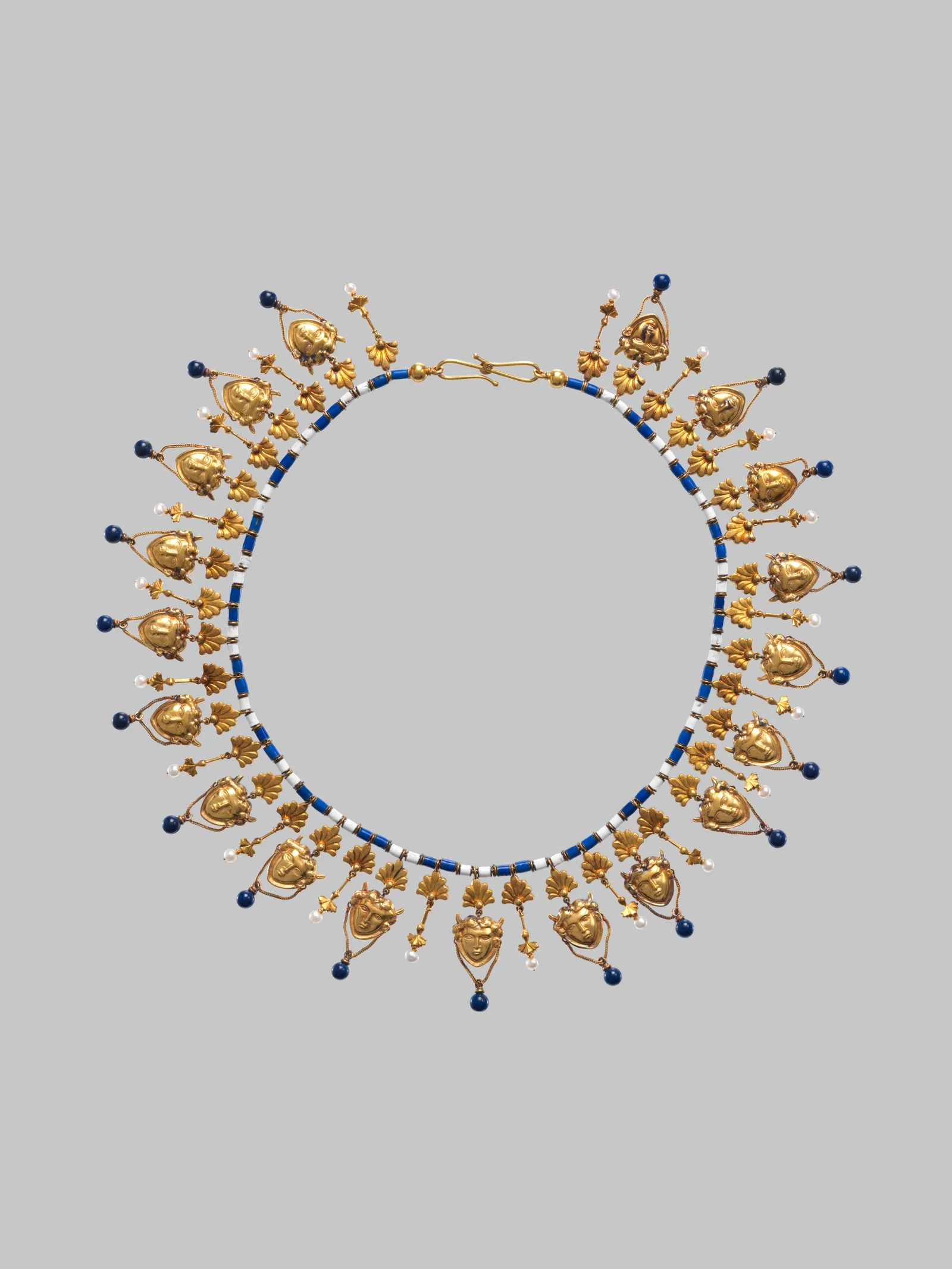
Instead of a tassel the end can hang an expressive pendant: a stone in a setting, a locket, a coin, a geometric shape, an amulet. A large pendant makes the sautoir more static and graphic than a tassel. It holds the look well when you want a single striking detail with no extra motion. Such a sautoir is easier to wear by day and to pair with business clothes.
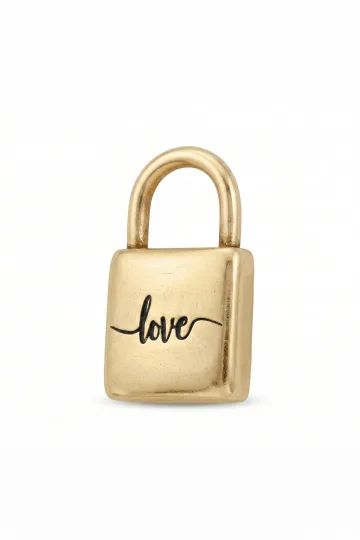
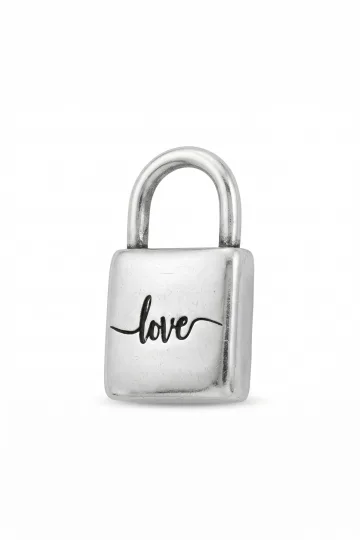
The locket
A locket finish nods to the old tradition of carrying a portrait, a lock of hair or a keepsake on a long chain. A sautoir with a locket comes out both long and sentimental: a photograph or an engraving can go inside. This is a version with a story, one that often becomes a family piece passed down further. The length plays in its favour: the locket drops closer to the heart, and the gesture of touching it comes naturally. An engraving on the back, a monogram or a date that only the wearer sees looks lovely on a locket finish.
The double end and the removable accent
Some sautoirs have not one but two hanging elements, for example two drops or two tassels of different length. This creates asymmetry and added depth. A separate handy construction is the removable accent: a pendant or tassel clips to the strand on a lobster clasp, and the same long chain can be worn with a tassel, then a stone, then with no finish at all, as a simple long strand.



How to Wear a Sautoir
How many ways there are to wear it
The sautoir's great virtue is its versatility. The same strand changes the look beyond recognition depending on how you put it on. A straight strand gives a strict vertical, two wraps turn the piece into something like a set, a knot adds careless volume, a turn to the back opens the evening side, and worn over knitwear the sautoir becomes the hero of a winter look. It is worth trying each way in front of the mirror: the same sautoir can look both austere and lavish.
As a long straight strand
The simplest and most vintage way. The sautoir is worn as it is, falling freely down the body in a single vertical line. This way lengthens the silhouette the most and looks best on plain clothes with no extra detail, so nothing interferes with the line. A straight strand suits sheath dresses, turtlenecks and simple sweaters.
In two wraps
A long sautoir can be wrapped around the neck twice. The result is a combination: the upper loop lies like a short necklace at the base of the neck, while the lower one stays long, with the accent at the end. This is handy when you want both to fill the area at the throat and keep the long line. A double wrap instantly turns one piece into something like a layered set.
As a knot
A knot on a sautoir is a trick straight out of the 1920s. The long strand is tied in a loose knot at the chest or solar plexus, and below the knot the accent hangs. The knot shortens the piece, adds volume at a single point and looks deliberately careless, in the Parisian way. It is important to tie the knot loosely and only on a sturdy strand, so as not to deform the chain or wear through the pearls.
Down the back
An open back is a stage made specially for the sautoir. The long strand is turned with the accent to the back: in front it lies like an ordinary necklace at the throat, while the tassel or pendant hangs down the bare back. This is an evening trick for a dress with a deep cut at the back. It requires a clasp or adjustment that lets the accent shift, so a sautoir with a movable or removable finish suits it best.
Over knitwear and outerwear
A sautoir works beautifully over dense textures: chunky knits, turtlenecks, blazers, coats, waistcoats. The long strand reads on plain knitwear like graphic art, and the pendant lies on the chest without sinking into a neckline. This is a rescue for the cold season, when a short necklace hides under a collar. Over a sweater the sautoir becomes the main accent of the look and at the same time holds the vertical on bulky clothing.
Which Necklines and Figures to Wear a Sautoir With
A closed top and a turtleneck
A sautoir lives most easily on a closed top. A smooth turtleneck or a high-neck jumper becomes the ideal backdrop: the long strand draws a clean vertical on the plain fabric, and nothing argues with the piece. This is the safest pairing for an everyday sautoir.
A V neckline and a deep neckline
A V-shaped neckline seems made for the sautoir: the lines of the neckline and the line of the strand fold into one sharp vertical motion downward, which lengthens the neck and torso the most. The key rule here is that the sautoir's accent should end below the deepest point of the neckline, otherwise the pendant visually cuts across the line of the décolletage.
An open back and straps
For an open back the sautoir is turned to the back; under a dress on thin straps it is worn as a straight strand in front. On bare shoulders and in the décolletage the long strand looks especially striking, because it has room to lie on the skin without interference from fabric.
Which figure a sautoir suits
A sautoir visually lengthens the silhouette, so it is especially good for petite women and for anyone who needs a vertical. Those with a full bust should choose a length where the accent goes well below the bust, so the line does not fragment. Tall women suit any length, including the very longest, to the hips. The universal rule: the longer the unbroken line, the slimmer and taller the figure looks.
Common neckline mistakes
The most common mistake is a short accent on a deep neckline: the pendant ends above or at the level of the décolletage and visually chops off the line. The second mistake is a sautoir over fabric with a large pattern or busy texture, where the strand gets lost and reads as an accident. The third is too heavy a finish on light summer clothing: the accent drags the light fabric and crumples it. The solution in every case is the same: give the strand a clean plain backdrop and make sure the accent ends below the deepest point of the neckline.
Leave your email, we'll send your discount code. No spam, unsubscribe anytime.
The code arrives by email, valid on your first order.
Layering: The Sautoir Combined With Short Necklaces
Why combine long with short
A sautoir is self-sufficient on its own, but paired with short necklaces it opens up as the base of a layered composition. The long strand sets the lower border, the short necklaces fill the area at the neck, and between them a beautiful rhythm of voids and lines appears. The principle of layering is one: different lengths must not coincide, or the strands tangle and stick together. The rules of combining are covered in detail in the guide to layering several pieces of jewelry.
A ladder of lengths
The most reliable layering scheme is the ladder: a choker at the throat, a medium necklace on the collarbones or just below, and the sautoir as the longest lowest line. It is better to keep a gap of a few centimetres between tiers so each strand reads on its own. The eye travels top to bottom down the steps and reaches the sautoir's accent, and the whole composition works as a single vertical.
How many strands to take
For an everyday look a sautoir and one short necklace are enough. For evening you can build three tiers. More than three lengths usually turn into a mess, especially if they all have pendants. A good rule: let only one strand carry a noticeable accent (usually the sautoir), while the other tiers stay smooth so they do not compete for attention.
Mixing metals and textures
Layering with a sautoir is a handy way to join different metals and materials. A short gold chain, a silver middle tier and a pearl sautoir get along together precisely because they are spaced by length and do not lie flush. Mixing metal colours has long stopped being a mistake, and a sautoir as the bottom tier gathers such a varied composition into one whole.
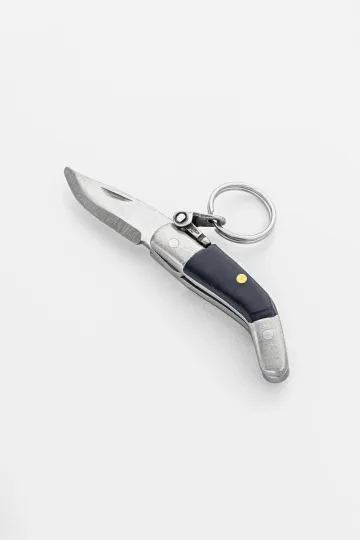
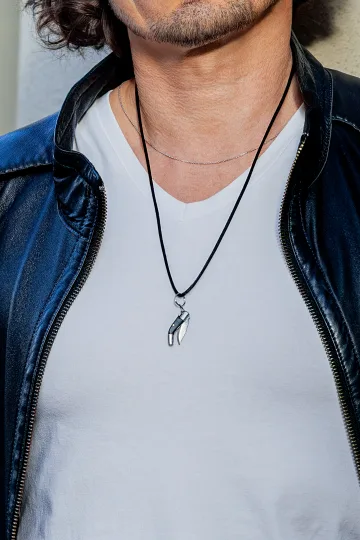
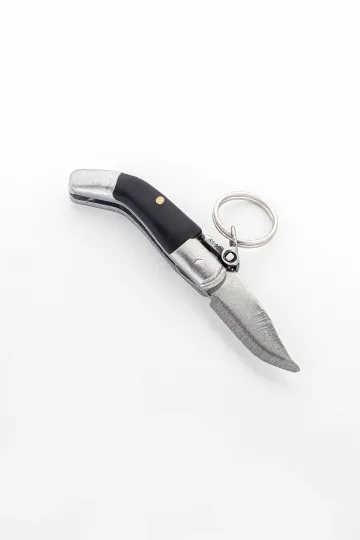
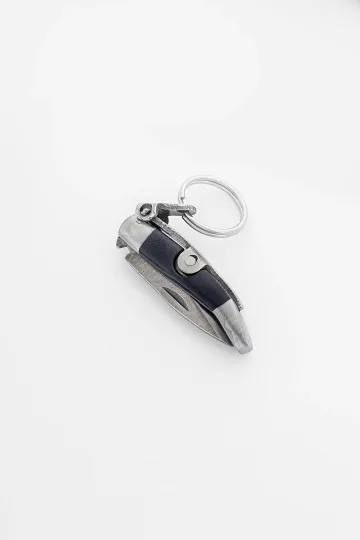
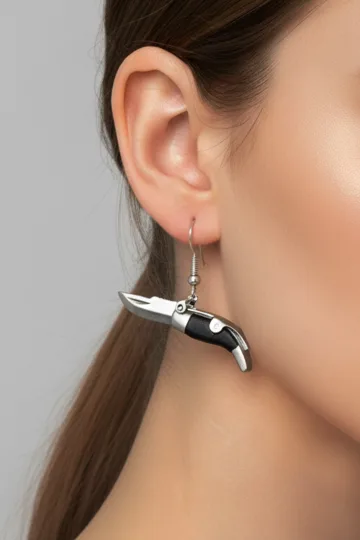
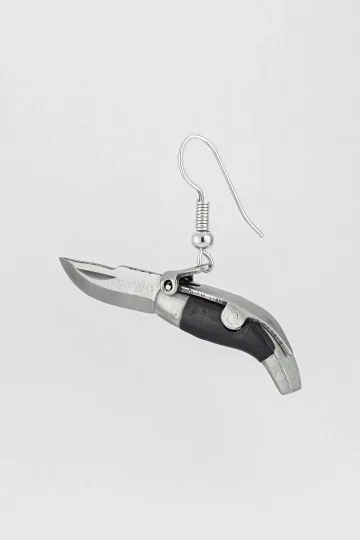
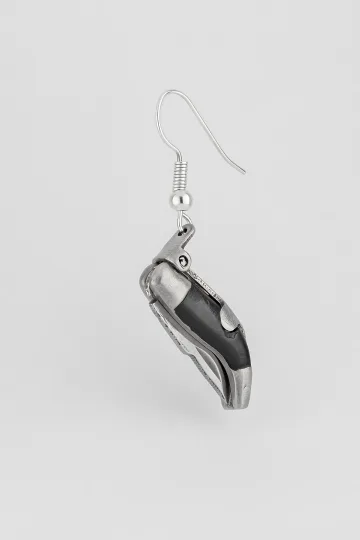
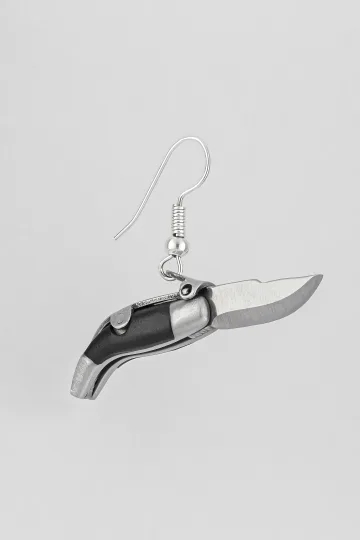
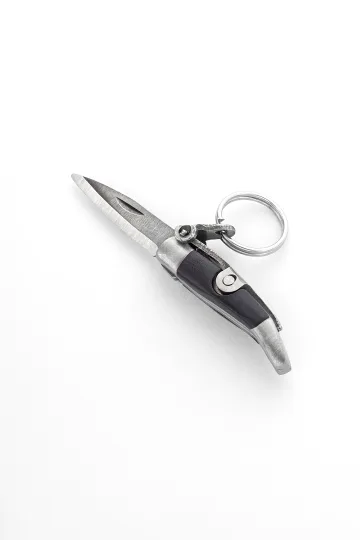
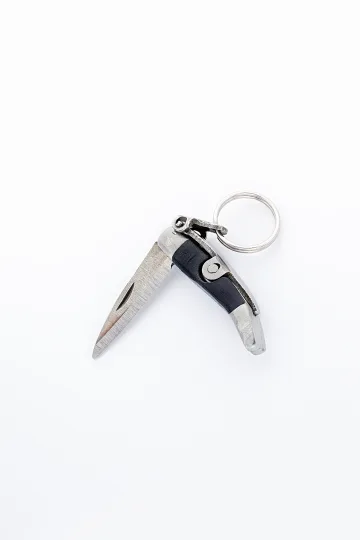
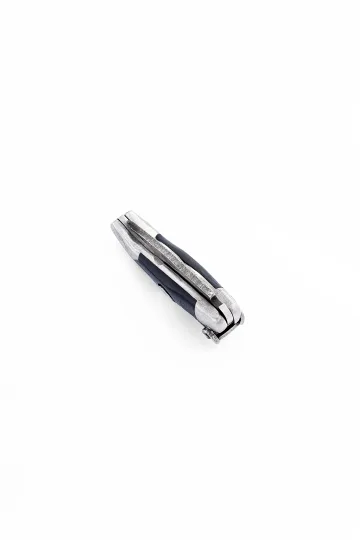
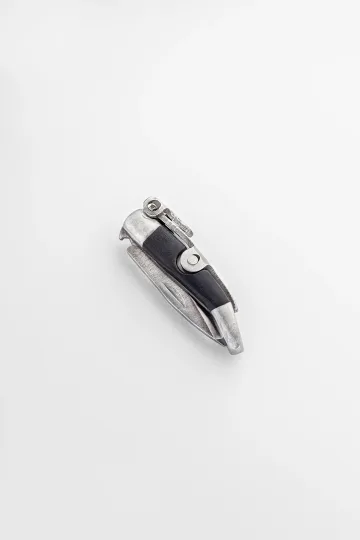
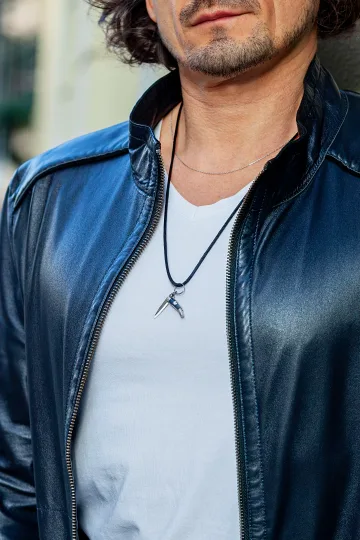
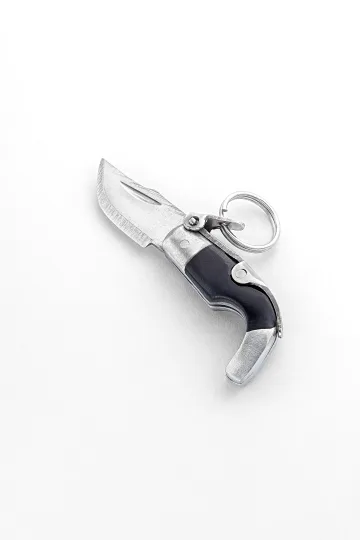
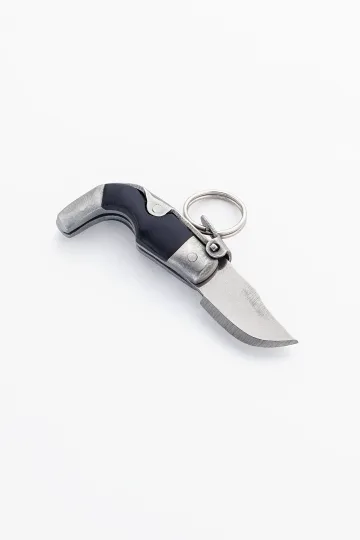
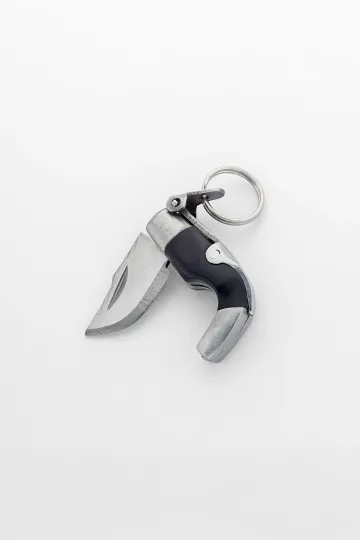
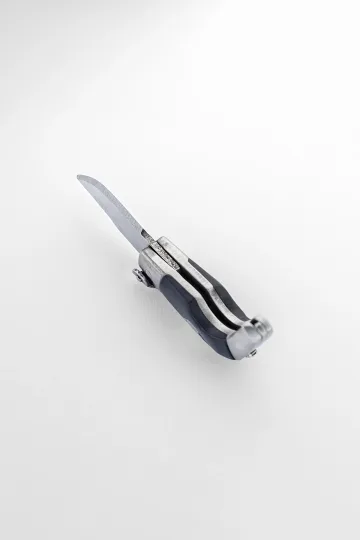
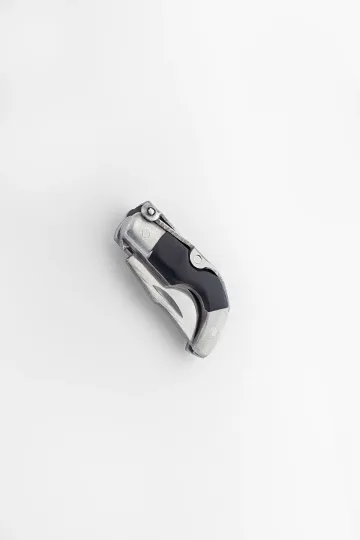
CAPAORA mini knife pendant
The 18th-century Spanish navaja in miniature: 40 mm of stainless steel, a real folding mechanism and a Palanquilla lock that clicks. An affordable gift to remember.
Authentic · Ships from Spain · 14-day returns
Sautoir Materials
Pearls
A pearl sautoir is the historical benchmark. A long strand of pearls, sometimes ending in a pearl tassel, remains one of the most recognizable ornaments of the twentieth century. Pearls give a soft warm glow and a pleasant weight, and the strand flows beautifully down the body. Pearls have care quirks that set them apart from metal, worth reading about in the complete guide to pearls. A pearl sautoir is equally at home on an evening dress and over plain cashmere.
The chain
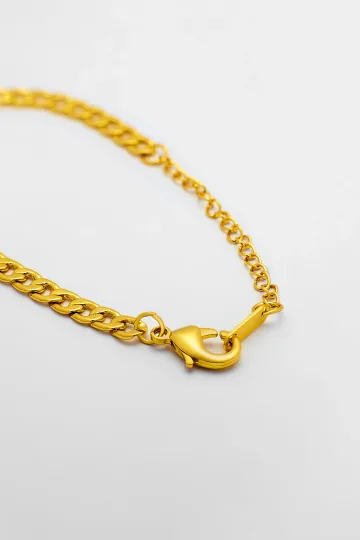
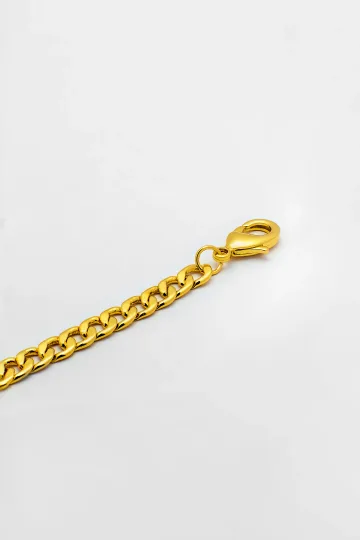
A metal chain is the most practical base for a sautoir. It is stronger than thread, does not fear water the way pearls do, and holds its shape. The weave sets the character: a thin cable or curb chain draws light graphic art, a heavy weave makes the sautoir noticeable on its own, even without a large pendant. If you are wondering which weave to choose for a long strand, the review of chain types helps. On a sturdy chain it is easy to tie a knot and wear the sautoir over dense clothing.
Seed beads and beads
A string of seed beads or small beads is a light and pliable material for a sautoir, a favourite of the Art Deco style. A beaded strand lies well, costs little compared with precious materials and lets you play with colour. Seed beads often make both the strand itself and the tassel at the end. One drawback: beaded strings are more prone to breaking and need to be restrung from time to time.
Stones
A sautoir with coloured stones, strung on the strand or gathered into a pendant at the end, adds colour and depth to a look. Faceted beads of rock crystal, onyx, carnelian and quartz catch the light along the whole length. A stone at the end of the strand works as a meaningful finish: its colour can be matched to the eyes, the clothes or the mood. Heavy stones need a sturdy strand or chain so the weight does not tear the base.
Silk and textile
Tassels and inserts of silk thread are a light, soft and sonorous material. A textile tassel does not chime but whispers, moves more smoothly than a metal one and lies pleasantly on the skin. Silk fears moisture and fades over time, so such a sautoir needs gentle handling, but it is the lightest and most comfortable for long wear.
How to Choose Your Sautoir
Start with the length for your height
The first decision is length. Tall women suit any option, up to the very longest, to the hips. Petite women are better off with a length to the waist or just above: the vertical lengthens the silhouette without dragging the proportions down. A simple way to try it in advance: take a flexible tape measure, hold it to the neck and see where the end of the chosen length falls. If the accent lands on the narrowest part of the waist, the piece emphasises it; if it goes lower, it makes the figure taller and slimmer.
Match the weight to how you will wear it
A light thin sautoir is good for everyday and layering: it does not pull on the neck and gets along easily with other strands. A heavy sautoir with a massive tassel or a large stone is a piece for special occasions, worn as the main accent. The heavier the finish, the sturdier the strand and clasp must be. If you plan to wear the piece all day, choose a moderate weight, or by evening the neck will tire.
Decide whether you need a removable accent
A sautoir with a removable end is the most flexible investment. One long strand turns into a strict daytime vertical with a small pendant, then into an evening one with a tassel or a large stone. If you are buying your first sautoir and do not want to buy more later, look for a model with the accent on a lobster clasp: it replaces several pieces at once.
Match the material to your way of life
Pearls and silk demand care and do not like water, perfume or active wear. A metal chain forgives almost anything and survives daily use. Beads are pretty and light, but they will need restringing now and then. Be honest about how often and in what conditions you wear jewellery, and choose the material for your real life, not the ideal picture.
Send a friend a discount code, they save on their first order.
Caring for a Long Strand and Tassel
Why a long strand needs special attention
The longer the piece, the more chances it has to tangle, wear through and catch. A short chain lies on the neck and barely moves, while a sautoir hangs freely, rubs against fabric, lands in the crook of the elbow, catches on a bag. A long strand passes more often through points of bending, and that is where the metal wears faster. So caring for a sautoir is first of all prevention: proper storage, careful wear and regular inspection of the links and the accent's fastenings.
Storing a long sautoir
The main enemy of a long strand is knots and tangling. It is better to store a sautoir laid out straight: hung on a hook, spread flat in a compartment or threaded into a bead tube. A long chain twisted into a ball will almost certainly tie itself into knots that are hard to undo. If the chain does tangle, the tricks in the separate article on what to do when a chain gets tangled will help.
Caring for the tassel
The tassel is the most delicate and capricious part of the sautoir. It must not be squeezed, crumpled or stored under pressure, or the threads will crease and fray. After wear the tassel should be smoothed with the fingers and left to hang freely. A textile tassel is kept away from moisture and perfume; a metal or beaded one is gently wiped with a soft cloth. A frayed silk tassel can sometimes be lightly steamed, held away from the steam.
Cleaning the strand and clasp
A chain is cleaned with a soft cloth and, if needed, warm soapy water, dried thoroughly. A pearl or beaded strand must not be soaked: the thread inside gets wet, stretches and rots, so pearls are wiped only with a slightly damp soft cloth and dried at once. Every few years a pearl sautoir is worth restringing on new thread, especially if you wear it often: the old thread stretches and can break at the worst moment.
What to wear carefully
A long sautoir easily catches on a door handle, a chair back, a bag or the edge of a table. With a long strand it is worth being more careful in transport and crowds. The tassel and pendant are protected from sharp tugs. If the sautoir is heavy, do not leave it hanging on a thin hook by one end for a long time: under its own weight the strand can stretch.
Surprising Facts
The sautoir began as a man's sash
Today the sautoir is seen as a woman's ornament, but the word itself was born from a man's military and hunting life. A sash across the shoulder for an order, a horn or a weapon was worn by men, and only later did the diagonal long line move to a woman's neck and become a necklace. The road from a soldier's ribbon to a dancer's pearl strand turned out to be short.
Watches and lorgnettes hung from a sautoir
In the nineteenth century the sautoir was a useful accessory. A pendant watch, a folding lorgnette, a bottle of perfume or smelling salts, a seal, a tiny purse hung from the long chain. The ornament was also a holder for needed trifles. Only in the twentieth century did the thing finally turn into pure jewellery, and the function was forgotten.
The tassel swings in time with the dance
The sautoir's heyday in the 1920s is directly tied to dancing. The lively dances of the era made the tassel swing and fly up, and that motion became part of the look. A long strand with a tassel literally showed that its wearer was in motion and marked the rhythm. An ornament invented for static posing flourished precisely when women began to move.
The heraldic cross and the ornament are one word
The diagonal cross on coats of arms, that Saint Andrew's X, is also called a sautoir in French. The diagonal crossing a field and the diagonal of a sash across the shoulder are the same geometric idea. So an element of a knightly coat of arms and a long strand on the neck bear one name and come from a common root.
Length was a way to show wealth
In the age before cultured pearls, a long pearl strand meant colossal money. Natural pearls were rare, and to gather an even string to the waist took years and a fortune. A long pearl sautoir told quietly of the family's standing more surely than any words. The length of the ornament was a currency of status.
Frequently Asked Questions About the Sautoir
How does a sautoir differ from a lariat?
A sautoir is usually closed and has a set length, you simply slip it over the head, and the accent hangs at the end or in the middle. A lariat is open, it has no clasp, and you set the length yourself by threading or tying the ends. In short: a sautoir is length already set, a lariat is length you adjust each time.
What is the minimum length of a sautoir?
There is no strict line, but a sautoir usually means a strand of eighty centimetres or longer that clearly drops below the bust. Anything shorter is classed as opera or matinee length. The main difference of a sautoir lies both in the centimetres and in having a pronounced accent at the end.
Can you wear a sautoir every day?
Yes. For everyday wear choose a sturdy chain of medium length and a light, neat finish. Such a sautoir lies well over a turtleneck, a shirt or a simple dress and does not get in the way. Heavy evening models with big tassels are better saved for special occasions.
Does a sautoir suit petite women?
It does, especially so. A long vertical line visually lengthens the silhouette and adds height. Petite women should choose a length to the waist rather than the hips, so the proportions stay harmonious, and wear the sautoir as a straight strand on plain clothes for the most lengthening effect.
How do you wear a sautoir with a full bust?
Choose a length where the sautoir's accent ends well below the bustline, so the vertical does not fragment. A deep V neckline and a straight strand help draw the line. Avoid a short double wrap that gathers the piece at the bust and visually adds volume where it is not needed.
Can you tie a sautoir in a knot?
Yes, the knot is a classic 1920s trick. Tie a loose, not tight knot and only on a sturdy strand or chain. Pearls and fine seed beads should not be tied: friction quickly wears through the thread and damages the pearl coating. A sturdy metal chain is best for a knot.
How do you care for the tassel on a sautoir?
The tassel must not be crumpled or stored under pressure. After wear, smooth it with your fingers and let it hang freely. Keep a textile tassel away from moisture and perfume; gently wipe a metal or beaded one with a soft cloth. Frayed silk can be lightly steamed at a distance, without touching the steam directly.
Are a sautoir and layering the same thing?
No. A sautoir is a specific type of long necklace, while layering is a way of wearing several pieces of different length together. A sautoir often becomes the lowest, longest tier in a layered composition, but it works beautifully on its own, as a single strand.
Build your vertical
A long strand with an accent at the end lengthens the silhouette, lies over knitwear and gathers a layered look. Pick a sautoir and short necklaces to support its length.
See the jewelleryBuying it as a gift? Each one arrives ready to give.
 A branded Zevira box and a little card come with every order.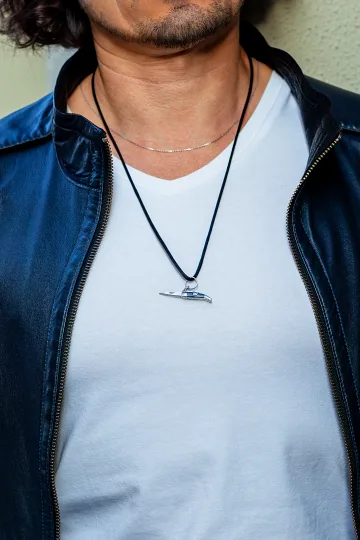




About Zevira
Zevira makes jewellery that gets worn, not hidden in a box. We love pieces with a long line and character: long strands, lockets, pendants that become the centre of a look and pass from one generation to the next. For us the sautoir is about the vertical, about movement and about the power of one strand to change a silhouette. The catalogue gathers chains, pendants and sets from which it is easy to assemble your own layered composition, from a calm daytime one to an expressive evening one, and almost every one of them you can build for yourself without a stylist.