Pearls: complete guide to types, choice and care
Introduction: the only gem grown by a living creature
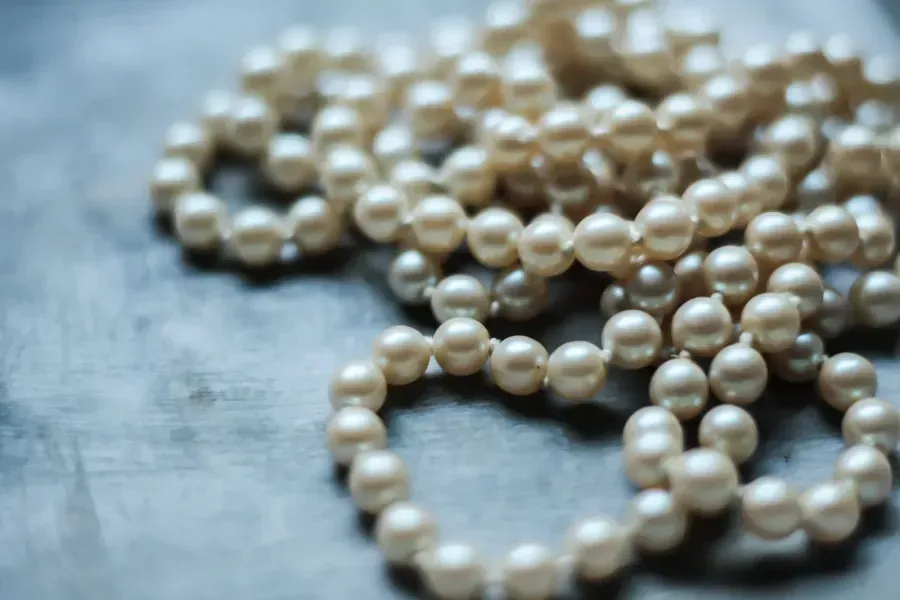
My grandmother kept her pearl necklace in a small velvet box and only took it out for family celebrations. It was a wedding gift from her parents in 1962. When she showed the strand to her granddaughter, the girl asked: "These are really the same pearls, sixty years later?" Grandmother smiled: "If you treat them right, they will outlive me twice over."
Pearls hold a unique place among gems. Every other precious stone is a mineral, dug out of the earth. Pearls are organic tissue, growing inside a living mollusc. Each pearl is the story of one specific oyster or mussel that spent years coating a tiny irritant with layer after layer of nacre inside its shell.
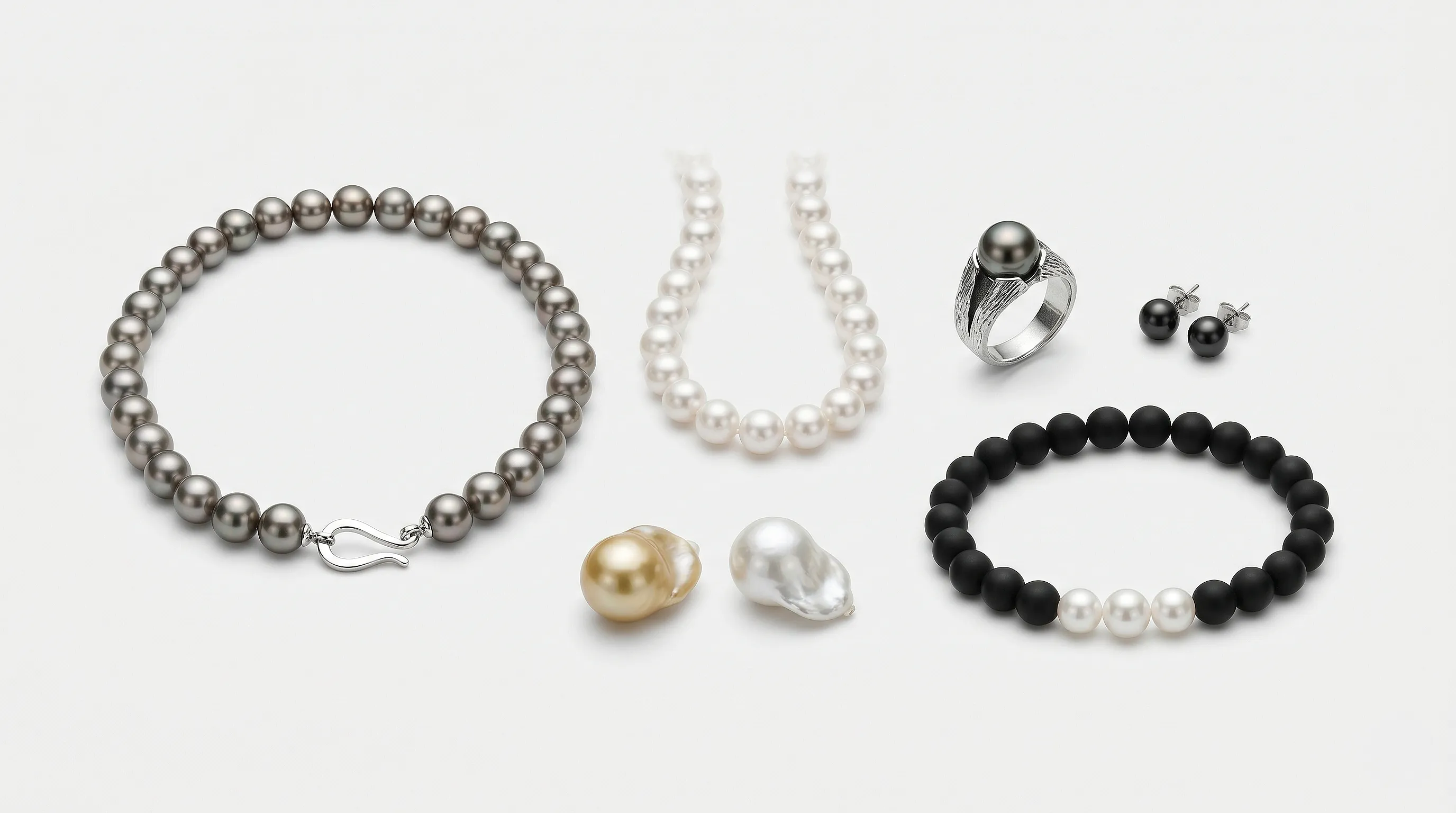
This guide gathers everything you need to know about pearls. The four main types (Akoya, Freshwater, Tahitian, South Sea), colours and shapes, quality grading, sizes. How to spot real pearls. Which necklace works with which neckline. Care and storage so pearls last for decades. History from Cleopatra to the Japanese invention of cultivation. And most importantly: how to choose your first pearls without disappointment.
If you want to read about men's pearls specifically, see our separate guide on pearls for men. If you're curious about birthstones in general (pearl is June's stone), see the birthstones by month guide. For care basics there are also dedicated guides: how to clean tarnished jewellery, when to take jewellery off in water.
Wear the symbol, don't just read about it. These are in stock:






What pearls are and where they come from
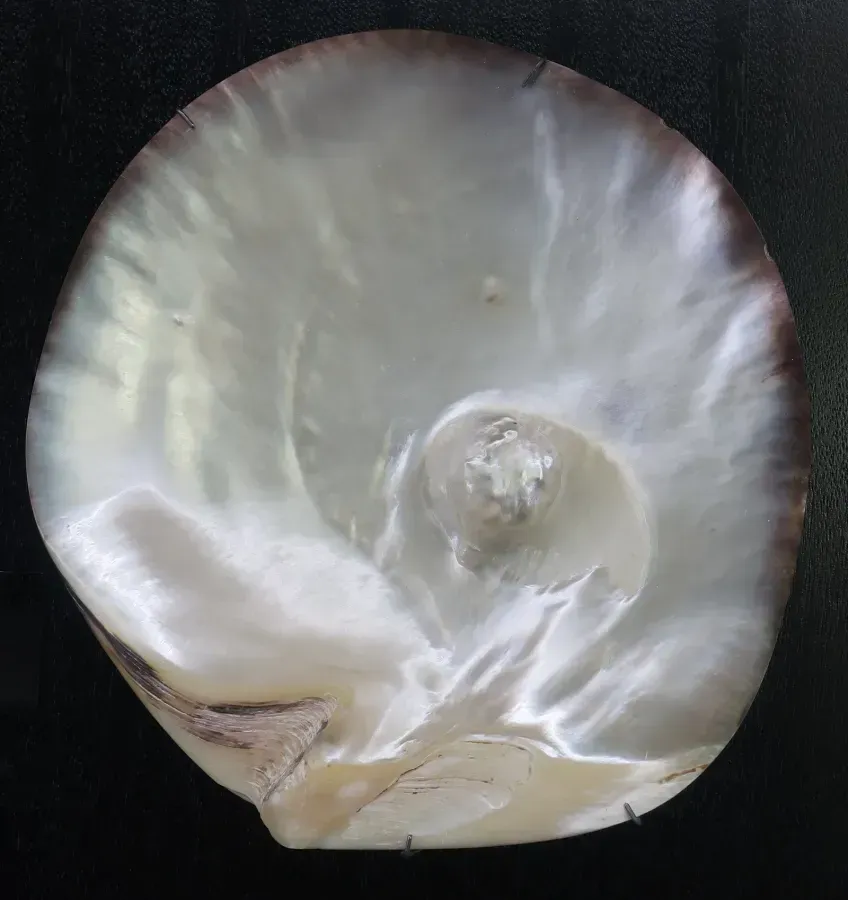
A pearl is a layer of nacre that grows around an irritant inside a mollusc's shell. When a grain of sand, a parasite or any other foreign body slips inside the shell, the mollusc defends itself: its mantle starts secreting nacre, coating the irritant with thin layers. Over time (from six months up to seven years depending on species) enough layers accumulate to form a pearl.
The biology of nacre
Nacre is a mixture of aragonite (a form of calcium carbonate) and a thin protein called conchiolin. The mantle, the soft tissue that lines the inside of the shell, deposits these substances in alternating sheets only a few hundred nanometres thick. Each aragonite platelet sits like a tile in a brick wall, bonded by the protein layer. Because the platelets are roughly the same thickness as the wavelength of visible light, light entering the surface bounces between the layers and interferes with itself. That interference is what produces lustre and the rainbow shimmer called orient. The same structure makes the inside of any oyster or abalone shell glow: mother-of-pearl is simply nacre laid against a flat surface rather than around a sphere.
A common misconception is that the irritant is always a grain of sand. In fact a grain of sand is too inert to provoke much of a reaction. The most frequent natural trigger is a parasite or a fragment of the mollusc's own damaged tissue. The defensive response is the same regardless of the cause: the mollusc isolates the intruder by walling it off in a sac of nacre-secreting cells called the pearl sac.
The pearl is the only gem of organic origin that people wear as jewellery. Every other stone (diamond, ruby, emerald, sapphire) is a mineral that formed deep in the earth millions of years ago. A pearl is grown by a living creature, right now, somewhere in the ocean. Amber and coral are sometimes called organic gems too, but amber is fossilised tree resin and coral is a colony skeleton. Only the pearl is a living animal's direct, deliberate secretion.
The two great families of pearl-bearing molluscs
Pearls are produced by two classes of molluscs:
- Saltwater oysters (genus Pinctada): producing the most valued types (Akoya, Tahitian, South Sea). These oysters live in warm coastal waters, anchored to reefs or hung on farm lines, and typically yield only one or two pearls per shell.
- Freshwater mussels (genera Hyriopsis and Cristaria): producing the huge variety of freshwater pearls. A freshwater mussel can carry dozens of pearls at once, which is the single biggest reason freshwater pearls sit at the accessible end of the market.
Water chemistry, temperature and the species of the host all leave their mark. Cold, clean water tends to slow nacre deposition, which builds tighter, more reflective layers; warm tropical water grows pearls faster but the result can be softer in lustre. This is why the same care and patience that produced a grandmother's strand sixty years ago still defines what a fine pearl looks like today.
Pearls belong on a bare collarbone under black, not in your grandmother's cabinet. And don't you dare drown them in perfume.
How to wear pearls
I have styled pearls in every format, from a strict strand under a blazer to a big baroque drop on bare skin. Here is what actually makes the look, occasion by occasion.
How do you wear pearls every day? For daily wear I recommend small 6-7 mm studs or a short princess strand under a white shirt, a roll-neck or plain knitwear. The quieter the fabric (cream, grey, navy), the more the living glow of the nacre shows. Here pearls work as a soft point of light near the face, not as a statement.
Do pearls work at the office? Very much so. I suggest the classic pairing: a 7-8 mm Akoya strand plus single studs of the same size. That cool lustre gets on with white gold, platinum and silver, so it falls in naturally next to a fine chain and a plain watch. Under a lapelled blazer I choose a shorter length so the strand does not fight the collar.
How do you build an evening look with pearls? For the evening I recommend contrast. A black Tahitian on a bare neck with a dark dress reads richer than a pale one of the same size: the deep peacock overtone behaves like a gem. For a plunging neckline I suggest drop earrings or a long strand, and a single drop follows a V-neck beautifully.
Which pearls for a big occasion? For a wedding, an anniversary or a grand entrance I choose a larger 9-12 mm size and warm satiny South Sea, or a matched set of earrings and necklace. An heirloom strand from a grandmother belongs exactly here, and it needs nothing competing with it.
Who suits pearls, and how, best? Almost everyone, but especially those who value restraint. A warm skin undertone leans to cream and gold, a cool one to white with a rose overtone and to silver. Two rules that never fail. Match the length to the neckline, not to your height: the higher the collar, the longer the strand. And never mix more than two pearl colours in one look, or the quiet glow turns to clutter.

Turn on your camera, pick earrings, a pendant or a ring, and see the piece on yourself in real time.
Switch items in one tap.
Everything runs in your browser: no photo or video is ever uploaded.
Natural vs cultured pearls
This is the fundamental division in the modern pearl industry.
Natural pearls
Pearls formed in the wild without human intervention. A grain of sand accidentally lodged inside a mollusc, and over years nacre grew around it.
Natural pearls are extraordinarily rare. On average, only one in a thousand wild oysters yields a pearl of jewellery quality. That explains the prices: natural pearls cost as much as top-tier coloured stones, sometimes more than diamonds.
Since the early twentieth century, large-scale natural pearl harvesting has effectively ended. Beds in the Persian Gulf, Sri Lanka, and Venezuela were exhausted by centuries of diving. What sells today as natural pearl is almost always antique jewellery or the rare modern find.
Cultured pearls
The idea of culturing was first realised in 1893 by the Japanese inventor Kokichi Mikimoto, who produced his first cultured blister pearl that year and spent the next two decades perfecting a fully round result. The technology rests on a delicate surgical step. A trained technician opens the oyster just enough to insert two things: a spherical nucleus, usually a bead cut and polished from the shell of an American freshwater mussel, and a tiny graft of mantle tissue taken from a donor mollusc. The graft tissue is the active ingredient. It grows into the pearl sac that surrounds the bead and secretes nacre over it. After one to three years, depending on species and target size, the pearl is harvested.
Mikimoto was not working alone. Two other Japanese researchers, the carpenter Tatsuhei Mise and the biologist Tokichi Nishikawa, independently developed similar grafting methods around the same time, and the resulting patent dispute was settled by combining their approaches into what the industry still calls the Mise-Nishikawa method. Mikimoto's genius was less in the laboratory than in the marketplace: he built the brand, won the legal battle to call cultured pearls genuine pearls, and famously burned heaps of low-grade pearls in public to prove he sold only quality.
Today over 99 percent of pearls on the market are cultured. This is not imitation or fake: the pearl is real, grown in a real mollusc, made of the same nacre by the same biological process. The only thing humans changed is the trigger. Instead of waiting for a parasite to wander in by chance, a technician introduces the nucleus deliberately.
A quality cultured pearl is visually indistinguishable from a natural one to the naked eye. The reliable difference is internal: an X-ray reveals the bead nucleus at the centre of a cultured pearl, while a natural pearl shows only concentric growth rings around a minute organic core. Gemmological laboratories use exactly this method to separate the two. For the buyer, the practical point is simpler: cultured does not mean lesser. A cultured pearl with thick nacre and high lustre outperforms a poorly formed natural one in every respect that matters for wearing.
Imitations (not pearls at all)
These are plastic or glass beads coated with a "pearl-effect" lacquer. They have nothing in common with real pearls. The surface looks evenly glossy rather than organically irregular, the lustre is shallow, and the tooth test (we'll cover it below) reveals smooth plastic glide instead of slight grit.
Akoya: the Japanese classic
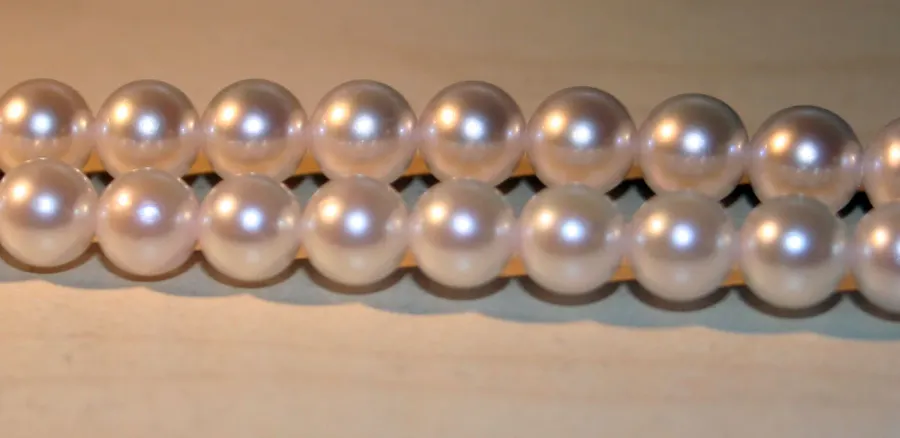
The most famous pearl type in the world.
What it is
Akoya is a saltwater cultured pearl produced by Pinctada fucata martensii oysters. Main production is in Japan (Kyushu, Ehime), with substantial output also from China and Vietnam.
Characteristics
Size. 2 to 10 mm, most often 6 to 8 mm. Anything over 10 mm is considered large for Akoya.
Colour. White, cream, pale pink, sometimes with silver or greenish overtone (a secondary colour that shimmers under the main hue).
Shape. Almost always round or near-round. Akoya is famous for its sphericity.
Lustre. The brightest, coolest, most mirror-like lustre of any pearl type. The pearl seems to glow from within.
Growth time. 10 to 14 months inside the oyster.
Why people choose Akoya
Akoya is the benchmark for classic pearl necklaces. If you picture pearls from formal photographs of the 1950s and 60s, you are picturing Akoya. The Japanese industry built its reputation on this oyster, and for most of the twentieth century the words "cultured pearl" and "Akoya" were almost synonymous in Western markets. A strand of round white Akoya reads instantly as formal, restrained and timeless: it suits business attire, the courthouse, a graduation stage and an evening reception equally well.
The cool, near-blue-white body colour of fine Akoya is the reason it photographs so cleanly under hard light. It also explains why Akoya remains the default bridal pearl in the United States, the United Kingdom, Canada and Australia, where wedding photography tends to be bright and sharp. For a wearer building a first serious collection, an Akoya princess necklace plus matching studs is the classic two-piece foundation that nothing later makes obsolete.
Price
Mid to premium tier. Pricier than Freshwater, cheaper than Tahitian and South Sea. Several factors push an Akoya up the price scale at once: the oyster yields only one pearl per shell, the cold-water nacre builds slowly, and round shape is the strict expectation rather than a bonus. The price rises sharply after the 8 mm size because the Pinctada fucata martensii oyster is small and large pearls are genuinely uncommon. A 9 mm round Akoya in a high grade can cost several times an 8 mm equivalent. For most buyers the 7 to 8 mm range delivers the best balance of presence and value, which is exactly why it became the standard size for the classic strand in the first place.
Freshwater: the everyday pearl
The most accessible and widespread type.
What it is
Pearls grown in freshwater mussels, most often Hyriopsis cumingii in China. Production is concentrated in Zhejiang and other regions of southeastern China. Smaller output also from the United States (mussels from the Tennessee River) and Japan.
Characteristics
Size. 4 to 13 mm, most often 6 to 9 mm.
Colour. A wide palette: white, cream, peach, pink, lavender, grey, even near-black (dyed).
Shape. From near-round to clearly irregular (baroque). The classic round Freshwater is pricier than baroque.
Lustre. Softer than Akoya, warmer. Recent high-grade Freshwater can come very close to Akoya in lustre.
Growth time. 2 to 4 years.
A peculiar feature
A single freshwater mussel can produce 20 to 30 pearls at once (against 1 or 2 in marine oysters). That explains the lower price point.
Why people choose Freshwater
Accessible price with good quality. A universal everyday piece, suitable for teenagers and students, for testing your taste in pearls before committing to something pricier. The improvement in Chinese freshwater pearl farming since the 2000s has been dramatic. Early freshwater pearls of the 1980s were small, rice-shaped and dull; growers called them "Krispies" for their crinkled surface. Modern tissue-grafting and better mussel management now produce round, high-lustre pearls that at a casual glance are difficult to separate from Akoya.
The standout development is the Edison pearl, a large bead-nucleated freshwater type introduced in the 2010s that reaches 12 to 18 mm with metallic lustre and natural pink, purple and bronze tones. It put freshwater pearls into a size and finish range that was once the exclusive territory of South Sea. For a buyer who wants a substantial pearl without a premium budget, modern freshwater is the most flexible choice on the market: it covers everything from a child's first studs to a designer baroque statement piece.
Price
Budget tier, and the most elastic of all four types. A simple A-grade baroque strand sits at the truly accessible end, while a round AAA strand or a large Edison pearl can climb toward Akoya territory. The ideal pearl for first acquaintance, and increasingly the pearl experienced collectors return to for everyday wear precisely because the loss of a budget piece in daily life carries no anxiety.
Tahitian: the black pearl of Polynesia
Exclusive and dramatic.
What it is
Saltwater pearl from Pinctada margaritifera (the black-lipped oyster), cultivated mainly in French Polynesia (Tahiti, Tuamotu, Gambier Islands). Also in Kiribati and the Cook Islands.
Characteristics
Size. 8 to 15 mm, most often 9 to 11 mm. Below 8 mm is rare.
Colour. The defining trait. Black, charcoal, deep grey, peacock (greenish-black with iridescent flashes), aubergine, bronze, silver-black. Each pearl is unique in its overtone.
Shape. From round to baroque. Perfectly round Tahitians are rare and cost considerably more.
Lustre. Deep, metallic. Especially striking in light: reflections shimmer with multiple colours.
Growth time. At least 2 years.
Why people choose Tahitian
Tahitian is a dramatic, expressive pearl for people who do not mind standing out. It works with contrast outfits, dark clothing, graphic makeup, and it photographs with a depth that white pearls cannot match. Black pearls are often chosen as a second set after the classic white strand, because the two read so differently that owning both genuinely doubles a pearl wardrobe rather than duplicating it.
For decades the black pearl was the pearl of myth in the West. Before French Polynesia industrialised cultivation in the 1970s, naturally dark pearls were so rare that a matched strand was almost unobtainable. The modern Tahitian industry, centred on the atolls of the Tuamotu Archipelago, made the colour available while keeping its exclusivity intact, because the black-lipped oyster is slow, demanding and still yields modest quantities. A single perfectly matched peacock strand can take growers years to assemble from many harvests.
About the colour
Unlike imitation black pearls dyed with pigment, Tahitians have natural dark tones. The colour comes from within the pearl. It is not a coating but a natural pigment laid down in the nacre layer itself by the dark-lipped Pinctada margaritifera oyster. No two are identical: a single strand may shift from steel grey through aubergine to the green-gold flash collectors call peacock.
This is also a useful authenticity check. A genuine Tahitian shows colour that seems to come from deep inside the pearl and changes as you turn it under light. A dyed freshwater pearl sold as "black pearl" tends to look flat and uniform, with colour concentrated near drill holes where dye pools. If a "Tahitian" is offered at a budget freshwater price, it is almost certainly a dyed imitation, because real Tahitian production simply cannot reach that cost.
Price
Premium tier. Significantly pricier than Freshwater and Akoya, especially in large sizes (12 mm and above) or perfect round shapes.
South Sea: the Australian and Asian premium
The largest and most expensive pearl.
What it is
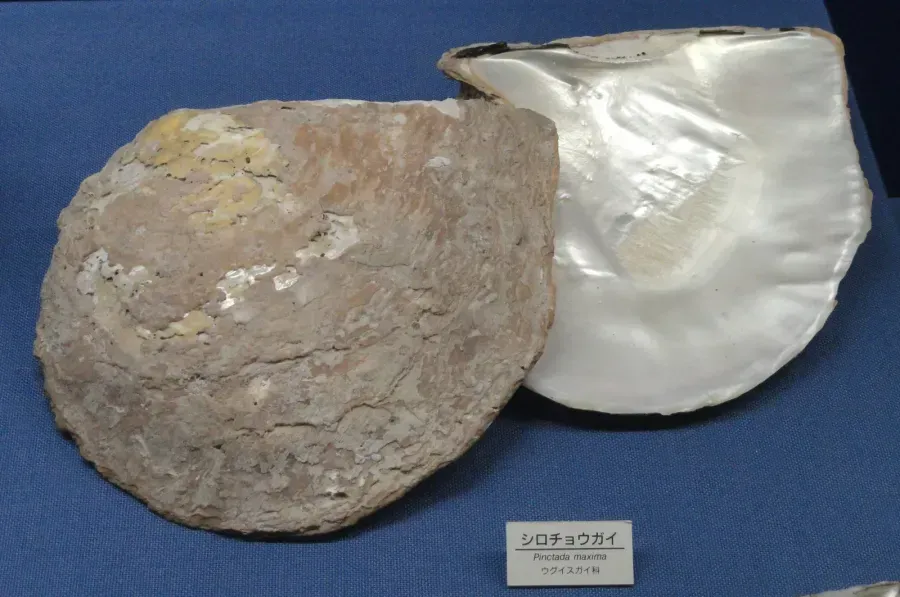
A saltwater pearl from the Pinctada maxima oyster. This oyster is bigger than any other pearl species (up to 30 cm across) and produces correspondingly large pearls. Main regions: Australia (golden and white), Indonesia, the Philippines, Myanmar.
Characteristics
Size. 8 to 18 mm, most often 10 to 15 mm. Pearls of 15+ mm exist but are extremely rare.
Colour. White, silver, golden (especially valued), cream. Golden South Sea with saturated colour is among the most expensive pearls in the world.
Shape. From round to baroque. Large round pearls cost as much as small apartments.
Lustre. Satiny, soft, milky. Less bright than Akoya but deeper and more mature.
Growth time. 3 to 7 years.
Why people choose South Sea
South Sea is the status pearl: chosen for prestigious events, milestone anniversaries, and heirloom pieces meant to pass down the generations. Its appeal is the combination of scale and a soft, satin lustre that reads as quiet wealth rather than flash. Where Akoya glints, South Sea glows. The Australian white South Sea, grown in the clean waters off the northwest coast, and the golden South Sea from Indonesia and the Philippines are the two showpieces of the category.
A golden South Sea strand in a deep, even colour is among the rarest assembled jewellery objects in the pearl world, because the oyster produces the saturated gold tone only occasionally and matching a full strand can take years. These pearls are usually worn for special occasions rather than daily, both to protect them and because their presence suits formal dress. They are the natural choice for a once-in-a-lifetime gift: a significant anniversary, a retirement, a piece intended specifically to become a family heirloom.
Price
The highest premium tier. Several factors stack: the Pinctada maxima oyster is the largest pearl producer and the most delicate to farm, the growing cycle runs three to seven years, and the warm clean waters it needs exist only in a few regions. A single 12 mm round South Sea pearl can cost as much as a complete gold piece, and a matched strand is a serious investment comparable to fine coloured-stone jewellery. Within the category, saturated golden colour, true round shape and sizes above 14 mm carry the steepest premiums. For a buyer entering South Sea, a single fine pearl set as a pendant or ring delivers the material at a fraction of the cost of a full strand.
Customer reviews
Zevira is a real jewellery shop. Genuine payments, deliveries and customer thank-yous.
🥰🥰🥰 gracias

Ok, ¡gracias! 🙂

Keshi, Mabe and rare varieties
Beyond the four main types, there are specific varieties worth knowing.
Keshi
Nucleus-free pearls: a cultured oyster sometimes expels its nucleus mid-growth, but the mantle keeps secreting nacre, producing a pearl made entirely of nacre with no central core. Keshi are usually small (2 to 7 mm), irregular in shape, but with exceptional lustre (the whole pearl is nacre rather than a thin coating over a bead).
Price varies widely based on size and quality.
Mabe
Half-spherical pearls grown attached to the inner shell wall. The outer half is round, the inner half flat. Used in earrings, pendants, and rings where the pearl is set on the flat side against the mount.
Mabe is usually cheaper than spherical pearls of the same diameter. The aesthetic is different: more "dome-like", interesting for modern designs.
Burmese golden
Rare pearls from Myanmar oysters. Deep golden colour, prized by collectors. Production is limited.
Sea of Cortez
Pearls from oysters in the Gulf of California, Mexico. Very rare, with a distinctive greenish-grey colour and purple overtones. Production is only a few kilograms a year.
Conch pearl
A pearl from the queen conch snail (Strombus gigas) of the Caribbean. Not a true nacre pearl but a calcified crystal. Pink or orange in colour. Very rare, not cultivated (only wild harvest).
Melo melo
From the Melo melo snail of Southeast Asia. Orange colour, ceramic texture. One of the rarest pearls in the world.
Pearl colours and what they mean
Pearl colour is a combination of the body colour and the overtone (a secondary, shimmering hue).
Body colours
White. Universal, classic. Akoya, Freshwater, South Sea.
Cream. Warm light shade. Pairs well with warm skin tones.
Pink. From pale peach to deep rose. Common in Freshwater.
Purple and lavender. Freshwater. Romantic, feminine.
Grey and silver. Akoya and Tahitian. Modern, graphic.
Gold. South Sea. The most expensive natural colour.
Black. Tahitian. Dramatic, statement.
Peacock. Greenish-black with iridescence. Tahitian. One of the most valued overtones.
Overtones
Rose. Pink shimmer under the body colour. Especially prized in white Akoya.
Silver. A cool, mirror-like effect.
Green. Typical of Tahitian.
Gold. Especially striking in cream and white South Sea.
Aubergine. Deep purple. Tahitian.
Natural vs dyed
Most pearl colours you see are natural. However, some dark grey and black freshwater pearls are chemically dyed. A reputable seller discloses this. Dyed pearls are not worthless, but they are worth less than naturally coloured equivalents.
Which colour suits you
Fair skin: white, cream, pale pink, lavender.
Warm undertone: cream, gold, peach.
Cool undertone: white with rose overtone, silver, grey.
Olive or tan skin: golden, cream, white with gold overtone, peacock.
Dark skin: Tahitian, golden South Sea, white with strong rose overtone.
For more on matching metals and colours to your skin, read the metal by skin tone guide.
Pearl shapes: from perfect round to baroque
Shape is largely a matter of chance: how the oyster secreted nacre, how the nucleus sat, whether there were any injuries.
Round
A perfect sphere. The most expensive and universal option. The closer to a true circle, the higher the price.
Near-round
Slightly elongated sphere. Visually nearly indistinguishable from round, but precise measurement reveals a small deviation. Cheaper than round at the same quality.
Oval
Clearly elongated. Used in drop earrings and pendants.
Button
Flattened on one side. Used in stud earrings and flat rings.
Drop
Pear-shaped. Striking in drop earrings and pendants. Common in Tahitian and South Sea.
Baroque
Irregular, asymmetrical. From slightly off-round to wildly free-form. Every pearl is unique. The favourite shape of artist jewellers and modern designers.
Semi-baroque
Between round and clearly baroque. An intermediate category.
Coin
A flat round shape, grown with a special technique. A modern genre in pearl jewellery.
Stick
A long irregular rod. Very free-form, distinctive.
Which shape to choose
Classic look: round or near-round.
Modern minimalism: drop, oval, button.
Artistic, designer style: baroque, coin, stick.
Wedding: round or near-round.
Office wear: round.
Upload a photo of your pet, someone you love, or an object. We'll build a 3D model and hand-cast it in pewter.



Sizes and the millimetre scale
Pearl size is measured in millimetres.
| Size | Where it fits |
|---|---|
| 2 to 4 mm | Stud earrings, small pendants, children's pearls |
| 5 to 6 mm | Basic earrings, youth pearls, slim necklaces |
| 7 to 8 mm | Standard Akoya for classic, everyday necklaces |
| 9 to 10 mm | Premium Akoya, statement necklaces |
| 11 to 12 mm | Large Tahitian, entry South Sea |
| 13 to 15 mm | Striking Tahitian, classic large South Sea |
| 16+ mm | Exclusive South Sea, very rare |
How size affects price
Price rises non-linearly, exponentially. An 8 mm Akoya may cost twice as much as 7 mm, and 9 mm twice as much as 8 mm. This is because oysters rarely produce large pearls.
How to choose your size
Slim neck, delicate features: smaller sizes (6 to 7 mm) sit more in proportion.
Broader neck, strong features: 8 to 10 mm and up.
Age: younger wearers often gravitate to smaller, mature women to larger.
Purpose: 6 to 8 mm for everyday, 9 to 12 mm for special occasions.
Quality grading: AAA, AA+, AA, A
There is no single global standard for pearl grading. Every major producer and retailer uses its own system. The most common scale runs from AAAA (highest) down to A (lowest).
AAA (or AAAA in stricter scales)
Top quality. Pearls are nearly perfectly round, surface is virtually clean (over 95 percent free of visible defects), lustre is excellent, nacre layers are thick. This is the premium segment.
AA+ (or AAA in some scales)
Very high quality. Minor irregularities visible only on close inspection, excellent lustre, shape very close to round.
AA
Good quality. Small visible defects on 5 to 25 percent of the surface, good lustre, shape close to round. This is standard quality pearl for everyday wear.
A
Basic quality. Noticeable defects on 25 percent or more of the surface, average lustre. Suitable for budget jewellery and infrequent wear.
What the scale misses
The scale does not account for unique value factors like rare colour (golden South Sea) or unusual size. These factors can push price above the standard grade.
How to assess quality visually
Light test. Hold the pearl under a bright light. If you can see reflections of nearby objects (even just silhouettes), the lustre is excellent. If the surface looks matte and grey, the lustre is weak.
Reflection test. A perfectly round pearl in light shows a sharp reflection of the lamp. Irregular shapes give a blurred or distorted reflection.
Surface defects. Small dots, bumps, scratches reduce quality. The more defects, the lower the grade.
Colour and overtone. A deep, saturated overtone (rose, gold) raises value.




Lustre, surface and orient
Three key qualities after size and shape.
Lustre
The intensity of light reflection from the surface. Good lustre is the first thing that distinguishes a quality pearl.
Excellent: the pearl reflects like a mirror, showing the outlines of surrounding objects.
Very good: bright reflection, but slightly less sharp than excellent.
Good: visible reflection, slightly blurred.
Fair: weak reflection, matte surface.
Surface
The ideal pearl surface is smooth and uniform. Small irregularities, dots, scratches lower the grade. A quality pearl may have up to 5 to 10 percent of its surface with light defects and still sit in the top grade.
Orient
Orient is the phenomenon where thin nacre layers shimmer through each other, creating a soft rainbow iridescence that seems to float just under the surface. It is distinct from lustre: lustre is how brightly the surface reflects, while orient is the play of colour within. The effect is caused by the same nanometre-scale aragonite platelets that produce lustre, acting as a diffraction grating that splits white light into its colours. Orient is particularly visible in Akoya and Tahitian pearls with a rose or green overtone, and in baroque pearls whose uneven surface catches the effect from many angles at once. A pearl with strong orient looks alive in the way a flat pearl never does, and collectors prize it as a sign of thick, well-formed nacre.
Nacre thickness
Nacre thickness is the depth of the nacre layer over the nucleus, and it is the quality factor most often hidden from buyers because it cannot be seen from the outside. Thicker nacre means deeper lustre, stronger orient and a pearl that survives decades of wear. The minimum acceptable thickness for a durable pearl is around 0.4 mm; premium pearls run 0.8 mm and up, and naturally grown freshwater and keshi pearls are nacre all the way through.
Thin nacre is the central risk in bead-nucleated saltwater pearls, especially budget Akoya rushed to harvest. A pearl with a thin coating can look acceptable in the shop but will crack, blister or peel within a few years, exposing the chalky bead beneath. There are warning signs: hold a strand up to a bright bare bulb and rotate it. If you see a faint banding or a darker line crossing the pearl, you may be seeing the nucleus showing through a thin layer. Japanese laboratories X-ray Akoya specifically to certify nacre thickness, and for a significant purchase that certification is worth asking for. Among the four main types, South Sea and Tahitian carry the thickest nacre by default because their long growing cycles leave no shortcut.
How to tell real pearls from fake
A few tested methods.
Tooth test
Gently rub the pearl along your front teeth. A real pearl gives a slight grit, like the softest sandpaper. Plastic or glass glides smoothly.
Temperature test
Real pearls feel cool to the touch, especially on first contact with the skin. They warm up after a minute or two. Plastic takes on room temperature immediately and never feels cool.
Weight test
Real pearls are heavier than plastic of the same size. The difference is recognisable if you know how pearls should weigh.
Surface inspection
Under magnification (10x loupe), a real pearl shows organic texture: thin scaly nacre layers, sometimes minor irregularities. Plastic is smooth and uniform.
UV test
Real pearls (especially white Akoya) often fluoresce faintly under UV light. Imitations either show no response or fluoresce in a different colour.
Pearl-on-pearl rub test
Gently rub two pearls against each other. Real pearls give a characteristic light resistance. Plastic ones slide without friction.
Where to check before buying
In doubtful cases, see a certified gemmologist with a loupe and scale. Major cities have GIA (Gemological Institute of America) or HRD (Diamond High Council) labs that examine pearls and other gems.
For more on spotting fakes in jewellery generally, read how not to buy fake jewellery.
Pearl necklaces: classic lengths
Each length has its own name and use.
Choker (35 to 41 cm)
Sits snugly at the base of the neck. French eighteenth-century fashion, especially popular among Parisian socialites of the Belle Epoque. Modern fashion brought the choker back in the 2010s.
Works with open necklines, V-cuts, unbuttoned collars.
Princess (43 to 48 cm)
The most popular length. The pearls rest on the collarbone. Universal: works with shirts, round-neck dresses, polo necks, suits.
This is the standard "first pearl necklace" for an 18th birthday, graduation or engagement gift.
Matinee (50 to 58 cm)
Noticeably longer than princess, sits on the chest. Beautiful with deep necklines, with formal suits, with wedding dresses.
Opera (70 to 90 cm)
Very long. Wearable as a single strand or doubled up. The classic choice for the opera (hence the name), for formal occasions with long gowns.
Rope (over 90 cm)
Very long, 110 to 200 cm. Can be wrapped around the neck several times, worn as a belt, used as a shoulder chain. Highly flexible in styling.
Multi-strand combinations
Several strands of the same length (double choker, triple princess) or different lengths (the grandmother classic of matinee + princess + choker). Pearls are carefully matched in shape and size.
Knots between pearls
A quality necklace has a small knot between each pearl. This protects the strand: if it breaks, you lose at most one pearl, not all of them. It also keeps pearls from scratching each other.
Leave your email, we'll send your discount code. No spam, unsubscribe anytime.
The code arrives by email, valid on your first order.
Pearl earrings: shapes and styles
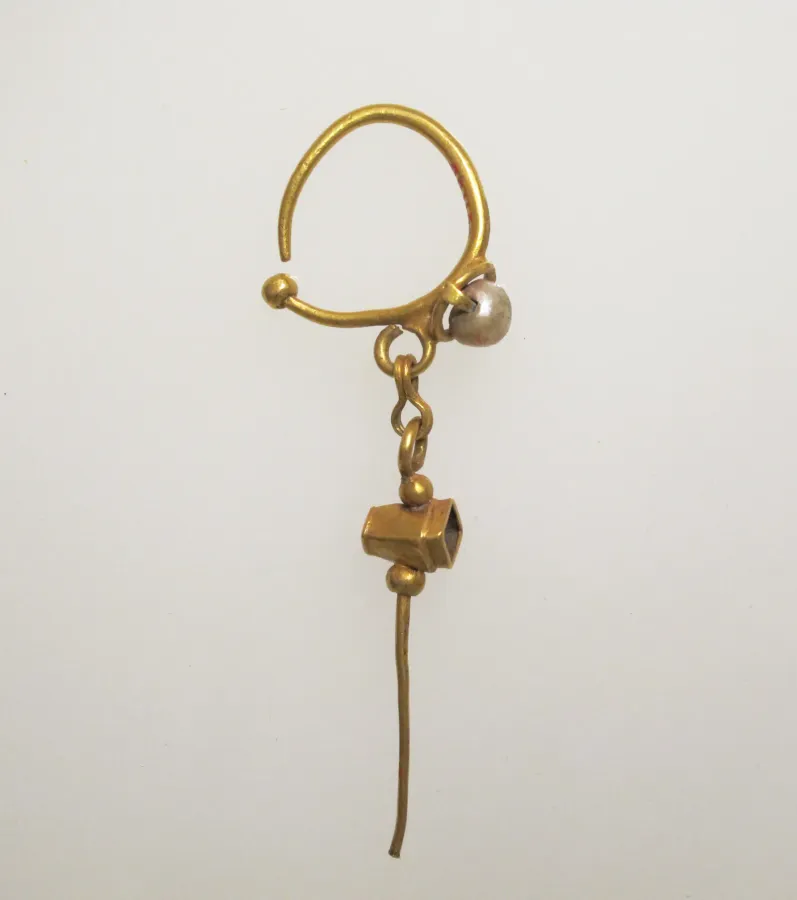
The most common pearl jewellery.
Stud
A single pearl directly on the ear. Classic, versatile. Usually 6 to 9 mm Akoya or Freshwater in white.
The standard graduation, birthday or wedding gift.
Drop
A pearl hanging from the earring, often on a small chain or post. Lengthens the line of the face.
Cluster
Several small pearls in one earring, often combined with small stones.
Threader
A thin earring with a pearl at the end, threaded through the ear. Modern minimalist style.
Mismatched
Two different earrings: one simple, one decorative. A modern trend.
Pearl and diamond
The classic pairing: a central pearl framed by small diamonds. A wedding or formal piece.
Pearl rings and bracelets
Rings
A pearl in a ring is usually held in a bezel or basket setting that protects the soft surface from knocks and scratches. Most pearls are not held by prongs in the way a faceted stone is; instead the pearl is half-drilled and glued onto a post, or seated in a cup mount. The pearl sits above the band, which makes a ring the most exposed way to wear a pearl. Any surface the hand brushes against, from a desk edge to a car door, reaches the pearl first.
This matters because pearls are soft. On the Mohs hardness scale a pearl rates around 2.5 to 4.5, far below quartz at 7, which means ordinary household dust, itself largely fine quartz, can dull a pearl over time. A pearl ring is therefore best for non-daily wear: office days, evenings, special occasions, but not manual work, gardening or sport. Choosing a slightly recessed bezel setting and a baroque or button pearl, which has a flatter profile, reduces the risk for a wearer who still wants a pearl ring in regular rotation.
Bracelets
A pearl bracelet is a strand of pearls on a thin thread or elastic for stretch styles, usually 17 to 20 cm for an average wrist, with 18 cm the most common ready-made length. Bracelets sit lower in the risk hierarchy than rings because the wrist makes less hard contact than the fingers, and they can be worn more freely.
They still need the same instincts as a necklace. The wrist is close to where perfume is applied and where hands are washed, so a pearl bracelet meets water, soap and fragrance more often than a necklace does. Take it off before washing up, before applying hand cream, and before any pool or sea. For an everyday pearl on the wrist, a budget freshwater strand is the sensible choice: it gives the look of pearls in a position where wear and tear is inevitable, without the worry of risking a premium piece.
Pearls in bridal tradition
Pearls are the classic wedding gem.
Why pearls
A pearl grows through an "ordeal" of the mollusc (the irritant inside the shell), which is symbolically linked to turning difficulty into beauty. In bridal symbolism this reads as: marriage is a process of mutual growth through challenges that yields something beautiful.
In ancient Rome, pearls were said to be the tears of Venus that had fallen into the sea. A bride wore pearls as a sign of blessing from the goddess of love.
What brides wear
Necklace: princess or matinee, usually Akoya 7 to 8 mm. Sometimes combined with small diamonds.
Earrings: 6 to 8 mm studs for the classic look, drops for a more dressy effect.
Bracelet: optional, usually a thin strand.
Tiara or hair clasp: pearls in the hair symbolise purity.
Heirloom tradition
A wedding pearl set often becomes a family heirloom. From grandmother to mother, mother to daughter, daughter to granddaughter. Quality pearls with proper care last 80 to 100 years and pass beautifully through generations.
Superstition
In some cultures there is a saying that "pearls mean tears", that wearing them at a wedding is bad luck (they look like tears). Other cultures hold the opposite: pearls protect from tears.
The real origin of these superstitions is unclear. Most Western weddings ignore the saying entirely and brides wear pearls without trouble.
For broader bridal jewellery, see the bridal jewellery guide.
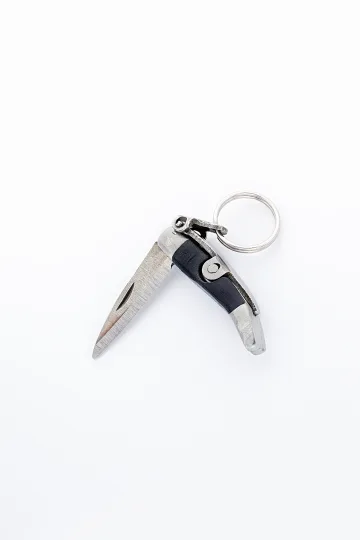
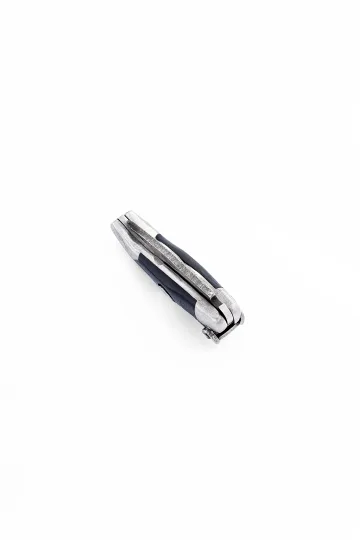
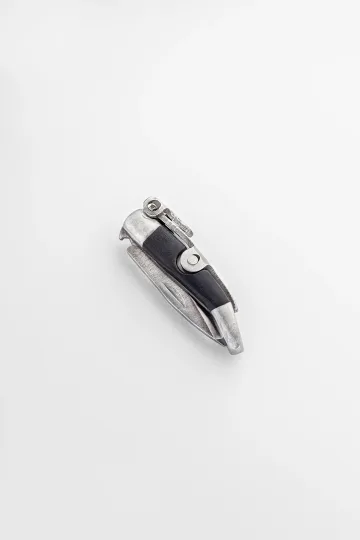
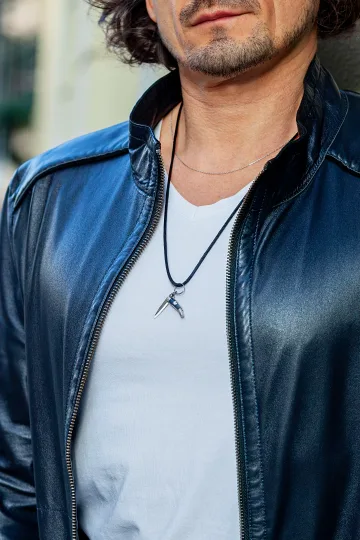
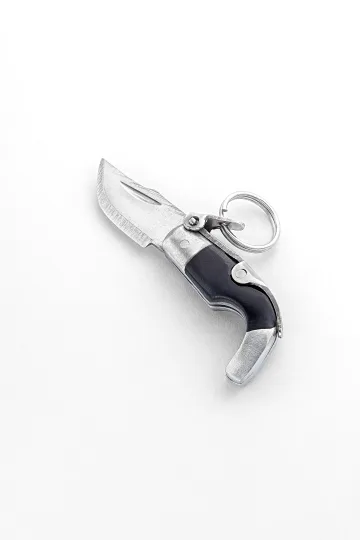
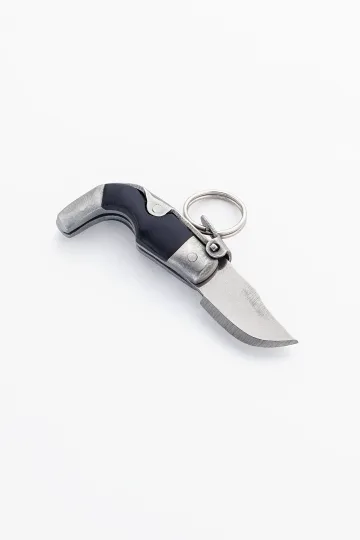
CAPAORA mini knife pendant
The 18th-century Spanish navaja in miniature: 40 mm of stainless steel, a real folding mechanism and a Palanquilla lock that clicks. An affordable gift to remember.
Authentic · Ships from Spain · 14-day returns
A brief history of pearls
Human use of pearls stretches deep into prehistory.
Ancient world
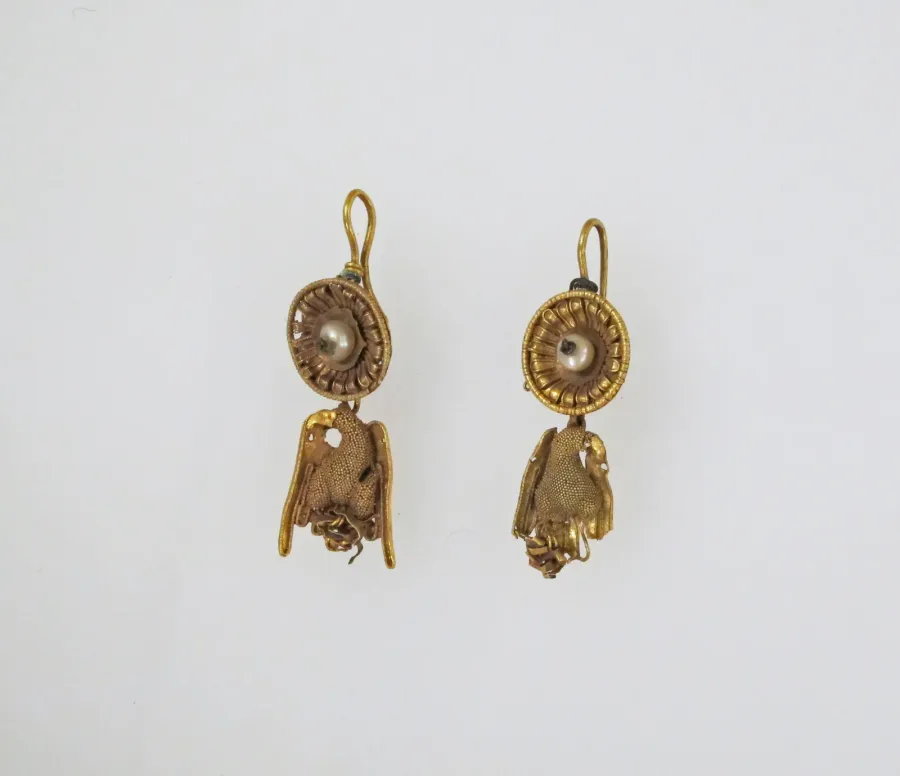
The earliest known reference to pearls in human culture dates to around 4200 BC (a find in Mesopotamia). In Ancient Egypt pearls appear in elite tombs from 3000 BC. The famous story of Cleopatra, who supposedly dissolved one of the world's most expensive pearls in vinegar and drank it to dazzle Mark Antony with the scale of her luxury, dates to this period.
Ancient Greece and Rome
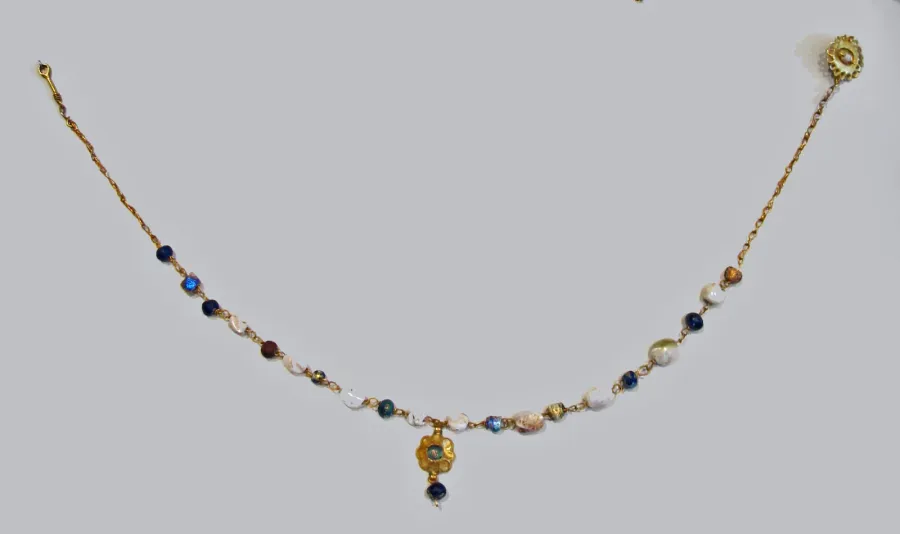
In Greco-Roman culture pearls were a status symbol. Julius Caesar passed a law restricting pearl wear to women of the ruling class. Pearls came from the Persian Gulf along trade routes.
Medieval East
The Persian Gulf, Bahrain, and the coast of Sri Lanka were the main sources of natural pearls. Divers descended to depths of 30 metres without equipment, with high mortality. Pearls from these regions reached Europe through Venice, Genoa, Cairo, Istanbul.
Renaissance
Pearls became one of the most prized adornments in European royal courts. Elizabeth I of England owned a collection of thousands of pearls, many visible in her portraits. Pearls featured in royal crowns, regalia, and monarchs' necklaces.
Eighteenth and nineteenth centuries
As maritime trade developed, pearls became more accessible in Europe. Pearl necklaces appeared as part of the dowry of noble brides. By the end of the nineteenth century, natural pearl beds were beginning to give out from centuries of harvest.
1893: the Japanese invention
Kokichi Mikimoto produced the first cultured pearl. By 1916 he had mastered round cultured pearls and founded the company that turned cultured pearls into a mass-market product.
Twentieth century
Cultured pearls gradually displaced natural ones from the market. By mid-century, more than 90 percent of pearls on sale were cultured. Pearls became accessible to the middle class. The image of Jackie Kennedy with her famous triple-strand pearls became an American icon.
Today
Today over 99 percent of pearls are cultured. New types appear (such as Chinese Edison Freshwater up to 18 mm in diameter), and technology keeps improving. Ethical pearl farming with controlled growing conditions for the molluscs is emerging.
Pearls across world cultures
Pearls carry rich cultural symbolism.
Japan
The pearl is a national symbol here. Japanese Akoya is a world-class brand. In Japanese culture pearls symbolise patience and wisdom (the pearl grows slowly over years).
China
Produces more pearls than any other country (mostly Freshwater). In Chinese tradition pearls are linked to water, the moon, femininity. Used in traditional medicine: ground pearl is considered beneficial for the skin.
India
Pearls hold an important place in the jewellery tradition. Especially in southern India (Tamil Nadu, Karnataka), pearl pieces are part of the wedding dowry. Indian maharajas owned legendary pearl collections.
Persian Gulf
The historical home of natural pearls. Pearls here are part of cultural identity, especially in Bahrain. As natural beds gave out, the diving tradition almost disappeared, but its memory lives on in art, literature and song.
The West
Pearls symbolise elegance and maturity. A classic attribute of women in dress codes from "smart casual" to "business formal" to "cocktail attire". From first ladies to business leaders, pearls feature in the wardrobe as universal jewellery.
Today
The gendered attachment of pearls is gradually loosening. Men's pearls have entered fashion through Korean pop, through the images of artists and musicians. For more on this, see the pearls for men guide.
Famous historical pearls
A handful of legendary pearls have left their mark on culture and art.
La Peregrina
A pear-shaped South Sea pearl weighing roughly 50 carats. Found in the Gulf of Panama in the sixteenth century, it passed into the Spanish crown. Owned by Mary Tudor, Margaret of France, Spanish monarchs. In 1969 Richard Burton bought it at auction as a Valentine's gift for Elizabeth Taylor. In 2011 the necklace containing it sold at Christie's for a record sum. La Peregrina is one of the most famous pearls in the world today.
Hope Pearl
An oval pearl found in the seventeenth century in the Persian Gulf. About 5 cm long, weighing 1800 grains (about 117 carats). It belonged to the Hope banking family in England, hence the name. Now in the British Museum collection.
Pearl of Asia
The largest known natural oyster pearl. Weight 605 carats, length about 7 cm. Found in the seventeenth century, it passed through the hands of the Chinese emperor Qianlong, then was gifted to an Indian maharaja. Now in private hands.
Pearl of Lao Tzu (Pearl of Allah)
The largest pearl known, but not from an oyster: from a giant clam (Tridacna gigas). Weight 6.4 kg, diameter 24 cm. Found in 1934 off the Philippine island of Palawan. Not spherical (it has a recognisable face shape), more museum exhibit than jewellery.
Cumberland Pearl
A pink natural pearl of pear shape, found in the river Conwy in Wales in the seventeenth century. Gifted to the queen of England. Now part of the coronation regalia.
Jackie Kennedy's pearl necklace
Not a single famous pearl but a necklace that became a fashion icon. Jackie Kennedy wore a triple strand of white Akoya at many official events. After her death the necklace sold at auction and became a symbol of mid-twentieth-century classic style.
Pearls through fashion history
How pearl fashion shifted from era to era.
Victorian era (1837 to 1901)
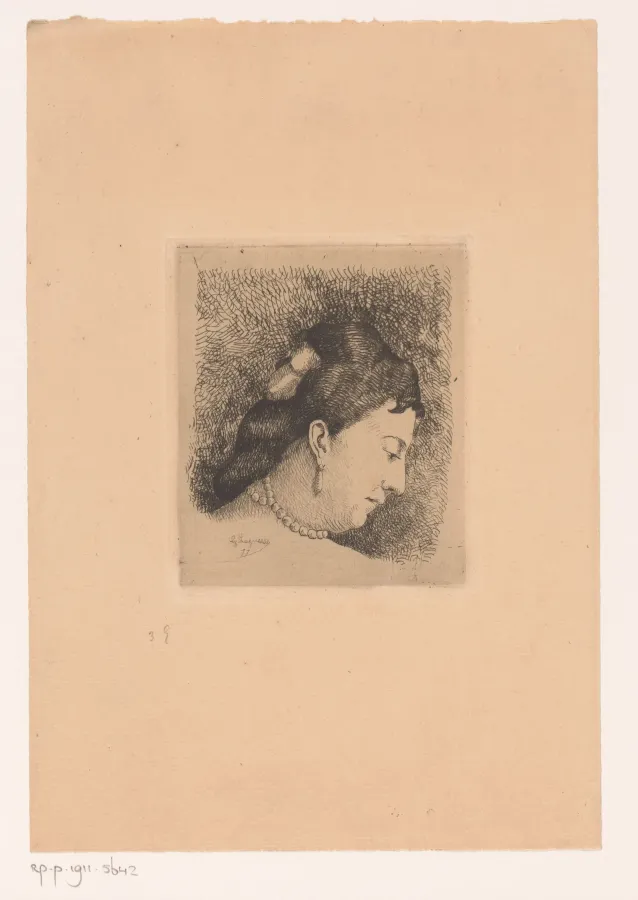
Pearls were mandatory for the aristocracy. Queen Victoria wore them in nearly every portrait. Long pearl strands (matinee, opera) doubled or tripled were standard adornment of titled women.
This era produced what came to be called "mourning" pearl jewellery. After Prince Albert's death, Victoria wore mostly pearls and black, setting fashion for decades.
Edwardian era (1901 to 1910)
Pearls in platinum, especially necklaces of small pearls with fine diamond links. The "garland" style with delicate openwork. Tiny pearls on platinum lace settings created a "snowfall" effect.
Art Deco (1920s to 1930s)
Long pearl sautoir necklaces (90 cm and longer) became a symbol of the age. Pearls combined with geometric forms: pearl pendants on platinum geometric mounts, pearl with coral and enamel.
In this era Mikimoto's cultured pearls became widely accessible for the first time, expanding the pearl-wearing public beyond the high aristocracy.
Mid twentieth century (1940s to 1960s)
The "Jackie Kennedy" image. Double and triple strands, stud earrings, all in white or cream. Pearls became a required part of the American and European middle-class woman's wardrobe.
This was the era of cultured pearl mass-market reach. Akoya from Japanese producers entered one in every two American and European homes.
1970s to 1990s
Pearls temporarily lost popularity in mainstream fashion, associated with "grandmother classic". In this period they held on in the premium segment and in bridal tradition but were not considered fashionable for young people.
2000s to 2010s
A pearl revival through modern design. Baroque Freshwater, Tahitian in artist pieces, mixed-pearl styles. Pearls returned to fashion through a different angle: not the classic row but artistic compositions.
2020s
Gender-neutral fashion and Korean pop culture have fully rehabilitated pearls. Young people wear them as everyday jewellery, men discover pearl earrings and chains. The trend continues.
The pearl parure: tradition of matching sets
A parure (from the French parure) is a set of coordinated jewellery in one material. Pearl parures are particularly prized.
Full parure (parure complete)
Seven pieces of matching style and quality:
- Necklace (princess or matinee)
- Earrings
- Brooch
- Ring
- Bracelet
- Tiara or diadem
- Hair clasp or comb
Full parures were created for coronations, royal weddings, state celebrations. Today they are museum rarities.
Demi-parure
Three or four pieces: necklace, earrings, bracelet, sometimes brooch or ring. The modern standard "wedding parure" is usually a demi-parure.
Trio
Three pieces: necklace, earrings, bracelet. The most accessible parure format. Often bought as a set for a wedding or anniversary.
Why a parure
Coordinated jewellery creates a unified visual image. All elements of the same pearl type (Akoya, say), same size, same colour tone. The "complete" effect of a wardrobe for formal occasions.
Modern alternative
Today a parure is often replaced by a "capsule jewellery wardrobe": 5 to 7 pearl pieces of different types (small everyday studs, a statement necklace, a second necklace for variety, an office ring, a dress necklace for events). Not a strict parure but a coordinated collection.
Send a friend a discount code, they save on their first order.
Passing pearls down the generations
A pearl's unique feature: its role in family history.
Why people pass pearls
Pearls physically last through generations. A quality pearl set (necklace plus earrings) with proper care remains modern and beautiful 60 to 80 to 100 years on. No fashion swing makes them outdated: classic pearls sit outside the eras.
Who gives to whom
Most commonly:
- Grandmother to granddaughter (wedding gift)
- Mother to daughter for an 18th birthday or wedding
- Aunt to niece
- Mother-in-law to daughter-in-law (especially in traditional cultures)
What matters at handover
Condition before transfer. Ideally, the giver covers the cost of a professional clean, restringing, replacement of any problem pearls. A mark of respect for the recipient and an extension of the piece's life.
Story. Pass the history along with the jewellery: when it was bought, who gave it, what events it has seen. This turns the piece into a family heirloom.
Documentation. Certificates, receipts, photographs. Especially important for valuable pearls in case of future sale or appraisal.
Box and packaging. Ideally the grandmother's box goes along with the pearls.
What the new owner should do
Do nothing at first. Wear the pearls as they are, get used to them, understand the previous owner's style.
Professional check. After a few months show them to a jeweller, assess condition, learn what is needed (restringing, cleaning, clasp replacement).
Adapt over time. Slowly, without rush. Change the length, add or remove pieces from the set, complement with new elements.
Preserve the history. Write down what you know about the pearls' origin. Thirty or forty years from now this will be precious for the next generation.
Pearls from a partner
A family tradition and a partner tradition alike. Pearls as a gift from husband to wife (anniversary, birth of a child, milestone) is classic in many cultures. Each event can be marked by adding a pearl piece, building a personal "history in pearls".
Pearl care: what to avoid
Pearls are the most delicate jewellery in a standard collection.
What NOT to do
Contact with cosmetics and perfume. Alcohols, fragrances, oils damage the nacre layer. The rule "last on, first off" (put on last, take off first) is non-negotiable.
Hair spray and aerosols. Same reason.
Bathing (pool, sea, bath). Chlorine and salt water destroy nacre. Take pearls off before any water beyond a light shower.
Ultrasonic cleaning. Absolutely not. The vibration damages the nacre layers and the mount.
Steam cleaning. Heat and steam destroy pearls.
Harsh chemicals. Household cleaners, bleach, solvents. Any contact is death for nacre.
Dry storage in airtight packaging. Pearls need natural humidity. In completely dry environments nacre dries and cracks.
Long direct sunlight. Pearls can fade (especially coloured types).
Storage with other jewellery. Hard metals scratch the soft nacre.
What is fine and even helpful
Regular wear. Pearls live in contact with human skin. Skin oils maintain the natural lustre. Pearls left in a box for years lose their glow.
Soft cloth wipe. After wear, wipe with a soft damp cloth (water only, no soap).
Annual professional clean. At a jeweller, a gentle clean with pearl-specific products.
Regular restringing. The thread stretches and gets dirty over time. Every 2 to 5 years with regular wear, restring at a specialist.
Natural airing. Once a month, take pearls out of the box and let them breathe for 30 to 60 minutes.
For more on jewellery care generally, see how to clean tarnished jewellery and when to take jewellery off in water.
Storage and restringing
Ideal storage
A separate pearl box with soft fabric lining. Not airtight plastic (humidity is needed), not bare metal (scratch risk).
A fabric pouch inside for each pearl piece. Soft cotton or anti-tarnish fabric.
Cool dark place. Not in the sun, not by a radiator. Ideal room temperature 18 to 22°C, humidity 40 to 60 percent.
Apart from other jewellery. Especially metal rings and bracelets that can scratch.
Restringing a necklace
The thread stretches, dirties, can break. Signs it is time to restring:
- Thread visibly darkens or stains
- Visible gaps appear between pearls (thread has stretched)
- Knots between pearls loosen or come undone
- Clasp works stiffly or fails to close properly
With regular wear (3 to 4 times a week), restring every 1 to 2 years. With infrequent wear, every 3 to 5 years.
Restringing is done at a professional bead stringer. Price varies by city.
Dealing with damage
Chip or scratch on a pearl: in most cases irreversible. A jeweller can polish, but that reduces size and quality. More often it makes sense to replace the damaged pearl during restringing.
Dull nacre: most often the result of improper wear (contact with cosmetics). Sometimes a professional clean and regular wear bring back the lustre, sometimes not.
"Peeled" pearl: the nacre layer has worn off, exposing the yellow or white calcium core. End of life. The pearl is no longer wearable.
Men's and gender-neutral pearls
In modern fashion the pearl is shedding its strict feminine attachment.
Brief history of men's pearls
Historically men wore pearls equally with women. The sailor's pearl earring (including pirates), the gentleman's pearl brooch of the eighteenth century, pearls in the regalia of male monarchs.
The strict association of pearls with women is a twentieth-century thing, especially the second half.
The 2020s return
Korean pop performers (men and women), Hollywood actors on red carpets, social media influencers have brought pearls back into men's fashion. Today men's pearls are neutral jewellery in most urban environments.
What men wear
Stud earring: a single pearl 5 to 7 mm. Minimal, elegant.
Chain with pearl pendant: the male analogue of the women's pearl pendant. Often Tahitian black for contrast.
Brooch: the old gentleman genre returns. A pearl piece or one with a pearl accent.
Cuff links: pearl cuff links on formal shirt cuffs. Classic.
For more, see the dedicated pearls for men guide.
How to choose your first pearls
A few practical pointers.
Decide the purpose
For everyday wear: Freshwater 6 to 8 mm stud earrings or a short princess necklace. Versatile, accessible.
For a wedding: Akoya 7 to 8 mm, princess or matinee necklace. Classic.
As a gift: Akoya or Freshwater in the mid grade. Safe standard choice.
For a collection: South Sea or Tahitian. Premium.
For artistic style: baroque Freshwater or Tahitian. Designer angle.
Budget tier vs premium
Without quoting specific numbers:
Budget: A to AA Freshwater, shapes from baroque to near-round, size 6 to 8 mm. Quality, beautiful, affordable.
Mid: AAA Freshwater or entry Akoya AA to AA+ 7 to 8 mm. Good quality, classic look.
Premium: AAA Akoya 8 to 9 mm, entry Tahitian, entry South Sea. The premium segment.
High premium: large South Sea (especially golden), rare Tahitian colours, natural pearls. Exclusive.
What matters most: size, shape, colour
On a limited budget, prefer:
- Smaller size with good quality (shape, lustre)
- Over larger size with weak quality
A small AAA pearl glows brighter than a large A pearl.
Where to buy
Reputable jewellers. Established jewellers usually sell quality pearls with guarantee.
Specialised pearl shops. Major cities have boutiques focused on pearls. Best selection and expertise.
Online. Possible but check seller reputation, return policy, certificates. Avoid unverified sellers.
Auctions and vintage. Antique pearl pieces sometimes appear at auction. Expert appraisal before purchase is essential.
What not to buy
- Pearls without a stated type (Akoya, Freshwater, etc.)
- No origin or country listed
- Without visible price logic (suspiciously cheap for the claimed type)
- From dubious tourist stalls without certification
Buying it as a gift? Each one arrives ready to give.
 A branded Zevira box and a little card come with every order.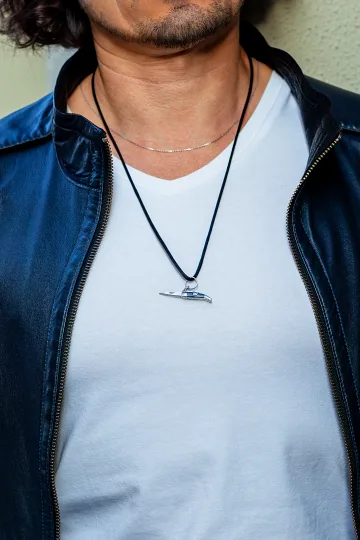





Frequently asked questions
Natural or cultured pearls?
Natural pearls are practically unavailable today (only in antiques and rare lots). Modern quality pearls are cultured, and that does not make them less valuable. The pearl is real, grown in a real mollusc.
Which pearl is better: Akoya or Freshwater?
Akoya is more classic, with brighter lustre, and pricier. Freshwater is more accessible, more varied in colour and shape. Many modern Freshwater pearls are nearly indistinguishable from Akoya at a glance. Depends on budget and preference.
What does AAA mean?
The highest pearl grade on most scales. Almost perfect shape, excellent lustre, minimal surface defects, thick nacre. The premium segment.
Can you swim in pearls?
No. Seawater and chlorine destroy nacre. Take them off before pool, sea, bath. A quick shower is possible but it is better to remove them.
How long do pearls last?
With proper care, 50 to 100 years and more. A grandmother's 60-year-old pearls are a normal family story. Care quality determines everything.
Which dress works with bridal pearls?
Universally: pearls work with any wedding dress. With an open neckline, a choker or short princess. With a closed dress, matinee or opera. With a modern fitted gown, minimalist studs.
Can you wear pearls every day?
Yes, and you should. Pearls love contact with skin. Just take them off before cosmetics, perfume, shower, sport.
What if a pearl chips?
Depends on the size of the chip. Small chips can be polished at a jeweller. Larger ones usually require replacing the pearl during restringing (a new one of the same size and colour goes in).
Are pearls an investment?
Pearls are not a standard financial asset, and nothing here should be read as financial advice. Historically a handful of rare lots, large fine South Sea or unusual Tahitian colours, have fetched strong prices at auction, but resale value is never guaranteed. Most people buy pearls to wear, not to invest.
Can you wear pearls with other stones?
Yes. The classic is pearl plus diamond. Also pearl plus sapphire, pearl plus emerald. The main thing is overall styling coherence.
Which pearl suits a child?
Small Freshwater 4 to 6 mm. Studs or a short necklace. Budget tier, since children grow and play actively, so risk of damage is higher.
How often does a necklace need restringing?
With regular wear (3 to 4 times a week), every 1 to 2 years. With occasional wear, every 3 to 5 years. If wear signs appear (dark thread, looseness, knots coming undone), restring.
Is it safe to buy pearls online?
Possible but with care. Check seller reputation, reviews, return policy, certificates. Avoid unverified vendors. For large sums, offline with a chance to inspect in person is better.
Do pearls suit men?
Yes. Modern 2020s fashion has neutralised the gendered attachment. A small pearl stud earring, a chain with a pearl pendant, cuff links are neutral male jewellery.
What do I do with my grandmother's pearls?
First, expert assessment: pearl type, current condition, thread condition. Then cleaning and restringing at a specialist. Then regular wear restores the lustre (pearls "come back to life" through skin contact).
Conclusion
The pearl is the only gem grown by a living creature. That is what gives it its unique place in the world of jewellery. Quality pearls with proper care serve for decades, pass to the next generation, and stay modern across every era.
The three main rules. First: choose the type by budget and purpose (Freshwater for everyday, Akoya for classic, Tahitian and South Sea for premium). Second: quality matters more than size. A small AAA pearl beats a large A. Third: gentle care. Take them off before cosmetics and water, wear them regularly for natural glow, get a professional clean once a year.
What else to read. On men's pearls there is a dedicated guide. On birthstones by month, the birthstones guide (pearls are June's stone). On bridal jewellery, the bridal guide. On chain and necklace lengths, the length guide. On jewellery care, how to clean tarnished jewellery. On spotting fakes, how not to buy fake jewellery.
Silver, gold, engagement rings, symbolic jewellery, paired sets.
About Zevira
Zevira makes jewellery in the artisan tradition of Albacete, Spain. Our pearl and mother-of-pearl pieces stay in calm, wearable shapes: the kind of classic piece that never dates and quietly lasts for decades, like the strand from a grandmother's box.
What you can find with us on the pearl theme:
- Stud and drop earrings with pearls for everyday and formal wear
- Pendants with pearl and mother-of-pearl on silver and gold chains
- Rings where the pearl sits in a protective setting
- Minimalist designs for gender-neutral and men's looks
- Mother-of-pearl pendants for anyone who wants a soft glow without the classic strand
- Pieces ready for personal engraving, for a wedding, an anniversary or a gift meant to pass down
Every piece can be personalised with engraving by a craftsperson, with the option of personal engraving. Sterling silver 925 and 14 to 18K gold.