Wedding Jewellery: How to Choose Pieces You Will Still Love in 10 Years
The Most Expensive Day and the Riskiest Purchase
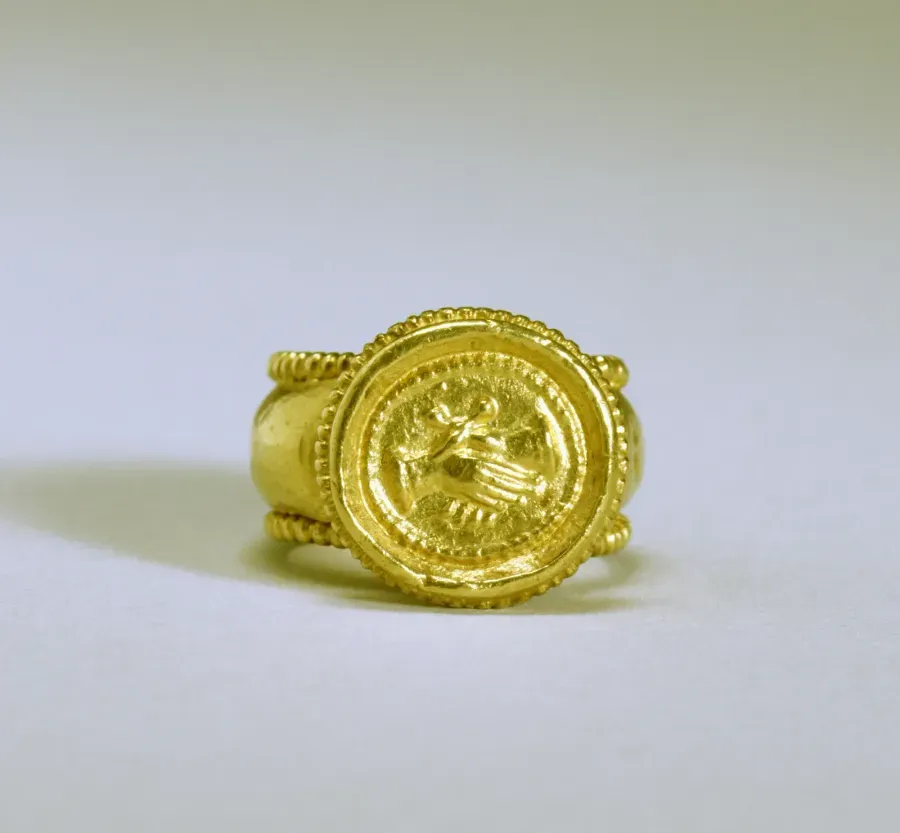
The venue gets booked a year ahead. The dress takes months of searching. The photographer is vetted through portfolios and reviews. And the jewellery? Jewellery gets bought a week before the wedding, in a mild panic, because "oh, I haven't sorted that yet." Or worse, the first shiny thing in the shop window wins because "it's only for one day."
That thinking costs people more than they realise. Wedding jewellery is the only part of the bridal look that stays with you after the day itself. The dress goes into a garment bag. The shoes come out once every five years. The bouquet dries. But the earrings, the necklace, the bracelet can be worn for decades. If chosen well.
The challenge is that "well" for a wedding is different from "well" for a dinner party. Wedding jewellery needs to work with the dress, the hairstyle, the lighting of the venue, the camera flash, and your feelings ten years from now when you look at the photographs. This guide covers how to account for all of that without losing your mind.
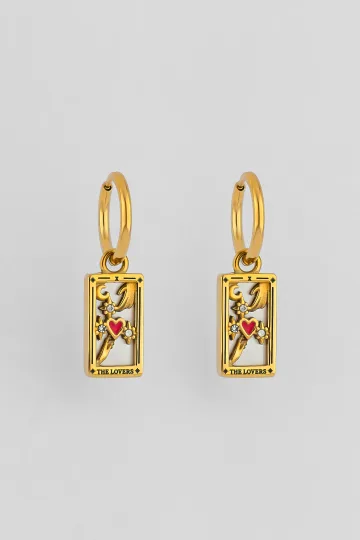
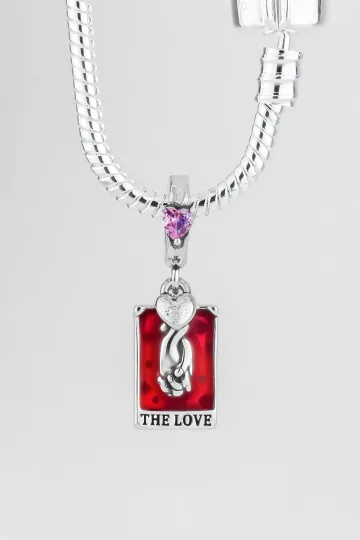
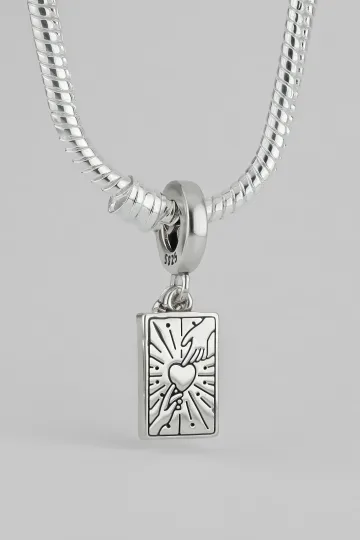
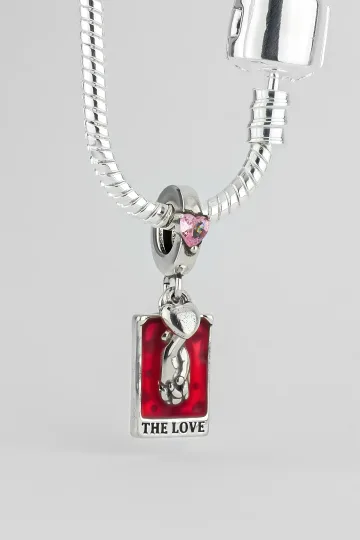
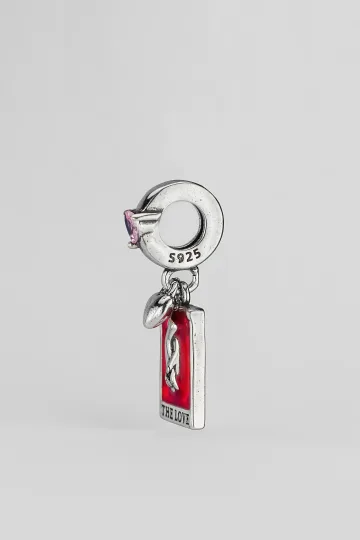
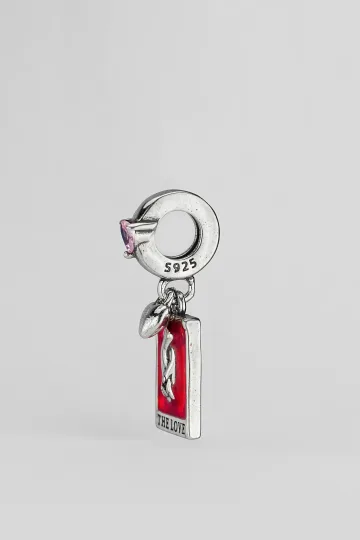
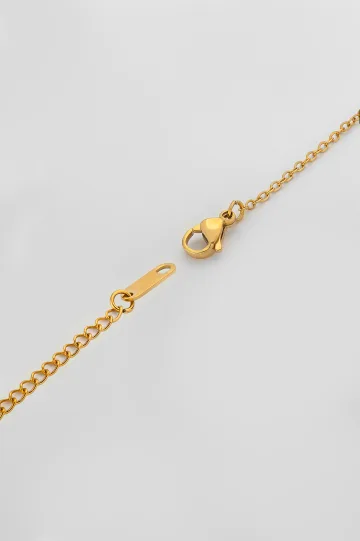
Wear the symbol, don't just read about it. These are in stock:




Rule One: The Dress Dictates the Jewellery
Not the other way round. Never the other way round. The dress is the centre of gravity. Everything else orbits it.
The Neckline Determines the Necklace
V-neckline. Follow the line of the V. A pendant on a chain, a teardrop, a Y-shaped necklace. Anything that creates a vertical line and "enters" the V. A wide necklace sitting across a V-neckline creates visual conflict: two lines pulling in opposite directions.
Round neckline (bateau). A short necklace or choker. The jewellery line mirrors the neckline. Long pendants get lost against closed fabric and serve no purpose.
Sweetheart neckline. A delicate chain with a small pendant, or skip the necklace entirely. A sweetheart neckline is already decorative on its own. Adding a statement necklace on top is like hanging a painting on patterned wallpaper. Overload.
High neck, closed collar. No necklace needed. Fabric to the neck means the accent shifts to earrings. Long drops, cascades, small chandeliers. The neck is covered, the ears are open.
Off-shoulder, bandeau, corset. Prime territory for a necklace. Plenty of skin means plenty of space. From a delicate chain to a wider piece, depending on the style of the dress: minimalist gown equals thin chain, fuller silhouette equals more presence.
One-shoulder. Asymmetry. An earring on the side of the open shoulder, no necklace or a very subtle chain. A bold necklace argues with the asymmetric line of the dress.
The Fabric Determines the Sparkle
Satin, silk (smooth, glossy fabrics). They already shine on their own. Matte or satin-finish jewellery will not compete. Sparkling stones on glossy fabric can work, but restraint is key. One accent, not five.
Lace, chiffon (textured, matte fabrics). Jewellery with detail, texture, small stones. Texture on the dress plus texture in the jewellery equals harmony. A smooth minimalist chain on a lace dress looks as though it wandered in from a different outfit.
Tulle, organza (airy fabrics). Light, weightless jewellery. Heavy metal pieces visually crush the airiness of the silhouette.
Dress Colour and Metal Tone
A pure white dress calls for cool-toned metals (stainless steel, silver, white gold). Ivory and champagne call for warm-toned metals (gold, gold plating, rose gold). This is not a law, but it is what photographs best. The camera amplifies temperature clashes: gold on cool white looks yellowish, silver on warm ivory looks greyish.
Chandelier earrings, a statement necklace and a tiara all at once? You will glitter like a Christmas tree, not a bride. Pick one thing.
How to wear wedding jewellery
After years in the atelier I have styled dozens of brides, and almost every one asks the same thing: what happens after the wedding? A wedding piece chosen with a clear head lasts far longer than one day. Here is what actually works, occasion by occasion.
How do I wear wedding earrings every day? For daily wear I recommend drop earrings and a thin chain with a small pendant: a plain roll-neck, a light jumper, a simple round-neck blouse. I suggest keeping the metal in one tone with the rest of your outfit, silver with cooler shades, gold with warmer ones. Bridal cubic-zirconia studs replace everyday studs beautifully and give a neat sparkle near the face.
Does a bridal set work at the office? It does, once you take half of it off. I choose a restrained tennis bracelet and small earrings under a shirt, a blazer or a classic sheath dress. I keep one focal point, exactly as on the wedding day: either the earrings or the bracelet. Under a deep blouse neckline I suggest a short princess-length necklace; under a closed collar I leave the whole accent on the ears.
How do I build an evening look? For the evening I recommend an open dress in a rich colour, wine or black, and this is where the necklace finally comes into play. With hair up I choose long earrings; under a deep neckline, a noticeable pendant. You can layer: a thin necklace plus a pendant slightly longer. A wedding teaches restraint, the evening lets you bend it a little.
What about an anniversary or special occasion? I take out the full set and suggest wearing it as a keepsake: an anniversary, a graduation, a close friend's birthday. An engraved pendant with the wedding date is especially warm here, less about shine, more about the story.
Who do wedding pieces suit once the wedding is over? Almost everyone, because they are chosen delicate and versatile from the start. Two rules that never fail. First, keep one metal across the whole look; the camera reads a mix worse than the mirror does. Second, do not go opera-length for daytime, it overloads a simple outfit. A thin princess-length chain and medium earrings will survive any season.

Turn on your camera, pick earrings, a pendant or a ring, and see the piece on yourself in real time.
Switch items in one tap.
Everything runs in your browser: no photo or video is ever uploaded.
Earrings: The Bride's Most Important Jewellery
Earrings come first. Not the necklace, not the bracelet. Earrings. Because the camera at a wedding looks at the face. Portraits, kisses, laughter, tears: it is all about the face. And earrings sit beside the face in every single frame.
By Hairstyle
Updo (bun, chignon). Neck and ears fully exposed. Drop earrings, chandeliers, long pendants. Anything that hangs and moves. An updo creates a frame for long earrings.
Hair down. Earrings hide behind hair. No point in long drops: they will not be visible. Studs or small earrings that peek through strands work best. Or earrings large enough to be seen through the hair.
Half-up, half-down. Medium-length earrings. Not too long (they will tangle in the hair), not too small (they will disappear). Drops or small chandeliers: the sweet spot.
Veil. If the veil is full and covers the ears, the earrings will be invisible for most of the ceremony. Keep this in mind: the veil comes off at the reception, and the earrings appear. Choose earrings that work both with and without the veil. Usually this means a medium size.
By Face Shape
The same principles as for everyday earrings, but with a caveat: everything is amplified in wedding photographs. Close-up camera work plus professional lighting plus a white dress reflecting light equals every element being maximally visible.
- Round face: vertical earrings elongate. Drops, long pendants.
- Oval: anything works. Lucky you.
- Square: soft, rounded shapes soften the angles.
- Long face: horizontal accents, wider earrings add width.
More detail in our earring types guide.
Necklaces and Pendants
When a Necklace Is Needed
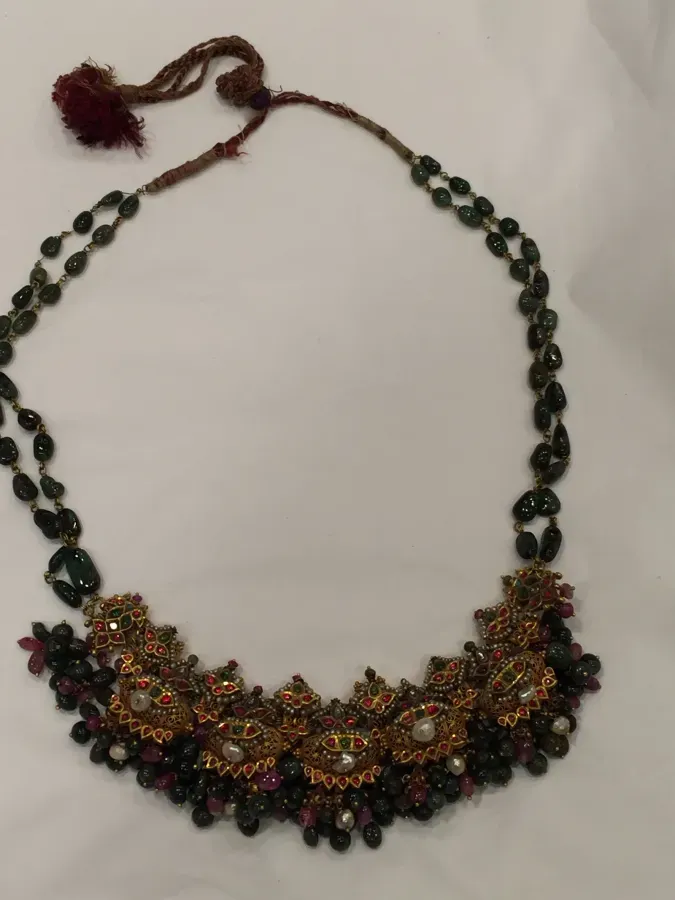
Open neck plus a simple bodice equals a necklace is essential. Without it, the decolletage looks empty, like a wall without a picture. The camera sees a large stretch of skin with no focal point, and the eye slides past.
When a Necklace Is Too Much
An embellished bodice, lace across the chest, appliques on the upper part of the dress: a necklace competes with the dress. If the dress already "speaks" in the neckline zone, a necklace will talk over it. Two focal points in one spot means neither works.
Length Matters
- Choker (35-40 cm): sits on the neck. Works with off-shoulder styles and V-necklines. Visually shortens the neck, so use caution if the neck is already short.
- Princess (42-48 cm): just below the collarbones. The most versatile wedding length. Works with nearly everything.
- Matinee (50-60 cm): on the chest. For deep necklines. A pendant at matinee length fills a V-neckline perfectly.
- Opera (70-90 cm): below the chest. Rare at weddings, but works with minimalist, clean-cut dresses.
More about chain lengths in our chain length guide.
Upload a photo of your pet, someone you love, or an object. We'll build a 3D model and hand-cast it in pewter.




Bracelets for the Wedding Day
The bracelet is the most optional piece of wedding jewellery. The bride's hands are busy: bouquet, champagne glass, the groom's hand. The bracelet appears in flashes. But in that photograph of "ring plus hand plus bouquet," the bracelet enters the frame and adds a layer.
What works. A thin chain, a delicate tennis bracelet, a single elegant bangle. Nothing bulky: it will catch on the bouquet and interfere with the ring exchange.
What to avoid. Charm bracelets (they jingle during the vows), wide cuffs (they conflict with dress sleeves), beaded bracelets (too casual for a wedding).
The wedding ring factor. If the ring goes on the right hand, the bracelet goes on the right hand too. They need to live together, in the same colour temperature. A gold ring plus a silver bracelet on the same wrist is a clash.
More on bracelet types in our bracelet guide.
Tiaras, Combs and Hair Pins
The Tiara
A semicircle that sits on the crown or slightly forward. The most traditional bridal hair accessory. Works with updos and half-up styles. Difficult to secure with fully loose hair.
When it works. A classic wedding, a full gown, a church ceremony. A tiara says "I am the bride," without subtext.
When it does not. A minimalist wedding, a slip dress, a registry office without a reception. A tiara on a minimalist bride looks like a crown on pyjamas.
The Comb
A decorative hair comb. More understated than a tiara. Can be visible (at the side, at the back) or tucked into the hairstyle with only the decorative part showing.
Advantages. Versatility. Works with any hairstyle, any wedding style. After the wedding, it is a wearable accessory for evening events.
Pins and Mini Clips
Small decorative elements scattered through the hairstyle. They create the effect of stars or dewdrops in the hair. More delicate than a tiara, less formal than a comb.
Tip. Odd numbers. Three, five, seven pins look more natural than two or four. The same logic as with bracelet stacking: odd numbers create organic flow.
Customer reviews
Zevira is a real jewellery shop. Genuine payments, deliveries and customer thank-yous.
🥰🥰🥰 gracias

Ok, ¡gracias! 🙂

The "Less Is More" Rule (and When to Break It)
The classic rule: choose one focal point. Statement earrings means no necklace. A prominent necklace means simple studs. A tiara means minimal on the neck and ears.
This works 80% of the time. One focal point keeps the look clean, does not distract from the dress, and avoids visual noise in photographs.
When to break it. If the dress is maximally simple, the plainness of the fabric can be balanced by more jewellery. A smooth white column dress plus statement earrings plus a visible necklace plus a bracelet equals perfectly fine, because the dress is a blank canvas.
If the dress is already embellished, with lace, with beading, with details, jewellery goes to the minimum. The dress is carrying the decorative weight.
Materials: What Survives a Wedding Day
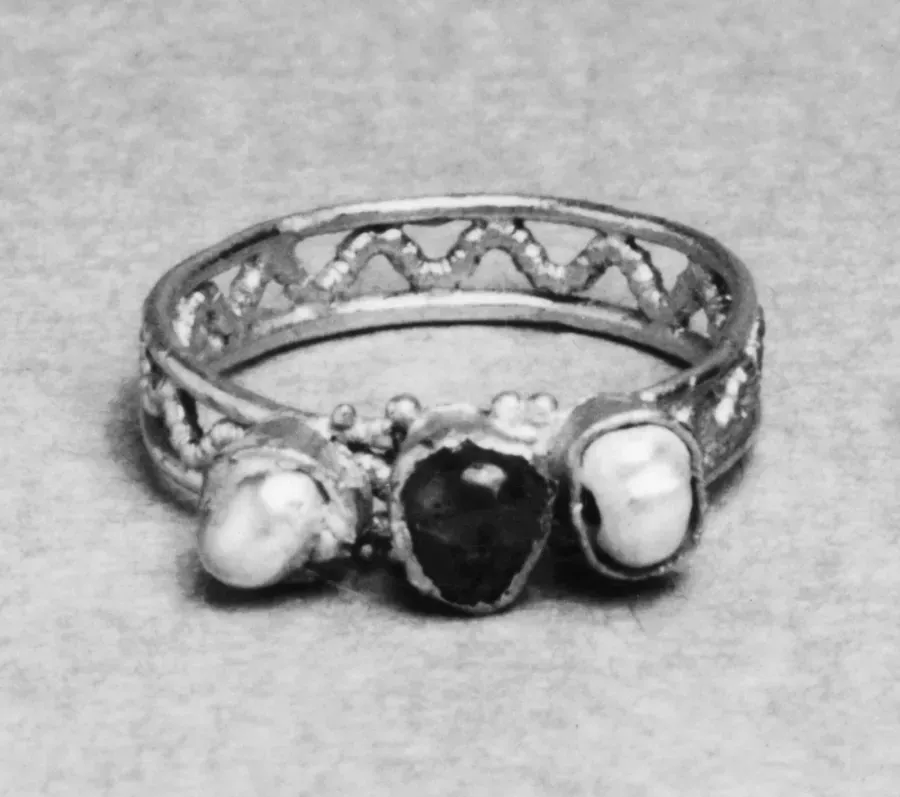
A wedding is 8 to 14 hours of continuous wear. Heat, tears, hugs, dancing, champagne on your hands, hairspray, makeup. Your jewellery goes through a stress test.
316L stainless steel. Does not tarnish, does not cause allergic reactions, does not react to sweat or tears. Will survive any wedding. Visually, it gives a clean silver tone that looks excellent in photographs.
925 sterling silver. Beautiful, but can tarnish over a long day, especially with contact from perfume or hairspray. Tip: put the silver on after all cosmetics have been applied. More in our cleaning guide.
Gold plating. Visually lovely, but comes with a risk factor. A long day of sweat, hugs, and constant skin contact can accelerate wear on the coating. One day will not destroy quality plating, but factor it in for repeated wear after the wedding. More on this in our gold plating guide.
Stones and crystals. Cubic zirconia looks identical to diamond in wedding photographs. The camera cannot tell the difference. The guests cannot tell the difference. Only a gemmologist with a loupe would know, and it is unlikely one will be among the guests.
What to avoid. Brass (can leave a green mark on the skin over a long day). Cheap costume jewellery without stated composition (risk of an allergic reaction at the worst possible moment). More in our nickel allergy guide.



Something Old, Something New, Something Borrowed, Something Blue
A Victorian English tradition that has travelled the world. Here is how it works through jewellery.
Something old. Grandmother's earrings, mother's brooch, a family ring. A connection to previous generations. If the heirloom does not fit the look stylistically, attach it to the bouquet or to the inside of the dress. The symbol is fulfilled, the style is unharmed.
Something new. Any new piece of jewellery bought for the wedding. Symbolises a new life, a new chapter. The simplest item on the list.
Something borrowed. A piece borrowed from a friend or sister. Symbolises the support of loved ones. Practical tip: arrange this in advance and try it with the dress before the day. "Borrowing at the last minute" equals a risk it will not work.
Something blue. Earrings or a pendant with a blue stone. Blue cubic zirconia, blue topaz, aquamarine. Or a blue element hidden in the hairstyle: a blue pin, a ribbon.
CAPAORA mini knife pendant
The 18th-century Spanish navaja in miniature: 40 mm of stainless steel, a real folding mechanism and a Palanquilla lock that clicks. An affordable gift to remember.
Authentic · Ships from Spain · 14-day returns
Bridesmaids' Jewellery
If you have bridesmaids in matching dresses, coordinated jewellery completes the unified look. It does not have to be identical. The same style, the same metal, different shapes.
Budget option. Matching simple stud earrings in stainless steel. Inexpensive, neat, and they will not conflict with any dress.
Mid-range option. Pendants on chains of the same length, but with different charms. Unity with individuality.
Generous option. A full set (earrings plus bracelet) as a gift for the bridesmaids. They wear them at the wedding and take them home as a memento.
The Groom's Accessories
The groom is not a forgotten detail. His accessories matter too, especially in "hands with rings" shots and couple portraits.
Cufflinks. If the suit has French cuffs, cufflinks are non-negotiable. The metal of the cufflinks should match the metal of the wedding ring. Consistency.
Tie clip. A functional accessory that becomes decorative at a wedding. Same metal as the ring.
Lapel pin. A miniature brooch. Boutonniere on the left, pin if no boutonniere. Not both at once.
Bracelet. A thin chain under the jacket sleeve, visible only with certain movements. Understated elegance. Same metal as the ring.
Leave your email, we'll send your discount code. No spam, unsubscribe anytime.
The code arrives by email, valid on your first order.
Storage and Preparation
Before the Wedding
- Try all jewellery with the dress and hairstyle a week in advance. Not on the wedding day.
- Clean silver the day before. Steel just needs a wipe.
- Check clasps. An earring lost during the first dance is not romantic. It is stressful.
- Photograph the full look in complete assembly. Look at the photo on a screen. The camera sees differently from the mirror.
On the Day
- Jewellery goes on last. After makeup, after hairspray, after perfume. Cosmetics plus metal equals oxidation.
- Appoint a jewellery guardian. A bridesmaid, your mother or a sister, someone who has spare clasps and knows where to put the necklace if it gets too hot.
After the Wedding
- Wipe with a soft cloth that same evening. Sweat, makeup, hairspray: it is all on the surface. The longer the contact, the harder it is to clean.
- Store separately from everyday jewellery. The wedding set is a memory. Keep it together, in one place.
Wedding Traditions Around the World
A wedding is a ritual, and every culture has its own jewellery traditions within that ritual. Knowing them is useful even if you do not follow any: sometimes another culture's tradition inspires more than your own.
British and Irish Traditions
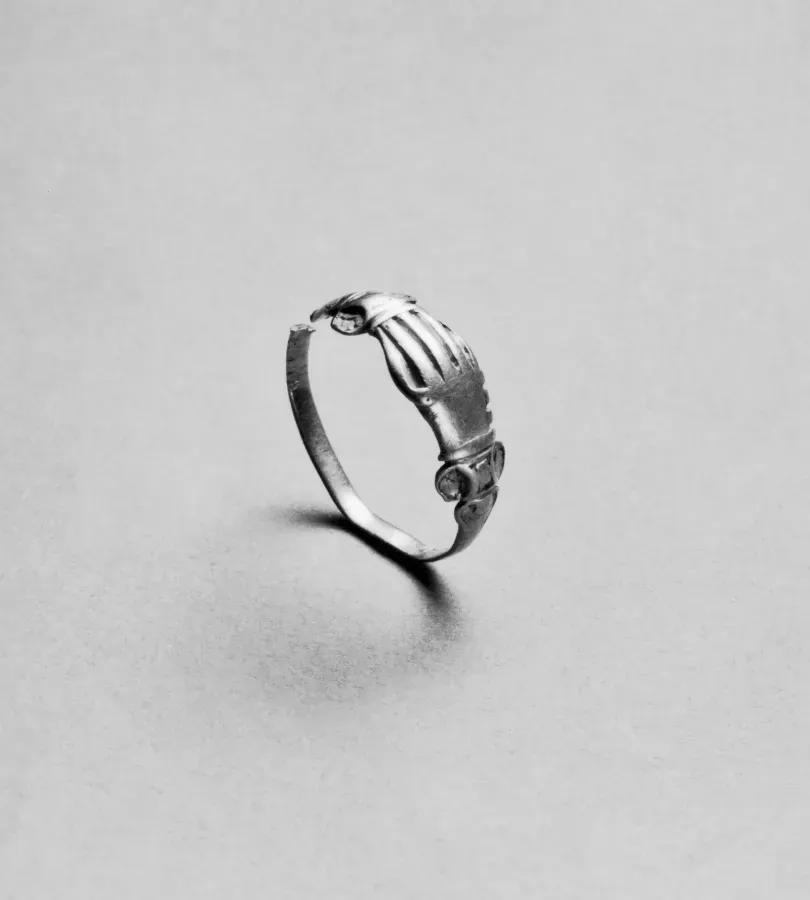
The "something old, something new, something borrowed, something blue" rhyme originated in Victorian England and remains one of the most widely followed wedding customs in the English-speaking world. British brides tend towards restraint: a pair of drop earrings, a thin pendant, the wedding ring. Tiaras are traditionally the preserve of aristocracy and royalty, though decorative combs and hair pins are popular across all backgrounds. Irish brides sometimes incorporate Claddagh rings, which symbolise love, loyalty and friendship, into their wedding jewellery, either as the wedding band itself or as a complementary piece.
Indian Traditions
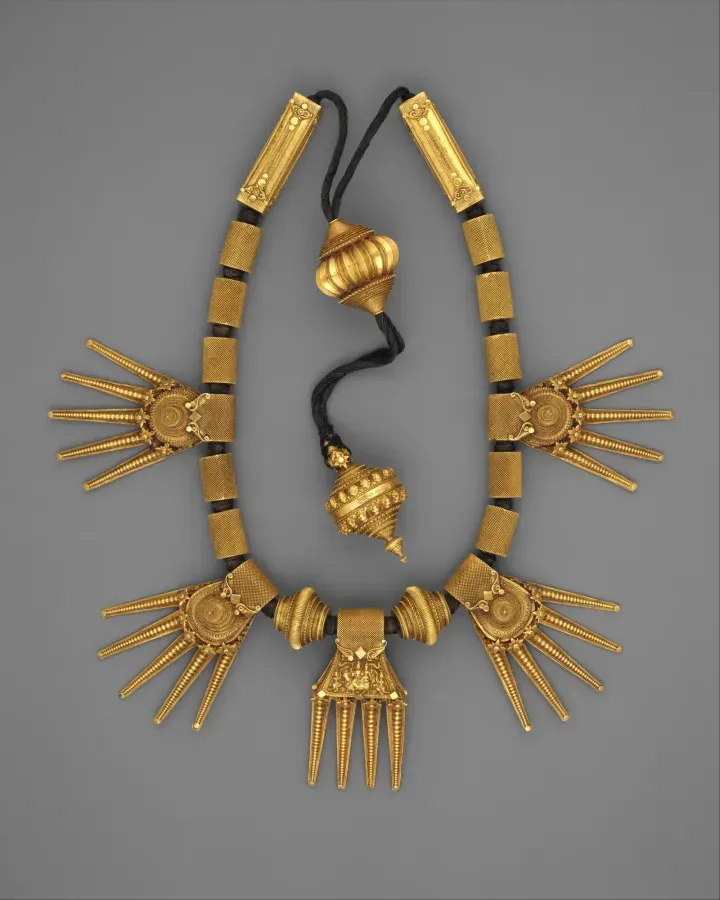
An Indian wedding is one of the most jewellery-rich rituals in the world. The bride is adorned from head to toe: the maang tikka on the forehead, the nath (nose ring with chain to the hair), jhumka earrings, choker necklaces, long haar necklaces, chudi bangles on both wrists (sometimes dozens), toe rings, and payal anklets.
Every element carries meaning. The mangalsutra, a black and gold necklace placed by the groom, is the equivalent of a wedding ring. It is not removed after the ceremony. The glass bangles symbolise prosperity and fertility. The sound of the anklets announces the bride's arrival.
Indian wedding jewellery is maximalism as ritual. Behind the abundance sits a system: every piece has its place, every piece performs a function. It is not chaos. It is complex order.
European Continental Traditions
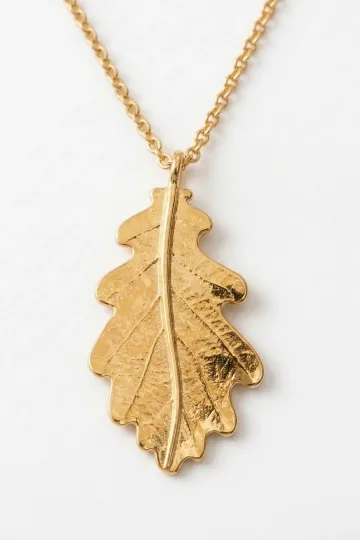
Western European traditions lean towards minimalism. The classic continental bride wears drop earrings, a delicate necklace, and the wedding ring. Scandinavian brides favour nature motifs: simple silver pieces with leaf, branch and flower patterns. Mediterranean brides (Italian, Spanish, Greek) tend warmer, more golden, with an emphasis on family heirlooms.
German weddings carry their own distinct customs. The Polterabend, held the evening before the wedding, involves smashing porcelain for good luck, and the bride often wears simpler jewellery for this event, reserving her best pieces for the ceremony. German brides historically valued practical, well-crafted silver or gold pieces, with less emphasis on sparkle and more on solid construction and meaning. The wedding ring traditionally goes on the right hand in Germany, Austria and Switzerland.
Latin American Traditions
Mexican weddings use arras, thirteen gold coins that the groom presents to the bride during the ceremony. The coins symbolise his commitment to provide for the family. They are often set into a bracelet or necklace after the wedding and worn as jewellery.
Brazilian brides traditionally wear a set of three rings on the ring finger: engagement ring, wedding ring, and promise ring. Three layers of commitment on one finger.
Jewellery for a Second Wedding
A second wedding plays by different rules. There is no pressure of "the first time." No obligation to follow every tradition. A person entering marriage a second time usually knows what they want and is not shy about choosing it.
Veil and tiara. Traditionally, these belong to the first wedding. They are perfectly fine at a second wedding if the bride wants them, but they are not expected. Alternatives: an elegant comb, a decorative clip, scattered pins.
Necklace. Second weddings are often less formal. A thin chain with a small pendant works perfectly. The symbolism can be different: not "beginning" but "continuation." The infinity symbol works particularly well. So does a compass: a new direction.
Wedding ring. Can you wear the new ring alongside the old one? Most people do not. The previous ring is put away. If there are children from the previous marriage, the ring sometimes passes to them as a keepsake. New marriage, new ring. Clean page.
Overall tone. Less "bride," more "elegant woman at a celebration." Earrings slightly simpler, necklace slightly thinner, overall look slightly more restrained. Not because the second marriage is less important. Because a confident woman does not need the same volume of external sparkle to feel special.
Vintage and Antique Wedding Jewellery
Grandmother's earrings. Great-grandmother's brooch. A ring passed through three generations. Vintage jewellery at a wedding is a style choice and a piece of history becoming part of your history.
Advantages. Uniqueness: nobody else will arrive in the same earrings. Emotional value: a family piece carries the memory of generations. Quality: older pieces were often made better than new ones, because they were made by hand.
Challenges. The style may not match the dress. Grandmother's 1960s earrings and a modern minimalist gown are not always a pair. Solution: wear the family piece discreetly (a brooch pinned inside the dress, a ring on a different finger) or as the sole accent, without trying to match it with other jewellery.
Restoration. If the family piece has tarnished, scratched or broken, a jeweller can restore it. Polishing, replacing a stone, repairing a clasp. The result is worth the effort: a piece that has survived decades deserves one more wedding.
Buying vintage. If there are no family heirlooms but you want vintage character, look at auctions, antique shops or restoration specialists. Art Deco (1920s-30s), Retro (1940s-50s), Mid-Century Modern (1960s-70s): each era has its distinctive style. Try with the dress before buying.
Jewellery for Wedding Guests
The bride is not the only one choosing jewellery. Every guest faces the same question: what to wear?
Rule number one: do not upstage the bride. This is not about modesty. It is about respect. A tiara on a guest is poor form. A massive white stone necklace is ambiguous. A dazzling set that pulls focus is out of place.
What works. Understated earrings, a single thin chain or bracelet. Any metal colour. Delicate stones. The principle: your jewellery complements your outfit, it does not become the main event of the evening.
For men. Cufflinks if the occasion calls for it. One ring (wedding or style). A thin bracelet under the sleeve. A tie clip. Everything in one metal. Men's wedding accessories are a territory of restraint: better too little than too much.
What to avoid. Jingling charm bracelets (audible during the vows), overly bright stones (they compete with the bouquet), novelty jewellery (a skull pendant at a classic wedding is not ideal, even if it is silver and expensive).
Buying it as a gift? Each one arrives ready to give.
 A branded Zevira box and a little card come with every order.


Wedding Jewellery and Photography
The photographer is the only person at the wedding who will see your jewellery in close-up. Guests see the overall silhouette. The camera sees every glint, every scratch, every shade.
Reflections and glare. Polished metal reflects the flash. In some shots this is beautiful: a spark on an earring, a ray on a necklace. In others, it is a white blotch obscuring details. Matte finishes give more predictable results. If your photographer works with flash (and at an evening reception, this is inevitable), factor this in.
Colour temperature. The camera amplifies the difference between warm and cool tones. A gold piece against a white dress looks yellower than it does in the mirror. Silver against ivory looks greyer. If unsure, ask the photographer to take a test shot during the fitting.
Fine details. The macro shot of hands with rings is one of the obligatory wedding images. In this shot, everything is visible: the texture of the metal, the clarity of the stone, the condition of the nails, the skin tone. A ring that looked fine in the shop may reveal flaws in a macro photograph. Polish your jewellery to a shine on the morning of the wedding.
Black-and-white processing. Many couples request some photographs in black and white. In monochrome, the colour of the metal does not matter: only brightness does. Silver and gold look identical. Stones lose their colour but keep their sparkle. If you are planning a lot of black-and-white shots, choose jewellery by shape and shine, not by colour.
Anniversaries and Updating Your Wedding Jewellery
Wedding jewellery is not a static set. It grows alongside the marriage.
First anniversary. Add one piece to the wedding set. A thin bracelet to go with the earrings. Or a second chain for layering. Each anniversary is a reason to add, not replace.
Tenth anniversary. Refresh the set. The same earrings, but reset into a new, better setting. Or a new necklace in the same style. Ten years of marriage deserves an upgrade.
Silver wedding (25 years). Silver jewellery: literally matching the name. A silver ring worn alongside the wedding band. Silver earrings in place of the original pair. Or a silver pendant engraved with the wedding date.
The point is that wedding jewellery lives after the wedding. These pieces are not museum exhibits. Wear them to anniversaries, to parties, on ordinary weekends. That is what they were made for: not for one day, but for all the days after it.
Send a friend a discount code, they save on their first order.
Wedding Jewellery Mistakes You Can Avoid
Real situations that repeat themselves at every fifth wedding.
New earrings, never worn before. Earrings bought two days before and worn for the first time. After four hours the earlobes burn. After six, they are red and swollen. The cause: either an allergy to the metal or mechanical irritation from unfamiliar clasps. Solution: wear new earrings at least a week before the wedding. Wear them for several hours. If there is no reaction, you are safe. If there is, swap them before the problem ends up in the wedding photographs.
A necklace that is too long. A pendant that swings with every hug. Catches on guests' buttons. Lands in a glass. Tangles in hair during kisses. A wedding involves 200-plus hugs in a single day. A long necklace will not survive all of them. Choose a length to the collarbones: princess (42-48 cm) for most situations.
Jewellery that clashes with itself. Gold earrings, a silver necklace, a rose gold bracelet. Each piece is beautiful on its own. Together, visual chaos. The camera amplifies the metal differences. In photographs it looks worse than it does in the mirror. One metal, one tone, one temperature.
Jewellery bought online without trying on. The screen shows colour, not scale. A pendant that looked delicate in the photo turns out to be bulky in person. Or the opposite: tiny. Always order with enough lead time to try on and return if it does not work. The wedding is not the day for surprises with sizing.
Forgetting the hairstyle. Earrings chosen for loose hair, but the hairdresser does a high bun. Now the studs that were supposed to be subtle become the only accent by the face: and they are too small for that role. Coordinate jewellery and hairstyle in advance. If the hairstyle changes, the jewellery adapts.
Heavy earrings all day. Beautiful chandelier earrings weigh 15 to 20 grams each. After six hours, the earlobes are tired. After ten, they hurt. After twelve, you take the earrings off at the reception and forget them on the table. If you want chandeliers, wear them for the ceremony and the first part of the reception, then switch to light studs for the dancing. A double set of earrings is not extravagance. It is strategy.
Leaving the price tags on. It sounds ridiculous. It happens more often than anyone would like. A tag on a bracelet, a sticker on a pendant, a price label on an earring visible when the head turns. Check twice. On the morning of the wedding, there are too many details: a small thing is easy to miss.
Wedding Jewellery by Budget
Good news: looking beautiful at a wedding is possible at any price point. The less good news: every budget level has its own traps.
Minimal Budget
One pair of 316L stainless steel earrings and possibly a thin chain. That is all. Stainless steel in wedding photographs is indistinguishable from white gold. The camera does not know what your earrings cost. The guests certainly do not. The quality of the evening is determined not by the price tag but by how you feel.
The trap: buying "disposable" costume jewellery in an unknown alloy. Cheap metal can leave a green mark on the skin over 12 hours of continuous wear. And if it triggers an allergy, red earlobes in the wedding photographs will remain forever. Better one pair of steel studs than a full set of something that could potentially ruin the evening.
Mid-Range Budget
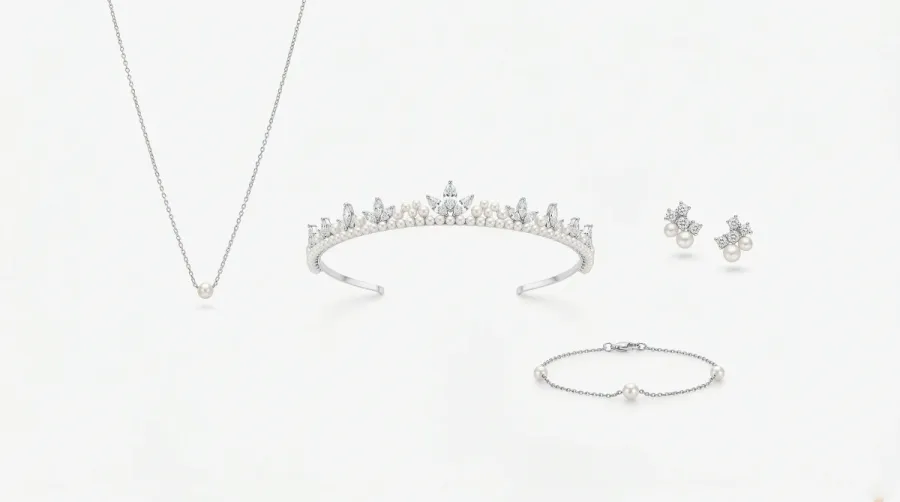
A set: earrings plus necklace (or earrings plus bracelet). Sterling silver 925 or stainless steel with cubic zirconia. You can add a hair accessory, a comb or a few decorative pins. Quality CZ in a good setting looks like diamond in photographs. This is not a compromise or a substitution. It is a conscious choice that allows you to spend the wedding budget on things that genuinely cost a lot: the venue, the food, the music, the photographer.
The trap: trying to "look expensive" on a mid-range budget. A chunky necklace with large plastic "stones" shouts "I tried" rather than "I am elegant." Better a small genuine piece than a large fake one.
High Budget
A complete set from a single designer: earrings, necklace, bracelet, hair accessory. Gold or vermeil. Natural or lab-grown stones. Personalisation: engraving of the wedding date, initials, the coordinates of the place you first met.
At a high budget, the trap is different: overdoing it. When money is no object, the temptation is to take everything. Chandelier earrings AND a statement necklace AND a tiara with stones AND three bracelets. The funds exist, the self-control does not. Remember: expensive jewellery follows the same rules as inexpensive jewellery. One focal point. The rest is support.
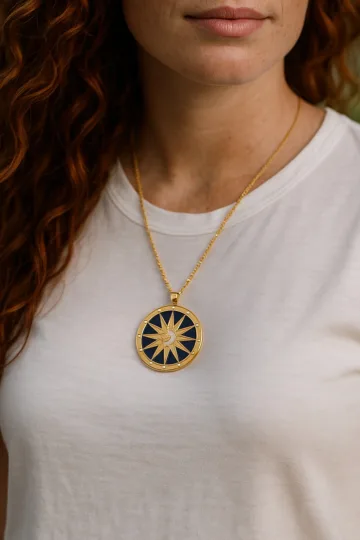
Wear the symbol, don't just read about it. These are in stock:












FAQ
Can you wear costume jewellery to a wedding? Yes, if it is quality costume jewellery made from stainless steel or with good plating. In photographs, nobody can tell the difference between stainless steel and platinum. The difference is in the mind, not in the lens.
How many pieces of jewellery can you wear? Earrings plus one additional piece (necklace OR bracelet OR hair accessory). Two additional pieces if the dress is simple. Three or more, almost never.
Which earrings are best for a wedding? Medium drops or small chandeliers. Visible enough for photographs, light enough for 12 hours of wear. Heavy chandeliers will start pulling on the lobes after four hours, with the reception and dancing still ahead.
Should jewellery match the wedding ring? Ideally by metal colour. A gold ring means warm-toned jewellery. A silver-toned ring means cool-toned pieces. An exact match is not essential, but the same temperature family is recommended.
Can you wear wedding jewellery after the wedding? Of course. That is the entire point of choosing thoughtfully. Delicate earrings, a fine chain, an elegant bracelet: all of these work perfectly at anniversaries, parties and ordinary weekends. Buying beautiful things for a single day is wasteful.
And what about the rings if the marriage itself ends? That's a separate story. The engagement and wedding bands can be melted down, resold, donated or reworked into a stand-alone piece. The full set of scenarios is laid out in our article on the divorce ring, meaning, trend and what to do with the old wedding ring.
Pearls at a wedding, yes or no? A classic that will never go out of fashion. Pearls work with any white dress, with any hairstyle. The only limitation: pearls do not love moisture and cosmetics, so put them on last and take them off first.
What if the jewellery does not match the dress? Change the jewellery, not the dress. The dress costs more, it has been fitted to your figure, and changing it a week before the wedding is madness. Jewellery is the flexible variable. This is precisely why it is chosen after the dress.
Silver and gold jewellery, wedding bands, symbolic pendants, paired sets.
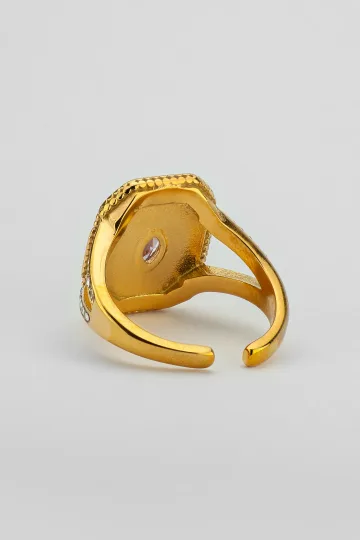
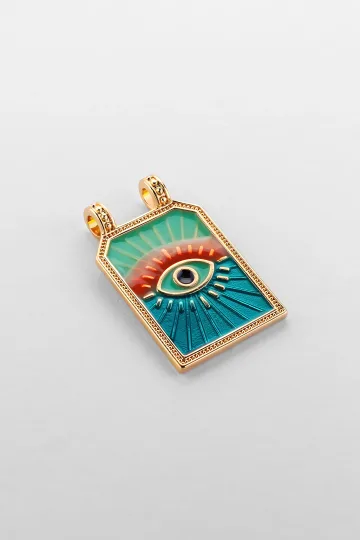
Wear the symbol, don't just read about it. These are in stock:


Final Thoughts
Wedding jewellery is not about sparkle and it is not about cost. It is about balance. Balance with the dress, the hairstyle, the face, the lighting, and the photographs you will look at in 20 years.
Choose pieces you can wear afterwards. Choose pieces that do not compete with the dress. Choose pieces that will not trigger an allergy at the sixth hour of the reception.
And try everything together before the wedding. The mirror in a shop under fluorescent lights lies. A photograph in daylight does not.
About Zevira
Zevira makes jewellery in the artisan tradition of Albacete, Spain. Spain is a country where wedding traditions carry both Mediterranean warmth and a quiet, formal elegance, and that balance shapes how we work. We build wedding sets that earn their place on the day of the ceremony and keep earning it for years afterwards.
Here is what you will find with us for a wedding:
- "Earrings plus pendant" sets designed in one consistent style
- Delicate tennis bracelets set with cubic zirconia
- Wedding bands with personal engraving
- Infinity pendants for paired gifts
- Coordinated sets for bridesmaids in a single look
Every piece can be personalised with engraving, with the option of personal engraving. We work in 925 sterling silver and 14-18K gold.