Ear Cuffs: The Complete Guide to No-Pierce Ear Jewelry
Introduction: the earring you can actually wear
You want that stacked, pierced look along the upper ear. The cartilage. Maybe a helix, a conch, a chain sweeping down to the lobe. But the idea of a needle, months of aftercare, the risk of rejection or scarring, gives you pause. That hesitation is completely reasonable.
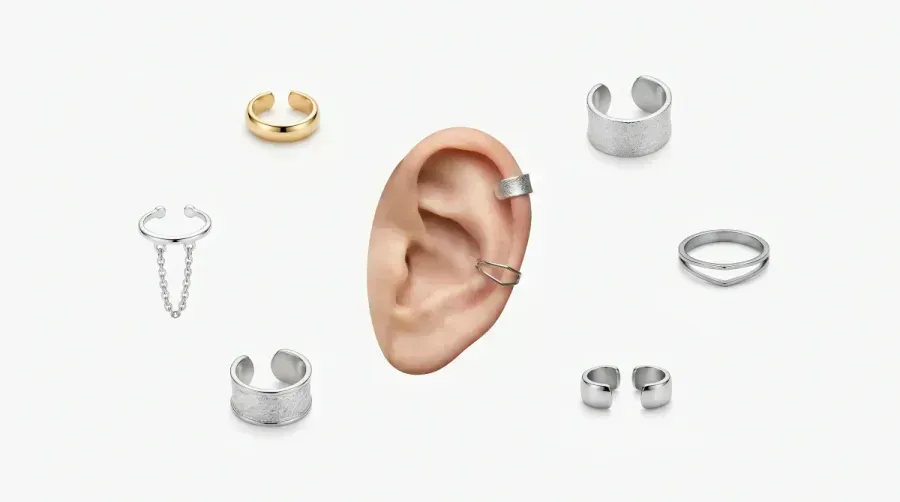
Enter the ear cuff: a piece of jewellery that sits on the cartilage, clips or wraps into place, and stays there without any piercing whatsoever. You put it on in seconds. You take it off when you like. The illusion of a carefully curated ear stack, with none of the commitment.
Ear cuffs have moved firmly into the mainstream over the past several years. What was once a niche Y2K accessory found at indie market stalls and underground boutiques in the early 2000s is now a staple across independent silver studios and high-street collections alike. From the boutiques of SoHo to the vintage shops of Portland, from the jewellery studios of Brooklyn to the independent makers of Austin, the ear cuff has earned its place as a genuine jewellery category, not a compromise.
This guide covers the history, the anatomy of the ear, the types, the materials, the styling, and everything else you need to wear them well.
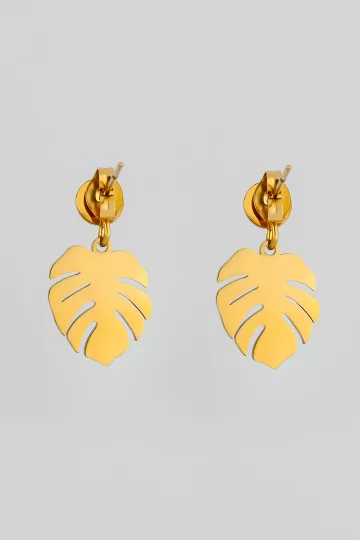
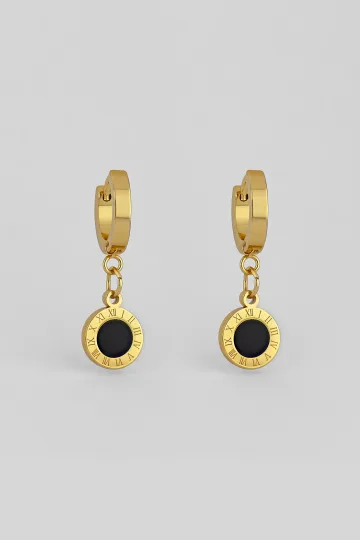
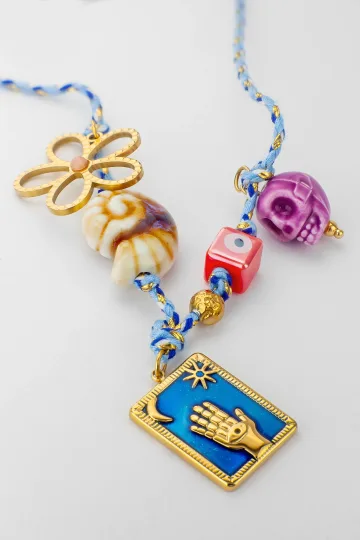
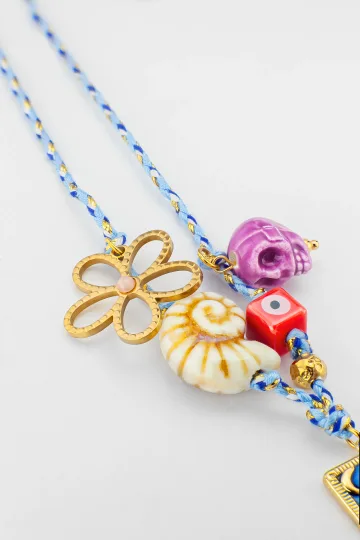
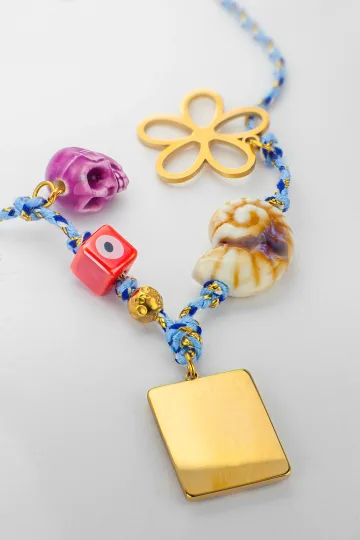
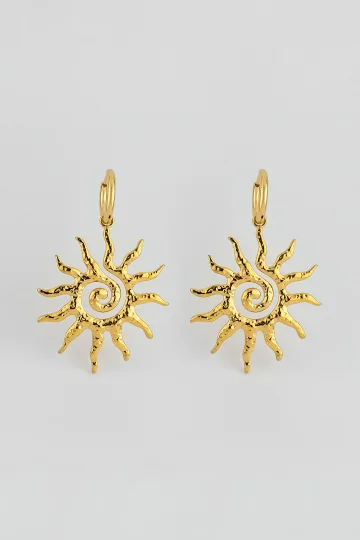
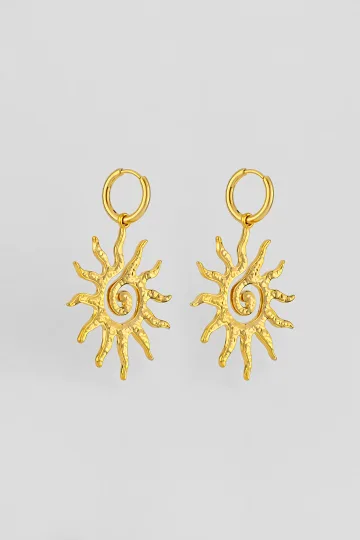
Wear the symbol, don't just read about it. These are in stock:


A brief history: from Pompeii to present day
Ear cuffs are not a recent invention, whatever the trend cycle might suggest. Their lineage stretches back more than two thousand years.
Ancient Rome and the finds at Pompeii

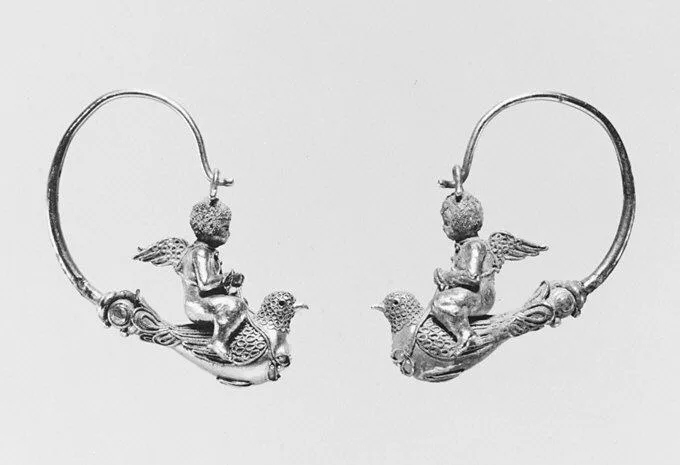
By the second century AD, Roman jewellers were already producing ear wraps that gripped the cartilage without any piercing. The archaeological record at Pompeii tells this story directly: gold serpentine wraps recovered from the site show coiled forms that held to the outer ear rim through the spring tension of the metal itself, no hole required. These sat alongside conventional pierced earrings in the same burial assemblages, which confirms they were a deliberate separate category, not a substitute for pierced jewellery.
What is particularly telling about the Pompeii finds is the quality of the material. These were not budget accessories. The gold workmanship was high, and they were found on individuals who also had other fine jewellery. This refutes the idea that ear cuffs are a compromise for those who cannot commit to a piercing. For a Roman woman of the second century, this was a considered piece of jewellery in its own right.
Similar objects have been found across the ancient Mediterranean and into India. In Hellenistic burial sites, gold snake-form ear wraps appear with enough regularity to suggest they were a recognised jewellery type. The serpent form suited the cartilage anatomy perfectly: the long body coiled around the helix while the head rested visibly at the front.
The Middle Eastern and South Asian tradition
Across the ancient Near East and into South Asia, cartilage adornments without piercing were part of ceremonial and bridal jewellery for centuries. The tradition in India of layered ear decoration, covering the entire outer ear with stacked pieces, has roots well before the Common Era. Some of those traditional pieces used tension and coiling rather than piercings, particularly on the upper ear. The concept of the "ear stack" as a deliberate aesthetic system, with each zone of the ear assigned its own piece, comes directly from this tradition.
Medieval and Renaissance Europe
Between roughly the ninth and the fifteenth centuries the ear more or less vanished from European fashion. Coifs, wimples, veils and hoods covered the head and the sides of the face, and an ornament nobody could see was an ornament nobody commissioned. Ear jewellery survived at the edges of the continent, in Byzantine and Iberian workshops where hairstyles left the ear visible, but across most of northern Europe the lobe went unadorned for centuries.
The Renaissance brought it back, and it came back through hair. When Italian fashion of the mid sixteenth century moved to dressed and pinned hair rather than concealing headwear, the ear became visible again and jewellers responded within a generation. Portraits from the period show pearl drops, enamelled rosettes and the occasional piece that grips the upper ear rather than hanging from the lobe. English court fashion followed, and by the reign of Elizabeth I a single pearl worn in one ear was an accepted mark of status on men as well as women. Sir Walter Raleigh sat for his portrait wearing one.
Two details from this period still shape the cuff. First, asymmetry: one decorated ear was normal, and nobody read it as an incomplete pair. Second, tension fittings. Goldsmiths of the period worked with sprung wire and hinged clasps for collars, aglets and hat badges, and the same technique produced ear ornaments that held by grip rather than by piercing. The mechanism at the centre of a modern helix cuff is not a new idea, only a newly popular one.
The 1940s and 1950s: the clip-on generation
The middle of the twentieth century made unpierced ears the default across Britain and America. Piercing had drifted downmarket in respectable opinion, and the screw-back and the clip fitting took over almost completely. Costume houses turned out clip earrings in base metal, early plastics and paste stones by the tens of thousands, and a wartime economy that rationed precious metal accelerated the shift. Women who would never have considered a needle owned a drawer of clips.
That generation matters to the cuff for a straightforward reason: it normalised the idea that a decorated ear does not require a hole. The clip-on trained several decades of wearers to judge an earring by how it sat and how long it stayed comfortable rather than by how it fastened. When the cuff arrived properly in the 1980s and again in the 1990s, it inherited a public that already accepted the premise and simply moved the fitting point from the lobe up to the cartilage, where the spring has more to grip and far less to pinch.
The Victorian era
A revival in Europe during the nineteenth century, particularly for women for whom piercing was considered improper in certain social circles. Clip constructions and cuff-adjacent pieces appeared in fashionable jewellery of the period, offering an alternative for those who wanted a decorated ear without the needle. Victorian designers also favoured nature motifs, including snakes, which gave the serpentine ear cuff another moment of visibility in the Western fashion canon.
The Y2K moment: 1999 to 2003
Ear cuffs reappeared as a distinct trend in the late 1990s and into the early 2000s. This was an era of visible hardware, asymmetry, and deliberate jewellery choices as part of a personal aesthetic. Mall kiosks in suburban America, boutiques in Williamsburg and the East Village, indie stores across college towns all carried versions. The format was never fully mass market at that point, but it planted the image that would return with greater force twenty years later.
2018 onward: an established category
After 2018, ear cuffs stopped being a trend and became a permanent fixture. Several things converged: the Y2K aesthetic revival, the growth of independent jewellery brands selling directly to customers online, and a broader cultural shift toward jewellery as personal expression rather than decoration. By the time the revival peaked, the ear cuff was already past the trend stage and into the everyday wardrobe. Today, in 2026, you find them in independent studios, fast fashion, and everywhere in between.
The audience has also shifted. What once read as alternative or niche is now worn by people across demographics. The ear cuff sits alongside traditional pierced earrings in most collections, treating both as equally valid expressions of the same impulse: a decorated ear that reflects something about the person wearing it.
An ear cuff wants the hair swept up and the ear bare. Hide it under a curtain of loose hair and don't bother at all.
How to wear an ear cuff
Hundreds of ears have passed through my hands: shoots, runway, brides an hour before they walk. Here is what actually holds and reads on camera, by occasion.
What do I reach for every day? For daytime I recommend a thin band or a single small stone-set cuff on the helix. An open neck or a round neckline keeps the ear as the accent. Silver and gold both work against white, grey, beige, and denim. I suggest tucking the hair behind one ear so the cuff peeks out, and leaving the other side loose.
Does it work at the office? It does, as long as you keep it quiet. I choose a minimal helix band plus a stud at the lobe in the same metal, nothing that swings or flashes on a video call. A dark suit asks for a white metal; a warm ochre or camel top gets along with gold.
How do I build an evening look? For the evening I suggest a chain cuff on a bare neck with the hair up. A deep neckline or open shoulders let the chain run from cartilage to lobe as one long line. A black dress takes any metal, while wine and emerald look best next to gold.
And for a wedding or a shoot? For the occasion I choose a pearl or a soft silver cuff with the hair up. It comes off gently, does not pull focus, and catches light well. For a guest I recommend one expressive cuff instead of heavy pierced earrings.
Who does it actually suit? Almost everyone: our ear cartilage is roughly the same. It leans toward people who like detail and a put-together ear rather than one big stone. Two rules that never fail. First, one metal across the whole ear. Second, do not fill every point; the empty space between pieces works as hard as the pieces.

Turn on your camera, pick earrings, a pendant or a ring, and see the piece on yourself in real time.
Switch items in one tap.
Everything runs in your browser: no photo or video is ever uploaded.
Ear anatomy: where each cuff sits
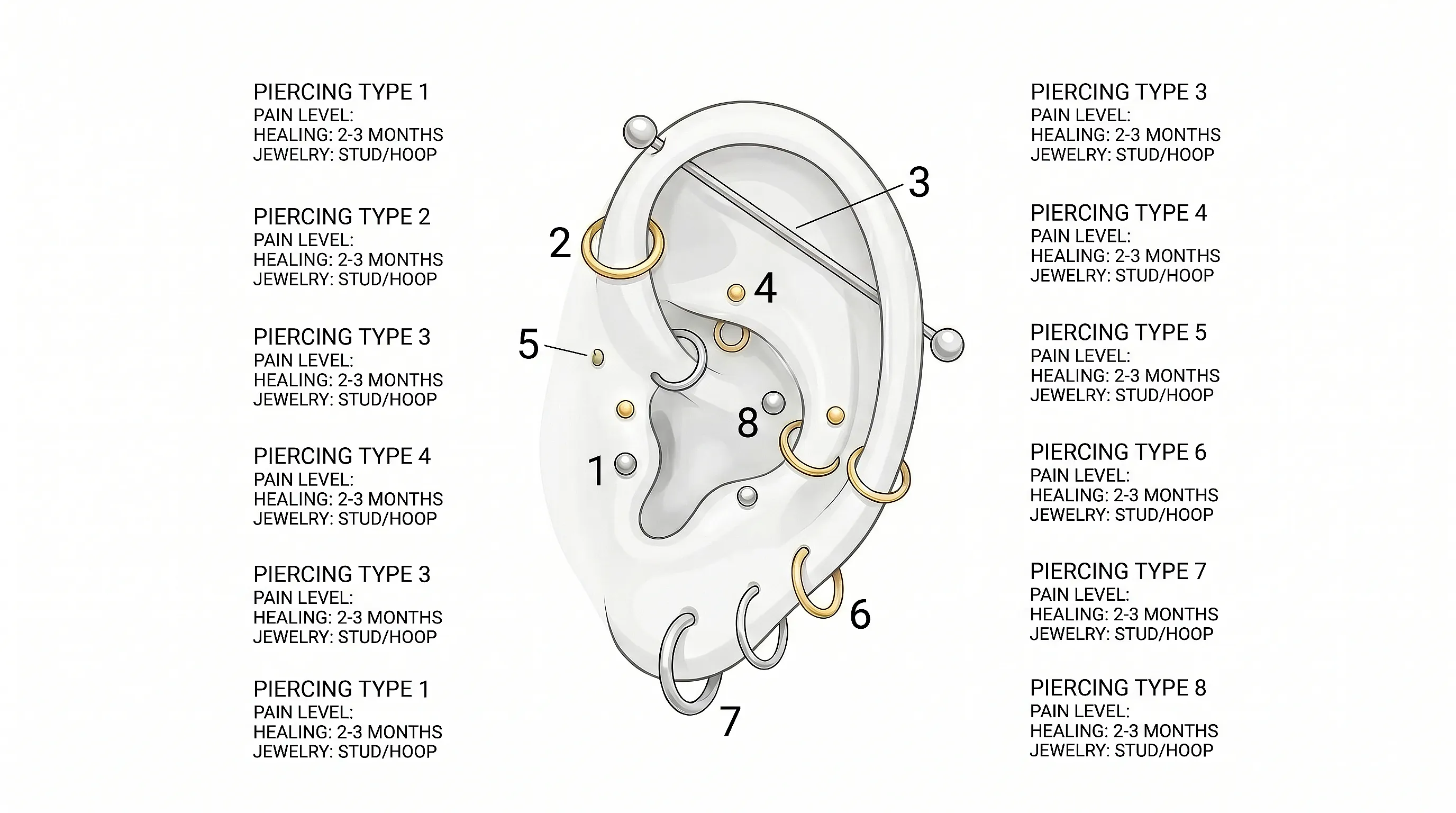
Understanding the structure of the ear makes cuff selection much more straightforward. The ear has more distinct zones than most people realise, and a cuff designed for the helix will not sit well in the concha.
Helix. The outer curved rim of the upper ear. The most popular placement by a wide margin. The helix rim is well-defined and typically neither too thick nor too thin for a standard spring cuff, which is why most cuffs on the market are designed for this position. A helix piercing is among the most requested cartilage piercings, and a cuff here delivers the same visual effect without the process.
Concha. The deep concave bowl of the inner ear. This zone suits larger, more sculptural cuffs. Conch piercings are among the more complex to heal, which makes a no-pierce cuff here especially appealing for those who want the look without the procedure. A conch cuff is partially hidden by the outer ear, which creates an interesting effect: visible from the front, but only from a specific angle.
Tragus. The small cartilage flap in front of the ear canal. A popular piercing location, and also viable for a cuff, but only with a design specifically made for the tragus: the profile needs to be very slim to sit comfortably in this narrow space. A standard helix cuff will be too bulky here.
Antihelix. The inner ridge that runs parallel to the helix, splitting into two forks toward the top of the ear. Less commonly targeted for cuffs than the helix, but usable. A cuff here reads more inward, visible to those looking directly at the ear.
Lobe. The soft lower earlobe. For those without any piercing at all, a lobe-format cuff can give the appearance of an earring without any hole. For those with a single lobe piercing, it adds a virtual second point. This is where the category overlaps most with traditional clip-on earrings.
Antitragus. The small raised ridge opposite the tragus, above the lobe. Specialist territory for cuffs, but dedicated designs exist. This placement creates a lower anchor point that works well in combination with a helix cuff on the same ear.
Scapha. The flat channel between the helix and antihelix. Less defined as a ridge, which means most pinch cuffs will not stay there. Wrap-style cuffs can work in this zone, particularly in artistic or editorial styling.
Knowing these zones matters when you are building a stack. A well-assembled ear has intention: each piece has a reason for being where it is, and the spacing between them is as considered as the pieces themselves.
The five main cuff formats
Wrap cuff
A longer piece that curves along the helix over a substantial arc. The format closest to the ancient originals. A wrap cuff reads as though it belongs to the ear rather than sitting on it: the jewellery follows the natural shape rather than interrupting it. Takes slightly longer to position correctly, but once in place holds very reliably. Designs in serpentine, vine, or branch forms are particularly well-suited to this format because the organic shapes mirror the curve of the helix.
Chain cuff
A cuff at the cartilage connected by a chain to a lobe piece. One accessory reads as two or three. The chain is visible against the ear, creating a layered effect without multiple pieces to manage. Requires at least one lobe piercing for the lower anchor. This format is at its best with the hair up or in a ponytail: the chain and the open neck work together visually in a way that is hard to achieve with any other jewellery combination.
Pinch or spring-clip cuff
The classic format. An open ring with a springy inner wire. You ease it apart slightly, place it on the cartilage, and release. The tension holds it. This is the most common type in both mainstream and independent jewellery, available from the thinnest minimal band through to ornate stone-set designs. The quality of the spring determines how reliably it holds over time: a good spring maintains consistent tension; a poor one softens or warps.
Spiral cuff
A cuff that makes multiple turns around the cartilage. The closest in spirit to the Roman and Hellenistic ear wraps. Creates the impression of several stacked earrings from a single piece. More involved to put on, but produces a strong visual effect. Works particularly well in serpent and botanical designs where the form follows function. Put on one coil at a time, working from one end to the other, and remove in reverse.
Single-line minimal cuff
A thin band or arc with no surface ornamentation. Almost invisible but delivers exactly the right level of detail. The choice for people who want a suggestion of a piercing rather than a declaration. Performs well in professional settings and works as the base layer in a stacked look. This is usually the first ear cuff someone buys: a low-commitment entry point that quickly becomes a daily habit.
Design types
Minimal band
A plain thin ring or strip in silver or gold. Barely there. Works from an early meeting through to an evening out. The most reliably versatile design in the category. It works because it adds just enough without competing with anything else.
Stone-set
A cuff with small pavé or single stones. Mimics the look of a cartilage stud or helix piercing. A strong choice as a standalone piece, and popular for bridal styling where a polished look is needed without a permanent hole. The stones can be cubic zirconia, white topaz, or lab-grown diamonds; at most viewing distances the difference is not visible.
Gothic
Blackened silver, spikes, chains, architectural forms. At home in the alternative studios of Brooklyn or the darker end of the Austin music scene. Oxidised silver holds its character well if kept away from harsh chemicals. In contemporary styling, gothic cuffs often read as architectural rather than subcultural: an interest in form and texture expressed through darkened metal.
Botanical and boho
Leaves, branches, feathers, suspended elements. Dimensional and layered in feel. Associated with the market-stall and festival aesthetic, from the craft vendors at Pike Place in Seattle to the indie jewellery makers at the Brooklyn Flea. A good botanical cuff looks effortless: as if it simply settled there rather than being deliberately placed.
Bridal
Pearl or crystal-set cuffs designed for the wedding day. Elegant, polished, and entirely removable. Many brides choose this format precisely because they want the detail for the day without a permanent change. A pearl ear cuff in particular photographs beautifully and complements both updo and loose hair styles.
Animal forms
Snakes are the classic: the body coils around the helix in a way that suits the anatomy of the cartilage exactly. Dragons, birds, and insects also appear. The design is embedded in the structure of the piece rather than applied as surface decoration. A well-made snake cuff looks like it belongs there, not like it was attached to a backing and clipped on.
Geometric
Clean lines, angles, repeating elements. Squares, triangles, grid patterns. Pairs well with the structured minimalism of contemporary American fashion. A good choice for those who gravitate toward sharp, architectural accessories rather than nature-based motifs.
Customer reviews
Zevira is a real jewellery shop. Genuine payments, deliveries and customer thank-yous.
🥰🥰🥰 gracias

Ok, ¡gracias! 🙂

Styling approaches
Single cuff, one ear
The cleanest option. One cuff on the helix of one ear, the other bare or with a simple lobe piece. The asymmetry reads as deliberate and contemporary rather than unfinished. In current American styling, wearing a single cuff on one side is more common than matching pairs, and it carries a sense of quiet confidence rather than incompleteness.
Cuff plus lobe earring
A cuff at the cartilage paired with a stud or small hoop at the lobe of the same ear. The go-to combination that works across most styles. Keep the metal tone consistent across both pieces: silver cuff with silver studs, gold cuff with gold studs. Mixing metals intentionally is possible in maximalist styling, but it requires a clear reason.
Chain cuff as a complete look
A cuff at the helix connected to a lobe piece by a delicate chain. Visually complex, physically one item. One piece to put on, two points of interest, no coordination required.
Full stack, no piercings
Three to five different cuffs across the same ear at different points. Very editorial and considered. The pieces need to work together in weight and metal tone or the overall effect becomes crowded rather than layered. Each placement should have clear space from the others: helix, antihelix, concha, each occupied by a different piece.
Matched pair
Identical or very similar cuffs in both ears. Works well for minimal or classic dress codes. Symmetrical and unfussy. Easier to shop for, since you only need one design.
Unmatched pair
Different cuffs in each ear. A deliberately contemporary approach that suits maximalist or eclectic styling. Both ears are decorated, but each follows its own logic. The goal is cohesion without uniformity.
Combining with other jewellery
With long hair. The cuff is partly hidden when hair covers the ear. Worth choosing a larger piece that shows through the hair, or wearing the cuff only with the hair up or pulled back behind the ear.
With a ponytail or updo. The ideal combination. The neck and ear are both open, the cuff is fully visible, and a chain cuff in particular reads beautifully against an open neck. This is the styling approach that gets photographed most.
With a short cut. The ear is always visible, so the cuff is on permanent display. Weight and design become more important. A minimal piece reads elegant; a larger sculptural piece reads as a clear personal statement. With a very short cut, the ear cuff can function as the primary jewellery of the look.
With glasses. The arms of the frames typically pass across the helix. A bulky cuff here causes friction and discomfort. Better to choose a slim, low-profile design for the helix, or position a cuff lower on the concha or lobe. Try on both before committing if you wear glasses regularly.
With a necklace. If the necklace is substantial, a minimal cuff keeps the overall look balanced. If the necklace is fine, there is room for a more detailed cuff. For maximalist looks that extend past the neckline, see the dedicated guide to body chains as jewelry, which sit naturally alongside an ear cuff stack on bare skin.
With rings. A stacked ear pairs naturally with stacked rings on the fingers. Same logic: multiple pieces at multiple points, same metal tone holding them together.
With a statement necklace. Bold necklace, minimal cuff. Bold cuff, minimal necklace. The balance is simple and almost always correct.
Upload a photo of your pet, someone you love, or an object. We'll build a 3D model and hand-cast it in pewter.




Materials
Choosing the right material means thinking about durability, skin reaction, and how the piece will hold up to your actual life, not just how it looks in a photo.
Sterling silver 925
The most practical everyday choice. An alloy of 92.5% silver and 7.5% other metals, typically copper. Hypoallergenic for most people. Durable with proper care. Can darken from air and perspiration, but polishes easily. The 925 stamp indicates a quality standard that applies across reputable jewellery production.
Silver has a slightly cool brightness that reads well against most skin tones. Because it is relatively workable as a metal, most handcrafted cuffs are made in silver: the material allows for complex forms without sacrificing structural integrity in the spring.
14ct or 18ct gold
The premium option. 14ct (58.5% gold) is harder and slightly cooler in tone. 18ct (75% gold) is richer in colour and slightly more malleable. Both are hypoallergenic. A gold cuff is a meaningful long-term piece. A simple thin band in solid gold is one of those purchases that remains relevant indefinitely: no trend shelf-life.
Vermeil and thick-layer gold fill
A substantial layer of real gold over a silver base. If the layer is thick enough (from 2.5 microns up), the durability is genuine. The micron thickness is worth checking before buying. Sits between plating and solid gold in both price and longevity.
Surgical steel 316L
Hypoallergenic and highly water-resistant. A practical choice for those who react to silver or copper alloys. Less of a traditional jewellery appearance, but maximally practical. Works well for active lifestyles and situations where the cuff will be exposed to moisture, sweat, or chlorine regularly.
Titanium
The best choice for genuine metal sensitivity. More biocompatible than any common jewellery metal except platinum. Lightweight and very strong. Costs more than steel but justifies the premium for anyone with a documented metal allergy. Titanium can also be anodised in a range of colours, which opens interesting design possibilities beyond the standard metallic tones.
PVD-coated steel
Physical vapour deposition creates a surface that is more durable than standard plating and does not flake. Holds colour (black, rose gold) reliably. Well-suited to active wear. Black PVD in particular is popular for geometric and gothic designs.
Brass with standard plating
The mass-market default. The plating wears off within months to a year under regular use. Fine for occasional pieces, not for daily wear. Useful as a starting point to try a format or design before investing in a quality version.
Raw copper
Oxidizes and leaves a green mark on skin. For decorative purposes only, not for extended wear against the body.
How to put one on
Putting on an ear cuff is a skill. The first time takes a few minutes. After that, it becomes a matter of seconds.
Spring-clip cuff (the most common):
- Hold the cuff with both hands and ease the ends slightly apart. Do not force it open more than necessary. Repeated over-bending weakens the spring.
- Position it on the cartilage at the point you want. Helix is the usual target: the upper outer rim.
- Ease the ends back together gently until it grips. Leave a small amount of clearance rather than clamping tight.
- Give it a light tug to confirm it is secure without being uncomfortable.
- Too much pressure: ease apart slightly. Slipping: ease together slightly. Find the balance for your specific cartilage thickness.
Wrap-around:
- Begin at one end. Position it behind the ear.
- Work the piece gradually around the cartilage, following the curve.
- Settle the decorative face to the front.
- The end of the piece should press flat against the back of the cartilage.
Spiral:
- Start from the topmost or bottom coil.
- Work each turn onto the cartilage in sequence, without rushing.
- Confirm each coil sits evenly before moving to the next.
- Remove in reverse order, starting from the first coil.
Magnetic:
- Place one half against the front of the cartilage and the other behind.
- The magnets will close themselves.
- Confirm the piece is not clamping too hard on the tissue.
- Magnetic cuffs are not recommended for anyone with a pacemaker or other electronic implant.
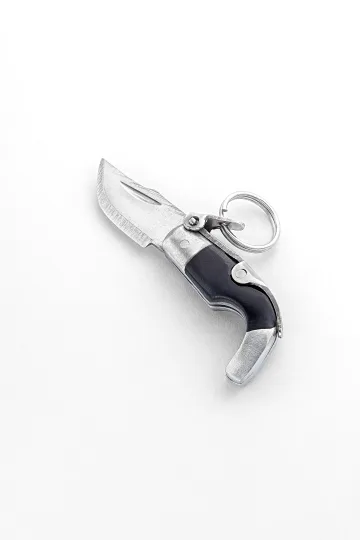
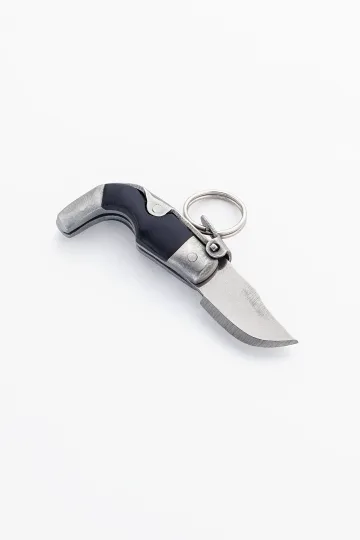
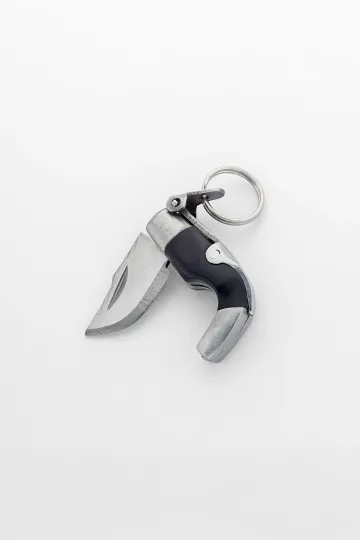
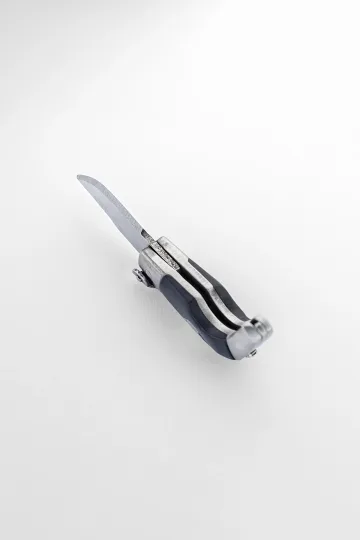
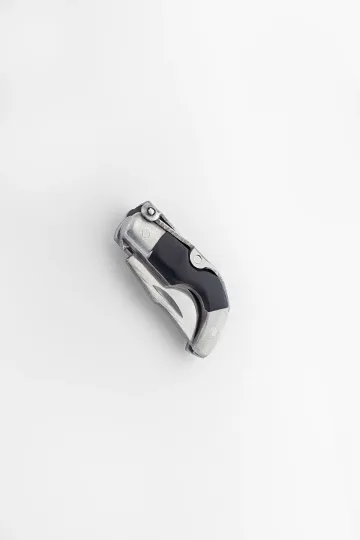
CAPAORA mini knife pendant
The 18th-century Spanish navaja in miniature: 40 mm of stainless steel, a real folding mechanism and a Palanquilla lock that clicks. An affordable gift to remember.
Authentic · Ships from Spain · 14-day returns
Care and wear
A cuff requires no healing time. You wear it, you remove it, no consequences. That said:
Initial pressure. The cartilage may notice the cuff during the first hour or so of wearing. This is normal. If it is sharp or causes a burning sensation, remove, ease the spring, and try again. Discomfort that persists is a fit issue, not something to push through.
Sleeping. Many people find sleeping in a cuff uncomfortable. Magnetic cuffs are particularly likely to come loose overnight. Spring cuffs can get pressed against the ear in ways that cause discomfort. Removing before sleep is better for the ear and for the piece.
Sport and exercise. Spring-clip designs hold well through most activity. Magnetic cuffs may shift with vigorous movement. Sweat accelerates oxidation of silver, so rinsing and drying a silver cuff after exercise extends its finish.
Water and swimming. Silver and gold hold up to water well. Chlorine in pool water damages plated finishes over time. Vermeil and PVD-coated pieces should come off before a swim. Ocean water is less aggressive than chlorinated water, but rinsing with fresh water after saltwater exposure is good practice.
Storage. Store in a soft pouch or small box away from other pieces. Silver can be polished with a jewellery cloth when it darkens. For more significant tarnish, a brief soak in warm water with mild soap followed by a soft cloth works well. Do not apply perfume or cream directly onto any cuff, and remove before applying sunscreen.
Long-term silver care. The spring of a pinch cuff can be weakened by repeated over-bending. Bend only as much as necessary when putting it on or taking it off. Store separately from harder metals that could scratch the surface. A silver polishing cloth removes tarnish without abrasion. For cuffs with detailed surface work, a very soft brush with mild soap is more effective than rubbing with cloth.
Silver, gold, symbolic pieces and paired sets.
Who is it for?
Anyone without piercings. The obvious starting point: you can wear a full ear stack with zero holes.
Those who want flexibility. Ear cuffs come off. They go on. You can change the look for the morning meeting and the evening dinner. Piercings cannot do that.
People in professional environments with strict dress codes. Remove before work, put back on after. A helix piercing, once made, is there permanently. A cuff is there when you choose.
Athletes and anyone in uniform. Same logic: on for the weekend, off for training. A cartilage piercing during contact sports is a potential injury point. A cuff is simply removable.
Those with metal sensitivities. If the metals used in standard piercing jewellery cause reactions, a sterling silver, gold, or titanium cuff avoids the issue. The shorter contact time compared to a permanent piercing piece also reduces exposure.
People who want to trial a piercing placement. Wear a cuff at the helix for a few weeks. If you still want it there after a month, the decision to pierce is much more informed. If you stop thinking about it, you saved yourself the procedure.
Those who change their aesthetic frequently. No commitment. A different cuff next week is not a problem. Different style next season, same ears, no regrets.
Anyone prone to difficult healing. Keloid scarring, slow tissue regeneration, or a history of piercing rejection: a cuff delivers the visual without the risk.
People during pregnancy or nursing. The body responds differently to tissue damage during pregnancy. Healing timelines can be unpredictable. A cuff removes that variable entirely.
Ear cuffs as a gift
An ear cuff solves the central problem of jewellery gifts: size. A ring requires knowing someone's ring size. A bracelet requires a wrist measurement. Earrings for pierced ears require knowing which piercings someone has. A helix ear cuff fits virtually any adult ear: it adjusts by tension, and cartilage thickness is broadly consistent across the population. This makes it one of the few jewellery purchases you can make for someone else with genuine confidence.
Who to give one to:
A friend who wears jewellery but has not added new piercings in years. She may have been looking at stacked ear looks without wanting to commit to a procedure. A cuff gives her the entry point.
A mother or sister who only has lobe piercings. A helix cuff adds a new dimension without requiring anything from her.
A bride before a wedding. A pearl or delicate silver design adds understated detail to photos without a permanent change.
A teenager whose parents have said no to piercings. An honest middle ground that satisfies both parties.
A colleague or someone with a conservative style. A minimal thin band in gold or silver works in any context.
What to choose:
One rule above all: one metal. Give either silver or gold. Vermeil only if you know the person wears it. Neutral metals (silver, white gold) tend to be more universally wearable.
Second rule: scale. For a first cuff and for someone whose taste you do not know well, go minimal. A thin band or a small stone-set piece works for most people. Bold designs, serpent forms, or architectural pieces are for someone whose aesthetic you understand directly.
Third rule: presentation. A cuff in a good box or pouch reads as a considered gift. The same cuff in a plastic bag does not.
On budget:
A mass-market brass cuff costs roughly what a coffee costs. A quality handmade sterling silver piece costs roughly what a restaurant meal costs. A solid gold piece costs more. For a gift, one good piece is always better than several cheap ones.
Leave your email, we'll send your discount code. No spam, unsubscribe anytime.
The code arrives by email, valid on your first order.
Building an ear stack from scratch
The idea of "building an ear" intimidates many people. It seems to require expertise, rules, and precise knowledge of what works with what. In practice, it is more straightforward than it looks.
Step one: one piece.
Start with a single cuff on the helix of one ear. A minimal band or simple ring. Wear it for a week. Decide whether you like having something on the upper ear. If you do, move forward.
Step two: add an anchor.
If you have a lobe piercing, add a stud or small hoop there in the same metal as the cuff. Two elements: top and bottom. It already reads as a stack.
Step three: decide on symmetry.
Do you want to replicate it on the other ear? Asymmetry is a choice, not incompleteness. Many people stop at one decorated ear. Others mirror it. Try a week each way and see what feels like you.
Step four: add gradually.
If you want more: a second cuff at the antihelix, or a chain cuff that replaces both the helix cuff and lobe piece. Add one thing at a time. This lets you evaluate each new element on its own terms.
Rules for a stack that works:
One metal (or a deliberate mix, if that is your aesthetic). Varied scales: something small, something medium, something that commands attention. Different levels: helix, antihelix, concha, lobe each occupying distinct space. Empty space is not failure: not every point needs an occupant.
When a stack does not work:
When every piece is the same size and at the same level. When metals are mixed accidentally rather than intentionally. When the pieces are heavy enough to pull the ear or create visible discomfort. When the look reads as quantity rather than composition.
Looking after a growing collection
Once you own more than two cuffs, storage stops being an afterthought. Most of the damage that ear cuffs suffer happens in a dish on the bedside table rather than on the ear.
Storage. The ideal is a compartmented box or a tray with individual slots, one cuff per slot, nothing touching anything else. Failing that, use a separate soft pouch for each piece. Silver and gold in particular should never share a compartment: the two metals differ in hardness, and the harder one will leave fine scratches on the softer one within weeks of rattling around together. Stone-set cuffs deserve their own pouch regardless, because an exposed prong will scuff a plain band very efficiently.
Anti-tarnish strips. A small anti-tarnish tab dropped into each silver pouch absorbs the airborne sulphur compounds that cause silver to darken. They cost very little, last several months, and make a noticeable difference if you live in a city, near a coast, or anywhere with heavy traffic. They are especially worth it for pieces you wear seasonally rather than weekly, since silver tarnishes fastest when it sits still.
A cleaning rhythm. Once a month, or whenever the shine starts to dull, a few passes with an impregnated polishing cloth is enough for plain silver. Once a quarter, a proper wash: warm water with a drop of mild washing-up liquid, a soft brush worked gently into the detail, a rinse, then flat on a towel until completely dry. Moisture trapped in a hinge or under a stone is what starts corrosion, so drying properly matters more than the wash itself.
Ultrasonic cleaners suit plain silver and gold forms well. They are the wrong tool for anything organic or porous set into a cuff. Pearl, opal, turquoise, amber and coral all react badly, and emeralds are commonly oil-treated in a way ultrasonic agitation strips out. If a cuff carries any of those, stick to the cloth and the soft brush.
Water in Britain. Much of southern and eastern England sits on chalk and limestone, which makes the tap water hard. Rinsing silver in hard water and leaving it to air dry deposits a faint mineral film that reads as cloudiness rather than tarnish, and polishing harder will not shift it. A final rinse in filtered or distilled water, then a towel dry, avoids the problem entirely.
Pieces coming out of storage. If a cuff has been out of rotation for a few months, clean it before you wear it again even if it looks fine. Surface tarnish that built up in the drawer is soft and transfers readily, and the first warm day will leave a grey smudge on the cartilage. Two minutes with a cloth prevents it.
Individual anatomy: why the same cuff fits differently
Part of the appeal of this category is that it suits everybody. That is true, but it does not mean it suits everybody in the same way. Ears vary more than most people expect, and the variation is exactly what decides whether a given cuff feels invisible or annoying by lunchtime.
Cartilage thickness. The helix rim can be thin and almost blade-like or dense and pronounced, and the difference between the two extremes is easily double. A cuff sprung for thin cartilage will not open far enough for a thick rim, or will grip it hard enough to ache. A cuff sprung for thick cartilage sits loose on a thin one and works its way off during the day. Neither is a fault in the piece.
The practical consequence: when buying online, read the gap measurement if the seller provides one, and choose an adjustable design if they do not. If you already own a cuff that fits well, measure its opening and use that as your reference for everything after.
The curve of the helix. Some helix rims are strongly rolled and stand well clear of the head. Others are shallow, almost flush. Wrap cuffs need something to wrap around and perform much better on a pronounced rim. On a shallow helix a pinch or spring-clip design is far more reliable, because it grips across the thickness rather than relying on the curve.
Depth of the concha. The bowl of the ear varies from shallow to deep. The same conch cuff can sit proud and fully visible on one person and disappear into the folds on another. Neither result is wrong, but it is worth knowing before you buy a piece specifically for that position, because a deep concha hides detail and rewards bolder, simpler shapes.
The antitragus. This small ridge opposite the tragus is prominent on some ears and barely present on others. Cuffs made specifically for the antitragus need a definite ridge to hook behind. If yours is shallow, that style will keep migrating, and the sensible move is to place the piece at the antihelix instead.
Ears change over a lifetime. A child's ear is small and the cartilage soft, which is why cuffs rarely hold well before about eight to ten. In adulthood the cartilage firms up and stays stable for decades. Later in life it tends to stiffen slightly and the lobe lengthens a little, which affects tension preference more than fit: many older wearers find they want a fraction less grip than they did at thirty. Adjusting the spring by a hair solves it.
Myths and misconceptions
A few claims about ear cuffs have proved unusually durable. All of them are worth answering directly.
"They fall off constantly." Only the wrong ones do. A cuff matched to your cartilage thickness, with a spring that has not been softened by cheap metal, holds through a full day including a commute and a coat going on and off. Regular slipping is a sizing problem or a quality problem, not a property of the format. If the piece you own keeps escaping, the fix is usually a careful fraction of a millimetre closed with the fingers rather than a replacement.
"They are for the young." No. This is one of the least age-coded pieces of jewellery in circulation. A plain gold band on the helix reads exactly as considered at twenty-five as at sixty-five, and if anything it suits an older wearer better, because the whole appeal rests on restraint rather than novelty. What varies with taste is the style, not the category: bohemian and gothic designs read younger, a single fine band does not read at any age in particular.
"They are a substitute for real earrings." They are a category in their own right, and the buying data supports it: people with several piercings per ear buy cuffs at least as often as people with none. The cuff occupies the upper cartilage, where a piercing is the slowest to heal and the most prone to trouble, and it does so without the six to twelve months of aftercare a helix piercing demands. That is a different proposition, not a lesser one.
"They all come from the same factory anyway." A great many do, and that is worth knowing. But the gap between a mass-produced plated brass cuff and a properly made silver one is the same gap as between a plastic-cored belt and a full-grain leather one. Both are belts. The comparison ends there. Spring calibration, edge finishing and metal specification are all things you can feel within an hour of wearing.
"Silver ones turn your ear green." Sterling silver does not. Copper does, and so do the copper-heavy alloys often sold under vague names like "silver-tone". If a cuff has left a green mark, it was not sterling, and the description that sold it to you was doing some work.
Send a friend a discount code, they save on their first order.
Frequently asked questions
Does it hurt?
There may be mild pressure during the first hour or so of wearing. It should not be painful. If it is sharp or causes burning, remove it, ease the spring a fraction, and try again.
Can it fall off?
A properly fitted cuff, sized correctly for your cartilage thickness, should hold reliably. One that is too loose will slip. Buy from a seller who offers sizing guidance or some form of adjustable tension.
Can men wear them?
Absolutely. Minimal plain bands and bolder geometric or gothic forms both work well. The category is not gendered.
On which ear?
Either. There is no traditional rule. Asymmetry (one ear only) is currently more common than matching pairs.
What about children?
Better suited from around age eight to ten, when the ear has grown enough for a cuff to fit securely and comfortably.
Can I wear one alongside my existing earrings?
Yes, and that is the most popular combination: a cuff at the upper cartilage, a stud or hoop at the lobe below. Keep the metal tone consistent across both.
Can I sleep in one?
You can, but many people find it uncomfortable. Removing it overnight tends to be more comfortable for the ear and better for the piece itself.
Can I wear one swimming?
Spring-clip cuffs should hold, but chlorinated water will gradually dull a plated finish. Magnetic cuffs are better kept away from the pool entirely.
What is the difference between a cuff and a clip-on?
Clip-ons attach to the lobe with a pressure clasp. Cuffs grip the cartilage by tension or wrapping. The terms overlap informally, but they describe different placements.
Can a cuff leave a mark on the skin?
Silver, gold, steel, and titanium do not mark the skin. Copper and low-quality alloys with a high copper content can leave a green mark on prolonged contact.
How do I know if it fits correctly?
It holds without pain, does not shift when you move your head gently, and does not cut into the cartilage. A slight awareness of its presence is normal. Pain is not.
How do I keep it from tarnishing?
Store separately from other jewellery. Keep away from perfume and lotion. Polish with a jewellery cloth when silver darkens. For intricate designs, a very soft brush with a small amount of mild soap handles the detailed areas that a cloth cannot reach.
What should a good cuff cost?
In segments rather than figures. A plated brass cuff from a high street accessories chain sits at about the level of a couple of coffees, and it will behave accordingly: the plating goes first, usually within a season of regular wear. Steel or a decently plated mid-market piece lands somewhere around a casual lunch out. Sterling silver from a small workshop starts around the price of a good dinner and rises with the complexity of the work and any stones. Solid gold is a different tier again, priced against the metal itself. The useful way to think about it is cost per year of wear rather than cost at the till, since the cheapest option is the one you replace most often.
Which metal is best for a first cuff?
Sterling silver 925. It is affordable enough to buy without much deliberation, attractive enough to wear every day, and durable enough to survive years with only occasional polishing. It also tells you something: if silver suits your colouring and your wardrobe, you will know within a fortnight, and if it does not you have lost very little. If you already know you react to silver alloys, or you have had trouble with costume jewellery in the past, go straight to surgical steel 316L or titanium, both of which are effectively inert and comply comfortably with the nickel release limits set out under the EU REACH regulation, which UK sellers largely continue to follow.
Do ear cuffs suit older wearers?
Entirely, and the assumption that they do not says more about marketing photography than about the piece. There is no age limit anywhere in the format. A fine gold band on the helix is elegant at any point in life, and cuffs solve a genuine problem for wearers whose lobe piercings have stretched or thinned over the decades: the weight sits on firm cartilage instead of soft tissue. The only adjustment worth making is tension, since cartilage stiffens a little with age and a slightly looser spring is more comfortable.
Are there specific men's designs?
There is no men's and women's division in this category, and no manufacturer treats it as one. The designs that tend to be bought by men are plain narrow bands, geometric forms, blackened silver and serpent motifs, all of which are equally popular with everybody else. Some men prefer a slightly heavier gauge and a firmer spring, partly for the look and partly because a thicker cartilage rim needs it. That is a question of build, not of gender.
How many can I wear at once?
Technically as many as there are positions on the ear, which is around six. Practically, three to five in one ear is where the eye stops reading individual pieces and starts seeing a mass of metal. Most people settle at two or three. One or two is the everyday norm and the version that survives a full working day comfortably. A five-piece ear is a photographed look for an occasion, and there is nothing wrong with that as long as you know which one you are building.
Seasonal and occasion styling
The same handful of cuffs can read very differently depending on where they are going. Adjusting the register is mostly a matter of how much you add and how much of the ear you leave visible.
The everyday minimum. One fine band on the helix, one stud in the lobe. This works in an office, on the school run, and at a supper with friends without any adjustment. The aim is presence rather than attention: somebody notices the ear on the second look, not the first.
Evenings and events. Add one element and no more. A chain cuff instead of the plain band, or a second stone-set piece at the antihelix. The ear does far more work when the neck is bare, so hair up is doing half the styling. If the hair stays down, the whole exercise is wasted.
Festivals and the outdoors. Bigger wrap cuffs and bohemian pieces with small drops earn their place here, where the look is meant to be seen at a distance. Avoid magnetic designs entirely: they are the first thing to go in a crowd or on a bicycle. Spring-clip and wrap constructions hold through dancing, walking and a British summer's worth of weather.
A formal or corporate setting. A fine gold band, one ear, nothing that swings or throws light. In a boardroom or on a video call, a helix cuff reads as attention to detail rather than as a statement, which is exactly what you want. Anything with movement pulls focus every time you turn your head, and on camera that is very obvious.
Weddings. A pearl or a soft brushed silver cuff with the hair up is among the most photographed jewellery combinations of recent years, and for good reason: pearl throws a gentle light that flatters skin in daylight and does not blow out under a photographer's flash. It works for the bride and equally for a guest who wants presence without competing.
Summer and open necklines. When the shoulders and collarbones are bare, the ear enters into a conversation with the rest of the upper body rather than sitting on its own. A chain cuff running from cartilage to lobe reads completely differently above a bare shoulder than it does above a polo neck. This is the season the format was made for.
Winter layering. Scarves, high collars and hats are the enemy of the wrap cuff, which snags. In colder months a flat, low-profile band or a pinch cuff close to the rim survives contact with wool much better, and anything that hooks outward is best saved for indoors.
What to look for when buying
Most people look at a photo and a price. That is not enough. Here is what else matters when selecting a quality ear cuff.
Spring quality. The most important structural factor. A good spring maintains consistent tension over months and years of regular use. A weak spring softens after a few weeks. When evaluating a cuff in person, press the ends gently together: it should spring back with a clean, even resistance. Online, read reviews for comments on how well it holds after extended wear.
Metal thickness. Very thin construction means faster wear on the spring and on any surface detail. A minimal band should feel substantial in the hand relative to its size, not flimsy. An ornate wrap cuff should feel balanced, not fragile.
Edge finishing. Examine the ends and edges. Rough, sharp edges on the inner surface will mark the cartilage over time. A well-finished cuff has slightly rounded, smooth edges that sit flush against the ear. This matters especially for wrap cuffs that contact a longer section of cartilage.
Stone setting (if applicable). Stones should be seated without protruding prongs that catch on clothing or hair. Pavé settings should be fully occupied: empty bezels or loose stones are a sign of lower-quality setting work. The stones themselves should sit level, not angled.
Size information. A quality seller provides the inner diameter of the cuff or the gap measurement between the ends in open position. This allows you to match the cuff to your specific cartilage. Without sizing information, you are guessing. For online purchases particularly, this data point is essential.
Metal specification. "Silver-toned" and "sterling silver 925" are different things. "Gold-coloured" and "14ct solid gold" are different things. A reliable seller specifies the exact metal composition. Vague descriptions like "alloy" or "metal" without further detail are a warning sign.
Wear reviews, not appearance reviews. Jewellery photographs always look good. Look specifically for reviews that mention how securely it holds, whether it causes discomfort, and how it looks after several months of wear. These are the reviews that reveal actual quality.
Handmade versus mass production. A handcrafted cuff from an independent maker will cost more than a mass-produced one, but the construction is typically more considered: spring tension calibrated by hand, edges properly finished, weight balanced. When quality matters, the extra cost reflects real differences in how long the piece will hold up and how well it will sit on the ear.
An honest look at the market
The ear cuff market is enormous and the quality spread across it is extremely wide. Knowing which kind of seller you are dealing with tells you most of what you need before you read a single product description.
High street accessories chains. Plated brass and zinc alloy, sold at pocket-money level, designed to be current rather than durable. They serve a real purpose: this is the cheapest possible way to find out whether you like a wrap cuff before committing to one in silver. What you should not expect is longevity. The plating on these pieces is measured in fractions of a micron and wears through at the contact point on the cartilage first, usually within a few months of regular use.
Marketplace aggregators. A very large share of listings across the big platforms are the same items from the same factories, relabelled under dozens of brand names. That is not automatically bad, but it does mean the brand adds nothing to the object. When buying from these listings, ignore the studio photography entirely, read the customer photos, and treat any description that will not name the metal as a description of plated brass.
Independent workshops. Where a maker finishes each piece and puts a name to it, the level of care is different in ways you can feel. Spring tension is set by hand rather than stamped to an average, edges are filed and polished, and weight is balanced against the size of the piece. These cost more. For anybody planning to wear a cuff daily for years, they are usually the only sensible choice, and the arithmetic works out in their favour surprisingly quickly.
Established jewellery brands with their own production. The middle of the market, and often the best ratio of quality to outlay. Look for the ones that state the metal composition precisely, publish sizing information, and have a body of reviews describing wear after six months rather than delight on the day of delivery.
British hallmarking as a shortcut. In the UK, silver and gold articles over the relevant weight thresholds must be assayed and hallmarked before they can legally be described as such, at one of the four remaining assay offices in London, Birmingham, Sheffield and Edinburgh. Many ear cuffs fall under the exemption weight, so the absence of a mark proves nothing on its own. Its presence, however, proves a great deal: a struck fineness mark means an independent laboratory tested the metal. If you can see one in the listing photographs, one whole category of doubt disappears.
What not to be taken in by. Photography lit to disguise the true colour of the metal. Descriptions that reach for "high-quality alloy" rather than naming anything. No returns policy, or one that requires the item to be unopened. A wide gulf between the studio images and the customer images. Reviews that all appeared in the same fortnight.
The test is simple. If a seller cannot tell you exactly what the piece is made of, buy elsewhere. Anybody making something properly is glad to say what it is.
Buying it as a gift? Each one arrives ready to give.
 A branded Zevira box and a little card come with every order.










Conclusion
An ear cuff is one of the most straightforward ways to add considered detail to a jewellery look. No appointment, no healing period, no long-term commitment. If the stacked ear aesthetic is something you have been drawn to without wanting the permanence of piercing, this is the category to explore.
Start with one plain band on the helix. Wear it for a week. If it fits your style, add to it from there.
About Zevira
Zevira makes jewellery in the artisan tradition of Albacete, Spain. Ear cuffs are a growing part of the collection, developed for people who want the layered look without new piercings.
In the range:
- Minimal helix bands in silver and gold
- Double and triple cuffs that read as multiple pieces
- Chain cuffs connecting cartilage to lobe
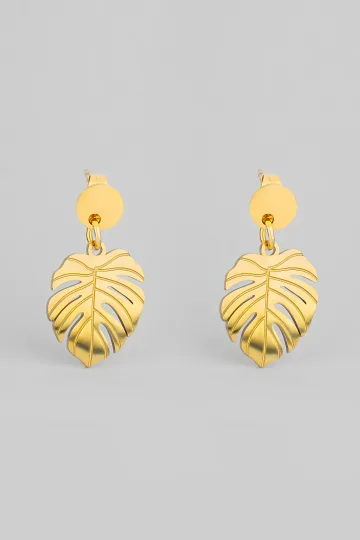
- Cuffs with small symbolic details: a star, a crescent, a leaf
- Matched sets of cuff and stud in the same design
Every piece is handmade. Personal engraving is available. The metals are sterling silver 925 and solid 14ct to 18ct gold.