Types of necklaces: choker, riviere, lariat, bib, and how to choose the length
Why one piece around the neck has so many names
The same piece in a case may be called a necklace, a choker, a riviere, or a strand, and the difference is not the seller's whim. Behind each name is a construction, and it decides which neckline, occasion, and neck a piece suits, long before you look at the stone.
The confusion grows because "necklace," "strand," and "beads" are mixed in speech, though they mean different things. On top of that lies a second naming system, by length: collar, choker, princess, matinee, opera, rope. Learn both, and you stop buying blind and start choosing a piece for a job.
Below we work through it in order: first how a focal necklace differs from a uniform strand and from beads, then the types by length from shortest to longest, then the types by construction and style, and finally how to choose your own by neck, neckline, and occasion.
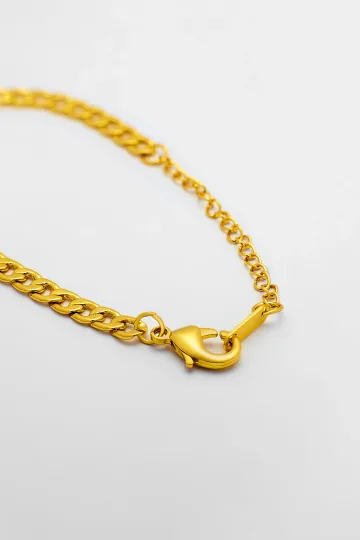
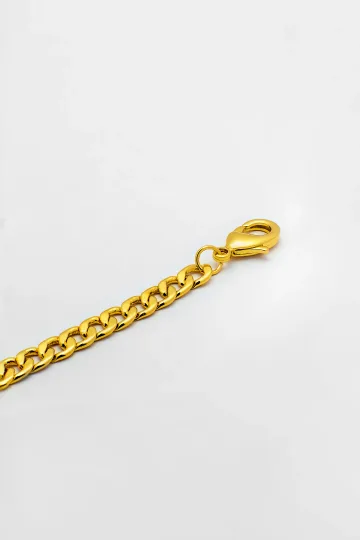
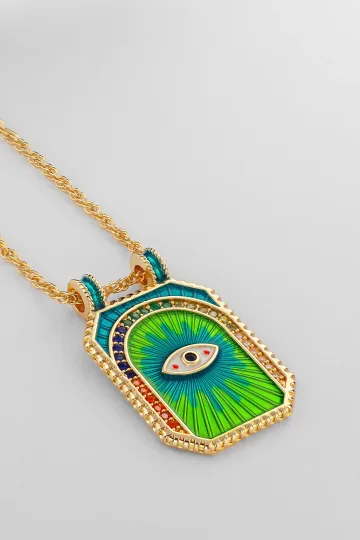
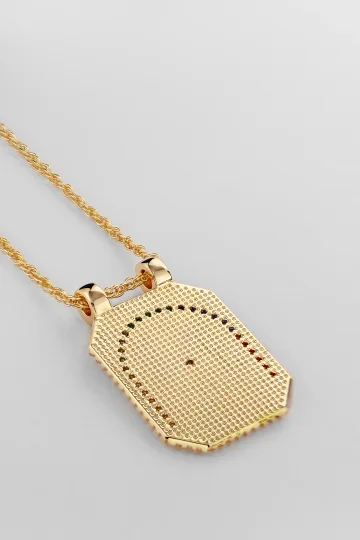
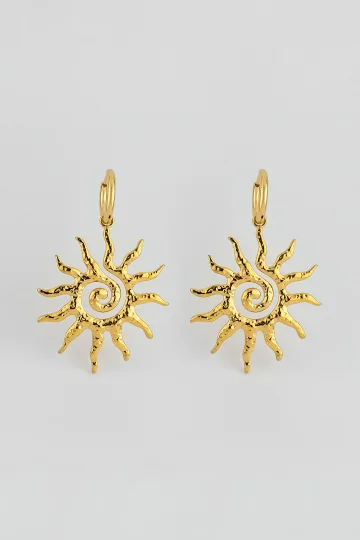
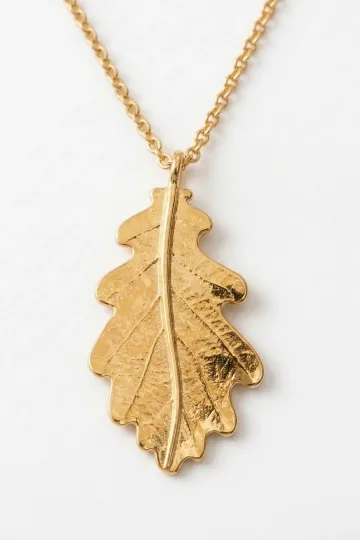
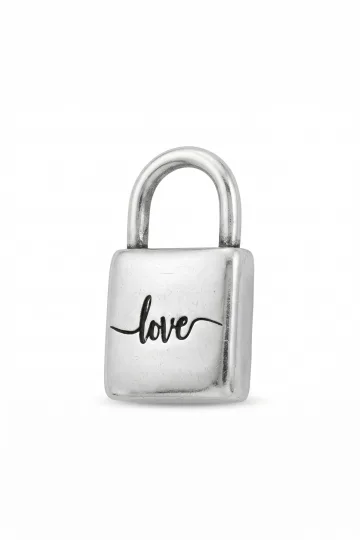
Wear the symbol, don't just read about it. These are in stock:





Focal necklace, uniform strand, and beads
Three words that seem like synonyms in fact name three different things. The difference is not price but how the accent is built.
A focal necklace: an accent at the centre
A focal necklace has a pronounced centre: a large stone in a setting, a pendant, an elaborate composition of links to which the whole line converges. The word "necklace" is the umbrella, but the point is this: a focal piece has a main spot, usually front and centre, and everything else works toward it. That is why such a necklace reads as a formal, evening thing even when it is modest: the centre gives it an axis and a status.
A uniform strand: an even line
A uniform strand, unlike a focal necklace, distributes its decoration evenly along the whole length: identical beads, links, or stones with no single main one. It is calmer than a focal piece and so more versatile: easier to wear every day, it argues less with clothes, and unlike a bold focal necklace it exists comfortably in a men's version too. A riviere of matched stones is a classic uniform strand, not a focal piece, though the two are often confused.
Beads: a threaded line
Beads are the simplest form: elements threaded on a cord or line, without a metal base and often without a clasp. A pearl strand, wooden or stone beads, a long beaded sautoir, all belong to the bead family. They differ from a strand by their softness and by holding shape through the tension of the thread rather than a rigid frame. In everyday speech "beads" names anything long and threaded, and it is the one word of the three that barely claims formality.
Length first, stone later. A bare neck wants something short at the throat, a closed collar something long over it, and never hang the middle length on the neckline's edge. And don't argue.
The stylist's take: choosing your necklace
When there are so many types and lengths, it is easier to hear once how someone who fits necklaces every day thinks it through. Below is a short take from the Zevira stylist: where he starts, when he recommends one strand and when layering, and what to keep in mind before buying.
Where do you start when someone has no idea which necklace they need?
I ask not about the stone but about the length and the neckline. A bare neck and a deep neckline, I choose short: a choker, a collar, a princess. A closed high top, I run something long over it: a matinee, an opera, a sautoir. Then I decide whether a centre accent is needed. If yes, a necklace with a pendant; if no, an even strand or a riviere. The stone is the last thing, not the first.
One strand or layering?
I look at character and occasion. For those who love precision and one clear piece, I build the look around a single princess with a pendant and add nothing else to the neck. For those who love to play, I recommend layering or several strands of different length. One rule I hold firm: a bib and a large necklace are worn alone, a set around them turns to mush.
Your main advice before buying?
Measure the length on your own neck and under the neckline you will wear it with, not from a picture. The same length sits completely differently on a different neck and under a different neckline, and you see it only in person. What is beautiful in the case easily turns out the wrong length on you.

Turn on your camera, pick earrings, a pendant or a ring, and see the piece on yourself in real time.
Switch items in one tap.
Everything runs in your browser: no photo or video is ever uploaded.
Types of necklace by length
Length is the main naming system for pieces around the neck, and it is length that first decides where a piece sits and which neckline it works with. Below are six classic lengths from shortest to longest. A detailed breakdown of pearl-strand lengths with measurements is collected in a separate guide to necklace length; here the logic matters: each length is its own character and occasion.
Collar: 12-13 inches
A collar is the shortest piece, hugging the base of the neck tightly like a shirt collar, and the name comes from just that. It is usually several rows or a wide rigid band sitting high, at the very throat. A collar is formal and noticeable, loves bare shoulders and necklines with no competition at the neck, while on a short neck it shortens it further, which is worth keeping in mind. Historically a collar was a mark of status: a wide collar of stones was for the few, and that formal memory lives in it still.
Choker: 14-16 inches
A choker is slightly longer than a collar and sits at the base of the neck, snug but not tight. It is the most recognisable short format of recent years: from a thin velvet band to a chain with a small pendant. A choker underlines the line of the neck and collarbones and flatters a long neck, to which it adds an accent. On a short neck take a narrow version and leave a little air. A choker and a necklace along the throat are not worn together: two lines at the throat merge into one.
Princess: 17-19 inches
Princess is the most universal length, sitting just below the base of the neck, at the collarbones. It is the length most often meant by a "default necklace": it suits almost anyone, works with most necklines, and is equally at home in the office and out. A pendant on a princess chain is a classic that is hard to spoil, so start here if in doubt. A princess also has the advantage that a pendant on it falls on open skin rather than hiding behind a collar, which is why this length is most often chosen for personal and symbolic pendants you want to see.
Matinee: 20-24 inches
A matinee drops to the chest, between the collarbones and the bust, and reads a touch dressier than a princess. The name comes from the French matinée, a daytime outing: it is a length for a business and half-day look, good over a turtleneck, a closed blouse, a thin sweater. A matinee draws a soft vertical and so lengthens the figure without going to a frankly evening length. It is the most underrated of the lengths, bolder than a princess but calmer than an opera, and it closes the gap between everyday and evening where the short already gets lost on a closed top and the long is still excessive.
Opera: 28-36 inches
An opera falls below the bust and opens two scenarios at once. In one row it is an expressive evening length that loves a closed top and high necklines, where it has something to rest on. Doubled, an opera turns into a double choker or a short multi-strand. That double life made the opera the favourite length of those who want several looks from one strand. Historically the opera was made for opera outings over closed evening gowns with a high neck, where a short strand simply did not read, and that purpose is still heard in its name.
Rope and sautoir: from 40 inches
A rope is the longest strand, over a metre, falling freely down the body. It is worn in one long row, knotted, wrapped several times, or folded into a multi-strand. The rope's closest relative is the sautoir, a long necklace with a pendant or tassel at the end that flourished in the 1920s. Both forms are about the vertical and the theatrical and want a simple top on which such a length reads. The rope's chief charm is its versatility: the same strand gives a short choker in three wraps, a long vertical in one row, or a knot at the chest, so it is what you take when you want the most looks from one piece.
Customer reviews
Zevira is a real jewellery shop. Genuine payments, deliveries and customer thank-yous.
🥰🥰🥰 gracias

Ok, ¡gracias! 🙂

Types of necklace by construction and style
Besides length, a necklace is also named by how it is built: what carries the accent, whether the line is closed, how the stones are spread. These names do not argue with length but add to it: a choker can be a station piece, an opera a riviere.
Pendant necklace
The most common type: a chain or strand with one suspended element at the centre. A pendant makes the accent a single point and so is versatile, and it is the most personal of the types, since a pendant easily becomes a name or a symbolic sign. Meaning and weight shift with size: a tiny pendant is a quiet everyday mark, a large one already an evening accent. How a pendant sits depends heavily on the chain weave, and the weaves are covered in a separate guide to chains. One subtlety is the balance of pendant and chain: a heavy pendant on too thin a chain wears it through at the contact point and turns edge-on, so the pendant's weight and the chain's density are matched as a pair.
Riviere: a river of stones
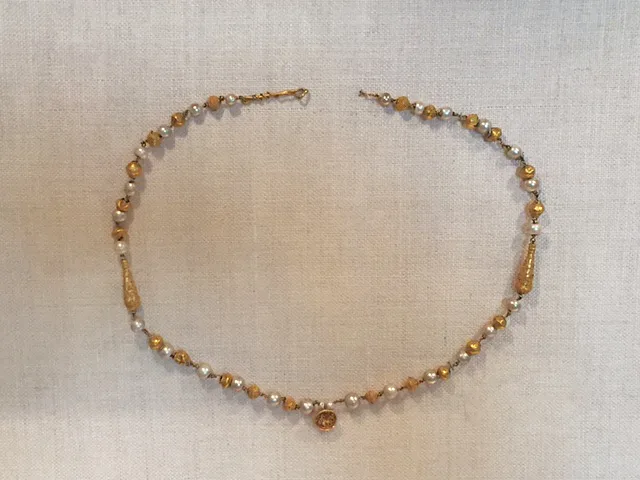
A riviere is a strand of a row of matched or gently graduated stones running in a continuous line. The French riviere means "river," and the name catches it exactly: the stones flow around the neck in one shining stream with no accent. The riviere was born in the eighteenth century for open décolletage and remains the benchmark of restrained luxury. Strictly, a riviere is a uniform strand, not a focal necklace, because it has no singled-out centre. Its strength is that very evenness: with no main point, a riviere is calm and timeless.
Lariat: an open line
A lariat is a long necklace with no clasp, whose ends do not join but hang free, often with tassels or pendants. The openness is its essence: a lariat is knotted, threaded through a loop, worn this way and that, setting the length anew each time. It is the most flexible type, changing a look with a movement of the hand. The detailed breakdown of ways to wear it is in the guide to the lariat.
Station necklace
A station necklace carries stones or elements not in a solid line but at even intervals along the chain, like stations along a route. Between the accents the bare chain shows, and that gives a lightness the dense riviere lacks: a station piece sparkles in points, not a solid sheet. It is thinner and more everyday than the rich forms and layers well, since it does not argue with neighbouring strands. Another virtue is cost and weight: the same stones spread along a chain give noticeable sparkle for far less material than a solid line.
Tennis necklace
A tennis necklace is a continuous line of identical stones in identical settings, a flexible ribbon hugging the neck. It differs from a riviere in that the stones are strictly equal and the setting uniform, with no growth toward the centre. The name came from tennis, where such a bracelet once came undone on court and stuck to the whole family. A tennis necklace reads costly and even, and it is the type where the security of each stone matters most: the line is beautiful for its continuity, and one lost stone spoils the effect, so it is chosen with a sturdy setting and checked regularly.
Bib and plastron
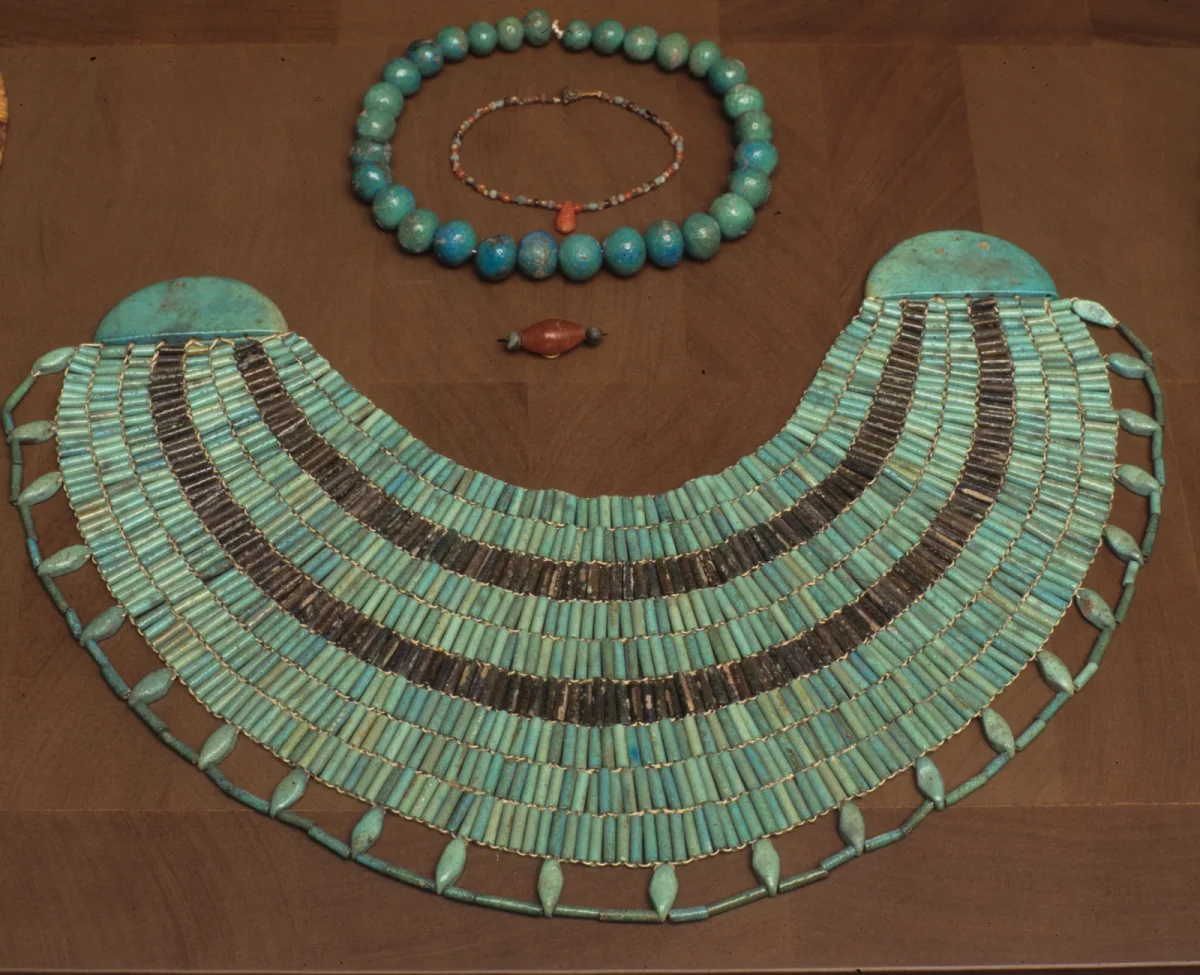
A bib, or plastron, covers both the neck and part of the chest with a wide fan of elements. The French plastron means "breastplate." It is the most formal and voluminous type, replacing a whole set of jewellery by itself and demanding a simple neckline and clothes around it. A bib loves open and deep necklines where it has room to spread and is almost always worn alone.
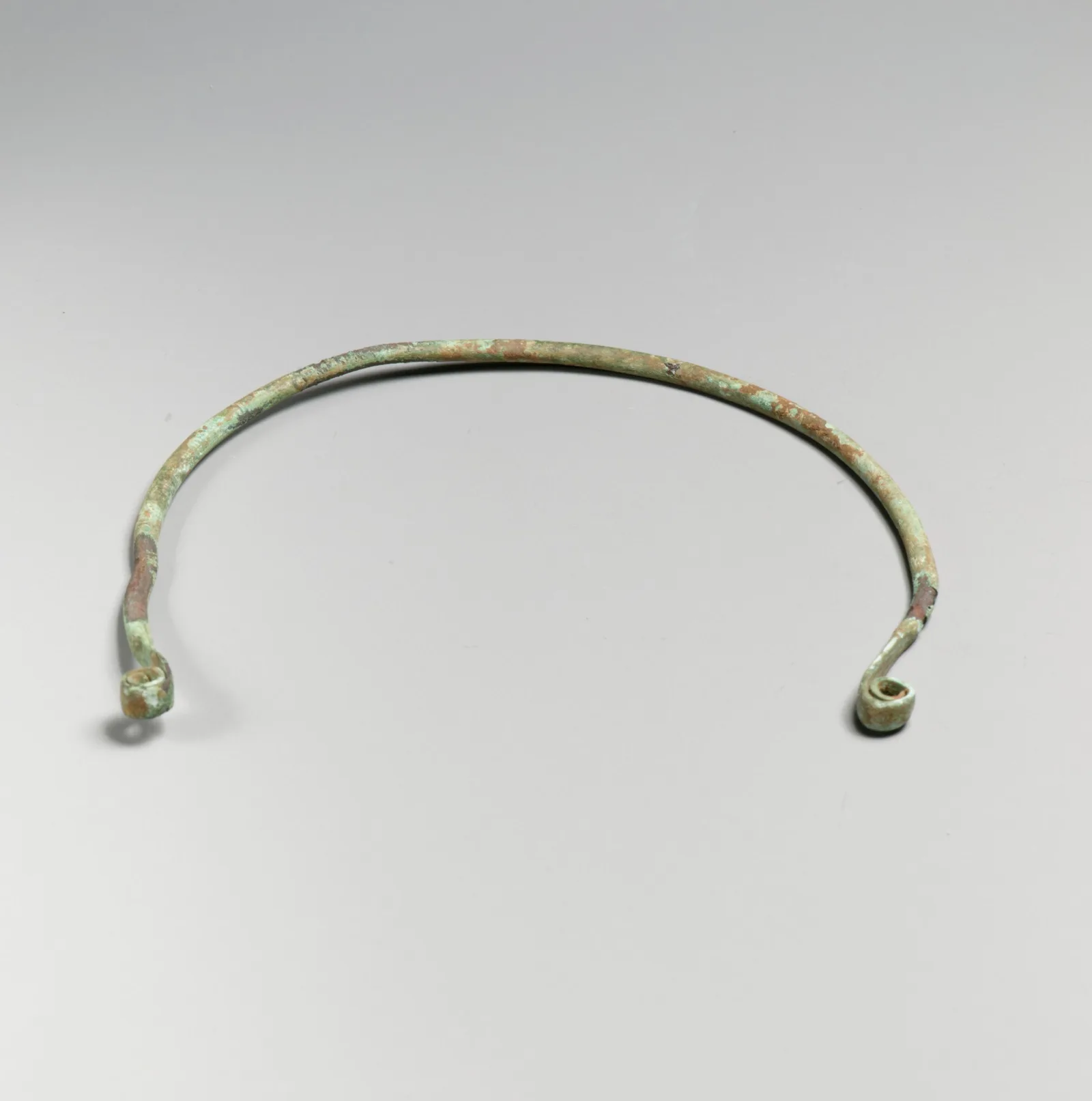
Torque
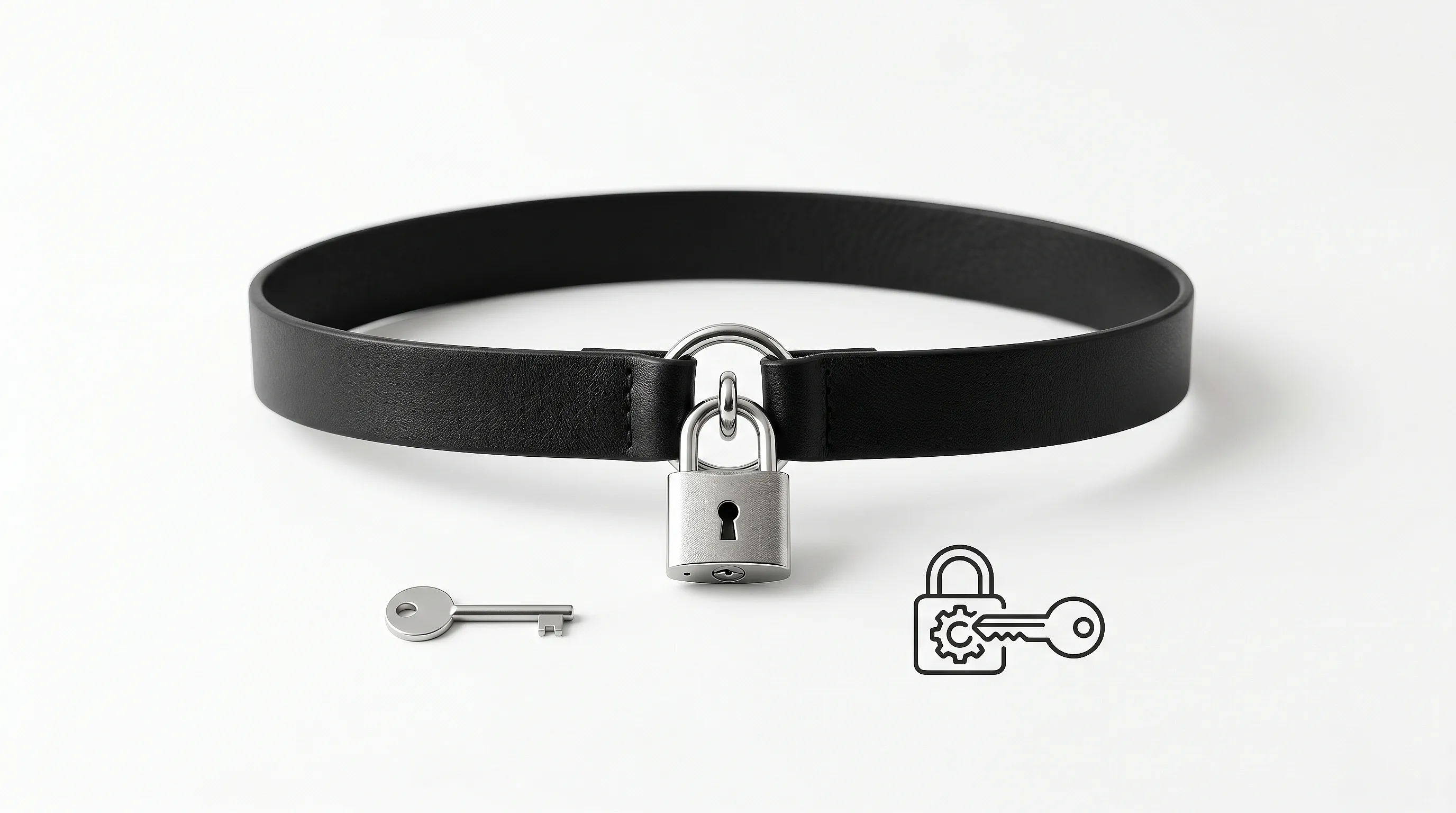
A torque, or torc, is a rigid open ring for the neck with parted ends at the front. Unlike flexible strands, a torque holds its shape and is put on from the side or the back. The form is ancient, Celtic and Scythian, and so a torque carries an archaic, sculptural character. It is a type for those seeking graphics and the weight of metal rather than the sparkle of stones, and it is especially good on a bare neck under minimal clothes.
Multi-strand necklace
A multi-strand necklace gathers several strands of different or equal length into one composition converging at the clasp. It may be a cascade of pearl strands, a set of chains, or a mix of textures. Multi-strand gives volume and fills the open area under a deep neckline or a strapless dress. You can build it yourself from strands of different length, spacing them a few centimetres apart so each reads as its own line.
Y-necklace
A Y-necklace is built so that from the main line a vertical drop descends at the centre with a pendant or stone at its end, forming a letter Y. That form leads the eye straight down the centre and so perfectly echoes a sharp V-neck, completing its line. A Y-necklace looks considered even with a plain dress and asks for no other jewellery at the neck. It is essentially a hybrid of a short base and a long drop, and a lariat easily becomes a Y when knotted in a loop.
Negative-space necklace
A separate modern group is necklaces built on emptiness: a geometric outline, an open ring at the chest, a thin line of metal tracing air. Here the accent is carried not by a stone or density but by the form and the gap within it. Such necklaces read graphic and minimal, suit clean clothes, and work well on a bare neck, where the void inside the outline plays against the skin. It is the youngest of the types, closer to sculpture than to classic jewellery.
How length works with the neckline
A necklace type is chosen not in a vacuum but for a specific neckline, and here length decides almost everything. A short choker and collar ask for a bare neck, a princess is universal, and a long matinee and opera instead rescue a closed high top, drawing a vertical on it. A mid length lying right on the edge of a deep neckline creates a second competing line, so a necklace is taken clearly above the edge, at the neck, or clearly below it, on the chest. The full breakdown of which necklace for which neckline is in the separate guide to jewelry for every neckline; here the rule is that you choose length from the neckline, not at random.
Upload a photo of your pet, someone you love, or an object. We'll build a 3D model and hand-cast it in pewter.



Beyond form: chain, clasp, and material
A necklace type sets the silhouette, but a piece lives by the details that go unnoticed in a case: the chain weave, the security of the clasp, the weight and material. They deserve as much attention as the form.
The chain weave decides both strength and how a necklace lies: a dense curb or rolo holds a pendant evenly and does not wear through, a thin openwork one is pretty but delicate. The clasp is the most common weak point: on a long heavy strand it must be large and secure, on a thin one a light one suffices. Material is chosen for the job: silver and gold are versatile and durable, pearl and soft stones want care, cheap alloys in constant contact with skin more often cause a reaction. The breakdown of weaves and their strength is in the guide to chain types; here it is worth remembering that a beautiful necklace should have an honest chain and a secure clasp, or the form will not last.




A short history of necklaces
The neck ornament is among the oldest, and almost every modern type has a long pedigree. Knowing it makes it easier to understand why a piece looks the way it does.
From shells to the Egyptian collar
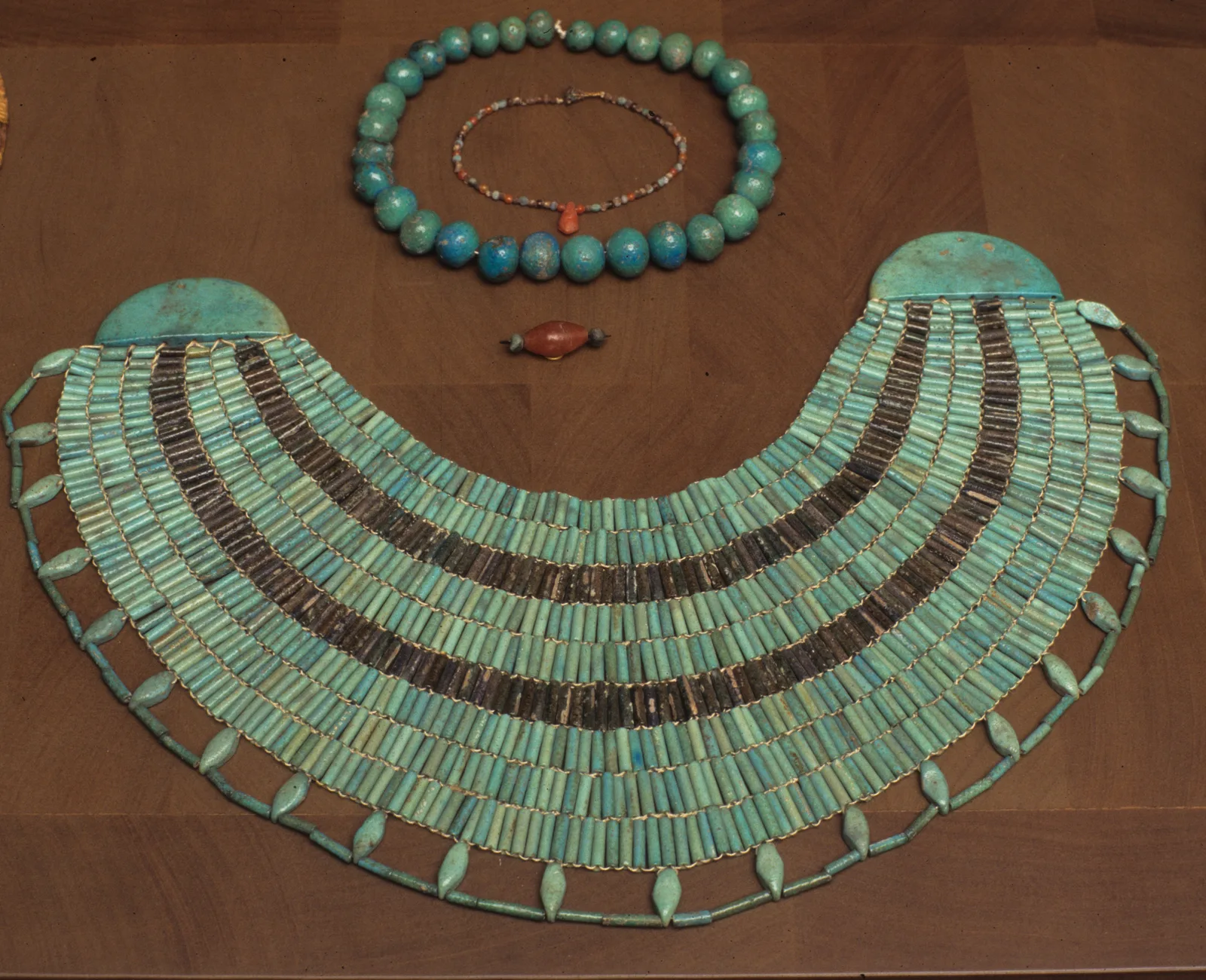
The strand is older than writing: necklaces of shells, bone, and stone were worn long before metal, and already then they divided society into those with access to rare materials and the rest. Egypt took the neck ornament to the broad collar, a fan of bead rows covering the chest, essentially the ancestor of the modern bib. Already here both axes we use today were at work: length, which decided where a piece would sit, and the presence of a central accent, which set a formal focal necklace apart from an everyday strand.
The riviere, décolletage, and the long strand
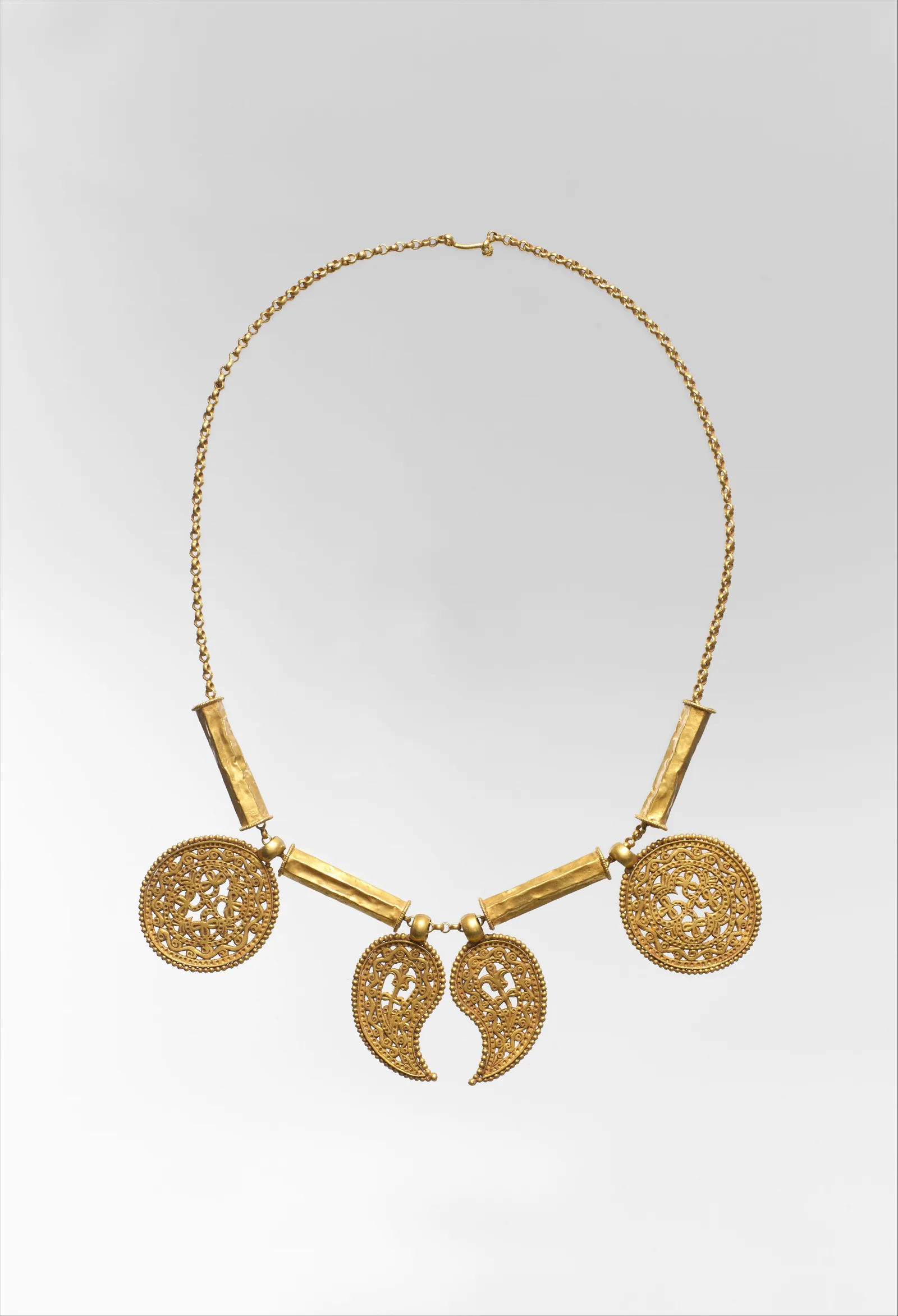
The riviere was born in the eighteenth century for deep rounded décolletage, when the open chest had to be filled with a continuous stream of stones, and it became the benchmark of restrained luxury. The nineteenth century with its high closed collars briefly removed the necklace from the throat, and the 1920s with their straight dresses and bare shoulders made the long strand and the waist-length sautoir fashionable, pushing short forms back. Through the change of types across portraits of different centuries you read the whole history of neckline fashion, since the necklace always followed the line of the clothes: as the neckline opened or closed, so changed the length and the type worn at the neck.
Necklaces in portraiture
The portrait was for centuries a showcase of neck ornaments: by what was worn and how, a sitter's status, lineage, and wealth were read. Painters knew this and rendered necklaces with special care.
In old portraits the necklace caught the light and led the eye from the line of the décolletage to the face. A rich riviere across a rounded chest spoke of fortune, a modest strand at the throat of restraint, a large pendant at the centre of a family's status. By the length and type of the ornament you see both the era and the occasion: heavy multi-strand necklaces of the Renaissance, light strands of Neoclassicism, long sautoirs of Art Deco. In essence painters left us a detailed catalogue of which necklaces were worn, what length, and for which occasions, long before fashion guides existed.
Leave your email, we'll send your discount code. No spam, unsubscribe anytime.
The code arrives by email, valid on your first order.
The psychology of length
Why one person reaches for a short choker at the very throat and another for a long sautoir to the waist is not only a matter of fashion. A neck ornament works right by the face, in the zone people look at in conversation, and the choice of length says how a person wants to hold that conversation.
Short forms at the throat, choker and collar, keep attention high, near the face, and read composed and decisive: they do not let the gaze drop. Long strands, opera and rope, instead carry the line down, draw a vertical, and work for height and theatre, handing the initiative to movement. The middle princess is a neutral zone, calm and universal, chosen when one does not want to make a statement of the neck. Therein lies the power of the neck ornament: it is always near the face, works as a quiet frame for it, and so feels more personal than a hidden ring or bracelet.
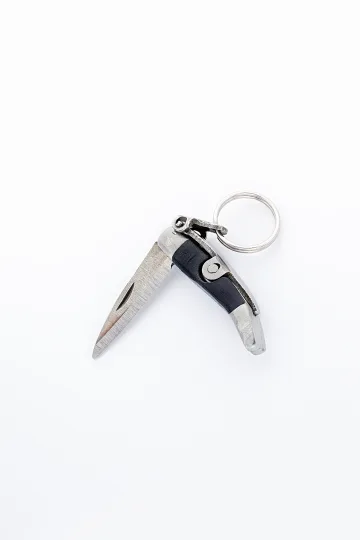
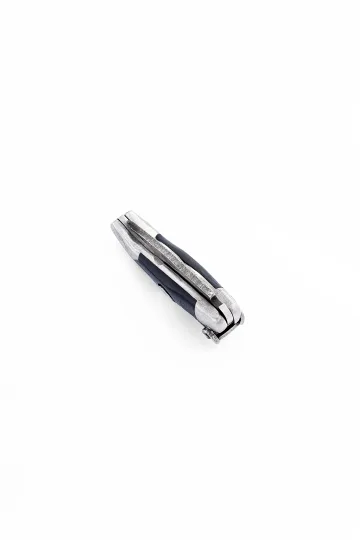
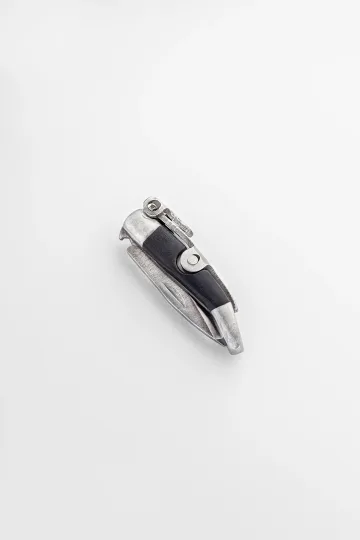
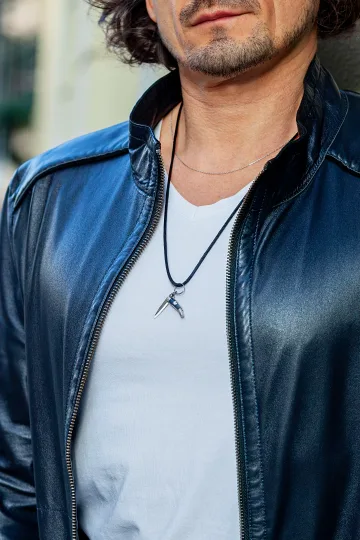
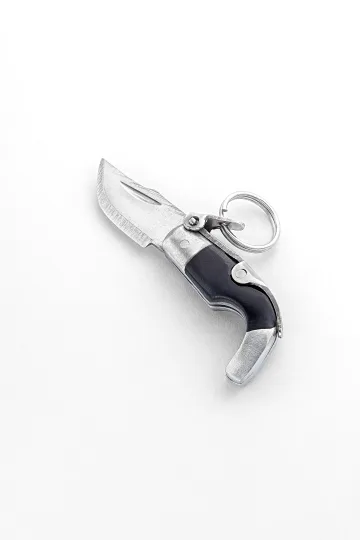
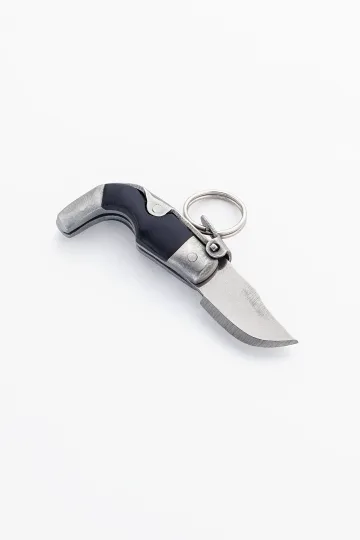
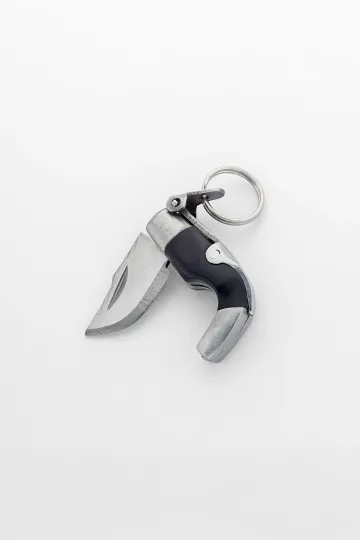
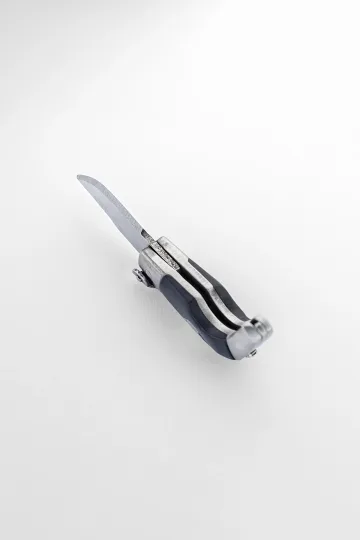
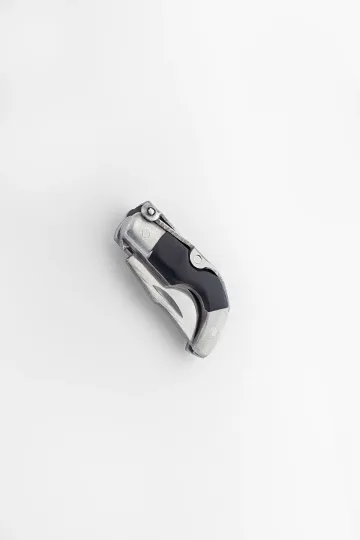
CAPAORA mini knife pendant
The 18th-century Spanish navaja in miniature: 40 mm of stainless steel, a real folding mechanism and a Palanquilla lock that clicks. An affordable gift to remember.
Authentic · Ships from Spain · 14-day returns
Materials and care by type
Different necklace types wear differently, and care is worth matching to construction. What is safe for a smooth chain harms a pearl strand or a dense scatter.
Smooth chains and pendants clean simply: warm water with a drop of non-abrasive soap and a soft cloth restore the shine. A riviere, tennis, and station necklace with many settings need caution: dirt is washed out with a soft brush, but you cannot press on the stones, and once a year such a piece is shown to a jeweller to check the settings, since losing one stone from an even row is especially galling. A pearl strand and beads are a care of their own: pearl fears acids, perfume, and sweat, is wiped with a soft cloth and stored apart, and the thread stretches over time and needs restringing. Long heavy necklaces are taken off at night and stored laid out flat so the thread and clasp do not wear, and any necklace is taken off before the shower, the pool, and sleep.
Storage by type matters no less than cleaning. Chains tangle and knot if tossed into a common box, so long strands are hung or laid out flat and thin chains are clasped so they do not twist. Necklaces with stones and pearl are kept apart from hard metal pieces that scratch a soft surface and setting. And each type has its own weak spot to keep in mind: on a long strand it is the clasp and the point by it, where the metal wears from the weight, on a riviere and tennis the settings, on beads the thread itself. Knowing this, it is easy to check the vulnerable joint rather than the whole piece at random, and it lasts far longer.
Common mistakes
Most misses in choosing a necklace repeat again and again. Here are the most common, so they are easier to sidestep.
The first mistake is length against the neckline: a short necklace under a turtleneck, where it gets lost, or a mid length lying right on the edge of a deep neckline as a second competing line. The second is confusing types: buying a necklace with a large centre where an even strand is needed, and the reverse. The third is overload: a bib or a large necklace plus an equally strong dress, where two accents cancel each other. The fourth is a weak chain under a heavy pendant, which wears through fast. The fifth is choosing from a picture instead of a fitting: one length sits differently on a different neck. The sixth, less obvious, is a mismatch between the type and the way of life: a dressy bib or riviere is beautiful, but for someone who wears a necklace on the run and under a coat it soon tires with its inconvenience, and it is the most beautiful piece that stays in the box. Almost all of these are cured by fitting the specific length on your own neck for a specific neckline and occasion, and honestly asking whether the piece fits your ordinary day.
A quick check before you buy
Types and lengths are easy to confuse in a case, so before buying a short checklist helps, one you run in a minute right at the fitting.
First: put the necklace on and see where the lowest point sits, at the throat, on the collarbones, on the chest, or below. That is its length, and it must answer the neckline you will wear it with. Second: decide whether a centre accent is needed. If yes, look for a necklace with a pendant or a pronounced centre; if no, an even strand or a riviere. Third: check the clasp and chain. A heavy pendant needs a dense chain and a large, secure clasp. Fourth: look at the neck as a whole, not at the stone up close. Short on a short neck shortens it, long on a small height overpowers. Fifth: if you are buying it for layering, hold it against the strands you will wear it with.
If it passes all five points, the type and length are chosen well. If it stumbles on even one, it is worth trying another length rather than talking yourself into it. The best necklace is not the costliest in the case but the one that sits on your neck and suits your neckline and your day, and these five questions help tell it from a beautiful but ill-fitting piece.
Find a necklace of your length and type in the Zevira catalogue: from chokers and princess lengths for every day to opera strands and pendants for a night out.
Send a friend a discount code, they save on their first order.
Facts that surprise
- "Necklace" of the collar kind literally means "for the neck." The French collier comes from the Latin collum, neck, and first described what hugs it closely, like a collar.
- The strand is older than metal. Necklaces of shells and bone were worn thousands of years before the first metal ornaments, one of the oldest forms of adornment.
- The riviere was invented for décolletage. The strand of a row of matched stones was born in the eighteenth century as an answer to deep rounded necklines.
- The opera lives two lives. The 28-36 inch length is worn both in one row as an evening strand and doubled as a double choker, giving two looks from one piece.
- The tennis necklace is named by accident. The name came from tennis, where a similar bracelet once came undone right on court, and stuck to the whole flexible line of stones.
- The torque was worn by warriors. The rigid neck-ring was a mark of status among the Celts and Scythians long before it became fashionable graphics.
FAQ
What is the difference between a focal necklace and a uniform strand? A focal necklace has a pronounced centre: a large stone, a pendant, or an elaborate composition to which the line converges. A uniform strand distributes its decoration evenly, with no single main element. In short, one has an accent, the other an even line.
Which necklace length is the most universal? Princess, 17-19 inches. It sits at the collarbones, suits almost anyone, and works with most necklines. If in doubt, start here and add short and long formats for a specific look.
What is a choker and whom does it suit? A choker is a short necklace of 14-16 inches sitting at the base of the neck. It underlines the neck and collarbones and especially flatters a long neck. On a short one take a narrow version and leave a little air between the choker and the neckline.
How does a riviere differ from a tennis necklace? A riviere's stones may grow toward the centre in a continuous river-like flow, a tennis necklace's are strictly equal in a uniform setting. Both are an even line of stones with no singled-out centre; the difference is the equality of the stones and the character of the setting.
Which necklace goes with a turtleneck? Long, over the fabric: a matinee, an opera, or a sautoir with a pendant draws the vertical a closed top lacks. A short necklace gets lost on a turtleneck. The full breakdown for every neckline is in the separate guide to jewellery for every neckline.
What is a sautoir? A sautoir is a long necklace, usually with a pendant or tassel at the end, that flourished in the 1920s. It is close to a rope but more often has an accent at the end and is worn as a pronounced vertical under a simple top.
Can you wear several necklaces at once? You can, if it is deliberate layering: strands of different length that do not lie on top of one another and do not argue. A large necklace and a bib, by contrast, are worn alone. The rule is the same as with any set: make only one thing strong.
How do you choose a necklace length as a gift without knowing the size? Take a princess of 17-19 inches as the safest length; it suits almost anyone and almost anything. Safer still is a necklace with an adjustable chain and several loops, where the length can be tuned to the neck.
In closing
A necklace type is its length and construction, and it is they, not the stone, that decide which neckline, occasion, and neck it suits. Collar, choker, princess, matinee, opera, rope by length; pendant, riviere, lariat, station, tennis, bib, torque, multi-strand by form, each carries its own character and its own place. Once you understand these names, any case is easy to read: you see where the lowest point sits and whether there is a centre accent, weigh it against your neck and neckline, and the choice falls into place. Sometimes it is one princess with a pendant for every day, sometimes a cascade of strands for the evening, and sometimes a graphic torque on a bare neck.
Buying it as a gift? Each one arrives ready to give.
 A branded Zevira box and a little card come with every order.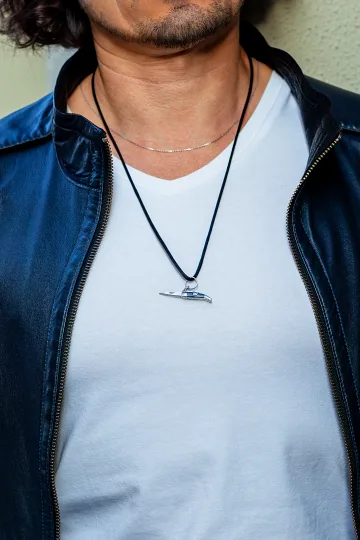




About Zevira
Zevira makes neck ornaments that are easy to match to a neckline and an occasion: chokers and princess lengths for every day, long strands and sautoirs for a night out, pendants for a personal accent. Behind the brand is a Spanish school with the heritage of Albacete, an old centre of metal and craft, and an attention to how a piece sits and lives on a person.