Types of rings: solitaire, halo, cluster, signet, and how to choose by hand
Why a ring's shape says more than its stone
Two rings with the same stone and the same metal can read like objects from different worlds. What decides is the construction: how the stone sits, what surrounds it, how wide the band is. It is the type of ring, not the size of the stone, that sets the character, and the silhouette is what people see first.
Learning the types is worth it for one reason: each occasion, look, and even hand shape suits its own construction. A thin eternity band gets lost on a broad hand and shines on a slim one; a heavy signet reads confident on the pinky and heavy on the ring finger. Once you know how a solitaire differs from a halo, and a cluster from a three-stone, the choice stops being a lottery.
Below we work through every common type in turn: how it is built, how it reads, whom and which occasion it suits, and where its weak spots are. We start with what a ring is even made of, because it is from those parts that all the types are born.
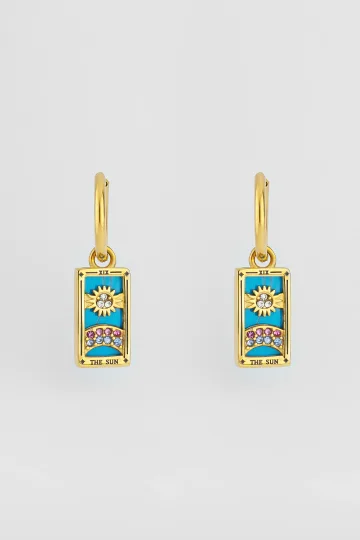
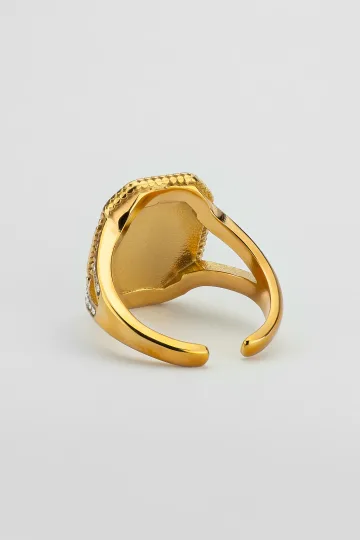
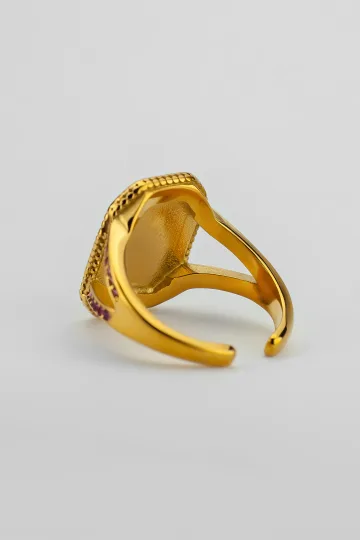
Wear the symbol, don't just read about it. These are in stock:




How a ring is built
Before comparing types, it helps to agree on words. Every ring has a band, that is the hoop itself, a head or setting where the stone sits, and a mount, that is the way it is held. From the combination of these three parts all the kinds grow.
The band
The band is the circle that hugs the finger, and its width and profile change a piece more than you would think. A thin band (1 to 2 mm) makes a ring light and quiet, a wide one (5 mm and up) turns it into an accent visible across a room. The profile can be flat, rounded, or faceted, and the band even or tapering toward the back. Comfort depends on it too: a wide, stiff band bends less but forgives a sizing miss less well.
The head, the setting, and the mount
The head is the part that holds the stone, and the way it is mounted is called the setting. A prong setting holds the stone on claws and lets more light in, a bezel hides the girdle in metal and protects the edge, pavé scatters the surface with tiny stones. The setting is a large topic of its own with its own mechanics, and a detailed breakdown is collected in the guide to ring setting types. Here the point is different: the same setting in a different construction gives different types of ring.
How construction changes the read
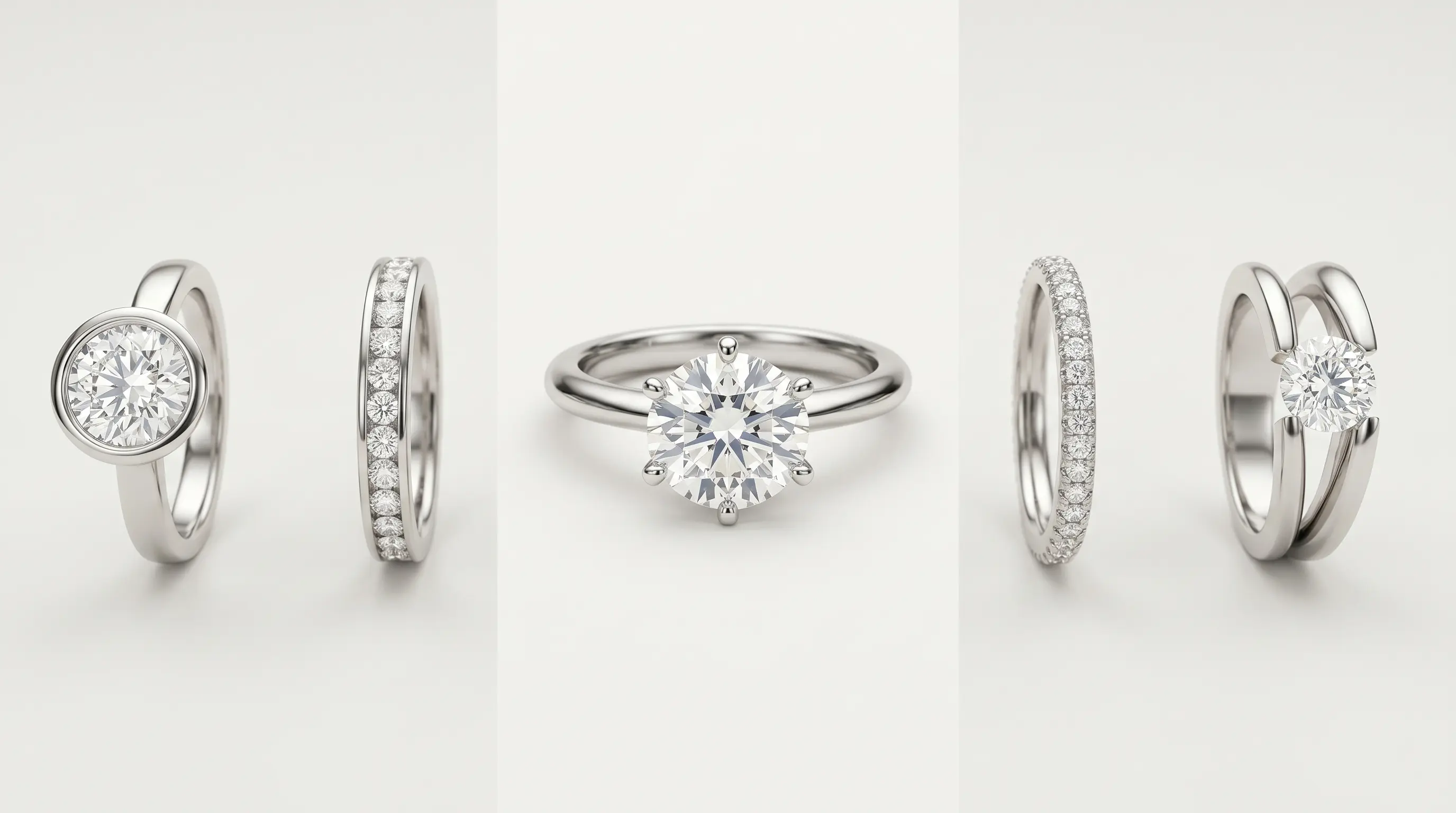
The type of ring is not about the stone or the metal but about how the band and head are put together. One central stone on a smooth band is a solitaire. The same stone ringed by tiny ones is already a halo. Several stones in a group is a cluster, and a row of matched ones around the band is an eternity. Metal and stone may match, and the pieces still come out different, because the architecture differs. That is what the eye reads first, and that is what sets the occasion and the mood.
The hand chooses the ring, not the display case. Give a broad hand weight, a slim one a thin line, and never crowd a cocktail ring with neighbours. It is a soloist, and don't argue.
The stylist's take: building a look around the ring
When there are many types, it is easier to hear once how someone who fits rings every day thinks it through. Below is a short take from the Zevira stylist: where he starts, when he recommends a single solitaire and when a whole stack, and what to keep in mind before buying.
Where do you start when someone has no idea which ring suits them?
I look at the hand before the display case. A broad hand, wide fingers, I recommend weight: a signet, a cocktail ring, a wide band. A slim hand, delicate fingers, I choose something thin: a solitaire, a band, stacking rings. The shape of the hand has already suggested half the answer, then I fit the type to the occasion. For every day I recommend flat and grippy, for a night out I allow height and sparkle.
One strong stone or a stack of several rings?
It depends on character. For those who love order and one precise piece, I build the look around a solitaire and add nothing else to that hand. For those who love to play, I recommend stacking rings: their charm is that you can recompose them any day. One rule I hold firm: a strong cocktail ring is worn alone, a stack around it turns to mush.
Your main advice before buying?
Try the type on your own hand, not on someone else's and not from a picture. The same ring looks completely different on a different hand, and the height of the stone, the width of the band, the fit, you only see them in person. What is beautiful in the case easily turns out uncomfortable on your finger, and the other way round.

Turn on your camera, pick earrings, a pendant or a ring, and see the piece on yourself in real time.
Switch items in one tap.
Everything runs in your browser: no photo or video is ever uploaded.
Solitaire
The most recognisable and most restrained type: one stone on a smooth band, without a single extra detail. The classic of the engagement ring and a model of quiet elegance.
What it is and why it works
A solitaire is a ring with one central stone and nothing around it: the whole band is smooth, all attention on the stone. The minimalism is not poverty but calculation: the emptiness around the stone makes it look larger and catch more light. That is exactly why the solitaire has stayed the benchmark of the engagement ring for centuries, where the stone matters, not the setting around it.
Whom and which occasion
A solitaire suits almost anyone and almost anything, and therein lie its strength and its risk. It fits the office and a night out, sits easily with other rings and does not argue with clothes. A thin band slims the finger and flatters a broad hand, a slightly wider one adds weight and balances long fingers. Solitaires are for those who value a piece they will not need to swap by mood.
Weak spots
Purity has a price. A high-set stone on prongs catches on clothes and hair, and on an active hand it takes knocks that bend the prongs over time. A smooth band honestly shows the scratches that pavé or engraving hides. And a solitaire is demanding of its stone: there is nowhere to hide a mediocre one behind a setting, it is all on show.
Halo
The same central stone as a solitaire, but ringed by a wreath of tiny stones. The halo around it makes the piece brighter and bigger to the eye, which is why it is loved.
How it reads
A halo is a central stone in a ring of small stones along the contour, like a nimbus around a head. The wreath performs a trick of the eye: it visually enlarges the central stone by about a third, sometimes noticeably more, and adds sparkle across the whole area. Hence its reputation as a "rich" ring: thanks to the halo even a modest central stone reads noticeable and expensive.
Why it is loved and where the catch is
A halo is chosen when you want maximum sparkle and volume, and it is an honest way to boost a small stone. But dense pavé has a downside: the tiny stones in micro-settings sometimes fall out, and dirt and cream pack under the wreath and dull the very sparkle it was all for. Such a ring needs more frequent, careful cleaning than a plain solitaire, and periodic setting checks by a jeweller.
Cluster and three-stone
Both types gather not one stone on the ring but a group, though their logic differs: a cluster imitates one large stone out of many, while a three-stone tells a story.
Cluster
A cluster is several stones gathered in a tight group so that from a distance they read as one large stone. The trick is old and practical: getting the effect of a big stone from several small ones comes out noticeably cheaper than a solid one, and there is even more sparkle and play of facets in a scatter. The shape can be anything: a flower, a rhombus, a circle. A cluster loves vintage and floral aesthetics and looks good on a smaller hand, where a solid large stone would look heavy.
Three-stone
A ring with three stones in a row is a story of its own, not a random scatter. The trio has picked up the reading "past, present, and future," so such rings are given for anniversaries and as a symbol of a stage of a relationship. The central stone is usually larger than the two sides, which gives the piece a clear axis of symmetry. Unlike a cluster, here what matters is not mass but the count: three separate stones, each with its own meaning. The side stones may differ from the centre in colour or cut, and that contrast strengthens the idea of three distinct stages rather than one repeated motif.
Customer reviews
Zevira is a real jewellery shop. Genuine payments, deliveries and customer thank-yous.
🥰🥰🥰 gracias
Ok, ¡gracias! 🙂
Accented-shoulder rings and the trilogy setting
A middle type between the strict solitaire and the abundant halo: the central stone stays the main event, but the band beside it is dressed with small stones or separate side stones.
An accented band
A ring with stones along the band is a solitaire whose shoulders carry a row of small stones leading the eye to the centre. Such a band adds sparkle and makes the ring dressy without hiding the main stone behind a wreath, as a halo does. It is a compromise for those who find a plain solitaire too strict and a halo too dense. The downside is the same as any pavé: small stones on the band collect dirt and need setting checks.
The trilogy with side stones
A separate variant is a central stone with two larger side stones, often of a different cut or colour. Unlike a three-stone, where the stones are equal, here the sides are clearly subordinate to the centre and work as a frame. Such a type reads rich and suits a dress or engagement ring, where you want more stone than a single solitaire gives.
Eternity and half-eternity bands
A row of matched stones running along the band. If the stones go all the way round, it is an eternity ring; if only along the top half, a half-eternity.
The band and the full eternity
An eternity band carries a row of matched stones along the face of the band, a full eternity runs that row all the way round. An unbroken line of stones gives an even shine with no single accent and so reads elegant and costly. A full eternity is more striking, but it has a practical minus: the stones on the inner side press on neighbouring fingers and get in the way, so in daily life a half-eternity is often more comfortable.
The catch nobody mentions
Eternity has a feature that surfaces years later. A ring with stones all the way round is almost impossible to size down or up: there is nowhere to cut the band, it is a continuous setting. If your finger size changes, and it does with age and season, the ring must be remade entirely or worn as is. A half-eternity has none of this: a smooth back leaves the jeweller room to adjust the size.
Upload a photo of your pet, someone you love, or an object. We'll build a 3D model and hand-cast it in pewter.



Signet
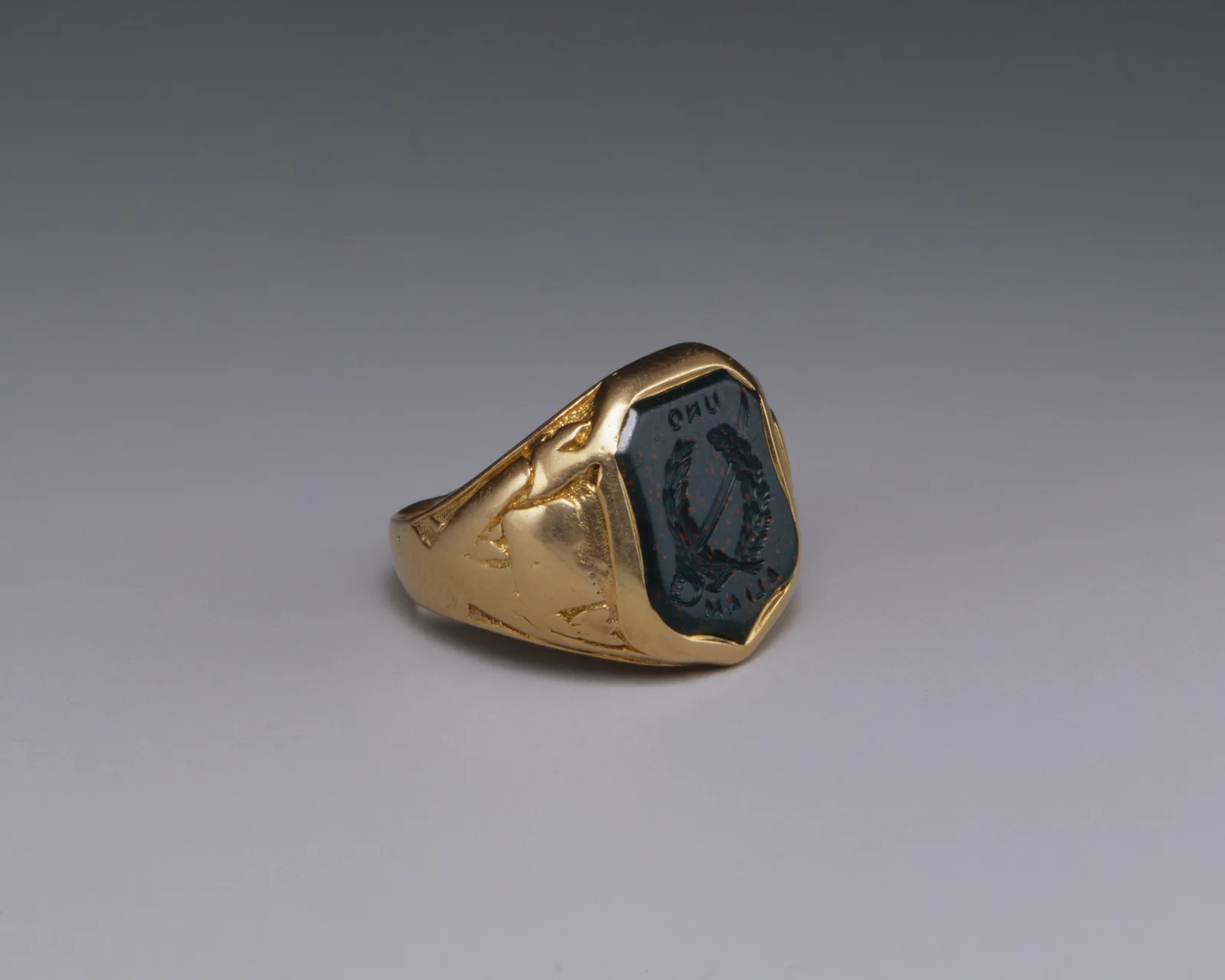
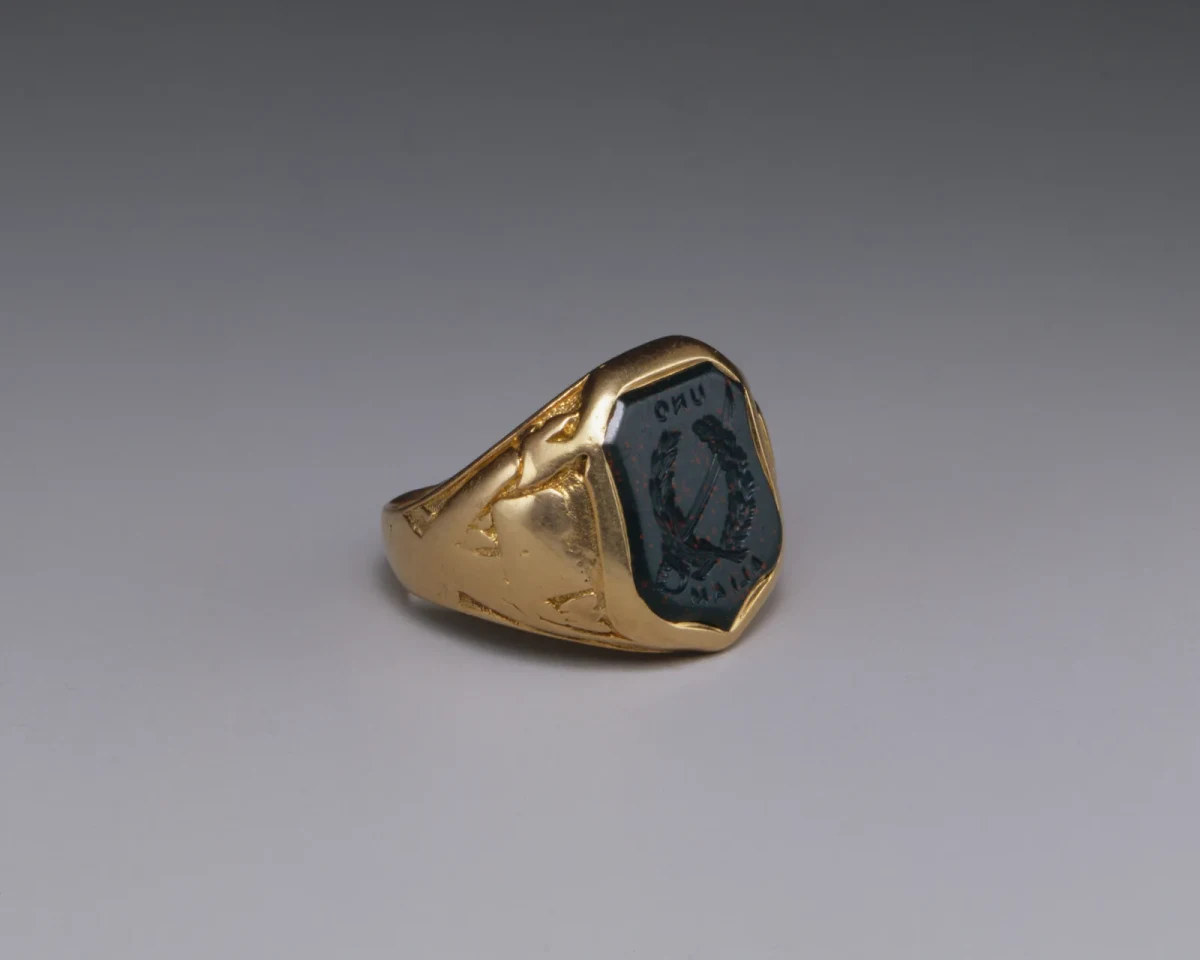
A ring with a flat face instead of a stone, often with an engraving, a monogram, or a crest. One of the oldest types, which turned from a man's ring of power into a fashion accent.
From a ring of power to a fashion accent
The signet grew from the seal ring, which for centuries certified documents by pressing a crest into wax. The flat face is that former seal, and the engraving on it a legacy of that function. Today the signet is above all a style: a massive men's one with a monogram, a delicate women's one with an initial or a stone, a vintage one with a family mark. The meaning shifted from power to belonging and memory, but the recognisable silhouette remained.
How it is worn today
The signet was historically worn on the pinky, and that variant is back in fashion: a small signet on the little finger reads as a considered accent rather than a ring on show. A large men's one is worn on the ring and middle fingers too. The women's signet has become a light everyday piece that sits well in a stack with thin rings. There is a separate breakdown of what a ring on each finger means.
Cocktail ring
Large, noticeable, often with a big stone or dense pavé, frequently in the shape of a flower or an animal. An accent ring worn for effect.
What it is
The cocktail ring was born for the evening and named after cocktail parties, where the hand with a glass is on show. It is a deliberately large, theatrical piece: a big central stone, a bold volume, a daring shape. It does not claim the status of an engagement or wedding ring; it has another job, to be a statement piece for one night out.
When to wear it
A cocktail ring loves an open occasion and simple clothes around it: against a smooth dress it solos, and beside a pile of other jewellery it gets lost. It is worn on the right hand, often on the middle or index finger, and almost never in a stack, since it is itself the whole stack. For every day such a piece is heavy, but for a night out or an evening look it works without fail.



Engagement and wedding rings as types
The two most meaning-laden rings are not a separate shape but a role taken on by already familiar constructions. Understanding this helps you not confuse type with purpose.
An engagement ring is most often a solitaire or a halo with a pronounced central stone: its job is to be bright and memorable, since it is the symbol of a proposal. A wedding ring, by contrast, is usually plain or with a thin row of stones, because it is worn every day and in a pair, and extra volume gets in the way here. After the wedding the two are often worn together on one finger, so the wedding band is chosen to sit flush against the engagement ring. In essence these are not new types but a solitaire, a halo, and an eternity band in a specific role in life.
Stacking rings and midi rings
The fashion of wearing not one ring but several at once produced thin models made for company. Alongside them are rings that sit higher than usual, on the knuckle.
Stacking rings
Stacking rings are deliberately thin, simple rings made to join several on one finger and across neighbouring ones. Alone they are modest, together they build a personal composition mixing metals, textures, and small stones. The art is in the combination, and it has its own rules: how to mix width, metal, and height is set out in the guide to stacking rings.
Midi and knuckle rings
A midi ring sits not at the base of the finger but on the middle phalanx, closer to the knuckle. It is a purely decorative type: it draws attention to the hand and the nails and works only in a stack with regular rings, creating a multi-level pattern. Its size is its own, smaller than usual, and the fit is demanding: a loose midi spins and slides, a tight one will not pass the knuckle.
Bombé, bypass, and other silhouettes
Beyond the stone in the centre, the type of ring is also set by the very curve of the metal. A few silhouettes are worth recognising, because they return in waves and often do without a large stone at all.
Bombé
A bombé ring is a large dome of smooth metal without a stone or with recessed ones, a raised half-sphere on the finger. It reads sculptural and modern and holds the look on its own, by form and mass rather than the sparkle of a stone. Bombé is loved by those who value the design of metal as such, and it sits well with minimal clothes, where a coloured stone would be excess. The smooth dome is also practical: nothing to catch on, and small scratches on a matte surface barely show.
Bypass and open rings
A bypass, or open ring, is built differently: the two ends of the band do not meet but part and pass each other, like a comma. Such an open shape looks dynamic and often carries a stone on each end that seem to embrace the finger from two sides. Hence the romantic reading of "two together," for which a bypass is sometimes chosen over a classic paired ring. An open band also forgives a small size mismatch, because it flexes a little.
Marquise, pear, and elongated silhouettes
A separate group of types is set not by the mount but by the shape of the stone, elongated along the finger. A ring with a marquise stone (a boat with pointed ends) or a pear visually lengthens the finger and so suits a short, broad hand. Such a stone takes up more length for the same mass, so it looks larger than a round one, while the pointed ends need a protected setting, or they chip. This is the case where the type is chosen to work with the proportion of the hand, not for sparkle.
Leave your email, we'll send your discount code. No spam, unsubscribe anytime.
The code arrives by email, valid on your first order.
How to choose a type by hand, finger, and occasion
Choosing a type is a matter of taste but also of the geometry of the hand and the character of the occasion. A few guides help you not miss.
By hand shape
By the hand the same rule of contrast works as with any jewellery. On a broad, wide hand thin bands and tiny solitaires get lost, while cocktail rings, signets, and wide bands read confident. On a slim, delicate hand the opposite: a large piece overpowers, and a thin solitaire or band sits ideally. Long fingers are balanced by a crosswise detail or a wide band, short ones are visually lengthened by a vertical silhouette and a marquise or pear stone. Warm, tan skin flatters yellow and rose gold, fair, cool skin the white metals, and that too is part of the type choice, since a halo and pavé sparkle more in a white metal.
By finger
The finger sets both the size and the fitting type. The ring finger most naturally takes a solitaire and a band, to which the eye is trained by engagement and wedding tradition. The pinky historically wears a signet, and a small signet there reads as a considered accent. The index and middle fingers carry a large cocktail ring, because these fingers are longer and stronger. There is a separate breakdown of what a ring on each finger means, but there is no hard law: the type is chosen for comfort too, since nothing should dig in between the fingers and the ring must pass the knuckle.
By occasion
By occasion the logic is simple: an everyday ring should be flat and grippy, without a high stone that hits the keyboard and door frames. For that a bezel, a half-eternity, a signet, and a bombé are good. An evening and dressy occasion, by contrast, asks for height and sparkle: a solitaire on prongs, a halo, a cocktail ring. Size is chosen by season and time of day, since the finger swells in heat and toward evening, and how to take the measure exactly is described in the ring size guide.
Beyond shape: metal and stone by type
The type of ring sets both the silhouette and which metal and stone it calls for. Form and material work in a pair, and a good type is easily spoiled by a wrong match.
A strict solitaire suits noble simplicity: white metals underline the stone, yellow gold adds warmth and a vintage note. Halo and cluster love a white mount, because it merges with the pavé and boosts the overall sparkle, whereas in yellow gold the small stones read less brilliant. A signet, by contrast, rings out in yellow and rose gold and in heavy silver, where mass and a matte surface for engraving are prized. A cocktail ring flatters a coloured stone in a large cut, and stacking rings thin bands that do not argue with one another. The stone too is chosen by construction: an everyday flat type takes a hard, durable stone, while fragile and soft ones are left for high evening settings, where the risk of a knock is lower.
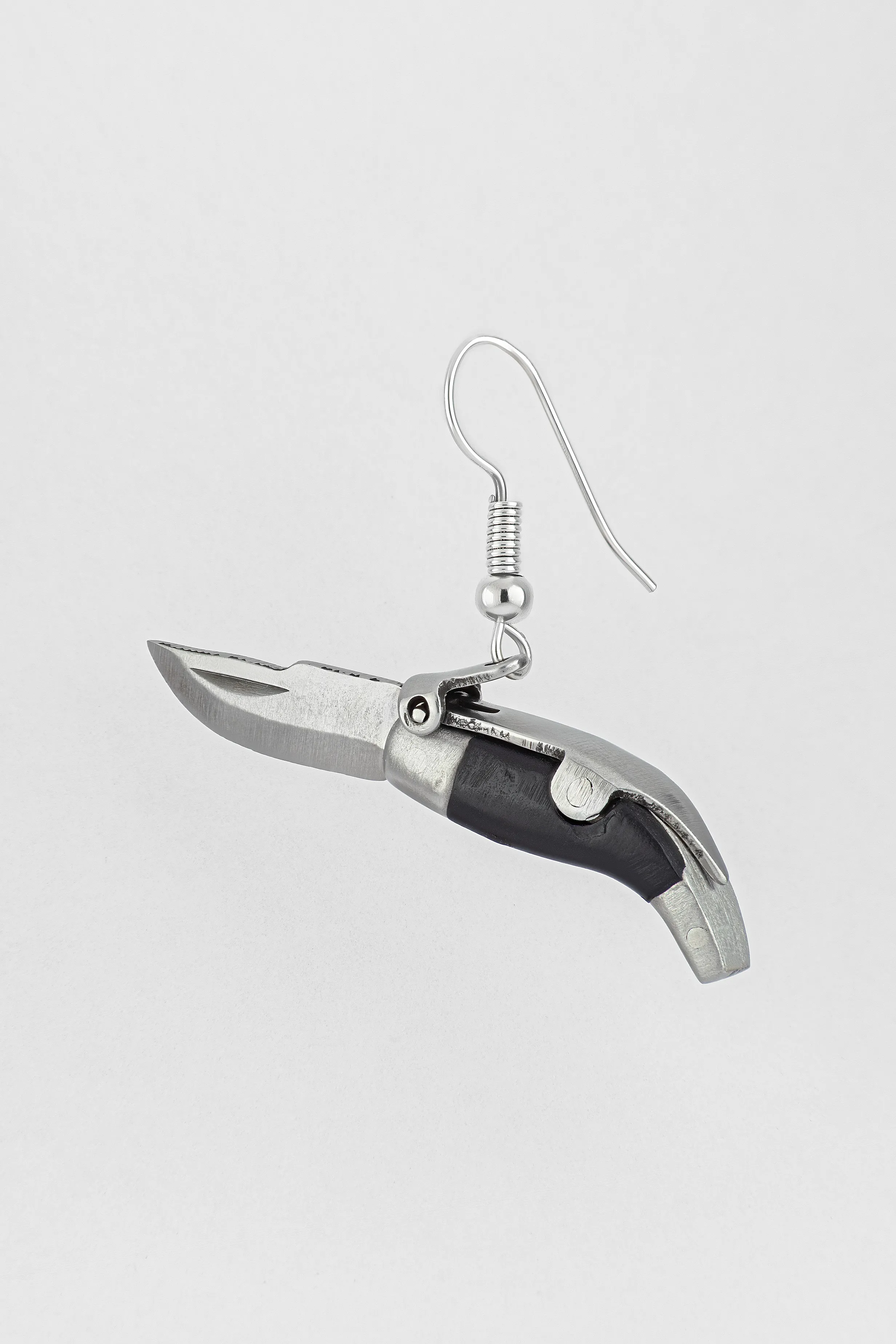
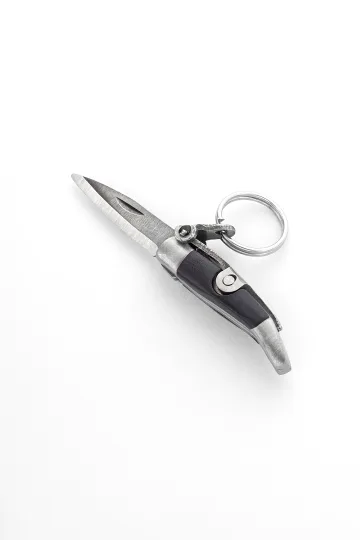
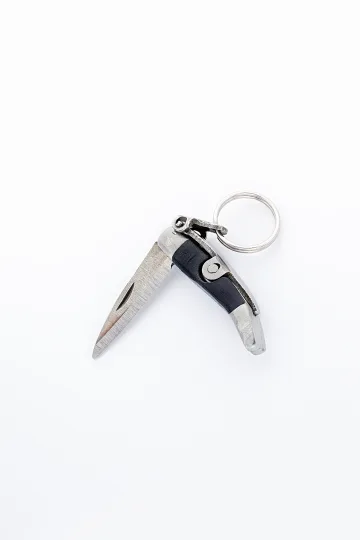
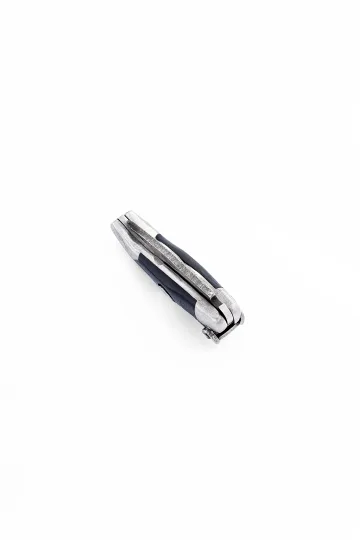
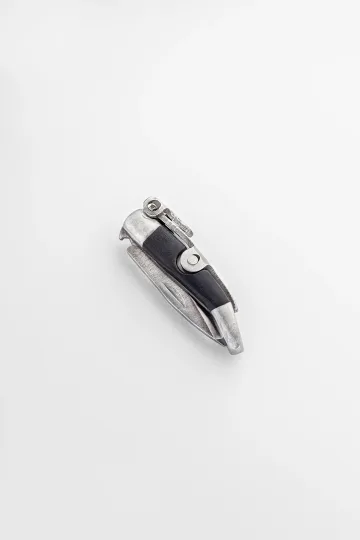
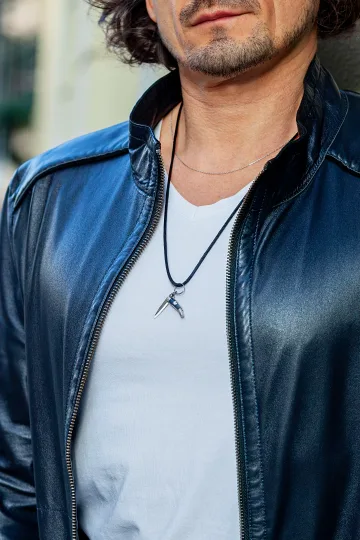
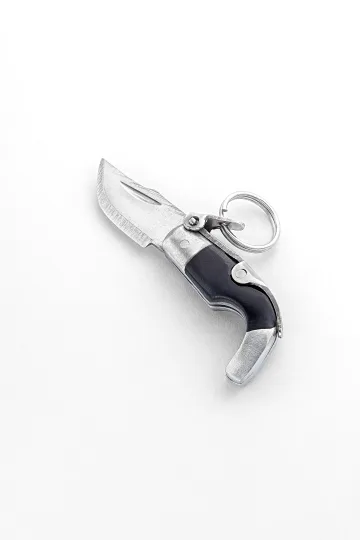
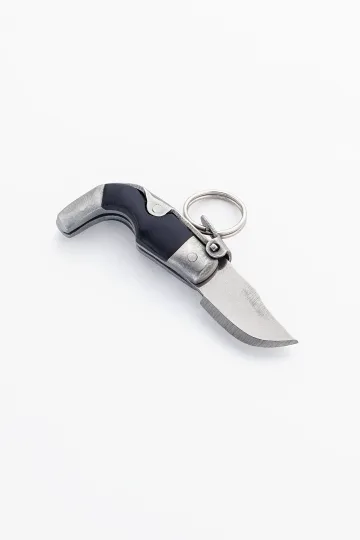
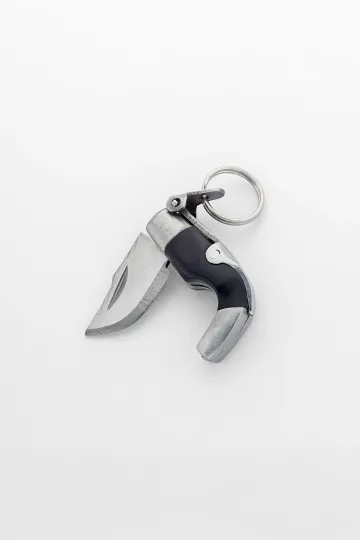
CAPAORA mini knife pendant
The 18th-century Spanish navaja in miniature: 40 mm of stainless steel, a real folding mechanism and a Palanquilla lock that clicks. An affordable gift to remember.
Authentic · Ships from Spain · 14-day returns
A short history of ring types
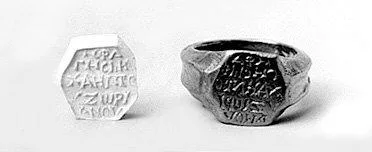
Almost every modern type of ring has a long pedigree, and knowing it makes it easier to understand why a piece looks the way it does. The shape is rarely accidental.
The signet is older than all: seal rings with a cut mark were worn in Mesopotamia and Egypt, and in antiquity and the Middle Ages they certified documents by pressing a crest into wax or clay. The solitaire in its present form is younger: a single diamond on a ring came into use once stones could be cut to play, and it became a mass symbol of engagement only in the twentieth century. Halo and cluster flourished in eras that loved sparkle and symmetry, from Georgian to Art Deco, when a scatter of small stones imitated a large, unaffordable one. The eternity ring with its unbroken row of stones is an old idea too: a closed circle with no beginning or end read as a symbol of the infinite long before it became a jewellery type.
A separate line is promise rings and paired forms such as the bypass and the Claddagh, where the construction itself speaks the feeling: clasped hands, ends passing round the finger, two halves meeting in the centre. Here the type carried a message before a stone was added. The cocktail ring, by contrast, is a child of the twentieth century and an age of loud parties: a big, daring piece on the right hand declared the wearer's independence. So almost every silhouette keeps a trace of its time, and by putting on a ring of a certain type a person unwittingly takes its history along.
Rings in art and portraiture
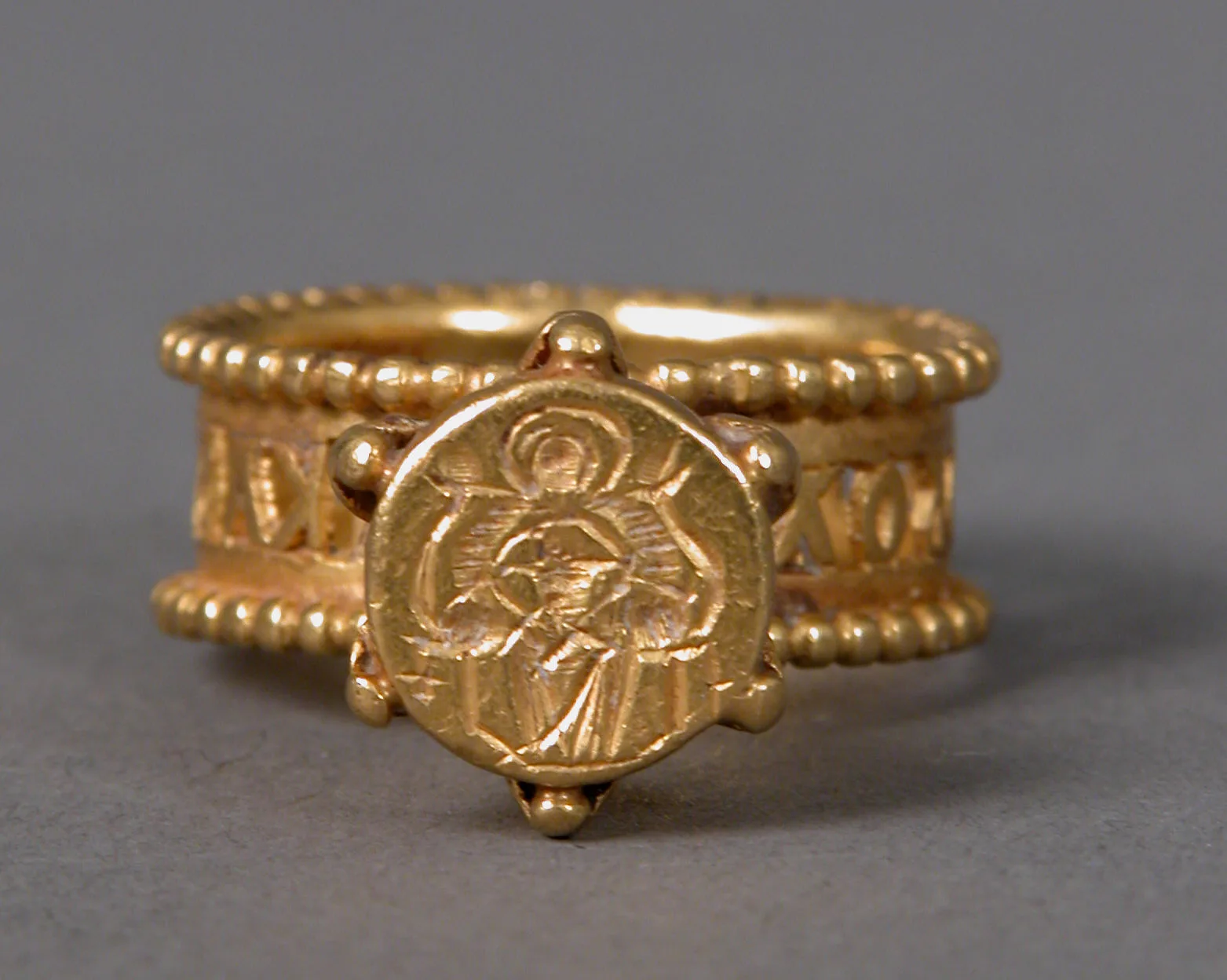
The portrait was for centuries a showcase of rings: by what was worn on the hand and how, a sitter's status, lineage, and marital state were read. Painters knew this and rendered rings with special care.
In old portraits the hand was put on show precisely for the rings: a crested signet spoke of lineage, a wedding band of marriage, a large stone of wealth. The ring was often placed on the most visible finger and caught with a highlight so the eye would linger. By the change of types across portraits of different centuries you see how fashion shifted: the heavy signets of the Renaissance gave way to the delicate solitaires and bands of modern times. In essence painters left us a detailed catalogue of which rings were worn, on which fingers, and for which occasions, long before fashion guides existed.
The psychology of choosing a ring
Why one person reaches for a strict solitaire and another for a bold cocktail ring is not merely a matter of taste. A ring is the most visible of everyday jewellery, since the hands are always in view, and the choice of type says much about how a person wants to present themselves.
Strict, closed forms, the solitaire and the smooth band, are chosen by those to whom control and order matter: a piece that does not change and asks for no attention. Large accent rings, cocktail rings and signets, pull at those ready to lead and unafraid of being noticed, since such a ring is impossible to miss. Stacking and midi rings are loved by those to whom play and the chance to recompose a look by mood matter. Therein lies the power of the ring as jewellery: it is always in view of the wearer themselves, works as a quiet reminder of a chosen role, and so feels more personal than a pendant hidden under clothes.
There is a practical layer to this psychology that is rarely thought about in the case. A ring is worn on a hand that is always at work, so the chosen type is inevitably tested by daily life: a high solitaire bought for beauty starts to annoy if it catches on every bag, and a heavy signet taken on a whim turns out uncomfortable at the keyboard. People quickly stop wearing a ring that gets in the way, however beautiful, and return to the type that does not argue with their day. So an honest choice weighs both the desired image and how the wearer's ordinary day actually goes: the type that survives your routine is the one you will wear most.
Materials and care by construction
Different types of ring wear differently, and care is worth matching to construction rather than to a general rule. What is safe for a smooth band harms dense pavé.
Solitaires and smooth rings clean simply: warm water with a drop of non-abrasive soap and a soft brush restore the shine, and rare polishing removes scratches from the band. Halo, pavé, and cluster need caution: dirt collects under the small stones, which must be washed out with a soft brush, but you cannot press and scrub the pavé, or the stones loosen. Such rings are worth showing to a jeweller once a year to check the setting. A signet with engraving collects dirt in the recesses of the mark, and it is brushed out dry, keeping the dark relief that gives the design its contrast. A ring with a high setting is taken off for sport, cleaning, and sleep, because it is the high head that takes knocks and catches, and any ring is taken off before contact with chlorine and household chemicals, which corrode both metal and soft stones.
Worth remembering too that different types age differently. A smooth solitaire and a signet are easy to repolish, and they look new for years. Pavé and halo dull over time not from metal wear but because dirt packs under the small stones, and returning their sparkle is harder than for a smooth surface. Stacking rings, constantly rubbing against one another, wear along their contact edges, and that is the normal price of layering. Knowing the weak spot of your type makes it easier to care for it precisely: polish the solitaire, wash out the pavé, look over the stack now and then for rub marks. Such care by construction extends a ring's life far more than a rare general clean of everything at once.
Send a friend a discount code, they save on their first order.
Common mistakes
Most misses in choosing a ring type repeat again and again. Here are the most common, so they are easier to sidestep.
The first mistake is type against the hand: a thin band on a broad hand where it gets lost, or a massive signet on delicate fingers that it overpowers. The second is a high stone on an everyday ring: a solitaire on high prongs is beautiful, but in daily life it hits everything and bends the setting. The third is a full eternity with no thought of the future: a ring that cannot be resized, while the finger changes over the years. The fourth is a stack around a strong cocktail ring, where the accents drown each other. The fifth is choosing from a picture instead of a fitting: a type perfect on someone else's hand looks different on yours. The sixth, less obvious, is a mismatch between the type and the way of life: a dressy pavé halo is beautiful, but for someone all day at the wheel and with bags it quickly tires with the fuss of cleaning and setting checks. Almost all of these are cured by one thing, fitting the specific type on your own hand for a specific occasion and honestly asking whether it fits your ordinary day.
A quick check before you buy
Types are easy to confuse in a case, so before buying a short checklist helps, one you run in a minute right at the fitting.
First: put the ring on and look at the hand as a whole, not at the stone up close. Does the type balance your hand or argue with it? The thin gets lost or sits gracefully, the large holds the hand or overpowers it. Second: think about where you will wear it. If for every day, check whether the stone sticks up enough to catch and knock. Third: wiggle your fingers and make a fist. The ring does not dig in between the fingers, does not spin, the high setting does not hinder the neighbours. Fourth: if it is an eternity or complex pavé, ask in advance whether it can be resized and the setting repaired. Fifth: if you are buying it for a stack, hold it against the rings you will wear it with, not viewed alone.
If it passes all five points, the type is chosen well. If it stumbles on even one, it is worth fitting another silhouette rather than talking yourself into it. The best ring is not the most beautiful in the case but the one that sits comfortably on your hand and suits your day, and these five questions help tell it from a beautiful but ill-fitting piece.
Find a ring of your type in the Zevira catalogue: from strict solitaires and thin bands to signets and cocktail rings for a night out.
Facts that surprise
- The signet is older than the coin. Seal rings with a cut mark certified documents thousands of years before paper and the signature, pressing a crest into wax and clay.
- The solitaire became an engagement symbol recently. The single diamond turned into the obligatory engagement ring only in the twentieth century; before that all sorts of types were given.
- A halo is a trick of the eye. A wreath of small stones visually enlarges the central one by a third and more, so a modest stone in a halo reads noticeably bigger.
- An eternity ring can hardly be sized down. The unbroken row of stones leaves no room to cut the band, which is why a half-eternity is more practical in daily life.
- "Three-stone" is about time. The ring with three stones picked up the reading "past, present, and future," and that is exactly why it is given for anniversaries.
- The cocktail ring was born at parties. Large accent rings came into fashion where the hand with a glass was on show, hence the name.
FAQ
What is the difference between a halo and a cluster? A halo has one central stone ringed by tiny ones, that is a wreath. A cluster is a group of stones with no single main one, gathered so that together they read as one large stone. A halo emphasises the centre, a cluster imitates scale.
How is a solitaire different from an engagement ring? A solitaire is a construction type: one stone on a smooth band. An engagement ring is a role, most often played by a solitaire or a halo. So most engagement rings are solitaires by type, but not every solitaire is bought for a proposal.
Which ring type is more comfortable for every day? A flat, grippy one: a bezel, a half-eternity, a signet, a bombé. They do not stick up high, hit objects, or catch on clothes. A high solitaire and a halo are prettier but need care and suit a night out better.
Can an eternity ring be resized? Almost not. The stones go all the way round, and there is nowhere to cut the band. If size matters for the future, take a half-eternity with a smooth back, which a jeweller adjusts without trouble.
Which finger is a signet worn on? Historically the pinky, and that variant is back in fashion. A large men's signet is worn on the ring and middle fingers too. What a ring on each finger means is covered separately, but there is no hard rule; go by comfort and size.
Which ring suits a broad hand? Rings with weight and volume: a signet, a cocktail ring, a wide band, a cluster. Thin bands and tiny solitaires get lost on a broad hand. On a slim hand the rule is reversed, there the thin wins.
What are stacking rings? Deliberately thin, simple rings made to be worn several at once on one and neighbouring fingers. Alone they are modest, together they build a personal composition of different metals and textures.
Is a cocktail ring worn every day? Usually not. It is a large evening accent piece, heavy for daily life and needing a simple backdrop around it. It is worn for a night out and almost always alone, with no other rings on the same hand.
Buying it as a gift? Each one arrives ready to give.
 A branded Zevira box and a little card come with every order.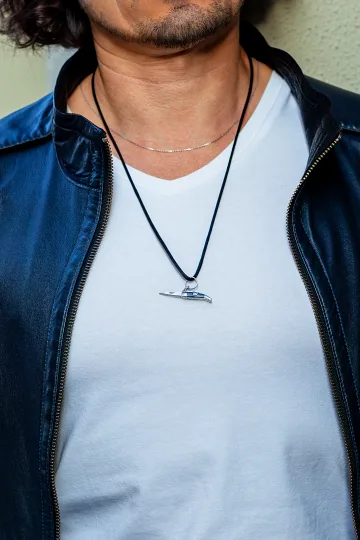





In closing
The type of a ring is its architecture, and it, not the stone or the metal, decides how a piece reads and where you wear it. A strict solitaire, a shining halo, a cluster, a band, a signet, a cocktail ring, stacking rings, each type carries its own character and its own occasion. Once you understand them, any case is easy to read: you look at the construction, weigh it against your hand and occasion, and the choice falls into place. Sometimes it is one exact solitaire for life, sometimes a changing stack by mood, and sometimes one daring ring for a special evening.
About Zevira
Zevira makes rings that are easy to match to a hand and an occasion: strict solitaires and thin bands for every day, signets with character, cocktail accents for a night out, stacking models for your own composition. Behind the brand is a Spanish school with the heritage of Albacete, an old centre of metal and craft, and an attention to how a piece sits and lives on a hand.