Ring setting types: prong, bezel, pave, channel and more
Introduction: how the stone is held and why it matters
A friend wore her engagement ring with a round diamond in a six-claw setting for three years. One morning in the mirror she noticed something strange: the stone was gone. Just two bent claws and an empty gap. She found the diamond an hour later under her pillow. The claws had loosened over the years of wear, and one of them had pushed the stone out while she slept. The story ended well, the diamond was not lost, the jeweller rebuilt the claws and reset the stone. But the scare stayed with her.
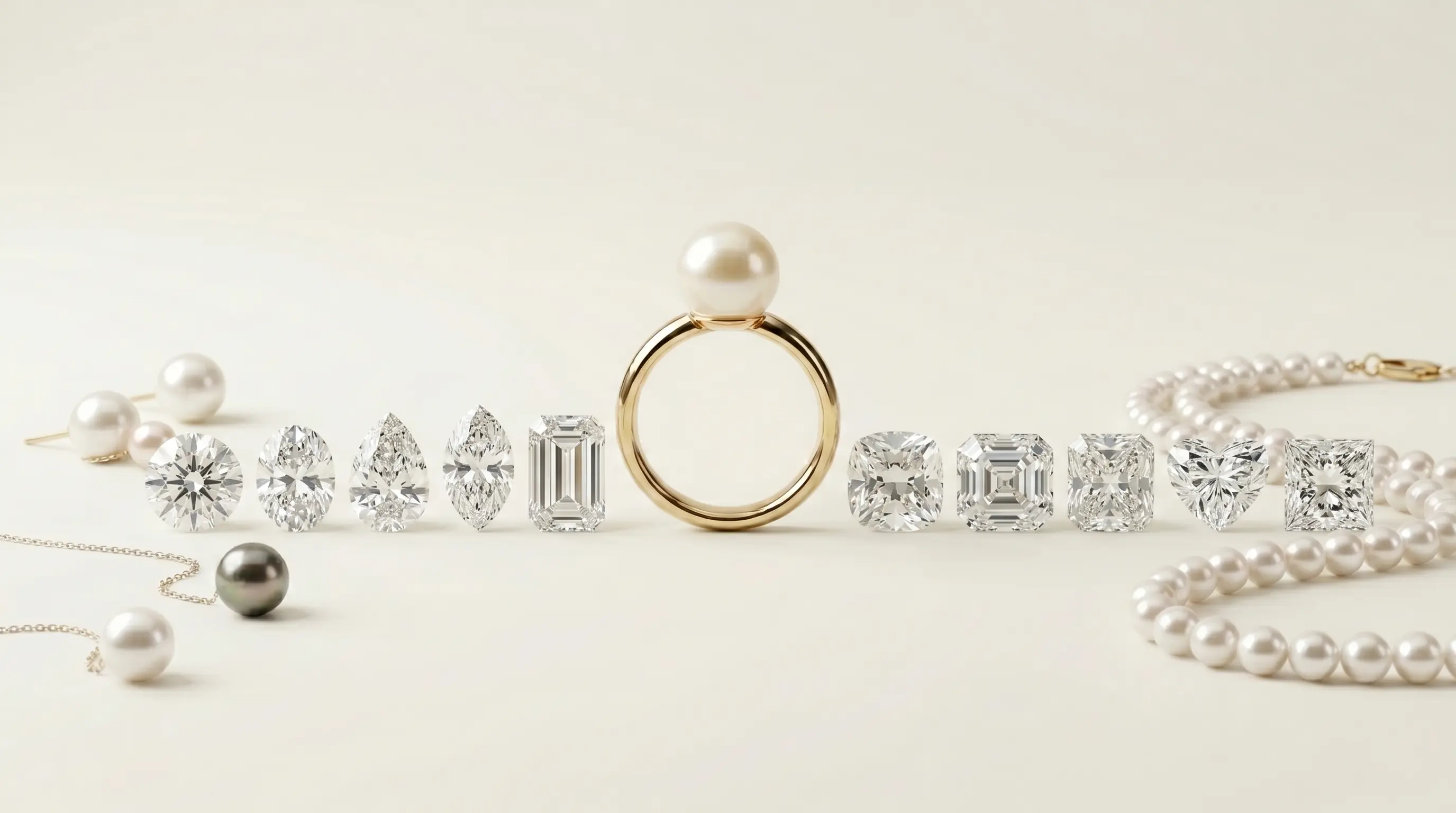
The story is not unique. What we call a "ring setting" is a precise engineering structure that holds the stone using metal claws, a rim or a hidden mechanism. The setting determines the aesthetics, the safety of the stone, and how comfortable the ring is to wear every day. The same diamond in different settings creates a completely different feel: a prong setting makes the stone seem to float and sparkle maximally, a bezel wraps it in a metal rim, pave turns the ring into a "star-studded road".
Wear the symbol, don't just read about it. These are in stock:

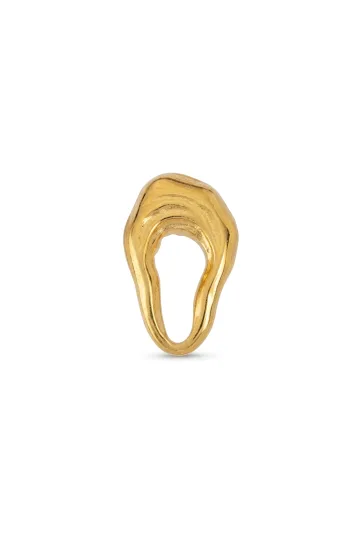
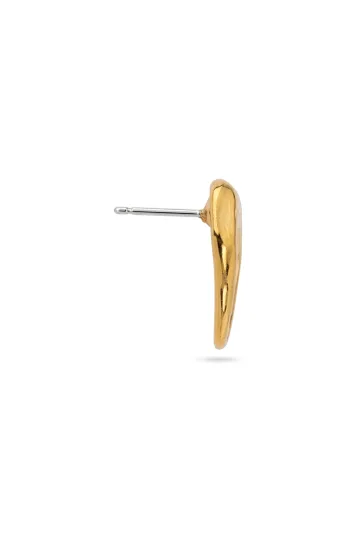

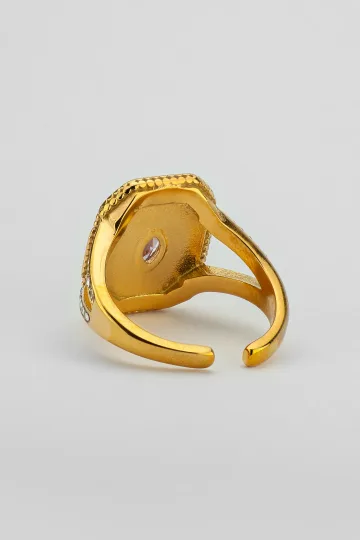
This guide covers 14 main setting types in detail. How they differ in technique, security, sparkle, price and style. Which setting fits which stone shape. Which is safe for an active lifestyle, which needs care. How to maintain different settings and when to show them to a jeweller. Worth knowing before choosing an engagement, wedding or any stone-set ring.
If you want to start with stone shapes themselves, see the diamond shapes guide. For diamond value and grading, see the 4Cs guide. For ring sizing, see how to find your ring size. This guide focuses on the setting itself.
What a setting is and why it matters
A setting (also called the mounting) is the part of the ring that holds the stone. Technically it includes:
- The head or basket: the hollow structure that receives the stone
- The prongs or bezel: the elements that physically keep the stone from falling out
- The gallery: the lower structure of the head, visible from the side
Why the setting matters
Security. A good setting prevents stone loss. Long-term durability depends on it.
Aesthetics. The setting decides how the stone reads. The same diamond floats like a star in a minimal prong but looks like a smooth disc in a bezel.
Protection. Some settings (bezel, protected pave) shield the stone from chips and scratches. Others (high prongs) leave the stone more exposed.
Light flow. Open settings (prong) let light into the stone from all directions, maximising sparkle. They are also easier to clean of dirt and cosmetics. Closed settings (bezel) sparkle less but suit everyday wear better.
Budget. Complex settings (pave, halo, vintage filigree) cost more than simple ones (solo prong, bezel) because of more jeweller labour.
What drives the choice
The setting is chosen by several criteria at once:
- Stone shape (some shapes need specific settings)
- Style (classic, vintage, modern, minimalist)
- Lifestyle (active or office)
- Budget
- Aesthetic preference
Anatomy of a setting in more detail
It helps to know the names of the parts before choosing. The shank is the band itself, the part that circles the finger. The head is the structure at the top that holds the stone, and within the head the basket is the hollow cradle the stone sits in. The gallery is the decorative or open framework on the underside of the head, visible from the side, and a well-finished gallery is often a sign of quality work. The prongs, also called claws, are the small fingers of metal that grip the stone, while the bridge or peg is the metal beneath the basket that connects the head to the shank.
Each of these parts can be modified. The shank can be plain, knife-edged, split into two strands, or set with stones. The head can sit low against the band or high on cathedral arches. The gallery can be solid, pierced into filigree, or set with a hidden halo. Understanding this vocabulary turns a confusing showroom conversation into a clear one, and lets a buyer describe exactly what they want rather than pointing vaguely at a tray. It also makes care easier, because you can tell a jeweller precisely which part needs attention.
A tall prong setting snags every sweater you own. For everyday wear, a bezel, and I will not hear otherwise.
How to wear a ring with a stone
Years at the counter and on shoots have put hundreds of rings through my hands. Here is what actually decides a look, sorted by occasion and setting.
What do I wear a ring with every day? For daily wear I choose a smooth setting: a bezel or a flush. They do not catch on clothes and live easily with knitwear, a shirt, a chunky sweater. This kind of ring does not argue with a busy day and works equally with jeans and a trouser suit. One rule: the more active the day and the simpler the outfit, the lower and calmer the stone should sit.
Which setting should I save for the evening? A tall prong or a cathedral I recommend for going out. They lift the stone toward the light, and against a bare shoulder, silk, or a V-neck the sparkle reads as an accent that needs nothing else beside it. Halo and pave I suggest for a big occasion: an engagement, an anniversary, a formal entrance, where the ring becomes the centre of the look.
How do I match the metal to what I wear? White gold and platinum I suggest with grey, navy, black and silvery fabrics, they cool the palette. Yellow and rose gold are warmer and come alive on beige, emerald, deep red, on suede and wool. If you wear the ring with other jewellery, keep the metals at one temperature and leave mixing for a single deliberate accent, such as a two-tone band.
Can I stack rings? Yes, with judgement. A slim bezel or a single prong-set stone I stack happily with a wedding band and narrow pave rows, and the result stays light and modern. A bulky halo, by contrast, wants room: give it its own finger and do not crowd the hand. Choose earrings and a pendant at the same metal temperature as the setting.
Which setting suits whom? For those who value restraint and comfort I recommend a bezel and a flush. For lovers of shine and drama I suggest cathedral, halo, a tall prong head. For anyone drawn to vintage and soft silhouettes, filigree and milgrain sit well under pastel fabrics and flowing cuts. Consider the hand too: an elongated stone (marquise, oval, pear) visually lengthens shorter fingers.

Turn on your camera, pick earrings, a pendant or a ring, and see the piece on yourself in real time.
Switch items in one tap.
Everything runs in your browser: no photo or video is ever uploaded.
Prong (claw setting)
The most common type. About 70 percent of engagement rings use a prong setting.
How it works
Several (usually 4 or 6) metal claws rise from the head and grip the stone at the edges. The stone rests on the lower edge of the basket and is held from above by the bent tips of the claws.
Prong variants
4-prong: classic for square and rectangular stones (princess, asscher, emerald, radiant). Shows more of the stone, makes it look visually bigger.
6-prong: classic for round stones (the classic raised solitaire style). More secure, classic look.
V-prong: for sharp corners (pear, marquise, heart). Protects the vulnerable tip.
Double prong: paired claws at each position. More vintage feel.
Strengths
- Maximum sparkle (light enters from all sides)
- Universal for any shape
- Visually emphasises the stone
- Allows a high head ("floating" stone)
- Relatively simple construction, easy to repair
Weaknesses
- Claws can snag on clothing, hair, curtains
- A heavy knock bends the claws
- Claws need a yearly check (they can loosen)
- The stone is exposed and can chip
Who it suits
- Lovers of maximum sparkle
- Those who accept claw risk for the aesthetic
- For office work and non-contact sport
- For formal rings
Prong shape and metal choice
The tip of a prong can be finished in several ways, and the choice affects both looks and snagging. A rounded prong is the smoothest and least likely to catch on clothing, which is why it is the most common modern finish. A pointed prong has a sharper, more vintage look but snags more. A flat or tab prong gives a clean architectural line and grips a step-cut stone such as an emerald well. A claw prong, narrowing to a fine point, has an antique, delicate appearance.
Metal hardness matters too. Platinum prongs bend rather than snap, which sounds like a weakness but is actually safer, because a bent prong can be pushed back while a snapped one drops a stone. Platinum does wear down slowly over decades, so the prong tips thin gradually. White gold prongs are harder and hold their shape longer, but when they fail they tend to crack. Many jewellers build a yellow or rose gold ring with platinum prong tips precisely to get the best of both.
Yearly inspection
Show the ring to a jeweller every 6 to 12 months to check claw integrity. Metal claws gradually loosen as daily knocks and fabric snags deform the soft metal. A simple test you can do at home between visits: hold the ring close to your ear and tap it gently against a hard surface. A loose stone produces a faint rattle. If you hear or feel any movement, stop wearing the ring and book a check. Tightening prongs on time costs little; replacing a lost stone costs a great deal, and a stone with sentimental value cannot be replaced at all.
Bezel (rim setting)
The stone is surrounded by a metal rim along its full perimeter.
How it works
A hollow head has a metal wall around its perimeter. The stone drops in, and the edge of metal is bent around the stone, forming the rim that holds it.
Bezel variants
Full bezel: a metal rim follows the entire stone outline, enclosing it completely for full protection.
Half-bezel or partial bezel: a rim covers part of the outline, usually two opposite sides, with the stone left open at the others. A compromise between protection and visibility.
Floating bezel: the bezel rim is suspended slightly away from the band on a small framework, so light reaches the stone from underneath as well as above. This recovers some of the sparkle a closed bezel gives up, while keeping the snag-free rim.
Bezel with milgrain: the outer edge of the rim is finished with a fine row of tiny beads, a technique called milgrain, which softens the metal edge and gives a vintage, hand-finished look.
Strengths
- Maximum protection of the stone (no exposed edges)
- Cannot snag on anything
- Stable and durable
- Modern minimalist look
- The stone cannot fall out
Weaknesses
- Less sparkle (light enters mostly from above)
- The stone looks smaller than in a prong
- Heavier feel: more metal around the stone
- Harder to repair (rim work is delicate)
Who it suits
- Active lifestyle, manual work
- Lovers of modern minimalism
- Anyone with a lower stone (less prone to chips)
- Daily wear and sport
Why bezels suit certain people especially well
The bezel is the practical choice for several specific groups. Nurses, doctors and anyone who washes their hands many times a day benefit because there are no prongs to trap soap, lotion or grime, so the ring stays cleaner. People who work with their hands, from gardeners to musicians to those who care for small children, benefit because the smooth rim cannot scratch skin or snag fabric and the stone sits protected. The bezel is also a strong choice for a softer or more fragile stone such as an emerald, opal or pearl, where a chip is a real risk and the metal rim shields the vulnerable edge.
A bezel can be made in two finishes that change the look considerably. A high-polish bezel reflects light around the stone and almost frames it in a bright halo of metal. A matte or brushed bezel reads as quiet and contemporary, letting the stone stand alone against a soft metal field. Rose gold and yellow gold bezels add warmth around a white diamond, while a platinum or white gold bezel keeps the whole piece cool and seamless.
Half-bezel and semi-bezel
A compromise between full bezel and prong, and one of the most useful modern setting ideas.
How it works
The bezel covers only part of the stone, most often two opposite sides, leaving the remaining sides open and visible without metal. This combines bezel-grade protection on the sensitive areas with the open sparkle of a prong setting on the rest. In practice the jeweller positions the metal arcs where the stone is most at risk and leaves the rest free, so the setting is tuned to how the stone actually sits on the hand.
Strengths
- Partial protection without losing all sparkle
- Modern designer look
- Often paired with an east-west stone orientation
Weaknesses
- Less protection than full bezel
- Less sparkle than full prong
- Niche aesthetic
When a half-bezel makes sense
The half-bezel is a genuine middle path rather than a compromise nobody wants. It is the natural choice for a wearer who loves the protected, snag-free feel of a bezel but does not want to give up the brightness that comes from light entering the sides of the stone. The two metal arcs are usually placed on the sides that take the most contact, the north and south of the stone as it sits along the finger, while the east and west are left open so the stone breathes light.
The half-bezel also works well with elongated stones set in the modern east-west orientation, where an oval or emerald lies across the finger rather than along it. Metal caps on the two ends of such a stone protect the points or corners most at risk while leaving the long sides fully visible. The result is a contemporary, slightly architectural look that pairs neatly with minimalist bands and stacked rings.
Pave
Many small stones set into the band itself, looking like a road sprinkled with stars.
How it works
Tiny holes are drilled in the band. Small diamonds (usually 1 to 2 mm) drop into them, and tiny metal beads are raised around each to hold them. The metal is invisible from above: only stones are seen.
Pave variants
Standard pave: rows of small diamonds along the band.
Micro-pave: the smallest possible stones (under 1 mm) in dense rows. Cocooning sparkle.
French pave: V-shaped grooves between stones, more metal visible.
U-pave: U-shaped grooves between stones, more sparkle.
Strengths
- Visually maximum sparkle (the whole band gleams)
- Often paired with a centre stone (the centre + pave band)
- A luxurious effect
- Can mask thinner bands
Weaknesses
- Many small stones, any one of which can fall out
- Hard to repair (specialist jeweller needed)
- Hard to clean (stones trap dirt)
- More expensive than a plain band
- Hard to resize without damage
Who it suits
- Lovers of maximum visual sparkle
- Stone-rich aesthetics
- Festive and dressy rings
- Not for heavy manual work
What pave does for a ring
Pave earns its place by transforming the band itself into part of the show. A plain metal band reads as a frame; a pave band reads as continuous light, so the centre stone seems to rise out of a glittering surface rather than sit on a quiet one. This is why pave pairs so naturally with a halo and a centre stone: the eye travels an unbroken path of sparkle from the band to the crown of the ring. Pave can also make a slim band look more substantial, because the line of small stones draws attention and visually thickens the metal.
The trade-offs are real and worth understanding before buying. Tiny stones are held by minute beads of metal, and over years of wear a bead can wear thin and release a stone. This is not a flaw in the design so much as a maintenance requirement: a pave ring needs an annual inspection under magnification, exactly as a prong ring does. Pave also complicates resizing, because stretching or compressing the band disturbs the seats of the stones along the shank. A buyer who expects their ring size to change, through pregnancy or other reasons, should ask the jeweller to leave a stretch of plain metal at the base of the band where future resizing can be done without touching the stones.
Stones set in a single line within a metal channel.
How it works
A long groove (channel) runs through the band, and small stones (round or princess) fit edge-to-edge inside it. Metal walls on both sides hold the row.
Strengths
- Modern, clean look
- Stones are well protected on both sides
- Suits both engagement and eternity rings
- Less risk of stone loss than pave (each stone has metal walls)
Weaknesses
- Less sparkle than pave (metal walls reflect light)
- Hard to resize (channel geometry breaks)
- Requires precise execution
Channel in practice
The channel setting is the workhorse of the eternity ring and the diamond wedding band, the styles where a continuous line of stones runs around all or part of the band. It earns that role because the two metal walls that flank the channel give every stone protection on its two most exposed sides while still leaving the top open to light. Compared with pave, the channel loses a little sparkle, since the walls reflect some light back, but it gains real durability: there are no fragile beads to wear away, and the stones sit locked between solid metal rails.
The channel does demand precise workmanship. The groove must be cut to an exact depth and width so every stone sits at the same height with no gap, and the stones themselves must be matched closely in size. Because the walls are integral to the band, resizing a channel ring is genuinely difficult: adding or removing metal disturbs the alignment of the channel. For this reason channel rings are best bought in a confirmed size, and buyers who anticipate size changes should consider a partial channel that leaves plain metal at the base of the shank.
Customer reviews
Zevira is a real jewellery shop. Genuine payments, deliveries and customer thank-yous.
🥰🥰🥰 gracias
Ok, ¡gracias! 🙂
Halo
A central stone surrounded by a circle of small stones.
How it works
The centre stone sits in its main setting (prong or bezel), and around it sits a ring of small diamonds in micro-pave or small prong setting.
Halo variants
Single halo: one ring of stones around the centre.
Double halo: two concentric rings around the centre. More dramatic effect.
Hidden halo: stones set under the centre stone, visible only from the side. Modern fashion.
Geometric halo: square, hexagonal or asymmetric halo for designer styles.
Strengths
- Visually enlarges the centre stone by 30 to 50 percent
- Maximum overall sparkle
- Allows a smaller centre stone at lower cost (visual size from the halo)
- A festive, luxurious look
Weaknesses
- Many small stones, any one can fall out
- More complex maintenance
- The classic centre-stone aesthetic is partially diluted
- Hard to wear with a fitted wedding band
Who it suits
- Lovers of festive, statement rings
- Buyers wanting visually big without the price
- Wedding and engagement rings for a glamorous look
The economics of the halo
The halo is the most effective tool the jewellery trade has for stretching a budget without resorting to deception. Because diamond price rises steeply with size, a single large centre stone costs far more than a smaller centre stone surrounded by many tiny ones of the same total weight. A halo built around a modest centre can give a ring the visual footprint of one half to a full carat larger, at a fraction of the cost of buying that larger stone outright. The effect is honest, since the ring genuinely contains all those diamonds; it simply arranges them to maximise presence.
There is a styling cost to weigh. A halo softens the clean, architectural look of a true solitaire, and it can make pairing with a wedding band harder, since the ring of small stones often blocks a flat band from sitting flush. The usual solution is a contoured wedding band shaped to curve around the halo. The hidden halo, a newer variant, places the small stones underneath the centre stone rather than around it, so the ring reads as a clean solitaire from above and reveals its extra sparkle only from the side. That version preserves the slim profile and pairs more easily with a straight wedding band.
Tension
A futuristic setting where the stone is held by metal pressure alone.
How it works
The band ends are cut and machined so they press against the stone with high precision. The metal is chosen for its spring properties and then work-hardened, and tiny seats are cut into the two facing ends to receive the girdle of the stone. When the stone is fitted, the band squeezes inward against it under genuine compression, so the stone is gripped by tension between two metal sides with no prongs or bezel at all. The hidden engineering is considerable, which is why a tension setting must be made by a workshop experienced in the technique.
Strengths
- A unique futuristic look
- The stone seems to float in air
- Maximum stone visibility
- A talking-point design
Weaknesses
- Risk of loss with a hard knock or band bend
- Very hard to resize (geometry breaks)
- Demands precise execution
- Not suitable for all stone shapes (best for round and oval)
- Higher cost
- Less classic feel
Who it suits
- Lovers of modern designer rings
- Those who do not mind risk for the look
- Office work, not manual labour
How tension settings actually work
The tension setting looks like magic, a stone floating in a gap with nothing visibly holding it, and understanding the engineering makes it less alarming. The band is made from a metal with strong spring properties, then work-hardened so it resists deformation. Tiny grooves or seats are machined into the two facing ends of the gap, and the stone is fitted under genuine compression, with the band squeezing inward against the girdle of the stone. The pressure is considerable, often equivalent to many kilograms of force, which is why only hard stones such as diamond, sapphire and ruby are suitable; a softer stone could crack under the load.
The real-world caution is not about everyday wear but about two specific risks. First, a sharp impact can momentarily flex the band and release the stone. Second, the setting is extremely difficult to resize, because changing the band's circumference alters the precise spring pressure that holds the stone, so the ring must be bought in an exact size. Many jewellers offer a "tension-style" alternative, which looks almost identical from the front but adds a hidden bridge of metal beneath the stone for security. Buyers drawn to the floating look but worried about loss often choose the tension-style version for daily wear.
Flush (gypsy)
The stone is set flush into the band, with no protrusion.
How it works
A pocket is bored into the band metal at the chosen spot, sized so the stone drops in with its table level with or just below the surface. The metal immediately around the pocket is then burnished, meaning rubbed and compressed inward with a smooth polished tool until it folds over the edge of the stone and grips it firmly. No prongs and no separate rim are added; the band itself becomes the setting.
Strengths
- The stone does not protrude
- Maximum protection (the stone is below the surface)
- Cannot snag
- Ideal for an active lifestyle
- Modern minimal look
Weaknesses
- Less sparkle (the stone is below)
- Visually a small stone
- Demands skilled execution
Who it suits
- Active lifestyle, sport, manual work
- Lovers of minimalism
- Often used in men's rings
Why the flush setting is so durable
The flush setting, also called gypsy or burnish setting, is the most physically robust way to set a stone in a ring. Because the stone sits inside a pocket bored into the band, with its surface level with or just below the surrounding metal, there is simply nothing for the world to knock against. No prong can bend, no rim can wear, no bead can release. The metal is burnished, meaning rubbed and compressed inward around the stone with a polished tool until it grips. The result is a setting that survives years of hard use with almost no maintenance.
That durability explains why the flush setting dominates men's rings and signet-style bands, and why it suits anyone whose hands take constant punishment: tradespeople, athletes, climbers, parents of young children. The trade-off is sparkle. A flush-set stone is recessed and lit mainly from directly above, so it glows quietly rather than flashing. It also reads as smaller than the same stone raised in a prong. For a buyer who values toughness and a clean, modern surface over maximum brilliance, that is a worthwhile exchange, and a row of small flush-set diamonds along a plain band is one of the most practical ways to add stones to an everyday ring.
Upload a photo of your pet, someone you love, or an object. We'll build a 3D model and hand-cast it in pewter.



Bar setting
Stones held by short metal bars between them.
How it works
A row of stones sits along the band, with a short metal bar between each. The bars hold the stones from the sides; the stones are open at the top and bottom.
Strengths
- Stones are open from above, good sparkle
- Stones are well held from the sides
- Modern feel
- Often used in eternity rings
Bar setting in practice
The bar setting sits between the channel and pave in both look and function. Like a channel it lines stones up in a neat row, but instead of two continuous walls it uses short individual bars of metal placed between the stones, so each stone is gripped on two sides and left open at top and bottom. That open top lets in more light than a channel, giving the row a livelier sparkle, while the bars still give the stones solid support and a crisp, rhythmic, modern appearance.
The bar setting is a popular choice for eternity rings, anniversary bands and stackable rings, where the regular metal-and-stone rhythm reads as deliberate and graphic. The slight trade-off is that the stones, being open at the top and bottom, are a little more exposed than in a channel, so a bar-set ring suits ordinary daily wear and office life better than heavy manual work. Its clean geometric character makes it a favourite for buyers who want a contemporary alternative to the softer, more traditional pave band.
Illusion
A setting that visually enlarges a small stone.
How it works
The small central stone sits in a polished metallic structure that visually expands it. The metal looks like part of the stone, creating an illusion of size.
Strengths
- Visually enlarges a small central stone (sometimes nearly doubles it)
- Allows a budget-friendly small centre stone
Weaknesses
- Looks dated to many modern tastes
- Less classic
- Sometimes criticised for overstating the stone
The illusion setting in context
The illusion setting belongs to a particular moment in jewellery history. It became widespread in the mid-twentieth century, when many couples wanted the look of a diamond engagement ring on a modest postwar budget. By seating a small stone in a faceted, highly polished metal plate cut to blend with the stone's outline, jewellers could make a quarter-carat diamond present like something noticeably larger. For a generation of buyers it made a diamond ring attainable, and many of those rings are now family heirlooms with real sentimental weight.
Modern taste has moved away from the illusion setting, partly because contemporary buyers prefer a stone that is honestly what it appears to be, and partly because the halo achieves a similar enlarging effect with real diamonds rather than shaped metal. Still, the illusion setting is worth understanding for anyone inheriting an older ring, and a buyer on a tight budget who simply wants the most visible stone for the money can consider it a legitimate, if unfashionable, option.


Cluster
A grouping of small stones forming a single visual unit.
How it works
Several small stones (5 to 30) are set close together in a single cohesive shape (often a flower, geometric form or freeform).
Strengths
- Designer original aesthetic
- Can mimic a larger centre stone at lower cost
- Many sparkle points
Weaknesses
- Many stones to maintain
- A non-classic look
- Hard to coordinate with a wedding band
The cluster as a design tradition
The cluster setting has a long pedigree. Georgian and Victorian jewellers used clusters constantly, often arranging small stones into the shape of a flower with a coloured stone at the centre and a ring of diamonds as petals. That floral cluster, sometimes called a daisy ring, became one of the defining engagement styles of the nineteenth century, long before the single-stone solitaire took over the market. Choosing a cluster today, then, is partly a choice of heritage: it links a modern ring to a tradition older than the diamond solitaire itself.
A cluster also solves a practical problem. By grouping many small stones into one shape, it produces real visual size and abundant sparkle from stones that are individually inexpensive, since small stones cost far less per carat than large ones. The cost is maintenance, because every small stone is a seat to inspect, and styling, because an irregular cluster outline can be awkward to sit beside a straight wedding band. Buyers who love the cluster look often wear it on the right hand or pair it with a contoured band shaped to follow the cluster edge.
Trellis and Claddagh
Cultural settings with their own stories.
Trellis
The trellis is a vintage-flavoured prong setting in which the claws do not rise straight up but curve and cross over one another in an X or woven pattern as they reach the stone. The effect, seen from the side, is of the stone resting in an interlaced cradle, which adds a romantic, antique character and a sense of movement that a plain straight-prong setting lacks. The crossing prongs also tend to sit the stone a little lower and more securely than tall straight claws, while still leaving the stone open to light. The trellis suits buyers who want the brilliance of a prong setting but with more design interest in the head, and it pairs especially well with round and oval stones.
Claddagh
The Claddagh is a setting drawn directly from one of the most recognisable rings in the world, the Irish Claddagh ring, which originated in the fishing village of Claddagh near Galway in the seventeenth century. The motif is two hands clasping a crowned heart, and the three elements carry fixed meanings: the hands stand for friendship, the heart for love and the crown for loyalty. As a stone setting, the two cast hands physically hold the centre stone in place of conventional prongs, so the symbolism becomes the mechanism. A Claddagh setting is a deeply cultural choice, often chosen to honour Irish heritage, and the way the ring is worn, heart pointing in or out, traditionally signals relationship status. For the full tradition, see the Claddagh ring guide.
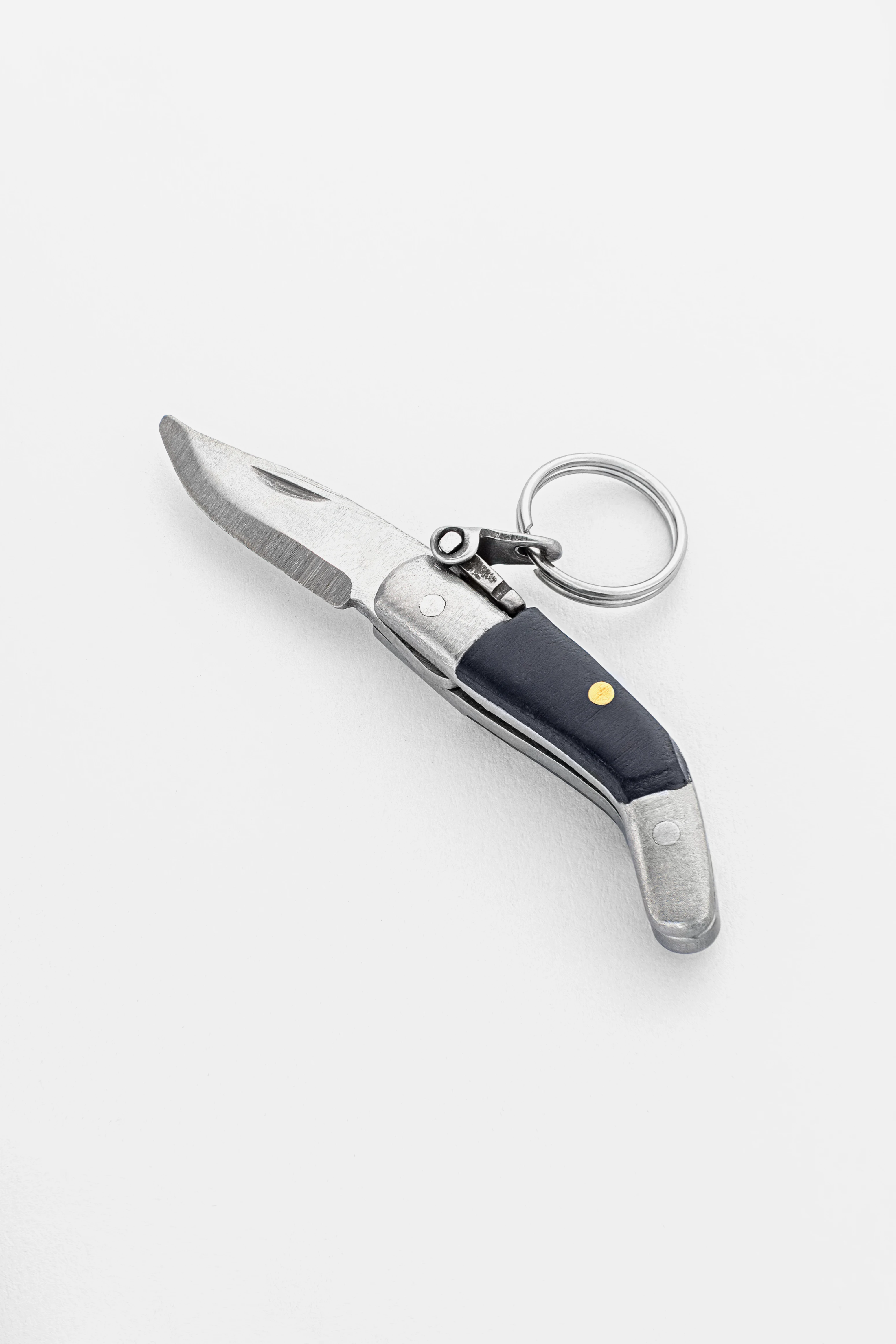
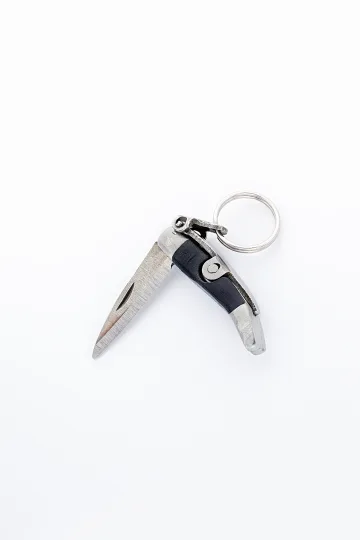
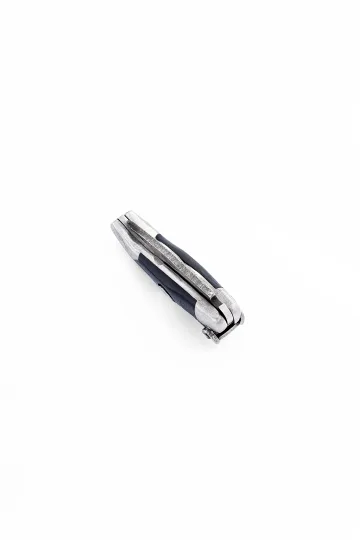
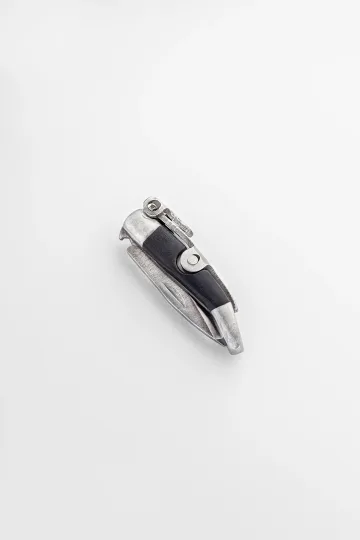
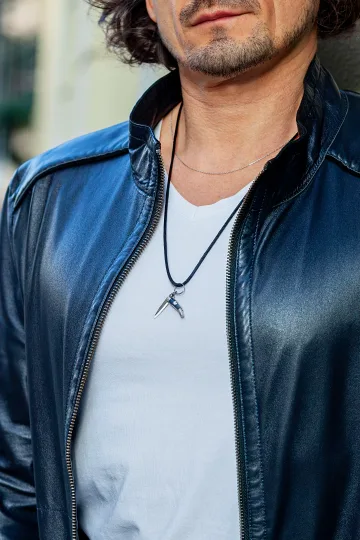
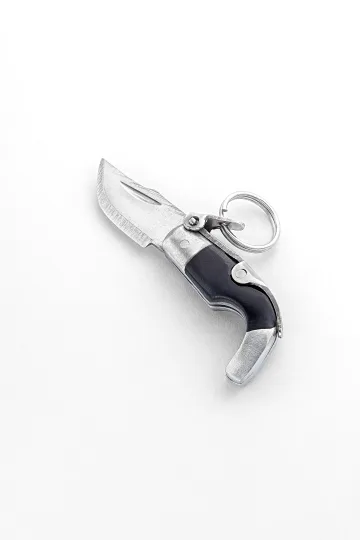
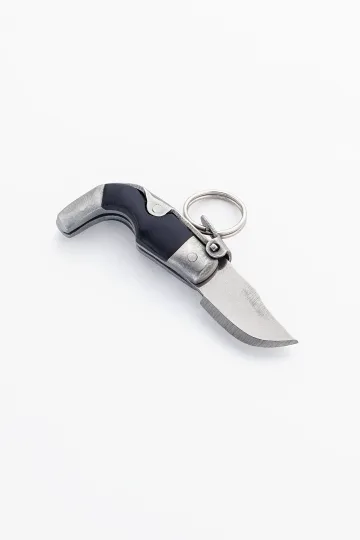
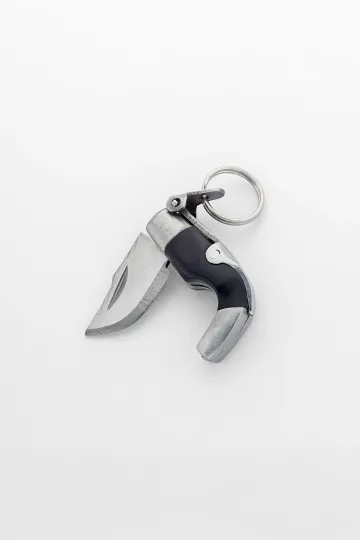
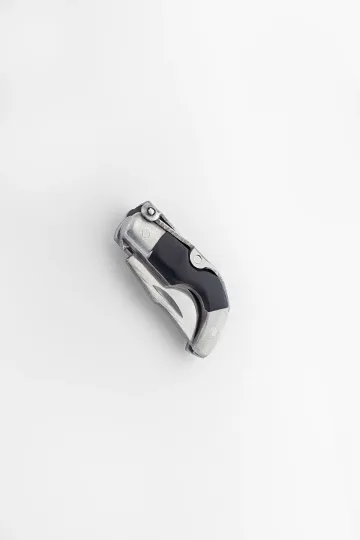
CAPAORA mini knife pendant
The 18th-century Spanish navaja in miniature: 40 mm of stainless steel, a real folding mechanism and a Palanquilla lock that clicks. An affordable gift to remember.
Authentic · Ships from Spain · 14-day returns
Cathedral setting
A high architectural style where the head sits raised between two metal arches.
How it works
Two metal arches rise from the band and lift the head, like the supporting arches of a cathedral. The stone sits high above the band.
Strengths
- A grand, classic look
- The stone is highly visible
- Maximum sparkle (light enters fully)
- Often paired with a halo
Weaknesses
- The high stone is exposed to knocks
- The high head makes the ring less comfortable
- Hard to coordinate with a flat wedding band
The cathedral profile
The cathedral setting takes its name and its character from architecture. The two arches of metal that sweep up from the band to cradle the head echo the flying buttresses and vaulted arches of a Gothic cathedral, and they do the same job: they lift and support a load while keeping the structure graceful and open. From the side, a cathedral ring has a distinctive silhouette, a stone borne aloft on curved shoulders, that a plain solitaire lacks.
There are practical effects beyond looks. The arches add metal to the upper part of the ring, which strengthens the head and can make a slim band feel more substantial and balanced. They also catch and add a little of their own glint along the shoulders. The cost is that the stone sits high, which means it is more exposed to knocks and the ring snags a little more easily, and the raised profile can be harder to pair with a flat wedding band. A cathedral setting suits a wearer who wants a romantic, classic silhouette and is willing to give the ring ordinary care rather than subject it to heavy manual work.
Three-stone
Three stones set in a row.
How it works
A central larger stone, with two smaller stones flanking it. All three are usually set in prongs (sometimes the side stones in bezel for contrast).
Symbolism
The three stones most often read as the past, present and future of a relationship, which makes the design a natural choice for an engagement ring or a milestone anniversary. The same arrangement carries other readings too: in some interpretations the trio stands for friendship, love and fidelity, and in others simply for a couple with the larger centre stone as the bond between them. Because the meaning is flexible and warm, the three-stone ring works as well for a tenth or twenty-fifth anniversary gift as it does for a proposal.
Side stone choices
The two flanking stones open up real design flexibility. They can repeat the centre shape in miniature, a round centre with two smaller rounds, for a unified classic look. They can take a contrasting shape, such as tapered baguettes, trapezoids or half-moons, which frame the centre with clean geometric lines and give an art deco character. They can also be coloured: a white centre diamond flanked by two sapphires, emeralds or rubies turns the ring into something far more personal, and a pair of birthstones can encode a meaningful date. Whatever the choice, the side stones should be matched to each other in size and quality so the ring stays balanced.
Strengths
- Symbolic and flexible in meaning
- Visually substantial (three stones together create real presence)
- More flexibility in materials (the side stones can be a different shape or colour)
- A timeless classic look that pairs well with a straight wedding band
Weaknesses
- More stones to maintain and inspect
- More complex resizing because of the side-stone seats
- A wider head that some find less comfortable than a single solitaire
Vintage and filigree settings
Decorative settings with intricate openwork.
How it works
The metal of the basket and band is openworked into delicate patterns (vines, scrollwork, lacework). The stone is held in a classic prong or bezel within the openwork.
Strengths
- A unique vintage feel
- Recalls Edwardian and art deco styles
- A piece of art
Weaknesses
- Delicate, prone to bending
- Hard to clean
- Hard to repair (specialist needed)
- Hard to coordinate with modern wedding bands
The history behind filigree
Filigree is one of the oldest decorative techniques in metalwork, with examples surviving from ancient Mesopotamia, Egypt and the classical Mediterranean. As a ring-setting style it reached its peak in the Edwardian period of the early twentieth century, when the introduction of platinum changed what jewellers could do. Platinum is strong enough to be drawn into very fine threads and pierced into delicate lacework that would have collapsed in softer gold, so Edwardian designers filled their settings with garlands, bows, scrolls and openwork as fine as embroidery. The art deco era that followed kept the openwork but reorganised it into geometric, symmetrical patterns.
A filigree or vintage setting therefore carries a clear historical signature, and many buyers choose it precisely to evoke that Edwardian or art deco character. The trade-off is fragility: fine pierced metal can bend if knocked, traps dust and skin oils that need careful cleaning, and demands a jeweller experienced in antique-style work for any repair. A filigree ring rewards a wearer who treats it as a special-occasion or carefully worn piece rather than a rough daily ring.
Leave your email, we'll send your discount code. No spam, unsubscribe anytime.
The code arrives by email, valid on your first order.
Security compared
Setting security ranking from most to least secure:
- Bezel (full): maximum protection, the stone cannot fall out
- Flush (gypsy): stone below the surface
- Channel: stones in a closed channel
- Bar: moderate
- 6-prong: classic balance of security and visibility
- 4-prong: slightly less secure than 6-prong
- Pave: many small stones, individual loss possible
- Tension: at risk with hard knocks
- Cathedral with high prong: maximum exposure
- Vintage filigree: delicate, prone to damage
When security matters most
For an active lifestyle, manual work, sport: bezel or flush. For office work and ordinary care: prong is fine. For formal occasional wear: any setting.
Security is not only the setting
It is worth remembering that the setting is only one part of how safe a stone is. The metal matters: platinum prongs bend and can be pushed back, while harder white gold prongs hold shape longer but fail more abruptly. Maintenance matters more than almost anything, since the most secure setting in the world will eventually release a stone if its prongs are never checked, and the least secure setting will hold for decades if it is inspected and serviced on time. Habits matter too: removing a ring before sport, gardening, gym work and heavy cleaning protects any setting. The honest summary is that a moderate setting with good care outperforms an excellent setting with no care.
Sparkle compared
Setting sparkle ranking from most to least:
- High prong (raised solitaire): maximum, the stone floats
- Cathedral with prong: very high
- Halo: very high (centre stone plus halo)
- Pave (whole band): very high overall
- 4-prong: high
- Bar: medium-high
- Tension: medium-high (stone is open but no halo)
- Channel: medium
- Half-bezel: medium
- Full bezel: lower (light only from above)
- Flush: lowest
The sparkle trade-off
More sparkle means less protection, more protection means less sparkle. The compromise depends on lifestyle and aesthetic.
Matching setting to stone shape
Some stones need specific settings.
Round
Universal. Round works in any setting: prong (classic 6-prong), bezel, halo, channel, pave.
Oval
Often 4-prong or 6-prong setting. Halo emphasises the shape well. East-west orientation in a bezel is trending.
Pear
V-prong on the point is mandatory. Best in pendants and drop earrings.
Marquise
V-prong on both points. Cathedral or closed setting protects the vulnerable ends.
Emerald cut
4 corner prongs or full bezel. Three-stone with baguette side stones is a classic combo.
Cushion
Universal. Looks great in halo (especially old mine halo) and solitaire.
Asscher
Geometric 4-corner prong. Bezel hides the geometry.
Radiant
Standard prong settings, no special needs.
Heart
V-prong on the point is mandatory.
Princess
Corner V-prong on each of 4 corners is mandatory.
For more, see the diamond shapes guide.
Matching setting to lifestyle
How activity level should drive the choice.
Very active (sport, hands-on work)
Best: flush, bezel, channel. The stone is protected from knocks.
Avoid: high prong, tension, vintage filigree.
Office, ordinary care
Best: 6-prong (classic), 4-prong, halo. Aesthetic over maximum protection.
Acceptable: any setting with annual maintenance.
Special occasions only
Best: any setting, including delicate ones (filigree, high cathedral, tension). With little wear, even fragile settings last a long time.
Travel and outdoors
Worth taking the ring off in the most demanding situations such as extreme sport, scuba diving and mountain hiking. Any setting is at risk under extreme physical strain, and cold also matters: fingers shrink in cold water and rings slip off easily, so a ring removed before a swim in the sea or a cold lake is a ring not lost. When travelling, a small padded ring box or a dedicated travel case protects the setting from knocks in luggage far better than a loose pocket. The simple rule is that the most demanding hour of any day, whatever it involves, is the hour to take the ring off.
Matching setting to the wearer's hands
Beyond activity level, the wearer's hands themselves can guide the choice. Someone who washes their hands constantly is better served by a bezel or flush setting that does not trap soap. Someone with an active toddler benefits from a low, smooth setting that cannot scratch a child. A wearer who handles delicate fabrics or works closely with clients may prefer a snag-free profile. None of this overrides taste, but a setting chosen with the wearer's real daily life in mind is a setting that gets worn happily for decades rather than left in a drawer.
Care for different settings
How to maintain each setting type.
Prong
- Annual jeweller check for claw integrity
- Cleaning by soaking in soapy water, soft brush
- Avoid hard knocks on edges and corners
- Replace bent prongs immediately
Bezel
- Simple cleaning (just soft cloth and water)
- Annual check of bezel-stone contact
- No special concerns
Pave
- Soft brush for between stones
- Annual jeweller check of bead integrity
- No ultrasonic cleaning at home (may loosen small stones)
Channel
- Brush along the channel for cleaning
- Annual check of metal wall integrity
- Avoid bending the band
Halo
- Same as pave (many small stones)
- Plus prong check on the centre stone
Tension
- Annual band-tension check
- Replace immediately if loose
Cathedral
- Same as prong, plus checking the high arches for bending
Vintage
- Special professional cleaning
- Do not flex or bend
- Annual full assessment
A brief history of setting
How setting types evolved.
Antiquity
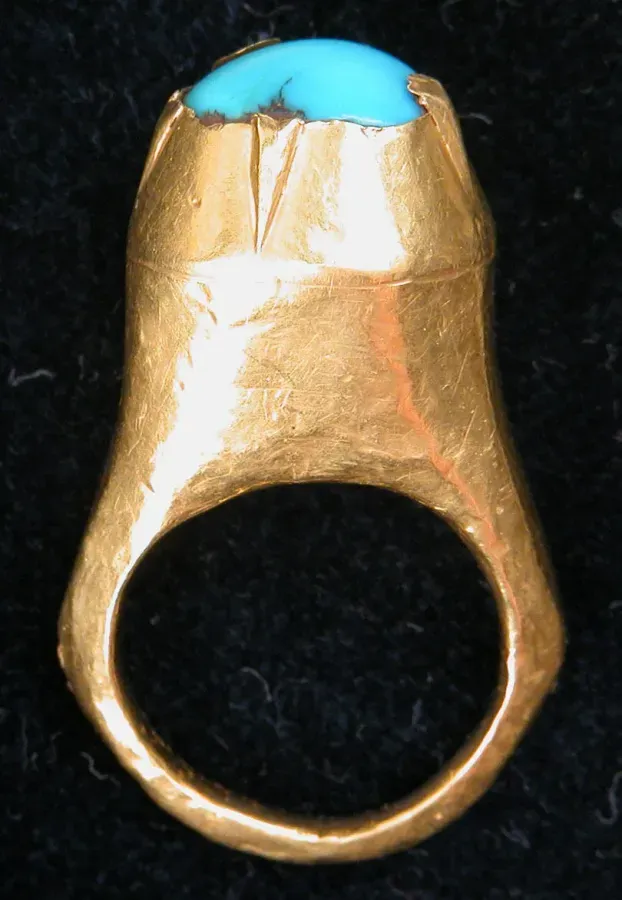
Stones held by simple holes in metal (forerunner of flush) or surrounded by metal bands (forerunner of bezel). Sparkle was not a concept, ancient stones were polished, not cut.
Middle Ages
Bezel dominated. Diamonds were not yet cut, so light play was limited and the stone simply needed holding.
Renaissance
The first prong settings appeared. Diamonds began to be cut, more light play became possible, and open settings let it through.
Eighteenth and nineteenth centuries
The classic 4-prong and 6-prong appeared. Settings became higher (the stone "floated" above the band).
1886: the six-prong solitaire
In 1886 a New York jeweller introduced a setting that changed engagement rings permanently. Instead of burying the diamond low in a bezel, the new design lifted it above the band on six slender prongs, so light could reach the stone from every direction and the diamond appeared to float. The cut diamond, by then properly faceted, finally had a setting that let it do what it does best. The six-prong raised solitaire spread across the world and became the prototype for the great majority of engagement rings made since.
Edwardian era
The Edwardian period of the early twentieth century coincided with the rise of platinum in fine jewellery. Platinum's strength let jewellers pierce metal into fine lace, so settings filled with garlands, bows, scrollwork and milgrain beading. Diamonds were set in airy openwork that looked almost weightless, and the overall effect was delicate and romantic.
Art deco
The 1920s and 1930s replaced Edwardian softness with bold geometry. Settings became symmetrical and architectural: square and rectangular bezels with cropped corners, crisp channel-set lines of small stones, and contrasting colour from sapphires, emeralds and onyx. The diamond was framed by clean angles rather than curling vines.
Mid twentieth century
Mass production after the Second World War made stone-set rings affordable for a far wider public. Settings were simplified and standardised for the workshop, the illusion setting flourished as a way to stretch modest budgets, and pave became a marker of status pieces.
Today
The modern era is defined by variety and personalisation. Buyers mix classic and contemporary, choose custom and hybrid settings, and revive historical styles such as cushion halos and three-stone rings. Genuinely modern innovations include the tension setting, the hidden halo and the east-west orientation that lays an elongated stone across the finger.
Settings in men's rings
Specifics for men's pieces.
What men usually choose
- Flush: stone below the surface, ideal for active hands. The most popular for men.
- Bezel: full protection of the stone. A classic for men's rings with a stone.
- Channel: for wedding bands with several stones in a row.
- Pave: for premium men's rings.
What men do not usually choose
- High prong: the raised stone is uncomfortable on a male hand and catches more easily.
- Halo: generally read as a feminine style.
- Cathedral: too elaborate for most men's styles.
- Vintage filigree: too delicate for typical men's wear.
Why flush dominates men's rings
The reason flush setting leads men's rings is straightforward. A great many men who wear a stone-set ring want it to survive everything their hands do, from a workshop to a gym to a steering wheel, with no fuss. A flush-set stone sits inside the metal, level with the surface, so it cannot snag a glove, scratch a partner or bend a prong. It also matches the visual language most men prefer for rings: solid, clean, understated, with the stone reading as an accent within the band rather than a raised feature. A single flush-set diamond in a brushed band, or a short row of small flush-set stones, is the most common way men add stones to a wedding band without changing its rugged character.
For more, see the men's jewellery guide.
Send a friend a discount code, they save on their first order.
Custom vs ready-made setting
A practical choice when buying.
Ready-made setting
Standard settings from a jeweller's catalogue. Lower cost, faster delivery, predictable result.
Custom setting
A setting designed from scratch for a specific stone or a personal idea. The process usually runs through several stages: a conversation about the wearer's taste and lifestyle, sketches or computer renderings, sometimes a wax or resin model to try on the hand, and finally the casting and stone-setting. The cost is higher because of the design time and skilled labour, the lead time is longer, often several weeks, and the result is a genuine one-of-a-kind ring. Custom work is the natural route for heirloom resets, where a grandmother's stone is moved into a new setting, and for buyers who have carried a clear picture of their ideal ring for years.
Hybrid
A standard setting with modifications. The jeweller takes a base setting and tweaks it: a wider band, an extra row of pave, a different metal, an added hidden halo, a personal engraving inside the shank. The hybrid route is cheaper than full custom because the jeweller starts from a proven base rather than designing from a blank sheet, yet it still produces a ring that feels personal. For most buyers who want something a little different without the cost and lead time of full bespoke work, the hybrid is the practical sweet spot.
How to decide
The choice usually comes down to three questions. Does the stone have an unusual shape or size that no catalogue head fits well? If so, custom or at least a hybrid is sensible. Is the ring meant to honour something specific, an heirloom stone, a particular date, a design the wearer has long pictured? Then custom rewards the effort. Or is the priority a beautiful, reliable ring within a clear budget and timeline? Then a quality ready-made setting is the sound choice, and there is no shame in it: the great majority of fine engagement rings sold are ready-made or lightly modified, and they serve their wearers for life.
Pairing engagement and wedding bands
A practical question: how the engagement ring works with the wedding band.
Classic prong solitaire
Easy to pair: a thin wedding band sits flush against the engagement ring without conflict.
Halo
Often difficult to pair: the halo prevents a flat band. Solutions: a curved (contoured) wedding band that wraps around the halo, or a wedding band with a notch matching the halo.
Cathedral
Similar to halo: the high head may not sit flush against a standard band. Curved band needed.
Bezel
Easy to pair: low profile, any band sits well.
Tension
Hard to pair: the gap means a band cannot lie flush. Some carry the wedding band on the opposite hand.
Solutions for difficult pairings
When an engagement ring will not sit flush with a straight wedding band, jewellers have several reliable answers. A contoured or shadow band is curved to wrap around the protruding part of the engagement ring, whether a halo, a low-set centre stone or a wide head. A notched band has a small cut-out shaped to receive the engagement ring. A wedding band worn on the opposite hand sidesteps the problem entirely and is increasingly common. Some couples also choose a bridal set bought together as a designed pair, which guarantees the two rings nest perfectly.
What to do when shopping
If you are buying the engagement ring with a future wedding band in mind, check the pairing at the point of purchase rather than afterwards. Ask to see the engagement ring next to a plain band of the kind likely to follow, and look at the gap from the side. Many jewellers offer matched bridal sets where the engagement and wedding rings are designed together from the start, which removes the guesswork. If a matched set is not available, note the engagement ring's profile so the future band can be chosen or made to suit it.
Restoring and repairing a setting
When and what to do.
Loose prongs
Most common issue. Solution: a jeweller tightens or replaces them. Quick procedure, modest cost.
Bent prongs
A prong knocked against something has bent. Solution: a jeweller realigns or replaces. Routine.
Worn bezel
After many years the bezel can wear or thin. Solution: rebuild the bezel (refill with metal, repolish). Pricier than prong work.
Loose stone
The stone moves in its seat. Solution: the jeweller checks the cause (loose prongs, worn bezel, broken pave seat) and fixes the underlying issue.
Lost stone
Worst case. Need to find the same stone (in size, shape, quality) for replacement. If the original stone is missing, the jeweller orders a new one and resets.
When to see the jeweller
- Annual prong check (best preventive practice)
- Right after a hard knock
- At the first sign of stone movement
- After cleaning by ultrasonic at home (if you used one)
Setting trends for 2026
What is popular now.
Hidden halo
A halo of small stones set under the centre stone, visible only from the side. From directly above the ring reads as a clean solitaire, while from the side a secret band of sparkle appears. The hidden halo answers a real demand: many buyers want the size-boosting and brilliance of a halo without losing the timeless look of a single stone, and this design gives them both. It also pairs more easily with a straight wedding band than a traditional surrounding halo.
East-west orientation
The stone (especially oval and emerald) set horizontally rather than vertically. A modern alternative to the classic orientation.
Bezel with sharp lines
Silver, gold, engagement rings, symbolic jewellery, paired sets.
Modern bezel with crisp edges and angular metal frame, instead of the soft rounded classic.
Mixed metal
Engagement ring in one metal and wedding band in another. Yellow gold engagement plus white gold wedding, or similar.
Stacking
Several thin rings worn together, each with small stones. Modern alternative to one statement ring.
Three-stone revival
The three-stone setting is returning to fashion after years of solitaire dominance.
Frequently asked questions
Which setting is most popular?
Prong (especially the 6-prong raised solitaire) takes about 70 percent of engagement rings. Halo is second, bezel third.
Which setting is most secure?
Bezel (full) and flush (gypsy). They protect the stone almost completely.
Which setting gives the most sparkle?
High prong (raised solitaire) for a centre stone. Halo for total sparkle. Pave for an overall sparkling effect.
Can I change my ring's setting after buying?
Yes. The stone can be reset into a different setting. Costs vary by complexity. Often done to refresh an inherited ring.
Why do prongs come loose over time?
Daily wear, knocks, fabric snags gradually deform the soft metal. Prongs need annual inspection and routine maintenance.
Is a tension setting safe?
In general, yes, if executed correctly. But the risk of loss with a hard knock is higher than with prong or bezel. Less suitable for active lifestyles.
Will pave fall apart over years?
If a beaded edge breaks, a small stone falls out. With annual inspection and timely repair, pave can serve for decades.
Can I size a halo ring?
Difficult but possible. The halo limits the resizing range. Best done at a specialist jeweller with halo experience.
Which setting suits an active lifestyle?
Flush (gypsy) or bezel. The stone is protected from knocks.
Can I clean my ring at home?
Yes, for prong, bezel and channel. Warm soapy water plus a soft brush. Pave and complex settings deserve professional cleaning.
What is the classic six-prong solitaire?
A six-prong setting that lifts a round diamond above the band so light reaches it from every side. It emerged in the late nineteenth century and became the standard engagement ring setting, copied and refined by jewellers worldwide ever since.
Which setting is best for a vintage style?
Vintage filigree, three-stone with baguette sides, double-prong, art deco bezel with cropped corners.
Should I worry about the stone falling out?
With normal wear and annual maintenance, no. With years without checks and a knock, yes. The annual jeweller visit is the simplest insurance.
Is the setting more important than the stone?
Both matter. A great stone in a poor setting can be lost. A modest stone in a great setting reads beautifully. Ideally pick both with care.
Buying it as a gift? Each one arrives ready to give.
 A branded Zevira box and a little card come with every order.





Conclusion
The setting of a ring is the engineering decision behind the aesthetic. Prong delivers maximum sparkle, bezel maximum protection, pave luxury sparkle, channel modern cleanness, halo a "bigger" visual effect, tension futurism. Each setting has its place depending on stone shape, lifestyle and personal style.
The three main rules. First: align the setting with lifestyle. Sport and manual work need bezel or flush. Office and care call for any prong. Second: with prong, an annual inspection is mandatory, the simplest insurance against stone loss. Third: when picking a setting, think about pairing with the future wedding band; halo and cathedral can complicate it.
What else to read. On diamond shapes, the diamond shapes guide. On the 4Cs, the colour and clarity guide. On ring sizing, how to find your ring size. On engagement rings overall, the engagement ring guide. On the Claddagh ring, the Claddagh meaning guide.
About Zevira
Zevira makes jewellery in the artisan tradition of Albacete, Spain. For us the setting is where engineering meets aesthetics: we choose the way a stone is held to suit its shape, the wearer's finger and their daily life, rather than forcing the stone to fit the setting.
What you can find with us for settings:
- Rings with a centre stone in a classic 4-prong or 6-prong setting
- Minimalist bezel rings built for active everyday wear
- Halo settings that visually enlarge the centre stone
- Pave and channel rows for wedding and anniversary bands
- V-prong settings for stones with sharp points (pear, marquise, heart, princess)
- Restoring and replacing a worn setting while keeping your own stone
Every piece can be personalised with engraving, with personal engraving available. Sterling silver 925 and 14 to 18 carat gold.