Grandma's Jewellery Box: What to Do with Inherited Pieces
Introduction: the box you don't quite know how to open
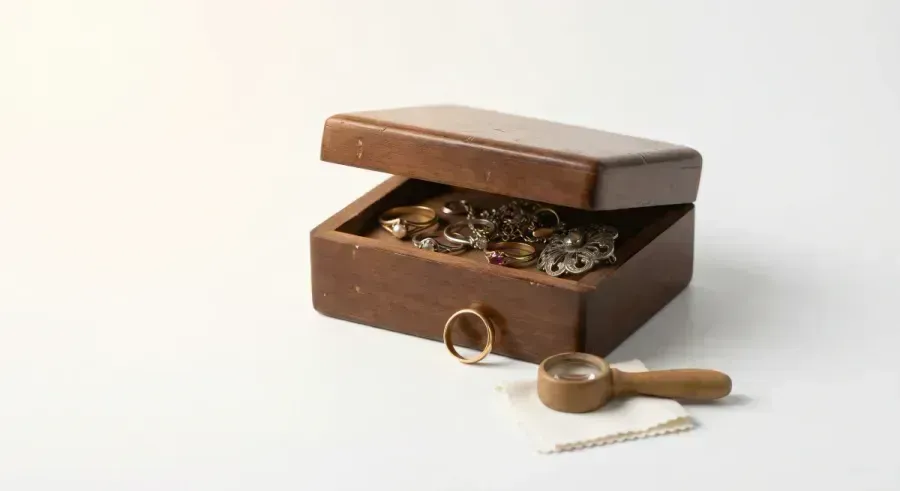
After the funeral, the jewellery box arrives. Sometimes it comes with the solicitor's paperwork. Sometimes a family member quietly hands it over. Inside: a heavy wedding band, a brooch with enamel work, a locket that still clicks open, a single earring without its pair, a watch that still runs. A charm bracelet with a dozen small pendants, each marking a moment in a life. A cameo in a gilt frame. A filigree pendant so fine it looks like lace. A length of heavy gold chain that once held a pocket watch.
These pieces carry the texture of a life. They remember her hands, her wrists, the Sunday mornings she clipped on her pearls before church. And now they sit in a box on your bedside table and you have not touched them in three weeks.
This guide is not a quick answer. It is a framework for thinking through what to do, with patience, with clear eyes, without regret.
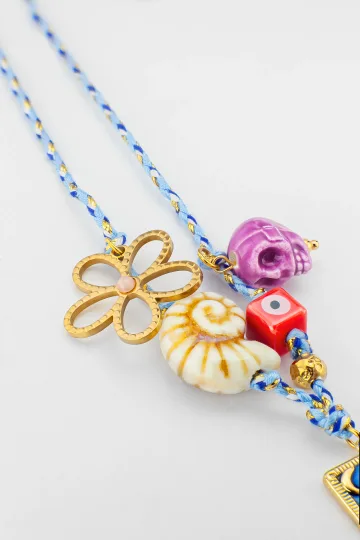
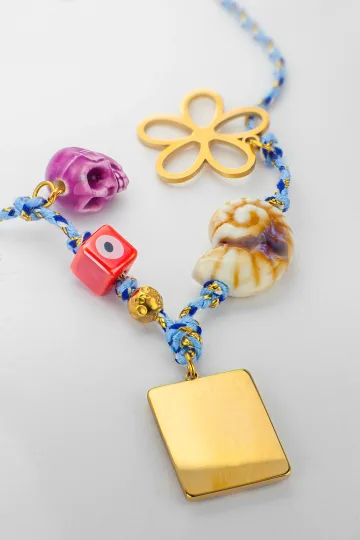
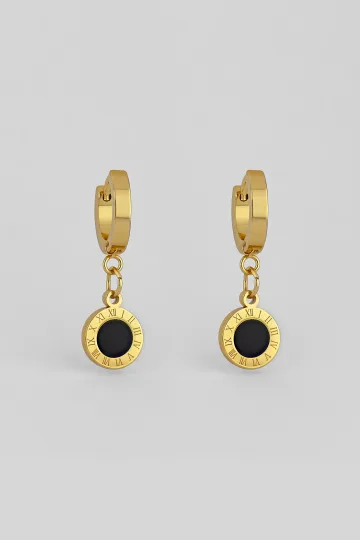
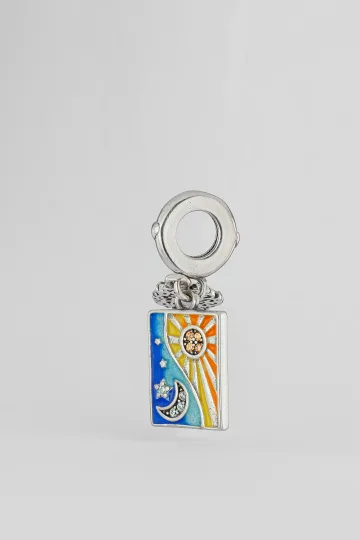
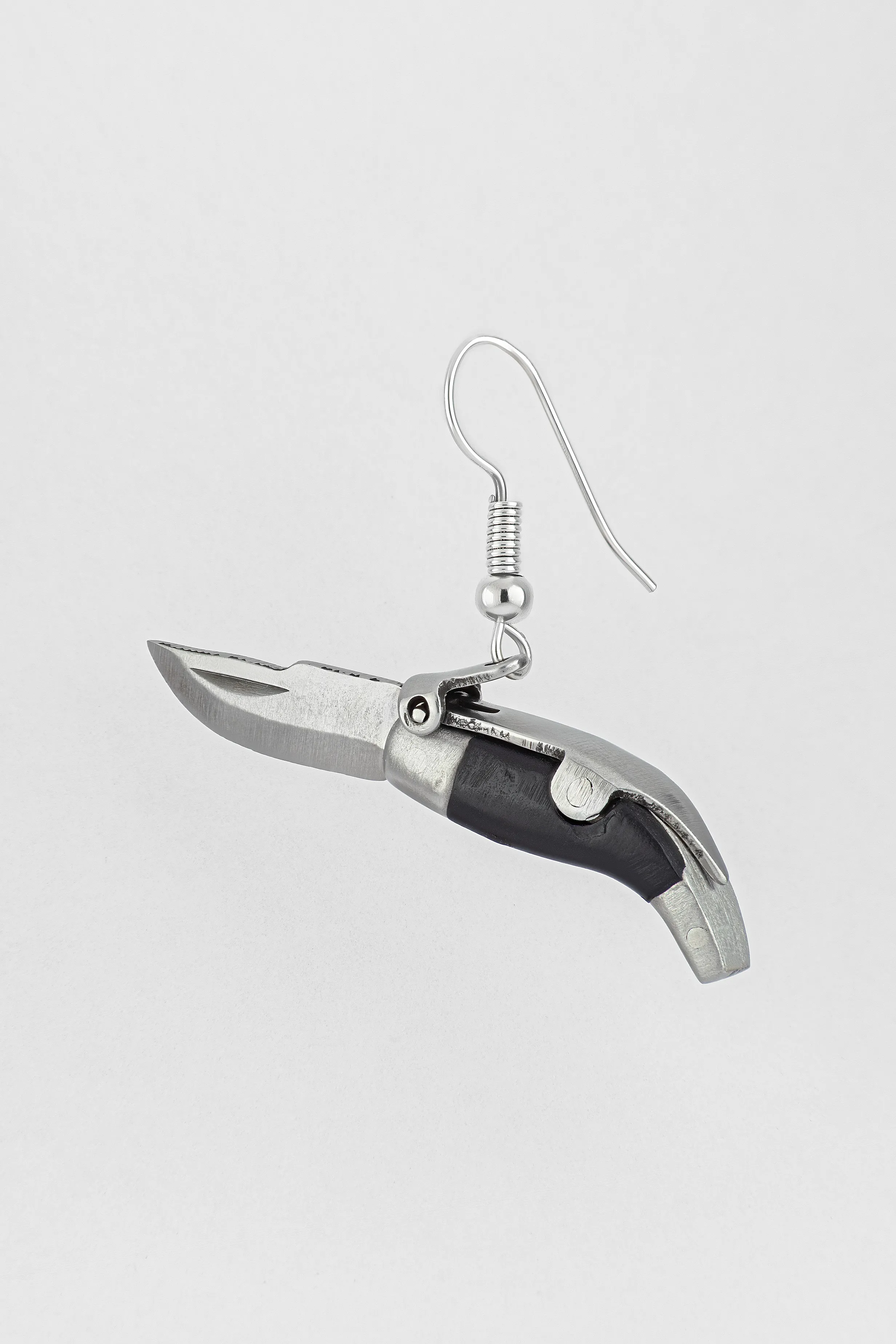
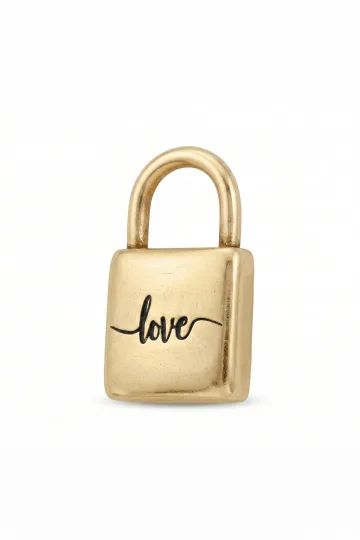
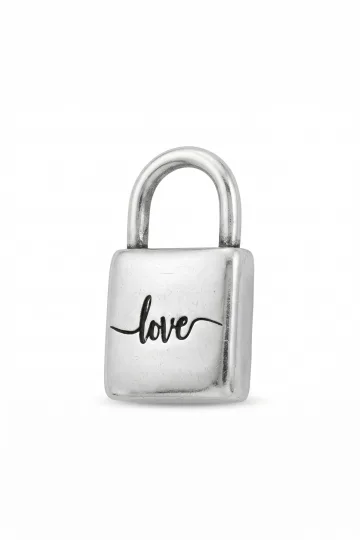
Wear the symbol, don't just read about it. These are in stock:







Inheriting an older woman's jewellery: where this journey begins
Jewellery arrives through inheritance in different ways. Sometimes there is a formal process: a solicitor, a grant of probate, a schedule of estate assets. Sometimes a family member simply hands the box across a kitchen table without a word. Sometimes the box arrives while she is still alive and decides, perhaps on moving house or simply feeling it is time, to pass things on.
In every case the feeling at the start is much the same: a kind of bewildered stillness. Even if you loved her. Even if you always noticed her wearing these pieces. Even if you had privately imagined one day wearing them yourself. When the box is in your hands the weight of it is unexpected, and the decisions it requires feel impossible.
This is normal. It is nearly a universal experience.
A few practical points to understand from the beginning. First: inherited jewellery, particularly Victorian and Edwardian pieces, often has considerably more material value than it appears to. A plain-looking gold brooch from 1905 may be worth more than most contemporary jewellery in the house. Second: in England and Wales, jewellery forms part of the estate and may be relevant to inheritance tax calculations and probate. If the estate is still being administered, confirm with the executor before making any decisions about higher-value pieces, particularly anything pre-1950. Third: no decision made in the first weeks is binding. You are permitted to change your mind.
Your grandmother's brooch belongs on a Tuesday coat, not in tissue paper waiting for a funeral. She wore it to fetch the bread. So can you.
How to wear inherited jewellery
Clients bring me their grandmother's box with the same fear: won't this look dated? Almost never. Here is what actually folds heirlooms into a modern wardrobe, sorted by occasion.
What is the easiest way to start wearing a grandmother's piece every day? Start with a thin chain or a simple ring, the barrier is lowest there. I recommend a chain with a small locket or cross under a plain roll-neck or over a shirt with the top button open. An old ring I suggest stacking with two or three slim modern bands on one hand: one vintage hero, the rest as backdrop. I keep silver with silver, and split gold and silver across different hands.
How do I wear an heirloom to the office without looking costumed? Restrained, and one at a time. I recommend a small brooch on the lapel or quiet earrings, never everything at once. The rule that never fails: one hero per look. Wear a large brooch and the earrings stay quiet. Matte metal and a calm shape read as a detail, not as a prop from an old trunk.
What should I bring out for the evening? The dressy pieces that feel like too much by day. I suggest a cameo on a ribbon, a large brooch near the neckline, or stone-set earrings. Under them I choose a deep neckline and a solid dark fabric: black, wine, emerald, navy. Against that backdrop the antique reads as a jewel, not an accident. I reach for a long chain to lengthen the silhouette, a short one to pull attention to the face.
Is it true that old does not mix with new? The opposite, they work precisely together. A vintage ring beside slim modern ones, an old chain with a minimal pendant, I build these all the time. Mixing eras looks alive, while a matching set from one period is exactly what ages you. I recommend keeping one vintage piece as the hero and choosing the rest neutral.
Who do a grandmother's pieces actually suit? Anyone willing to wear them as an accent rather than a museum set. Two rules that never fail. First: do not save them for a special occasion, she wore these on ordinary days and so can you. Second: one striking piece on a calm backdrop always beats five at once. Give the heirloom one clear line and it stops looking dated.

Turn on your camera, pick earrings, a pendant or a ring, and see the piece on yourself in real time.
Switch items in one tap.
Everything runs in your browser: no photo or video is ever uploaded.
A slow start
The most important instruction: do not rush.
In the weeks immediately after a bereavement, the impulse to sort, give away, or sell often comes from grief rather than clarity. Decisions made in the first month tend to look different at the one-year mark. Many people who sold pieces early later describe it as the one thing they wish they had not done.
The working rule: nothing sold, nothing discarded in the first six to twelve months. Let the box sit. Open it again on the anniversary. Then decide.
What you can do in the early weeks: a basic inventory (see below). That is all. No final decisions.
A note on probate: if the estate is going through probate, jewellery may form part of the estate for inheritance tax purposes. Before making any decisions about high-value pieces, confirm with the executor or a solicitor that the estate has been properly valued and tax settled. This is especially relevant for Victorian and Edwardian gold pieces, which can be worth considerably more than they appear.
What tends to be in a grandmother's jewellery box
Before making any decisions, it helps to understand what you actually have. Different types of piece carry different kinds of value and call for different handling.
Brooches: Edwardian and Victorian
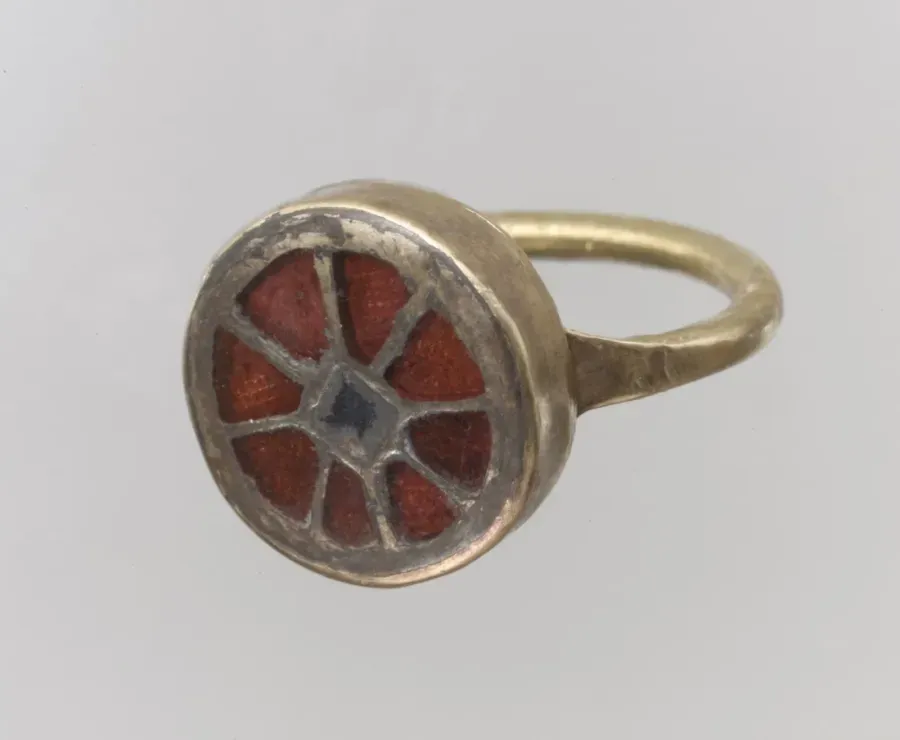
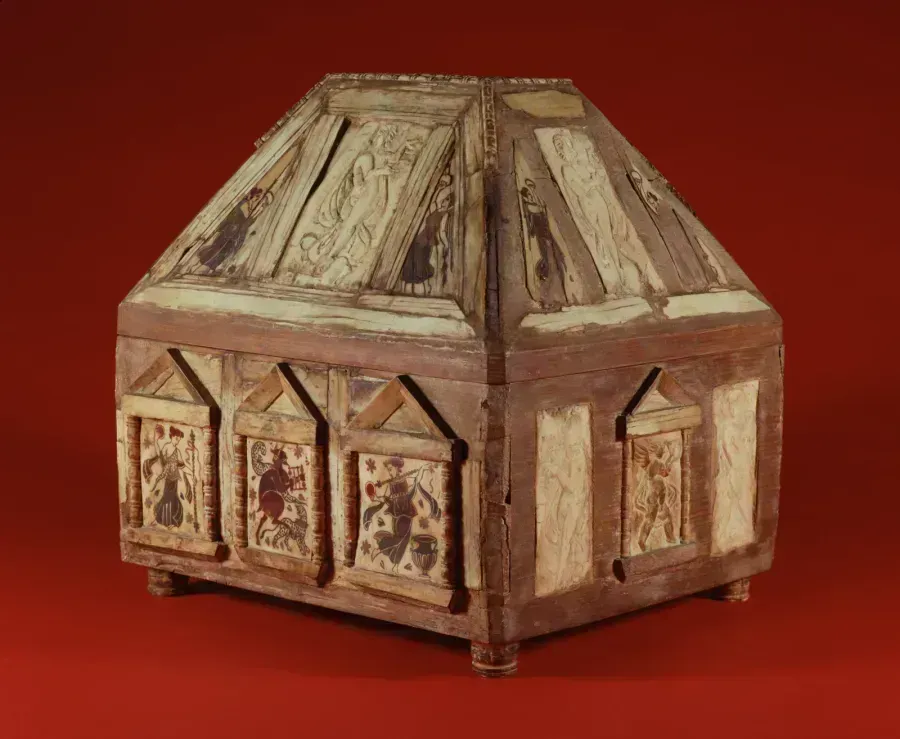
The brooch is the most commonly encountered piece in jewellery boxes belonging to women born before the 1960s. Edwardian brooches (roughly 1900 to 1910) were often made in platinum or white gold set with seed pearls, diamonds, or champlevé enamel. Victorian pieces tend toward yellow gold with garnets, turquoise, coral, or paste. They can look dated and they absolutely are, in the best possible sense: they are genuine antiques. A brooch can be remounted as a pendant by changing the fittings, which is one of the most popular and reversible transformations a jeweller can make.
The locket with a photograph
A locket that opens to reveal a small portrait photograph is a specifically Victorian tradition. Inside: a husband, children, or parents. Some lockets contain a lock of hair, which reflects the Victorian culture of mourning and remembrance that flourished particularly after Prince Albert's death in 1861. These are not pieces to sell. They are family documents. Even if you cannot identify the photograph, a locket belongs with the family history.
The charm bracelet
A charm bracelet to which charms have been added over decades, one for each significant event, is a wearable autobiography. A first grandchild's arrival, a special holiday, an anniversary. To divide it is to destroy its meaning. The sensible paths are to keep it whole, to wear it whole, or to add your own charms and carry the story forward.
The wedding ring
A wedding band sits in its own category. However simple, however worn down to a thin loop of gold, it is the material record of her marriage. Wear it if the size and style suit you. Hang it on a chain as a pendant. Leave it in a small box untouched. All three are correct. Melting down a wedding ring warrants more careful thought than any other piece.
Cameos
A cameo is a relief portrait or scene carved from shell, coral, or agate. The tradition goes back to ancient Rome and reached its height in the nineteenth century, when well-made cameos were fashionable across Europe and widely exported. A good cameo in a gold frame can be worth considerably more than it appears. Show it to a specialist before making any decision.
Filigree pendants
Jewellery made from extremely fine twisted wire, worked into open lace-like patterns. Genuine hand-worked filigree is rarely made today, and pieces from the nineteenth or early twentieth century represent a level of craft skill that is genuinely scarce. If the box contains a fine silver pendant that looks like frozen lace, it is most likely hand-made.
Victorian mourning jewellery
A distinct category of British family inheritance: jet beads from Whitby, black enamel pieces, frosted glass, lockets containing woven hair or a miniature daguerreotype. This tradition became formalised after Prince Albert's death in 1861, and the pieces produced in that era are now collected seriously. If the box contains anything jet-black, or a locket with hair inside, consult a specialist before making any decision. These are often the most historically significant and monetarily valuable pieces in a Victorian inheritance.
A men's watch chain
A long gold or silver chain with a swivel clip and fob is almost certainly a pocket-watch chain belonging to a grandfather or great-grandfather. A jeweller can shorten it and add a clasp to make a bracelet, or divide it into two or three shorter necklace lengths.
Religious pieces
Crosses, saints' medals, miraculous medals. If faith was part of her life, these pieces are part of her identity. Keep them regardless of your own beliefs. Victorian sterling silver religious pieces can be antiques in their own right.
Step 1: Inventory
Write down what is there, without judgement and without assigning value.
Take a notebook or a simple spreadsheet. For each piece:
- Type (ring, brooch, pendant, earrings, bracelet, watch)
- Material (as far as you can tell)
- Condition (good / needs cleaning / damaged / needs restoration)
- Context (if you know it: "wore every day", "engagement ring", "inherited from her own mother")
- A photograph
Why this matters:
- You see what you actually have
- You can discuss it with other family members honestly
- If something is lost or damaged later, you have a record
- The act of cataloguing is its own form of processing
Do not hurry this. Spend an evening, or several. Sometimes the inventory becomes something closer to a memorial.
Photographing and cataloguing the collection
An inventory works far better when each piece has a clear photograph attached to it. The process is straightforward, and the results are useful for years.
You need a smartphone with a decent camera, a white sheet of paper as a background, and natural daylight or a desk lamp. Place each piece on the white paper and photograph it from directly above. For rings and pendants, photograph both sides. For brooches, show the pin mechanism separately. For lockets, photograph them open.
Add notes alongside each photograph:
- What she said about the piece, if you know
- When and from whom she received it
- Occasions when she wore it
- Who she said it should go to, if she ever said
This catalogue serves two purposes. Practically: if the pieces need to be divided among family members, everyone can work from a shared visual record and nobody can later claim ignorance about what existed. Emotionally: creating the catalogue is a way of spending time with the pieces, handling them, remembering her. Many people find that the act of photographing is when they finally cry.
Store the catalogue in cloud storage or send a copy to a trusted family member. A printed copy placed in the box alongside the pieces is also valuable.
Customer reviews
Zevira is a real jewellery shop. Genuine payments, deliveries and customer thank-yous.
🥰🥰🥰 gracias
Ok, ¡gracias! 🙂
Step 2: Reading hallmarks
Before visiting a valuer, it is worth learning to read the marks stamped on the metal. A jeweller's loupe (a small magnifying glass) makes them legible.
British hallmarks
British hallmarks are among the oldest and most detailed assay systems in the world, dating to the fourteenth century. A fully hallmarked British piece carries several marks:
- Assay office mark: Leopard's head (London), anchor (Birmingham), castle (Edinburgh), harp (Dublin). This tells you where the piece was tested.
- Standard mark: the purity of the metal. For gold: a crown plus a number (22, 18, 15, 9 carat). For silver: a lion passant (sterling, 925) or the Britannia mark (958).
- Date letter: a letter within a shield, the style of which changes annually, allowing a piece to be dated precisely to the year.
- Maker's mark: initials of the goldsmith or manufacturer.
For Edwardian and Victorian pieces, these marks allow fairly precise dating. A piece from 1897 has a verifiable provenance simply from its hallmarks.
Other European marks
- Germany: Halbmond (half moon) and Krone (crown) together indicate 800 silver. Gold pieces carry numeric marks: 333 (8ct), 585 (14ct), 750 (18ct).
- France: The Minerve head mark indicates 950 silver. An eagle head indicates 750 gold. French poinçons (guarantee marks) are among the most reliable in Europe, backed by the state since the eighteenth century.
- Italy: A star plus a number in a triangle (post-1968) for both silver and gold. Older Italian pieces use a variety of regional assay marks.
- Spain: An eagle or lion with a purity number (contraste system).
An unfamiliar mark is not a problem. A specialist valuer will read it.
Step 3: Professional valuation
After a few weeks, take the box to a professional jeweller or independent valuator. This is not about selling. It is simply about knowing what you have.
Who to use: an independent valuator, not a high-street jeweller who also buys. There is a conflict of interest in a business that both values and purchases. You want someone who will give you a plain assessment for a fixed fee, with no stake in what you do afterwards. Hatton Garden in London has a concentration of independent valuators with expertise in antique and vintage British jewellery; many offer assessment sessions at a modest flat rate, roughly the cost of a restaurant lunch.
What a valuation tells you:
- Whether a piece is solid gold or gold-plated, sterling silver or silver-coloured base metal
- Hallmarks, assay marks, and approximate date
- Type of stones: diamonds, paste, coloured glass, semi-precious
- Approximate open-market value (what it would realise if sold today)
- Approximate insurance replacement value (a higher figure: what it would cost to replace like for like)
These two figures are different, and both matter. The insurance value is what you would quote to a home insurance policy for a valuable piece.
Why the specialist matters for certain categories: For Edwardian filigree, Victorian mourning jewellery, Georgian paste, or any piece with pre-1900 British hallmarks, a general jeweller may undervalue significantly. A specialist in Victorian or Edwardian jewellery will know the current collector market. The Victoria and Albert Museum publishes guidance on approaching antique jewellery assessment, which is a useful starting point.
Getting an honest appraisal: how not to be underpaid
Anyone who decides to sell inherited pieces will encounter a predictable pattern: the price offered is considerably lower than expected. Understanding why this happens in advance saves both money and frustration.
Pawnbrokers and general gold buyers pay by metal weight against the current spot price, minus their margin. Craftsmanship, age, rarity, hallmarks: none of this enters their calculation. An Edwardian champlevé enamel brooch in solid gold sold to a gold buyer returns only the melt value. The artistic value, which may be three or five times that, is simply lost.
For antique pieces, the appropriate channel is either a specialist antique jewellery dealer, a reputable auction house with a jewellery department, or an online platform that caters to serious collectors. Before any sale, obtain independent valuations from at least two sources.
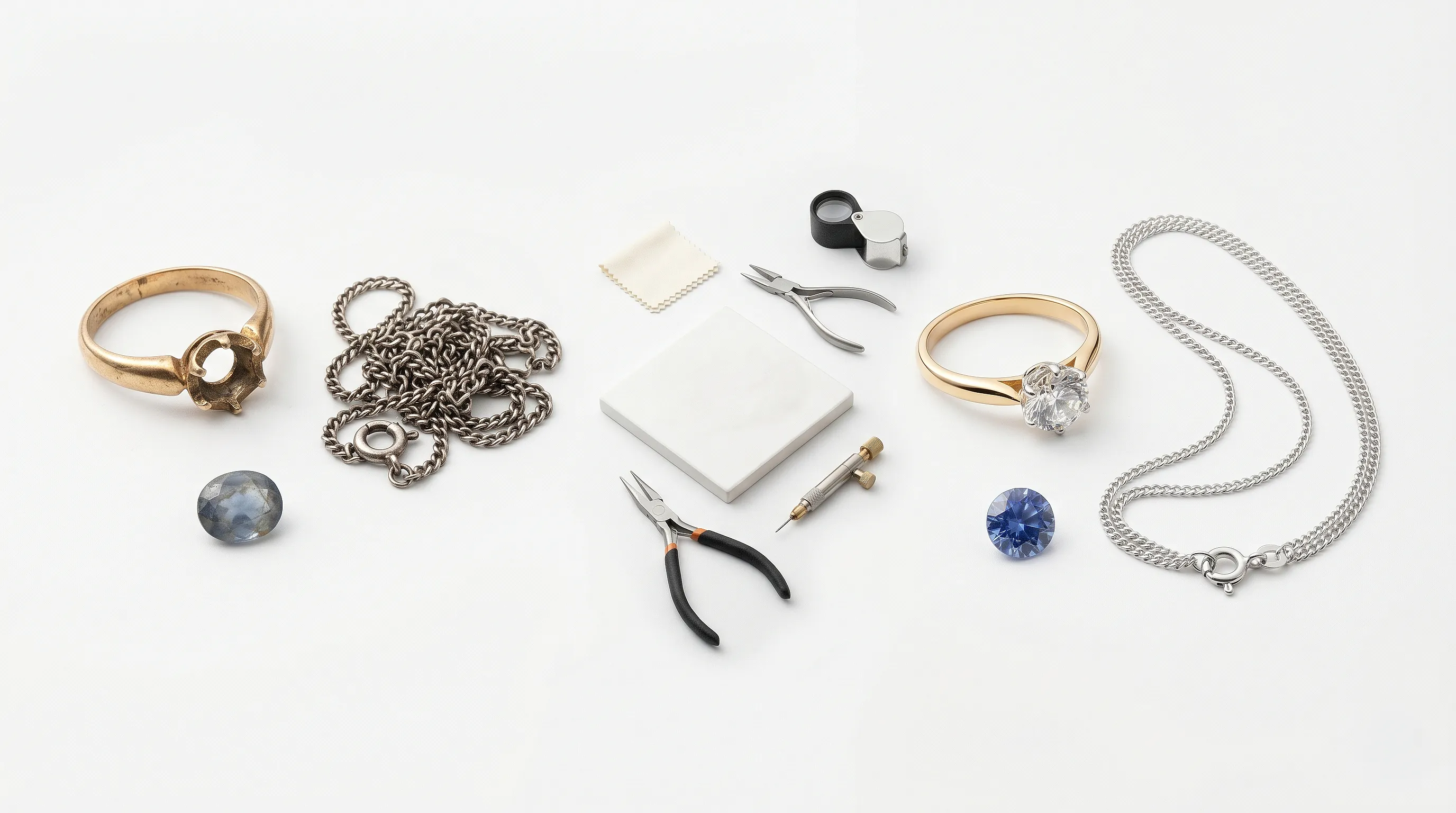
For pieces you want to keep but restyle, an honest goldsmith will tell you what is possible and at what cost. The original stones from a grandmother's ring can be reset in a contemporary mount. The gold can be reused if you choose. This is not "throwing it away": it is giving the material a new life that you will actually use.
If the box contains something genuinely unusual, including Georgian closed-back settings, Whitby jet, signed Arts and Crafts work, or pieces with documented connection to a notable maker, seek a specialist before approaching any buyer. The difference in outcome can be very significant.
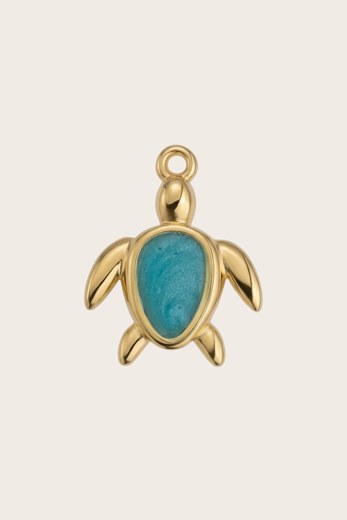
Upload a photo of your pet, someone you love, or an object. We'll build a 3D model and hand-cast it in pewter.



Step 4: Repair and restoration
Do not discard or transform broken pieces without first exploring proper jewellery restoration. More is repairable than you might expect.
Re-gilding: A gold-plated piece that has tarnished or worn through to base metal can be re-plated by electroplating. This is inexpensive and returns the piece to something close to its original appearance. Gold-plated pieces that look dull or discoloured are not rubbish. They are repairable.
Chain repair: A broken chain, even a fine and intricate one, can be soldered back together by any competent jeweller. This takes minutes and costs very little.
Stone replacement: If a stone has fallen out, check whether the original survives in the box before assuming it is gone. If it does, a jeweller can reset it. If not, a matching stone can usually be sourced. Old paste and coloured glass settings can be matched by specialists.
Ring resizing: A ring can generally be resized up or down by one to three sizes. Rings with continuous pattern around the full circumference (eternity bands, fully engraved shanks) are harder to resize without interrupting the design; a skilled jeweller can advise on the best approach.
Clasp replacement: Old clasps are often unreliable. Replacing with a modern secure clasp is straightforward, low-cost, and makes inherited necklaces and bracelets genuinely wearable.
Enamel restoration: A chip or crack in champlevé or cloisonné enamel can be restored, though this is skilled work and costs more than basic repairs. Worth doing for a piece you intend to wear or display.
Restoration versus preservation: the difference matters
There is a meaningful distinction between restoring a piece to working condition and preserving it as it is.
Restoration returns a piece to useability: re-gilding a worn surface, re-setting a loose stone, replacing a broken clasp. This is appropriate for anything you plan to wear.
Preservation is something else. Sometimes a piece is most valuable precisely as it stands, with its patina, its wear, its evidence of having been used in a specific life over specific decades. The darkening of silver that deepens a filigree pattern. The slight asymmetry worn into a wedding band from sixty years on the same finger. Removing these marks removes history.
Before instructing a jeweller to restore anything, ask yourself whether the piece is more valuable to you as a functioning object or as an artefact. For pieces intended to be worn, restoration is right. For pieces kept as relics of a particular life, sometimes the right approach is to stabilise the condition without changing the appearance.
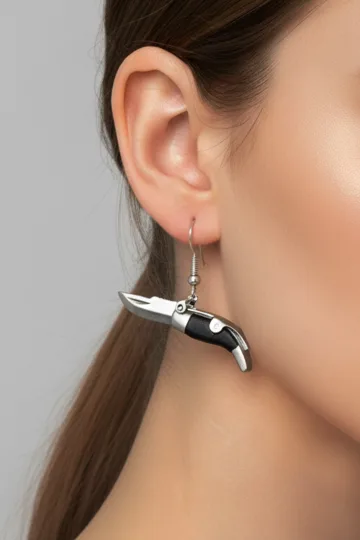
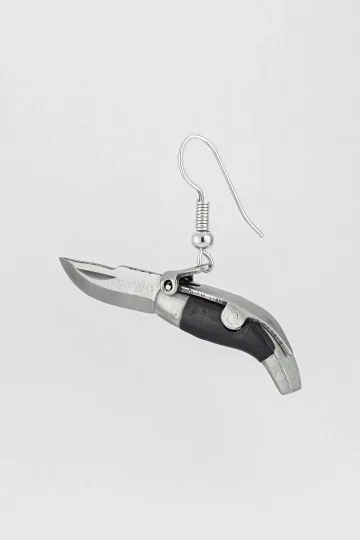
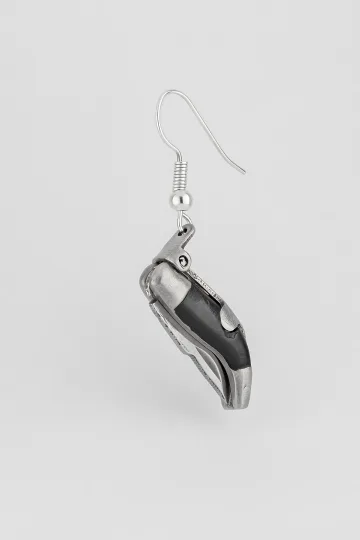
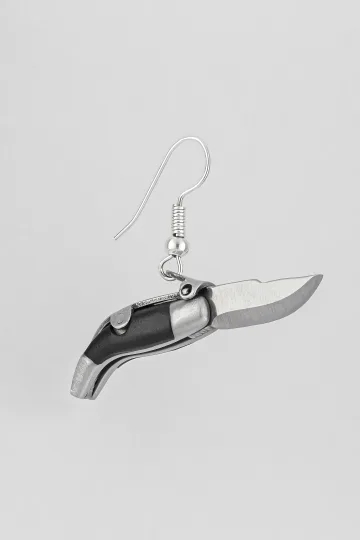
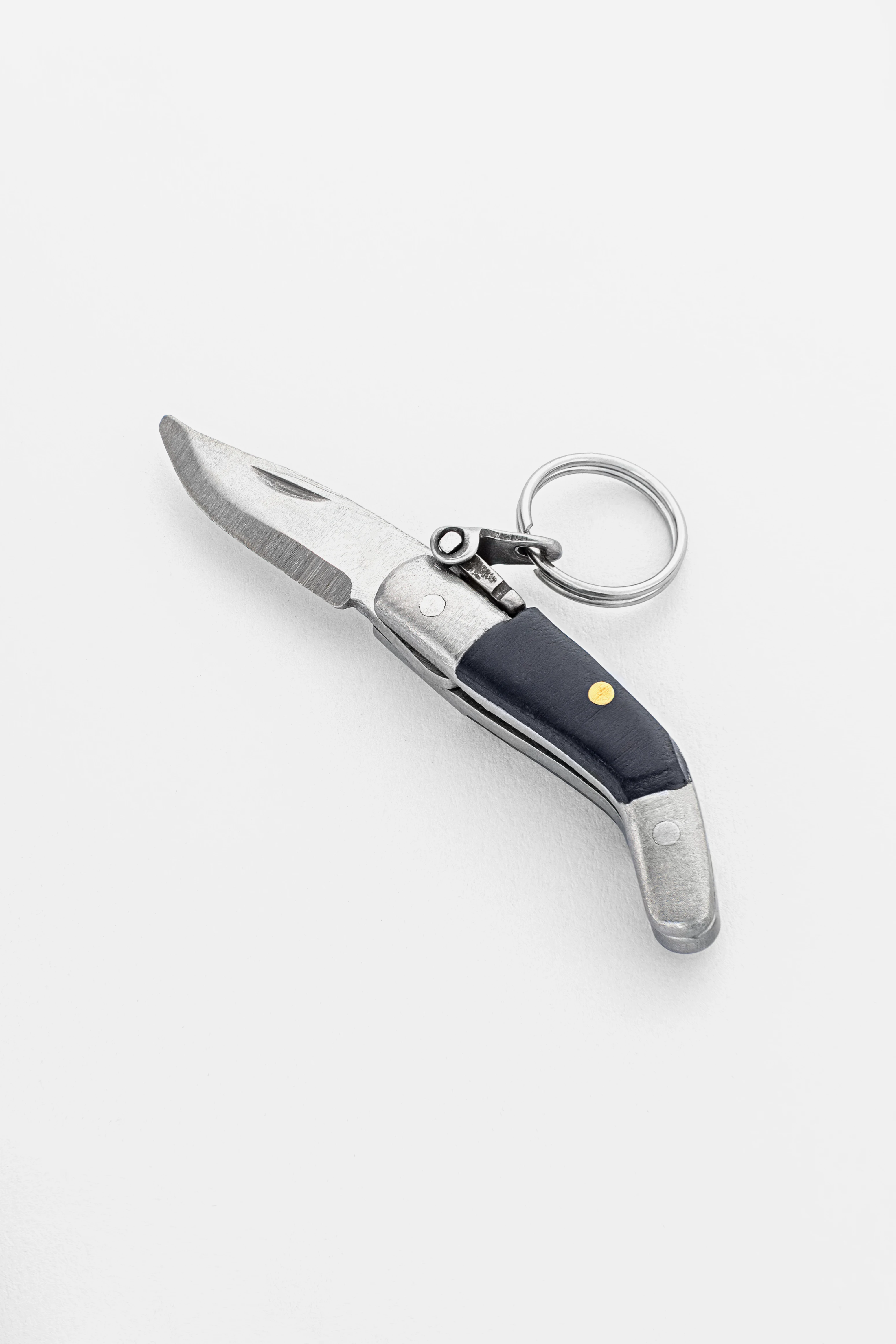
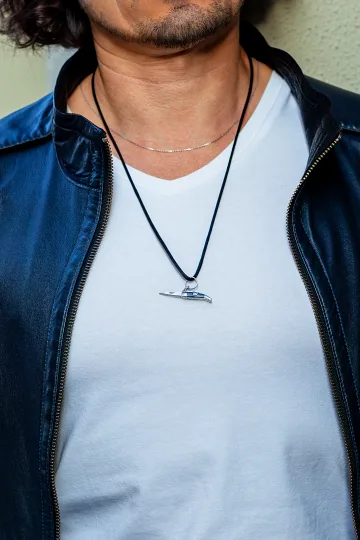
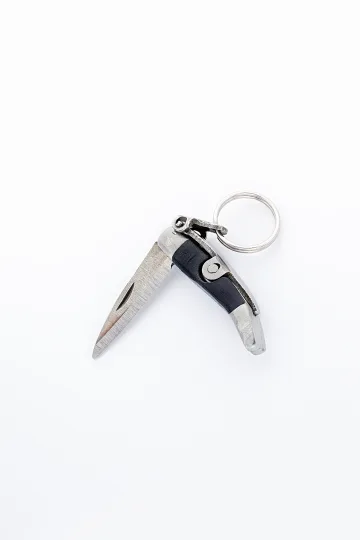
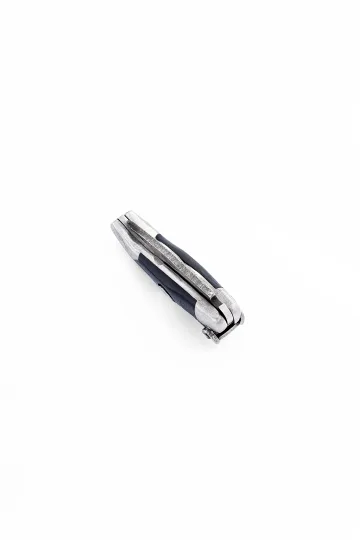
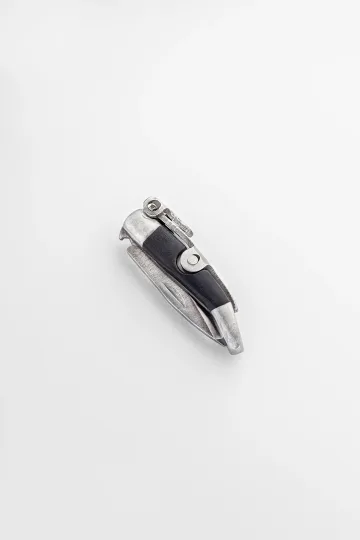
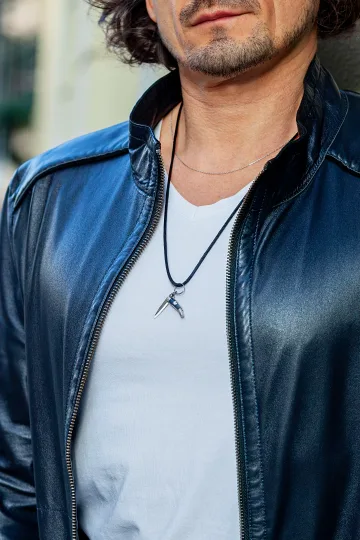
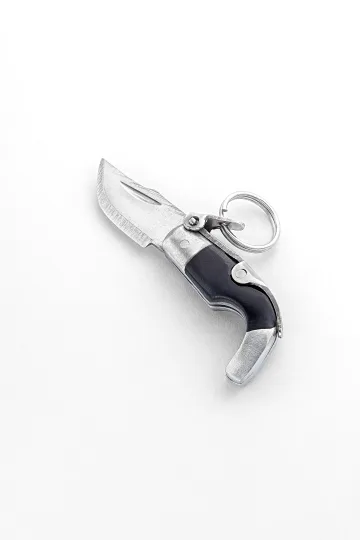
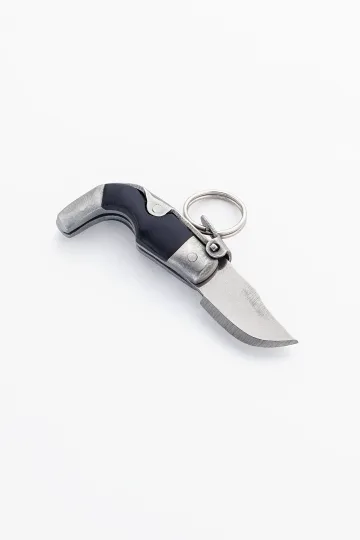
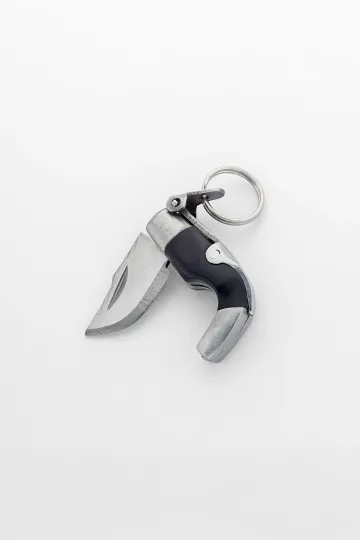
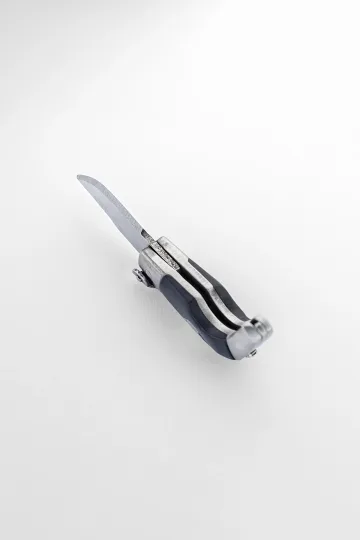
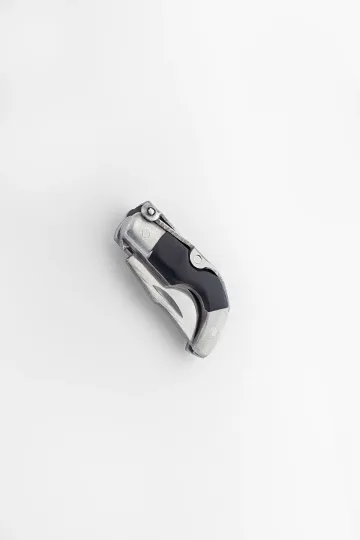
CAPAORA mini knife pendant
The 18th-century Spanish navaja in miniature: 40 mm of stainless steel, a real folding mechanism and a Palanquilla lock that clicks. An affordable gift to remember.
Authentic · Ships from Spain · 14-day returns
Step 5: Transformation (when the original form does not work)
Sometimes a piece carries real material or sentimental value but cannot be worn as it is. Transformation is the answer.
Brooch to pendant
The most common transformation. A jeweller adds a bail (small loop fitting) to the reverse of the brooch. The pin mechanism stays or is removed depending on preference. The brooch hangs on a fine chain and becomes a contemporary pendant. This is reversible in that the bail can be removed if needed. The cost is modest.
Ring to pendant
A ring that does not fit, or whose style feels too different from your own, can be slipped onto a chain and worn as a pendant. A jeweller can add a small fitting to the ring if needed. A grandmother's wedding band on a fine chain, worn close to the chest, is both beautiful and respectful.
Large earrings to cufflinks or mismatched pair
Large clip-on earrings set with stones or enamel can be converted into men's cufflinks. Alternatively, wearing a single statement earring (intentionally without a pair) is an entirely current approach that gives a lone earring a new life.
Watch chain to bracelet
A long pocket-watch chain is shortened and fitted with a clasp. The result is a bracelet with unusual character, made from metal that has already been in the family for generations.
Combining multiple small pieces
Several small broken or unusable pieces can be melted and recast as one new piece. Three thin mismatched rings become a single more substantial band. This process is not reversible, which makes it worth thinking through carefully. The stones and engravings from the original pieces can sometimes be incorporated into the new one.
Ethical repurposing: what it means to remake something
Repurposing inherited jewellery into a new piece is not a betrayal. It is one of the ways an object continues to exist rather than sitting inert in a drawer.
A goldsmith experienced with inherited jewellery knows how to carry forward the elements that matter: the original stone in a new setting, a date engraved on the new piece that was engraved on the original, the same metal reconstituted into a form that will actually be worn. Before instructing any work, ask for a drawing of the proposed new piece. Keep a photograph of the original. Understand that the change is permanent. These are the conditions for making a good decision.
Step 6: Six categories
Once you have the inventory and the valuation, sort everything into one of these six categories. Take your time.
Category 1: Wear
Pieces you genuinely like, that fit, that connect you to good memories. Into your own jewellery box immediately. Do not save them for special occasions. A brooch on a winter coat in February becomes your own memory, layered over hers. Wear them.
Category 2: Keep without wearing
Too fragile, too precious, or simply not your style, but carrying irreplaceable sentimental weight. Store in a separate soft-lined box. Show children. Tell the story. These may be passed further along.
Category 3: Transform
The metal is good, the stones are good, but the form as it stands does not work. Restyle with a jeweller, as above.
Category 4: Give to family members
If a piece clearly belongs with someone, give it through open conversation, not unilateral decision.
Category 5: Sell
Only when: it is costume jewellery with no sentimental or material value; it is a high-value piece no one will wear and a sale would be meaningful; circumstances genuinely require it. Wait the full year. Use a specialist for antique pieces.
Category 6: Dispose of
Completely broken, base metal in poor condition, no value of any kind. You are permitted to discard.
What to keep regardless of whether you wear it
The wedding ring
Keep it. It is the material record of her marriage. It does not need to be worn to be meaningful.
Watches
A stopped movement can be serviced. Vintage watches, particularly Swiss movements from before 1970, can be significant in value and in emotional weight.
Victorian mourning lockets with hair or photographs
Keep them. They are irreplaceable documents of a specific cultural and personal history. Even if you cannot identify whose hair is inside, the object belongs to family history; jewellery passed across generations is the most personal way of carrying 5,000 years of jewellery history on your own scale.
Engraved or dated pieces
A name, initials, a date, a dedication: this is a primary source document. Do not melt it.
Gifts from named people
If you know the story behind a piece, record it and keep the piece.
The pieces she wore every day
There is a category of jewellery that falls below obvious "valuable antique" and above "costume jewellery": the pieces she actually wore every day. The plain earrings. The thin chain. The ring she never removed.
These pieces often carry the most concentrated personal memory. They were present for the ordinary texture of her days, not just the occasions. A plain pair of gold studs she wore for twenty years has more of her in it than an elaborate brooch she wore three times.
Keep them, whatever their material value. These are usually the pieces that cause the particular feeling when you hold them: her presence, very close.
Leave your email, we'll send your discount code. No spam, unsubscribe anytime.
The code arrives by email, valid on your first order.
Dividing pieces among siblings
The most common source of family conflict after a bereavement.
Open table. Everyone who has an interest in the estate sits together before anything is moved.
Round-by-round selection. One person picks one piece. Next person picks one piece. Continue around. Starting order by agreement or by lot.
Sentiment over value. If your sister wants the brooch because your grandmother gave it to her on a specific birthday, that claim is stronger than the brooch's appraisal value.
Written record. After the conversation, note who took what.
If agreement is not possible. A professional appraiser values the whole collection. Pieces are distributed so that each person receives approximately equal value. An imperfect but settled outcome is better than a lasting rupture.
Dividing without conflict: practical techniques
Beyond the formal round-by-round structure, several approaches genuinely reduce tension in difficult family situations.
The wish list: before the main conversation, each family member writes privately which three or four pieces they most want, and why. This transforms the discussion from competition into an exchange of stories. When you explain that you want the brooch because your grandmother wore it to every school concert, that is a different conversation from wanting it because you like it.
History before market value: pieces with known personal stories are claimed first by the person to whom the story belongs. Pieces without known personal connection are distributed by value.
One piece of the heart: each participant names one piece that is simply theirs, without discussion. Everything else follows normal rules. This allows people to protect the one thing that matters most without competing for every item.
If the division is likely to be contentious, consider asking a trusted family member who stands outside the immediate inheritance to facilitate. For complex estates with significant value, a professional mediator is a practical option.
The psychology of letting go
Guilt at the thought of selling or restyling. "I am throwing her away." This is grief speaking, not fact. Objects are not people. A piece can be restyled and still honour her.
Fear of loss. "What if I lose it or it breaks?" A piece worn and occasionally lost is more alive than a piece locked in a drawer for sixty years undamaged.
Unworthiness. "Her jewellery is too good for me." This is also grief. She would have wanted you to wear it.
Style mismatch. "This is not how I dress." Keep it without wearing it. Restyle it. Or accept that it will pass to someone for whom it is right.
Frequently asked questions
Is it all right to wear a deceased person's jewellery?
Yes, entirely. There is no tradition in British culture that prohibits it. Wearing and remembering is preferable to storing and forgetting.
What should I do with her wedding ring?
Options: wear it as your own if the size and style suit you; have it resized; mount it as a pendant on a chain; keep it in a box for the next generation. If the ring in question is not your grandmother's but your own band after a divorce, the scenarios are different and are walked through in our article on the divorce ring: meaning, trend and what to do with the old wedding ring.
How long should I wait before selling anything?
At minimum, a year. Many people who sold pieces in the first weeks or months describe regretting it.
What if a piece is very valuable?
If she expressed a clear wish, honour it. If not, bring the family together. High-value pieces that no one will wear may reasonably be sold, but only after proper appraisal and family agreement.
Can a bracelet be divided between sisters?
Yes. A jeweller can cut a chain bracelet into sections and finish each section as a separate pendant.
What about Victorian mourning lockets with hair or photographs?
Keep them. They are irreplaceable documents of a specific cultural and personal history.
What if the box only makes me sad?
Put it away. In a year, open it again. If the feeling does not change, pass the box to another family member. You are not required to keep something that causes only pain.
How do I tell solid gold from gold-plated?
Look for a hallmark: a British gold piece will have the carat mark (22, 18, 15, or 9). Marks reading GP, GF, or RGP indicate plating. A jeweller can confirm with an acid test.
What if there are no documents or receipts?
This is entirely normal. Most inherited jewellery has no paperwork. The material can be determined from hallmarks and tests. Provenance comes from family memory, which is why writing it down now matters.
Can I mix inherited pieces with modern jewellery?
Yes, and this is often the best approach. A Victorian brooch on a contemporary coat is a statement, not a mismatch. Stacking a grandmother's ring with thin modern bands is entirely current. Jewellery from different eras works together well when it is worn with intention.
What if there is a great deal of jewellery?
A large collection can feel overwhelming. Begin by sorting into three broad groups: precious metal, costume, and uncertain. Within each group, work from clearest to most complex. Do not try to make all decisions in one session. Return to the collection in stages: a first pass, a second pass a month later, a third after six months. The perspective shifts each time.
How do I pass pieces to the next generation?
Meaningful occasions work best: a coming-of-age birthday, a wedding, the birth of a child. Pass each piece with its story written down, a few sentences about who owned it, what it meant, when she wore it. This turns the transfer into a rite rather than a handover of objects.
Storage for older pieces
Old jewellery is not stored the same way as contemporary pieces.
Keep separate from modern jewellery. Modern pieces can contain compounds that scratch or oxidise antique surfaces.
Soft lining. Velvet or cotton. Not synthetic fabrics, which generate static.
Not with rubber or plastic items. Rubber and PVC off-gas sulphur compounds that blacken silver and degrade gilding.
Low humidity. A small silica gel sachet in the box absorbs moisture.
Gold and silver separately for long-term storage. They react with each other over time.
Chains and stone-set pieces separately. Chains tangle and can damage delicate enamel or cabochon settings.
Send a friend a discount code, they save on their first order.
When to sell and how to avoid being underpaid
Sometimes selling is the right decision: a high-value piece that nobody in the family wants, proceeds that will be genuinely useful, a piece that simply carries no sentimental weight. This is a reasonable and legitimate choice.
The mistake is in the execution. Most people who later regret selling do so not because they sold, but because they sold too quickly, to the wrong buyer, and for far less than the piece was worth.
The right process: independent valuation first, from someone with no interest in purchasing. Then an assessment of the appropriate market. Fine Victorian gold jewellery belongs at a specialist auction, not a general buyer. Edwardian filigree should go to a specialist dealer. Georgian paste and closed-back settings require someone who knows the current collector market.
For costume jewellery and twentieth-century gold without particular artistic distinction, compare offers from several sources before committing. Online platforms for serious collectors often return better results than in-person buyers for pieces with clear hallmarks.
Do not sell under time pressure. If a buyer is creating urgency, walk away.
Donating or gifting forward
When no family member wants a piece and selling feels wrong, two other paths exist: donation and gifting forward.
Some regional museums, particularly those with applied arts or social history collections, accept donated jewellery with documented provenance. Contact the collections department directly with photographs and background history. A specific proposal receives a more considered response than a general enquiry.
Charities and hospices sometimes accept donated pieces for auction. This converts real value into practical use without requiring commercial sale.
Gifting forward within a wider network is also worth considering. A friend who particularly admired her style, a younger woman who shares her taste, a godchild for whom the piece will carry meaning: a piece given to the right person often matters more than either retaining it unexamined or selling it for whatever the market offers.
The story behind each piece: writing it down
One of the most lasting things you can do in the weeks after receiving the box is to record what you know, in writing, while the knowledge is still accessible.
Speak to your mother, an aunt, an older cousin. Ask about each piece you recognise. The questions are simple: where did this come from? Who gave it to her? When did she wear it? Is there a story attached?
Write down everything, including the uncertain versions. In another generation, even the uncertain version will be gone. Add these notes to the catalogue. Write a card for each piece and keep it in the box alongside the jewellery. What you are creating is a family document, and years from now whoever opens the box will find context rather than objects.
Why keeping matters: the meaning of passing things on
Inherited jewellery is transmitted not only as a material asset. It is transmitted as a witness to a life, as an artefact of a specific era, as a thread between generations.
Other cultures have long understood this. In many South Asian traditions, family jewellery passes from generation to generation through weddings and other rituals, with the pieces themselves carrying social and spiritual weight. In Japan, there is a concept of objects accruing meaning through their history of ownership and use. In medieval Europe, family rings and brooches served as legal documents of lineage and inheritance.
In a contemporary world where most of what we buy will not survive thirty years, the objects in a grandmother's jewellery box are genuinely rare: things that have outlasted their moment and may outlast several generations more.
When making decisions about inherited pieces, it is worth thinking beyond yourself. Some pieces may have no particular resonance with you now but may matter greatly to your daughter or niece or the next person who opens the box. Keeping something with intention, even without wearing it, is a form of stewardship.
Storing pieces correctly while you wait
While waiting the full year before making final decisions, pieces need to be stored properly. A year of incorrect storage can cause damage that is costly or impossible to reverse.
Gold and silver should be kept separately. Over time, in contact, they react with each other and can both lose their appearance. Silver is particularly vulnerable to sulphur compounds off-gassed by rubber, certain plastics, and synthetic fabrics. A cotton or velvet lining in the storage box is correct; a rubber gasket or a plastic bag is not.
For pieces that a professional has assessed as particularly valuable, a bank safe deposit box is worth the modest annual cost. Home contents insurance usually has a specific provision for jewellery above a certain value; if the box contains a piece worth considerably more than average household items, update the policy to reflect this.
Enamel pieces need specific care: do not clean enamel yourself, do not expose it to water or cleaning agents, and do not rub it. If an enamel piece needs cleaning, take it to a specialist. Enamel restoration is skilled and costly; prevention is considerably cheaper.
Buying it as a gift? Each one arrives ready to give.
 A branded Zevira box and a little card come with every order.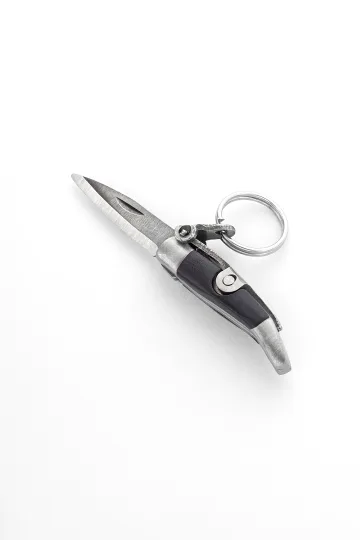




Conclusion
Your grandmother's jewellery box is not a problem to be solved. It is a material archive of a life, left to you. The decisions you make with it should be yours, made with time, with information, without the pressure of immediate grief.
Whether you wear the pieces, store them, restyle them, divide them, or eventually pass them further on: do it with intention. That intention is itself a form of respect.
Silver, gold, wedding rings, symbolic pieces, paired sets.
About Zevira
Zevira works in the metalworking tradition of Albacete, Spain, in silver 925 and gold 14-18K.
If you have inherited pieces you would like to restyle, a brooch remounted as a pendant, several small pieces combined into one, stones reset in a contemporary setting, a specialist jeweller can advise on what is possible. Zevira does not purchase antique jewellery or carry out formal valuations; for valuation, seek an independent appraiser or an antique jewellery specialist in your area.
What can be done with inherited pieces:
- Remounting a brooch as a pendant on a fine chain
- Combining several small pieces into a single new item
- Resetting original stones in a new contemporary mount
- Repair and restoration to original condition
- Dividing a family piece between heirs
- Personalised engraving