Pearl Necklace Length: Choker, Princess, Matinee, Opera, Rope
From the 1920s, pearl necklaces come in six canonical lengths. Each creates its own image. Sixteen inches is a business breakfast. Twenty-eight is Maria Callas on stage. Thirty-six is a 1925 flapper at a New York bar where Prohibition still technically works. Choose the length, choose the era, the occasion, the role. Pearl size is secondary; length is primary: it determines who you are this evening.
Most buyers know only princess as "pearl necklace" and are surprised to learn the same object exists in six standard interpretations with their own names, physics, and audiences. This guide breaks down all six by one mechanism: where it sits, what to wear it with, which neck and face it suits, what occasion requires it specifically. After reading, the question "which pearl length should I buy" closes in a minute because the task reduces to two or three specific parameters.
Where the Six Lengths Came From: Antiquity to Flapper
The canon didn't form in a day. The six lengths developed over two and a half thousand years from living practices, court etiquette, drilling technology, physics of bead seating, and fashion in neckline exposure. Understanding history matters for a simple reason: each length carries traces of its era, and the wearer who knows them chooses not a measurement in inches but a line from fashion history.
Antiquity: monilia and Tight Necklaces on the Throat
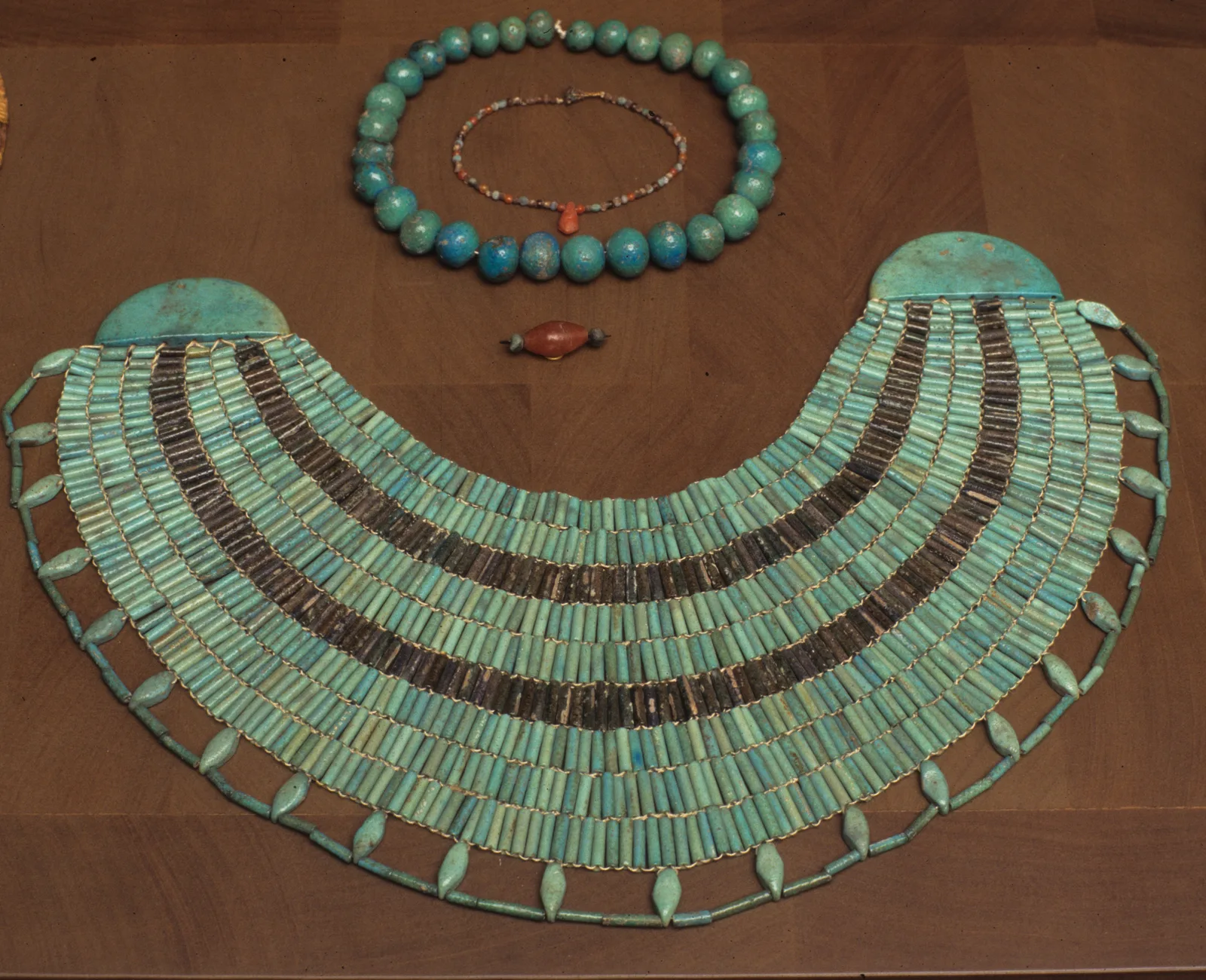
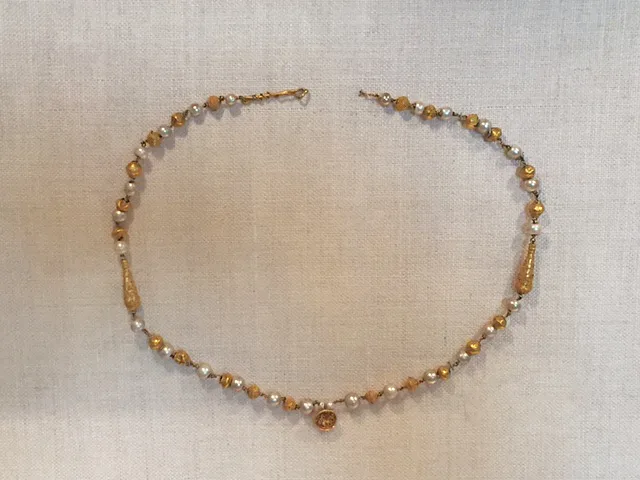
In ancient Rome, women's chest ornaments were called monile, monilia in plural. These were short necklaces from twenty-five to forty centimetres, sitting snugly on the throat or its base. Archaeological finds from Pompeii and Herculaneum, preserved by Vesuvius's eruption in 79 AD, give exact sizes: gold chains with pendants, pearl strands from the Red Sea and Indian Ocean, rosette necklaces with garnet. Length was dictated by two circumstances. First: the Roman tunic was fastened at the shoulders with fibulae and left the neck bare above the collarbones; a long ornament was lost on fabric. Second: pearls and precious stones in the ancient world cost enormous sums, and each single bead was an event. A tightened strand of thirty to forty large pearls showed everything at once.
Wear the symbol, don't just read about it. These are in stock:




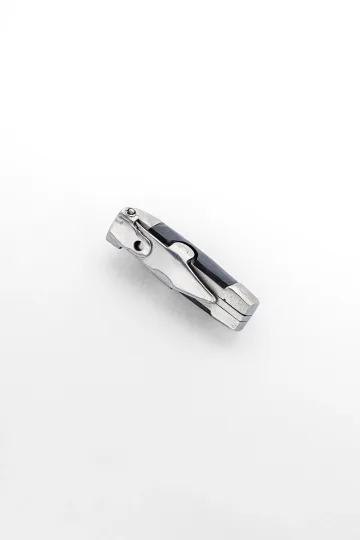

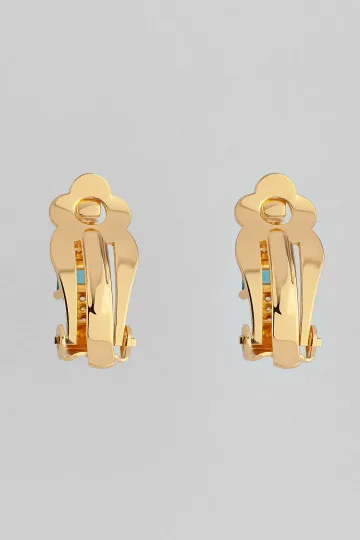
What matters: tight monilia is the direct ancestor of today's collar and choker. The spacing was dense, the effect was status display, and comfort meant nothing got caught or pressed.
Byzantine Era: Long Chains on the Chest
From the sixth through the twelfth century in Constantinople, an aristocratic woman dressed differently than a Roman matron. The tunic fit tightly around the neck; over it came the dalmatica with rich embroidery, and over that, the barmae (a heavy shoulder cloth with sewn gold plaques and pearls). No free space on the neck, and the ornament dropped lower: onto the chest, over the barmae.
Byzantine chest ornaments, known from descriptions and surviving images on imperial mosaics (San Vitale in Ravenna, sixth century, portraits of Justinian and Theodora), reached lengths of sixty to eighty centimetres. This is the zone that modern classification calls matinee. Theodora on the famous mosaic of San Vitale is depicted with a chest pendant hanging at precisely this height. The length was imposed: the space above was already occupied.
Byzantine workshops in Constantinople and Thessalonica became the first to standardise the technology of stringing pearls on silk thread with a knot between beads. The knot served two functions: protected pearls from friction with each other and fixed each one so that if the thread broke, only one was lost. This technique, rolling through Venice to Northern Italy and beyond across Europe, lies at the foundation of all modern pearl work. When a good jeweller today says "strung with a knot Byzantine-style," they're referencing this medieval standardisation.
Renaissance: Pearl as Currency of Status, Length as Rank
In the fifteenth and sixteenth centuries, pearls reached their first European fashion peak. Venetian merchants, Italian bankers, the Spanish court, and French nobility competed in length, quantity, and quality of strands. An unwritten rule emerged, strictly observed at court: the number and length of pearl strands were proportional to rank.
Empress Elizabeth I of England (reign 1558-1603) in state portraits is depicted wearing simultaneously four to six strands of different lengths: one at the throat (short), a second at the collarbones, a third and fourth on the chest, sometimes a fifth to the waist. This multilayered image became the canon of highest power. Pearl in her wardrobe was valued by contemporaries at a sum equivalent to a small kingdom's annual budget. Some of these pearls later went to Scottish King James (her successor), some were melted down, some were sold by Cromwell after Charles I's execution in 1649 and lost in European collections.
The Renaissance gave the canon its second length: sautoir, a long rope to the waist. The word sautoir comes from Old French sauter (to jump over) and originally meant a scabbard strap worn diagonally across the chest. By the late sixteenth century, the term was transferred to long pearl ropes worn criss-cross in state portraits. This is the direct ancestor of today's rope.
Baroque and Rococo: Pearl in Hair and on Corsage
The seventeenth and eighteenth centuries shift focus: pearls move from the neck to the hairstyle, onto the corsage, onto cuff bracelets, onto wrist and ankle bracelets. The dress opens the shoulders and chest to the limit, and the neck is adorned with short strands or a single pendant on velvet. This era added no new lengths to the canon but cemented the pairing of short necklace with deep décolletage: the more body exposed, the shorter and tighter the neck ornament.
Marie Antoinette in portraits by Vigée Le Brun (late eighteenth century) is almost always depicted with a single short strand on the neck, sometimes hung on a ribbon, sometimes on a chain. The length is strictly short, in modern terms, collar or choker. The long strands of eighteenth-century court etiquette weren't contemplated: they interfered with minuet movements, caught on a cavalier's buttons, and were considered an outdated custom of "grandmother's court."
Victorian Era: Return of Collar and Fashion for Velvet Ribbons
The 1860s-1880s returned pearls to the neck in multistrand collar format. This was a tight choker of several rows of pearl, running from throat to the base of the neck. Under the influence of late portraits of Queen Victoria and her daughter-in-law, Alexandra, Princess of Wales (future Queen), such a collar became a mandatory attribute of an aristocratic woman.
Princess Alexandra brought a separate theme to fashion. According to one version, in childhood she had surgery that left a small scar on her neck, and she preferred high tight necklaces to hide it. The scar may have been from a complication of an abscess or from a removed mole, exact evidence hasn't survived, but the fact of her stable preference for chokers from age eighteen is fixed in wardrobe inventories. A choker of eight to fifteen pearl strands became her signature accessory. By the time of her marriage (1863), such a collar was worn by all ladies of the British court, and by the 1880s this fashion had swept the continent and reached Petersburg and Paris.
The Victorian collar required special technology: single pearl strands were glued into a flat canvas through openwork metal bridges or stitched onto a rigid backing. The modern choker with one or two strands is a simplified heir to this technique. The English terms collar and choker are used until now in this historical sequence: collar is multistrand dense; choker is single-strand simple.
Edwardian Era: sautoir Returns to the Chest and to the Waist
From 1900 to 1914, European fashion turns again: the long sautoir returns. High dress necklines (Edwardian style with standing collars) cover the neck, and the ornament drops below the breastbone. Lengths of 70-100 centimetres become the standard for daywear, and evening variants reached 120-150 centimetres, to the waist or to the mid-hip.
The Edwardian sautoir often ended with a tassel of small pearls, or a diamond pendant, or an openwork cross. The pearl strand ceased being merely a necklace and became a multilayered ornament that included pendants, transitional pieces, and matching bracelets for the wrists. Parisian and Petersburgian court jewellers of the era produced dozens of famous sautoir for Russian and French aristocracy. After World War I, fashion shifted sharply, but long pearls remained: they moved straight into the hands of flappers.
The Twenties: opera, rope and flapper-revolution
The decade 1920-1929 was decisive for the modern canon of lengths. A young woman after World War I gained education, voting rights (in the USA from 1920, in Britain partially from 1918), work, and a car. The dress shortened to the knee, the hairstyle to the chin, the corset was abolished. Pearls remained, but changed roles.
The flapper wore opera and rope in formats that fit into no previous etiquette. A long rope was slung over the back, wrapped around the wrist as a bracelet, tied in a knot on the chest. Famous Coco Chanel, wearing a black sweater and pantsuit, hung on herself simultaneously five to seven rope of pearls, partly real, partly decorative glass. This image, photographed repeatedly in 1924-1928, became the canon of the twenties: pearls as mass ornament, not imperial regalia.
Mikimoto Kokichi in Japan in 1893 obtained the first cultured round pearl in artificially seeded oyster, and by the 1920s his factory began industrial production of cultured Akoya. Pearl price fell tens of times against natural, and opera-rope became accessible to the middle class, before it belonged exclusively to nobility. This technological event opened the possibility of mass-market pearl necklace production. Without pearl cultivation, the canon of six lengths in modern form simply wouldn't have emerged.
Thirties-Forties: Pearl Set and princess as Standard
After the stock market crash of 1929 and during the Great Depression, the year-long boom in pearls gave way to restraint. Long ropes disappeared as symbols of abandoned reckless consumption. In their place came the pearl set: princess, stud earrings, sometimes a bracelet. The length of 16-18 inches (40-46 cm) became standardised as universal.
World War II years (1939-1945) further cemented this utilitarian length. Princess was worn by military wives, nurses on leave, women in government positions. In the US, the image of a woman-volunteer in princess of small Akoya became nearly a uniform for public events. This functional pearl was short, convenient, didn't interfere with work, and neatly fit in a purse if needed.
Postwar Canon: princess as "Real Pearl"
From the 1950s onward, princess became embedded as the standard for pearl necklace in mass consciousness. When an ordinary person says "pearl necklace," they almost always mean princess: one strand, to the collarbones, white or cream Akoya, average pearl size 6-8 millimetres. Japanese and American advertising from 1950-1980 repeated this image exactly: a young woman in modest evening dress, princess at the neck, pearl stud earrings.
In the Soviet Union of the same era, princess became an element of the "formal wardrobe" of city intelligentsia. Pearls were bought on vacation money, gifted for silver and gold anniversaries, passed down with earrings. The image of a 1950s actress in princess of Black Pearl of the Black Sea or imported Akoya is a stable pattern of Soviet cinema and photography. The length of 42-46 centimetres became the most massively recognised pearl necklace length in Russian cultural code.
Modern Era: Canon Preserved, Flexibility Added
From the 2000s onward, the canon of six lengths remained stable, but two practices were added: first, extender chains, which allow one princess to turn into matinee with an easy motion; second, buying opera with understanding that it's worn in one loop, two loops, and three. Flexibility became a value. The modern buyer, choosing a pearl strand, increasingly comes to opera or rope as a universal capable of replacing three or four shorter variants.
At the same time, the historical name of each length retained cultural load: choker sounds young and stylish, princess looks classically and universally, matinee feels daytime and elegant, opera feels evening and ceremonial, rope feels bold and in the spirit of the twenties. When someone chooses a length, they choose both centimetres and the implied historical context.
Six Canonical Lengths With Breakdown
Next comes an inventory of all six lengths with the specifics: metrics, physical seating, key audience, historical wearers before 1950, what modern situations work, what matters when buying. After this section, you'll know which length for which occasion closes with one motion.
Collar: 25-33 cm / 10-13 Inches
The shortest canonical length. Sits right at the throat, snugly, sometimes touches the base of the chin when the head tilts. This is a ceremonial length, for cases when all other clothing emphasises that the neck is exposed. The standard rule: collar is an ornament for a ball, for a historical image, for dress code with deep décolletage.
Who It Suits. Long thin neck. On a short thick neck, collar turns into a noose and cuts the silhouette. If the distance from chin to collarbones in profile is less than four finger widths, collar won't work, take princess or matinee.
Wear It With. Dresses without straps, with deep V-neck, with open shoulders. Black fitted dress with no collar: ideal background. Dress with high collar or closed neck: categorically not; collar disappears into fabric and loses point.
Historical Wearer Before 1950. Empress Alexandra Feodorovna, wife of Nicholas II, on palace portraits 1900-1914 is often depicted in multistrand pearl collar reaching five to six centimetres high. This collar became her visiting card and survives in several official photographs taken at Alexander Palace.
Product Takeaway. Modern collar is rarely made single-strand: looks poor. Standard is three to five strands of 4-6 millimetre pearl, fastened at the sides through openwork bridges. Length is regulated by hook on clasp (two or three positions). Such a piece lasts decades and passes as heirloom.
Choker: 36-41 cm / 14-16 Inches
Sits at the base of the neck, just below the throat, at the level of protruding collarbones. This is the most "fashionable" length of the six: it's worn to the office, to a restaurant, to a party. Choker gives a vertical accent: your face ends up in focus because the ornament works as a frame.
Who It Suits. Long or medium neck. On a short neck, choker compresses the visually available area and creates a sense of tightness. Ideal proportion: between the line of the chin and the line of choker, there's a visible band of skin from four to six fingers wide.
Wear It With. Open shoulders, boat neck, halter (one strap around the neck), smooth turtleneck without a high collar. With a round-neck t-shirt, it works if the neckline doesn't ride up. Under a jacket with open décolletage, choker becomes office classic.
Historical Wearer Before 1950. Princess Alexandra of Wales (1844-1925) made choker her signature note in 1870-1890s. She wore it as a single strand and as a multistrand collar depending on occasion. By a widespread version, the choice was partly dictated by desire to hide a small scar on her neck. This detail gave the accessory a whiff of elegant disguise and made it fashionable first in England, then across all Europe.
Product Takeaway. Choker with one strand of 6-7 mm classic white Akoya is a universal purchase. If you want more contrast with clothing, take grey-blue Tahitian; dark pearl works on light skin expressively. Clasp: baroque or threaded, hidden under the first row of pearl. Magnetic for choker is acceptable, but not for expensive strands: weight is too small to withstand an accidental tug.
Princess: 43-48 cm / 17-19 Inches
Universal length. Sits between the collarbones and the upper point of the breastbone, reaching roughly to the edge of décolletage at standard figure. This is the length that most people imagine hearing "pearl necklace." Princess works at the office, at a wedding, at a family dinner, at a state ceremony, and at a birthday. It has almost no contraindications.
Who It Suits. Everyone. Princess is the length "without special rules." The only exception: very short neck with massive chest; then princess may visually shorten the torso. In this case, take matinee or opera.
Wear It With. V-neck, sweetheart, scoop, round neckline, light turtleneck, button-up shirt. Black, white, navy fitted dress: the ideal background. Works with a jacket if not buttoned to the chin.
Historical Wearer Before 1950. Grace Kelly (after 1956 Princess of Monaco, but active career before that) appeared in most official 1950s photographs with princess of Akoya. This length became associated with her restrained Hollywood elegance. Princess Margaret, daughter of George VI, also wore princess as daily ornament. Anna Akhmatova in 1920s photographs is depicted with a single pearl strand princess-length, becoming part of her recognisable image.
Product Takeaway. Basic princess: one Akoya strand, 7-8 mm, white with slight pinkish undertone, 45 cm length, threaded clasp or snap. This is a fifty-year purchase with one restringing every five years. Premium: Akoya hanadama (highest category Japanese pearl with mirror shine), 8-9 mm, 46 cm length. Budget alternative with same visual effect: freshwater pearl of even grain, 7-8 mm, price three to five times lower.
Matinee: 51-61 cm / 20-24 Inches
Sits between the collarbones and the breast, reaching the level of the upper part of the bust or slightly above. The name comes from matinee (daytime theatre performance) and solidified in 1910-1920s as the length for daytime events where opera would be excessive and princess insufficient.
Who It Suits. Very good for medium and high height, for slender and average build. Lengthens the torso, works well for short stature if the pearl isn't too large (8-9 mm max for height below 165 cm, otherwise overweights).
Wear It With. Blouse with standing collar, unbuttoned at one or two top buttons, soft jacket, tweed jacket, thin knit cardigan with round neck, shirt with standing collar (strand emerges from under the collar). Ideal length for a wardrobe that combines business style with soft elegance.
Historical Wearer Before 1950. Jacqueline Kennedy (then Bouvier) in her earliest public photographs from the late 1940s frequently appeared in matinee of pearls, inherited from her mother. The length remained in her wardrobe throughout the 1950s and 1960s, becoming one of the recognisable elements of "Jackie Style" even before the White House. Gabrielle (Coco) Chanel in 1920-1930s publications was repeatedly photographed with matinee thrown over a sweater or over a jacket.
Product Takeaway. Matinee from Akoya 7-8 mm or from freshwater 8-9 mm. Clasp baroque, threaded, less often a hook clasp. Useful technical detail: matinee is often made with ability to shorten through additional eye-link in the middle, turning it into princess. This engineering find is convenient for a wardrobe with one ornament and three occasions.
Opera: 71-86 cm / 28-34 Inches
A long strand reaching to the chest or slightly below. By itself, it's an evening length, for galas, operas, ceremonial receptions. Folded in half, turns into princess or choker (depends on original length). This is the most engineered versatile strand of six: one opera at right choice covers three occasions.
Who It Suits. Any height and build. Short neck in opera looks longer, the vertical line lengthens visually. On a tall slim figure, opera works theatrically and doesn't get lost. On a full figure, opera masks breast volume and works as a long line.
Wear It With. Dress with high collar, turtleneck, fitted dress with no neckline, plain heavy-knit sweater. Black dress with round neck at the collarbone line: canonical background. Opera with deep V-neck doesn't work: the ornament gets lost in the open body.
Historical Wearer Before 1950. Maria Callas (1923-1977), while early in career, in late 1940s publications appeared in stage photographs with opera of natural pearl brought by her family from Greece. This length settled into her stage image as an organic detail of opera diva. Greta Garbo, in several portraits 1929-1932, wore long opera-length pearl as element of restrained Hollywood mystery.
Product Takeaway. Standard opera 30-32 inches (76-81 cm) from Akoya 7-9 mm or from freshwater 8-10 mm. Clasp preferably threaded or baroque (magnetic for long strand is risky: if accidentally caught, it may open and the strand will fall). Additional luxury: opera with matching earrings and 5-7 cm extender, turning it into rope.
Rope: 91 cm and Longer / 36+ Inches
The longest canonical length. From below the chest to the knee, depending on height. Often made without a clasp, put on over the head as a loop. Sometimes with hidden clasp for ability to open into one long strand, looped single, double, triple, tied in a knot on the chest or side.
Who It Suits. Anyone. Rope is the theatrical length, and it works as a declared gesture rather than an ornament "to the face." A petite woman in rope looks like from a vintage photograph. A tall woman in rope looks like a modern icon.
Wear It With. Plain slip dress, monochrome suit, tunic dress with no necklines, smooth turtleneck. With a short haircut, rope gives a 1920s effect. With loose hair to the chest, rope works softer, in bohemian spirit.
Historical Wearer Before 1950. Gabrielle Chanel in 1923-1939 publications almost always wore simultaneously several rope thrown over sweater or jacket. This image is repeated in dozens of photographs and became her signature note and general marker of the 1920s. Louise Brooks, silent film actress, in 1925-1930 publications appeared in rope of different lengths as part of flapper image. Isadora Duncan, dancer, in rare late-period photographs wore long strands of pearl and glass over free dresses.
Product Takeaway. Basic rope 36-40 inches (91-102 cm) from freshwater pearl, baroque form or even grain. Cheaper than round Akoya in the same length, looks more interesting because of irregular shape. Premium: rope 40-44 inches from Akoya or South Sea, even grain, price in the range of "vacation abroad" and above. Rope maintenance is harder than princess: long strand wears more actively at bending points, restringing every 3-4 years with regular wear.
Customer reviews
Zevira is a real jewellery shop. Genuine payments, deliveries and customer thank-yous.
🥰🥰🥰 gracias
Ok, ¡gracias! 🙂
One strand on a bare collarbone beats five chains at once. Pile them on and you are not wearing pearls, you are a pawnshop window.
How to Wear a Pearl Strand by Length
Over years on shoots I have styled pearls for every moment, from a quiet morning to the stage. I always choose the length first and the bead size second. Here is what actually works.
What length should I wear every day? For daily wear I recommend a princess in small 6-7 mm grain over a white shirt with the top button open or on a thin turtleneck. Jeans, a beige trench, fine stud earrings and nothing else. The pearl works quietly here, adding order without pretension. I suggest picking the length to suit the neckline, not the other way around.
What works for the office? For the office I choose a 16-inch choker under a blazer with an open neckline, or a matinee coming out from under a blouse collar. Grey, navy or graphite below, smooth fabric with no pattern. A choker sets a vertical accent on the face, which helps in a meeting. I match the clasp metal to the rest: a silver watch calls for silver, a warm glasses frame lives with yellow gold.
How do I build an evening look? For evening I recommend a 30-inch opera on a black turtleneck or a smooth sheath dress. Matte fabric lifts the lustre, and the long strand becomes the only accent, freeing ears and wrists. If you want layers, add a second shorter strand and play the length difference, but no metal chains alongside: pearl belongs with pearl.
What should I pick for a special occasion? For bare shoulders and a deep V I suggest a collar or a doubled princess. Here the pearl works formally, and the rule is one: a single strong piece per look. A bold strand calls for small earrings; if you want long earrings, drop the strand to a simple choker.
How do I wear a long strand without overdoing it? I choose opera and rope when I want theatre, but I keep them alone. One strand on a bare collarbone beats five chains at once. A rope folded two or three times ties neatly at the chest, and a short neck only gains from the long vertical: it lengthens the line and moves attention from neck to torso.

Turn on your camera, pick earrings, a pendant or a ring, and see the piece on yourself in real time.
Switch items in one tap.
Everything runs in your browser: no photo or video is ever uploaded.
Length Under Neckline: Seven Necklines and Matching Rules
Neckline is the first practical filter for length choice. The line of the dress opening dictates which length of pearl will fall into the visible frame and which will drown in fabric. Seven main necklines cover almost all modern wardrobes, and for each there's an optimal pearl length.
V-Neck: princess and matinee
A deep V-neck opens a diagonal from collarbones to the centre of the breastbone. Princess (43-48 cm) sits at the edge of this V, and the point of the pearl ends up right at the V's lower point. This is the classic pairing, repeated in portrait photography of the second half of the twentieth century. Matinee (51-61 cm) drops below the V point, and the strand moves onto the breastbone, accenting it. Both work; the choice is by height and occasion.
Choker with V-neck doesn't combine: the horizontal line of choker at the base of the neck conflicts with the V diagonal and creates visual dissonance. Opera with V-neck drowns: the long strand goes below the neckline, falls on the dress fabric, and gets lost as ornament.
Sweetheart: princess
Sweetheart is a heart-shaped neckline repeating the contour of the breastbone with two rounded bulges at the top. Princess repeats the top line of sweetheart and creates a double contour: one line from fabric, second from pearl. This pairing is considered one of the most elegant in bridal styling.
Choker and collar with sweetheart are possible but work only with wide sleeves or open shoulders: otherwise the top is overloaded. Matinee and opera with sweetheart don't work for the same reason as with V-neck.
Boat Neck: choker and princess
Boat neck (horizontal wide neckline from shoulder to shoulder) opens the collarbones and top of the shoulder area. Choker is the ideal pair: the vertical seating of choker at the base of the neck contrasts with the horizontal boat neck and creates a "cross" of two lines. This pairing was a favourite of Audrey Hepburn in 1950-1960s films.
Princess with boat neck also works but softer: the princess strand drops below the boat neck line and gets lost in fabric with movement. If you want visual accent at the throat, take choker.
Halter: choker and princess
Halter: a neckline with one strap around the neck, leaving shoulders and back open. Choker pairs with halter subtly: the halter strap and the choker line run next to each other, creating multiplanar construction at the throat. The key rule: choker must be thinner than the halter strap, or they merge and both elements lose clarity.
Princess with halter works calmly: the ornament drops below the strap and doesn't compete with it. Matinee and opera with halter are possible but the image overloads: too many vertical lines on open back and chest.
Round (Crew): princess, matinee, opera
Round neckline, the most common neckline of everyday wear. With it work immediately three lengths. Princess drops to the edge of the neckline and neatly sits over the fabric. Matinee emerges from under the neckline and continues the line downward, lengthening the torso. Opera with high round neckline or turtleneck works as a theatrical accent: the neckline closes the neck, and the long pearl strand becomes the only decoration.
Choker with round neckline is possible but requires that the neckline be wide enough: otherwise choker hides under the neckline and gets lost.
Off-Shoulder: choker, collar
Off-shoulder (open shoulders, neckline below the shoulder line) fully opens the neck and top of the shoulder area. Choker is optimal: the strand sits on an even band of skin and works as a frame. Collar (multistrand) also works and gives a ceremonial effect, especially with evening dress.
Princess and longer with off-shoulder don't work: the long strand goes to the chest, but open shoulders demand an accent closer to the neck.
Turtleneck: opera, rope
A turtleneck covers the neck completely, turning it into a smooth vertical. Choker and princess in this case are invisible or almost invisible, they hide under the collar. But opera and rope get an ideal background: dense fabric turns long pearl into the only accent. This pairing is classically winter: black or grey turtleneck plus long pearl.
The matte texture of turtleneck enhances pearl shine, creating contrast. Opera 30 inches on a black turtleneck is one of the strongest "quiet" images of the modern wardrobe.
Upload a photo of your pet, someone you love, or an object. We'll build a 3D model and hand-cast it in pewter.



Neck, Face, Torso: Length Under Anatomy
Besides occasion and neckline, length is dictated by body physics. Three parameters are considered: neck length, face shape, torso proportions. Simple rules below work for most appearance types.
Long Neck
A neck longer than average is a gift for choker. The horizontal choker line at the base cuts the neck and creates a visual frame, not shortening it too much. Choker emphasises shoulders and lengthens collarbones. Multistrand collar on a long neck also works, creates a ceremonial "column."
Princess and longer on a long neck work but give a soft effect without accent. If you want attention specifically on the neck, choose short. If you want accent on chest or torso, go to matinee and opera.
Short Neck
Short neck is a challenge for pearl ornaments. The key rule: don't shorten further. Choker and collar here work against you: they cut and without that short area, creating a sense of constraint.
Princess of medium length 46-48 cm on short neck works acceptably: the strand goes down and doesn't press on the neck. Best choice: matinee and opera. The long vertical lengthens visually and switches attention from neck to torso. Rope with short neck also works, especially if the figure is tall and slender.
Narrow Face
Narrow and elongated face requires horizontal accents to visually balance it. Choker and collar give exactly this effect: they "widen" the lower part of the frame at the chin. Princess in length 43 cm (short variant) also works horizontally but softer.
Long strands (matinee, opera, rope) on a narrow face lengthen it further, not optimal unless you want a dramatic effect of stretched silhouette.
Round Face
Round face is balanced by verticals. Princess and matinee of length 46-55 cm create a vertical accent from chin downward, lengthening visually. Opera and rope give the same effect stronger.
Choker and collar on a round face are debatable: the horizontal line at the base of the neck may enhance the roundness of the lower jaw. If you really want choker, take thin (one strand, small 4-5 mm pearl) and combine with long vertical earrings to redirect attention downward.
High Height
High height (175+ cm) gives freedom of choice of lengths: opera and rope don't get lost as on short heights, and princess and choker don't seem too short. A tall figure bears matinee and longer well. Dramatic rope in three or four loops is a winning variant.
Short Height
Short height (below 160 cm) requires caution with long strands. Opera 32-34 inches at height 155 cm can reach almost to the waist and break proportions. Take opera at the lower boundary (28-30 inches) or go straight to matinee. Rope at short height works if worn folded in half: the original rope length is preserved, but the seating remains in the zone of princess or matinee.
Full Build
A long vertical (matinee, opera) lengthens the torso and works in favour of proportions. Larger pearl (9-10 mm for opera) visually balances the volume of the figure: too-small pearl on a full figure gets lost. Princess of large pearl is also good. Choker on a full neck usually works poorly: strengthens the sense of narrowness.
Slim Build
A slim figure easily carries small pearl (4-6 mm) and any length. Princess on a slim figure looks restrained and elegant. Opera 28-30 inches with 7-8 mm pearl gives a soft vertical without overload. Rope with baroque irregular pearl and contrasting colours works especially interestingly on a slim figure: the pearl's texture comes to the foreground.



Pearl Size Depending on Length
Pearl size is not an independent parameter but a function of length and figure. Simple physics: the longer the strand, the larger the pearl should be for visual balance. The shorter the strand, the smaller the pearl works better. Universal proportions below.
Collar and Choker: 4-7 mm
Short strand at the throat requires small grain. Pearl of 4-6 millimetres creates a dense line that reads as an even border. Seven millimetres is the upper boundary for choker of medium length (16 inches): larger pearl turns choker into a massive collar, not for everyone.
Multistrand collar is also built on small pearl. Several strands of 4-5 mm create volume through quantity, not through individual bead size. This is a delicate technique giving the image of ceremonial restraint.
Princess: 6-9 mm
The universal range. Princess of 6-7 mm pearl works in daytime and business wardrobes, 7-8 mm is universal, 8-9 mm is the evening version. Standard purchase: 7-7.5 mm Akoya, white with light pinkish hue. This is the most frequent format of pearl necklace in the world and not by chance: 7 mm is the median, fitting any context.
Using 10 mm and larger for princess requires caution. On a thin neck, princess of such large pearl looks disproportionate; on a full figure it's organic. A mature woman (45+) in princess of large 9-10 mm pearl reads richer than in 7 mm; a young woman (20-30) in the same princess of 9-10 mm looks aged.
Matinee: 7-9 mm
Matinee lives in the medium range. Pearl finer than 7 mm on a long strand gets lost visually, coarser than 9 mm adds weight and burdens the neck. Standard: 8 mm Akoya or freshwater.
Consistency of grain is important when choosing matinee: the pearl should be very close in size, or the long strand looks careless. Good rule: the difference between the largest and smallest pearl in matinee should not exceed 0.3 mm.
Opera: 8-10 mm
Long strand requires large pearl for proportional reading. Opera of 8 mm works but visually uninteresting: length swallows small grain. Opera of 9-10 mm is standard. Larger than 10 mm is possible, but this is already South Sea and Tahitian territory: their 11-14 mm pearl gives opera a premium effect.
Opera with South Sea pearl (South Sea) 12-13 mm is one of the most expensive and simultaneously impressive variants of pearl necklace. Price in the range of "monthly apartment rent in the capital" and above, but the effect is corresponding: one such strand replaces half a wardrobe.
Rope: 7-10 mm or Baroque Form
Rope gives maximum flexibility by size. Standard round rope is 8-9 mm, analog of matinee but in greater length. Baroque rope (irregular form) tolerates both large and variable sizes: from 6 to 12 mm in one strand, different shape of each pearl, this is part of baroque pearl aesthetics.
Baroque rope is often the choice of modern wardrobe. It costs less than round pearl of the same length with the same material quality, looks more interesting because of texture, doesn't require perfect grain matching.
Leave your email, we'll send your discount code. No spam, unsubscribe anytime.
The code arrives by email, valid on your first order.
Five Cases: First Necklace, Divorce, Wedding, Groom's Mother, Collection
Length is chosen not in the abstract but for a life story. Five real scenarios below cover most situations when pearl becomes a gift or personal purchase.
Case One: First Pearl Necklace for an Eighteen-Year-Old
A gift for eighteen or the first own paycheck. The girl doesn't yet know what images she'll have, what occasion style, what wardrobe in ten years. The task: give a length that will work in any scenario.
Solution: princess 43-46 cm from Akoya 6-7 mm or from freshwater 7-8 mm. This is neutral length, hitting office, graduation, family dinner, date. The clasp is threaded or baroque, simple, without decorative excess. In ten years, when the girl develops a wardrobe, this princess remains the core of her pearl collection, to which choker and opera will be added for expanding possibilities.
Priced as "not more than the average adult's monthly income." The gift that's remembered as "first real ornament" and accompanies the wearer for life.
Case Two: Woman Fifty After Divorce
A gift to herself or from girlfriends after a long marriage. Context: the end of one chapter and the beginning of another. Pearl as symbol of continuity (the classic material, always was and will be) and simultaneously rebirth (new length, new form, new style).
Solution: sautoir 80-90 cm from baroque pearl or from large freshwater 9-10 mm. The length in the spirit of the 1920s, referencing the era of women's liberation and new fashion. Baroque shape, not ideally round, is a nod to accepting imperfection that comes with experience. The clasp is threaded with ability to shorten through mid-link transition.
Image: black turtleneck or simple slip dress, hair swept back or short, long strand as the only accent. Effect: quiet strength without reminder of the past.
Case Three: Groom's Mother for Her Son's Wedding
A special case. The groom's mother must look ceremonially beautiful but not upstage the bride. The key rule: accent on the face, restrained elegance, no aggressive length and no too-large pearl.
Solution: choker 16 inches from Akoya 7 mm or single-strand princess 43 cm with small decorative element in the centre. Choker gives a ceremonial accent near the face, princess is the universal formal variant. Pearl size is moderate, no pretension to luxury. Colour: white or light cream, no black and no coloured pearls, which may be read as statements competing with the bride.
Matching earrings too, also restrained: a pair of 6-7 mm pearl studs. Bracelet optional; if present, then thin with the same pearl as in the necklace. This set works at any groom's mother age from forty-five to seventy.
Case Four: Bride from Husband the Day Before Wedding
A gift from groom to bride in the morning of the wedding ceremony or the evening before, a stable tradition in several European cultures. Pearl symbolises purity, new life, fidelity.
Solution: princess 45 cm from Akoya hanadama (highest category Japanese pearl) 7.5-8 mm with matching stud earrings. Clasp: carabiner or toggle from 750-grade gold or white gold, depending on wedding dress tone. If the dress is in cool tones, white gold and mirror shine of pearl. If in warm (ivory, champagne), yellow gold and Akoya with light creamy note.
This princess becomes the wedding ornament at the ceremony, then a family heirloom, passed to daughter and granddaughter. Part of European jeweller ateliers offers engraving on the clasp's inner side: wedding date, initials, short phrase.
Case Five: Collection of Three Lengths for Work Wardrobe
Scenario for a woman who works much and often changes the rhythm of the day: office in the morning, business lunch, presentation midday, corporate evening, concert after. One pearl doesn't cover everything.
Solution: three strands: choker 16 inches from Akoya 6.5 mm for work morning hours, princess 18 inches from Akoya 7.5 mm for daytime meetings and universal events, opera 32 inches from Akoya 8 mm for evening and ceremonial cases. All three are one colour (classic white or silvery-white) so there's no dissonance when combined. All three are from one maker so shine and surface match.
The full set isn't assembled at once: choker and princess in the first purchase, opera a year or two later. In five years the collection becomes a flexible wardrobe with diverse options for each day. Price-wise: in the range of "three vacations abroad in a row" with average quality purchase, higher with hanadama choice.
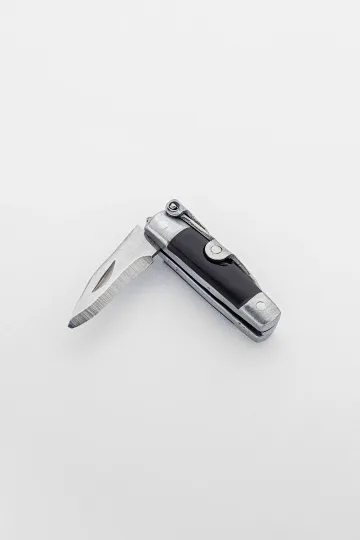
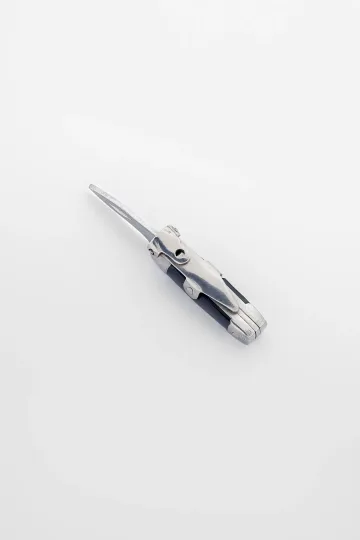
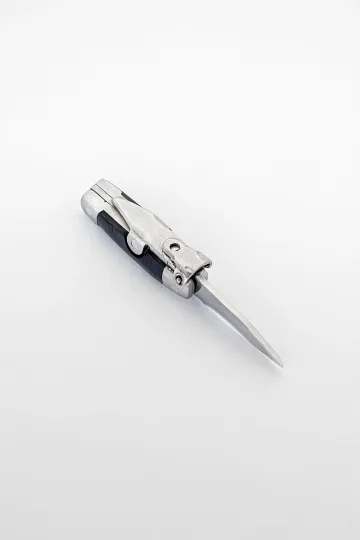
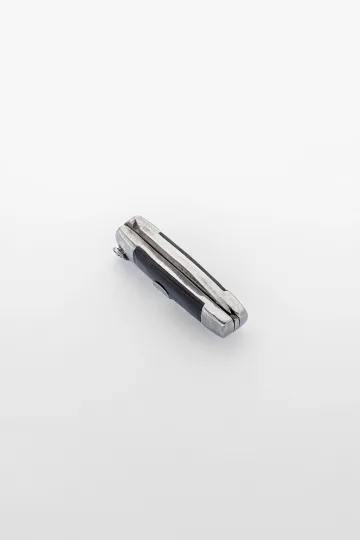
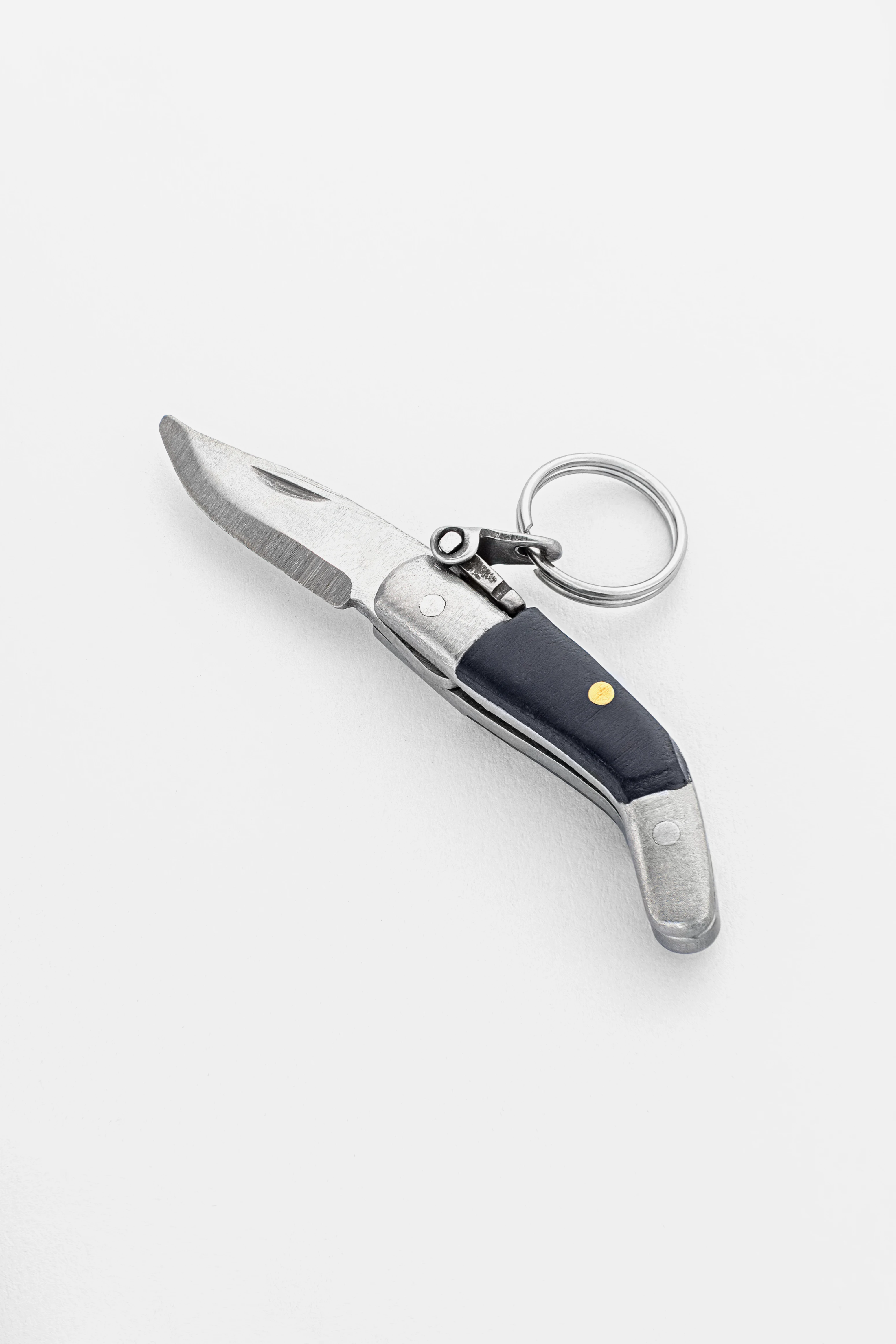
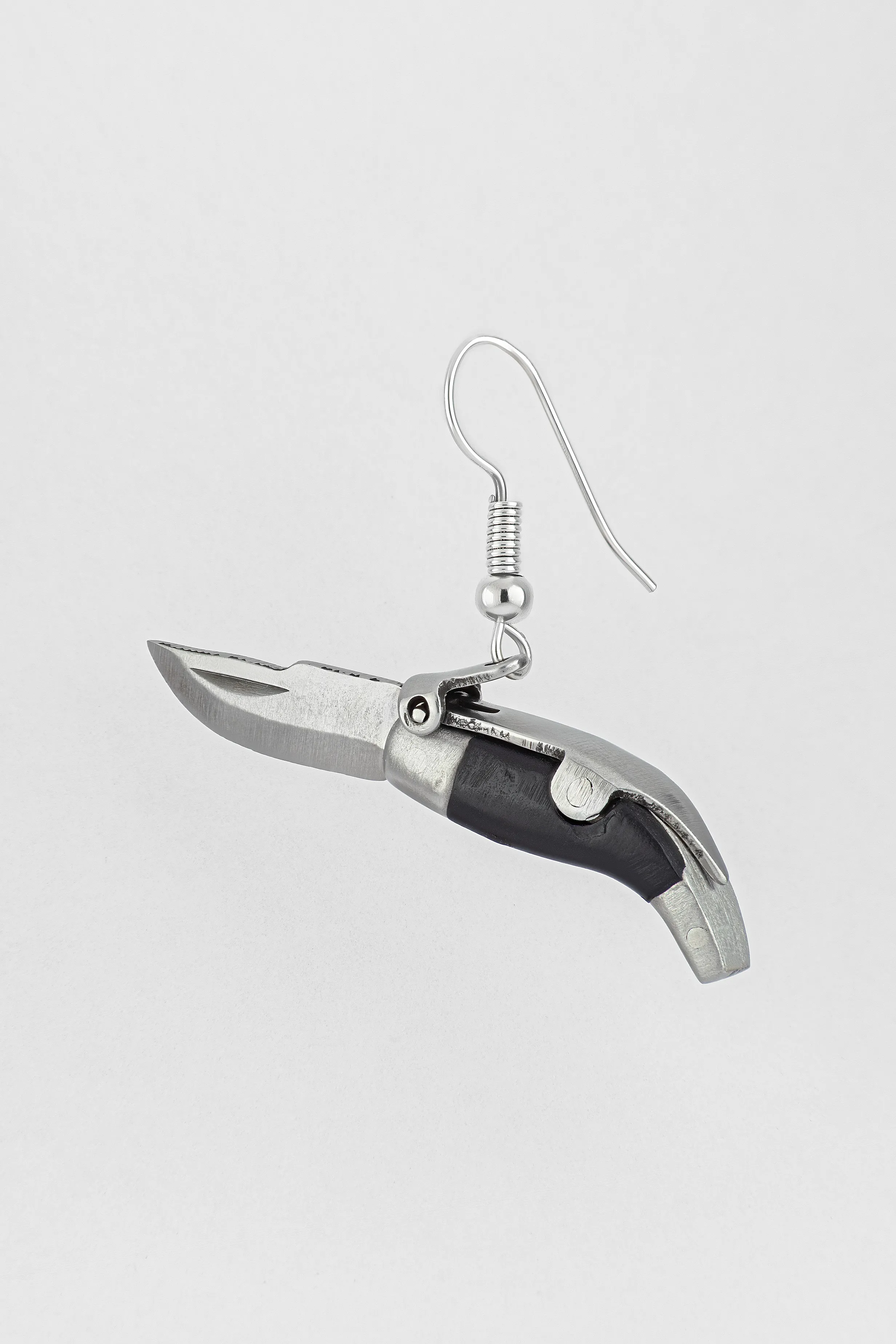
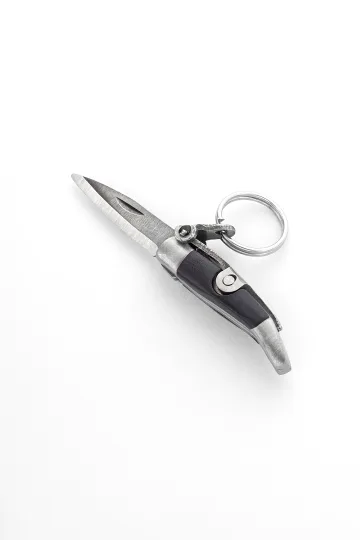
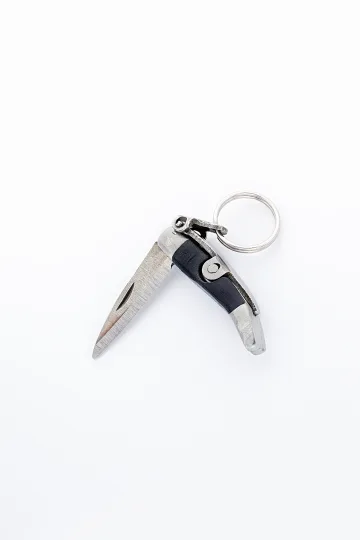
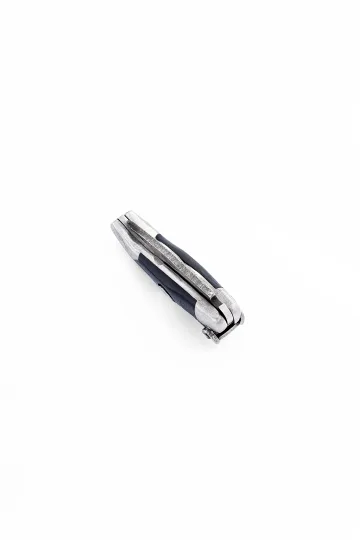
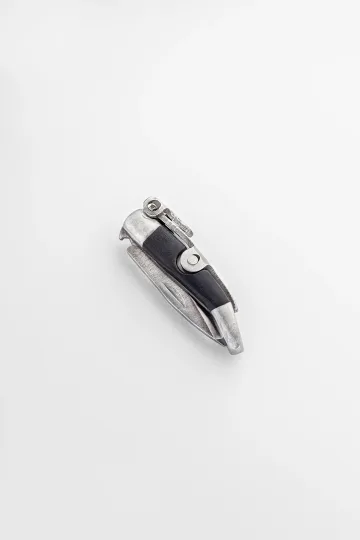
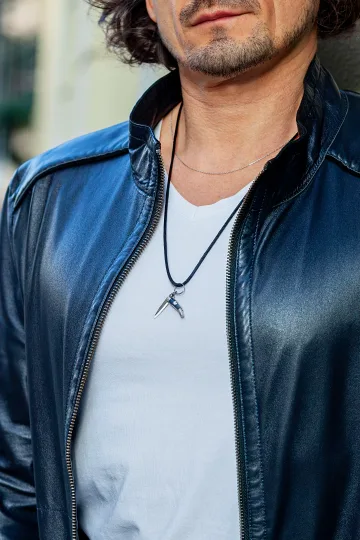
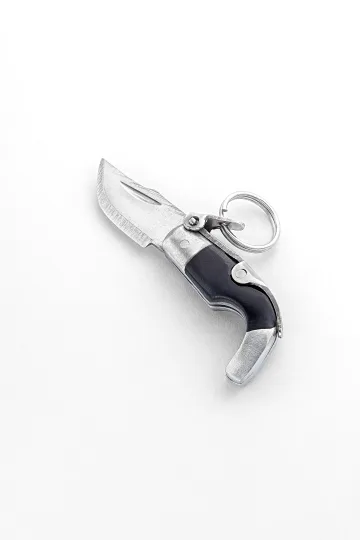
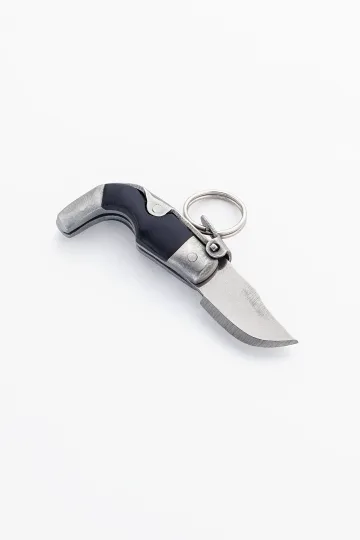
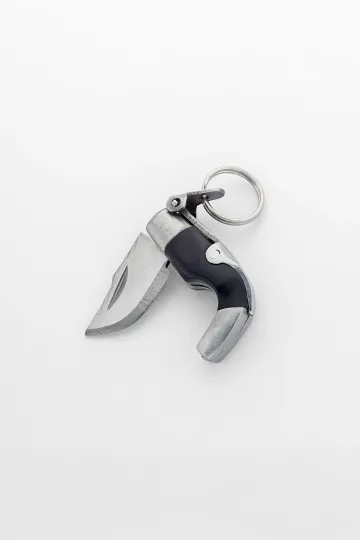
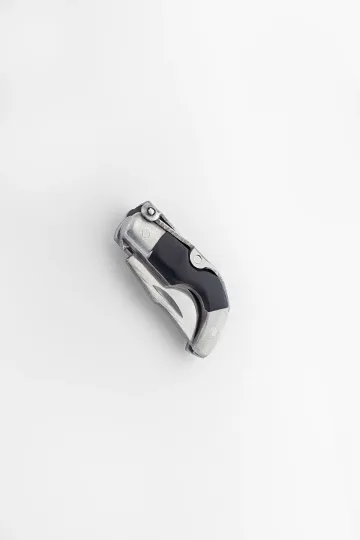
CAPAORA mini knife pendant
The 18th-century Spanish navaja in miniature: 40 mm of stainless steel, a real folding mechanism and a Palanquilla lock that clicks. An affordable gift to remember.
Authentic · Ships from Spain · 14-day returns
Clasp Technology: What to Choose Under Length
A pearl necklace clasp is not a decorative detail but an engineering node keeping the strand in working order. The clasp type depends on length, strand weight, pearl texture, and wearing scenario. Seven main types cover the whole canon.
Threaded Clasp
A screw connection from two parts: one part screws into the other through several turns of thread. One of the most reliable closures for pearl strands. Doesn't open by accident, withstands pulls, minimal visible on strand.
Application: princess, matinee, opera. For expensive strands (premium category) threaded clasp is standard. Manufactured from gold, white gold, platinum, sometimes sterling silver 925. Quality threaded clasp has six to eight thread turns; fewer than four is a defect, can unscrew with movement.
Barrel Clasp
A decorative clasp in the form of a small barrel from two halves, connected through a latch or screw. Often inlaid with pearl, enamel, or small stones, becoming an independent decorative element. On long strands sometimes moved from the "back of neck" position to "front on chest" position, working as an accent.
Application: princess, matinee, opera, sometimes rope. Barrel clasp is typical for twentieth-century classic pearl wardrobe. Often found in sets where pearl motif repeats on the clasp.
Magnetic Clasp
Modern engineering: two halves with strong neodymium magnet, connecting with a click. Convenient for people with limited finger mobility (arthritis, tremor), convenient for self-fastening without help.
Minus is serious: magnetic clasp doesn't withstand strong pull. If a pearl strand catches something (coat clasp, stair rail), the magnet separates and the strand falls. For expensive pearl with risk of loss, magnetic clasp is not recommended. For everyday choker or princess with freshwater pearl of medium category, an acceptable compromise.
Hook Clasp (S-Hook, J-Hook)
An open hook that catches on an eyelet on the other end of the strand. Simple construction, easy to open one-handed. Often used in contemporary designer pearls with minimalism accent.
Application: princess, matinee, opera. For rope less appropriate: long strand loads the hook, and careless movement can make it slip.
Carabiner Clasp (Lobster Claw)
Standard carabiner with movable latch, analogous to clasps on regular gold chains. The most universal type by applicability.
Application: all lengths except rope without clasp. On expensive premium strands, carabiner is used less than barrel and threaded because it's considered "ordinary," but its functional reliability is one of the best in the category.
Box Clasp
A rectangular clasp with spring latch entering a box. Latch is pressed from the side and opens. Often inlaid with stones, enamel, or pearl, working as a decorative element.
Application: collar, choker, princess. On long strands used less because the box form requires more robust fastening than threaded.
Without Clasp (Continuous Rope)
Rope of length 36-44 inches is often made continuous: the strand is a closed loop without visible clasp. Put on over the head. The most historically authentic rope format, in the spirit of 1920s flappers, when long ropes were exactly continuous.
Minus: you can't shorten such a strand or take it apart for separate wear as princess. Plus: the image is whole, without a visual seam, and the risk of losing the clasp is absent.
Clasp Coordination With Pearl Colour
Simple rule: white and pinkish Akoya matches with gold (yellow 750 and 585 grade) and with white gold, silver, platinum. Black Tahitian works better with white gold or platinum, less often with yellow (you get contrast, not everyone likes it). Cream and champagne Akoya and South Sea, with yellow gold.
Silver 925 on a pearl strand is appropriate for budget and medium versions. On premium pearl (Akoya hanadama, South Sea), silver seems like an underplayed material; gold is preferred.
Care for Pearl Strand and Restringing
Pearl is an organic material. Unlike metal and most stones, it lives, breathes, and reacts to environment. Care for a pearl strand includes four directions: storage, cleaning, protection from chemistry, restringing.
Storage
Pearl doesn't like light. Direct sunlight for years dries nacre and leads to fine cracks on the surface. Store strands in a box with opaque lid, dark drawer, or soft fabric bag (silk, cotton).
Pearl doesn't like neighbouring hard stones. Diamonds, sapphires, rubies, agates can scratch soft nacre (pearl hardness 2.5-4.5 on Mohs, diamond hardness 10). Each pearl strand should be stored in a separate bag or compartment of the box.
Pearl fears leather boxes. Leather emits tannins that, in contact with nacre, disturb its shine and can lead to matting in 2-3 years. Wood boxes with fabric lining or lacquered coating are safer.
Pearl lives at 40-60% relative humidity. Dry air (winter in apartments with central heating, humidity drops to 20-30%) dries the strand and the pearl itself. Useful to keep a piece of wet sponge in a sealed bag or special pearl humidifier in the box. Too much humidity is also harmful: mould on silk strand, a real problem for pearl stored in basement or bathroom.
Cleaning
After each wear, wipe the pearl strand with soft slightly damp cloth (cotton, linen napkin). This removes traces of skin oil, sweat, cosmetics. Dry the strand flat on a towel, not hanging wet, water drips into the holes in the pearls and weakens the silk strand.
Once every six months to a year, the strand can be cleaned more thoroughly. Soft cloth slightly dampened in warm water (35-37 degrees) with a few drops of mild soap without scent. Wipe each pearl individually, then rinse clean water, dry flat. Never soak the entire strand in water: wet silk stretches, on drying shrinks, and over time weakens at bend points.
Never use ultrasonic cleaning or steam. These methods destroy nacre and strand. Never use abrasive agents, bleach, silver cleaners. Pearl dissolves in acids and alkalis.
Protection From Chemistry
Pearl is put on last after makeup, perfume, hairspray, lotion. All these contain substances that destroy nacre. Perfume with alcohol is one of the main enemies: one drop of spirits on a pearl quickly mats the surface at that spot.
In hot weather, sweat also works aggressively. Lactic acid in sweat gradually dissolves the thin nacre layer. A pearl strand worn on a hot day should be wiped with damp cloth in the evening.
Pearl doesn't go in a swimming pool. Chlorine oxidises nacre and can irreversibly damage the strand in one session. Doesn't go in the sea either: salt in seawater concentration is aggressive. Doesn't go in the bath: hot water and soap together destroy both strand and pearl. Shower, sports, sauna, all this remove beforehand.
Restringing: When and How
The silk thread on which pearl is strung has a finite resource. With regular wear (once a week or more often), silk wears out in 3-5 years. Wear signs: the strand has stretched (distance between pearl increased), knots between pearls became uneven, strand darkened from skin oil.
Don't wait for the strand to break. A broken pearl strand on the street loses pearl in seconds: they roll in different directions, fall under feet, disappear in pavement cracks. Especially sad for rare strands where each bead has its own value.
Restringing is a standard jeweller procedure for pearl. Usually costs "like dinner at a medium restaurant" per strand and takes one or two days. The pearl are removed from the old strand, checked for chips and cracks, washed, restrung on new silk thread with a knot between each pair of pearls. Knotting is the standard for quality strands and a requirement for premium.
Silk or nylon? Silk is classic and standard. Natural silk is soft, thin, flexible, doesn't damage holes in soft pearls. Silk's minus: finite resource (3-5 years). Nylon is more durable (8-10 years) but rougher, under strong tension can damage holes in soft pearl. For everyday princess of freshwater pearl, nylon is acceptable as practical choice. For premium strands (Akoya hanadama, South Sea), silk only.
Budget restringing regularly. Princess worn regularly: restringing every 4 years. Choker similarly. Matinee and opera worn less frequently: restringing every 6-8 years. Rope worn even less but wears more actively at bend points: restringing every 5-7 years.
Ominous Signs on Pearl
Besides strand wear, pearl ages too. Several signs requiring attention:
Matting of surface, nacre loses shine, pearl becomes dull. Reason usually chemical (perfume, sweat). The shine can't be restored, but further deterioration can be stopped with proper care.
Flaking of nacre, thin scales separate from the core. Sign of low-quality pearl or serious damage. Irreversible.
Colour change, pearl yellows, darkens in zones of skin contact. Part of natural aging process. Can be hidden with careful cleaning but can't be stopped.
Cracks: thin lines on the surface from impact or compression. Don't grow, but don't heal. Solved by replacing that pearl during restringing.
Pearl chipping: part of the upper layer is knocked off, darker core is visible. Like cracks, not treated, replaced or accepted as "defect" in overall strand picture.
Pearl as Legacy
A pearl strand passed down through generations requires special regime. Grandmother's princess arriving to granddaughter fifty years later almost certainly needs restringing: silk of that age doesn't hold. Before restringing, a jeweller makes a photo-fixation of condition, notes defective pearls, agrees with the owner on replacement or preservation of original composition.
Often an old strand consists of pearls of different quality: larger more beautiful in the middle, simpler toward the clasp. During restringing you can preserve this structure (it's part of history) or, conversely, rearrange and improve aesthetics (but this is loss of authenticity). The decision is a question of relation to heritage: preserve as was or adapt to modern taste.
If a strand broke and some pearls were lost, a jeweller can select replacements from reserves. Perfect match by colour and shine is hard to achieve (each pearl batch has its own nuances), but a close substitute is done regularly. Replaced pearls should be noted in the strand's passport so at the next restringing in 30-40 years the history is transparent.
Send a friend a discount code, they save on their first order.
Frequently Asked Questions
What Length Should I Choose for a Wedding
For the bride: princess 43-46 cm from Akoya 7-8 mm. Universal classic, doesn't distract from dress, works with any ceremony style. If the dress has deep V-neck, princess sits right at the upper edge. If the dress has open shoulders, princess works softer than choker, doesn't compete with straps. For the groom's mother or bride's mother: choker 16 inches or princess in restrained 6-7 mm, no pretense of luxury. Bridesmaids: princess 45 cm from freshwater 6-7 mm, budget and formal-looking set.
Opera or Matinee for a Gala Dinner
Depends on dress and height. Opera (28-34 inches) is evening variant, works with closed neckline, turtleneck, high-neck dress, fitted dress without necklines. Matinee (20-24 inches) is more daytime length, at gala also suitable but looks softer, not as dramatic. For height below 165 cm, choose matinee; opera may seem heavy. For height above 170 cm, opera in full length, effect is theatrical-formal.
How Many Pearls Are in a Princess Strand
Depends on pearl size. At length 45 cm and size 7 mm, about 60 pearls. At size 8 mm, about 55 pearls. At size 6 mm, about 70 pearls. The calculation is: length in millimetres divided by (diameter of pearl plus width of knot, usually 0.3-0.5 mm). Exact count depends on stringing density and whether a knot was used between each pair.
Can You Lengthen or Shorten a Pearl Strand
Lengthen: yes, through transition to new clasp with chain extender (extender). Standard extender from gold or silver adds 3-7 cm to original length. The extender attaches to existing clasp or to eyelet on the other end.
Shorten: more complex. You can remove several pearls from the middle during restringing. This is material loss: removed pearls can be kept and used on earrings or bracelet. Final shortening, decision to approach carefully: you can't return the length.
Silk or Nylon for Stringing
For princess worn regularly: silk maintains feel and appearance best, but needs restringing every 4-5 years. Nylon would last longer but feels less luxurious. For expensive strands (Akoya, South Sea): silk only, nylon's roughness risks damaging holes. For budget or freshwater daily wear: nylon is practical.
How Do I Measure the Neck and Convert It Into a Length
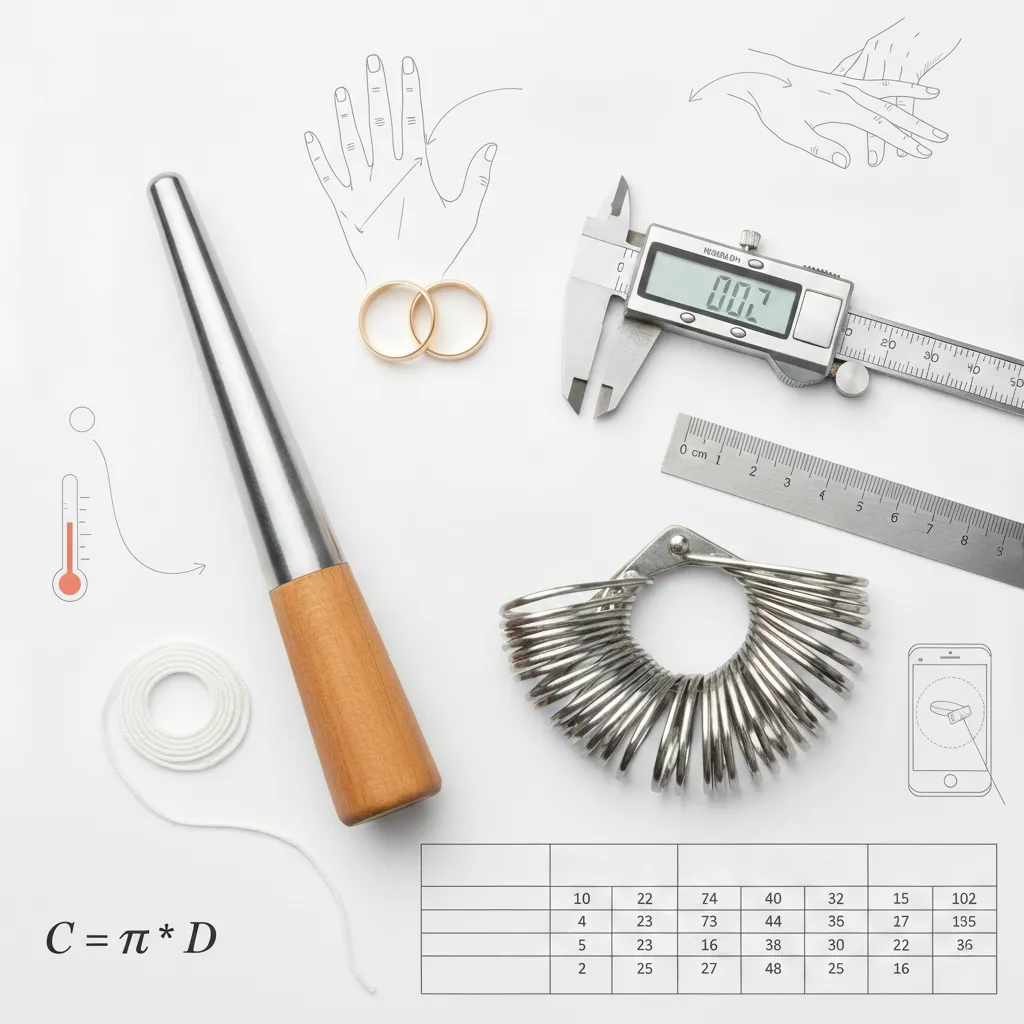
Take a soft tape measure, the kind that lives in a sewing box, and run it round the base of the neck where a collar would sit, with one finger slipped underneath so the reading is not tight. Most adult necks come out between 33 and 40 cm. Whatever that number is, the strand length you want sits above it: add about 5 cm for a choker that rests on the throat, about 10 cm for a princess that falls just below the collarbone, and about 20 cm and upwards for matinee.
No tape measure to hand? A piece of string and a ruler does the same job, or a shoelace laid flat afterwards. The other reliable trick is to take a necklace she already wears and likes, lay it flat in a circle on the table, and measure it end to end including the clasp. That single number tells you more about her preference than any sizing chart, because it is the length she chose for herself and kept wearing.
One caveat worth knowing before you order. The same measurement sits differently on different people, because the strand follows the chest as well as the neck. A 45 cm princess lands high on a slim frame and noticeably lower on a fuller one, and a heavier pearl pulls the line down further than a light chain would. If the choice is between two lengths, take the longer one and add nothing, since a strand that sits slightly low reads as elegant while one that grips the throat reads as a mistake.
Why Are There Knots Between the Pearls
Knotting is the small detail that separates a strand built to last from one assembled to a price. A knot of the stringing silk is tied between every pair of pearls, and it does two jobs at once. It keeps the pearls from grinding against one another, which matters because nacre is soft and pearl drill holes chip from the inside where nobody can see the damage happening. And it acts as a set of bulkheads: if the silk parts, one pearl comes off and the rest stay put on the thread rather than scattering across the floor of a restaurant.
There is a third effect that is purely visual. Knots hold each pearl in its own place and put a fraction of a millimetre of space between them, so the strand drapes in a smooth curve instead of clumping, and the individual pearls stay separately readable rather than merging into a tube. Look at the gap when you hold a strand up to the light: an evenly spaced, tightly worked knot line is one of the quickest quality signals available to a buyer with no loupe and no training.
Unknotted strands are not automatically bad. Small freshwater pearls on a short strand for occasional wear survive perfectly well without knots, and the saving is real. But for anything you plan to wear weekly, for anything longer than princess, and for anything you intend to pass on, knotting between every pair is the standard to ask for by name.
How Often Should a Pearl Strand Be Restrung
A princess worn regularly, meaning once a week or more, wants restringing every three to four years. A choker is much the same. Matinee and opera, which come out less often, stretch to six or eight years. Rope goes on a five to seven year cycle, because a long strand wears hardest at the fold and at the knot on the chest where it is handled most.
Signs it is time: the strand has stretched and the gaps between pearls have opened up, the knots have gone loose and slack, the silk has darkened or taken on a greasy look, or you can see thread appearing between the pearls as the necklace moves.
Is a Double Strand Better Than a Single
Neither better nor worse, simply a different format. A double princess behaves like a layered necklace and gives a dressed occasion feel. A single princess is the quiet classic. The choice follows the occasion and the wearer's style: double for galas and formal evenings, single for the office and everyday wear.
Technically a double strand asks more of the clasp, since it carries twice the weight, and it asks more of the pearl matching, because the two rows have to agree with each other in size, colour and lustre or the eye catches the discrepancy immediately. A double princess does not cost twice a single one, but it sits meaningfully higher because of the extra material and the extra sorting.
Can Pearls Be Worn Every Day
They can and arguably they should, because pearls do better in use than in storage. Contact with skin keeps the nacre from drying out, and a strand that gets worn regularly usually looks better than one that has spent a decade in a drawer waiting for an occasion that never quite arrived.
The rule for daily wear is a rule of order. The pearls come off before sport, showering, swimming and sleep. They go on last, after make-up, perfume and hairspray have gone on and settled. Once a week, wipe them gently with a soft damp cloth and let them dry flat before they go away.
What Is the Difference Between Akoya and Freshwater Pearls for a Long Strand
Akoya is Japanese saltwater pearl, cultured in the oyster Pinctada fucata martensii. It runs close to perfectly round, with a mirror-bright lustre, in a colour range from clean white through rose to silver. It sits at the top of the market, and the highest grades (hanadama) sit higher still. A long strand of large Akoya belongs firmly in the premium segment.
Freshwater pearl is cultured in mussels, largely in China and to a lesser extent in Vietnam and the United States. Shapes run from round to frankly baroque, lustre from soft to bright, colours from white through pink, lavender and gold. For comparable size it lands several times below Akoya.
For long strands, opera and rope, freshwater is often the sensible choice: it makes those lengths reachable without a painful compromise elsewhere, and at that distance from the eye the sheer sweep of the strand carries the effect without needing premium grading. For princess and shorter, Akoya earns its place, because on a short strand every individual pearl is visible and the quality of the nacre becomes the whole story.
Pendant or No Pendant on a Pearl Strand
A pendant complicates the classical formula. A princess with a single large pearl drop, or with a gold and stone pendant, was a common format in the early and middle twentieth century, and it turns up constantly in inherited pieces because so many were made.
The clean strand with no pendant is the modern standard. The pearls are the ornament and they do not need a second focal point arguing with them. If you do want a pendant, keep it modest in scale: it should not be larger than the biggest pearl in the strand. Cross that line and the pendant pulls all the attention, the rhythm of the pearls stops registering, and the necklace loses its coherence.
Can Different Pearl Types Be Mixed in One Strand
They can, though it takes an eye. A classic combination sets Akoya at 7 mm against freshwater at 8 to 9 mm and Tahitian at 9 mm, producing a strand with a gradient of colour and size. Contemporary taste allows bolder pairings: white Akoya with grey Tahitian, cream South Sea with pink freshwater.
The governing rule is that a mixed strand needs either a clear plan (a graduated size, an alternating colour rhythm you can follow with your eye) or committed chaos (baroque pearls of assorted sizes and colours in genuinely random order, assembled like a posy). What looks careless is the middle ground, where a rhythm is obviously intended and then not sustained.
Pearls as a Set With Earrings and a Bracelet
The classic set, the parure, is a princess with stud earrings and a bracelet. All three agree on pearl type, size, lustre and colour, and the whole thing is built for formal occasions.
The flexible modern approach treats each piece separately and does not insist they come from the same shell. An Akoya princess with Tahitian earrings and a baroque freshwater bracelet works on contrast and reads as contemporary rather than inherited.
Wedding tradition assumes a matched set from one material. Modern dressing allows the assembled kind. The wearer decides, and neither answer is wrong.
Can Pearls Be Worn With Beachwear
Yes. In several European cultures pearls count as a summer ornament, particularly a baroque rope or a short freshwater princess. The combination that works: linen, a straw hat, flat sandals, a woven bag, and a strand of pearls that stops the whole thing looking like a uniform.
The rule that matters is that they do not go into the water. Take them off before swimming, before the shower in the beach hut, before anything involving steam. Brief contact with salt air does no harm, but a long day of direct sun dries out nacre, so a strand is better worn in the evening than baked on a lounger at midday.
How Do You Tell Real Pearls From Imitations
The tooth test: run a pearl gently along the edge of your upper teeth. Real pearl feels faintly gritty, like very fine sand. Glass or plastic imitation feels slick and slides. The test is not infallible, since some good imitations are textured and some very smooth pearls glide, but it gives you a first reading in two seconds.
Weight: real pearl feels heavier than glass or plastic of the same size, and noticeably denser in the hand. Toss a strand lightly on the palm and the real one settles rather than bounces.
Light: real pearl is opaque or faintly translucent, and the nacre has visible depth when you turn it. Glass imitation is often either transparent or uniformly cloudy, with no depth to look into.
Cost: real pearl is never cheap. If a decently sized saltwater Akoya is being offered for almost nothing, it is almost certainly an imitation, and a suspiciously low asking figure is one of the most reliable warning signs there is.
Certification: for expensive strands, ask for a report from an independent laboratory such as Gübelin, SSEF or the GIA pearl identification service. It states whether the pearls are natural or cultured, where they came from, and how they grade. For anything at the top of the market, that document is part of the purchase rather than an optional extra.
What Is Hanadama
The top grade of Akoya, the cultured pearl of Japan. Certification comes from the Pearl Science Laboratory of Japan, and the pearls are selected on strict criteria: mirror lustre with no cloudiness, a surface clear of visible flaws, a genuinely round shape, and nacre at least 0.4 mm thick on one side. Only a small fraction of the Akoya harvest passes.
A hanadama princess is a purchase measured in decades and sits at the top of the premium segment. What you are paying for is that mirror lustre, which with sensible care survives a lifetime and goes on to the next generation still looking like itself.
What Is a Pearl Parure
A parure is a matched set of jewellery in a single material, usually pearl, made up of several pieces: a necklace (princess or matinee), earrings, a bracelet, and sometimes a brooch and a tiara. The tiara has no place in modern life, but in nineteenth-century historic parures it was a required element and the sets were sold that way.
A full parure passes down as a unit. It lives in a fitted case with a compartment for each piece, and in valuation a complete parure is worth more than the sum of its parts, because the matching of the pearls and the single design intention carry collectable and historical weight that individual pieces lose the moment they are separated.
Do Pearls Suit a Man
They do. Pearls have a long history in men's dress, running from Roman antiquity through the Elizabethan court to the modernist experiments of the last decade or so. Contemporary menswear takes a pearl necklace without blinking: a single princess of Tahitian at 8 to 9 mm under a buttoned collar, or over a plain T-shirt, reads as deliberate rather than borrowed. A baroque rope in the flapper manner over a chunky knit gives a bohemian effect.
The working rule is that pearls in a man's wardrobe do better dark, meaning Tahitian in black or grey, or baroque, meaning irregular in shape, so that the piece is not read as borrowed from someone else's jewellery box. A classic white princess on a man is a debatable choice that needs a specific style behind it, whether modernist or deliberately gender-neutral, and worn without that conviction it looks uncertain.
Can Pearls Be Worn During Pregnancy
Yes. Pearls carry no contraindications in pregnancy. Allergy to the stringing material, silk or nylon, is rare, and allergy to pearl itself is close to nonexistent. A pregnant woman wears pearls exactly as she otherwise would, taking them off for sport, the bath and sleep. If anything, a strand is one of the few pieces that keeps working through nine months of changing shape, since a necklace has no size to outgrow.
Pearls: the complete guide to types, choice and care is the place to start if you want the underlying material in depth: Akoya, freshwater, Tahitian and South Sea, colours, shapes and quality grading. This article is a continuation of that one, taking length as a separate axis of choice.
How to choose a chain length: the complete guide is the parallel topic for anyone working with gold and silver chains. Many of the rules overlap, since necklines, necks and proportions do not change, but the materials and the technique are different.
Conclusion
A pearl necklace is simple in form but complex in choice. The length you pick determines not just what will work with your outfit but what era, what occasion, what persona you're choosing. From the tight monilia of ancient Rome to the flapper rope of the 1920s to today's flexible opera, six lengths each carry their own history and their own message.
This guide has walked through that history, shown how each length functions with different bodies and necklines, explained the physics of pearl sizing by length, and given concrete scenarios for life moments when a strand becomes meaningful. With this knowledge, you can walk into a shop or an online store not just knowing that you want "a pearl necklace" but knowing exactly which six-hundred-year-old form your body and your life demand right now.
The pearl necklace is not just jewellery. It's the physical form of a fashion story spanning empires, wars, social upheaval, and technology. You wear not just pearls and silk, but Theodora's Byzantine grandeur, Elizabeth I's power, the flapper's revolution, and Jackie Kennedy's restraint. Every length whispers a century.
Silver, gold, engagement rings, symbolic jewellery, paired sets.
Buying it as a gift? Each one arrives ready to give.
 A branded Zevira box and a little card come with every order.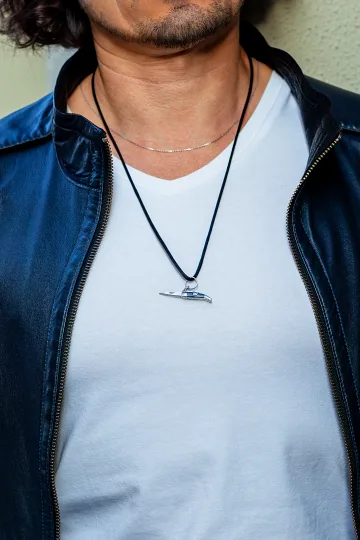





About Zevira
Zevira is a Spanish brand from Albacete with a handcraft workshop and our own sterling silver 925 production. We make collections with pearls, rare stones, and old techniques, take custom orders, and restring inherited pearl strands. We work with clients across Europe and beyond, shipping worldwide with insurance. Every piece passes a material check, comes with documentation, and a certificate for the significant stones.