The Lariat Necklace: A Tie Without a Clasp Where You Set the Length
A lariat has no clasp at all, and that is exactly what makes it the most flexible necklace in the box. Where an ordinary chain decides for you how deep it will sit in your neckline, the lariat decides nothing. One long strand, two free ends, zero closures. Tie a knot high so the ends fall down the chest, or thread one end through a loop and let it drop almost to the waist. The length and the depth are dictated by you every time, not by a metal clasp at the back of your neck.
This odd piece is easy to overlook in a catalogue: it lies there as a harmless chain or a strand of pearls, with no visible structure at all. Pick it up and grasp the logic, though, and a single lariat starts to replace three or four different necklaces. Under a closed sweater it ties short and tidy. Under an open dress it loosens into a long V shaped line. Down the back it cascades when a dress dips low behind. Its name comes from cowboys, its history from the ballroom, and its mechanics are simpler than any chain with a clasp.
This piece covers where the lariat came from, how it differs from an ordinary necklace and from a sautoir, how to wear it a dozen ways, which necklines and figures it was made for, what it is made of, and how to care for a long chain that loves to tangle. Plus a section of surprising facts and answers to the questions people ask most.
What a Lariat Is and How It Differs
What a lariat is in plain terms
A lariat is a long necklace with no clasp. Instead of a closure it has two free ends, and it stays on the neck not by a catch but by how you tie, wrap, or thread it through itself. The basic form could not be simpler: one long flexible strand, usually a chain or a cord, with anything at all on the ends, from tiny pendants to bulky tassels.
The core idea is that a lariat's length is not fixed. An ordinary necklace settles where its clasp allows: if a chain is forty centimetres long, it will lie at the base of the neck, and that is that. A lariat you adjust on the spot. Tie the knot higher and the ends hang shorter. Loosen it, drop the knot lower, and the line drifts toward the décolletage. The same piece works as a restrained necklace close to the throat and as a long vertical falling almost to the waist.
Wear the symbol, don't just read about it. These are in stock:

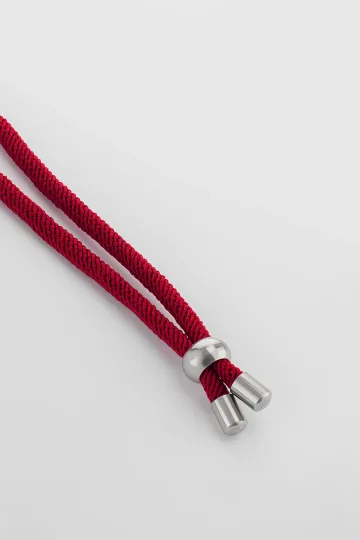


How a lariat differs from an ordinary necklace with a clasp
An ordinary necklace decides three things for you at once: where it sits, how deep it goes into the neckline, and how it looks from behind. The clasp hides at the nape, the length is set once and for all, the shape is fixed. A lariat removes all three limits. There is no clasp and no bridge at the back, because there is nothing to fasten. At the front you choose the depth yourself each time. And there are so many ways to secure it on the neck that one piece gives you not a single look but a whole family of them.
There is a flip side. A necklace with a clasp is more secure: fasten it and forget it, it will not go anywhere. A lariat holds by a knot or a slide, and how firmly it sits is up to you. In return it spares you the eternal fuss of a tiny clasp that you cannot fasten without a mirror and a third hand. For anyone who struggles with closures, say from weak or stiff fingers, the lariat is often easier than any chain. For how to choose a length to suit your neck and neckline in general, it is worth reading the guide to chain length.
How a lariat differs from a sautoir
A sautoir is also a long necklace, and the two are often confused, but the difference is fundamental. A sautoir is a closed long strand whose ends are joined: sometimes into a single ring, sometimes through a decorative clasp or a tassel pendant at the bottom. You pull it on over your head and it hangs as a ready loop; you do not tie it. A lariat is open: two free ends, and you create the shape yourself, from scratch, every time.
It is easier to remember this way. A sautoir is a long necklace that already has its shape, and all you do is put it on. A lariat is a long blank that you mould into shape with your hands. From a lariat you can build something close to a sautoir by threading one end through the other and dropping the loop. But a sautoir will never become a lariat, because its ends are joined for good. The lariat is about free ends, the sautoir about a ready loop.
How a lariat differs from a Y necklace
A Y necklace looks like a lariat: it too drops in a vertical line with a pendant at the bottom. But in construction it is an ordinary necklace with a clasp, with a point at the front from which an extra strand and a charm hang down. The result is the silhouette of the letter Y. The clasp stays where it is, at the nape, the length set.
A lariat gives a similar V shaped or Y shaped line at the front, but with no clasp and no fixed length. Sometimes a lariat is made on purpose so that one end threads through a loop or ring on the other, and then a long tail forms at the bottom, just like a Y necklace. The difference is that in a Y necklace the shape is sewn into the construction, while with a lariat you build it yourself and can undo it whenever you like.
Where the Name Came From and the History of the Lariat
Why the lariat was named after a cowboy's lasso
The word lariat comes from the world of cowboys and herders. A lariat was a long rope with a loop on the end, the lasso used to catch cattle on the Wild West. The word itself goes back to the Spanish la reata, meaning a rope or a tether strap. When a long clasp free necklace came into fashion, one whose end you could thread through a loop on the other and pull tight with a sliding motion, the resemblance to a lasso was too obvious to miss. The piece took the name of the rope.
The logic is in the mechanics. A classic lariat often has a loop or ring on one end, and the second end threads through it like a lasso rope through its own loop. Pull the free end and the necklace tightens higher or lower on the chest. It is literally the same sliding motion as a herder's loop, only in miniature and made of precious metal.
The lariat in the Art Deco era and among the flappers of the 1920s
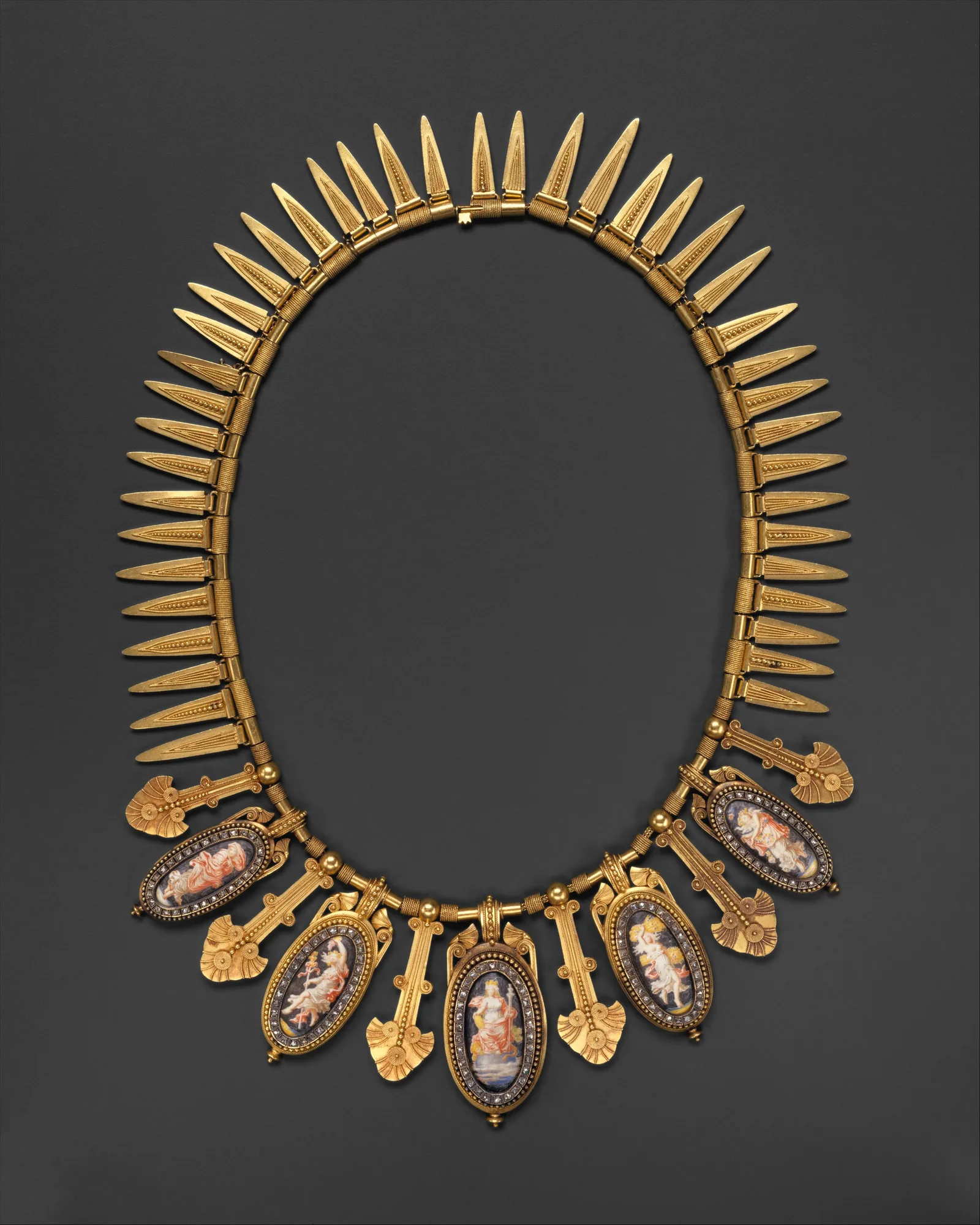
The lariat hit its peak in the nineteen twenties. The Art Deco era fell in love with long vertical lines, geometry, and movement. Dresses turned straight, the waist dropped to the hips, necklines opened the neck and back, and a long necklace falling in a vertical cord settled perfectly into that silhouette. The young fashion lovers of that decade, called flappers, wore long strands of pearls and beads that swung freely as they danced.
The lariats and sautoirs of that era were built for movement. A girl in a short dress danced the Charleston, and a long strand with tassels on the ends flew along with her, underscoring every gesture. The ends were often finished with tassels of small pearls or beads, faceted pendants, sometimes stones. The vertical of the necklace lengthened the figure, while the free ends added the carefree dynamism the decade was famous for. That was when the lariat turned from an ornament into part of the look of an emancipated woman.
The revival of the lariat today
After Art Deco the lariat would drift into the shadows, then return in waves. Every decade that fell for minimalism and clean lines rediscovered the clasp free necklace for itself. A thin lariat chain with a tiny pendant on the end fit perfectly into the taste for restrained, almost invisible pieces worn in layers. And lovers of expressive things brought back bold lariats with tassels and large pendants that nod to the twenties.
Today the lariat is valued for the same things it was a hundred years ago: flexibility and line. It looks just as natural with a work shirt as with an evening gown, and it can be worn alone or layered with other chains. The revival rests largely on practicality: one piece, a dozen ways to wear it, zero fuss with a clasp. In an age that prizes pieces that transform, a necklace that is different every time turned out to be very welcome.
The ends are meant to swing, not dangle like two dead ribbons. Tied it in a death knot? Untie it and do it again, I'll wait.
How a Stylist Suggests Wearing a Lariat
I have styled the lariat on hundreds of shoots, and it is one of the few pieces I recommend to almost anyone: one chain, a dozen looks. Here is what actually works, by occasion.
How do I tie a lariat for the office? Under a shirt or blouse I recommend a short, high knot, right where a tie knot would sit. I choose a calm metal, silver or matte gold, and restrained ends with no tassels. The vertical line adds composure and softens even the strictest suit. I suggest tying the knot gently, without pulling it tight, so the chain does not kink.
And how do I build an evening look? For evening I choose an open neckline and let the lariat down deep, so the vertical plays on bare skin. Tassels, pearls, and larger pendants belong here. Under an open back dress I turn the lariat around and let the ends cascade down the back. In the evening I leave it to solo: it should have no neighbours on the neck.
What length should I pick first? I suggest a medium lariat, roughly ninety to one hundred ten centimetres laid out flat. You can tie it short under a shirt and loosen it deeper for a dress, so one piece covers the most scenarios. Too short keeps you at a high sit, too long asks for wrapping.
Can I wear a lariat in layers? You can and should, as long as you keep the intervals. I place the lariat as the longest element of the stack: a choker or short chain on top, a medium one in between if you like. Its vertical pulls the layers into a composition and keeps them from looking like a heap. One rule: a lariat with a tassel I leave to solo, or the tassel tangles with its neighbours.
Who does a lariat suit anyway? Almost everyone, because its vertical lengthens and slims. For a short neck I recommend a deep drop, it stretches the décolletage. In a masculine look I take a thin chain with calm ends tied short over a shirt. And I especially suggest it to anyone who struggles with a tiny clasp: a lariat needs no closure at all.

Turn on your camera, pick earrings, a pendant or a ring, and see the piece on yourself in real time.
Switch items in one tap.
Everything runs in your browser: no photo or video is ever uploaded.
Customer reviews
Zevira is a real jewellery shop. Genuine payments, deliveries and customer thank-yous.
🥰🥰🥰 gracias
Ok, ¡gracias! 🙂
How to Wear a Lariat: Ten Ways
The lasso knot: the classic slide through a loop
The most recognisable method works if one end of the lariat has a loop, a ring, or a pendant with a hole. You thread the second end through it and drop it down. The result is a neat sliding loop at the base of the neck and a long tail falling down the centre of the chest. Pull the loop up and the necklace sits closer to the throat. Drop it lower and the tail moves toward the décolletage. This is the base form, the very one that ties the lariat to the lasso.
A simple knot on the ends
If there is no loop, the lariat ties with an ordinary soft knot. Drape the chain over the neck, cross the ends at the front, and tie a loose, gentle knot at the height you want. The ends hang down in two lines. The higher the knot, the shorter and tidier the necklace. The lower it sits, the deeper the neckline goes. Do not pull the knot tight, so the chain does not kink, especially a thin one.
Wrap it around the neck two or three times
A long lariat can be wound around the neck several times for a layered effect from a single piece. The first wrap sits high, like a choker, the second and third drop lower. The ends are either left to hang freely at the front or tucked away behind a wrap. This turns one long chain into the look of a whole set of necklaces in different lengths. The trick works especially well with thin chains and strands of beads.
Let it fall down the back
When a dress bares the back, the lariat is turned around backward. The main line sits at the front by the throat, and the long ends drop down the exposed back. The result is an unexpected accent where there usually is nothing. This trick comes straight from the Art Deco era, when low cut backs called for jewellery that played on the back rather than the chest.
Leave it hanging freely without a knot
Sometimes a lariat is not tied at all. You drape it over the neck and leave the two ends to fall freely at the front in two parallel or slightly diverging lines. It suits long lariats with beautiful ends, tassels, or pendants that you want to show in full. The line comes out soft and relaxed, with none of the rigid geometry of a knot.
Wear it on bare skin under an open neckline
The lariat was made for bare skin. Under a deep V neckline, under a dress on thin straps, under an off the shoulder top, the long vertical of the necklace echoes the line of the neckline and leads the eye down. The less fabric in the décolletage area, the more expressive the falling chain becomes. This is where the lariat fully comes into its own: it needs open space, not a collar.
Wear it over a shirt or sweater collar
The reverse approach is no less striking. The lariat ties short and is worn over a buttoned shirt, a turtleneck, or a thin sweater. The vertical line reads especially clearly against dense fabric, and the knot stands in for an absent tie. Hence the necklace's second name, the tie necklace: a lariat tied high really does sit roughly where a shirt's tie knot would be.
Fasten it as a choker
A short or medium lariat can be cinched high, wrapped around the neck and tied so the main line sits snug at the throat. The free ends then hang in a short tail at the front. The result is a choker with hanging ends, collected and graphic. It works well with bare shoulders and with clothing that has no neckline, when you want to accent the neck itself.
Shift the knot to the side for asymmetry
You do not have to run the knot straight down the centre. Move it toward a shoulder and the ends fall asymmetrically, on the diagonal. This trick livens up a plain chain and works well with an asymmetric neckline or one bare shoulder. The asymmetry adds a casual, deliberate touch, where everything looks accidental but is in fact carefully judged.
Wear it layered with other chains
A lariat slots beautifully into a stack. A short chain or choker on top, the lariat below with its long vertical, and if you like another chain of medium length in between. The vertical line of the lariat pulls the layers into a single composition and keeps them from looking like a heap. For how to build such combinations by length and texture in general, there is a detailed guide on how to combine several pieces.
Upload a photo of your pet, someone you love, or an object. We'll build a 3D model and hand-cast it in pewter.


Length and Types of Lariat Ends
What lengths lariats come in
A lariat's length is measured laid out flat, end to end, because it has no closed loop. Short lariats, around seventy to eighty centimetres at full length, sit high once tied and give a restrained line at the base of the neck. Medium ones, roughly ninety to one hundred ten centimetres, drop the tail to the centre of the chest. Long ones, from one hundred twenty centimetres and up, let you both wrap several times and let it down almost to the waist.
When choosing a length, keep in mind exactly how you plan to wear it. For short, collected looks close to the throat, a modest length is enough. For deep V lines and multi wrap layering you need a long strand. The medium lariat is considered the all rounder: you can tie it short and let it down deep. The general logic of matching length to height and neck is the same as for any chain, and is covered in the length guide.
Lariat with pendants on the ends
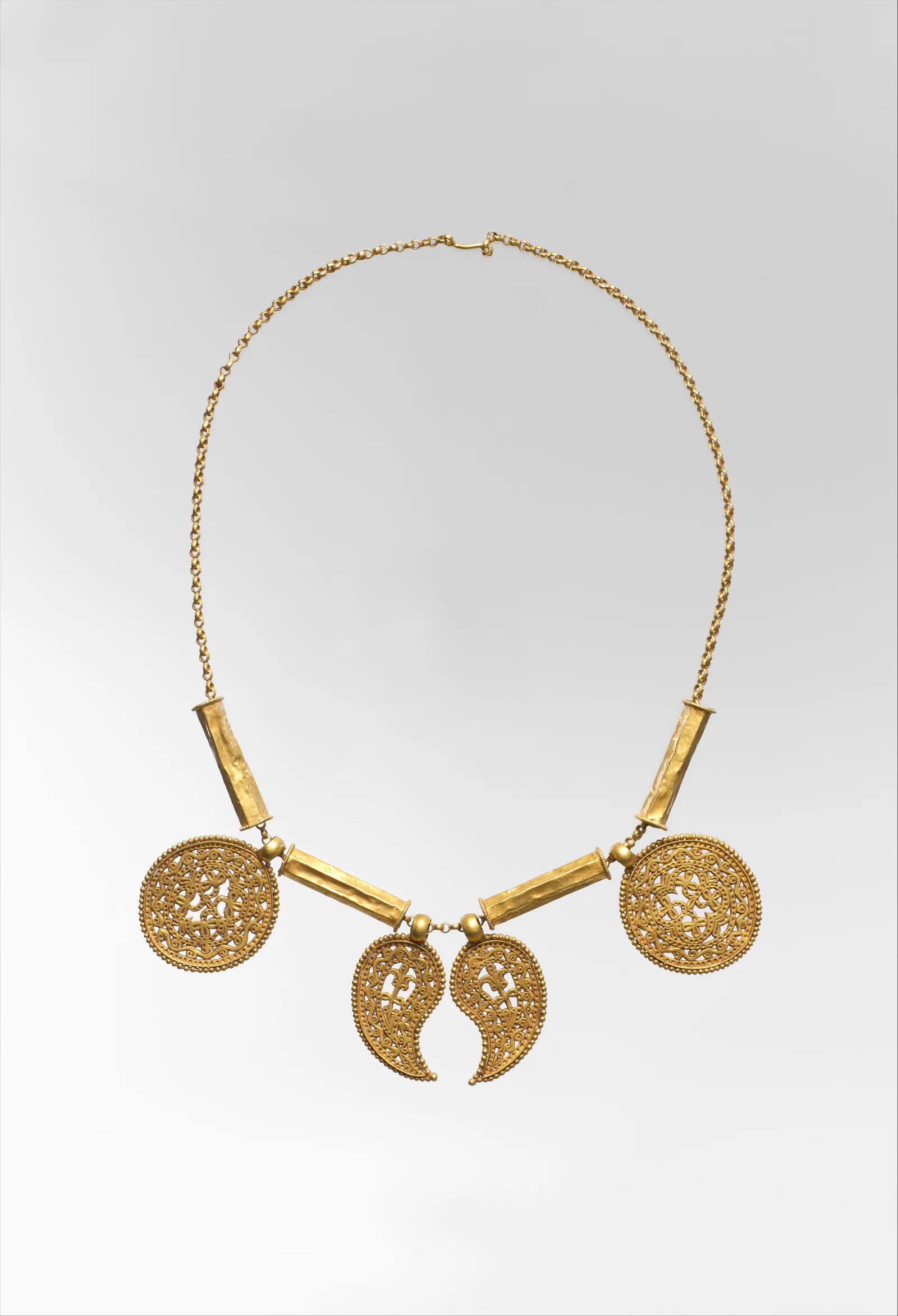
The most common version: small pendants, beads, stones, or shaped elements hang on both ends. They weight the ends, so the necklace falls down more evenly and does not ride up. The pendants set the character of the piece: smooth beads give minimalism, faceted stones add sparkle, shaped elements like coins or symbols make the piece tell a story. The weight of the pendants matters: ends that are too light will stick out, ends that are too heavy will drag down a thin chain.
Lariat with tassels
Tassels on the ends are a greeting straight from the twenties. Small pearls, beads, thin chain strands gathered into a full or trim tassel give the lariat movement and richness. Tassels fly beautifully when you walk and dance, catch the light, and lengthen the line. This is the dressiest version of the lariat, made for evening and for Art Deco style dresses. Tassels need gentle care, because thin strands tangle easily.
Y shaped lariat with a slide
Here the construction works on a sliding loop. One end has a ring or a large pendant with a hole, and the second end threads through it. The result is a clean letter Y: a short loop at the top and a long tail with a charm at the bottom. This version is the closest to the cowboy lasso in mechanics and gives the most adjustable neckline depth. Pull the tail, the loop tightens, the line changes.
Double sided lariat without a loop
There are lariats with identical ends and no loop at all, designed for tying in a knot or for free hanging. They are symmetrical, both ends decorated the same, and you set the shape with a knot or a wrap alone. This version is more flexible in styling, because it is not tied to one threading mechanic, but it asks you to work out for yourself how to secure it.


Which Necklines and Clothes to Wear a Lariat With
Lariat under a V neckline
A V neckline and a lariat were made for each other. The vertical line of the necklace echoes the line of the neckline, and together they lead the eye down, lengthening the neck and the silhouette. The depth of the knot is fitted to the depth of the neckline: the lower the V goes, the lower you drop the lariat tail, so the pendant lands inside the neckline rather than against the fabric. This is the most natural and foolproof pairing.
Lariat under an open décolletage and a strap dress
An open chest and shoulders give the lariat room. A long tail reads clearly on bare skin, with nothing to compete with the piece. Both dressy lariats with tassels for evening and thin minimalist ones for everyday work well here. The main rule is the same: the more bare skin, the more expressive the falling vertical.
Lariat with a shirt and a turtleneck
On closed clothing the lariat plays the role of a vertical accent and that very tie necklace. Tied high over a buttoned shirt, it sits like a tie, adding graphic structure to a formal look. Down a turtleneck or a thin sweater the long chain draws a clean line against dense fabric. Under a high collar, take a longer lariat so the tail drops down the chest rather than getting lost under the chin.
Lariat with an open back dress
A dress with a low cut back is a stage for a lariat worn backward. The line sits at the front by the throat, the ends drop down the bare back. The effect is unexpected and very much in the Art Deco spirit. For this trick, take the length with room to spare so the ends fall down the back gracefully rather than sticking out by the shoulder blades.
When it is better not to wear a lariat
The lariat does not get along with dense layered clothing buttoned to the throat, scarves, and high tight collars: the falling vertical has nowhere to open up, and the necklace gets lost. Bulky textured pieces with large decoration near the throat also compete with the piece. The lariat needs either an open décolletage or a smooth dense surface of clothing for its line to travel across. In a tight layered top it works worst of all.
Lariat Materials
A chain as the base of a lariat
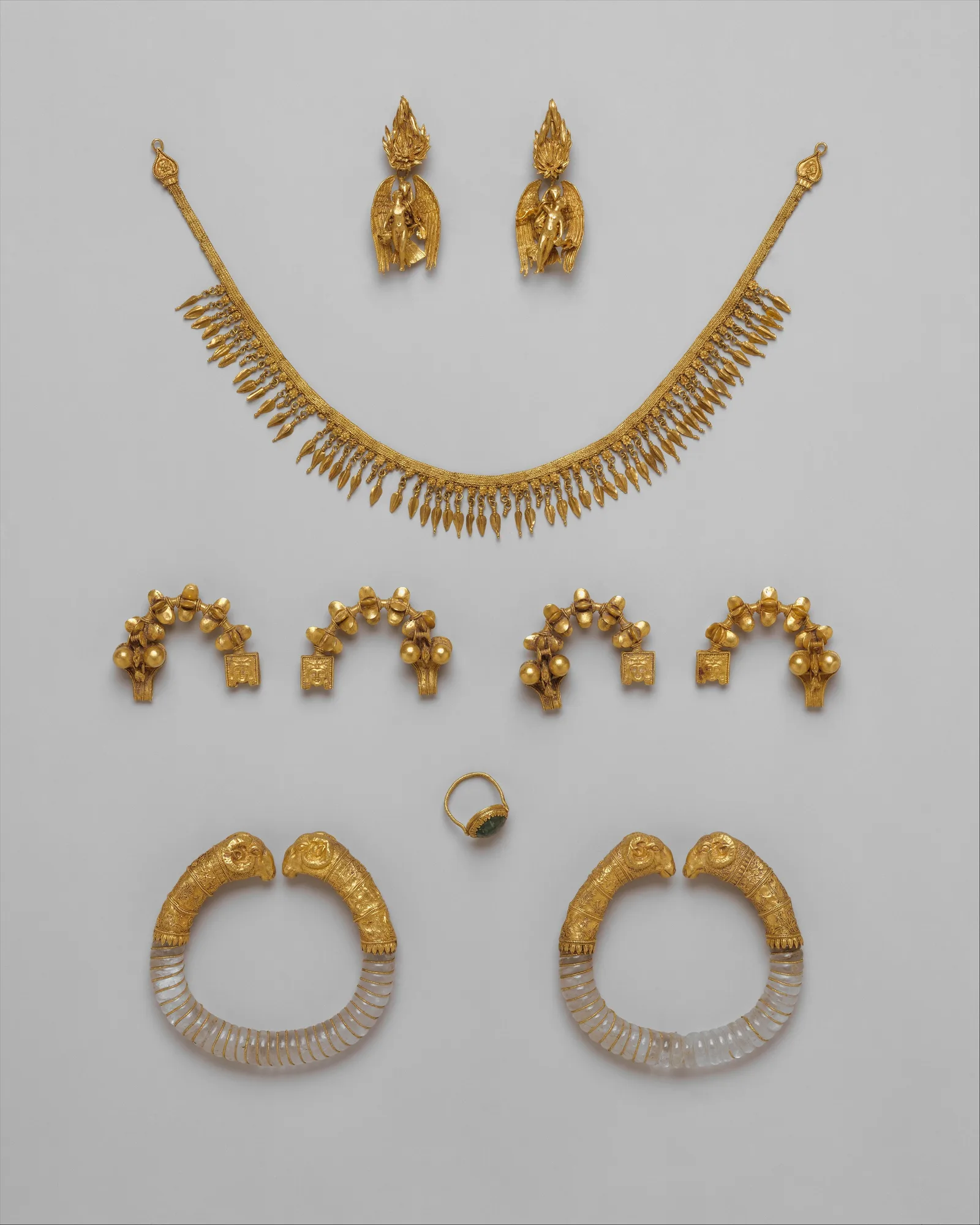
Most often a lariat is a chain. Flexible and fluid, it ties into a knot perfectly and slides through a loop. Thin, delicate weaves give a delicate line for everyday, while dense, textured ones read bigger and dressier. It matters that the weave be flexible and not kink at the knot: rigid links handle a fold badly. For what weaves exist in general and how durable each one is, there is a separate piece on chain types.
Pearl lariat
Pearls and a lariat together point straight back to the flappers of the twenties. A long strand of pearls with no clasp ties in a soft knot or wraps several times. The ends are often finished with tassels of small pearls. A pearl lariat always reads dressy and a little vintage. Pearls call for gentle handling: they scratch easily and do not like contact with cosmetics or perfume.
Beaded lariat
Beaded lariats are light, flexible, and often bright. Small beads strung on a strong thread or line give a fluid line and a rich palette of colours. This is the version for light summer and bohemian looks. Beads are inexpensive and allow bold colour combinations, but they need a strong base: a cheap thread can wear through over time.
Silver lariat
Silver is a versatile base for a lariat: a noble cool shine, accessibility, good ductility for thin flexible chains. A silver lariat suits day and evening alike and pairs easily with other pieces. Silver has one quirk: it darkens with time and contact with air, and the long chain of a lariat needs periodic cleaning along its full length. What a hallmark means at all and why silver behaves the way it does is covered in the silver 925 guide.
Gold and gold plated lariat
Gold and gold plating give a lariat a warm shine and a dressy air. A thin gold lariat with a tiny pendant is a model of restrained luxury that you wear without taking off. Plating makes a gold look more accessible, but it asks for care: at the knot and at points of friction the coating wears faster, so a gold plated lariat is best tied softly and not pulled tight.
Leave your email, we'll send your discount code. No spam, unsubscribe anytime.
The code arrives by email, valid on your first order.
Who a Lariat Suits
Lariat by neck type and length
The lariat is kind to almost every neck type, because its vertical always lengthens and slims. It is especially flattering on a short neck: tied with a deep drop, it draws a long line downward and visually stretches the décolletage area. On a long neck the lariat is good too, but the knot can be raised higher so as not to overdo the stretching. The main thing is that the main line does not pinch the neck too high.
Lariat by body type
The vertical of the lariat works on any figure as a lengthwise line that slims and lengthens the silhouette. For shorter people it adds height, leading the eye from top to bottom. For anyone who wants to visually balance their proportions, a long lariat helps stretch the upper body. The depth of the tail is set so the lowest point of the necklace lands in a harmonious spot on the chest rather than against an awkward zone.
Lariat for those who find clasps awkward
A separate audience for the lariat is people who struggle with a tiny clasp. Weak fingers, reduced hand flexibility, poor close vision: all of it turns fastening an ordinary chain into a battle. A lariat needs no clasp at all. Drape it, tie it or thread it, and you are done, with no mirror and no help. That makes it a genuinely accessible piece.
Lariat as a first expressive piece
For anyone just trying out noticeable necklaces, the lariat is handy for its flexibility. Do not like how it sat? Untie it and tie it differently. You can start with a cautious short knot under a shirt and gradually grow bolder, up to deep loose lines. One piece gives room to experiment without the risk of buying something that only suits one outfit.
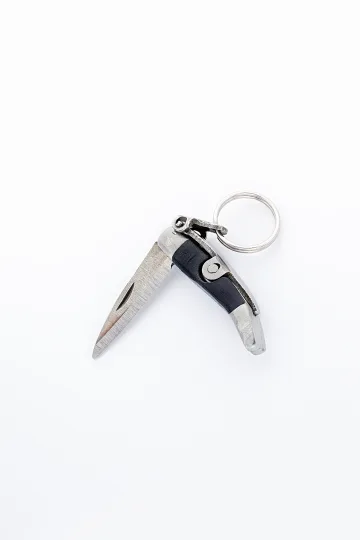
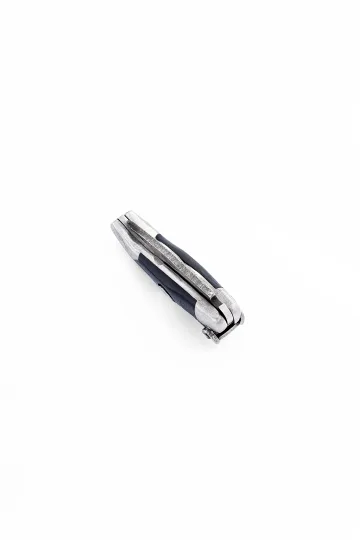
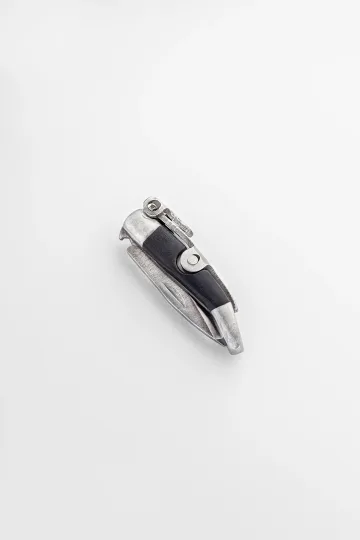
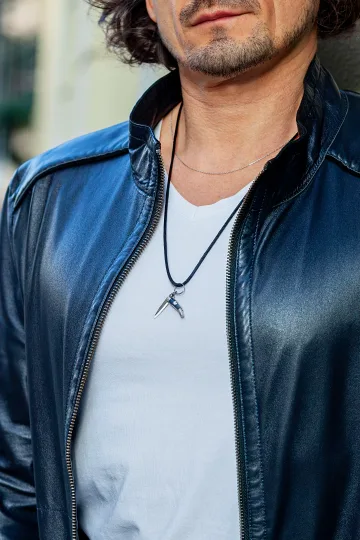
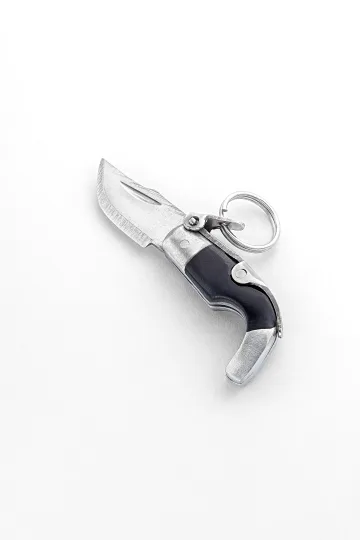
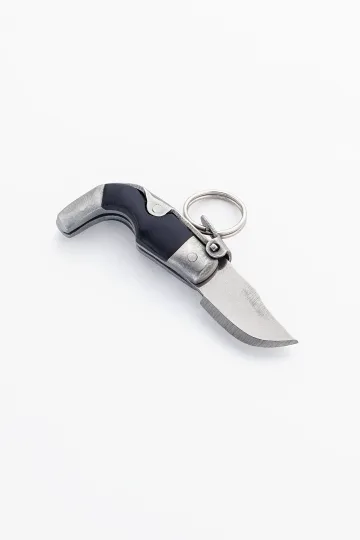
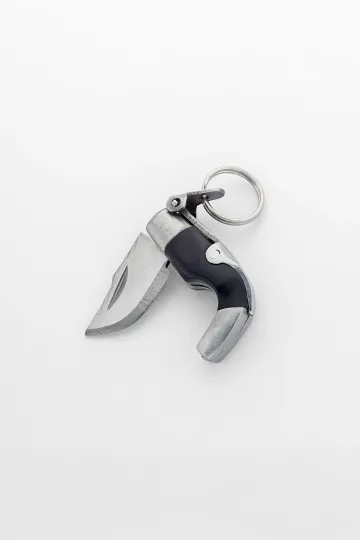
CAPAORA mini knife pendant
The 18th-century Spanish navaja in miniature: 40 mm of stainless steel, a real folding mechanism and a Palanquilla lock that clicks. An affordable gift to remember.
Authentic · Ships from Spain · 14-day returns
Everyday and Evening Lariat
A lariat for every day
An everyday lariat is a thin chain with a small pendant on the end, tied in a quiet knot. It does not get in the way or snag, and it slips easily under a shirt or lies down a turtleneck. This kind of lariat is worn without taking off, paired with jeans and a sweater, an office shirt, a simple dress. The quieter the ends, the more versatile the piece.
A lariat for the office and a business look
In a business wardrobe the lariat plays the role of a neat vertical accent that stands in for a scarf or a tie. Tied high over a shirt or a blouse, it adds composure to the look without tipping into casualness. Take restrained ends with no bulky pendants and metal in a calm tone. The line of the necklace adds formality while softening a severe suit.
A lariat for evening
An evening lariat comes into its full power: tassels, large pendants, pearls, the sparkle of stones. Under an open dress it lets down deep so the vertical plays on the skin. Down the back it cascades under an open back dress. Here the lariat becomes the main piece of the look, and it should have no neighbours on the neck. This is its stage, the very one it had a hundred years ago on the dance floors of the twenties.
One lariat for every occasion
The trick of the lariat is that one and the same piece often covers both day and evening. In the morning you tie it modestly under a shirt, in the evening you let it down deeper for a dress, add drop earrings, and the look has changed with no change of jewellery. A versatile medium lariat with neat but not too modest ends is probably the most useful purchase in this category.
Caring for a Lariat's Long Chain
How to store a lariat so it does not tangle
The main enemy of a long chain is the knots that tie themselves in the jewellery box. A lariat is best stored stretched out: hung on a hook, on a dedicated holder, or laid flat in a long compartment. If you put it in a pouch, the slide and thin chains are worth coiling loosely into a ring without folds or threading through a small tube. The most reliable rule: never dump it in a common heap with other chains, or you will be untangling it for a long time.
What to do if a lariat does tangle anyway
A tangled chain should not be yanked. Lay it on a flat, light surface, spread it out, and gently open the knot with two needles or pins, lifting the loops. A drop of vegetable oil on the knot helps the links slide. Patience matters more than force here: a tug breaks a link or pulls it out of the chain. If it is really tight, it is better to trust a jeweller. A detailed walk through of how to untangle a chain that has seized up for good is in the chain types guide.
Care for the knot and the points of folding
A lariat is tied and untied constantly, and the links in the knot zone wear faster than the rest. To make the chain last longer, tighten the knot softly, without a tug, and do not leave it pulled tight for long. On gold plated and silver lariats the points of folding lose their shine over time, so they are cleaned and inspected periodically for stretched links. A thin chain is generally better not pulled into a tight knot at all; use a slide through a loop instead.
Cleaning a long chain and the end elements
A lariat's length is cleaned along its full extent, missing no hidden stretches. A soft cloth for wiping, a warm soapy solution, and a soft brush for the links handle most dirt. Tassels and pearl ends call for special care: do not soak them whole and do not scrub them hard. After cleaning, dry the chain fully before putting it away, or in a damp pouch the metal will tarnish and the tassel thread may suffer.
Send a friend a discount code, they save on their first order.
Surprising Facts
The piece's name literally means a rope for cattle
An elegant evening necklace bears the name of a herder's rope. A lariat is the lasso used to catch cows and horses on the Wild West, and the word goes back to the Spanish la reata, a tether. So a lady in a couture gown wears a piece around her neck named after a cowboy's tool. The connection is no accident: the sliding loop of the necklace works exactly like the tightening loop of a lasso.
A lariat technically has no beginning or end in the usual sense
An ordinary necklace has a top and a bottom, a front and a back, because it has a clasp. A lariat has no clasp and no set back: its front is wherever you decide to tie the knot. Turn it around backward and the back becomes the front. It is one of the few pieces whose orientation is set not by construction but by the wearer at the moment of wearing.
One lariat replaces several necklaces
Because there is no fixed length, one lariat covers several formats at once: a choker, a medium length necklace, a long V shaped necklace, and even a likeness of a sautoir through a slide. Buying one piece, you effectively get a wardrobe of four or five different necklaces. Few pieces give such a return on a single purchase.
The lariat danced the Charleston
In the twenties, long strands with tassels on the ends were a partner in the dance, not a static ornament. When a flapper danced the Charleston, the ends of the lariat flew along with her, underscoring the rhythm of her moves. The piece was designed with movement in mind: the tassels and pendants were meant to swing beautifully. Few necklaces were made literally to dance.
The lariat is easiest of all for those who dislike clasps
A paradox: the dressiest looking necklace turns out to be the most practical to put on. No tiny clasp at the nape that you cannot fasten without a mirror. The lariat is draped and tied at the front, where everything is visible and within reach of both hands. For people with reduced finger mobility it is often the only necklace they can put on by themselves.
Frequently Asked Questions About the Lariat
Are a lariat and a tie necklace the same thing?
Yes, they are two names for one piece. The lariat is called a tie necklace because, tied high, it sits roughly where a shirt's tie knot would be and drops in a vertical line down the chest. The name lariat came from the cowboy world and stresses the lasso mechanics, while tie necklace describes how the piece looks and where it sits.
Will a lariat come undone on its own during the day?
With the right knot or slide, a lariat holds securely. If you wear it on a simple knot, tie it not too tight but not too loose either, and check it now and then. The version with a slide through a loop and a weighting pendant on the end sits especially stably, because the weight pulls the tail down and keeps the loop from loosening. Slippery materials like smooth pearls hold a knot a touch worse than a chain, which is worth keeping in mind.
What length of lariat should a beginner choose?
Go for a medium one, roughly ninety to one hundred ten centimeters laid out flat. You can tie it short under a shirt and let it down deeper for a dress, so it covers the most scenarios. Too short will limit you to a high sit, too long will require wrapping. Medium is the golden mean for a first lariat. To narrow it down to your height and neck, the chain length guide will help.
Can a man wear a lariat?
Yes. A lariat in a restrained form, a thin chain with calm ends tied short over a shirt or a turtleneck, looks graphic and fitting in a masculine look. Take spare ends with no tassels or dressy pendants and metal in a calm tone. The vertical line adds composure to the look, standing in for a tie with a less formal accent.
How does a lariat differ from a sautoir, if both are long?
A sautoir is a closed long strand with joined ends; you simply pull it on over your head, the shape already set. A lariat is open: two free ends, and you create the shape yourself with a knot or a slide. A sautoir is a ready loop, a lariat a blank for your imagination. From a lariat you can build something like a sautoir, but not the other way around.
Does a lariat suit closed clothing?
Yes, but differently than open clothing. Under a shirt, a blouse, a turtleneck, and a thin sweater, the lariat ties as a vertical accent over the fabric, and its line reads against the dense surface. Under a high collar, take a longer lariat so the tail drops down the chest. It works worst with a tight layered top and scarves, where the vertical has nowhere to open up.
How do you care for a lariat with tassels?
The tassels are the most fragile part of a lariat. Do not soak them whole, do not scrub them with a hard brush, and do not stretch them. Lift dirt with a soft damp cloth, then dry the tassel fully. Store a lariat with tassels stretched out, so the strands do not tangle, apart from other pieces. Pearl tassels are especially afraid of cosmetics, perfume, and friction.
Can a lariat be shortened, or does it need a set length?
A lariat adjusts with no alteration at all: the height of the knot or the depth of the slide is its length setting. Want it shorter, raise the knot; want it longer, drop it or let it down. So the same piece serves both collected and deep looks. Physically shortening the chain is usually unnecessary, and that is the whole point of a clasp free necklace.
The lariat that becomes yours
One clasp free necklace instead of four ordinary ones: a choker, a medium length, a deep V, and a drop down the back. Choose your length and tie it the way you like best.
Browse necklaces and chainsBuying it as a gift? Each one arrives ready to give.
 A branded Zevira box and a little card come with every order.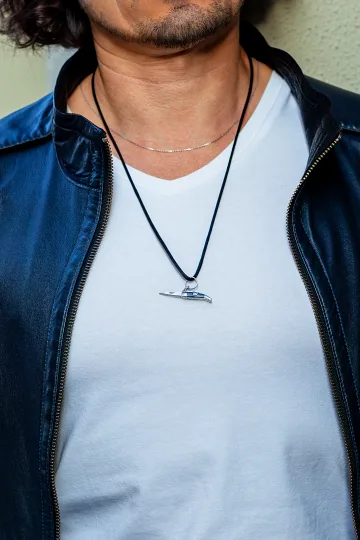




About Zevira
Zevira makes jewellery to be worn, not hidden in a box. The lariat is the ideal piece of that philosophy for us: flexible, free of extra detail, built on the assumption that you will touch it, retie it, and wear it your own way every day. We assemble chains from flexible weaves that hold a knot well and do not kink, match the ends by weight so the line falls evenly, and check every link along the full length. A clasp free necklace should last a long time despite being tied and untied constantly, and we think about that at every stage.