Jewelry for every neckline: which necklace, pendant, and earrings to wear
Why the neckline decides more than the jewellery
A beautiful necklace on a beautiful dress can still look wrong, and the culprit is almost never taste. It is geometry. The neckline is a frame on your chest, and jewellery either continues that line or argues with it: a round pendant in a sharp V, a long chain over a high collar, heavy beads on ruffles.
The neckline sets the rules, and the jewellery adapts to them. It argues with the neckline more often than you would think, and that is what this guide fixes.
Stylists do not match a necklace to a dress by eye. They read the neckline like a blueprint: where the fabric line runs, how open the neck is, whether there is already another accent on the chest. Everything follows from that drawing, the shape of the piece, its length, whether to wear a necklace at all or hand the job to earrings. The same pendant looks expensive under a round neckline and awkward under a square one, and the pendant is not the problem.
Below we work through every common neckline in turn: crew, V-neck, square, boat, strapless, halter, sweetheart, turtleneck, and asymmetric. Each has its own jewellery and its own logic for why. Before the neckline-by-neckline breakdown, three rules are worth memorizing, because they work across every shape at once.
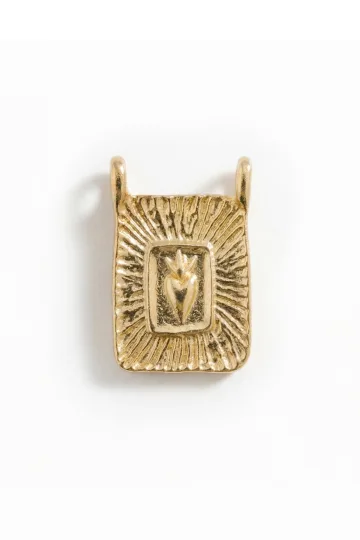
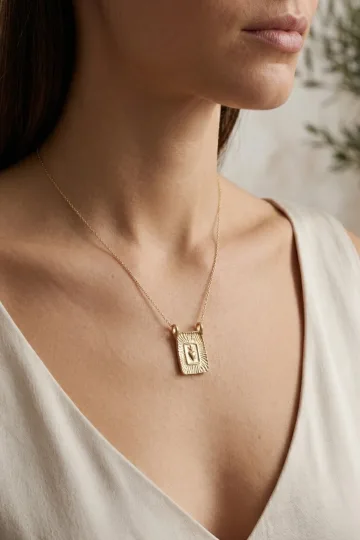
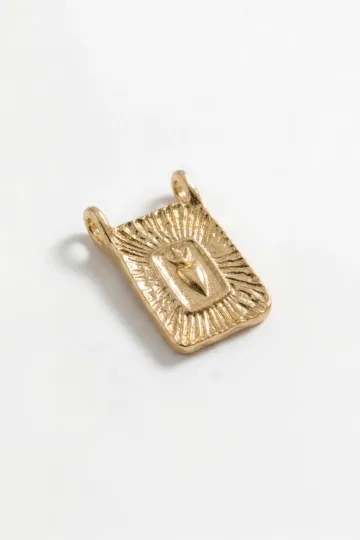
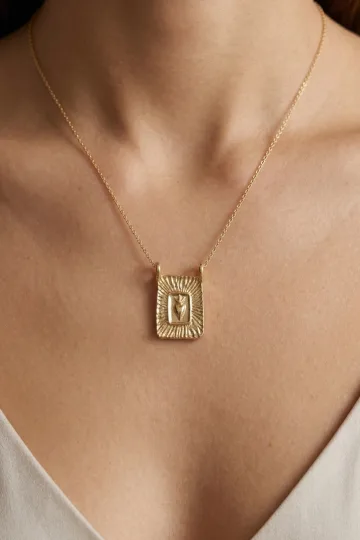
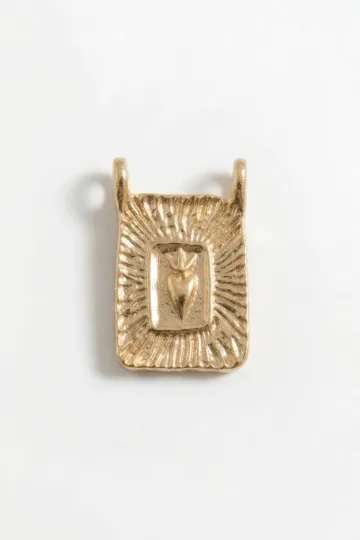
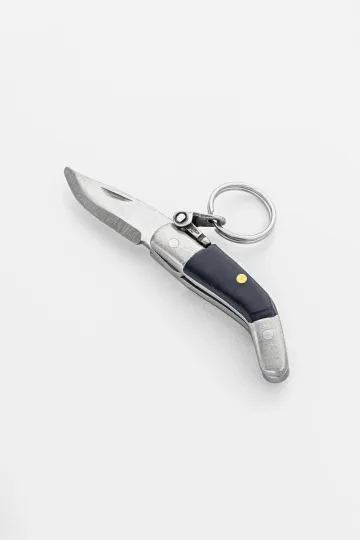
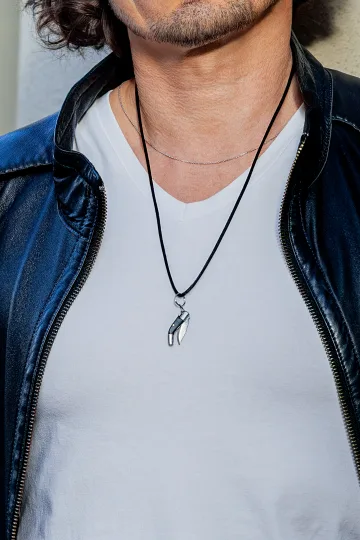
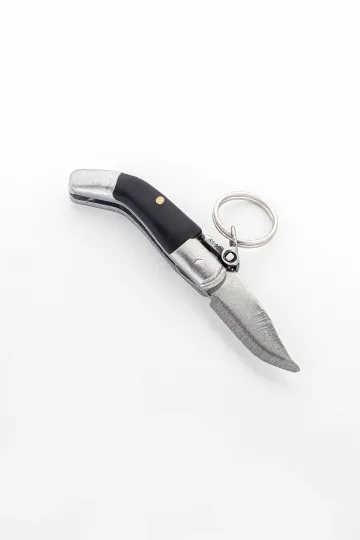
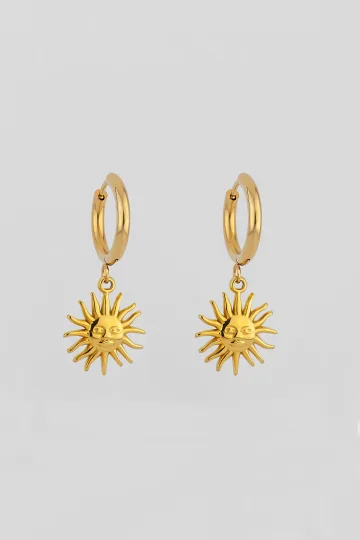
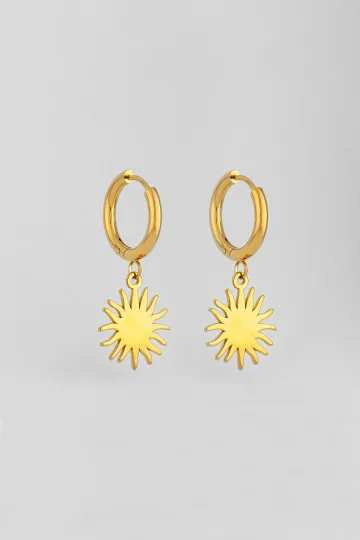
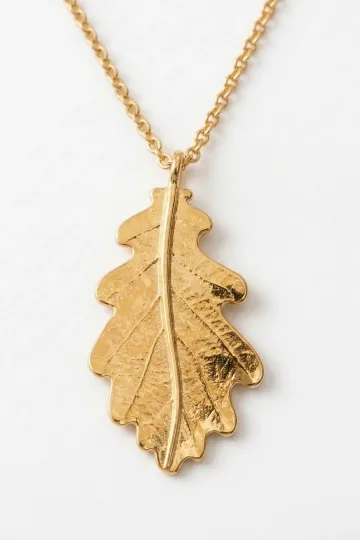
Wear the symbol, don't just read about it. These are in stock:



Three rules stylists use to match jewellery to a neckline
The mirror rule. Jewellery repeats the line of the neckline instead of breaking it. A V-neck wants a pendant that drops in a wedge, a round neck wants the arc of a collar, a square neck wants clean geometric shapes. The eye loves it when lines rhyme: a necklace that echoes the neckline reads as part of the plan, not a piece thrown on at random. The classic beginner mistake is a round necklace in a triangular V, where the two shapes cancel each other out.
The depth rule. The more open the neckline, the bolder the jewellery can be. A deep neckline carries a statement necklace, heavy beads, a large pendant. A modest high neckline, by contrast, asks for a fine chain or leaves the neck bare. Open skin is space, and you either fill it with jewellery or let it breathe, but not halfway: a tiny pendant gets lost in a large neckline.
The busy rule. If the neckline is already complex (ruffles, lace, draping, a collar, embroidery), the jewellery steps back: a fine chain or nothing at the neck, with the accent moved to earrings. A smooth, plain neckline is the opposite, a clean canvas that carries a necklace of any complexity. Two accents side by side fight for attention, so you make only one thing strong, either the neckline or the jewellery.
These three rules cover nine decisions out of ten. Everything after this is the fine print of each neckline.
The neckline already chose for you. A round one wants an arc, a sharp V wants a vertical line, and under a boat neck take the necklace off and don't argue: a bare neck outshines any chain.
The stylist's take: building a look around the neckline
When there are many rules, it helps to hear once how someone who does this every day thinks it through. Below is a short take from the Zevira stylist: how he matches jewellery to a neckline, when he takes the necklace off entirely, and what he suggests keeping in mind before you head out.
Where do you start when a client arrives in a dress and has no idea what to put on at the neck?
I look at the neckline before I look at the dress. The neckline is a frame, and it has already made half the decisions for me. Round and shallow, I choose a necklace along the curve. Sharp V, I run a vertical, a pendant or a lariat. Square, I recommend strict geometry and make sure nothing crosses the line. The dress can be anything, but the frame on the chest dictates the shape.
When do you take the necklace off a look entirely?
More often than clients expect. Under a boat neck, a halter, a turtleneck, I usually take the necklace off and give all the power to earrings. The open shoulder line or the halter band at the neck already work as jewellery, and adding a necklace on top means arguing with the dress itself. A bare neck is not forgetfulness, it is a choice, and it often looks more expensive than any necklace.
Your main advice for people afraid of getting it wrong?
Do not wear two strong accents side by side. If the neckline is ornate, with ruffles or stones, keep the neck jewellery quiet or skip it. If the neckline is smooth and simple, then you can afford a noticeable necklace. Make one thing strong, the neckline or the jewellery, and the look comes together at once.
Before you buy, it is worth trying a piece against your own neckline first, to see how it sits on that particular line.

Turn on your camera, pick earrings, a pendant or a ring, and see the piece on yourself in real time.
Switch items in one tap.
Everything runs in your browser: no photo or video is ever uploaded.
Crew and round necklines
The most versatile and most common neckline, which is exactly why it is easy to get wrong: it feels like anything goes. The key question is the depth of the neckline and how high it sits on the neck.
A collar or short necklace along the curve
A shallow round neckline holds a necklace that follows its arc beautifully: a princess length of 16 to 18 inches sits just above the fabric edge and frames the neck as an extension of the neckline. A collar, a mid-length strand, and a pendant on a short chain all work. The one thing that matters is that the piece stays above the fabric line rather than diving under it: a necklace half-hidden behind the neckline looks shorter than it is and reads as simply the wrong length.
A long chain for a vertical
A high round neckline, the T-shirt kind, visually shortens the neck and flattens the chest. Here the opposite move rescues the look: a long chain with a pendant that drops below the neckline and draws a vertical line. That line lengthens the figure and breaks the monotony of a closed top. A sautoir and layered chains of different lengths belong here too: the higher and more closed the neckline, the longer and bolder the piece that balances it.
A choker on a longer neck
The choker deserves its own note: on a round neckline it works as a standalone accent above the neckline and especially flatters a long neck, which it underlines. On a short neck a tight choker cuts it shorter still, so there you choose a narrow version and leave a little air between it and the neckline. A choker and a collar necklace are not worn together: two lines at the throat blur into one.
Earrings for a round neckline
A round neckline dictates almost nothing to earrings, and that is its convenience: studs and long drops both work. Take your cue from face shape and from whether there is a necklace. If a necklace already holds the accent at the neckline, keep earrings quieter. If the neck is left bare, earrings become the lead, and long drops earn their place. There is a separate guide to choosing earrings by face shape.
V-neck and drop necklines
The most rewarding neckline for jewellery: the sharp angle asks to be filled, and almost any vertical necklace looks native here. It is hard to get wrong, but you can, if you forget the mirror rule.
A pendant that echoes the V
The perfect partner to a V-neck is a pendant that drops in the same wedge: a pendant on a chain, a teardrop, a crystal, anything that holds a vertical and streams toward the point of the V. That piece completes the triangle and leads the eye to the centre. A round, heavy collar, by contrast, does not belong here: a horizontal arc argues with the vertical angle, and both lines lose.
Y-necklaces and lariats
The V shape is echoed literally by jewelry of the same geometry: a lariat or a Y-necklace whose central drop falls straight down the bisector of the V. This is the most exact mirror possible: the line of metal traces the line of fabric one to one. The move looks considered even with a plain dress and asks for no other jewelry at the neck.
How low to go
The depth of the pendant follows the depth rule: the lower the neckline drops, the longer the piece can be, but keep the tip of the pendant above the deepest point of the neckline. A pendant that falls into the neckline or below it shifts the accent somewhere you usually do not want to lead the eye. A simple guide: the point of the piece a couple of centimetres above the point of the V, so the lines rhyme and the eye stays at collarbone level.
Square necklines
A strict, architectural neckline with two right angles. It sets a hard geometry, and jewellery has to respect it: here, above all, do not cross the line.
Never cross the edge
The main rule of a square neckline: a necklace must not lie across the fabric edge and cross it. Either the piece fits entirely inside the square, above the line, or it is short and hugs the neck above the neckline. A necklace that dips behind the straight edge and reappears from under it breaks the clean line and looks careless. A square values order, and the jewellery supports that order rather than disturbing it.
Geometry answering geometry
The right angles of the neckline are answered by crisp geometric shapes: a rectangular or square pendant, a necklace with faceted links, clean lines without ruffled softness. A round teardrop in a square looks accidental, while strict geometry reads as a considered pair. This is the case where a "boring" simple shape beats an ornate one: a square neckline suits restraint. A bar necklace or a row of matched links works well too, when the metal literally rhymes with the horizontal edge of the fabric.
Keep earrings simple
A square neckline is expressive on its own, so earrings stay calm here: studs, small geometric drops, a single earring. Heavy chandeliers overload a look that already has a strong line at the chest. If you want an accent at the ears, balance it by dropping the necklace: keep only one thing strong.
Customer reviews
Zevira is a real jewellery shop. Genuine payments, deliveries and customer thank-yous.
🥰🥰🥰 gracias

Ok, ¡gracias! 🙂

Boat necks and off-the-shoulder
A boat neck runs in a wide horizontal from shoulder to shoulder, opening the collarbones and the line of the shoulders but barely opening the chest. That changes the whole logic: the accent shifts up and out.
Leave the neck bare and let earrings lead
The wide horizontal of a boat neck is self-sufficient: it already draws a beautiful shoulder line, and a necklace usually gets in its way. The most elegant solution is to leave the neck bare and give all the attention to earrings, ideally long and noticeable, which pick up the open line of the shoulders. A bare neck under a boat neckline is not an "unfinished" look but a deliberate move: the neckline works as jewellery on its own.
When a necklace still works
If you do want a necklace, it should be either a very short choker sitting high on the neck or, the opposite, a long strand falling below the neckline. Anything in between, resting flat on the collarbones parallel to the neckline, creates two competing horizontals. A short choker adds a vertical anchor to the open neck, a long sautoir carries the line down, and the middle length is best left off.
Layering on open shoulders
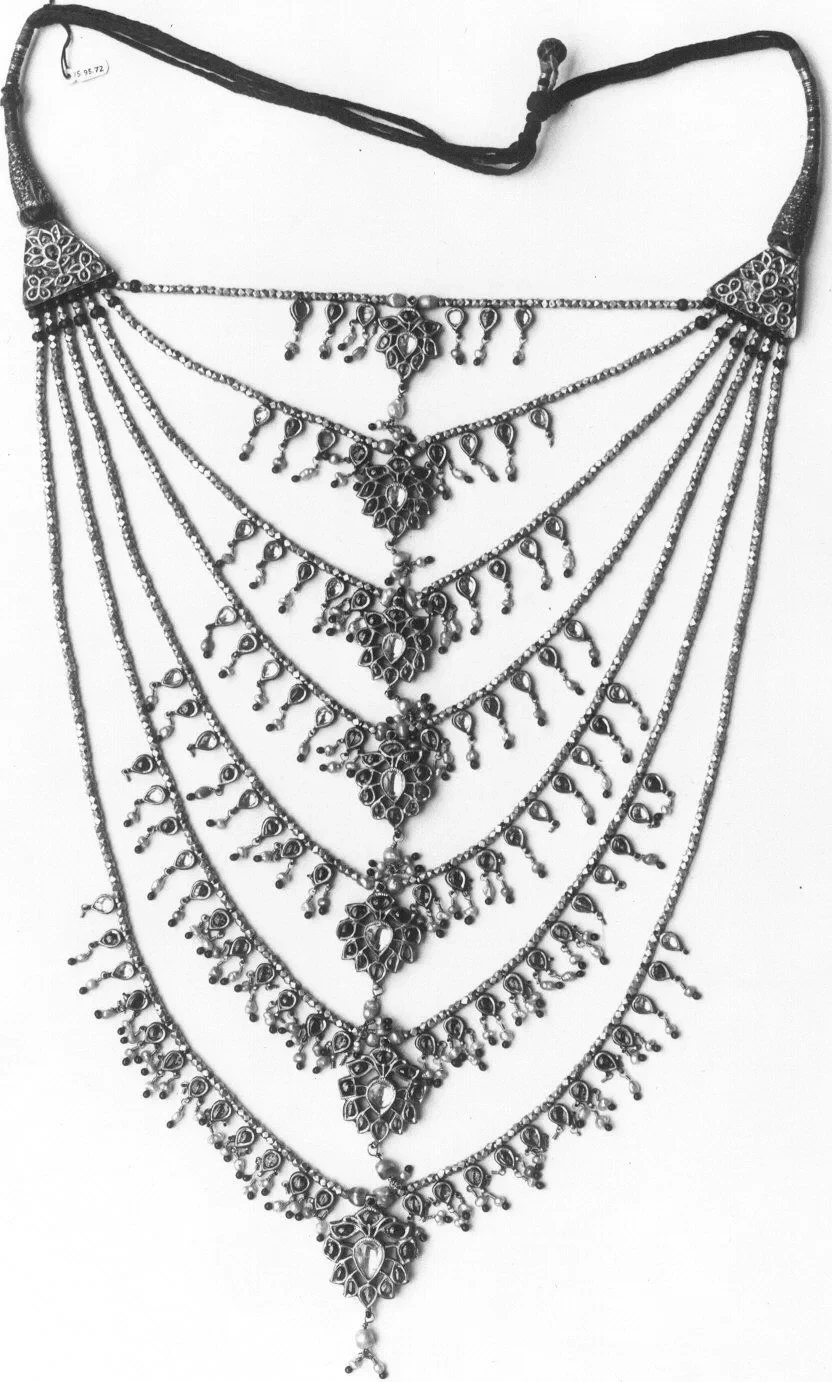
Deeply open shoulders and strapless styles carry layering: several strands of different lengths, a cascade of chains, large beads in tiers. Open skin is space, and you can fill it generously. Here the depth rule works in its purest form: the more that is open, the bolder and richer the jewellery may be, as long as it does not argue with the horizontal of the neckline but falls below it.
Strapless and bandeau
Shoulders and neck fully open, a straight horizontal line across the top, and not a single strap. This is the emptiest canvas of all, and it asks to be filled, or the look reads as incomplete.
A statement necklace in place of straps
A bandeau leaves a large open area between the chin and the edge of the fabric, and that area calls for a large piece. This is where the boldest necklace in the wardrobe belongs: a heavy strand, a bib collar, a choker with a pendant. It visually "holds" the top of the dress and works almost like straps, closing the composition. A fine chain gets lost in a neckline like this and underlines the emptiness rather than filling it.
A choker to frame the neck
A choker sitting high on the neck separates the open shoulders from the face and gives the look an anchor point. It is especially good when the dress is smooth and plain: the choker becomes the single but strong accent. Under a bandeau you can take the choker wider and bolder than usual, since it has no rivals on the chest. With a noticeable choker, keep earrings quieter so they do not compete.
Upload a photo of your pet, someone you love, or an object. We'll build a 3D model and hand-cast it in pewter.




Halter necks
A halter fastens or ties at the neck, while the shoulders and back stay open. The fabric running up to the neck already occupies the place where a necklace would sit, and that dictates the main rule.
Why the neck stays bare
The halter's straps rise to the neck and play the role of a necklace themselves, often forming a natural V or Y toward the throat. Adding a necklace on top of that stacks accent on accent: two lines at the throat compete, and the halter's fastening can even get in the way of a clasp. So the neck under a halter is almost always left bare, and that is right, not lazy.
Earrings and bracelets instead
The freed attention moves to earrings: long drops look beautiful against open shoulders and neck under a halter. A second accent can go to the wrists: a bangle or a few thin bracelets pick up the openness of the look. The back, if it is bare, is part of the composition too, and there is no reason to load the neck on top of it.
Sweetheart necklines
A heart-shaped neckline with two soft rounded cups and a dip at the centre. A romantic, feminine line with corset roots and its own jewellery logic.
A curved necklace echoing the heart
The soft curves of a sweetheart are answered by jewellery with the same curve: a necklace that follows the arc of the neckline, or a pendant with a rounded rather than sharp-angled silhouette. A harsh vertical and sharp geometric shapes argue with the softness of the sweetheart, while the gentle arc of a collar sits exactly on the line and completes the shape. This is the mirror rule again: a soft neckline, soft jewellery.
Bib necklaces and bead collars
A sweetheart on a corset or bandeau dress carries denser jewellery: a bib necklace or heavy beads that lie like a collar across the top of the chest. Evening dresses with this neckline love a rich "collar" of stones that closes the open zone. The dressier the occasion, the richer this piece can be, as long as it repeats the line of the heart rather than crossing it.





Turtlenecks and high necks
A fully closed neck, fabric reaching the chin. There is almost no room for a necklace, and that changes the whole strategy: jewellery moves either down or to other points.
A long pendant over the fabric
On a closed neck a necklace is not worn at the throat but over it: a long chain with a pendant or a sautoir lies on the knit and draws the very vertical the high top lacks. The denser and bulkier the knit, the larger and heavier the piece has to be so it does not get lost in the texture. A short thin chain disappears on a turtleneck, while a long, noticeable pendant instead brings the solid top to life.
Brooches on a high collar
A turtleneck is one of the few necklines where the brooch returns: pinned at the shoulder or on the collar itself, it gives an accent where a necklace is powerless. A brooch on knit reads as vintage and tidy, especially on a plain, smooth turtleneck. It is an old, half-forgotten move that works again on a closed top better than any necklace.
When earrings alone win
Often the truest solution under a turtleneck is to skip the neck jewellery entirely and move the accent up, to the face. Earrings against a closed neck ring especially clean: they have nothing to compete with, and the eye goes straight to them. Large studs, hoops, long drops, all of these look striking on a turtleneck precisely because the neck is silent.
Asymmetric and one-shoulder
A one-shoulder neckline and diagonal asymmetric lines break the usual symmetry, and jewellery adapts to that shift rather than ignoring it.
Balance on the open side
An asymmetric neckline creates a diagonal, and the jewellery's job is either to balance that diagonal or to support it. An earring or an accent on the open, fabric-free side restores stability. A symmetrical necklace centred under a diagonal neckline looks as if it were worn to a different dress: the fabric line runs on the diagonal, the jewellery on the horizontal, and they do not match.
A single earring and a vertical
Asymmetry is the rare case where a single earring or deliberately mismatched earrings belong: the look is already built on broken symmetry, and the jewellery picks up the idea. A second move is a fine vertical chain along the open shoulder or a long drop on the side without a strap. The point is not to "straighten" the asymmetry with a symmetric set: its strength is the shift itself.
Cowl necks and soft draping
A cowl is a loosely falling, softly folded neckline, a "swing" of fabric over the chest. The neckline is already loaded with the texture of the drape, which immediately rules out part of the options.
Why a necklace is usually too much
The soft folds of a cowl create their own volume and play of shadow, so a necklace at the neck almost always argues with them: two "busy" lines on the chest read as overload. The draping is already jewellery built into the dress. The cleanest solution is to leave the neck free and not compete with the fabric. If you really want a necklace, tuck it under the folds on a short chain rather than laying it on top.
Earrings and a belt instead
Since the chest is taken by draping, the accent moves away from it: up, to earrings, or down, to the waist, where cowl dresses often carry a belt. Earrings against a soft top read as calm and do not argue with the folds. It is the busy rule again: a complex neckline solos, and jewellery yields the stage.
Leave your email, we'll send your discount code. No spam, unsubscribe anytime.
The code arrives by email, valid on your first order.
Necklace length as a function of neckline
Length is not a separate whim but a direct result of the neckline. The same pendant on a 16-inch and a 30-inch chain solves different problems: the short one frames the neck, the long one draws a vertical down the body. The general logic is simple: a closed, high top asks for a long piece worn over it, an open and deep one for a short piece at the neck or, the opposite, a rich cascade. A detailed breakdown of lengths with their names (choker, princess, matinee, opera, rope) is collected in a separate guide to necklace length; here the rule is what matters: you choose length from the neckline, not from your mood.
Beyond necklaces: earrings, brooches, and rings
Talk of necklines is almost always narrowed down to necklaces, though half the decisions lie in other jewellery. When the neck is taken or covered, it is earrings, brooches, and rings that carry the look, and each has its own role under a given neckline.
Earrings when the neck is taken
Earrings are the universal substitute: they work with any neckline and become the lead when a necklace is out of place. Under a closed or complex top, take earrings larger and bolder; under an open, dressy one, calmer, so as not to overload. The length of earrings answers face shape as much as neckline, which is why choosing them is a topic with its own logic.
Brooches at the neckline and shoulder
The brooch is a forgotten tool that solves the necklines where a necklace is powerless. On a high collar, on a lapel, at the shoulder of an open neckline, on draping, anywhere you need a point accent off the centre of the chest. A brooch needs no open neck and does not argue with a collar, which is why under a turtleneck and a jacket it is often the one right piece.
Rings and bracelets as a shift
When the top of the look is already filled by the neckline, the accent moves down, to the hands. Rings and bracelets pick up the attention where the neck and chest were deliberately left silent. It is the classic move under a halter and a bandeau: shoulders open, neck free, and the hands take on the role of jewelry, whether that is a stack of rings or a few bracelets.
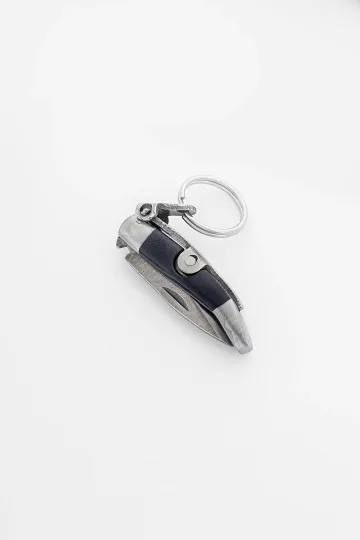
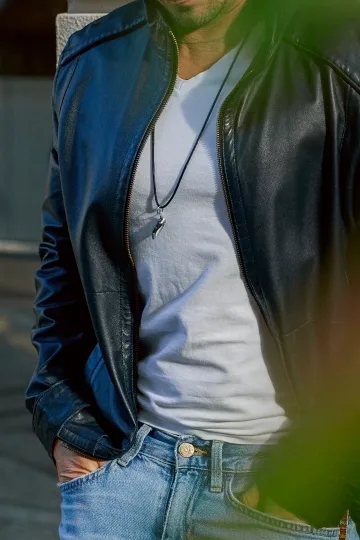
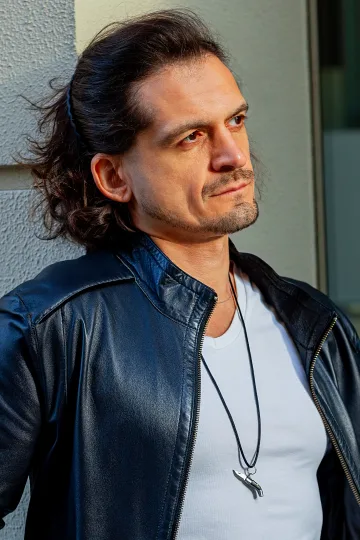
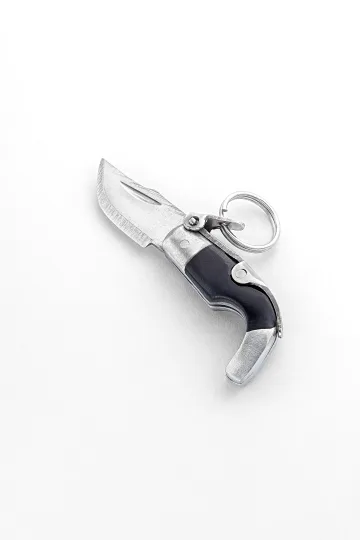
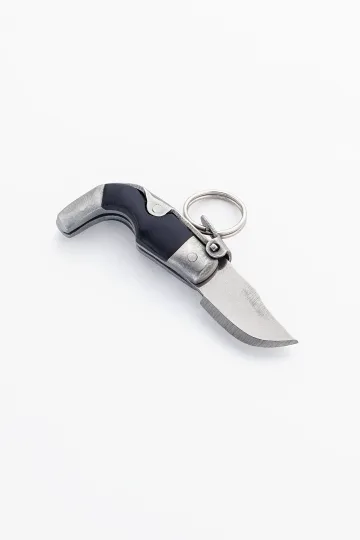
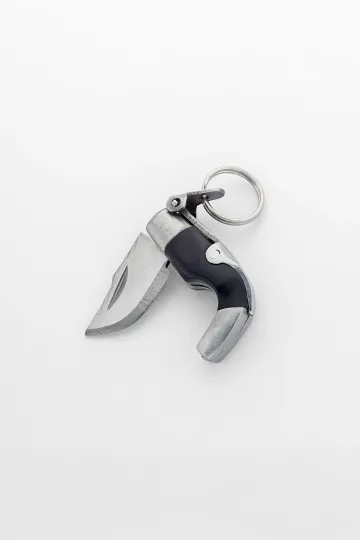
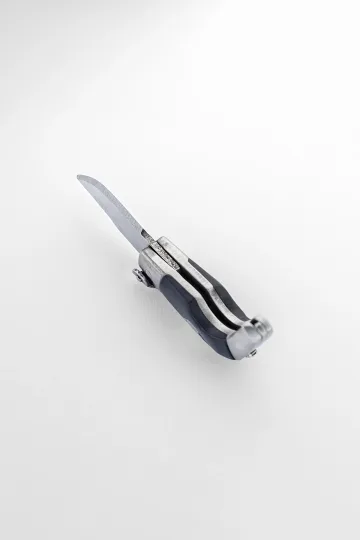
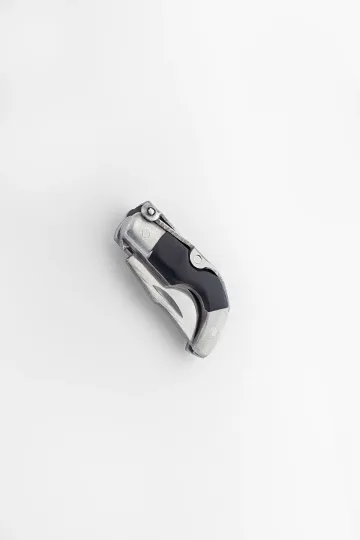
CAPAORA mini knife pendant
The 18th-century Spanish navaja in miniature: 40 mm of stainless steel, a real folding mechanism and a Palanquilla lock that clicks. An affordable gift to remember.
Authentic · Ships from Spain · 14-day returns
How necklines and jewellery evolved together
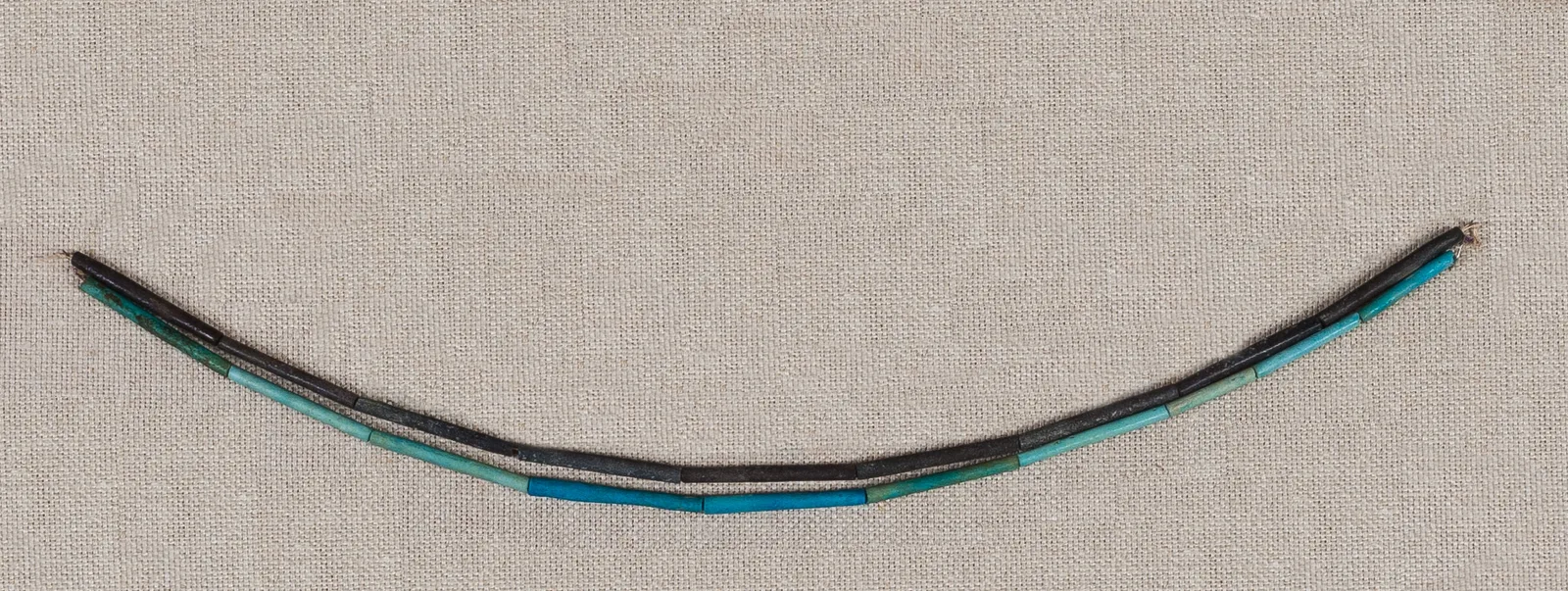
The fashion of the neckline and the fashion of jewellery have always moved hand in hand, and the moment a neckline changes, what is worn at the neck changes after it. This is not a modern invention of stylists but a very old connection.
Renaissance necklines and collar necklaces
In the Renaissance, square and wide necklines opened the top of the chest, and heavy collar necklaces followed, lying exactly along the line of the neckline. Portraits of sixteenth-century nobility show the same logic we use today: jewellery repeats the neckline. It was then, too, that the high ruffled collar came into fashion, and it instantly displaced neck jewellery, just as a modern turtleneck does.
18th-century décolletage and the rivière
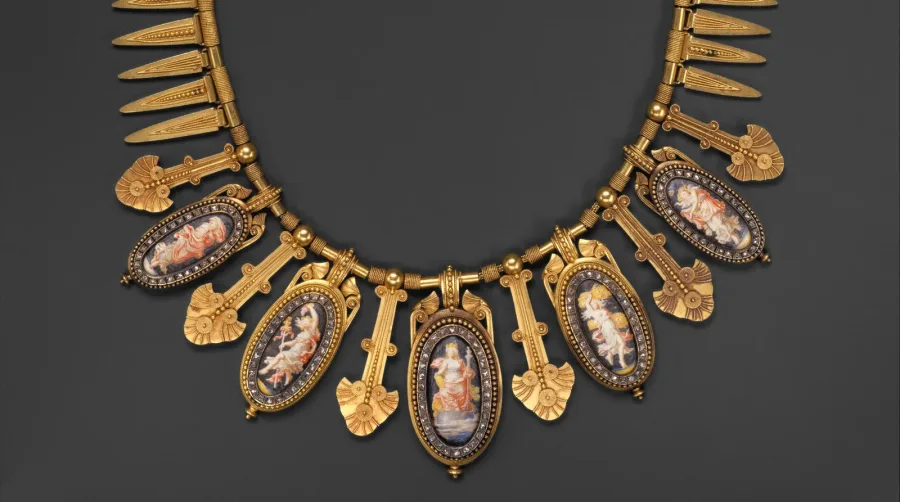
The eighteenth century, with its deep rounded décolletage, produced the rivière, a necklace of a row of matched stones running in a smooth arc across the open chest. Open skin demanded filling, and jewellers answered with ever richer pieces. The logic of the depth rule was born right here: the more the neckline opened, the richer the necklace became.
La Belle Époque and the high collar
The turn of the nineteenth and twentieth centuries brought back the high closed collar, and the necklace again gave way to other jewellery: long pendants worn over the fabric and brooches at the throat came into fashion. This is exactly today's turtleneck logic: a closed neck pushes jewellery either down or into a brooch. The same move repeats every time fashion closes the throat.
The 1920s, boat necks, and the long strand
The flappers of the 1920s, with their straight dresses and open shoulders, made the long strand fashionable, falling well below the neckline, often to the waist. Short jewellery left, because it did not answer the new geometry: a loose straight silhouette and a dropped waist asked for a vertical. It is the very move that today works under a boat neck and a turtleneck.
Necklines and jewellery in portraiture
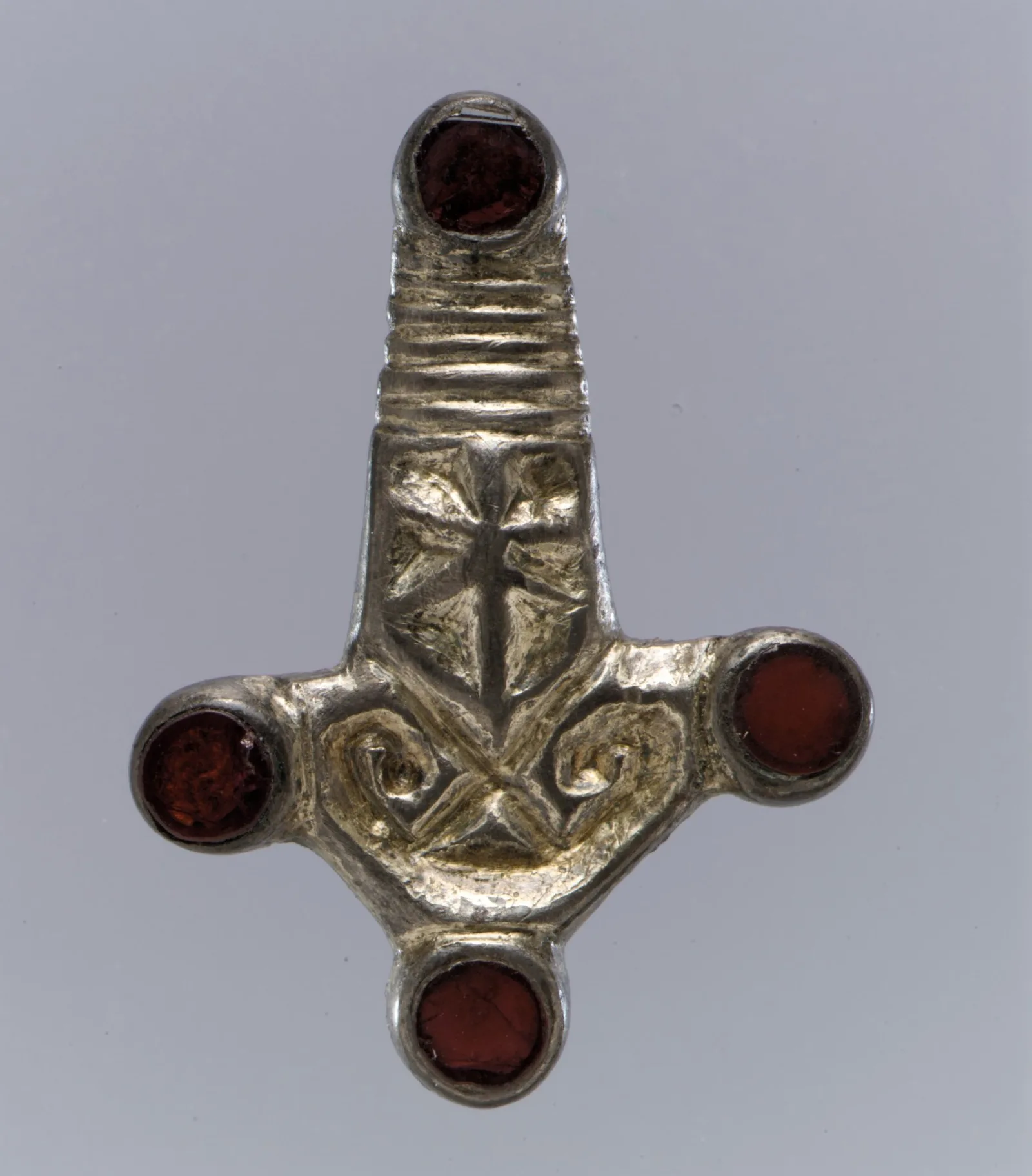
The old masters were the first stylists: they knew exactly how a neckline and jewellery work together, and for centuries they rehearsed these pairings in portraits, which is where we actually read them from.
A portrait was built around the line of the décolletage and what lay on it. The painter led the viewer's eye along the neckline to the face, and the necklace was the tool of that route: a rivière along a rounded neckline, a wedge pendant in a sharp one, a collar of stones along a square neck. Looking through portraits of different eras in a row, you see how fashion in necklines changed and how jewellery obediently followed, never once arguing with the line of the fabric. In essence, the whole modern logic of matching is what painters knew and applied long before stylists existed.
The psychology of a bare neck
Why an open neck asks for jewellery while a closed one does not is not only a question of fashion. An open patch of skin draws the eye, and jewellery works as a signpost: it directs attention where we want to lead it, most often to the face.
A necklace in a neckline sets a route for the eye: from the jewellery up, to the face of the person you are talking to. An empty deep neckline leads the eye elsewhere, and jewellery gently returns it upward. That explains why a deep neckline instinctively calls for a larger necklace: it does not "cover," it redirects attention. A closed neck, on the other hand, asks for no attention, and jewellery forced onto it reads as excess. We sense this logic without articulating it, which is exactly why "a bare neck under a boat neck" looks right the moment you see it.
There is a second layer too, tied to the wearer's confidence. Jewellery on open skin is a way to gently steer where someone looks, and many choose a necklace precisely for that control: a pendant puts a visual full stop where it is comfortable and leads the eye away from what one would rather not show. So matching jewellery to a neckline is about both aesthetics and confidence: a well-chosen necklace restores the sense that the look is composed and the wearer decides what matters in it. It is no accident that portraitists used the same move for centuries, leading the viewer's eye exactly where the sitter wanted and away from what the sitter preferred to hide.
Materials that sit against bare skin
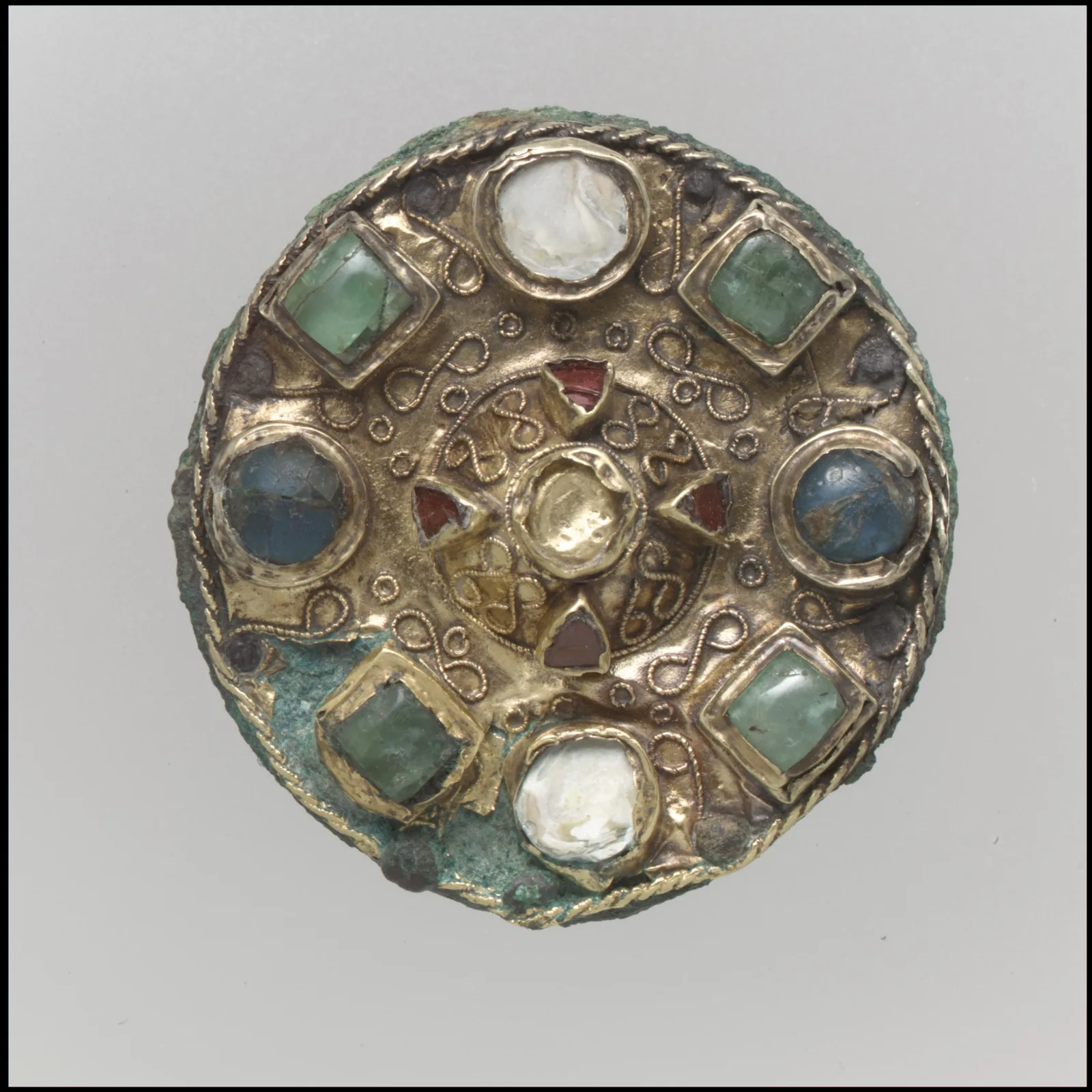
A neckline is also a question of what actually touches open skin. Metal and stone in a neckline behave differently than on a covered spot, and the choice of material is worth checking against both the dress and the skin.
The choice of metal in a neckline is also a question of light. Open skin reflects the glints of jewellery, and on a deep neckline they show more than on a covered top, which is why a daytime look and an evening one ask for different degrees of shine.
Smooth polished silver and gold play with glints on open skin and look good in deep necklines, where light falls on the piece. Matte and oxidised surfaces, by contrast, mute the shine and suit restrained daytime looks. Warm metals, yellow and rose gold, echo a warm skin tone softly, while cool silver and white gold give contrast. For those who wear a piece for a long time on open skin and perspire, tolerance matters too: sterling silver and gold are neutral, while cheap alloys in a deep neckline, where contact with the skin is close and long, more often cause a reaction. A stone in an open neckline is worth choosing for durability: soft porous stones take sweat and creams worse than dense, polished ones.
Send a friend a discount code, they save on their first order.
Common mistakes
Most misses with jewellery under a neckline repeat again and again, and nearly all of them are a break of one of the three rules. Here are the most common, so they are easy to spot in the mirror.
The first mistake is shape against neckline: a round necklace in a sharp V, a sharp pendant in a soft sweetheart. The second is the wrong length: a mid-length necklace lying right on the edge of a square or boat neckline and creating a second competing line. The third is overload: a strong neckline with ruffles or stones plus an equally strong necklace, where two accents cancel each other. The fourth is emptiness where volume is needed: a fine chain in a deep bandeau, lost in the open space. The fifth is stubborn symmetry under an asymmetric neckline. All five are cured by returning to the three rules: mirror, depth, busy.
There is a sixth, less obvious one: choosing jewellery under overhead light and forgetting the depth of the neckline. In a mirror under bright light from above, a necklace looks larger and more noticeable than it does in soft evening light, where it fades into the shadow of open skin. So a piece that looked perfect at home can be invisible at an event. The rule is simple: for an evening and a deep neckline, take jewellery a step bolder than seems enough in the home mirror, and for daylight and a modest neckline, a step quieter. And one thing forgotten most often: try a piece against the very dress you are buying it for, not against a T-shirt in the shop, because the neckline changes a piece beyond recognition.
A quick check before you leave
The three rules are easy to hold in your head, but a short checklist in front of the mirror helps, one you can run in a minute. It catches exactly the mistakes described above while there is still time to fix them.
First: look at the line of the neckline and the shape of the jewellery beside it. Do they rhyme or argue? Wedge to the V, arc to the round, straight to the square, soft curve to the sweetheart. If the shapes conflict, change the jewellery, not the neckline. Second: check that the necklace is not lying right on the fabric edge. The piece should be either clearly above the line, at the neck, or clearly below it, on the chest, but not on the edge itself. Third: judge how much is happening at the face. An ornate neckline plus a large necklace plus chandeliers at the ears is too much, and one of the accents comes off. Fourth: step back a couple of paces from the mirror. A small pendant in a large neckline disappears at a distance, and that shows only from far off.
If the look passes all four points, the jewellery is chosen well. If it stumbles on even one, the fix is almost always to simplify, not to add.
Find a necklace, pendant, or earrings for your neckline in the Zevira catalogue: from fine chains for a turtleneck to statement necklaces for a deep neckline.
Facts that surprise
- The high collar killed the necklace long before the turtleneck. The ruffled collar of the Renaissance closed the neck so tightly that neck jewellery all but vanished from portraits for a century, just as the closed collar displaces it today.
- The rivière was invented for décolletage. The necklace of a row of matched stones was born in the eighteenth century as an answer to deep rounded necklines: the open chest had to be filled with something.
- The flappers' long strand was about shoulders, not the neck. The 1920s fashion for waist-length jewellery grew out of open shoulders and a straight silhouette that short necklaces simply did not suit.
- A bare neck is sometimes more expensive than a necklace. Under a boat neck and a halter, skipping neck jewellery is a deliberate stylist move, not forgetfulness: the neckline works as jewellery itself.
- The brooch came back through the turtleneck. It was the closed top, where a necklace is powerless, that made the brooch at the shoulder and collar relevant again.
- Painters knew the mirror rule. Matching the shape of jewellery to the shape of the neckline was rehearsed in portraits for centuries before stylists ever put it into words.
FAQ
Can you wear a necklace with a turtleneck? Yes, but not at the neck, over the fabric: a long chain or a sautoir with a pendant lies on the knit and draws a vertical. A short necklace gets lost on a turtleneck, so either go long over it, or skip the necklace entirely and put the accent on earrings.
What earrings suit off-the-shoulder styles? Long drops: they pick up the open line of the shoulders and become the lead when the neck is left bare. Under a boat neck and a halter this is most often the better choice than a necklace.
What do you wear with a square neckline? Strict geometric shapes: a rectangular or square pendant, a necklace with faceted links. The main rule is that the jewellery does not cross the straight line of the neckline but fits inside it or sits higher, at the neck.
How do you pick necklace length by neckline? From the geometry of the neckline: a closed, high top asks for a long piece worn over it, an open and deep one for a short piece at the neck or a rich cascade. A mid-length lying right on the edge of the neckline is usually avoided, so as not to create a second competing line.
Do you need a necklace with a V-neck? Not necessarily, but a V-neck is the most rewarding case for a pendant: the sharp angle asks for a vertical, and a pendant, lariat, or Y-necklace fills it perfectly. If you would rather skip the necklace, the neckline works beautifully with earrings alone.
What jewellery goes with a dress with ruffles or lace? Quiet or none at the neck. A complex, decorated neckline is already a strong accent, and a second strong piece beside it overloads the look. The accent moves to earrings, or the neckline is left to solo.
Can you wear both earrings and a necklace at once? You can, if one accent leads and the other supports. Two equally large pieces at the face fight for attention. Usually you make one thing strong: a noticeable necklace and quiet earrings, or the reverse.
What do you do with an asymmetric neckline? Support the shift rather than straightening it: an accent on the open side, a single earring, a vertical along the free shoulder. A symmetric set centred under a diagonal neckline looks worn to a different dress.
Buying it as a gift? Each one arrives ready to give.
 A branded Zevira box and a little card come with every order.








In closing
Jewellery under a neckline is not a matter of taste or a lottery but a clear geometry. Three rules decide almost everything: jewellery repeats the line of the neckline, boldness grows with openness, and beside a strong neckline the jewellery steps back. With those in mind, any neckline is easy to read, even an unfamiliar one: you look at the fabric line, the depth, the busyness, and the answer arrives on its own. Sometimes it is a statement necklace, sometimes only earrings, and sometimes the truest move is to leave the neck bare and let the neckline solo.
About Zevira
Zevira makes jewellery that is easy to match to a specific look: fine chains and pendants for a closed top, statement necklaces for an open neckline, earrings for every neckline. Behind the brand is a Spanish school with the heritage of Albacete, an old centre of metal and craft, and an attention to how a piece sits and lives on a person.