The bola, caller of angels: the pendant that rings softly at an expectant mother's belly
An expecting mother takes a step, and a tiny bell hidden inside a silver ball chimes faintly near her belly. The baby inside already knows this sound. After birth, that same quiet ring will calm the child again. This is how a bola works, the pendant that in Spain and Latin America is called llamador de ángeles, the caller of angels.
A bola is not jewellery made for shine. It is a ball with a secret, a hollow sphere with a small bell tucked inside. The moment an expecting mother moves, the pendant answers with a soft, almost weightless chime. The point of the object lies not in how it looks but in how it sounds: the baby in the womb grows used to that tone across the months of waiting, and after birth the same ring becomes a familiar, reassuring signal that mum is close.
Let's go through it in order: what a bola actually is, where it came from, why it earned the name caller of angels, what it's made from, how to choose the right chain length and sound, who it's given to, and what happens to it after the birth.
What a bola is
A hollow ball with a bell inside
A classic bola is a hollow metal sphere about the size of a large cherry or a walnut, most often made of silver. Inside the ball sits a small ringing element: a bell, a rattle bead, or a rolled metal plate that brushes the walls as it moves. On the outside the sphere may be smooth, openwork, cut with slots, or covered in a raised pattern, but the important part always stays hidden within.
A bola does not ring the way an ordinary bell does. Its sound is muted and soft, closer to a quiet shimmer than a sharp clang. That is deliberate: the pendant is worn right beside the coming baby, and a loud metallic clatter would be out of place. The muffled quality is exactly what makes a bola recognisable by ear. Once you have heard one, you will not mistake its sound for anything else.
Wear the symbol, don't just read about it. These are in stock:





What a bola looks like
Seen up close, a bola is a neat metal ball the size of a large cherry or a small walnut hanging on a long chain. The surface can be smooth and mirror-bright, openwork with a fine lace of slots, or textured with a pattern and symbols. The metal is usually silvery, more rarely golden or finished with coloured enamel. On openwork models you can see cutouts along the bottom or side where the sound escapes, and sometimes the inner ball peeks through them. At a glance a bola is easy to mistake for an ordinary oversized locket, right up until it swings and chimes. The long chain and the soft ring are what give it away as a bola rather than a plain ornament.
Why it is called the caller of angels
In Spain and across Latin America a bola is most often called llamador de ángeles, which translates literally as the one who calls the angels, or the summoner of angels. Folk belief holds that the pendant's quiet ring draws a pregnant woman's own guardian angel, and the angel of her unborn child, close to her. As long as the bola rings, the angel stays near and watches over both.
This poetic name stuck to the pendant precisely because of the sound. Angels were said to hear the soft chime and gather around it, wrapping mother and child in unseen protection. From that belief comes a second common name: the angel pendant, or the angel's call. The figure of the guardian angel in jewelry has its own detailed treatment in the piece on what the angel means as a symbol in jewelry, where the theme opens up more widely.
How llamador de ángeles translates
The Spanish name llamador de ángeles translates word for word as the one who calls the angels, or the caller of angels. The word llamador comes from the verb llamar, to call, and ángeles means angels. In everyday speech people shorten it to caller of angels or angel's call. You sometimes meet the feminine form llamadora de ángeles, but the meaning is the same. The name caught on because of the belief that the pendant's quiet ring draws a guardian angel to the expecting mother. A plain description of the object turned into a poetic name, and under that name the bola is known across the whole Spanish-speaking world, from Spain to Argentina and Mexico.
Other names for the bola: harmony ball and angel's call
The bola has many names, and people search for it under all of them in different countries. Beyond the Spanish llamador de ángeles you meet variants like harmony ball, pregnancy chime, angel whisperer, and simply ringing ball. In the English-speaking world the descriptive name angel caller has become the most common, and some makers reserve the word bola for the Javanese type with its soft, faintly buzzing shimmer. Behind all these names lies one and the same thing: a hollow sphere with a bell inside, worn on a long chain. If you come across any of these names, they all point to the same pendant, just phrased differently.
How a bola differs from an ordinary ball pendant
At first glance a bola looks like any round locket or ball pendant. The whole difference sits inside, and in the sound. An ordinary ball pendant is a solid or decorative piece that stays silent. A bola always rings, because its heart is the hidden bell rather than the ornament. Take away the sound and the object stops being a bola, dropping back into being a plain sphere.
The second difference is length. A pendant is usually worn near the collarbones or on the chest, while a bola is deliberately lowered toward belly level, to sit closer to the baby. That is why a genuine bola always comes on a long chain, far longer than usual. These two traits, the ring and the length, set it apart from any other ball on a neck.
How the sound is born
The secret of the sound lies in the build. Inside the hollow sphere a small metal ball or a light clapper rolls freely. With every movement of the body it touches the inner walls and produces a quiet shimmer. The thinner the walls and the more slots cut into them, the clearer and brighter the bola rings. A solid, thick-walled sphere sounds more muffled, an openwork one sings out more.
That is why many bolas are made openwork, with a pattern of slots: it lets the sound out more freely. Makers tune the weight and shape of the inner bell so the ring comes out soft yet distinct. A good bola responds even to a light movement, but it never sounds sharp or intrusive.
Interestingly, almost no two bolas sound exactly alike, even when they look like twins. The slightest difference in wall thickness, in the size of the inner ball, in the number and shape of the slots shifts the pitch and character of the ring. That is why Spanish-speaking families say each bola has its own voice, and a mother learns to pick out the sound of her particular pendant among others. That personal, one-of-a-kind tone becomes the very signal the baby remembers.
The tradition of wearing a bola during pregnancy
A long chain down to belly level
The main rule of wearing a bola comes straight from its meaning. The pendant hangs on a long chain or cord so the ball sits at the expecting mother's belly rather than on her chest. As the belly grows, the bola rests right above the baby, and its ring reaches the child most clearly of all. The classic chain length for a bola is around 100 to 120 centimetres, roughly twice the usual.
A chain that long is often worn simply slipped over the head, without a clasp, which is convenient with a growing belly. Some models come with an adjustment so the mother can change the height as the pregnancy progresses. The purpose is always the same: to bring the ringing ball as close to the baby as possible.
In the early weeks, when the belly is not yet showing, a bola can be worn a little higher, like an ordinary long pendant, and lowered as the pregnancy advances, closer to the baby. Some mothers wear the bola over their clothes so the ball is on show and rings more freely; others tuck it under the fabric, closer to the skin. Both ways are correct, and it all comes down to what feels better to the woman herself. What matters is that the pendant stays with her as often as possible, because the whole strength of the tradition lies in the constancy of a familiar sound.
From what point in pregnancy to wear a bola
There is no strict date from which you are supposed to put a bola on, but the general rule is simple: the earlier, the better. Many mothers start wearing the pendant as soon as the belly begins to show, around the start of the second trimester, when the baby's hearing is already developing. The longer the child hears the ring before birth, the more firmly it fixes the sound as something familiar. Some put a bola on from the first weeks, wearing it a little higher like a long pendant, and lower it as the belly grows. Even a few months of wear will have an effect, so it is better to give and put on a bola with time to spare rather than right at the end of the pregnancy.
Wearing a bola over clothing or under it
There is no single rule for whether a bola should be worn over clothes or under them, and both ways count as correct. Worn over the fabric, the ball is visible, swings freely, and rings more clearly, which suits those who want the sound to reach the baby more plainly. Tucked under clothing, closer to the body, the ring becomes quieter and more intimate, while the metal warms with body heat and the pendant does not catch on things. In summer people more often wear it over, in the cold they tuck it under a sweater. Comfort guides the choice, because the heart of the tradition is not whether the bola is seen but whether its sound stays constantly near.
Can you wear a bola if you are not pregnant
Anyone can wear a bola; pregnancy is not required. Many women keep the pendant after giving birth and wear it as an ordinary piece of jewellery with a pleasant ring, or as a charm. A bola is also given for no particular occasion, with no tie to expecting a baby, because a soft ringing ball is lovely in its own right. The caller of angels meaning does not go anywhere in the process: the pendant is still read as a talisman of calm and protection. The one difference from a pregnant wearer is chain length. Outside of pregnancy a bola is often worn shorter, on the chest rather than at the belly, so it reads like a familiar pendant.
The baby gets used to the ring before birth
A baby's hearing develops fairly early in the womb, and it begins to make out the sounds of the outside world long before birth. The soft ring of a bola, which accompanies every movement of the mother, becomes a constant background across the last months. It does not frighten, it is not sharp, it repeats day after day and so lodges in memory as something familiar and safe.
That is the whole idea of the tradition. As the mother walks, bends, strokes her belly, the bola rings quietly, and the baby links that sound with calm, movement, and the closeness of the mother. By the time of birth the bola's ring is already a familiar, settled signal for the child rather than a new irritant.
The same sound calms the newborn after birth
The most touching part of a bola begins after birth. The baby arrives in a world of loud, unfamiliar sounds, and almost everything around is new and unsettling. But the moment the mother puts on the bola and rocks it nearby, the ring known from the womb returns. Many parents notice that this sound calms a newborn faster than much else: the child recognises it with the body before the mind.
That is why a bola is often kept on through the first months after birth, during feeding and rocking. The ring works as a bridge between two worlds: the one where the child was safe inside, and the new one it still has to settle into. One and the same quiet shimmer joins the before and the after.
A symbol of the guardian angel and the mother-child bond
Behind the practical side, a bola carries a deep symbolic layer. The pendant embodies the invisible bond between mother and child, the very one that begins long before they first look at each other. The ring is the voice of that bond, its audible presence. As long as the bola sounds, a thin thread runs between two lives.
The image of the guardian angel strengthens this meaning. For an expecting mother a bola is not jewelry for the sake of looks but a small amulet that, by belief, calls protection to the most vulnerable being of all, the unborn child. In this the bola sits close to a whole family of protective pendants: if the theme of amulets appeals to you, look at the general overview of amulets, charms and talismans, where those traditions are laid out plainly.
Customer reviews
Zevira is a real jewellery shop. Genuine payments, deliveries and customer thank-yous.
🥰🥰🥰 gracias
Ok, ¡gracias! 🙂
A bola belongs low, down at the belly, or it is just a ball on a string. A short chain gives you away at once: you missed the point.
What to wear a bola with
Over years of working with expecting mothers, the bola has passed through dozens of looks with me. I have gathered here what actually works, occasion by occasion.
What chain length does a bola need? On this I am firm: long, around 100 to 120 centimetres, so the ball sits at belly level. That is where the ring reaches the baby, and the whole object was invented for it. A short chain at the collarbones I recommend swapping straightaway, otherwise all that is left of a bola is a ringing ball with no meaning.
Do you advise silver or gold? I more often choose silver: its soft cool shine suits almost everyone, and the ring of a silver sphere is usually cleaner. A gold bola I recommend to those who feel warm metal is closer to the skin and who want something dressier. I look not at fashion but at the cleanliness of the ring, which for a bola is the main thing.
Should a bola be worn over clothing or under it? By the season. In summer I advise wearing it over a light dress or tunic, so the long line draws out the silhouette and the ball is on show. In cool weather I recommend tucking a bola under knitwear or a coat, so the ring stays quiet, for the mother and baby alone. Both ways are right, and I choose by the look and the mood.
What neckline does it look best with? Under a loose maternity cut I choose a simple round or V neckline with no extra decoration at the throat. A bola hangs low, so nothing should crowd it at the neck: no chunky beads, no high collar. One calm top and one long line of the pendant, that is enough.
And after the birth, where does it go? Not into a jewellery box. I advise the mother to move the bola onto a short chain or a bracelet, so the ring is near during rocking, or to hang it on the stroller or crib. Later I recommend keeping it as a keepsake and passing it to the grown child. A good silver bola lives calmly for decades.
I want to give one to an expecting mother, what do you suggest? I choose a bola with a clean, soft ring and a long chain without a clasp, easy to slip over the head as the belly grows. An openwork sphere with an angel's wing or the tree of life reads as a warm, considered gift. The main thing is to give it with an understanding of the object's meaning, not for the sake of pretty wrapping.
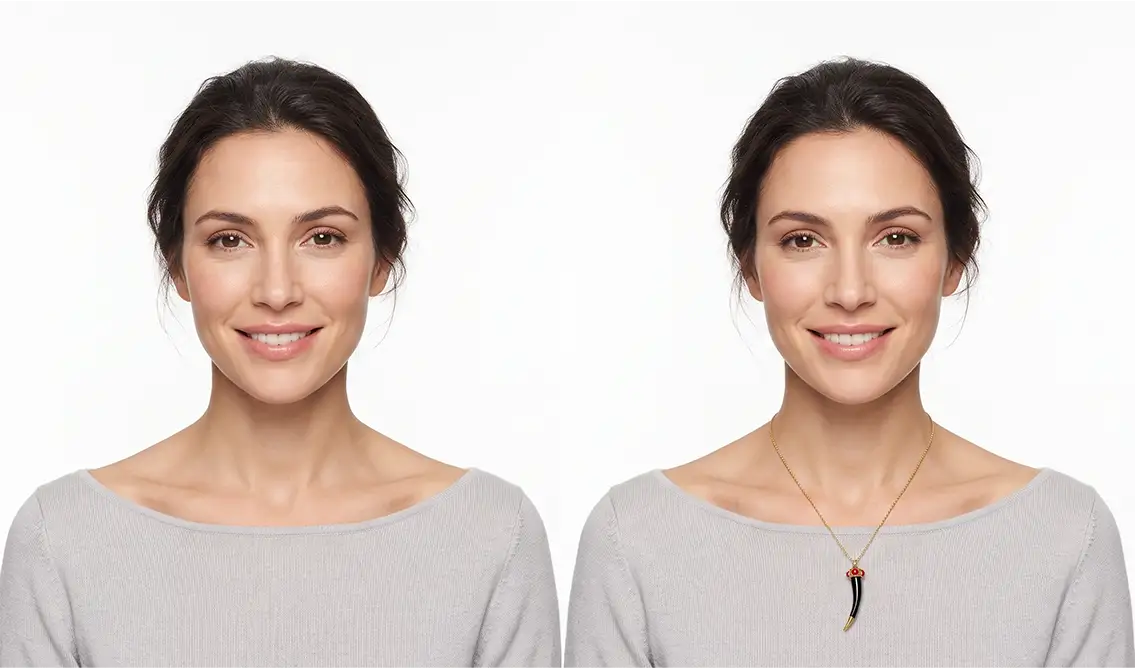
Turn on your camera, pick earrings, a pendant or a ring, and see the piece on yourself in real time.
Switch items in one tap.
Everything runs in your browser: no photo or video is ever uploaded.
The history of the bola
Mesoamerican roots
One thread of the bola's origin runs deep into ancient Mesoamerica. The peoples who lived across what is now Mexico and Central America knew metal rattle-balls long before Europeans arrived. Such ringing pendants and bells were used in rituals and as amulets: the sound of the metal was believed to drive off evil spirits and protect the wearer.
Out of this soil grew the idea of a protective ringing pendant for an expecting woman. The soft ring of metal, guarding a vulnerable person, fit the local faith in the power of sound. When Christianity later arrived here with its guardian angels, the two traditions joined, and the protective ball found its name as the caller of angels.
Pre-Columbian metal bells of the Americas
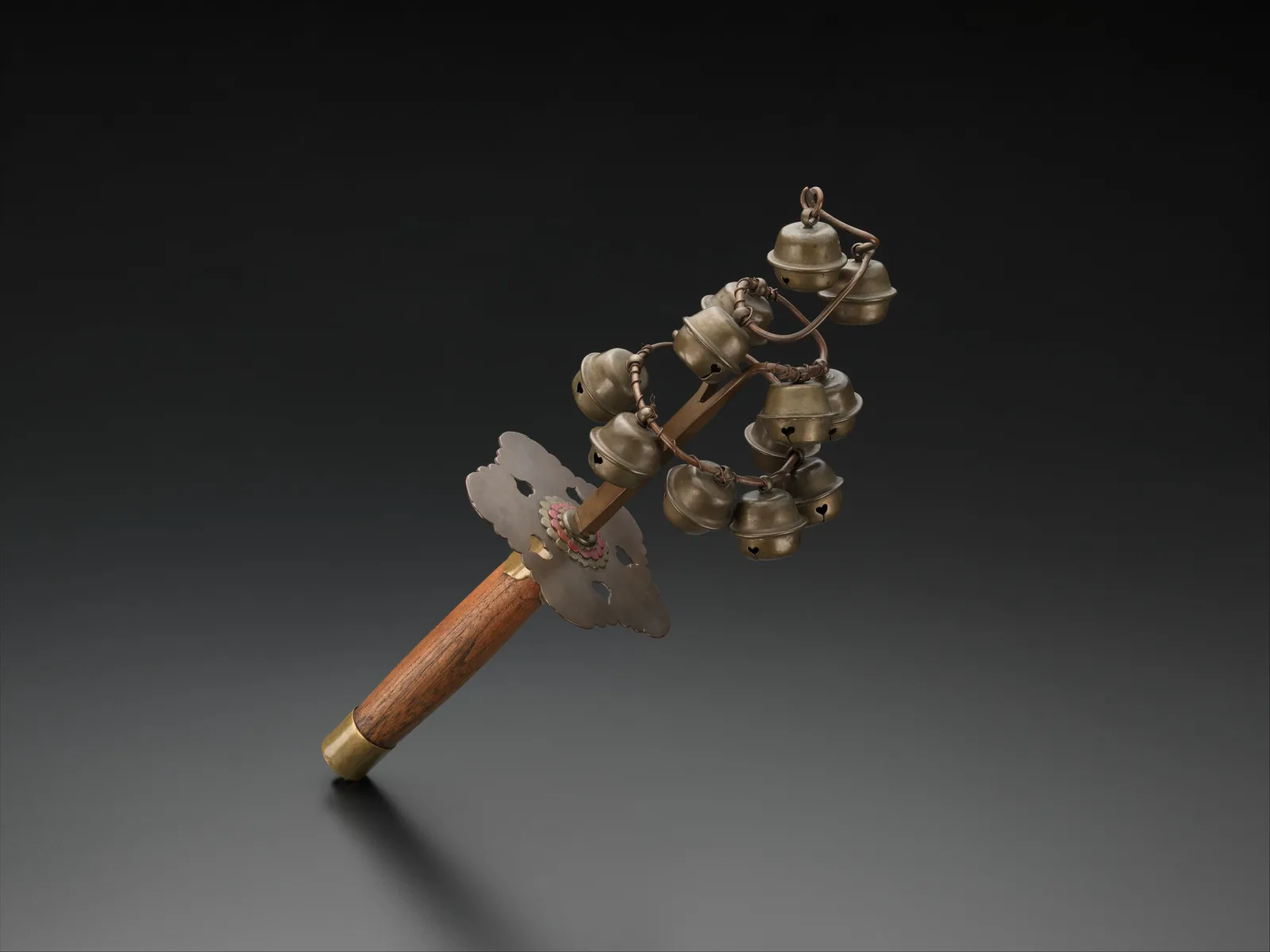
Archaeologists find many ancient metal bells across Mexico and Central America, cast long before the Spanish came. They were made from copper and golden alloys, shaped into tiny hollow balls with a pebble or a shot inside, on exactly the same principle as the later bola. Such bells were sewn onto clothing, hung around the neck, and woven into ritual objects, in the belief that their ring warded off evil and sickness. It was this ancient habit of trusting protection to ringing metal that became the ground on which the tradition of a ringing pendant for expecting mothers later grew.
The Javanese and Indonesian version
The very word bola, and part of the ringing-ball tradition, is linked to Indonesia, above all to the island of Java. There people have long made hollow metal pendants with a bell inside, and their soft ring wove into a local musical culture built on the shimmering percussion of the gamelan orchestra. The ringing ball was part of a wider world of fine metallic sounds.
Many makers still today reserve the word bola for exactly this Javanese type: a ball with a pleasant, faintly buzzing shimmer. Through trade routes and travelling jewellers the idea of a ringing pendant spread across the world, meeting other cultures and gathering new meanings. It was the European and Latin American branch of the tradition that tied it to pregnancy.
How the caller of angels reached Spain and Latin America
In the Spanish-speaking world the ringing pendant for expecting mothers took its poetic name, llamador de ángeles, and settled firmly into family culture. In Mexico, Colombia, Argentina and Spain itself, a bola is given to an expecting mother as one of the main gifts for the time of waiting. Here the tradition gathered the Christian meaning of the guardian angel and became genuinely popular, passed from household to household.
In these countries a bola is often handed down: the pendant under whose ring one child was carried is worn again during the next pregnancy, and later given to a grown daughter when she is expecting her own baby. So one and the same ring accompanies several generations of a single family, and the object turns into a family heirloom.
In Latin American folk faith the bola stands alongside other protective and votive objects that people carry to images of saints and wear on themselves. Living beside it in that culture are, for instance, milagros, votive pendants and charms, tiny metal figures that stand for a request for health and protection. The bola and the milagros grew from the same soil of folk Catholicism, where an object of metal becomes a visible sign of care for what one holds dearest.
The Mexican bola and its local names
In Mexico the bola is one of the best-loved ornaments for expecting mothers, and here it has strong local roots. Even before the Spanish, the peoples of Mesoamerica knew metal rattle-balls as amulets, and that ancient base fused with the Catholicism brought across the ocean. Mexicans often call the pendant llamador de ángeles, but you also meet the simpler bola de la felicidad, the ball of happiness. A Mexican bola is frequently made of silver with a distinctive local pattern, and it is given at family gatherings while a baby is awaited. It was from Mexico and neighbouring Latin American countries that the tradition of the ringing pregnancy pendant spread further across the world.
How the bola spread into the wider English-speaking world
Beyond Spain and Latin America, the bola found its way to families who spoke no Spanish at all. At first it travelled as a keepsake, brought home from trips to Mexico or the Mediterranean, admired and then explained by the mothers and jewellers who understood the custom. In English the pendant settled under a handful of names: angel caller, harmony ball, pregnancy chime, and simply bola. For a while there was no single agreed word, and many people searched for it by describing it, a ringing ball for an expecting mother. Bit by bit the bola took its place among warm pregnancy gifts, and more and more families came to know its soft ring and the story standing behind it. What carried it across the language barrier was the idea itself: a pendant that links mother and child before birth needs no translation to be understood.
The path into Europe and the rest of the world
From the Spanish-speaking world the bola gradually spread across the whole of Europe and beyond. It was first embraced in countries with a strong Catholic culture, and then everywhere people looked for a warm, meaningful gift for an expecting mother. The idea of a pendant that connects mother and child before birth turned out to be clear without any translation at all.
Today the bola is known under different names: angel caller, angel whisperer, pregnancy chime, harmony bola. The names change, but the essence stays the same: a hollow ball with a bell on a long chain, whose quiet ring accompanies an expecting mother and her baby. From a local custom the bola has grown into a symbol of expecting a child recognised around the world.
Upload a photo of your pet, someone you love, or an object. We'll build a 3D model and hand-cast it in pewter.
What a bola is made from
Silver: the main material
The most common and most fitting material for a bola is silver. It has a noble, cool shine, it sounds pleasant, and it holds the fine pattern of slots well, and that pattern decides how clean the ring will be. Silver does not provoke allergies, which matters for an object an expecting mother wears against bare skin for months, and it cleans easily if it darkens.
A silver bola feels like an object made for years, not for a single season. It is exactly this kind of pendant you would not hesitate to hand down or set aside for the next pregnancy. If you want to understand how real silver differs from an imitation and what the hallmark means, that subject is covered in detail in a general silver guide worth a look before buying any silver piece.
Silver has one more pleasing quality, one that matters especially for a bola. Over time the metal darkens slightly, gathering a thin patina, and a raised pattern stands out more clearly while the pendant takes on the look of an object with a history. If you want to bring back the original shine, silver cleans easily with a soft cloth, but many mothers deliberately keep a light patina: it reminds them that the bola came through important months with the family. So the material itself works toward the pendant's central idea, turning it from a brand-new trinket into a personal, lived-in thing.
Sterling silver 925 and what the hallmark means
Most often a bola is made of 925 silver, the sterling silver in which 925 parts out of a thousand are pure metal and a little copper is added for strength. The hallmark is stamped on the clasp, the bail, or the sphere itself and serves as a guarantee that you are holding real silver, not a cheap alloy pretending to be it. It is worth looking for the hallmark before you buy: its absence is reason to be wary. Sterling 925 suits a bola well, since it is hypoallergenic, sounds pleasant, holds the fine pattern of slots, and lasts for decades. This is the grade people choose when they want an object for years, one they would not be ashamed to pass on.
A gold bola and other metals
Besides silver, bolas are made from gold, gold-plated silver, surgical steel, and brass, and the outer sphere is sometimes covered with coloured enamel. A gold bola looks dressier and warmer in tone, but it turns up more rarely and is valued as a more prestigious gift. Gold-plated silver gives a similar look for less, though the plating wears away over time with constant use. Surgical steel has the advantage of not tarnishing and not provoking allergies, although it sounds a touch drier than silver. The metal shapes both the look and the voice of the pendant: every alloy has its own character of ring. For an object worn against the body for months, the most important thing is that the metal be hypoallergenic.
What is hidden inside: the ringing bell
The heart of any bola is its inner ringing element. Usually this is a small metal ball rolling freely inside the hollow sphere, or a light clapper brushing the walls. Its weight, shape, and material set the character of the ring: some bolas sing higher and brighter, others answer with a soft, low shimmer.
Good makers tune the inner bell so the sound comes out delicate but alive, audible in movement and silent at rest. Cheap bolas often err either toward a sharp, buzzing ring or, at the other extreme, toward near silence. That is why, when choosing, you should always listen to a bola: the sound rather than the look decides whether the object succeeds.
The colour of the ball and the legend tied to it
The outer sphere of a bola is made in various shades of metal and finish: silvery, golden, pearly, coloured. In some folk traditions particular beliefs attach to the colour: a pale ball is said to call calm, a warm golden one to carry joy, and a deep blue or green shade to guard against worry. There is no strict canon here, and such signs are best treated as a pretty part of folklore.
In practice colour is more often chosen simply by taste and by whatever the expecting mother is used to wearing. A silvery bola is universal, a golden one is dressier, coloured enamel makes the pendant more playful and eye-catching. The meaning of the object does not change with the shade: any bola rings and protects, whatever the colour of its sphere.
A bola with stones and inlays
Some bolas are decorated with inlays: small stones, crystals, a pearl, or coloured enamel on the surface of the sphere. Such details add a dressier note to the pendant and let you write in an extra meaning, for example the birthstone of the coming baby. It matters that the inlays not interfere with the main thing, the sound: they are set on the outside without touching the inner bell, so the ring stays clean. Safety is worth keeping in mind too, since a bola is often later hung near a child, so the stones must sit firmly. If a bola is meant as an amulet for years, it is better to choose securely fixed inlays with no fragile elements that could be lost or chipped in daily wear.
Engraving and personalisation
A bola is often turned into a named, deeply personal gift through engraving. On the smooth part of the sphere you can engrave the coming baby's name, if it has already been chosen, a date, a short wish, or the parents' initials. Such a pendant stops being merely a pretty object and becomes a keepsake, tied to a particular family and a particular time of waiting.
Beyond inscriptions, a bola is decorated with small symbols: an angel's wing, the tree of life, a heart, an infinity sign, a flower. Each of them adds its own shade of meaning to the central image of protection and connection. A personalised bola often becomes the very object later kept carefully alongside the first photograph and the hospital tag.



How to choose a bola
Material and hallmark
The first thing to look at when choosing is the material. For an object worn against the body every day for long months, the best choice is a hypoallergenic metal, and here silver is without rival. A silver bola should carry a hallmark confirming the metal content. Cheap alloys and coatings darken over time, wear away, and can irritate the skin, so this is not the place to economize.
If silver does not suit for some reason, a reasonable alternative is surgical steel or gold-plated silver. The main thing is that the metal not provoke allergies and not spoil from constant contact with the skin. Remember that people often want to keep a bola for years and pass it on, which means the quality of the metal directly affects whether the object survives to a second generation.
Chain length: down to the belly
The second thing in importance is length. A real bola should hang at belly level, not on the chest, otherwise the whole point of the tradition is lost. Look for a long chain or cord, around 100 to 120 centimetres, easy to slip over the head without a clasp. As the belly grows, that length will bring the ball to exactly the right spot, closest to the baby.
It helps if the length can be adjusted: then the expecting mother can tune the height to her stage and her clothing. Too short a chain turns a bola into an ordinary pendant and strips it of its main role. If a pendant you like comes on a short chain, you can always swap it for a long one separately.
Sound: what the ring should be
Sound matters more than looks for a bola, so you should always listen to the pendant before buying. A good ring is soft, clean, faintly shimmering, distinct with a light movement, but not sharp and not loud. It should calm rather than irritate, since both mother and baby will hear it every day.
Two extremes should put you on guard: a ring too sharp and buzzing, as if a nail were rattling inside the ball, and near-total silence, when the bell is barely audible. The first tires you out, the second robs the bola of meaning. An ideal bola responds to movement at once, but its sound is one you want to hear again and again.
Size and weight of the ball
The size of the sphere is worth choosing by feel. Too large and heavy a bola will drag on the chain and get in the way, especially late in pregnancy. Too small a one may sound faint and get lost against clothing. The golden mean is a ball about the size of a large cherry or a small walnut, present but not bulky.
Weight is tied to the material and the wall thickness. An openwork bola is lighter than a solid one of the same size and rings more brightly. Remember that the pendant is worn for months, almost without taking it off, so it should be comfortable in weight. Take a bola in your hand, imagine how it will sit on a growing belly, and trust the feeling.
Design: pattern, symbols, and style
Last but not least is the look. Bolas come strict and minimalist, openwork with a fine lace of slots, decorated with symbols like an angel's wing, the tree of life, or a heart. The choice of design depends on the taste of the expecting mother and on whether she usually wears restrained or eye-catching jewellery.
It is worth remembering that the pattern affects both the look and the sound: the more slots, the more freely the ring comes out. So a beautiful openwork bola often turns out to be the most musical too. If the pendant is meant as a gift, it is safer to choose a classic, restrained design: it suits any style and will not date by the next pregnancy.
How to tell a real bola from a fake
Three things separate a real bola from an empty imitation. The first is the sound: a good pendant has a soft, clean, shimmering ring, while a fake either rings sharply and buzzes or barely rings at all, if there is no proper bell inside. The second is the metal: look for a hallmark and an even colour with no flaking coating. The third is the chain length: a genuine bola is sold on a long chain down to belly level, not on a short one like an ordinary pendant. A suspiciously light weight, a dull knock instead of a shimmer, and the absence of any hallmarks should put you on guard. Before buying, you should always listen to a bola and hold it in your hand, because by ear a fake gives itself away fastest of all.
What the price depends on
The price of a bola comes together from a few clear things. The first is the metal: sterling 925 silver, and gold all the more so, costs more than steel or brass. The second is the work: an openwork bola with a fine handworked pattern is harder to make than a smooth cast sphere and so is valued higher. Price is also shaped by the size of the ball, the presence of stones, engraving, and the chain length. Careful maker's work always costs more than a factory run. It is worth taking your cue not from the lowest price but from the quality of the metal and the cleanliness of the ring, since a bola is bought for years. A cheap alloy will darken over time and lose its voice, while a good silver bola will outlive more than one pregnancy.
Which bola to choose as a gift
If a bola is bought as a gift and you do not know the expecting mother's taste precisely, it is safer to choose a classic. A restrained silver bola, smooth or lightly openwork, suits any style and will not date by the next pregnancy. Pick a neutral symbol like an angel's wing or the tree of life, one that carries a kind meaning and appeals to almost everyone. Take a universal chain length, around 100 to 120 centimetres. A clean, soft ring matters more than a fashionable look, so the pendant is worth listening to. If you want to add something personal, leave room for engraving a name or a date, but it is better to agree the inscription in advance so you don't get it wrong with a baby name not yet chosen.
A handmade bola versus a factory one
Bolas are made both by hand and in factories, and the difference shows in both look and sound. On a handmade piece each pattern is a little its own, the maker tunes weight and ring by hand to reach a clean, soft shimmer, and the object itself carries the mark of living work. A factory bola is cheaper and identical across the run, its ring usually even but less expressive. For a keepsake gift meant to be kept and passed on, people more often choose handwork: such a bola has a better chance of being the one, with its unrepeatable voice. If, on the other hand, a bola is wanted as a pleasant but not essential thing, a tidy factory pendant will handle the role perfectly well.
Leave your email, we'll send your discount code. No spam, unsubscribe anytime.
The code arrives by email, valid on your first order.
Who receives a bola and when
A gift for the expecting mother
A bola is one of the warmest gifts you can give a pregnant woman. Unlike things for the baby, a bola is addressed to the mother herself and acknowledges her particular role in these months. It says without words: we are thinking of you and of the child, we wish you both calm and protection. Such a gift touches even those usually indifferent to jewellery.
It is better to give a bola not at the last moment but with time to spare, so the expecting mother can wear it as long as possible and the baby gets used to the ring over months rather than weeks. The ideal is to present the pendant at the start or middle of the pregnancy, when the belly is already showing but there is still plenty of time ahead.
A gift at a celebration for the coming baby
In many countries there is a special celebration in anticipation of a baby, when loved ones gather to congratulate the parents-to-be and give the things a baby will need. A bola at such a gathering becomes a gift with special weight: among the practical blankets and rattles it stands out as an object with meaning, addressed personally to the mother.
Anyone close can give a bola at such an occasion, but it feels especially fitting when the giver is an older woman in the family or a close friend. A ringing pendant works well as the main, memorable gift of the evening, the one people talk about afterward and keep longer than the rest.
Who gives it: partner, grandmother, friends
Bolas are given by all sorts of people, and the meaning shifts a little depending on who gives it. When the pendant is presented by the father-to-be, it is a sign of his involvement and care for mother and child. When a bola is given by the grandmother-to-be, especially the very pendant under whose ring the present mother was once carried, the object turns into a family relay across the generations.
Friends often chip in on a bola together, to give something more meaningful than an ordinary keepsake. In any case a bola reads as a gift from the heart rather than a routine gesture. That is exactly why it is so often chosen when you want to congratulate an expecting mother in earnest rather than for form's sake.
A bola as a gift for the birth
Although a bola is more often given during pregnancy, it also fits as a gift for the birth itself. In that case the pendant's second life begins at once: the mother puts it on, takes the newborn in her arms, and the familiar ring helps the baby settle. Such a gift for the homecoming or the first days at home stands out among the onesies and rattles, because it is addressed to mother and child at once. If a bola is given after the birth, it is worth choosing a model with a chain that is easy to shorten or move onto a bracelet. It helps if the sphere has room to engrave the birth date, so the pendant becomes a keepsake with the exact date a new life began.
Can you give jewellery to a pregnant woman: about superstitions
Plenty of superstitions circle around gifts for pregnant women: the idea that you must not give things for the baby before birth, so as not to jinx it. A bola is a convenient exception here, since it is meant not for the child but for the mother herself, and it is precisely the sort of thing worn throughout pregnancy. In the Spanish-speaking countries where the tradition comes from, a bola is given to an expecting mother without any worry; on the contrary, the earlier the better. Superstitions are best taken calmly: if the giver and the mother are not superstitious, a bola can be presented at any stage. And if a family honours the old signs, you can always hand the pendant to the mother personally as an ornament for her, not as a thing for a child not yet born.
What to write in a message with a bola
If a bola is given with a card or an engraving, it is worth choosing short, warm words. Wishes of calm, of an easy birth, of health for mother and baby ring well, along with a nod to the idea of the pendant itself: may this quiet ring keep you both safe. There is no need for long speeches; restraint suits a bola. For an engraving people more often choose the most personal thing: the coming baby's name, if it is known, a date, the parents' initials, or a single short word like "protect." Such an inscription turns a gift into an object you want to keep forever. The main thing is that the words be sincere and come from someone genuinely glad about the coming baby.
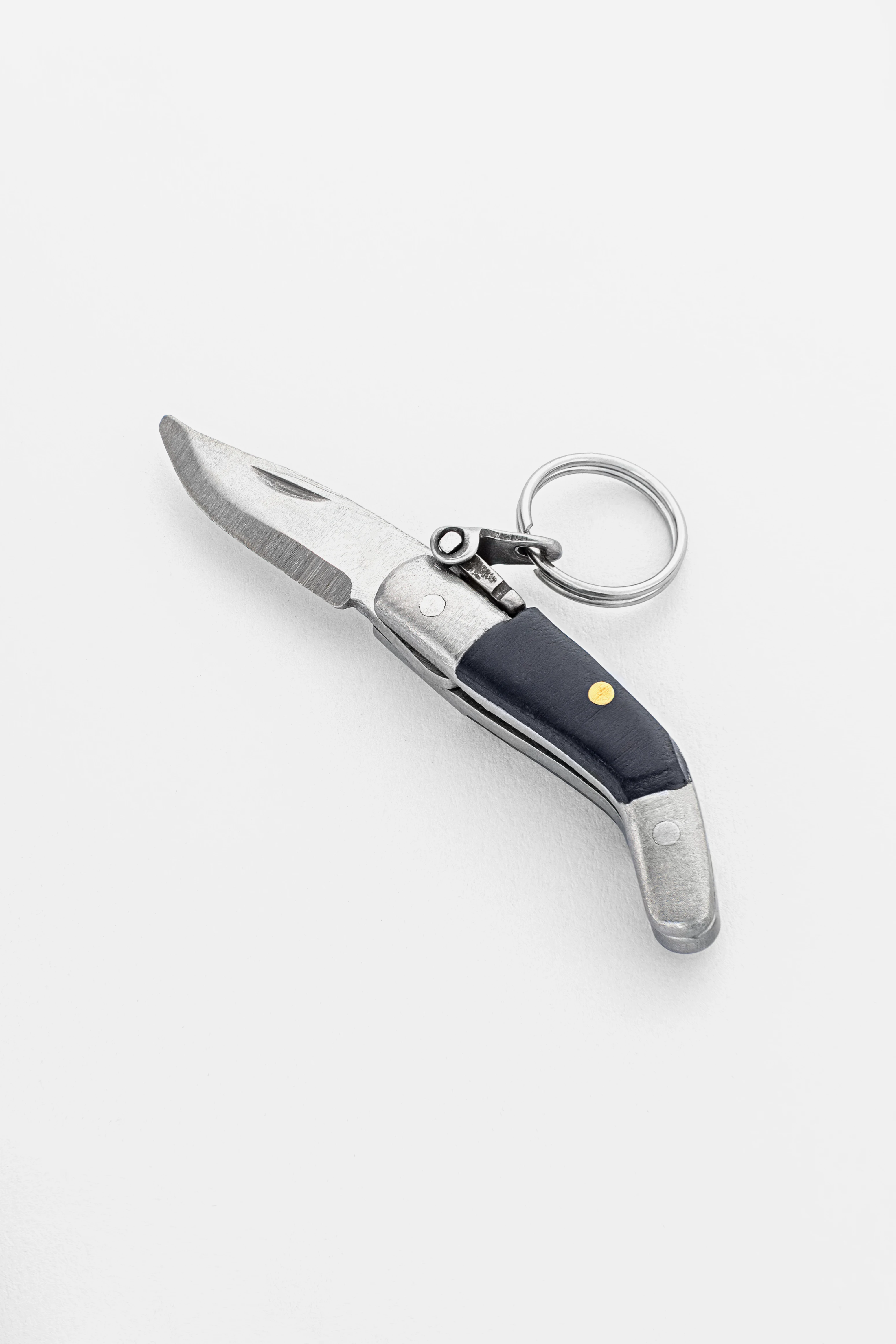
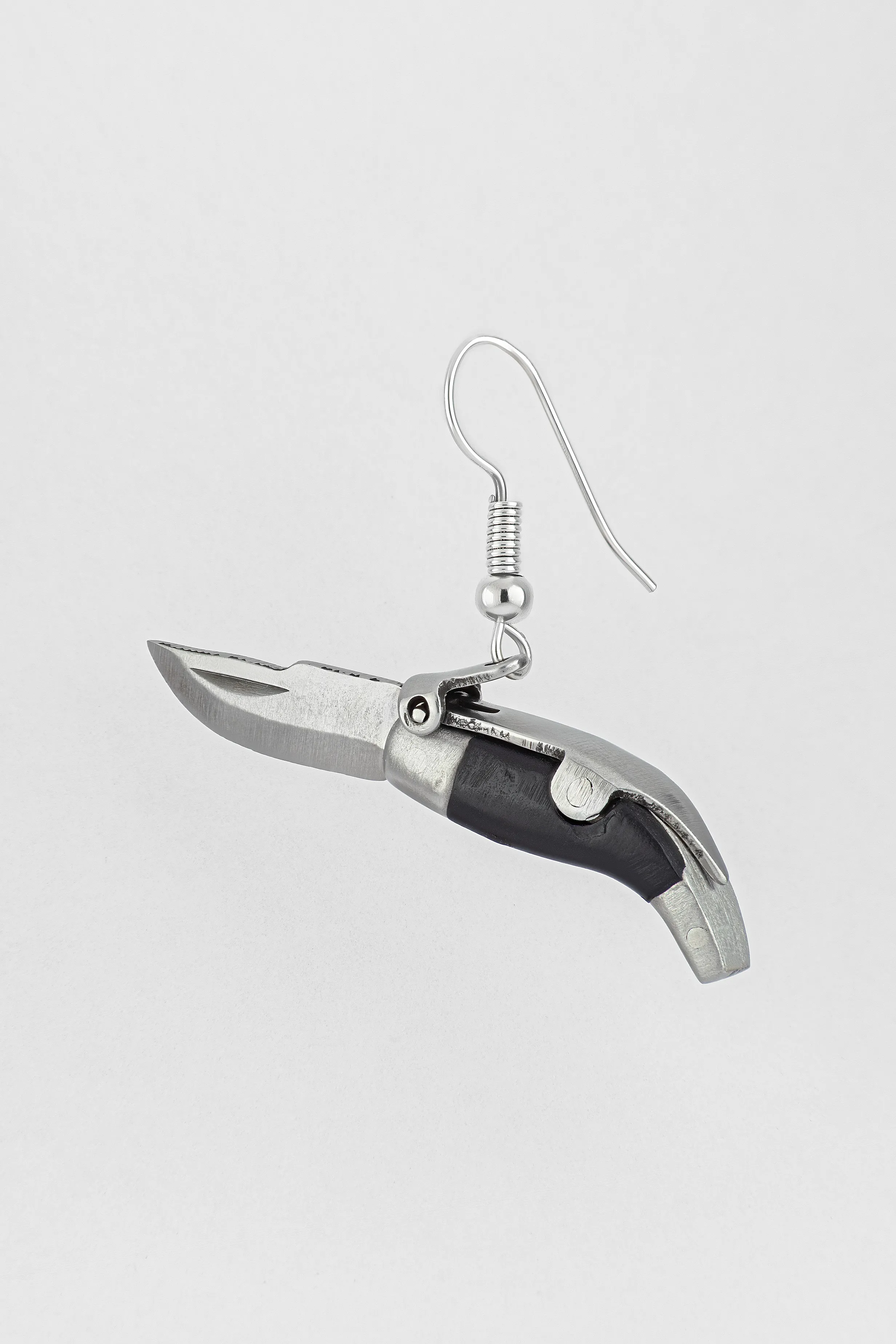
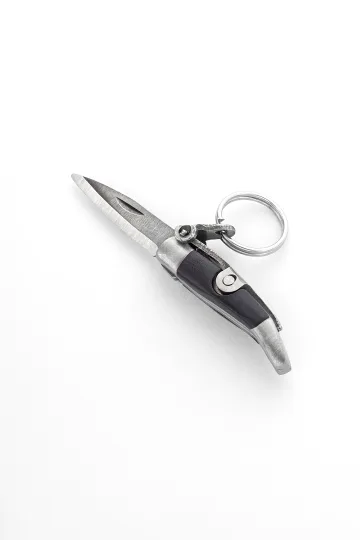
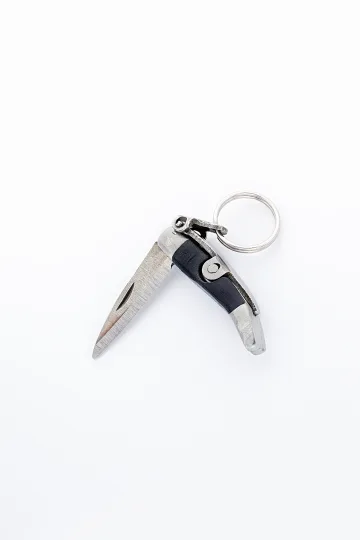
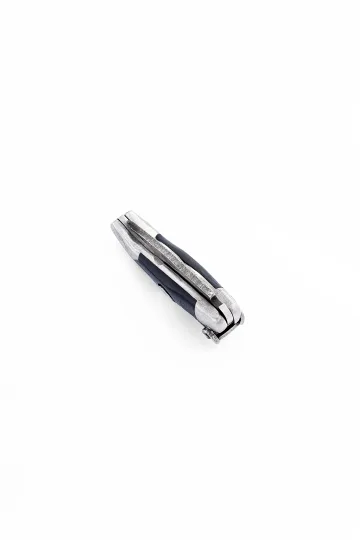
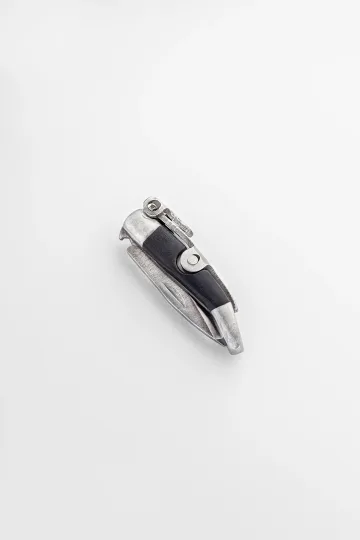
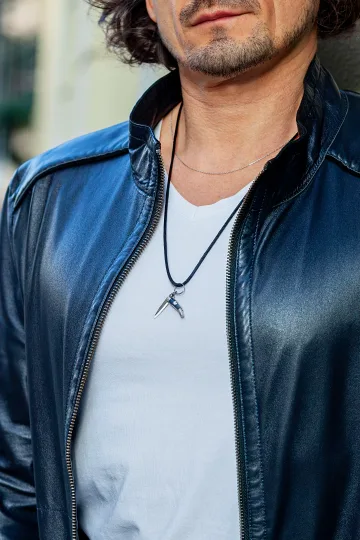
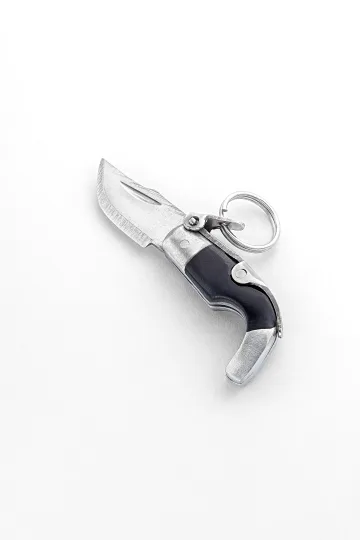
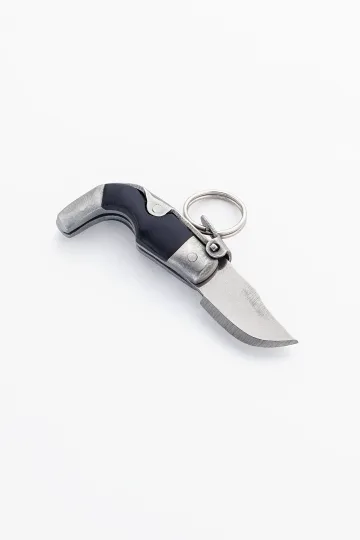
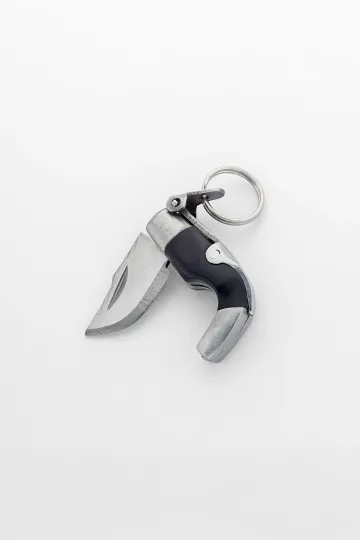
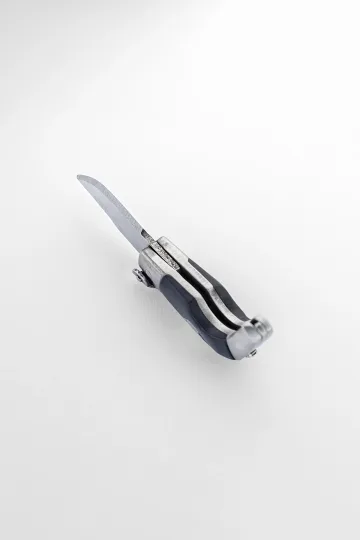
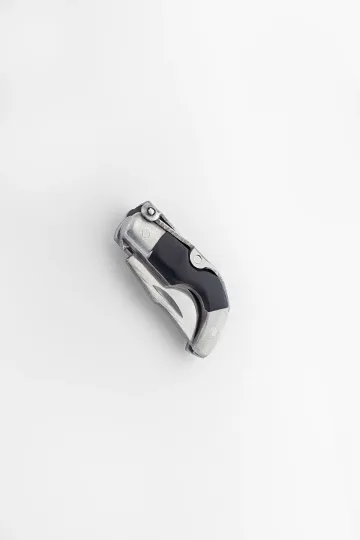
CAPAORA mini knife pendant
The 18th-century Spanish navaja in miniature: 40 mm of stainless steel, a real folding mechanism and a Palanquilla lock that clicks. An affordable gift to remember.
Authentic · Ships from Spain · 14-day returns
How to wear a bola after birth
On a bracelet or a short chain for mum
After the baby is born, a bola does not go into a jewellery box; its second life begins. Many mothers shorten the chain or move the ball onto a bracelet, to wear the pendant closer and more comfortably amid the bustle of a newborn. The familiar ring stays with the child in the process: the mother takes the baby in her arms, the bola swings, and the same soothing shimmer sounds.
In the first months a bola is especially useful during rocking and feeding. A gentle swing of the ball nearby is enough for the baby to hear the sound known from the womb, which helps it calm and fall asleep. So the pendant turns from a symbol of waiting into a small, practical tool of motherhood.
On the stroller, crib, or cradle
Another common way to extend a bola's life after birth is to hang it near the baby: on the stroller, the rail of the crib, the cradle, or a play arch of toys. The familiar ring works like a soft lullaby without words, helping the baby fall asleep in a familiar sound-world. Here it matters to fix the bola securely and out of reach, so it stays a sounding amulet rather than a toy in small hands.
Some families use a bola exactly this way for much of the first year: it hangs where the baby sleeps and rings quietly at the slightest movement. Gradually, as the child grows, the pendant is taken down and kept as a keepsake tied to the very beginning of its life.
Passing it to the child as a future amulet
A bola has a third life too, the longest of all. The pendant under whose ring a child was born and spent its first months is often kept and passed to that child once grown. A daughter receives the bola for her own pregnancy, so the story repeats in a new generation. A son may be given it simply as a family amulet connected to his coming into the world.
Here lies the highest value of a bola: it is not a nine-month disposable object but a potential family heirloom. A good silver bola easily survives decades and moves from hand to hand along with its story. One and the same quiet ring can accompany a whole chain of births within a single family.
For a bola to reach the grandchildren, it is worth caring for it gently: store it apart from other jewellery in a soft pouch, protect the clasp and chain, and clean the silver gently from time to time. Treated that way, the pendant loses neither its look nor its voice, and by the time a grown daughter puts it on, the ring stays as clean as the future owner once heard it in the womb.
How to clean and store a bola
A silver bola darkens over time, gathering a thin patina, and that is normal. If you want to bring back the shine, silver is cleaned gently with a special cloth or with warm water and mild soap, taking care not to pour water inside the sphere so as not to disturb the ringing bell. Abrasive powders and stiff brushes are bad for a bola; they scratch the metal and clog the slots. It is better to store the pendant apart from other jewellery, in a soft pouch or box, so the chain does not tangle and the surface does not scratch. With gentle care a bola loses neither its look nor its voice and easily lives to the day a grown daughter puts it on.
What to do if a bola stops ringing
Sometimes a bola suddenly falls silent or sounds duller than usual. More often the cause is harmless: dust, lint, or moisture has got in through the slots, and the bell no longer rolls freely. The pendant should be gently shaken in different directions and left to dry if water got inside, and the ring usually returns. If a bola falls silent after a drop, the inner ball may have shifted or jammed, and then it is better to show it to a jeweller than to open the sphere yourself. On cheap models the ring sometimes vanishes because of a poor-quality bell, which again speaks in favour of a good bola. Protecting a pendant from water, cosmetics, and knocks is easier than restoring its voice afterward.
A bola for a second and third pregnancy
One of a bola's virtues is that you do not buy it anew for each pregnancy. The same pendant under whose ring you awaited the first baby is calmly put on again when the family expects a second and a third child. For the older child that ring is familiar from its own infancy, and it often recognises the voice of the family bola. So one object links all the children in a family through a shared sound of life's beginning. If you want to mark each pregnancy separately, a new engraving or a symbol charm is sometimes added to a bola, but more often it is left as it is, valued precisely for its constancy. A good silver bola easily withstands several pregnancies in a row without losing its look or its ring.
The bola in culture and related amulets
Ringing amulets among different peoples
The idea that the soft ring of metal guards a vulnerable person turns up far beyond the Spanish-speaking world. Among many peoples small bells and rattles were hung on children's clothing or cradles, and that was done not for fun at all. The ring was believed to drive off evil spirits, the evil eye, and sickness, and an infant, the most defenceless member of the family, needed guarding with special care. The bola takes its place in this wide row of sounding protective objects.
In northern Europe metal pendants and coral rattles with bells were hung by the cradle; in the east, bells were sewn onto children's caps and shirts; among nomadic peoples ringing pendants decorated and protected clothing. The logic everywhere is the same: sound draws an invisible boundary around a person, one that evil should not cross. The bola differs in that its ring is turned not to a child already born but to one still in the belly, and so it is the mother who wears it.
The tree of life, the angel, and other symbols on a bola
Although sound gives a bola its main meaning, its surface is often decorated with symbols, each adding its own shade. An angel's wing or figure points directly to the guardian angel and to the very name caller of angels. The tree of life speaks of growth, roots, and the continuation of a family line, which is especially fitting on a pendant tied to birth. A heart adds the theme of love, and an infinity sign hints at the unbreakable bond of mother and child.
You also meet flowers, stars, crescents, and tiny infant feet on a bola. All these motifs work as a quiet language of wishes, understood without words. In choosing a pattern, the expecting mother or the giver adds a personal note to the pendant's main meaning. That is why a bola with a thoughtful symbol is such a pleasure to receive: it says both "I protect you" and something more personal, addressed to a particular family and a particular baby.
Why sound was considered protection
Faith in the protective power of sound is older than the bola itself. In many cultures metallic ringing was linked with something pure and heavenly, able to scatter darkness and evil. Bells in temples, jingles on harness, small bells on a shaman's clothing, all worked toward one idea: sound draws a boundary between the ordinary and the dangerous, between protected space and the chaos outside. The soft ring of a bola inherits this ancient belief.
There is a plain human explanation for it too, with no mysticism at all. An even, repeating, quiet sound genuinely calms, and this works for an adult as much as for an infant. A monotonous soft chime creates a feeling of order and of someone living nearby. So the protective power of sound is partly belief and partly a very real soothing effect, familiar to anyone who has ever rocked a child to a quiet lullaby.
The bola as part of a family's history
Over time a bola stops being merely an ornament and becomes an object with a biography. Memories attach to it: how it was given, how a baby was awaited to its ring, how it calmed the child through the first sleepless months. That richness of personal history is what turns an ordinary silver pendant into a family treasure, one you do not melt down or lose in a pile of other jewellery.
In families where a bola is handed down through the generations, it comes to hold not one but several stories at once: to its ring the mother was born, and her daughter, and her grandson. The pendant becomes a kind of sounding chronicle of the line, and each new birth adds another chapter to it. In this the bola sits close to wedding rings and christening pieces, those few objects that carry the memory of a whole family through time.
Send a friend a discount code, they save on their first order.
Facts about the bola that surprise
The baby knows the ring before it sees mum
Hearing forms in a baby in the womb long before birth, and it begins to make out the sounds of the outside world months before coming into the world. That means the baby "knows" the bola's ring even before it first opens its eyes and sees its mother. The familiar sound reaches it earlier than any visual image, and that is why it works so reliably after birth.
The bola has several homelands at once
Few pendants can boast so many roots. A ringing amulet-ball was known in ancient Mesoamerica and on the Indonesian island of Java with its gamelan music, and the poetic name caller of angels was given to it by Spanish-speaking Catholic culture. The bola is a crossroads of several traditions, meeting in one small sphere.
It is worn without a clasp
Unlike almost all jewellery, a classic bola is often worn on a very long chain with no clasp at all, simply slipped over the head. The reason is practical: with a growing belly it is more convenient this way, and a long loop brings the ball to exactly the right level. Few pendants are built so that a clasp is simply unnecessary.
One bola can pass through three generations
In Spanish-speaking families a bola often becomes a relay: one child is carried to its ring, then it is worn during the next pregnancy, and later given to a grown daughter when she is expecting her own baby. So one silver pendant accompanies the birth of a grandmother, a mother, and a grandchild, gathering the story of a whole family into itself.
Sound matters more than looks
This is very nearly the only piece of jewellery chosen first by ear rather than by eye. The most beautiful bola is judged a failure if it rings sharply or nearly falls silent, while a modest-looking pendant with a clean, soft shimmer is valued higher. For a bola sound is not a pleasant extra but the very essence of the object.
An openwork bola sings brighter than a solid one
It might seem that the denser the ball, the better it sounds, but with a bola it is the other way around. The more slots and patterns in the sphere, the more freely the ring comes out and the cleaner and brighter the pendant sounds. So the most beautiful, lacework bolas often turn out to be the most musical: here the pattern works for both look and sound at once.
Frequently asked questions about the bola
What is a bola in simple terms?
A bola is a hollow metal ball pendant with a small bell inside, worn on a long chain. It is meant for expecting mothers: the ball hangs at belly level and rings softly with movement. The baby gets used to this ring before birth, and after coming into the world the same sound calms it. In Spanish-speaking countries a bola is called llamador de ángeles, the caller of angels.
Why is a bola called the caller of angels?
By folk belief the quiet ring of a bola draws a guardian angel to the pregnant woman, one who watches over both mother and unborn child. Angels were said to hear the soft chime and gather around it, wrapping the two in unseen protection. From this comes the Spanish name llamador de ángeles, the one who calls the angels, which became a second name for the pendant.
From what stage of pregnancy should you wear a bola?
The earlier the better, so the baby has time to get used to the ring over months rather than weeks. Usually a bola is put on once the belly is showing, at the start or middle of the pregnancy, and kept on until the birth. There are no strict rules: even a few months of wear give the child time to fix the sound. That is why a bola is given with time to spare.
Is it true that a bola's ring calms the baby after birth?
Many parents confirm that the sound familiar from the womb really does help settle a newborn during rocking and feeding. The baby heard that sound for months before birth and links it with calm and the closeness of the mother. It is not magic but the work of habit and auditory memory. No one can give a guarantee, but the effect of a familiar sound on an infant is quite real.
What material is best to choose for a bola?
For constant wear against bare skin the best choice is silver: it is hypoallergenic, sounds pleasant, holds the fine pattern of slots, and lasts for years. A reasonable alternative is surgical steel or gold-plated silver. The main thing is that the metal not provoke allergies and not spoil from daily contact with the skin, since a bola is worn for months almost without being taken off.
How long should a bola's chain be?
A real bola is worn on a long chain, around 100 to 120 centimetres, so the ball sits at belly level rather than on the chest. Such a chain is easy to slip over the head without a clasp, which matters with a growing belly. If a model comes with a short chain, it is worth swapping for a long one, otherwise the whole point of the tradition is lost.
Can you give a bola, and to whom?
Yes, a bola is a warm and fitting gift for an expecting mother from a partner, parents, a grandmother, or friends. It is especially valued when a family bola is given, one under whose ring a child was carried in a past generation. The pendant can be given at a celebration for the coming baby or simply on its own, early in the pregnancy. The main thing is that the giver understands the object's meaning and wishes mother and child well.
What do you do with a bola after the baby is born?
A bola begins a second life after birth. It is worn on a shortened chain or a bracelet so the ring stays near the baby during rocking, or hung on the stroller and crib as a sounding amulet. Later a bola is kept as a keepsake and often passed to the grown child, and to a daughter when she is herself expecting a baby. A good silver bola easily lives for decades.
Can you wear a bola if you are not pregnant?
Yes, anyone can wear a bola; pregnancy is not required. Many women keep the pendant after birth and wear it as an ordinary piece of jewellery with a soft ring, or as a talisman of calm. Outside of pregnancy a bola is more often worn shorter, on the chest rather than on a long chain to the belly. The amulet's meaning is kept even so; the pendant simply plays the role of a pleasant ringing ornament.
How much can a bola cost?
An exact figure cannot be named; it all depends on the metal, the work, and the size. Sterling 925 silver and gold cost more than steel and brass, handworked openwork more than a smooth factory sphere, and stones, engraving, and chain length add to the price. It is worth taking your cue not from the cheapest option but from the quality of the metal and the cleanliness of the ring, since a bola is bought for years and often passed on.
How do you care for a bola so it does not darken?
A silver bola is stored apart from other jewellery, in a soft pouch, and wiped from time to time with a silver-cleaning cloth. It is better to wash the pendant without letting much water inside the sphere, so as not to disturb the bell, and not to use abrasive powders at all. A light patina over time is normal, and many mothers deliberately keep it as a trace of the months lived together.
The Zevira bola: a quiet ring that keeps mother and baby safe
Silver bola pendants on a long chain: openwork and smooth, with an angel's wing, the tree of life, and room for engraving. A soft ring the baby gets used to before birth, and an object you will want to keep for years. Choose a bola as a gift for an expecting mother or put together your own.
See the protective pendantsBuying it as a gift? Each one arrives ready to give.
 A branded Zevira box and a little card come with every order.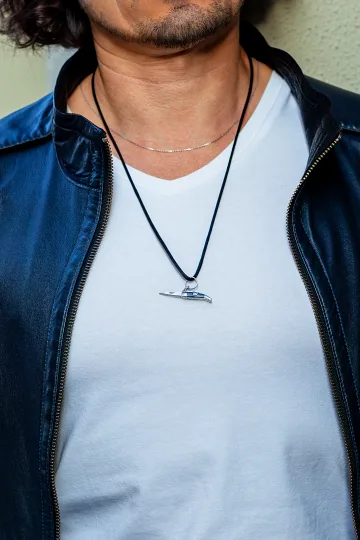




About Zevira
Zevira makes jewellery with a second layer: behind the form there is always a story, a tradition, or a meaning, not merely a pretty silhouette. The bola is an ideal example of that approach for us, because it is an object whose main strength lies not in shine but in a quiet ring that ties a mother to her unborn child. We work with real sterling 925 silver, drawing on roots in the artisan silversmith and metalwork heritage of Albacete in Spain, and we tune the sound so it comes out soft and clean, keeping the meaning of the pendant intact so an amulet stays an amulet rather than an empty trinket. Wear it with meaning, give it with understanding, pass it on together with its story.