Indian Jewelry: Kundan, Meenakari, Jhumka, and a Living Tradition
A bride in Rajasthan walks out to her guests carrying a weight that can reach several kilograms of gold. Forehead, nose, neck, upper arms, ankles: everything is adorned. This is not showing off. It is an insurance policy, family memory, and a social passport all at once. In Indian culture the gold on a woman's body belongs to her, and to no one else.
The Indian jewellery tradition is a universe of its own, one that grew over thousands of years with almost no reference to Europe. Here gold is not a metal but something close to a living being. Stones are not set with prongs; they are laid into gold without a single claw. Enamel goes on the back of a piece that no one will ever see, simply because that is the right way to do it. Here is the lay of the land: what this tradition is, where it came from, which techniques hold it up, which ornaments people wear, and why gold in India means something quite different from what it means elsewhere.
What the Indian Jewellery Tradition Is
Indian jewellery is not one style but a family of regional schools bound by a shared logic. The logic is simple: gold is sacred, the stone carries meaning, and the craft passes within a caste of artisans from one generation to the next. The European jeweller thought for centuries about the setting and the sparkle of the stone. The Indian craftsman thought about gold as the foundation, into which the stone sinks whole.
The Core Idea: Gold as the Body of the Piece
In most Indian techniques gold is not a frame that holds a stone but a solid mass into which the stone is embedded. The famous kundan technique has no metal prongs at all: the stone is held by the thinnest gold foil, pressed around it by hand. The result looks as if the jewel grew out of the gold by itself.
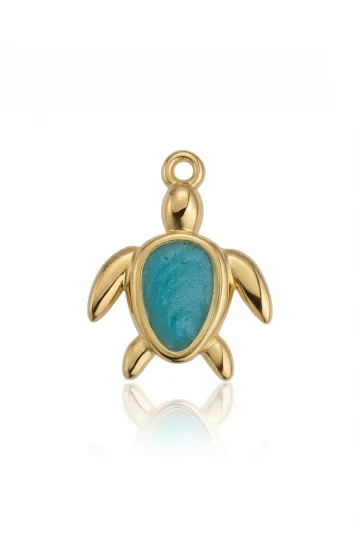
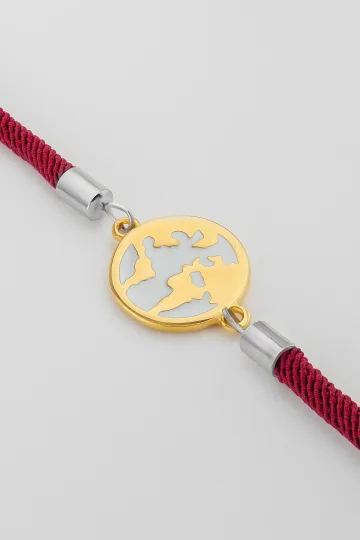
Wear the symbol, don't just read about it. These are in stock:



Not One Style but a Map of Regions
India is the size of a continent, and every major region has its own jewellery school. Rajasthan gave the world kundan and meenakari. The South (Tamil Nadu, Andhra Pradesh) is famous for temple gold and the heavy necklaces of goddesses. Bengal makes airy gold filigree. Maharashtra wears pearl ornaments of a particular shape. Kashmir and Himachal add the silver of mountain tribes. To say "Indian jewellery" is roughly like saying "European dish": technically accurate, but behind the words sit a dozen unrelated traditions.
Why People Wear It: Meaning Over Beauty
In Indian culture an ornament almost always carries a function beyond decoration. A nose ring is tied to married status and, in Ayurveda, to a woman's health. The bangles on a married woman's wrists are her social marker. A forehead ornament points toward the so-called third point between the brows, the centre of focus in Indian tradition. A gift of gold at a wedding is an investment in a daughter's future. Beauty comes bundled in, but function comes first.
History: Gold of the Gods and Courtly Splendor
The history of Indian jewellery stretches back about five thousand years, from the Indus Valley to the palaces of the maharajas. At every stretch the techniques changed, but the obsession with gold did not.
The Indus Valley: The First Masters
Already in the cities of the Harappan civilisation (roughly 2600 to 1900 BCE) there were jewellers who could drill carnelian beads with the finest drills, melt gold, and make necklaces from tiny gold tubes. The famous bronze "Dancing Girl" from Mohenjo-daro is shown with a stack of bangles up one arm. In other words, the habit of covering an arm with bracelets from wrist to shoulder is older on this land than the pyramids of Giza in their later form.
Temple Gold of the South
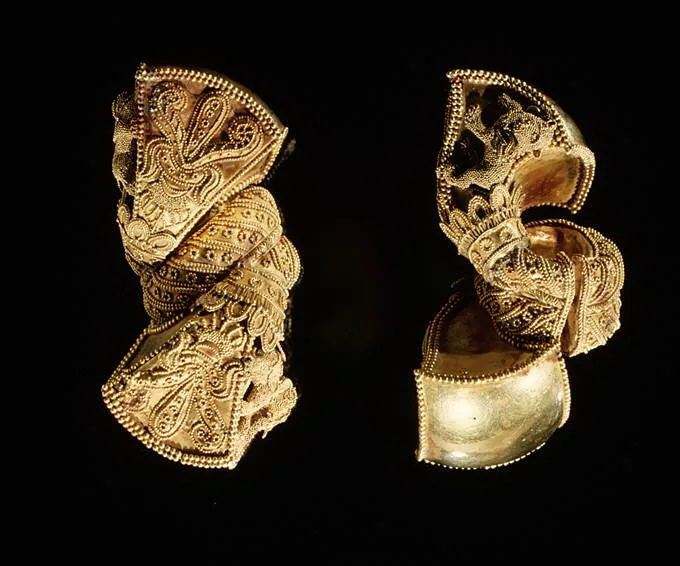
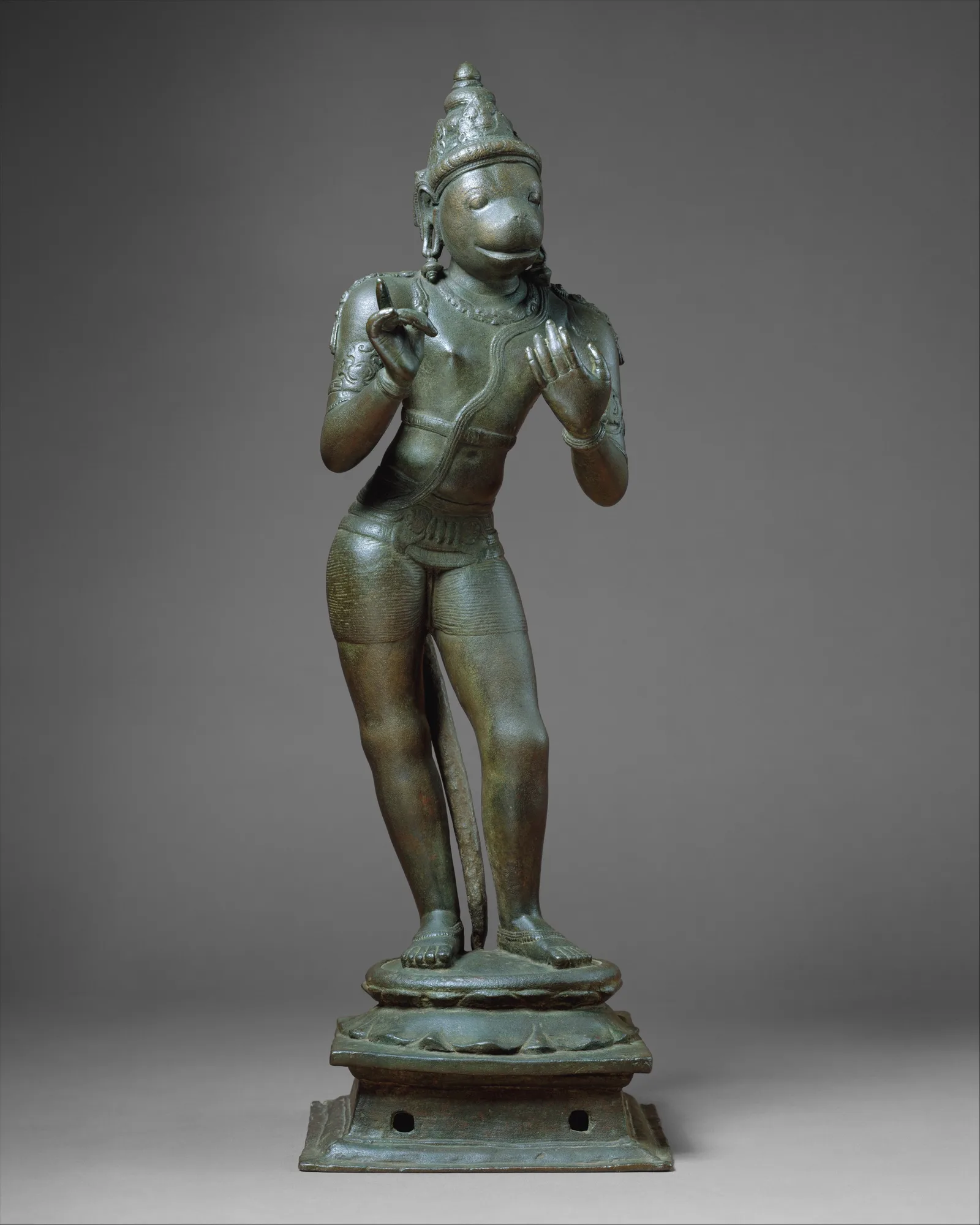
In South India a tradition of temple gold took shape. Originally these were ornaments used to clothe the statues of gods and temple dancers. Heavy gold necklaces with figures of Lakshmi, Vishnu, and Krishna; massive pendants with deities in relief. Over time the style passed to people too: temple gold is worn for classical dance, for southern weddings, for the most important family festivals. It is easy to recognise by its theme, since a deity usually sits at the centre of the piece.
The Mughals: Persia Meets India
The turning point came with the arrival of the Mughal dynasty in the sixteenth century. The Mughals brought Persian taste: symmetry, floral ornament, a love of coloured enamel and large stones. Indian skill met Persian aesthetics, and from that union came the most lavish court jewellery in the history of the subcontinent. At the court of Akbar and his heirs, jewellers were organised into dedicated workshops, and the craft was refined under the emperor's eye.
Kundan as a Court Technique
It was under the Mughals that the kundan technique (laying stones into pure gold without prongs) reached its peak and became a court art. The word "kundan" means refined gold, gold brought to the highest purity. Imperial pieces were made this way: stones in kundan on the front, colourful meenakari enamel on the back. The face shone with stones, the reverse bloomed with flowers, and both sides were equally meticulous. The double-sided pieces of that era are the summit of Indian court splendour.
Regional Schools After the Mughals
After the empire broke apart, masters scattered among the princely states, and each court developed its own line. Jaipur in Rajasthan became the capital of kundan and meenakari, and it holds that title to this day. Hyderabad grew famous for pearls and large emeralds. Bengal honed filigree. Every princely state wanted to outshine its neighbour, and the rivalry of the courts drove the craft forward through the whole of the eighteenth and nineteenth centuries.
The Age of the Maharajas
By the nineteenth and early twentieth centuries, Indian princes owned legendary treasuries. The courts commissioned sets weighing hundreds of grams of gold, strung with emeralds the size of a walnut, rows of natural pearls, and uncut diamonds. The Nizam of Hyderabad was considered one of the richest people in the world, and his collection of emeralds and pearls passed into legend. The maharajas wore jewellery alongside their wives: turban brooches with a feather plume, multi-strand pearl necklaces, belts of gold. It was this era that fixed the image of Indian jewellery as something almost unimaginably opulent, and many classic shapes of bridal sets today directly echo the princely models.
Indian gold has no half measures: either the full parade from maang tika to anklet, or one jhumka on a bare neck. A half-worn set is cowardice, and I won't hear otherwise.
How to Wear Indian Jewellery
I have styled Indian gold for weddings and shoots for years now. Here is what actually works, from the full ceremonial set to a single jhumka on an ordinary day.
What do I pair jhumkas with day to day? For everyday I recommend one pair of medium jhumkas with a plain dress or a simple shirt. The warm yellow gold reads best on open ears, so I suggest pinning the hair up or sweeping it to one side. I keep busy prints away from jhumkas: the pattern pulls focus and the earring gets lost.
How do I build the full festive set? For a wedding or Diwali I build from the top down: maang tika on the forehead, large jhumkas, a necklace at the throat, rows of bangles. I keep everything on one colour line and choose the stones and enamel to match the outfit, not the other way round. If the outfit is already loud, I pick a calmer kundan set and let one accent lead.
Where does a maang tika belong? I recommend a maang tika only with the hair up and the forehead clear, otherwise the piece hides and the whole point is gone. Centre parting, the drop along the hairline. With loose hair I advise against it; reach for larger earrings instead.
What clothing suits meenakari? Bright meenakari I suggest against a plain outfit: on a smooth ground the enamel flares with colour. On a busy dress it goes dull, so I keep clutter away from it. A single pair of meenakari earrings with a simple dress gives that spot of colour without overload.
Which metal suits your skin tone? High-purity gold with a warm yellow tone I recommend for warm undertones and deeper skin, where the gold plays strongest. For cool undertones I suggest restraint: fine filigree or a single jhumka rather than a heavy set. The rule is simple: one strong piece always carries more than five at once.

Turn on your camera, pick earrings, a pendant or a ring, and see the piece on yourself in real time.
Switch items in one tap.
Everything runs in your browser: no photo or video is ever uploaded.
Regional Schools: One Country, Ten Traditions
To say "Indian jewellery" is to name a whole family of unalike schools. Each has its own metal, its own set of shapes, and its own character. Understanding this map helps you avoid confusing Rajasthani brilliance with southern temple gold, and lets you see a piece's homeland in the piece itself.
Rajasthan and Jaipur
The heart of kundan, polki, and meenakari. Jaipur has been the capital of coloured enamel since the eighteenth century, and its masters still set the standard. The Rajasthani style is dense, bright, and many-coloured, with double-sided pieces where the face shines with stones and the reverse blooms with enamel. The bridal sets of this region are the most recognisable in the whole world of Indian jewellery.
The South: Tamil Nadu, Andhra Pradesh, Kerala
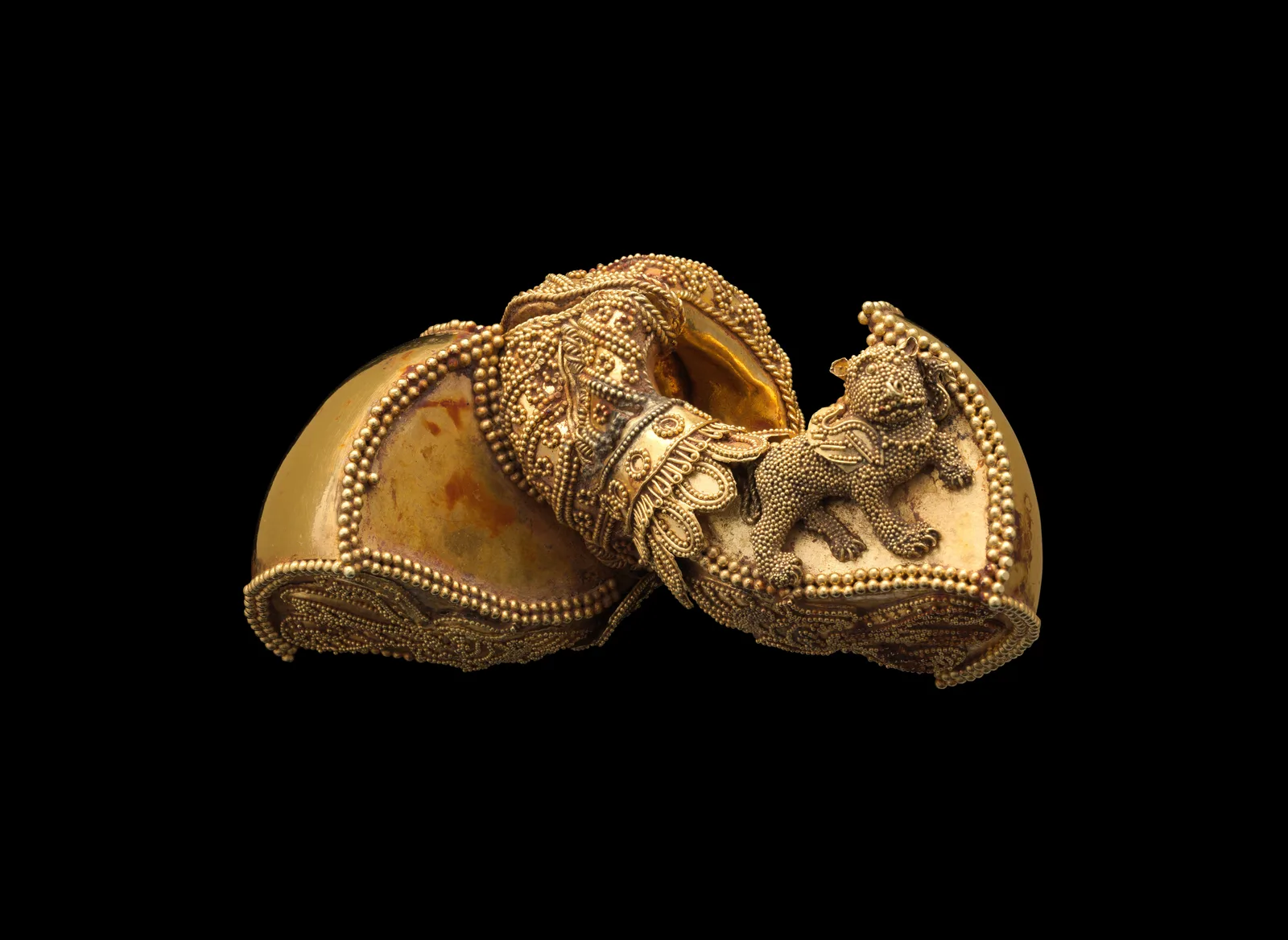
The realm of temple gold. Here the preference is for high purity, massive forms, and figures of gods at the centre of a piece. Necklaces with the goddess Lakshmi, long multi-strand haarams, heavy gold belts. The southern style is stricter in colour and warmer in gold: less enamel, more pure yellow metal and relief. This is the gold of classical dance and temple festivals.
Bengal and the East
The Bengali school loves air and the texture of gold for its own sake. The famous Bengali method is a pattern of tiny gold beads and fine wire that gives a light, lacy volume without stones. Bengali bridal bangles and necklaces are recognised by this characteristic granular surface and a restrained, almost graphic beauty.
Maharashtra and the West
The Maharashtrian style is recognised in an instant by its pearls of a particular shape, by its distinctive curved necklace, and by the crescent-shaped forehead brooch. The gold runs warm in colour, the pearls are uneven and natural, and the ornaments are emphatically traditional. This is an aesthetic that has barely changed over centuries and is worn as a badge of regional pride.
The North and the Mountains: Kashmir, Himachal, Gujarat
Here there is more silver and a rough tribal strength. Mountain and rural ornaments are massive, sometimes naive in shape, with large insets of turquoise, coral, and coloured glass. Gujarat and Rajasthan contribute bright mirror and glass elements. This is the other pole of the Indian tradition: not courtly brilliance but the earthy, ritual beauty of village and nomad.
Customer reviews
Zevira is a real jewellery shop. Genuine payments, deliveries and customer thank-yous.
🥰🥰🥰 gracias
Ok, ¡gracias! 🙂
Techniques: What Sets Indian Gold Apart From Any Other
Technique is the heart of the Indian tradition. Many of these methods have no exact European counterpart, so the terms are easier to explain than to translate.
Kundan: Stones Without Prongs
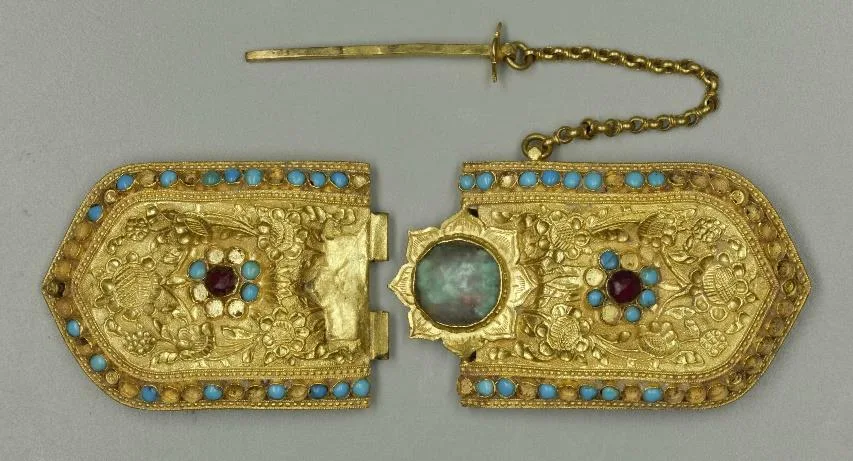
Kundan is the laying of stones into gold using the thinnest gold foil instead of metal claws. The master makes a gold base, places the stone, then presses strips of refined soft gold around it, layer by layer, until the stone sits fast. There are no prongs at all. The stone seems to float in a mirror of gold. Traditionally kundan uses flat-cut stones and glass, because what matters is not the play of facets but the even gold surface around the inset. This is slow handwork: a single large necklace can take a master weeks.
A kundan piece is usually worked not by one person but by a whole chain of narrow specialists. One master makes the gold base, a second engraves the pattern, a third lays the enamel on the back, a fourth presses the foil and seats the stones, a fifth assembles the piece on cord or chain. This division of labour within the jeweller's caste took shape over centuries, and each stage demands its own hand. That is exactly why genuine kundan stays costly: behind the outward simplicity of mirror-smooth gold stand a dozen hands and weeks of work.
Polki: Stones on Top, Enamel Beneath
Polki is a relative of kundan that developed in Rajasthan. Here uncut diamonds are used, the so-called polki diamonds, which keep their natural flat shape. The stone is set in kundan on the front, and the reverse of the piece is covered with meenakari enamel. The result is a double-sided jewel: turn it face up and diamonds shine, turn it over and a garden blooms. Polki bridal sets are still considered the summit of Rajasthani luxury.
Meenakari: Enamel That Blooms
Meenakari is the technique of colored enamel on metal. The master engraves recesses in the gold, fills them with mineral pigments, and fires the piece until the color fuses into glassy enamel. The colors are saturated: ruby red, emerald green, peacock blue, white. The Jaipur school of meenakari is famous the world over. The classic of the genre is a double-sided piece where the meenakari hides on the back like a secret gift: stones for the outside world, flowers for the owner. You can read more about the European relative of this technique in the guide to enamel jewelry care.
Thewa: Gold on Glass
Thewa is a rare technique from the small town of Pratapgarh in Rajasthan. An openwork gold pattern is fused to coloured glass, and the result is a glowing plate that resembles stained glass. The designs are usually narrative: hunting scenes, gods, peacocks, court processions. Thewa is made by only a few families of masters, and the secrets are passed only within the bloodline, so genuine thewa is rare and prized by collectors.
Filigree: Gold and Silver Thread
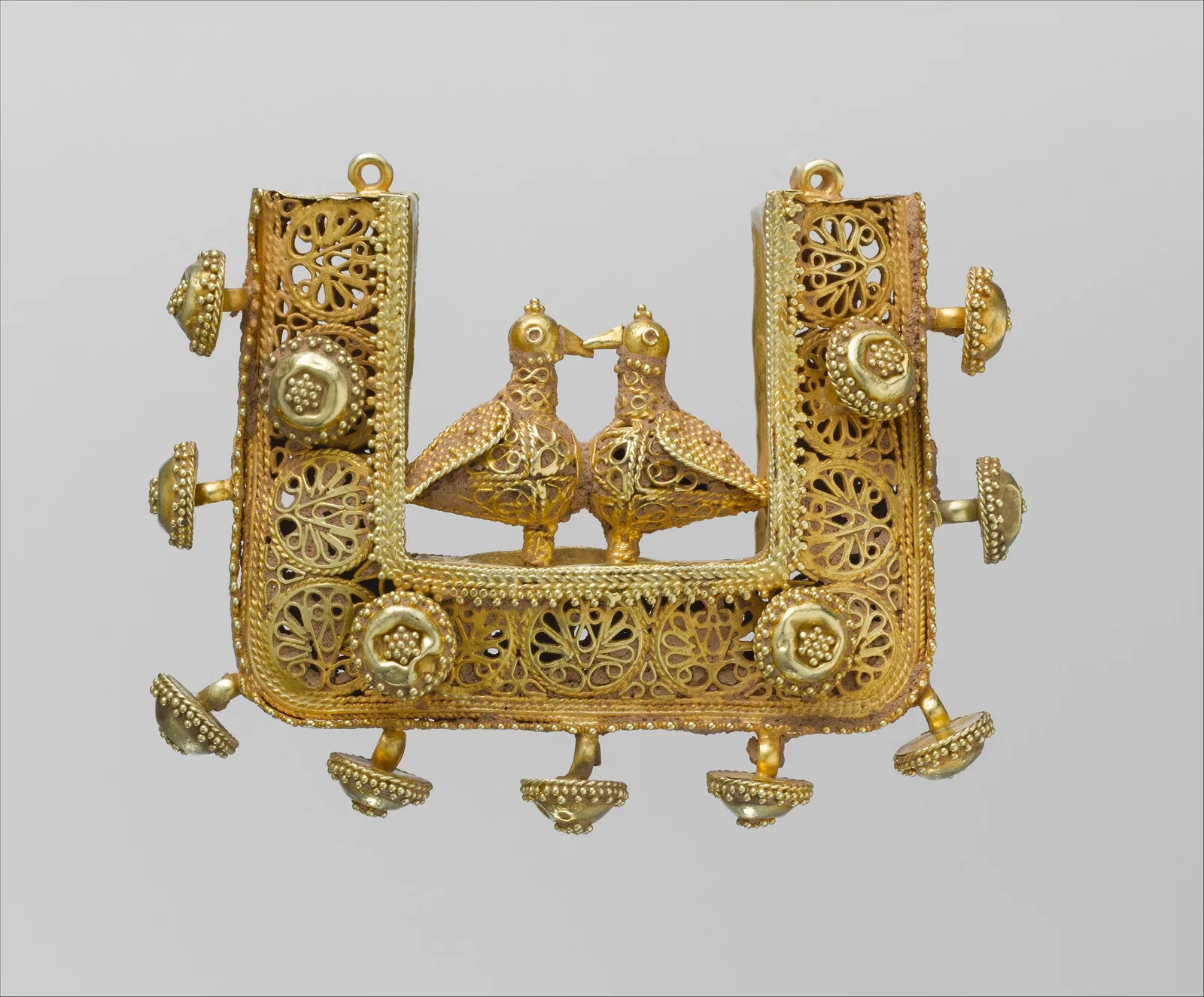
Filigree is weaving from the thinnest gold or silver wire. In the Indian tradition it goes by various local names, and the main centre of silver filigree is Cuttack in the state of Odisha. From wire as thin as a hair the master twists a lace that seems weightless. Airy filigree earrings and pendants weigh little yet look full of volume.
Repoussé and Chasing: Relief in Metal
Chasing is the creation of relief by striking the metal: recesses are punched from the front, volume is pushed out from the back. This is how temple ornaments with figures of gods are made, along with massive bracelets in relief and belts. South Indian temple gold rests largely on this very method: a deity is literally hammered out of a gold sheet and stands proud of the surface.
Upload a photo of your pet, someone you love, or an object. We'll build a 3D model and hand-cast it in pewter.



Types of Ornaments: From Crown to Ankle
An Indian set covers the body from top to bottom, and every element has its own name and its own zone. Let us go through the main ones.
Jhumka: The Bell Earring
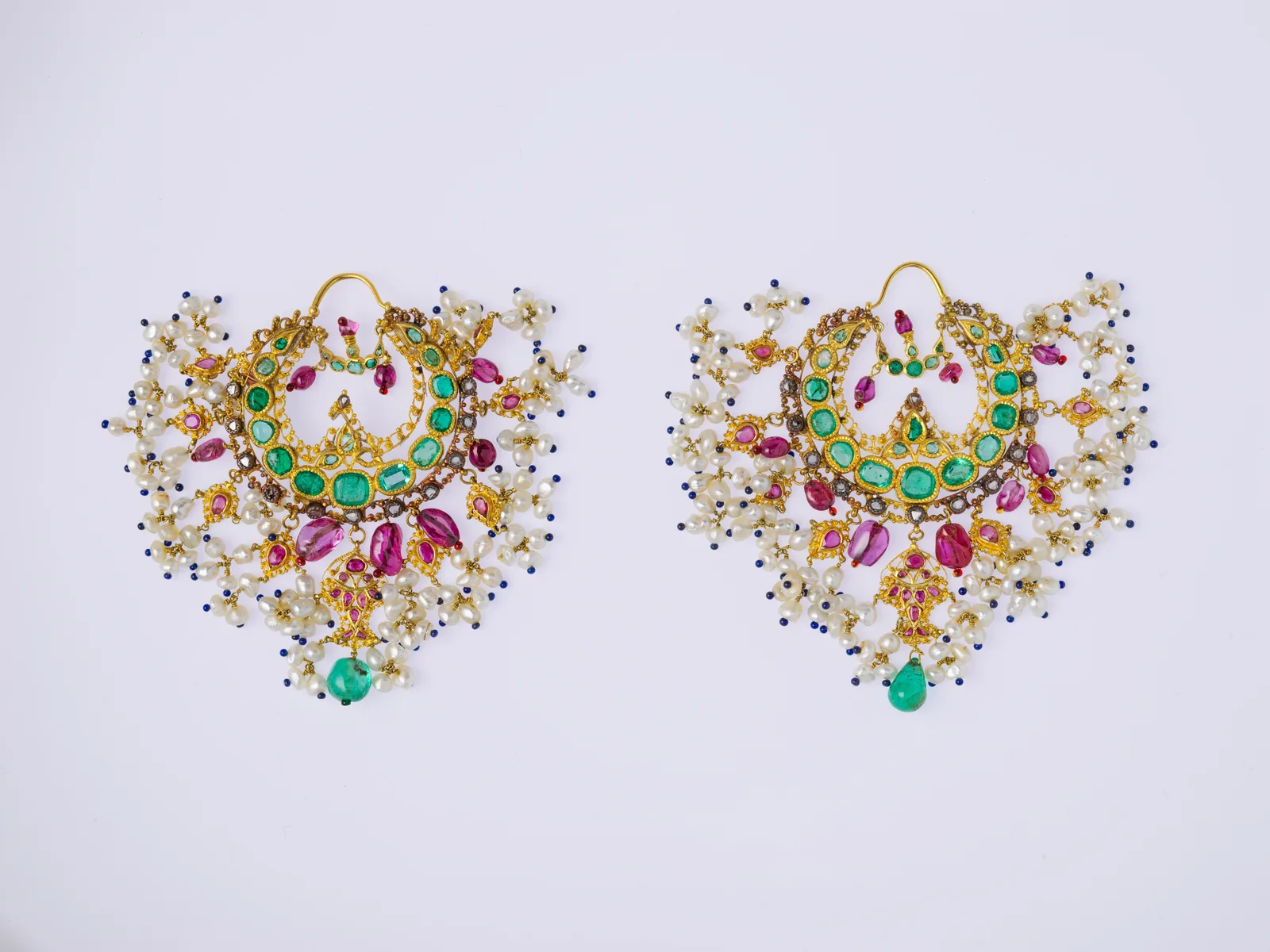
A jhumka is an earring shaped like a dome or bell, often with drops along its lower rim that chime with movement. It is the most recognisable form of Indian earring in the world. The dome is decorated with kundan, meenakari, pearls, and a fringe of beads. A jhumka can be tiny for everyday wear and huge, reaching the shoulder, for a wedding. As you walk the drops sway softly and chime quietly, and that chime is part of the look.
The jhumka comes in many forms. There is the classic single dome, the tiered jhumka with several shrinking domes, and the jhumka with a support chain that runs from the lobe up into the hair and takes the weight off the ear. Heavy bridal jhumkas are often made with exactly such a support, so the earring does not drag at the lobe. The dome reads symbolically as a temple dome or an open lotus bud, so the shape is not accidental: it is a little piece of architecture beside the face. A jhumka sits equally well in a full bridal set, on its own with a simple outfit, and that is the secret of its worldwide popularity.
Tika and Maang Tika: The Forehead Ornament
A maang tika is a pendant fastened at the hair part that descends onto the forehead, with the central drop resting between the brows. A chain runs along the part and hooks into the hair. The ornament points toward the spot between the brows, to which Indian tradition gives special meaning as a centre of focus. The maang tika is an obligatory element of a bride's look in almost every region.
Nath: The Nose Ring
The nath is a ring or pendant in the nose, one of the most characteristic Indian accessories. In the South and in Maharashtra people wear large rings, sometimes with a chain to the ear or the hair; in Rajasthan, massive rings with pearls and stones. A nose piercing in Indian tradition is tied to married status, and in Ayurveda to a woman's health. A neighboring article has a detailed look at modern nose and septum jewelry, but the Indian nath is a separate, centuries-old story.
Gulband: The Choker
The gulband is a tight choker necklace that sits snugly at the base of the neck. It is often made in kundan or meenakari, on a velvet or gold base. The gulband is worn together with a long necklace: short at the throat, long over the chest, and so a characteristic layered neck arrangement is formed.
Haar and Long Necklaces
The haar is a long chest necklace, especially typical of South India and temple gold. It can descend to the waist, consist of several rows, and carry a figure of a deity or a large medallion at the centre. A southern bridal look is unthinkable without a heavy gold haar over a silk sari.
Bajuband: The Upper-Arm Ornament
The bajuband is an ornament for the upper arm, worn above the elbow. It is an ancient form, visible already on old statues and frescoes. The bajuband can be a rigid band or a flexible ribbon of gold with stones. It emphasises the line of the arm and, in a bridal set, complements the bangles at the wrists.
Chudi and Kangan: Bangles
The wrists of a married Indian woman are almost never bare. Chudis are thin bangles worn in bunches, many at once, so they chime. The kangan is a heavier, rigid bangle with stones. Coloured glass chudis are an obligatory part of many wedding and festive rites: they are given as gifts, put on in full sets, and the chime of bangles is considered a good sign in a home.
Payal: The Anklet
The payal is a chain anklet, usually silver, often with tiny bell drops that chime softly as you walk. Unlike the gold on the upper body, ankle ornaments are traditionally made of silver. By custom gold is not worn below the waist, so the ankles and toes go to silver. The finer points of wearing a chain on the ankle are covered in a separate guide to the anklet.
Bichhiya: Toe Rings
Bichhiya are toe rings that a married woman puts on, usually on the second toe of both feet. They are made of silver, by the same logic as the payal. The bichhiya is a sign of married status and, by belief and Ayurveda, a point that acts on a woman's health.
Symbols and Stones: The Language of Indian Jewels
In an Indian ornament almost nothing is accidental. The form, the motif, the set of stones all carry meaning rooted in mythology and astrology.
Navratna: Nine Stones of Fortune
Navratna is a composition of nine stones, each tied to one of the nine celestial bodies of Indian astrology. At the center sits a ruby (the Sun), and around it in a circle a diamond, pearl, coral, emerald, yellow sapphire, blue sapphire, hessonite, and cat's eye. It is held that gathered together the nine stones bring balance and good fortune, so navratna is a classic amulet and a popular gift. The order of the stones is not arbitrary: each celestial body has its place, and a traditional navratna is laid out strictly by this scheme, so the energies of the bodies are balanced. Anyone can wear navratna, with no tie to a birth date, and in this it differs from the European birthstone. The idea is simple: instead of one patron you have all nine at once, and no celestial body is left unattended. The logic of matching stones to celestial bodies echoes the European tradition of birthstones by month, though the system is different.
The Peacock: Bird of the Gods
The peacock is one of the most beloved motifs in Indian jewelry. It is the mount of the war god Kartikeya and a companion of Saraswati, the goddess of wisdom; a symbol of beauty, immortality, and the rainy season. The peacock appears everywhere in jewelry: in jhumkas, in meenakari, in thewa. The blue-green enamel of a peacock's tail is a favorite subject of Jaipur masters. There is a separate piece on the symbolism of this bird across cultures, the peacock in jewelry.
The Lotus: Purity Above the Water
The lotus grows out of muddy water and opens flawlessly clean, so in Indian tradition it is a symbol of spiritual purity and birth. The gods Lakshmi and Brahma sit upon a lotus. The shape of an open lotus repeats in the domes of jhumkas, in the rosettes of necklaces, in chased pendants. The journey of this symbol from Egypt to Asia is written up in the guide to the lotus.
The Elephant: Strength and Majesty
The elephant is a symbol of strength, wisdom, rain, and royal power. The god Ganesha with the head of an elephant removes obstacles and brings luck to new beginnings, so his image is a frequent motif. The elephant appears in temple gold, in bridal pendants, in bracelets. There is a separate look at this motif, the elephant in jewelry.
Gods as a Motif
Figures of gods are the central theme of temple gold. Lakshmi, goddess of abundance, most often looks out from gold coin pendants and necklaces. Krishna, Vishnu, Durga, Ganesha are all living motifs, not abstract ornament. A pendant with a god is at once an ornament and an object of veneration. The full picture of the Hindu pantheon and its reflection in jewelry is laid out in the guide to Hindu gods.



Gold in Indian Culture: More Than a Metal
To understand Indian jewellery, you have to understand the relationship with gold. It resembles nothing else.
Gold as a Woman's Capital
In Indian tradition the gold given to a woman belongs to her, legally and by custom. It is her personal property, her insurance against divorce, widowhood, or hardship. So gold ornaments are a financial cushion that can be worn on the body and turned back into money at any moment. A woman hung with gold is a woman with capital, and everyone understands that.
This logic also explains the pull toward high purity. The purer the gold in a piece, the closer it is to a bar and the more reliable it is as savings, so Indian bridal gold is traditionally far higher in purity than European jewellery. A piece here works at once as adornment, as a protective sign, and as a bank that is always with you. In a country where access to formal finance was long limited for many families, the gold on a wife's body remained the most understandable and liquid form of savings. The habit lives on today: in a hard year a family may pawn or sell part of its jewellery, and in a good year buy more, so the gold breathes along with the household's fortunes.
Dowry and Wedding
The wedding is the main event of gold's circulation in India. The bride's family gives the daughter gold that leaves with her for the new home and stays her property. The volume of this gold is at once the parents' love, a social signal, and the daughter's practical insurance. A bridal set may be assembled over years, one piece at a time, so that by the wedding a full set comes together from crown to ankle.
Diwali and Dhanteras
Diwali, the festival of lights, is the prime moment for buying gold. In the run-up to Diwali comes Dhanteras, the day on which buying metal, gold and silver above all, is held to be a summons to Lakshmi, the goddess of abundance, to enter the home. On this day jewellery shops work at full stretch: to buy even a coin or a thin bangle on Dhanteras is almost a duty.
Akshaya Tritiya: The Day That Never Wanes
Akshaya Tritiya is another auspicious day, whose name translates roughly as "the third day that does not diminish." It is held that everything begun and bought on this day will grow and not run dry, so it is the second most important day of the year for buying gold. Weddings, new ventures, the purchase of jewels: all are timed to Akshaya Tritiya where possible.
Gold of the Gods
Gold is linked to the divine directly. Statues in temples are clothed in it, it is offered to the gods, and the gold ornaments of the goddess Lakshmi are a symbol of abundance itself. So in the Indian mind the gold on a body is not boasting but a touch of the auspicious and the sacred.
Leave your email, we'll send your discount code. No spam, unsubscribe anytime.
The code arrives by email, valid on your first order.
Materials: What Indian Jewellery Is Made From
The palette of materials in the Indian tradition is wide, from the purest gold of the maharajas to the silver of mountain villages.
High-Purity Gold
India has historically leaned toward very high gold purity, far above the European jewelry norm. Bridal and investment gold often runs close to pure. Such gold is soft and warm in color, a deep saturated yellow, and it is exactly this deep yellow tone that reads as "real" gold. There is a detailed guide to the shades and purities of gold in the piece on the colors of gold.
Silver
Silver is the metal of the lower body (payal, bichhiya) and the metal of mountain and rural traditions. Tribal ornaments of northern and central India are often wholly silver, massive, with a rough beauty. Cuttack filigree is silver too. You can read about this everyday noble metal and its purity in the guide to 925 sterling silver.
Stones and Glass of Kundan
In the kundan technique flat-cut stones, uncut polki diamonds, and coloured glass all live together. Glass here is not a fake but a legitimate material: in kundan what matters is the even gold surface around the inset, not the play of facets, so a glass inset in gold is a normal historical practice, not a deception.
Pearls
Pearls are the favourite material of the Hyderabad school and the constant companion of kundan and polki. Strands of pearls hang from jhumkas, frame necklaces, dangle as a fringe along the edges of pieces. The soft lustre of pearls balances the brightness of stones and enamel.
Meenakari Enamel
Enamel is a material in its own right, not a surface finish. A glassy coloured mass fused to gold gives a deep saturated colour that does not fade for centuries. It is enamel that turns the back of a piece into a work of art of its own.
Coloured Glass of Bangles
Glass chudi bangles are an industry of their own. The city of Firozabad in the state of Uttar Pradesh is the glass capital of India: there millions of coloured bangles are drawn, bent, and painted by hand. Cheap, ringing, and bright, they are part of the festive and bridal routine.
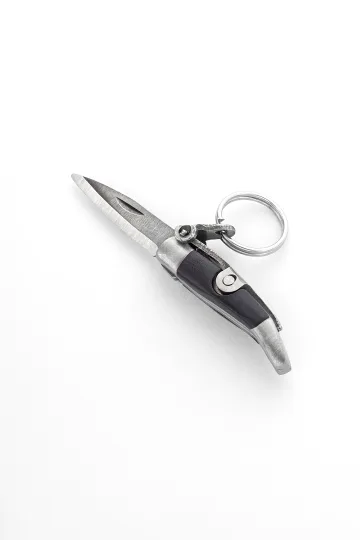
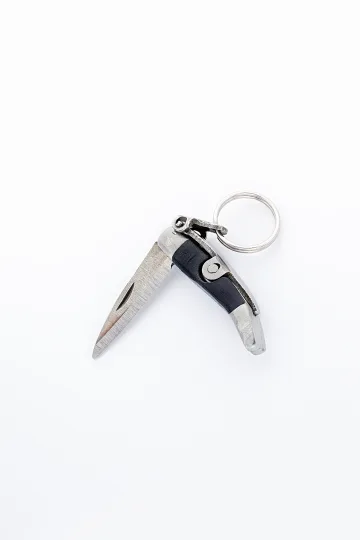
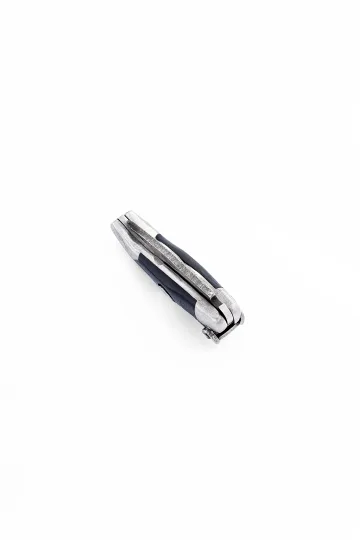
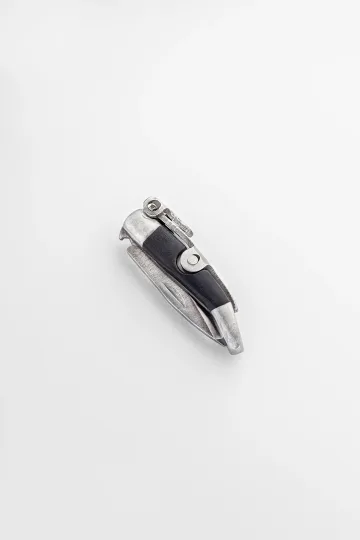
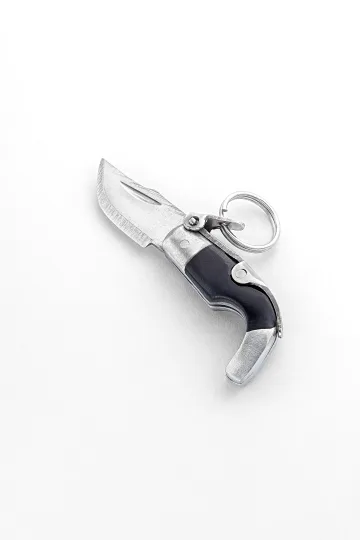
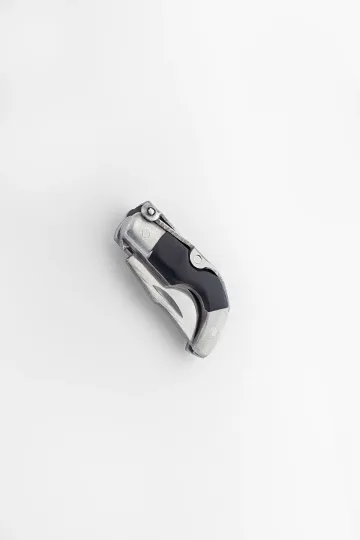
CAPAORA mini knife pendant
The 18th-century Spanish navaja in miniature: 40 mm of stainless steel, a real folding mechanism and a Palanquilla lock that clicks. An affordable gift to remember.
Authentic · Ships from Spain · 14-day returns
Jewellery in Indian Rites and Festivals
A jewel in India is rarely just adornment. More often it is built into a rite, and without it the event is considered incomplete.
Wedding Rites
The wedding is the peak of jewellery's life. In many traditions the groom ties a special cord or chain on the bride as a sign of union, and she then wears that object for her whole married life. The bride's set of bangles in a number of regions carries ritual meaning: they are given, blessed, and put on at a special moment in the ceremony. The maang tika on the forehead, the nath in the nose, the rows of bangles on the arms are not ornaments for the occasion but part of a status that changes during the wedding itself. The set is assembled in advance, sometimes over years, so that by the wedding a full set comes together.
Marks of Married Status
Some of the ornaments in Indian tradition are a visible sign that a woman is married. A ring or pendant in the nose, rings on the toes, certain bangles, a chain on the neck given by the husband. By these details those around read marital status, and to take them off is a statement in itself. So Indian ornaments often carry social information, not only aesthetics.
Diwali and the Gold Season
Diwali and the Dhanteras tied to it open the main gold-buying season of the year. On these days, to acquire an ornament or at least a coin is held to be a summons to the goddess of abundance to enter the home. A festive Diwali outfit almost always comes with a bright set: jhumkas, meenakari, bangles to match. Gold at Diwali is joy, rite, and investment all at once.
Birth and Childhood
In India children are given jewellery early too. Thin gold or silver bangles, tiny earrings, protective pendants. This is at once a blessing, a protection, and the first thread to the family tradition of gold. A child grows up used to metal on the body as the norm, and that goes a long way to explain why adult Indians wear jewellery so naturally.
Indian Jewellery in Dance, Cinema, and Art
The image of a figure hung with gold long ago crossed beyond India and became recognised the world over through dance, the screen, and old art.
Classical Dance
In classical Indian dance a costume is unthinkable without a full jewellery set. A maang tika, long jhumkas, multi-strand necklaces, bajuband on the arms, rows of bangles, payal with bells on the ankles. The chime of ankle ornaments marks the rhythm, while the shine of gold reads from the stage. The dancer essentially wears temple gold, and many classic forms of ornament have survived precisely thanks to dance.
Cinema and Screen
Indian cinema has shown weddings and festivals in full jewellery splendour for a century, and the image of the bride under gold has become visual currency for the whole culture. Costume designers reproduce the historical sets of the maharajas, and viewers learn to recognise kundan, polki, and jhumkas right off the screen. Through cinema the Indian jewellery aesthetic has spread around the world and influenced fashion far beyond the subcontinent.
Old Painting and Miniature
Indian miniature and temple sculpture are a priceless archive of ornament. On frescoes and miniatures you can see how richly a person was adorned: bajuband on the shoulders, belts, multi-strand necklaces, earrings down to the shoulders. Old statues of gods and dancers are literally dressed in the gold of stone, and by them masters still check the classic forms. A jewel in Indian art is not a background but part of the very image of the divine and the royal.
Care for Kundan and Meenakari
Kundan and meenakari call for careful handling, because they are built more delicately than they look. A few simple rules extend their life for generations.
Where Kundan Is Vulnerable
In kundan the stones are held by soft gold foil, not rigid prongs, so knocks and strong pressure are dangerous: an inset can shift. Many pieces have a closed back with enamel or a lacquer base, under which water must not be allowed. Water that gets under a stone can push it out and ruin the base.
Rules of Storage and Wear
Kundan and meenakari must not be washed under running water and must not be soaked. Take them off before the shower, the pool, sleep, and sport. Put the piece on last, after perfume, cream, and hairspray, so that the chemistry of cosmetics does not reach the enamel and gold. Store each piece separately, in a soft pouch or its own compartment, so that stones and enamel do not scratch against one another.
How to Clean
Wipe kundan and meenakari only with a dry or barely damp soft cloth, with no liquids or abrasives. For enamel a light touch is enough; aggressive cleaning strips the shine. Leave serious cleaning and any repair to a master who understands the technique: an ordinary jeweler can damage the enamel or foil. General home methods for sturdy jewelry are gathered in the guide to cleaning gold and silver at home, but they are applied to kundan and meenakari with caution.
Send a friend a discount code, they save on their first order.
Facts That Surprise
Indian jewellery is full of details that sound unexpected even to those who have long loved ornaments.
Double-sided polki bridal sets are made so that the enamel on the back is worked no worse than the diamond-set face, even though almost no one will ever see it. The logic is simple: the master works for the divine and for conscience, not only for the viewer.
Gold in India is traditionally not worn below the waist. The ankles and toes are given to silver, because gold is considered too noble, almost sacred a metal for the lower body.
A glass inset in genuine old kundan is not a fake. In this technique glass is a legitimate historical material, since what matters is the gold surface around the stone, not the play of facets.
The bronze "Dancing Girl" from Mohenjo-daro, more than four thousand years old, is shown with a whole column of bangles up her left arm. The habit of covering an arm with bangles from wrist to shoulder is older on this land than most known civilisations.
The thewa technique, where a gold pattern is fused to glass, is known to only a few families in one town of Rajasthan. The secret is passed only within the bloodline, so genuine thewa is a great rarity.
On Dhanteras before Diwali, buying even a tiny scrap of gold or silver is held to be an invitation to the goddess of abundance to enter the home, and jewellery shops make a noticeable share of their yearly takings on this day.
The chime of bangles and ankle bells is part of the meaning of the ornament, not a side effect. The quiet chime of chudi and payal in movement is considered a good sign, a mark of life and well-being in the home.
The word "kundan" means neither a stone nor a pattern but the gold itself of the highest purity, brought to a state in which it can be pressed around an inset with bare hands.
Frequently Asked Questions
What is kundan in simple terms?
It is an Indian technique in which a stone is held not by a metal prong but by the thinnest strip of pure soft gold, pressed around the inset. The stone seems sunk into a mirror of gold. The word "kundan" itself means this refined gold.
How does kundan differ from polki?
Kundan is the very method of laying stones into gold foil. Polki is a variety that uses uncut flat diamonds and covers the back of the piece with meenakari enamel. Any polki is made by the kundan technique, but not every kundan is polki.
What is meenakari?
Meenakari is coloured enamel on metal. Mineral pigments are poured into recesses in the gold and fired until they turn into glassy enamel of saturated colour. Often meenakari is hidden on the back of a piece whose front is taken up by stones.
Why do jhumkas chime?
A classic jhumka has small beads or droplets hung along the lower rim of the dome. As the head moves they sway and chime softly. This gentle chime is considered part of the look, not a flaw.
Can you wear Indian jewellery if you are not from India?
Yes. This is a living decorative tradition, open to the world, not a closed ritual sign. The only thing worth doing is respecting the meaning: understanding, for example, that the nath and bichhiya are tied to married status, and that a pendant with a god carries religious meaning. Anyone can wear jhumkas, meenakari, or navratna.
Is the gold in bridal sets real?
Bridal and investment Indian gold is usually of very high purity, noticeably above the European jewellery norm, hence its warm saturated yellow colour. At the same time glass and uncut stones legitimately sit beside gold in kundan, and that does not make a piece a fake.
How do you care for kundan and meenakari?
Do not wet them, do not soak them, take them off before the shower and sleep, put them on after cosmetics and perfume. Clean only with a dry or barely damp soft cloth, with no abrasives. Leave any repair to a master familiar with this very technique.
What is navratna?
It is a set of nine stones, one for each of the nine celestial bodies of Indian astrology: ruby, diamond, pearl, coral, emerald, two sapphires, hessonite, and cat's eye. Gathered together, they are considered an amulet that gives balance and good fortune.
Conclusion
The Indian jewellery tradition rests on a simple idea that is unfamiliar to Europe: gold is an almost living, sacred matter into which a stone is sunk whole, and meaning matters more than shine. Kundan lays stones into a mirror of gold without a single prong, meenakari hides a blooming garden on the back, jhumkas chime at every step, and the nath and payal speak of the owner's status and health. Behind every element stand thousands of years, a dozen regional schools, and a caste of masters who pass the craft from family to family. To understand these ornaments is to understand that in Indian culture a jewel is memory, capital, and a link to the gods in one object.
Silver, gold, symbolism, protective stones, earrings and pendants with character.
Buying it as a gift? Each one arrives ready to give.
 A branded Zevira box and a little card come with every order.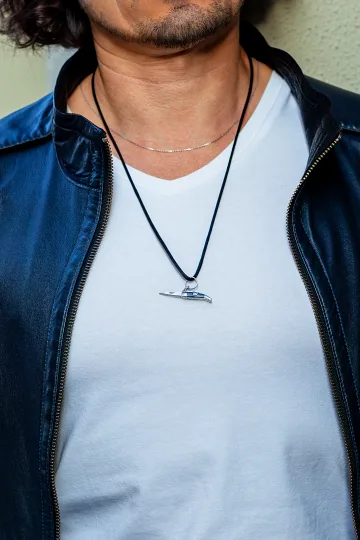








About Zevira
Zevira gathers jewellery that has a story and a meaning: symbols, amulets, stones, and forms with a culture behind them, not shine alone. We love traditions like the Indian one for exactly this: when a thing both adorns and says who you are and what you believe. The catalogue holds earrings, pendants, and rings with symbolism that echoes the themes of this article.