Anklets: the history, meaning and styling of the ankle bracelet
In India, women have worn bracelets on their feet for more than five thousand years, and the chime of the tiny bells served as a social signal: the sound told a household that the young wife was crossing the courtyard, so no one would run into her unexpectedly. That same chime is now sold as a beach trinket for the price of a coffee. A single thin chain on the ankle carries both temple sculpture and barefoot summer behind it.
The anklet, also called the ankle bracelet or ankle chain, has lived a strange life. First a mark of the married woman and a sign of wealth, then a detail of barefoot, easy-going style, then the subject of silly urban legends about what it means to wear one on your left foot. The truth about it is far more interesting than any of the rumours.
This piece is about where the ankle bracelet came from, what it actually meant across different cultures, which foot to wear it on, how to size it to your own ankle, what types exist and what they are made of so the piece survives water, sand and shoes.
What an anklet is and what it is called
A bracelet that lives on the ankle
An anklet is a piece worn not on the wrist but on the leg, just above the ankle bone. In shape it is the same chain, cord or rigid bangle as an ordinary bracelet, only longer and built for a larger circumference. It sits looser than a wrist bracelet: the ankle moves with every step, so the piece needs to glide a little rather than dig in. That is the key difference from a wrist bracelet, and it shapes everything else, from length to the choice of clasp.
Where the word comes from
The English word anklet comes from ankle plus a small diminutive ending, so it simply means "little thing for the ankle." Across the world the piece carries its own names. In India it is the payal or paayal, and the heavy temple version with dangling charms is called the nupur. Among Bengalis it is the nupur too; in the Arab world it is the khalkhal. The sheer variety of names tells you the object was not invented in one place but appeared independently in several ancient cultures.
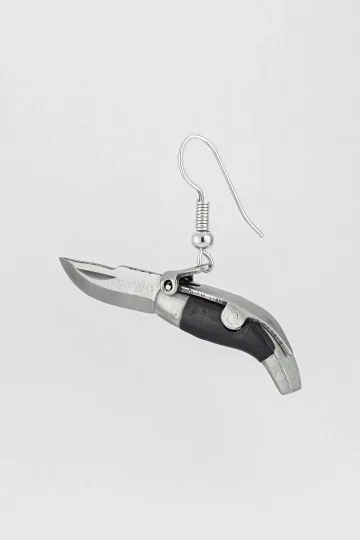
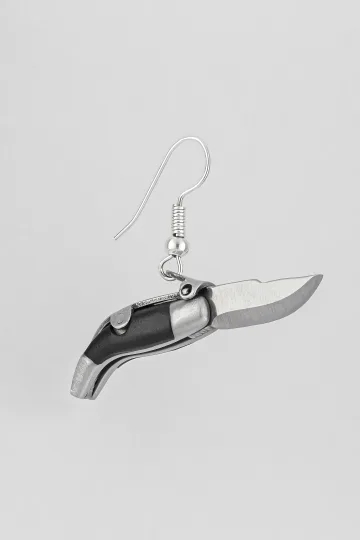
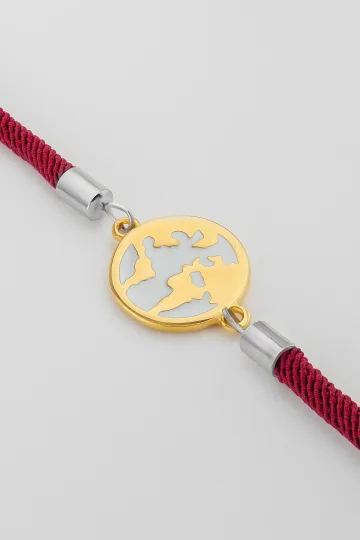
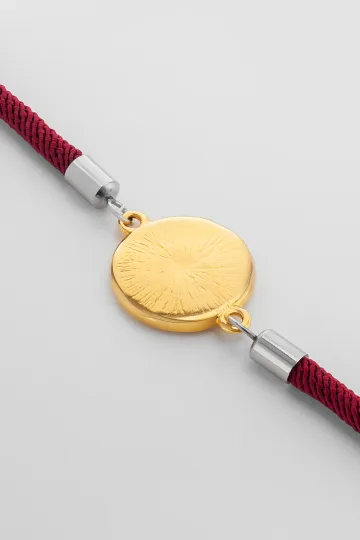
Wear the symbol, don't just read about it. These are in stock:





How it differs from a wrist bracelet
It is not only about size. A wrist bracelet is constantly on show, rubbing against the desk, a sleeve, a keyboard, so it is built sturdier and with a tidier clasp. An ankle bracelet works differently: you see it in flashes, while walking, at the beach, in open shoes, and it catches the eye through movement and shine rather than through stillness. That is why anklets more often feature charms that swing, little bells that ring, and a looser fit. This is jewellery of the gesture, not the pose.
The history of the ankle bracelet
Ancient Egypt: gold on the ankle as a mark of status
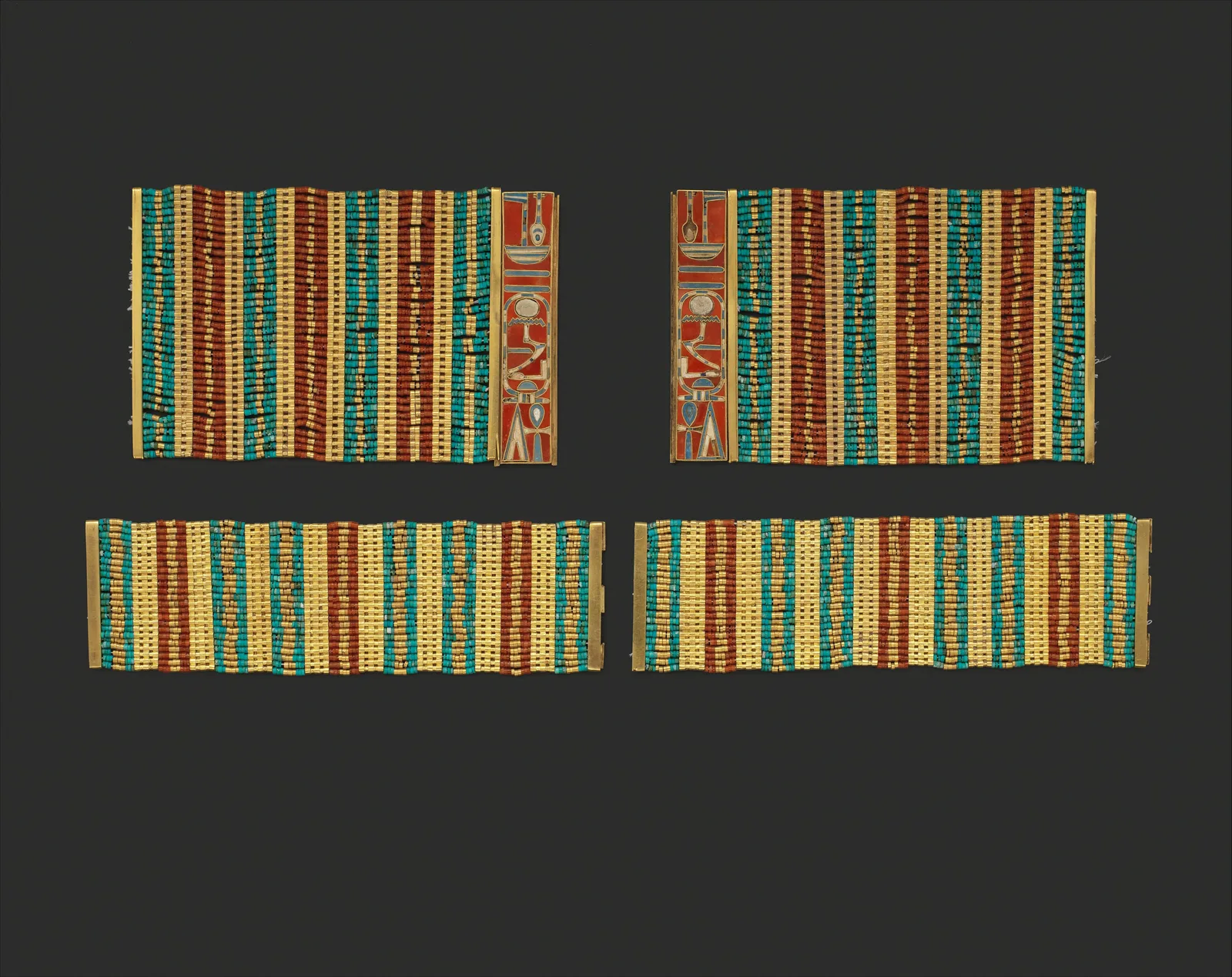
In ancient Egypt, ankle bracelets were worn by women and quite often by men, long before they came to be seen as a women's ornament. Wall paintings and tomb finds show both dancers and high-born ladies with adorned ankles. The material spoke directly of status: gold anklets for the elite, faience and beadwork for those of more modest means. Sometimes small charms were attached that chimed in time with movement, and that sound was part of temple dances. For an Egyptian, an ornament on the foot was as natural as a necklace on the throat.
Ancient India: the payal and the language of the married woman
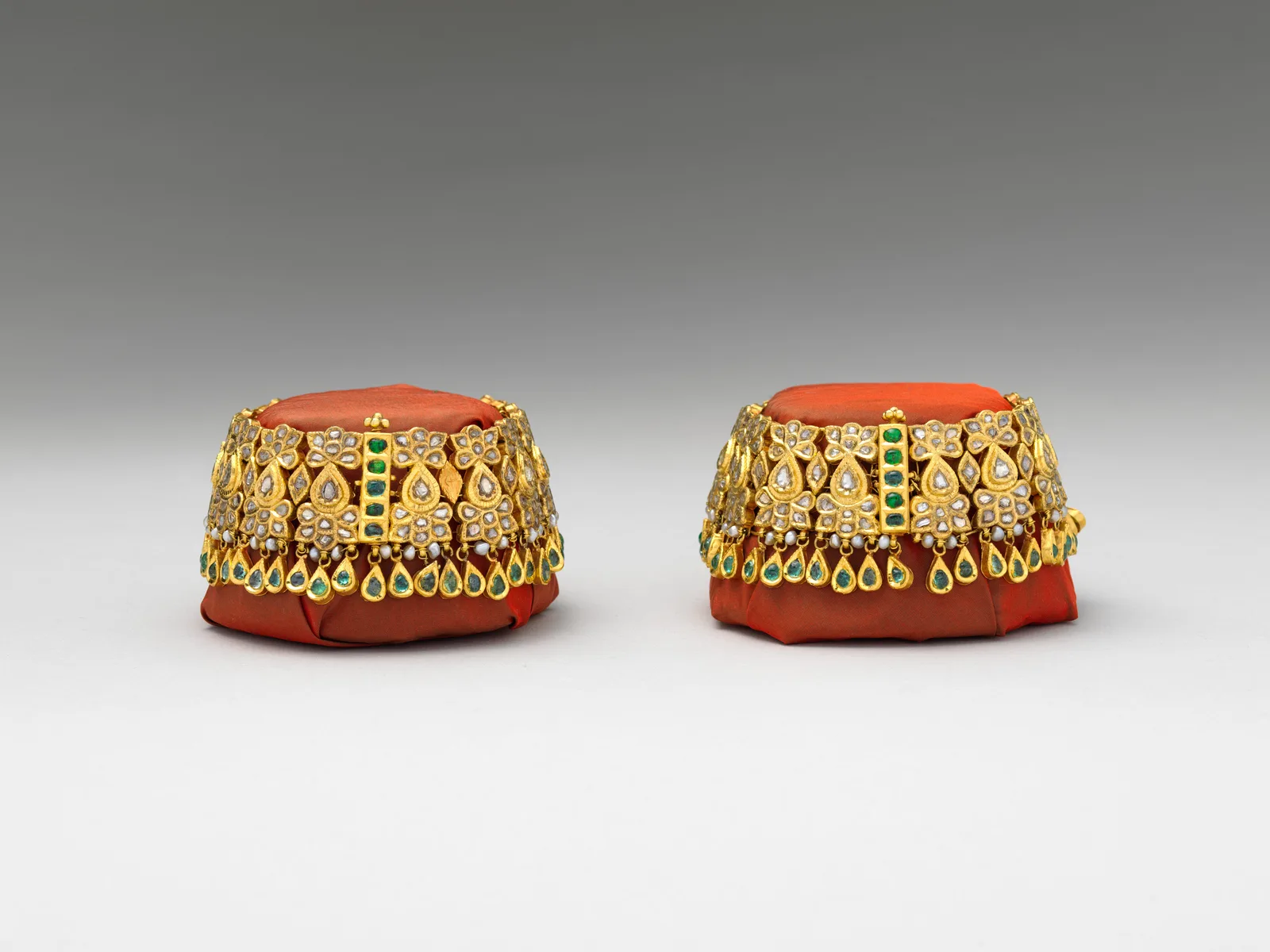
In India the ankle bracelet, the payal, took on a role it found nowhere else in the world. People have worn it at least since the age of the ancient kingdoms, and it became part of married dress alongside the red dot on the forehead and the bangles on the wrists. The silver payal, set with rows of tiny bells called ghungroo, rang with every step, and that ringing did several jobs at once. It was thought to ward off ill fortune, it announced the lady's arrival in a room, and it was part of temple and classical dance, where the rhythm is struck with the feet. To this day, in many Indian families the ankle bracelet is given to the bride, and silver is essential here, for reasons I'll come to.
Why the Indian payal is made of silver, not gold
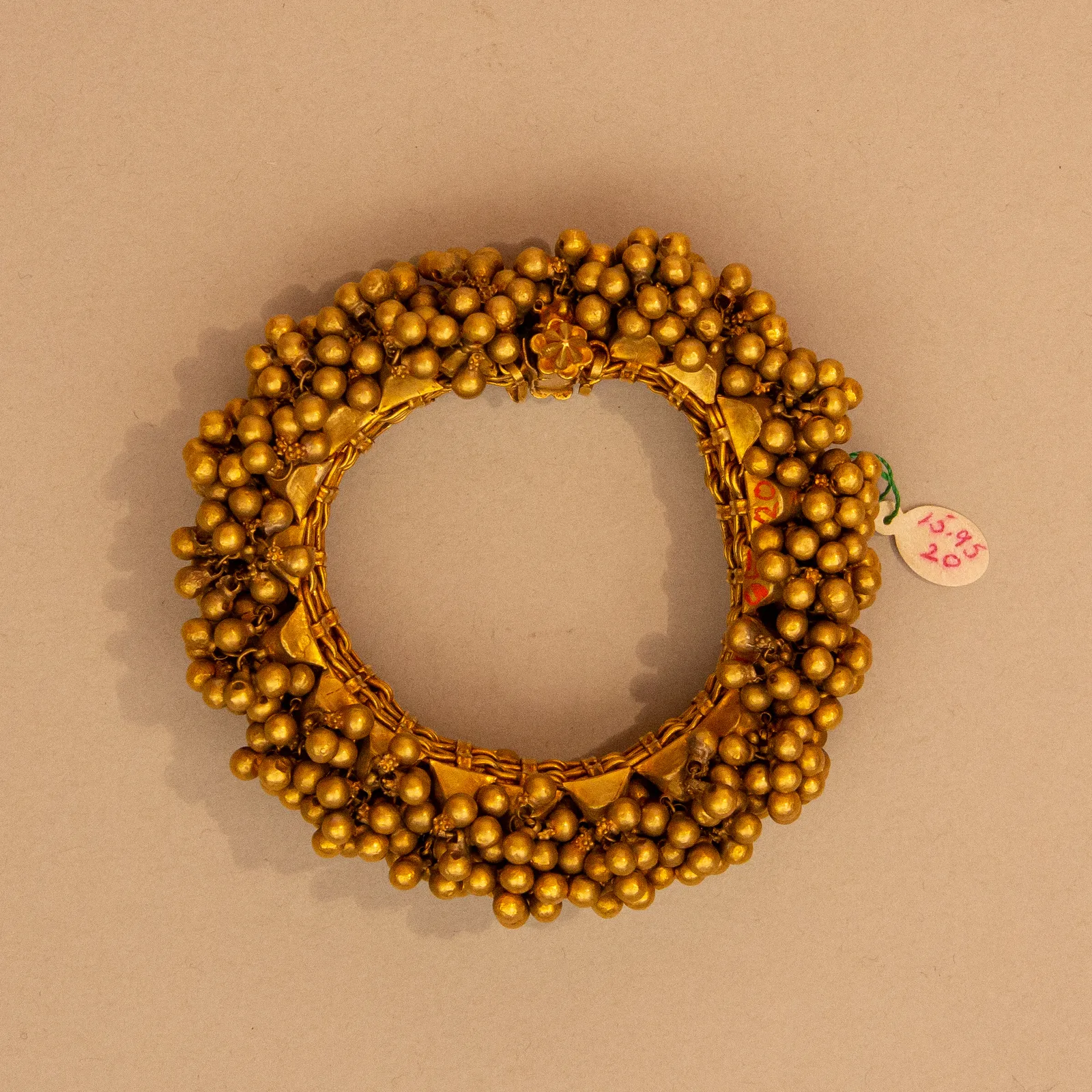
Indian tradition holds a firm rule: gold is worn above the waist, silver below it. The reason is not aesthetic but hierarchical. Gold was tied to the sun and the divine, and its place was nearer the head, on the neck, in the ears, on the chest. The feet, by contrast, were regarded as the least pure part of the body in Indian culture, and to adorn them with gold meant showing disrespect to the metal of the gods. So even in very wealthy families the payal was made of silver, sometimes massive and heavy with intricate chasing, but silver all the same. That logic is alive today, and it explains why a silver ankle bracelet reads as the most authentic.
What the chime of the bells meant
The sound of an ankle bracelet in an Indian home was a code everyone understood. It told them the young wife or daughter-in-law was approaching, and the elders of the family had time to observe etiquette and avoid meeting her face to face where that would be improper. The volume and richness of the chime hinted, indirectly, at the wealth of the husband's family. In temple and court dance, the ghungroo turned the dancer's very gait into a musical instrument. So an ornament on the foot was at once an object, a protective charm and a means of speaking without words.
The Middle East: the khalkhal and its double reputation
In the Arab world and North Africa the ankle bracelet, the khalkhal, was part of women's dress for centuries, especially among the Bedouin and in village communities. Silver khalkhal hung with charms and coins were both ornament and, quite literally, the family's wearable wealth, savings the woman carried on her own body. Yet in stricter urban settings the attitude shifted: a ringing bracelet that drew attention to a woman's movement could be seen as provocative. That duality, an ornament of honour and at the same time a cause for gossip, has trailed the ankle bracelet since deep antiquity.
Antiquity and the Mediterranean
In the Greco-Roman world ankle bracelets also appeared, though less often than on the wrists and neck. They turn up among jewellery finds and on small statues of dancers. Among the Romans the attitude was mixed: plain anklets could be worn by free-born women, but ringing, deliberately conspicuous ornaments on the feet were linked with certain professions, and that association later fed European prejudice. So the very same object was read differently in different layers of society, which is true of jewellery in general.
Western fashion in the twentieth century: from the exotic to the beach
In Europe and America the ankle bracelet long remained an exotic thing brought back from the colonies and the East. The turning point came in the twentieth century. First it was taken up during a vogue for all things Eastern, then it became a detail of beach and resort culture, a symbol of relaxed summer and bare feet on the sand. By the end of the century a thin gold or silver chain on the ankle had settled firmly as a light, unserious ornament in the best sense, the kind you put on with a sundress, shorts and sandals. So in a few decades the object travelled from a sign of marriage to a holiday staple.
How the meaning shifted across the millennia
Set the whole history out in a single line and you can see how the meaning of the ankle bracelet flowed from one role into another. First a mark of status and a material that signalled wealth. Then part of the wedding and married wardrobe, with its own language of sound. Then wearable wealth and an object of double reputation. And finally a light fashion ornament with no obligatory meaning at all. Today you can read any of those layers into it, or none, wearing it simply because it looks good.
An anklet belongs on a bare, sun-warmed ankle. Never smuggle it under a boot.
How and where to wear an anklet
Over the years on set the anklet has been through beach shoots, evening exits and plain city days with me. Here is what actually works on the ankle, occasion by occasion.
What do I wear an anklet with day to day in summer? With a sundress, shorts and sandals I recommend a thin steel or silver chain with no fuss on it. On a bare foot even the finest line reads clearly, and steel shrugs off salt and sand. A light hem lifts the metal, a dark one turns the anklet into the accent. One anklet on a clean foot always beats a stack of three.
Can you even see it under trousers and closed shoes? Barely, and that is the whole point. Under straight trousers you feel the thin chain more than you show it, and that is a quiet private pleasure. With cropped trousers and loafers on bare feet I suggest exactly the thin model: it peeks out as you step and lands an unexpected accent. A massive ringing piece under a boot I would not touch, it looks off.
How do I style an anklet with a dress? Under a summer dress or a skirt I choose the bracelet that continues the line of the leg. For a floor-length dress I recommend something with charms or a soft chime, so the piece makes itself known when the hem lifts off the ankle. Under a short skirt any model works, here the clothes and the anklet lift each other.
One foot or both at once? A single thin chain is the everyday all-rounder. A matching pair on both feet I suggest for a dressier look that nods to the temple tradition, where the same symmetry applies as with earrings. If you go for the pair, hold to one metal: silver to silver, gold to gold.
How do I avoid piling on too much around it? An anklet hates noise beside it. If a toe ring already sits on the same foot, or the sandals are loud with decoration, I take the plainest bracelet there is. I build the echo through metal, not through quantity. A bare foot, calm shoes and one or two accents, that is its best stage.

Turn on your camera, pick earrings, a pendant or a ring, and see the piece on yourself in real time.
Switch items in one tap.
Everything runs in your browser: no photo or video is ever uploaded.
Which foot to wear an ankle bracelet on
Is there a correct foot
The short, honest answer: there is no universal rule. In most cultures and in modern fashion the ankle bracelet is worn on whichever foot is more comfortable and looks better. Many people choose the same side as their dominant hand, simply because they are used to jewellery there. Some wear one on each foot. Any rigid claim about strictly the right foot or strictly the left is either a narrow local custom or a later invented myth, not a shared human rule.
What the left foot really tells you
A handful of urban legends swirl around the left foot online, some of them frankly crude. Let me say it plainly: this is folklore with no historical basis. No serious cultural tradition turned the side of an ankle bracelet into the kind of signal whispered about on forums. Such stories mostly appeared on the Western internet over the last few decades and feed on themselves. Wearing a bracelet on your left foot means exactly one thing: that you find it comfortable or like it there.
What the right foot really tells you
It is the same story with the right foot. You sometimes hear that the right side is more neutral or more traditional, but that view rests on nothing solid either. In Indian tradition, where the ankle bracelet carries the richest symbolism of all, the payal is worn on both feet at once, as part of paired married dress, and the question of a single side simply does not arise. So looking for a secret message in the right foot is just as pointless as in the left.
Where the myths about the side came from
The root of these legends is a mix of several things. First, people are inclined to look for a hidden code where there is none, especially in jewellery. Second, the ankle bracelet has carried the shadow of a double reputation since ancient times, because of its link with dancers and with drawing attention to movement. Third, the internet loves simple tables of the "left means this, right means that" sort, because they are easy to repost. Together they produced a heap of rumour that has almost nothing to do with the real history of the ornament.
Pairs worn on both feet
Wearing one on each foot is its own story. That is how it was done in Indian tradition, where the payal is always a pair, and that is how some people wear it today for symmetry. It looks more dressed-up and nods to the oldest, temple way of wearing it. If you go for a pair, take two identical bracelets, or two that are deliberately different but echo each other in metal. Symmetry works here the same way it does with earrings.
Customer reviews
Zevira is a real jewellery shop. Genuine payments, deliveries and customer thank-yous.
🥰🥰🥰 gracias

Ok, ¡gracias! 🙂

How to choose the length and ankle size
How to measure your ankle
Accuracy matters more than you might think, because a bracelet that is too tight digs in as you walk, while one that is too loose slides down onto the foot. Take a tape measure or a strip of paper and wrap it around your ankle where you mean to wear the piece, usually just above the bone. Note the circumference without pulling, with the tape lying loosely. If you have no tape, wrap a piece of thread around the ankle and lay it against a ruler.
How much to add to the measurement
To that circumference you add a little allowance for free movement. For a fit where the bracelet rests on the ankle but glides slightly, add roughly half to three quarters of an inch. For a looser, noticeably mobile fit, add about an inch to an inch and a quarter. Leaving less than a finger's width of slack is a bad idea: in heat the foot swells a touch, and a piece sized exactly to the skin starts pinching by evening.
Typical sizes
A woman's ankle bracelet usually works out somewhere around nine to ten and a half inches, but the spread is wide, and it is better to go by your own measurement than by average figures. Many pieces have several fixing links near the clasp so you can adjust the length to suit you. That is a handy solution, especially if your ankle changes in volume over the day or the season. An adjustable chain saves you the agony of hitting an exact size.
Where the bracelet should sit
The classic spot is just above the ankle bone, where the leg is still slim enough for the ornament to hold but there is already a ledge below to stop it sliding onto the foot. Some people wear loose styles lower, almost on the instep, but that calls for a more precise length, or the bracelet keeps slipping off. If in doubt, start with the classic position above the bone; it forgives more mistakes in length.
Upload a photo of your pet, someone you love, or an object. We'll build a 3D model and hand-cast it in pewter.




Types of ankle bracelet
The thin chain
The most versatile and discreet option. A thin chain of silver, steel or gold, sometimes with a tiny charm, sometimes perfectly plain. It barely chimes, suits both a beach look and an everyday one, hides easily under trousers and reveals itself just as easily with sandals. It is the best choice for a first ankle bracelet if you have no idea yet what you like. Minimalism works in its favour here: a piece like this argues with nothing.
With charms
A chain hung with small charms: shells, little stars, hearts, beads, symbols. They swing as you walk and catch the eye through movement. This is a more expressive option, and an easy one to make personal, collecting charms by meaning the way you would on a charm bracelet for the wrist. There is one drawback: the more charms, the higher the chance of catching on a hem or a blanket, so for an active day people pick something quieter.
Beaded and on cord
A bracelet of beads, tiny seed beads or on a textile cord. Light, soft, silent, pleasant in the heat, cheap in a good way, the kind you will not mourn if you lose it at the beach. Beaded styles are often made colourful, for a relaxed resort look. They have a weak point: a textile cord and threaded beads wear out faster than metal from water and friction, so this is a seasonal piece rather than one you wear for years.
With bells
The most historic type, a direct descendant of the Indian payal. A row of tiny bells, ghungroo, that ring melodically with every step. This is jewellery with character and a voice, and it is impossible to wear discreetly, which is the whole point. It suits those who like the nod to dance and tradition. Bear in mind that the chime is not welcome everywhere: in a quiet meeting it will be out of place, while at a celebration, the beach or at home it fits right in.
The rigid ankle bracelet
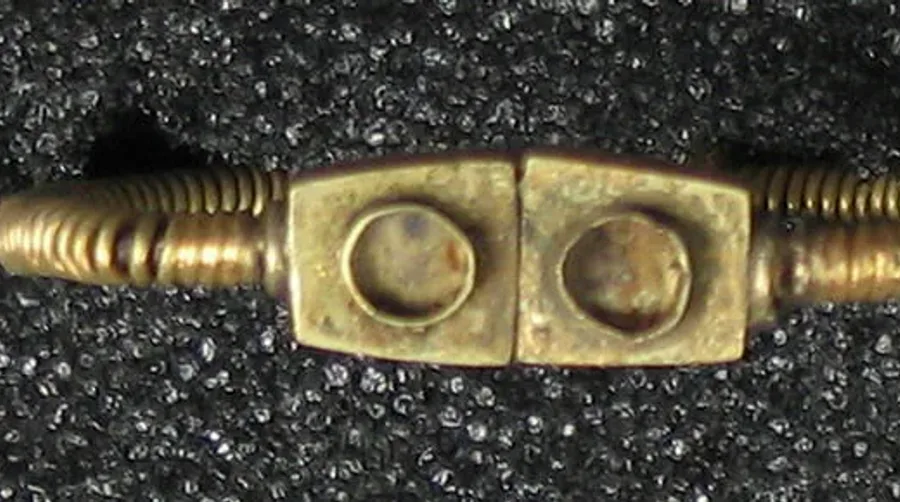
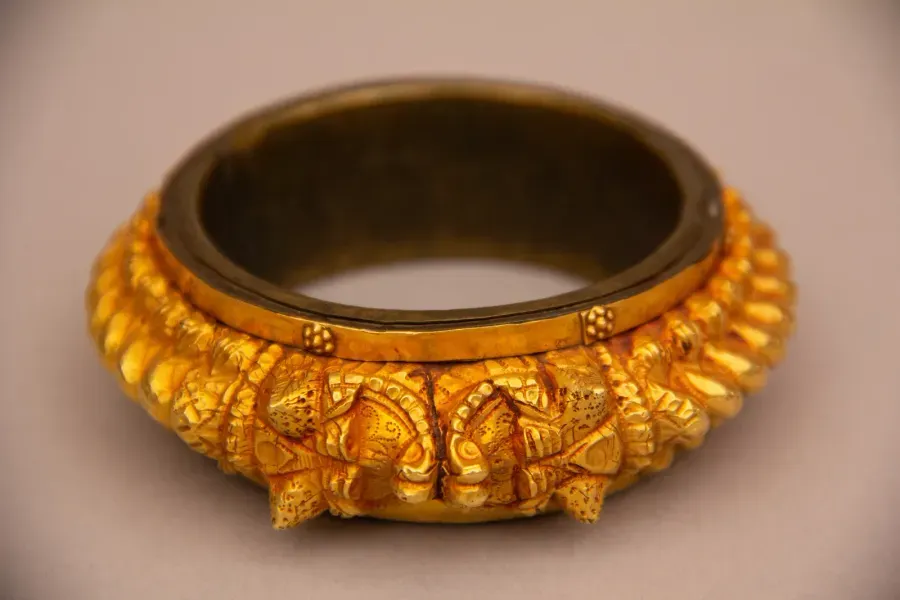
The equivalent of the wrist bangle, a closed or nearly closed rigid shape. It turns up less often, looks sterner and more archaic, closer to the ancient khalkhal. It needs precise sizing because it does not adjust, and the same rules apply as for rigid wrist bangles: measure at the widest point the piece has to slide over. It suits those who like weighty, conspicuous jewellery.
The ankle bracelet with a toe ring
A separate construction: a chain runs from the ankle bracelet across the instep to a ring on the second toe. This is jewellery for the bare foot; it only comes into its own without shoes, at the beach, by the pool, at home. It looks striking and nods at once to Indian and Middle Eastern tradition, where toe rings, the bichhiya, are also part of married dress. You cannot wear it in closed shoes, so it is a seasonal, festive piece.





What ankle bracelets are made of
Sterling silver 925
The classic and most authentic material for an ankle bracelet, straight from Indian tradition. Sterling silver 925 chimes beautifully, sits pleasantly on the skin, lasts for years with proper care and cleans up easily if it tarnishes. One drawback: at the beach and in the pool, silver darkens faster than usual from salt, chlorine and sweat, so it is best taken off in the water. For town and evening it is the best choice; for a harsh marine setting it comes with a caveat.
Stainless steel and PVD coating
The most practical material for active wear. Surgical steel, and steel with a PVD coating all the more so, fears neither seawater nor chlorine nor sunscreen; it does not darken and does not scratch from sand. It is the ideal option for anyone who never wants to take the bracelet off, including while swimming. The water-resistance of different materials is covered in detail in the guide to beach jewellery. If the ankle bracelet is bought specifically as a summer, water piece, steel beats everything else.
Gold
A gold ankle bracelet, a thin chain of 14- to 18-carat gold, is a dressy piece rather than a beach one. Gold does not darken, does not cause allergies at high fineness and looks rich even at the slimmest thickness. In Indian logic, remember, gold on the foot was considered improper, so this choice is a deliberately Western, aesthetic one, with no regard for tradition. Gold behaves well in water, but the risk of losing a noticeably more valuable piece on the beach leads many to keep it for town.
What stands up to water and the beach
To boil the materials down by resistance to sea and pool, the picture is this. Steel and PVD steel hold up best; neither salt nor chlorine troubles them. High-fineness gold is also chemically stable, the only question being the cost of the risk. Silver will survive the water but will darken and need cleaning. Worst of all are beads on cord and any textile elements: they wear out and lose their looks from water and friction. For the beach, choose the first two; for town and evening, anything.
What matters for the skin
The ankle sweats and rubs against shoes and the edge of trousers, so the material should be hypoallergenic. The safe choices are sterling silver 925, high-fineness gold, surgical steel and titanium. The doubtful ones are cheap alloys with a high nickel content, which on sweaty skin in the heat can easily cause irritation. If your skin is prone to reactions, the subject is covered in the piece on nickel allergy, and for an ankle bracelet it is especially relevant because of sweat and friction.
Leave your email, we'll send your discount code. No spam, unsubscribe anytime.
The code arrives by email, valid on your first order.
Symbolism, paired bracelets and protection
The ankle bracelet as a protective charm
The historical role of the ankle bracelet as a protective object is real, unlike the myths about sides. The chime of the bells was thought to ward off ill fortune in Indian and Middle Eastern tradition, and the bracelet itself, like many protective charms, worked at the level of ritual and habit: a thing worn constantly becomes an anchor of calm. If you want to add meaning, you hang protective charms on the ankle bracelet, an evil-eye nazar or a hamsa, and then the summer ornament gains a second layer.
Paired and friendship bracelets
The ankle bracelet works well as a paired or friendship piece. Two friends or a couple take identical or echoing bracelets, and it is a less obvious, more personal sign than paired rings or chains. Because the ankle bracelet is not constantly on show, there is a hint of secret to it, which is exactly what many people like in paired jewellery. An engraving on a small plate charm or a matching stone turns a pair of bracelets into a small shared story.
What it means to give an ankle bracelet
Giving an ankle bracelet is a light, summery, no-strings gesture, unlike a ring or earrings. It fits well as a gift for a holiday, the start of summer, the anniversary of meeting someone, or just because, for a friend. In the Indian context a silver payal for the bride is a serious wedding gift with deep meaning, but in Western logic it is more of a sweet, warm token of affection with no heavy subtext. The price bracket of a thin silver style is on a par with a good dinner, which makes such a gift easy to give.
Can a man wear one
Historically, yes; in ancient Egypt men wore ankle bracelets, and there was nothing unusual about it. Today the men's ankle bracelet is rarer and usually looks different: a coarser chain, a darker metal, no charms and no chime, closer to a plain leather or steel cord. There is no cultural ban on it; it is purely a matter of personal style. A minimalist steel or leather piece on a man's ankle looks calm and entirely fitting.
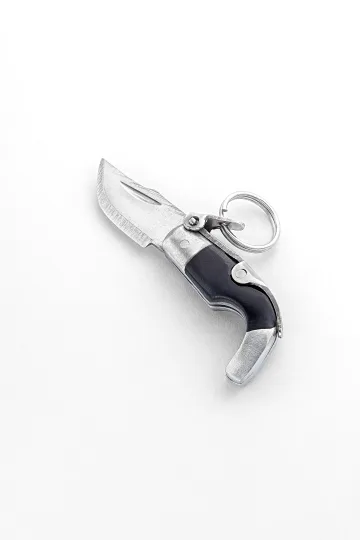
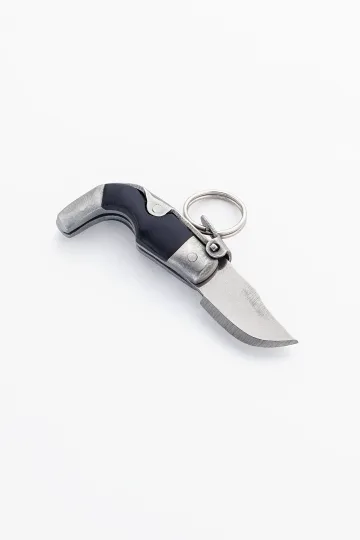
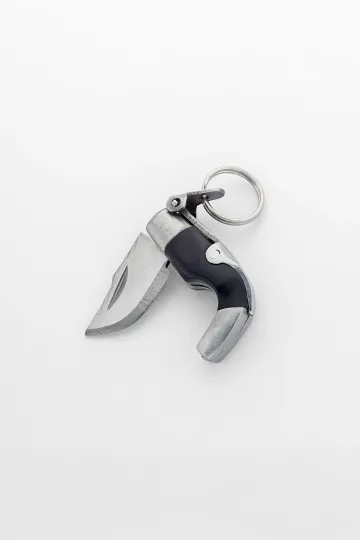
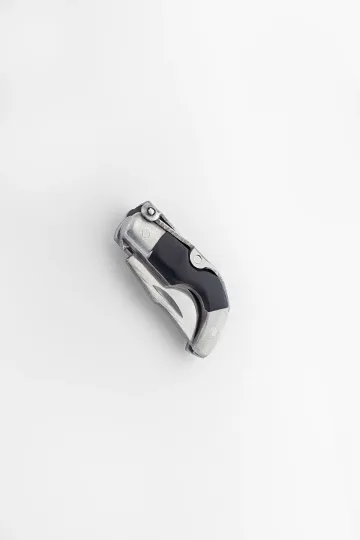
CAPAORA mini knife pendant
The 18th-century Spanish navaja in miniature: 40 mm of stainless steel, a real folding mechanism and a Palanquilla lock that clicks. An affordable gift to remember.
Authentic · Ships from Spain · 14-day returns
Caring for an ankle bracelet
How to clean silver after the sea
Silver darkens from salt, chlorine and sweat faster than you are used to seeing on the wrist, because the ankle sweats and meets water directly. If the bracelet has gone dull, you bring it back with a soft cloth and a dedicated silver polishing cloth, and in a worse case with a soft toothbrush, a drop of washing-up liquid and warm water. Abrasive pastes and baking soda are no good for a thin chain; they leave micro-scratches. After the sea it is enough to rinse the bracelet in fresh water and dry it thoroughly, and it will darken noticeably more slowly.
How to store it so it does not tarnish
The main enemy of silver is damp air. Store the bracelet dry, in a sealed bag or a box with a snap clasp, ideally with a moisture-absorbing sachet of the kind that comes in shoe and electronics boxes. Keep the chain done up and stretched out rather than in a heap, so the fine links do not tangle into a knot you cannot undo. Steel and gold styles are undemanding in this respect and survive any storage.
How to keep a thin chain from tangling
The thin chain of an ankle bracelet tangles just as easily as a thin chain for the neck. To avoid it, do the chain up before putting it away and thread it through a drinking straw, or fasten the clasp to the edge of a soft pouch. When travelling, carry the bracelet separately from other chains, or you will spend half an hour untangling a ball at your destination. If a knot does form, ease it apart with two needles on a flat surface, without yanking.
How not to lose the bracelet at the beach
The main cause of loss is too loose a fit, where the bracelet slides onto the foot and slips off in the water or the sand. So for an active beach day take a style with a secure clasp or an adjustable chain done up tighter than usual. An expensive gold or silver piece is best not worn on the sand and in the waves at all; that is exactly what an inexpensive steel or beaded style is for, the kind you will not mind parting with. Swimming in the open sea with jewellery on your fingers and ankle is a well-known way of donating it to the seabed.
When an ankle bracelet is out of place
Closed shoes and winter
Under a high boot, a knee boot or a thick sock the ankle bracelet is uncomfortable and invisible: it rubs, catches and loses all its point, since no one will see it. In winter it is simply out of season. A thin chain under trousers can still be worn year-round as a quiet personal ornament, but ringing and bulky styles are set aside until the warmth. This is jewellery of the bare leg, and there is no arguing with that.
Sport and active movement
On a run, in the gym, on a bike, the ankle bracelet is better taken off. A thin chain catches on a pedal, a machine or a trouser leg, charms bang against the ankle bone, and sweat speeds up the tarnishing of silver. There are other solutions for sport, and you keep the delicate piece on the ankle for walks and rest. A rigid metal bracelet also chafes during sudden movement.
Too loose or too tight a fit
The two extremes spoil the effect equally. A bracelet that is too tight digs in with every step and by evening leaves a mark on the skin, especially when the foot swells a little in the heat. One that is too loose slides onto the foot, dangles and risks slipping off. The happy medium is a fit where the ornament rests on the ankle but passes under a finger with a slight effort. If you are torn between two lengths, take an adjustable style.
Too much jewellery around it
The ankle bracelet loses out when there is too much going on around it. If the same foot already has a toe ring, chunky decorated sandals and a busy hem, a thin chain will simply be lost in the noise. This is an ornament that likes clear space around it: a bare leg, calm shoes, one or two accents, no more. Fewer details nearby mean more attention on the bracelet itself.
Facts that surprise
The bracelet that was a wallet
Among the Bedouin and in a number of Middle Eastern communities, heavy silver khalkhal were both ornament and the family's literal savings. A woman carried a fortune on her own body, and in times of need part of the metal could be sold or melted down. An ornament on the foot worked as a portable bank account that was always on its owner.
The chime that announced the daughter-in-law
In a traditional Indian home, the chime of the young wife's ankle bracelet was part of everyday etiquette. It told the household she was entering the courtyard or a room, and elder relatives had time to look away or step out, observing the norms that barred a daughter-in-law and certain older men from meeting face to face. The ornament literally gave warning that a person was coming.
Gold no, silver yes
The Indian rule that only silver is worn on the foot, while gold is kept above the waist, is so firmly held that a gold payal is still seen by part of the tradition as disrespect to the metal of the gods. It is one of the rare cases where the cheaper metal is considered the only fitting one, not out of thrift but out of reverence.
The dance played with the feet
In classical Indian dances such as Kathak, the ghungroo on the ankles are a full musical instrument. The dancer beats out the most intricate rhythms with the feet, and hundreds of tiny bells turn every move into sound. Students train for years to control that chime, and the first putting-on of the ghungroo is a ceremonial ritual in its own right.
The urban legends are younger than they seem
Most of the meanings popular online about which side to wear the ankle bracelet on have no roots in real history; they formed mostly on the Western internet over the last few decades. In other words, the folklore passed off as an ancient secret is often younger than the reader. The real history of the ornament is far richer than these inventions.
Send a friend a discount code, they save on their first order.
Frequently asked questions
Which foot should you wear an ankle bracelet on?
There is no universal rule. Wear it on whichever foot is more comfortable and looks better, or on both at once. Claims about strictly the left or strictly the right are either a narrow local custom or a late internet myth, not a general rule.
Is it true that the side you wear it on means something?
No, that is an urban legend with no historical basis. In cultures where the ankle bracelet carries rich symbolism, such as India, it is worn on both feet, and the question of a single side simply never arises. The side carries no signal.
Can you wear a silver ankle bracelet in the sea?
You can, but silver darkens faster than usual from salt, chlorine and sweat, so it is best taken off in the water or cleaned straight afterwards. If you want to keep it on at all times, choose steel or steel with a PVD coating, which water does not harm.
How do I work out the length I need?
Wrap a tape or thread around the ankle above the bone without pulling, measure the circumference and add half an inch to an inch and a quarter for a free fit. An adjustable chain with several links near the clasp saves you from hitting an exact size.
Won't a ringing bracelet be annoying?
The chime is not welcome everywhere. At the beach, a celebration or at home it fits; in a quiet meeting it will be out of place. If you want a versatile piece, take a thin chain without bells, which barely sounds and suits anywhere.
Can a man wear an ankle bracelet?
Yes, historically men wore them. Today the men's version is usually plainer: a dark chain, a leather or steel cord, no charms and no chime. There is no cultural ban; it is only a matter of personal style.
Will an ankle bracelet work under closed shoes?
A thin chain is felt but almost invisible under trousers and closed shoes, and there is a quiet pleasure in that. Massive ringing styles look odd under closed shoes; those are kept for open shoes and bare feet.
What does it mean to give an ankle bracelet?
In Western logic it is a light, summery, no-strings token of affection, fitting for a holiday, the start of summer or just because. In Indian tradition a silver payal for the bride is a serious wedding gift with deep meaning.
Conclusion
The ankle bracelet is jewellery with a hidden depth. On the surface a light summer chain on the ankle; beneath it five thousand years of history: the gold of Egyptian nobility, the ringing silver of the Indian bride, the wearable wealth of the Bedouin, the shadow of a double reputation from its link with dance, and a late fame as a beach accessory. Of all jewellery, it is the ankle bracelet that has gathered the most everyday myths, and almost all of them are younger than they pretend.
The practical part is simple. You can wear it on either foot or on both; the side means nothing. The length is chosen by measuring the ankle plus a couple of finger-widths for freedom. For the beach take steel or high-fineness gold, take silver off before swimming for town and evening, and treat beads and cord as a seasonal thing. A thin chain suits anything; chime and charms are kept for open shoes and celebration.
And above all: behind this object you can read any of its historical layers, or none. You can put on a silver bracelet as a nod to tradition, a steel one for summer by the water, a pair as a quiet sign for two, or just a thin chain because it continues the line of the leg so nicely. The ankle bracelet is good precisely because it demands no explanation, yet is always ready to give one.
Thin chains in sterling silver 925 and steel that sit just as well on the wrist as on the ankle, with sizing and engraving on request.
Buying it as a gift? Each one arrives ready to give.
 A branded Zevira box and a little card come with every order.









About Zevira
Zevira makes jewellery in the artisan tradition of Albacete, Spain. The ankle bracelet is a form where everything comes down to the fit and the slimness of the chain: the piece has to glide freely over the ankle and not get lost under clothing, and that is work done by a maker's hands.
What you can find with us on the subject of bracelets and chains:
- Thin sterling silver 925 chains worn on both the wrist and the ankle
- Steel pieces for summer and water, untroubled by salt, chlorine and sand
- Protective charms, the evil-eye nazar and the hamsa, to add meaning
- Paired options with engraving as a quiet sign for two or for friends
- Sizing to your own ankle measurement rather than to average figures
Every piece can be personalised with engraving by a maker, with the option of personal engraving. Sterling silver 925 and PVD-coated steel.