The brooch: how and where to wear it so it holds, not droops
The brooch is older than the button. Long before anyone worked out how to fasten two halves of a cloak, people were already pinning them with a thorn, then with a bronze fibula. For thousands of years it was both a fastener and the only piece of jewellery a warrior wore. The button caught up only in the Middle Ages. So the habit of pinning metal to cloth is older than almost everything else in your jewellery box.
And here is the paradox. An object with that kind of pedigree still gets written off as something only a grandmother wears. Yet the brooch came back into daily life faster than any other piece: people pin it to a denim jacket, a blazer lapel, a beret, a backpack strap. It needs no piercing, it does not depend on ring size or neck length, it survives changes in weight and fashion, and it reaches grandchildren in working order. This article is about how to wear a brooch today, where to pin it on every garment in your wardrobe, and how to make it hold tight rather than leave holes.
What a brooch is and how it differs from a badge or pin
Brooch, fibula, fermail: one object under many names
A brooch is a piece of jewellery fixed to fabric by a fastening that holds either by piercing two layers of cloth or by a clip. Across the ages it has carried different names. The ancient fastener was a fibula and worked on the principle of the safety pin. The round medieval brooch that closed a collar was called a fermail or an agraffe. A cockade is a rosette brooch fixed to a hat or a uniform. A "sujet" (from the French for subject, or theme) is a figural brooch with a scene: a bouquet, an insect, a small figure. All of these words describe one mechanism: a decorative part plus a secure fixing to clothing.
How a brooch differs from a badge and a pin
The line is thinner than it looks, and it runs along two edges. The first is material and worth: a brooch is made from metal as jewellery, while a badge is more often stamped as a commemorative or identifying mark. The second is the fixing. A classic brooch has a pin with a safety catch, built for repeated removal and heavy fabrics. A badge usually has a single thin pin or a butterfly clutch, like a lapel stud. If a piece is decorative, made from a jeweller's metal and comes off without effort, it is a brooch, even when it is the size of a coin.
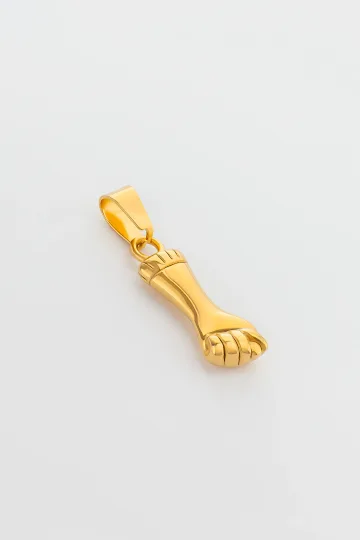
Wear the symbol, don't just read about it. These are in stock:






What a brooch is made of: a look at the fastening
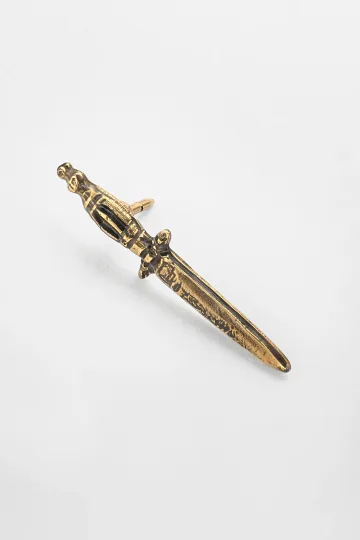
The front is what you see: a cameo, stones, enamel, a cast figure. The back matters more in practice. There sits the mechanism: the pin (the shaft that pierces the fabric), the hinge (the loop the pin swings on) and the catch that holds the point. Catches come in several kinds, and it is the catch that decides whether a brooch grips heavy tweed or slides off silk. We come back to fixing types in their own section, because that is half the battle.
History of the brooch: from a thorn to an aeroplane on the lapel
The fibula: a fastener older than the button
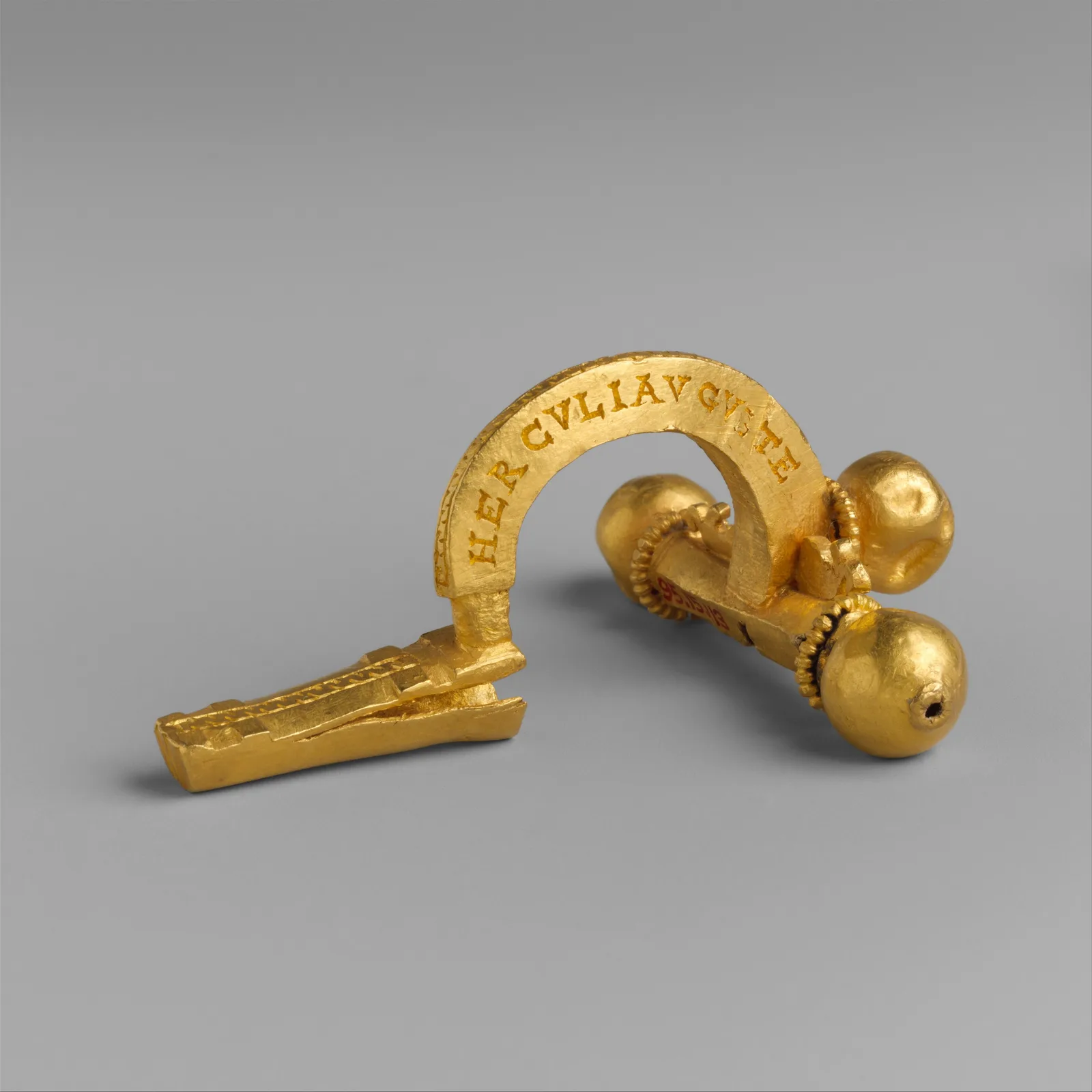
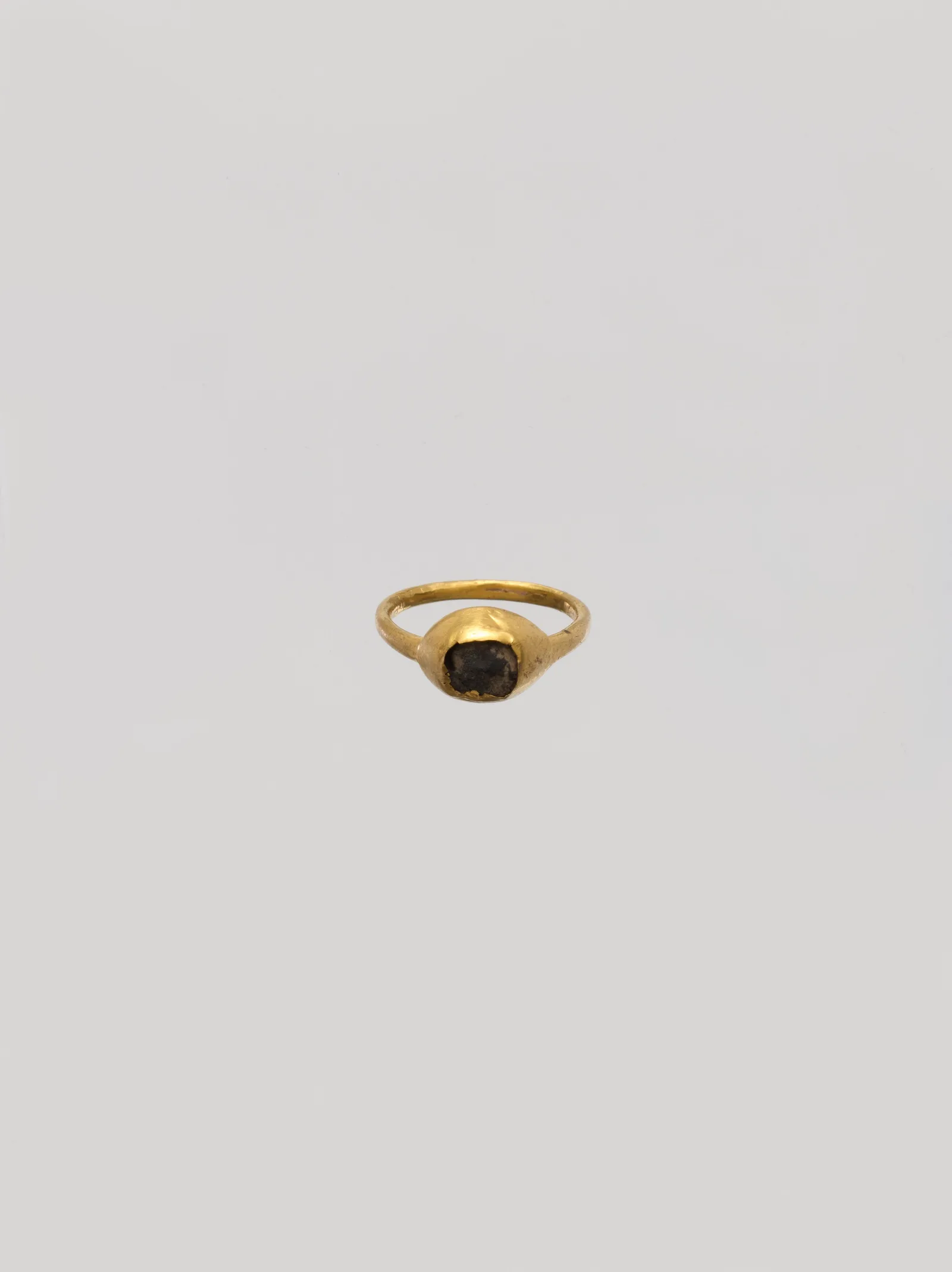
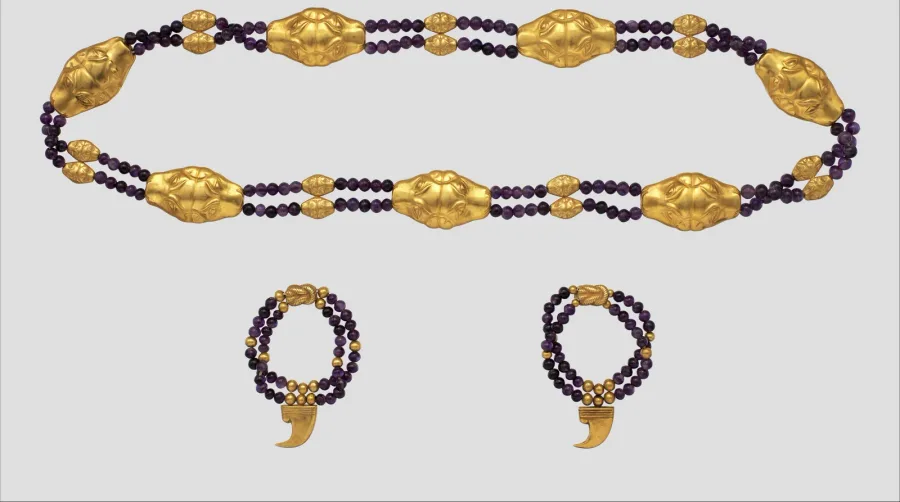
The oldest brooch is the fibula, the metal fastener of the Bronze and Iron Ages. Its principle is exactly that of the modern safety pin: a springy bow, a point and a catch where the point hides. The fibula pinned a tunic at the shoulder, a cloak across the chest, the ends of a wrap. It was an everyday, compulsory thing: without a fastener, clothing with no buttons simply fell apart. Rich fibulae were made from gold set with garnets, poor ones from plain bronze. From a fibula an archaeologist today can read which tribe and century its owner belonged to, more precisely than from any inscription.
Celts and Vikings: the brooch as a purse on the chest
Among the northern peoples the brooch served at once as a fastener and as a way to carry wealth on the body. Celtic penannular brooches (an open ring with a long pin) closed a cloak and gleamed in gilded bronze. Vikings wore paired oval tortoise brooches: a woman pinned the straps of her dress at the shoulders with them and hung strings of beads, needles and keys between them. The brooch worked as a fastener, a sign of status and a hanging organiser all at once. Northern adornment is a large subject in its own right, and if it speaks to you, look into the guide to Viking jewellery.
Medieval fermails and agraffes
In the Middle Ages the round fermail brooch closed the collar of a shirt at the throat and doubled as a charm: prayers and names were engraved on it. The agraffe was the fastening of a cloak or mantle, often paired and joined by a chain across the chest. This was jewellery of the nobility: gold, enamel, pearls. The higher the rank, the heavier the agraffe. Common folk made do with a copper or bone fastener, but the principle of closing and adorning a collar was shared across every class.
Cockade brooches and the age of uniforms
As uniforms spread, the cockade appeared: a rosette brooch of ribbon or metal fixed to a hat, a tricorne, a tunic. The cockade marked allegiance: to an army, a party, a monarch. The colour of the rosette read like a flag. From the same root came the tradition of the boutonniere and the medal brooch on the chest. The cockade showed something important: a brooch can be beautiful and meaningful at the same time, speaking for its owner without a single word.
The Victorian era: mourning brooches and hair under glass
The nineteenth century made the brooch the most personal piece of jewellery. After Queen Victoria withdrew into long mourning for her husband, the fashion for mourning brooches swept across Europe. They were made from black jet, onyx, black enamel. Inside, a lock of the deceased's hair was often placed, braided into a pattern, or a miniature portrait. The brooch became wearable memory: it was pinned to the dress over the heart. Alongside it flourished sentimental cameo brooches with profiles and souvenir brooches with views of cities. The dark aesthetic of that century still echoes in the gothic collection.
Art Nouveau: dragonflies, irises and the flowing line
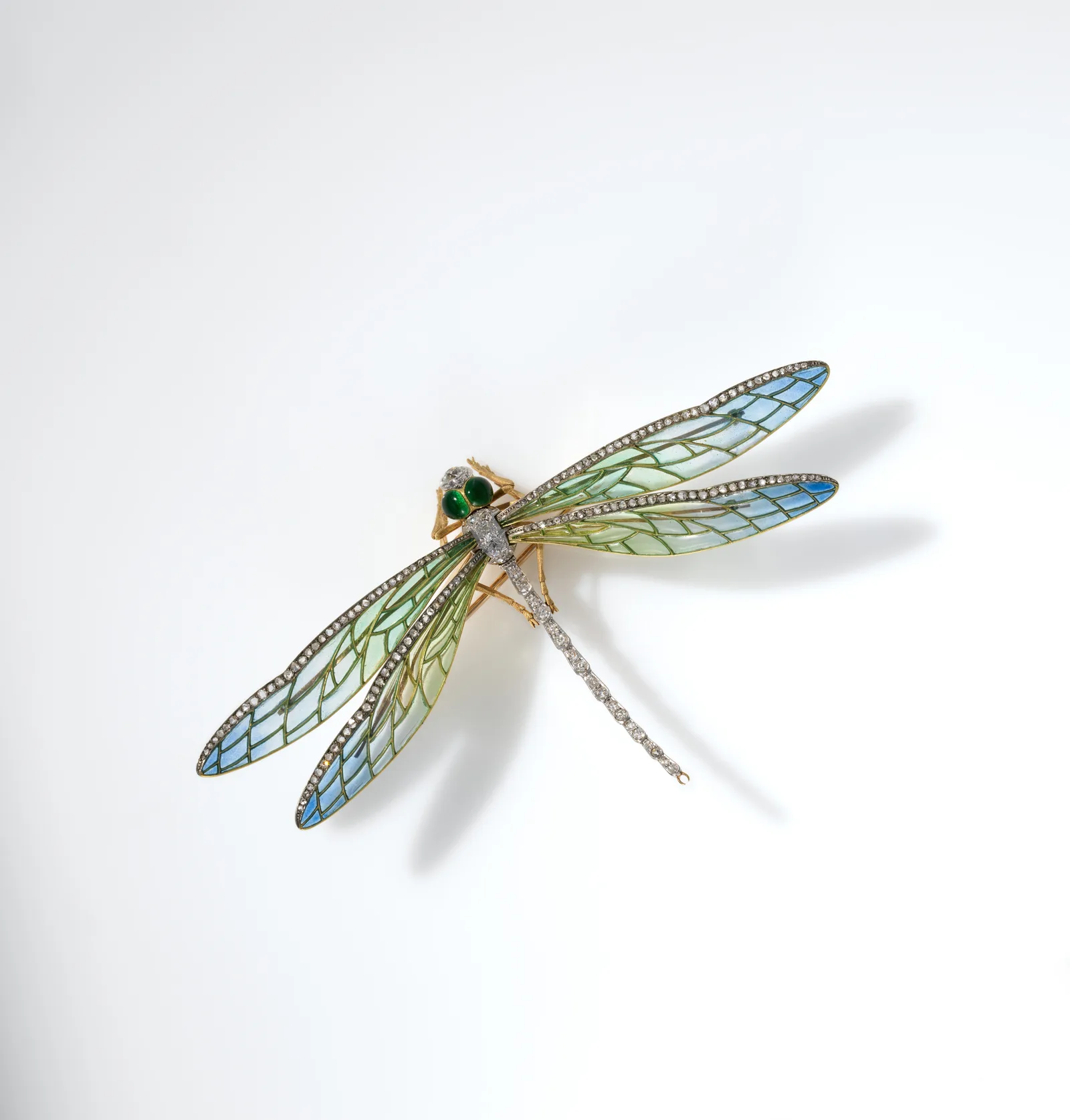
At the turn of the nineteenth and twentieth centuries the brooch became a canvas for a new style. Art Nouveau loved nature in motion: dragonflies with transparent wings, irises, women's profiles with loose hair, peacock feathers. Makers paired gold with window enamel, moonstone, opal, horn and mother of pearl. The dragonfly brooch with wings of plique-a-jour enamel became a symbol of the era. Here the piece finally stopped being merely a fastener and turned into a small sculpture on the chest.
Art Deco: geometry, platinum and the clip brooch
After the First World War the style changed sharply: in place of flowing lines came strict geometry, symmetry, the contrast of black onyx and white diamonds. The double clip appeared (two halves worn together as one brooch or apart on the two edges of a neckline). The Art Deco brooch adorned a cloche hat, the belt of a dress, the edge of a décolletage. Geometry and the shine of platinum set a tone that still reads as ageless luxury today.
The aeroplane brooches of the 1940s and the language of wartime
The forties gave brooches an unexpected theme: war and hope. Into fashion came aeroplane brooches, little ships, gold stars and the so-called sweetheart brooches that women wore to signal that someone close to them was at the front. Because precious metal was scarce, such brooches were made from gilded silver, brass, Bakelite and glass. The brooch became a meaningful object again, speaking of love and waiting. It is a rare case where a piece can be dated not by its style but by a moment in history.
The return of the brooch today
For a long time the brooch was thought of as jewellery for an older generation. The turning point came when people began pinning it not to a formal dress but to a denim jacket, an oversized coat, a knitted jumper, a beret and a bag. The brooch stepped out of the formal wardrobe and into daily life. Today it is worn by the young and the old, by men and women, singly and in groups. The oldest fastener is doing exactly what it was born for: holding cloth and speaking about its owner.
A brooch belongs on a denim jacket and a coat lapel, not on grandmother's velvet. Left side, above the heart, and dead straight. A crooked brooch I will not forgive.
How I style a brooch
Over years on shoots I have pinned a brooch onto dozens of looks, from a denim jacket to evening silk. Here is what actually works, occasion by occasion.
Where do I pin a brooch for every day? For daytime I recommend a denim jacket, a chunky jumper or a coat lapel: the coarse fabric holds the pin firmly, and the contrast of cotton and metal does the work on its own. I pin it on the left, above the bustline, closer to the shoulder. One noticeable brooch, or two or three small ones in support, and no more.
Is a brooch right for the office? It is, as long as you keep it restrained. I suggest a small brooch of clean shape on a blazer lapel or at the collar of a blouse: geometry, a pearl, a spare sprig. Silver or matte gold reads as taste, not as jewellery on display. A brooch has the merit of not jingling and not getting in the way at the desk.
How do I build an evening look? For the evening I choose a large brooch at the neckline of a dress: it replaces a necklace and draws the eye up to the face. Smooth fabric in a deep colour, wine, emerald, black, carries the shine of stones and enamel. I reach for a moving tremblant brooch where I want a play of light with every step.
How do I wear several brooches together? I advise tying a cluster of brooches to one common thread: one metal, one theme or one palette. I take an odd number, three is livelier than two, arrange them on a diagonal or scattered rather than in a row, and keep one as the lead. I pin such a group on a coat lapel, on the shoulder or along the line of the fastening.
How do I pin it so it holds without harming the fabric? I catch two layers of fabric with the pin, not one, so the brooch does not hang point-down. On fine knits and silk I recommend a magnetic or clutch-pin brooch to avoid snags. A heavy piece I set on a felt backing behind the fabric so the lapel does not sag. I lock the safety catch fully.
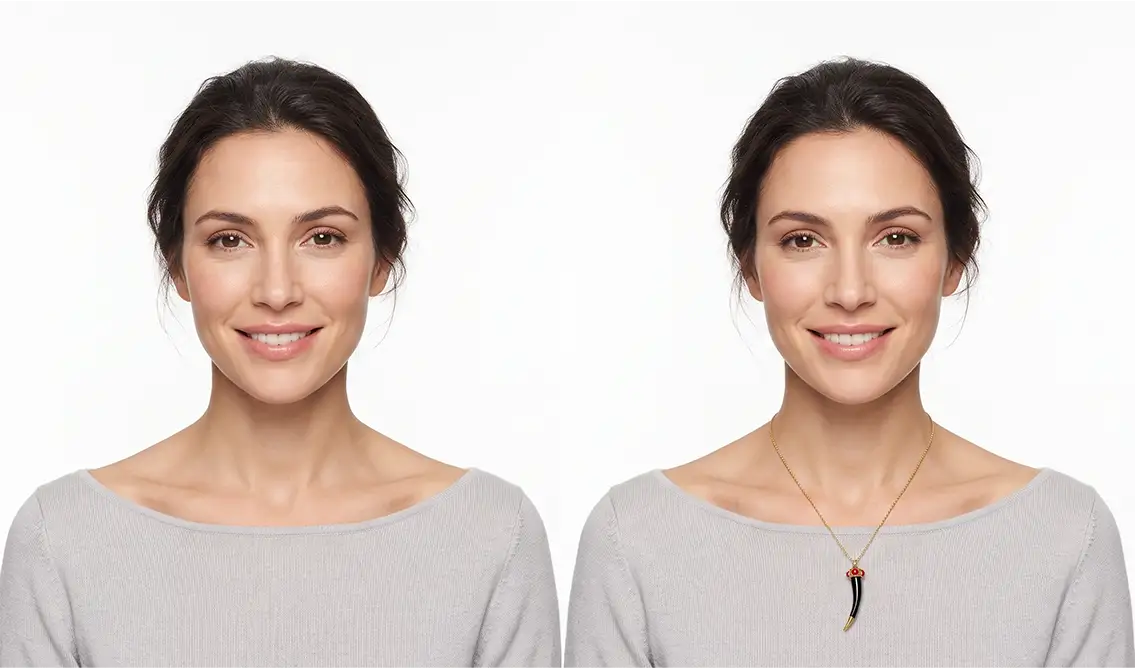
Turn on your camera, pick earrings, a pendant or a ring, and see the piece on yourself in real time.
Switch items in one tap.
Everything runs in your browser: no photo or video is ever uploaded.
Customer reviews
Zevira is a real jewellery shop. Genuine payments, deliveries and customer thank-yous.
🥰🥰🥰 gracias
Ok, ¡gracias! 🙂
Types of brooches by fastening
Pin with a safety catch: the everyday classic
The most common catch is a pin with a sliding or rotating guard (often called a swivel catch or a roll-over catch). The point pierces two layers of fabric, slips into the receiver, and a rotating clasp or sliding sleeve locks it from above. Such a catch holds heavy tweed, dense linen and the wool of a coat alike. It is the workhorse: reliable, familiar, repairable. If a brooch is meant to last a lifetime, it most likely has this very fastening.
Butterfly clutch: for thin fabrics and lapel holes
The stud post is a thin pin that pierces the fabric and is held at the back by a butterfly clutch or a round sleeve, like a stud earring. It does not tear delicate material because the puncture is a single point, and it is ideal for a jacket lapel with a ready-made buttonhole, for fine cotton, for an evening boutonniere. The downside: on heavy fabric the post turns and will not hold the weight, and the clutch is easy to lose. This is a fixing for light, neat brooches and thin materials.
Magnetic brooch: zero piercings
A magnetic brooch has two parts: a decorative front with a magnet and a flat backing plate. The fabric is gripped between them, with no puncture at all. It is a rescue for delicate silk, fine knitwear, leather and cashmere, where a needle hole shows forever. The magnet holds light and medium brooches on thin and medium fabric. One important note: strong magnets are unsafe for people with a pacemaker, and that has to be kept in mind. On thick wool the magnet may not reach through the full depth and will hold weakly.
Clip brooch and brooch on a clasp
There are brooches with a crocodile clip or a flat clasp that grip the edge of fabric, a pocket, a neckline or a lapel without a puncture. They suit scarves, shawls, the edge of a pocket, but they need something to grip: you cannot set such a clip on smooth cloth in the middle of the back. The Art Deco double clip is a version of the same principle: two halves sit on the edge of a neckline from both sides.
Brooch-pendant two-in-one: one piece, two ways to wear it
A class of its own is the transformer with an extra hidden bail at the back. Such a piece has both a pin fastening and a concealed loop through which a chain threads. In the morning it is a brooch on the lapel, in the evening a pendant on the neck. The Victorians adored such tricks, and today the brooch-pendant is popular again: one purchase covers two roles. When buying, check that the chain loop does not stick out at the front when the piece is worn as a brooch.
Upload a photo of your pet, someone you love, or an object. We'll build a 3D model and hand-cast it in pewter.

Types of brooches by shape and motif
Cameo: a profile carved in layers
A cameo is a relief carved in a layered material so that a pale figure stands out against a dark ground. The classics were cut from shell, onyx, carnelian, lava, bone. The subject is most often a woman's profile, less often a scene from myth or a flower. The cameo reads as the most traditional, almost antique form of brooch, and that is exactly why it looks striking on a plain modern piece such as a roll-neck or a denim shirt: the contrast of eras works in its favour.
The sprig brooch and floral motifs
A sprig, a small bouquet, a flower, an ear of wheat: the eternal subject of the brooch. The flexible sprig brooch (in French "tremblant", trembling) is made on tiny springs, and the flowers sway as you walk. A floral brooch brings a plain coat or blazer to life, adds a line where one is missing, and unlike a real bouquet it does not wilt. It is the safest choice for anyone trying a brooch for the first time: a flower is welcome almost anywhere.
The insect brooch and animal motifs
Butterflies, dragonflies, beetles, bees, birds, lizards: a vast family of figural brooches with a long history. The scarab beetle came from Egypt, the bee meant industry and power, the dragonfly was an icon of Art Nouveau. An animal brooch adds character and theme to an outfit. If you want meaning on top of decoration, each creature has its own symbolism: we cover it in separate pieces, for example on the meaning of the butterfly.
Sujets, bows, stars and abstraction
A sujet is any figural brooch with a recognisable subject: a bow, a star, a key, an anchor, a crown, a heart. A bow and a star read as dressy, a key and an anchor as narrative, abstract geometry as modern. The shape sets the mood of the whole outfit: a sharp-angled brooch adds severity, a rounded one softness. When choosing a subject, it pays to think about both beauty and meaning, because a brooch on the chest is read by the person across from you first.
What a brooch is made of: metal, enamel, stones
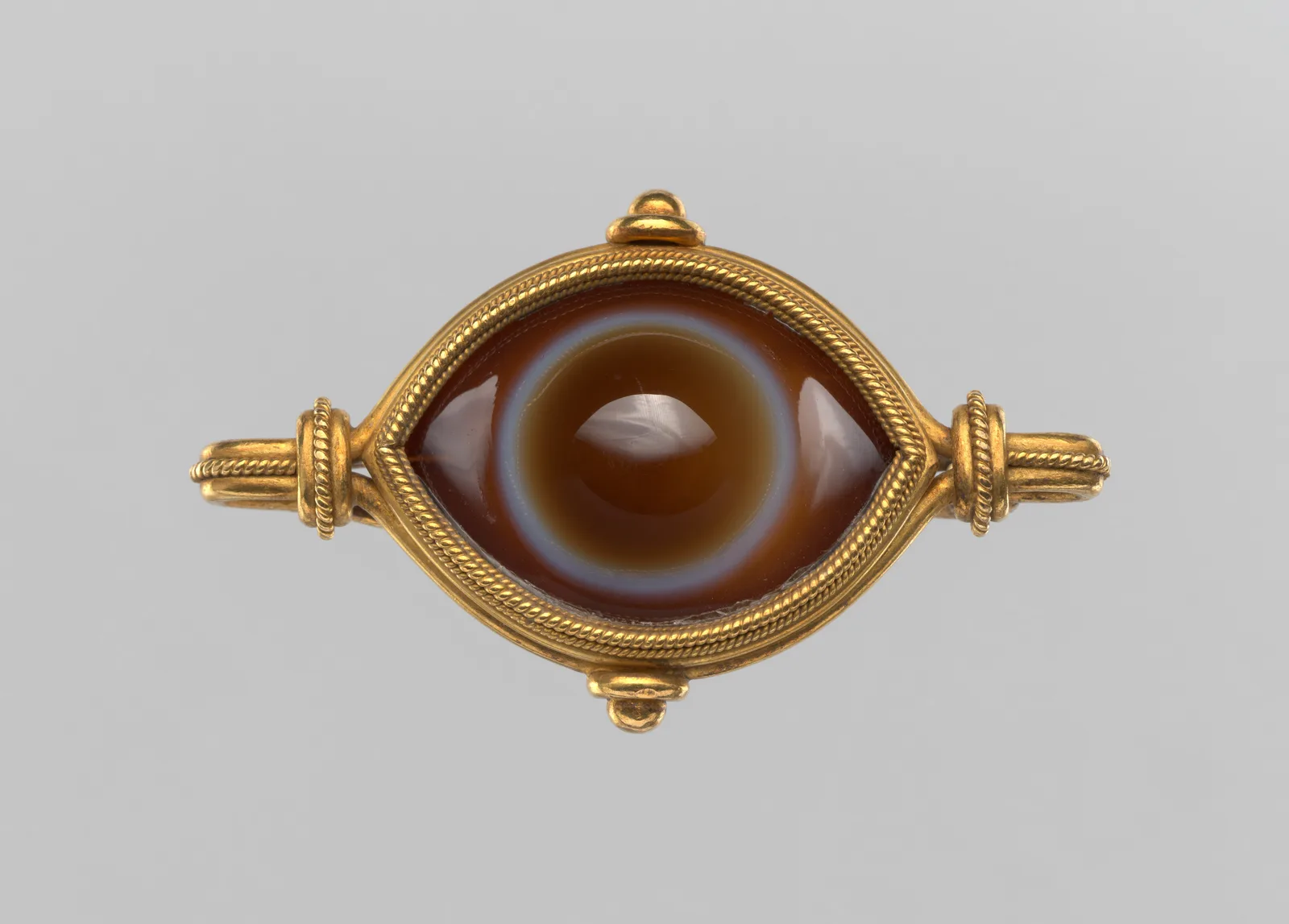
Material sets the weight, the character and the care. Silver gives a noble, cool shine and ages beautifully, and it cleans easily. Warm metals (brass, bronze, gold plating) sound vintage and suit cameos and floral work. Enamel adds colour: fired enamel on metal lasts for decades but fears knocks. Stones, from pearl to coloured gems, turn a brooch into a small treasure. Organics (shell cameo, jet, bone) need gentle handling and dry storage. The heavier the material, the stronger the catch must be and the more a backing pad matters under thin fabric.
A large statement brooch versus a miniature
Size changes the role. A large brooch is the accent the whole outfit is built around: you add no competing jewellery to it, and it takes the solo against a plain background. A miniature works differently: it is pinned to a collar, a cuff or the edge of a pocket as a quiet detail, and you can gather several of them. When deciding what to buy first, answer yourself honestly: do you want an accent or a signature? These are two different tools.



How and where to wear a brooch: a walk through the wardrobe
On a blazer or jacket lapel
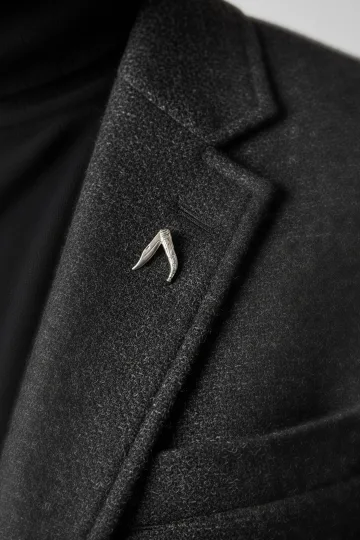
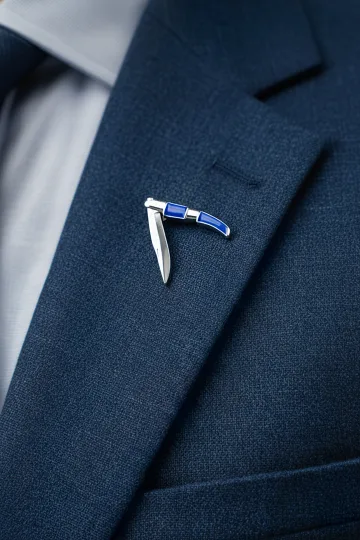
The lapel is the brooch's home. Classically it goes on the left side, above the bustline, closer to the shoulder, on the upper third of the lapel. If the jacket has a slit buttonhole (the boutonniere loop), a light brooch or stud can go straight into it without piercing the fabric again. The pin should run vertically or at a slight tilt following the line of the lapel, so the brooch does not hang crooked. A heavy brooch on a thin jacket is set with a small backing pad behind it (more on that below) so the lapel does not pull down.
On a coat
A coat is dense, heavy fabric, and it forgives the largest brooches. There are two spots: the upper part of the lapel or collar and the area under the left collarbone. On a double-breasted coat a brooch by the top button looks fine, or even a pair of brooches along the line of closure. The wool holds the pin dead still, so weight is no worry here. The one exception: on a napped cashmere coat frequent punctures leave marks, so it is best not to change the fixing point every day.
On a scarf, shawl and stole
On the bulk of a scarf the brooch works as both ornament and function: it pins the ends together so the scarf does not slip. A stole is pinned at the shoulder with a brooch, like an ancient cloak with a fibula, which both looks good and holds the drape. Piercing a thin silk scarf with a pin is risky (a pull), so a magnet, a stud or a clip helps here. A brooch on a scarf is an excellent way to gather a full knot and fix it in place.
On a bag and backpack
A brooch on a bag is a new and handy scenario. It is pinned to a strap, a flap, a side, to a sturdy canvas tote or a denim backpack. Thick fabric and leather hold the pin well, and a swappable brooch refreshes a tired bag at no cost. One piece of advice: on fine leather a puncture leaves a permanent mark, so for a leather bag it is better to choose a magnetic or clip brooch, or to fix it on the fabric part.
On a hat, beret and cap
A brooch on headwear inherits the cockade. A beret comes alive with a brooch to the side or at the front above the temple. On a felt hat the brooch is fixed to the band or to the brim on one side. A knitted beanie holds a light brooch above the turn-up. Felt and dense knitwear pierce easily, but it is best not to make holes in thin straw; a clip over the band suits it. A brooch on a hat makes an ordinary piece eye-catching at first glance.
On a dress with a neckline and at the décolletage
On an evening dress the brooch plays the role of jewellery in place of a necklace. It is set either on one shoulder (asymmetry looks modern), or centrally at the neckline, or on a strap. On a dress with a deep décolletage a large brooch at the edge of the neckline replaces a pendant and draws the eye to the face. Fine evening silk is delicate, so it is either a magnet or a careful pin with a backing pad behind. A brooch by the neckline is one of the most flattering spots: it sits in the zone of conversation, at the eye level of the person across from you.
On knitwear and a roll-neck: will it pull a thread
The main fear and the main question. On a thick chunky-knit jumper the sharp pin of a classic brooch passes between the stitches without a trace; you only need to insert it carefully, parting the yarn rather than driving through it. But on fine knitwear, cashmere and a fine-gauge roll-neck the pin easily catches a thread and pulls a loop, leaving a snag. Three rules: on thin knitwear use a magnet or a stud; if you do pierce, drive the pin strictly between the stitches and steady the fabric with a finger from the back; do not hang a heavy brooch on thin cloth, it will drag and deform the knit. On a thick jumper a brooch looks especially cosy and risks almost nothing.
On a denim and leather jacket
A denim jacket is the perfect base for a brooch: the dense fabric holds any pin dead still, and the contrast of rough cotton and a jeweller's metal works on its own. The brooch goes on the chest pocket, the lapel-collar, the turn-up. A leather jacket is trickier: a puncture in leather stays forever, so here you fix the brooch either to a fabric lining lapel along the edge, or take a clip over the front edge, or a magnet on thin leather. On suede the puncture is almost invisible, but on smooth leather the mark shows, and that is worth settling before you push the pin in.
In a group: several brooches together
A composition of several brooches is a pleasure in its own right and a move that instantly looks considered. The principles are borrowed from combining jewellery: choose a common denominator (one metal, one theme, one palette), set an odd number (three looks livelier than two), arrange them on a diagonal or scattered rather than in a strict row, and keep one brooch as the lead with the rest in support. As a group, brooches are pinned to a coat lapel, the shoulder, along the line of closure, the collar of a shirt. More on the logic of layered compositions in the guide to combining jewellery.
On a belt, sash and in the hair
A brooch does not have to sit on the chest. It can pin the belt of a dress at the centre or the side, catching light at the waist. It clips to a fabric belt as a buckle accent. A large clip brooch goes into the hair in place of a slide, or fixes to a ribbon. The one rule for an unusual spot is simple: the fabric or hair must bear the weight and hold the pin. On a belt the load is higher, so here you need a strong catch and a dense base.
Leave your email, we'll send your discount code. No spam, unsubscribe anytime.
The code arrives by email, valid on your first order.
Who suits a brooch: age, body, style
Age: from teenager to elegant maturity
A brooch has no age; only its role changes. On a teenager or a student a small badge-brooch on a denim jacket or a backpack reads as self-expression. In one's thirties and forties a brooch on a blazer or coat is about taste and composure. In maturity a large cameo or a vintage sujet is already a signature, the mark of a person with their own story. The same object says different things on different people, and that is its strength: the brooch adapts to its owner, not the other way round.
Body and where to place it to lengthen the silhouette
A brooch can manage proportion. A high-set brooch (at the shoulder, on the collar) lifts the gaze and visually lengthens the neck, which is a plus for the shorter and for anyone who wants a slimmer line. A brooch at the centre of the throat focuses attention and suits a slender neck. A vertical or diagonal arrangement of several brooches lengthens the figure better than a horizontal row. A large brooch is best not set on the fullest part of the chest: put the accent where you want to draw the eye, not where you want to hide.
Style: classic, boho, gothic, minimalist
A brooch slots into any aesthetic, changing its look. In the classic register it is a cameo, a pearl sujet, geometry on the lapel. In boho it is a scatter of mixed brooches, sprigs, enamel, natural motifs. In gothic it is black enamel, jet, silver, insects and skulls. In minimalism it is one fine brooch of clean shape on plain fabric. What decides is not the brooch itself but its number, metal and subject: the same butterfly sounds different on a severe blazer and on a velvet dress.
The brooch as a gift and an heirloom
The brooch is a rare gift that suits almost everyone: you need not know ring size, neck length or wrist diameter. It is universal in fit and durable in essence. That is exactly why brooches more often than other jewellery become heirlooms: an engraved commemorative date, a cameo with a profile, a mourning brooch from the last century are passed down the line and keep names safe. If you want to add something personal, the backing plate of many brooches has room for engraving.
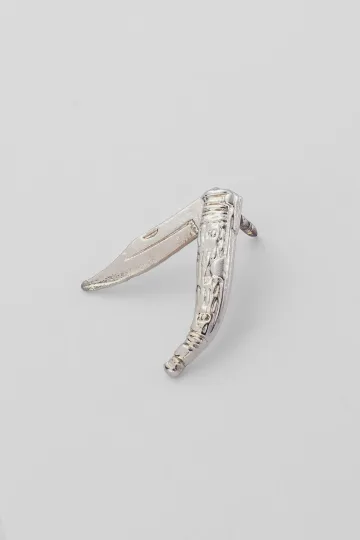
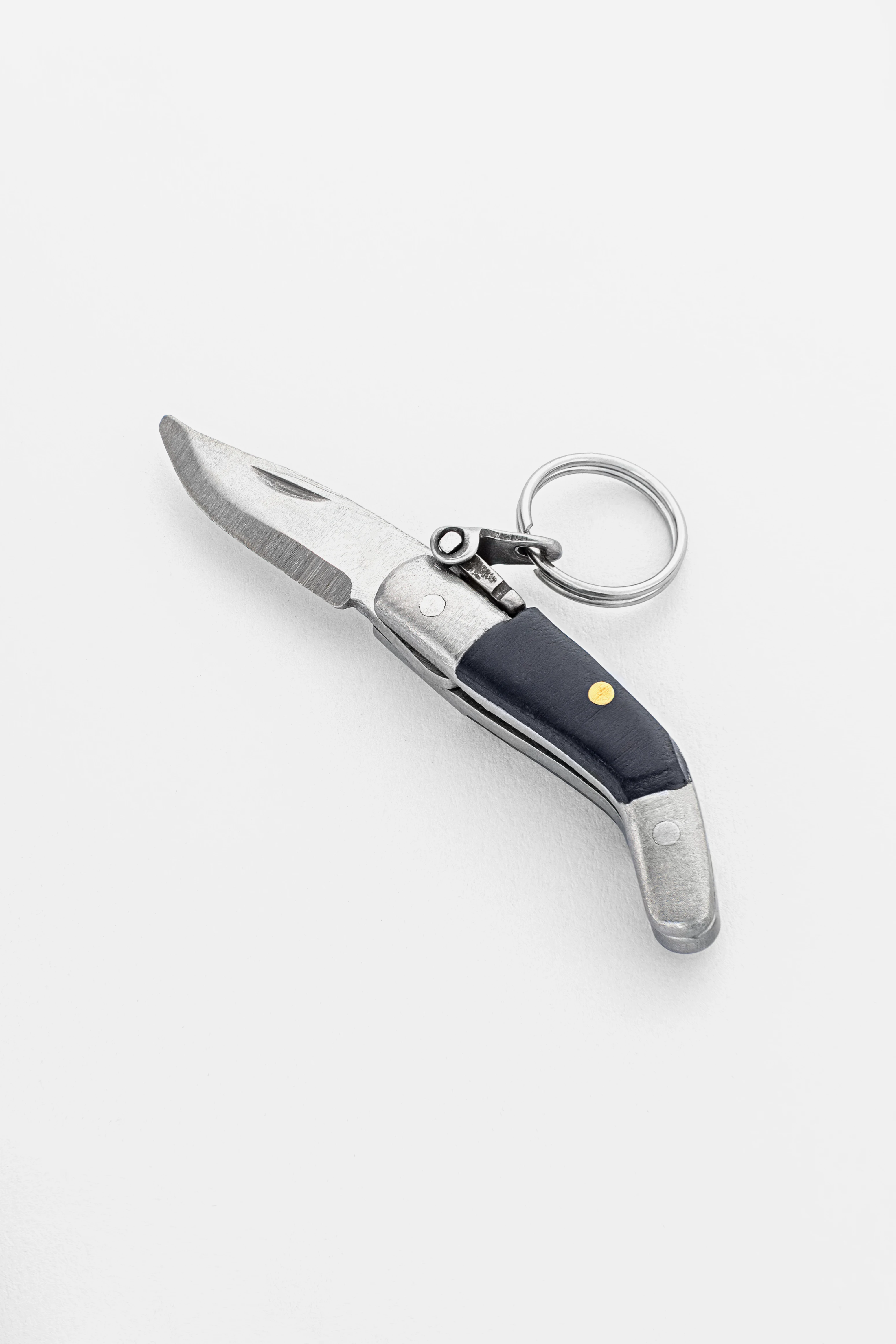
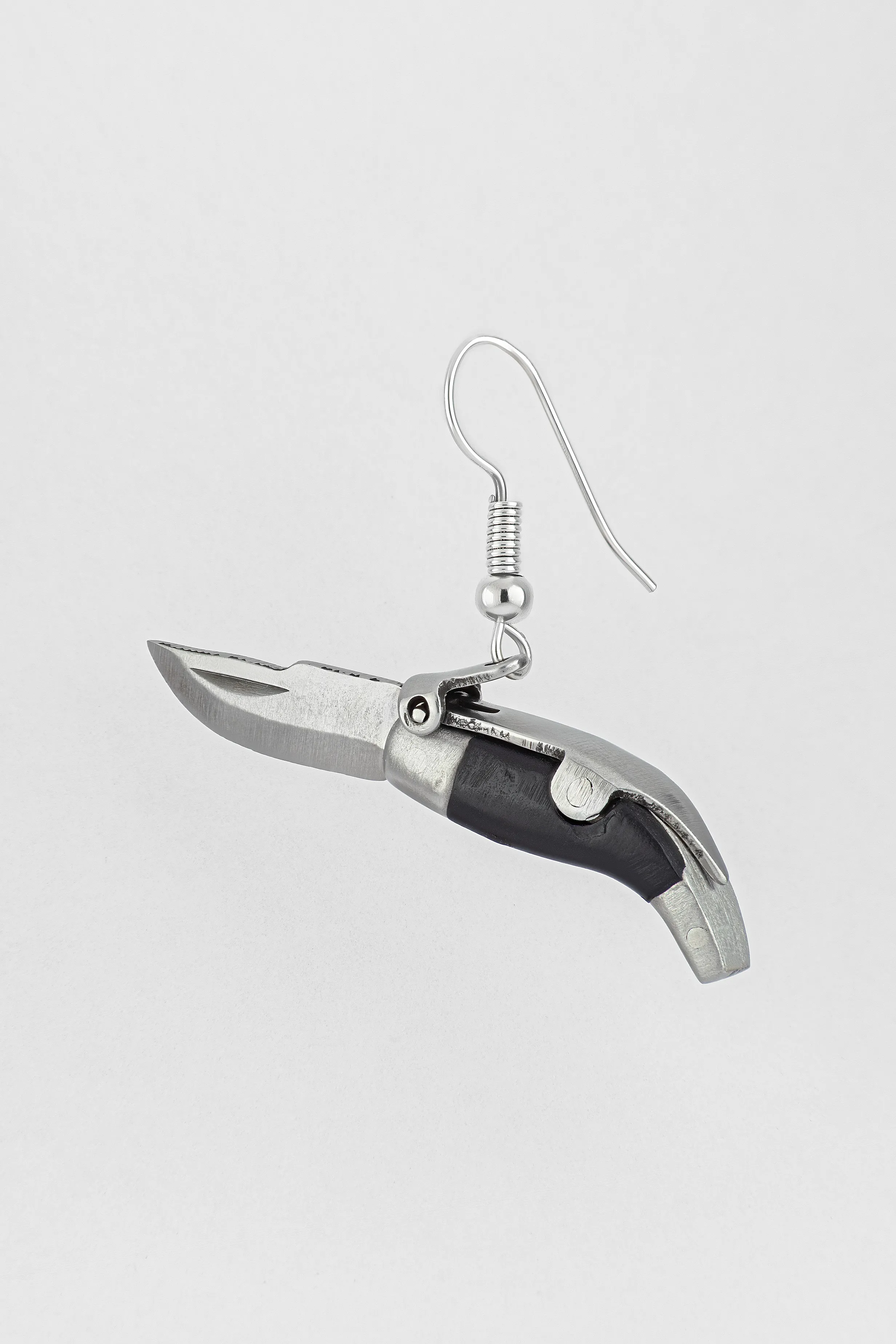
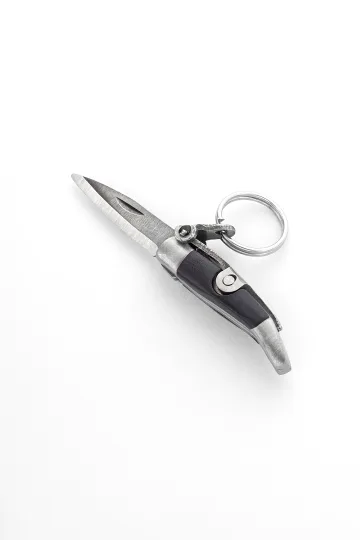
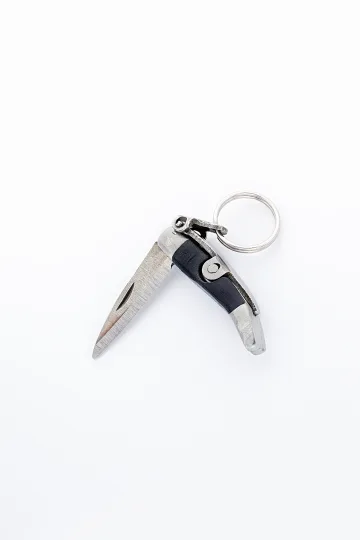
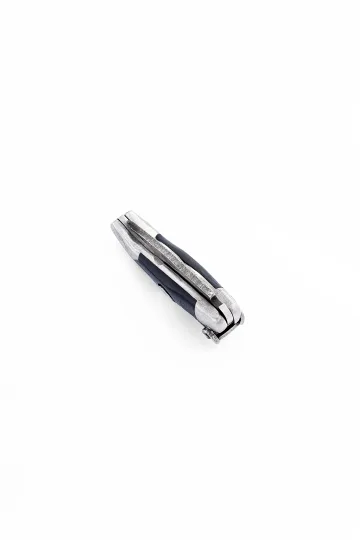
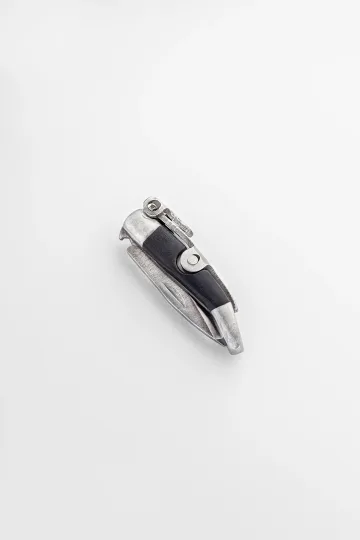
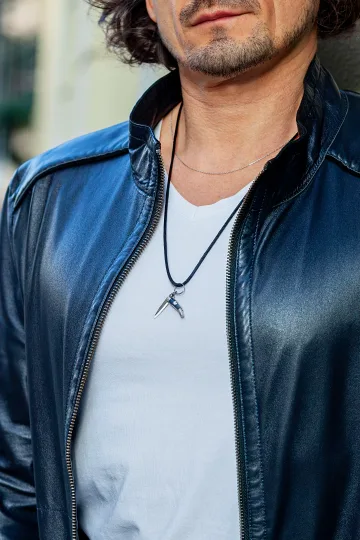
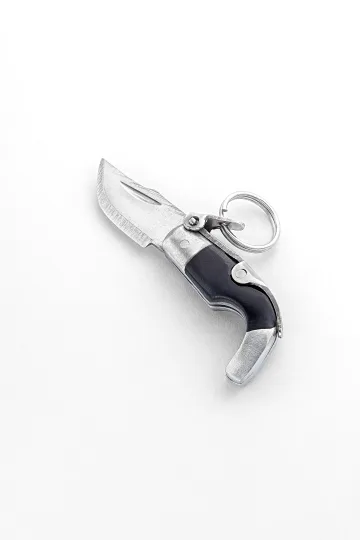
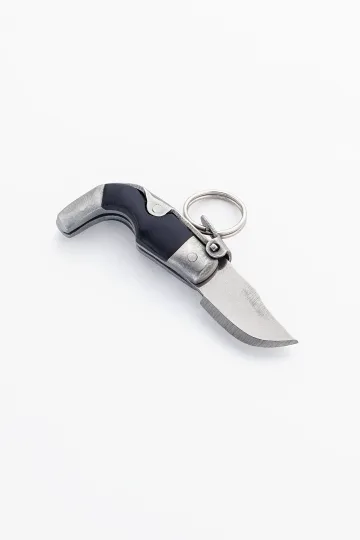
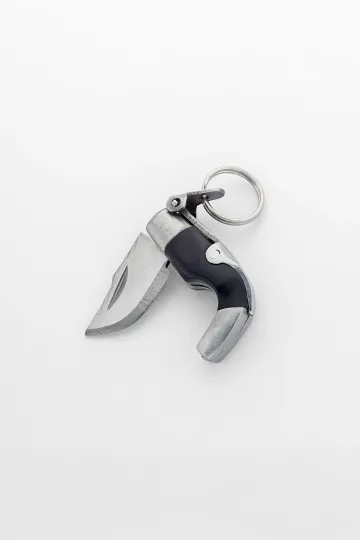
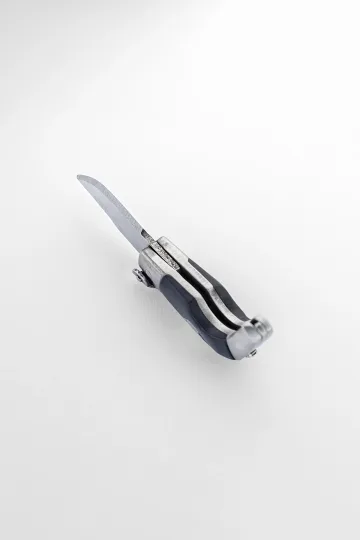
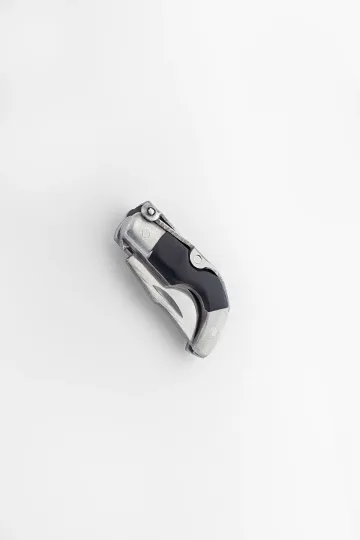
CAPAORA mini knife pendant
The 18th-century Spanish navaja in miniature: 40 mm of stainless steel, a real folding mechanism and a Palanquilla lock that clicks. An affordable gift to remember.
Authentic · Ships from Spain · 14-day returns
Care, storage and how to keep a brooch from snagging
How to pin it properly so it holds
The technique is simple, but few people know it. Catch two layers of fabric with the pin, not one: the pin should go into the material and come back out, so the brooch does not rotate or hang point-down. A long pin needs something to grip, so on thin fabric make a longer stitch. Lock the safety catch fully. The point should not stick out after fixing: if it does, the brooch sits wrong and will scratch the person beside you or tear the cloth.
A backing pad for a heavy brooch
The main secret of wearing heavy brooches on thin fabric is a backing pad behind. A scrap of dense cloth, felt, leather or a special plastic securing disc, slipped onto the pin from the back, spreads the weight and keeps the lapel from pulling and sagging. The pad is invisible from outside and saves a good jacket from distortion. For very heavy brooches there are magnetic counterweight fixers that hold the pin from behind without piercing a second layer.
To avoid snags on knitwear
A snag appears when the pin pierces a strand of yarn rather than passing between the stitches. Prevention: insert the point slowly, feeling for the gap between the stitches, steady the fabric with a finger from the back, and do not use a thick blunt pin on thin knitwear. If you fear for the piece, choose a magnetic or stud brooch, since they do not pierce the fabric through. A snag that has already appeared is not cut off but gently drawn through to the back with a hook or a needle.
Cleaning metal and stones
Care depends on the material. A silver brooch is cleaned with a soft silver cloth and stored separately so it does not darken. Gold plating is wiped with a dry soft cloth without abrasive. Enamel fears knocks and sudden temperature changes, so it is only wiped with a slightly damp cloth and dried at once. Cameos and organics (shell, bone, jet) must not be wetted or kept in the sun: they dry and crack. Set stones are wiped carefully, watching that water does not pool under the stone. The general principle: less water and chemistry, more dry soft cloth.
Storage so the pin does not bend and the brooch does not catch
Brooches are stored flat, pin down in the locked (inserted) position, or on a roll cushion the pin is pushed into. That way the point does not bend or catch neighbouring things. Each brooch is best kept apart: in a soft pouch, a compartment of the box or pinned to a felt board. Enamel and cameos must not be thrown into a common heap with other jewellery, since hard stones will scratch them. Before putting a brooch away, wipe it dry, or a film will appear on the metal.
What to do if the catch loosens
Over time the rotating clasp works loose and the hinge spring weakens. Do not wear a brooch with a wobbly catch, you will lose it. A simple catch is bent back and tightened by a jeweller in a few minutes, and the hinge and spring are restored too. If a brooch is dear to you, take it to a workshop at the first sign of play, not after a loss. Old brooches almost always mend: the mechanism is simple and clear to any craftsman.
Facts that surprise
The brooch is thousands of years older than the button
The fibula fastened clothing in the Bronze Age, when the button as a fastener was not yet a thing. The button in the modern sense, with a buttonhole, came into use only in the Middle Ages. Before that the world fastened itself with brooches, ties and laces. So the familiar button is an age younger than the brooch.
Archaeologists date finds by the fibula more precisely than by coins
The shape of the fastener changed so fast and so differently among different peoples that the fibula became a kind of passport for archaeologists. The type of spring, bow and catch tells the century and the tribe. A coin can stay in circulation for a hundred years, while a fibula is tied to a narrow period of fashion, so it dates more precisely.
Vikings carried keys and needles on their brooches
The paired oval fibulae of Scandinavian women were a dress fastener and rather more. Strings of beads, small scissors, needles and chest keys were hung from them. A ring of keys on the chest meant the woman was mistress of the house and managed its property. The brooch worked as a tool belt and a sign of standing at once.
Mourning brooches held the hair of the dead
In the nineteenth century a lock of a deceased's hair was braided into the finest pattern and placed under the glass of a brooch. This was not ghoulishness but the tenderness of the era: to wear a piece of a loved one over the heart. Whole workshops for hair-braiding existed. Today such brooches are a collector's rarity and a window into someone else's grief.
In the forties a brooch said a loved one was at the front
Sweetheart brooches and aeroplane brooches were the language of wartime. A woman pinned on a gold star or a model of the plane her husband or son served in. Because of the metal shortage they were made from silver, brass and Bakelite. From such a brooch a stranger understood that a person was waiting for someone to come home from the war.
The tremblant brooch trembles on purpose
Flowers and insects on costly brooches were set on tiny springs (en tremblant) so that with every step they quivered and caught the light, as if alive. In the candlelight of a ballroom that tremble created the illusion of a real butterfly. It is one of the oldest ways to bring jewellery to life with movement.
A cameo is carved from a single layered stone
A two-tone cameo is not paint and not an inlay but carving. The maker cuts away the upper pale layer of shell or onyx so the figure stays raised and pale while the dark lower layer is laid bare as the ground. A good cameo is the work of a stone carver, not a jeweller, and is prized for the fineness of the relief.
Send a friend a discount code, they save on their first order.
Frequently asked questions
Which side do you pin a brooch on, the right or the left? By long tradition a brooch is worn on the left side, closer to the heart, above the bustline. This is not a strict rule but a habit: the left side was historically the place for marks and awards. If you find it more comfortable or more flattering on the right, there is no mistake in that. The main thing is that the brooch sits straight and does not hang crooked.
Will a brooch tear a favourite jumper or dress? On thick knitwear and dense fabrics a correctly inserted pin passes between the threads without a trace. The risk exists only on fine knitwear, cashmere and delicate silk: there the pin can catch a thread. For such fabrics take a magnetic or stud brooch, or drive the pin strictly between the stitches while steadying the cloth from the back.
How do you wear a heavy brooch so it does not drag the fabric? Use a backing pad behind: a scrap of felt, leather or a securing disc on the pin. It spreads the weight and keeps the lapel from sagging. On light fabrics a heavy brooch is best set in an area with a double layer (a double lapel, a collar) rather than on a single thickness. For very heavy ones there are magnetic counterweights.
Can you wear several brooches at once? Yes, and it looks considered if there is a shared idea. Tie them together by one metal, theme or colour, take an odd number, arrange them on a diagonal or scattered, and leave one as the lead. A group of brooches is pinned to a coat lapel, the shoulder, or along the line of closure.
Is a brooch too old for me? No, context decides everything. A small brooch on a denim jacket reads as self-expression, geometry on a blazer as taste, a vintage cameo as style with a history. It is not the object itself but its subject and how it is worn that give a brooch its age. On everyday clothes a brooch sounds entirely modern.
How does a brooch differ from a badge and a pin? A brooch is jewellery of a jeweller's metal with a reliable pin fastening and a safety catch, built for repeated removal. A badge is more often stamped, identifying or commemorative, with a simple pin or a butterfly clutch. The line runs by worth, material and type of catch, and size is secondary here.
How do you store a brooch so the pin does not bend? Store the brooch with the pin locked, flat, apart from other jewellery: in a pouch, a compartment of the box or pinned to a felt board. That way the point does not bend or scratch its neighbours. Keep enamel and cameos away from hard stones so they are not scratched.
Can you fix a brooch to thin silk or fine leather without a mark? On thin silk and fine leather a puncture stays forever, so a pin is not used here. Take a magnetic brooch (two parts grip the fabric without piercing), a stud or a clip over the edge. On a leather bag a brooch is better fixed to the fabric part or the strap rather than to the leather itself.
In short
The brooch is humanity's oldest fastener, one that outlived the button and the fashion against itself. It does not depend on size, it needs no piercing of the body, it holds on any dense fabric and it reaches grandchildren. The secret of wearing it lies in three things: the right catch for the fabric (a pin for the dense, a magnet and stud for the delicate), the right fixing point (lapel, shoulder, neckline, scarf, bag, beret) and the technique where the pin catches two layers and locks fully. A heavy one is set on a backing pad, thin knitwear is spared with a magnet, enamel and cameos are stored apart. From there the brooch does what it always could: it holds cloth and, without a word, tells who you are.
Silver, warm metals, enamel, coloured stones, symbolism, cameos and sujets for every day and for the evening.
Buying it as a gift? Each one arrives ready to give.
 A branded Zevira box and a little card come with every order.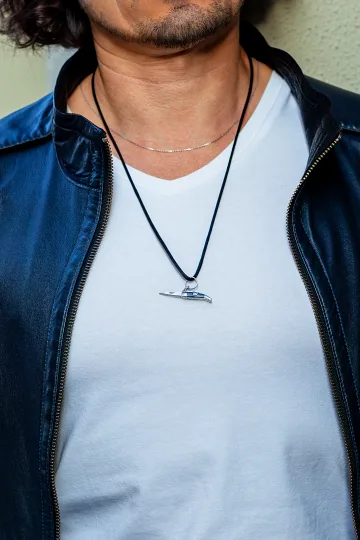




About Zevira
Zevira is a Spanish brand from Albacete, a city of metalworkers. We love pieces with character and with history: warm metals, enamel, a living patina, coloured stones and symbolism that is good to wear every day. For us a brooch is not a formal rarity but a detail that turns a basic piece into a personal one. If you want to learn how to gather several pieces into one look, start with the guide to combining jewellery, and what suits which occasion is explained in the dress code guide.