Midi Ring (Knuckle Ring): How to Wear a Ring on the Upper Phalanx So It Will Not Spin or Slip Off
A midi ring sits on the middle phalanx of the finger, exactly where an ordinary ring refuses to stay: it slides toward the nail or rattles around the base. That is why this kind of ring has its own fit, its own size that runs smaller than usual, and its own rules for wearing. Confuse it with a normal size and you get a ring that flies off the first time you wave your hand.
The word "midi" (from the French for "middle") stuck in fashion for rings worn on the phalanx, but in plain terms it means the same thing: a ring on the upper or middle phalanx of the finger. Not on the base, the way everyone is used to, but above the knuckle, between the two joints or right below the nail. It sounds like a recent invention, yet rings were worn on the phalanges as far back as ancient Egypt, then forgotten for almost two thousand years, and pulled back into the light in the 2010s. This article is about what the format is, where it came from, how it differs from an ordinary ring, how to get the size right, and how to wear it so it delights rather than annoys.
What a Midi Ring Is: A Ring on the Upper and Middle Phalanx
Exactly Where a Midi Ring Sits
Every finger except the thumb has three phalanges: the proximal one (near the palm), the middle one, and the one by the nail. An ordinary ring lives on the proximal phalanx, right at the base of the finger, resting against the web between the fingers. A midi ring sits higher up, on the middle phalanx or right below the nail, on the distal phalanx. Between the two joints the finger is noticeably slimmer than at the base, which is why the ring needs a much smaller diameter.
The boundary here is blurry, and that is fine. Some people wear the ring dead centre on the middle phalanx, some push it almost to the nail, some stack two on a single finger across both phalanges. There is no rigid canon. The one defining difference from the classic ring is this: the point of support is not at the palm but above the joint.
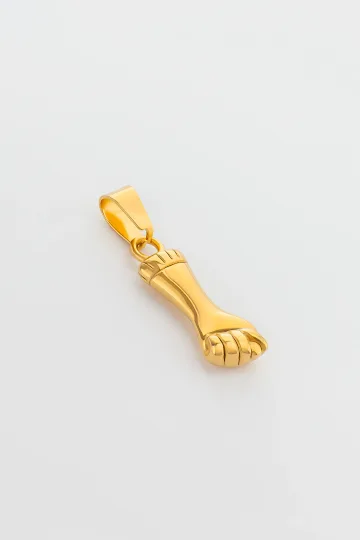
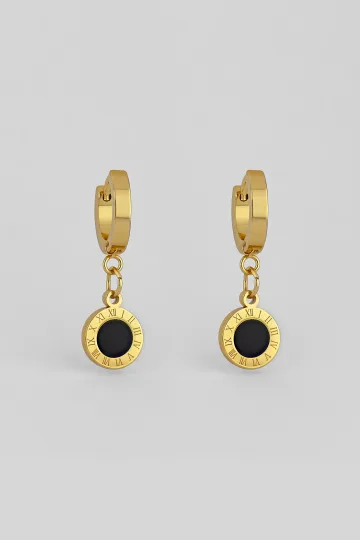
Wear the symbol, don't just read about it. These are in stock:





Why It Is Called "Midi"
"Midi" is short for the English midi, which itself came from the French midi meaning "middle". In fashion the word settled on anything that sits halfway between extremes: a midi skirt is neither mini nor maxi, a midi ring is neither at the base nor a separate accessory, but exactly partway up the finger. In plain English the most accurate phrase is "knuckle ring" or "above-knuckle ring", but "midi ring" has become the familiar label, the way "jeans" stands in for "denim trousers".
What a Midi Ring Is Not
It is not a ring for the joint in any medical sense, nor an orthopaedic device. Its job is purely decorative: to add detail to the hand, fill the empty space between the joints, make the hand more expressive. People do not wear it as a status marker the way they wear a wedding band, and they invest no vows in it. It is a mood piece, light, inexpensive, easy to swap. If a wedding ring is about a promise, a midi ring is about play and the way your hand looks this particular evening.
A Ring on the Phalanx and the Meaning of Fingers
Many people muddle two separate things: which finger to put a ring on, and which part of the finger. The symbolism of fingers, which we covered in detail in our piece on the meaning of rings on each finger, applies to midi rings too, only more gently. A ring on the middle phalanx of the ring finger does not carry the same weight as a wedding band at the base: it reads as decoration, not a declaration of marital status. That, incidentally, suits anyone who wants to adorn the ring finger without inviting questions about a wedding.
History: Rings on the Phalanges From Ancient Egypt to Today
Archaeology: Phalanges in the Jewellery of Antiquity
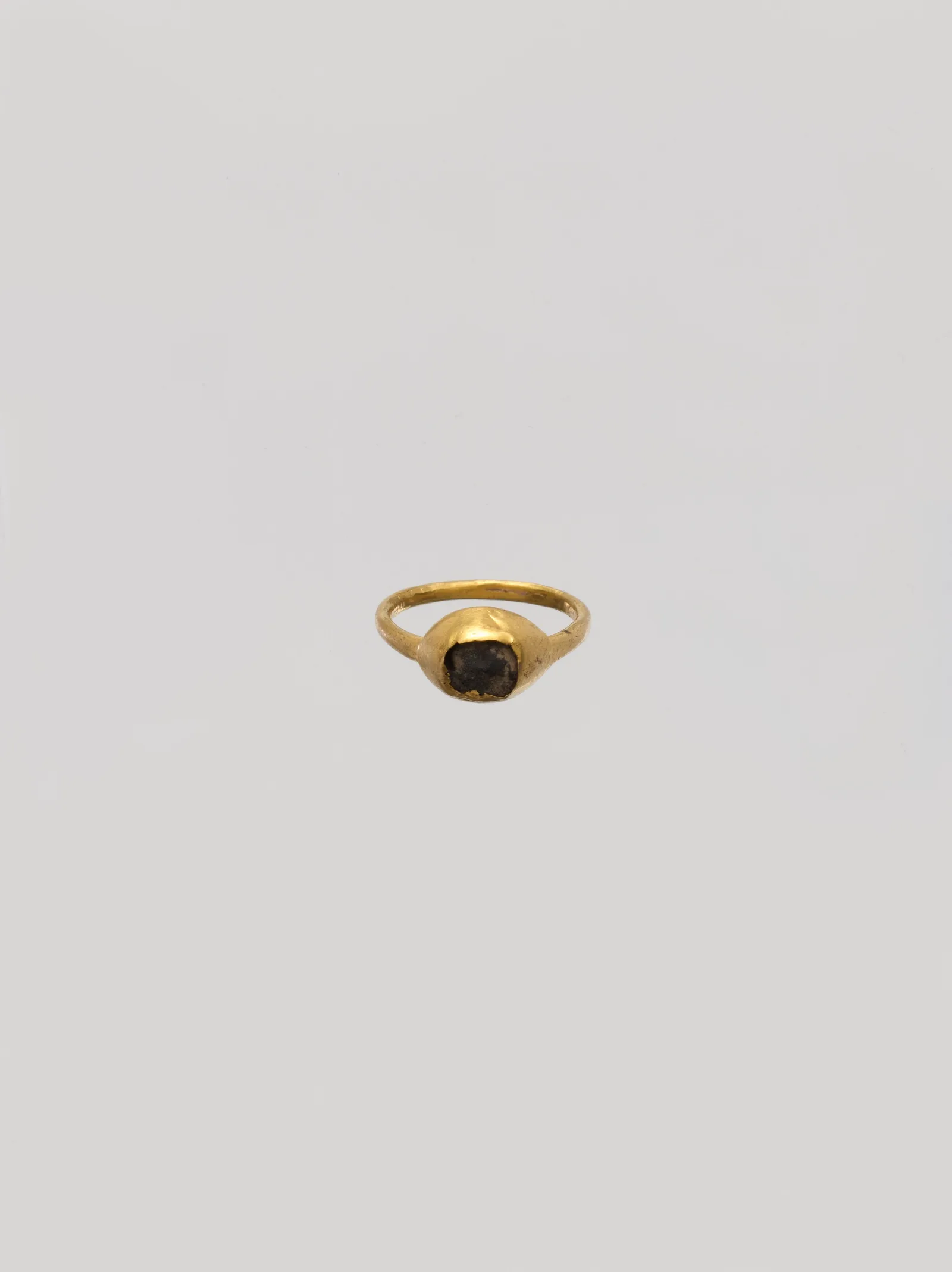
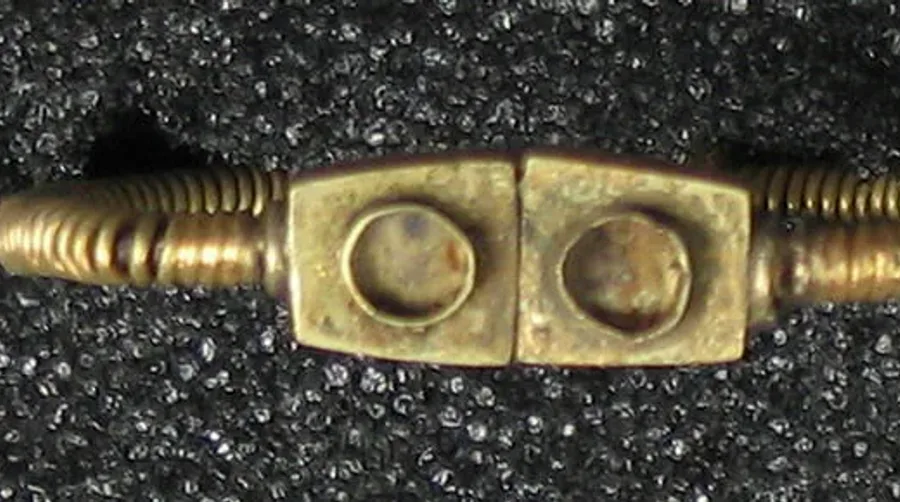
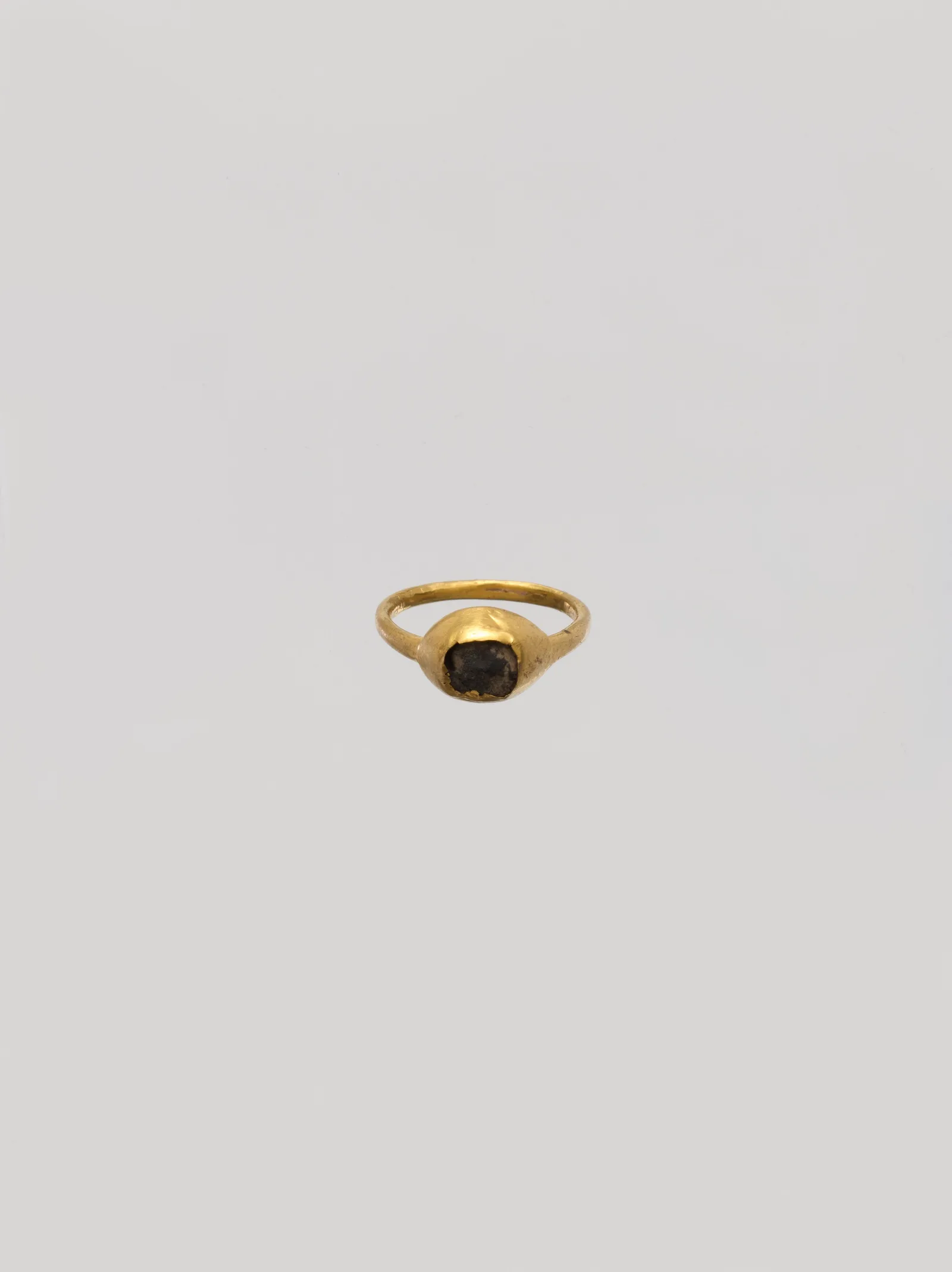
Rings on the upper phalanges are not an invention of our century. In the burials of ancient Egypt archaeologists found slender rings whose diameter clearly fit above the joint rather than at the base. The Egyptians loved to load the whole hand with jewellery, from the wrist to the fingertips, and the phalanges did not sit empty in that picture. Rings there often carried a protective role: a scarab, an eye, a symbol turned outward toward the world, like an amulet.
In the ancient Mediterranean, too, small-diameter rings turn up that were worn on the upper joints. Reconstructing exactly how they were put on is hard: jewellery outlives its owners, but the habit of wearing it does not survive. Yet the bare fact of rings that physically could not have fit the base of an adult finger speaks for itself.
The East and Rings With Chains
In Indian and Middle Eastern tradition there were elaborate hand ornaments where a ring on the phalanx or on the nail was joined by chains to a bracelet at the wrist. This construction, a kind of "armour" for the back of the hand, covered it in a web of metal and stones. The rings in it often sat precisely on the upper phalanges and were even worn over the nails. That is the direct ancestor of the modern midi ring: jewellery that claims the whole length of the finger, not just its base.
Art Deco and the Slim Rings of the 1920s
In the 1920s and 1930s, the art deco era, fashion fell for slim, graphic, geometric jewellery. Narrow band rings, strip rings, rows of tiny stones. Many of them are closer in size to a modern midi than to heavy classics. Long cigarette holders, long strings of pearls, elongated lines in clothing, everything reached upward, and rings supported that lengthened silhouette. A slim ring above the joint fit the decade's aesthetic perfectly.
The Fashion Surge of the 21st Century
The format went truly mainstream in the early 2010s. Street fashion, the early days of Instagram, and a wave of minimalist jewellery pushed the midi ring to the front. Simple mechanics did the work: a ring on the phalanx is cheap to make (it needs little metal), photographs well on the hand, combines easily into sets, and gives an instant "loaded", stylish hand. Within a couple of seasons it went from a stylists' niche trick to a mass-market product, and it has stayed in circulation ever since, quieting down and returning in waves.
Three midis on one hand is a chorus, six is a jumble sale. Count your rings before you leave the house.
How I Style a Midi Ring
Over years on shoots the midi ring has passed through dozens of looks with me, from office to evening. Here is what actually works, sorted by occasion.
How do I wear a midi by day? By day I recommend one slim, smooth ring on the index or middle finger, with no stones or a barely noticeable accent. It adds detail to the hand without getting in the way of work, and it does not catch on papers or the keyboard. I suggest keeping the metal tone in agreement with your other jewellery: silver to silver, gold to gold.
And for the evening? For evening I choose a scatter: several midis across different fingers, rings with little stones and texture. I make one ring slightly larger as the centre of the composition and set thinner ones around it. A hand with rings at different heights looks dressy and photogenic, which is why the format reads so well on camera.
How do I coordinate a midi with a watch and a bracelet? I suggest not overloading one hand. If there is a heavy watch on the wrist, I move the scatter of rings to the other hand. Ordinary rings at the base and the midi should rhyme in metal and style, otherwise the hand falls apart into unrelated bits.
Which finger should it go on? Most often I choose the index and middle finger, where a midi reads best. I suggest the little finger for a bolder accent, though it needs a very small size. The ring finger is handy because a midi there carries no wedding subtext.
Who does a midi actually suit? Anyone who likes a tidy, well kept hand and slim details. I recommend a single ring for those who value minimalism, and a scatter for those who are not afraid of a bolder look. One rule that never fails: choose the metal tone to match the rest of the hand first, and the number of rings only after that.

Turn on your camera, pick earrings, a pendant or a ring, and see the piece on yourself in real time.
Switch items in one tap.
Everything runs in your browser: no photo or video is ever uploaded.
How a Midi Ring Differs From an Ordinary Ring in Fit
The Point of Support Sits Above the Joint
An ordinary ring rests on the base of the finger and on the web between the fingers, and that fold of skin keeps it from sliding toward the palm. A midi ring has no such support. It holds on only because the middle phalanx is slightly thicker in one spot and slimmer in the next, so the ring settles into the "dip". The support is weaker, so the fit has to be more demanding: the millimetre of slack an ordinary ring would never notice is already critical for a midi.
The Joint Gets in the Way of Putting It On and Off
For the ring to settle on the middle phalanx, it has to pass over the joint, and the joint is thicker than the phalanx itself. That leaves a dilemma: size it to the joint and it rattles on the phalanx; size it to the phalanx and it will not pass the joint. The solution is either an open form (you do not slide it on, you "clip" it onto the finger from the side) or a precise fit, where a closed ring passes the joint with slight effort and then sits firmly. Open and closed forms are covered in detail below.
The Diameter Is Noticeably Smaller
The middle phalanx is slimmer than the base, so a midi ring always means a small diameter. If your ordinary size at the base of the index finger is, say, a 17, then the middle phalanx of the same finger will need roughly a 14 to 15, sometimes smaller. The exact figures are individual, but the rule is simple: the midi size is always smaller than the base size, and often much smaller. How to convert a measurement into a standard size we went through in our guide on ring size in millimetres, where we also explain the measuring principle itself.
A Different Visual Effect
An ordinary ring gathers attention at the palm and lengthens the finger from below. A midi ring places the accent in the middle of the finger and visually breaks it into parts. The hand looks more "loaded", adorned, a touch bohemian. It is a different kind of statement: a classic ring speaks of status and commitment, a midi of taste, play, and attention to small things. Neither better nor worse, just a different job.
Different Durability
A midi ring lives a different life from an ordinary one. Sitting at the base, a classic ring is shielded from knocks by the neighbouring fingers and catches on objects less often. A midi on the middle phalanx, by contrast, constantly rubs against the neighbouring fingers and is the first to meet tables, door handles, the keyboard. So a slim midi wears out faster, especially if it is plated. That is one more argument for hard-wearing materials: silver and steel instead of soft alloys.
A Different Role in a Set
An ordinary ring often performs solo: one at the base of the finger, and that is enough. A midi almost always works in an ensemble, its strength lies in number and in the play of heights. A single tiny midi cut off from other rings can look lost, as if you forgot to take it off. But in a set, in conversation with ordinary rings at the base of neighbouring fingers, it comes into its own. When you plan a midi, think not about one ring but about the whole hand at once.
Customer reviews
Zevira is a real jewellery shop. Genuine payments, deliveries and customer thank-yous.
🥰🥰🥰 gracias
Ok, ¡gracias! 🙂
How to Choose a Midi Ring Size
Why the Size Runs Smaller Than Usual
Let us repeat the main point, because this is where people stumble most often: a midi ring size is smaller than your usual size. You measure not the base of the finger but the middle or distal phalanx, which is slimmer. Buying a midi "by eye" at your usual size all but guarantees a loose ring that will slip off on day one. That is the first and biggest beginner's mistake.
How to Measure the Phalanx
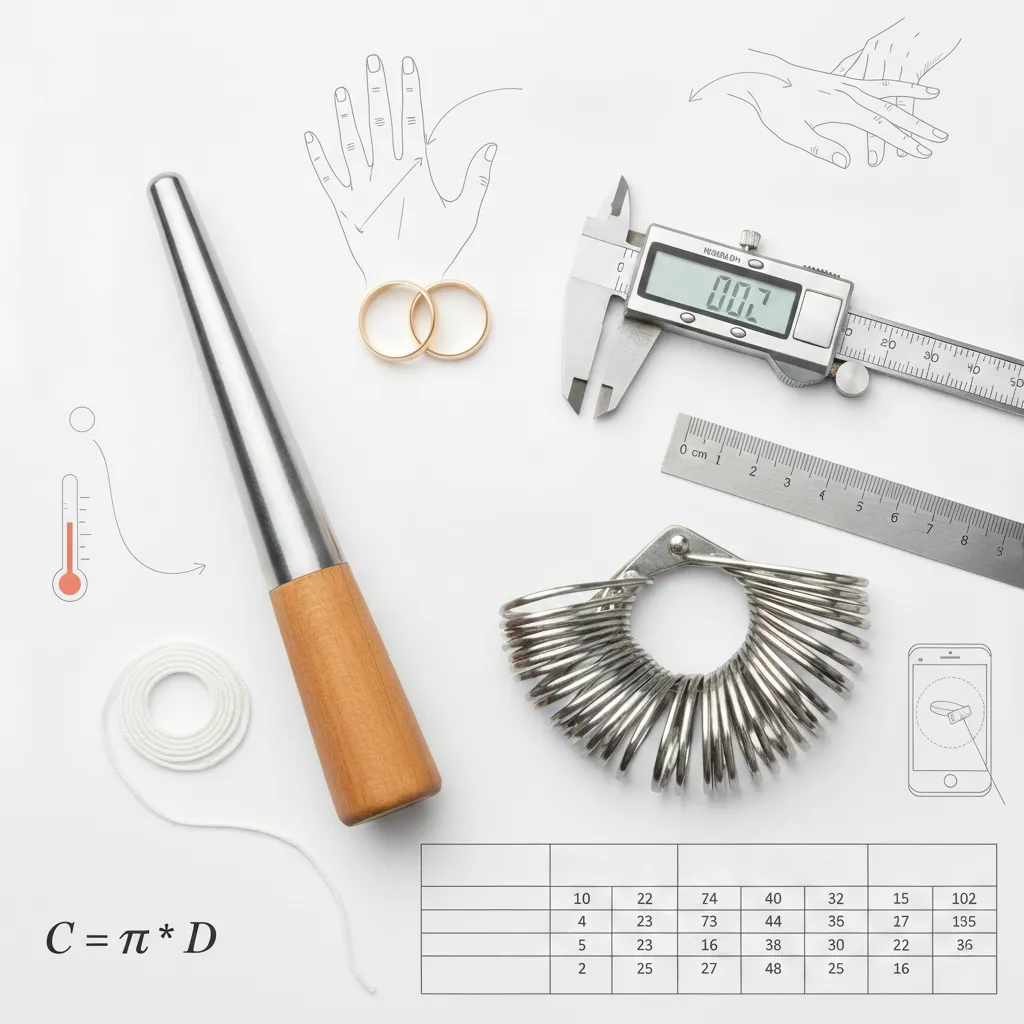
The most accurate method is the home one, and it is almost free. Take a strip of paper a few millimetres wide or a thin piece of thread. Wrap it around the middle phalanx at the spot where you want to wear the ring, with no slack and no gap, snug against the skin. Mark the point where the strip meets, and measure the length to the mark with a ruler in millimetres. That is the circumference of the phalanx. Then convert it into a size using a chart (divide the circumference by pi to get the diameter). The easiest thing is to check against a ready-made conversion chart, which you will find in our guide to ring sizes.
When to Measure
A finger changes thickness over the course of the day and with temperature. In the morning and in the cold, fingers are slimmer; toward evening, in the heat, and after salt they swell and grow thicker. Measure at a neutral time, during the day, at room temperature, not right after exercise and not after salty food. For a midi this difference matters more than for an ordinary ring: an extra millimetre of swelling turns "fits perfectly" into "digs in".
Account for the Joint
If you are choosing a closed (one-piece) ring, check both the phalanx and the joint above it. The ring should pass the joint with a slight, noticeable effort, otherwise you will either fail to get it on at all or it will rattle freely on the phalanx. If the joint is markedly thicker than the phalanx, the sensible choice is an open or adjustable ring, covered below.
Common Sizing Mistakes
Three slip-ups come up most often. First: buying a midi in your usual size, forgetting that the phalanx is slimmer than the base. Second: measuring the finger in the evening after salt or exercise, when it has swollen, then wondering why the ring slips off in the morning. Third: buying a closed ring as a gift without knowing the recipient's exact size, when an adjustable or open ring is far safer. Knowing these three traps in advance spares you most of the disappointment.
Upload a photo of your pet, someone you love, or an object. We'll build a 3D model and hand-cast it in pewter.



Which Fingers to Wear It On and How to Pair It With Ordinary Rings
The Best Fingers for a Midi
Midi rings are most often worn on the index, middle, and ring fingers. The index is the most visible, so a ring on its phalanx catches the eye at once and works well solo. The middle finger gives a central accent and likes pairing with its neighbours. The ring finger, as mentioned, carries a midi without the wedding subtext, which is handy. The little finger works too, but the phalanx there is very slim and needs a very small size. The thumb is rarely used for a midi: the phalanges are short and broad, with nowhere for the ring to settle.
Solo or Scattered
A single midi ring on an expressive finger is a quiet, neat statement. Several rings across different fingers, at different heights, give the "filled" hand that made the format popular. The classic move: a midi on the middle phalanx of one finger plus an ordinary ring at the base of the neighbour. The heights do not line up, and the hand reads as a deliberate composition rather than a random pile.
The Stack: A Midi Above an Ordinary Ring
The most interesting things start when you combine an ordinary ring at the base and a midi on the middle phalanx of the same finger. You get "floor above floor": an accent ring below, a slim midi above. This move is a cousin of layering several rings into one ensemble, which we covered in detail in our ring stacking guide. The difference is that a midi adds verticality: the stack grows both wider at the base and upward along the finger.
The Rule of Balance
To keep the hand from turning into chaos, hold the balance. If one hand has many midi rings, leave the other almost bare. If the rings are slim and matched in metal tone, you can load the hand more densely. If they vary in texture and colour, limit yourself to two or three, otherwise you get visual noise. An odd number (three, five) almost always looks livelier than an even one, an old rule of composition that holds here too.



Open, Adjustable, and Closed: Which Form to Choose for the Phalanx
Closed Rings
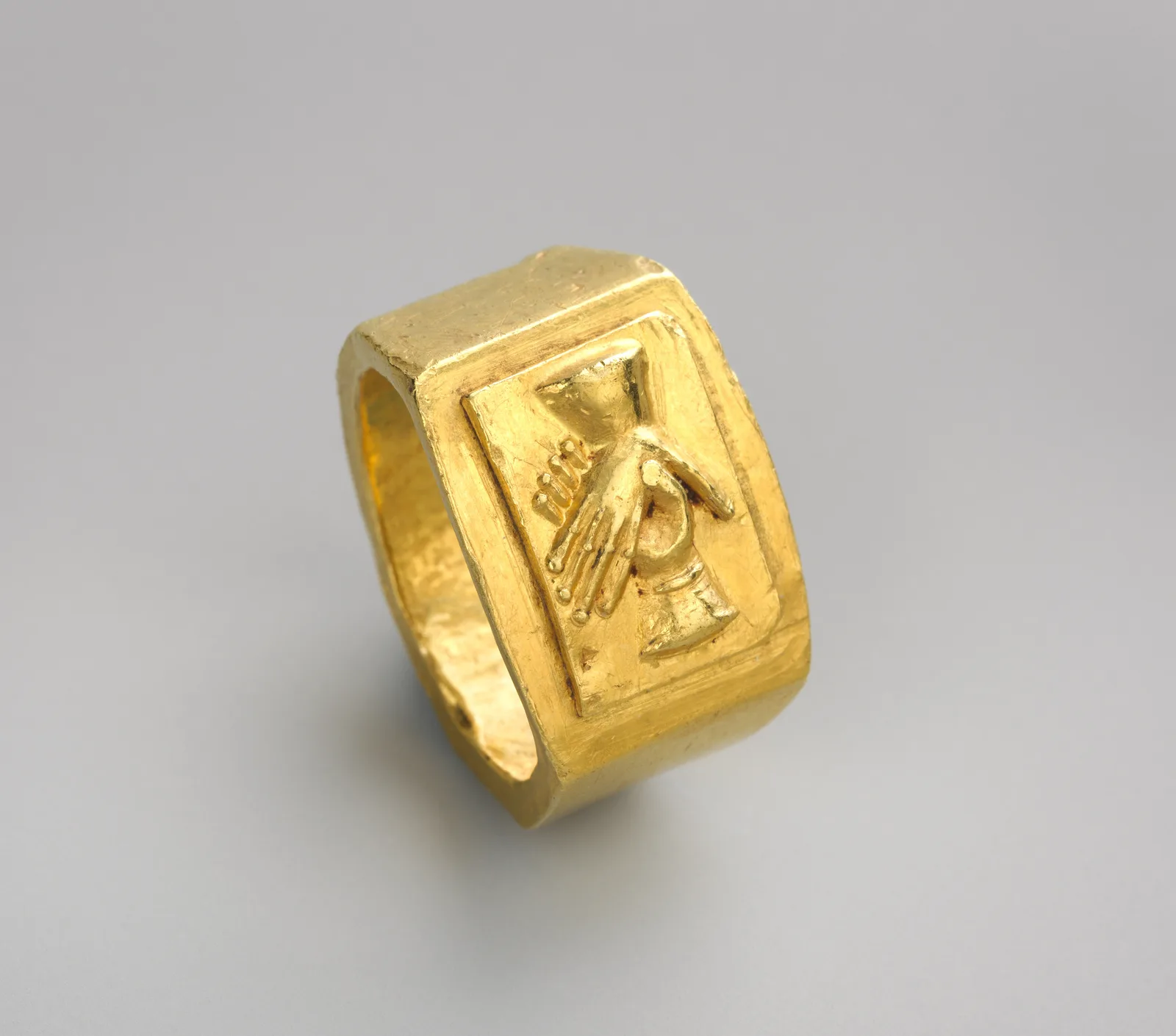
A closed ring is a solid band with no break. The upside: it looks like a "real" ring, neat, finished, and it does not deform. The downside for the phalanx is serious: you have to drag it over the joint, which means getting the size exactly right. A touch loose and it rattles; a touch tight and you cannot get it on. Closed midis are good when you know your precise size on a specific phalanx of a specific finger and always wear the ring on that same spot.
Open Rings
An open ring has a break, a small gap in the band. You do not drag it over the joint; you put it on from the side, easing the ends apart and then pressing them back together. This solves the main problem of the phalanx: the joint is no longer an obstacle. An open ring is easy to adjust with your fingers, drawing the ends together a little if it is too big, easing them apart if it pinches. For the upper phalanx this is the most practical form, and that is exactly why most midi rings are made open.
Adjustable Rings
An adjustable ring is a variety of the open one, where the gap is deliberately made wide and the ends are often finished decoratively (two dots, two little stones, two ends of a spiral). The same size stretches to fit different fingers and phalanges. Ideal as a gift when you do not know the exact size, and for those whose fingers change thickness noticeably. The price of that flexibility: an adjustable ring wears out over time, the metal tires from frequent squeezing and easing, and a cheap alloy can crack. Good silver or steel lasts far longer.
Why Open Rings Suit the Phalanx Better
To boil it down: on the phalanx a ring fights both the joint and weak support. The open and adjustable forms remove both problems. The joint is bypassed by putting the ring on from the side, and the weak support is offset by tucking the ends in to suit you. A closed ring is prettier and sturdier in form, but it forgives fewer mistakes in size. For your first midi ring, go open: less chance of missing the size and being disappointed.
Leave your email, we'll send your discount code. No spam, unsubscribe anytime.
The code arrives by email, valid on your first order.
Materials: Slim, Light, for Everyday
Silver
Sterling 925 silver is the sweet spot for midi rings: a noble white shine, a softness that lets you adjust an open ring with your fingers, and at the same time the durability of a real precious metal. Silver does not cause allergies (unlike the nickel in cheap alloys), feels pleasant against the skin, and over time takes on a light patina that is easy to polish back to a shine. If you want to wear a midi for years rather than one season, start with silver. What the 925 hallmark actually means and how real silver differs from lookalike alloys we covered in our guide to 925 silver.
Steel
Surgical stainless steel is the workhorse of everyday jewellery. It is stronger than silver, does not tarnish, is not afraid of water or sweat, and holds its shape. For a midi ring that rubs against neighbouring fingers and objects every day, the steel's resilience is a big plus. The downside: steel is harder, so an open steel ring is harder to adjust with your fingers, and you need the size right from the start. But once it is adjusted, it holds the fit for years.
Gilding and Plating
Slim midi rings are often made from silver or steel with gold plating, to get a warm gold tone without the price of solid gold. That is a sensible choice for a format that is small to begin with: on a tiny ring the layer of plating lasts longer than on a large signet, because there is less surface to rub. Just remember that any plating wears off the edges over time, especially on adjustable rings that are frequently squeezed. Treat those more gently.
What to Avoid
The cheapest midis made from an unnamed "silver-look" or "gold-look" alloy often contain nickel and quickly turn the skin green or cause irritation. For a finger where the ring presses against the skin across almost its whole surface, that is especially unpleasant. If your skin is sensitive, do not skimp on the material: take silver, steel, or honest gold plating over silver, rather than nameless costume jewellery from a market stall.
Stones and Settings
Midi rings come with stones too: a small cubic zirconia, coloured glass, a dot of enamel, a tiny pearl. On a slim ring the stone has to be in proportion, otherwise it outweighs the band and the ring starts sliding stone-down. A low setting matters doubly: a high setting catches on the neighbouring finger and on clothing, and on the phalanx, where the fingers rub against each other constantly, that becomes irritating fast. For an everyday midi, choose stones sunk into the metal rather than standing proud of it.
Band Thickness and Width
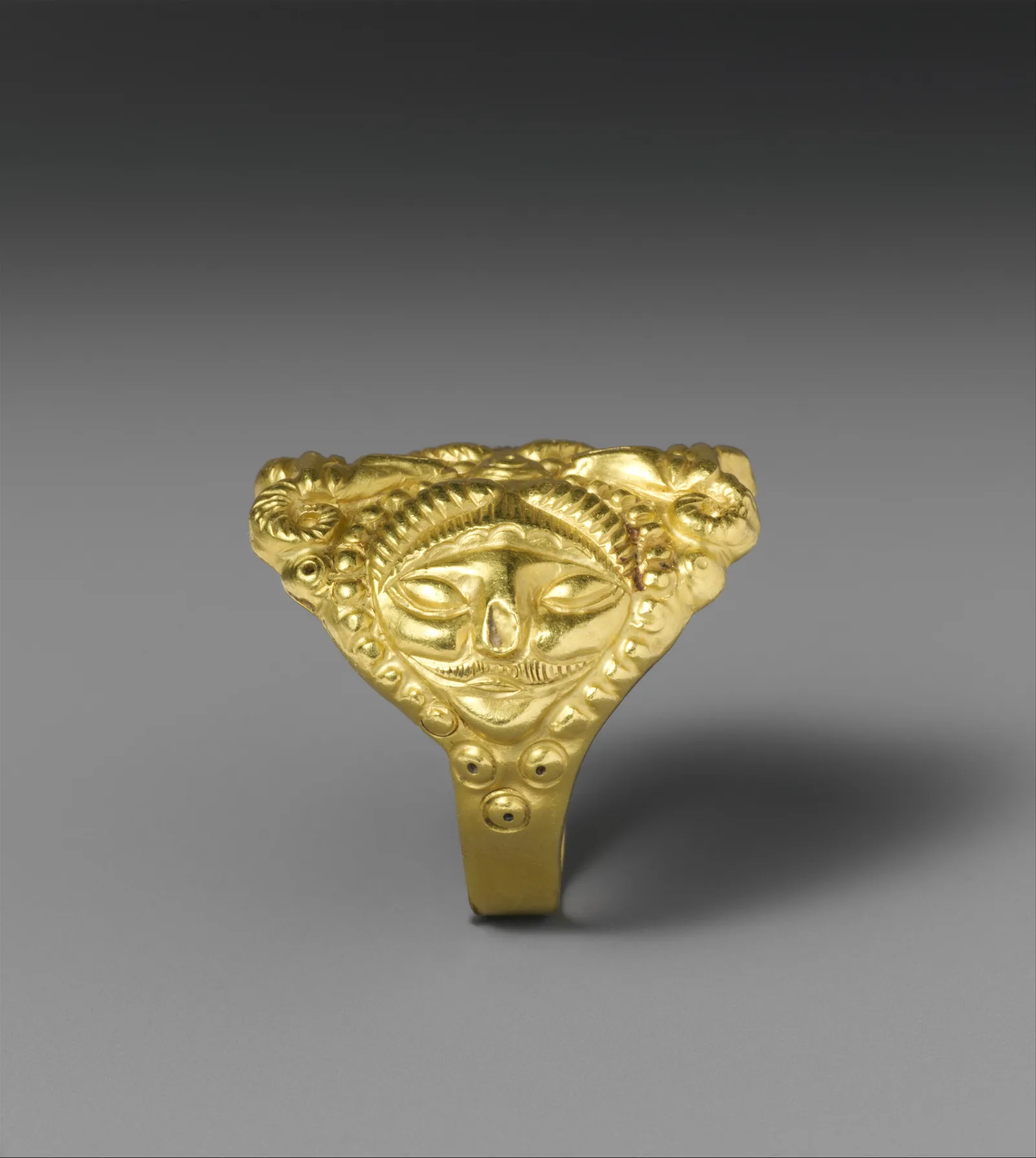
Midi band width is measured in millimetres, and for the phalanx the range is narrow: roughly one and a half to four millimetres. Thinner than one and a half and the ring looks fragile and bends easily in the wrong place. Wider than four and it starts to hinder the finger's bend and press into the joint. The sweet spot for everyday wear is around two to three millimetres: noticeable enough to read as jewellery, narrow enough not to restrict the finger.
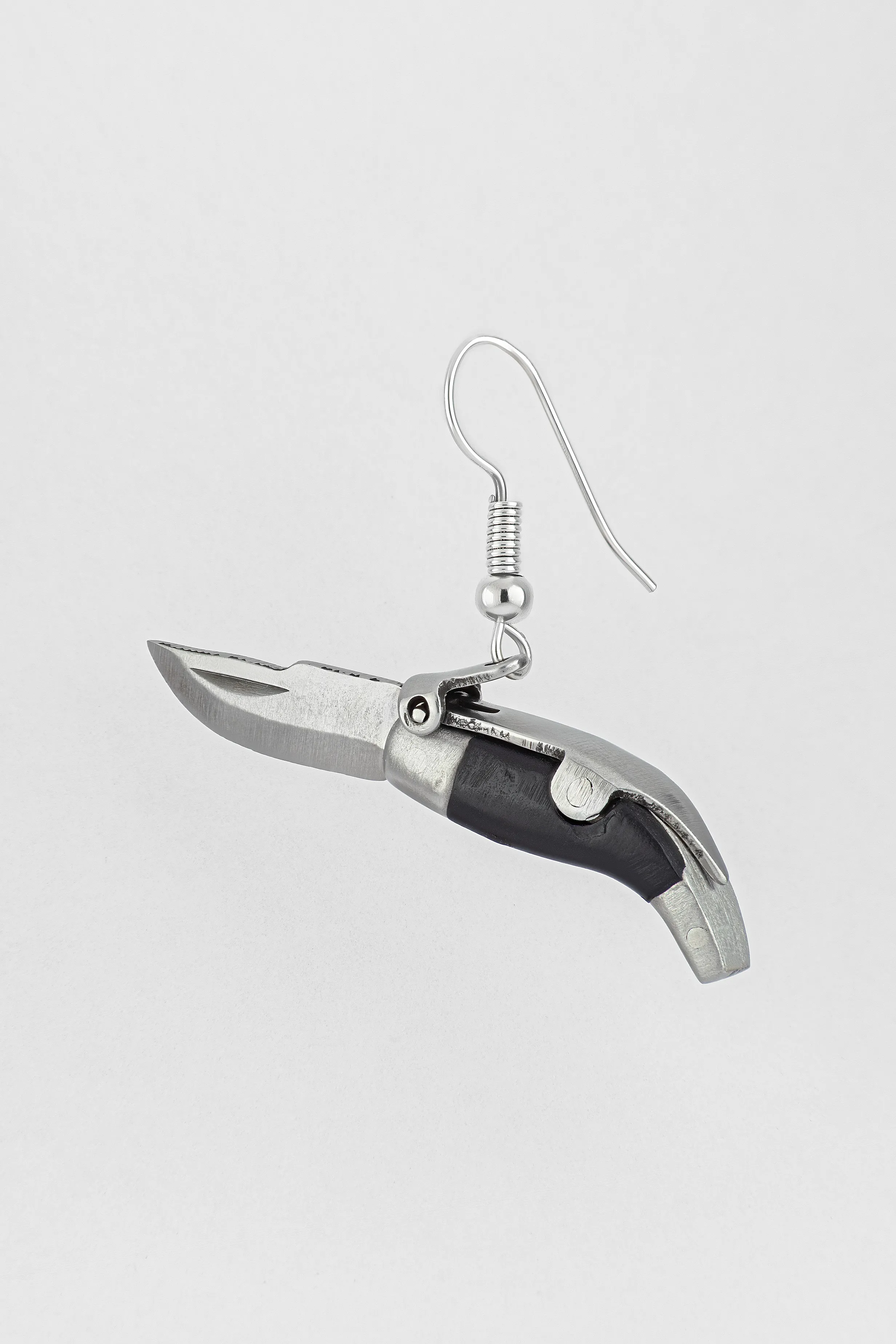
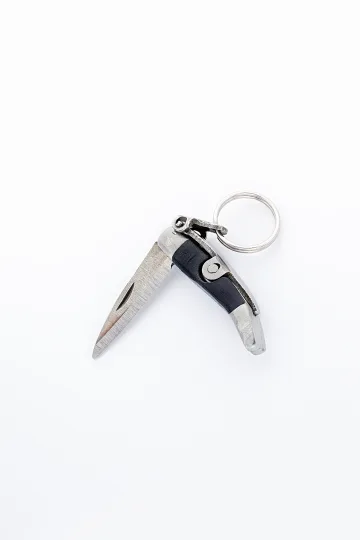
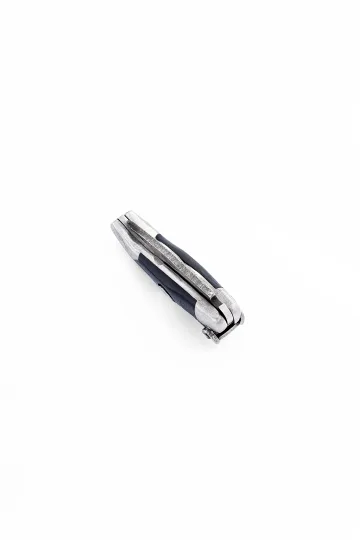
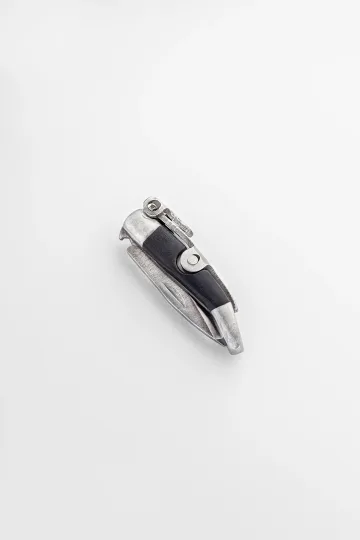
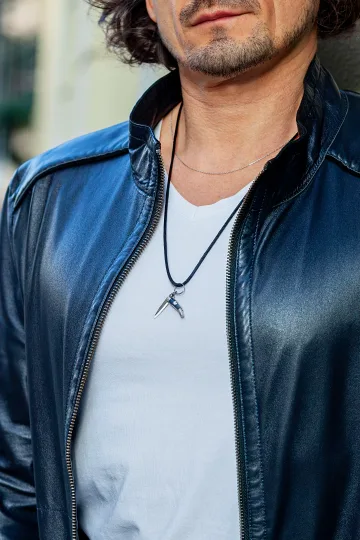
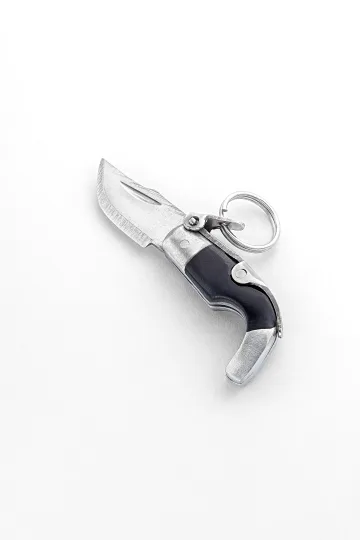
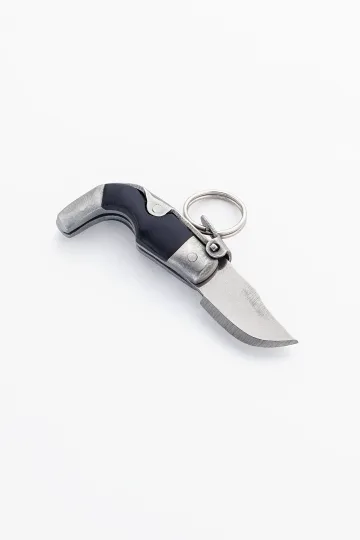
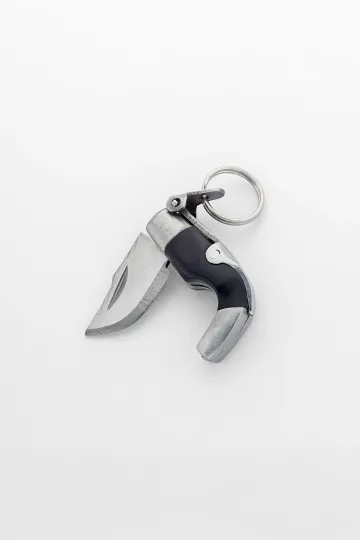
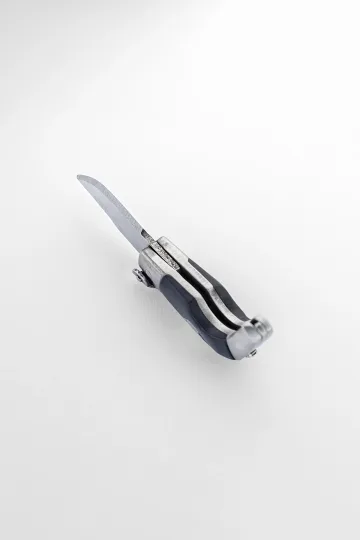
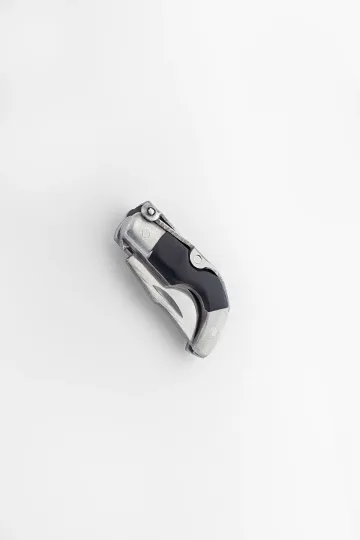
CAPAORA mini knife pendant
The 18th-century Spanish navaja in miniature: 40 mm of stainless steel, a real folding mechanism and a Palanquilla lock that clicks. An affordable gift to remember.
Authentic · Ships from Spain · 14-day returns
Problems With Midi Rings and Their Solutions
The Ring Spins
The most common complaint: the ring rotates around the phalanx and the decorative part drifts to the side or downward. The cause is almost always the same, the ring is slightly too big. Solutions: for an open ring, draw the ends together a little to reduce the diameter; for a closed one, pick a smaller size or switch to an open form. Shape helps too: a ring that is not round in cross-section but slightly flattened or with a flat top plate spins less, because it catches on the flattening of the phalanx.
The Ring Slips Off
If a midi flies off when you wave your hand or slides toward the nail on its own, it is a size too big or more. Do not try to "make do" with it; it is cheaper and simpler to take a smaller size. For an open ring, tighten the ends; for an adjustable one, draw them closer together. A seasonal note: in winter, in the cold, fingers are slimmer, and a summer ring suddenly starts slipping off. It is worth keeping a spare a touch smaller for the cold season.
The Ring Hinders the Finger From Bending
If the ring sits too close to the joint or is too wide, it presses into the skin when you bend the finger and chafes. The fix: shift the ring closer to the centre of the phalanx, away from the joint, and choose narrow rings (2 to 4 mm) over wide ones. The narrower the band, the more freedom the finger has to bend. Wide midis look good in photos, but in real wear narrow ones are far more comfortable.
The Ring Darkens or Turns the Skin Green
Silver darkens over time, this is natural oxidation, cleaned off in a minute. A green or black mark from a cheap alloy is something else, a reaction of copper or nickel with the skin and sweat. The cure is to switch the material to silver, steel, or proper plating. Take a midi off before the shower, the sea, and hand creams: contact with water, salt, and cosmetics speeds up tarnishing and plating wear.
Losing the Ring
A small, light ring is easy to lose: it slips off inside a glove, gets left on the sink, flies away in clothes you have taken off. Expensive midis are not made for exactly this reason, the format is inexpensive and interchangeable. But if a ring is dear to you, wear it in a closed, snugly fitting form rather than an open one, which is easier to pull off by accident. And make it a habit to check your hand before you take off gloves or wash the dishes.
The Ring Leaves a Mark on the Finger
A snugly fitting midi sometimes leaves a dent or a pale line on the skin, especially toward evening when the finger swells a little. This is not harmful and fades within minutes of taking it off, but it tells you the ring sits a touch tight. If the mark is deep and the finger above the ring goes red, the size is too small; take one size up or loosen the open form. The ring should fit confidently but not pinch the finger.
Manicures and Midi Rings
Nail Length and Shape
A midi ring lives right next to the nail, so the manicure and the ring affect each other. Long nails lengthen the finger and give a ring on the distal phalanx a beautiful backdrop. Short nails go better with a ring on the middle phalanx, closer to the joint. If you wear the ring right below the nail, the nail shape (almond, oval, square) sets the mood of the whole composition, and the ring is worth choosing to match that geometry.
Polish Colour and Metal Tone
Cool polish shades (grey, blue, burgundy, black) get along with silver and steel. Warm ones (beige, peach, red, golden) suit gold and gilding. A nude manicure is universal and does not clash with any metal, so it is the safest under a scatter of mixed rings. A bright accent nail next to a ring can either heighten the effect or steal attention; check it on the hand in advance.
The Ring as Part of the Manicure Look
Many people see a midi precisely as an extension of the manicure rather than a standalone piece of jewellery. In that logic the ring is chosen to match a specific polish and occasion, not worn all the time. A slim gold ring under a nude for weekdays, a silver one with a little stone under a dark evening polish. The interchangeable, low-cost nature of the format makes it easy to keep a small collection for different manicures and moods.
Caring for the Ring Alongside Caring for the Hands
Hand and cuticle creams, acetone when removing polish, soaks and oils, all of it lands on a ring sitting right by the nail. Acetone is safe for silver and steel but destroys cheap plating and clouds some imitation stones. Greasy creams leave a film on the metal that dulls silver faster. A simple rule: take the midi off before manicure procedures and wipe it with a soft cloth after applying cream. A minute of care keeps the shine going for a long time.
Who Suits a Midi Ring
By Hand Shape
A midi visually breaks the finger and places the accent in the middle, so it looks especially good on long, slim fingers, underlining their grace. On short, broad fingers it is better to choose a narrow ring and wear it closer to the centre of the phalanx, so as not to "cut" an already short finger in half. Large midis on short fingers visually shorten the hand; slim ones, on the contrary, lengthen it a little.
By Style
The format loves those who treat jewellery as play: mixing, adding, changing it to suit a mood. Bohemian, minimalist, street, and dressy-evening styles take a midi easily. A strict business dress code tolerates at most one slim, discreet ring. A classic conservative wardrobe finds a midi rather alien; there, ordinary rings at the base hold sway.
By Age and Occasion
A midi has no age limits, but it reads as something light, informal, youthful in spirit. It makes an excellent inexpensive gift, a first "grown-up" piece of jewellery, a souvenir from a trip, an add-on to a main present. For a ceremonial, status gesture a midi will not do; there are rings of a different weight for that. But for joy here and now, for changing up a look, for a small treat to yourself, the format is ideal.
Who a Midi Is Probably Not For
Honestly about the flip side. If you work with your hands in ways that rings get in the way of (medicine, the kitchen, sport, manufacturing), a midi will constantly catch and rotate; better to go without it or take it off for work. If any sensation of something foreign on the finger bothers you, you will feel a slim ring at the joint more than a familiar one at the base. And if you are the type who puts on jewellery once and forever, the interchangeable, playful nature of a midi will probably feel alien to you. There is nothing wrong with that: the format is not universal, and that is fine.
Send a friend a discount code, they save on their first order.
Facts That Surprise
Rings Were Worn Over the Nails
In Indian tradition there were ornaments worn directly over the nail, caps and covers for the fingertips, often linked by chains to rings on the phalanges and a bracelet. The hand turned into a single metal web. A modern midi on the distal phalanx is a faint descendant of that elaborate construction.
The Size Can Differ by 3 to 4 Units
The difference between the ordinary ring size (at the base of the finger) and the midi size (at the middle phalanx) on the same finger often reaches three or four units. Someone used to a 17 at the base of the index finger takes around a 13 to 14 for the middle phalanx. Those who do not know this are the ones who most often complain about "slipping" rings.
The Joint Is Thicker Than the Phalanx, and That Is the Main Engineering Puzzle
The entire design of a midi ring revolves around one fact: to settle on the slim phalanx, the ring has to pass over the thick joint. That paradox is what gave rise to the mass popularity of open and adjustable forms. In essence, a midi ring is the solution to a geometry problem: how to hold a ring where nothing holds it.
Art Deco Already Wore "Midis", Just Without the Name
The slim, graphic rings of the 1920s often matched in size what is sold today as a midi. The format was not born in the 2010s, it returned. Fashion is cyclical, and the ring on the upper phalanx has come and gone more than once over the past hundred years.
The Smaller the Ring, the Longer the Plating Lasts
Paradoxically, on a tiny midi ring gold plating wears more slowly than on a large signet with the same plating: less surface, fewer points of friction against other objects. The exception is adjustable rings, which are often squeezed by hand, where the plating wears off the bends faster.
Frequently Asked Questions
What midi ring size should I take if I only know my ordinary size?
Subtract roughly three or four units from your ordinary size as a starting point, but be sure to re-measure the middle phalanx with thread or a strip of paper. The ordinary size is measured at the base of the finger, the midi at the middle phalanx, which is slimmer, so a straight transfer of the size almost always gives a loose ring.
My midi ring keeps spinning, what should I do?
Most often it is simply too big. For an open ring, carefully draw the ends together with your fingers to reduce the diameter. For a closed one, take a smaller size or switch to an open form. A ring with a flat top plate or slightly flattened in cross-section helps too, since it catches on the flattening of the phalanx and rotates less than a round one.
Open or closed ring, which is better for the phalanx?
For the upper phalanx an open or adjustable ring is more practical: you put it on from the side, bypassing the thick joint, and adjust it easily with your fingers. A closed ring looks neater and sturdier in form, but it needs an exact size and forgives fewer mistakes. For your first midi, go open.
Can I wear a midi ring every day?
Yes, if the material is hard-wearing. Sterling 925 silver and stainless steel withstand daily wear for years. Take the ring off before the shower, the sea, sport, and applying creams: water, salt, and cosmetics speed up the tarnishing of silver and the wear of plating. Cheap alloys are not fit for constant wear, as they quickly lose their looks and can irritate the skin.
Does a midi ring not get in the way of bending the finger?
A narrow ring (2 to 4 mm) set in the centre of the phalanx away from the joint barely hinders bending at all. Problems start with wide rings and with those sitting right against the joint: they press into the skin when you bend and chafe. If the ring gets in the way, shift it to the middle of the phalanx and choose narrow models.
Which finger is best for a midi ring?
The most comfortable and visible fingers for a midi are the index, middle, and ring fingers. The index is good for a single ring, the middle for a central accent, the ring finger carries a midi without the wedding subtext. The little finger works too but needs a very small size. The thumb is rarely used for a midi.
How does a midi ring differ from an ordinary one in meaning?
An ordinary ring at the base of the finger often carries status or commitment (a wedding band, an engagement ring, a signet). A midi is a ring of mood and style without heavy symbolism. A ring on the middle phalanx of the ring finger, for instance, does not read as a sign of marriage, so you can adorn the finger without answering extra questions.
How many midi rings can I wear at once?
There is no hard limit, but there is balance. For weekdays one or two slim rings are enough. For the evening a scatter across different fingers and at different heights looks dressy. If you load one hand, leave the other almost bare. An odd number of rings (three, five) almost always looks livelier than an even one.
Build your hand from slim rings
Midi rings in sterling 925 silver and steel, open and adjustable forms that settle on the phalanx and stay put all day. Pick one at a time or build a stack to suit your mood and manicure.
Go to the ring catalogueBuying it as a gift? Each one arrives ready to give.
 A branded Zevira box and a little card come with every order.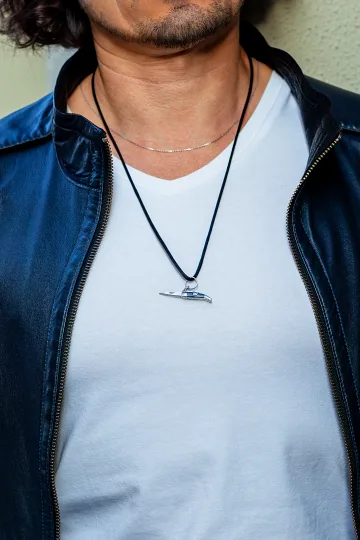




About Zevira
Zevira makes jewellery that gets worn, not hidden away in a box. Our rings, including the slim phalanx models, are cast from sterling 925 silver and stainless steel, with honest gold plating where a warm tone is wanted. We love the midi format because it turns the hand into a small composition, and we build our rings so they settle snugly on the upper phalanx, do not spin, and outlast more than one season. Open and adjustable forms forgive an inexact size, closed ones hold perfect geometry, the choice is yours.