Toe Ring: the Indian Bichia, Beach Fashion, and Silver That Survives Water
In India a silver ring on the second toe, the bichia, is placed on a bride at her wedding, and by tradition she never removes it for the whole of her married life. The rings come strictly in a pair, strictly in silver, never in gold, and behind that small detail sits a logic several thousand years old. The West rediscovered the same object only in the twentieth century, for a completely different reason: a tanned foot, sand, an open sandal.
A toe ring is exactly what the name says, a ring for the toe rather than the finger. The same thin band of metal turns up as a sign of a married woman, as part of a holiday look, or as a standalone piece for anyone tired of rings on their hands. Its history runs longer than you would guess, and its wearing rules are far more specific than the breezy "slip it on and go" of fashion.
This piece covers what a toe ring actually is, where it came from, which toe it sits on, why India makes it in silver, why an open band beats a closed one on the foot, how to guess your size, and which metal will survive water, sand, and a day inside a shoe.
What a toe ring is
A ring that lives on the foot
A toe ring is jewellery shaped like an ordinary ring, only smaller in diameter and built for a toe instead of a finger. Most often it sits at the base of the toe, close to the foot, occasionally on the middle joint. In essence it is the same band you would wear on your hand, but the logic differs completely: a toe is shorter and thicker at the base, bends constantly as you walk, presses against the shoe, and sweats more, so the demands on fit and metal are entirely their own.
The piece itself comes as a plain band, a band with a stone, narrow or wide, closed into a full circle or open in a horseshoe shape that you can gently bend to fit. What sets it apart from a finger ring is the size and the fact that it is almost never worn alone as a precious object: more often it is part of a look, a partner to an anklet, or a sign that reads clearly inside its own culture.
Wear the symbol, don't just read about it. These are in stock:





What it is called
The English term toe ring is plain enough. In India it carries its own names, and not one term but a whole spread of regional words: bichia or bichhia in Hindi, metti in Tamil, mettelu in Telugu, and in the north people often just say "the bride's toe ring." The sheer number of names gives the game away: this was not a single object imported from somewhere, it grew inside the tradition over centuries, and in each region it picked up its own meaning.
How it differs from a finger ring
The gap runs deeper than size. A finger ring is on display all the time, chosen as an ornament and often as a precious object with a stone. A toe ring works differently: you see it only now and then, in open footwear or barefoot, and it catches the eye when the foot moves. The toe is thicker at the base and thinner toward the nail, changes more in volume with heat and load, and meets water and sweat far more often. So you rarely find soft high-carat gold or fragile expensive stones here, while sturdy metal, a comfortable open shape, and resistance to moisture all earn their keep. This is jewellery of the gesture and the foot, not of the display case.
History of the toe ring
Ancient Egypt and antiquity
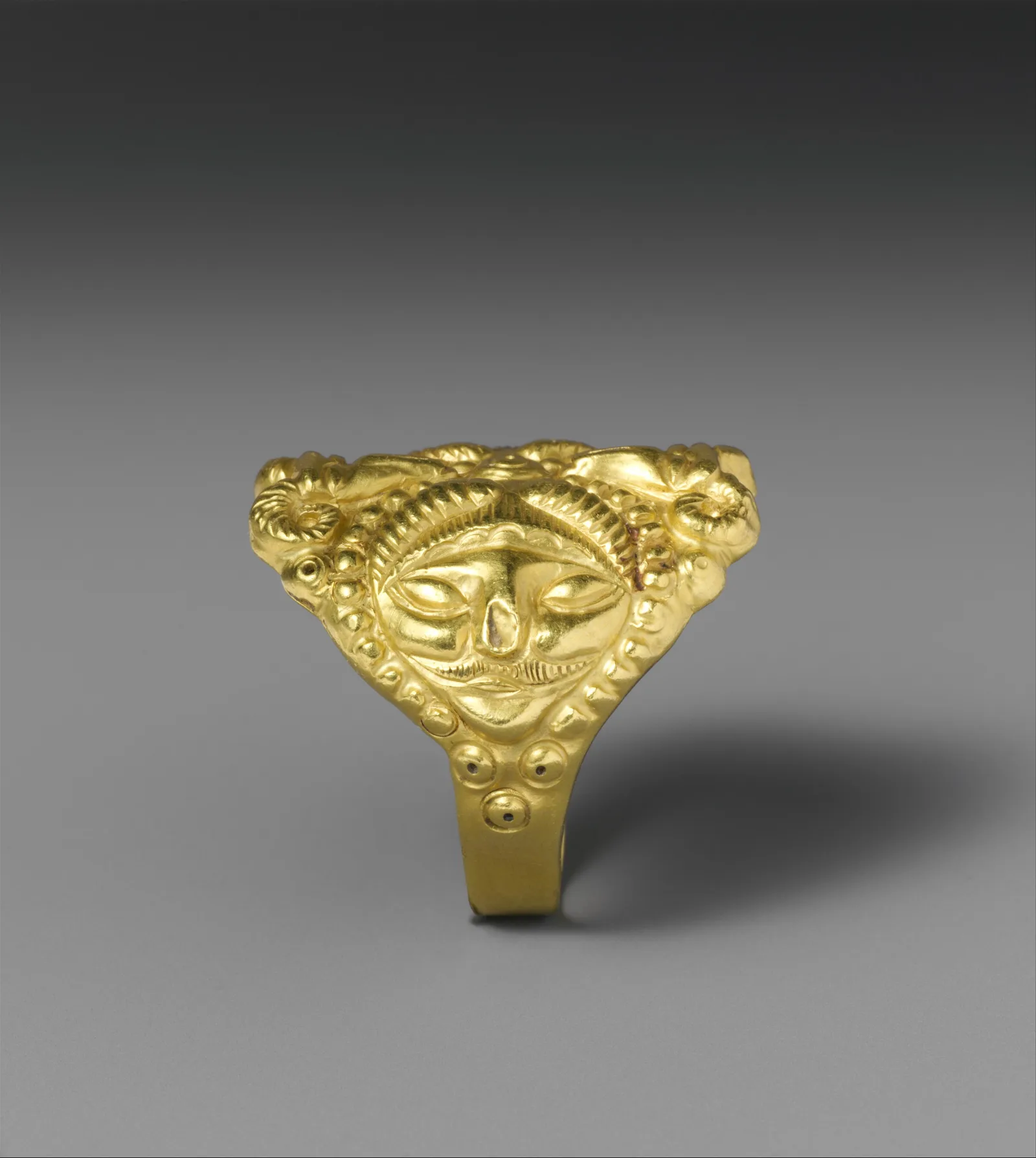
Ornaments worn on the toes appear in antiquity long before they became an Indian wedding sign. In ancient Egypt rings were not reserved for the hands: finds and images suggest the foot too could be dressed in precious metal, especially among the elite and among dancers, for whom the whole leg was part of the performance. In the Greek and Roman world toe rings turn up less often than rings on hands and ears, but they exist among the finds, and people wore them as small ornaments with no single fixed meaning. In other words, the idea of a ring on the toe is older than any one tradition; it surfaced in different cultures on its own.
India: the bichia and the language of a married woman
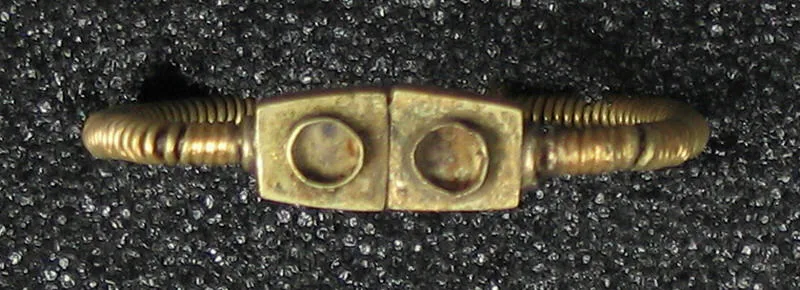
In India the toe ring took on a role it earned nowhere else. The bichia became part of married dress alongside the red dot of sindoor in the parting of the hair, the mangalsutra at the neck, and the bangles on the wrists. In a classical Hindu wedding the groom, at a set moment in the ceremony, places silver rings on the second toes of both the bride's feet, and this is a public sign that the woman is now married. The bichia is worn as a pair, on both feet, and in many communities it is never taken off for the length of the marriage, much like a wedding band. In the south of India it is called metti, and the logic is the same: an ornament on the foot reads to everyone around as an unambiguous social signal.
Why the second toe
The choice of the second toe, the one next to the big toe, is no accident in Indian tradition. Several explanations stack up. The practical one: on the second toe the ring holds better, does not get in the way of walking, and does not slip off as easily as it would from the big toe or the little one. The symbolic one: some readings tie the second toe to marriage and to nerves that, by folk belief, run to the womb, so wearing the bichia was linked to a woman's health and fertility. This belief has no scientific backing, but it is exactly what propped up the custom for centuries. So the practical and the superstitious met on the same toe.
What a pair of rings meant
The pairing of the bichia is no decorative whim. Two rings on two feet underlined the very idea of union: the ornament is worn symmetrically, as befits a sign of family balance. Different regions added their own touches, heavier patterned rings in some communities, slender ones in others, sometimes several rings across different toes of one foot. The richness and the fineness of the work hinted at the family's means, as any wedding ornament does. But the core meaning stayed single: a pair of silver rings on the feet says "I am married."
Western fashion of the twentieth century: from exotica to the beach
In Europe and America the toe ring stayed an exotic curiosity for a long time, something seen in photographs and pieces brought back from the East. The turn came in the twentieth century. First it caught on with the fashion for all things Eastern and Indian, then it became part of beach and resort culture, an element of the tanned bare foot on the sand. By the end of the century a thin silver or steel ring on the toe had settled firmly in the West as a light summer ornament with no obligatory meaning, worn with a sundress, with shorts, with open sandals. In a few decades the object travelled from a sign of marriage to a holiday accessory, much like the anklet, with which the toe ring is so often worn as a set.
How the meaning shifted over the centuries
Lay the history out in a line and you can see the meaning flow from one role into the next. First just an ornament for the foot among the Egyptians and in antiquity, with no heavy load on it. Then, in India, a strict sign of a married woman with its own rules of metal and toe. And finally, in the West, a light fashionable piece worn simply because it looks good. Today a toe ring can carry any of those layers, or none of them at all.
Silver on the toe, always. A gold toe ring is a fashion crime, and I won't hear otherwise.
What to wear a toe ring with
I have styled dozens of summer looks, and the little ring on the foot almost always decided whether the whole thing held together or fell apart. Here is what actually works.
What do I wear a toe ring with at the beach? For beach and resort I recommend thin silver or steel in an open model: with a sundress, a swimsuit, linen shorts, and bare feet on the sand. Cool metal stays neutral and never argues with a tan, and an open band forgives the way the foot swells by evening. One plain band at the base of the second or big toe reads cleanest of all.
And how do I build a boho look? For boho I suggest spiral rings, bands with fine chasing, and a small gathering of pieces on one foot. A long skirt, woven sandals, and an anklet to match belong here too. Keep everything in one metal, and the pile-up reads as a considered set rather than an accident.
What should I choose for a minimal style? For a minimal look I choose one narrow plain band with no decoration, a clean foot, and a neat pedicure. I build the accent on shape, not on shine. Silver or steel wins here: a quiet metal beside even polish looks pulled together and expensive without a single stone.
How do I pair the ring with an anklet? The most natural partner for a toe ring is an anklet on the same ankle. I recommend keeping them in one metal and one thickness: two thin silver accents on one foot read as a set. Match finger rings to the foot, silver to silver, with no yellow gold in the same outing, and do not load up on everything at once, pick an accent either on the hands or on the feet.
When is it better to take the ring off? Before the gym, a run, or a whole day in a tight closed shoe I suggest taking the ring off, so the metal does not deform and the toe does not rub. In a strict business look with closed shoes it cannot be seen anyway, so wear it there only as a private sign for yourself. In summer, at the sea, and at home in open footwear it almost never fails.

Turn on your camera, pick earrings, a pendant or a ring, and see the piece on yourself in real time.
Switch items in one tap.
Everything runs in your browser: no photo or video is ever uploaded.
Which toe you wear it on
The second toe for married Indian women
The canonical option, the one that comes from Indian tradition, is the second toe, the neighbour of the big toe. Here the bichia holds best and reads as a sign of marriage. If you specifically want the nod to the classic, the second toe is the right choice, and symmetrically on both feet, as the tradition expects.
The big toe
The big toe is the second most popular and the most practical for anyone living outside the Indian context. It is large, a ring sits on it conspicuously, holds firmly, and rarely gets lost. There is one drawback: the big toe presses hardest against the front of the shoe, so inside a closed shoe a ring there can be felt. For sandals, flip-flops, and walking barefoot the big toe is almost ideal.
The middle toes and the little toe
The third and fourth toes wear a ring less often, mostly for styling, when you want to gather several rings on one foot. The ornament looks elegant on them but holds worse and slips off more easily, because those toes are thinner and more mobile. The little toe is almost never used for a ring: it is short, and a ring will not stay on it. The general rule is simple: the closer to the big toe, the more secure the fit.
One foot or both
In Indian tradition the bichia is worn on both feet, as a pair, because that is where its meaning lies. Outside the tradition there is no hard rule: you can wear one ring on one foot as an accent, build a symmetrical pair, or combine it with an anklet on the same foot. There is no obligatory "left foot means one thing, right foot another" symbolism on a toe ring, unlike the urban legends people love to pin on foot jewellery. How the meaning of rings on different fingers works on the hand is something we covered separately, and on the foot that system does not repeat itself.
Customer reviews
Zevira is a real jewellery shop. Genuine payments, deliveries and customer thank-yous.
🥰🥰🥰 gracias
Ok, ¡gracias! 🙂
Why India makes it from silver, not gold
The metal rule: gold above the waist, silver below
Indian tradition holds a firm rule: gold is worn above the waist, silver below it. The root is not aesthetic but hierarchical. Gold was tied to the sun and the divine, and its place was nearer the head, at the neck, in the ears, on the chest. The feet, by contrast, were considered the least pure part of the body in Indian culture, and to adorn them with gold meant disrespecting the metal of the gods. So even in very wealthy families the bichia was made of silver, sometimes massive and finely chased, but silver all the same. This logic is alive to this day and explains why a silver toe ring reads as the most authentic version.
The practical side of silver
The tradition has a down-to-earth footing as well. Silver is stronger and springier than soft high-carat gold, and it holds its shape better on a toe that bends constantly and pushes against the shoe. On the foot an ornament wears out faster than on the hand, and losing expensive gold that way stings more. Silver costs less, you do not mind wearing it every day, and you do not fear scratching it on a stone or the pavement. So the symbolic rule and the everyday calculation pointed to the same metal.
Silver and the skin of the foot
There is a third layer. Silver clings to damp, sweating skin better than many coatings: it is solid metal, not a thin layer of gilding that would rub off the foot within a season. Sterling silver is sturdy enough to survive water and friction, and it stays hypoallergenic for most people. If you are choosing a toe ring for daily wear, silver remains the most logical material for the same reasons Indian tradition chose it. What sterling silver 925 actually means and why this grade became the standard is something we covered in detail.
Upload a photo of your pet, someone you love, or an object. We'll build a 3D model and hand-cast it in pewter.



Open vs closed rings: what is comfier for the foot
The closed ring
A closed ring is the familiar sealed band, just like the one on your hand. It sits securely and looks like a full ornament, but it has a drawback specifically for the foot: the diameter is fixed, while the toe changes in volume with heat, load, and the swelling that builds toward evening. Guessing the size is harder than on the hand, and a closed ring easily ends up either too tight or loose. Taking it off and putting it on is harder too, especially over the joint.
The open and adjustable ring
An open ring is split, its shape resembling a horseshoe or a spiral with a gap. You can gently bend or squeeze it with your fingers to fit the toe, and that is its main advantage on the foot. It forgives an error in size, does not crush the toe when it swells, and slips off and on easily. That is exactly why open and adjustable rings beat closed ones for the toe, especially if you are buying online and cannot try the piece on. There is one caveat: bending and squeezing the metal too often is unwise, since over time it tires, so it is better to adjust the ring once and gently.
Spiral and wrap models
A separate handy format is the spiral ring, which winds around the toe in one or two coils. By nature it is always adjustable, it holds by its grip, and it sits well on an awkwardly shaped toe. These models are popular precisely in the beach segment: they are easy to put on, they do not get lost, and they survive an active summer. If you are unsure of your size, a spiral or open ring is almost always safer than a closed one.
How to find your toe size
Why foot size is unpredictable
The toe is thicker at the base and thinner toward the nail, and it changes noticeably in volume through the day and with heat. Toward evening and in hot weather the foot swells slightly, and a ring that sat perfectly in the morning can grow tight. So when choosing a closed ring you take your measure at the thickest point, the base of the toe, and allow a little room.
How to measure at home
The simplest method: wrap a strip of paper or a thread around the base of the toe, mark where it meets, and measure the length with a ruler. That is the circumference, from which you find the diameter and pick the size from the seller's chart. Measure in the second half of the day, when the foot is in its normal working state, not in the morning after sleep. If the toe falls between two sizes, take the larger one for a closed ring; for an open one it hardly matters.
When to go adjustable
If you are unsure of the size, buying a gift, or ordering online without a fitting, the safest choice is an open or spiral ring. It adjusts to the toe and forgives the couple of millimetres of error that, for a closed ring, would mean either "does not go on" or "falls off." For a first toe ring an adjustable model almost always works out better.



Types of toe rings
The plain band
The most versatile option is a plain narrow band with no stones or decoration. It slips quietly into any look, does not catch on fabric or shoes, and survives water and sand. A plain band looks good both on its own and in a set across several toes. This is the base model, the easiest one to start with.
The ring with a stone
A ring with a setting adds sparkle but calls for caution, precisely on the foot. The stone must not stick up far, or it will catch on shoes and tights and loosen faster in its setting. For the toe you choose a low profile and sturdy stones or imitations that hold up to water. Fragile, expensive stones live worse on the foot than on the hand, and that is worth remembering.
The chain from ring to anklet
A striking format is a ring joined by a thin chain to a bracelet at the ankle. In English such a piece is called a barefoot sandal, jewellery for the bare foot. The ring sits on the toe, the chain runs over the arch of the foot to the anklet at the ankle, and the whole thing works as a single ornament for the beach, the pool, or a photo session. You do not wear such a thing inside ordinary shoes; this is jewellery strictly for the bare foot.
Sets and stacks
As on the hand, on the foot you can build a stack of several thin rings across different toes. Most often people combine plain bands of varying width, sometimes adding one ring with an accent. The key rule here is not to overload the foot: two or three thin rings look elegant, while metal on every toe turns into a pile-up and gets in the way inside a shoe.
Leave your email, we'll send your discount code. No spam, unsubscribe anytime.
The code arrives by email, valid on your first order.
Materials: what survives water and the beach
Sterling silver 925
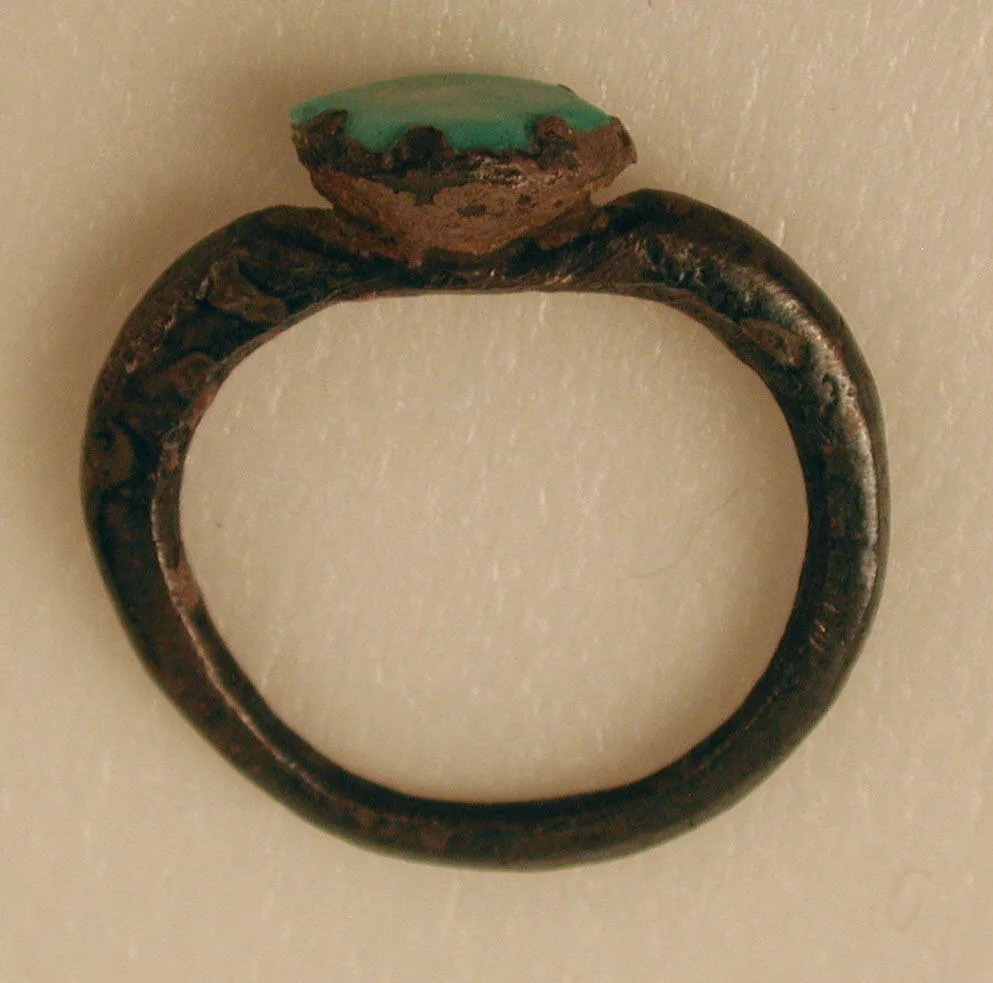
Silver remains the most logical material for a toe ring. It is solid, sturdy metal, hypoallergenic for most people, resistant to water and friction. Silver can darken slightly from sweat and contact with water, but that is a surface patina that wipes away with a clean, not damage. For daily wear and for an authentic nod to the tradition, silver has no rival.
Stainless steel
Surgical stainless steel is the workhorse of jewellery that lives in water. It does not darken, does not rust, fears neither sea nor pool, runs stronger than silver, and barely scratches. Steel has one drawback: it is harder to adjust, because the metal is stiff, so steel pieces tend to be sized to order or made as spirals. For an active summer steel is one of the most trouble-free options.
Gold plating
Gold-plated silver and gold-plated steel give the look of gold without its softness or price, but on the foot the coating has a short life. The toe rubs against the shoe, sweats, and meets water, and a thin layer of plating wears off faster than it would on the hand. If you want the golden colour specifically, choose plating over a sturdy base and be ready for it to fade with beach wear. For an everyday toe ring solid metal is more practical than a coating.
Titanium and medical alloys
For anyone with sensitive skin or a nickel allergy, the sensible choice is titanium and nickel-free alloys. Titanium is very light, strong, does not darken, and does not react with sweat or water, which on the foot matters all the more. The drawback is the same as with steel: stiff metal is hard to bend, so titanium pieces are mostly sized to order or spiral. But for people whose skin reacts to cheap alloys with greening and irritation, this material removes the problem entirely.
What to avoid on the foot
Soft high-carat gold deforms and scratches faster on the foot than on the hand, and losing it with a lost ring stings more. Cheap alloys with a high copper content can leave a green mark on damp skin, especially in summer. Fragile natural stones and glued-in settings cope poorly with water and knocks against the shoe. Rubber and silicone rings seem practical for sport but stretch quickly and gather dirt underneath. The simpler and more solid the ornament on the foot, the longer it lives.
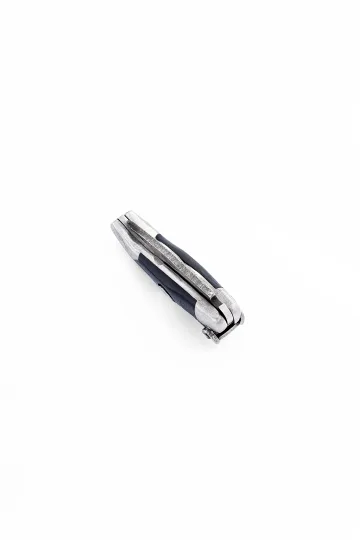
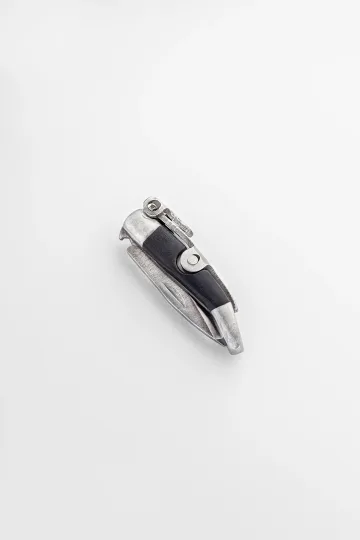
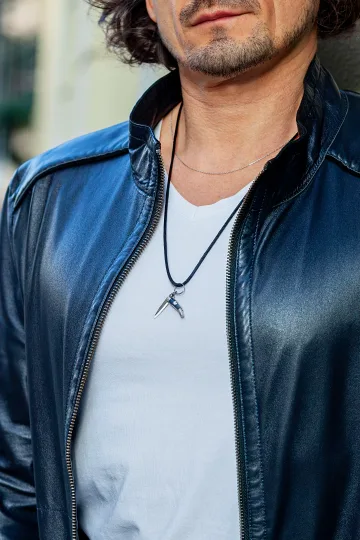
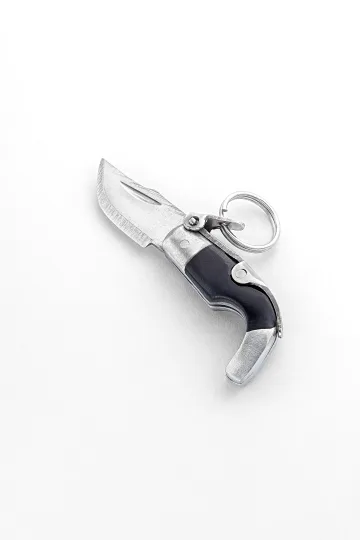
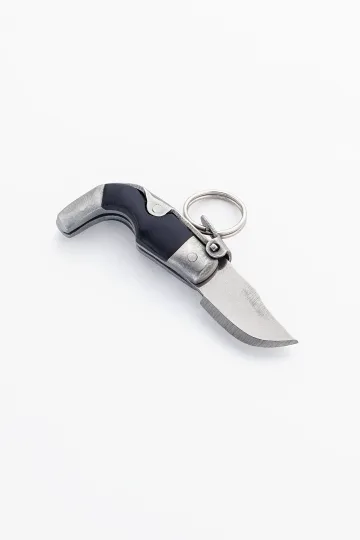
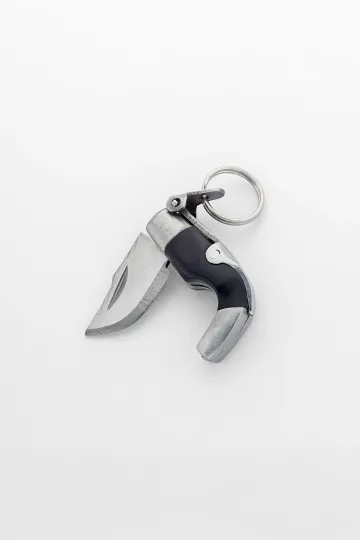
CAPAORA mini knife pendant
The 18th-century Spanish navaja in miniature: 40 mm of stainless steel, a real folding mechanism and a Palanquilla lock that clicks. An affordable gift to remember.
Authentic · Ships from Spain · 14-day returns
With what shoes and when it is appropriate
Open shoes and barefoot
A toe ring is made for open footwear and the bare foot. Sandals, flip-flops, the beach, the pool, the home, summer in the city: this is its natural habitat. Here it is on display, catches the eye as the foot moves, and works exactly as intended. In hot countries and at a resort it is one of the most fitting ornaments there is.
Closed shoes
Inside closed shoes, trainers, and boots a toe ring is trickier. It ends up pressed against the inner surface of the shoe, can be felt as you walk, and may rub, especially if the ring is wide or set with a stone. A thin plain band at the base of the toe usually rides along fine even inside a closed shoe, but wide and decorative models are not suited to it. If you wear a ring year round, choose a narrow plain band and seat it closer to the foot.
Pairing with pedicure and skin
A toe ring works more noticeably on a well-kept foot, and that is about tidiness, not expense. Neat nails and an even polish beside silver look pulled together, while metal on a neglected foot only draws extra attention to it. Silver and steel are neutral in colour and suit any skin tone and any polish; warm gold plating reads a touch better on a tanned foot. The ornament here is like a frame: it underlines what is beneath it, so caring for the foot matters more than the price of the ring.
Appropriateness by occasion
A toe ring belongs to a relaxed context: a holiday, summer, the beach, the home, an informal look. In a strict business or evening outfit with closed shoes it simply cannot be seen, so there is little point to it there. In the Indian cultural context the bichia, by contrast, is always fitting as a sign of marriage and part of traditional dress. Outside that context, treat the ring as a summer detail and it will not let you down.
Comfort and common problems
It rubs in shoes
The most common complaint is that the ring rubs inside closed shoes. The cause is almost always width or a protruding decoration. The fix is simple: for year-round wear take a narrow plain band and seat it at the base of the toe, where there is less movement and pressure. Leave wide rings and models with a stone for open footwear and the bare foot.
It slips off and gets lost
If the ring slips off, the issue is the size or the choice of toe. A closed ring is chosen by the base of the toe with a little room, but no more, otherwise it rattles and gets lost. An open ring is gently squeezed to the toe. On the slippery thin toes, the third and fourth, a ring holds worse, so for security people choose the second or the big toe. A spiral model barely ever slips off, thanks to its grip.
Swelling and a tight ring
The foot swells slightly toward evening and in the heat, and a closed ring can grow tight. If the toe is noticeably pinched, take the ring off and do not wear it tight: a constricted toe means both discomfort and risk. It is precisely because of the toe's changing volume that open and adjustable models are so often recommended for the foot, since they adapt to the state of the foot through the day.
The skin under the ring
Under a ring on a damp foot, moisture and dirt can collect, especially in the heat and after the sea. This is a question of hygiene, not of the ornament itself: the ring should be taken off regularly, with the toe beneath it washed and dried. Solid silver and steel do no harm to skin on their own; problems begin where the ornament is worn for weeks without being removed or cleaned.
Symbolism and paired rings
A sign of marriage
The main symbolic meaning of a toe ring is single, and it comes from India: a pair of silver rings on the second toes is a sign of a married woman, as unambiguous as a wedding band on the hand in Western culture. For those inside the tradition the bichia is not a mood ornament but part of one's status, and it is removed only on special occasions, in mourning for instance.
Paired rings outside the tradition
Outside the Indian context a toe ring carries no rigid symbolism, and that opens up room. A couple may wear matching toe rings as a quiet personal sign, less public than rings on the hands. You can have them engraved or choose identical models. Here the meaning is one you set yourself rather than one the tradition dictates, and there is a charm in that: an ornament on the foot is visible only to those close to you and to whoever you choose to show it.
The ring as a quiet choice
A toe ring has a quality that hand and neck jewellery lacks: strangers almost never see it. At work, in a strict shoe, in a formal suit, it stays hidden, and only you and those you decide to tell know about it. For some that is a way to wear a personal sign without making it public, for others simply a small secret under the sock. This privacy makes the ring a convenient gift and a convenient habit: it imposes nothing on the people around you and works purely for its owner.
Personal amulet and habit
Often a toe ring becomes just a personal habit and a small anchor: a thing you put on for the summer, tied to the sea, the holiday, the lightness. There is nothing mystical in this, but psychologically such an object works as a reminder of a relaxed state. That is a normal and honest reason to wear an ornament, no worse than any symbolism.
Send a friend a discount code, they save on their first order.
Hygiene and care
Take off and dry
The main rule for caring for a toe ring is to take it off regularly, wash the toe beneath it, and dry it. The foot sweats and meets water more than the hand, so moisture collects under the ring. An ornament taken off for the night, and clean dry skin beneath it, settle almost every hygiene question.
Cleaning the metal
Silver darkens over time from sweat and water; that is a normal patina. To bring back the shine, a gentle clean with a silver cloth, or with warm water, mild soap, and a toothbrush, does the job. Steel only needs a rinse and a wipe. Plating is cleaned as gently as possible, with no abrasive, so as not to rub off the thin coating. Harsh products and stiff brushes have no place near an ornament for the foot.
Sea, pool, sport
Silver and steel take salt and fresh water calmly, but after the sea it pays to rinse the ornament of salt and sand, which act as a fine abrasive in the gaps. Before intense sport and heavy footwear it is better to take the ring off, so as not to deform it or rub the toe. For the pool and the beach solid metals are the way to go; for chlorinated water steel is a touch more resistant than silver. The same principles apply to any beach jewellery, which we covered separately.
Facts that surprise
It sounds like a small thing, but so much curious history trails behind the toe ring that it deserves a conversation of its own.
In a classical Indian wedding the bichia is placed on the bride not by just anyone but by the groom himself, and this is one of the key moments of the ceremony, not an ornament a woman simply buys for herself.
In many communities the bichia is never taken off for the whole of married life, like a wedding band, and removing the toe rings was historically part of the rite of widowhood.
The rule "gold above the waist, silver below" is so strict in India that a gold toe ring is held by tradition to be direct disrespect to the metal of the gods, not a question of fashion at all.
A folk belief linked the second toe to a woman's health through a nerve said to run to the womb, and that is exactly why the bichia was worn on this toe for centuries. There is no scientific backing for it, yet the custom outlived millennia.
The ornament that joins a toe ring to an ankle bracelet by a chain over the arch of the foot is called a barefoot sandal in the West, and it is worn precisely barefoot, on the beach and in photo sessions, never inside shoes.
In the south of India the toe ring has its own name, metti, and its own styles, different from the northern bichia, so even within one country this is not a single object but a whole family of regional traditions.
The spiral ring that winds around the toe in several coils in fact solves the foot's main problem, the toe's changing volume, and that is why it turned out to be the ideal beach format, even though it looks like pure decoration.
Frequently asked questions
Which toe do you wear a ring on?
The canonical option from Indian tradition is the second toe, the neighbour of the big toe, where the ring holds better and reads as a sign of marriage. The most practical for everyday wear is the big toe. The third and fourth wear a ring less often, for styling, and it holds worse there. The little toe is almost never used for a ring. The closer to the big toe, the more secure the fit.
Why are Indian toe rings made from silver, not gold?
In Indian tradition gold is worn above the waist, silver below. Gold is tied to the divine and the sun, its place is nearer the head, while the feet were considered the least pure part of the body, so gold on them would disrespect the metal. On top of that, silver is stronger than soft gold and cheaper, so you do not mind wearing it every day. So symbolism and practicality met on silver.
A toe ring rubs in shoes, what should I do?
Most often it is a wide or decorative ring, pressed against the inner surface of a closed shoe, that rubs. For year-round wear take a narrow plain band and seat it at the base of the toe, where there is less movement. Leave wide models and rings with a stone for open footwear and the bare foot, where they do not press.
What size should I choose and how do I measure it?
Wrap a strip of paper or a thread around the base of the toe, mark where it meets, and measure the length with a ruler: that is the circumference of the toe, from which you pick the size off the seller's chart. Measure in the second half of the day, when the foot is in its working state. If in doubt, take an open or spiral ring: it adjusts to the toe and forgives an error.
Is an open or a closed ring better for the toe?
For the foot an open ring is usually comfier. The toe changes in volume with heat and load, and a closed ring easily ends up either tight or loose, while an open one can be gently bent to the toe. It forgives an error in size, does not crush when the toe swells, and slips off more easily. A closed ring looks like a full ornament but demands an exact size.
Can you wear a toe ring in water and at the beach?
Yes, if the metal is solid. Silver and stainless steel take salt and fresh water calmly. After the sea it pays to rinse the ornament of salt and sand. The worst at handling water is plating: a thin layer of coating wears off the foot fast. For the beach choose solid silver or steel rather than plated models.
Is there a left foot, right foot symbolism on a toe ring?
No, the urban legends about "the left foot means one thing, the right another" have nothing to do with the toe ring. In Indian tradition the bichia is worn as a pair on both feet as a sign of marriage, and the meaning lies in the pair. Outside the tradition there is no rigid symbolism at all; you can wear one ring on one foot as an accent or build a symmetrical pair, as you like.
Is a toe ring the same as an anklet?
No, they are different ornaments that are often worn together. An anklet is a bracelet at the ankle, while a ring sits on the toe. Sometimes they are joined by a chain into a single piece for the bare foot, but in essence they are two different things: one wraps the ankle, the other the toe. A toe ring can live on its own, with no anklet at all.
Buying it as a gift? Each one arrives ready to give.
 A branded Zevira box and a little card come with every order.




About Zevira
Zevira makes jewellery in sterling silver and steel built for real wear, not for the display case. We pick our toe rings, anklets, and summer pieces for the bare foot on a "put it on and forget it" principle: solid metal, a comfortable fit, resistance to water. If you are unsure of the size, take an open or spiral model and it will adjust to the toe on its own.