White vs Yellow Gold: Chemistry, Durability and Price
The Question Almost Every Jewellery Buyer Asks
You're standing in front of a jewelry display. Before you are three identical rings: yellow, white, and rose gold. All 14K, all the same weight, identical design. But the prices differ. And the question hits you: which one is better, white or yellow?
This isn't just about taste. Behind this choice lies chemistry, physics, practicality, allergies, durability, and of course, money. One choice could save you 30% of your budget. Another could prevent allergic reactions. A third might last twice as long.
In this comprehensive guide, we'll break down each type to its molecular level. We'll discover which is more expensive, white or yellow. We'll understand why rose gold is more durable than white. And most importantly, we'll determine which metal is right for you.
Wear the symbol, don't just read about it. These are in stock:

What This Guide Covers and Who Needs It
Three kinds of reader usually land on a page like this one, and each of them needs a different part of it.
The first is buying a wedding band, often the first serious piece of gold either partner has owned. The stakes feel high because the ring is meant to stay on the hand for decades without being taken off, so upkeep, hardness and the chance of a skin reaction matter far more than fashion. That reader should go straight to the sections on durability, allergies and wedding bands.
The second already owns gold and wants to add to it. Here the real question is compatibility: whether a new white piece will look accidental beside an inherited yellow chain, whether mixing warm and cool metals reads as deliberate or careless. The sections on pairing metals, on what to wear with each colour and on the psychology of choice are written for that reader.
The third is buying for someone else, usually as a gift and often without being able to ask outright. That reader needs the section on gold as a gift and the quiet ways of reading what a person already wears.
Whatever brings you here, the structure is the same throughout. Each colour gets a full breakdown of composition, appearance, hardness, allergy risk, upkeep, long-term cost and stone pairings. After the three breakdowns the colours are set side by side on ten separate criteria, so a single quality can be compared without rereading three chapters. The closing sections handle the practical business of buying, wearing and looking after gold for the rest of your life.
One promise worth making early: there is no single correct answer here. Anyone who tells you yellow is objectively better than white, or that rose gold is a passing fad, is selling something. The metals differ in measurable ways, and those differences suit different hands, budgets, jobs and tastes. This guide gives you the measurements. The choice stays yours.
Pick gold for your skin, not for the season. Warm skin wears yellow and rose, cool skin wears white, and never the other way round.
How to choose the right gold colour for you
I have matched gold to skin tone on more shoots than I can count, and the filter is simpler than the theory makes it sound. Here is how I read it, from the wrist out.
How do I tell which gold suits my skin? Look at the veins on the inside of your wrist in daylight. If they read green, I place you in the warm camp, and I recommend yellow or red gold. If they look blue or violet, your undertone is cool, and white gold sits more naturally. Cannot decide? Then you are neutral, and I would call that a gift: every colour is open to you.
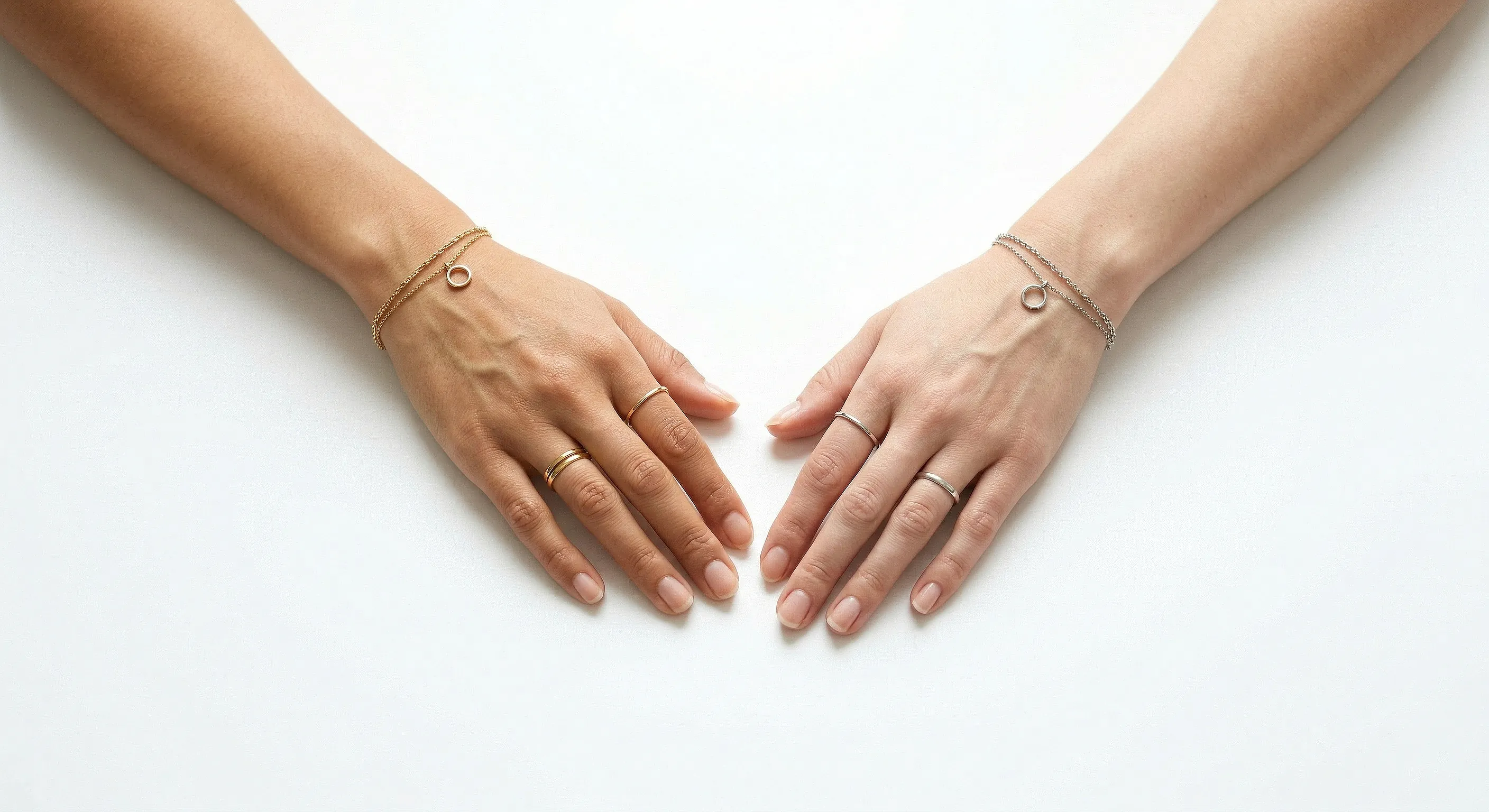
What if I still cannot read my undertone? Try the two-wrist test I use on clients: a silver piece on one hand, a yellow gold piece on the other, in daylight. Whichever looks like it has always belonged there points to your temperature. As a cross-check, notice which clothes flatter you: if warm shades (peach, olive, mustard, terracotta) win, go warm; if cool ones (icy grey, blue, lavender) win, go cool.
Does my wardrobe change the answer? It does, and I always factor it in. A closet built on warm neutrals (beige, camel, khaki, chocolate) makes yellow and red gold look effortless. A cool palette (grey, navy, white) carries white gold better. Black flatters every gold, so treat it as a free pass. On denim I suggest yellow or rose gold; the warm metal against cool indigo reads easy and unforced.
Which colour should I pick for the job it has to do? For a ring worn every day and never taken off, I recommend red or yellow: no plating, no upkeep, nothing to maintain. For a diamond piece I choose white gold, which keeps the stone icy and bright. For rubies, emeralds or warm stones, yellow or red gold flatters the colour. Earrings and pendants carry no wear, so there I say choose purely on looks.
White gold or not, am I ready for the upkeep? Be honest with yourself: white gold needs re-plating with rhodium every one to three years to stay bright. If you are ready for that, it is yours. If you know you will put it off, I steer you to yellow or red, which ask for nothing. One caution: if costume jewellery has ever left your skin red or itchy, assume a nickel sensitivity and skip nickel white gold. And whatever the tests say, try the piece on and step into daylight. If you love it there, that is your colour.

Turn on your camera, pick earrings, a pendant or a ring, and see the piece on yourself in real time.
Switch items in one tap.
Everything runs in your browser: no photo or video is ever uploaded.
The Chemistry of Gold: Why It Comes in Different Colours
Pure Gold: Always Yellow
Let's start with basics. The chemical element gold (Au, atomic number 79) in its pure form is always bright yellow. This is a physical property related to atomic structure.
Why it's yellow: Electrons in the atoms absorb blue light from the visible spectrum and reflect yellow and red. This is called the "relativistic effect," a quantum physics phenomenon.
24K (99.9% pure):
- Bright yellow colour
- Very soft (easily bent)
- Scratches from minimal contact
- Not used in jewellery in pure form
The problem with pure gold: Too soft for everyday wear. A 24K ring would deform from a simple handshake. That's why jewellers create alloys.
How Coloured Gold Is Made: The Science of Alloys
To make the metal stronger and change its colour, other metals are added. These are called "alloy metals" or "ligature."
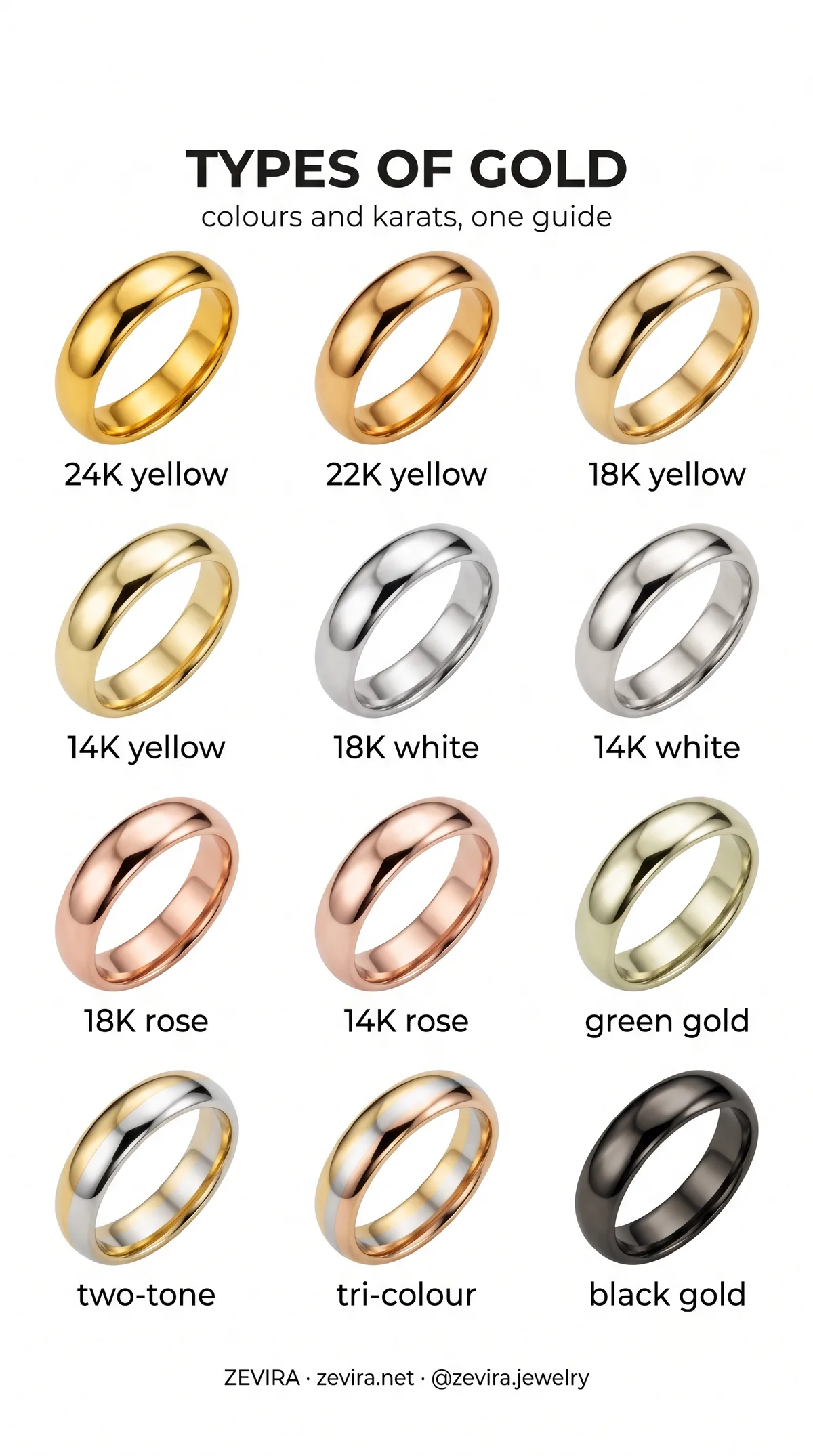
Basic principle: Karat indicates pure gold content. 14K = 58.5% gold + 41.5% other metals. 18K = 75% + 25% other metals.
What determines colour: The colour of the alloy depends on which metals and in what proportions are added.
Yellow Gold: The Classic
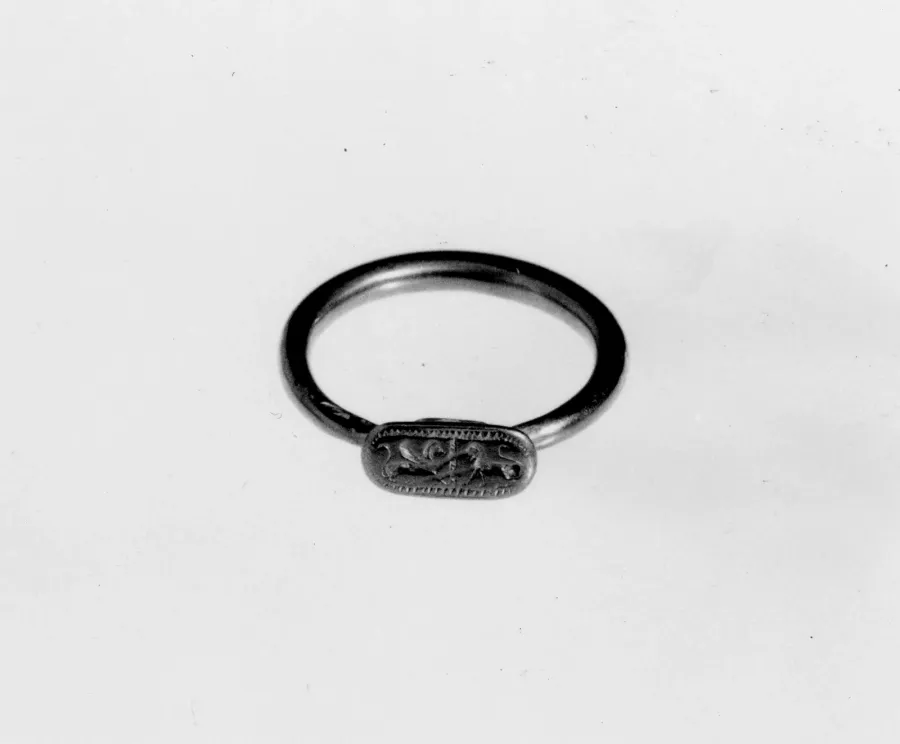
Composition of 14K yellow gold:
- 58.5% pure gold
- 30% silver
- 11.5% copper
Why this combination:
- Silver lightens the alloy (without it, would be reddish)
- Copper adds strength
- Result: warm yellow tone, close to the pure metal
Shade variations:
- More silver = lighter (lemon yellow)
- More copper = warmer (reddish yellow)
18K (75% gold):
- 75% of the precious metal
- 15% silver
- 10% copper
- Colour is brighter and richer than 14K
Rose (Pink) Gold: Romance
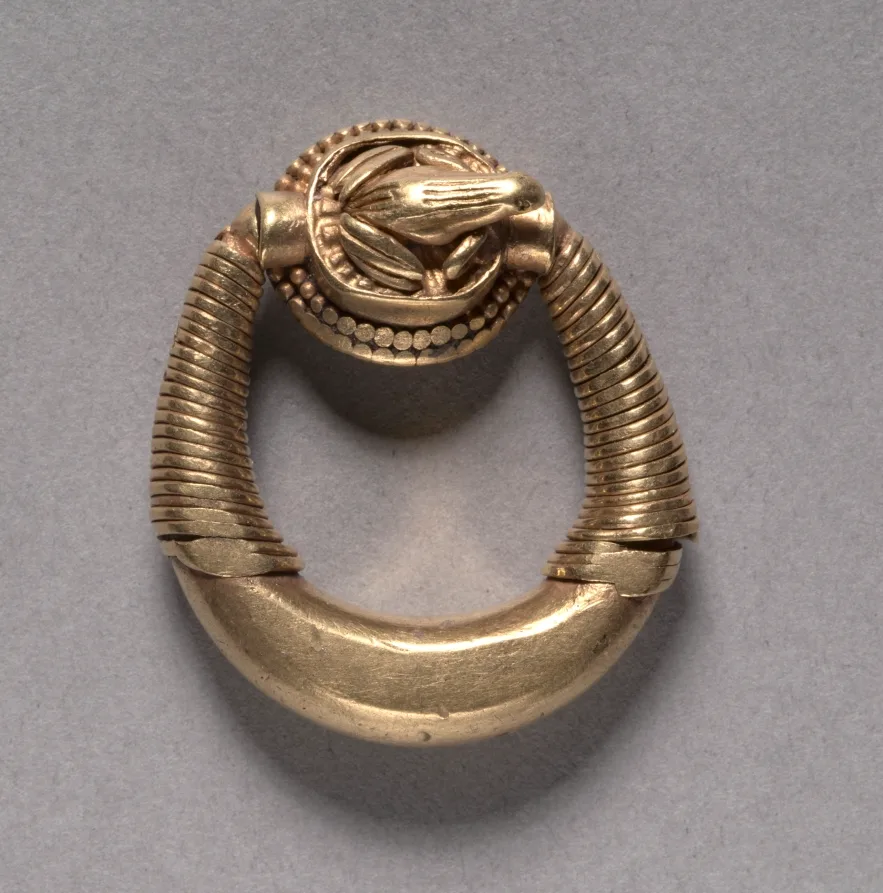
Composition of 14K rose gold:
- 58.5% pure gold
- 36% copper
- 5.5% silver
Why it's rose: Copper has a reddish tint. More copper = pinker the alloy.
Gradations:
- Pink gold: 75% Au + 20% Cu + 5% Ag (soft pink)
- Rose gold: 58.5% Au + 36% Cu + 5.5% Ag (deeper rose)
- Red variant: Very high copper content (popular in Eastern Europe)
Historical note: Rose gold became extremely popular in the Art Deco era (1920s-1930s) and has experienced a major revival since 2010.
White Gold: Modernity
Composition of 14K white gold (nickel alloy):
- 58.5% pure gold
- 30% nickel
- 11.5% copper and zinc
Composition of 14K white gold (palladium alloy):
- 58.5% of the precious metal
- 25% palladium
- 16.5% silver
Why it's white:
- Nickel and palladium "bleach" the yellow colour
- Results in silvery-white tone
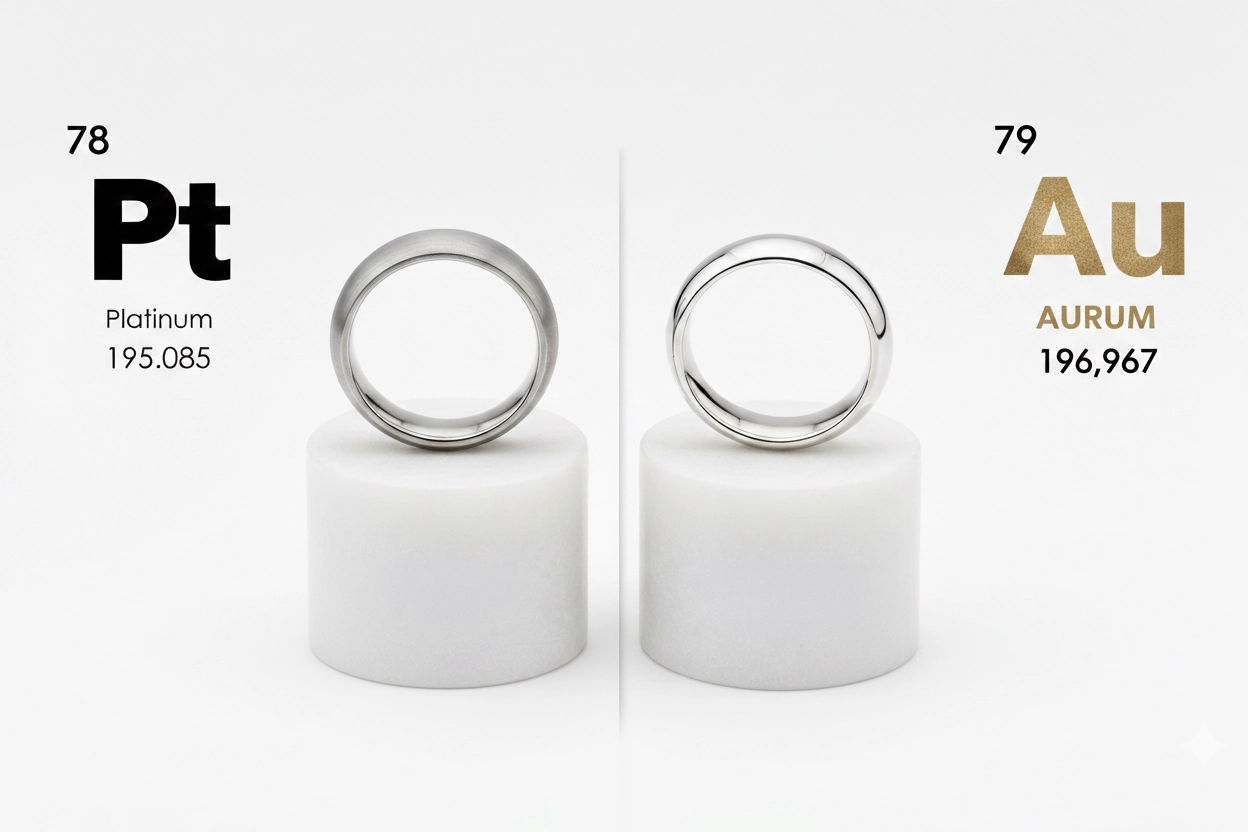
Rhodium plating: Even after bleaching, the alloy has a slight yellowish tint. So jewellers apply a thin layer of rhodium (a platinum group metal), just 0.1-0.2 microns.
Rhodium:
- Bright white colour
- Very hard
- Doesn't oxidise
The rhodium problem: The plating wears off in 1-3 years. Needs re-plating (rhodium plating costs moderately, typically less than a basic jewellery cleaning service).
Yellow Gold: The Full Breakdown
Yellow is the oldest and still the most widely worn colour of gold on earth. It is the tone the metal takes naturally, which means every other colour on the market is a deliberate departure from it. That alone gives yellow a claim the others cannot make.
Composition and Chemistry
A British 9ct yellow alloy holds 37.5 per cent gold; the 14ct alloy common across Europe and America holds 58.5 per cent; 18ct holds 75 per cent. The remainder is silver and copper in roughly balanced proportions, and that balance is what keeps the colour readable as yellow rather than drifting warm or pale. Push the silver up and the alloy pales towards lemon. Push the copper up and it slides towards apricot, then towards the rose family. Small amounts of zinc are often added as a deoxidiser, which keeps the melt clean and stops the casting from going porous. The chemistry is old and forgiving, which is why yellow alloys are the ones every bench in Europe can work confidently.
Karat Options and What They Mean
Nine carat is the British workhorse: hard, affordable, pale, and legally gold. Fourteen carat is the international compromise, rich enough in colour to read as gold across a room and hard enough to survive a life of door handles and steering wheels. Eighteen carat is the fine jewellery standard, noticeably deeper in tone and noticeably softer under the fingernail. Twenty-two carat, common in South Asian and Middle Eastern traditions, is almost orange in its saturation and soft enough that a wide band will slowly go oval on an active hand. The rule holds across all of them: more gold means more colour and less resistance. A guide to what the numbers stamped inside your ring actually mean sits in our piece on hallmark meanings for 925, 585 and 750.
Appearance and How People Read It
Yellow gold carries the strongest cultural signal of the three colours. It reads as gold instantly, without a second glance, which is exactly why some people love it and others avoid it. On warm and olive skin it disappears into the hand in the best sense, looking like something that grew there. On very fair, pink-toned skin it can look borrowed rather than owned, though a lower carat with its paler tone often solves that. Under the warm light of a restaurant or a winter evening it glows; under cold office strip lighting it flattens slightly. It photographs warm and forgiving, which is one reason it has taken over so much of what people post.
Strength and Wear Resistance
Yellow sits in the middle of the durability table. On the Mohs scale a 14ct yellow alloy lands around 3.0 to 3.5, softer than the copper-heavy rose alloys and softer than nickel white. In practice this means a polished yellow band collects fine surface scratches within weeks and settles into a soft satin patina within a year or two. That patina is not damage; many wearers prefer it to the factory shine. What yellow genuinely does risk is deformation in thin sections. A slender band under 2mm on a hand that grips tools or handlebars will slowly lose its circle. Go wider or drop a carat if that describes your day.
Allergy Risk
Of the three colours, yellow is the safest bet for reactive skin. Its alloying metals are silver and copper, neither of which sits high on the list of contact allergens. Reactions to a yellow gold ring are uncommon enough that when one appears, the usual culprit is not the metal at all: it is soap, hand cream or water trapped under the band, which macerates the skin and produces exactly the redness people blame on an allergy. Take the ring off, dry the finger properly, and the irritation usually resolves within days. Genuine metal sensitivity is covered in detail in our guide to nickel-free jewellery for sensitive skin.
Care and Upkeep
Warm water, a drop of washing-up liquid, a soft toothbrush along the inside of the band, then a thorough rinse and a dry with a lint-free cloth. That is the whole routine, and once a fortnight is plenty. Yellow gold has no coating to protect, so there is nothing to strip and nothing to renew. A professional polish every few years will take the accumulated scratches back to a clean surface if you want the original shine, though each polish removes a whisper of metal, so there is no sense doing it annually. Chlorine is the one genuine enemy: it attacks the copper in the alloy over repeated exposure, so the ring comes off before the swimming pool.
Cost of Ownership
This is where yellow quietly wins. The purchase price sits in the middle of the three colours, but the twenty-year running cost is close to nothing. No plating to renew, no colour to correct, no scheduled visits to a workshop. Set against a white gold band of identical weight that needs re-plating every couple of years, the yellow ring can end up cheaper overall despite a similar starting figure. For anything worn daily and never removed, that arithmetic tends to decide the question on its own.
How It Works With Stones
Yellow flatters warm and saturated stones above everything else. Rubies, garnets, citrine, amber, coral and imperial topaz all gain depth against it. Emeralds in yellow gold are one of the oldest and most convincing pairings in the craft, which is why so much surviving antique emerald jewellery is set that way. With colourless diamonds the effect is different: the yellow reflects into the stone and takes a fraction of its icy edge away, which reads as vintage warmth to some eyes and as a compromise to others. Slightly tinted diamonds in the lower colour grades actually benefit, because the surrounding metal masks the tint rather than exposing it. Pearls, particularly cream and golden ones, sit beautifully in yellow.
Which Pieces It Suits Best
Wedding bands, where the absence of upkeep matters more than anything. Chains and bracelets, where the warm tone survives the inevitable scratching better than a plated finish would. Signet rings, which are heavy, bear against surfaces constantly, and belong to a tradition that has always been warm-metal. Hoops and studs, where yellow is close to a default. Statement cuffs and collars, where the depth of colour does the work that a stone would otherwise have to do. Anything meant to look inherited rather than bought.
Who Yellow Gold Suits
Warm and olive undertones, where the metal and the skin agree without effort. Anyone building a collection they intend to add to over years, because yellow is the easiest colour to match later. People who want to buy once and never think about maintenance again. Those drawn to vintage, folk and antique styles, where yellow is period-correct. And anyone with sensitive skin who has been burned by costume jewellery and wants the lowest-risk metal on the counter.
Who Might Want to Skip It
Very cool, pink-toned complexions may find high-carat yellow fights the skin rather than flattering it, though 9ct is worth trying before ruling the colour out. Anyone whose existing collection is entirely silver and white metal will face a mismatch unless they commit to mixing deliberately. If your taste runs to strict minimalism and cold geometry, yellow carries a warmth that works against the effect. And for a large colourless diamond where maximum brilliance is the whole point, a white metal setting will serve the stone better.
Rose and Red Gold: The Full Breakdown
Rose gold is the colour people either fall for immediately or never quite warm to. There is very little middle ground, and that has been true through every one of its revivals.
Composition and Chemistry
Copper is the whole story. A 14ct rose alloy runs roughly 58.5 per cent gold, around 36 per cent copper and a small remainder of silver. Copper is what supplies both the pink cast and the hardness, and the two arrive together: the pinker the alloy, the harder it is. Silver is added in small amounts to soften the tone and to improve workability at the bench, because a copper-heavy alloy with no silver at all becomes stubborn to form. The chemistry is simple, cheap and extremely stable, which is why rose gold has never been a luxury tier despite the way it is often marketed.
Rose, Pink and Red: Where the Line Falls
The three names describe points on one continuous scale, and no regulator polices them. Pink gold, with roughly a fifth copper, is the palest and reads almost as a warm champagne. Rose gold sits in the middle at around a third copper, the tone most people picture. Red gold pushes the copper higher still and lands somewhere near a struck penny; it was the standard across Eastern Europe for most of the twentieth century, which is why so much inherited jewellery from that part of the world has an unmistakably ruddy cast that surprises Western eyes. When buying, ignore the marketing name and look at the piece in daylight.
Appearance and How People Read It
Rose reads as romantic, contemporary and slightly informal. It is the least neutral of the three colours and therefore the most opinionated: a rose band makes a statement in a way a yellow one does not. Its great practical advantage is that it flatters an unusually wide range of complexions, because the pink in the metal echoes the pink in most skin regardless of undertone. On very fair skin it can approach invisibility, blending rather than contrasting, which some wearers find elegant and others find underwhelming. Under warm light it deepens noticeably. It is the most photogenic of the three, which explains a great deal about its popularity over the past fifteen years.
Strength and Wear Resistance
Rose is the hardest of the three at equivalent carat, landing around 3.5 to 4.0 on the Mohs scale for a 14ct alloy. Copper does that. In daily wear the difference is real rather than theoretical: rose bands hold their circle better on active hands, resist deformation in thin sections, and take fewer visible scratches. Copper also oxidises very slightly over years, producing a faint darkening in engraved lines and textured areas that reads as depth rather than tarnish. There is one genuine caveat: very high-copper red alloys can become brittle rather than merely hard, and a sharp impact is more likely to crack than to dent. That is a workshop concern more than a wearer's one, but it is why sizing a red gold ring takes more care.
Allergy Risk
Low, though not quite as low as yellow. Copper allergy exists but is rare; what is far more common is the harmless green mark copper leaves on skin. That stain comes from copper salts forming when the metal meets sweat, cosmetics or acidic skin, and it washes off. It says nothing about the quality of the gold and nothing about your health. Hot weather, hand cream and gym sessions all make it more likely. We covered the whole phenomenon and what to do about it in our guide to jewellery turning skin green.
Care and Upkeep
The same routine as yellow: mild soap, warm water, soft brush, careful drying. Rose gold needs no plating and has no coating to lose. The only extra consideration is that copper responds to chemistry more readily than silver does, so chlorinated pools, bleach-based cleaners and undiluted household products should be kept well away. If the surface ever looks dulled rather than scratched, a jeweller's polish restores it in minutes. Storage matters slightly more than with yellow, because copper oxidation happens faster in a humid drawer than in a dry pouch.
Cost of Ownership
Rose is usually the least expensive of the three to buy, because copper costs a fraction of what silver costs and a tiny fraction of what palladium costs. It is also among the cheapest to own, since it needs no plating and holds up longest between polishes. The one place it loses ground is resale, not because dealers pay less for it, but because the colour is more divisive and a second-hand rose piece finds its buyer more slowly than a second-hand yellow one. If you buy to wear rather than to trade, that hardly registers.
How It Works With Stones
Morganite in rose gold is one of the most successful pairings in modern jewellery, the pink of the stone and the pink of the metal reinforcing each other. Champagne and brown diamonds, smoky quartz, rhodolite garnet and peach moonstone all behave the same way. Rubies in rose gold look softer and more antique than rubies in yellow. Colourless diamonds are a genuine gamble: the warm metal steals some sparkle, though in vintage-inspired settings that softness is precisely the intention. Cool stones such as aquamarine, tanzanite and blue sapphire generally fight the metal, and the combination rarely settles.
Which Pieces It Suits Best
Wedding bands for hands that work, where hardness is the deciding factor. Everyday stacking rings, because rose survives being knocked against its neighbours. Chains and bracelets subject to constant link-on-link friction. Watch cases, where the warm tone against a dark strap has become a modern classic. Engraved and textured pieces, where the faint copper darkening in the lines does the work of an antique finish for free. Pieces intended to look romantic rather than formal.
Who Rose Gold Suits
Almost every complexion, which is its quiet superpower. People with physically demanding jobs or hobbies who want gold that fights back. Anyone assembling a mixed-metal collection, because rose bridges warm yellow and cool white better than either of them bridges the other. Buyers who want the practical advantages of a harder alloy without paying the premium that white commands. And anyone who simply likes the colour, which in the end is reason enough.
Who Might Want to Skip It
Anyone whose existing jewellery is a committed collection in one of the other colours, unless mixing appeals. Buyers in conservative professional settings where the tone can read as informal. Those setting a large colourless diamond who want every scrap of brilliance the stone can give. And anyone who suspects they are following a trend rather than a preference, because rose is distinctive enough that fashion fatigue is a real risk in a way it never is with yellow.
White Gold: The Full Breakdown
White gold is the youngest of the three by a wide margin, invented barely a century ago as an answer to a shortage rather than a taste. Understanding that origin explains most of its quirks.
Composition and Chemistry: Two Schools
Gold is aggressively yellow, and bleaching it takes a metal willing to fight. Two candidates do the job commercially. Nickel produces a hard, bright, cheap white alloy and has been the workhorse for a hundred years. Palladium, a platinum-group metal, produces a softer, warmer, greyer white at considerably greater cost. A nickel 14ct alloy runs roughly 58.5 per cent gold with nickel, copper and zinc making up the rest. A palladium alloy of the same carat substitutes palladium and silver. Both are legally and honestly white gold, they cost very different amounts, and they behave very differently against skin. The label on the shelf will almost never tell you which one you are holding, so you have to ask.
Rhodium Plating: The Defining Feature
Neither alloy is truly white. Both retain a faint straw or grey cast, closer to old silver than to a mirror. So nearly every white gold piece sold anywhere is electroplated with rhodium, a platinum-group metal that is brilliantly white, extremely hard and chemically inert. The layer is astonishingly thin, typically a fraction of a micron, and it is a coating rather than part of the metal. It wears. On a ring worn daily, the plating usually starts thinning at the back of the band within a year or two and the warmer alloy underneath begins to show through. This is not a defect, not tarnish and not a sign of a fake; it is how the product works, and every white gold ring on the market will do it. Renewal is a routine workshop job, explained fully in our guide to rhodium plating and how to renew it.
Appearance and How People Read It
White gold reads as modern, formal and expensive. For most of the past thirty years it has been the default metal for engagement rings across Britain, Europe and North America, and that association is strong enough that a white band on the fourth finger is read as bridal almost automatically. Freshly plated, it is brighter and cooler than sterling silver and very close to platinum in appearance. As the plating ages the character shifts towards something softer and greyer, which a growing number of wearers actively prefer. On cool, blue-veined complexions it looks entirely at home. On warm and olive skin it creates contrast rather than harmony, which can be striking or can look like a mismatch depending on the piece.
Strength and Wear Resistance
The answer depends entirely on which alloy you have. Nickel white is genuinely hard, around 3.5 to 4.0 at 14ct, and holds a thin band's shape well. Palladium white is softer, around 3.0 to 3.5, closer to yellow in behaviour. Layered on top of either is the rhodium itself, which at roughly 6.0 on the Mohs scale is far harder than any gold alloy and gives a new piece excellent scratch resistance for as long as it lasts. That creates the peculiar wear pattern of white gold: superb for the first year or two, then abruptly ordinary once the plating thins. The metal has not changed; the armour has simply gone.
Allergy Risk: The Section That Matters Most
Roughly one person in ten across Europe carries a nickel sensitivity, and the figure runs higher among women, largely because of ear piercing in childhood. Nickel white gold is the single most common cause of what people describe as a gold allergy, and the reaction typically appears only after the rhodium plating wears through and the alloy beneath makes direct contact with skin. That delay is why so many wearers are convinced the ring changed rather than the coating. The EU Nickel Restriction, now carried within REACH and retained in British law after withdrawal, caps how much nickel may be released from items in prolonged skin contact, which has made the worst offenders rare on legitimate counters. It has not eliminated nickel from gold alloys. If you know you react, palladium white is the answer, and asking which alloy a ring uses is a completely normal question at any reputable counter.
Hallmarks and What the Assay Office Tells You
In Britain, any item sold as gold above a small weight threshold must be independently hallmarked before sale, and the four assay offices in London, Birmingham, Sheffield and Edinburgh each strike their own town mark: a leopard's head, an anchor, a rose and a castle respectively. The compulsory marks record the sponsor, the fineness in parts per thousand, and the office that tested the piece. This is genuine third-party verification of the gold content rather than a manufacturer's claim, and Britain is unusual in Europe for enforcing it so strictly. What a hallmark cannot tell you is the colour recipe: 750 means 75 per cent gold whether the alloy is yellow, rose, nickel white or palladium white. For that, you still have to ask the seller.
Care and Upkeep
Day to day, white gold is cleaned exactly like the others: mild soap, warm water, soft brush, thorough drying. The difference is everything that shortens the life of the plating. Ultrasonic cleaners are hard on rhodium and best avoided at home. Abrasive pastes, including toothpaste, strip it quickly. Chlorine, bleach and household cleaners attack it. Hand sanitiser used many times a day dulls it faster than most people expect. Beyond that comes the scheduled task no other colour requires: re-plating every one to three years, which means leaving the piece at a workshop for a few days. For a ring you take off at night this is a minor errand. For a wedding band you have never removed, it is a genuine consideration worth thinking about before you buy rather than after.
Cost of Ownership
White gold is the most expensive of the three to buy and comfortably the most expensive to own. The purchase premium comes from palladium where that alloy is used, from the extra plating step, and from the higher melting temperatures and longer bench time the alloys demand. The ownership premium comes from re-plating on a repeating cycle for as long as you wear the piece. Over a couple of decades those visits add up to a sum that surprises people who only compared price tags. None of that argues against white gold; it argues for going in with the full figure in mind.
How It Works With Stones
This is where white gold earns its reputation. A cool white setting reflects nothing but white into a colourless diamond, which is why nearly every serious diamond ring is set in white metal. The same logic serves aquamarine, blue sapphire, tanzanite, blue topaz and moonstone: cool metal with cool stone, the two reinforcing each other. White also handles the awkward middle ground well, since pale stones that would look washed out in yellow gain definition against it. Where it struggles is with warm stones. A ruby or a fire opal in white gold can look isolated, the metal refusing to join in. Pearls are a matter of taste: white metal suits cool grey and white pearls and fights golden ones.
Which Pieces It Suits Best
Engagement rings with colourless diamonds, where the metal exists to serve the stone. Formal jewellery of every kind, since white reads as evening and occasion. Pendants and earrings, which see far less friction than rings and therefore hold their plating for many years rather than months. Pieces that will be worn intermittently rather than daily, because the plating clock effectively pauses in the box. Anything designed around cool stones. And anyone who wants the look of platinum at a distance without the weight of platinum on the hand.
Who White Gold Suits
Cool undertones with blue or violet veins at the wrist. Owners of existing silver and platinum collections who want everything to agree. Buyers setting a significant colourless diamond. Anyone whose professional environment rewards understatement, since white is the quietest of the three colours across a room. And people who genuinely do not mind a maintenance schedule, which is a smaller group than the number who believe they will not mind.
Who Might Want to Skip It
Anyone with a known nickel sensitivity who cannot confirm the alloy in writing. Buyers who want to purchase once and forget about it, since white is the only colour that asks for anything on a schedule. People whose warm complexion the metal fights rather than flatters. Those setting warm-coloured stones. And anyone choosing a wedding band they intend never to remove, where the practical case for yellow or rose is simply stronger.
Price Comparison: Which Gold Is More Expensive
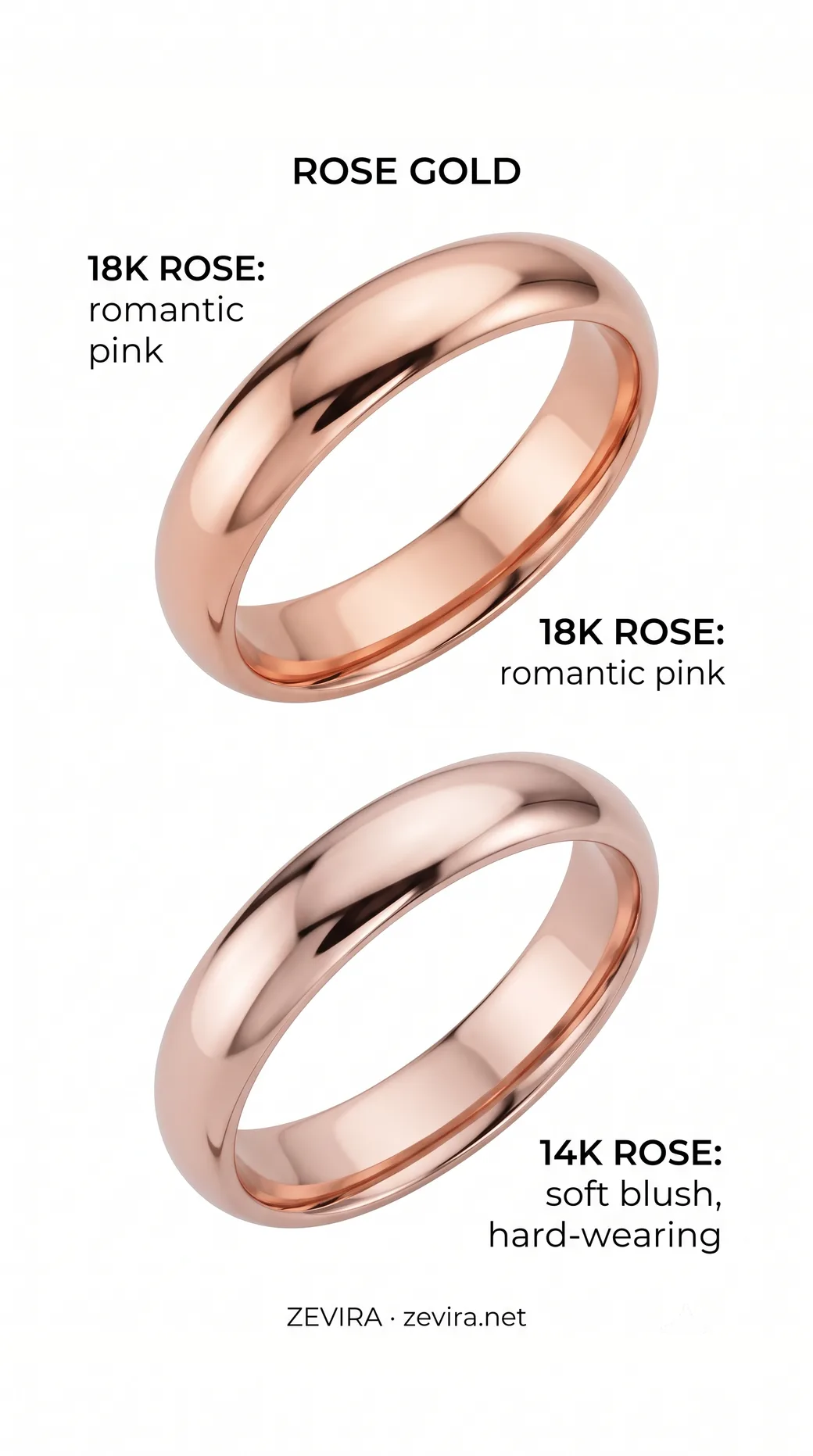
Now to the main question: which type is more expensive, white, yellow, or rose?
Price Per Gram Comparison
14K (58.5%):
- Yellow: Baseline price
- Rose: 5-10% cheaper than yellow
- White (nickel): Similar to yellow
- White (palladium): 15-25% more expensive than yellow
18K (75%):
- Yellow: Baseline price (higher than 14K)
- Rose: 5-10% cheaper than yellow
- White (palladium): 20-30% more expensive than yellow
Why White Gold Costs More Than Yellow
Reason 1: Expensive alloy metals
- Palladium (in the palladium alloy): Premium precious metal
- Silver (in the yellow alloy): Common metal
- Copper (in the rose alloy): Inexpensive base metal
Palladium is 50-80 times more expensive than silver!
Reason 2: Production complexity White gold is harder to alloy. Melting temperature is higher, the process takes longer.
Reason 3: Rhodium plating Additional operation that adds cost to the piece.
Why Rose Gold Is Cheaper Than Yellow
Copper is 140 times cheaper than silver. That's why the rose variant is 5-10% less expensive than yellow.
Real Price Comparisons for Finished Pieces
Wedding band (4mm width, 3g, 14K):
- Rose: Least expensive
- Yellow: Mid-range
- White (nickel): Similar to yellow
- White (palladium): 20-30% more than rose
Engagement ring with 0.5ct diamond (2.5g metal): The metal price difference is relatively small compared to the diamond cost, but:
- Rose setting: Most affordable
- Yellow setting: Mid-range
- White setting: Premium price
Which Gold Is More Valuable: White or Yellow?
On the global market: All karat variants are valued equally. 1 gram of pure gold (24K) is worth the same regardless of which coloured alloy it came from.
When selling: Buyers pay for pure metal content. Colour doesn't matter:
- 14K: Same price per gram (any colour)
- 18K: Same price per gram (any colour)
What's more valuable, white or yellow, when buying: White costs more to purchase, but sells for the same price. The premium for white gold is for the alloy (palladium) and labour, which is lost when selling.
Verdict: Which Gold Costs More
When buying new jewellery: White (palladium) > White (nickel) >= Yellow > Rose
When selling/trading in: All equal (only pure metal content matters)
Conclusion: The white variant is 15-30% more expensive than yellow when purchasing new, but not more valuable when reselling.
Three Colours Side by Side
Reading three separate breakdowns is useful once. After that, what you actually want is a single quality compared across all three at the same time. This section does that on ten criteria, each one standing alone, so you can skip straight to whichever matters to you.
By Hardness
Rose leads, nickel white follows closely, yellow and palladium white bring up the rear. At 14ct the gap between the hardest and softest alloy is roughly half a point on the Mohs scale, which sounds trivial and is not. In real wear it shows up as how long a thin band keeps its perfect circle and how quickly a polished surface goes satin. If your hands work, choose from the top of that list. If your jewellery mostly sits under a cuff at a desk, the ranking barely matters.
By Allergy Risk
Yellow and rose are close to a non-issue for the overwhelming majority of wearers. Palladium white is equally safe and is the standard recommendation for reactive skin that still wants a white metal. Nickel white is the only genuine risk on the list, and it is a meaningful one for roughly a tenth of the population. Rhodium plating masks the problem while it lasts, which is precisely why reactions to white gold so often appear a year or two into ownership rather than on day one.
By Purchase Price
At identical weight and carat, rose is the cheapest, yellow sits in the middle, nickel white lands near yellow, and palladium white is comfortably the most expensive. The spread comes entirely from the alloying metals and the extra plating step, since the gold content is identical across all four. Nobody is paying more for gold here; they are paying for copper, silver, nickel or palladium, and those four metals differ in cost by orders of magnitude.
By Cost of Ownership Over Twenty Years
Reverse the picture. Rose and yellow cost effectively nothing to keep, needing only an occasional polish if you want the original shine back. White gold needs re-plating on a repeating cycle for as long as you wear it, and over two decades that becomes a running total worth taking seriously. A white band and a yellow band that looked similarly priced on the counter can end up separated by a substantial margin by the time a silver wedding anniversary comes round.
By Maintenance Required
Yellow and rose ask for nothing beyond ordinary cleaning. White asks for a scheduled workshop visit every one to three years, plus a more careful daily routine: no ultrasonic cleaners, no abrasive pastes, no swimming in chlorine, and restraint with hand sanitiser. For a piece worn occasionally this is a footnote. For a wedding band that never leaves the finger, it is the single biggest practical difference between the colours.
By Colour Stability
Yellow and rose never change, because their colour is the metal itself rather than a coating. Rose deepens marginally over decades as copper oxidises in engraved lines, an effect most wearers read as character. White gold changes visibly and predictably as the rhodium thins, moving from bright cool white towards a warmer grey. Restoring it is routine, but the change will happen, and expecting it prevents the disappointment that brings so many people back to a counter convinced they were sold something faulty.
By Diamond Compatibility
White wins on pure optics: a colourless setting reflects only white into the stone and lets it do its work. Yellow warms a diamond slightly, which reads as vintage charm to some eyes and as lost brilliance to others, though it genuinely helps stones in the lower colour grades by masking their tint. Rose warms a diamond most of all and is best reserved for designs where an antique softness is the intention. For a large, high-colour stone bought specifically for its brilliance, white metal is the straightforward answer.
By How Each Looks on Different Skin
Warm and olive complexions carry yellow and rose most naturally, the metal reading as part of the hand. Cool, blue-veined skin carries white without effort and can find high-carat yellow slightly at odds with it. Rose is the diplomat: the pink in the alloy echoes the pink in nearly every complexion, which is why it flatters an unusually wide range of wearers. Deep skin tones handle high-carat yellow superbly, the saturation of the metal matching the depth of the skin rather than competing with it. None of this is a rule, and daylight on your own hand overrules every paragraph ever written on the subject.
By Photogenic Quality
Yellow and rose photograph warm, forgiving and rich, particularly in the golden light most people find flattering anyway. White photographs cool and precise, which suits formal portraits and sharp studio lighting but can read as flat grey under a phone camera in a dim room. This matters more than it used to, because a great deal of jewellery is now chosen from images before it is ever seen in person. Whatever you are looking at on a screen, assume the warm metals will be slightly less golden in life and the white slightly less brilliant.
By Symbolic Weight
Yellow carries millennia of association with the sun, permanence and wealth, and remains the traditional wedding metal across most of the world. White reads as modern, formal and bridal in the Western sense, a meaning it acquired within living memory rather than over centuries. Rose carries romance and warmth, a softer and more personal signal, and has no long tradition attached to it at all, which some buyers find liberating. If your choice is meant to say something to other people, these are the sentences each colour speaks before you say a word.
Durability and Longevity: 14K White or Yellow Gold?
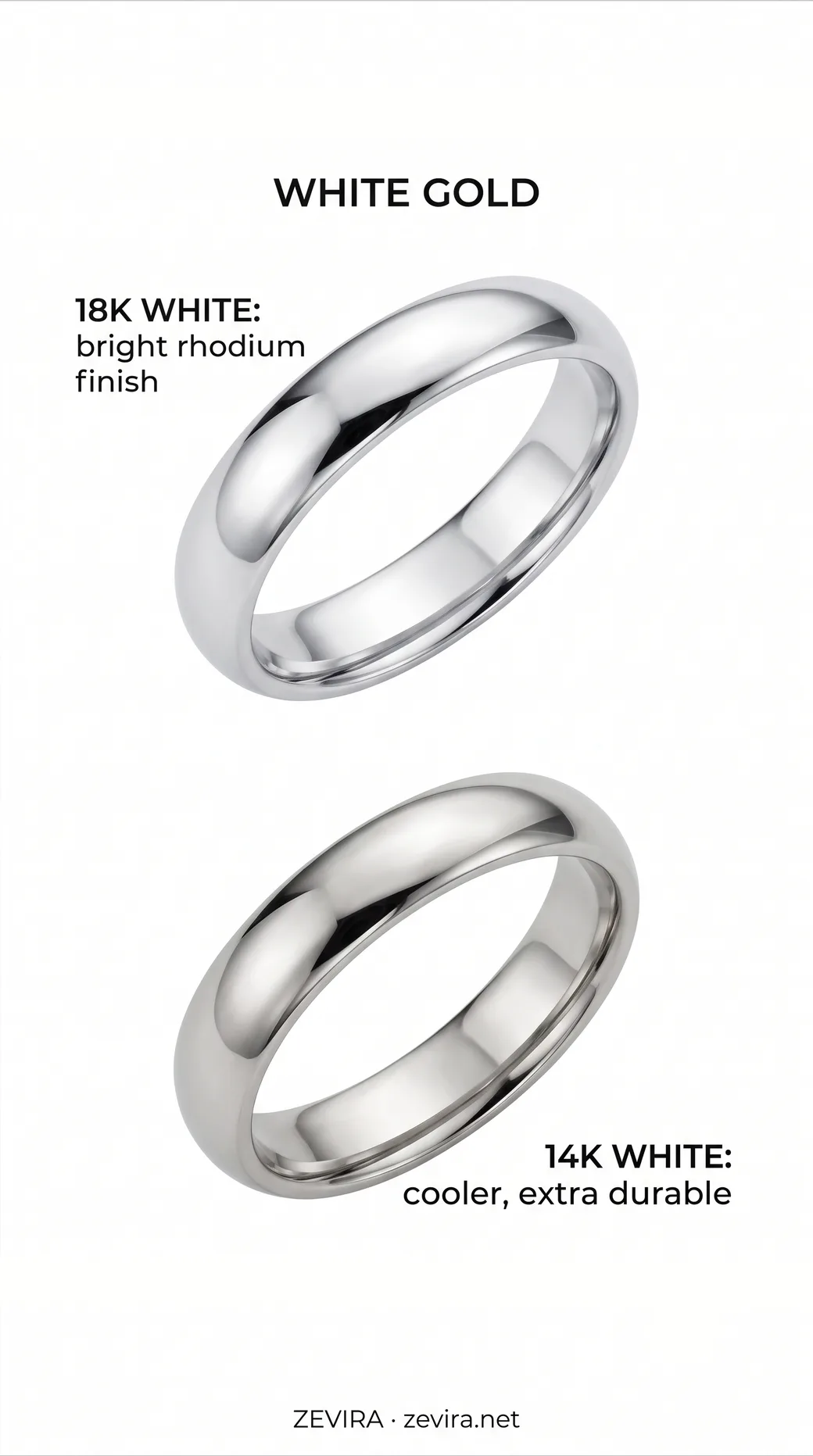
What's more practical for everyday wear?
Hardness on Mohs Scale
Scratch resistance:
- Rose gold 14K: 3.5-4.0
- Yellow gold 14K: 3.0-3.5
- White gold 14K (nickel): 3.5-4.0
- White gold 14K (palladium): 3.0-3.5
Rhodium plating on white: 6.0-6.5 (very hard)
What this means:
- Rose and white (nickel) are hardest
- Yellow and white (palladium) are softer
- But rhodium plating makes white the most scratch-resistant (until it wears off)
Real-World Wear Test: 5 Years Active Use
Rose gold:
- Scratches: Noticeable but not critical
- Weight loss: Minimal
- Deformation: Very rare
- Rating: 9/10
Yellow:
- Scratches: More visible than rose
- Weight loss: Small
- Deformation: Occasional (if ring is thin)
- Rating: 7/10
White with rhodium:
- Scratches (first 1-2 years): Almost none (rhodium protects)
- Scratches (after 2 years): Rhodium worn off, scratches like yellow
- Rhodium plating: Needs renewal every 1-3 years
- Rating: 6/10 (due to maintenance needs)
Best Metal for Different Purposes
Wedding band (worn for life without removing):
- Best: Rose gold 14K
- Why: Most durable, no maintenance needed, colour doesn't change
Engagement ring (with stones):
- Best: White gold 18K or platinum
- Why: White metal enhances diamonds, high durability
- Worth knowing: white gold and platinum look nearly identical at first glance but behave very differently in wear, weight, and lifetime cost. The platinum vs white gold comparison guide breaks down the choice in detail.
Chain:
- Best: Rose gold 14K
- Why: Links rub against each other, rose most wear-resistant
Earrings:
- Any: All options work well
- Why: Minimal wear, choose by aesthetics
Bracelet:
- Best: Rose or yellow 14K
- Why: Constant contact with surfaces, better to avoid rhodium maintenance
Customer reviews
Zevira is a real jewellery shop. Genuine payments, deliveries and customer thank-yous.
🥰🥰🥰 gracias
Ok, ¡gracias! 🙂
Gold Allergies: Facts and Myths
Can You Be Allergic to Gold?
Short answer: No, allergies to the pure metal don't exist. Gold is inert.
But: Allergies occur to metals in the alloy.
Nickel: The Main Allergen
The nickel alloy problem:
Nickel is one of the most common metal allergens. 10-20% of the population has nickel sensitivity.
Nickel allergy symptoms:
- Skin redness under the ring
- Itching
- Rash
- Irritation
- In severe cases, blisters
Where nickel is found:
- White 14K (cheaper alloys): up to 30% nickel
- Costume jewellery
- Jean buttons
- Watches (cases and bands)
European standard: Since 2001, the EU banned selling jewellery with high nickel content. Many other countries followed suit, though regulations vary.
Which Gold Doesn't Cause Allergies
Usually well tolerated:
- Rose 14K/18K: Copper rarely causes reactions
- Yellow 14K/18K: Silver is considered hypoallergenic
- Palladium-based white: Palladium is considered hypoallergenic
- Platinum: Rarely causes a reaction
Conditionally safe:
- White gold with rhodium plating: While rhodium is intact, no nickel contact
Risky:
- Nickel-based white 14K without rhodium or with worn rhodium
How to Test for Nickel Allergy
Test:
- Buy inexpensive nickel jewellery
- Wear for 3-7 days
- If irritation appears, you have an allergy
If you have the allergy:
- Avoid the nickel alloy
- Choose palladium white, yellow, or rose
- When buying white gold, ask: "Is this nickel or palladium alloy?"
Real Story
A client purchased a nickel-based 14K white ring from another jeweller. After a week, rash and itching. She came to us upset: "Am I allergic to gold?"
We explained: Not allergic to the metal, but to nickel in the alloy. We offered:
- Recast into yellow (no additional cost)
- Or exchange for a palladium alloy (moderate upcharge)
She chose yellow. A month later she wrote: "Wearing it constantly, no allergies!"
Practicality: White Gold or Yellow, Which Is Better?
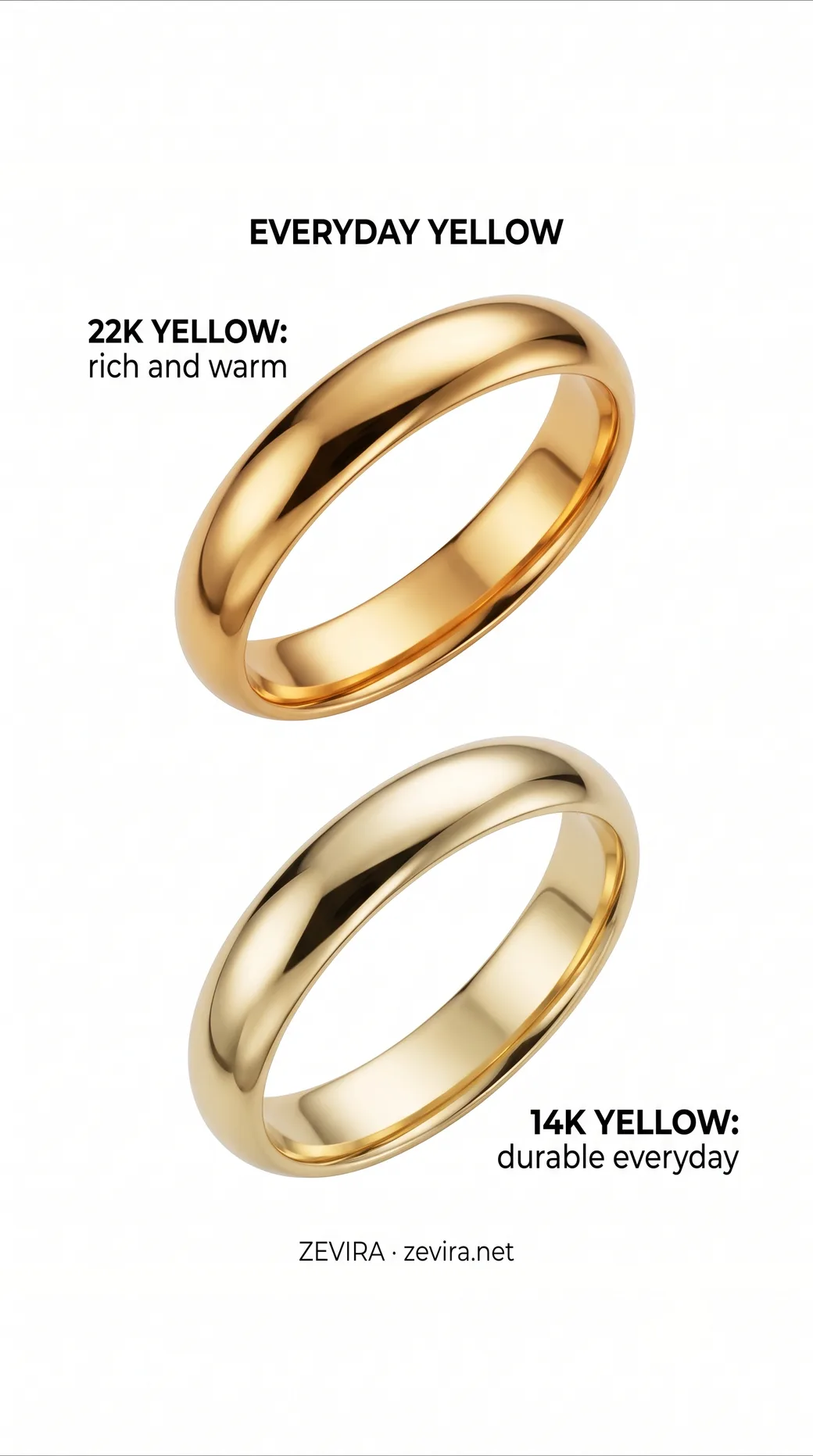
Beyond price and allergies, there are practical aspects of daily wear.
Maintenance and Care
Rose:
- Cleaning: Wipe with soft cloth
- Polishing: Once every 2-3 years (affordable)
- Special care: None required
- Annual cost: Minimal
Yellow:
- Cleaning: Soft cloth or soap water
- Polishing: Once every 2-3 years (affordable)
- Special care: None required
- Annual cost: Minimal
White:
- Cleaning: Same as yellow
- Polishing: Once every 2-3 years (affordable)
- Rhodium plating: Every 1-3 years (moderate cost)
- Annual cost: Significantly higher
Over 20 years:
- Rose/yellow: Low cumulative maintenance cost
- White: 3-4x higher maintenance cost
Conclusion: The white variant is significantly more expensive to maintain.
Scratch Visibility
Against dark backgrounds (clothing, skin):
- Yellow: Scratches moderately visible
- Rose: Scratches less visible (copper oxidises, masks them)
- White: Scratches very visible (especially when rhodium wears off)
Against light backgrounds:
- All roughly equal
Polished vs matte finish:
- Polished: Scratches very visible (any colour)
- Matte/satin: Scratches barely noticeable
Tip: If you don't want to see scratches: choose matte finish in any colour.
Compatibility With Other Jewellery
If you already own jewellery:
Silver, white gold, platinum:
- Best to add: White
- Acceptable: Yellow (creates contrast)
- Less ideal: Rose (doesn't match visually)
Yellow pieces:
- Best: Yellow
- Acceptable: Rose (warm tones)
- Less ideal: White (cool vs warm clash)
Rose pieces:
- Best: Rose or yellow
- Acceptable: White (if you want mixed metals)
Modern trend: Mixed metals are in. You can wear white + yellow together. But better if it's an intentional choice (like a two-tone ring) rather than random combination.
Stone Compatibility
Diamonds (colourless):
- Perfect: White gold, platinum
- Good: Yellow (classic)
- Acceptable: Rose (vintage)
Coloured stones (rubies, sapphires, emeralds):
- Perfect: Yellow (contrast)
- Good: White (modern)
- Excellent: Rose (rubies in rose look stunning!)
Pearls:
- Perfect: Yellow or rose
- Good: White
Logic:
- Cool stones (diamonds, aquamarine) + cool metal (white)
- Warm stones (ruby, garnet, amber) + warm metal (yellow, rose)
For Different Age Groups
18-30 years:
- Popular: White (modern, trendy)
- Alternative: Yellow (coming back in fashion)
30-50 years:
- Popular: Yellow and white roughly equal
- Classic: Rose (especially in certain regions)
50+ years:
- Traditional: Yellow
- Second choice: Rose (nostalgia)
- Less common: White
Logic: Youth follows trends (white has been trendy for 20 years). Older generations stick to classics.
Wedding Bands: White or Yellow Gold?
This is the most popular question: which gold to choose for wedding bands?
What Buyers Tend to Choose
Wedding band colours, roughly in order of popularity:
- Yellow: still the most common overall
- White: very close behind, long the default for diamond rings
- Rose: a steady favourite, especially for romantic styles
- Mixed metals: a smaller but growing niche
Note: preferences vary significantly by region and culture.
White Gold for Wedding Bands
Pros:
- Modern appearance
- Pairs well with diamonds
- Hasn't gone out of style in 20 years
- Visually similar to platinum (looks premium)
Cons:
- Rhodium plating every 1-3 years (inconvenient for rings you never remove)
- 20-30% more expensive
- When rhodium wears off, yellowish tint shows
- Nickel-based alloys carry allergy risk
Best for:
- Young couples (under 30)
- Modern style lovers
- Those willing to have rhodium re-applied every 2 years
- If no nickel allergy (or choose palladium)
Yellow Gold for Wedding Bands
Pros:
- Timeless classic
- No rhodium needed
- Colour never changes
- 10-15% cheaper than white
- Hypoallergenic
- Suits any age
Cons:
- May seem "old-fashioned" to some
- Scratches slightly easier than rose
Best for:
- Classic style lovers
- Couples 30+ years
- Those who don't want maintenance hassles
- Tradition-minded buyers
Rose Gold for Wedding Bands
Pros:
- Most durable of all
- No maintenance required
- Warm romantic tone
- 20-30% cheaper than white
- Trending in fashion
- Hypoallergenic
Cons:
- Specific colour (not everyone's taste)
- Less versatile with other jewellery
- Less traditional in some cultures
Best for:
- Those valuing durability
- Romantic aesthetic fans
- Budget-conscious buyers
- Fashion-forward couples
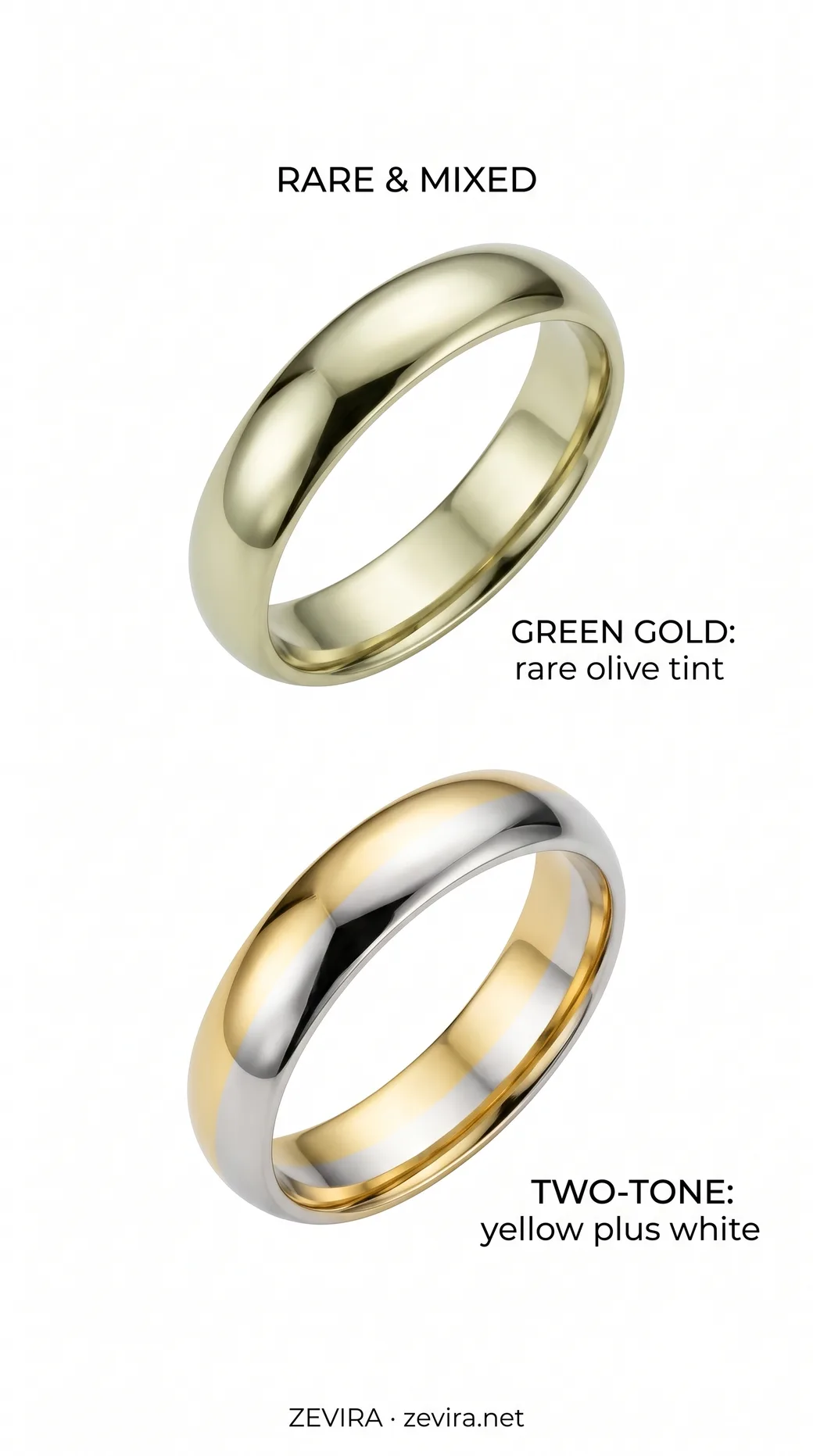
Mixed Metal Rings
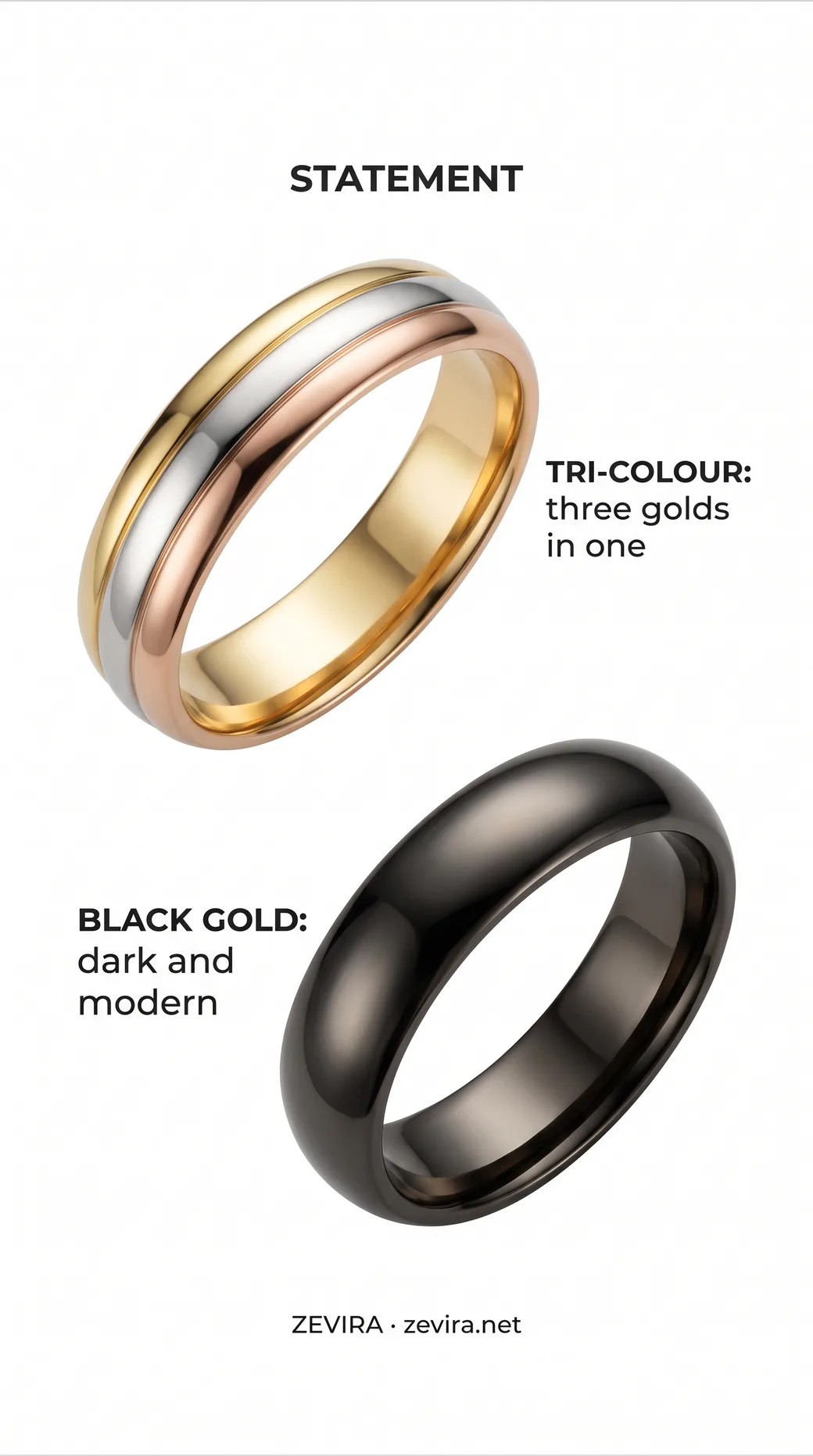
What it is: Rings combining two or three colours. Example: yellow base + white inlay.
Pros:
- Unique
- Matches any jewellery
- Fashionable
- Symbolism (two metals = two people)
Cons:
- More expensive (more labour)
- White portion still needs rhodium
- Harder to repair
Best for:
- Those wanting unique pieces
- Couples who can't choose one colour
Matching Bands: Same or Different?
Traditional: Matching rings (same colour and design).
Modern approach: Can be different. For example:
- His: Rose gold (durable, practical)
- Hers: White gold (elegant, with diamonds)
Pros of different:
- Each chooses what they like
- Considers lifestyle (if his job is active, rose is tougher)
Cons of different:
- Less symbolic "unity"
- Visually don't show they're a pair
Selection Recommendations
If budget is limited: → Rose 14K (most affordable, practical)
If budget is moderate: → Yellow 14K or 18K (classic + no maintenance)
If budget allows: → Palladium white 18K or platinum (elegant + hypoallergenic)
If can't decide: → Mixed metal ring (two colours in one)
If durability is critical: → Rose gold 14K (most wear-resistant)
If you have allergies: → Rose, yellow, or palladium white (not nickel white)
Different Ring Types: Specific Recommendations
Beyond wedding bands, different ring types have different ideal metals.
Engagement Ring (With Diamond)
Best choice: White 18K or platinum
Why:
- White metal enhances diamond whiteness
- Traditional (most Western engagement rings use a white metal)
- Elegant modern look
Acceptable: Yellow 18K
- Vintage style
- Contrasts with diamond
- Works for round and oval stones
Less ideal: Rose
- Rarely used for engagement rings
- Only works in specific vintage designs
Important: If choosing white for an engagement ring with a large stone (0.5ct+), go palladium or platinum. An expensive stone needs reliable metal.
Signet Ring
Best choice: Rose or yellow 14K
Why:
- Heavy piece (significant weight)
- Durability critical (signet faces constant pressure)
- Classic men's accessory (warm metals more appropriate)
Acceptable: White
- Modern style
- But rhodium will wear quickly (contact with surfaces)
Rings With Coloured Stones
Ruby:
- Perfect: Rose or yellow
- Why: Warm tones enhance red
Sapphire (blue):
- Perfect: White or platinum
- Why: Cool stone + cool metal
Emerald:
- Perfect: Yellow
- Why: Classic combination, beautiful contrast
Amethyst, topaz:
- Any: Depends on stone shade
Thin vs Wide Rings
Thin (2-3mm):
- Better: Rose or white (stronger)
- Worse: Yellow (may deform)
Medium (4-6mm):
- Any: All options are strong enough
Wide (7+ mm):
- Any: Weight compensates for softness
Upload a photo of your pet, someone you love, or an object. We'll build a 3D model and hand-cast it in pewter.



Engagement Rings: The Stone Decides the Metal
With a wedding band you choose the metal first and the design follows. With an engagement ring the order reverses: the stone is the point of the piece, and the metal exists to make it look its best. Get that hierarchy the right way round and most of the difficulty disappears.
A Diamond in White Gold: The Standard
There is a reason this combination became the default across Britain, Europe and North America. A colourless diamond graded in the upper ranges reflects whatever surrounds it, so a white setting returns only white light and leaves the stone reading as icy and bright as it can. Warm metal touching the girdle sends a faint yellow cast into the stone that a trained eye picks up instantly and an untrained one senses without naming. For a stone chosen and paid for on the strength of its colour grade, white metal protects the investment in the most literal sense. Choose the palladium alloy or platinum if the stone is substantial, because a valuable diamond deserves a setting that will not need stripping and re-plating around it. Our guide to choosing an engagement ring covers the rest of the decision.
A Diamond in Yellow Gold: The Older Classic
Before white gold existed, every diamond in the world sat in yellow, and a great deal of the most admired antique jewellery still does. The warmth is not a flaw to be tolerated; it is a different aesthetic, softer and more historical, and it has come back strongly. There is a practical bonus too: stones in the lower colour grades, which carry a visible warm tint of their own, look considerably better in yellow gold than in white, because the setting absorbs the tint instead of exposing it. Buyers who would rather have a larger stone than a whiter one can use this deliberately, spending on size and letting the metal handle the colour.
A Diamond in Rose Gold: The Unconventional Choice
Rose settings for colourless diamonds remain a minority taste and work best when the design commits to it fully. Vintage-inspired halos, milgrain edges, engraved shanks and cluster settings all carry rose convincingly, because the whole piece is speaking the language of an older, warmer style. A plain modern solitaire in rose can look slightly uncertain, the cool stone and the pink metal never quite agreeing. Where rose becomes genuinely brilliant is with warm-toned stones, and morganite in rose gold has become a modern classic for exactly that reason.
Coloured Stones and Metal
Here the rule is simple and holds almost everywhere: match the temperature. Cool stones want cool metal, warm stones want warm metal. Blue sapphire, aquamarine, tanzanite and blue topaz belong in white. Ruby, garnet, citrine, imperial topaz and fire opal belong in yellow or rose. Emerald is the famous exception, traditionally set in yellow despite being green, because the warm metal makes the green read deeper rather than paler. Amethyst goes either way depending on how blue or how red the particular stone runs. Opal, which contains every colour at once, can be set in anything and usually looks best in whichever metal picks up its dominant flash.
The General Rule
If you take one line from this section, take this one: choose the stone, then let the stone choose the metal. Buyers who reverse the order end up compromising the most expensive component of the ring to satisfy a preference about the cheapest. That said, an engagement ring is worn for a lifetime by a specific person with specific taste, and a stone that is optically perfect in a metal she dislikes is a worse outcome than a stone that gives up a fraction of its brilliance in a metal she loves. Optics decide the technical question. The wearer decides the real one.
Gold as a Gift: Choosing for Someone Else
Buying gold for yourself is a question of preference. Buying it for someone else is a question of observation, and the good news is that people advertise their preferences constantly without realising it.
How to Work Out What They Actually Wear
Look at the hands, ears and neck of the person you are buying for, over several days rather than one. Almost everyone has already made this decision and simply never announced it. Count what you see: if six pieces out of seven are warm, buy warm. Check what sits in the dish by their sink or the tray on their dresser, since the pieces worn most often live closest to hand. Look at watch cases and belt buckles, which follow the same instinct. Photographs from a few years back reveal whether a preference is settled or recent. And if a friend or sibling can be quietly enlisted, use them; they will know in ten seconds what would take you a month of guessing. Failing all of that, rose gold is the most forgiving gamble, because it flatters the widest range of complexions and clashes with the fewest existing collections.
The Surprise Engagement Ring
This is the hardest version of the problem, and the honest advice is to reduce how much you have to guess. Metal colour is the one variable you genuinely can observe in advance, so observe it properly rather than assuming. Size is the second, and it is far easier to solve: borrow a ring she already wears on the correct finger and take it to a jeweller, or check our complete ring size guide for the ways of measuring without asking. Style is the variable most people get wrong, because they buy what they would like rather than what she wears. A proposal ring that turns out to be the wrong metal or the wrong shape is not a disaster, and any reputable jeweller expects a proportion of them to come back for adjustment; agree that possibility with the seller before you buy, and the whole business stops being frightening.
White Gold or Platinum: For Those Who Want a White Metal
Stand a white gold ring next to a platinum one on a counter and most people cannot tell them apart. Live with them for ten years and nobody could confuse them. The differences are almost entirely invisible at the point of sale, which is exactly why they are worth spelling out.
How They Differ to Look At
Freshly rhodium-plated white gold is slightly brighter and cooler than platinum, because rhodium is a more reflective metal than platinum is. Platinum is very marginally greyer and softer in tone from the moment it leaves the workshop, and it stays that way permanently. Over years the two diverge: the white gold gradually warms as its plating thins and then returns to bright white after a re-plate, cycling forever between the two states, while the platinum slowly develops a fine matte patina that many owners come to prefer to the original polish. Neither ages badly. They simply age in opposite directions.
Weight
This is the difference nobody anticipates and everybody notices. Platinum is dramatically denser than gold, so an identical ring in platinum feels substantially heavier on the hand. Some wearers love it and describe the extra heft as the feeling of something serious. Others find it intrusive, particularly on a hand not used to wearing rings at all. This is not something a photograph or a specification sheet can convey, which is the single best argument for trying both in person before committing.
Durability
The common belief that platinum is harder than gold is wrong, and the truth is more interesting. Platinum is actually softer, but it does not lose material when scratched: the metal displaces rather than flakes away, so a scratched platinum ring has simply moved its own surface around and retains essentially all of its original weight after decades. White gold sheds tiny amounts with every scratch and every polish. For prong settings holding a valuable stone this matters, because platinum prongs bend rather than snap and hold their grip far longer.
Cost
Platinum costs more to buy, sometimes considerably more, and the gap widens with the weight of the piece because of that density. Against that, it needs no plating at any point in its life, so its ownership cost after purchase is close to zero apart from an occasional polish. White gold starts cheaper and then charges rent. Over a long enough horizon the two converge, and for a heavy piece worn daily for decades platinum can end up the cheaper option overall. Our platinum versus white gold comparison works through the arithmetic properly.
When Platinum Genuinely Earns Its Price
Three situations justify it without argument. A significant colourless diamond, where prong security and permanent colour matter more than the price of the mount. A confirmed nickel sensitivity, since platinum is about as inert as jewellery metal gets. And a ring the wearer intends never to remove, where the absence of any maintenance schedule is worth paying for once rather than repeatedly. Outside those three cases, palladium white gold delivers most of the benefit for less, and there is no shame at all in choosing it.



Gold for Men
Men's jewellery has changed more in the past two decades than in the previous five, and the metal conversation has changed with it.
How Men's Jewellery Got Here
For most of the twentieth century a British man wore a wedding band, possibly a signet ring inherited from his father, and a watch. That was the entire vocabulary. The loosening began with the counterculture of the sixties and accelerated through every decade after, until the current position where chains, cuffs, multiple rings and stacked bracelets are unremarkable in most settings. The metal followed the same arc: heavy yellow gold read as flashy for a long stretch around the turn of the millennium, white and steel took over as the safe choice, and yellow has returned in the past few years with the same momentum it has shown in women's jewellery.
What Men Tend to Choose
Wedding bands still lean yellow overall, with white a close second and a clear preference for wider profiles and matte or brushed finishes over high polish. Chains skew yellow strongly, partly because the warm tone survives the constant link friction better than a plated finish does, and partly because the visual tradition is warm. Signet rings are almost exclusively yellow or rose, which is period-correct and practical at once. Where men diverge most from women is in tolerance for upkeep: the proportion willing to leave a ring at a workshop every couple of years is small, which pushes the practical recommendation towards yellow and rose more firmly than it does elsewhere.
Mixing Metals in Men's Pieces
The two-tone watch, yellow bezel against a steel case, made mixed metal respectable in men's jewellery long before it was fashionable in women's. The principle carries across: a yellow gold ring beside a steel watch works, a rose chain under a yellow signet works, and the whole look holds together as long as each colour appears at least twice rather than once. What fails is a single stray tone with nothing to answer it, which reads as an oversight. Men's mixed-metal pieces also tend to be more successful when the two colours are separated by texture rather than sitting flush, since the boundary then looks designed.
Signet Rings: A Returning Classic
The signet is the oldest continuously worn form of men's jewellery in Europe, and it has come back into general use rather than surviving only as an inheritance. It is also the piece where the metal recommendation is least ambiguous. A signet is heavy, sits against surfaces constantly and takes engraving, all three of which point away from white gold: the plating on a signet face wears through faster than anywhere else on the hand, and rhodium tends to soften the crispness of fine engraved lines each time it is renewed. Yellow gives engraving a clean warm contrast; rose gives it a faint darkening in the recesses that reads as age. Either is a better long-term bet. The jewellery engraving guide covers what each metal does to a cut line.
Gold and Your Job: Practical Considerations
Nobody chooses jewellery in a vacuum. Whatever you buy will spend forty hours a week in whatever environment you spend forty hours a week in, and some of those environments are considerably harder on metal than others.
Office Work
The gentlest environment there is, and effectively no constraint on colour. Keyboards, paper and desks do very little to a ring. The only real considerations are social rather than physical: conservative professional settings still read white and yellow as more formal than rose, and very large or very warm pieces can pull focus in a meeting. Hand sanitiser is the one genuine hazard of modern office life, and it is unkind to rhodium plating specifically. If you use it many times a day, that is a small argument for a colour with no plating to lose. Our jewellery dress code guide goes further into what reads as appropriate where.
Healthcare and Food Handling
Both sectors involve washing hands dozens of times a shift, often with strong detergents, and both frequently prohibit rings on clinical or hygiene grounds. Constant soap and water is genuinely hard on plated finishes and will shorten the life of rhodium considerably. Where a plain band is permitted, yellow or rose with no coating to strip is the sensible choice, and a smooth profile with no stone settings is easier to keep clean. Where rings are prohibited outright, a chain worn under clothing is the usual solution, and any colour survives that perfectly well.
Construction and Manufacturing
The hardest environment for jewellery and the one where the honest advice is often to take it off. A ring caught in moving machinery is a serious injury risk rather than an inconvenience, and no metal choice changes that. Where rings are worn, hardness matters most: rose gold at a lower carat, in a wide profile, with a matte finish that hides the inevitable scratching. Avoid thin bands, which deform under impact, and avoid raised stone settings, which catch and snap. Men who work with their hands often end up with a second, cheaper band for the working week; our piece on wedding rings for men who work with their hands covers that arrangement.
Sport and the Gym
Barbells, resistance machines and climbing holds all press a ring hard against the finger, which flattens soft alloys and can crack brittle ones. Rowing and weightlifting are the two most destructive activities for a wedding band in ordinary life. Sweat is mildly acidic and accelerates copper staining on rose gold, though that washes off. Chlorinated pools attack copper alloys and strip rhodium, so swimming is a take-it-off activity regardless of colour. A silicone band for training sessions is not a compromise; it is what sensible people do with a ring they intend to keep.
Beauty and Fashion Industries
Hairdressers, beauty therapists and nail technicians handle peroxide, acetone, dyes and solvents daily, all of which are hostile to plated finishes and some of which discolour copper-heavy alloys. This is the sector where uncoated yellow gold has the clearest practical advantage, since there is nothing on the surface for a chemical to remove. It is also a sector where jewellery is part of the professional presentation, so taking everything off is rarely an option. Gloves for the aggressive treatments, and a colour that cannot be stripped, solves most of it.
Working With Chemicals
Laboratory work, cleaning services, photographic processing and swimming pool maintenance all involve prolonged exposure to substances that damage gold alloys. Chlorine and bleach attack copper and silver in the alloy, causing a slow embrittlement that can eventually crack a band. Mercury, encountered in some laboratory settings, amalgamates with gold and ruins it outright. In any of these environments the answer is gloves, and if gloves are impractical, the ring lives in a pocket during the working day. No colour of gold is chemically resistant enough to be worn through this without care.
Gold Through the Chapters of a Life
Certain moments push people towards a jeweller's counter, and each of them carries its own logic about what to choose.
Weddings
The one purchase where practicality should outrank fashion, because a wedding band is the only piece of jewellery most people wear continuously for decades. That single fact argues consistently for yellow or rose: no plating to renew, no colour to correct, nothing that requires the ring to leave the finger. If white is the preference, choose the palladium alloy and plan for the plating cycle rather than being surprised by it. Two further pieces of practical advice: try a width you have never worn before buying, since narrow and wide bands feel entirely different on the same hand, and consider a matte finish, which hides the scratching that a polished band starts collecting in the first fortnight.
Anniversaries
Anniversary jewellery has an advantage that wedding jewellery lacks: you know exactly what the recipient wears, because you have watched them wear it for years. That makes the metal decision nearly automatic. The traditional British anniversary list attaches silver to twenty-five years and gold to fifty, which gives an easy anchor for the milestone years, and eternity rings have become the standard way of marking the significant ones in between. Matching the metal of the original wedding band is the safe route; deliberately contrasting it, so the two rings read as a conscious pair rather than a mismatch, is the interesting one. Our fiftieth anniversary jewellery guide works through the milestone properly.
The Birth of a Child
New parents receive and give a great deal of jewellery, and the practical constraints are specific. Anything worn against a baby all day should have no raised settings, no sharp prongs and no small stones that can work loose, because an infant's hands find every edge. Smooth, uncoated metal is the sensible answer, which points to yellow or rose. Pieces given to mark a birth are often intended to be kept and handed on rather than worn immediately, and for that purpose the colour choice should follow what the family already owns, so the piece sits naturally alongside the rest when its time comes.
Travel
Two rules cover almost everything. Take less than you think you need, because the piece you leave at home is the piece you cannot lose in an airport. And favour the metal that survives being ignored, which means uncoated yellow or rose rather than plated white, since hotel soap, unfamiliar water and swimming pools all conspire against rhodium. Hard water across large parts of southern and eastern England leaves a mineral film on jewellery that dulls any finish, and that film is more noticeable on white gold than on warm metals. A soft pouch per piece rather than everything loose in a wash bag prevents the scratching that holidays are famous for.
Important Meetings and Formal Occasions
The convention in British professional life is restraint: one visible piece doing the work, everything else quiet. White gold reads as the most formal of the three, yellow as confident and traditional, rose as personal and slightly informal. None of that is a rule anyone will enforce, but it is how a room reads a hand without thinking about it. For genuinely formal evening occasions the calculus reverses and warm metals gain, since candlelight and warm interior lighting flatter yellow and rose considerably more than they flatter cool white.
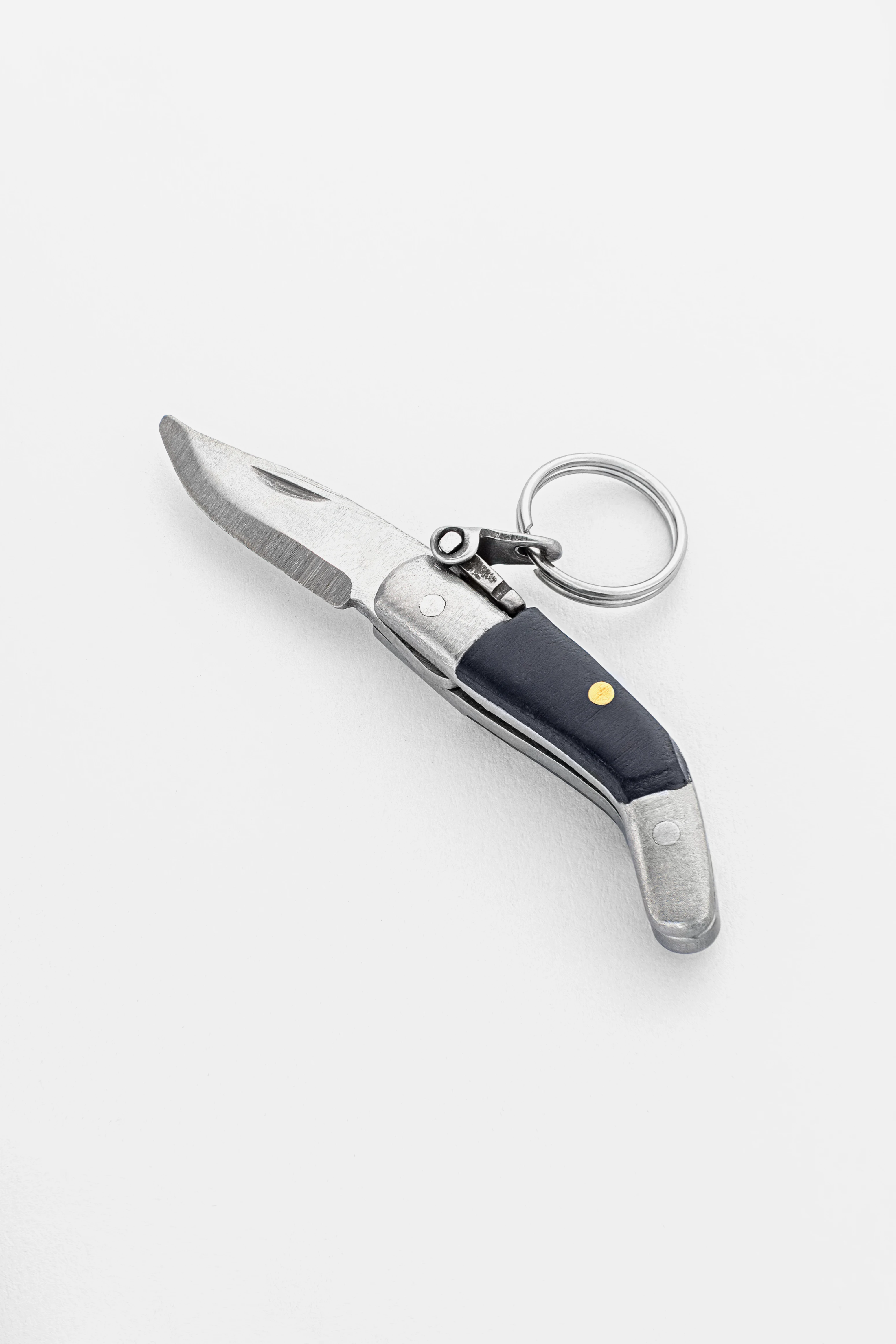
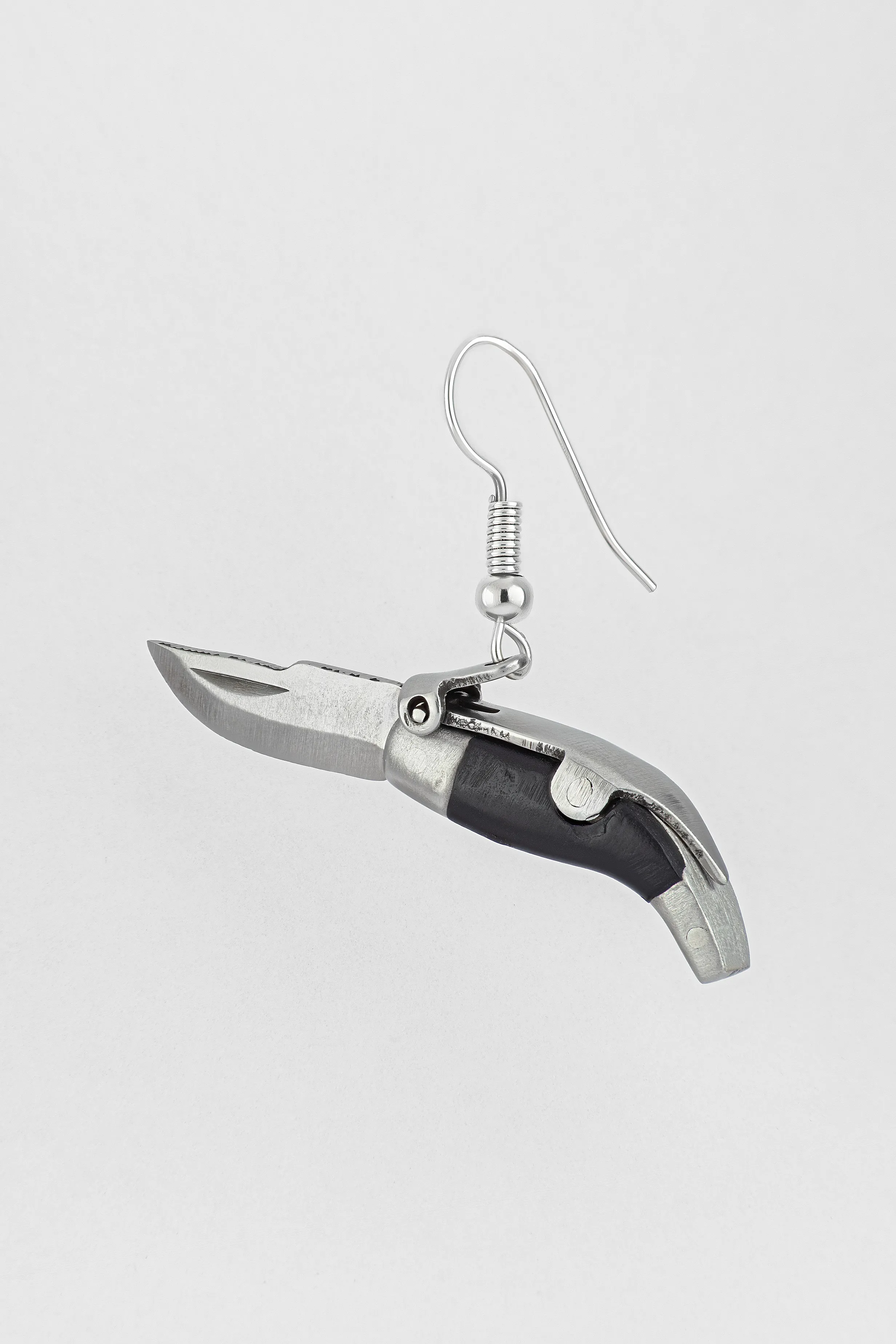
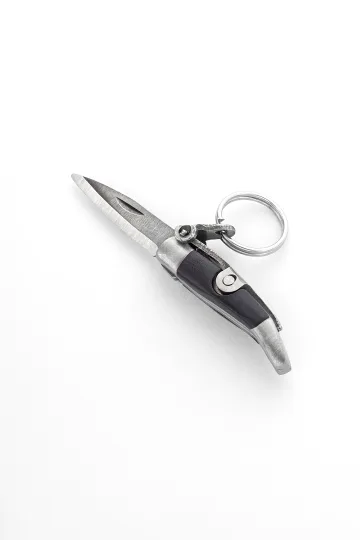
CAPAORA mini knife pendant
The 18th-century Spanish navaja in miniature: 40 mm of stainless steel, a real folding mechanism and a Palanquilla lock that clicks. An affordable gift to remember.
Authentic · Ships from Spain · 14-day returns
What to Wear With Each Colour of Gold
Metal does not exist by itself. It works with clothes, with skin and with everything else you happen to have on, which is why choosing a colour of gold is closer to choosing shoes than to choosing paint.
For everyday dressing, yellow and rose behave most naturally. The warm tone agrees with knitwear, denim, linen, and the whole family of beige, camel and olive neutrals that fills most British wardrobes. A fine chain and a couple of mid-weight rings in warm gold read as part of the person rather than as an accent placed on them. White gold in a daytime look sits slightly more composed and leans towards a cool palette: grey, charcoal, navy, indigo denim and a white shirt.
For office wear the working principle is one loud piece and two quiet ones. A ring, small studs and a fine chain under the neckline covers almost every professional setting in Britain without effort. White gold reads there as modern classic, yellow adds presence without shine, and both do better in smooth, stone-free surfaces under a shirt collar and jacket than in anything raised or faceted.
Evening allows considerably more. A deep neckline asks for a pendant on a mid-length chain, bare shoulders make the case for earrings, and both warm colours come alive under the low warm light of a restaurant, which is why yellow and rose photograph so well on a night out. Cool white gold holds its own beside diamonds and cool stones when the intention is strict elegance rather than warmth.
Three combining techniques are worth knowing. Layering means several chains of different lengths on an open neckline, running from a short one at the base of the throat down to one that reaches the décolletage; our necklace chain length guide explains how the drops should relate. Stacking means two or three slim rings on one finger, and mixing colours within a stack is now entirely normal. Metal mixing across a whole look is the third, and the single rule that makes it work is repetition: each colour should appear at least twice, for instance yellow in the earrings and a ring, white in the chain and a bracelet, so the eye reads a scheme rather than an accident.
For skin and mood the shortcut is straightforward. Warm undertones and a warm wardrobe take yellow and rose; cool undertones and a cool wardrobe take white. Romantic and soft dressing suits rose; strict minimal dressing suits cool white. Two last practical points: choose chain length to suit the neckline you actually wear rather than the one you aspire to, and if you are wearing several pieces at once, let one area be the focus and keep the others deliberately restrained.
Caring for Gold: A Practical Guide
Gold is chemically stable, which people take to mean maintenance-free. It is not. Almost everything that goes wrong with a piece of gold jewellery over a lifetime is preventable, and prevention takes about a minute a fortnight.
Daily Habits
The habits matter more than the cleaning. Put jewellery on last, after moisturiser, perfume and hairspray, and take it off first at the end of the day. Remove rings for washing up, gardening, gym sessions and swimming pools. Do not sleep in anything with a stone, since a prong caught in bedding is how stones go missing. Dry your hands properly, because water trapped under a band is what causes the irritation people mistake for a metal allergy. And check stone settings roughly once a month by holding the piece near your ear and tapping it gently: a loose stone rattles, and catching that rattle early is the difference between a five-minute tightening and a lost gem.
Cleaning at Home
Warm water, a drop of ordinary washing-up liquid, and a soft toothbrush kept for the purpose. Work around the setting and along the inside of the band, where the film of soap and skin actually collects. Rinse thoroughly in clean water, ideally over a bowl rather than an open drain, and dry with a lint-free cloth. That is the entire method, and it is safe for all three colours. What to avoid is a longer list than what to do: no toothpaste, no bicarbonate of soda, no vinegar, no household bleach and no ammonia-based glass cleaner, all of which either abrade the surface or attack the alloy. Full instructions, including what to do with stones that dislike water, sit in our guide to cleaning gold and silver at home.
Professional Care
A workshop can do three things you cannot. It can polish out accumulated scratching and return the original surface, which is worth doing every few years rather than annually, since each polish removes a trace of metal. It can check and tighten settings properly under magnification, which is the single most valuable service for any piece with stones. And it can re-plate white gold, restoring the bright finish that daily wear has thinned. Ultrasonic and steam cleaning belong in a workshop rather than at home, because both are perfectly safe for some pieces and destructive to others, and knowing which is which is the job.
Storage
Loose in a single box is how jewellery scratches itself, since gold is soft enough that any two pieces rubbing together will mark each other. Separate pouches or a lined box with individual compartments solves it completely. Store chains fastened and laid flat or hung, which prevents the knotting that ruins fine links; our guide on untangling and storing chains covers the technique. Keep everything dry, since humidity accelerates copper oxidation in yellow and rose alloys, and keep it away from direct sunlight and radiators. A bathroom shelf is the worst storage location in any British house and is where most people keep their jewellery.
Hard Water and What It Does
Much of southern and eastern England, including London, sits on chalk and limestone and has water hard enough to leave a visible mineral film on everything it touches, jewellery included. Scotland, Wales, Cornwall and much of the north west have soft water and the problem barely exists there. Where the water is hard, gold picks up a dull calcium film that no amount of polishing with a cloth will shift, because it is a deposit rather than a scratch. The fix is simple: a final rinse in filtered or previously boiled water after cleaning, then a proper dry. The film is more visible on white gold, where it flattens the brightness rhodium is there to provide, and it is one of the quiet reasons white gold looks tired faster in some parts of the country than others.
Fashion Trends: What's Popular Now
Jewellery fashion changes slower than clothing. But trends exist.
2020-2024: Yellow Gold Renaissance
What was: 2000-2015: White domination. Yellow was considered old-fashioned.
What now: Since 2020, yellow gold is experiencing a major revival.
Why:
- Nostalgia (fashion cycles ~20 years)
- Vintage styles trending
- Fatigue with "coldness" of white metal
- Celebrities and influencers wearing yellow
The shift: Yellow gold has gone from being seen as old-fashioned a decade ago to one of the most requested colours today.
Metal Mixing
Trend: Mixing yellow and white in one piece or look.
Examples:
- Ring: Yellow base, white accents
- Look: Yellow chain + white earrings
- Bracelet: Alternating yellow and white links
Who wears: Gen Z, fashion-forward, those who don't want to choose one metal.
Matte Finishes
Trend: Moving away from glossy shine toward matte, satin textures.
Pros:
- Scratches less visible
- Modern minimalism
- More pleasant tactile feel
Best for: Especially beautiful on yellow and rose.
Minimalism
Trend: Simple, thin, clean rings without embellishments.
Metals: White or platinum (emphasise minimalism).
Vintage and Art Deco
Trend: Return of 1920s-1940s styles.
Metals: Yellow and rose (period authenticity).
Forecast 2025-2030
Will grow:
- Yellow (renaissance continues)
- Mixed metals
- Matte textures
Will stay stable:
- White (modern classic)
- Rose (fashion staple)
May decline:
- Single-tone polished white (becoming dated)
What a Photograph Cannot Show You
A very large share of jewellery is now chosen from images on a screen, and images leave out three of the qualities that decide whether you will actually enjoy wearing a piece.
Weight and Feel
A ring has a presence on the hand that no picture conveys. Two bands of identical width can differ substantially in weight depending on carat, on whether they are solid or hollow, and on the profile of the inner surface. That difference is the whole experience of wearing the thing. A heavier band announces itself all day, which some people find reassuring and others find intrusive. A comfort-fit interior, rounded rather than flat against the finger, changes the sensation more than any external feature. Platinum's density makes the point most sharply, but it applies across every gold alloy too, and it is the strongest argument there is for trying pieces on in person even when you intend to buy elsewhere.
Temperature
Metals conduct heat, and jewellery arrives on skin cold and then warms to body temperature over a minute or two. How long that takes depends on mass and on the metal, and it is one of the small pleasures of wearing gold that photographs cannot hint at. A heavy piece stays cold longer, which is noticeable and pleasant in summer and briefly unpleasant on a January morning. Gold worn continuously effectively disappears, sitting permanently at skin temperature, which is part of why people who never remove a wedding band stop registering it at all.
Sound
Jewellery makes noise, and the noise differs by metal and construction. A chain of solid links has a denser, lower sound than a hollow one, which is one of the quickest ways to judge quality by ear. Rings on the same finger click against each other. A bangle against a desk announces every gesture. For some wearers this is the point, a small constant reminder of what they are wearing; for others it is a reason to choose a single ring over a stack. None of it is visible in a product photograph, and it is worth thinking about before buying anything that will move against something else all day.
Leave your email, we'll send your discount code. No spam, unsubscribe anytime.
The code arrives by email, valid on your first order.
Resale: What's Better When Selling
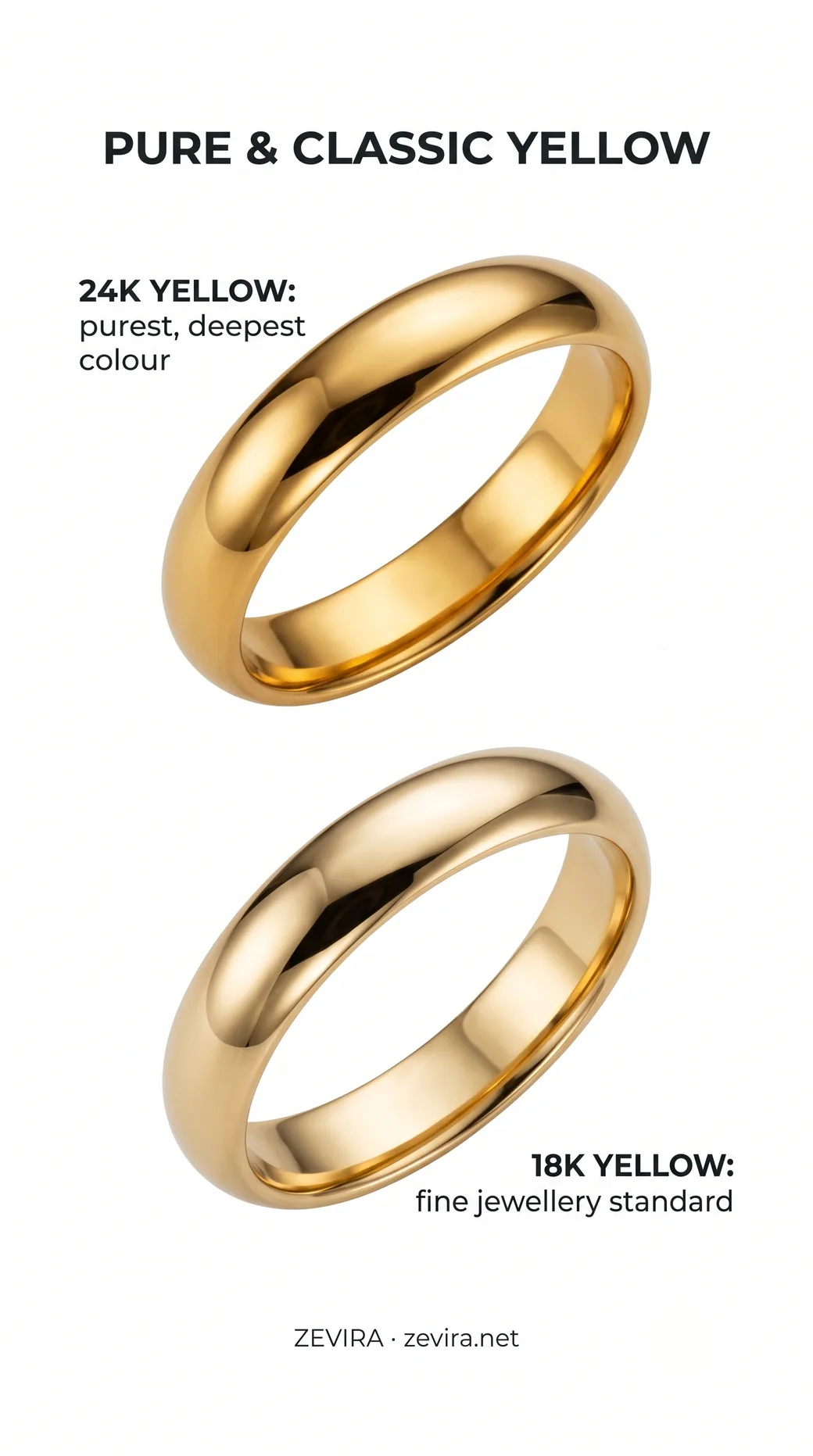
If you ever need to sell or trade your jewelry.
Buyback Prices
Buyers pay for pure metal content, colour doesn't matter:
14K (any colour):
- Buyback: Based on the spot price minus dealer margin
18K (any colour):
- Buyback: Based on the spot price minus dealer margin
Important: Colour doesn't affect price. Rose, yellow, white all get the same buyback rate.
What You Lose When Selling
Purchase: Yellow 5g ring, 14K: Retail price
Selling: Dealer offers: Significantly less (typically 60-80% of gold content value)
Loss: Craftsmanship markup, design premium, retail overhead
For the white variant, losses are higher: You paid for palladium or rhodium plating, but the dealer doesn't account for this.
Conclusion
For investment purposes, all colours are equally poor. Buy for beauty, not resale.
Real Customer Cases from Zevira
Case 1: White Gold Allergy
Situation: 28-year-old woman bought a nickel-based white engagement ring elsewhere. After a week, itching and redness.
Problem: Nickel alloy, rhodium partially worn during sizing.
Solution: Exchanged for the palladium variant. After a month, no issues.
Lesson: If allergic, never buy the nickel alloy. Only palladium, yellow, rose, or platinum.
Case 2: Wedding Band Rhodium Maintenance
Situation: Couple bought white wedding bands. After 2 years, rhodium wore off, yellowish tint appeared.
Problem: Wedding bands aren't removed. To rhodium plate, need to leave ring for 3-5 days. Psychologically difficult.
Solution: Recast both rings into yellow. Only paid for labour.
Lesson: For rings you never remove, yellow or rose is better. White requires regular maintenance.
Case 3: Metal Mixing
Situation: Bride wanted white ring (modern), groom wanted rose (durability, warmth).
Solution: Made mixed metal rings: Rose base + white accents.
Result: Visually matching (same design), but each got their preferred colour.
Lesson: Don't have to choose one colour. Combination can be the best compromise.
Case 4: Economy vs Quality
Situation: Client choosing between:
- Rose gold 14K: Most affordable
- Palladium white gold 14K: Premium price
Budget limited, but likes white.
Solution: Chose rose. A year later came back for a second ring (other hand) and bought white.
Result: "I'm glad I started with rose. Saved money, figured out what I like, a year later afforded white. Now I wear both, and mixed metals are trendy!"
Lesson: Don't have to buy most expensive immediately. Can start affordable, add later.
Gold by Type of Jewellery
The right colour for a ring is not automatically the right colour for a chain, because different pieces live different lives. Wear, visibility and contact with surfaces vary enormously across a collection.
Earrings: Maximum Freedom
Earrings experience almost no friction. They hang, they swing, and apart from the occasional encounter with a jumper being pulled over the head they touch nothing. That means every practical argument in this guide falls away and you can choose purely on how the colour looks against your face and hair. It also means white gold performs far better here than it does on a hand, because rhodium plating on earrings can last a decade or more rather than a year. If you want white gold somewhere in your collection but dread the maintenance, earrings are where to put it.
Chains: Durability Decides
A chain is the most mechanically demanding piece of jewellery there is, because every link rubs against its neighbours thousands of times a day. That constant friction wears plating quickly and thins delicate links over years. Warm uncoated alloys are the sensible choice, with rose the toughest and yellow close behind. Construction matters more than colour: solid links outlast hollow ones by a wide margin, and some patterns handle stress far better than others, which our complete guide to chain types sets out. If a chain is going to carry a pendant, the link pattern and the weight matter more than the shade.
Bracelets: Between a Ring and a Chain
Bracelets take the worst of both worlds: link friction like a chain, plus constant contact with desks, sleeves, steering wheels and door frames. They also live on the wrist, which moves more than any other part of the body a piece of jewellery can occupy. Rose and yellow again, and at a lower carat rather than higher, since hardness matters more here than colour depth. Clasps deserve as much attention as metal, because a failed clasp is how bracelets are lost, and a lobster or box clasp with a safety catch is worth insisting on for anything you value.
Pendants and Lockets
A pendant sits still against the chest and takes almost no wear, so like earrings it can be chosen on appearance alone. The one thing to get right is the relationship between pendant and chain: a heavy pendant on a fine chain will eventually break the chain at the bail, and a warm pendant on a cool chain reads as a mismatch unless it is clearly deliberate. Lockets deserve a further note, since they open and close repeatedly and the hinge is the weak point; solid construction matters more than the shade of gold. Our silver locket guide covers the mechanics, which apply equally to gold.
Signet Rings and Men's Rings
The heaviest, most abused pieces in most collections. A signet face bears against every surface a hand meets, which strips plating from white gold faster than anywhere else. Warm uncoated metal is the practical answer and also the historically correct one. Weight is the other consideration: a substantial signet in a soft high-carat alloy will slowly go out of round, so a lower carat in a heavier profile outlasts a higher carat in a lighter one. Engraving, which is the whole point of a signet, reads best in yellow and takes on a pleasing depth in rose as the copper darkens in the cut lines.
Watches
A watch case is jewellery that never comes off and lives on the most exposed part of the wrist. Solid gold cases are heavy and soft, which is why so many gold watches are two-tone with a steel case and gold bezel; that combination is more durable than either metal alone and started the whole mixed-metal convention. If you wear a gold watch, it becomes the anchor of your metal scheme by default, because it is the largest and most consistently visible piece you own. Match rings to it rather than the other way round, or commit to mixing properly with each colour repeated.
Gold Through the Seasons
Nobody swaps their wedding band with the weather, but the way each colour behaves through a British year is worth knowing, particularly for the pieces you do choose day to day.
Summer
Warm light, tanned or sun-warmed skin, and lighter clothing all favour yellow and rose. A tan shifts almost every complexion warmer, which means yellow gold that looked slightly severe in February often looks right in July. Practically, summer is the hardest season on jewellery: sun cream leaves a film that dulls every finish, chlorinated pools attack copper alloys and strip rhodium, salt water is corrosive, and heat makes fingers swell so rings feel tighter. The sensible summer discipline is fewer pieces, uncoated metal, and a proper rinse after any swim.
Winter
Cool light, pale skin, dark and heavy clothing. White gold comes into its own against grey, charcoal and navy, and reads as crisp rather than cold. Yellow gold against a dark winter coat has the opposite appeal, providing the only warmth in an otherwise sombre palette. The practical hazards reverse: cold fingers shrink, so rings that fitted in August work loose in January and are genuinely easier to lose. Wool catches on prongs and open settings. Central heating dries hands, which means more hand cream, which means more film on the metal.
Spring and Autumn
The transitional seasons are where rose gold is at its most convincing, sitting comfortably between the cool clarity of winter and the warmth of summer. They are also the sensible moment for the annual admin: a check of stone settings, a professional clean if one is due, and a re-plate for any white gold that has started to warm at the back of the band. Doing that in October means going into the party season with everything looking its best, which is a small piece of planning that most people only think of a week too late.
Common Mistakes When Choosing Gold
Most regret about a gold purchase traces back to one of six errors, and every one of them is avoidable in the shop.
Choosing by Fashion Rather Than Preference
Jewellery fashion moves in cycles roughly twenty years long, which means anything bought purely because it is current will look dated at some point and then look right again eventually. That is fine for an inexpensive piece and expensive for a ring meant to last a lifetime. The test is simple: would you have wanted this colour ten years ago, and would you still want it if nobody else was wearing it? If both answers are yes, it is a preference. If either is no, it is a trend, and there is no harm in buying trends as long as you know that is what you are doing.
Ignoring a Known Sensitivity
People who have reacted to costume jewellery, watch backs or jeans buttons for years still buy nickel white gold because rhodium plating hides the problem for the first year. Then the plating thins and the reaction arrives, usually attributed to a change in the ring rather than to the coating wearing through. If your skin has ever told you something about metal, believe it and ask which alloy you are buying. It is a normal question and any honest counter will answer it plainly.
Forgetting the Cost of Upkeep
The price on the tag is the beginning of the conversation with white gold, not the end of it. Buyers routinely compare a white band and a yellow band, see a modest difference, and choose white without anyone mentioning that one of them will need a workshop visit every couple of years for the rest of its life. That is not a reason to avoid white gold; it is a reason to ask what re-plating involves before buying, so the schedule is a known commitment rather than an annoying surprise.
Buying Without Trying It On
Screens lie about colour, and they lie completely about weight, width and how a metal behaves against your particular skin. Two people with different complexions looking at the same photograph are looking at two different rings, effectively. Width in particular is impossible to judge from an image: a band that sounds narrow on paper can feel substantial on a slim finger and disappear on a broad one. Try, in daylight, on the hand it will live on. That single step prevents more disappointment than everything else in this guide combined.
Choosing a Band Too Thin
Delicate rings photograph beautifully and fail early. Below about two millimetres, any gold alloy will eventually go out of round on an active hand, and once a band has deformed it can be reshaped but never fully restored. Thin bands also cannot be resized as many times, cannot carry engraving well, and snap rather than bend under a sharp impact. If a slender look is what you want, get it with a slim profile in a harder alloy rather than with the smallest possible cross-section, and expect to look after it.
Taking Someone Else's Experience as Your Own
A friend whose white gold ring turned her finger green, a colleague whose yellow band scratched within a month, a relative convinced that one carat is a scam: everyone has a story and almost none of them generalise. The friend probably had a nickel alloy with worn plating, the colleague probably had a polished surface doing exactly what polished surfaces do, and the relative is confusing colour saturation with quality. Your skin chemistry, your job, your habits and your taste are yours. Use other people's stories as questions to ask, never as conclusions to accept.
Deeper Into History: Gold Across the Millennia
Gold has been worked for longer than writing has existed, and the colours we argue about today are the latest chapter of a very long book.
First Contact: Seven Thousand Years Ago
The oldest worked gold yet found came out of a burial ground at Varna on the Black Sea coast of what is now Bulgaria, dated to roughly the fifth millennium before the common era. It predates the pyramids by well over a thousand years. What the graves show is startling: the gold was already concentrated in a small number of burials, which means that before cities, before writing and before the wheel in that region, people were using gold to mark who mattered. The metal was chosen because it was findable in river gravel, workable cold, and never went dull. Those three properties explain everything that followed.
Ancient Egypt: The Flesh of the Sun God
Egyptian theology held that the flesh of the gods was gold and their bones were silver, which made goldwork a religious act as much as a decorative one. Nubian mines supplied the material, and Egyptian goldsmiths developed granulation, cloisonné inlay and lost-wax casting to a standard that would not be meaningfully improved for two thousand years. The gold used was often close to pure and therefore intensely yellow, and much of it was deliberately combined with carnelian, turquoise and lapis, warm metal against saturated stone. That pairing instinct is still the one working when a ruby goes into yellow gold today.
Antiquity: The First International Currency
Gold became money in Lydia, in western Anatolia, in the seventh century before the common era, when the first coins were struck from electrum, a naturally occurring gold and silver alloy. Persia, Greece and then Rome built monetary systems on the metal, and the Roman aureus circulated across an empire stretching from northern Britain to the Euphrates. This is the moment gold acquired its second identity: no longer only a sacred and decorative material but a store of value that any stranger anywhere would accept. Every conversation about resale in this article descends directly from that shift.
Medieval Alchemy: A Mistake That Founded Chemistry
For over a thousand years, scholars across the Islamic world and then Christian Europe tried to turn base metals into gold. They failed, because gold is an element and no chemical process can create one. What they produced instead was distillation, crystallisation, systematic laboratory technique and the mineral acids, including the mixture of nitric and hydrochloric acid still used today to test gold. The alchemists were wrong about their goal and enormously productive on the way to it, and the assay methods that underpin the modern hallmarking system are their direct descendants.
The Gold Rushes: When Luxury Became Reachable
The nineteenth century discoveries in California, Victoria in Australia, the Klondike and the Witwatersrand transformed the supply of gold within a few decades. South Africa alone changed the arithmetic of the entire world market. The consequence for jewellery was democratic: gold stopped being exclusively the material of aristocracy and church and became something a prosperous middle class could own. The Victorian appetite for mourning jewellery, lockets and sentimental pieces was fed directly by that new supply, and much of what now turns up in British antique shops dates from exactly this window.
Britain and the Invention of 9 Carat
British hallmarking law recognised only 22 and 18 carat gold for centuries, which kept legal gold expensive. In 1854 the standards of 15, 12 and 9 carat were added, explicitly to give manufacturers a cheaper legal alloy for a growing market. Nine carat, at 37.5 per cent gold, became and remains the British popular standard, which is why so much jewellery sold in Britain is paler than its continental equivalent and why visitors from countries where 18 carat is the norm often find British gold oddly restrained. Fifteen and twelve carat were abolished in 1932, leaving the four standards recognised today.
The Birth of White Gold: An Answer to a Shortage
White gold is a twentieth-century invention with a very practical origin. The taste of the period ran to cool white metal, and platinum supplied it, but platinum was scarce and expensive. Nickel-based white gold alloys were patented in Germany around 1912 as a substitute. What made them permanent was the First World War and then the Second, during which platinum was classified as a strategic material and diverted to military use in both conflicts. Jewellers had no option, white gold filled the gap, and by the time platinum was released again a generation of buyers had grown up considering white gold the normal metal for a diamond ring. It has never given the position back.
Superstitions, Customs and the Symbolism of Gold
Gold has carried meaning for as long as it has carried value, and a surprising amount of that meaning still shapes how people buy.
Why the Ring Sits on the Fourth Finger
The convention comes from a Roman belief in the vena amoris, a vein supposed to run directly from the fourth finger of the left hand to the heart. The anatomy is wrong; the custom outlived the error by two thousand years. It is far from universal even now: across Germany, Russia, Poland, Norway and much of central and eastern Europe the wedding ring is worn on the right hand, and in Spain and parts of India the practice varies by region. In Britain the left hand is standard, which is worth knowing when buying for someone from elsewhere, because the sizing is different between hands on almost everybody.
Golden Weddings and Anniversary Traditions
The custom of attaching materials to anniversary years is a nineteenth-century German invention that spread through Britain and America and became commercial in the twentieth century. Silver at twenty-five years and gold at fifty are the original two and remain the ones people actually observe. The logic is legible: the materials get more precious as the years accumulate. The modern British list fills in almost every year between, which is mostly retail invention, though it does give anyone stuck for a gift a defensible starting point.
Colour as a Cultural Code
What a colour of gold signifies depends entirely on where you are standing. In South Asia and much of the Middle East, high-carat yellow is the standard for wedding jewellery, and its deep saturation is read as a mark of quality and of family investment rather than as ostentation. Across much of northern and western Europe, restraint reads as taste, and pale 9 carat or cool white gold carries that signal. In eastern Europe, the reddish alloys that dominated for most of the twentieth century remain familiar and comfortable in a way they are not further west. None of these readings is more correct than another, and a piece that looks understated in London can look thin in Delhi.
Superstitions From Around the World
A ring that will not come off is read across several European traditions as a sign the marriage is secure, which is a charitable interpretation of a swollen finger. Dropping a wedding ring during the ceremony is widely held to be unlucky, a belief robust enough that experienced officiants have a practised way of handling it. Gold given rather than bought is thought in various traditions to carry more luck than gold acquired for oneself. Wearing gold on the person during a journey appears as a protective custom from the Mediterranean to South Asia, which probably began as a very practical arrangement for carrying wealth. Breaking a gold chain is taken as a warning in some folk traditions and as nothing at all in others.
Gold in Religious Traditions
Nearly every major faith has found a use for gold and a caution about it at the same time. Christian liturgical vessels and reliquaries have been gilded since antiquity, gold standing for the divine light, while the same tradition warns steadily against attachment to wealth. Islamic practice makes extensive use of gold in women's jewellery and in architectural ornament, with a widely observed restriction on men wearing it. Hindu tradition associates gold with Lakshmi and with auspicious occasions, and gold-buying at Akshaya Tritiya and Dhanteras remains an enormous annual event. Buddhist practice gilds statues and stupas as an act of merit. The recurring theme across all of them is gold as the visible sign of something that does not decay.
Astrology and Gold
Traditional Western astrology assigns gold to the Sun, silver to the Moon, copper to Venus and iron to Mars, a system inherited from Hellenistic and then medieval sources and still used in some jewellery marketing today. Vedic astrology has a parallel and considerably more elaborate scheme of metals and gemstones tied to planetary positions, which continues to influence buying decisions across South Asia in a serious way. Whether or not any of it holds, the associations are old enough to have shaped what people made and wore for centuries, and they explain a good deal of why sun imagery is nearly always executed in yellow gold and moon imagery in white.
Myths and Misconceptions About Gold
"I am allergic to gold." Allergy to pure gold effectively does not exist. The metal is biologically inert, which is exactly why it is used for dental work, surgical implants and cosmetic threads. What causes reactions is nickel in white gold alloys, and occasionally trapped moisture and soap under a band that irritates the skin without any allergy involved at all.
"750 is better than 585." Higher fineness means more gold and a deeper colour, and also a softer metal. For a wedding band worn daily and never removed, the lower standard is frequently the more sensible purchase. Better depends on what the piece has to survive.
"White gold is a different metal." It is not. A 750 white gold ring contains exactly the same 75 per cent gold as a 750 yellow one. The only difference is which metals make up the remaining quarter, plus a coating on the surface.
"You can test gold with a magnet." Gold is not magnetic, which is true and useless, because brass, copper and aluminium are not magnetic either. The test rules out steel and nothing else. Proper testing means acid, electronic conductivity testing or an assay office. Our guide on how to test gold at home covers what actually works.
"You can bite gold to test it." This works on nearly pure gold, which is soft enough to mark, and fails completely on any jewellery alloy, all of which are far harder than tooth enamel. The image comes from prospectors and coins rather than from jewellery.
"Italian gold is better than gold from anywhere else." An 18 carat alloy contains 75 per cent gold regardless of the country it was made in. Italy has a genuinely outstanding tradition of chain-making and design, so the workmanship reputation is earned. The metal itself is identical.
"White gold does not tarnish." The alloy does not tarnish. The rhodium plating wears through and the warmer metal underneath shows, which looks like tarnish and is not. Re-plating restores it completely.
"A higher standard means better quality." A higher standard means more gold, richer colour and less hardness. Quality is about workmanship, finish, setting security and how well the piece suits its purpose, none of which is measured by fineness.
"Gold jewellery is a good investment." Gold as a commodity holds value well. Gold jewellery does not, because you pay for design, bench work, retail overhead and plating, and a dealer buying it back pays only for metal content. Buy jewellery because you want to wear it. If you want exposure to the metal, that is a different purchase entirely. And be clear about what you are buying in the first place, since solid alloy and a microns-thin coating behave completely differently: our honest comparison of gold plating and solid gold sets out the difference.
Gold in Technology and Medicine
There is roughly a thirtieth of a gram of gold in the average smartphone, sitting in the electrical contacts, where it is used because it conducts superbly and refuses to oxidise, so a connection made today still works decades later. Spacecraft carry gold film as radiation shielding, and the gold visor on a spacesuit helmet protects an astronaut's eyes from unfiltered sunlight. Satellite components are wrapped in gold-coated foil for thermal control.
Medicine has used it for a century. Gold salts were injected as a treatment for rheumatoid arthritis long before modern alternatives existed. Gold crowns remain a dental standard where durability matters more than appearance, precisely because the metal is inert in the mouth. Cosmetic practice uses gold threads. Diagnostic tests, including the ordinary lateral flow devices that became familiar to everybody, rely on gold nanoparticles to produce the visible line.
Even food has a use for it. Edible gold leaf carries the European additive number E175 and passes through the body untouched, which is possible only because gold does not react with anything in human chemistry.
When you buy a gold ring, you are buying a piece of the same material that shields astronauts from radiation and keeps the world's electronics working. That is a strange and rather good thing to have on your finger.
Vintage and Inherited Gold
Colour as a Marker of Period
Colour dates a piece almost as reliably as a hallmark. Art Nouveau, roughly 1890 to 1910, favoured rich yellow gold and flowing natural forms. Art Deco, from the 1920s into the 1940s, moved decisively to white metal and hard geometry, which is when platinum and then white gold took over diamond jewellery. The Retro period around the 1940s swung back to yellow and rose, largely because platinum had been requisitioned for the war effort and jewellers had to work with what remained. Post-war eastern Europe stayed with distinctly reddish alloys for decades. The Italian revival of the 1970s brought bright, sculptural yellow gold back into general circulation. If you can date the colour and the shapes, you can usually date the piece to within about fifteen years before you look for a mark.
What to Do With Inherited Pieces
Three honest options exist, and none of them is wrong. Wear it as it is, if it fits and suits you, since a piece in use is doing what it was made for. Modify it: resizing, re-shanking, resetting the stones into a mount you would actually choose, all of which keep the original material and the connection to the person. Or melt and remake, which returns the gold to a refinable state and allows an entirely new piece in any colour, so a grandmother's red gold ring can become a granddaughter's white gold engagement ring carrying exactly the same atoms.
One warning specific to inherited white gold. Alloys made before the European nickel restrictions came into force can contain far more nickel than anything sold today, and a piece that sat in a drawer for forty years may have lost its plating entirely. If the wearer has any metal sensitivity, have the piece checked or re-plated before it goes on daily, rather than discovering the problem the hard way.
Send a friend a discount code, they save on their first order.
Frequently Asked Questions
Q: Which gold is better, white or yellow? A: No absolute answer. White is more modern, yellow is more classic and practical (no rhodium needed). Choice depends on preferences, budget, and maintenance willingness.
Q: Which gold is more expensive, white or yellow? A: White is 15-30% more expensive when purchasing new (due to palladium and rhodium). But when selling, price is equal, because buyers pay only for pure metal content.
Q: Is white gold more expensive than yellow? A: Yes, the white variant costs more when buying new jewellery. And maintenance is even more expensive (rhodium plating every 1-3 years).
Q: Which gold is more expensive, white, yellow, or rose? A: When buying: Palladium white > nickel white >= yellow > rose. When selling: All equal.
Q: 14K white or yellow gold, what to choose? A: For wedding bands, yellow (no maintenance). For engagement rings with diamonds, white (enhances stone). For chains, yellow or rose (more durable).
Q: White or yellow gold for wedding ring? A: If you're willing to rhodium plate every 1-3 years, choose white. If you want "buy and forget," choose yellow or rose.
Q: Which is more valuable, white or yellow? A: On the global market, value is equal. When selling, dealers pay the same for any colour.
Q: What's more valuable, white or yellow gold? A: Value is determined only by karat (pure metal amount), not colour. 14K = 58.5% regardless of colour.
Q: Which gold is more valuable, white or yellow? A: Equally valuable. Price difference when buying is markup for alloy metals (palladium) and labour.
Q: What's more valued, white or yellow? A: In jewellery, what's fashionable is valued. Currently (2024), white and yellow are roughly equal in popularity. For investment, equally poor.
Q: Ring from white gold or yellow, which is more practical? A: Yellow is more practical: No rhodium needed, colour never changes, cheaper maintenance. White is more elegant (many people's opinion) but requires care.
Q: Is white better than rose or yellow? A: For durability, rose is best. For hypoallergenicity, yellow and rose are safer than nickel white. For aesthetics, it comes down to personal taste.
Q: Can I wear white and yellow gold together? A: Yes, it's a modern trend. Mixed metals are fashionable.
Q: Does white gold tarnish? A: The metal itself doesn't tarnish. But rhodium plating wears off, and the yellowish alloy tint shows. This isn't tarnishing, it's rhodium loss.
Q: How often does white gold need rhodium plating? A: Every 1-3 years, depending on wear intensity. Cost is moderate.
Q: I have allergies, which type should I choose? A: Rose, yellow, or palladium white. Avoid the nickel alloy.
Q: Which is most durable? A: Rose 14K is most wear-resistant. Then nickel white, then yellow.
Q: Which type for diamonds? A: White 18K or platinum is standard for diamonds. But yellow also works (vintage style).
Q: Why is white gold more expensive? A: Palladium (in the alloy) is expensive. Plus rhodium plating. Plus harder production.
Final Recommendations: What to Choose
If You're...
...Buying your first wedding band: → Rose or yellow 14K (practical, affordable, reliable)
...Want modern style: → Palladium white 18K (elegant, hypoallergenic)
...On a tight budget: → Rose 14K (most affordable, very durable)
...Have metal allergies: → Rose, yellow, or palladium white (hypoallergenic)
...Don't want maintenance hassle: → Yellow or rose (no rhodium needed)
...Buying an engagement ring with diamond: → White 18K or platinum (diamond standard)
...Following trends: → Yellow (making comeback)
...Value tradition: → Yellow (global classic)
...Active lifestyle: → Rose 14K (most durable)
...Want something unique: → Mixed metal ring (two colours)
Universal Formula
For 80% of buyers, optimal choice:
- Metal: Yellow 14K
- Why: Classic + practical + affordable + no maintenance
- Alternative: Rose 14K (if you like the tone and need maximum durability)
For 15% of buyers (premium segment):
- Metal: Palladium white 18K or platinum
- Why: Prestige + for expensive stones + hypoallergenic
- Willingness: To rhodium plate every 1-3 years
For 5% of buyers (uniqueness):
- Metal: Mixed metals or unusual alloys
- Why: Individuality + fashionable
What You Should Never Do With Gold
Do not clean gold with bicarbonate of soda, toothpaste, vinegar or ammonia. Every one of those is either an abrasive that scratches the surface or an aggressive chemical that attacks the alloy, and all of them strip rhodium plating quickly.
Do not swim regularly in a chlorinated pool while wearing gold. One session will not ruin anything. Daily swimming over months degrades copper-bearing alloys and takes the plating off white gold noticeably faster than ordinary wear does.
Do not store gold jewellery loose in one box. Gold is soft enough that pieces scratch each other whenever they move, and a drawer full of tangled chains and unpouched rings does more cosmetic damage over a decade than actually wearing them would.
Do not attempt to whiten yellow gold or apply rhodium at home. Plating is an electrochemical process requiring specific solutions, controlled current and proper extraction. Kits sold for the purpose produce a coating that fails within weeks.
Do not force a ring onto a swollen finger. If heat, water retention or weight change has made a ring tight, have it sized by a jeweller. Resizing is routine and inexpensive, and a ring cut off in an emergency department is neither.
Do not ignore a stone that has started to move. A gem that rattles when tapped is a gem about to be lost, and tightening a setting costs a fraction of replacing what falls out of it.
Do not put a stone-set piece into an ultrasonic cleaner unless you know the settings are sound and the stones tolerate it. Ultrasound loosens some mechanical settings and destroys any glued one, and it accelerates rhodium wear on white gold even when the stones are fine.
Do not wear rings while handling heavy objects without gloves. A dropped weight or a slipped tool bends a band and can crack a stone, and thin sections in softer alloys are the first casualties.
Do not use a domestic steam cleaner on jewellery. Professional steamers run at controlled pressure and temperature for exactly this reason. A household unit can drive water behind a setting and shock a stone that dislikes thermal change.
And finally, do not panic if something happens. Gold is one of the most repairable materials in existence. A dent comes out. A scratch polishes away. Worn plating renews. A lost stone is replaced. A capable workshop can return a piece to near its original condition from a state that looks hopeless, so the first move after an accident is a phone call, not a drawer.
Buying it as a gift? Each one arrives ready to give.
 A branded Zevira box and a little card come with every order.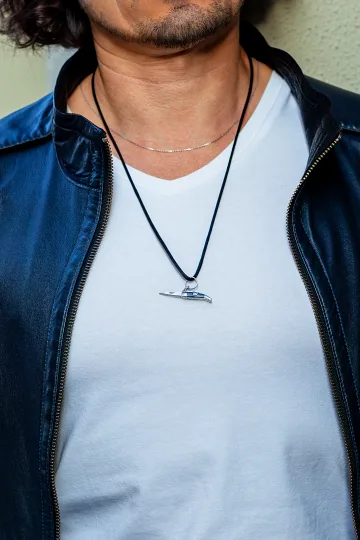
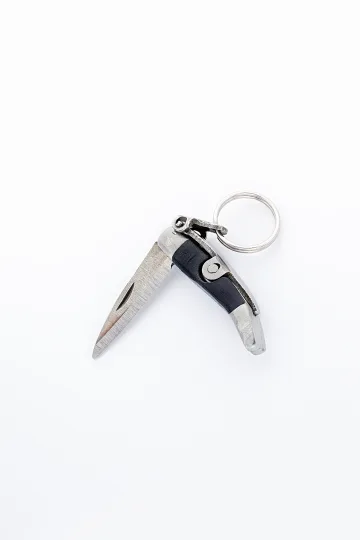


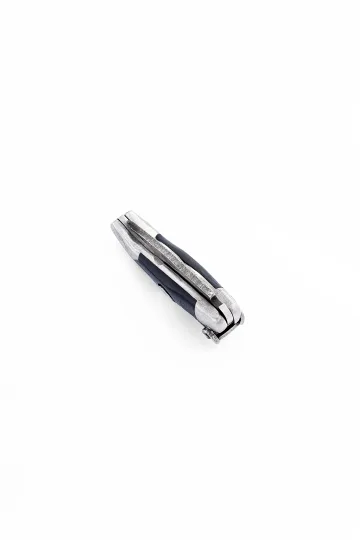

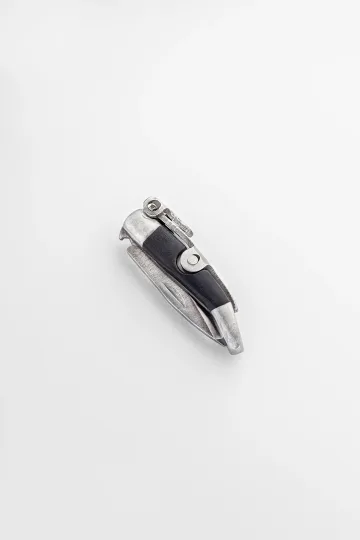
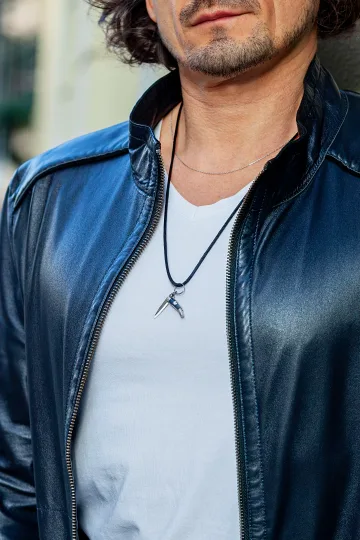

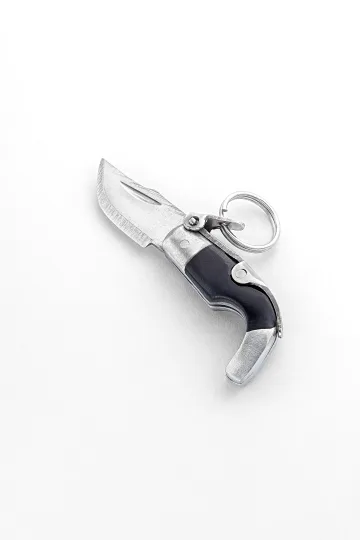

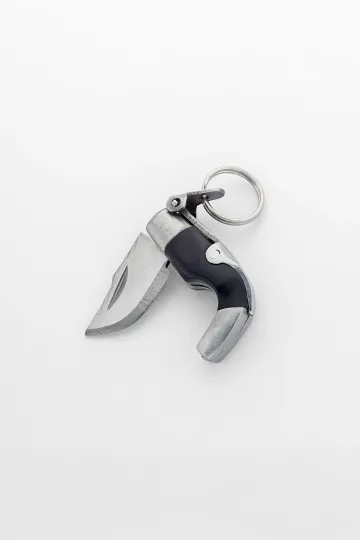
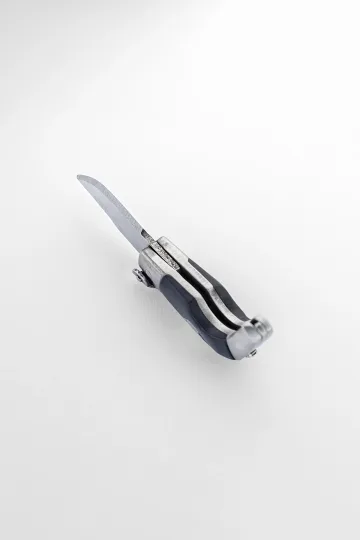
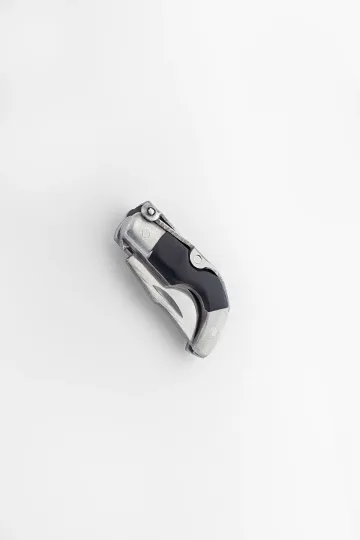
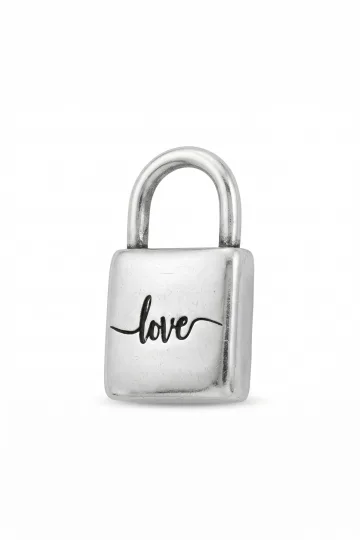
Gold at the Bench: How Colour Changes the Making
Colour is decided by the alloying metals, and those metals change the physical behaviour of the material, which means the choice a buyer makes for aesthetic reasons lands on a jeweller's bench as a set of technical constraints.
How Each Alloy Behaves Under the Tools
Rose gold, the hardest of the three, resists bending, forming and polishing, and takes more effort at every stage. What it gives back is exceptional detail retention: fine engraving, filigree and crisp edges survive longer in a copper-rich alloy than in anything else. Yellow gold is markedly more ductile, which makes it the natural material for sculptural, flowing and complex forms, and explains why the great Italian chain and hollow-form traditions grew up around yellow. Nickel white behaves closer to rose in hardness, which makes sizing and reshaping harder work. Palladium white is softer and handles much more like yellow at the bench. There is also a workshop tradition worth mentioning here: the knife and metalworking trade of Albacete in south-eastern Spain has shaped tools and small precise steel components for centuries, and that inheritance of exact hand-finishing on hard metal is the same discipline that fine detail in gold demands.
Engraving on Different Metals
On yellow gold, engraving produces a clean contrast between the bright polished surface and the matte depth of the cut, which is the classic warm look and the reason so much heraldic work is yellow. On rose gold the cut lines darken very slightly over time as the copper oxidises, giving an aged, shadowed effect that many people find the most attractive of the three without knowing why. On white gold engraving is elegant but lower in contrast, and there is a technical catch: each re-plating lays rhodium into the cut lines and very gradually softens fine detail, so heavily engraved white gold loses crispness over several plating cycles in a way uncoated metals never do.
Textures and Finishes
Matte, satin, sandblasted and hammered finishes all read richest on yellow and rose, where the broken surface scatters warm light into a range of tones. They work on white gold too, though rhodium tends to even them out into something more uniform, and plating on a textured surface wears faster than on a smooth one because there is simply more surface area making contact with the world. The practical advantage of texture applies to every colour equally and deserves more attention than it gets: fine scratches are essentially invisible on a matte or hammered surface. For a wedding band worn daily for decades, that is a serious argument against mirror polish, and it is the single most useful piece of advice most buyers never hear.
What to Check Before You Buy
You have chosen a colour. The remaining job is confirming that an honest alloy sits underneath it, and it takes about a minute regardless of which of the three you picked.
Find the hallmark. On a ring it is usually inside the shank; on a chain it is on the clasp or a small tag beside it. In Britain the compulsory marks are the sponsor's mark, the fineness expressed in parts per thousand, and the assay office town mark: a leopard's head for London, an anchor for Birmingham, a rose for Sheffield, a castle for Edinburgh. The marks should be crisp and legible. If a piece sold as gold above the exemption weight carries no hallmark at all, or the mark is smeared beyond reading, that is a reason to stop and ask for documentation.
Look at the finish under a light. Casting porosity shows as tiny pits, solder joins should be invisible, and the inside of a band should be as well finished as the outside, because that is where corners are cut. Check that stones sit level and that prongs are even and closed. Tap a stone-set piece gently near your ear and listen for a rattle.
Ask the width and weight for anything you are buying online, and compare them against a piece you already own, since photographs convey neither. Confirm the returns policy and the sizing policy in writing before you pay.
And one question specifically for white gold, which you should ask every single time: is this a nickel alloy or a palladium alloy? Nickel is cheaper and, for sensitive skin, only palladium is genuinely safe. That one sentence decides how the next several years of wearing the ring will go, and a good seller will answer it without hesitation.
The Psychology of Choice: What Your Colour Says
None of this is science, and all of it is a pattern anyone who has stood behind a jewellery counter for a few years will recognise.
Yellow Gold: Confidence and Continuity
People who choose yellow tend to be comfortable with tradition and unbothered by whether a thing is currently fashionable. They often already own gold, frequently inherited, and they are buying something meant to join a collection rather than to start one. They ask about durability and upkeep before they ask about appearance. The colour reads to others as settled and self-assured, which is a large part of why it has come back so strongly among younger buyers who want to look as though they were not trying.
White Gold: Understated Luxury
White is the choice of people who want quality to be legible without being loud. It reads as professional, modern and restrained, and it dominates in environments where visible warmth might be read as showy. Buyers who choose white are more likely to be first-time serious purchasers, more likely to be buying around an engagement, and more likely to prioritise how a stone looks over how the metal looks. They are also, statistically, the group most surprised by the plating cycle, which suggests the retail conversation about white gold could be considerably more honest than it usually is.
Rose Gold: Feeling and Roots
Rose attracts people who trust their own reaction over the consensus. It is the least neutral colour and therefore the most personal choice, and buyers rarely agonise over it: they either love it on sight or dismiss it. In eastern Europe it carries an additional layer of familiarity, since the reddish alloys were standard there for generations and a rose ring can be a quiet connection to family. Elsewhere it reads as romantic and contemporary. Either way, the people who choose it tend to be the least interested in what anyone else thinks of it.
Mixed Metals: Breadth of Thinking
Choosing two or three colours in one piece is a refusal to accept the premise of the question, and the people who do it tend to be the same ones who wear their existing jewellery in unlikely combinations. Practically it is the most flexible decision available, because a two-tone ring sits comfortably beside anything else you own. It also removes the risk of regret, which is why it is such a common answer for buyers who genuinely cannot decide and have been going round the same three options for weeks.
When a Couple Chooses Together
Two people rarely arrive at the same preference, and the interesting part is what they do about it. The traditional answer is identical rings, which carries a clear symbolism and requires one person to give way. The modern answer is complementary rather than identical: the same design in different colours, or two colours combined so that each ring contains both. That second solution resolves more disagreements at the counter than any amount of persuasion, and it has the advantage that each person ends up wearing something they actually chose. Where lifestyles differ sharply, letting the practical constraint decide is sensible: the partner whose hands work gets the harder alloy.
Gold and Social Media: The Modern Context
How Each Colour Photographs
A great deal of jewellery is now chosen from images, and images are not neutral. Warm metals photograph flatteringly under almost any conditions and become genuinely luminous in the low warm light that phone cameras and photo apps are tuned to favour. White gold photographs precisely under good light and can flatten into an unremarkable grey under poor light, which means it consistently looks better in person than online while yellow and rose consistently look slightly better online than in person. Colour temperature settings, automatic white balance and every filter ever made shift the balance further. If you are judging a metal from a screen, assume the warm ones are a shade less golden in life and the white one a shade less brilliant.
Buying Online: What to Watch For
Ask for the weight and the width, and compare both to something you already own, since those two numbers tell you more than any photograph. Ask which alloy any white gold is. Look for images shot on a real hand in daylight rather than only on a white studio background, because studio lighting flatters every metal equally and therefore tells you nothing. Check the returns and resizing policy before paying, not after. And treat the first week at home as part of the purchase: wear the piece in daylight, in your office, under your own bathroom light, and decide then. That is what the return window is for, and any seller worth buying from expects you to use it.
Wear the symbol, don't just read about it. These are in stock:
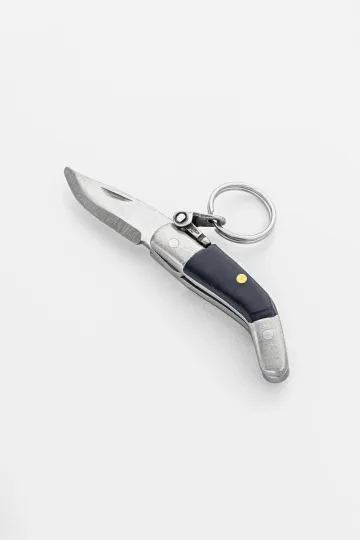

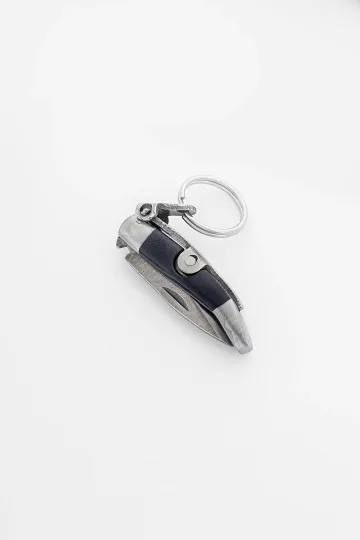


Sustainability and Recycled Gold
The Environmental Picture
Newly mined gold carries a heavy environmental cost. Extracting enough for a single ring moves an enormous quantity of rock, and the dominant industrial processes rely on cyanide leaching, while small-scale artisanal mining still uses mercury amalgamation in many regions, with severe consequences for the people doing the work and the rivers downstream. The human cost has been serious enough to drive international certification schemes over the past two decades. None of this is a reason to feel guilty about owning gold, but it is a reason to care where a particular piece of it came from.
Recycled Gold: A Solution Without Compromise
Gold is infinitely recyclable and loses nothing in the process. Refined from old jewellery, dental scrap or electronics, it emerges chemically identical to gold from a mine, and no test in existence can tell the two apart in a finished piece. That is the crucial point: choosing recycled gold involves no sacrifice in quality, colour or value whatsoever. It can be alloyed to any colour and any fineness. A significant share of the gold circulating through the European trade is already recycled, and asking a seller about the source is becoming a normal question rather than an awkward one. Our piece on recycled versus newly mined gold goes into how the supply chain actually works.
Making an Ethical Choice
Three practical routes exist. Buy recycled, and ask the seller to confirm it. Buy vintage or antique, which is recycling in its most complete form and often gets you better workmanship than a comparable new piece. Or bring your own gold: melting down inherited pieces you will never wear into something you will is the least wasteful option available and produces an object with a genuine history behind it. Beyond that, the single most sustainable thing anyone can do with jewellery is buy less of it and keep it longer, which happens to be the same advice that produces the best collections.
Quick Answers
Which gold is the toughest for everyday wear?
Rose gold at a lower carat, because copper is what supplies hardness and less gold means more room for it. Nickel white is close behind, though it comes with the allergy question attached. Yellow sits in the middle and palladium white is the softest of the four. For any band worn daily, choose a wider profile and a matte finish alongside the alloy, since both do more for apparent durability than the metal choice alone.
Can I wear a gold ring in the shower, the pool or the gym?
The shower is harmless in itself, though soap builds a film under the band that dulls the metal and irritates the skin, so dry the finger properly afterwards. The pool is a genuine no: chlorine attacks copper in the alloy and strips rhodium plating. The gym is a mechanical problem rather than a chemical one, since barbells and machines press a band hard enough to flatten it. A silicone band for training is the sensible answer.
Why does white gold turn yellow, and what can be done?
It is not turning yellow; the rhodium plating is wearing through and the alloy underneath is showing. Every white gold piece does this, usually starting at the back of a band within one to three years of daily wear. The fix is re-plating at a workshop, which takes a few days and restores the original brightness completely. If the cycle bothers you, the long-term answer is a different colour or platinum.
How do I clean gold at home?
Warm water, a drop of washing-up liquid, a soft toothbrush around the setting and along the inside of the band, a thorough rinse and a dry with a lint-free cloth. Once a fortnight is plenty. Avoid toothpaste, bicarbonate of soda, vinegar, bleach and ammonia entirely. In hard-water areas, rinse finally in filtered or boiled water to prevent the mineral film that dulls the finish.
Which gold is safe if I react to nickel?
Yellow, rose, palladium-based white gold and platinum are all safe. Nickel-based white gold is the one to avoid, and rhodium plating only masks the problem until it wears through. Ask the seller directly which alloy a white gold piece uses; it is a standard question. If you have reacted to costume jewellery or watch backs in the past, assume a sensitivity rather than testing the theory on an expensive ring.
Is a green mark under my ring a bad sign?
No. It is copper salts forming where metal meets sweat, hand cream or cosmetics, and it washes off with soap and water. It appears most on rose gold and lower-carat alloys because they contain the most copper, and it is more common in hot weather and after exercise. It says nothing about the quality of the gold and nothing about your health. If it bothers you, keep the ring clean and dry and consider a higher carat.
Conclusion: Your Colour, Your Decision
Everything above comes down to a short list. Yellow gold is the classic: no upkeep, safe for almost every skin, warm on almost every hand, and the easiest colour to add to over a lifetime. Rose gold is the toughest and usually the cheapest, flatters the widest range of complexions, and asks nothing of you beyond ordinary cleaning. White gold is the most formal and the best setting for a colourless diamond, and it is the only one of the three that will send you to a workshop on a schedule for as long as you own it.
If you want the shortest possible advice: for a wedding band, choose yellow or rose and never think about it again. For a diamond engagement ring, choose white or platinum and let the stone do what you paid for it to do. For everything else, choose the colour you actually like, because earrings and pendants take so little wear that the practical arguments barely apply.
And if you are stuck between two, the honest answer is that you will not regret either. There is no wrong colour of gold, only a colour that suits your hand, your job and your patience better than the alternative. Try both in daylight, on the hand that will wear it, and trust what you see. The piece you keep reaching for is the right one, whatever any guide tells you.
Silver and gold jewellery, wedding bands, symbolic pendants, paired sets.
How Zevira Helps You Make the Right Choice
We understand that choosing between white, yellow, and rose gold isn't just aesthetics. It's chemistry, physics, your health, lifestyle, and budget.
Our Approach:
Complete Transparency:
- Honest about pros and cons of each alloy
- Explain why white costs more (palladium vs nickel)
- Warn about rhodium and allergies
- Show how each variant performs over time
Metal Testing:
- Sample rings of all metals available
- Try and compare on your own hand
- See how each colour works with your skin tone
- Understand which metal is "yours"
Allergy Check:
- Ask about metal allergies
- If present, recommend only hypoallergenic alloys
- Never sell nickel white gold to allergic customers
- Health over profit
Honest Consultation:
- Don't push expensive palladium if yellow suits you
- Explain that for wedding bands, yellow is more practical than white
- Discuss real maintenance costs
- Help find balance between "want" and "can afford"
Personalized Selection:
- Consider your lifestyle (office or construction?)
- Look at other jewellery (what do you already wear?)
- Discuss budget (honestly, no pressure)
- Offer several options to choose from
Guarantees:
- 14-day return policy (if it doesn't work, full refund)
- Product warranty
- First rhodium plating on white is complimentary (within first year)
- Lifetime cleaning and polishing at discounted rates
Why Choose Us:
- Direct pricing (no retail markup)
- Work directly with manufacturers
- All metals certified
- Honest consultation without sales pressure
- Help you choose what you actually need
Special Offer: When purchasing two wedding bands, you get a discount on both. When purchasing an engagement and wedding ring set, you get additional savings.
Zevira: We create jewellery for life, not just for display. Each ring isn't just metal and stones, it's your story. We'll help you choose the right alloy that will be with you for decades.
#WhiteOrYellowGold #WhiteGoldVsYellow #WhichGoldIsBetter #WhiteGold #YellowGold #RoseGold #GoldJewelry #14KGold #18KGold #WeddingBands #EngagementRings #GoldComparison