The Saint Benedict Medal: Meaning, Symbols, and Protection
Fourteen Latin letters run around the rim of one small medal and spell out two short exorcism phrases against evil, while five more letters hide on the arms of the cross inside. The Saint Benedict medal is probably the most heavily encoded protective medallion in the Catholic world: almost every mark on it carries a buried line of prayer or a formula of deliverance.
This article is about how the medal reads, letter by letter. About who Benedict of Nursia was, a sixth-century monk whose name still belongs to an entire monastic order. About why people hang his medallion over a door, set it into the foundation of a house, and carry it on the road. And about how a dry abbreviation of Latin words became one of the most sought-after protective symbols in Spain, Italy, and Latin America under the name San Benito.
What the Saint Benedict Medal Is
The Saint Benedict medal is not jewellery in the ordinary sense, and it is not an icon either. It is a sacramental: a blessed object that in Catholic tradition serves as a sign of protection and a reminder to pray. On the surface it is a round or oval medallion carrying a cross, the figure of the saint, and a crowd of tiny letters that look, to the uninitiated, like a mysterious ornament. In fact each letter is the first letter of a Latin word, and together they assemble into prayers and protective formulas.
A sacramental, not a charm in the pagan sense
It helps to separate the ideas straight away. In everyday speech the medal often gets called a charm or an amulet, which is a convenient word, but it comes with a caveat. The Church understands it not as a magical object that "works" by itself, but as a sign of faith: the power is credited not to the metal, but to prayer and to the intercession of the saint. The medal is not "charged" or "activated" with incantations. It is blessed, worn with prayer, and treated as a physical reminder of spiritual protection. For anyone drawn to the broader subject of protective signs, a full guide to protective amulets and talismans is useful: it helps mark the line where folk tradition ends and church meaning begins.
Wear the symbol, don't just read about it. These are in stock:



Two sides with different jobs
The medal keeps a strict division between its two sides, and that is no accident. The obverse, the front, is given to Benedict himself: he stands there at full height with a cross and a book. The reverse, the back, belongs to a large cross and the encoded formulas of protection. So one side shows who the protector is, and the other says what he protects against, and in what words. This arrangement makes the medal, in effect, a two-language object: the image is read with the eyes, the text is read letter by letter.
Why it is called San Benito
In the Spanish- and Italian-speaking world the medal is known as the Medalla de San Benito and the Medaglia di San Benedetto. It is under these names that it is especially popular in Spain, Mexico, Colombia, and across Latin America, where protective Catholic medallions are woven into daily life more tightly than in northern Europe. San Benito is hung by the front door, given at a christening, tucked into a car, and worn at the neck alongside a small cross. For readers used to the Orthodox world the closest word is a devotional medallion worn against the skin, and there is a separate piece on that format of saint medals and devotional medallions.
San Benito in the culture of Spain and Latin America
In the Spanish-speaking world San Benito long ago stepped beyond the purely church object and became part of ordinary daily life. In Mexico, Colombia, Venezuela, and the south of Spain it is sold outside churches and at markets, hung in cars, fixed by the doorways of shops and homes, and given for every family occasion. For many it is at once a sign of faith, a family habit, and a familiar guardian of a place, treated warmly and without excess solemnity. That rootedness explains why the medal is known more widely as San Benito than under any formal title: in these countries it is part of a living culture, not only a shrine object, and it passes from one generation to the next as a matter of course.
The Obverse: the Saint, the Cross, and Monte Cassino
The front of the medal is a formal portrait of the protector. The scene is assembled from details, each of which points to a specific episode from the life of Benedict, and without the key half the meaning slips past the eye. Let us take the obverse apart piece by piece, because this is exactly where the saint's biography hides in pictures.
Benedict with the cross and the book of the Rule
At the centre of the obverse stands Benedict himself in a monk's habit. In his right hand he holds a cross, raised like both a weapon and a banner: this is the chief instrument of protection in the whole symbolism of the medal. In his left hand he holds a book, and that is a key detail. The book is the Rule, the code of monastic life that Benedict wrote for his community and that shaped Western monasticism for the next fifteen hundred years. So the figure says two things at once: the saint protects with the cross and teaches through order.
The poisoned cup and the raven with bread
To either side of the saint sit two small but talkative objects. To Benedict's right stands a cup with a serpent crawling out of it: a nod to the legend of the poisoned wine that disgruntled monks offered him. According to the story, he made the sign of the cross over the goblet and it shattered. To his left the medal often shows a raven carrying bread in its beak: another episode, in which the bird, at Benedict's word, carried a poisoned loaf far away from the saint. These two scenes fixed the medal's reputation as protection specifically against poison, and there is more on that tradition in the section on meaning.
Monte Cassino and the jubilee year
Below the figure of the saint, on the classic "jubilee" version of the medal, sits an inscription with a Latin abbreviation and a date: a reference to the holy mount of Cassino and the year 1880. Monte Cassino is the monastery that Benedict founded on a hilltop south of Rome, the heart of the whole Benedictine movement. The date points to the jubilee edition, which gets its own discussion further on. So the obverse carries the geography of the cult as well: not an abstract saint, but a specific mountain and a specific monastery from which the medal spread across the world.
The inscription around the obverse
Around the rim of the front side runs a Latin phrase worth knowing too: "Eius in obitu nostro praesentia muniamur." Translated, it means "May we be strengthened by his presence in the hour of our death." The line sets the whole tone of the medal. This is not about wealth and luck, but about protection at the most vulnerable moment, about the saint's intercession on the threshold between life and death. That is exactly why the Benedict medal is traditionally linked to the protection of the dying and to prayer for a good death, and not only to everyday fears.
Upload a photo of your pet, someone you love, or an object. We'll build a 3D model and hand-cast it in pewter.


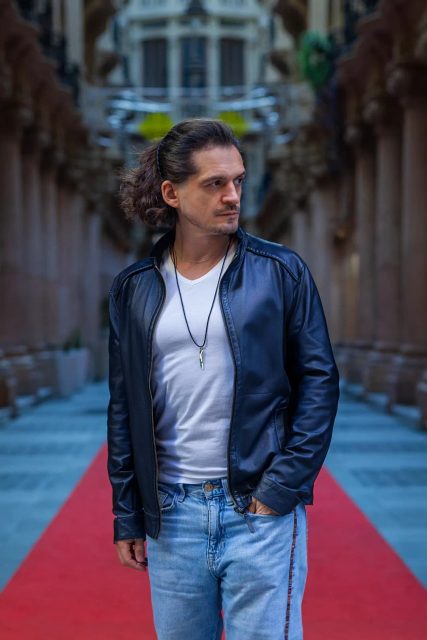
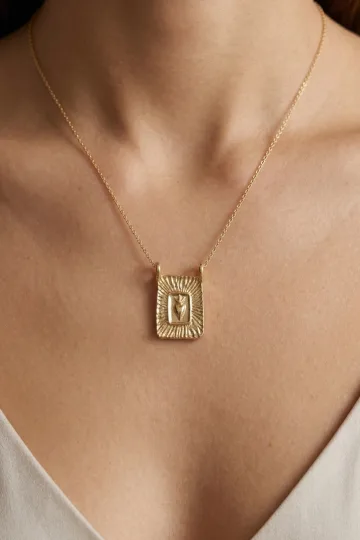
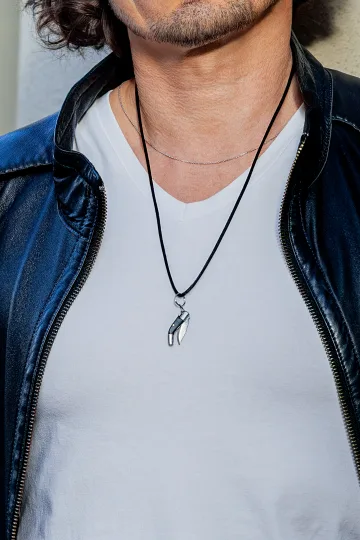
Benedict in silver, on a bare collarbone. Over a thick sweater he is a keyring charm, and this is a medal against harm.
What to Wear the Saint Benedict Medal With
I put a Benedict medal into a look not as a sparkle but as a sign, and that governs the choice of metal, of length, and of whether it shows or not. Below I answer the things people ask about most often.
Which metal should I choose for an everyday medal? For everyday wear I recommend silver or steel: a calm tone, a crisp relief, the letters of the formula read, and the metal does not fight with clothing. For warm skin I advise matte silver or gold; for cool skin, silver without any yellow cast. Steel suits everyone and takes water, sport, and travel easily. I choose gold when the medal should sound more festive: for an occasion, or as a family piece with engraving.
At what length should the medal be worn? I pick length to suit the neckline, not the other way around. Under a closed high collar I advise a shorter chain, so the medallion sits at the base of the neck. Under an open neckline I recommend a lower length, so the medal rests on the chest and can be lifted out to show the letters if you like. A common middle ground of around 45 to 50 cm covers most looks.
Should the medal be worn on bare skin or over fabric? On bare skin at the collarbone the medal reads best: the relief shows and light plays on the metal. Over dense knitwear or a thick sweater the medallion gets lost and looks like an accidental pendant, so here I advise either a longer length, over flat fabric, or tucking the medal under the collar. A thin shirt and light knitwear get along with it either way.
Show the medal or hide it under clothing? This is a question of tone, not of rules. The Benedict medal lives quite happily under a shirt, close to the body, and loses no meaning for it: many wear it as a personal sign rather than for show. If you want the medallion to be seen, I recommend an open neckline and a length at which the medal sits in view. Both options are fitting; the choice is left to the mood of the day.
Is a weekday medal and an occasion medal the same piece? Usually yes, but I match the material to the occasion. For every day I choose silver or steel, a simple chain, a calm fit. For an outing or a formal event I advise gold or dark silver on a more expressive chain, so the medal works as an accent of the look. The shape and size need not change; the metal and the chain are enough.
How do you wear the medal with a cross and other pendants? In layers the medal needs its own line of length, so its complex inscription does not tangle with a cross or hide behind other pendants. A cross and a medal sit well together: one is a sign of faith, the other adds the theme of protection. I separate them by length, the cross higher, the medal lower. And one rule that never fails: a single meaningful medallion on a clean chain always beats a jangling handful of metal at the neck.

Turn on your camera, pick earrings, a pendant or a ring, and see the piece on yourself in real time.
Switch items in one tap.
Everything runs in your browser: no photo or video is ever uploaded.
The Reverse: Decoding the Letters on the Medal
The back is what turned the Benedict medal into a legend. There is not a single stray letter here. At the centre is a large cross; on its arms and in its corners hide short Latin phrases, and around the whole edge runs a long formula of deliverance from evil. Let us walk through it layer by layer, because it is this decoding that most often brings people to the medal in the first place.
The cross at the centre and the letters CSPB in the corners
The main element of the reverse is an equal-armed cross. In the four corners the cross divides into quadrants, and in each stands a letter: C, S, P, B. They unfold as "Crux Sancti Patris Benedicti," that is, "The Cross of the Holy Father Benedict." This inscription, in effect, signs the cross itself, naming it after the saint and binding the medal to him. The cross here is not decoration or background but an active symbol: the whole protective logic of the medal is built around it as the chief weapon against evil.
The vertical of the cross: CSSML
On the vertical arm of the cross, read from top to bottom, are the letters C, S, S, M, L. Behind them stands the phrase "Crux Sacra Sit Mihi Lux," translated "May the Holy Cross be my light." This is the first half of a couplet stitched into the cross itself. The meaning is direct and clear: the cross as a source of light and as a bearing, as the thing that leads a person through the dark. The vertical, rising upward toward heaven, sits perfectly on the image of light descending from above.
The horizontal of the cross: NDSMD
On the horizontal arm, read from left to right, run the letters N, D, S, M, D. This is the second half of the couplet: "Non Draco Sit Mihi Dux," translated "Let not the dragon be my guide." The dragon here is the biblical image of the devil, the tempting serpent. The line rejects the evil leader: the person asks to be led by the cross-light, not the dragon-dark. Together the vertical and the horizontal give a finished thought: may my light be the cross, not the devil my guide. The two arms literally build a cross out of words.
The circular formula: VRSNSMV and SMQLIVB
Around the outer rim of the reverse runs the most famous part, an exorcism formula made of two Latin verses. The first group of letters, V, R, S, N, S, M, V, opens as "Vade Retro Satana, Nunquam Suade Mihi Vana," that is, "Step back, Satan, never tempt me with vanities." The second group, S, M, Q, L, I, V, B, is "Sunt Mala Quae Libas, Ipse Venena Bibas," translated "The things you offer are evil; drink your own poisons." This is a plain rejection of the tempter and his poison, the same theme of venom seen on the obverse with the shattered cup. The formula is traditionally linked to prayers for deliverance from evil.
"Vade Retro Satana": a phrase older than the medal itself
The Latin "Vade Retro Satana," translated "step back, Satan," is known far beyond the medal. The expression goes back to the Gospel episode in which Christ rejects the tempter, and for centuries it lived as an independent protective formula in monastic texts. It was taken onto the Benedict medal already finished, as a recognisable refusal of evil, and folded down to the letters V, R, S, N, S, M, V. The continuation, "Nunquam Suade Mihi Vana," translated "never tempt me with vanities," sharpens the point: this is not a brawl with a demon but a refusal to listen to his suggestions. So the phrase reads calmly, like a firm "no," rather than a war cry against an imagined enemy.
In what order to read the letters on the medal
The reading order on the reverse is strict, and without it the letters look like chaos. You start with the cross: top to bottom on the vertical comes C, S, S, M, L; left to right on the horizontal comes N, D, S, M, D. Then you read the corners of the cross, where C, S, P, B stands. And only then do you move to the outer ring, where V, R, S, N, S, M, V comes first and S, M, Q, L, I, V, B follows. The top word, PAX, or the monogram, is read separately, as a heading above the whole composition. Hold this sequence and the seemingly random string of letters unfolds into a coherent prayer text rather than a puzzle, and the medal stops looking like a cipher.
PAX: the word "peace" at the top
At the upper part of the reverse, above the cross, the medal often carries the short word "PAX," that is, "peace." This is the motto of the Benedictine order and the central word of Benedict's whole monastic tradition. Against a background of stern formulas expelling the dragon and the poisoner, the word "peace" sounds like a conclusion: the aim of all this protection is not war but rest. Sometimes, instead of PAX, the medal carries the monogram IHS, an abbreviation of the name Jesus. Both options close the composition on a single idea: behind the rejection of evil stands a longing for peace, not a taste for struggle for its own sake.
The full translation of all the formulas at once
Let us gather the decoding into one picture, to hold it in view. The cross at the centre is signed "The Cross of the Holy Father Benedict." Its vertical says "May the Holy Cross be my light," its horizontal adds "Let not the dragon be my guide." Around the edge runs the double incantation: "Step back, Satan, never tempt me with vanities" and "The things you offer are evil; drink your own poisons." Crowning it all is the word "peace." What comes out is a whole short prayer of deliverance from evil, folded down to a few dozen letters. It is exactly this density of meaning that makes the medal so unusual: it does not illustrate an idea, it sews an entire text into metal.
Customer reviews
Zevira is a real jewellery shop. Genuine payments, deliveries and customer thank-yous.
🥰🥰🥰 gracias
Ok, ¡gracias! 🙂
Who Benedict of Nursia Was
For the medal to read as a living symbol rather than a string of letters, it is worth getting to know the man behind it. Benedict of Nursia is a genuinely historical figure, even if much of his life story has come down through pious legend. He lived at a hinge point of history, when ancient civilisation was collapsing, and he laid the foundation on which monastic Europe would rest for centuries.
The hermit of Nursia
Benedict was born around the year 480 in the Italian town of Nursia, into a family able to send its son to study in Rome. But the capital of the late empire disappointed the young man with its loose morals, and he left the city to look for another kind of life. For several years Benedict lived as a hermit in a cave at Subiaco, in the hills east of Rome. There people noticed him, there the first disciples began to gather around him, and there, by tradition, came the first attempts to poison him, recalled by the cup and serpent on the medal.
Monte Cassino and the birth of an order
Around the year 529 Benedict and his disciples climbed the mount of Cassino, tore down an ancient pagan altar standing there, and founded a monastery destined to become the mother of Western monasticism. Monte Cassino survived destruction, earthquakes, and wars, was rebuilt again and again, and remains a working abbey to this day. It was from Monte Cassino, in 1880, that the famous jubilee medal came. So the mountain on the obverse is not a decorative touch but a real place from which the cult of Benedict spread across the whole Catholic world.
The Rule: "pray and work"
Benedict's chief legacy is not miracles but a text: the Rule he wrote. This code of monastic life proved so reasonable and humane that it became the standard for thousands of monasteries in the West. The famous motto "ora et labora," "pray and work," captures its spirit in brief: a monk's day is divided between prayer and labour, without the extremes of self-torment and without idleness. The book in the saint's hand on the medal is precisely this Rule. Benedict turned scattered hermit life into a stable way of living, and, in hindsight, made himself one of the patrons of Europe.
Legends of the poisoned wine and bread
The life of Benedict, which comes down mainly through the Dialogues of Pope Gregory the Great, is full of vivid episodes, and two of them are branded forever into the medal's imagery. First: monks of one community, unhappy with his strictness, decided to be rid of their abbot and offered him poisoned wine, but at the sign of the cross the goblet cracked in his hands. Second: an envious man sent a poisoned loaf, and the saint told a raven that came to feed to carry the dangerous bread far away. Hence the two constant motifs of the medal, the cup with the serpent and the raven with the bread, and hence the whole reputation of the medallion as protection against poison, slander, and hidden evil.



The History of the Medal: from Benedict's Cross to the Jubilee of 1880
The medal in its present form is many centuries younger than the saint. Its history is a story in its own right, with monastic crosses, a witch trial, and the discovery of an old manuscript. Let us trace how scattered crosses with letters turned into the standard medallion known today around the world.
From crosses on walls to a wearable medal
Long before the medal appeared, Benedictine monks venerated special crosses with letters, which they wrote on walls, gates, and in cells as a sign of protection. Those letters were the same encoded formulas we now see on the reverse. For a long time not everyone knew what the abbreviations meant, and for many it was simply a devout ornament. Gradually these crosses with letters began to be cast as separate metal medallions that could be carried, and so was born a portable version of an old monastic tradition. The early medallions varied a great deal from one monastery to another: some carried the full set of letters, some only part, and there was as yet no single canon. The general look of the medal settled noticeably later, and the road from scattered wall crosses to a recognisable standard medallion took more than one century.
The witch trial and the found manuscript
The turning point came at the Bavarian abbey of Metten in the middle of the seventeenth century. During a local court case about witchcraft a strange piece of testimony surfaced: the accused supposedly complained that they had no power over one monastery because of the holy signs on its walls. The monks set out to understand what the puzzling letters on their own walls meant, and found in the library an old manuscript in which Benedict is shown with a staff and a scroll and the letters are spelled out plainly. So the formula was read anew, interest in it flared up, and protective medals with the full set of letters began to circulate widely.
Church approval and indulgences
In the eighteenth century the medal received official recognition. Pope Benedict XIV, known for his learning, studied the medallion, approved it, and attached to it particular spiritual benefits for those who wear it in the right spirit. Church approval turned a folk shrine into a recognised sacramental and set a stable canon for the image. From that point the medal ceased to be a local Bavarian curiosity and became a Catholic possession across the board.
The Monte Cassino jubilee medal of 1880
The final, most recognisable form of the medal came in 1880. For the fourteen-hundredth anniversary of Benedict's birth, the archabbey of Monte Cassino issued an updated, carefully verified version, known as the "jubilee medal." It was on this one that the inscription with the holy mount of Cassino and the date appeared, and the placement of every inscription became fixed for good. The jubilee medal is considered the fullest and most "canonical," and most modern medallions reproduce exactly this one. So, thirteen centuries after the saint, his protective sign found its final form.
Why the medal was issued specifically in 1880
The date 1880 on the medal is no accident and is tied to a round anniversary. That year marked the fourteen-hundredth anniversary of Benedict's birth, which tradition dates to roughly the year 480. For the jubilee the archabbey of Monte Cassino, the chief Benedictine monastery, prepared a verified version of the medallion, gathering all the inscriptions in one place and fixing their arrangement. So the round date became the occasion to bring order to the muddle of earlier medals and to settle a single model. That is precisely why modern medallions most often reproduce the "jubilee" medal of 1880: it became the reference point from which the "correct" image, with every letter and inscription in its place, is drawn.
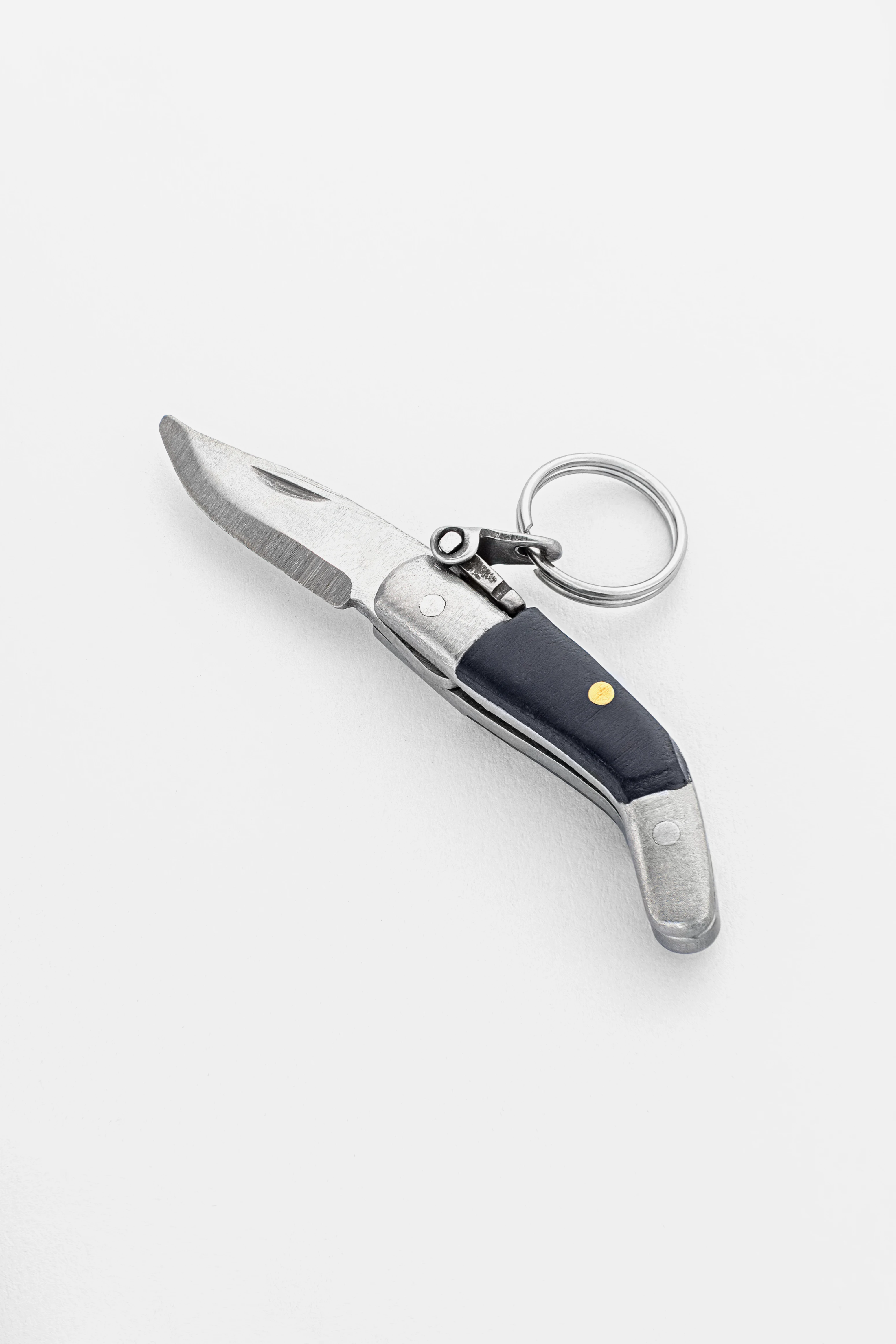
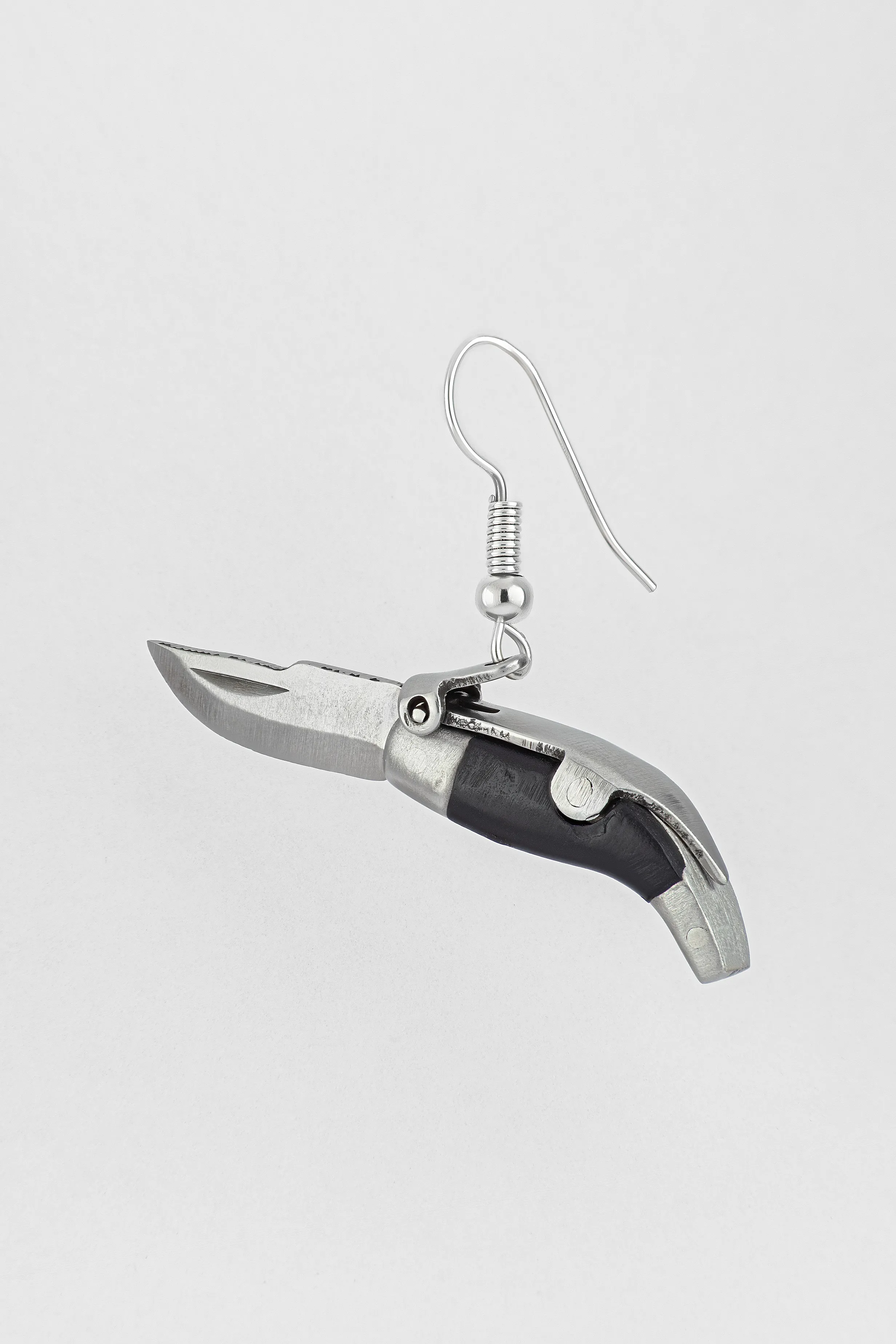
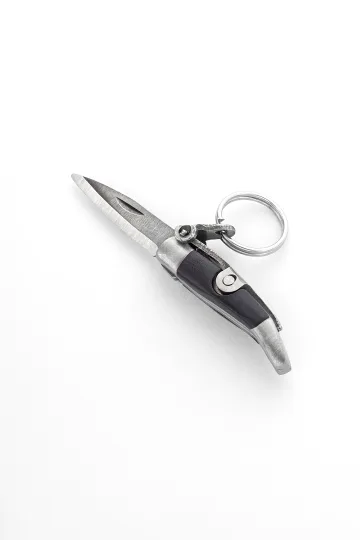
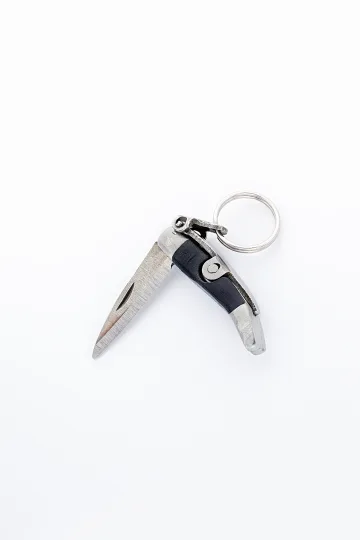
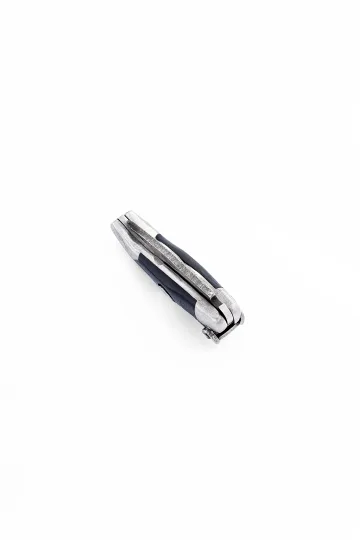
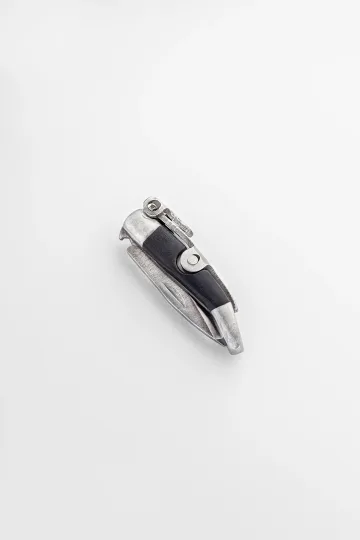
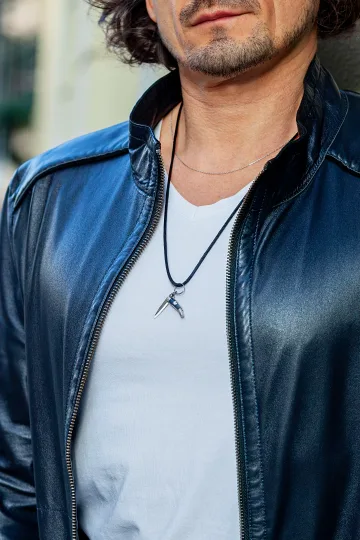
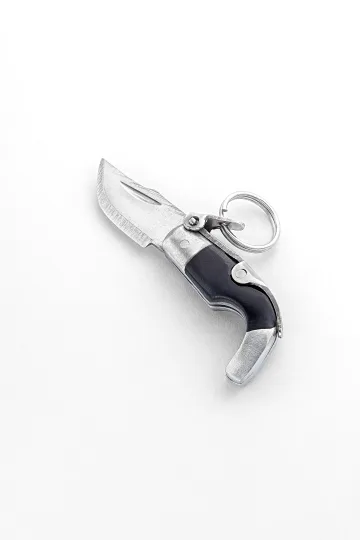
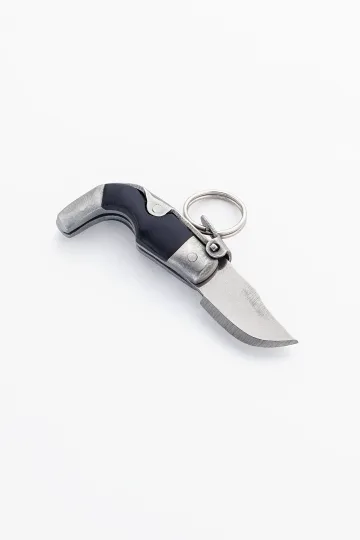
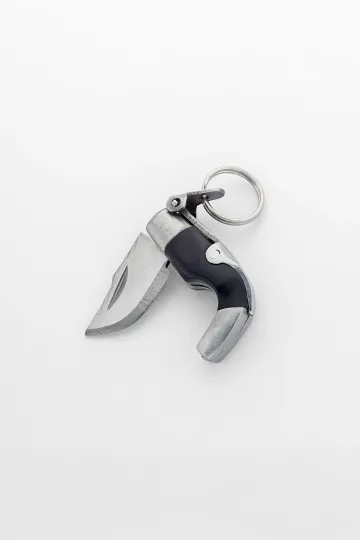
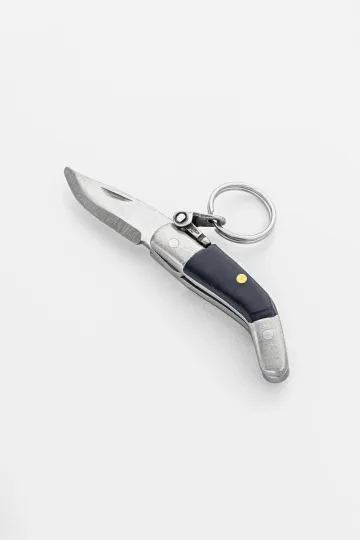
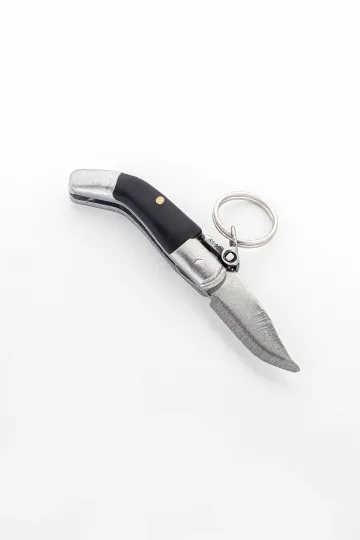
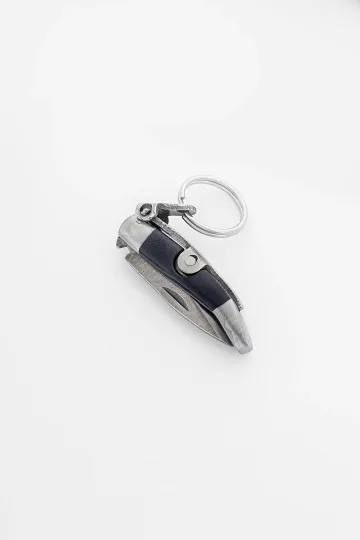
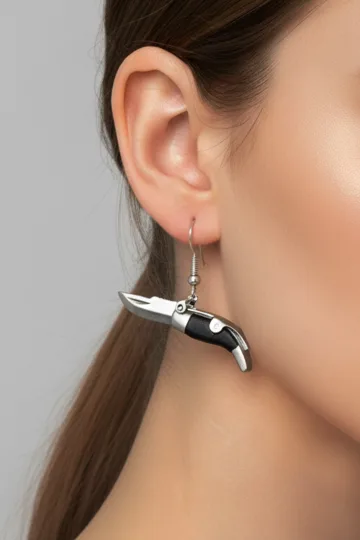
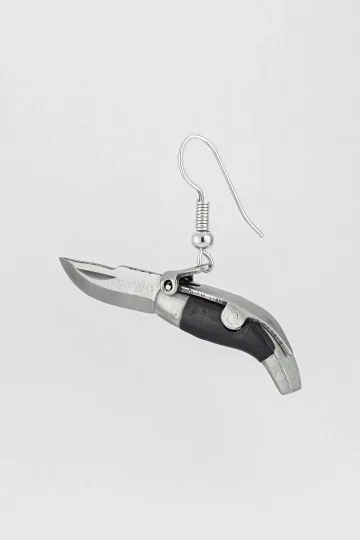
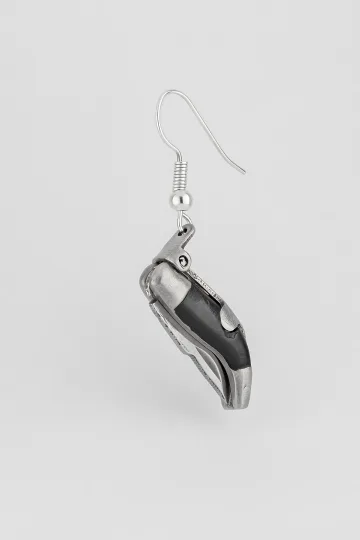
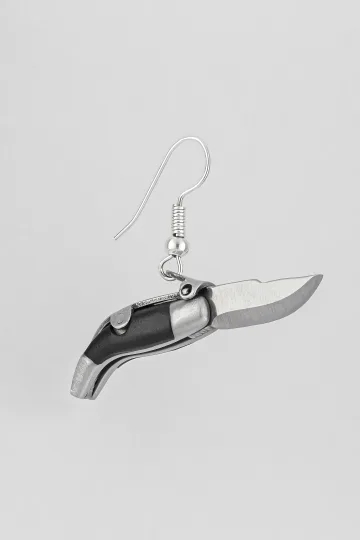
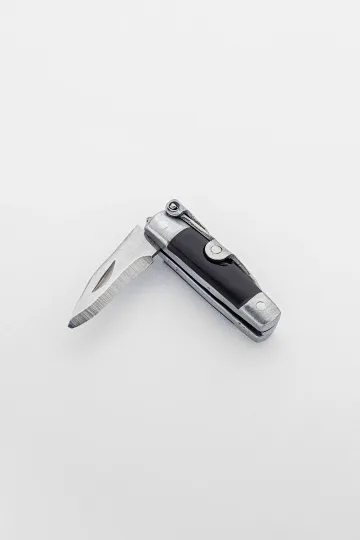
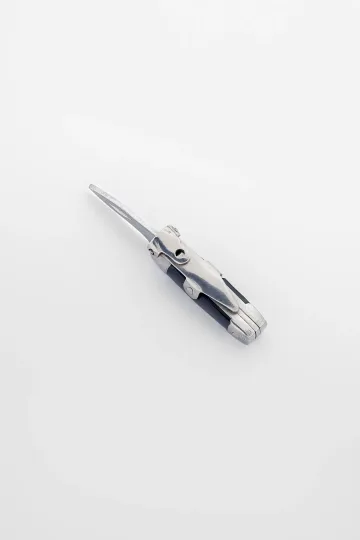
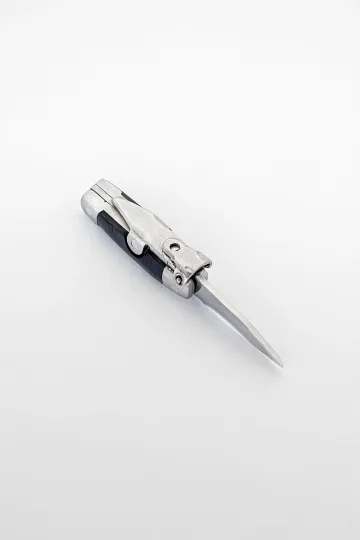
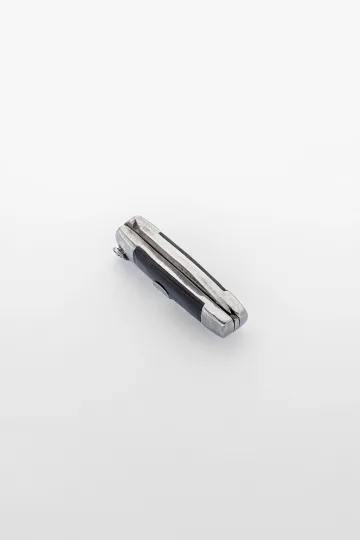
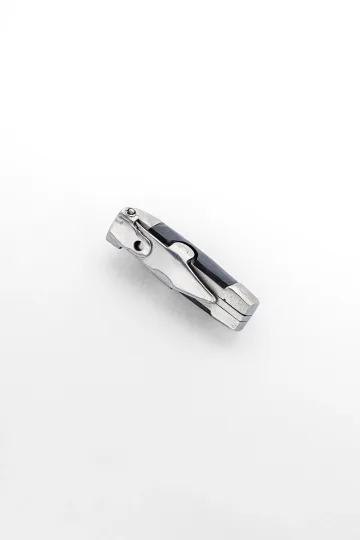
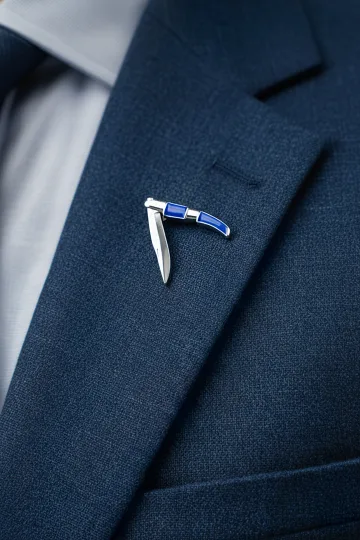
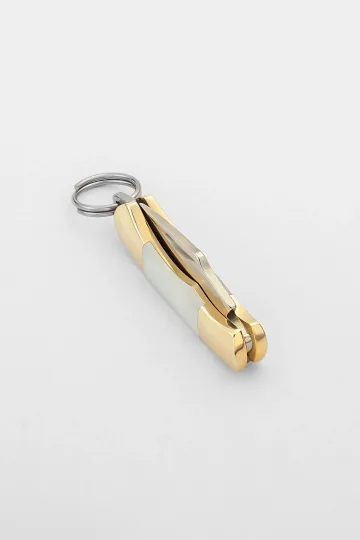
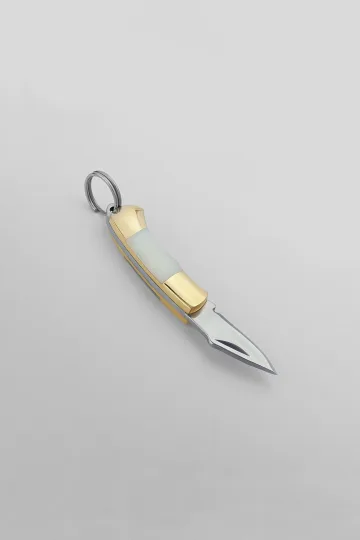
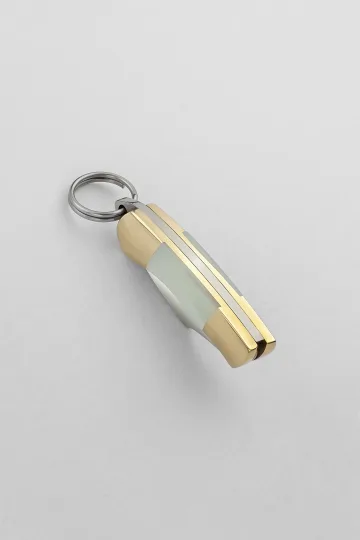
CAPAORA mini knife pendant
The 18th-century Spanish navaja in miniature: 40 mm of stainless steel, a real folding mechanism and a Palanquilla lock that clicks. An affordable gift to remember.
Authentic · Ships from Spain · 14-day returns
Meaning and the Tradition of Protection
Of all the Catholic medallions, the Benedict medal has the most combative reputation. People ask it not so much for luck or wealth as for protection from evil in the broad sense. Let us take, one by one, what it is traditionally linked to in the way of intercession, and where faith ends and folk exaggeration begins.
Protection from evil and temptation
The medal's core meaning is set out directly by its own text: the rejection of Satan and of empty temptations. The formula "step back, Satan" and the plea to be led by the cross rather than the dragon make the medal a sign of spiritual struggle with temptation. For a believer it is a reminder not of an outside threat but of the daily inner choice between light and dark. To wear the medal means to keep that choice in view, rather than to rely on metal as a charm for luck. In this the medal stands closer to prayer than to a talisman.
Protection from poison, illness, and the evil eye
Out of the legends of the poisoned wine and bread grew a distinct line of veneration: the medal as protection against poison, contagion, and ill intent. In earlier centuries, when poisoning was a real tool in family and court rivalries and epidemics scythed through cities, this function was prized especially highly. To this day, in folk tradition, San Benito is linked with protection from curses, slander, and the evil eye. The Church is careful here: it speaks of the saint's intercession and of prayer, not of magical immunity, but the popular veneration holds firm.
The medal in exorcism
The Benedict medal holds a particular place in the practice of deliverance from evil. Its formulas are, in effect, short prayers of deliverance, and the medallion is traditionally used as one of the signs in the corresponding church rites. Because of this the medal has acquired a reputation as a "strong" one, and it is often chosen when the aim is to underline the theme of spiritual protection rather than general devotion. It is worth keeping in mind that this concerns church practice and prayer, not homemade rituals: the object itself "expels" nothing without the faith and prayer of the one who wears it.
What prayer is said with the Benedict medal
The medal asks no special long rite of the person who wears it: the medallion already carries a folded prayer. In practice, people most often say with it a short appeal to the saint asking for protection and the Lord's Prayer, and the formula on the medal can be spoken in full by reading its translation in one's own words. The point is not the exact pronunciation of Latin, but that the wearer understands what he is holding. The Church advises treating the medal as an occasion for prayer, not as an object that acts on its own. A blessed medal together with a conscious short prayer is the whole "ritual"; nothing beyond this is required.
The medal in anxiety, fear, and sleeplessness
A separate everyday line of veneration links the medal with peace of mind. People take San Benito in their hands in moments of anxiety, set it nearby at night when they cannot sleep, and hold it in acute fear, because the line "may the cross be my light" sounds like a support in the dark. Here it is worth being honest: the medal is not a medicine and not a substitute for a doctor's help in an anxiety disorder. It works as an anchor for attention and a reminder of faith; it helps a person gather himself and shift focus, but it does not cure the cause. In that role it is valued precisely as a physical sign to grab hold of in thought when things are hard and one needs to bring back a steady breath.
Over the door, in the foundation, and in the car
The medal has a rich everyday tradition of placement. It is hung over the front door of a house as a sign that the home is guarded, walled into the foundation during construction, laid in the base of a barn or byre, fixed in a car, buried at the corners of a field or garden. The logic is always the same: to mark a space with a sign of protection and commit it to the saint's intercession. This "household" role sets Benedict apart from purely worn medallions: his medal guards a place as often as it guards a person. In this it echoes the road and protective crosses such as the Caravaca Cross, which is likewise hung in the home and carried on a journey.
What the Medal Is Made Of: Silver, Steel, Gold
Material shapes both the look of the medal and its durability, and who it will suit as a gift. The range for the Benedict medallion is wider than usual: from plain wood to gold, and each option has its own logic. Let us take the main ones one by one.
Silver
Silver is the classic for religious medals and a sensible middle ground for look and cost. It gives a noble, cool sheen and holds fine relief well, and for the Benedict medal that is critical: it carries a mass of small letters that need to read. Sterling silver, at 925, is an alloy with a high proportion of pure metal, strong enough for daily wear. Over time it darkens, but in the grooves between the letters the darkening even helps: the outline gains contrast and the inscriptions read better. A silver medal suits a man and a woman alike, as a gift and for oneself.
Stainless steel
Steel is the choice for anyone who needs a working protective medallion rather than a piece of jewellery. It barely scratches, does not darken, and shrugs off water, sweat, and heat, weathering the sea and physical labour with ease. For a medal hung in a car, fixed by a door, or worn without ever being taken off, steel is often more practical than silver. The drawback is that it renders the finest relief less well, and the Benedict medal carries a lot of small text, so a cheap stamping can "smear" the letters. A good steel medal with a crisp strike solves that and lasts a very long time.
Gold and gold plating
A gold medal is the level of a family heirloom and a special gift. Yellow gold is traditional for religious medallions and looks warm on the darker skin common in the southern countries where San Benito is especially loved. Gold does not darken and, treated with care, will outlast generations, which matters for something meant to be handed down, say from godparents to a godchild. A more affordable alternative is quality gold plating over silver: the look of gold at a lesser cost, though it asks for care so the coating lasts longer. For a medal with fine relief it is important that the plating does not clog the letters.
Wood, bronze, and blackening
Besides the precious metals, the Benedict medal is often made of wood, bronze, or inexpensive alloys, especially for the "household" versions hung over a door and for medallions handed out on pilgrimage. Wood and bronze give the object a warm, old-fashioned look, fitting for a guardian of a room. Over the metal, blackening or a patina is often applied: a dark tone fills the grooves between the letters and makes the whole complex inscription read at once. For a "text" medal like Benedict's, blackening works not for beauty but as a way to bring out the meaning.
How to recognise the canonical jubilee medal
The "correct" jubilee medal has recognisable marks by which it is told from free variations. On the obverse stands the figure of Benedict with cross and book, the cup with the serpent to the right and the raven to the left, and below the inscription with the holy mount of Cassino and the jubilee date. On the reverse is the full set of letters: the cross with CSPB in the corners, CSSML down the vertical, NDSMD across the horizontal, the circular formula VRSNSMV and SMQLIVB, and the word PAX at the top. If any of these elements is missing, or the letters are "smeared" by cheap stamping, you are looking at a simplified version. The canonical medal is valuable precisely for its completeness: the whole text reads without gaps, and it is worth a buyer's while to check this before purchase.
Round, oval, or a cross-medal
The Benedict medallion does not come in a single shape. The classic is a round or oval medallion, where the formulas run around the ring, and that is convenient to read. There is also the cross-medal format, where the reverse is carried onto the cross itself and the letters sit on its arms: this version stands closer to the monastic wall crosses from which the medal grew. There are large interior versions for the door and the foundation, and very small ones to wear against the skin. The choice of shape is a question of role: a round medallion is easier to wear at the neck, a cross is more striking to hang on a wall, and a massive embedding version is made specially for building and is not meant to be worn.
Leave your email, we'll send your discount code. No spam, unsubscribe anytime.
The code arrives by email, valid on your first order.
How to Wear and Keep the Saint Benedict Medal
Beyond wearing it at the neck, the Benedict medal has other roles: a sign of a place in the home and the car, a gift to a child, and a matter of careful handling. Let us take them in order, so the medal works as intended.
As a protective sign in the home and car
The medal has a separate life as a sign of place. It is hung over the front door, set by the threshold, fixed in the hallway, laid in the car by the mirror or in the glovebox. For the home the larger versions of wood or bronze are convenient; for the car, sturdy steel, which fears neither heat nor cold in the cabin. In this role the medal works not on a person but on a space, marking a house or a car as a guarded place. This household format is akin to the road medallions such as the Saint Christopher medal, which people hang by the windshield in just the same way.
Can you put the medal on a child
The Benedict medal is often given to a child, especially at a christening, and in Catholic tradition that is an ordinary thing. There are only practical caveats. Very small children are usually not given a neck chain, for safety reasons, so at that age the medallion is more often attached to the cot or the pram, or kept among the child's things. Closer to school age the medal is already worn at the neck on a short chain or a soft cord. A smooth, small medal with no sharp edges is more comfortable for a child. The meaning of the gift is the same: a sign of protection and the prayer of loved ones, not an ornament, so people choose a simple, sturdy version that parents can feel easy about.
What to do with an old or damaged medal
In Catholic tradition a blessed medal is not thrown out like an ordinary object. If a medallion has worn out, broken, or stopped reading, the custom is not to send it to the bin but to deal with it devoutly: bury it in a clean place, give it to a church, or, if the material allows, burn it and return the metal to recycling with intention. The logic is that a blessed object was a sign of faith, and rough handling of it runs against its meaning. A new medal, meanwhile, is calmly blessed and worn on. This is not superstition but a form of respect for an object that accompanied a person in prayer and served as a support for years.
Who the Saint Benedict Medal Is Given To
The Benedict medal is a "targeted" gift, almost always handed over with a specific wish for protection. In Catholic culture it has settled occasions, but beyond that culture too it reads as a sincere protective gesture. Let us take the main cases.
For a christening and to a godchild
One of the most frequent occasions is a christening and a gift from godparents to a godchild. Here the Benedict medal speaks of protection for a whole life and of a spiritual bond, and a gold or silver medallion engraved with the date easily becomes a family heirloom, kept and handed down. For many Spanish and Latin American families San Benito at a christening is an all but obligatory gift, on a par with a small cross.
For a new home and housewarming
Since the medal traditionally guards a dwelling, it is a logical housewarming gift. A medallion hung over the door of a new home reads as a wish for peace and protection for the family. Here the larger, interior versions of wood or metal are fitting, not only the worn ones. Such a gift is delicate: it imposes no faith but expresses a warm concern for the home of people close to you.
To someone going through a hard time
With its theme of rejecting evil, the medal is often given to a person living through a difficult period: illness, anxiety, fear, a hard turn in life. Here it works as a sign of support and a reminder that intercession and prayer are near. It is a subtle gesture: it does not dramatize the situation but acknowledges that a person needs a support right now. The line "may the cross be my light" sounds especially fitting at such a moment.
To yourself, as a personal sign of protection
There is no need to wait for the medal as a gift. Many buy San Benito for themselves, as a personal anchor in moments of change or anxiety, as a reminder of their own choice of light over dark. There is no naivety in this: it is a form of self-care and a way to carry a short prayer, folded into metal, with you. Buying yourself a meaningful protective sign is no worse than receiving it from someone close.
To a soldier, doctor, or rescue worker
With its theme of protection at a dangerous moment, the Benedict medal is often given to those whose work involves risk: soldiers, rescue workers, doctors, drivers. Here the medallion reads as a wish to come home and as a sign of support in a hard trade. The line about intercession in the hour of need and the formula rejecting evil sound especially exact for such professions. The most practical choice for this is a steel medal, which fears neither water nor sweat nor strain, on a strong cord under the clothing. The gift is delicate: it does not dramatize the danger of the work but acknowledges it and expresses care for a person who faces it daily and rarely says so out loud.
For a wedding and a new family
The medal is given at a wedding or the founding of a family too, as a wish for the protection of a shared home and a support in prayer for the couple. Here San Benito reads alongside the theme of peace: the word PAX at the top of the reverse sits neatly on a wish for harmony in the family. Often people give a pair of medallions, or a single one for the home, later hung by the entrance. A gold or silver version engraved with the date is fitting, and in time it becomes a family memory. Such a gift joins both meanings of the medal at once: protection of people and protection of the place where their shared life begins, and so it is felt more warmly than a dry souvenir.
Facts That Surprise
A good deal of the unusual has gathered around the Benedict medal, and these details deserve a section of their own. Not all of them are common knowledge, and many change the way one looks at the familiar medallion with its letters.
A whole prayer folded into a few dozen letters
The Benedict medal is a rare case where an object carries not a picture but an encoded text. On the reverse two Latin prayer-couplets and a formula of deliverance are physically hidden, a few lines in all, folded down to the first letters of the words. For density of meaning per square centimetre of metal, little in Christian symbolism compares with this medal. In effect it is worn as a portable prayer, not as an emblem-sign.
The riddle of the letters was solved thanks to a witch trial
Few sacred symbols owe their popularity to a court record, but with the Benedict medal that is exactly the case. The push toward deciphering and spreading the formula came from a seventeenth-century witch trial in Bavaria, during which monks grew curious about the meaning of their own wall letters and found an old manuscript with the key. So a grim episode of the witch hunts unexpectedly brought back to life an ancient monastic tradition that by then had almost been forgotten.
It gets sealed into walls and foundations
Unlike most worn medallions, the Benedict medal lives both on a person and in buildings. It is traditionally set into the foundation of a house, walled into a wall, buried at the corners of a field or byre, fixed in a barn. There are even special large versions made precisely for embedding in a structure. Few objects that are essentially jewellery so often end up inside a wall rather than at the neck.
The word "peace" sits next to the formula of expulsion
There is a fine paradox in the very composition of the reverse. Below and around the edge run stern words rejecting Satan and his poisons, while at the top stands the quiet "PAX," "peace." The medal is at once combative and peacemaking: it rejects evil not for the sake of struggle but for the sake of rest. This contrast captures exactly the spirit of Benedict himself, whose order chose the word "peace" as its motto.
Benedict is the patron not only of monks
The saint's circle of patronage is unexpectedly wide. Besides monks and students, Benedict is traditionally regarded as a protector against poisoning and contagious disease, a patron in the pains of childbirth, and in the twentieth century he was proclaimed one of the heavenly patrons of Europe. Because of the legend of the poisoned cup, people even turned to him against bites and venoms. So the medal came to be sought far beyond the monastic world it came from.
The dragon on the medal is not a fairy-tale serpent but an image of the devil
The line "let not the dragon be my guide" on the horizontal of the cross often raises the question of what a dragon has to do with anything. In biblical language the dragon and the great serpent are a settled image of the devil, going back to the Book of Revelation. So the dragon on the Benedict medal is not a folk monster but a theological symbol of the tempting evil, the very one that slipped in the poisoned cup. Understanding this, the letters NDSMD read not as a spell against a mythical serpent but as a refusal to follow evil.
Buying it as a gift? Each one arrives ready to give.
 A branded Zevira box and a little card come with every order.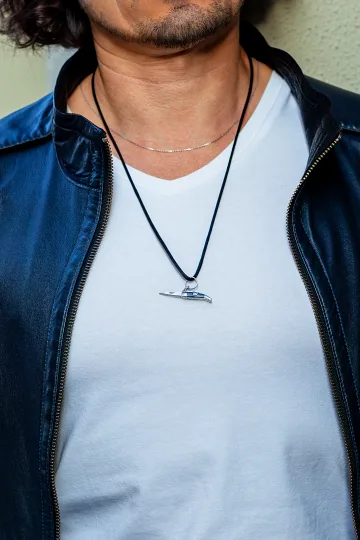




A Comparison with Other Protective Medals and Crosses
The Benedict medal is not the only Catholic protective medallion, and it helps to understand how it differs from its neighbours on the theme. That makes for a considered choice, rather than one made on the first image that comes to hand.
Benedict and the Caravaca Cross
The Caravaca Cross is a Spanish double-barred reliquary cross with its own legend of an apparition and a miracle, also known as a strong protective sign, especially in the south of Spain. It stands closer to the theme of a relic and a local miracle, while the Benedict medal is a universal "text" formula of deliverance from evil. In spirit they are neighbours: both are hung in the home, carried on the road, given for protection. There is more on the Spanish shrine in the piece on the Caravaca Cross, and together with Benedict the two form the pair of chief protective images of the Iberian world.
Benedict and Saint Christopher
The Christopher medallion is a targeted road guardian: people take it on a journey, hang it in the car, give it when a driving licence is passed. The Benedict medal is broader in its task: it is protection from evil in general, not only on the road, and it guards a home as much as a person. The two are often confused by the format of the round medallion, but the intent differs: Christopher is about a safe journey, Benedict about the rejection of evil and spiritual protection. There is an account of the road patron in the guide to the Saint Christopher medal.
Benedict and the plain cross
A small cross is a universal sign of faith and identity, with no tie to a specific protection. The Benedict medal is a specialised medallion with the theme of expelling evil and prayer for a good end. They do not compete but sit well together: a cross is worn all the time, and the medal adds a targeted protective note to it. Many wear them together for exactly this reason, separated by the length of the chain.
Benedict and the worn devotional medallion
A devotional medallion is a broad format of a shrine worn against the skin, into which a medal, a text of prayer, or a fragment of a relic may be set. The Benedict medal is essentially one variety of such a worn sign, but with very definite, "strong" content. If the devotional medallion is about a category and a format, then Benedict is about a specific, recognizable set of symbols and formulas. There is a separate piece on the format of worn shrines in general, on saint medals and devotional medallions.
Benedict and the Miraculous Medal of Our Lady
Another popular Catholic medallion is the so-called Miraculous Medal with the image of Our Lady, widely circulated in the nineteenth century. Compared with it, the Benedict medal is built differently in meaning. The Miraculous Medal is focused on the veneration of the Virgin Mary and the intercession of the Mother of God; its image is gentle and prayerful. The Benedict medal is more "combative": its theme is the direct rejection of evil and spiritual protection, and the central image is not Our Lady but the cross and a saintly warrior of prayer. Many wear both medallions together, separated by their chains, because they complement each other: one about a mother's intercession, the other about a firm refusal of evil.
Benedict and the guardian angel medallion
The guardian angel medallion is a soft, often "children's" protective medal, given at birth and christening as a sign of unseen care. The Benedict medal answers a more grown-up and definite task: not a general covering but a targeted rejection of evil and a prayer for a good end. The angel stands closer to the theme of tender care and guardianship along life's road; Benedict to the theme of conscious spiritual struggle and the choice of light. The two are often combined: the angel is given to an infant, Benedict to someone who already understands the meaning of the formulas on the reverse. The difference is not in power but in tone and in the recipient of the protection, and both medallions sit calmly at the same neck.
The difference between materials and purposes of the medal is not always obvious at a glance, so alongside the table it is worth keeping a sober look at the common misconceptions. Over the centuries a great deal of folk belief has grown around San Benito, some of it true, some of it distorting the substance, and some of it flatly at odds with how the Church itself understands the medal. There is especially much confusion around the letters: they are taken now for a secret spell, now, on the contrary, for a meaningless ornament, when in fact they are a folded prayer text. Another frequent point of dispute is the line between faith and magic: folk tradition readily credits the metal with a power of its own, while the church understanding always brings the conversation back to prayer and the intercession of the saint. It is worth sorting this out calmly, without extremes: the medal is neither an occult talisman nor an empty trinket. Below are gathered the most common claims worth checking before taking them on trust or, on the contrary, waving the medal away as superstition. Tap a card to see where the truth lies and where the exaggeration begins.
Send a friend a discount code, they save on their first order.
Frequently Asked Questions
What do the letters on the Saint Benedict medal mean?
The letters are the first letters of Latin words, put together into prayers and a formula of protection. On the cross: "The Cross of the Holy Father Benedict," "May the Holy Cross be my light," "Let not the dragon be my guide." Around the edge: "Step back, Satan, never tempt me with vanities" and "The things you offer are evil; drink your own poisons." At the top, the word "peace." The full decoding is set out above in its own section.
What does the Saint Benedict medal protect against?
By tradition the medal is linked with protection from evil and temptation, from poison, contagion, and ill intent, and with prayer for a good death. The Church understands this as the intercession of the saint and the power of prayer, not as a magical immunity of the metal. Folk tradition adds the protection of the home, the field, and livestock, hence the custom of hanging the medal over a door and setting it into a foundation.
Can a non-believer wear the medal?
The medal is above all a Christian sign with specific religious content, and it fits best with someone close to the faith, or at least to the cultural tradition. No one will forbid wearing it as a handsome medallion, of course, but its meaning is revealed through prayer and faith. Anyone looking simply for a protective symbol without religious weight would do better to look toward secular amulets.
Does the medal need to be blessed?
In Catholic tradition a sacramental medal is customarily blessed: a priest blesses it, sometimes with a special rite meant for the Benedict medal in particular. Blessing is not a "charging" of the object with energy but a church blessing that brings the medallion into the life of prayer. The medal may be worn before blessing too, but the blessing is considered desirable, so the object takes its place as a sign of faith rather than an ornament.
What is the difference between the Benedict medal and the Caravaca Cross?
Both shrines are protective and both are popular in the Spanish-speaking world, but they are built differently. The Caravaca Cross is a double-barred reliquary cross with a legend of an apparition, tied to a specific miracle and place. The Benedict medal is a universal "text" formula of deliverance from evil around the figure of the saint. In task they are close, and are often kept in the home together, but each has its own image and history.
Where is the right place to hang the medal in the home?
Traditionally the medal is placed at the entrance: over the door or beside the threshold, to mark the protection of the dwelling. It is also fixed in the car, laid in the room of a sick person, set into the foundation during construction. There is no strict prescription; the logic is always the same: to put a sign of protection where you wish to commit a space to the saint's intercession. For the home the larger versions of wood or metal are convenient.
Which material should I choose for a medal as a gift?
It depends on the occasion and on how the medal will be worn. For a christening and an heirloom people choose gold or dense silver engraved with the date. For daily wear at the neck, silver with crisp relief suits well, so the letters read. For a car, physical work, and a "household" guardian, stainless steel is more practical, fearing neither water nor heat. It is worth matching the material to the role, not to the lowest price.
Is it true that the medal is used in rites of expelling evil?
Yes, the medal's formulas are, in effect, short prayers of deliverance, and the medallion is traditionally present among the signs in the corresponding church rites. Because of this the medal has acquired a reputation as a "strong" one. It is worth understanding that this concerns church practice and prayer under the guidance of a priest, not homemade rituals: the object itself accomplishes nothing without the faith and prayer of the person.
Wear the symbol, don't just read about it. These are in stock:
Conclusion
The Saint Benedict medal is a rare object where everything rests not on the beauty of a picture but on the meaning sewn into letters. A cross asked to be made into light. A dragon refused as a guide. A poisoner handed back his own venom. And a quiet "peace" at the top as the sum of all this struggle. Fifteen hundred years ago a monk from Nursia wrote a rule about prayer and work, and centuries later his protective sign spread from Bavarian walls to Latin American doorsteps.
Behind the folk word "amulet" here stands not the magic of metal but a folded prayer and the memory of a man who chose light over dark and peace over strife. That is why a silver or steel disc with Latin letters is still hung over a door, laid in a car, given to a godchild, and worn at the neck alongside a cross. The medal works exactly as far as a person is ready to read the words hidden in it and make them his own.
The Saint Benedict medal in our range is 925 silver and steel with a crisp strike, where every letter of the formula reads, with room for engraving on the back. A good sign of protection to give at a christening, for a new home, to someone close in a hard time, or to yourself.
Wear the symbol, don't just read about it. These are in stock:









About Zevira
Zevira makes jewellery in the artisan tradition of Albacete, Spain. The Saint Benedict medal is one of those symbols close to us in spirit: a whole prayer sewn into metal, a form clear without words, and a living folk tradition behind it. On this medal the tiny letters of the formula need a crisp strike to read, so we work with attention to the relief and to the depth of the strike, in silver, steel, and gold.
Here is what you can find with us on the subject of protective medals and amulets:
- Saint Benedict medals in silver and steel, with room for engraving
- Classic neck crosses of various forms for a clear sign of faith
- Road and protective medallions for the car and the home
- Mediterranean amulets against the evil eye, including the cornicello horn
- Chains and leather cords of various lengths for a medal of any size
Every piece can be personalised with engraving, on the back of a medal or a cross. 925 silver and 14 to 18K gold, meant to be worn every day and handed down.