The Caravaca Cross: the Spanish double-barred protective cross
Caravaca de la Cruz, a small town in the southeast of Spain, belongs to a tiny club of five places on earth that the Vatican granted a perpetual jubilee year. It sits in the same company as Rome, Jerusalem and Santiago de Compostela. The reason is a single object: a cross with two crossbars that, according to legend, two angels carried into the town.
The Caravaca Cross (in Spanish, Cruz de Caravaca) is a protective cross from the province of Murcia. Its defining feature is two horizontal crossbars instead of one, and it is often shown flanked by two angels. Spaniards hang it above the door, tuck it into a newborn's christening set and take it on the road. In Mexico and across Latin America it became one of the most popular folk amulets of all, with printed prayers and shops that sell it beside candles and herbs.
Here is the plan. What this cross actually is, where the legend of its miraculous appearance in 1231 comes from, what the two crossbars mean, what it is made of, how people wear it, who receives it as a gift, and how it differs from the Lorraine, Orthodox and ordinary Latin cross.
The Caravaca Cross stands apart among protective symbols. An ordinary neck cross is first of all a sign of faith. The Caravaca cross carries a double load: it is both a Christian relic with a precise address of origin and a folk amulet credited with a very down-to-earth power to keep harm away from the home, the mother in childbirth and the traveller. These two layers, the churchly and the folk, have coexisted in one object for centuries without getting in each other's way.
Before we unpack the history and the symbolism, a quick check of affinity. If you are choosing a protective sign for yourself or as a gift, it helps to work out which amulet is closest to you in spirit.
The Caravaca Cross belongs to the family of double-barred, or patriarchal, crosses. It is the same geometric family as the Lorraine cross, but with its own legend, its own colour and its own place on the map. Let us take it apart from bottom to top, from the shape to the rituals it still lives inside today.
What the Caravaca Cross is
The double crossbar as an identifying mark
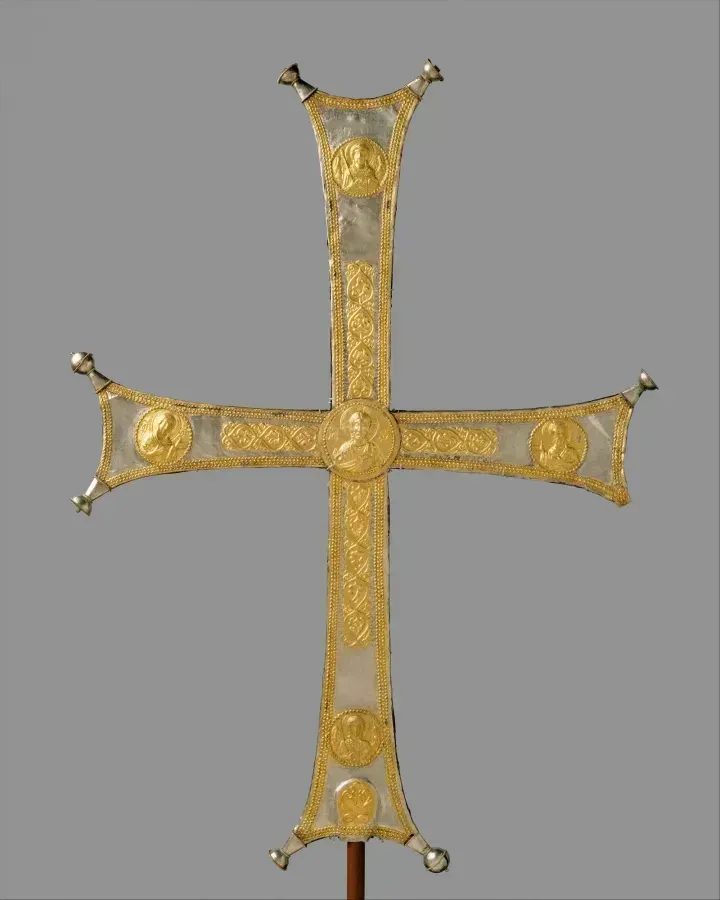
The first thing that catches the eye is the two horizontal crossbars on the vertical axis. The upper bar is shorter than the lower one. A cross like this is called a patriarchal or archiepiscopal cross, because in Western heraldry it served for centuries as the mark of high church rank. The Caravaca cross takes that shape and fills it with its own content.
The upper, short bar, by one reading, represents the small board with the inscription that, in the Gospel account, was nailed above the head of the crucified. The lower, longer bar is the crossbar of the crucifixion itself. Together they give a silhouette you cannot mistake for anything else: a vertical "crossed" twice over, spare and severe.
Wear the symbol, don't just read about it. These are in stock:
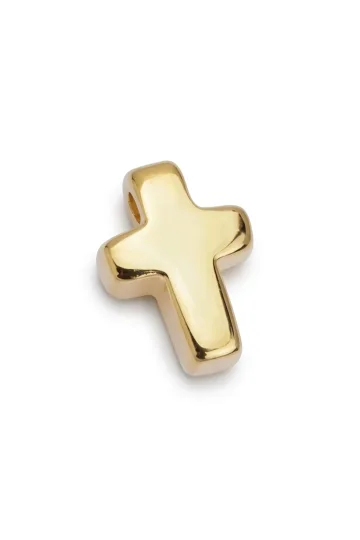



Where the double-barred shape came from
The cross with two crossbars is older than the Caravaca legend itself. Byzantium knew it, where the double cross stood for high church dignity, and from there the shape spread across the Christian East and West. It stands in coats of arms and on flags: the double cross holds up the arms of Hungary and Slovakia, where it is called the patriarchal or Lorraine cross. The Spanish Caravaca cross takes this ready, recognisable geometry of the highest rank and fills it with its own story of an appearance and a protection. The form came to Caravaca from the broad Christian tradition, while the legend, the angels and the role of the amulet were born on the spot. That is why the same double-barred silhouette in the Hungarian coat of arms reads as an emblem of state, and on the chest of a Spanish woman as a household charm.
A reliquary cross, not a decorative pendant
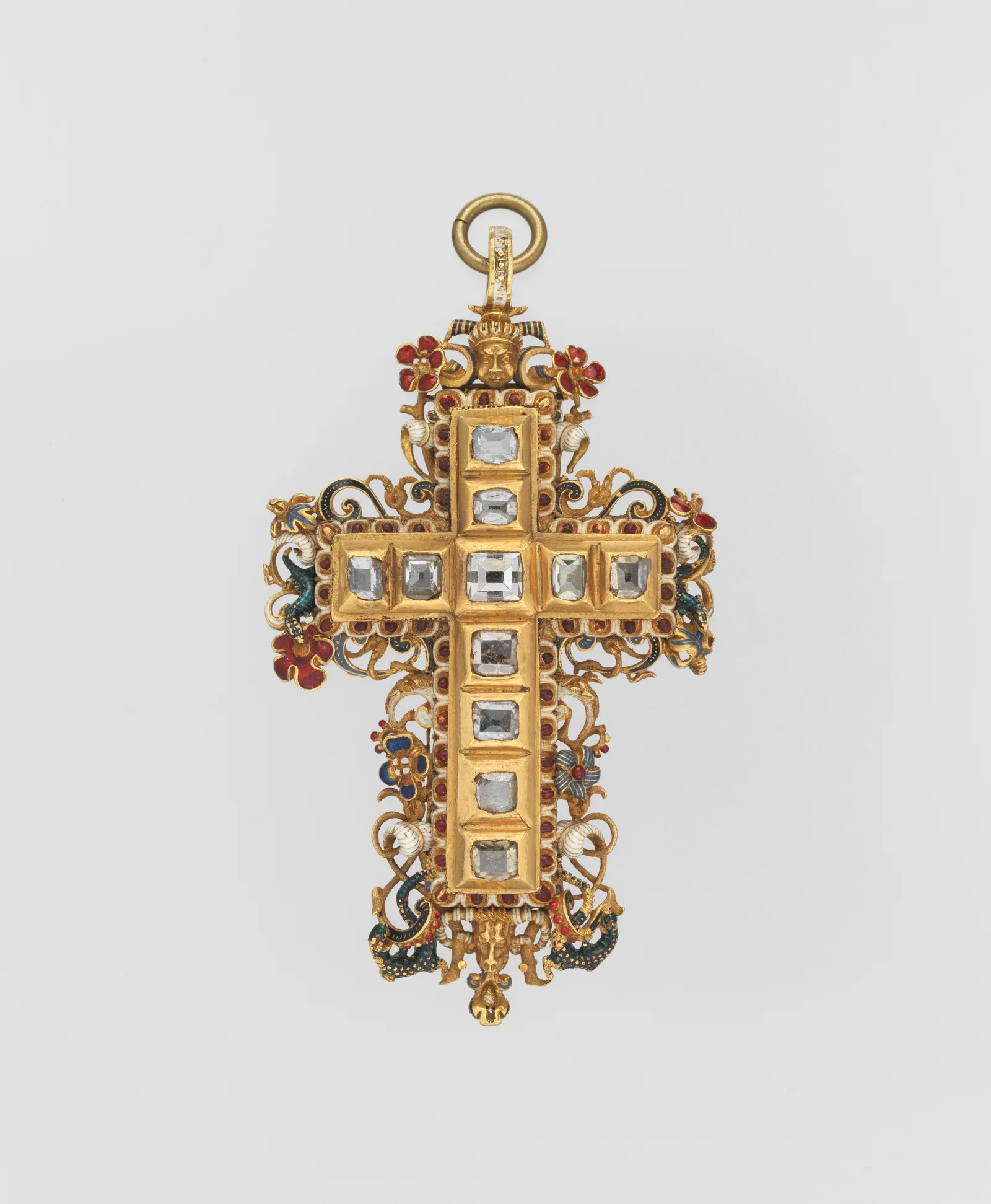
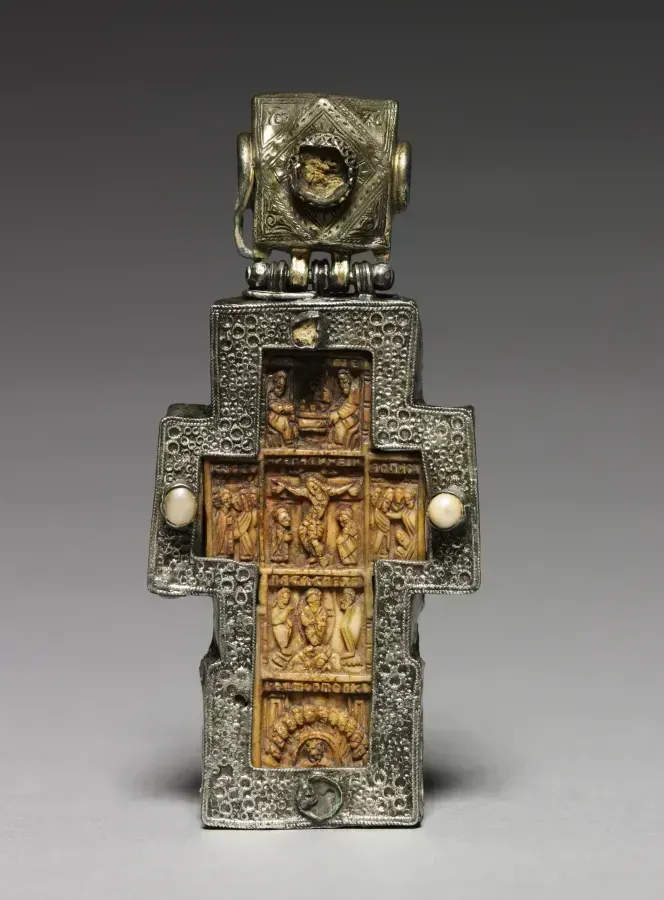
The original Caravaca Cross is a reliquary. Inside it, according to tradition, were kept fragments of the Lignum Crucis, the wood of the True Cross from Jerusalem. That Latin phrase, Lignum Crucis, means "wood of the cross." This is exactly why the Caravaca cross was historically made double-barred: in the Christian tradition the patriarchal form became the standard shape for reliquary crosses, the ones that held a relic inside.
The folk copies people wear on the neck or hang at home hold no relic inside. But they repeat the form word for word, and in that sense every small Caravaca cross is a reference to the great original that stands in the castle sanctuary above the town.
Names and spellings
In Spanish the cross is called Cruz de Caravaca, sometimes Vera Cruz de Caravaca, that is, "True Cross of Caravaca." In English you will meet "Caravaca Cross," "Cross of Caravaca," and "Cross of Caravaca de la Cruz." In the Latin American folk tradition it is often called simply La Caravaca. All these names point to the same object: a double-barred cross tied to the Spanish town of Caravaca de la Cruz.
What a genuine cross looks like
The canonical image runs like this: a double-barred cross, most often gold or silver in colour, frequently with red enamel or set against a red ground. On either side of the lower bar stand two angels, who seem to hold the cross or to attend it. Sometimes the angels are absent and only the clean double-barred form remains, but it is the angels that make the image instantly recognisable and point back to the legend of the appearance.
On old examples the reverse often carries a prayer or a protective formula. In the Mexican folk version the back can be densely covered with the fine text of an incantatory prayer, addressed to the cross as a defence against every evil.
To understand why such a modest object earned such a reputation, we need to go back to the thirteenth century, to the restless frontier between the Christian and Muslim worlds, where, by legend, the cross appeared to people.
History: a miracle in Murcia
Thirteenth-century Murcia: a land on the fault line
At the start of the thirteenth century the southeast of the Iberian Peninsula was a borderland. The Christian kingdoms of the north were pushing slowly south, taking back land from Muslim rulers. The territory of present-day Murcia remained under Muslim control but lived in constant contact between cultures. People traded here, made war, took captives and struck alliances, and the religious border ran literally through neighbouring valleys.
Caravaca was a fortress on that frontier. The castle on the hill controlled the roads and the water, and therefore the life of the whole district. It is exactly here that tradition places the event that turned an ordinary frontier fortress into a place of pilgrimage from across Europe.
The legend of 1231: a Mass without a cross
According to tradition, in 1231 a Christian priest named Ginés Pérez Chirinos fell captive to a Muslim ruler. The ruler, curious about the faith of his prisoners, asked the priest to show how Christians perform their central act of worship. Everything needed was gathered for the priest: vestments, a chalice, a book. The service began.
And at the decisive moment the priest stopped. The altar was missing the one essential thing, the cross itself. Without it the service could not go on. A silence fell in which both the Mass and the life of the captive cleric hung in the balance.
The angels who brought the cross down from heaven
And then, the legend says, two angels flew in through the window. They carried a cross, the very one with two crossbars, and set it down on the altar. The service was saved, the Mass was completed. The cross that appeared by miracle stayed in Caravaca and became the town's chief relic.
The two angels from this story never went away. They fixed themselves inside the image of the cross: they are shown on either side, holding it or accompanying it. Few amulets wear an illustration of their own legend, and the Caravaca cross does. Every time you see two angels beside a double-barred cross, you are looking at a scene from the thirteenth century.
The conversion of the Moorish ruler
The tradition goes further. The ruler who witnessed the miracle was shaken and converted to Christianity. In various retellings he is linked to the figure of Abu Zayd, a Muslim lord of these lands who, in the historical sources, did indeed cross over to Christianity in the first half of the thirteenth century. Folk memory wove a real political biography together with a miracle of an appearing cross, and out of it came a story in which faith wins not by the sword but by a sign.
How far this matches the facts is still argued. One thing is clear: by the end of the thirteenth century the cult of the True Cross of Caravaca already existed, and the cross itself was venerated as a relic holding a fragment of the wood of the True Cross.
The Lignum Crucis: a relic inside a relic
In the eyes of believers, the value of the Caravaca cross rested on the fragments of the true Cross of the Crucifixion kept inside the patriarchal reliquary, brought, by tradition, from Jerusalem. These fragments turned the cross into a reliquary rather than a mere image. Pilgrims came to Caravaca precisely for the wood of the True Cross, and the double-barred shape served as its case.
A castle sanctuary grew up around the relic, and around the sanctuary the town itself, which changed its name to Caravaca de la Cruz, "Caravaca of the Cross." The name fixed the miracle in the map: the place came to be called after its chief holy thing.
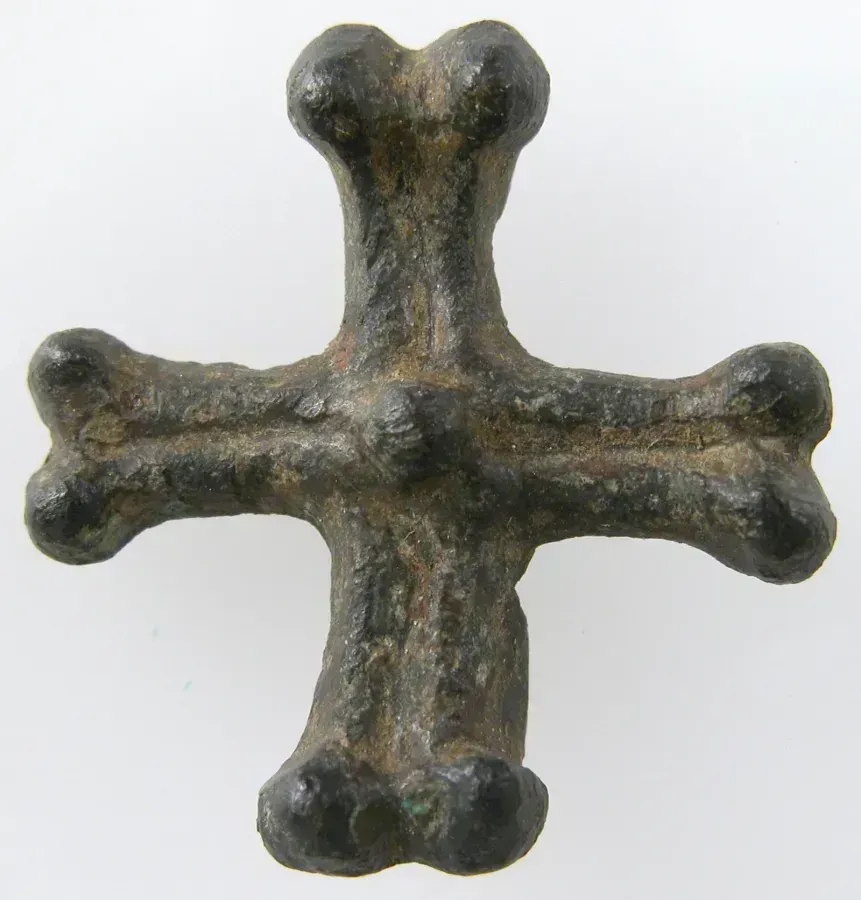
Templars and the Order of Santiago: who guarded the relic
After Caravaca passed under Christian rule, the hilltop fortress and the relic it held were entrusted to the Knights Templar. The Templars held Caravaca for most of the thirteenth century and strengthened the castle, until their order was suppressed at the start of the fourteenth. The relic and the fortress passed to the Order of Santiago, one of the great Spanish military monastic brotherhoods. Under the knights of Santiago, Caravaca became the centre of a large commandery, and the care of the cross rested on the order's shoulders for several centuries.
The presence of the knightly orders explains why the cult of the relic grew so surely. Behind the cross stood both pilgrims and an organised force with lands, revenues and connections across Castile. The order built and rebuilt the sanctuary, staged processions, kept the rumour of miracles alive. Thanks to this, a small frontier town was written into the wider religious geography of Spain long before the rest of Europe heard of it.
The basilica sanctuary above the town
The relic is kept not in an ordinary parish church but in a fortress sanctuary that crowns the hill above Caravaca. Over time a medieval castle with battlemented walls and towers was turned into a Baroque temple complex: inside the old defensive walls rose a richly decorated church with a grand façade of local reddish marble. The mix of a severe fortress outside and lavish Baroque within is rare in Spain and makes the Caravaca sanctuary recognisable. The cross itself is kept in a special chapel and brought out only on the great feasts, surrounded by precautions.
The layout of the sanctuary locks in the double nature of the cross. It is both a military trophy of the frontier, guarded behind castle walls, and an object of quiet household devotion whose copy any pilgrim carries home. The walls that hid the original for centuries and the shops at the foot of the hill that sell its small images stand side by side and tell one story from two directions.
Caravaca de la Cruz is put on the map
By the Baroque age the cult had unfolded in full. The cross was carefully kept, a sumptuous chapel was built for it, and kings and commoners alike came to it. The fame of the relic crossed the borders of Spain together with the monastic orders and the colonists, and the image of the double-barred cross with two angels spread across the whole Spanish-speaking world.
In the twentieth century the story took a hard turn. In 1934, in the pre-war years of political upheaval, the original relic was stolen. It was never found. In 1942 a new fragment of the wood of the True Cross was sent from the Vatican by Pope Pius XII, and the veneration continued around this piece. So the cross that pilgrims come to today holds a relic with a dramatic biography of its own.
The perpetual jubilee year
At the very end of the twentieth century Caravaca received a rare privilege: a perpetual jubilee year, granted in the name of the Catholic Church. Only a handful of places on earth hold such a perpetual jubilee, and Caravaca is among them, in the company of Rome, Jerusalem, Santiago de Compostela and Santo Toribio de Liébana. It is celebrated once every seven years: for twelve months the town becomes the goal of a great pilgrimage, and tens of thousands of people flow to the cross from all over Spain and from abroad. The privilege secured for a modest-sized cross the status of a first-rank holy site and tied a small Murcian town to the chief Christian centres of the world.
The Caravaca sits high at the throat, strictly vertical, both bars pointing up. Silver for every day, Spanish yellow gold for a big occasion. A cross knocked sideways gives away someone who dressed in a hurry.
The Caravaca Cross in an outfit
We have covered the history and the symbolism, now the look. I have gathered what actually works when you take the cross off the display and put it on a living person.
Which metal of the Caravaca Cross suits which skin tone? For a cool undertone (pinkish, porcelain) I recommend a severe silver: the cool shine suits the double-barred form and keeps it spare. For a warm undertone (golden, peachy) I suggest yellow gold, the way it was worn in old Spain: the warm metal echoes the red enamel and lights up the figures of the angels. If you are unsure, take 925 sterling silver, it suits almost everyone and does not argue with any look.
A plain cross, or one with angels and enamel? For a quiet everyday look I choose the clean double-barred form without angels: a severe cross at the throat reads as a sign, not a shop window. For an occasion and a night out I recommend the version with angels, red enamel or filigree, where the richness of detail is more fitting. The rule is simple: the more work there is on the cross, the calmer the rest of the outfit should be, or the look argues with itself.
How do I layer the Caravaca with other amulets? When I build a look for a client, I keep the cross the lead and do not crowd it with rivals right at the throat. The Caravaca goes well with its Spanish neighbours: black azabache, red coral, they come from the same Mediterranean world and do not fight for attention. If you want layers, give the cross its own, shorter length so it sits higher than the other pendants. In layers I advise keeping the metals in one tone: silver with silver, warm with warm.
Which occasion and outfit does the Caravaca Cross suit? A silver cross on a leather cord or a fine chain lives in an everyday look and needs no fuss. For a strict, business look I recommend a small cross at the throat without enamel: the sign is with you but it stays quiet. Yellow gold with red enamel I choose for a big occasion, a christening, a wedding, a family celebration, where the shine and colour belong. A large filigree cross I suggest wearing over clothing on special days rather than hiding it under a collar.
How do you set the cross correctly on the neck? The Caravaca sits high at the throat, strictly vertical, the short bar on top, the long one below, both facing up. Turning the cross over is not the custom, and knocked off to the side it loses all the severity of its form. I match the chain length to the neckline: for a closed, high collar I choose a shorter chain so the cross lies on the chest rather than drowning under the fabric. And check the bail before you buy: the cross should hang straight rather than tipping forward.

Turn on your camera, pick earrings, a pendant or a ring, and see the piece on yourself in real time.
Switch items in one tap.
Everything runs in your browser: no photo or video is ever uploaded.
Meaning and symbolism
Protection of home, road and mother
In folk tradition the Caravaca Cross is first of all an amulet with a very concrete set of duties. It is hung above the front door so that harm cannot enter the house. It is taken on the road so the journey is safe. It is placed beside a woman in childbirth and by a newborn's cradle to guard the most vulnerable moment of life. This practicality sets the Caravaca cross apart from purely religious symbols: it has a task list, like a good worker.
Hence its popularity far beyond churchgoing circles. Someone who rarely sets foot in a church may still keep a Caravaca cross in the car or by the door, because it reads as protection for the home rather than a declaration of faith.
Against the evil eye, envy and curses
Folk belief credits the Caravaca cross with defence against very specific troubles. First among them is the evil eye, the envious glance that Mediterranean culture has feared for centuries. The cross is set against curses, against deliberate harm, against enemies and against accidents on the road. In the Latin American version the list widens to poverty, illness and quarrels within the family, because the printed prayer on the back names the misfortunes one by one. This detailed specialisation makes the cross a relative of the other Mediterranean amulets against the evil eye, where each charm has its own circle of threats it handles better than the rest.
The double crossbar: two readings
The two crossbars gave rise to more than one interpretation. The church explanation points to the patriarchal cross as a mark of the highest spiritual dignity and to the upper bar as the board of the crucifixion. The folk reading sees the doubling as reinforcement: if one crossbar is protection, then two are protection twice over. The cross "crosses out" evil twice, sets a double barrier before it.
Neither reading cancels the other. As often happens with living symbols, the official meaning and the everyday superstition lie calmly on top of each other, and the owner chooses which is closer.
The power of the number two
Doubling in folk symbolism is almost always read as reinforcement. A single barrier can be got around, two create a threshold, a border that evil finds harder to step over. Hence the everyday reading of the Caravaca cross: two crossbars lock out harm more surely than one, like a double bolt on a door. The same logic stands behind the two angels and behind the habit of wearing the cross together with a second amulet. Mediterranean folk magic loves things in pairs: two eyes against the evil eye, two hamsa hands, doubled pendants. The Caravaca cross falls into this line naturally, and its double-barred form backs up the idea that the protection here is not single.
The double cross against poison and plague
The double-barred form has an unexpected reputation as a defence against poison and disease. In the late Middle Ages the cross with two crossbars was linked to a charm against plague and poison, and old records mention a "cross against poison" of exactly this geometry. In more recent times the double cross became the emblem of the fight against consumption and entered medical symbolism. The Caravaca cross shares this form, and so it is sometimes counted along the same healing line. The link to the idea of healing is reinforced by the local rite of washing the cross in wine, behind which lies the memory of a besieged town saved from contaminated water.
Red colour and the protective cord
The Caravaca cross is often made red or worn on a red cord. In Mediterranean tradition red is the colour of blood, life and protection, the same one that gives the Italian horn amulet its power. A red thread with a cross is a double insurance: both the form and the colour work in the same direction. In the Mexican version the red cord is almost obligatory, and the cross is completed with a prayer written straight onto the back.
Guardian angels in metal
The two angels on the cross are not decoration for the sake of beauty. They carry meaning: they recall the miracle of the appearance and at the same time read as guardian angels attending the owner. The result is a double protection in the literal sense: the cross itself and two heavenly guards at its side. For many, it is the angels that make the Caravaca cross a "warm" amulet rather than a strict church sign.
The angels have a practical role for the maker too. Two symmetrical figures on either side hold the composition together, balance the elongated double-barred form and give the carver room for fine work: wings, rays, the folds of robes. A cross without angels looks more austere and ascetic, a cross with angels richer and more narrative. That is why gift and family versions are more often made with angels, and the spare everyday ones without.
Customer reviews
Zevira is a real jewellery shop. Genuine payments, deliveries and customer thank-yous.
🥰🥰🥰 gracias
Ok, ¡gracias! 🙂
What the Caravaca Cross is made of
Silver
Silver is the most common material for Caravaca crosses. It is affordable, it holds fine carving with angels and rays well, and its cool shine suits the severe double-barred form. For everyday wear people usually choose 925 sterling silver: it is durable, rarely irritates the skin and cleans easily. A silver Caravaca cross is a sensible middle ground between price, strength and looks.
Gold
A gold Caravaca cross is the ceremonial, "family" version. It is given at christenings and weddings and passed down by inheritance. The warm colour of gold sits well with red enamel and brings out the figures of the angels. Gold does not tarnish and keeps its look for decades, so a gold cross often becomes a lifelong object and then passes to the next generation.
Enamel and colour
A distinct expressive detail of Caravaca crosses is enamel. Red enamel on metal gives the recognisable image: a glowing double-barred form on a blood-red ground. Blue and green versions exist too, but red remains the classic, because it pulls along the whole protective symbolism of the colour. Enamel needs careful handling, but it makes the cross bright and "folk" in appearance.
Wood, mother-of-pearl, brass
Besides precious metals, Caravaca crosses are made of wood, bone, mother-of-pearl and coated brass. A wooden cross is closer to the humble pilgrim tradition: this is the kind brought back from Caravaca de la Cruz itself as a memory of the trip. Brass and silver-plated versions are cheaper and suit the home or the car, where the amulet itself matters more than the value of the material. For those who care about a severe colour there is also a dark line: black crosses echo the Spanish tradition of azabache, black jet, which served in Spain as a protective stone for centuries.
Filigree and handwork
The Spanish jewellery tradition is famous for filigree, a pattern of fine twisted wire soldered into lace. The Caravaca cross sits well with this technique: openwork curls fill the field between the crossbars, frame the figures of the angels and make the metal look light. Filigree crosses are prized for the handwork and for the fact that each comes out slightly its own. In the southern and coastal regions of Spain filigree was a home craft for centuries, and protective images, the Caravaca cross among them, were often made this way. Next to a smooth stamped version, a filigree cross looks like an object of another order, closer to jewellery than to a souvenir.
Inlays: coral, jet, glass
Beyond enamel, Caravaca crosses are decorated with inlays. Red coral, a Mediterranean charm against the evil eye, is set into the cross to join two protective powers in one object. Black jet, azabache, gives a cross a severe, almost mourning look. Folk versions use coloured glass that imitates gemstones: cheaper than stone but keeping the same bright image. A stone or an inlay is chosen at once for its beauty and for the power ascribed to it, so the same cross in different hands can carry a whole set of charms at once.
The material sets the weight and the price but does not change the essence. Next comes the practical question: how exactly people wear the Caravaca cross and where they place it so that it "works" in the folk sense.
Upload a photo of your pet, someone you love, or an object. We'll build a 3D model and hand-cast it in pewter.

How to wear the Caravaca Cross
On the neck and near the heart
The most familiar way to wear a Caravaca cross is on a chain or cord near the heart, like an ordinary neck cross. Here it reads in two roles at once: a protective amulet and a mark of belonging to Mediterranean Christian culture. The chain length is chosen to suit the neckline and the height, but most often people pick one that lets the cross lie on the chest, on view or hidden under clothing as the owner prefers. For more on how the Caravaca cross relates to other neck crosses, see the full guide to the meaning of a cross necklace.
In the home, the car, above the door
Beyond the neck, the Caravaca cross lives in the interior. Its classic place is above the front door: it is believed that this way it guards everyone who comes and goes. The second most popular address is the car, where the cross is hung on the mirror or fixed to the dashboard to keep the traveller safe on the road. Often the cross is placed at the head of the bed, by a cradle in the nursery, at a workplace. The same logic works here as with household charms and talismans in general: the object is set where protection is needed most.
With other amulets
The Caravaca cross sits calmly beside other protective signs. In Spain it is worn next to azabache, and along the Mediterranean belt it falls into the company of the Italian horn, the cornicello, and other charms against the evil eye. Different traditions of protection do not conflict: some ward off envy, others guard on the road, others keep the home. Gathering them together is an old folk habit, not eclecticism for the sake of looks.
Orientation and care
The cross is worn with the upper, short bar at the top and the long one at the bottom, like an ordinary Latin cross. Turning it upside down is not the custom. The metal is cared for according to the material: silver is cleaned from time to time with a soft cloth, gold only needs wiping, enamel is kept from knocks and abrasive chemicals. The cross is taken off before the pool and the sea if it carries enamel or plating, so the colour and shine last longer.
Blessing and a personal rite
In church tradition the cross, like any Christian symbol, can be blessed by a priest, and for a believer this gives it the fullness of its meaning. Folk practice has its own rites: the cross is smoked with incense, sprinkled with holy water, laid overnight beside a lit candle, or a protective prayer is read over it. None of these steps is required for the cross to work in the owner's eyes, but for many it is exactly a small personal ritual that turns a purchased image into their own amulet. In Caravaca de la Cruz the place itself takes on the role of such a blessing: for a pilgrim, a cross held to the relic or bought at the sanctuary is already blessed by the very road to it.
Who receives a Caravaca Cross as a gift
For newborns and at christenings
The first and most common occasion is a christening and the birth of a child. A small Caravaca cross is tucked into a baby's christening set as protection in the most defenceless period of life. For a christening gift people choose a light cross with a secure bail and no sharp details, most often silver or gold, so that the object stays with the person for years and becomes a family keepsake.
For the road and the housewarming
The second big occasion is the road and a new home. The Caravaca cross is traditionally given to those setting off far away, on a long journey, or moving house. At a housewarming such a cross is hung above the door of the new home to "close" it against harm from the first day. It is a gift with a clear message: I wish you a safe journey and a peaceful home.
For those far from home
For Spaniards and Latin Americans in emigration the Caravaca cross carries one more layer of meaning, the memory of the homeland. A small cross from Murcia or from a Mexican shop becomes a piece of home that fits in the palm of a hand. To give it to someone far from their people is to remind them where they are from and who is waiting for them. In this the Caravaca cross is close to the other "portable homelands" that emigrants have carried with them for centuries.
For recovery and in a hard hour
The Caravaca cross is also given in heavy moments: to someone ill, someone facing an operation, someone living through a misfortune. Here the cross's link with the idea of healing comes into play, the same link that stands behind the rite of washing it in wine. Such a gift reads as a wish for strength and protection, a sign that the giver is close. Unlike the ornate christening cross, here it is not the material and the shine that matter but the intention itself: often the gift is a plain, light cross that can be kept in a pocket or under a pillow.
At the point of buying, the Caravaca cross has several marks by which a considered piece can be told from a random stamping. Let us look at what to check.



How to choose and tell a genuine cross
The proportions of the double crossbar
The chief mark of a good Caravaca cross is the right proportions. The upper bar should be clearly shorter than the lower one and sit in the top third of the vertical rather than in the middle. If both crossbars are almost the same length, you are looking at a Lorraine cross rather than a Caravaca. Correct proportions immediately give away a maker who understands what they are doing.
Hallmark and standard
A metal cross made of a precious metal carries a hallmark of the standard. On silver this is the 925 mark, on gold the mark of the corresponding standard. The hallmark is placed on the bail, the back or the lower end. Its absence on an item sold as silver or gold is a reason to ask questions. A hallmark does not guarantee artistic value, but it confirms the material.
Front and back
A well-considered Caravaca cross has both sides worked. On the front are the angels, the rays, the relief of the crucifixion itself. On the back a prayer or a protective formula is often placed, and on old reliquaries the relic inlay sat there. A blank, smooth, unmarked back is found on the simplest souvenir versions. This does not make them "non-working" from the point of view of folk belief, but it separates a mass trinket from an object made with attention.
Where to buy
The most "correct" cross in terms of tradition is brought from Caravaca de la Cruz itself, from the shops by the sanctuary. The second reliable route is workshops that specialise in religious and protective symbolism. A designer brand gives a modern interpretation for those who care about the look and the quality of the metal. The Mexican folk version with a prayer on the back is a separate genre with its own aesthetic. All of them are genuine, they simply speak different dialects of one symbol.
Size and weight for the task
A Caravaca cross is also chosen by size. A tiny cross on a fine chain suits a child and those who wear the amulet hidden under clothing. A medium one, a couple of centimetres, is the most versatile: visible but not heavy. A large cross with worked angels is more of a pectoral or interior object, hung at home or worn over clothing on special occasions. The weight depends on the metal and on whether the cross is solid or openwork: a filigree one is noticeably lighter than a cast one of the same size. For everyday wear people take a weight that does not drag on the chain or get in the way, while ceremonial and family crosses can allow themselves to be more massive.
Leave your email, we'll send your discount code. No spam, unsubscribe anytime.
The code arrives by email, valid on your first order.
The Caravaca Cross and other crosses
The double-barred form is found on several crosses at once. It helps to understand how the Caravaca differs from its relatives, so as not to confuse them when choosing.
The ordinary Latin cross
The Latin cross is one vertical and one crossbar, the most widespread form of the Christian cross in the Western tradition. The Caravaca cross differs from it by the second, upper bar. In meaning the Latin cross is a universal sign of faith, while the Caravaca carries the extra load of a reliquary and an amulet with a specific legend and address.
The Lorraine and patriarchal cross
The closest relative of the Caravaca cross is the patriarchal cross, also called the Lorraine cross. The geometry is the same: two crossbars, the upper shorter. The difference is in context and detail. In heraldry the patriarchal cross is a mark of archiepiscopal dignity. The Lorraine cross is a historical symbol of Lorraine and the House of Anjou, later an emblem of resistance and of medical campaigns against consumption. The Caravaca cross takes the same form but ties it to a Spanish town, a legend of an appearance and two angels. The form is shared, the biography different.
The Orthodox eight-pointed cross
The Orthodox cross carries two extra crossbars over the main one: a short upper board and a lower slanted footrest. Outwardly it too is "multi-barred," which is why it is sometimes confused with the Caravaca. But on the Orthodox cross the lower bar is slanted and the upper one small and straight, whereas on the Caravaca both crossbars are straight and horizontal. These are different traditions: Russian Orthodox and Spanish Catholic.
The cross of Saint Benedict
Another protective cross of the Catholic tradition is the medal-cross of Saint Benedict, covered with the letters of a Latin protective formula. It too is regarded as a charm against evil, but its shape is ordinary, single-barred, and the power is ascribed to the inscription rather than to a second bar. The Caravaca and Benedictine crosses are often found in the same shops as two different "specialisations" of protection.
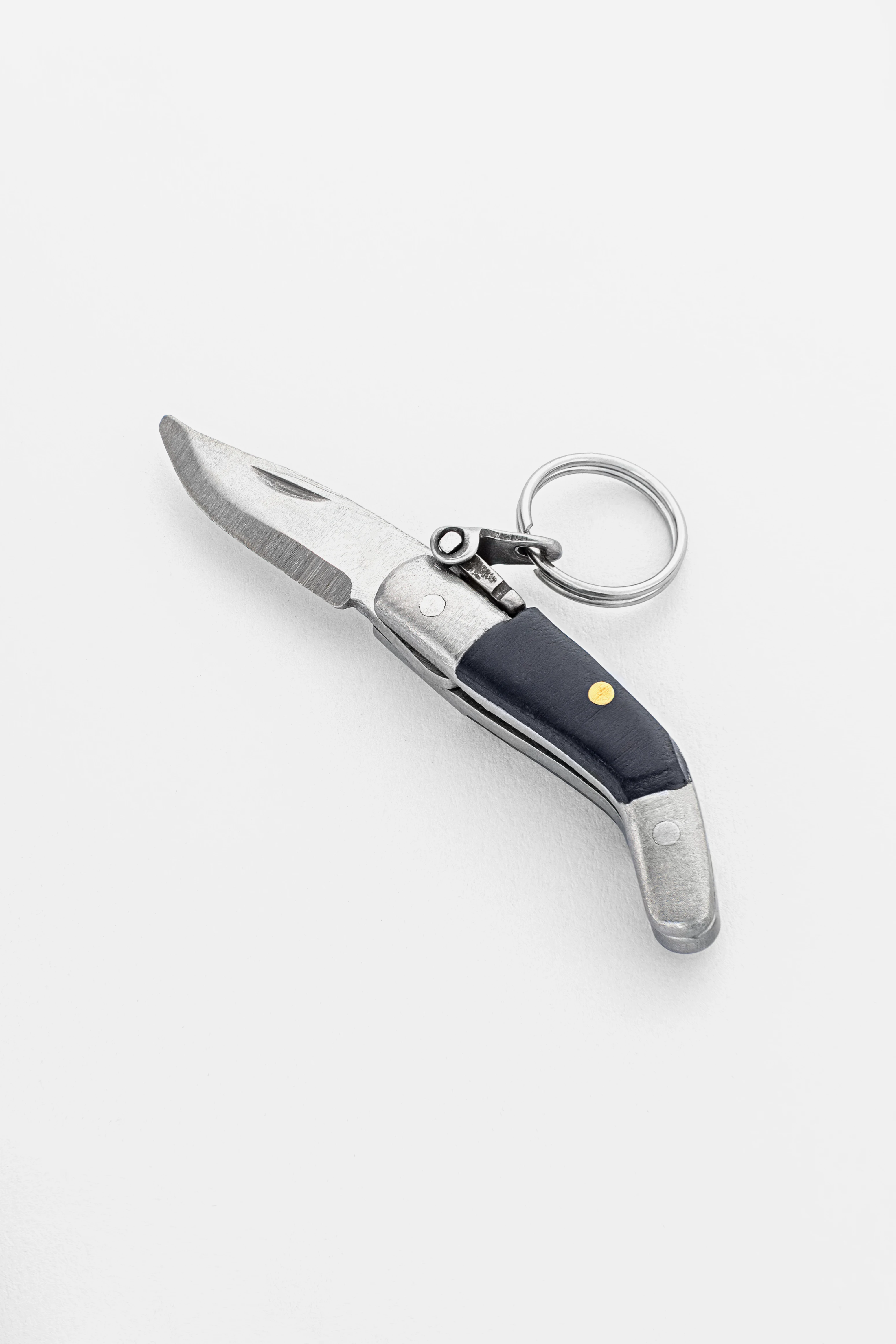
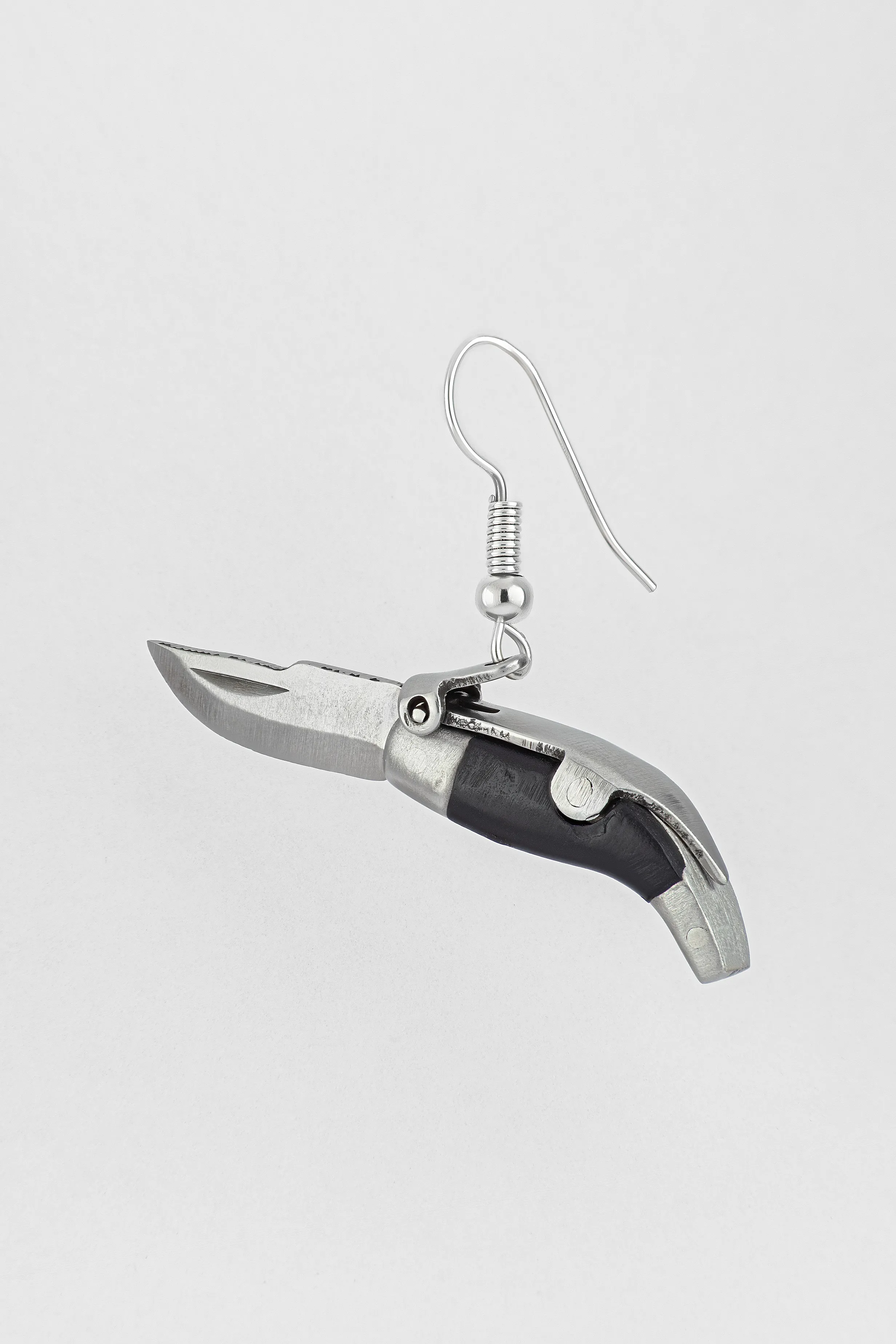
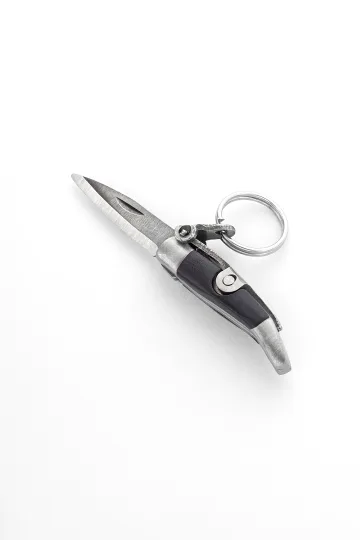
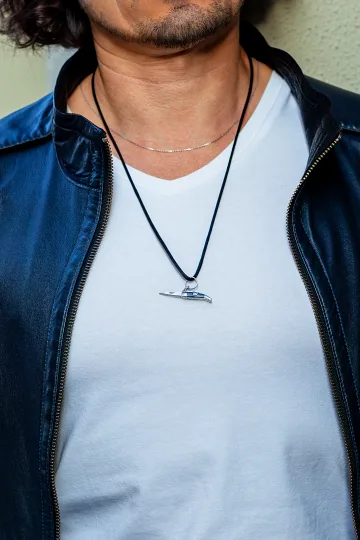
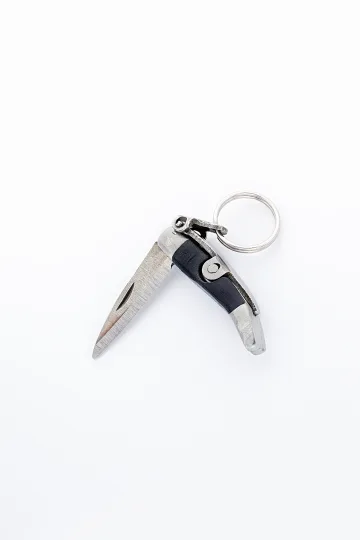
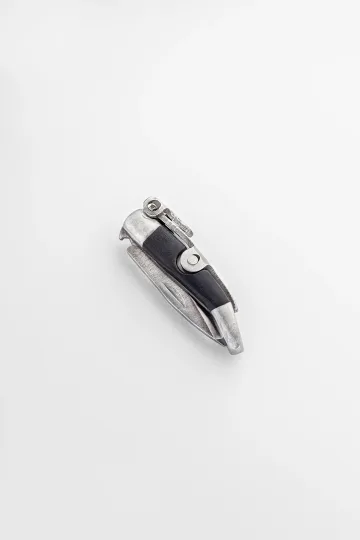
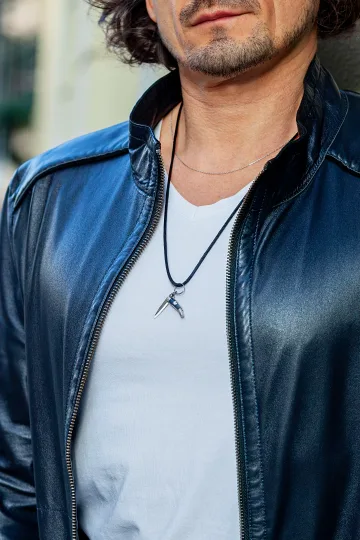
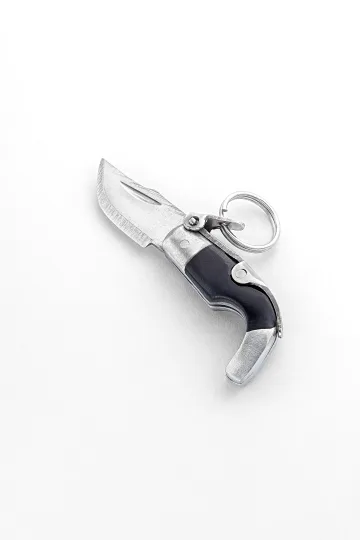
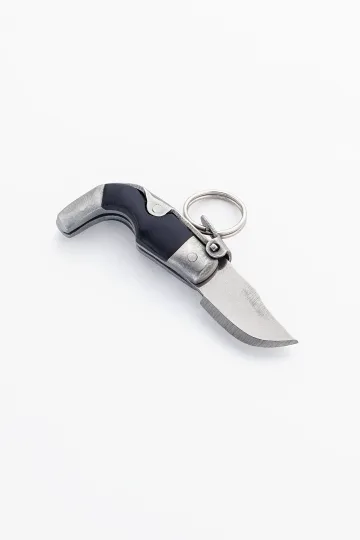
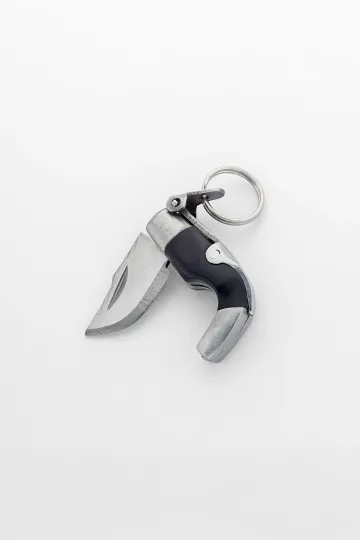
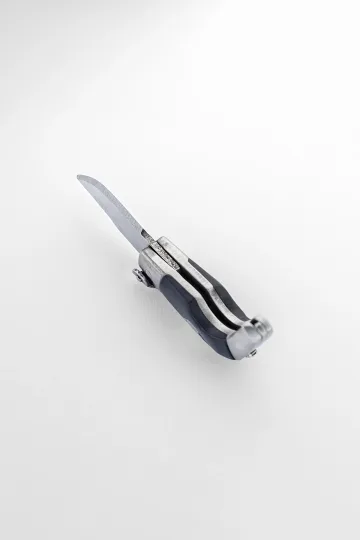
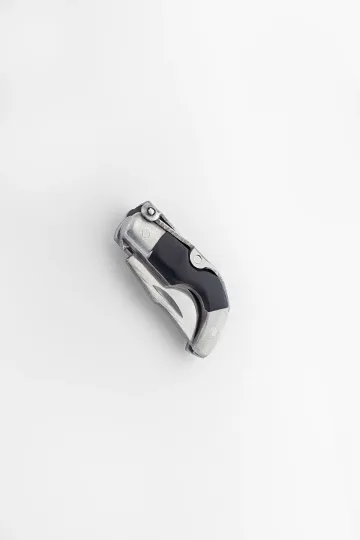
CAPAORA mini knife pendant
The 18th-century Spanish navaja in miniature: 40 mm of stainless steel, a real folding mechanism and a Palanquilla lock that clicks. An affordable gift to remember.
Authentic · Ships from Spain · 14-day returns
The Caravaca Cross in Latin America and folk belief
How a Spanish cross became a Mexican amulet
Together with Spanish monks and colonists the image of the Caravaca cross crossed the ocean and settled in the New World. In Mexico it took root especially firmly and in time outgrew its Spanish source. Here the cross became part of folk magic on a par with herbs, candles and patron saints. It is sold in shops that trade in goods for the home and for protection, printed on small images and scapulars, woven into everyday rites. For many Mexicans La Caravaca is a familiar household charm rather than an overseas rarity, and they know it better than the town in Murcia itself.
The prayer on the back
The distinctive feature of the Latin American version is the text on the reverse. An incantatory prayer is placed there, addressed to the cross as a defence against evil, curses, enemies and misfortunes. Such a cross works on two levels at once: as an image and as a worn text-amulet. It was largely the printed prayer that carried the Caravaca cross across the continent: a cheap image with a ready incantation on the back turned out to be convenient and available to everyone.
The little book "Cruz de Caravaca"
A separate life awaited the Caravaca cross in print. Across the Spanish-speaking world, and especially in Latin America, a cheap prayer booklet spread under the title "Cruz de Caravaca," a collection of protective invocations, spells and instructions for every occasion of life: from illness and poverty to the evil eye and enemies. It was sold in the same shops as the crosses themselves, and it turned the small image into a whole household routine: buy the cross, buy the booklet to go with it, read the right prayer. Print, cheap and mass-produced, made the Caravaca cross truly popular. Few people saw the relic behind the fortress walls of Murcia, but anyone could buy a penny booklet with a cross on the cover.
The cross in the Brazilian tradition
In Brazil the Caravaca cross entered Afro-Brazilian and esoteric practices. Here it is known as a strong protective sign, woven into local folk religiosity, and printed on amulets, candles and prayer cards. The path is the same as in Mexico: a Spanish Catholic symbol, torn away from its home town, grows into the local culture and gathers new meanings while staying recognisable by its double crossbar. The same cross guards a pilgrimage relic in Murcia and works as an amulet of street magic across the ocean, and both roles coexist without cancelling each other.
The cross in pilgrimage
At home, in Caravaca de la Cruz, the cross remains a goal of pilgrimage. In the jubilee years, which the town celebrates once every seven years, thousands of people flow to the sanctuary. From here the cross is carried away as the chief memory of the trip, wooden, silver or a plain image from the shop by the castle. Such a cross is valued not for its material but for the fact that it was near the relic. In this the Caravaca cross is like any pilgrimage holy thing: for a believer its power lies in the road it has travelled and in the place it comes from.
The festival and rituals of the Caravaca Cross
The May festivities and the Wine Horses
The main festival of the year in Caravaca de la Cruz falls in the first days of May. For several days the town turns into one great rite around its relic. The climax is the famous "Wine Horses," Caballos del Vino. Horses are dressed in heavy embroidered cloaks, worked by hand over a whole year, and led at a rush up the steep climb to the castle sanctuary. The spectacle is inscribed on the UNESCO list of intangible cultural heritage and draws people from all over Spain. The custom traces back to a legend of how, during a siege, the defenders brought wine into the fortress and the cross kept it from spoiling.
Washing the cross in wine
A separate rite of the May festivities is the washing of the cross. By tradition the relic is dipped in wine, and then the crowd is sprinkled with that wine. The rite links the cross with the idea of healing and protection: wine sanctified by touching the relic is held to be blessed. For the town it is a living part of the yearly cycle, not a show for visitors, and whole families and neighbourhoods prepare for it in advance. Here the cross is not a museum exhibit under glass but the centre of a shared life, for the sake of which the cloaks are sewn and the horses raised all year.
The legend of the siege and the living water
Behind the May festivities stands one more tradition. During a long siege the fortress suffered from thirst and contaminated water, and, the story goes, contact with the cross made the water and wine fit again, saving the defenders from an epidemic. Hence both the rite with wine and the headlong "Wine Horses": the riders are said to have broken through the enemy ring to bring the precious liquid into the fortress. Historians treat the details with caution, but for the town it is not documentary accuracy that matters but the unbroken custom: the cloaks are sewn, the horses raised, the steep climb to the castle taken at a run every year, and the living tradition confirms itself.
Myths about the Caravaca Cross
Around the Caravaca cross, as around any living relic, beliefs have grown up. Some of them go back to the legend itself, some were invented later. Let us look at the popular claims and see where the truth is and where the exaggeration.
The very fact that people argue over the cross and spin beliefs about it is the best proof that it remains a living symbol rather than a museum exhibit. Dead things are not given myths.
Send a friend a discount code, they save on their first order.
Facts that surprise
- Caravaca is one of the perpetual five. Caravaca de la Cruz is one of only five places on earth to which the Catholic Church granted a perpetual jubilee year. It keeps company with Rome, Jerusalem, Santiago de Compostela and Santo Toribio de Liébana. The jubilee year is marked once every seven years.
- The cross is bathed in wine. The town has a festival during which the cross is solemnly washed in wine. Tied to this is the famous custom of the "Wine Horses": horses dressed in embroidered cloaks are led at a rush to the castle. The event is inscribed on the UNESCO intangible heritage list.
- The original was stolen and never found. The real relic was stolen in 1934 and vanished without a trace. The present fragment of the wood of the True Cross was sent from the Vatican by Pope Pius XII in 1942.
- It is more popular in Mexico than in Spain. As a folk amulet with a printed prayer on the back, the Caravaca cross spread more widely across Latin America than in its homeland. In many Mexican homes it is better known than the Spanish town it comes from.
- An amulet that draws its own legend. The two angels on the cross are literally a scene from the tale of its appearance. Few amulets wear an illustration of their own myth.
- The double-barred form did battle with plague. A cross of the same geometry, the patriarchal and the Lorraine, was linked in various centuries to protection against plague and poison, and later the double cross became the emblem of the fight against consumption. So the form of the Caravaca cross has an unexpected "medical" relative.
- The town was renamed after the object. Caravaca added "de la Cruz," that is, "of the Cross," to its name precisely because of the relic. A rare case of a settlement naming itself after its chief amulet.
- Knights guarded the cross. The Caravaca fortress and the relic were held in the thirteenth century by the Templars, and after their order was suppressed the holy thing passed to the knights of the Order of Santiago, who cared for it for several centuries.
Frequently asked questions
What does the Caravaca Cross mean? It is a Spanish double-barred protective cross from the town of Caravaca de la Cruz in the province of Murcia. By tradition, two angels brought the cross with two crossbars in 1231 during the Mass of a captive priest. In folk tradition it is regarded as protection of the home, the road, the mother in childbirth and the newborn, while in church tradition it is tied to the relic of the wood of the True Cross.
Why does the Caravaca Cross have two crossbars? The double crossbar is a mark of the patriarchal, or archiepiscopal, cross, whose form was historically used for reliquary crosses. The upper short bar, by one reading, represents the board of the crucifixion. In the folk reading the two crossbars mean reinforced, double protection.
Who is shown beside the cross? Two angels. They go back to the legend of the appearance: by tradition, it was two angels who brought the cross down from heaven to the altar. In the images they attend the cross on either side and read at once as a memory of the miracle and as guardian angels at the owner's side.
How does the Caravaca Cross differ from the Lorraine cross? Their form is shared: two crossbars, the upper shorter. The context differs. The Lorraine cross is a heraldic and historical symbol of Lorraine, later an emblem of resistance and of campaigns against consumption. The Caravaca cross is tied to a Spanish town, a legend of an appearance and two angels. One geometry, different biographies.
Can I wear the Caravaca Cross if I am not Catholic? Yes. The Caravaca cross is not a closed symbol. It is worn as a sign of faith, as a folk amulet, and as jewellery with a history. In the Spanish-speaking world it long ago stepped beyond the strictly church object and became part of the everyday culture of protection.
Where in the home is the Caravaca Cross hung? The classic place is above the front door, so the cross protects everyone who enters. It is also placed at the head of the bed, by a cradle in the nursery, in the kitchen, in the car. The logic is simple: the amulet is set where protection is needed most.
Which metal is best to choose the cross in? For everyday wear 925 sterling silver is the most convenient: strong, inexpensive, not fussy. Gold is chosen for gift and family crosses, worn for decades and passed down by inheritance. Red enamel adds the recognisable colour but needs careful handling. Wooden and brass versions suit the home, the car and serve as a pilgrimage keepsake.
Is the Caravaca Cross an amulet or a religious symbol? Both at once. In church tradition it is a relic tied to the wood of the True Cross and the miracle of the appearance. In folk tradition it is an amulet with concrete duties: to guard the home, the road, the mother in childbirth, the child. These two layers have coexisted in one object for centuries, and the owner decides which is closer.
Is a genuine Caravaca Cross only one from the town itself? "Genuineness" here is relative. The reference cross is brought from Caravaca de la Cruz, from the shops by the sanctuary. But the form has been copied for centuries across the Spanish-speaking world, and a Mexican folk cross or the work of a modern workshop carry the same form and the same intention. Authenticity is in the symbol, not in the place of purchase.
Can the Caravaca Cross be given as a gift, and on what occasions? Yes, it is one of the most common protective gifts in the Spanish-speaking world. It is given at christenings and the birth of a child, at weddings and housewarmings, for the road, on recovery and in a hard moment. The meaning of the gift is always the same: a wish for protection and a sign that the giver is close. For a christening people take a light cross with a secure bail, for the home a larger cross above the door is more convenient, for the road a compact and sturdy one.
What is the prayer written on the back of the cross? On old and especially Latin American crosses a protective prayer is placed on the back, addressed to the cross itself as a defence against evil, curses, enemies and misfortunes. On reliquaries the inlay with a fragment of the wood of the True Cross sat there too. In the folk version the cross works at once as an image and as a worn text-amulet, and full collections of such prayers were printed as a separate booklet.
Does the red enamel wear out, and how is it cared for? Enamel is durable but afraid of knocks and abrasive chemicals. A cross with enamel is taken off before the pool, the sea and cleaning with aggressive products, wiped with a soft dry cloth and stored separately so other jewellery does not scratch the surface. With careful handling the red colour holds for decades. The metal under the enamel is cleaned carefully, without touching the coloured areas.
How does the Caravaca Cross differ from the Orthodox eight-pointed one? On the Orthodox cross the lower crossbar is slanted, and there is a small straight board on top, so there are more bars in all. On the Caravaca both crossbars are straight and horizontal, the upper shorter than the lower. These are different traditions: Russian Orthodox and Spanish Catholic, and it is not worth confusing them on the single mark of "many crossbars."
Conclusion
The Caravaca Cross has travelled from a thirteenth-century frontier legend to a folk amulet that today is hung above the door from Murcia to Mexico City. Its form is set by the second crossbar, its image by two angels, and its power, in the eyes of its owners, by the story of the appearance and the reputation of a guardian of home and road.
Whether you believe the tale of the two angels or simply value a severe double-barred cross with a rich biography, the Caravaca cross remains one of the most recognisable protective symbols of the Spanish world. The town named itself after it. Few amulets have been granted such an honour.
Crosses, charms and protective symbols in silver, gold and steel. The Caravaca and much more.
Buying it as a gift? Each one arrives ready to give.
 A branded Zevira box and a little card come with every order.




About Zevira
Zevira makes jewellery in the artisan tradition of Albacete, Spain. The Caravaca Cross is one of those symbols close to us in spirit: Spanish history, a severe form clear without words, and a living folk tradition behind it. We reproduce the canonical double-barred geometry and the figures of the angels, but in modern materials and proportions, so the cross is comfortable to wear every day.
Here is what you can find with us on the subject of protective crosses and amulets:
- Caravaca crosses in silver and gold, with red enamel and without
- Classic neck crosses of various forms for those who seek a severe sign of faith
- Spanish charms in the azabache tradition, the black protective jet
- Mediterranean amulets against the evil eye, including the cornicello horn
- Chains and leather cords of various lengths for a cross of any size
Every piece can be personalised with engraving, with the option of personal engraving. 925 silver and 14 to 18K gold.