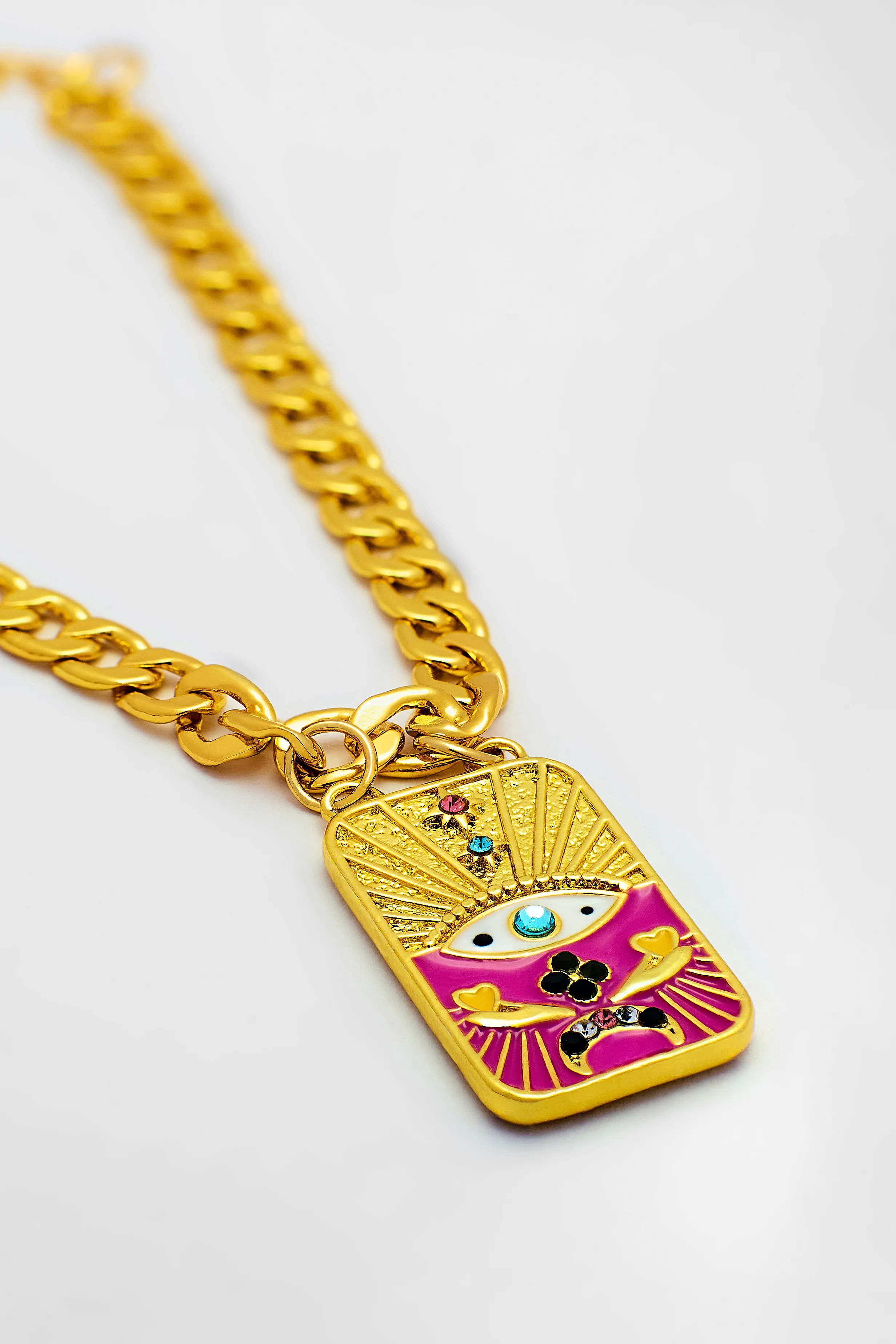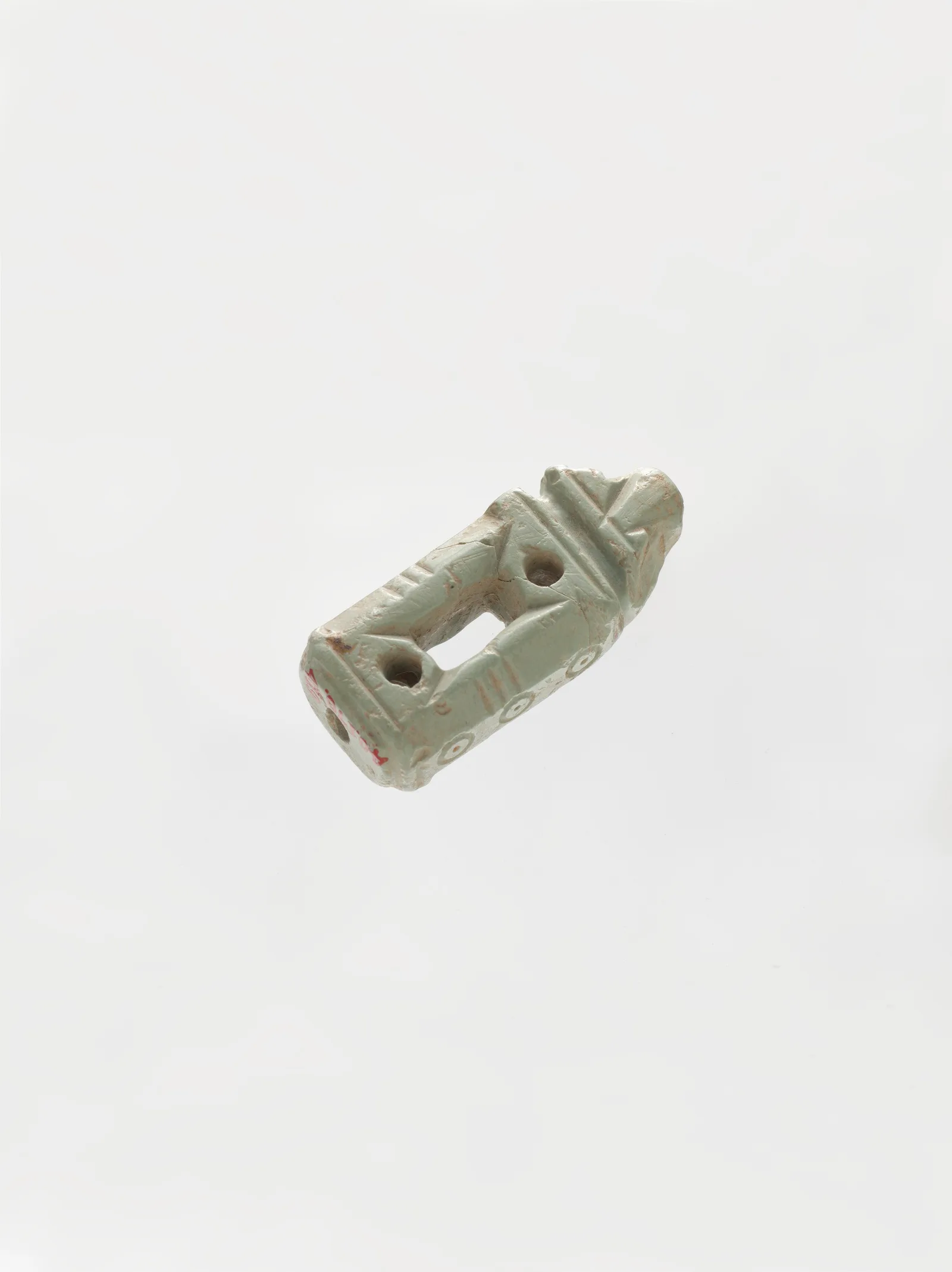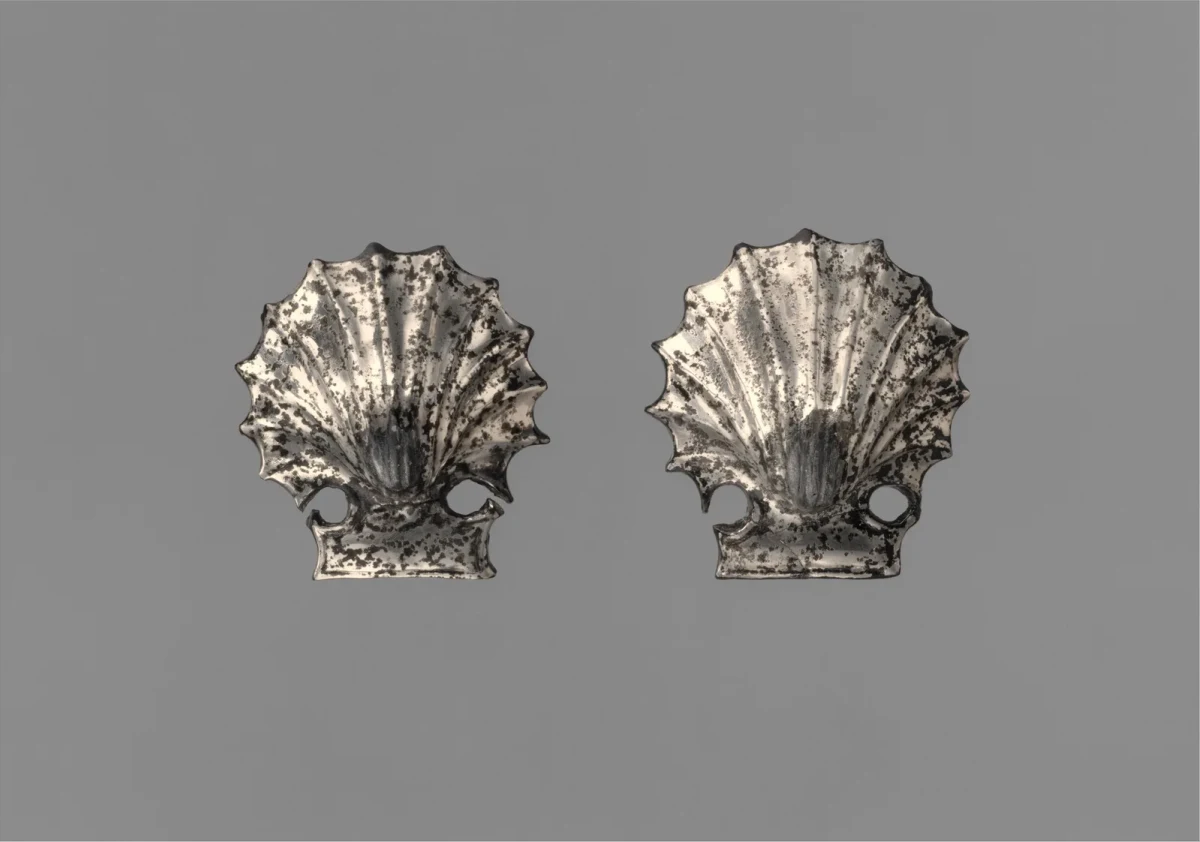
Eye of Santa Lucia: A Mediterranean Charm Against the Evil Eye and for Eyesight
The Eye of Santa Lucia (in Spanish, Ojo de Santa Lucía, in Italian, Occhio di Santa Lucia) is not a gemstone and it is not glass. It is the trapdoor of a sea snail, an operculum, that waves carried onto Mediterranean shores for centuries. On its flat side sits a white spiral with a dark pupil at the centre. Nature drew the eye all by itself.
Fishermen of Sicily and Catalonia picked these little lids out of the sand and wore them against the evil eye and for healthy sight. The charm took its name from Saint Lucy of Syracuse, patron saint of eyesight. A tiny sea "eye" watches over you while you watch the world.
What Is the Eye of Santa Lucia
The charm we are talking about lives at the crossing point of sea, faith and craft. It is older than any jewellery trend, because its shape was not designed by a craftsman but grown by a sea snail.
Let us take it apart piece by piece: what it is made of and why it looks the way it does. There is no mystical fog here, only biology, optics and a few centuries of Mediterranean habit. Understanding the nature of the object helps you tell a genuine operculum from a dyed plastic imitation, and it also explains why different peoples, independently of one another, saw an eye in a small shell lid rather than, say, a button or a fingernail.
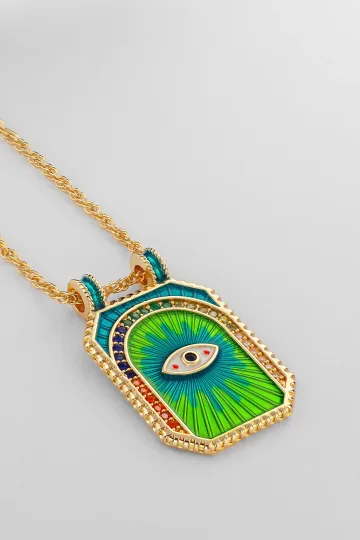
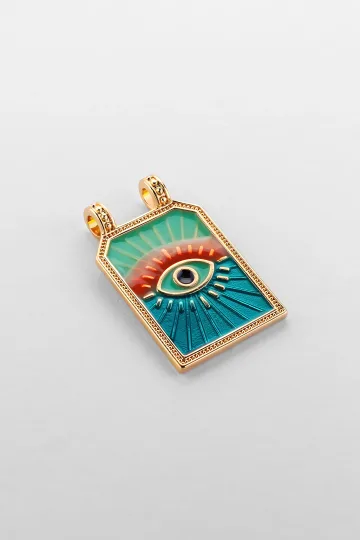
Wear the symbol, don't just read about it. These are in stock:




The Operculum: A Sea Snail's Natural Trapdoor
Many sea snails carry an operculum, a horny or calcareous plate attached to the "foot." When the snail withdraws into its shell, it pulls this lid shut over the opening like a bolt on a door. For the mollusc this is protection from predators and from drying out at low tide. For a human being it is a ready made amulet, polished smooth by the sea.
The most beautiful "eyes" come from snails of the turban family (Turbo) and related Mediterranean genera such as Bolma. The tropical species Turbo petholatus has a smooth, domed operculum, blue green on one side and white with a spiral on the other. The Mediterranean Bolma rugosa produces a dense, chalky lid with a bold little curl. It is exactly that curl people read as a pupil.
The material of the lid is not, strictly speaking, a mineral. It is calcium carbonate with a trace of organic matter, the same building blocks that make up the shell itself and pearls. That is where the pleasant weight of a genuine operculum comes from, and the coolness it holds in your palm for a moment. A plastic fake is lighter and warms up quickly against the skin.
"Eyes" turn up wherever the surf grinds through broken shell: along the strand line on gently sloping sandy beaches, among the fine shell rubble left by a storm, in drifts near rocky headlands. A living snail keeps its lid attached, so what washes ashore comes mainly from snails that have already died, their opercula tumbled smooth by sand and wave. It was precisely this ready made, sea rounded form that made the "eye" such a convenient charm: nobody had to shape it, only pick it up and pierce the edge for a cord.
A Spiral That Looks Like an Eye
The secret of that "gaze" lies in geometry. As the snail grows, its lid grows outward at the edge in thin layers, coil after coil. The result is a natural logarithmic spiral, the same curve that winds the nautilus shell and the seeds in a sunflower head. A tiny dark point remains at the centre of the spiral, the point where growth began. A white field, rings around it, a dark centre: the human brain, wired to recognise faces and gazes, reads this pattern as an eye almost instantly.
This is the same visual habit that makes us see a face in two windows and a door, or eyes in the pattern on a butterfly's wing. Scientists call it pareidolia, the brain's tendency to find faces and stares in random patterns. Mediterranean culture simply took that recognition a step further and turned it into a charm. If the object looks like an eye, the reasoning went among fishing families, then it also watches, and it protects.
The spiral on the lid follows the same growth proportion that lies behind the golden ratio: each new coil is larger than the one before it by a constant factor, so the curve widens smoothly and never closes back on itself. Nature does not sketch the "pupil" freehand, it grows it according to a strict geometric programme, layer by layer, for as long as the snail lives. That is why no two "eyes" are identical: like a fingerprint, every spiral is slightly its own.
Names Across Different Countries
One and the same lid carries many names, and they show how far the tradition has travelled:
- Ojo de Santa Lucía (Eye of Saint Lucy) in Spain, especially along the Mediterranean coast and in the Balearic Islands.
- Occhio di Santa Lucia in Sicily and southern Italy, where devotion to the saint runs particularly deep.
- Occhio di gatto (cat's eye), a folk name earned by its resemblance to a cat's pupil.
- Shiva eye, in Hindu and later in worldwide esoteric trade, where the same lid is tied to Shiva's third eye.
- Living stone, in English speaking circles, a name that underlines its marine, organic origin.
The names differ, the object is one and the same. And almost everywhere the theme lines up: a small round "eye" from the sea that guards eyesight and turns away envy.
Now that it is clear we are looking at a sea lid with a spiral rather than a precious stone, it is worth tracing where the link to the saint came from, and why it was Santa Lucia in particular who lent the charm her name.
History: Saint Lucy and the Mediterranean Tradition
This amulet has two histories. There is a natural history, in which sea snails have carried their lids for millions of years. And there is a human history, shorter and far more dramatic, in which a girl from Sicily became the patron of eyesight, and fishermen saw her symbol in the sand under their feet.
Lucy of Syracuse: The Girl Who Became Light
Lucy was born around the year 283 in Syracuse, a wealthy Greco Roman city on Sicily. According to her legend she came from a noble Christian family and decided, from a young age, to devote her life to her faith. She chose a dangerous time: under Emperor Diocletian, Christians were persecuted savagely. Having refused marriage and given away her dowry to the poor, Lucy drew a denunciation upon herself and died a martyr around the year 304, still very young.
Her name, Lucia, comes from the Latin lux, light. For a patron of eyesight the coincidence is almost too neat: a girl named Light watches over the ability to see light. Medieval devotees did not let that word play slip past them, and the link between her name, light and eyes stuck fast.
The Earliest Written Traces of Her Cult
Lucy is not some half legendary figure on the margins of the calendar of saints; she is one of the earliest and most solidly attested martyrs of the Western church. Her name stands in the Roman Canon of the Mass, among the handful of women named there alongside Agatha, Agnes and Cecilia, which fixes her veneration as early as the sixth century. Her martyrdom account, the Latin passio, goes back to the fifth century.
In the Basilica of Sant'Apollinare Nuovo in Ravenna, Lucy walks in a sixth century mosaic procession of virgins, a martyr's crown in her hands. A thousand years later Dante places her among the three heavenly intercessors in the Divine Comedy, the ones who send Virgil to help a wanderer lost in the dark wood. For a folk charm, what matters is not theology but exactly this staying power: a saint remembered and called upon without a break for more than fifteen centuries could easily lend her name to a small sea "eye."
Why She Is the Patron of Eyesight
Lucy's legend carries a story about eyes. In one version, her torturers tore out her eyes during her ordeal, and her sight was miraculously restored. In a later, more embellished version, she removed her own eyes to cool a suitor's ardour after he had praised their beauty, and God returned them to her even lovelier than before. Historians treat the eye motif as a later addition, grown out of wordplay around her name of light. But it is exactly this motif that made Lucy the saint people turn to for eye trouble.
In Catholic iconography she is shown holding a dish with two eyes resting on it, an image both unsettling and touching at once. People with poor sight, with eye disease, and later anyone who simply feared going blind, prayed to Lucy. Her feast day, 13 December, fell close to the winter solstice under the old Julian calendar, the darkest stretch of the year, which tied the saint even more tightly to light and to sight.
How a Sea Lid Became Her Eye
From there, folk belief followed its own logic. Along the coasts of Sicily, Campania, Catalonia and the Balearics, fishermen kept finding small spiral marked lids in the sand that looked like an eye. An object from the sea, shaped like an eye, and our patron of eyes is Lucy: so it must be her sign. That is how a sea operculum took the saint's name and entered daily use as a charm for eyesight.
The link grew strongest where devotion to Lucy ran deepest, above all on her native Sicily. In Syracuse she is honoured as the city's chief patroness, with multi day processions every December. Pilgrims who travelled to venerate Lucy carried small "eyes" home from the shore as a blessed souvenir. Over time craftsmen began setting the lids in silver, so the natural charm could be worn around the neck.
Fishermen, Pilgrims and Sailors
By the sea, the amulet took root for an obvious reason. A fisherman depends on his eyesight completely: to spot a shoal, to read the sky, to make out a shallow. Blindness meant the end of his trade. A sea "eye," picked up on the very shore the boats returned to, became a natural talisman of fishing families. It was sewn into clothing, tucked into a pocket, hung from tackle.
Pilgrims carried the charm further inland. Along the roads to Sicilian and Spanish shrines of Lucy, people travelled from across Europe, and "eyes" spread with them, much as scallop shells spread along the Way of Saint James to Santiago. A seaside souvenir turned into a mark of a completed pilgrimage and a protection for the road home.
By the Baroque era the tradition had fully taken shape. The operculum was set in silver alongside a small image of the saint, given at christenings, tucked into rosaries. From a chance find on a beach, the Eye of Santa Lucia became a recognisable Mediterranean charm with its own name, its own patron saint and a meaning everyone understood.
The spiral always in warm yellow gold. The sea that carved this eye is southern and sunlit, and its setting should match. Save cool silver for the nazar.
How to Style the Eye of Santa Lucia
We have covered the history and the biology, now for the styling. Here is what actually works once the "eye" stops being a shell on a market tray and settles onto a real person.
Which metal setting suits which skin tone? For a warm undertone (skin with a golden or olive cast), I recommend yellow gold or gold plated silver: the warm metal lifts the white spiral, and the "eye" glows against that skin in a southern way. For a cool undertone (pink toned, porcelain skin), I suggest silver, since it echoes the whiteness of the spiral without fighting it for colour. Silver also has history on its side here: fishing families wore the charm in exactly this metal, so it is hard to go wrong.
A large statement "eye," or something small and quiet? The operculum is naturally understated, and I rarely choose it oversized. For everyday wear I suggest a lid around one to one and a half centimetres on a fine chain, so the spiral reads up close instead of shouting across a room. For more character, I recommend a larger version on a leather cord, closer to the charm's fishing roots. One rule holds either way: a noticeable "eye" works when it stands alone. Squeezed among five other pendants, it loses its whole gaze.
Which way should the spiral face, and what goes with it? I suggest keeping the spiral facing outward, so the "eye" looks out at the world and meets other people's glances first, the way it has been worn for centuries. When I put together a look for a client, I keep the charm as the lead and do not crowd it with competitors. Good neighbours are anything with a sea theme, or other "eyes": a nazar, small pearls, red coral, a shell. They come from the same Mediterranean world and do not fight for attention. If you want layers, give the "eye" its own separate chain length so it does not sink into the rest.
Which occasion and outfit suits the "eye"? A silver "eye" on a leather or waxed cord belongs in an everyday look, right alongside a linen shirt, a knitted sweater, anything that already echoes the sea. For an evening out, I choose a gold setting: the warm metal lifts the folk charm into occasion jewellery. And for a christening, or a gift for someone about to travel, I suggest gold in a closed setting, formal enough for the occasion and sturdy enough to last for years.
Who suits the Eye of Santa Lucia? The charm is not tied to gender or age, its shape is clean and calm, and it suits nearly everyone. It sits especially well on people who wear a symbol "for themselves," without piling on extras. And check one thing before you buy: the spiral should look alive, slightly irregular, with fine growth lines. A perfectly even "eye" is a stamped copy, and what we are after is a genuine sea lid, smoothed by the wave.

Turn on your camera, pick earrings, a pendant or a ring, and see the piece on yourself in real time.
Switch items in one tap.
Everything runs in your browser: no photo or video is ever uploaded.
Regional Traditions of the Eye of Santa Lucia
The same sea "eye" sounds different from shore to shore. The Mediterranean is not one culture but a patchwork of regions, each with its own accent, its own kitchen and its own way of honouring Saint Lucy. The charm absorbed those differences, and they show just how far, and how distinctly, the tradition travelled.
Sicily and Syracuse
The heart of the cult beats in Syracuse, the saint's birthplace. On the thirteenth of December a silver image of Lucy, the simulacro, is carried out of the cathedral and paraded through the streets under thousands of candles and pealing bells. On that day Sicilians eat cuccìa, boiled wheat berries with ricotta or grape syrup, and pointedly avoid bread and pasta. The custom recalls a famine when a grain ship reached the harbour right on Lucy's feast day, and starving townspeople boiled the wheat whole rather than lose time milling it. For one day the whole city becomes a living altar to the saint, and pilgrims carried sea "eyes" away from here as the blessed trace of their journey.
Catalonia, Valencia and the Balearics
On the Spanish Mediterranean the charm is known as ojo de Santa Lucía. In Barcelona, right by the cathedral, a Christmas market called the Fira de Santa Llúcia has opened around her feast day since 1786. A Catalan saying, "per Santa Llúcia, un pas de puça," on Saint Lucy's day the daylight lengthens by a flea's step, ties the saint to the darkest turn of the year and to the return of light. In fishing families of Valencia and the Balearics the sea lid was kept and passed down, and Lucy was invoked for any trouble with the eyes.
Naples and Southern Italy
In southern Italy, where fear of the malocchio runs especially strong, the sea "eye" stood alongside the horn shaped cornicello and the "hand with horns." Naples even has a seafront quarter called Borgo Santa Lucia, which gave its name to one of the city's most recognisable songs. Here the charm was read chiefly as protection against envy, while its connection to eyesight moved into the background, giving way to the broader idea of turning aside a bad look.
Sweden and the Northern Light
Far from the warm sea and its sea snails lives a completely different branch of the same cult. In Sweden and across Scandinavia, 13 December is Saint Lucy's Day: a girl in white, a crown of lit candles on her head, leads a procession, hands out saffron buns called lussekatter, and sings of the return of light. Before the Gregorian calendar reform, Lucy's feast day fell right on the winter solstice, the longest night of the year. The Mediterranean sea "eye" and the northern crown of candles are two branches of one idea: a saint named Light, set against the December dark.
The "Eye of Shiva": The Charm Travels East
The very same lid circulates in Indian and worldwide esoteric trade under the name "Eye of Shiva" or Shiva shell. There it is linked to the third eye of the god Shiva and to the ajna chakra, the point between the brows said to govern inner sight. The material in this trade more often comes from Indo Pacific relatives of the Turbo snail. One object, two different myths: where the Mediterranean saw the eye of a Christian saint, the East saw the inner eye of a god.
Customer reviews
Zevira is a real jewellery shop. Genuine payments, deliveries and customer thank-yous.
🥰🥰🥰 gracias
Ok, ¡gracias! 🙂
Meaning: Protecting Eyesight and Warding Off the Evil Eye
This amulet carries two layers of meaning, and they do not argue with each other, they complete each other. The first layer is direct and physical: guard the eyes. The second is subtler and more social: guard against another person's ill will. Both grow from the same point, the image of an eye that looks back.
A Charm for Eye Health
The direct meaning follows straight from the name. If Lucy is patron of eyesight, then her eye watches over the eyes of whoever wears it. In Mediterranean families the charm was traditionally given to those whose eyesight carried a heavy load or stood at risk: sailors, embroiderers, the elderly, children with weak eyes. The logic of folk medicine was simple: keep the saint's sign close to your body, and she will watch over your eyes.
That care for the eyes also had a very visible church expression. At shrines to Lucy, as at those of other healing saints, people left votive offerings for centuries, small silver plaques shaped like eyes, ex voto. Someone whose sight had been saved, as they believed, by the saint would commission such a silver eye and hang it by her image in thanks. A worn sea "eye" and a hung silver votive are two sides of the same habit: turning to Lucy specifically about the eyes, in a physical, tangible way, not only through prayer.
Today this meaning survives more as a kind and reassuring habit than as treatment. Nobody replaces an eye doctor with a shell. But giving an Eye of Santa Lucia to someone who spends long hours in front of a screen, or who is about to drive a long distance, remains a warm and easily understood gesture of care specifically for their eyesight.
Protection from the Evil Eye (mal de ojo)
The second layer connects the charm to a fear shared right across the Mediterranean, mal de ojo in Spanish, malocchio in Italian. The belief is simple: an envious or ill wishing look can cause harm, illness, bad luck, ruin. If evil arrives through the eye, then protection has to be an eye too. The eye shaped amulet intercepts another person's stare, turning the blow away from its owner.
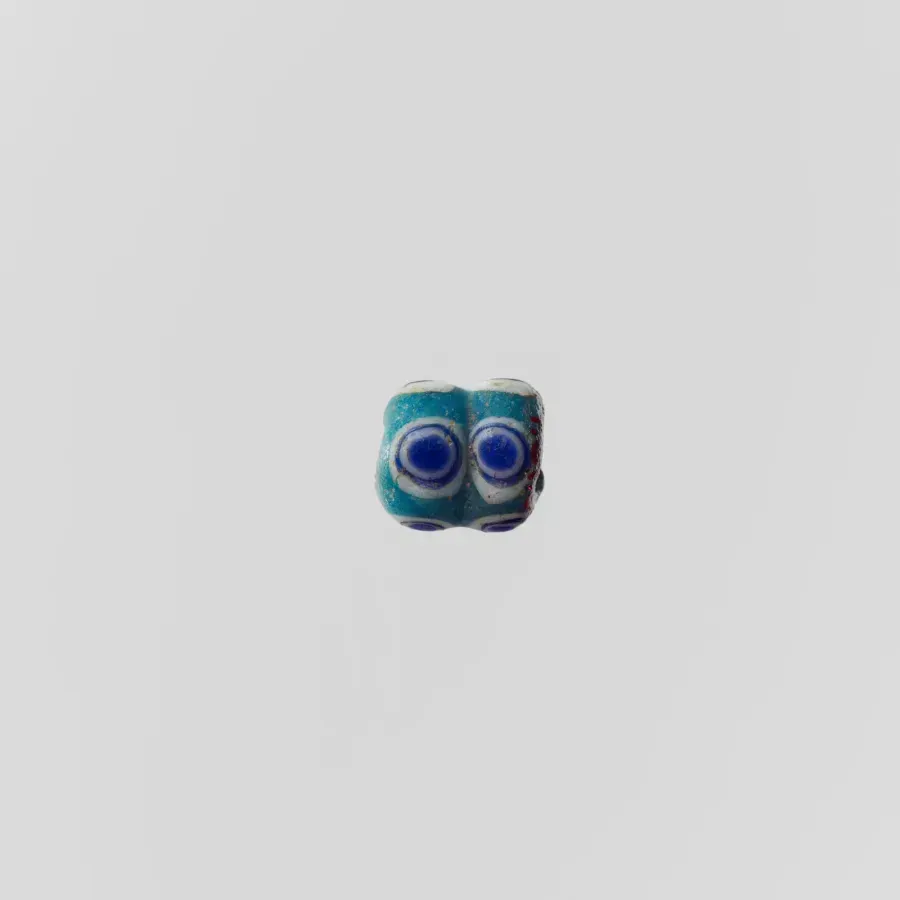
Here the Eye of Santa Lucia stands in the same family as other "eyes" of the Mediterranean, from the Turkish nazar to the ancient Egyptian eye. The difference lies in origin: the nazar is glass, made by human hands, while the Eye of Santa Lucia is natural, delivered by the sea. In folk belief, that natural origin only strengthened the charm. No craftsman made it, the sea gave it, and that meant a power greater than any human hand stood behind it.
How the Mediterranean Diagnosed the Evil Eye
Fear of the mal de ojo was never an abstraction; it had its own household ritual of diagnosis. In Spanish and Italian families the evil eye was "diagnosed" through a simple test: a drop of olive oil was let fall into a bowl of water. If the drop spread and broke apart instead of gathering into a neat little circle, the case was judged unclean, the person judged to have been struck. Then came a particular prayer, often a secret one passed down the female line, water crossed with salt, the afflicted person washed with it. Healers who performed exactly this ritual were the ones called for headaches and for a "heavy stare."
The eye shaped charm fitted into this whole system as a constant, wearable defence, meant to keep things from ever reaching the point of the oil ritual. A sea lid at the throat worked ahead of trouble, catching an ill wishing look while it was still on approach. Understanding this everyday backdrop explains why the "eye" was given so often to children and to new mothers, the two groups folk belief considered most exposed to envy.
The Watching Eye as Active Protection
Folk tradition treats the Eye of Santa Lucia as an active charm, not a passive one. A passive talisman simply sits there. An active one "works": it watches, it keeps guard, it answers a stare with a stare of its own. If the amulet has a pupil, the reasoning goes, then it stays awake and on watch. This detail links it to the nazar, which also "looks," and sets it apart from silent charms such as a knot or a coin.
There is a softer, psychological side to the image too. An eye shaped charm reminds its owner of their own alertness. Wear an eye, and you remember: watch what is around you, notice things, do not look away from what matters. Mediterranean grandmothers put none of this in psychological terms; they simply placed a shell in a child's palm and told them to look after their eyes. The meaning came out the same.
A Symbol of Light and Clarity
Through Lucy's name the charm is tied to light. Lux means light, and in Mediterranean symbolism light stands for clarity, knowledge, goodness, the opposite of darkness and ignorance. The Eye of Santa Lucia carries this extra shade of meaning: it is both protection for the eyes against illness and the evil eye, and a wish for inner clarity, for the ability to see what matters and not get lost in the dark.
That is why the charm is often given at moments of transition: to a child at their christening, to a graduate, to someone setting out on a new path. The gift reads, in effect, as "see clearly and walk toward the light." This luminous meaning sets the Eye of Santa Lucia apart from the more severe black azabache, which works more by absorbing evil than by wishing for light.
Upload a photo of your pet, someone you love, or an object. We'll build a 3D model and hand-cast it in pewter.



Materials: The Shell Set in Silver and Gold
The "eye" itself is always the same thing, a sea lid. Variety comes from the setting, and from how a craftsman chooses to present the natural piece. The metal chosen and the way the lid is held both shape how the finished piece looks, what it costs, and how gently the charm will survive years of wear.
The Natural Operculum as a "Stone"
In jewellery the lid is used as an insert, a "stone." The spiral, white side is usually turned outward, because that is the side that reads as an eye. Sometimes a craftsman leaves the reverse, domed side on show too, orange brown in Mediterranean species and shimmering green in the tropical turban snail. Showing both sides turns the charm into a small puzzle: an eye on the face, a piece of sea pebble on the back.
Because the operculum is calcium carbonate, it is softer than most gemstones and sensitive to acid. A good craftsman allows for this, polishing gently, never overheating the piece, and setting it in a closed or claw setting that both holds the fragile lid in place and shields its vulnerable edge.
There is a purely practical challenge with the natural "eye" too: matching a pair. Earrings need two lids close in size, colour and spiral pattern, and since every one is unique, a perfect match never quite exists. A craftsman sorts through dozens of opercula to find something like a mirror pair, which is exactly why matched earrings with genuine "eyes" are prized above a single pendant. That problem disappears in an imitation, since stamped "eyes" are identical, and a suspiciously perfect match between two halves is itself a reason to look closer.
Silver Around the Shell
The classic setting for a Mediterranean charm is 925 sterling silver. The cool white metal echoes the whiteness of the spiral and never fights it for colour. Silver costs less than gold, holds up better to daily wear, and sits historically closer to the amulet's folk, fishing origins. It was silver "eyes" on a plain chain or cord that were worn in seaside villages.
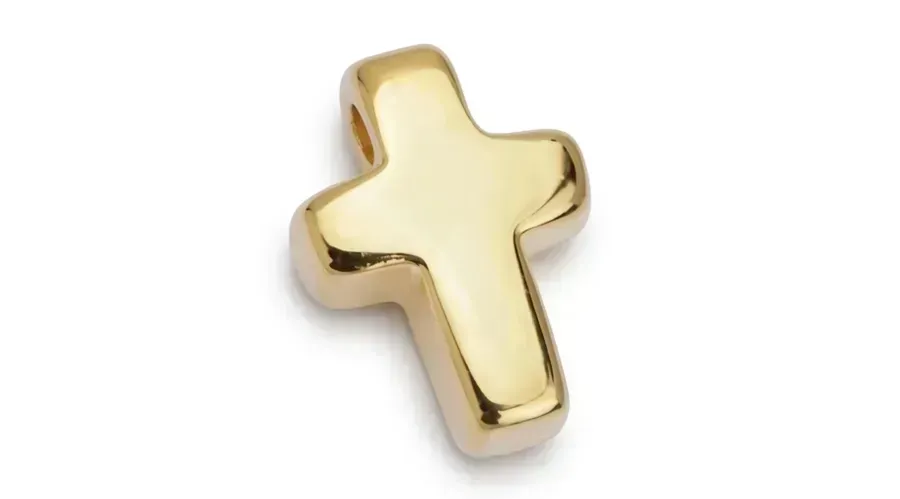
Settings vary. A smooth band around the lid looks strict and modern. A band worked with milgrain or granulation nods to old Mediterranean goldsmithing. Sometimes a small image of Lucy or a little cross sits next to the "eye," joining the charm and a religious sign in a single pendant.
Gold for the Formal Version
A gold setting lifts the folk charm into an occasion piece. The warm metal shifts the mood: a white spiral in yellow gold reads richer and softer than it does in silver. Golden "eyes" were more often commissioned by wealthier townspeople and pilgrims, and given at christenings in families with means. Today the gold version makes a gift meant to last a lifetime, one that never tarnishes and is passed on.
A middle path exists too: gold plated silver, or a bimetal piece where the band is gold and the base silver. That gives the warm look of gold at a price closer to silver.
Extras: Pearl, Coral, Enamel
The sea theme is often carried through in the setting. Small pearls, red Mediterranean coral or turquoise are set beside the "eye," gathering a small sea inspired set. Red coral, on top of that, is itself considered a charm against the evil eye, so the pairing reinforces the protective meaning. Sometimes the white spiral is outlined in blue or black enamel, moving the look closer to a nazar so the "eye" reads even more unmistakably.
All of this comes down to taste. Purists prefer the bare lid in thin silver, so nothing distracts from the natural pattern. Those who like a fuller look choose the charm surrounded by pearl and coral. Both approaches are honest, because the "eye" itself is genuine either way.
How to Wear the Eye of Santa Lucia
The charm is small and quiet by nature, so it fits almost any look. But Mediterranean tradition has its own habits of wear, and knowing them helps you wear the "eye" with intention rather than as a random pretty shell.
An Everyday Pendant
The most common form is a pendant on a chain or cord. The white spiral is usually turned outward, so the "eye" faces the world. Length is chosen to match the neckline and the mood: a short chain brings the charm right up near the collarbone, a long one tucks it closer to the heart, under clothing. The guide to chain length covers this choice in detail.
The fishing, everyday version is an "eye" on a plain leather or waxed cord. This form sits closest to the historical original and looks right with a linen shirt, a knitted sweater, anything that already echoes the sea and the shore.
Rings, Earrings, Bracelets
Thanks to its round shape the operculum sits comfortably in more than a pendant. In a ring the "eye" becomes the centrepiece, a calm white pupil on the finger. In earrings a pair of lids looks out from either side of the face, which is both attractive and, in meaning, doubles the protection. On a bracelet the "eye" hangs as a charm alongside other sea motifs, a shell, an anchor, a pearl.
Earrings and rings set with an operculum need a little more care than a pendant, because hands and ears meet water, soap and knocks far more often. For everyday wear, silver in a closed setting that shields the edge of the lid is the safer choice.
Which Way the Eye "Looks"
Tradition holds a small point about direction. A pendant is hung so the spiral faces forward, away from the body, "meeting" other people's glances first. In a ring, the "eye" is turned toward the back of the hand, the side other people's eyes most often land on. There is no strict rule, but the idea is consistent: let the charm face the outside world, where an ill wishing look is believed to come from.
Some owners do the opposite, turning the "eye" toward themselves, against the skin, reasoning that this way the charm "looks inward" and guards the wearer's own eyesight. Both practices live side by side, and the choice is a personal one.
What to Pair It With
The Eye of Santa Lucia is easy to layer. It sits comfortably next to a nazar, a cross, a saint's medal, a shell or a coin. A Mediterranean mix of charms from several different traditions is the norm rather than clutter; for centuries people gathered protection from wherever their hands, and their trade routes, could reach.
The only rule of taste is restraint. A single "eye" on a clean chain speaks more clearly than one squeezed among a dozen pendants. If you want layers, give the charm its own length of chain so it does not get lost in the crowd. There is a separate guide to combining several pieces of jewellery for building combinations like this.



Who the Eye of Santa Lucia Suits
The charm carries almost no restrictions. It is not tied to a particular gender, age or strict faith, and its marine, natural origin makes it easy to understand even for people far removed from the southern European Catholic context that shaped it.
- Anyone who wants to protect their eyesight. People whose eyes carry a heavy load, in front of a screen, behind the wheel, over fine detailed work. The charm reads as a warm wish for healthy eyes.
- Sailors and travellers. The amulet's historical audience. Anyone who is heading far from home and wants to carry a piece of the shore with them.
- Parents choosing a gift for a child. In Mediterranean tradition the "eye" is given at christenings and in the earliest years of life, as protection during the most exposed stretch of it. For a small child, look for a secure setting with no sharp edges or small loose parts.
- Anyone drawn to natural materials. People who prefer the organic feel of the sea to a faceted gemstone. An operculum is jewellery with a story of growth behind it, not only a story of cutting.
- Collectors of charms. Anyone who already wears a nazar, a hamsa or an azabache and wants to add a Mediterranean sea "eye" to their collection of protection.
The charm works equally well as a first meaningful piece of jewellery with a story, and as a gift. Folk belief across the Mediterranean holds that a given "eye" protects more strongly than one bought for oneself, because it carries the giver's goodwill along with its own protection. The gift guide by occasion covers gifts like this in more depth.
Leave your email, we'll send your discount code. No spam, unsubscribe anytime.
The code arrives by email, valid on your first order.
The Eye of Santa Lucia in Art, Song and Collections
The sea lid rarely made its way into formal painting, but its story is woven tightly into Europe's long love of shells, of the sea, and of the image of the eye. Tracing those threads is worthwhile: they show that this small charm is not a curiosity from a market stall, but part of a much larger cultural current.
Shells in Cabinets of Curiosities and on the Grand Tour
In the seventeenth and eighteenth centuries a genuine shell mania swept Europe. Wealthy collectors gathered exotic shells for cabinets of curiosities, paid for rare specimens as though they were paintings, and the study of shells, conchology, became a fashionable pursuit. Opercula from turban snails, especially the iridescent "cat's eye," were set in silver and kept in cabinets of rarities. Grand Tour travellers, touring Italy for its antiquities, carried Mediterranean "Eyes of Santa Lucia" home as keepsakes, and the charm spread across northern Europe on that same wave of taste.
The Sea Shell in Ornament
The shell as a motif runs through European art long before this charm existed: a scallop shell under the feet of Venus, on a pilgrim's cloak, in the curling rocaille of eighteenth century interiors. The very word "rocaille" comes from the French term for shell decoration, which is where "rococo" gets its name. The Eye of Santa Lucia stands at the end of this long line, in which the European eye admired the spiral and curve of a sea shell for centuries and happily turned it into ornament.
The Song That Carried Her Name
The Neapolitan seafront quarter of Borgo Santa Lucia gave the world the song "Santa Lucia," published in 1849. It began as a barcarole, a boatman's song, inviting listeners for a ride across the bay on a quiet evening. The melody travelled the whole world, sung in Italian and in dozens of translations, and for millions of people the saint's name is now bound up chiefly with that tune. In this way the seafaring saint, patroness of the fishermen's "eyes," also gained a sound familiar even to people who have never heard of an operculum.
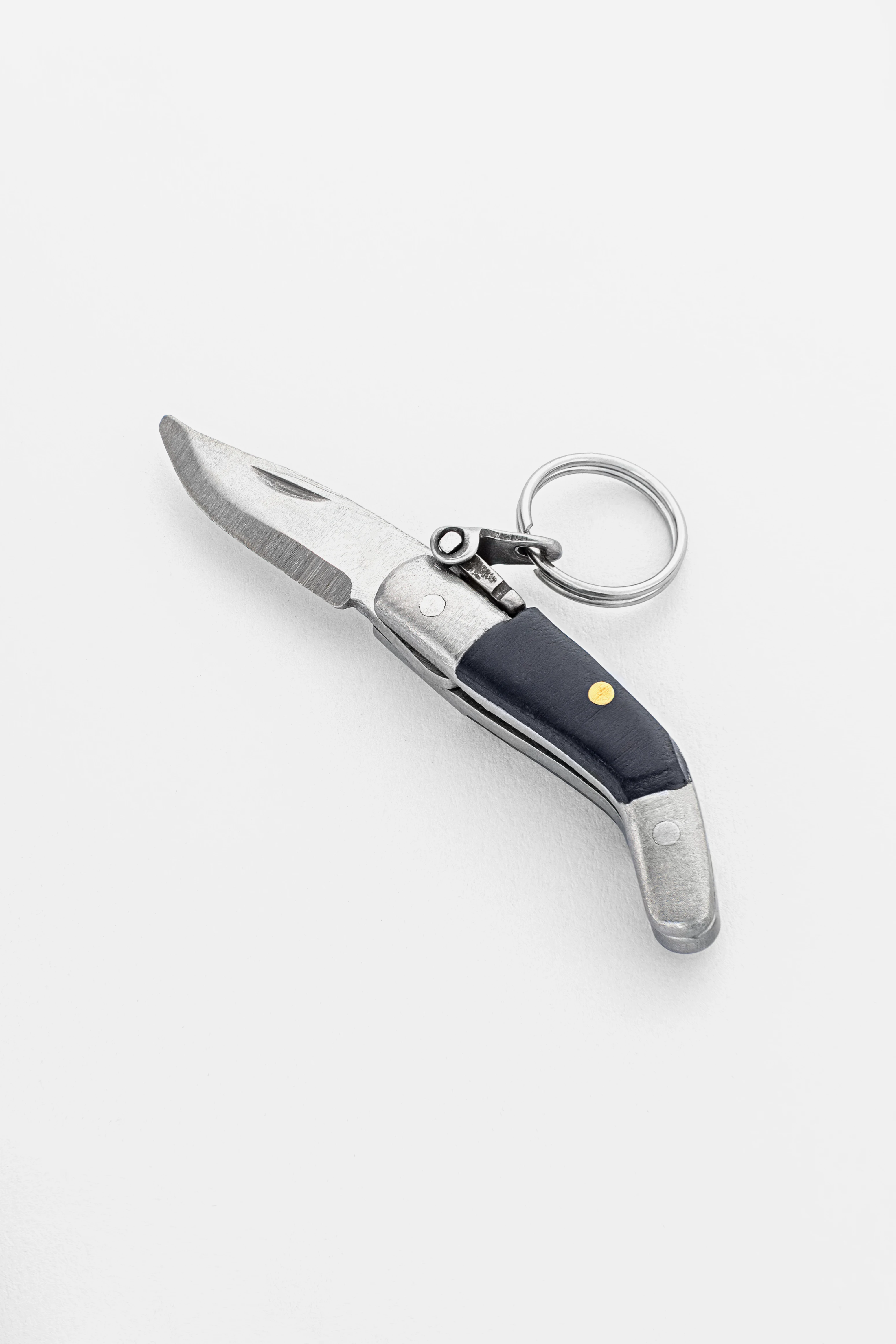
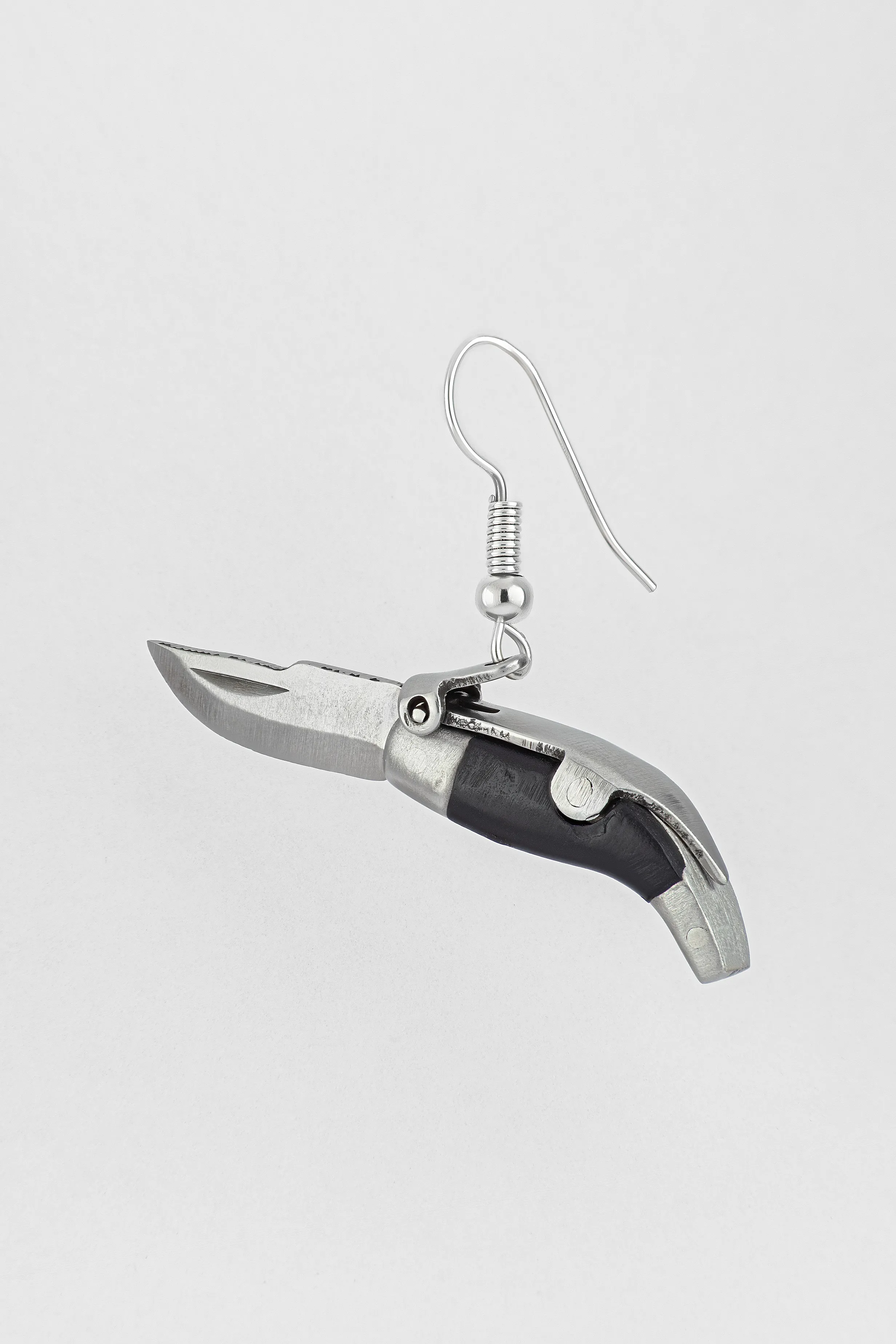
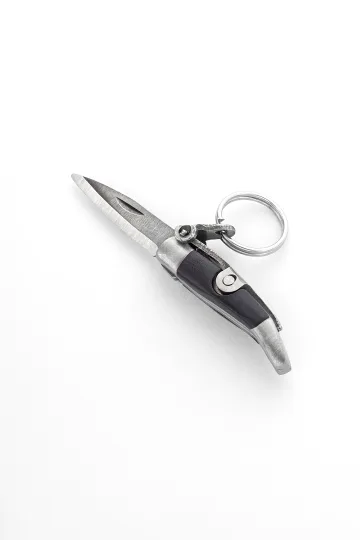
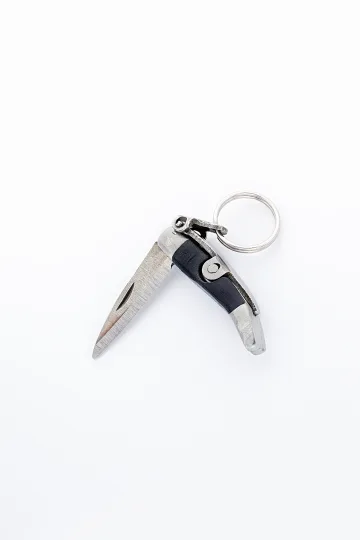
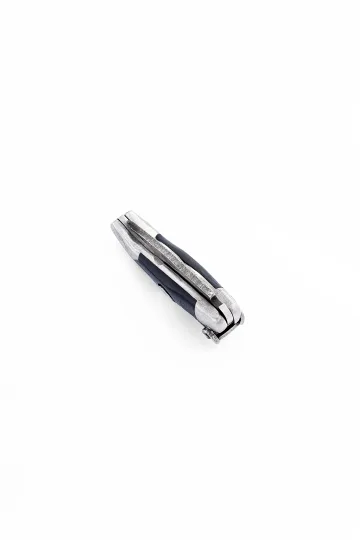
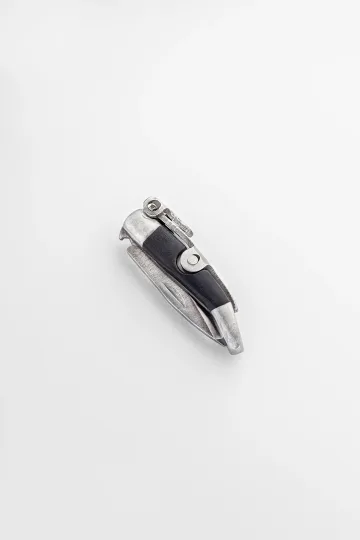
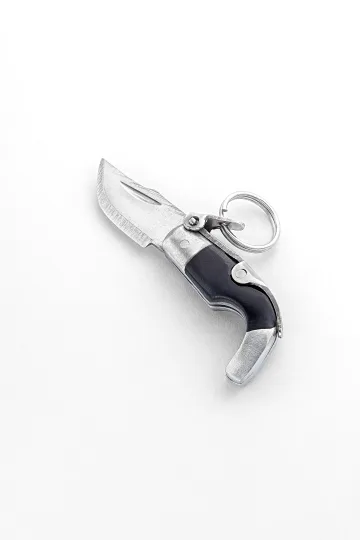
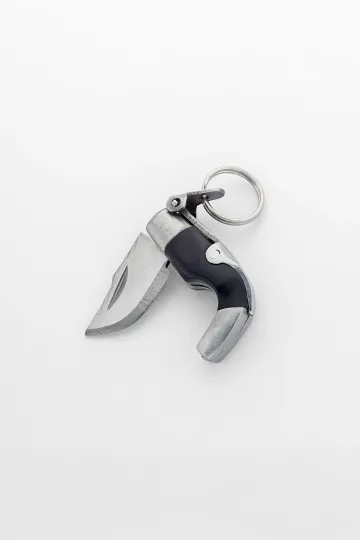
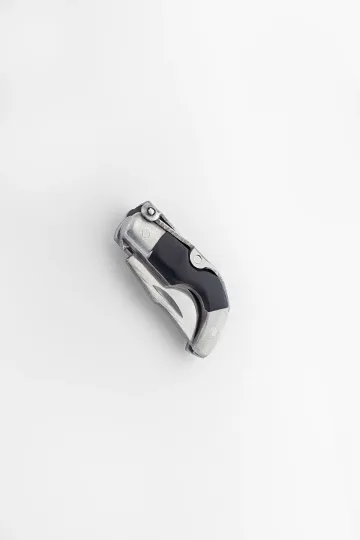
CAPAORA mini knife pendant
The 18th-century Spanish navaja in miniature: 40 mm of stainless steel, a real folding mechanism and a Palanquilla lock that clicks. An affordable gift to remember.
Authentic · Ships from Spain · 14-day returns
How to Choose: Genuine Operculum or Imitation
Demand for "eyes" has created a market for fakes. A genuine sea lid gets swapped for plastic, resin, dyed glass, and stamped "shell" made from powder. Telling the real thing apart is not hard once you know what to look for.
Signs of a Genuine Shell
A natural operculum has features that are hard to fake cheaply:
- The spiral is not perfect. A natural curl is slightly asymmetric, with fine growth lines and a tiny "navel" at the centre. A stamped imitation gives a spiral that is too even, too mechanical.
- Weight and coolness. Calcium carbonate is noticeably heavier than plastic and stays cool in the palm for the first few seconds. Plastic is light and warms quickly.
- The reverse side looks alive. A genuine lid has a domed underside with a natural colour, orange, brown or pearly green, and real texture. A fake is often flat, or coated in paint.
- Edge and layers. The rim shows layered growth, like a shell. A cast imitation has a uniform, featureless edge.
Red Flags of a Fake
Be wary of a candy bright blue or green covering the whole surface, "eyes" that are all identical in a set, a suspiciously light weight, and a price around the cost of a single cup of coffee for "silver with a natural stone." A genuine operculum in a silver setting costs about what a good lunch out costs, and more, depending on metal and workmanship. If a seller cannot keep straight what the piece even is, calling the lid a stone one moment and a shell the next, that is a sign to ask more questions.
Size, Setting, Metal
For an everyday pendant, lids around one to one and a half centimetres across work well. Anything much smaller disappears on the chest, anything much larger starts to look heavy. For daily wear the setting is best in silver, closed, to shield the fragile edge. For an occasion piece, gold and a more open, claw setting that shows more of the natural surface both work well.
Ethics and Origin
It is worth asking where the lid came from. Opercula from turban snails and their relatives are most often a byproduct of the food trade: the snail is eaten, the lid remains. That source is ethical, nothing is harvested purely for the charm. Things are worse when pieces from rare or protected shells are sold under the label "Eye of Santa Lucia." A trustworthy seller knows the species of snail and the origin of the material and does not hide behind the vague word "shell."
Comparison: Nazar, Azabache and the Eye of Horus
The Eye of Santa Lucia belongs to a large Mediterranean family of charms against the evil eye, but every "relative" follows its own logic. Understanding the differences helps you pick the one that is yours, without mixing up the traditions.
Eye of Santa Lucia vs Nazar
The nazar is a blue glass eye of Turkish and Greek origin, made by human hands. It is cast from layers of glass: a dark centre, a white ring, a blue rim. The Eye of Santa Lucia is natural, Mediterranean, straight from the sea. A nazar works like a mirror, reflecting an ill wishing look back at its sender. The Eye of Santa Lucia tends more to "look back" at whoever sent the glance, and it carries the added theme of sight and light through the saint. Wearing them together is both possible and attractive: a handmade eye and a natural eye on the same chain.
Eye of Santa Lucia vs Azabache
Azabache is black jet, fossilised wood, a Spanish charm against the evil eye especially loved for babies in the form of a small black fist, the higa. Azabache is black and "absorbing": it draws evil in and extinguishes it. The Eye of Santa Lucia is white and "seeing": it meets evil with a stare and carries a luminous meaning. In effect these are the dark and light poles of one Spanish tradition of protection. Many families keep both, azabache for absorbing, the Eye of Santa Lucia for wishing light and healthy eyesight.
Eye of Santa Lucia vs Eye of Horus
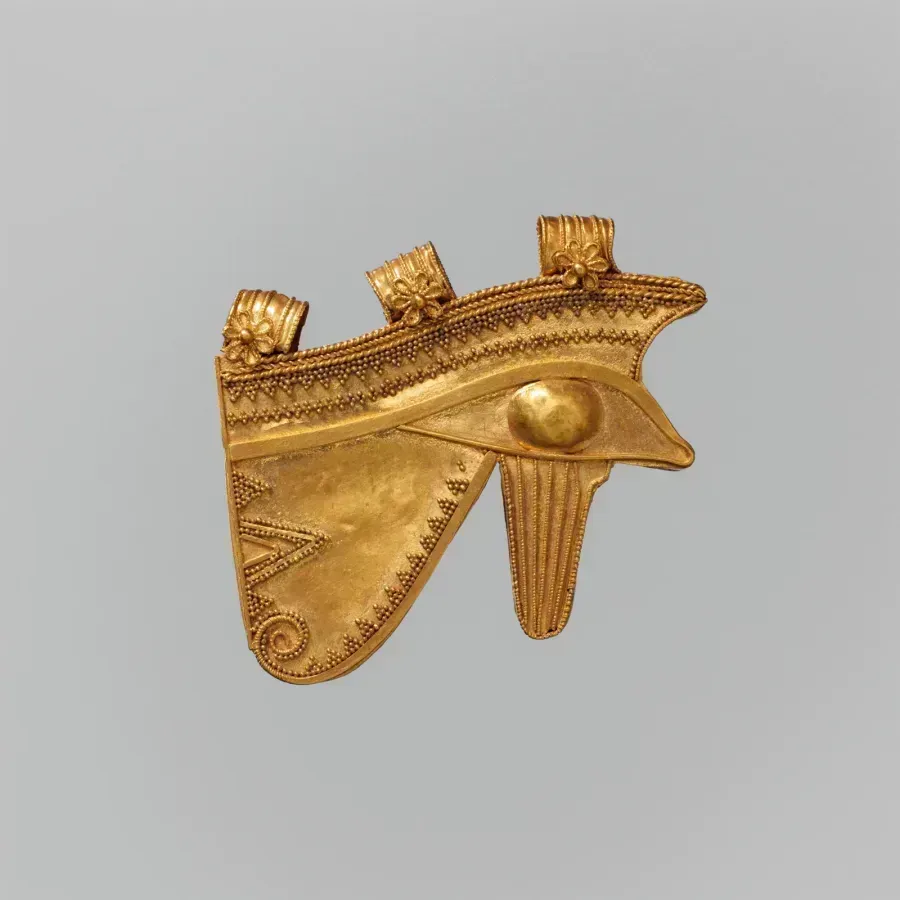
The Egyptian Wedjat eye, also known as the Eye of Horus, or all seeing eye, is the oldest of the "eyes," tied to the god Horus, to health and to wholeness. The Eye of Horus is man made, stylised, divine in origin. The Eye of Santa Lucia is natural and Christian by name, though its roots reach back into a pre Christian Mediterranean cult of the eye. Both are about protection and specifically about the health of the eyes, which shows just how deeply the pairing of "an eye guards an eye" runs through human culture.
All three "eyes," plus the sea lid, sit comfortably together in one collection. The Mediterranean never demanded loyalty to a single tradition: a nazar from Anatolia, an azabache from Spain, a Wedjat eye from Egypt and an Eye of Santa Lucia from the sea lay for centuries in the very same jewellery boxes. Protection is never too much, folk logic reasoned, and it gathered charms from wherever it could.
Alongside the sea "eye," those same boxes held charms built on an entirely different principle. The Neapolitan cimaruta, a silver rue sprig hung with a cluster of tiny symbols, a horn, a key, a crescent moon, worked by sheer accumulation, piling on protection through numbers. Red coral extinguished envy through the colour of blood and life. Against that background, the separate logic of the Eye of Santa Lucia stands out clearly: it protects not through a count of amulets or a colour, but through the plain fact of a gaze, meeting another eye with its own. That is exactly why it sits so naturally at the centre of a collection, with smaller charms arranged around it.
Superstitions and Beliefs Around the Charm
Around the sea "eye," folk beliefs have built up over centuries. None of it is written into law and none of it belongs to church teaching, but these beliefs are remarkably persistent and pass from family to family right across the Mediterranean. Knowing them is useful for understanding how the charm actually lives in everyday practice, beyond a shop shelf.
The most common belief concerns gifts. An "eye" given from a warm heart is thought to protect more strongly than one bought for oneself, because it carries the giver's goodwill together with its own protection. Hence the custom of giving the charm at christenings, before a journey, at a housewarming. A second belief concerns finding one: a lid picked up with your own hands on a beach is prized above the rest, because "the sea gave it," not a shop. A third concerns loss or breakage. As with many charms against the evil eye, a broken "eye" is read not as bad luck but as a sign that it took a blow meant for its owner and has done its job. The right response is to give thanks and replace it, not to mourn it. Let us look at a few of these beliefs and see where the grain of truth lies, and where it is pure invention.
Send a friend a discount code, they save on their first order.
Facts That Surprise
A sea lid with a spiral hides more stories than it first appears to. Here are a few turns that change how this unassuming charm looks.
- It is a door, not an eye. To the snail itself, the operculum is a lid that slams shut over the entrance to its shell, a "door on a bolt" against predators and drying out. Humans saw an eye in that door, but its biological job is something else entirely.
- The spiral is genuinely mathematical. The curl on the lid is a logarithmic spiral, the same curve that winds a nautilus shell and a galaxy. Nature draws the "pupil" by a strict formula of growth.
- One object, three religions. The very same lid is called the eye of the Catholic Saint Lucy, the "eye of Shiva" in Hindu trade, and simply a charm against the evil eye in folk magic. Three different faiths each saw their own meaning in a sea door.
- The tropical version shimmers. In the snail Turbo petholatus, the underside of the lid is blue green and pearly, which is why it earns the name "the sea's cat's eye." Mediterranean species are more modest, with an orange brown underside.
- It is not a stone, even though it is sold as one. Opercula are often laid out on trays next to gemstones and called "stones." In reality it is part of a mollusc's body, made of calcium carbonate, kin to pearl and mother of pearl, not a mineral pulled from the ground.
- The saint's day fell on the longest night. Before the Gregorian calendar reform, Lucy's feast day, 13 December, sat close to the winter solstice. A patroness of light was celebrated in the darkest stretch of the year, which is why Sweden's Santa Lucia processions carry candles in their hair.
- A byproduct of dinner. Most lids used for charms are what remains after the snail itself has been eaten. Turban snails are eaten across the Mediterranean and Asia, and the "eye" is simply the part that never made it onto the plate.
- The lid was once burned as incense. For several sea snail species, the operculum was added to incense and perfume for centuries under old apothecary names such as unguis odoratus, "fragrant claw." Some researchers connect it to a mysterious component of the biblical temple incense. The very same object could hang around a neck as a charm and smoulder in a censer as a fragrant resin.
- A saint named in the Canon of the Mass. Lucy is one of only a few women named directly in the ancient Roman Canon of the Mass, alongside Agatha and Cecilia. The charm carries the name of a saint whose veneration has been documented without a break for more than fifteen centuries, not some half legendary figure from the medieval margins.
Frequently Asked Questions
What is the Eye of Santa Lucia? It is a natural charm made from the lid of a sea snail, an operculum. The flat side of the lid carries a white spiral with a dark centre, resembling an eye. Mediterranean tradition linked this "sea born" shape to Saint Lucy of Syracuse, patron of eyesight, and began wearing the lid as protection for the eyes and against the evil eye.
Is it a stone or a shell? Strictly speaking, neither. An operculum is a hard lid on the "foot" of a sea snail, which the snail uses to seal the entrance to its shell. By composition it is calcium carbonate, related to mother of pearl and to pearls themselves, not a mineral drawn from rock. Sellers often call it a "stone" for simplicity, but its nature is shell like and organic.
Why was it named after Saint Lucy? Lucy of Syracuse is considered the patron of eyesight and of people with eye disease, partly because of the legend about her eyes, and partly because her name comes from the Latin lux, light. Fishermen found lids on the shore that looked like an eye, and connected this sea "eye" to the patroness of eyes. That is how the object came to carry her name.
What does the Eye of Santa Lucia protect against? The charm carries two meanings. The first, direct one: guarding the wearer's eyesight and eye health. The second: protection from the evil eye, mal de ojo, an ill wishing or envious stare. Folk belief holds that the eye shaped amulet intercepts another person's glance and turns it away from its owner.
How is it different from a nazar? A nazar is a blue glass eye of Turkish Greek origin, made by hand. The Eye of Santa Lucia is natural, made from a sea lid, tied to Mediterranean Christian tradition and the theme of sight. A nazar "reflects" an ill wishing stare, the Eye of Santa Lucia "looks back" at it. Wearing them together is fine, they do not clash.
Can I wear it if I am not Catholic or from the coast? Yes. This is not a closed religious symbol but a folk charm made from a natural material. It is worn worldwide by people drawn to the sea, to protective charms, or simply to a beautiful natural insert. The saint's name is a cultural layer, not a requirement on the wearer's own beliefs.
How do I tell a genuine operculum from a fake? Look at the spiral, the weight and the underside. A genuine lid has a slightly asymmetric curl with fine growth lines, real weight, and a domed, naturally coloured reverse side. A plastic imitation is light, has a perfectly even spiral, and is often flat and painted on the back. A colour that is too bright and uniform, and a price around the cost of a cup of coffee for "silver with a natural stone," are also reasons to be cautious.
How do I care for it? Treat it the way you would treat a pearl. An operculum is softer than most gemstones and sensitive to acid, so keep it away from perfume, household cleaners, chlorine and vinegar. Take it off before a shower, a swim or cleaning. Wipe it with a soft dry cloth and store it separately, so harder stones cannot scratch its surface.
Can I give the Eye of Santa Lucia as a gift? Yes, and it is a customary one. Mediterranean belief holds that a given charm protects more strongly than one bought for oneself, because it carries the giver's goodwill along with its own protection. It is given at christenings, before a journey, to people who need to protect their eyesight, and to collectors of charms. It makes a warm and thoughtful gift.
Is it true this is the same as the "Eye of Shiva"? By material, yes, by meaning, no. The "Eye of Shiva," or Shiva shell, is the very same lid from a turban snail, only read differently. In Indian and worldwide esoteric trade it is linked to the third eye of the god Shiva and to inner sight. The Mediterranean saw, in that same spiral, the eye of the Christian Saint Lucy. One natural object, two independent traditions, each with its own myth.
When is Saint Lucy's feast day? The thirteenth of December. Under the old Julian calendar this date fell close to the winter solstice, the longest night of the year, which tied a saint named Light firmly to the theme of light and sight. In Syracuse, multi day processions take place on this date; in Sweden, Saint Lucy processions carry candles.
Can men wear the Eye of Santa Lucia? Yes, the charm is not tied to gender. Historically it was worn precisely by fishermen and sailors, meaning men whose eyesight was a working tool. A sea lid on a leather cord reads calm and understated and suits any look.
Does an operculum darken over time? The lid itself does not oxidise the way metal does, and it holds its colour well if kept away from acid and abrasion. What can darken is a silver setting around the "eye," which is simply natural for silver and comes off with gentle polishing. The natural spiral pattern itself stays bright for years with careful wear.
Conclusion
The Eye of Santa Lucia began as a trapdoor in a sea snail's shell and became one of the most poetic charms of the Mediterranean. The sea polished the lid smooth, the spiral formed into an eye, people read a gaze in it, and a saint named for light gave the charm her name and its meaning. What emerged is an amulet where biology, faith and craft all meet.
Whether you believe in its power or simply love a natural object with a history behind it, this small sea "eye" remains an honest piece of jewellery. Nothing about it came off an assembly line; it grew in the sea, coil by coil. To wear it is to carry a piece of the shore with you, a wish for clear sight, and an old Mediterranean habit of looking at the world openly and answering a stare with a stare of your own.
Charms against the evil eye and sea symbols: eyes, nazars, shells in silver, gold and with natural inserts.
Buying it as a gift? Each one arrives ready to give.
 A branded Zevira box and a little card come with every order.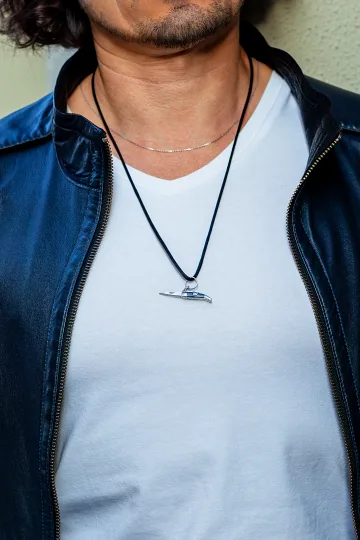







About Zevira
Zevira makes jewellery in the artisan tradition of Albacete, Spain. The Eye of Santa Lucia belongs to the symbols closest to us: Mediterranean, natural, understood without long explanations. We set genuine sea opercula gently into silver and gold, keeping the natural spiral in plain view, and pair it with sea born companions, pearl, coral, shell.
What you can find with us on the theme of charms and the sea:
- Pendants with the Eye of Santa Lucia in silver and gold, the natural lid left on show
- Nazars and other "eyes" against the evil eye for building a layered set of protection
- Azabache and black charms for anyone drawn to the theme of absorbing evil
- Sea symbols: shells, pearl and coral in a contemporary setting
- Chains and cords of different lengths to suit a charm of any size
Every piece can be personalised with engraving, with the option of personal engraving. 925 silver and 14 to 18K gold.