The Cat and Goddess Bastet in Jewellery: Egyptian Symbol of Protection and Grace
Introduction: Sacred Animal of Egypt
In Bubastis, an ancient Egyptian city in the Nile Delta, stood a great sanctuary dedicated to the goddess Bastet. Every year hundreds of thousands of pilgrims made their way there. Herodotus wrote that it was one of the largest religious festivals of the ancient world, full of singing, dancing, and ritual feasting.
All because of a cat. Bastet was the cat goddess: a woman with a feline head, patroness of the home, motherhood, music, and protection. In ancient Egypt, cats were so sacred that killing one, even accidentally, could be punished by death. When a household cat died, the family shaved their eyebrows in mourning. The dead were mummified just like people.
The connection between the cat and sacred femininity has endured for 5,000 years. In modern jewellery, this motif resurfaces every few decades: the Art Nouveau "cat woman" of Rene Lalique, the sleek Egyptian lines of 1920s and 1930s Art Deco, and the contemporary revival carried by witchcraft communities on short-form video platforms.
This guide covers how the cat image works in jewellery, who Bastet is, and why a black cat on a pendant brings anything but bad luck.
Wear the symbol, don't just read about it. These are in stock:


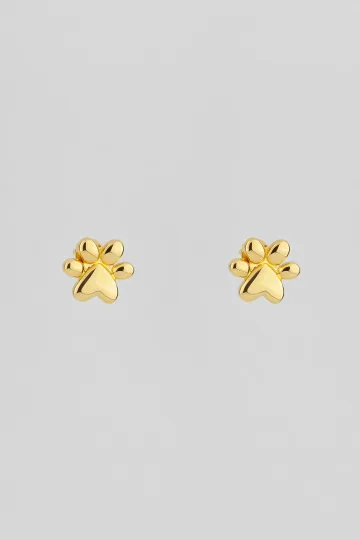

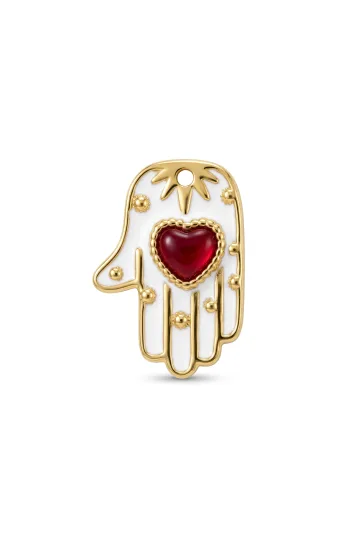


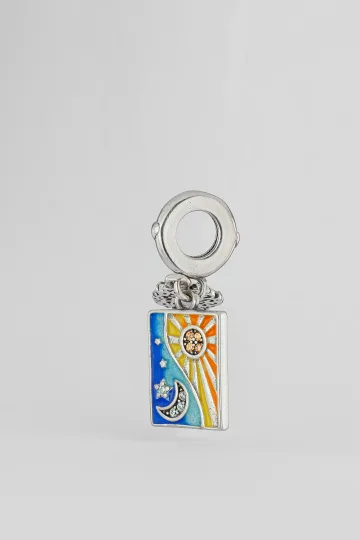
Cat Jewellery: What to Choose
Pendant
The most popular form.
- Minimalist silhouette fine silver or 14K gold. Entry to mid-range segment.
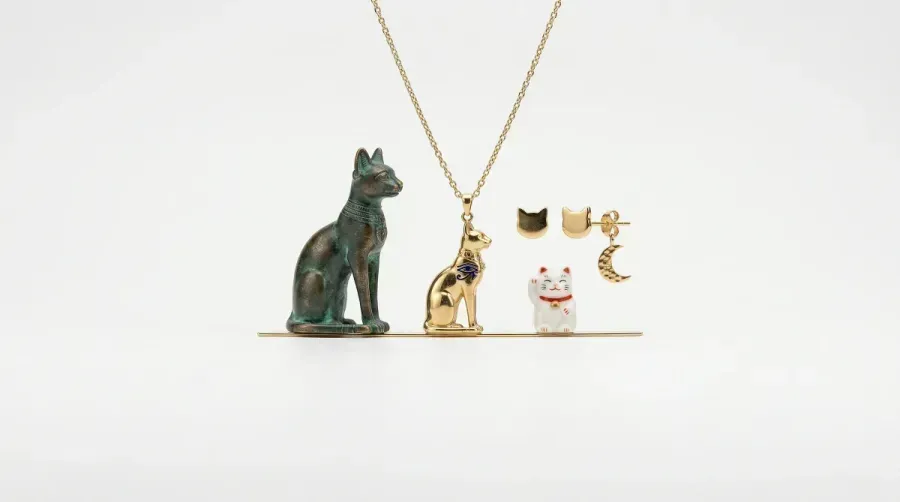
- Bastet full figure the Egyptian standing goddess with a cat's head. Detailed, sometimes holding a sistrum. Mid to premium segment.
- Gayer-Anderson Cat profile the classic Egyptian image, popular since the 1930s. Mid segment.
- Playful charm an everyday or children's option. Entry segment.
- Black figure with emerald or peridot eyes gothic aesthetic. Mid to premium segment.
- Group of kittens family theme. Entry to mid segment.
Earrings
- Small felid studs paired. Entry to mid range.
- Profile drops more expressive. Mid segment.
- Asymmetric pair one sleeping, one seated. Contemporary trend.
- Ear cuffs curl over the ear with triangular tips. Mid segment.
Ring
- Silhouette on the band. Mid segment.
- Seated figure sculptural, looking sideways. Mid to premium.
- Wrap ring the figure coils around the finger. Mid segment.
- Cat's eye stone chrysoberyl with the signature optical effect. Mid to premium segment.
Bracelet
- Charm bracelet collectible. Mid segment.
- Rigid bangle with accent figure statement piece. Mid segment.
- Delicate chain with mini silhouettes for children or minimalists. Entry to mid range.
Brooch
A vintage and Art Nouveau approach. Rene Lalique and Parisian early-twentieth-century maisons created iconic brooches in this style. The form is returning in 2026.
A black cat wants oxidised silver, never yellow gold. In gold she turns into a keyring, and I won't hear otherwise.
How to wear cat jewellery
The cat motif has passed through dozens of looks with me, from Egyptian classicism to gothic. Here is what actually works, sorted by occasion.
What do I wear a cat with every day? For daily wear I recommend a thin line-silhouette pendant on a short chain: it sits neatly in the neckline of a plain tee, a roll-neck or a linen shirt and reads as a small personal sign rather than a loud accent. Silver or white gold give a cool, neutral tone under denim and knitwear, rose gold is softer and warmer and suits beige, cream and powder tones.
Is a cat right for the office? Yes, as long as you keep it restrained. I suggest a cat profile or a smooth figure without fuss, at collarbone length so the pendant stays at the neckline of a blouse or jacket. Feline studs do the job without drawing attention: one accent, everything else minimal.
How do I build an evening look? For evening I choose a more expressive figure under a dark outfit with bare shoulders or a deep neckline: the full Egyptian Bastet, a gothic silhouette with stone eyes, lunar motifs. Against black fabric the shine of metal and the green of peridot read especially clearly. You can layer: a longer pendant with a short chain above.
And for a special occasion? For a special entrance I recommend a detailed Art Nouveau brooch on a coat, a lapel or the collar of a dress: it gives the whole look a focal point. Simple earrings alongside are enough, so nothing competes. The cat theme pairs easily with the Egyptian row: lotus, ankh, moonstone, moon phases.
How do I keep the look from getting crowded? Within one look keep to a single metal, or mix warm and cool (gold plus silver) on purpose as a device. Two rules that never fail. First: choose the length for the neckline you wear most, not the other way round. Second: one expressive figure on a clean chain always beats one squeezed between five pendants. If you want layers, give the cat its own line of length.
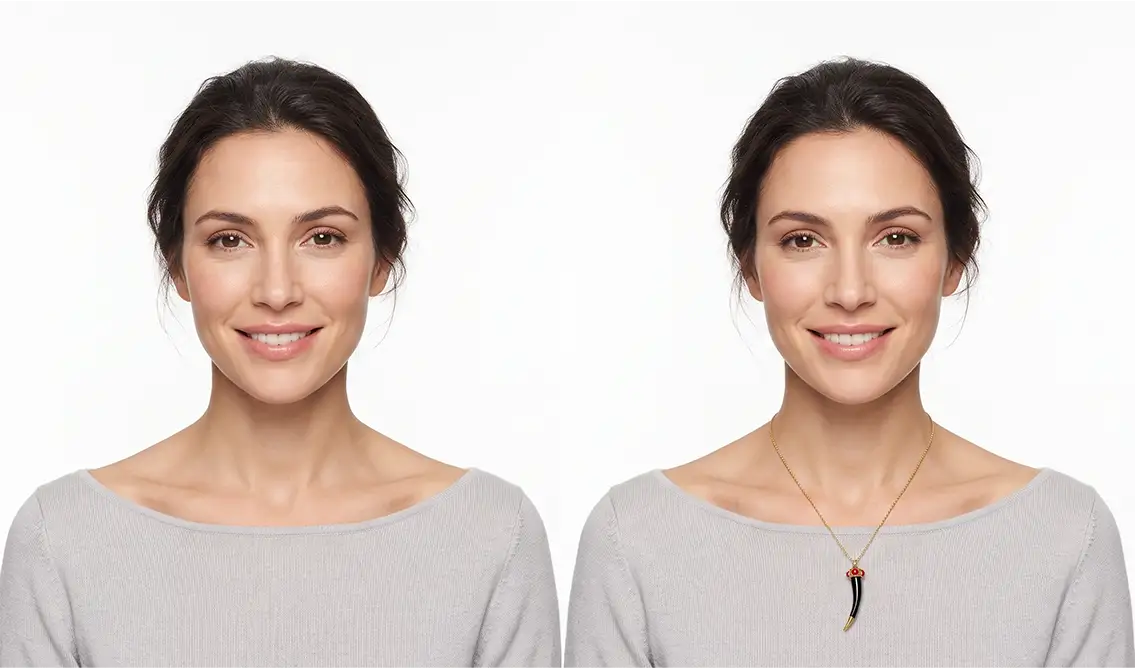
Turn on your camera, pick earrings, a pendant or a ring, and see the piece on yourself in real time.
Switch items in one tap.
Everything runs in your browser: no photo or video is ever uploaded.
Types of Cat in Jewellery
Egyptian Bastet
A stylised seated figure in profile. Characteristics:
- Elongated, elegant form
- High ears
- Eyes outlined in the Egyptian manner
- Sometimes with an ankh or sistrum in the paw
Most often rendered in oxidised bronze, silver with patina, or gold with darkening.
Gayer-Anderson Cat
A specific, celebrated artefact in the British Museum (Late Period Egypt, 664-332 BC). Elegant seated pose, gold nose ring, scarab on the forehead. It became the defining model for jewellery replicas worldwide.
In Britain the cat carries particular weight: the Gayer-Anderson Cat has been displayed in the British Museum since 1939, acquired as part of a bequest from Major-General Robert Gayer-Anderson who assembled his collection in Egypt. Replicas are among the museum's best-selling pieces. Witches' familiars appear throughout British folklore, from early modern trial records to the cats of Kipling and T. S. Eliot.
Black Silhouette
A stark, shadowed figure. Associations:
- Halloween, gothic subculture
- Wicca (the cat as a witch's familiar)
- Luck (in several traditions, see below)
Sleeping or Curled Pose
Endearing and playful, suited to everyday pendants.
Leaping Pose
Dynamic, full of movement. Well suited to minimalist pendants.
Head or Profile
Face or profile only. Minimalism.
With the Moon
Figure alongside a crescent moon. Witchy aesthetic.
Triple Silhouette
Often used with symbolism of birth, life, and death or the triple goddess in esoteric tradition.
What the Cat Symbolises
Protection (Bastet)
The principal meaning in the Egyptian context. The goddess protects:
- The home from snakes, scorpions, and rats
- Women in childbirth
- Children from illness
- The family as a whole
Sacred Femininity
One of the foremost female deities of the Egyptian pantheon. Female power here is not aggressive, as with Sekhmet, but protective and nurturing.
Intuition and Mystery
The animal sees in the dark. A metaphor for intuition, inner vision, knowing without words.
Independence
Unlike a dog, a cat does not submit. Symbol of:
- Female independence
- Non-conformity
- Self-sufficiency
Fertility and Motherhood
Bastet is a nursing goddess. The classic image: four kittens at her feet. Symbol of motherhood.
Nine Lives
The proverbial nine lives speak of resilience and the ability to survive. Symbol of:
- Transformation
- Survival
- Second chances
Witch's Familiar
In Wiccan and broader Western witchcraft tradition the cat, especially a black one, is the witch's companion. Symbol of magic and a woman in her power.
Enigma
The creature is secretive. It goes where it pleases, it looks with cool detachment. Symbol of:
- Mystery
- Inscrutability
- The unspoken
Luck (Various Cultures)
In Japan the Maneki-neko, the beckoning cat with a raised paw, brings luck in money. In Scotland a strange black cat arriving at your home is a sign of prosperity. In parts of England the black cat was considered unlucky. Traditions contradict each other.
The Cat Through the Ages
Ancient Egypt: Bastet and Sekhmet
It all began not with the household cat but with the lion. Sekhmet, the lioness-headed goddess, embodied the ferocious power of the sun. She sent plague, led armies, and punished enemies. She was nature at its most destructive. Bastet grew from the same tradition but acquired a different face: the domestic cat rather than the wild beast. Scholars believe the image of Bastet evolved from a lioness-headed figure to a feline-headed one roughly during the Middle Kingdom period, as household and family cults gained importance alongside military ones.
Bubastis in the Nile Delta was the principal seat of Bastet's cult. Herodotus in the fifth century BC described the annual festival with remarkable detail: pilgrims sailed up the Nile on boats, singing and clapping, women raising their garments before people on the banks in a gesture of ritual release. Wine flowed more freely than at any other time of year, Herodotus says, with attendance he estimated at seven hundred thousand people. He considered it the most attended festival in Egypt.
Adjacent to Bubastis was an enormous cat necropolis. Cats were not merely venerated in life but mummified in extraordinary numbers. Modern research has shown that many animals were deliberately killed in youth and presented as ritual offerings to the temple. This is the paradox Egyptologists continue to examine: a sacred animal that was simultaneously sacrificed on an industrial scale.
The breed the Egyptians first domesticated is the ancestor of the modern Egyptian Mau. It still carries the spotted coat seen in ancient papyrus illustrations.
The Graeco-Roman World
After Alexander the Great's conquests, Egyptian imagery entered Greek culture. Bastet became associated with Artemis, goddess of the hunt, the moon, and independent women. The writer Claudius Aelianus in the second and third centuries AD devoted several chapters to cats in his "On the Nature of Animals," describing them as creatures with a special connection to the moon. He wrote that the pupils of a cat's eyes change through the day in correspondence with the movement of the moon. This idea persisted in Western literature for a thousand years.
Cat amulets travelled across the Mediterranean as exotic items from the Egyptian tradition. In Rome cats were valued for practical reasons, the elimination of mice from granaries, but the sacred dimension remained Egyptian rather than natively Roman.
Medieval Europe: The Bull of 1233
In 1233 Pope Gregory IX issued the bull "Vox in Rama," aimed at heresies in Germany. In the document a black cat is described as one of the forms the devil takes during the rituals of heretics. This did not immediately lead to the slaughter of cats across Europe, but it cemented the association between the black cat and the diabolical.
Throughout the fourteenth to seventeenth centuries, during the wave of witch trials, cats suffered alongside their owners. They were killed as witches' familiars, particularly black ones. The ironic hypothesis historians have proposed is that the mass killing of cats contributed to an uncontrolled rise in the rat population, which in turn worsened the spread of plague.
Renaissance Rehabilitation
Italian Renaissance painters brought the cat back into a domestic context. Lorenzo Lotto and other masters depicted cats in everyday scenes: beside the Madonna, at children's feet, in kitchen settings. This was not a sacred image but a symbol of domesticity, watchfulness, and warmth. This view gradually displaced the medieval fear.
Victorian Sentimentality
Queen Victoria kept cats and is documented as having been particularly fond of her two Persians, White Heather and Flavia. This gave the animal the cachet of a "respectable" pet in polite society. The Victorians turned the cat into a subject of sentimental art: greeting cards, porcelain figurines, children's book illustrations. Rudyard Kipling published "The Cat That Walked by Himself" in his "Just So Stories" in 1902, cementing the literary cat as a symbol of absolute independence. T. S. Eliot's "Old Possum's Book of Practical Cats," published in 1939, gave individual cat characters richly distinct personalities and remains one of the best-loved works in English poetry for younger readers.
Maneki-neko: Japan from the Edo Period
Maneki-neko, the beckoning cat with a raised paw, emerged in Japan during the Edo period, the seventeenth to nineteenth centuries, as an amulet for commercial prosperity. Several origin legends exist. The most widely told involves Gotokuji temple in Tokyo, where a cat belonging to a poor monk saved a wealthy feudal lord from a lightning strike by beckoning him away from the tree that was struck. The lord became a patron of the temple, and the beckoning cat became its emblem.
Maneki-neko entered jewellery collections in Japan and spread globally with Japanese popular culture.
The Twentieth Century
The discovery of Tutankhamun's tomb in 1922 triggered a mass fashion for Egyptian-style jewellery. Bastet figures in gold set with emeralds became fashionable among the wealthy. Art Deco with its clean geometric lines was perfectly suited to stylising Egyptian imagery.
Rene Lalique in the Art Nouveau period created celebrated pieces using enamel, opals, and pearls. The "cat woman" was one of the defining motifs of the era. These brooches and pendants now belong to the collections of major museums worldwide. The Tower of London, for its part, has maintained a tradition of resident cats as pest controllers since at least the sixteenth century. While unofficial for most of that history, their presence underlines how deeply the working cat was embedded in British institutional life.
Egyptian Bastet: Further Detail
Mythology
Bastet is one of the great Egyptian goddesses, alongside Isis and the wider pantheon. Her roles:
Protector of the home. She guards against household dangers.
Guardian of the pharaoh. In a military context she protects the ruler.
Goddess of motherhood. She aids in childbirth and nursing.
Goddess of music and dance. Her attribute is the sistrum, an Egyptian rattle.
Goddess of the moon (in later texts). Associated with the moon.
Relationship to Sekhmet
Sekhmet is another Egyptian goddess, lion-headed. The distinction:
- Bastet peaceful, protective, domestic
- Sekhmet warlike, destructive, leonine
Mythologically they are often described as two aspects of a single goddess. Bastet is the benevolent face, Sekhmet the wrathful one.
The Festival of Bastet at Bubastis

The annual festival at Bubastis in the Nile Delta was one of the largest religious events in ancient Egypt. Herodotus described it:
- Hundreds of thousands of pilgrims
- Singing, dancing, ritual feasting
- An atmosphere of joy and carnival
The scale of this festival gives a measure of how significant Bastet was in Egyptian religion.
Mummified Cats
Dead cats were mummified and interred in dedicated necropolises. Millions of cat mummies have been found, many of them animals killed in their youth as ritual offerings.
This created an irony that still puzzles Egyptologists: the Egyptians clearly revered cats, yet systematically sacrificed them at the same time.
What Science and Excavation Revealed
The story of Bastet in jewellery rests on real objects, and the archaeology of recent decades has sharpened the picture considerably. Much of the material sits in British collections, which makes it unusually accessible.
The ancestor of the domestic cat. Genetic work has shown that modern domestic cats descend from the Near Eastern subspecies of the wildcat, Felis silvestris lybica, rather than from any distinct Egyptian line. Egypt did not tame the cat first. What Egypt did was make the cat a cult animal rather than merely a useful one, and that is why cats appear so densely in Egyptian art. Jewellers still draw on that density of imagery today, whether or not they know where it came from.
The mummy industry. X-ray and CT scanning of cat mummies in museum collections has revealed something uncomfortable. A proportion of them are empty inside, or contain only a few bones, rags, or feathers, sold to pilgrims as complete offerings. Many of the genuine ones are kittens only a few months old, with evidence of deliberate killing. The picture that emerges is of something close to industrial breeding at the temples, cats raised specifically to be offered. A sacred animal and a mass sacrifice coexisted within one religion, and it is worth knowing that when you wear the image: beautiful, and not to be idealised.
The Beni Hasan cemetery. In the late nineteenth century so many cat mummies were found at Beni Hasan that a large consignment was shipped to Liverpool and sold at auction as fertiliser and raw material for bone meal. Contemporary reports describe an auctioneer using a cat's head as a gavel. Only a small fraction of the material survives, and a handful of those skulls ended up in British museum collections, which is where much of the modern scientific work has been done.
The Gayer-Anderson artefact. The famous bronze cat that lies behind most modern replicas turned out, on examination at the British Museum, to have been assembled from several separately cast parts and to have been repaired in antiquity. The gold earrings and nose ring it wears are a genuine detail rather than a later fancy: Egyptians decorated bronze votive figures in the same way they decorated the living temple animals. When a modern pendant gives Bastet earrings, it is following an ancient precedent rather than inventing one.
Customer reviews
Zevira is a real jewellery shop. Genuine payments, deliveries and customer thank-yous.
🥰🥰🥰 gracias
Ok, ¡gracias! 🙂
The Cat in Other Cultures
Japan
Maneki-neko, the beckoning cat. The raised paw invites luck:
- Raised right paw: money
- Raised left paw: customers
- Both paws raised: maximum luck
Colours:
- White: traditional
- Black: protection
- Gold: money
- Pink: love
Norse Mythology
Bastet is not alone among goddess-and-cat pairings. Freya, goddess of love, rode a chariot drawn by two large cats. The Vikings valued cats as companions.
The Celts
The Cat Sith (Celtic fairy cat) was a fairy creature with a dual nature: sometimes helpful, sometimes dangerous.
Slavic Folklore
Among the Eastern Slavs the cat guarded the home and acted as a go-between with the domovoi, the household spirit. When a family moved into a new dwelling, the cat was sent across the threshold first: people believed the animal would find the spot where the domovoi would settle, usually by the stove near the chimney, and the household came in only afterwards. In folk tales lives Kot Bayun, a giant sorcerer-cat perched on an iron pillar who lulls travellers to sleep with his voice and song; his name comes from an old verb meaning to tell or to soothe. The image is double from the start: by the hearth the cat is a kindly protector, in the wild forest of the tale a dangerous enchanter. Slavic domestic symbolism in jewellery rests mainly on other signs, the crescent lunnitsa and protective charms covered in our separate guide to Slavic amulets and gods, yet the feline motif falls naturally into that same line of home protection.
Islam
In Islam the cat holds a respected place, which sets it apart from other animals. Tradition holds that the Prophet Muhammad had a beloved white cat named Muezza with mismatched eyes. One well-known story says the cat fell asleep on the sleeve of his robe, and rather than wake her he cut the cloth away. Scholars debate whether Muezza truly existed, but the tale itself captures the tradition's regard for the animal. One of the Prophet's companions earned the byname Abu Hurayra, father of the little cats, for his love of them. In terms of ritual purity the cat counts as a clean animal: touching it does not break ablution, it is freely kept in the home and even allowed into the mosque, which is not so for dogs. For that reason the cat lived close to people across the Islamic world for centuries, without the superstitious fear that pursued it in medieval Europe. For jewellery this layer of meaning adds a note of gentle, domestic holiness, far from both Egyptian solemnity and gothic darkness.
Silver, gold, and symbolic jewellery including Bastet pendants, gothic silhouettes, and minimalist cat motifs.
Coat Colour and Symbolism
The colour of a cat's coat carries independent meaning across cultures, and this passes into jewellery symbolism.
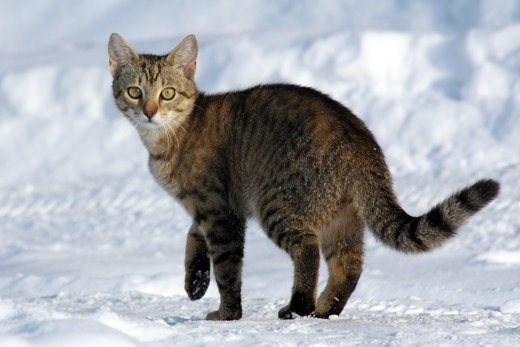
Black cat. The most contradictory. In Britain, particularly Scotland, a black cat crossing your threshold brings good fortune. In the United States and parts of Western Europe the opposite tradition took hold, rooted in the witch trial era. In Japan the black Maneki-neko protects against evil spirits. In Egypt, coat colour was less significant than the animal's form.
White cat. In the Western tradition purity and innocence. In some Asian cultures a white cat is an ill omen, because white is the colour of mourning. The white Maneki-neko signifies good luck and purity of intention.
Tortoiseshell (three colours). In Japan the three-coloured cat (mi-ke) is said to bring financial luck. This belief spread among Japanese sailors, who considered it highly auspicious to keep such a cat on board a vessel.
Tabby (striped). English folk tradition says the capital M on the forehead of a tabby is the mark of the Virgin Mary. According to legend, when a cat warmed the infant Jesus in the manger, Mary traced the first letter of her name on the cat's forehead in gratitude.
Upload a photo of your pet, someone you love, or an object. We'll build a 3D model and hand-cast it in pewter.


Coat Patterns and Jewellery Design
Specific breeds inspire specific jewellery aesthetics.
Egyptian Mau. Spotted short-haired breed, considered the direct descendant of the sacred cats of the Nile. The poised stance and attentive gaze lend themselves to Egyptian-themed designs.
Siamese. Blue eyes against a dark face. In jewellery this translates naturally to light metal and blue or pale stones: aquamarine, blue topaz, sapphire.
Persian. Round-faced and full-coated. Associated with Victorian comfort. Best suited to voluminous, detailed brooches.
Stylistic Approaches in Contemporary Jewellery
The same image exists in several distinct visual languages.
Minimalist line. A single continuous line tracing the silhouette of a seated or leaping cat. Modern, spare, works with any dress style.
Realistic Egyptian. Precise stylisation based on Late Period artefacts: high ears, elongated muzzle, kohl-lined eyes, frontal symmetry. A heritage reference.
Japanese kawaii. Large round eyes, simplified forms, bright accents. Playful and informal.
Gothic black cat with green eyes. Dark metal or oxidised silver, with peridot, chrysolite, or chrome diopside as eyes. For those working with Halloween, Wicca, or nocturnal aesthetics.
Cat's Eye: What the Stone Actually Is
The cat's eye effect has a proper name in gemmology: chatoyancy, from the French for the eye of a cat. A narrow band of light runs across the stone and slides as the piece is tilted, exactly like the pupil of a living animal narrowing in the sun. The cause is physical rather than mystical. Fine parallel needle-like inclusions, or hollow tubes, run through the mineral in one direction, and light reflecting off them gathers into a single line lying at right angles to the needles. The finer and more densely packed the needles, the sharper and more convincing the band.
The reference stone for the effect is chrysoberyl. It sits at 8.5 on the Mohs scale, harder than quartz at 7 and close to sapphire at 9, which makes it one of the most durable of the semi-precious stones and entirely suitable for a ring worn every day. There is a full treatment of the mineral in the separate guide to chrysoberyl and the cat's eye stone.
Naming matters here more than in almost any other corner of the trade. If a label says only "cat's eye" with no mineral named, it is usually quartz cat's eye, hardness 7, or something cheaper still: ulexite, the so-called television stone, or a fibre-optic glass imitation sold under the same name. Under the trade descriptions rules that apply in Britain, a genuine stone should be described as chrysoberyl cat's eye, with the mineral stated. The term alexandrite cat's eye refers to a genuinely rare variety that changes colour under different lighting and is priced accordingly.
Telling them apart takes about a minute. A real mineral cat's eye is heavy for its size, cold to the touch, and hard enough that a steel needle will not mark it on a hidden edge near the setting. Its band is milky, slightly soft at the edges, and it moves smoothly. Fibre-optic glass feels warm and light, often shows small air bubbles under a loupe, and its band is unnaturally sharp and even. Look at the flat back of a glass cabochon and you will see a grid of parallel dots, the cut ends of the fibres, which no natural stone produces.
For a cat figure the effect is particularly rewarding when the stone is set as the eyes. Every movement of the head makes the pupil appear to contract and slide, and a pendant that does this catches attention across a room in a way that a flat coloured stone never manages.
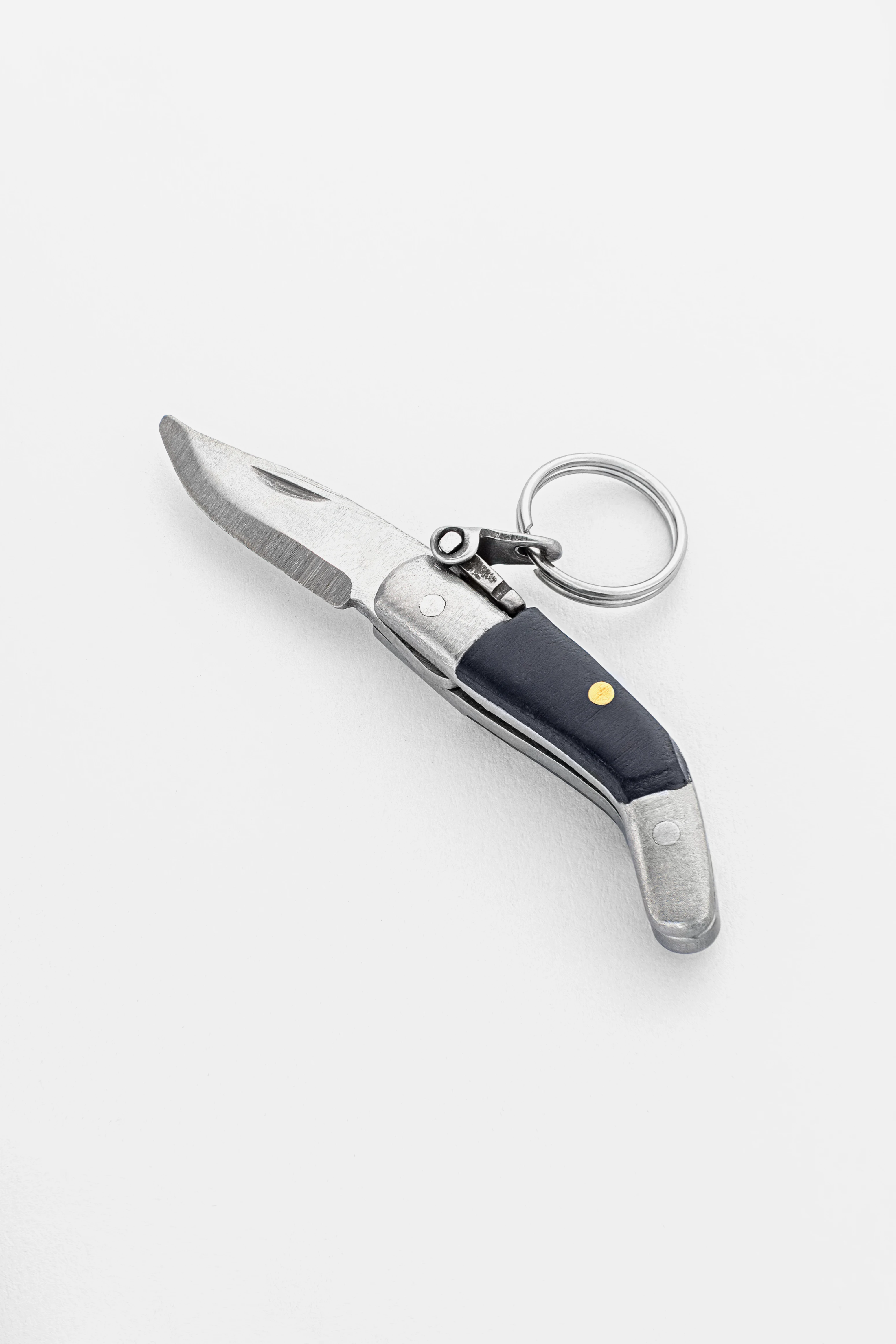
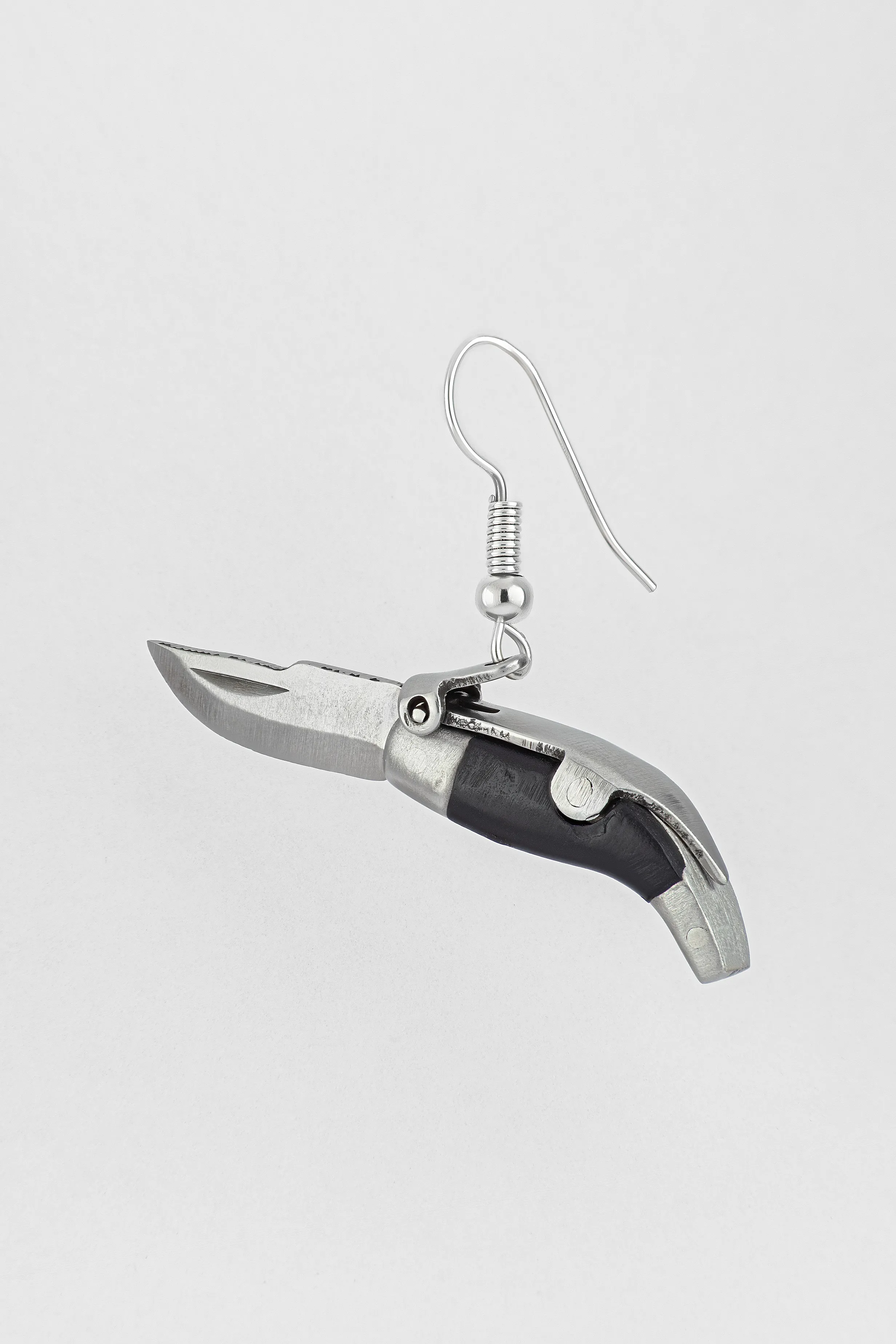
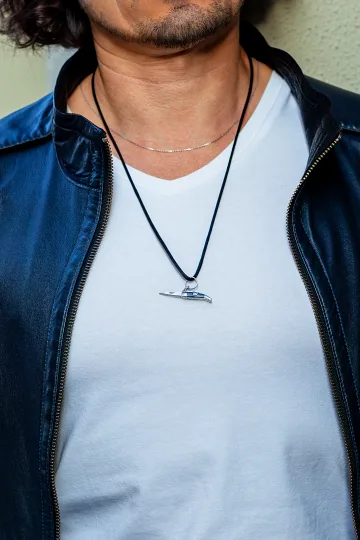
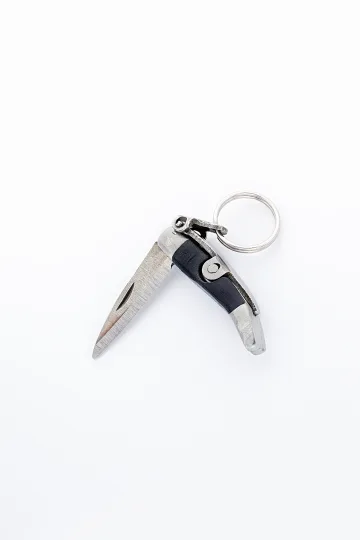
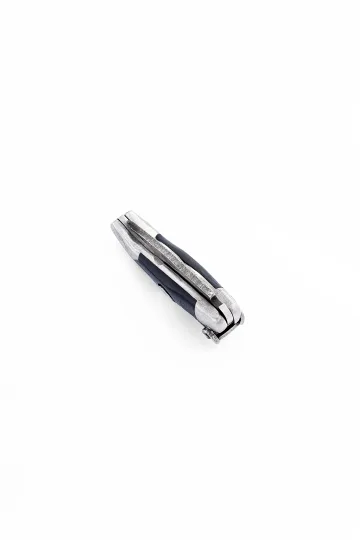
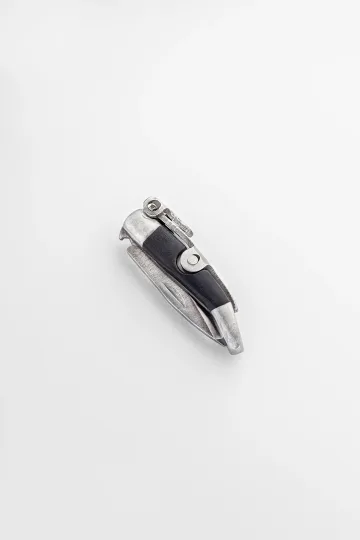
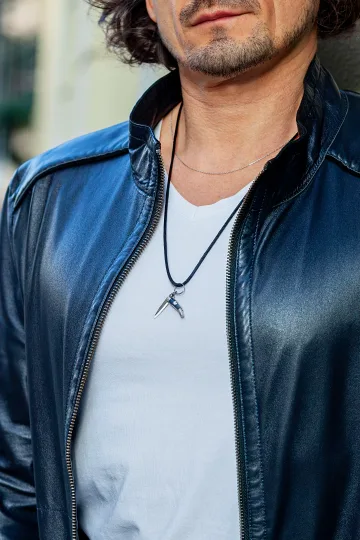
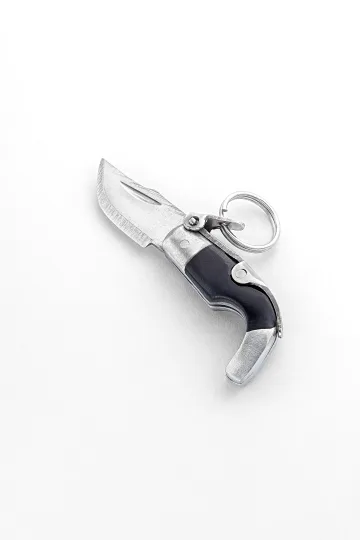
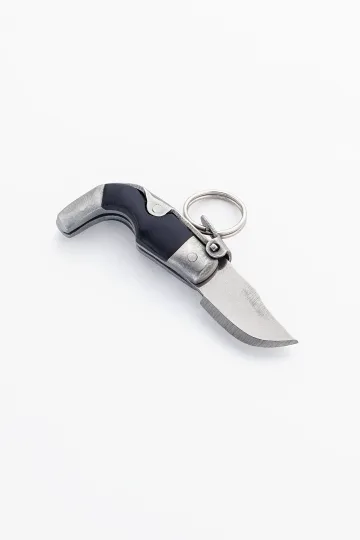
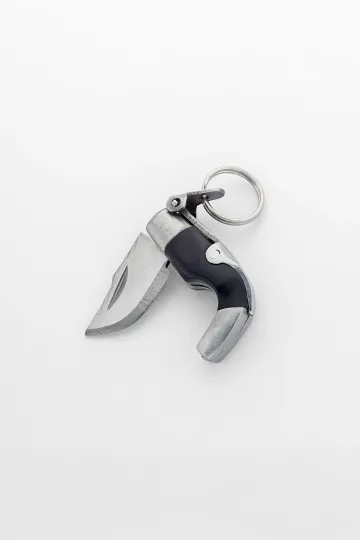
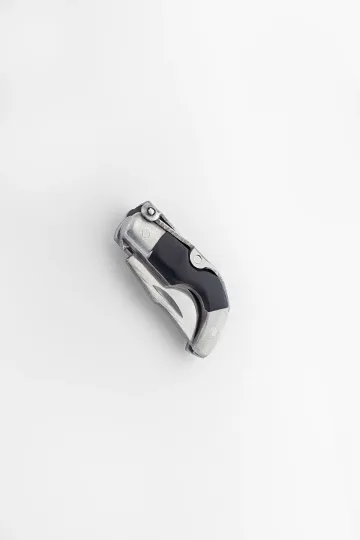
CAPAORA mini knife pendant
The 18th-century Spanish navaja in miniature: 40 mm of stainless steel, a real folding mechanism and a Palanquilla lock that clicks. An affordable gift to remember.
Authentic · Ships from Spain · 14-day returns
Combinations
Cat and lotus. The Egyptian pairing. The lotus is rebirth, immortality, and the sun. Together with Bastet it forms a coherent Egyptian set.
Cat and moon phases. Lunar cats, a popular motif in mystical jewellery. The animal's historical connection to the moon runs through Bastet (moon goddess in later texts) and through observed behaviour: nocturnal activity, vertical pupils responsive to light.
Cat and moonstone. Moonstone has been historically associated with Bastet. Its pearlescent glow was linked to the light of the night sky. Pairing a cat figure with moonstone is a historically grounded choice for the Egyptian theme.
Engraving and Personalisation
Small jewellery pieces accept engraving well when the placement is chosen carefully.
Coordinates of the pet's home. On the reverse of a cat pendant one can engrave the coordinates of the place where the cat lives or lived.
The cat's name. A short name along the inner band of a ring or on the back of a pendant.
Dates. The date the cat arrived in the household, or if it is gone, both dates. A memorial piece.
Leave your email, we'll send your discount code. No spam, unsubscribe anytime.
The code arrives by email, valid on your first order.
Metal and Oxidising: Why the Cat Is Often Dark
Egyptian and gothic cats are almost always made dark, and the reason is optical rather than atmospheric. A darkened surface throws relief into contrast: the kohl-lined eyes, the grooves of the fur, the claws, the separation between ear and skull. On bright polished metal all of that detail flattens out under reflected light and the figure loses its face at conversational distance.
Oxidised silver. The darkening is achieved by dipping the piece into a solution of liver of sulphur, potassium polysulphide, which produces a thin layer of silver sulphide on the surface. That is chemically the same substance as ordinary tarnish, arrived at deliberately and under control rather than by accident over years. The practical consequence for wear: the oxide sits in the recesses and rubs off the high points, the crown of the head and the curve of the back, within a few months of contact with clothing and skin. This is normal wear rather than a fault, and most owners find the piece grows more legible as the contrast increases. It can only be restored by treating the piece again; ordinary silver polishing pastes and dips strip it further.
Blackened steel and black rhodium. Gothic silhouettes are usually made either in surgical steel with a PVD coating, a black deposit that resists scratching well, or in silver with black rhodium plating over it. Black rhodium lasts considerably longer than liver of sulphur, but under heavy abrasion it too eventually exposes the pale metal underneath, and it shows the wear line more sharply because the contrast is greater.
Bronze and brass. The cheap base for Egyptian replicas, and it does give a warm, convincingly historical tone. The drawback is copper: on many people's skin bronze and brass leave a green mark where they sit, a reaction between copper, sweat and cosmetics rather than an allergy. In a damp British summer this happens faster than people expect. If your skin is at all reactive, look for silver or steel rather than anything described as bronze-effect.
Stone eyes against enamel eyes. Budget figures get their eye colour from enamel or coloured lacquer, and it chips out of the small cells over time, usually leaving one eye coloured and one blank, which is worse than none. A set stone, peridot, chrome diopside, or tsavorite garnet for green, lasts indefinitely and gives real depth of colour, but it wants careful cleaning, as below.
How to Tell a Good Casting From a Cheap One
Most cat figures are cast rather than fabricated, and the quality of a casting is visible to the naked eye once you know what to look at. This is worth five minutes in a shop or with a piece that has just arrived by post.
Crispness of detail. On a good piece the individual elements are distinct: the pads of the paws, the drawn line of the eye, the edge of the ear, the separation of the tail from the body. On a poor casting the detail is soft and rounded, as though the figure had been left in a soap dish. That softening is the mark of a worn mould or of metal poured too cool.
Seams and flash. Run a fingernail down the sides of the figure where the halves of the mould met. On a properly finished piece the seam has been dressed and cannot be felt. A sharp fin of metal, flash, along the ears or tail means no hand finishing was done at all, and it will catch on clothing and on skin.
Weight and sound. Silver and bronze are noticeably heavier than thin hollow castings in white alloy. A figure that feels too light for its size is usually cast in a cheap alloy and plated. Tapped gently against a hard surface, solid silver gives a short dull note; plated hollow alloy rattles.
The hallmark. On silver sold in Britain above the weight threshold, look for a full hallmark: the 925 millesimal fineness mark, the assay office town mark, and the sponsor's mark. Absence of a hallmark on something sold as silver is a reason to ask questions, since plated alloy is frequently offered as silver and the plating wears through within a year.
How the eye stones are held. On a decent piece the stone sits in a bezel, a rim of metal closed over its edge, or is set flush and cleanly. If a stone is sitting on a visible bead of adhesive, or moves when pressed with a fingernail, it will be the first thing to fall out the moment the piece is cleaned.
Care for Detailed Cat Jewellery
Cat figurines with small details require particular attention.
Fine details collect dust. The ears, claws, and spaces between paws and base all trap organic matter. A soft toothbrush with a small amount of warm water and neutral soap is the right tool.
Stone eyes need gentle handling. If the figurine has peridot, chrysolite, or similar stone eyes, aggressive chemical cleaners can damage the setting or the stone surface. Soft mechanical cleaning only.
Patina on silver is intentional. The deliberate oxidisation on Egyptian-style pieces is part of the aesthetic. Do not remove it with standard silver cleaning agents, or the effect will be lost.
Who Suits Cat Jewellery
Animal lovers. One cat at home tends to mean a cat motif suits your style.
Ancient Egypt enthusiasts. Bastet and the Gayer-Anderson Cat as markers of identity with Egyptian culture.
Independent women. The cat as a symbol of female independence.
Gothic and alternative wearers. Especially the black silhouette.
Wiccans. The familiar motif.
Mothers. Bastet as a goddess of motherhood.
Lovers of Japan. For followers of the Maneki-neko.
As a gift for a devoted cat person. Any gender.
For Halloween. A seasonal gift.
Writers and creatives. The cat has a strong literary association in Britain, from Johnson's Hodge to the cats of Kipling and T. S. Eliot's "Old Possum." A good choice for a writer friend.
Year of the Cat: the Eastern Zodiac
The Chinese calendar counts twelve animals, but the cat is not among them: legend says the rat tricked it and failed to wake it for the celestial race, so the place in the cycle went to the rabbit. Among the Vietnamese, however, the fourth year of the round belongs to the cat rather than the rabbit. There are several explanations. Linguists point to a resemblance in sound: the Chinese character for the rabbit year, 卯 (mao), is almost identical to the Vietnamese word meo, cat. The agricultural version is simpler: rice is Vietnam's main crop, rats are the main enemy of the fields, and the cat is the main killer of rats, so it makes sense that it earned the place of honour. In Vietnamese tradition the cat is a lucky animal that drives off evil spirits. People born in the year of the cat are described as perceptive, independent, observant and finely intuitive, a set of qualities that matches the jewellery symbolism of the cat almost word for word. Anyone choosing a piece by date of birth may find our calendar of zodiac signs and their jewellery useful: the feline motif sits naturally beside a personal sign.
Send a friend a discount code, they save on their first order.
The Cat in Art
The image of the cat runs through the whole history of painting, and it shows how attitudes to the animal shifted. In ancient Egyptian murals and reliefs the cat sits beneath its mistress's chair, sacred and domestic at once. During the Renaissance Italian masters worked it into everyday and religious scenes as a sign of comfort and watchfulness. The real turning point came in the nineteenth century. In Édouard Manet's Olympia (1863) a bristling black cat stands at the figure's feet in place of the meek dog of fidelity, and that bold look sent the viewer back to medieval tales of witches, adding a scandalous chill to the canvas. Pierre-Auguste Renoir painted girls with kittens, catching a moment of tenderness and curiosity. The Swiss artist Théophile Steinlen made the cat the star of Parisian posters, and his black-cat silhouettes are recognisable to this day. It is from this heritage that jewellers draw their poses: the seated figure, the arched back, the profile with high ears, all of it coming not from a designer's imagination but from a centuries-old tradition of depicting the animal.
The Cat in Tattoo and Its Meaning
The feline motif is one of the most requested in body art, and the meanings there are exactly the ones that pass into jewellery. Most often the cat is chosen as a sign of independence and freedom: the animal that lives on its own terms and answers to no one. A second layer is femininity and grace: the smooth line of the back, the soft gait, quiet strength without aggression. A third is intuition and mystery, that inner sight, the ability to see in the dark. The black cat reads on its own: for some a protective charm and a link to the mystical, for others a nod to witch aesthetics. An Egyptian profile in the spirit of Bastet means protection and ancient power in a tattoo, the same meaning as the pendant. The difference between a tattoo and a piece of jewellery is simple: the drawing on skin is permanent, while a figure on a chain can be taken off, given away, passed down or changed with your mood. For anyone trying the image on and not yet ready for an irreversible step, a cat pendant or ring is an easy way to wear the same symbol while committing to nothing.
The Cat as a Protective Charm
Protection is the oldest meaning of the feline image, and it is what turns a figure of the animal into an amulet rather than an ordinary ornament. In Egypt Bastet guarded the home against snakes, scorpions and disease, and watched over women in childbirth and children in sickness. Among the Slavs the cat kept the hearth and was allied with the household spirit. In Japan the black maneki-neko drives off evil spirits, while the tricolour mi-ke cat protects sailors at sea. For all the difference between traditions the essence is one: the cat stands on the border between home and the outside world and keeps the bad from entering. How to wear such a charm is up to each person, and the general rules of protective jewellery apply, which we cover in our full guide to amulets, charms and talismans. One practical note: if a piece is chosen as a protective sign rather than decoration, it should be a constant companion rather than a once-a-year outing. A pendant under clothing near the heart, a ring on the working hand, everyday studs, the form matters less than wearing it regularly. Any metal will do: the power of the image lies in the animal itself, not in the hallmark.
FAQ
Does a black cat in jewellery bring bad luck?
It depends on the tradition. In Scotland and Japan it is a sign of good fortune. In Ireland and parts of Africa the symbolism is positive. Only in certain European contexts, particularly some historically Catholic regions, was the black cat associated with ill luck. In contemporary mainstream culture it is simply an aesthetic choice.
Is Bastet only for people of Egyptian heritage?
No. She functions as a universal protective symbol. She does carry deep cultural context, however, and that context deserves respect.
What is the difference between Bastet and Sekhmet?
Sekhmet has the head of a lioness and embodies war, plague, and destructive force. Bastet has the head of a domestic cat and is associated with the home, family, music, and gentle protection. Both belong to the same pantheon and are sometimes described as two aspects of a single female archetype: wrath and tenderness.
Can you give cat jewellery to someone who does not own a cat?
Yes. The image operates on multiple levels: protection, femininity, independence, mysticism. Pet ownership is not required.
Are Maneki-neko and Bastet the same thing?
No. Maneki-neko is a Japanese beckoning luck figure. Bastet is an Egyptian goddess. Different cultural traditions, different meanings.
Why is tortoiseshell considered lucky?
Three-coloured cats are genetically almost always female (the coat colour gene is linked to the X chromosome). In Japan and the UK this rarity is associated with special fortune. In jewellery the three-colour motif is rendered through a combination of metals or enamels.
Which material works best?
- Silver with patina for the Egyptian aesthetic
- Yellow gold for premium versions
- Oxidised steel for a gothic black silhouette
- Rose gold for everyday wear
- With emerald or peridot eyes for the mystical variant
Is it appropriate for a man?
Yes. Bastet is a historical symbol, worn by elite Egyptian men. Contemporary male pendants using this motif are well established. It is not a gendered symbol.
Is "cat's eye" a gemstone?
Chrysoberyl cat's eye is a semi-precious gemstone with the distinctive optical effect called chatoyancy. Separate from the symbolic cat motif, but aesthetically linked.
The triple silhouette?
Not a traditional symbol, but in contemporary esoteric aesthetics three figures (black, white, grey) are associated with the Triple Goddess.
A cute cat pendant for a young girl: is that normal?
Completely normal. A small cat pendant is one of the most popular first pieces of jewellery for girls. A small silver figure works perfectly.
Famous Cat Jewellery
Gayer-Anderson Cat replicas. The bronze seated cat in the British Museum, dating to Late Period Egypt, acquired in 1939. Reproductions in various materials are among the museum's most popular pieces, and the design has been licensed to jewellers for decades.
Rene Lalique's "cat woman." Art Nouveau masterwork. A woman with feline features, one of the most recognisable images of the era.
High jewellery panthers. During the twentieth century, major French jewellery houses made the panther, a close relative of the domestic cat, the signature motif of whole collections.
Vintage Art Nouveau brooches. Parisian jewellers of the early twentieth century frequently used cat and feline-woman motifs in plique-a-jour enamel.
Buying it as a gift? Each one arrives ready to give.
 A branded Zevira box and a little card come with every order.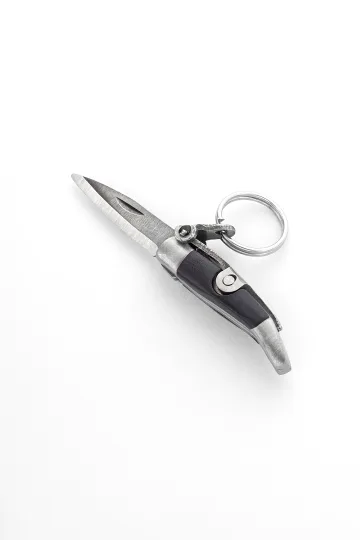





Conclusion
The cat in jewellery works on many layers at once: Egyptian Bastet as protection; the witch's familiar as a symbol of independence; the cosy pendant of a devoted cat lover; the gothic black silhouette as a statement of alternative aesthetics.
Bastet was venerated in Egypt 5,000 years ago. People still find themselves devoted to cats today, and the internet is the proof. Forms change; the bond does not. Cat plus human adds up to something that persists across centuries.
In jewellery, this motif is genuinely versatile: minimalist, mystical, everyday, gothic. It works for men, women, and children. And among all animals, the cat is one of the few that has a well-documented opinion about jewellery, as anyone who has dangled a necklace near one will confirm.
About Zevira
Zevira is a Spanish jewellery brand from Albacete. Cat and Bastet symbolism is one of the categories in the catalogue. For current pieces and details, visit the catalogue.