Charm Bracelet Revival: A Complete Guide to Building Your Own
Introduction: one charm at a time
In the 1990s, a charm bracelet sat in practically every British grandmother's jewellery box. A silver chain with a miniature Eiffel Tower from a package holiday, a tiny heart from a sweetheart, a christening cross from the church at the end of the road, a horseshoe pressed into the palm at a county fair. Each charm a small chapter. The whole bracelet a quiet autobiography.
For a while, that tradition felt dated. By the early 2010s, charm bracelets had become associated with mass-market bead systems and teenage birthday presents. Grown women wore something else.
In 2026, charm bracelets are back, in a different form. Premium jewellery studios in New York and Paris have returned to the category with handmade silver and gold charms. Independent makers on craft marketplaces report waiting lists for vintage-inspired pieces. Prices for antique charm bracelets at auction have climbed steadily. Grandmother's jewellery box is being opened again, and what is inside turns out to be rather desirable.
This is a guide to the contemporary charm bracelet: what it is, where it comes from, and how to build one that means something.
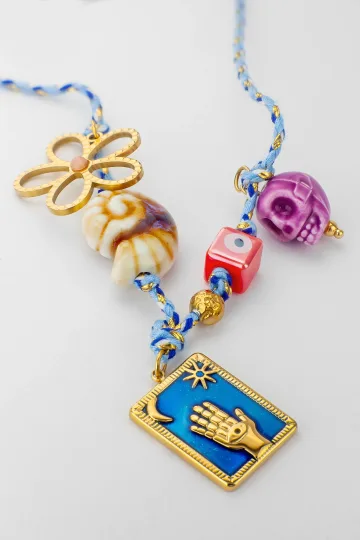
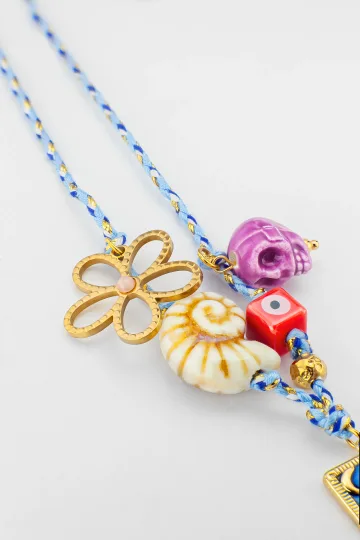
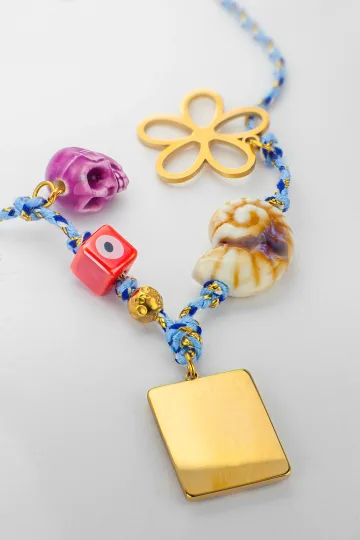
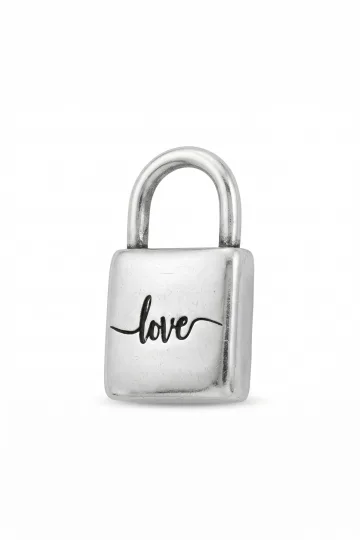
Wear the symbol, don't just read about it. These are in stock:

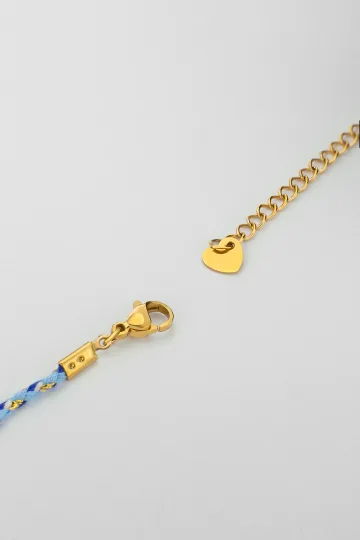
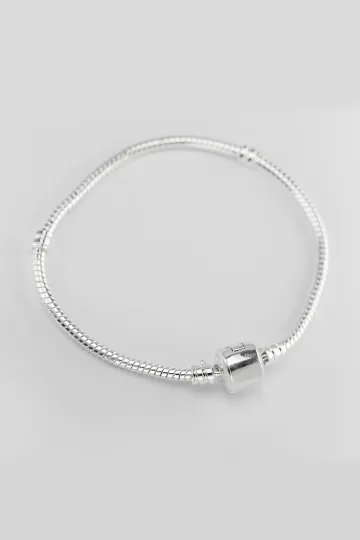
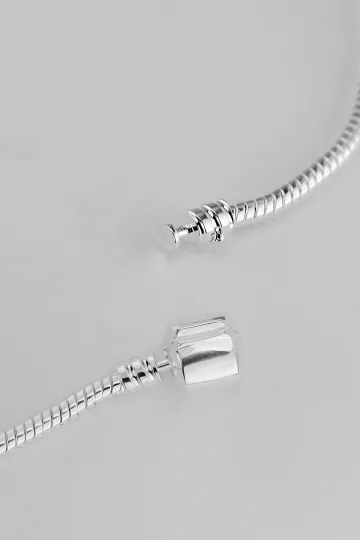
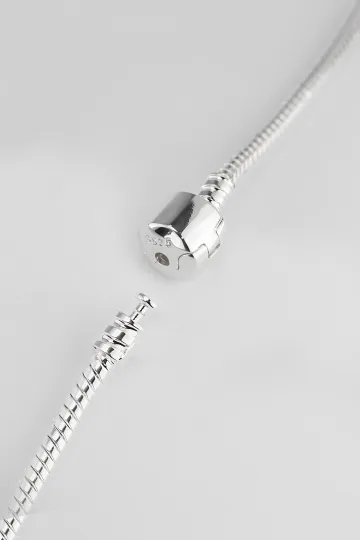
What is a charm bracelet
At its simplest, a charm bracelet is a bracelet fitted with small hanging ornaments. The base can be a plain chain, a thick braided band, or a rigid bangle. The charms themselves hang from rings, lobster clasps, or fixed attachment points.
The main types:
Classic cable or trace chain with charms
A slender cable or trace chain from which small pendants hang freely. This is the oldest form, used in ancient Egypt and Rome. Versatile, elegant, compatible with charms from almost any source. The purest expression of the form.
Bead-system bracelet
A thick braided band with threaded sections that hold specific bead-style charms in place. Introduced by Scandinavian jewellery companies in the early 2000s and quickly adopted worldwide. The format that most people picture when they hear "charm bracelet" today.
Slider bracelet
Charms thread onto a rigid bar or stiff chain and can slide to new positions. Less common, but neat for a curated, architectural look.
Locket bracelet
Charms are tiny lockets containing photographs. Each one refers to a specific person. Deeply personal, often passed down.
Birthstone bracelet
Each charm holds a gemstone corresponding to the birth month of a child or family member. Grows with the family.
Travel bracelet
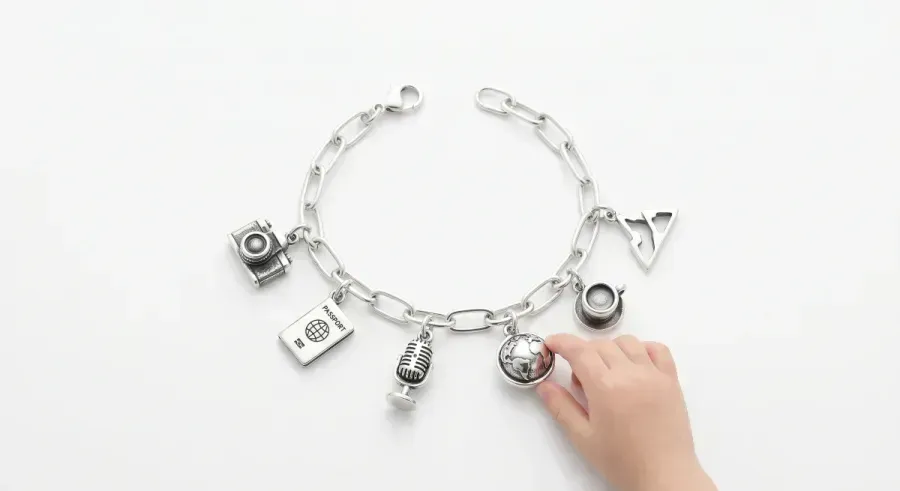
Charms are miniature landmarks collected on journeys. The Eiffel Tower from Paris, Big Ben from London, the Colosseum from Rome, a tiny seashell motif from the Caribbean. A wearable map of one's own life.
Seven charms on a rolled-up sleeve, each one earned. Hang twenty trinkets and you've got a jangling market stall, not a life. Don't.
Styling your charm bracelet
I have dressed more than a few wrists over the years, and a handful of rules never let me down. Here they are, by occasion.
What do I wear a charm bracelet with every day? For daily wear I recommend a slender silver chain with five to seven charms over plain knitwear, a linen shirt or a simple white tee. The quieter the fabric, the louder the charms read. Under a rolled or short sleeve the bracelet shows in full and rings with every gesture, and that is exactly how I like to expose it.
Does it work at the office? It does, as long as you keep the sound and the density in check. I recommend three to five charms on one theme on a fine chain, under a shirt cuff or a jacket sleeve. Muted fabrics and calm colours (grey, navy, beige) give the charms an even backdrop. Leave the dense, jangling bracelet for another day; in a meeting it distracts.
How do I build an evening look? In the evening you can turn the bracelet up. I suggest a dark dress or a silk blouse with a bare wrist, and the bracelet becomes the main accent on the arm. Larger charms belong here, along with oxidised silver or 14k gold that plays in the light. I balance bare shoulders or a deep neckline with detail at the wrist.
And for a family celebration? For a wedding, an anniversary or a family gathering I choose the most personal bracelet: the one whose charms mark these particular people and dates. Birthstones, initials, photo lockets. Under dressy fabric (satin, velvet, lace) I recommend finer work so the bracelet does not fight the texture.
Who does a charm bracelet actually suit? Anyone who likes things with a history rather than bare shine. A restrained piece on a fine chain suits a minimal wardrobe; a dense bracelet built over years flatters someone with a strong personal style. Two rules that never fail. Take the chain a centimetre longer than usual: charms pull it down and it sits tighter than an empty chain. And do not mix metals by accident, either one main metal or a deliberate palette.

Turn on your camera, pick earrings, a pendant or a ring, and see the piece on yourself in real time.
Switch items in one tap.
Everything runs in your browser: no photo or video is ever uploaded.
History of the charm bracelet
The charm bracelet is not a modern invention.
The ancient world: Egyptian scarabs and Etruscan goldwork
Ancient Egyptians wore amulets on chains and cords. Each amulet represented a deity or offered specific protection: the scarab for rebirth, the eye of Horus for health. Bracelets from pharaonic Egypt already carried the essential idea: small hanging objects with personal meaning on a single piece of jewellery. These are recognizably the ancestors of what sits in the jewellery box today.
The Etruscans, who inhabited central Italy before Rome absorbed them, produced goldwork of a sophistication that modern craftsmen have struggled to replicate. Their gold bracelets with extraordinarily fine granulated pendants survive in the Vatican Museums and the Louvre. Each pendant had its place in a system of protection for the wearer.
The Romans continued the tradition. Gold bracelets fitted with miniature hanging objects have been excavated across the former Empire: tiny swords, keys, animals, symbolic tools. Roman soldiers sometimes wore identifying amulets so that their bodies could be recognised if they fell in battle. The British Museum holds several examples found in Britain during Roman occupation.
The medieval period: reliquary chains
In Christian Europe, protective amulets became religious medallions. Bracelets carrying tiny saints, crosses, and angels were worn as physical prayers. The line between jewellery and devotion was not drawn. The Church produced officially sanctioned reliquary pendants: capsules containing fragments of relics, miniature copies of sacred images. Pilgrims returning from Santiago de Compostela, Rome, and Jerusalem collected them.
The grandest noble families commissioned reliquary chains from monastic workshops. To own a chain hung with reliquaries of significant saints was both a spiritual and a political statement about a family's connections. The objects accumulated on these chains were never random. Each one had a documented origin and a purpose.
The nineteenth century: Queen Victoria changes everything

The charm bracelet's modern story begins with Queen Victoria. She was devoted to personal jewellery as emotional record-keeping, and after the death of Prince Albert in 1861 she wore a mourning bracelet carrying locket charms containing a lock of his hair and miniature portraits. Her ladies-in-waiting followed the fashion immediately. It spread through the aristocracy and then through the middle classes.
By the 1870s and 1880s, charm bracelets were a mainstream British tradition. A fine example from this period survives in the Victoria and Albert Museum: a gold cable chain hung with more than thirty charms, including a tiny Bible that opens, a miniature padlock with its original key, a coral hand, a horseshoe in seed pearls, and a gold locket containing a watercolour miniature portrait. The piece was worn by three generations of a Hampshire family between 1863 and 1931.
Victorian charm bracelets carried extraordinary variety: lockets, miniature animals, tiny books that actually opened, thimbles, miniature padlocks and keys, lucky horseshoes, coral charms against illness. Many were made in Birmingham's Jewellery Quarter, which had become one of the world's centres of small-scale gold and silverwork.
Edwardian era: souvenir collecting and travel charms
The Edwardian period saw charm bracelets continue as souvenir jewellery. Every seaside town, spa, and tourist destination sold charm replicas of local landmarks. Collecting became the point. A well-travelled Edwardian lady might have a Blackpool Tower charm alongside a miniature Sphinx from a winter trip to Egypt.
After the First World War, soldiers returning from France brought back charms made from shell casings, coins, and found objects. Some made new charms to order; others brought back pieces acquired locally. These bracelets became silent memorials of survival.
The 1950s and 1960s: the golden era
Charm bracelets became the defining female accessory of the post-war decades. Women started a bracelet in their teens and added to it across a lifetime: a charm for marriage, for each child, for travel, for achievements. Jewellery boxes of that generation contain extraordinary bracelets today, dense with history.
American manufacturers, particularly in New York, made charm production a major industry. A 1950s American charm bracelet, often in 14K gold with small hanging figures, reads today as a document of mid-century domesticity and aspiration. The tradition crossed the Atlantic fully in both directions. Department stores carried charm counters where a customer could browse hundreds of motifs and choose the one that fit the occasion. A charm for graduation, a charm for a new driver's license, a charm for the first apartment. The ritual was understood and shared.
The 1980s and 1990s: becoming young
From the 1980s onwards, charm bracelets became associated with younger consumers and cheaper price points. Sterling silver with character charms. This repositioning as teenage jewellery is what gave the category its brief reputation as "not serious."
The 2000s: bead-system revolution
Scandinavian jewellery companies reinvented the category with the bead system: a thick, threaded bracelet accepting specific branded charms. The marketing was sharp: "build your own story, one charm at a time." The format worked. It brought charm bracelets back to adult women and made them a dominant category in high street jewellery.
The 2010s: saturation
The bead system became ubiquitous and then, gradually, overfamiliar. The category did not disappear, but it lost the sense of discovery.
2020 to 2026: the return
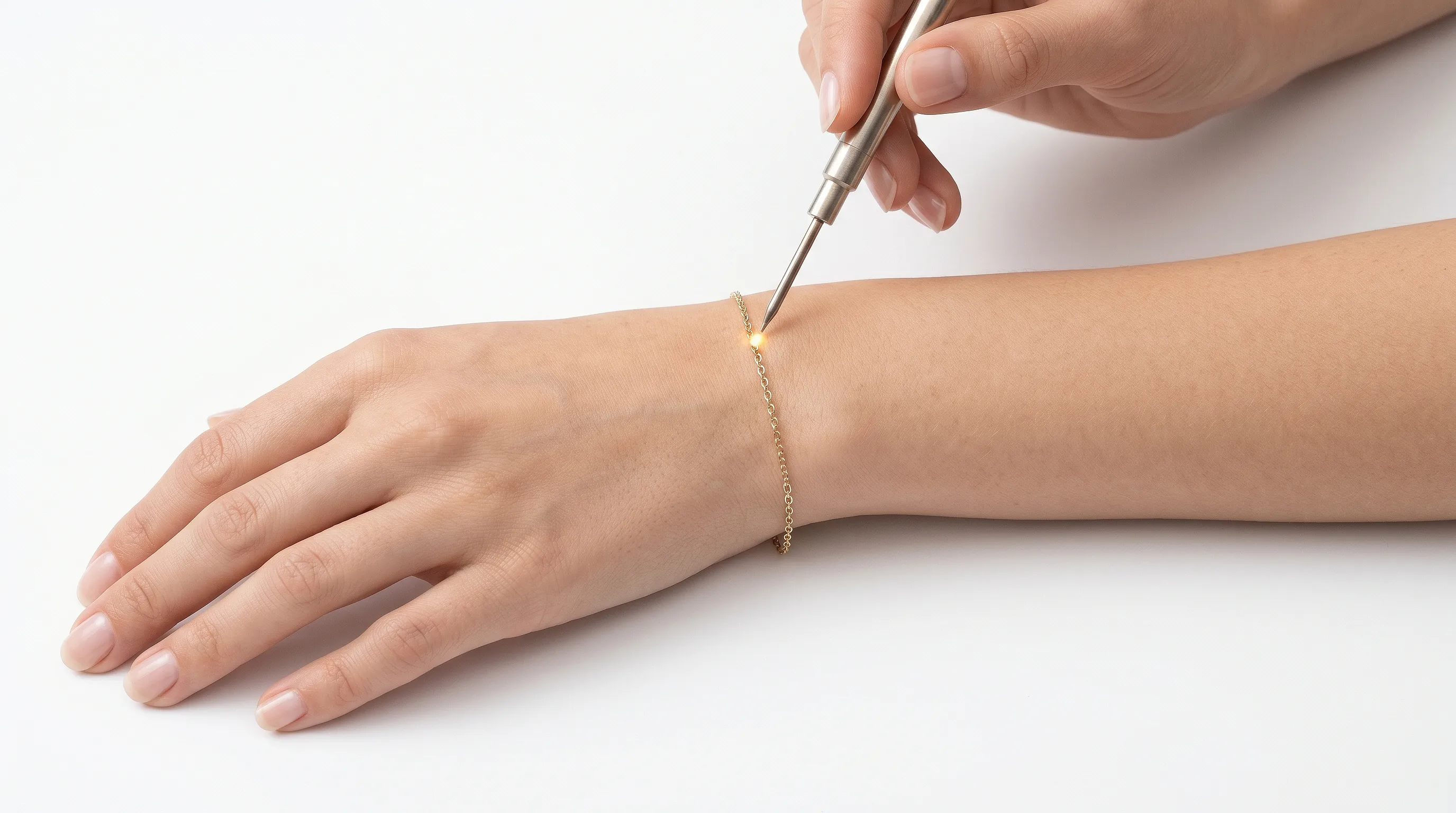
What returned was something different from the bead-system era. Vintage Victorian and mid-century charm bracelets began appearing at auction and in antique markets. Independent jewelers revived handmade charm production. The premium end of the market, jewelry houses in New York and Paris, launched or relaunched charm collections. Buyers wanted something with craft behind it rather than a branded system. Alongside this, the rise of permanent welded jewelry gave the same generation a parallel ritual: a clasp-free chain bonded for years rather than a charm added each year.
The grandmother's jewellery box proved to contain objects worth inheriting.
The modern revival: why charm bracelets matter now
The revival is not nostalgia for its own sake. Something specific has shifted in how people relate to the objects they wear.
For much of the 2010s, the dominant jewellery trend was minimal and stackable: thin plain bands, geometric studs, pieces that could be mixed without much thought. That sensibility reached a kind of exhaustion. When everything is equally minimal, nothing reads as deliberate. The charm bracelet offers the opposite: density with purpose, accumulation with meaning, an object that tells you something specific about its owner.
There is also a practical dimension. A whole generation has grown up with social media as its primary way of marking life events. The appeal of a physical, tangible record of those same events has grown proportionally. A charm does what a photograph cannot: it sits on your wrist for thirty years, it chimes when you move, it gets picked up and examined by your children. It has weight.
Finally, there is the craft dimension. Independent jewellers have returned to the charm format because it rewards the kind of small-scale precision work that was always their strength. Casting a miniature Airstream trailer in sterling silver, or hand-setting a birthstone into a pendant the size of a thumbnail: these are the things skilled metalsmiths do well, and the charm bracelet gives them a format to do it in.
The result is a category that has moved away from the middle. At one end, vintage pieces in antique markets and estate sales. At the other, new handmade work from independent studios. The mass-market bead system still exists, but it is no longer the definition of the form.
Auction results tell part of the story. Charm bracelets that appeared in estate sales five years ago for modest prices now attract competitive bidding. Collectors who specialise in Victorian and Edwardian jewellery have noticed the shift. A bracelet with documented provenance, original clasps, and a readable selection of period charms can represent serious money. The same sensibility has carried into new production: buyers who would previously have bought only vintage are now willing to commission new charms that sit alongside inherited ones, matching the weight and character of pieces made a century earlier.
The gift category has also changed. A charm bracelet given in 2026 is understood differently from one given in 2005. It carries an implied commitment to continue, to add, to return with something new when the occasion arises. The recipient understands this. The gift is the beginning of a practice, not a finished object.
Types of charm
The categories below are how most collectors organise their thinking.
Life milestones
- Birth of a child (year engraved, initial)
- Graduation (mortarboard, scroll)
- Marriage (ring, dove)
- A new job (symbol of the profession)
- Buying a house (miniature house)
- A significant trip (landmark of the destination)
Travel
- Eiffel Tower (Paris)
- Big Ben (London)
- Colosseum (Rome)
- Sagrada Familia (Barcelona)
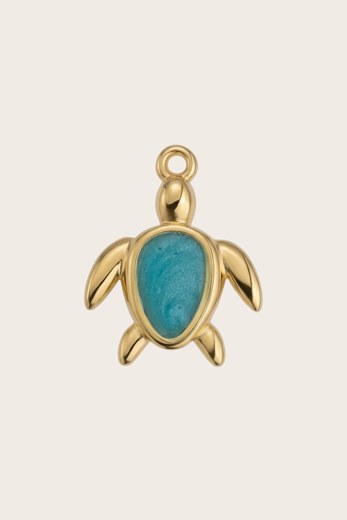
- A seashell motif (Caribbean)
- Pyramids (Egypt)
- A small airplane (any journey)
Hobbies and passions
- Musical instrument (if you play)
- Ballet shoe (for dancers)
- Paintbrush (for artists)
- Book (for readers)
- Camera (for photographers)
- Bicycle (for cyclists)
- Musical note or piano
Love and relationships
- Heart
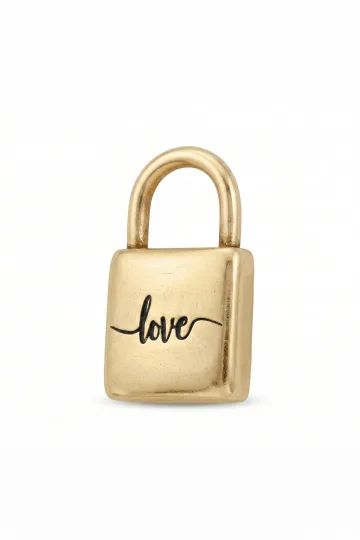
- Padlock
- Key
- Paired miniature rings
- Partner's initial
- Wedding date
Family
- Children's initials
- Birthstones for family members
- Family crest
- Locket portraits
- Mother-daughter paired charms
Protective amulets
- Hamsa
- Eye charm (nazar)
- Patron saint medallion
- Horseshoe
- Four-leaf clover
Zodiac and numbers
- Star sign
- Birthstone
- A number with personal significance
Seasons and occasions
- Christmas (tree, snowflake)
- Birthday symbols
- Valentine's (heart, arrow)
Choosing meaningful charms: a deeper approach
The list above is a starting point. The charms that end up meaning the most are usually not the obvious ones. They come from paying attention to what actually matters, then finding a physical form for it.
Milestones with a story. The best milestone charms are the ones that need explanation. Not a generic "graduation cap" but the symbol of the specific university, or a tiny version of the city where you graduated. An initial plus a year rather than a generic baby bootie, so the bracelet reads as a record rather than a symbol.
Travel that was real. Souvenir charms from tourist shops are easy to find and often forgettable. The more durable approach is to find a charm that records something specific about the journey: a small motif of a particular reef or coastline you visited, a key that matches a landmark you actually visited, a tiny version of the hotel you stayed in on a significant trip.
Hobbies taken seriously. A camera charm on a bracelet worn by someone who actually photographs is a different object from the same charm on a bracelet assembled without thought. The value is in the correspondence between the charm and the life.
Family with precision. A charm for each child is a common approach. The variation that holds up best over decades is birthstone plus initial plus year, engraved on the back. The bracelet becomes a record that can be read by someone who inherits it without knowing the family.
Received charms. Some of the most important charms on any bracelet are gifts. A charm given by a parent, a partner, or a close friend carries the relationship with it. Over time, a bracelet built partly from received charms reads as a map of significant relationships.
Choosing the right base bracelet
Before choosing charms, choose the base. The decision shapes everything that follows.
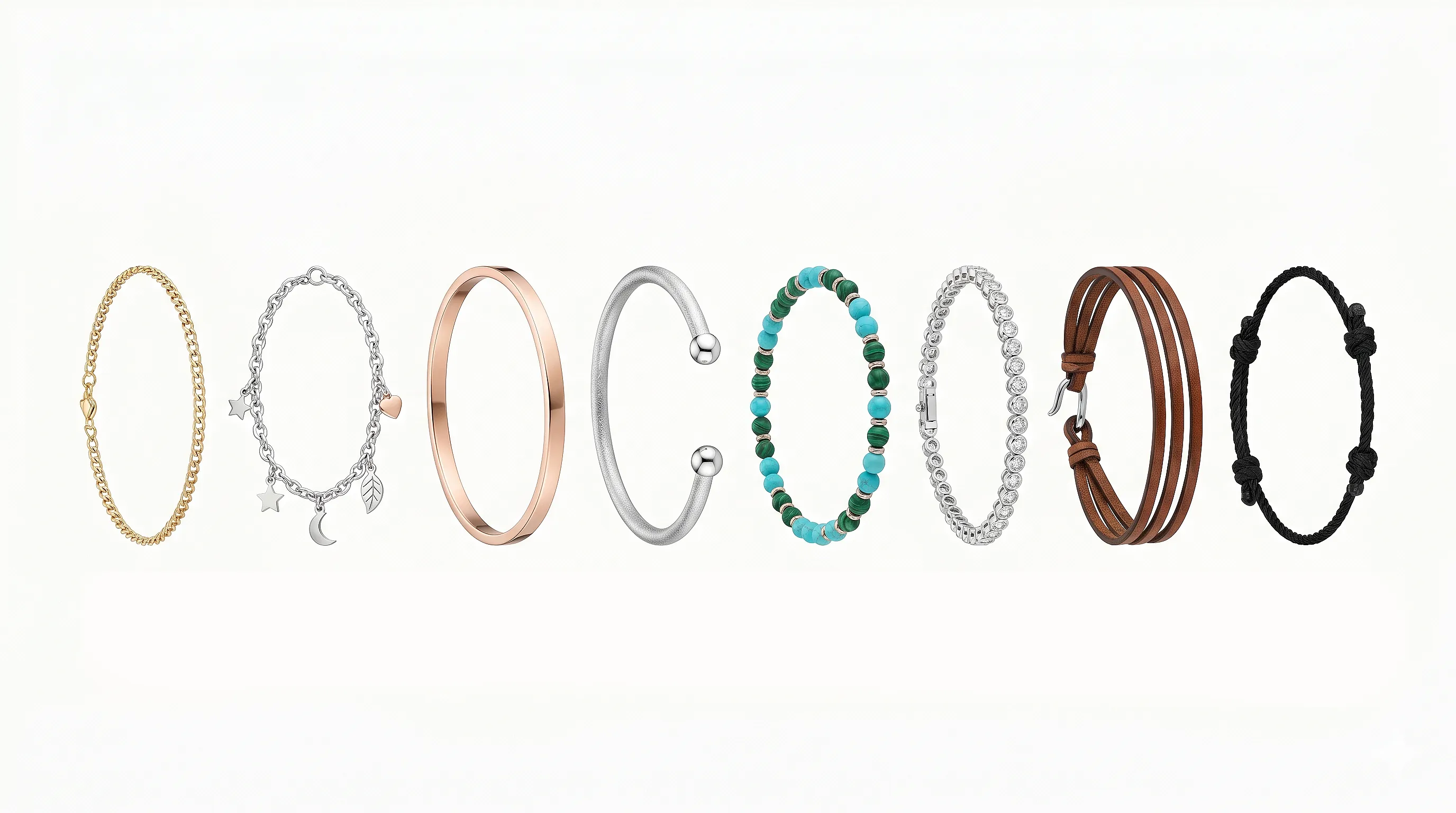
Cable chain
A fine, interlocking link chain in sterling silver or gold. The most versatile base: accepts charms with almost any ring size. Feminine with a few small charms, and it does not look overloaded even with ten. One risk: if the chain breaks, charms can be lost. Solution: small stopper rings between every three or four charms.
Curb chain
Flat, interlocking links that lie in a single plane. Reads heavier and more substantial than a cable chain, particularly in wider gauges. Works well as a base for fewer, larger charms. The format that reads most comfortably as a masculine style.
Bangle with hanging charms
A rigid ring, either solid or hinged, from which charms hang below. Usually they are fixed at intervals around the bangle and chime softly as the wearer moves. A classic from the 1950s. Requires a precise fit for the wrist.
Leather cord
A braided leather or waxed cotton cord with metal charms threaded or knotted on. Informal and seasonal. Less durable than metal (the cord wears), but atmospheric. Strong for summer and festival contexts.
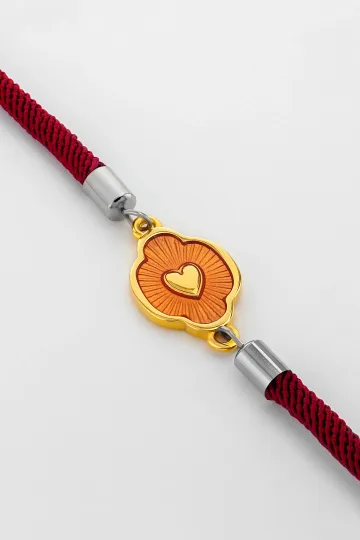
Silk cord with metal charms
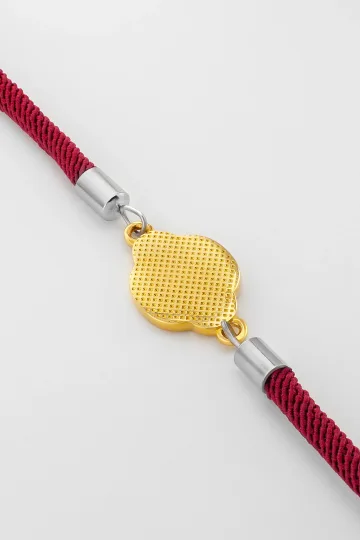
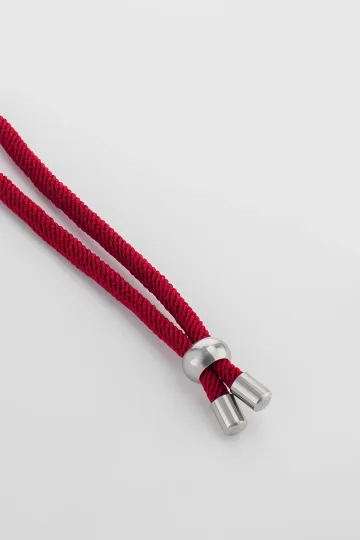
A knotted silk cord carrying a few metal charms is the lightest base of all, and the one that behaves least like jewellery. It sits soft against the skin, makes no sound, and takes no time to get used to, which makes it a good choice for anyone who finds a chain intrusive. Silk comes in every colour, so the cord itself becomes part of the design rather than a neutral support. The trade-off is lifespan: silk frays where it rubs against a cuff or a desk edge, and a cord worn daily wants replacing every year or two. Charms transfer to a fresh cord in minutes, so this is maintenance rather than loss, and many people treat the annual re-cording as a small ritual of taking stock of the collection.
Oxidised silver
Silver deliberately darkened with chemicals or patinated naturally to give an antique appearance. Excellent base for a vintage-style bracelet. The rule: do not polish oxidised silver to a shine. The darkness is the point.
Customer reviews
Zevira is a real jewellery shop. Genuine payments, deliveries and customer thank-yous.
🥰🥰🥰 gracias
Ok, ¡gracias! 🙂
Attaching and securing charms
The weakest point of any charm bracelet is the attachment. A charm that falls off is gone, and with it goes whatever the charm meant.
Jump rings. The most common attachment: a small open ring threaded through the charm's loop and onto the chain. Jump rings should be soldered closed after the charm is attached. An unsoldered jump ring can work open over time. Most professional jewellers will solder jump rings for a small fee.
Lobster clasps. More secure than a plain jump ring. The small spring-loaded clasp snaps shut over the chain link. Easy to add or remove charms without tools. The standard method for collections that the wearer wants to rearrange.
Fixed attachment. The charm is soldered permanently to the chain at the point of purchase. The most secure option. No risk of loss. The trade-off is that the charm cannot be moved to a different bracelet.
Stopper beads. On bead-system bracelets, rubber or metal stopper beads placed at intervals prevent all the charms from clustering at one point on the bracelet. On a classic chain, stopper rings serve the same function and also limit how far charms travel if the chain breaks.
Getting the ring size right. The attachment ring on a charm must be large enough to fit over the chain links, but not so large that it slides freely and causes the charm to flip. Test the attachment before wearing. A charm that spins freely will show the blank back, not the decorated front.
Chain types: the technical details
The chain you choose determines how the bracelet will look in a year, in five years, and in twenty. Here is what matters about each kind.
Trace or cable chain. Round or oval links alternating in two planes. This is the most common base for a classic charm bracelet, and it accepts the jump rings of almost any charm without fuss. Its weakness is structural: if one link fails, everything past the break can slide off at once. The preventative measure is simple, a stopper or a slightly heavier link every four or five charms, so that a failure loses one section rather than the whole story.
Belcher chain. Thin, flat, elongated links. It reads more delicately than trace and rings less as you move, which matters more than people expect on a bracelet worn to work. Light in weight, and best suited to a bracelet carrying a modest number of fine charms rather than a dense collection.
Curb chain. Flat twisted links lying in a single plane. It looks heavier and more substantial, and it has traditionally been read as a masculine format, though a fine-gauge curb is worn by anyone. This is the base for large charms and for a more assertive overall style, and it is also the strongest of the common patterns.
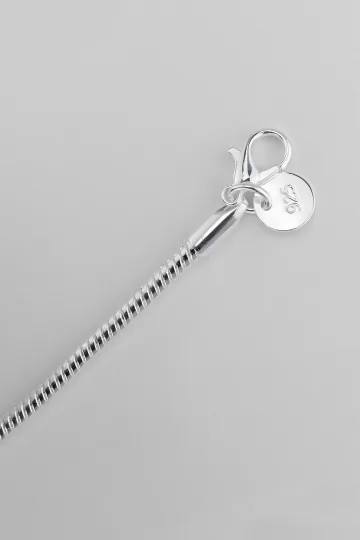
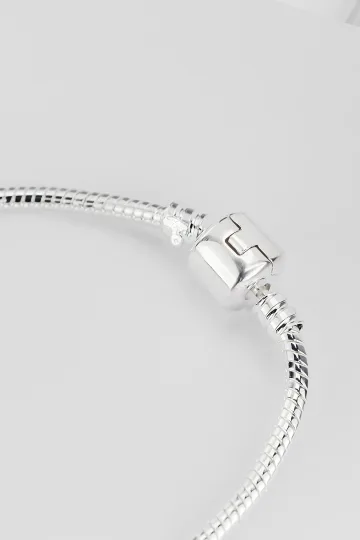
Snake chain. A smooth tubular chain with no visible links. Elegant, and it slides across the wrist almost silently. Its limitation is practical: charms can only be fixed at defined points where the tube is threaded or drilled, so the layout is decided by the chain rather than by you.
Ready-made against commissioned. Chain is sold by the metre in jewellery suppliers and can be cut and finished to any length. A bracelet made to order arrives at your measurement with the clasp already fitted. For a charm bracelet the made-to-order route is worth the wait, because the length needs to allow for the bulk that charms will add once the bracelet fills, and a chain that fitted perfectly when empty will be tight when it is full.
Chain material. Sterling silver for everyday wear, 14 or 18 carat gold for anyone who does not want to think about tarnish and expects to wear the bracelet for decades. A British-made chain carries a hallmark from one of the Assay Offices, London, Birmingham, Sheffield, or Edinburgh, and on a bracelet that will be handed on, that mark is part of the record. Mixing a silver chain with gold charms is entirely legitimate and can look very good, provided the contrast is clearly deliberate rather than accidental.
Upload a photo of your pet, someone you love, or an object. We'll build a 3D model and hand-cast it in pewter.



Materials for charms
Sterling silver (925)
The industry standard. Hard enough to hold detail, easy to engrave, widely compatible. Tarnishes without care but polishes back in minutes. Most charm makers work in 925, which means pieces from different sources will sit together on the same chain.
Gold-fill
A mechanically bonded layer of 14K or 18K gold over silver or copper. Significantly thicker than electroplated gold. Holds for years with normal use without flaking. A reasonable compromise between the cost of solid gold and the look of yellow metal.
14K or 18K solid gold
No tarnish, no maintenance. The right choice for charms intended to last decades and pass down. More expensive by a significant margin, but the calculation changes when you consider how long these pieces last.
Enamel
A glassy compound fused to metal at high temperature. Gives charms colour: red hearts, blue birds, green leaves. Enamel requires careful treatment: no abrasives, no ultrasonic cleaners, store separately to prevent chips.
Natural gemstones
Charms set with garnet, amethyst, pearl, opal, or birthstones. The irregularity of natural stones distinguishes them from synthetic equivalents. Birthstone charms are particularly valued as family pieces.
Engraving: when and how
The back of a charm is the ideal location for a personal inscription. Standard approaches:
- A child's name and date of birth
- The date of the event the charm commemorates
- Two sets of initials for a couple
- A single word associated with the moment
- Coordinates of a significant location (latitude and longitude)
Laser engraving is more precise than hand engraving, but hand engraving has more character and depth. For oxidised silver, laser engraving is particularly effective: it removes the darkened surface layer and leaves a bright contrasting mark.
Not all charms are suitable for engraving. Very thin pieces, heavily enamelled surfaces, and pieces set with stones across the back cannot be engraved. Check with the jeweller before purchasing if engraving is important to you.
The charm bracelet in Britain
Britain has a particular claim on this object, because more of its modern history happened here than anywhere else.
Birmingham made most of them. From the middle of the nineteenth century the Jewellery Quarter turned out silver charms by the hundred thousand: horseshoes, wishbones, black cats, lucky pigs, tiny articulated fish, miniature teapots with lids that opened. Small workshops specialised in single subjects and sold them on to the trade, which is why the same charm turns up on bracelets across generations and across the country. The Birmingham Assay Office marked them, and the date letters on a well-filled vintage bracelet often span forty or fifty years, which is a record of the owner's life written in hallmarks.
Seaside souvenirs. The rise of the railway holiday put a charm shop in every resort. A silver charm shaped like the pier, the lighthouse, or the town crest was the thing you brought home from Blackpool, Brighton, or Scarborough, and for a few generations that was how a British charm bracelet filled up. These are still the easiest vintage charms to find, and they carry a very specific kind of social history in them.
Wartime sweetheart charms. During both world wars, small charms in silver or in materials that came to hand were given between couples separated by service, sometimes made from cap badges or from scraps of aircraft aluminium. They are among the most affecting pieces in the whole tradition, and they explain a great deal about why the object still means what it means.
The twenty-first birthday key. For much of the twentieth century a silver charm bracelet was the standard gift to a British girl at a significant birthday, with a key charm marking the twenty-first. Charms were then added by relatives at each subsequent occasion, which turned the bracelet into a family project rather than a personal purchase. That habit is precisely what the current revival is reaching back towards.
The gap and the return. British charm bracelets thinned out in the 1980s and 1990s, when fashion moved to minimal chains and everything ornamental read as dated. Enormous numbers were broken for scrap during the high gold and silver prices of that period, which is why intact mid-century bracelets are now genuinely scarce. The ones that survived did so in the backs of drawers, and they are surfacing again at antiques fairs, at auction, and out of inherited jewellery boxes, usually with three or four charms missing and a story attached to each of the rest.
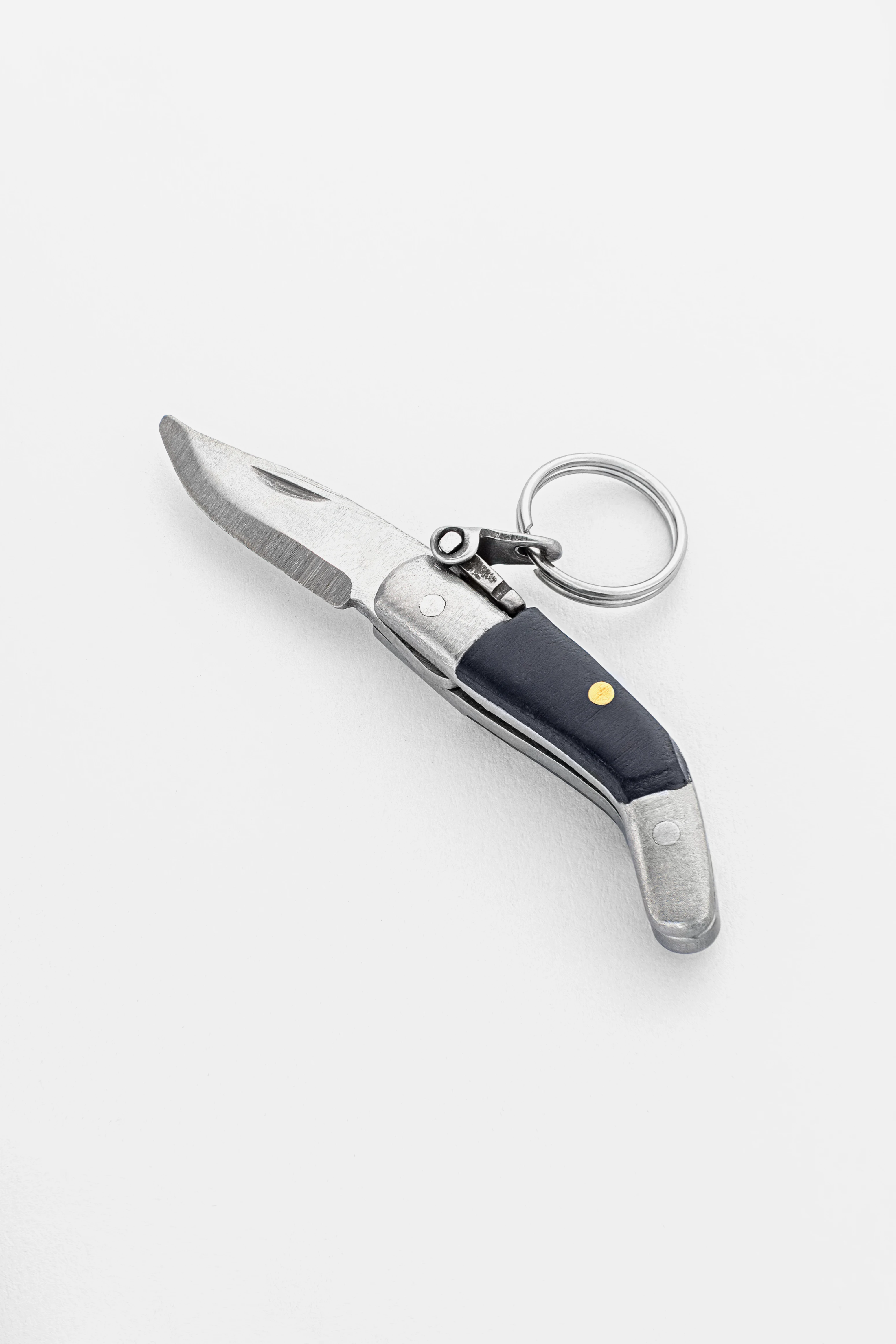
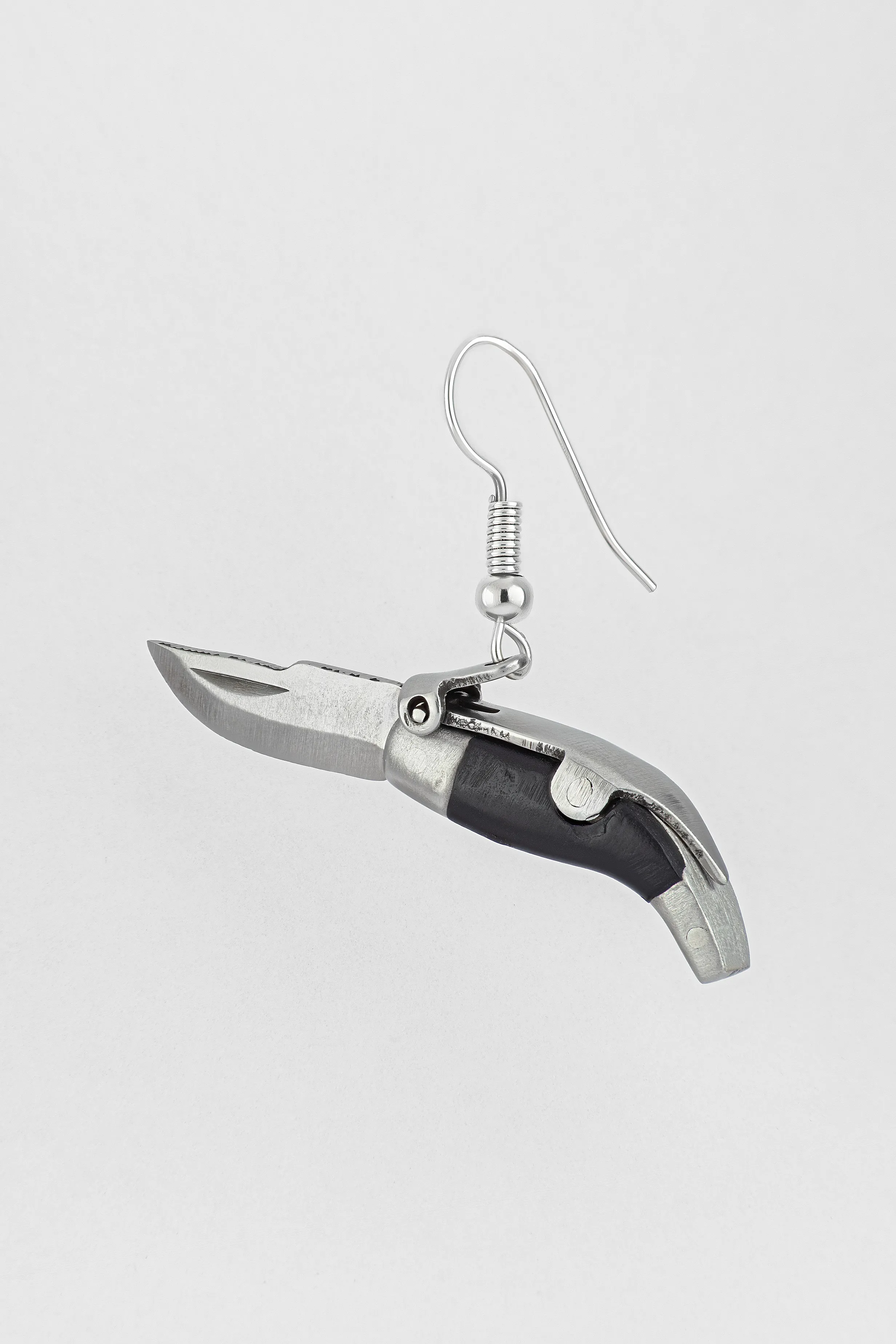
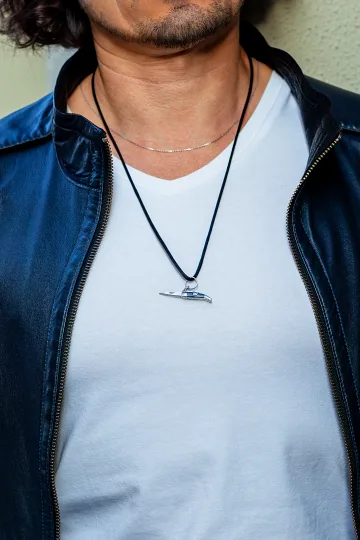
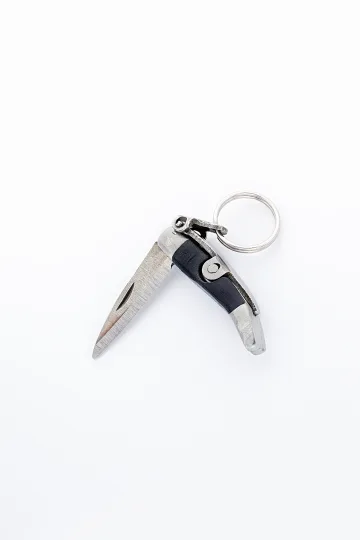
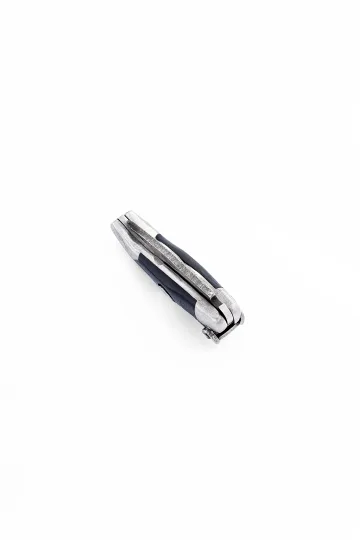
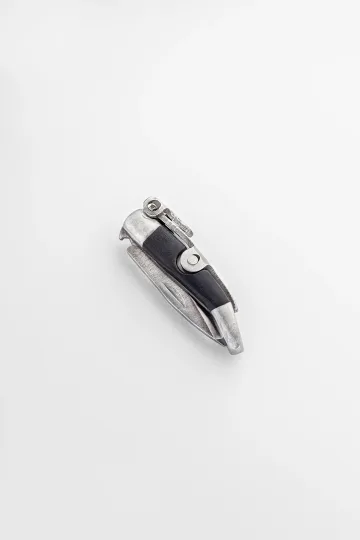
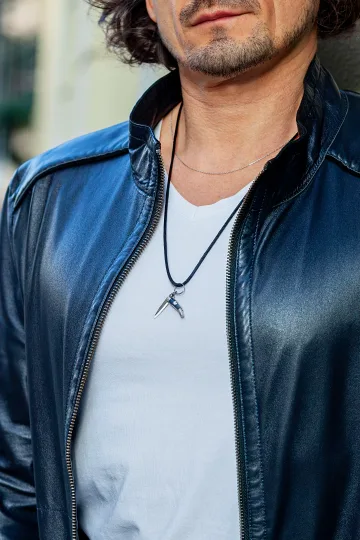
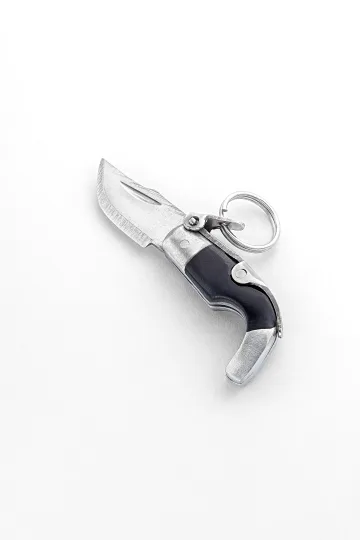
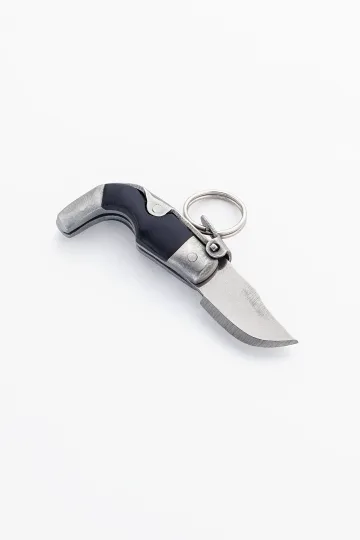
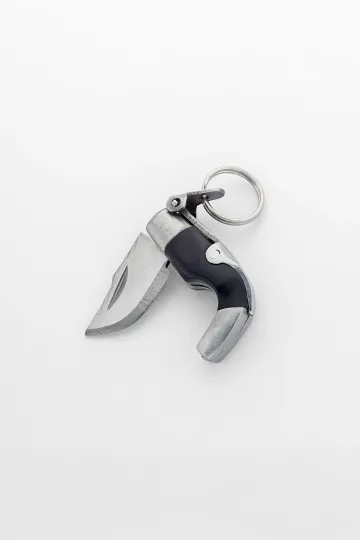
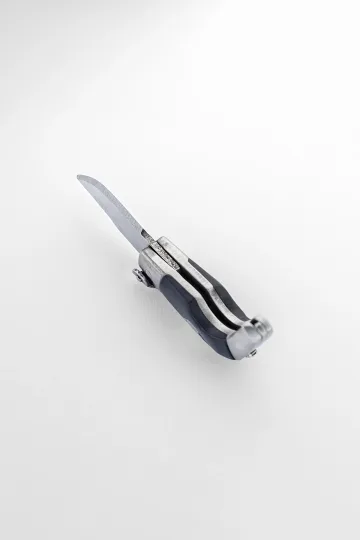
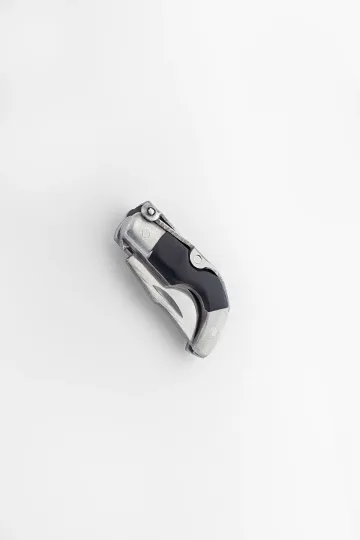
CAPAORA mini knife pendant
The 18th-century Spanish navaja in miniature: 40 mm of stainless steel, a real folding mechanism and a Palanquilla lock that clicks. An affordable gift to remember.
Authentic · Ships from Spain · 14-day returns
How to build your charm bracelet
There is no single correct approach. Most collectors find their own system through trial and experience, but these are the four main frameworks.
Chronological
Each charm marks a specific moment in time. You add it after the event. After ten years, the bracelet is a timeline. After twenty, it is a biography. The most emotionally loaded approach, and often the most meaningful to the person wearing it and to those who inherit it.
Thematic
All charms belong to one theme. All travel. All family. All hearts in different styles and periods. Visually coherent, easy to explain, satisfying to complete.
Aesthetic
The look matters as much as the meaning. All silver. All with natural stones. All from a particular period. Collectors who care about how things look together often gravitate here, and the bracelets they build have a gallery quality about them.
Hybrid
Most people do this. A core of meaningful charms, supplemented by things that are simply beautiful. It is the honest version.
Starting out: the first three to five charms
Do not try to build a "complete" bracelet at once. Buy a base chain and choose three to five charms representing things that have already happened.
Good starting points:
- An initial charm for your own name
- Your birth month gemstone
- Something from a significant journey
- A symbol of your main occupation or hobby
- A charm received from someone important to you
Let the bracelet grow from there. Each meaningful event earns a new charm. After a decade you will have a bracelet no stylist could have invented.
Leave your email, we'll send your discount code. No spam, unsubscribe anytime.
The code arrives by email, valid on your first order.
Charms as a storytelling gift across years
A charm bracelet is one of the few gifts that improves with time and repetition. A single charm given at a birthday or graduation is a beginning; a charm added each year for a decade is a relationship made visible.
The tradition of giving charms at specific occasions has a long history. Godparents who gave a silver charm at christening, grandparents who added a charm at each birthday, parents who marked graduation and marriage with pieces chosen specifically for the occasion. The charm did not need to be expensive. Its value was in the choosing.
A gift of a charm bracelet designed to grow over years works differently from most presents. It creates an occasion structure. Each birthday, each significant anniversary, each milestone is an opportunity to add to the record. The recipient ends up with an object that represents a sustained relationship with another person rather than a single gesture.
A few practical considerations for charm gifting: discuss the base bracelet early if possible, so that gifts from different people are compatible. Confirm the attachment ring size. And if the chain is a classic cable rather than a bead system, almost anything will fit. The most thoughtful charm gifts tend to be specific: a miniature of the city where the recipient went to college, a charm in the shape of their dog, a tiny book with the title of the novel that changed their life.
Consider the difference between a charm bought in an airport and a charm ordered from a small jeweller who will engrave it and ship it in a small box with a note. The physical quality of the presentation is part of the gift. A charm that arrives in decent packaging, with a receipt of authenticity and a note of its material content, is a serious object. A charm that arrives in a plastic bag is not, regardless of the sentiment behind it.
When building a bracelet for someone else over years, keep a record of what you have given. The record serves two purposes: it prevents repetition, and it eventually becomes part of the bracelet's documentation. A list of charms given, with dates and occasions, preserved alongside the bracelet, is the kind of thing that becomes unexpectedly precious forty years later.
Balancing a busy bracelet
A bracelet with many charms requires some management.
Weight distribution. Charms cluster at the bottom of the wrist under their own weight. On a cable chain, stopper rings between groups of charms spread the load and keep the heavier pieces from all migrating to the same point.
Mixing sizes. A bracelet with fifteen identical tiny charms reads as pattern rather than collection. Mix scales: one or two larger statement pieces, several medium charms, a few very small ones. The variation gives the eye somewhere to travel.
Metal consistency. A fully mixed-metal bracelet can work if it is done purposely. A bracelet that is mostly silver with one gold piece usually looks like an accident rather than a choice. If you want to mix, commit to it: an oxidised silver chain with both yellow gold and rose gold charms reads as a deliberate palette.
Negative space. A few empty links between charms is not a problem. The empty sections give the eye a rest and allow each charm to read separately rather than as part of an undifferentiated mass.
The heaviest charm. Whatever the heaviest charm is, it will define the bottom point of the bracelet. Place it at the centre if you want symmetry, or off-centre if you prefer an asymmetric arrangement.
How to wear it
Minimal
Three to five charms on a slender chain. Everything chosen with care, nothing extraneous. The approach that reads most clearly as adult and intentional. Works with formal dress as easily as weekend clothes.
Full
Ten to twenty charms. A dense, noisy, fascinating object. History visible from across the room. The right approach if you have been collecting for years and the density is earned.
Stacked
Two or three charm bracelets on one wrist. Each can have its own theme, or they can overlap. Layering looks work well with mixed metals and mixed periods.
Mixed with other pieces
Charm bracelet plus watch, plus a plain bangle, plus a beaded bracelet. The contemporary wrist stack approach. Works because the charm bracelet has enough detail to anchor the combination.
Where to find charms
Hunting for charms is a pleasure in its own right, and it is a large part of why the object holds people for decades.
Independent jewellers. Small studios and individual makers produce silver and gold charms that never appear in chain shops. Many work to commission: describe the symbol you want, supply a visual reference, and the maker will model and cast it. These pieces are almost always better finished than mass-produced charms, with cleaner detail and a properly soldered jump ring rather than an open one.
Antiques fairs and markets. Trays of jewellery at flea markets and antiques fairs frequently hold loose charms taken off broken bracelets. Victorian and Edwardian silver, enamel work from the 1950s, souvenir charms from resorts that no longer have piers: all of it is findable, and much of it goes cheaply if you know what you are looking at. The regular British fairs at Newark, Ardingly, and the London markets are the obvious hunting grounds, and dealers there will usually let you examine a piece with a loupe.
Inherited charms. Before buying anything, look through the family jewellery box. Loose lockets, small amulets, single earrings with a suitable form, and detached pendants can all go onto a new chain and carry an older story forward. This is the cheapest source and by a wide margin the most meaningful one.
Craft fairs and maker markets. Jewellery fairs where makers sell directly are good ground for unusual charms. You can talk to the person who made the piece, ask what the alloy is, and arrange engraving on the spot, none of which is possible through a website.
Charms bought where they belong. Museums, heritage sites, cathedrals, and national parks often sell their own miniature symbols. A charm bought at the place it depicts carries something the identical shape from an anonymous online shop does not, and it dates itself precisely in your memory because you know exactly when you were standing there.
Caring for a charm bracelet
A charm bracelet is more complex to care for than a plain ring or chain. Multiple moving parts, different materials, possible enamel.
Daily: remove before sport, swimming in the sea (salt water damages enamel and metal connections), and sleep.
Regularly: wipe with a soft, lint-free cloth to remove dust and body oils from the gaps between charms.
Deep clean for silver: soft toothbrush with a drop of dish soap, rinse in warm (not hot) water, dry thoroughly. For oxidised silver, rinse only. Do not polish.
Enamel: no abrasives, no ultrasonic cleaners. Store pieces so they do not knock against each other.
Natural stones: some are sensitive to soap and cleaning products. Pearl in particular should be wiped with a dry cloth only.
Storage: a fabric pouch or a box with individual compartments. Not loose with other jewellery; the hooks and rings snag and scratch.
Untangling: when charms are tangled around each other, lay the bracelet flat on a soft surface and work the knots out with a straight pin. Never pull against resistance; the wire of a jump ring can open under sharp lateral force.
Long-term maintenance: once a year, have a jeweller check that all jump rings are still closed, that lobster clasps are functional, and that any prong-set stones are secure. A missing stone or an open jump ring is easier to address when caught early.
Send a friend a discount code, they save on their first order.
Wearing it with other jewellery
A charm bracelet sits happily in a stack, but it needs some thought about what surrounds it.
With a watch. A charm bracelet and a watch on the same wrist works if there is space between them. Charms should not knock against the case as you move, both for the sound and for the scratches. Leave a gap of two or three centimetres, or move the watch to the other wrist and let the bracelet have the field to itself.
With other bracelets. The best neighbours are plain ones: fine bangles, a woven cord, a single strand of beads with no additional detail. They give a neutral ground against which the charms read clearly. Two elaborate bracelets on the same wrist cancel each other out, and the eye gives up on both.
With rings. One or two rings on the same hand complete the look. Avoid a large cocktail ring on the same side as a full charm bracelet: two complicated shapes within twenty centimetres of each other compete rather than cooperate.
Mixing metals. Mixed metals in a stack are fine and have been for years. The workable rule is that one metal leads and the others support. If the bracelet is silver, silver should dominate the wrist, with gold appearing as an accent rather than at parity.
With work clothes. A bracelet carrying three to five charms on a fine silver chain is entirely at home in a professional setting. The thing to manage is sound. A dozen small metal charms produce a constant quiet chime with every movement of the hand, which is charming at lunch and distracting in a meeting or on a call. If your working day involves a keyboard, keep the count low on weekdays and save the full bracelet for the evening.
Passing a charm bracelet down
A charm bracelet is one of the few pieces of jewellery that is genuinely better for being inherited. The charms accumulated by one generation sit alongside those added by the next. Victorian examples passed down continuously are among the most extraordinary pieces of personal jewellery in existence.
If you want a bracelet to pass on coherently, write down the meaning of each charm. Do not trust oral memory alone. A small notebook kept in the jewellery box alongside the bracelet will, forty years hence, be worth more than most things.
Consider photographing the bracelet and keeping the photo with the written record. A charm bracelet photographed flat against a white background with the charms spread and numbered is easy to cross-reference with a list. If any charms have been repaired, note the date and the repair.
The bracelet itself may need restoration before it passes down. Charms lose their gilding, chains develop weak links, clasps wear out. A jeweller who specialises in antique or estate jewellery can usually repair and restore a charm bracelet without losing its character. The goal is stability and wearability, not a return to mint condition.
Silver, gold, wedding rings, symbolic pieces and paired sets.
Who a charm bracelet suits
Collectors and souvenir keepers. The charm bracelet is the best format for collecting objects from places and moments. Nothing else does the same job as elegantly.
Those who mark occasions. If you have a ritual of acknowledging significant events, the bracelet is a physical record of that habit.
Mothers and daughters. A plain bracelet plus a first charm is a thoughtful gift at a daughter's graduation or the beginning of university. She continues building.
Grandparents. A charm for each grandchild, each birth year. The bracelet becomes a record of the family's expansion.
People in their late twenties and thirties. Currently the strongest demographic for the category. Old enough to have events worth marking, young enough to accumulate years of new charms ahead.
Those who like vintage. An antique charm bracelet, found in a market or inherited, offers pleasures that a new piece cannot replicate. Flea markets, estate sales, and specialist antique jewellery dealers turn up fine examples with some regularity.
The bracelet as autobiography: where to start
The commonest difficulty for anyone beginning a charm bracelet is not money or taste, it is the blank page. Here are several approaches that work in practice.
Start with three points. Where I came from, where I am, where I am going. The first charm stands for something in the past: a birthplace, a family connection, a childhood memory. The second is current: an occupation, a passion, the phase of life you are actually in. The third points forward, at a place you mean to see or a thing you mean to become. Three charms chosen that way already tell a story, and the bracelet has a shape from the first day.
Start with people. Gather charms representing the people who matter most: a partner's initial, a child's birthstone, a symbol tied to a parent. The bracelet acquires meaning immediately, because every time you glance down you are looking at the people you love rather than at a collection of small silver objects.
Start with one journey. If there is a trip that changed something, three or four charms connected to it can be the nucleus. Other journeys attach themselves over the years and the bracelet turns into a map of routes, which is one of the most satisfying forms this object takes.
Start with what you do. If there is an occupation or a pursuit that genuinely defines you, make it the theme of the first section. A book for a reader, a palette for a painter, a note for a musician, a trowel for a gardener. Other categories will arrive later and the original theme stays as the foundation, which gives the finished bracelet a centre of gravity.
Keep a record from the beginning. Put a small notebook next to the bracelet. Write down each charm as it arrives: what it is, who gave it or where it was bought, what occasion it marks. Ten years in, that notebook is worth something on its own, and if the bracelet is ever passed on it is the difference between an heirloom and a handful of unexplained silver.
How to choose a charm as a gift
Giving a charm is harder than it looks. A good one is not simply an attractive object; it requires that you know something specific about the person.
Find out about the bracelet first. If they already own one, establish what kind. A bead-system bracelet accepts only its own beads, while a classic chain accepts almost anything with a jump ring. Giving a charm that physically will not attach is an awkward moment for everyone, and it is entirely avoidable with one question to someone who has seen the bracelet.
Be specific. A heart charm is safe and anonymous. A charm shaped like their particular dog's breed, a miniature of the city where something happened to them, or their child's birthstone is a gift that demonstrates attention. The specificity is the present; the silver is just the medium.
Add an engraving. Most jewellers will engrave the reverse of a charm on request, and it takes very little time. A date, a name, a single word, a set of coordinates. Engraving converts a manufactured object into a unique one, and it is what makes a charm legible to the next generation.
Give it at the right moment. A charm works best when it arrives close to the event it marks. A charm for a new home given on moving day rather than six months later. A charm with a newborn's initial in the first weeks. The link between the symbol and the occasion needs to be immediate for the object to hold the memory.
Do not neglect the box. Presentation matters more than it should. A charm in a small box with a fabric bed, or in a leather envelope, reads as a serious object. The same charm in a padded mailing bag reads as a purchase. It costs almost nothing to get this right and it changes how the gift is received.
Buying it as a gift? Each one arrives ready to give.
 A branded Zevira box and a little card come with every order.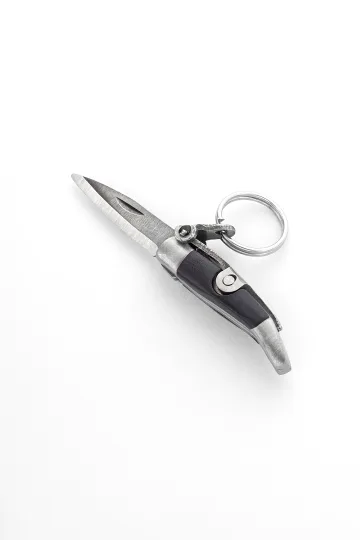




Frequently asked questions
How many charms is too many?
Five to fifteen is comfortable. Beyond twenty, a single bracelet can become heavy and tangled. Start a second bracelet rather than overloading the first.
Can you mix charms from different makers?
On a classic chain, yes. The only real constraint is the size of the attachment ring. Bead-system bracelets require charms made for that specific thread size; classic pendants do not fit them, and bead charms look awkward on a slender chain.
How much does it cost to start?
A plain sterling silver bracelet sits in the lower budget range. A first charm of modest size is similar. The start is not expensive; the point is that you add over time.
What bracelet size do I need?
Measure your wrist with a tape measure and add one to one and a half centimetres for comfort. For a wrist that will carry many charms, add slightly more; the extra weight of the charms pulls the bracelet down and slightly tightens the fit.
Does a charm bracelet suit men?
Less commonly worn by men, but not unusual. Heavier link chains with substantial charms read as a more masculine format. The tradition of military memorial bracelets made from found objects has its own history and precedent.
Can you wear it every day?
Yes. Charm bracelets are made for daily wear. Remove it for swimming in the sea (salt water and enamel do not get on), for contact sports, and overnight.
What if a charm is lost?
Part of the story is gone, which is melancholy, but the bracelet continues. Some people add a charm in memory of the lost one. Others simply note the gap and move on.
How do you care for a silver charm bracelet?
Polish with a soft cloth as needed. Avoid abrasive cleaners on pieces with enamel or set stones. Store in a fabric pouch or box to reduce tarnishing. Salt water, chlorine, and harsh chemicals are damaging.
Can you start at any age?
Completely. Start with charms representing things that have already happened: a degree, a child, a house, a significant journey. The bracelet catches up quickly.
Does it pass down through families?
The charm bracelet is one of the few pieces of jewellery that is genuinely better for being inherited. The charms accumulated by one generation sit alongside those added by the next. Victorian examples passed down continuously are among the most extraordinary pieces of personal jewellery in existence.
What does the current revival mean?
The trend is part of a broader interest in jewellery with emotional content and craft behind it. Fewer, more considered charms. Each one worth choosing.
How do I prevent charms from tangling?
Stopper rings or beads placed between groups of charms keep them separated and prevent the tangling that happens when charms swing freely past each other. Store the bracelet flat or in a soft compartment, never loose in a drawer with other pieces.
Can I commission a custom charm?
Yes. Independent jewellers and small studios will cast almost any shape in sterling silver or gold. Expect longer lead times for custom work, and provide as much visual reference as possible. A miniature of a specific building, a pet's silhouette, or a symbol with personal meaning are all achievable. Hand-engraving on the back adds another layer of specificity.
How should I store a charm bracelet long-term?
A fabric-lined box with a separate compartment is ideal. If the bracelet is being stored for more than a few months, place it inside a small zip-lock bag with an anti-tarnish strip before putting it in the box. The anti-tarnish strip absorbs the airborne sulphur compounds that cause silver to blacken. Replace the strip annually if storage is ongoing.
What is the difference between a charm and a pendant?
The terms are sometimes used interchangeably. Technically, a pendant is a single decorative piece worn on a necklace chain; a charm is a piece designed to hang from a bracelet, often with a small loop or ring specifically sized for bracelet chain links. In practice, many pieces work as either, and the distinction matters less than whether the attachment ring fits the bracelet you have chosen.
Is yellow gold or rose gold better for charms?
Both are equally durable in 14K or 18K. Yellow gold has more historical precedent for the charm bracelet format, particularly for Victorian and mid-century style bracelets. Rose gold reads as warmer and more contemporary. Either can anchor a bracelet effectively; the choice is personal. If you are mixing metals deliberately, having both yellow and rose gold charms on an oxidised silver chain is a coherent approach.
How do I tell a genuine antique charm from a reproduction?
Start with the hallmark. A British silver charm of any real age carries a set of marks, and even a worn one usually shows enough to read a standard mark and an assay office town mark; the date letter tells you the year it was assayed. Reproductions either carry no marks at all, or carry a modern "925" stamp, which is a fineness mark used internationally rather than a British hallmark. Then look at the wear. A charm that has hung on a wrist for fifty years is worn smoothly on the side that faced outward and around the jump ring, where the metal thins from constant movement; artificial ageing produces even darkening in the recesses with no corresponding wear pattern. Check the construction too: older charms were often assembled from soldered parts and show fine seams, while a cast reproduction is one solid piece with a slightly soft, rounded quality to the detail. If a dealer will not let you look under a loupe, that answers the question by itself.
What do I do with a bracelet I have stopped liking?
This happens, and it is not a failure. First, separate the two possible problems: you may dislike the bracelet or you may dislike a few of the charms. In the second case, remove the ones that no longer fit and put them in a box rather than discarding them, since taste returns and so do circumstances. If it is the base you have grown tired of, the charms can move to a new chain in an afternoon, and a different chain style changes the character of the whole thing completely. If the collection genuinely belongs to a version of your life that is over, consider passing it on intact to someone in the family who will read it as history rather than breaking it up. Melting a full bracelet for the metal is the one option that cannot be undone, and a great many mid-century British bracelets were lost exactly that way in the 1980s.
Conclusion
A charm bracelet is not a static object. It is a record that grows with you. Every piece of jewellery marks a moment: a ring for a wedding, a pendant for a birthday. Only the charm bracelet accumulates moments as its function, building into something that is genuinely irreplaceable by the time it has been worn for a decade.
Start with a plain silver bracelet and one charm that means something. Let the rest follow.
About Zevira
Zevira makes jewellery in the artisan tradition of Albacete, Spain. Charm bracelets are a dedicated strand of our work: we make both the base bracelet and individual charms that can be added gradually over the years.
What Zevira makes for charm bracelets:
- Base bracelets with charm attachments, in sterling silver and 14-18K gold
- Bespoke charms to commission (a place, a symbol, an initial)
- Birthstone charms for each child or family member
- Classic symbolic charms: anchor, heart, key, star
- Paired charms for mother and child, or two partners
- Sterling 925 and 14-18K gold, compatible with charms from other makers
Every piece can be personalised with engraving, with the option of personal engraving.