Asymmetric Earrings: How to Wear Mismatched Pairs with Intention
The rule that stopped being a rule
Ten years ago, wearing a small hoop in one ear and a long drop in the other would have earned you a quiet word from a colleague: "Your earrings are different." Today you answer before they finish the sentence: "Yes, deliberately." That shift is not trivial.
Asymmetric earrings, or mismatched earrings as they are widely called in American jewellery conversation, represent one of the clearest signals that jewellery dressing has changed in the past decade. What was once read as a mistake is now read as a considered choice. Designers produce collections built around the mismatch. Independent jewellery studios from Brooklyn to Austin sell single earrings, not pairs. Customers mix a pearl stud with a long chain drop as naturally as they mix metals.
If you have a single earring sitting in a box at home, one that lost its pair somewhere between a night out and a cab home, that is not a problem. It is the beginning of a combination.
The shift is not just aesthetic. It reflects a broader change in how people relate to personal style: less adherence to inherited rules, more attention to what actually works for a specific person. Asymmetric earrings are a small but readable example of that.
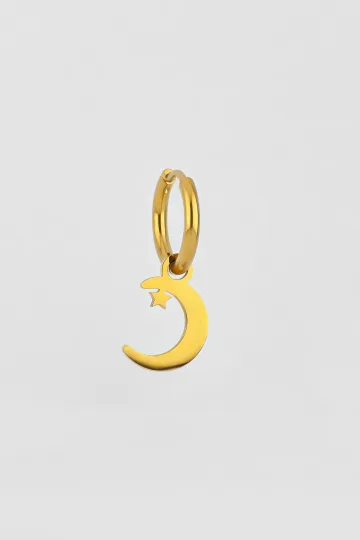
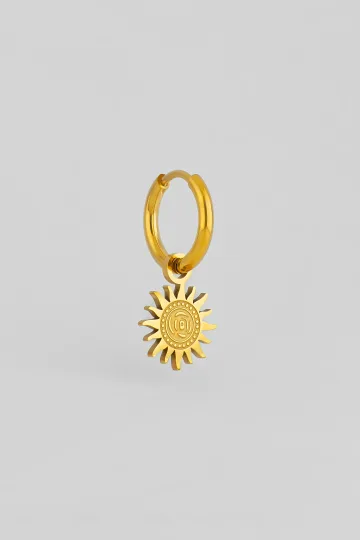
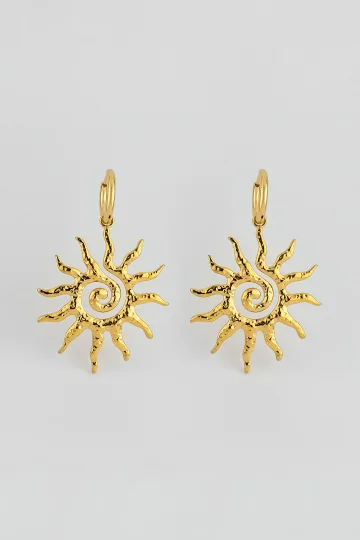
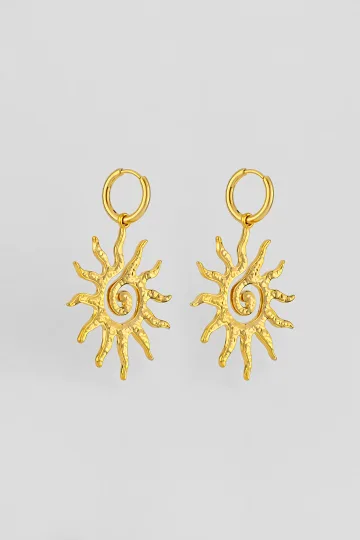
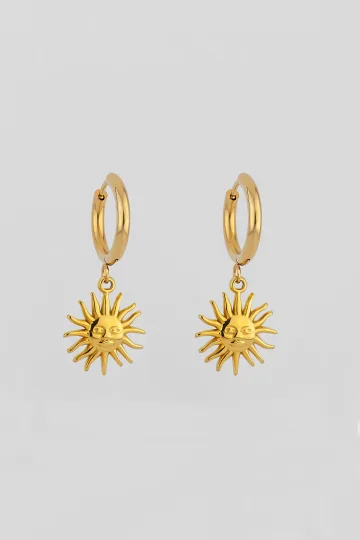
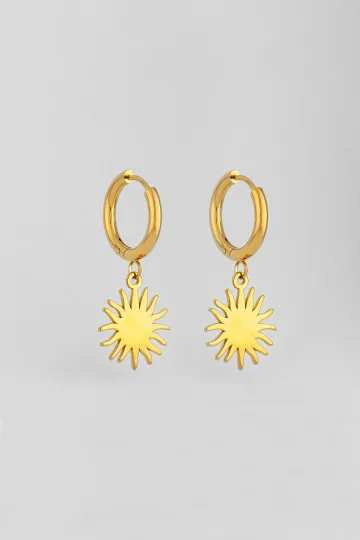
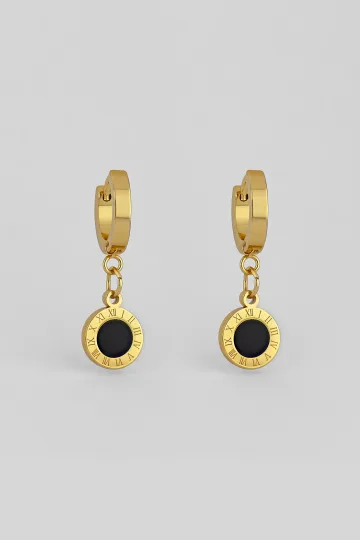
Wear the symbol, don't just read about it. These are in stock:


What asymmetric earrings actually are
Two different earrings, worn as a pair. That sentence covers a wider range than it first suggests.
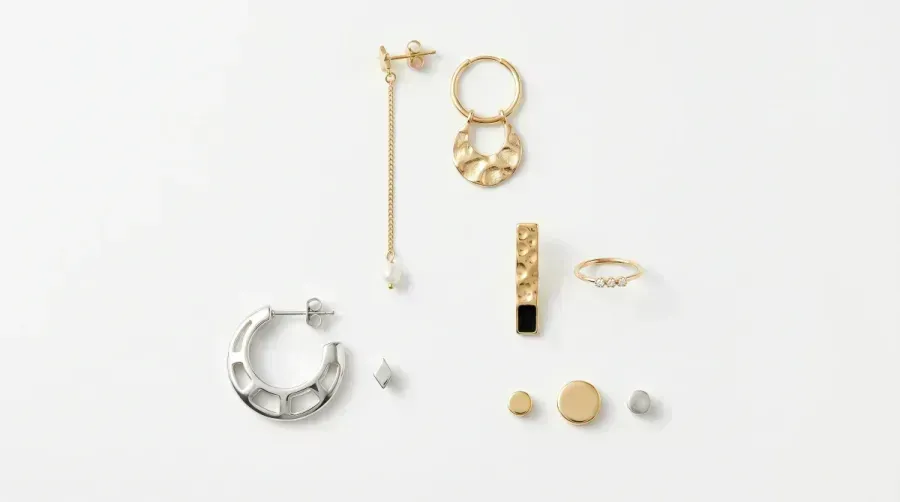
Full asymmetry. Size, shape, colour and material are all different between the two ears. A small gold stud in one, a long silver chain drop in the other. Maximum contrast, maximum intention.
Partial asymmetry. Both earrings share a style or theme, but one detail differs. Two hoops, but one carries a charm and the other does not. Two floral studs, but the stone colours are different. The earrings are clearly related; the difference is deliberate rather than dramatic.
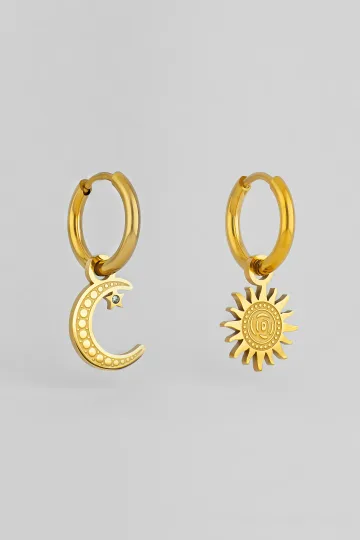
Thematic pairs. Two earrings connected by subject rather than identical form. Sun and moon. Anchor and compass. Chess pawn and queen. Key and lock. The pieces look different but tell a single story worn together. Neither earring is complete without the other.
Multi-piercing compositions. If you have more than one piercing per ear, the asymmetry runs within a single ear rather than between two. Three different studs up one side, a single piece on the other. This is common in Brooklyn and East Austin street style and increasingly adopted by people who would not have described themselves as experimental a few years ago.
Mirror asymmetry. Both earrings carry the same image but reversed. A waxing moon and a waning moon. A bird with wings open and a bird with wings closed. On first glance they seem identical; on closer inspection they are reflections. This is the subtlest form, for people who prefer a quiet difference over a loud one.
A note on the single earring. Asymmetric earrings are a pair where both ears are decorated differently. A single earring worn in one ear only, with the other ear bare, is a separate trend with its own logic. Both exist; they are not the same thing.
The big drop on the ear you show, the stud under your hair. A matching pair is for people who fear the mirror.
How to wear asymmetric earrings
I put mismatched pairs together by the occasion and the face, not by a rulebook. Here is what actually holds a look, sorted by situation.
What do I wear asymmetric earrings with every day? For daily wear I recommend a subtle mismatch: a small stud in one ear, a slim hoop in the other, one metal across both. Keep the top plain, a tee or a soft knit, and the neckline round or boat so the ears and neck stay open. Tuck the hair behind one ear and the asymmetry shows on its own.
Is it right for the office? Yes, as long as you keep it restrained. I build the pair from two similar studs with stones in close tones, one metal. With a white shirt or a clean knit it reads as a considered choice, not an accident. A high neck asks for short earrings, an open one allows a single long drop.
How do I build an evening look? For evening I choose contrast: a long stone drop on one side, a quiet partner on the other. Open the side where the large earring hangs by tucking the hair or gathering it up. I recommend a plain dark background, a dress or a silk blouse with a V-neck. Let one thing carry the colour, the earrings or the clothes, never both at once.
What do I wear for a big occasion? For a wedding, a celebration or a shoot I choose a themed pair in gold: sun and moon, initials, two linked ideas. Solid metal and a restrained look around it make the pair feel formal without any effort.
Who does asymmetry suit most? Anyone who likes detail and is easy about attention. Two rules that never fail. First, start with length, small plus long registers instantly. Second, keep one metal in the look until you are used to mixing them.

Turn on your camera, pick earrings, a pendant or a ring, and see the piece on yourself in real time.
Switch items in one tap.
Everything runs in your browser: no photo or video is ever uploaded.
Where the trend came from
The mismatched earring is not a new idea, but it has taken decades to move from counterculture to common currency.
1937: Schiaparelli and surrealism
The first deliberate use of jewellery asymmetry as a design principle appears in the work of Elsa Schiaparelli, the Italian designer who worked in Paris during the 1930s and collaborated closely with surrealist artists. Her 1937 collections included earrings that did not match by design: one might depict an open hand, the other a closed fist. The logic was surrealist. Schiaparelli used non-matching as an artistic statement, not a mistake. Earlier in her career she had sewn mismatched buttons onto garments intentionally. Asymmetry was a running method in her work, not an accident. The idea was ahead of its time by about eighty years.
Understanding the context matters: Schiaparelli was working in Paris at the height of surrealism, collaborating with artists for whom disrupting expected order was the point. Mismatched earrings were not a quirk; they were a logical extension of a broader artistic position.
1950s: one earring in public
In American cinema of the 1950s, a small number of performers began appearing publicly with a single earring in one ear. It was not yet a trend, but it was a readable gesture: individual marking outside social convention. The single earring as intention rather than belonging. This aesthetic grew louder in the following decade.
1980s: post-punk and one-sided dressing
In the post-punk aesthetic of the early 1980s, women in the music and art scenes wore mismatched jewellery as a deliberate rejection of conventional dressing. The signals were confrontational. One ear loaded with multiple pieces, the other bare. One heavy ring, one tiny stud. The asymmetry was the message. New York's Lower East Side and the East Village were particular centres of this, as they had been for most countercultural movements of the era.
The asymmetry of this period was political before it was aesthetic. It was a refusal, not a style choice. What happened in the decades since is remarkable: the same visual gesture became neutral enough to wear to a client meeting.
1990s: grunge and the alternative scene
The alternative scenes of the 1990s adopted the mismatch more quietly. A different small hoop on each ear, a stud on one side and a dangling piece on the other. This was not a fashion statement so much as a refusal to treat getting dressed as a matching exercise. Seattle's music scene, New York's indie circuit, Chicago's art community. It remained niche throughout the decade.
2000s: the symmetry decade
The early 2000s were dominated by perfectly matched sets. Anything asymmetric read as oversight. If you came to work with different earrings in most American offices, someone assumed you had dressed in a hurry.
2010s: independent designers and social media
The shift came through Instagram and the rise of independent jewellery makers. Small studios in Brooklyn, Portland, and Los Angeles began releasing intentionally mismatched collections. Customers could buy individual pieces rather than pairs. The styling decision became available to anyone without specialist knowledge, and photographs of real people wearing mismatched earrings spread faster than any editorial.
Etsy and similar platforms were critical here. They allowed micro-scale jewellers to reach buyers directly and allowed buyers to purchase single pieces from different makers and combine them. The barrier to trying asymmetry dropped to almost zero.
2014-2016: the first mainstream wave
Major retailers caught on. Mismatched earring sets appeared in chain stores from coast to coast. They were positioned as a trend item, which at that point they still were. The concept had a name on a tag in a mall store, which is when you know a trend has become something more.
2018 onwards: settled territory
Premium jewellery moved in. Several design studios released asymmetric collections at the higher end of the market. This gave the trend the endorsement it needed to move from trend to permanent category. By the mid-2020s, mismatched earrings are a standard category in any jewellery retailer from a boutique in Nolita to a department store in Chicago. Not a trend section, just a section.
2024-2026: what is happening now
Several directions that have become more visible in the last two years.
Ear cuff combined with stud. One ear with a cuff (no piercing needed), the other with a conventional stud in a piercing. Different wearing techniques on the same face. This is a further extension of the asymmetry idea: it is not just about what the earring looks like, but how it attaches.
Long drop and tiny stud. One long drop on one side, a barely-there stud on the other. Maximum contrast with minimal components. This combination is accessible for everyday wear and adapts easily to professional settings.
Colour blocking. One earring in one stone colour, the other in a completely different one. Blue sapphire and red garnet. Green malachite and white moonstone. This requires a quiet outfit to balance it.
Texture contrast. One piece with a smooth finish, the other hammered or matte. Same basic form, different surface character. This is subtle enough for most environments.
Mixed metals as a deliberate strategy. Silver on one side, gold on the other, same earring type. What once read as an error is now a recognised design decision.
The main types of asymmetry
Several approaches work reliably. Each creates a different visual effect.
Size: small meets large
One minimal earring, one statement piece. A tiny diamond-set stud in one ear, a long chain drop in the other. The eye moves from the larger piece to the smaller and understands the intent at once.
This is the most accessible starting point because it is the most readable. Nobody looks at a small stud and a long drop and assumes carelessness.
A second layer: if the small earring shares one element with the large one (same stone, same metal, same motif), the connection between the two becomes visible. That transforms "just different" into "clearly a pair."
Same shape, different size
Two earrings of the same type, one noticeably larger. Two hoops, but clearly different diameters. Two studs with the same stone, but one substantially bigger. The difference needs to be obvious: if the size variation is subtle, it reads as mismatch in the negative sense rather than the intentional one.
This type works particularly well with hoops. A thin small hoop on one side, a slightly wider and larger one on the other. Both gold, both simple. Nobody mistakes this for a lost pair.
Same family, different stones
Earrings of the same design but with different stones. A sapphire stud in one ear, an emerald stud in the other. One clear stone, one coloured one. This is the quietest form of asymmetry, suitable for those who want variation without drama.
Works well for daily wear: enough difference to signal intention, enough similarity to read as coherent.
Same metal, different motifs
Both earrings in the same metal, silver or gold, but with different shapes or imagery. Sun and moon. Day and night. Flower and leaf. Pawn and queen. Key and lock. Anchor and compass. This reads as a thematic pair: not just different, but telling a story together.
Take it further: fork and spoon (with some humour), compass and anchor (the journey and the destination), alpha and omega (beginning and end). Each combination carries its own small meaning.
Mirror images: reflected opposites
Two earrings with the same motif but reversed. A fish facing left and a fish facing right. A bird with raised wings and a bird with folded wings. On first glance almost identical; on a second look, a mirror. This is the subtlest asymmetry, for people who prefer a difference that needs to be found rather than announced.
Narrative in two parts
One earring signals a beginning, the other an end. Seed and tree. Sunrise and sunset. Period and comma. Anchor and sail. This is a narrative approach to jewellery. The earrings are no longer just decoration; they are a small statement about how you see things.
Statement with minimal
One barely-there earring, one that commands attention. A fine gold thread in one ear, a structured drop with a stone cluster in the other. The contrast is sharpest here. The approach works best when the two pieces share at least one material or finish.
With maximum contrast, a quiet outfit is important. The statement earring carries the look. Let it.
Stacked composition
For multiple piercings in one ear: three or four pieces on one side, a single clean stud on the other. The complexity is all on one side, which makes the overall effect more controlled than chaotic. The key to making this work is consistency on the loaded side: same metal throughout, related styles. Different stones and forms are fine, but they need to speak the same visual language.
How to style the look
With a pixie cut or short hair
Short hair is the ideal setting for asymmetric earrings. Both ears are visible simultaneously. You can push the contrast as far as you like: the look has room to show both pieces at once without competition.
With short hair, both earrings are always on display. Choose pieces that work from all angles.
With long hair worn down
Long hair requires thought. It can conceal the earring on one side entirely. The longer or more complex earring typically works better on the side you habitually tuck your hair behind. The smaller piece goes on the other side; it will be half-hidden, but the glimpse reads as part of the look rather than as absence.
The tucking technique: deliberately tuck the hair behind one ear, revealing the more elaborate piece. This frames the asymmetry and makes it readable.
A reliable formula for long hair: long drop on the visible side, small stud on the tucked side. Only one earring is fully visible, but the second one is implied by its pair.
With an updo or pulled back
A bun or updo reveals both ears and makes the earrings the dominant feature of the look. Multi-piercing compositions work particularly well here, as the full stack is visible without hair interference. A clean updo with a complex multi-piece arrangement on one ear and a single simple stud on the other is a strong combination.
With a half-up style
One side pulled back, the other down. The hairstyle is already asymmetric. The earrings support that. The larger or more elaborate earring works on the pulled-back side where it is visible; the smaller one on the down side, where it can be half-hidden. Two systems of asymmetry working in the same direction.
With a bob or chin-length cut
Hair covers the ear partially. A stud stands out from under the hairline; a long drop hangs visibly below it. This is a good format for the classic stud-plus-drop pair: both elements are in frame, each in its own way.
Asymmetry and face shape
This is a topic that often gets overcomplicated. Short version: face shape affects which earrings work best visually, but asymmetry itself is not off-limits for any face shape.
Round face. Longer drops add visual length. In an asymmetric pair, a long earring on one side and a small stud on the other creates an interesting balance, drawing the eye downward on one side.
Angular face. Rounded and curved forms soften edges. Hoops, arcs, organic shapes. One small hoop and one drop with a rounded motif (flower, teardrop) is a useful combination.
Heart-shaped face. Wide forehead, narrower chin. Drops and pendants that widen the lower third of the face visually work well.
The honest truth: these are general guidelines, not rules. Asymmetric earrings draw attention to the ears and jaw area, which redistributes attention regardless of face shape. A lot depends on the specific earrings and the specific person.
Customer reviews
Zevira is a real jewellery shop. Genuine payments, deliveries and customer thank-yous.
🥰🥰🥰 gracias
Ok, ¡gracias! 🙂
Materials
925 sterling silver. The versatile base. Works across most skin tones, low allergen risk for most people, pairs well with itself or with gold pieces in a mixed combination. Standard choice for everyday wear.
14K gold-fill on silver. Warmer tone, closer to classic gold. More durable than simple gold plating and a good middle option between price and appearance.
Surgical steel 316L. For sensitive skin or fresh piercings. Hypoallergenic and robust. A practical choice when one ear has a recent piercing and the other has an older one.
Solid 14K gold. A long-term piece. Does not tarnish, holds up through regular wear. If you are choosing a thematic pair like sun and moon, solid 14K in both is a purchase that lasts years.
PVD steel. Black, rose gold tone, bronze. More durable coating than standard plating. A good choice for darker, more angular styling.
Mixed metals. Silver on one side, gold on the other. This has been a normal part of American jewellery dressing for several years. No explanation required.
Coloured stone accents. Amethyst, lapis lazuli, malachite, garnet, onyx. Each changes the temperature of the piece. Cool stones (blue, green) work naturally with silver; warm stones (red, amber) pair with gold; black onyx bridges both.
Where to find mismatched earrings
Ready-made mismatch sets. A designer has already composed the pair, for example sun and moon, or anchor and compass. The simplest entry: buy and wear. No decisions, just picking the right pair.
Two different singles. Many independent jewellers sell earrings individually rather than only in pairs. Pick one from one design, one from another, combine them yourself. This takes more thought but produces a combination that is entirely your own.
From what you already have. A single earring in a box plus a new earring that works with it. The most personal option: the combination carries a history.
Independent jewellers at markets. Farmers markets and craft fairs in most American cities now have jewellery makers who sell singles. Brooklyn Flea, Portland Saturday Market, the farmer's market circuit in Austin. Jewellers at these events are often willing to sell one piece from a collection rather than only a pair.
Custom order from a small studio. Some studios will make a single earring to pair with something you already own, or adjust an existing design slightly. Not available everywhere, but worth asking.
Who this works for
People in creative professions. Designers, writers, art directors, musicians, architects, people in advertising and media. An asymmetric earring signals that you think about how you put things together. It is a small but readable signal.
Anyone with a single earring they have stopped looking for the pair to. Stop looking. Find something that contrasts and wear it.
Anyone who finds conventional matched sets boring. If you have been wearing earrings for years and matched pairs have lost their interest, asymmetry gives you a new range of combinations without requiring a full new purchase.
Younger adults experimenting with jewellery. Low cost of entry, easy to reverse if it does not work.
Brides who want something other than the traditional. A thematic pair worn on a wedding day has become a real option in contemporary American wedding styling. Initials, symbolic pairs, day and night sets. The choice carries meaning when both earrings refer to something specific about the couple.
Friends, sisters, mother and daughter. Each person wears one earring from the pair. The set is split between two people and makes sense only when they are together. This is a long-standing practice: dividing a pair of jewellery between two people as a sign of closeness.
Upload a photo of your pet, someone you love, or an object. We'll build a 3D model and hand-cast it in pewter.



Symbolism in themed pairs: what the two sides say
If you go for a themed pair rather than a purely visual one, it helps to know what the motifs have traditionally carried. None of this is an obligation. Earrings are allowed to be two attractive objects with no argument between them. But when the meaning matters, here is the short version.
Sun and moon. The most common themed pair by a wide margin. Straightforward dualism: day and night, warmth and coolness, the two halves of a cycle that only makes sense together. It reads as a statement about a relationship if you want it to, and as a pleasant piece of sky if you do not.
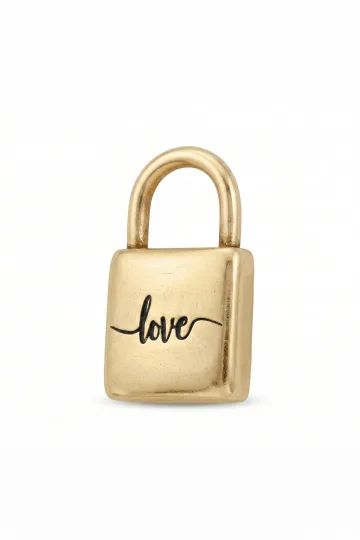
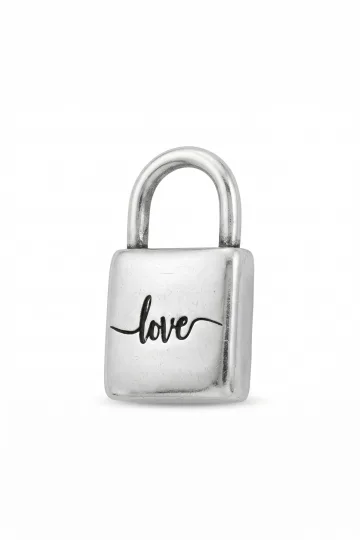
Key and lock. Trust, access, something kept and something opened. Split between two people it is almost too legible. Worn by one person it becomes quieter and more interesting: the tension between the part of a life that is open and the part that is not.
Anchor and sail. Movement and rest, leaving and coming back. For anyone whose life has actually been organised around departures, sailing, service at sea, a job that moves them, this pair says something specific rather than decorative.
Pawn and queen. Potential and its arrival. The beginning and the end of the same journey across a board. Read plainly, it is quiet strength beside declared strength, and it suits people who dislike anything that looks like a slogan.
Star and moon. The evening sky version of sun and moon, softer because the two objects belong to the same half of the day. Less polarised, easier to wear with a formal outfit, and the pair most often chosen by people who want a theme without a thesis.
Initials. The most personal option and the one that needs no explanation to anybody except the wearer. Your own initials, someone else's, two letters that mean something for a reason nobody has to hear.
Flower and leaf, or bud and bloom. Growth, season, the same plant at two points in its life. This is the pair for people who want a natural motif with no mystical freight attached to it.
A theme is an extra layer, never a requirement. The meaning turns up when you put it there, and a pair chosen purely because both pieces looked right is not a lesser pair.
Building the whole look: how asymmetric earrings fit into an outfit
Asymmetric earrings work best when the rest of the outfit is considered alongside them. A few principles for thinking about the overall picture.
The single focal point rule. In a well-composed outfit, there is one main focal point and everything else supports it. If the focal point is the earrings, then the clothing, shoes, bag and other jewellery function as background. Asymmetric earrings are particularly good as a focal point because they already draw the eye twice, once to each earring.
Clothing. Solid colours without a strong print work best alongside asymmetric earrings. The earrings already create visual interest; the clothing does not need to add more. A white shirt, a black dress, a plain sweater: these create a clean background on which the earrings read clearly.
Prints. A small, calm print (fine stripe, small dot, quiet geometric) generally does not compete with earrings. A large, bold print competes: the eye does not know where to go.
Neckline. Earrings and neckline are connected. A deep neckline with long earrings works when one side of the neck is exposed. A high neckline with long earrings creates density. With a high collar, studs or short earrings are usually the better choice.
Clothing volume. A voluminous upper body (wide shoulders, oversized sweater) with large earrings creates too much presence at the top. Either clothing volume or statement earrings, not both. Otherwise the look loses balance.
Hair. As mentioned earlier, the hairstyle changes everything. The same outfit with loose and pulled-back hair tells fundamentally different stories. Asymmetric earrings with hair pulled high have a theatrical quality. The same earrings with a loose bun have something more personal and unstudied about them. The hairstyle choice is half the look.
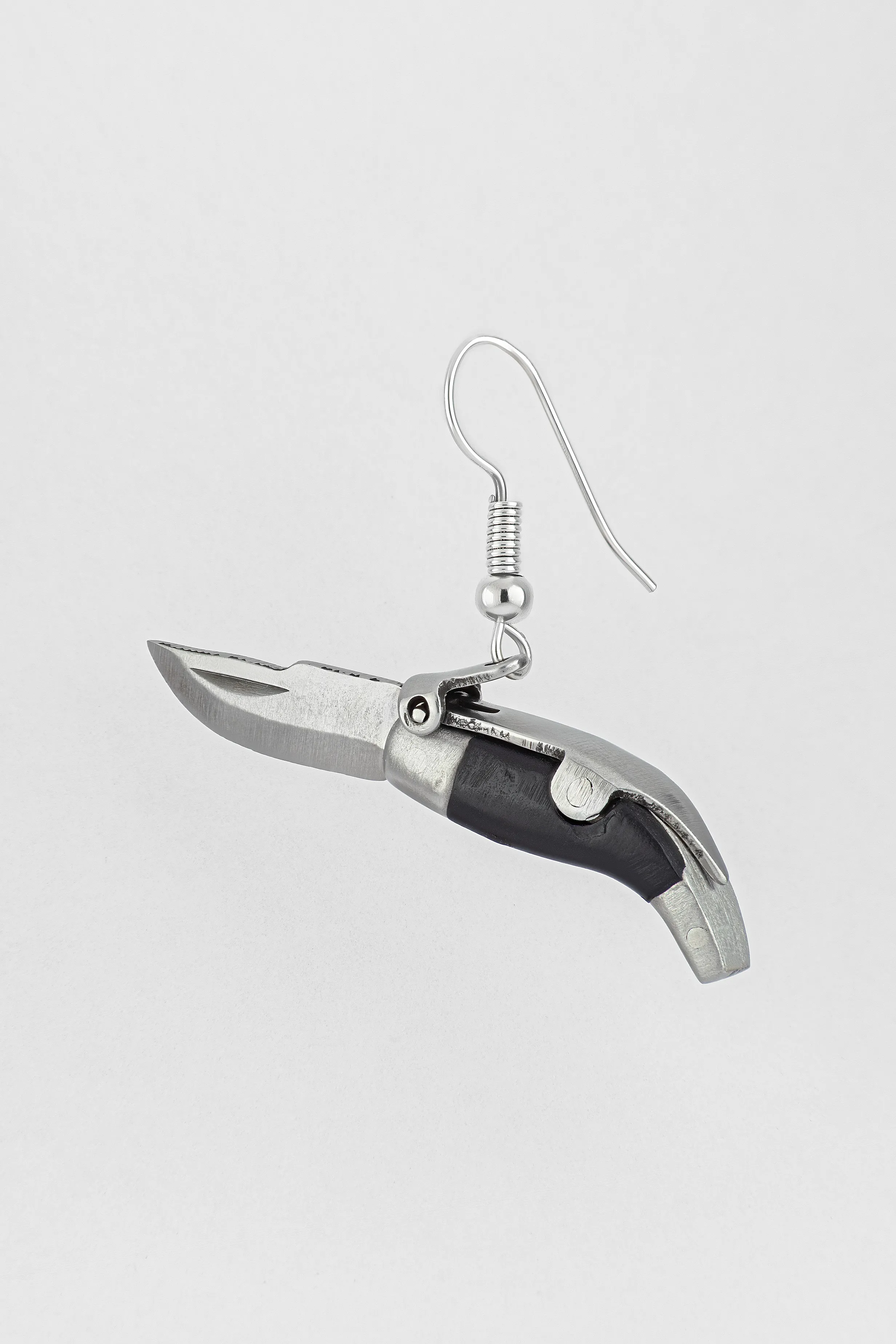
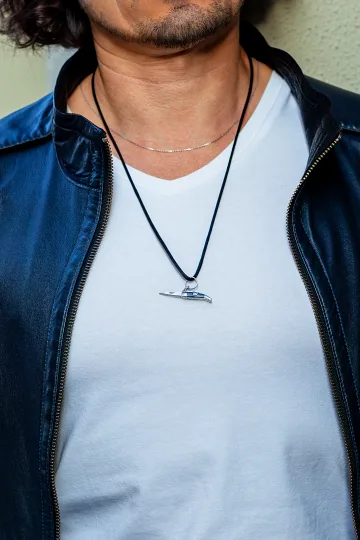
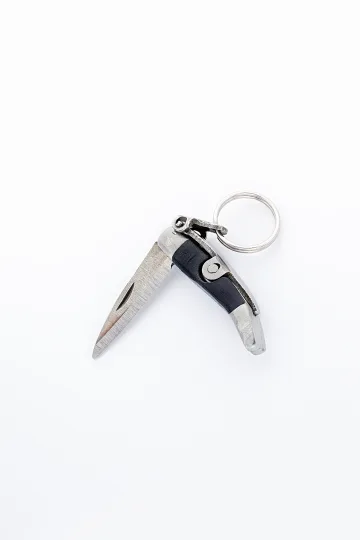
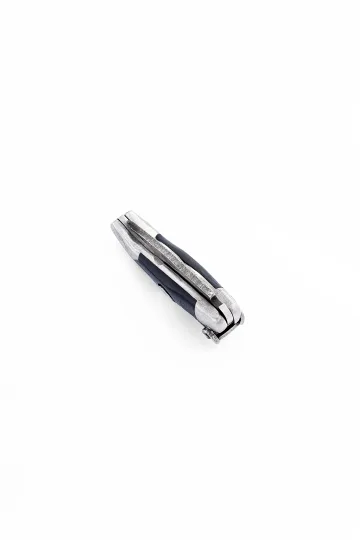
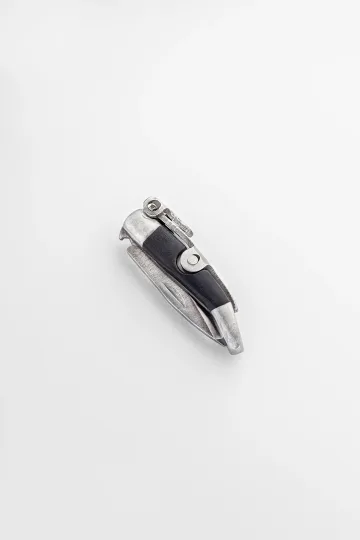
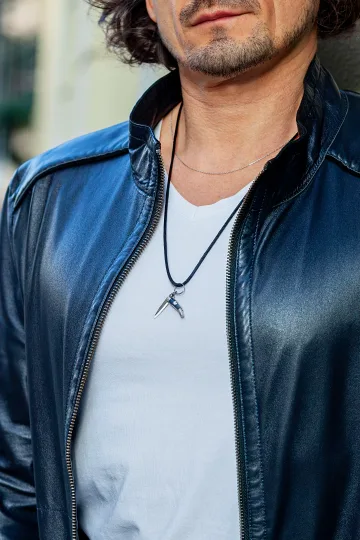
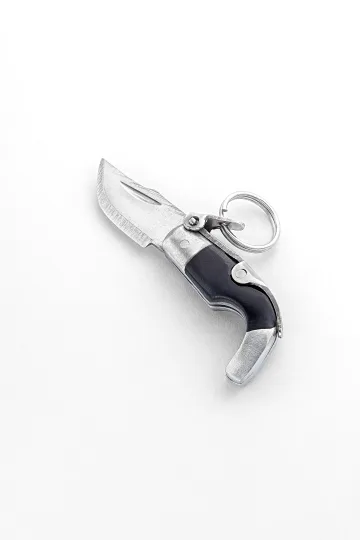
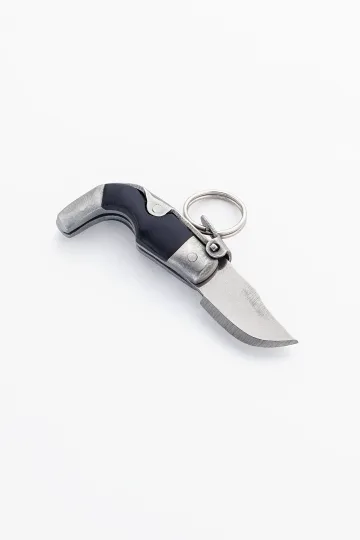
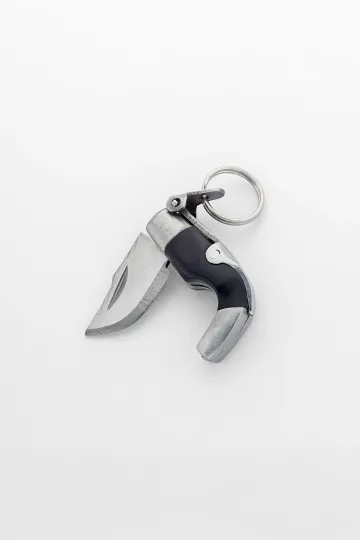
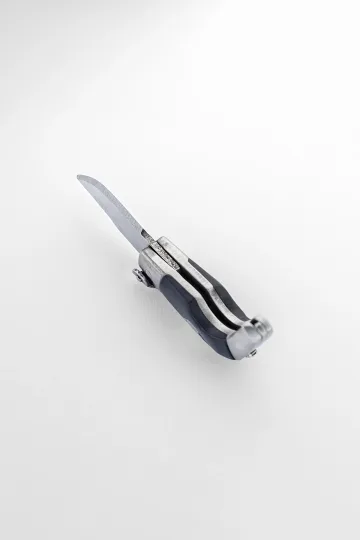
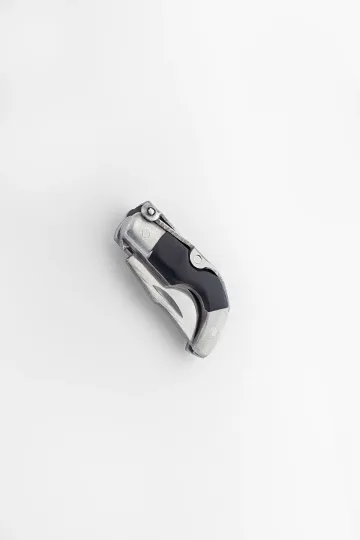
CAPAORA mini knife pendant
The 18th-century Spanish navaja in miniature: 40 mm of stainless steel, a real folding mechanism and a Palanquilla lock that clicks. An affordable gift to remember.
Authentic · Ships from Spain · 14-day returns
Professional context: where it works and where it does not
Where asymmetry reads well: creative agencies, design studios, media companies, education, art world, fashion, startups, tech, any environment that reads personal style as relevant rather than problematic.
Where to think carefully: corporate finance, traditional law firms, diplomatic settings, highly conservative institutions. In these contexts, asymmetric earrings can still read as carelessness to audiences with conservative expectations, even when they are entirely deliberate.
The solution for conservative environments: choose subtle asymmetry. Two similar studs with different stones in related colours, for example one deep blue and one blue-green. The difference is there, but it is not loud. At a glance it reads as a tidy pair; on closer inspection, as an intentional choice.
For job interviews: consider the company culture. Going for a role at a creative agency or design studio, an asymmetric earring signals something positive. Going for a position at a traditional finance or law firm, it may work against you on the first impression. Not because the rule is right, but because first impressions are filtered through expectations you cannot control.
This is not about what is correct. It is about reading the audience accurately.
Asymmetry across cultures
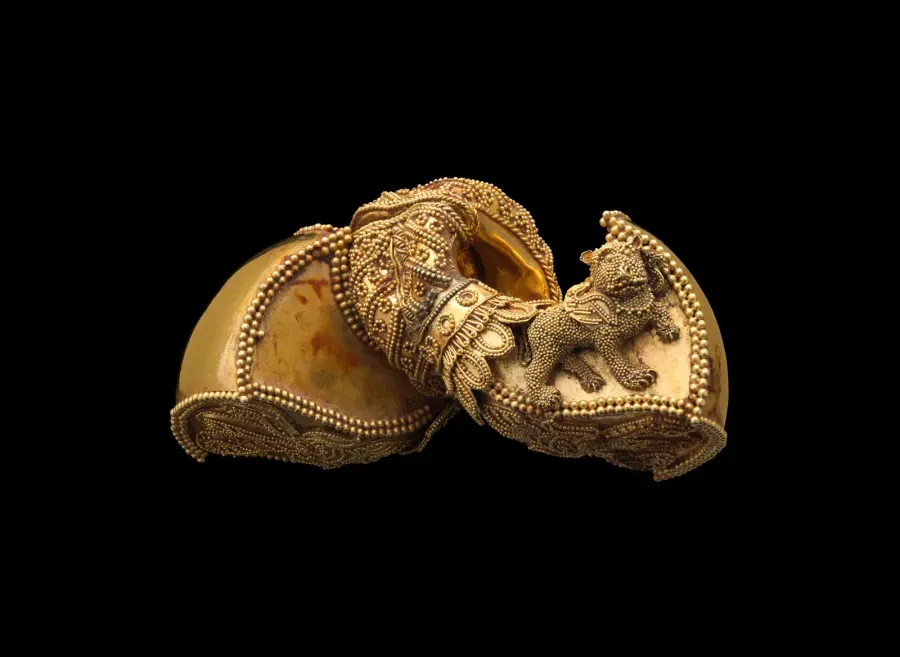
The habit of wearing jewellery differently on different parts of the body is very old and widespread. In various African jewellery traditions, asymmetry in ornamentation often carried symbolic meaning tied to the wearer's position in the community. In Japanese aesthetics, the principle of intentional incompleteness runs through art, craft, and design. Asymmetry in jewellery fits that logic.
What this suggests is that our current expectation of perfectly matched earring pairs is a fairly recent Western convention, not a universal standard. The return of asymmetry is less a revolution and more a recollection of something that was always possible.
Southwestern American jewellery traditions, from Navajo and Zuni silverwork, have long embraced asymmetric design principles. The work is balanced without being identical. That sensibility is present in contemporary asymmetric jewellery, even when the maker is not consciously drawing from it.
Asymmetry and other jewellery: how to combine
When earrings are already asymmetric, the rest of the look needs to account for that.
Necklace. If one earring is large and long, a plain chain without a pendant is the right call. A long earring and a long necklace compete for the same visual territory. Let the earring win.
Rings. Asymmetric earrings work well with rings that are not trying to be the focal point. Thin bands, rings without stones or with small ones. If you want a ring with a stone, keep it small.
Bracelets. Modest bracelets that do not compete. One thin chain or a smooth bangle. Multiple bracelets simultaneously will enter into competition with the earrings and make the look feel crowded.
Brooch. With asymmetric earrings, a brooch works if the earrings are small. Large earrings and a brooch together create too many competing focal points.
General rule: the earrings have been chosen to be the main focus. Give them that space.
Leave your email, we'll send your discount code. No spam, unsubscribe anytime.
The code arrives by email, valid on your first order.
Asymmetric earrings for specific occasions: wedding, evening, travel
Asymmetric earrings are not limited to everyday use. A few contexts where they work particularly well.
Wedding. For brides who want to maintain the symbolism of jewellery but step away from a standard identical pair, thematic pairs are the obvious choice. Initials of both partners. Two symbols that mean something to the couple: flame and water, earth and sky, beginning and continuation. Earrings in 14K or 18K gold worn on a wedding day are pieces that stay for life.
For bridesmaids: asymmetry can be a group decision. Each bridesmaid wears one earring from a thematic pair. Together they create a complete picture that reads as an ensemble.
Formal evening. For an evening out, asymmetry works well when one earring is genuinely dressy (long, with stones, in gold) and the second is its restrained partner. Such a pair draws the eye without overloading a look that may already include a formal outfit.
Travel. Asymmetry is practical for travel. Instead of multiple pairs, you take a few individual earrings in different styles and put together different combinations on the spot. Three singles give you six possible pairs. This simplifies packing while expanding options.
As a gift. An asymmetric pair or a set of thematic single earrings is a good gift choice when you do not know the exact preferences of the recipient. You have more flexibility: a ready pair, or a single earring that the recipient combines with something of their own.
Care
Asymmetric earrings require the same care as conventional pairs, with one practical addition.
Check both pieces with equal regularity. When earrings match, you naturally notice if one looks different from the other. With mismatched pieces, that automatic comparison does not happen. Make a point of checking both pieces intentionally for tarnish, bent fastenings or loose stones.
Store them together. If you have a mismatched pair you wear regularly, keep both pieces in the same section of your jewellery box or in labelled pouches. A loose single earring in a pile of other singles disappears.
Clean them separately if they are different metals. Silver and gold respond to different cleaning methods. Clean each to its own material's standard, at the same frequency.
Sterling silver tarnishes. This is normal. Periodic polishing with a soft cloth or silver polish keeps it bright.
Check the fastenings. Different earring types have different fastening systems: butterfly backs on studs, clasps on hoops, hooks on drops. Each system has different wear points. Check each fastening separately, not as a pair.
The psychology of asymmetry: why it works
There is an interesting phenomenon in how people perceive asymmetry. Researchers who study aesthetic perception have long noted that perfect symmetry creates a sense of completeness and calm, while a slight disruption of symmetry creates attention and interest. A face with perfectly symmetrical features is perceived as attractive but slightly unreal. A face with minor asymmetry reads as alive and memorable.
Something similar operates with earrings. A matched pair is harmonious and finished. But that is precisely why the eye does not linger. A mismatched pair poses a question: what is happening here? Is this intentional? And when the answer arrives, yes, it is, the look reads as considered rather than accidental.
This is why the "one shared element" rule works: it gives the eye confirmation that the difference is not a mistake. The earrings are different but both gold, which means a decision was made. They are different but both in a maritime theme, which means there is a concept.
Asymmetry in jewellery is a small demonstration of independent decision-making. You are not mechanically following the rule that a pair must match. You are making a choice. That is readable without words.
Asymmetry and colour: how colour pairs work
The colour dimension of asymmetric earrings is a separate subject that is often overlooked.
Same colour, different saturation. One earring with a deep navy sapphire, the other with a pale clear-blue stone. Both in the blue range, but different. The quietest form of colour asymmetry: the eye reads them as related and notices the difference.
Complementary colours. Colours opposite each other on the colour wheel. Blue and orange. Green and red. Purple and yellow. In earrings: malachite green and garnet red. Amethyst purple and amber gold. Complementary pairs create maximum tension and interest, but they require the rest of the outfit to be neutral.
Analogous colours. Neighbors on the colour wheel: blue and green, orange and yellow. A soft transition between the earrings. Works well for those who want colour variation without sharp contrast.
Same metal, different temperature. Yellow gold on one side, rose gold on the other. Both warm, but different shades. Very soft asymmetry, almost invisible.
Cool metal and warm metal. Silver and yellow gold are temperature opposites. A classic mixed-metal move. Works particularly well with a neutral stone (white or clear) in both earrings.
Monochrome with one accent. Both earrings silver, but one with black onyx. Neutral base plus one colour accent. Minimal but not boring.
A practical observation: with colour asymmetry in earrings, the outfit becomes even more important. If the earrings are doing colour work, everything else needs to be neutral. If the outfit is already colourful, keep the earrings monochromatic.
Not the same thing: an asymmetric pair and a single earring
These two get filed together and they should not be. An asymmetric pair means two earrings, one in each ear, deliberately different. A single earring means one ear wearing something and the other wearing nothing at all. The visual logic, the history and the signal are different in each case.
The single earring has the older and more loaded history. It ran through sailors and soldiers in several European traditions, through court dress in the sixteenth and seventeenth centuries, when a single pearl drop was an entirely masculine ornament, and through the subcultures of the late twentieth century, where which ear you chose was briefly treated as a public statement about who you were. That last reading has faded almost completely in Britain and across Europe, but it left a residue, which is why a single earring still reads as more declarative than a mismatched pair.
An asymmetric pair reads as considered. Two ears are occupied, the composition is complete, and the difference between the sides looks like a decision. A single earring reads as edited: something has been removed, and the empty ear is doing as much work as the full one. In a photograph the difference is obvious the moment the head turns.
Practical consequences. A single earring is riskier in a conservative workplace, because the emptiness on one side is what people notice and it invites the question about whether you lost the other one. An asymmetric pair passes almost everywhere a matched pair passes. A single earring works best when it is large enough to be clearly intentional; a small stud alone genuinely does look like a mislaid pair. And a single earring pairs badly with a strong necklace, since both are competing to be the one deliberate off-centre element in the outfit.
The two can be combined, incidentally, and often are: a large statement piece in one ear plus two or three small studs climbing the other. That is neither a pair nor a single, it is a composition, and it belongs with multiple piercings rather than with either category above.
Send a friend a discount code, they save on their first order.
Building a collection of singles
Once you start thinking in asymmetric pairs, it changes how you approach buying earrings. Instead of looking for matched sets, you look for individual pieces that could work with something you already own or might find later.
A few principles for building a workable collection of singles.
Anchor pieces. Start with a few versatile singles that can pair with many other things. A simple gold stud, a small silver hoop, a clean geometric drop. These are the pieces that connect to almost everything.
Statement singles. One or two bolder pieces that become the dominant earring in any asymmetric pair. A long textured drop, a large hoop with a charm, a sculptural ear climber. These need strong anchors to balance them.
Thematic sets. Two pieces that are meant to go together but are not identical: sun and moon, key and lock, initial letters. These are already designed as asymmetric pairs and do not require you to find a match.
Material consistency. Having pieces in the same metal family makes combining easier. A collection that is mostly silver with a few gold pieces allows natural mixing. A completely scattered collection in multiple materials, sizes, and styles makes it harder to find pairs that work together.
Storage as organisation. Consider keeping your singles in a flat display where you can see everything at once. When earrings are buried in a box, you forget what you have. When they are visible, you make connections.
Seasonality: does the approach change through the year
Slightly, and mostly for reasons that have nothing to do with fashion.
Winter. Collars, scarves and hair worn down all crowd the ears. The practical answer is to shift the weight upward: studs, small hoops and huggies survive a wool scarf, long drops spend the day tangled in it. Winter is also when the contrast between the two sides needs to be larger to register at all, because half of each earring is often hidden. Metal against a dark coat reads better than stones, which lose their light under grey skies and indoor lighting.
Spring. The season when asymmetry is easiest, because hair goes up, collars open and the ears are visible again. This is the natural moment to try a bolder difference in size, and the point in the year when jewellery shops turn over their stock, so single pieces and odd remainders appear in the sale bins.
Summer. Warmth changes the material question more than the style question. Long earrings stick to a damp neck, larger surfaces of metal get genuinely hot in direct sun, and anything with a delicate stone setting spends the season within reach of chlorine, salt water and sun cream. Lighter formats win: hollow rather than solid, smaller drops, secure backs, since a summer of hair being tied and untied is when singles get lost. Colour is easier in summer, and this is the one season when a genuinely bright asymmetric pair sits comfortably with the rest of what people wear.
Autumn. The best season for texture rather than colour. Matte finishes, oxidised silver, warm-toned stones such as amber, garnet and smoky quartz work against the light. Autumn is also when the layered look returns, so an asymmetric pair usually needs to be recalculated against a scarf and a jumper collar rather than against bare skin.
The underlying rule is not seasonal at all: whatever is around the ears determines how large the difference between the two sides has to be. A scarf and loose hair demand a bolder contrast, a bare neck in July lets a subtle one register perfectly well.
Questions people ask
Does it look like I forgot to change my earrings?
If the contrast is clear, no. People understand deliberate mismatching quickly when one piece is obviously different from the other in scale, theme or style. If the difference is very subtle, two nearly identical pieces with a small variation, it can read as oversight. Err toward making the difference obvious.
Can I wear it every day?
You can. But if you want the effect to remain interesting rather than becoming invisible, it works better as a deliberate choice on particular days rather than the default.
What do I say if colleagues ask?
"It is intentional, it is a current thing" covers it. Most people are satisfied with a simple answer. If you want to say more: "I like that earrings do not need to match."
Does this work for men?
Increasingly. Particularly for those with a single piercing, a stud on one side and a small hoop on the other is now an established choice rather than an unusual one. Asymmetric earrings are gender-neutral in their basic logic.
Will asymmetric earrings draw attention to uneven features?
Possibly. Asymmetric earrings direct attention to the ears and face. If you want to create visual balance, matching earrings of equal size on both sides are more effective.
What to wear with mismatched earrings?
They work best as the single point of interest against a quiet outfit. A plain knit, a white shirt, a simple black dress. When the earrings are the statement, the clothing does not need to be.
Can I mix silver and gold?
Yes. This has been a normal part of American jewellery styling for several years. No explanation required.
How do I combine asymmetric earrings with other jewellery?
Keep the rest simple. If one earring is already a statement piece, a necklace should be minimal: a plain chain, a fine pendant. Rings without stones or with small ones. There is no need for the whole look to compete with itself.
How do I build a mismatched pair from scratch?
One shared element is the minimum. That could be the metal, the stone type, the theme, the style of craft, or a size logic. If everything matches except one thing, that is coherent asymmetry. If nothing matches at all, it reads as random rather than chosen.
Is the trend going to last?
Based on the past twelve years, it looks structural rather than seasonal. Asymmetric earrings have been growing as a category since the early 2010s without a meaningful reversal. The more likely outcome is that they become a permanent second option alongside conventional matched sets, neither replacing the other.
Should I start with expensive earrings?
Start with lower-cost pieces to learn which combinations work for you. Once you know what you like, a deliberate investment in a higher-quality thematic pair makes sense. A sun-and-moon set in solid 14K gold is a purchase you arrive at, not a starting point.
Where is the line between striking and ridiculous?
The line sits at coherence rather than at contrast. Two earrings can be wildly different in size, shape and colour and still look deliberate, provided one element ties them together: the metal, the finish, the family of stone, the theme, the workshop style. Take that shared element away and the same two pieces look like an accident. The second test is quantity. One point of asymmetry in a look is a decision, three or four at once is noise, so if the earrings are doing the off-balance work, the necklace, the rings and the outfit should behave themselves. The third test is the mirror, honestly used: turn your head both ways and look at each side alone. If either side looks unfinished on its own, the pair is not working yet.
Where do I buy single earrings rather than a pair?
Four routes. Independent makers increasingly sell singles as standard and price them per earring, which is the cleanest option. Larger retailers now sell some studs and hoops individually, usually the simplest shapes. Vintage and second-hand shops are full of orphaned earrings whose partners went missing decades ago, and these are frequently the most interesting pieces available, because nobody else is competing for a single. And your own jewellery box is the fourth route: most people already own two or three widowed earrings that have been sitting in a drawer waiting for exactly this idea. Check the post type and the back before combining old pieces, since a butterfly back and a screw fitting behave differently through a day.
Does it matter which earring goes in which ear?
Not as a rule, but it matters in practice, and it is worth trying both ways in front of a mirror before deciding. Faces are not symmetrical: one side of the jaw is usually a little fuller, one eyebrow sits slightly higher, and hair is almost always parted so that one ear is more exposed than the other. The larger or busier earring generally belongs on the more visible side, which for most people means the side away from the parting. If you carry a bag on one shoulder every day, or hold a phone to one ear at work, the smaller piece is the more comfortable choice for that side. Swapping the sides from day to day is entirely fine and nobody except you will register it.
Where to read and look further
Asymmetric earrings do not exist in isolation, and the wider reading is more useful than any single guide.
On the history of jewellery. General histories published by museums with large jewellery collections, the V&A and the Metropolitan Museum in particular, cover several thousand years of ornament and are the easiest way to see how attitudes to symmetry shifted from one period to the next. Symmetry was not always the default, and reading a few centuries at a time makes that obvious.
On surrealism in dress. The Metropolitan Museum's 2012 Costume Institute exhibition catalogue, which set Schiaparelli beside a contemporary Italian designer, remains the clearest single source on why unexpectedness became a legitimate design tool rather than a joke. If the 1937 material earlier in this guide interested you, that is where to go next.
On the psychology of what we wear. There is a research strand in British psychology on how clothing and accessories affect self-perception rather than only the perception of others. Jewellery belongs to that non-verbal vocabulary whether or not we choose it consciously, and the findings explain a good deal about why an asymmetric pair changes how the wearer behaves, not only how she looks.
Online. The hashtags for mismatched earrings and asymmetric jewellery are worth an hour of scrolling. What you get there is not theory but evidence: specific people, specific combinations, real hair and real collars, which is more instructive than any set of rules including this one.
Common misconceptions about asymmetric earrings
A few widely held assumptions that fall apart on closer inspection.
Misconception: asymmetric earrings are only for young people. The logic that certain jewellery choices are age-restricted does not survive the question: why, exactly? Asymmetry has no age limit. It has a style logic that works for anyone who understands and applies it.
Misconception: asymmetric earrings are always conspicuous. The subtlest asymmetry, two studs with different stones in similar colour ranges, is barely noticeable at a quick glance. The range goes from nearly imperceptible variation to maximum visual tension. Where you land on that range is your choice.
Misconception: asymmetric earrings are not appropriate for formal occasions. A thematic pair in high-quality gold, for example sun and moon, works as formally as a classic matched pair. What determines the formality level is the quality of execution and the restraint of the overall look, not the symmetry of the earrings.
Misconception: you need multiple piercings to wear asymmetric earrings. One piercing per ear is completely sufficient. Most asymmetric combinations work with a single piercing on each side.
Misconception: asymmetric earrings are more expensive than conventional pairs. Single pieces typically cost no more than a pair at the same quality level. Ready-made mismatch sets are priced comparably to classic sets. The choice does not carry a premium.
Buying it as a gift? Each one arrives ready to give.
 A branded Zevira box and a little card come with every order.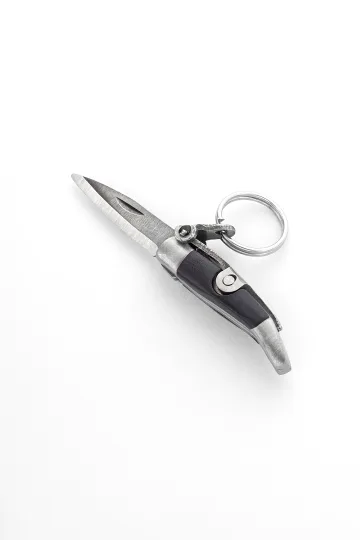




Conclusion
Asymmetric earrings are a case of fashion normalizing something that was always possible but rarely done. The rule requiring matching earrings had no particular origin beyond convention. Its absence has simply revealed that mismatched pairs can look as considered as matched ones, when the choice is made deliberately.
Start with what you already have. Open the box of singles, hold two up together, see what works. If nothing works, nothing is lost. If something does, you have found a way to dress that was already in your possession.
There is no correct starting point. There are just earrings you like and the question: what happens if these two are worn together?
Silver, gold, wedding rings, symbolic jewellery and matching sets.
About Zevira
Zevira makes jewellery in the artisan tradition of Albacete, Spain. We are among the few workshops where earrings can be bought individually rather than in pairs, which makes us a practical starting point for asymmetric combinations and for replacing a lost piece.
What you can find with us:
- Earrings sold as singles, not only as matched pairs
- Purpose-made asymmetric collections (sun and moon, day and night)
- Three-piece sets for multiple piercings
- A range of lengths and forms suited to layered compositions
- Personal engraving on selected pieces
Each piece is made by hand. We work in 925 sterling silver and 14-18K gold.