Pearls for Men: A Complete Jewellery Guide
Introduction: a stone that was never just for women
There is a particular kind of confidence in a man who wears a single pearl stud. Not the confidence that shouts, but the quieter sort that simply refuses to apologise. That quality is precisely what has drawn generations of men back to pearls, from the Persian court to the Edwardian drawing room to the stages and red carpets of the present decade.
The common assumption that pearls are "a woman's jewellery" is historically very recent. For most of recorded history the opposite was true. Understanding that changes how the whole conversation feels.
This guide covers everything a man needs to know: the history, the types of pearl, every way to wear them, how to care for them, and how to think about cost.
Pearls Were a Man's Stone for 5,000 Years
The single greatest misconception about pearl jewellery is that it belongs to women. In terms of centuries, the opposite was the dominant reality.
The Ancient World
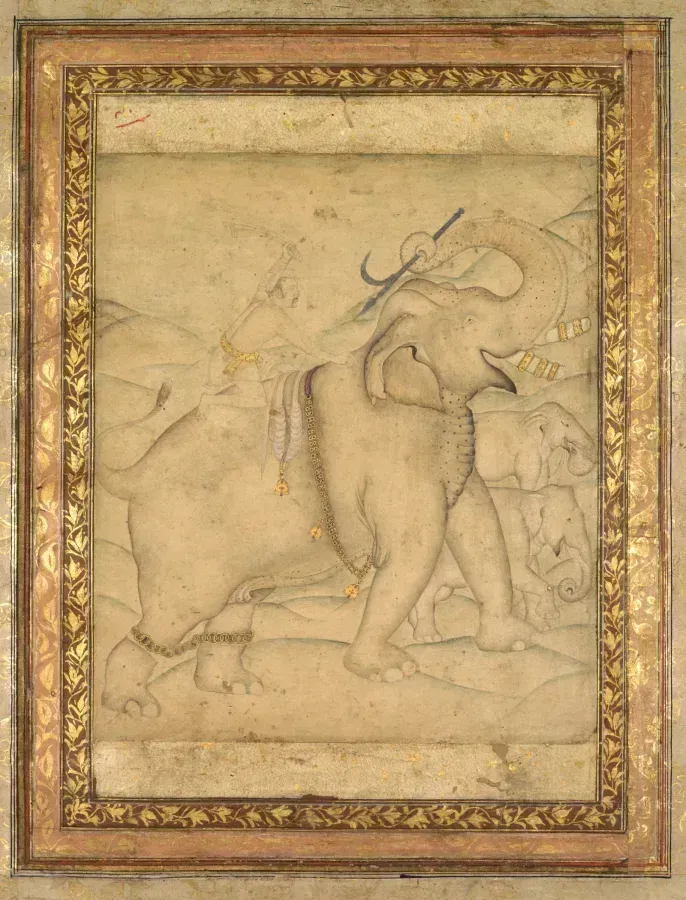
In Egypt, Mesopotamia and India pearls were among the most prized possessions a person could own, and the people who owned them were overwhelmingly men in positions of power. Pearls outranked gold in many ancient price hierarchies. Kings, high priests and military commanders wore them as visible proof of status.
The earliest documented pearl ornament is a necklace found in a Persian royal tomb dating to approximately 420 BC. Persian court culture treated pearls as the supreme luxury: the larger and more lustrous the stone, the more unambiguous the message.
In ancient India, pearls featured extensively in royal regalia. Sanskrit texts from the first millennium BC describe pearls adorning warriors and kings as emblems of both divine favour and martial prowess. The connection between pearls and masculine authority ran so deep that some texts listed pearl-bearing oysters among the natural resources a king was duty-bound to protect and exploit.
Ancient Rome
Roman writers noted the pearl obsession of their age with a mixture of admiration and alarm. Julius Caesar, according to Suetonius, was particularly devoted to fine pearls and spent fortunes acquiring them. He is recorded to have given a single pearl worth six million sesterces as a gift. The emperor Caligula famously decorated his horse with them, which at the time read as an act of extravagant royal power rather than eccentricity.
Roman senators wore pearl rings as markers of rank. The size of the stone corresponded, more or less directly, to the importance of the wearer. Pliny the Elder, in his Natural History, devoted entire chapters to pearls, describing the competitive acquisition that characterised the Roman senatorial class. He wrote with some exasperation about men who wore pearls on their fingers, ears and shoes simultaneously, not from vanity but from the explicit desire to display their wealth in the most concentrated form available.
The Roman pearl trade drew on supplies from the Persian Gulf, the Red Sea, the coasts of India and, eventually, the Caribbean. It was a genuinely global trade conducted entirely by men for men, centuries before anyone thought to describe the pearl as a feminine ornament.
Medieval Europe
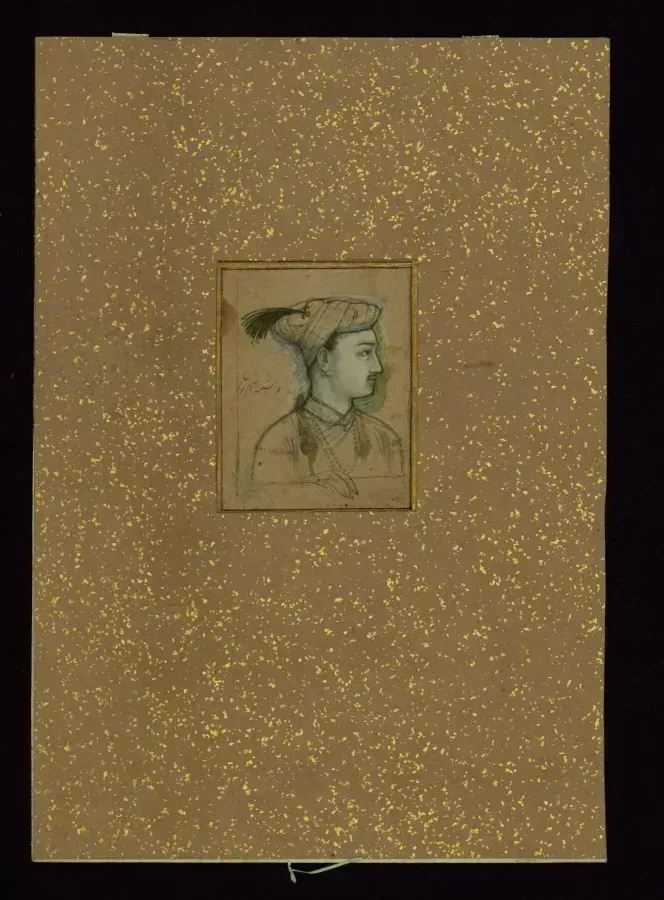
Through the Middle Ages pearls remained an exclusively male prerogative in royal and ecclesiastical circles. The crown of Charlemagne, preserved in Vienna, is set with large pearls. The British Imperial State Crown carries pearls around its lower band. Episcopal mitres were routinely decorated with pearls as a mark of spiritual authority.
Knights returning from the Crusades brought back pearls from the Persian Gulf as trophies. A man who wore them was advertising both wealth and a certain dangerous reach. The accounts of royal inventories from the thirteenth and fourteenth centuries are striking: jewelled items listed as personal to the king are disproportionately pearl-heavy, and they are listed among the assets of men, not women.
The Renaissance and Baroque Periods
Tudor and Stuart England produced some of the most pearl-heavy masculine portraiture in Western art. The portraits of Henry VIII show him wearing pearl brooches and chains alongside jewelled doublets. Charles I wore a single pearl earring in his left ear, a fashion that spread through the court. The portraits of this era are unambiguous: pearls on a man were a sign of power and cultural sophistication, not femininity.
George Villiers, Duke of Buckingham, favourite of both James I and Charles I, was notorious for the extravagance of his pearl jewellery. He was widely considered the best-dressed man in England.
In Spain and Portugal, the galleons returning from the New World in the sixteenth and seventeenth centuries carried pearls from the Caribbean shallows and the Venezuelan coast. The Iberian nobility wore them in earrings, chains and hat ornaments. The inventories of Spanish aristocrats from the Golden Age list pearls as masculine ornaments of the first order. The pearl fisheries of Cubagua, off the Venezuelan coast, were the first industrial-scale pearl extraction operation in the Americas, and the pearl was closely associated in the Spanish imagination with masculine conquest and dominion over new territories.
British Dandyism: Beau Brummell and the Regency Turn

The late eighteenth and early nineteenth centuries brought a decisive shift in British masculine dress. The dandy movement, crystallised in the figure of Beau Brummell (1778-1840), redirected masculine elegance away from jewellery and towards cut, cloth and fit. Brummell famously spent hours achieving the perfect knot in a plain white cravat. His influence pushed men's dress towards sobriety and restraint.
This was the hinge point. After the Regency era, Victorian masculinity hardened into the black frock coat and the plain white shirt. Jewellery was reduced to the signet ring, the pocket watch chain, and, for the most formal occasions, pearl studs on a dress shirt and pearl cufflinks at the wrist.
That last point matters: pearl studs and pearl cufflinks held on through the entire Victorian and Edwardian period as acceptable masculine accessories. Men who wore white tie to Covent Garden or to a Savile Row fitting wore pearls. It was the one concession the Victorian dress code made to the idea that a man might want something to catch the light.
The Twentieth-Century Gap
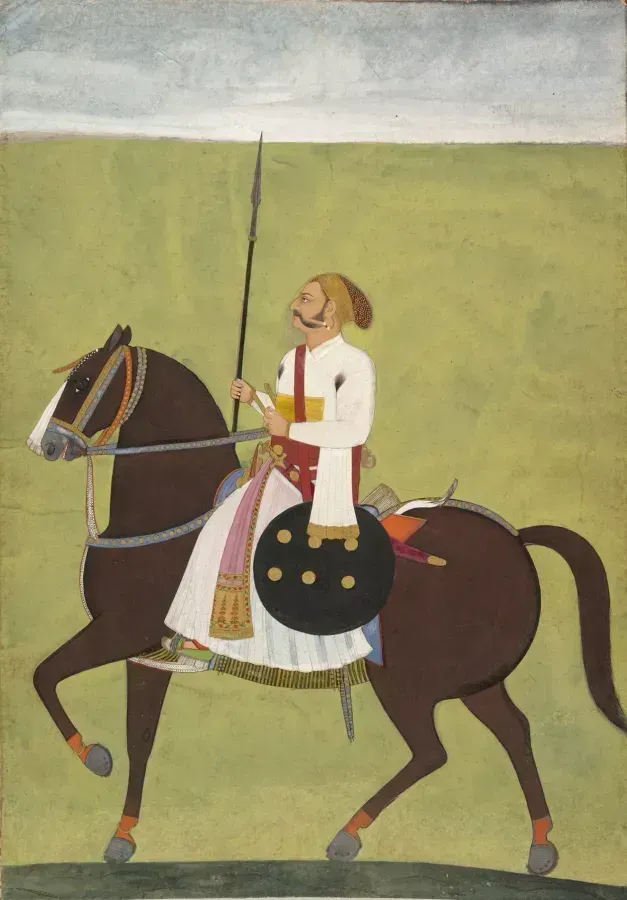
From roughly 1920 onwards, as formal dress retreated and sportswear entered everyday life, even that narrow opening closed. For most of the twentieth century pearls on a man were the exception: jazz musicians, certain film stars, and the occasional rock-and-roll eccentric.
The Return: 2019 to Now
The revival of men's pearl jewellery over the past several years is part of a broader cultural shift. A younger generation of musicians, artists and designers began wearing pearl earrings, necklaces and bracelets, and the images travelled quickly through social media. What was once the exclusive territory of courts and Savile Row clients became something a man in his twenties could pick up and wear with a plain white shirt and jeans.
The historical framing matters here. These men were not doing something new. They were returning to something very old.
A single pearl at an open collar, not over a knotted tie. And spare me the is-it-too-feminine question: that question is the only unmanly thing here.
What to Pair Pearls With
Over years on shoots and runways I have put pearls through dozens of men's looks. Here is what actually works, occasion by occasion.
What do you wear pearls with day to day? For everyday I recommend a white stud, 5 to 6 mm, or a fine pendant on a silver chain over a plain knit or a simple shirt. A dark top (charcoal, navy, black) lifts a white pearl, a light one brings a Tahitian forward. An open collar and soft cloth like cotton or linen work for the pearl because they do not compete with it for attention.
Do pearls work at the office? They do, as long as you keep it quiet. I suggest a small stud, a pearl tie pin or cufflinks on a white shirt. These are details noticed up close, not across the meeting room. A strict dress code is no obstacle: the pearl reads as a quiet, deliberate choice.
How do I build an evening look? For evening I choose more weight: a larger pendant on a chain over a dark shirt, or a drop earring that moves and catches the light. An open collar and smooth cloth in a deep colour give the pearl bare skin at the collarbone, where it reads best.
How do I mix pearls with metal? Cool 925 silver next to a white pearl makes a clean modern pair, oxidised silver deepens a Tahitian, yellow gold adds warmth and a historical note. I allow layered chains of different lengths as long as the pearl stays the single soft point among the metal.
Who do pearls actually suit? Almost everyone, but especially those who value restraint over volume. Two rules that never fail. First, for a first piece take a 45 to 50 cm chain and no more than two pieces in a look. Second, one pearl on a clean chain always beats four pieces at once, where each one loses its weight.

Turn on your camera, pick earrings, a pendant or a ring, and see the piece on yourself in real time.
Switch items in one tap.
Everything runs in your browser: no photo or video is ever uploaded.
Who Is Wearing Pearls Today
To understand the shape of the current trend, it helps to look at where pearls are appearing.
On red carpets and at award ceremonies, male artists in their twenties and thirties have been photographed wearing pearl earrings and necklaces with increasing regularity since 2019. The images tended to be picked up by fashion press because the contrast was still striking: a man in a perfectly cut suit, and a single pearl.
In the fashion industry, male models, designers and creative directors in cities like London, Milan and New York have been wearing pearl jewellery in editorial and commercial contexts as a straightforward style choice rather than a statement of any kind.
In K-pop and the broader East Asian entertainment market, male performers have been wearing pearls as a normal part of their visual identity for longer than in Western pop. The influence of Korean fashion on global trends has accelerated the normalisation.
In streetwear and in music cultures that prioritise visual impact, pearl necklaces have been layered with gold chains and other pieces as part of a stacked, textured aesthetic. The Tahitian pearl, with its dark grey or green-black surface, has been particularly popular in this context because it reads as bold rather than delicate.
Among older British and continental European men with a classical background in dress, the pearl stud and pearl cufflink have simply never gone away. They are part of formal dress in the same way that a white pocket square is.
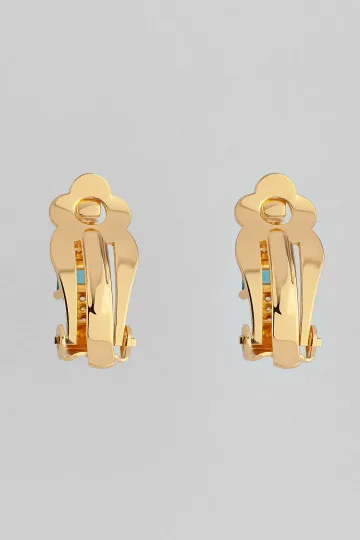
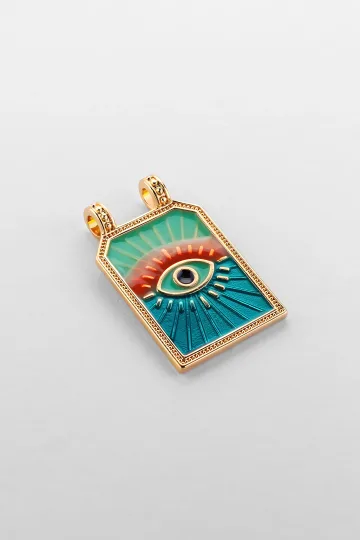
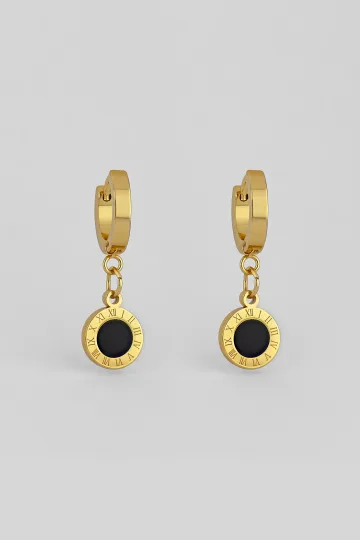
Wear the symbol, don't just read about it. These are in stock:





How a Pearl Is Formed
It is worth knowing what you are actually wearing, because almost everything about care, price and quality follows from the biology.
A pearl is a defensive structure. When a foreign body lodges in the soft tissue of a mollusc, cells from the mantle, the organ that builds the shell, migrate around the intruder and form a sac. That sac then does what it does everywhere else in the animal: it secretes nacre. Nacre is aragonite, a crystalline form of calcium carbonate, laid down in platelets a few hundred nanometres thick and bound together by conchiolin, an organic protein scaffold. The platelets stack like brick courses with mortar between them.
That structure explains the two things people notice. Light entering the surface passes through hundreds of translucent layers, reflects from the boundaries between them, and interferes with itself on the way out. The result is the iridescent glow called orient, which no polished mineral can imitate because no mineral has that layered architecture. It also explains fragility. Calcium carbonate dissolves in mild acid, and conchiolin is a protein that dries out and embrittles. Sweat, perfume and citrus attack the first; central heating and sealed containers attack the second.
In a cultured pearl the process is identical, with the starting point supplied deliberately. A technician inserts a nucleus, usually a bead turned from American freshwater mussel shell, together with a graft of mantle tissue from a donor animal. The graft forms the sac; the sac coats the bead. The chemistry, the crystal structure and the optical behaviour are the same as in a natural pearl. What differs is only how the process began, and how much nacre sits over the bead when the pearl is harvested.
The practical takeaway: a pearl is a biological object with a finite life if you neglect it and an indefinite one if you do not. A Renaissance pearl in a museum case looks the way it does because four centuries of owners kept it away from acid and away from heat.
Types of Pearl
Understanding the types before you buy makes the difference between a purchase you are happy with and one that sits unworn.
Natural vs. Cultured
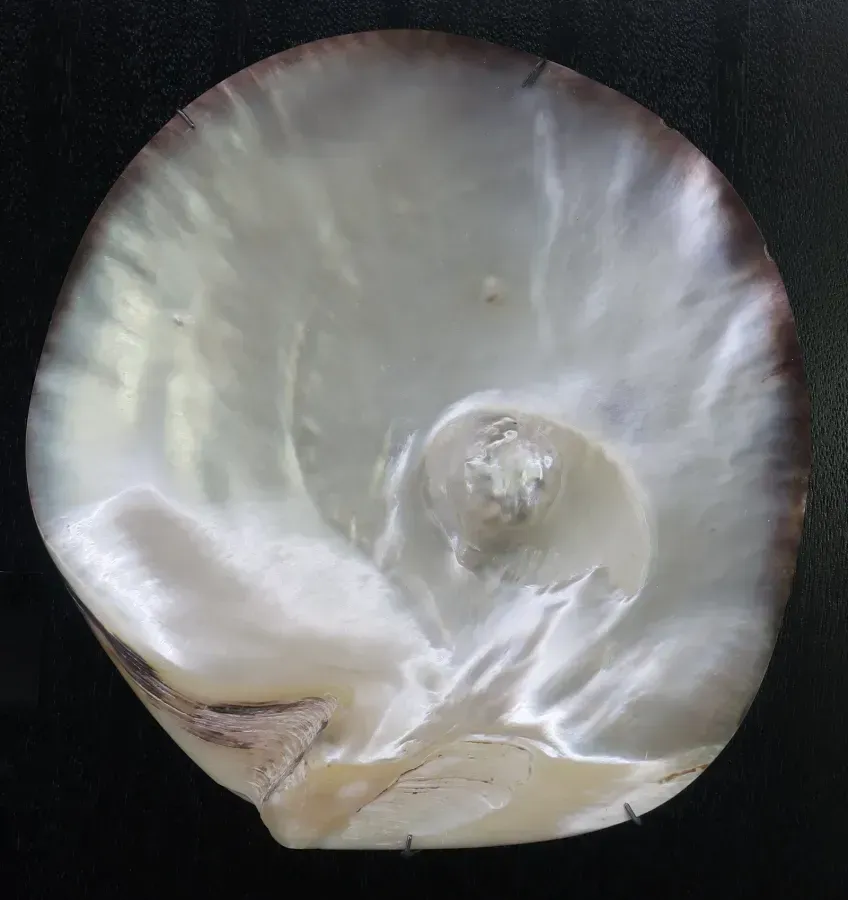
A natural pearl grows without human intervention when an irritant enters a mollusc. They are extraordinarily rare. Almost every pearl jewel made before the early twentieth century used natural pearls, which is partly why antique jewellery commands such high prices. A large natural pearl today is worth a significant sum.
A cultured pearl is produced when a technician implants a small nucleus into a mollusc and the animal deposits nacre around it over several years. The process was developed in Japan in the 1890s. The pearl produced is chemically and visually identical to a natural one. Cultured pearls account for effectively the entire modern market and there is nothing inferior about them.
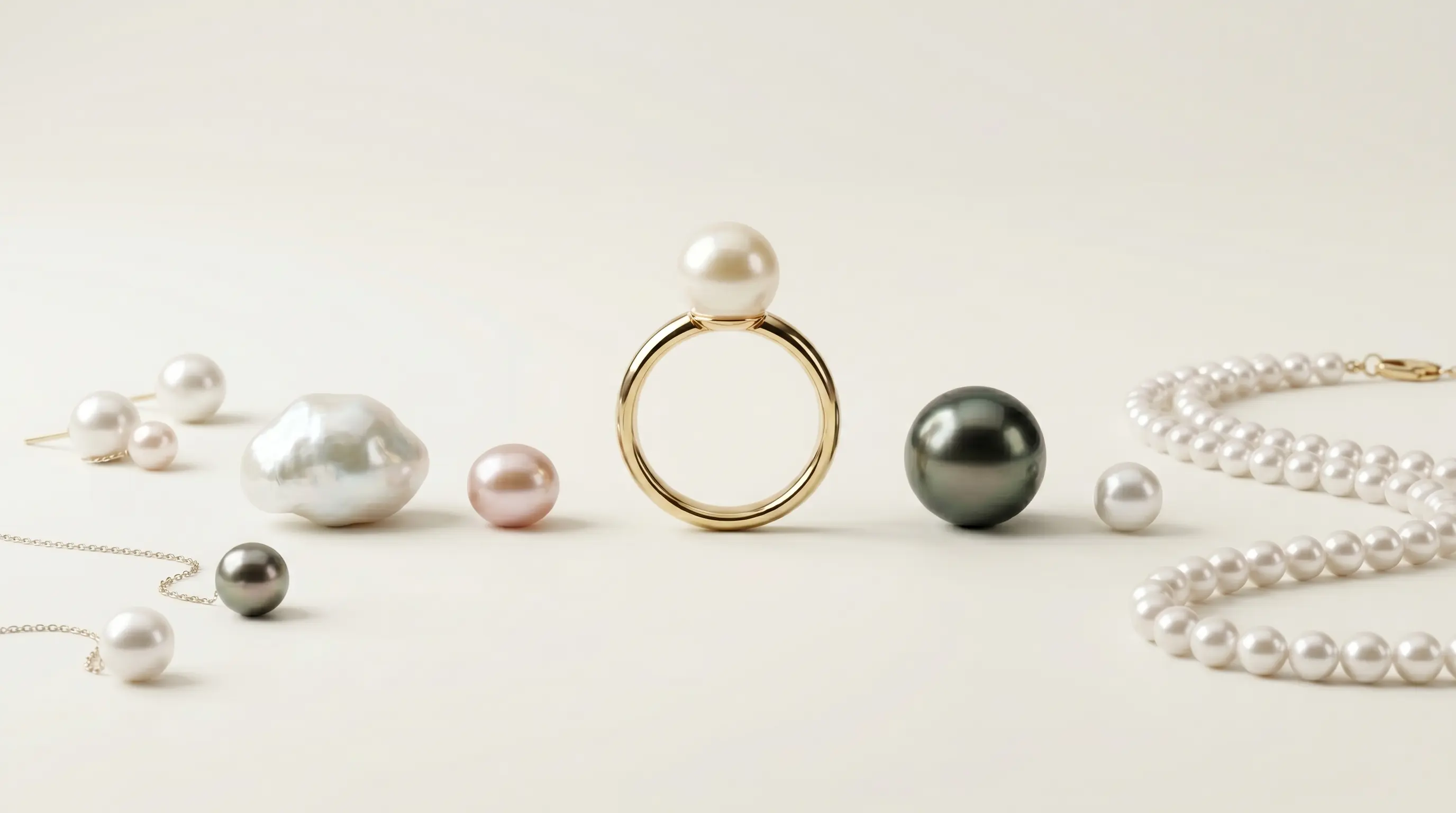
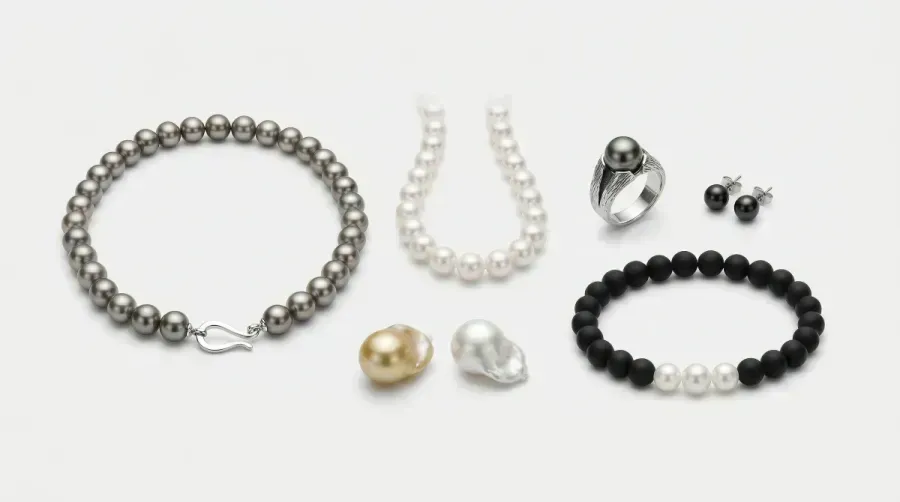
Akoya
The classic Japanese saltwater pearl. Small (5-9mm), very round, high lustre. The traditional white pearl stud is almost always akoya. For men wanting a minimal, clean look, this is the starting point. Akoya pearls are also produced in Vietnam and China, though Japanese akoya retains a reputation for particularly high surface quality.
The species is Pinctada fucata martensii, a comparatively small oyster that lives in cool water off the coasts of Honshu and Kyushu. Cool water slows nacre deposition, and slow deposition produces the tight, even crystal layers that give akoya its mirror finish. That is why the same species farmed in warmer seas rarely reaches Japanese lustre.
An akoya is nucleated with a bead of shell, so a large proportion of the finished pearl is nucleus rather than nacre. Nacre thickness is therefore the number that decides whether a cheap akoya stud will still look like a pearl in ten years. Anything under 0.4mm will wear thin at the drill hole and go chalky at the crown. A well-farmed akoya carries 0.5mm or more, and it is worth asking the question in a shop, because the answer separates two pieces that look identical under display lighting.
Freshwater
Grown in lakes and rivers, primarily in China. Available in a wide range of shapes, from perfectly round to irregular. More accessible in price than akoya. Well suited to pendants and loose, organic designs. The baroque forms of freshwater pearls are popular in avant-garde men's jewellery because each one is unique and the shapes read as found objects rather than manufactured beads.
The key structural difference is that most freshwater pearls are tissue-nucleated rather than bead-nucleated: a small piece of mantle tissue is inserted, the mussel builds around it, and the result is solid nacre all the way through. That makes a freshwater pearl far more forgiving of daily wear than a thin-skinned akoya. Chip the surface of a bead-nucleated pearl and you expose a white shell core; chip a solid freshwater pearl and you expose more of the same material.
Britain has its own freshwater pearl history worth knowing. The pearl mussel of Scottish and northern English rivers produced pearls that reached Roman writers as a selling point for invading the island, and Scottish river pearls appear in medieval and Renaissance goldsmithing. The species is now protected and harvesting is illegal, which means any Scottish pearl on the market is antique, documented, and priced accordingly.
South Sea
The largest pearl in regular production, from Australia, Indonesia and the Philippines. Between 10mm and 20mm, white or gold in colour. These are statement pieces: a single South Sea pearl pendant on a silver chain is impossible to overlook. White South Sea pearls come primarily from Australian waters; the gold variety originates mainly from the Philippines.
The oyster responsible, Pinctada maxima, grows to the size of a dinner plate, which is the simple reason its pearls are large. It is also a slow, delicate animal to farm, and a single pearl takes two to four years after nucleation. Volumes are small compared with freshwater production, and that scarcity is the main driver of price.
For men, the South Sea pearl works best in exactly one register: a single pearl, big, in a heavy setting, worn alone. Multiply it and the piece tips into ceremonial. A 13mm white South Sea in a plain bezel on a substantial chain, worn open-collared with a dark jacket, is one of the few pieces of men's jewellery that carries at conversational distance without any explanation.
Tahitian
From the black-lipped oyster of French Polynesia. Colours range from charcoal grey through peacock green to near-black. For men, this is often the most intuitive choice: the dark surface reads as naturally masculine and the orient (the subsurface glow) is extraordinary. A Tahitian pearl stud does not look delicate. The peacock overtone, a green-to-pink iridescence on a dark body, is considered the most desirable and commands a premium.
The colour is not applied. It comes from the dark margin of the shell of Pinctada margaritifera, and the mollusc lays down pigmented nacre in the same way it lays down white nacre elsewhere. This matters commercially, because dyed freshwater pearls are sold as "black pearls" at a fraction of the price and the dye eventually fades or shows at the drill hole. A genuine Tahitian has colour that shifts as you turn it: grey to aubergine, green to bronze. A dyed pearl stays flatly the same colour from every angle.
Tahitian pearls are the reason many men who assumed pearls were not for them changed their minds. A charcoal 10mm stud beside a dark beard reads as stone rather than ornament, which sidesteps the whole question of whether a pearl is a feminine object.
Baroque
Not an origin but a shape category: any pearl with an irregular form. Every baroque pearl is different. They are used in avant-garde and artisan jewellery where the irregularity is the point. A baroque freshwater pearl pendant in a silver setting can look more like a found object than a jewel, which suits certain aesthetics very well.
The name is historically accurate rather than decorative: the Portuguese barroco described an irregular pearl before it described a period of European art, and the great sixteenth-century pendant jewels were built around exactly these odd shapes. Goldsmiths of that period read a lumpy pearl as the body of a swan or a merman and built the metalwork around it. The modern equivalent is less literal, but the principle survives: the metal follows the pearl rather than forcing the pearl into a symmetrical seat.
Practically, a baroque pearl hides surface flaws that would be obvious on a round pearl, which is why the same money buys a bigger, more characterful piece in baroque form.
Keshi and Seed Pearls
Keshi are small pearls formed accidentally in a farm, when a nucleus is rejected but the mollusc continues depositing nacre around the fragment of tissue. They are solid nacre, often flattened or petal-shaped, and they have an intensity of lustre that rounder pearls rarely match. Their name comes from the Japanese for poppy seed. For men, keshi work well as a cluster on a cufflink face or as small accents along a chain, where the aim is texture rather than a single focal point.
Seed pearls are simply very small natural or cultured pearls, under 2mm. Victorian and Edwardian jewellers used them by the hundred, sewn onto horsehair or wire in mourning and sentimental pieces. Antique men's stickpins and shirt studs with a seed-pearl border turn up regularly at British auction and are among the most historically direct ways to wear a pearl.
Mabe and Blister Pearls
A mabe is a half-pearl: grown against the inside of the shell rather than free within the tissue, then cut out and backed. It gives a domed, hollow-backed piece with a large visible face and a modest weight. For men this is a practical format for cufflinks and signet-style rings, because it delivers the surface area of a very large pearl without the mass or the price of one.
The trade-off is durability. The nacre dome is thin and the assembly is glued, so a mabe piece dislikes knocks and dislikes solvents. It is a jewel for a shirt cuff or an evening, not for a working hand.
Colours and What They Signal
White is the classic, pairs with almost everything. Cream is warmer and slightly more casual. Black (Tahitian) and dark grey are the most immediately "masculine" options for men who are new to wearing pearls and want something that reads as confident without being delicate. Gold (South Sea) is warm and rich, and works particularly well in yellow gold settings. Lavender and pale rose exist in freshwater pearls and work in more unconventional pieces.
For a first piece, the two strongest starting points are white akoya (clean, unambiguous) and black Tahitian (dramatic, easily paired with dark clothing).
The colour you choose does not have to correspond to some notion of what is appropriately masculine. Men wore white pearls for thousands of years before anyone thought to classify them by gender. The only question worth asking is what reads well against your skin tone and what pairs with the clothes you actually wear.
How Men Wear Pearls
Earrings
Single pearl stud. A 5-7mm pearl in one ear. The minimal option. No conversation required. Works with everything from a suit to a plain T-shirt. This is the most historically grounded choice for a man starting out with pearl jewellery: single pearl earrings on men appear in portraiture from Tudor England through Baroque France.
Paired pearl studs. Less common but increasingly seen. Consistent, balanced. Works particularly well with symmetrical, minimal outfits.
Drop earring. A pearl suspended below a small connecting piece. For men who want something with more visual presence. The longer form moves with the wearer and catches light differently from a stud.
Necklaces
Choker of small pearls. Short, sits close to the throat. Maximum visibility. Works best with open collars. This is the format most associated with the current streetwear revival of men's pearls.
Long chain with a single pearl pendant. A larger pearl (10-15mm) on a fine silver or gold chain. More restrained than a full necklace. Easy to wear with or without a shirt collar. The pendant sits at the base of the throat or just below, depending on chain length.
Alternating chain. Pearls interspersed with metal beads or links along the chain. Creates rhythm and texture, reads as streetwear with historical roots.
Pearl on a leather cord. An alternative aesthetic: the pearl is set or knotted into a woven cord. The combination of organic textures is interesting and tends to work better in casual contexts.
Pendant
A single large pearl in a substantial silver or gold setting. Often references historical royal jewellery without looking like a costume. A South Sea pearl in a heavy silver bezel setting is a piece with genuine presence.
Bracelet
A fine strand of small pearls on the wrist. Can be stacked with a watch or worn separately. Works best when the pearls are small enough not to compete visually with the watch case. Baroque pearl bracelets with alternating metal elements read differently from a classic strand, more rugged and less formal.
Cufflinks
The most historically anchored option for men. Pearl cufflinks on a white dress shirt under a suit jacket have been worn by men in Britain and across Europe since the Victorian era. They are still entirely correct for formal and black-tie occasions. A man who wears pearl cufflinks with a dinner jacket is not doing anything unusual; he is following a tradition that spans at least a hundred and fifty years of formal Western dress.
Ring
A thick silver band set with a single large pearl. Striking, not especially traditional, but increasingly present in men's jewellery. An alternative is a signet ring with a pearl face rather than an engraved surface: this calls back to the Roman senatorial ring tradition in an updated form.
Tie Pin
A small pearl-topped pin that secures a tie. Nearly invisible as jewellery, noticed only at close range. Useful in environments where an earring would attract comment but a small token of personal style is still desirable.
The antique version of this is the stickpin, worn through a cravat or a tie knot from the Regency period until the 1930s, and British auction rooms still carry them in quantity. A Victorian stickpin with a single pearl head can be converted into a modern tie pin or a lapel pin by any competent workshop, and it is one of the few ways to wear a genuine natural pearl without a collector's budget.
Lapel Pin and Brooch
A pearl-headed pin through the lapel buttonhole sits in a long line of masculine dress, from the Regency dandies through Edwardian men who pinned a pearl into a stock. It reads as deliberate and slightly archaic, which is exactly the appeal for men who wear tailoring by choice rather than obligation.
Scale is the whole question. A 6-8mm pearl head on a slim pin disappears into a wool lapel at a metre and rewards anyone who comes closer. Anything larger starts competing with the buttonhole itself. A brooch proper, a pearl mounted in a bar or a wreath of metal, works on heavier cloth: tweed, a peacoat, a knitted collar. On a fine worsted it drags the cloth and looks wrong within an hour.
Watch Straps, Beads and Small Details
The least conspicuous entry point of all is a pearl that is not the point of the piece. A single small pearl as a spacer bead on a beaded bracelet worn alongside a watch. A pearl set flush into a signet shoulder. A mother-of-pearl dial, which is not a pearl at all but the same nacre, and which shifts colour across the face as the wrist moves.
These details are useful for men who like the material but have no interest in an obvious jewel. Nobody will identify you as a man who wears pearls. You will simply have something on your wrist that behaves differently in the light from everything else in the room.
Choosing Pearl Size and Colour for a Masculine Look
The question of what size works for a man is practical, not theoretical.
For earrings, 5-7mm is the most versatile range. Large enough to read clearly, small enough to wear in almost any context without attracting a second look for the wrong reasons. A 6mm akoya stud in silver is the pearl equivalent of a classic watch: it does the job without announcing itself.
For pendants, 10-14mm is the sweet spot. Smaller than that tends to disappear against a shirt. Larger than 16mm starts to read as a centerpiece rather than an accent, which is fine if that is the intention.
For chokers and strands, smaller pearls (5-7mm) keep the piece wearable across contexts. A strand of 8-9mm pearls is more formal and reads closer to the classic pearl necklace traditionally associated with women's dress, which may or may not be the intention.
Colour choices are genuinely personal but a few principles hold:
Dark complexions carry white and cream pearls with particular clarity. The contrast is clean and the lustre reads well.
Fair complexions work with Tahitian and South Sea pearls, where the darker or warmer tones of the pearl create their own visual anchor rather than disappearing into the skin.
Silver and cool-toned skin reads well against white akoya. Yellow or warmer tones pair naturally with gold South Sea pearls or cream freshwater.
If uncertain about colour, black Tahitian is the most forgiving starting point for men: it works across skin tones, pairs with dark and light clothing, and has the visual weight to stand on its own without looking decorative in a way that feels unfamiliar.
Mixing Pearls with Metal and Leather
One of the most effective approaches to men's pearl jewellery is combining the pearl with contrasting materials rather than wearing it in isolation.
Pearl and silver. The cool tone of sterling silver against a white or cream pearl creates a clean, modern combination. A baroque pearl set in an open silver bezel, where the irregular form of the stone is visible from multiple angles, is one of the more versatile pieces in contemporary men's jewellery. It works from a casual coffee meeting to an art opening.
Pearl and oxidised silver. Dark oxidised silver against a Tahitian pearl deepens the visual effect. Both materials share a quality of restrained darkness, and together they read as intentional without being showy.
Pearl and gold. Yellow gold with a white pearl is the Edwardian tradition: formal, warm, historically grounded. Yellow gold with a Tahitian pearl is more unexpected and slightly theatrical, which can be exactly what is wanted for an evening event.
Pearl and leather. A single pearl set or knotted into a leather cord is a less formal alternative to a chain pendant. The contrast between the organic smoothness of the pearl and the grain of the leather is tactilely interesting. This format works well in casual settings where a metal chain might feel too polished.
Pearl in layered chains. A pearl pendant among a stack of silver or gold chains of different lengths and gauges. The pearl provides a point of textural contrast among the metal. The overall effect is streetwear-adjacent without abandoning the historical weight of the material.
Where Each Pearl Type Belongs
Knowing the varieties is one thing. Knowing which of them belongs in which part of your week is more useful.
Saltwater Pearls: The Formal End
Akoya and white South Sea pearls are the formal register. Their roundness and their even white surface are what the eye recognises as "a pearl", which makes them legible in contexts where you want the jewellery understood immediately and then forgotten. Cufflinks for a black-tie evening, a stud with a dark suit, a pendant that shows above an open collar at a dinner. They are also the safest pearls for photography, because the surface holds shape under a flash instead of flaring.
Baroque Pearls: The Working Week
An irregular pearl is the one you wear on a Tuesday. It carries texture rather than ceremony, it sits comfortably with knitwear, denim, a field jacket, and it never looks as though you dressed up for the office. Because no two are alike, a baroque pendant also stops reading as a product and starts reading as an object you chose, which is most of the point of wearing jewellery at all.
Tahitian Pearls: Evening and Anything Dark
A dark pearl belongs with dark cloth. Charcoal, midnight blue, black, deep olive: against these the peacock overtones come forward and the pearl behaves like a small piece of oil on water. Against a pale linen shirt in July the same pearl looks like a full stop. Tahitians are also the right choice for anyone on a stage, at a lectern or in front of a camera, where lighting is strong and a white pearl would blow out.
Freshwater Pearls: Everything Else
Freshwater production covers the full range of size, shape and colour at accessible prices, which makes it the natural place to experiment before committing. If you are not yet sure whether you want a stud, a pendant or a bracelet, buy freshwater in all three, wear them for a season, and let the one you keep reaching for tell you where to spend properly.
Pearls Alongside Your Other Jewellery
Most men who add a pearl already own something. The question is not what a pearl looks like in isolation but what it does to the pieces already on you.
With a watch. A pearl bracelet on the same wrist as a watch works when the pearls are small, 4-6mm, and the strand is loose enough to sit below the case rather than riding against it. Metal watch bracelets scratch nacre, so if you wear a steel bracelet, put the pearls on the other wrist. On a leather strap the two coexist comfortably.
With a wedding band. No conflict. A pearl ring on the opposite hand, or a pearl stud, sits alongside a plain band without any competition, because a band is not decorative in the same register. The only combination to avoid is a pearl ring on the same finger group as the band, where the two fight for the same visual space.
With a signet. A signet and a pearl are both historically masculine and both quiet, which makes them natural companions. Keep the metals consistent. A yellow gold signet with a silver-set pearl looks accidental; the same signet with a gold-set pearl looks like a person with a system.
With chains. Layering is where most mistakes happen. The workable rule is one soft element among hard ones. Two or three chains of different gauges plus a single pearl pendant reads as composed. Two pearl strands plus chains reads as a costume.
With other stones. Pearl next to a faceted stone rarely works, because the pearl has no facets and loses the comparison. Pearl next to another organic or matte material, jet, wood, oxidised silver, leather, matte onyx, works very well, since nothing in the group is trying to sparkle.
Pearls Across Wardrobe Styles
Tailoring. The most historically settled home for men's pearls. Cufflinks, shirt studs, a tie pin, a single earring with a well-cut jacket. Nothing here needs defending: it was standard dress within living memory of the generation that taught most British men how to dress.
Workwear and heritage clothing. Waxed cotton, moleskin, heavy denim, boots. A baroque pearl on a leather cord or a short oxidised silver chain sits surprisingly well against this, because both the pearl and the cloth are unrefined surfaces. Avoid high-lustre round white pearls here; the polish argues with everything else.
Streetwear. The register in which men's pearls re-entered the mainstream. Chokers, layered strands, mixed pearl-and-metal chains, larger sizes. The material is being used for contrast against sportswear, and the effect depends on volume, so smaller is not automatically better in this context.
Country and coastal dressing. Tweed, knitwear, waxed jackets, the whole vocabulary of British rural clothing. A cream or golden pearl in yellow gold picks up the warm tones in tweed and shooting cloth. This is the one setting where a warm pearl beats a cool one decisively.
Minimal and technical clothing. Plain black, unstructured shapes, technical fabrics. A single large pearl, ideally Tahitian, on a plain chain. Against clothing with no ornament at all, one organic object does an enormous amount of work.
Styling Pearls for Day, Work and Evening
Daytime Casual
A single pearl stud in one ear, or a pearl pendant on a fine chain under a crewneck or T-shirt, works as an unobtrusive personal detail in most daytime casual contexts. The goal is not to announce the jewellery but to let it be noticed by people who look closely.
White T-shirt, open collar, a Tahitian pearl pendant on a 50cm chain: the simplest possible combination that still has genuine visual weight.
Layered pearl and metal necklaces over a plain long-sleeve top: the streetwear approach, where the jewellery is the point of the outfit rather than an accent to it.
Office and Professional Environments
In most modern workplaces, a small pearl stud in one ear is unremarkable. In more conservative professional environments, such as traditional legal or financial settings, a tie pin with a small pearl is a more discreet option. Pearl cufflinks with a dress shirt remain entirely correct in formal professional contexts and have been part of British and European office dress for over a century.
If the office dress code is genuinely conservative and earrings would attract comment, pearl cufflinks or a pearl tie pin allow for personal style within conventional parameters. Both options have deep historical roots, which means they carry cultural weight alongside their aesthetic one.
Evening and Formal Occasions
Pearl cufflinks with a dinner jacket or a white dress shirt for a formal event: this is the most historically grounded combination. It requires no explanation because it has been correct for a very long time.
A single pearl stud with a dark suit at a formal event: minimal, controlled, visible without being conspicuous.
For a wedding, a groom wearing white pearl cufflinks makes a direct reference to the white tie tradition. A single white pearl stud alongside a well-cut suit reads in photographs as a considered detail: it will be visible to anyone who looks at the images carefully, and it will not distract from the overall look.
A large Tahitian pearl pendant on a gold chain with a black shirt for an art event, a concert or an opening: this is the more theatrical register, which has its own historical precedent in the Baroque court tradition of pearl display.
Customer reviews
Zevira is a real jewellery shop. Genuine payments, deliveries and customer thank-yous.
🥰🥰🥰 gracias

Ok, ¡gracias! 🙂

Pearls by Body Type and Personal Style
The Compact Build
Smaller pearl pieces, 5-7mm studs and pendants on finer chains, tend to scale better with a compact or lean frame. A very large pendant on a short man can look unbalanced. The exception is a choker, which works well at most heights because it sits close to the body and does not extend the visual line downward.
The Larger Build
Larger pearl pieces, 10-14mm pendants and chunkier chain formats, scale appropriately with a broader frame. A small stud on a large man can disappear. A Tahitian pearl of 9-10mm in a substantial silver setting reads clearly at a distance.
The Conservative Dresser
For a man who wears classic clothing, pearl cufflinks or a small pearl stud are the natural entry points. Neither requires any shift in the rest of the wardrobe. Both have historical legitimacy in the tradition of classic European dress.
The Creative or Expressive Dresser
Baroque pendants, alternating chains, layered necklaces and drop earrings offer more room for composition. The pearl functions as one element in a more deliberate overall look. A baroque freshwater pearl in an asymmetric silver setting, worn with a considered outfit, reads as a person with a specific aesthetic vocabulary rather than someone following a trend.
The Minimalist
One piece, worn consistently: a small stud, a single pendant, or a pair of matched studs. The fewer the pieces, the more the individual item carries. A 6mm white akoya stud in silver, worn every day, becomes a personal signature without any of the maintenance that a more complex look requires.
The Groom
A wedding is the one day when a man is looked at from every angle and photographed for several hours, and pearls behave well under both conditions. White pearl cufflinks with a morning suit or a dark lounge suit are correct without qualification and need no explanation to any guest of any generation. A single white stud reads clearly in photographs taken from the side, which is where most wedding pictures are actually shot.
The subtler option is a pearl shirt stud set: three or four small pearls down the front of a dress shirt. It is the most traditional formal use of the material in men's dress and it has the advantage of being invisible under a buttoned jacket and quietly present when the jacket comes off.
The Performer
Anyone who works under lights, on a stage, at a lectern, in front of a camera, gets a practical benefit from pearls that has nothing to do with symbolism. Nacre scatters light from every angle rather than throwing a single hard reflection, so it registers on camera where a polished metal pendant produces a white flare. A large Tahitian on a dark shirt reads at the back of a hall.
Weight is the constraint. Anything that swings will move during performance, so a pendant on a short chain or a fixed stud beats a long drop for anyone who moves while working.
The Active Man
If you swim, train hard or work with your hands, the honest position is that a pearl is a piece you take off, not a piece you live in. Chlorine, salt water and sustained sweat all attack nacre, and a knock against a barbell will crack it.
That does not rule pearls out; it dictates the format. Cufflinks and a tie pin live in a drawer and come out for occasions. A stud can be removed in seconds. What does not work for this life is a strand worn continuously under a shirt, which will be dulled by perspiration within a season. Choose a piece with a defined moment of use and it will outlast you.
Care
Pearl is not a mineral. It is an organic material: the nacre layer is composed of calcium carbonate crystals deposited by a living animal. It is more fragile than any gemstone, and it requires specific care.
What damages pearls:
- Acids: sweat, perfume, citrus juice, any cleaning product. Even the mild acidity of perspiration will dull the surface over time.
- Impact: the nacre layer can chip or separate from the nucleus if the pearl is knocked hard.
- Chlorine and sea water: pool water will strip the lustre.
- Long exposure to direct sunlight.
- Storage in sealed plastic bags or airtight containers: pearls need a small amount of moisture from the air.
The rules:
- Put them on after you have applied cologne, not before.
- Take them off for sport, showering and swimming.
- Wipe them with a soft dry cloth after wearing.
- Store them separately from other jewellery, wrapped in soft cloth or in a lined pouch. Other jewels, including gold and silver chains, will scratch the nacre.
- Have them cleaned professionally once a year if you wear them regularly.
Properly cared for, a pearl will retain its lustre for decades. Badly treated, it will begin to look dull within a couple of years. The rule of thumb is: last on, first off. Put the pearl on after getting dressed, and take it off before undressing.
Longevity: What Twenty Years Does to a Pearl
Care advice is easier to follow when you know what is actually happening over time.
In the first year almost nothing changes. A pearl worn a few times a month and wiped down afterwards looks the same at the end of the year as at the start. This is the period in which men either build the habit of wiping and separating, or do not.
Between years two and five the difference between the two habits becomes visible. A neglected pearl loses depth first at the points of contact: the underside of a pendant that rests on the chest, the back of a stud that sits against skin. The surface does not scratch, it etches, because the acid in perspiration takes microscopic bites out of the aragonite. Held at an angle to the light, a neglected pearl shows a matte patch where a cared-for one still shows a reflection.
Between years five and fifteen the drill hole and the stringing become the issue on necklaces and bracelets. Silk stretches, absorbs body oil and eventually greys. The nacre around the drill hole is the thinnest part of the pearl and the first to wear through on a bead-nucleated akoya, which shows as a chalky ring.
Past twenty years, a well-kept pearl is simply an old pearl, which is a different and better thing than a new one. Nacre continues to react very slowly with its environment and the colour deepens a little, cream going warmer, grey going smokier. Antique pearl jewellery from the Victorian and Edwardian periods trades actively in Britain precisely because the surviving pieces have aged well. There is no expiry date on a pearl that has been kept out of acid and out of dry heat.
Restringing, Repair and the Workshop
Any pearl piece with thread in it is a piece with a service interval.
Restringing. A necklace or bracelet worn weekly should be restrung every two to three years, and one worn daily every year or two. Good stringing is knotted between each pearl, which stops the beads from rubbing each other and means a broken thread loses one pearl rather than all of them. Silk is traditional and drapes best; modern synthetic threads last longer and stretch less. Either is correct.
The warning signs are easy to read. Turn the strand to the light and look at the thread between the pearls: if it is visibly grey, fluffy or gapping, it has gone. If the necklace has grown noticeably longer than it was, the silk has stretched. Neither is urgent until it is, and then it is urgent in the middle of a pavement.
Re-gluing a set pearl. A drilled pearl on a post or cup is held by cement, and cement fails eventually, usually from solvent exposure. A jeweller can reseat it in minutes. This is worth doing at the first sign of movement, because a pearl that rotates on its post is a pearl about to be lost down a drain.
Repolishing. A dulled pearl can sometimes be improved by a specialist skimming the outermost damaged nacre. It works only where the nacre is thick, which in practice means South Sea, Tahitian or solid freshwater pearls, and it removes material permanently. It is a last resort, not maintenance.
What cannot be fixed. A chip through to the nucleus, a crack across the body, or dye loss on a treated pearl. In those cases the sensible move is to have the setting rebuilt around a new pearl, keeping the metalwork you liked in the first place.
Upload a photo of your pet, someone you love, or an object. We'll build a 3D model and hand-cast it in pewter.




Pearls, British Weather and Hard Water
Two local conditions matter more than most care guides admit.
Hard water. Much of southern and eastern England, from Kent and Essex through the Thames Valley and up into Lincolnshire, sits on chalk and limestone, and the tap water carries dissolved calcium and magnesium. Rinsing a pearl under a hard tap and letting it air-dry leaves a fine mineral film that reads as haze. Over months the haze builds. The fix costs nothing: wipe with a barely damp soft cloth rather than rinsing, and dry immediately with a second cloth. In genuinely hard-water areas, use cooled boiled water or filtered water for cleaning. In the soft-water regions of Scotland, Wales, Cornwall and the north-west this is much less of an issue.
Central heating and dry air. The greater British risk is the opposite of water. Conchiolin, the protein binding the nacre platelets, needs a small amount of ambient humidity. A jewellery box on a windowsill above a radiator, in a house heated from October to April, dries pearls out, and dried-out nacre crazes into a fine network of surface cracks that cannot be reversed. Store pearls in an interior drawer, away from radiators and away from direct sun. A pouch of soft cloth is the right container; a sealed plastic box is the wrong one.
Rain and damp. Ordinary rain does nothing to a pearl. Salt spray does. If you wear a piece on the coast, wipe it down the same evening rather than the next week.
Quality: What to Look For
When buying pearl jewellery, a few things are worth checking.
Lustre. This is the most important quality indicator. Hold the pearl up to the light and look for a deep, reflective glow coming from within the surface, not just a surface shine. A high-lustre pearl will show a slightly distorted reflection of your face. Low lustre looks chalky or flat.
Surface quality. Perfect surfaces are rare and command a premium. Minor surface characteristics, small wrinkles or pinhead-sized spots, are normal and do not affect the appearance of a piece significantly unless they are concentrated on the face of a stud or pendant. For earrings, the visible face is what matters.
Shape. For studs, round is the traditional ideal. For pendants and more expressive pieces, baroque or semi-baroque forms add character and make each piece unique.
Nacre thickness. In a cultured pearl, the nacre is the layer deposited by the mollusc around the nucleus. Thicker nacre produces a better, more durable lustre and a deeper orient. Ask about nacre thickness when buying akoya pearls in particular, since some production methods create very thin nacre that will wear through more quickly.
Setting. In silver or gold settings, the quality of the metalwork matters as much as the pearl. A pearl in a well-made bezel setting, where the metal supports the stone securely without covering too much of it, will wear better and look better over time than a pearl in a low-quality prong setting that sits unevenly.
Reading a Grading Report
Pearls have no single universal grading scale in the way diamonds do, which is why the paperwork confuses people.
Two systems dominate. The Japanese trade and much of the akoya market use letter grades, usually running from A to AAA, sometimes with a Hanadama designation for the top of Japanese akoya production, certified by a Japanese laboratory. Australian South Sea production more often uses a descriptive system based on shape, complexion and lustre rather than a single letter. Freshwater grading is the least standardised of all, and an A grade from one supplier can sit below a B from another.
Because of that, a letter on a ticket tells you far less than your own eye. What is worth reading on a report, when one exists, is the specific data rather than the summary grade:
- Nacre thickness, given in millimetres, on any bead-nucleated pearl. This is the single most predictive number for how the piece will look in a decade.
- Treatment disclosure. Bleaching is routine in akoya and generally accepted; dyeing, irradiation and coating are not the same thing and must be declared. "Colour: natural" is the line that matters on any dark pearl.
- Origin species, which distinguishes a genuine Tahitian from a dyed freshwater pearl sold as one.
- Shape and complexion descriptors, which tell you what the photograph will not.
For a single stud or a pair of cufflinks, a full report is unusual and its absence is not a red flag. For a strand or a large South Sea or Tahitian pearl, ask. A seller who cannot say what species a pearl came from and whether its colour was treated is a seller to walk away from.
Buying in a Shop and Buying Online
The two channels fail in different ways, so they need different tactics.
In person. Take the piece to a window. Shop lighting is designed to flatter, and halogen spots put a hard highlight on anything round. Daylight shows the truth: real lustre produces a reflection with a visible edge, poor lustre produces a soft glow with no edge at all. Roll the pearl slowly and watch the highlight travel; on a good pearl it stays sharp all the way round.
Then look at the drill hole with a loupe if one is offered. A clean hole with even nacre at the rim is a well-made pearl. A hole with a visible white line under the surface layer means thin nacre over a shell bead. Ask to see two pieces side by side, even at different prices, because comparison teaches more in thirty seconds than any amount of reading.
Britain has an advantage here that is easy to overlook: antique dealers, provincial auction houses and the specialist arcades in London, Birmingham and Edinburgh carry Victorian and Edwardian men's pearl pieces, and handling a hundred-year-old stickpin next to a modern stud calibrates your eye permanently.
Online. Assume every photograph is retouched, because most are. Prioritise listings with a video of the piece rotating in daylight, since video is much harder to fake than a still. Ask directly for the species, the nacre thickness and whether the colour is natural, and treat vagueness as an answer in itself.
Check the returns policy before the price. Any reputable pearl seller will accept a return on a piece that did not look like the photograph, and distance-selling rules in the UK and across the EU give you a cooling-off period on top of whatever the shop offers. Pay by a method that gives you recourse.
Two specific online traps. First, "black pearl" with no species named almost always means dyed freshwater. Second, a strand priced far below everything comparable is usually strung with pearls graded down for a reason you will see the moment it arrives.
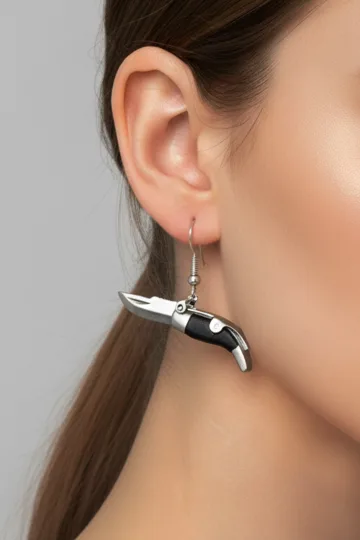
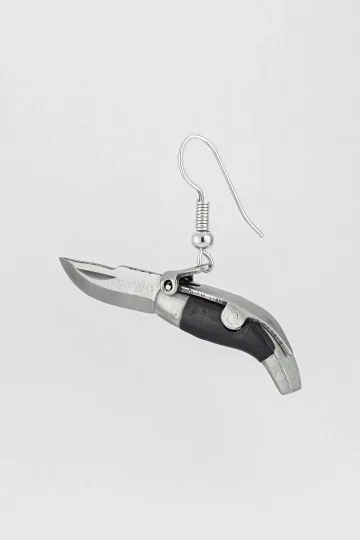
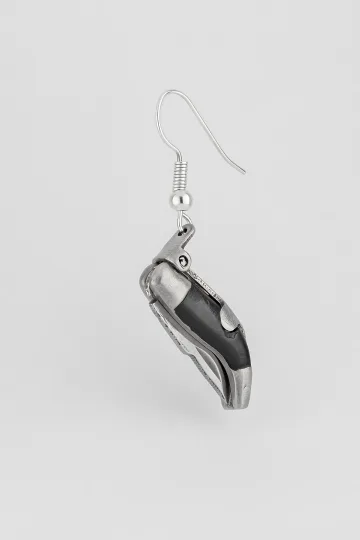
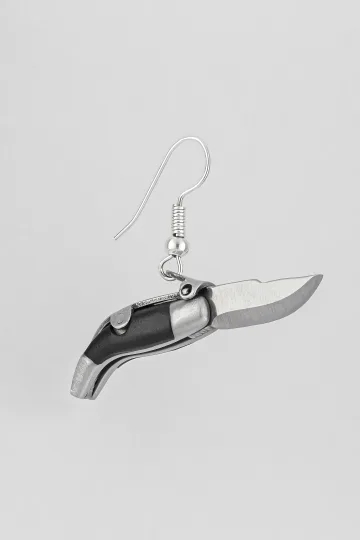
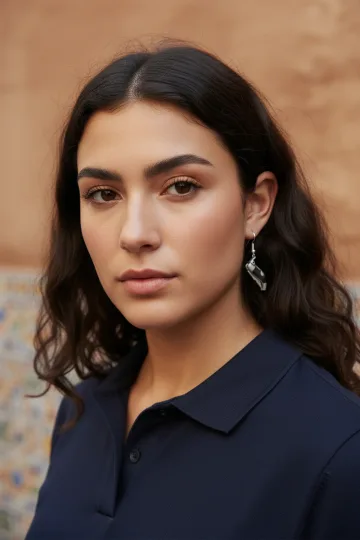
CAPAORA mini knife pendant
The 18th-century Spanish navaja in miniature: 40 mm of stainless steel, a real folding mechanism and a Palanquilla lock that clicks. An affordable gift to remember.
Authentic · Ships from Spain · 14-day returns
Hallmarking, Assay Offices and What the Marks Tell You
The pearl is not hallmarked. The metal around it is, and in Britain that gives you a genuine piece of consumer protection worth using.
Silver items above 7.78 grams, gold above 1 gram and platinum above 0.5 grams must carry a UK hallmark when sold as precious metal. The mark is struck by one of the four remaining assay offices, each with its own symbol: the leopard's head for London, the anchor for Birmingham, the rose for Sheffield and the castle for Edinburgh. Alongside it you will find a sponsor's mark identifying who submitted the piece, and a fineness number: 925 for sterling silver, 375, 585 or 750 for 9, 14 and 18 carat gold.
For men's pearl jewellery this matters in two ways. On a new piece, the fineness mark confirms that a "silver" setting is sterling rather than plated base metal, which decides whether the piece can be repaired, resized and re-tipped in twenty years. On an antique piece, the date letter and the office symbol together date the jewel to a specific year, which is how a stickpin at a country auction can be placed precisely in the 1890s.
A small pearl stud may legitimately fall under the weight threshold and carry no mark at all. That is not a warning sign. What is a warning sign is a heavy piece described as silver or gold with no mark and no explanation.
Sourcing, Ethics and Sustainability
Pearl farming occupies an unusual position among jewellery materials, and it is worth understanding rather than assuming.
Pearl oysters are filter feeders that require clean, unpolluted water to survive, which means a pearl farm has a direct commercial interest in the water around it. Farms in French Polynesia, Australia and Japan operate in lagoons and coastal waters that are monitored closely, because a decline in water quality shows up immediately as poor nacre. In several producing regions the farms are the main reason stretches of coast have been protected from development.
The honest counterweights: nucleation is an invasive procedure performed on a living animal; many farms harvest the mollusc at the end of the cycle; and in the bulk freshwater sector, production volumes are enormous and oversight varies. Shell for nuclei comes largely from American river mussels, a fishery with its own pressures.
For a buyer, the useful questions are simple. Where was the pearl farmed? Is the colour natural? Does the seller know the farm or only the wholesaler? Australian and French Polynesian production carries the most transparent chain of custody, and Japanese akoya is not far behind. Antique and second-hand pieces sidestep the question altogether, and Britain has an unusually deep supply of them.
One firm line: the Scottish freshwater pearl mussel is legally protected and it is an offence to take, kill or disturb it. Any "Scottish river pearl" offered without documented pre-1998 provenance should be refused.
Price Segments
Akoya stud (5-7mm) in silver: entry level. The cost of a meal out. A reasonable first purchase.
Akoya stud (8-10mm) in gold: mid-range.
Tahitian stud (8-10mm) in silver or gold: mid to upper mid-range, depending on the quality of the orient.
South Sea pendant (10-12mm) in gold: premium.
Akoya choker (40-45cm strand): upper mid to premium, depending on the uniformity of the pearls.
South Sea long necklace: high end.
Baroque artisan piece: varies widely, but typically mid to upper mid-range.
Natural (uncultured) pearls and antique pieces fall into a separate category and carry a significant premium.
Insurance, Valuation and Keeping Records
Most men's pearl pieces sit comfortably inside a normal home contents policy and need no special thought. Above a certain value, and for anything inherited, three habits save a great deal of trouble.
Keep the paperwork. The receipt, any grading report, and the seller's description of species and treatment. Photograph the piece against a plain background with a ruler in frame, and photograph the hallmark. Store all of it somewhere that is not the same drawer as the jewellery.
Get a written valuation for anything significant. Household policies usually require individual specification above a single-item limit, often a few thousand pounds, and an unspecified item above that limit may not be covered at all. A valuation from a qualified valuer, revisited every few years, is what makes a claim straightforward instead of an argument.
Understand what a valuation is for. A replacement-value figure for insurance is deliberately higher than what the piece would fetch if you sold it tomorrow. Neither number is wrong; they answer different questions. If you are dividing an estate rather than insuring it, ask for a probate or fair-market valuation instead.
For inherited pieces there is an additional step worth taking: write down what you know about where it came from. A note that a pair of pearl studs belonged to a grandfather who bought them in a specific decade is worth more to the next generation than the pearls, and it is the single piece of information that is always lost first.
What Not to Pair Pearls With
The failures are more instructive than the successes, and there are only a handful.
Anything abrasive worn against them. A steel watch bracelet on the same wrist as a pearl strand. A heavy curb chain in the same neckline as a pearl pendant, swinging against it all day. Nacre is soft, roughly 2.5 to 4 on the mineral hardness scale, which puts it below almost everything else in a jewellery box. This is a practical objection rather than an aesthetic one, and it is the one that actually ruins pieces.
Bright faceted stones in the same piece. A pearl next to cubic zirconia or a bright white diamond in a modern setting loses every time: the faceted stone throws hard light and the pearl, which glows rather than sparkles, looks dim by comparison. Historical pieces that combine pearls and diamonds succeed because the diamonds are old-cut, low-brilliance and used as a frame rather than a rival.
Mixed metal colours in the same neckline. A silver-set pearl pendant hanging beside yellow gold chains reads as unresolved rather than eclectic. Commit to one temperature per area of the body.
Too much of the same thing. Pearl studs, pearl cufflinks, a pearl tie pin and a pearl pendant at once turn a material into a theme. One pearl element per outfit, two at most, and let everything else be metal, leather or nothing.
Heavy fragrance applied afterwards. Not a styling error but the most common way men destroy a pearl. Cologne sprayed onto the neck over a pendant deposits alcohol and oils directly on the nacre. Fragrance first, jewellery second, always.
A borrowed piece from a women's line. Not because of the material but because of the scale and the fittings: chain lengths, clasp sizes and stud posts are dimensioned differently. A 40cm chain that sits elegantly on a woman's collarbone tends to sit at throat-tightness on a man, and the piece then looks borrowed, which is the one impression worth avoiding.
Leave your email, we'll send your discount code. No spam, unsubscribe anytime.
The code arrives by email, valid on your first order.
Gifting Pearls to a Man
A pearl piece makes a specific kind of gift: it is unusual enough to signal genuine thought but not so personal that it risks being wrong.
For a man who already wears some jewellery, a pearl adds something he is unlikely to have bought for himself. The entry point is accessible: a sterling silver akoya stud, for example, is the kind of gift that costs about as much as a good dinner for two and will still be in use twenty years later.
For a groom, pearl cufflinks are one of the most appropriate and historically grounded gifts possible. They are usable the same day, they are not too intimate, and they have a meaning that the recipient will recognise if he knows anything about the history of formal dress.
For a father or grandfather with a classic sense of dress, a pearl stud or pearl cufflinks from a contemporary maker are a way of giving something that connects to a tradition without feeling old-fashioned.
For a man with a more expressive personal style, a baroque pearl pendant or a Tahitian stud in an unusual setting gives the recipient something with genuine character. The most effective gifts in this category tend to be single pieces with a clear visual point of view rather than sets.
The practical note: if you are not certain about ear size, studs are safer than pendants, which depend less on body dimensions. If you are buying for someone who does not yet have pierced ears, cufflinks remain the most fail-safe option.
Pearls at Weddings and Formal Occasions in Britain
British formal dress has more codified occasions than most, and the pearl has an established place in nearly all of them.
Morning dress. Weddings before six in the evening, Ascot, certain civic occasions. A black or grey morning coat, striped trousers, a waistcoat. Here the pearl belongs in the cufflink and, historically, in the stickpin through the cravat or tie. A single pearl-headed pin in a wedding tie is one of the oldest and least remarked-upon pieces of masculine ornament in the British wardrobe.
Black tie. A dinner jacket with a marcella or pleated shirt. Shirt studs and cufflinks are functional necessities rather than decoration, since the shirt front has no buttons of its own, and a set with pearl faces is entirely traditional. Mother-of-pearl studs are the common version and cost very little; solid pearl studs are the older and better one.
White tie. The most prescribed form of dress that still exists. A stiff-fronted shirt, a white waistcoat, and a set of studs and links. Pearl is the classic material here, historically alongside mother-of-pearl. This is the context in which nobody will notice your pearls at all, because everyone in the room is wearing them, which is a useful thing to know if you have been told pearls on men are unusual.
The groom, specifically. A groom has more latitude than his guests and is photographed for six hours. Pearl cufflinks are the safe and historically grounded choice. A single stud is the more contemporary one. Both survive the family photographs without dating them.
Regimental, academic and civic occasions. Where dress is prescribed by an institution, follow the institution. Where it leaves cufflinks to the wearer, pearls are always acceptable and never showy.
A note on gifts around weddings: pearl cufflinks for groomsmen are a durable version of a category that usually produces something forgotten in a drawer. Matching sets in silver, one per man, are the most-used wedding gift most grooms ever give.
Psychology of the Trend
Why now? Several factors have converged.
A loosening of gendered dress codes. The generation that grew up on social media is less attached to the idea that certain objects belong to one sex. Mixing and matching is not transgressive, it is just what they do.
A reaction against minimalism. The plain navy suit and white Oxford shirt aesthetic of the 2010s has been exhausted. There is appetite for more expressive, layered dressing, and pearls, historically associated with luxury and ceremony, are part of that.
The influence of East Asian fashion. Korean and Japanese popular culture, both with large global audiences, have normalised ornamental masculinity in ways that have filtered into Western markets.
The photograph. Pearls are extremely photogenic. They catch light from unexpected angles and glow in a way that reads well in both still photography and video.
Cultural weight. Men who know the history of jewellery understand that wearing a pearl is not avant-garde; it is a return to the mainstream of five thousand years of masculine dress. That historical legitimacy matters to a certain kind of wearer.
Silver, gold, wedding rings, symbolic pieces and paired sets.
Pearls in the Digital Age
Part of what changed is not fashion but the camera in everyone's pocket.
For most of the twentieth century, men's jewellery was judged at conversational distance, in ordinary light, by people who already knew you. Now it is judged in close-up, on a backlit screen, by strangers. That shift favours materials with depth. A polished metal pendant photographs as a white blob; a pearl photographs as a small sphere with visible interior structure, and it holds that structure under phone cameras that flatten almost everything else.
The second change is access to the archive. A man wondering whether pearls are a masculine object can, in about four minutes, look at Renaissance court portraits, Mughal miniatures, Roman busts and Edwardian studio photographs, all of them showing men in pearls. That evidence used to require a library. The argument that pearls belong to women survived as long as it did partly because the counter-evidence was hard to reach.
The third is that a younger generation encountered the material through performers, images and secondhand platforms rather than through jewellery shops, which have historically sold men almost nothing but a watch and a wedding band. Vintage resale in particular has put Victorian and Edwardian men's pearl pieces in front of buyers who would never have walked into an antique dealer's, and the historical pieces are frequently better made than new production at the same price.
None of this makes the current interest a trend that will pass. It removed an obstacle that was itself only about a century old.
Pearls in Music, Film and Art Today
The visible edge of the change is on stage and on screen, and it is worth describing carefully rather than by name, because the names change every eighteen months and the pattern does not.
In popular music, the pearl arrived through performers whose visual language deliberately mixes registers: formal tailoring with sportswear, historical ornament with contemporary silhouettes. A strand of pearls over a plain shirt on a stage reads as a quotation from court portraiture, and audiences understand the quotation even when they could not name the source. Once one widely watched performer wears them, the material stops requiring courage.
In film and television, costume designers reach for pearls when a male character needs to signal old money, aesthetic sophistication or a quietly transgressive relationship to convention, and the shorthand works because the audience has absorbed centuries of portraiture without ever studying it. Period productions set before 1900 put pearls on men because the historical record demands it, and that has quietly re-taught a mass audience something the twentieth century had forgotten.
In contemporary art and the gallery world, pearls appear in work about gender, colonial trade routes and the sea, which has given the material an intellectual life alongside the decorative one. That matters commercially: a man who reads a pearl as loaded with history rather than as a soft ornament is a man who will wear one.
The through-line is that none of these are inventing anything. They are drawing on a five-thousand-year record and the record does most of the work.
Pearls Across Cultures
The idea that pearls are a women's material is a local and recent belief, and travelling even a little dissolves it.
South Asia. Mughal court dress used pearls on men at a density unmatched anywhere in Europe: ropes across the chest, pearls in the turban ornament, pearls sewn into cloth. Pearls remain associated with the moon in Indian astrological practice and are worn by men as a prescribed stone, set in silver, for reasons of temperament rather than fashion. In the Gulf, pearling was the economic backbone of the region before oil, and the pearl carries the weight of national history rather than decoration.
East Asia. Chinese imperial regulation assigned pearls to rank, with the finial of a court hat indicating the wearer's position. In Japan, the modern cultured pearl industry was built at the end of the nineteenth century and pearls are read as a technical and national achievement as much as an ornament, which is part of why men wearing them registers as unremarkable there.
Pacific Islands. In French Polynesia the black-lipped oyster is a local resource with deep cultural roots, and pearl and mother-of-pearl ornament has been worn across genders far longer than any European convention has existed.
The Islamic world. Pearls appear in Quranic descriptions of paradise, and pearl ornament on men has a long history in Ottoman, Persian and Arab court dress, including turban ornaments and dagger fittings.
Europe. The interruption is the anomaly. From the Roman senatorial ring through the Renaissance court, the Baroque monarch and the Regency dandy, European men wore pearls continuously. It is only the period from roughly the 1930s to the 2010s that treated the material as exclusively feminine, which is one century out of fifty.
Worth saying plainly: these are living traditions rather than a costume box. Wearing a pearl because you like it does not require adopting anyone else's meaning for it, and it does not require pretending the meanings do not exist.
Pearls as a Conversation Starter
An underrated practical property of a pearl on a man is that it gives people something to ask about, and gives you something worth saying.
A watch invites a conversation about watches, which is a conversation with a fixed script. A pearl invites a question with no script at all, and the honest answer is more interesting than most small talk: that men wore pearls for five thousand years, that the interruption lasted about a century, that a specific king or emperor wore a bigger one than yours. People remember that exchange.
There is a professional version of the same effect. In creative work, in teaching, in anything that involves standing in front of a room, a single legible detail gives an audience somewhere to look and gives you a small, controlled point of difference. It is the reason speakers wear a distinctive frame of glasses or a particular pen.
The counter-case is real and worth stating. If you do not want to be asked, wear it where it will not be seen: a pendant under a shirt, cufflinks under a jacket, a mother-of-pearl dial. The material behaves the same in private.
Setting Materials
The setting matters as much as the pearl itself, and for a piece worn against skin every day it arguably matters more.
Sterling Silver 925
The most common choice for men's pearl jewellery. Neutral, contemporary, suits every type of pearl. The cool tone of silver contrasts interestingly with the warmth of white akoya or underlines the brooding quality of a Tahitian stone.
Silver tarnishes, which is a feature rather than a fault in this context: the darkening in recesses gives depth to a setting and can be polished back at will. Oxidised silver, deliberately blackened, is the strongest partner for a dark pearl. The practical caveat is that silver polish is chemically aggressive and must never touch nacre, so a tarnished silver-and-pearl piece is cleaned with a dry cloth around the metal and taken to a workshop when it needs more.
White Gold, 14 and 18 Carat
The formal alternative to silver: the same cool tone, none of the tarnish, considerably more durability in thin sections such as a stud post or a fine bezel. Most white gold carries a rhodium plating that wears through over several years and needs redoing, a routine and inexpensive service.
One point of caution for men with sensitive skin: some white gold alloys use nickel as the whitening metal. European rules under REACH cap nickel release from items in prolonged skin contact, so a piece sold legitimately in the UK or the EU should be within limits, but if you have reacted to jewellery before, ask for a palladium-white alloy.
Yellow Gold, 14 and 18 Carat
The historical setting for pearls in European jewellery, and still the warmest. Yellow gold with a white or cream pearl is the Edwardian idiom in miniature, and the combination is what most antique men's studs and stickpins look like. With a golden South Sea pearl it is the only sensible choice. With a Tahitian it produces a richer, slightly theatrical effect that suits evening far better than daylight.
Carat choice is a trade-off rather than a hierarchy: 18 carat is warmer in colour and softer, 14 carat is harder and stands up better to a piece worn daily on the hands.
Stainless Steel
Underrated for men's pieces. Harder than any precious metal, effectively immune to corrosion, hypoallergenic in the common surgical grades, and cool-toned in a way that reads slightly technical rather than traditional. It cannot be worked or repaired as easily as silver or gold, and it cannot be hallmarked as a precious metal, so it belongs to contemporary designs rather than heirloom ones. For a man who wants a pearl in a piece he never takes off, steel is the least fussy option available.
Dark Metals: Titanium and Black Steel
Titanium is light, extremely strong, completely hypoallergenic, and can be anodised to a range of greys and blues. Blackened steel and black-coated alloys give the darkest possible frame for a pearl, and the contrast against a white akoya is the most graphic combination in men's pearl jewellery.
The limitation is workshop practicality. Titanium cannot be sized or soldered by conventional means, and a black coating wears at the edges over years of contact. These are pieces to buy at the right size and to accept as having a finite finish, which is a reasonable trade for the way they look.
Pearl allergy itself is essentially nonexistent: nacre is organic and inert. Reactions to pearl jewellery are almost always caused by the metal setting, and nearly always by nickel in a low-grade alloy.
Send a friend a discount code, they save on their first order.
Storage
How you store pearls matters almost as much as how you wear them.
Keep pearl jewellery separate from other pieces. Gold and silver chains will scratch nacre. A silk-lined box or a soft fabric pouch are correct. A dedicated compartment in a jewellery box, lined with velvet or silk, is ideal.
Do not store pearls in plastic bags or sealed airtight containers. Pearls need a small amount of ambient moisture to maintain their surface. A sealed plastic bag traps residual perspiration, which accelerates deterioration.
Do not keep pearl jewellery in a bathroom. The humidity cycle, wet then dry, is damaging over time to both the nacre and the stringing thread if it is a necklace.
Who It Suits
Men tired of minimalism. If you already wear a watch, a ring, a chain, one pearl adds a specific quality of light and texture that nothing else provides.
Creative professions. Designers, artists, writers, photographers. The pearl signals aesthetic curiosity without any particular effort.
Public-facing roles. Actors, speakers, hosts. On camera, pearls work. The surface catches light in a way that reads as presence.
Weddings. A groom wearing pearl cufflinks, or a single pearl stud, is referencing a centuries-old tradition of formal masculine pearl jewellery. It is not eccentric. It is historically grounded.
As a gift. A pearl earring or pendant is an unusual and considered gift for a man who already has the obvious pieces.
Who Might Find It Less Natural
Very conservative professional environments. In a traditional City law firm or a classic finance setting with a strict office dress code, a pearl earring will attract comment. Pearl cufflinks will not.
Men with very active lifestyles. If you are in the gym five times a week and sweat through everything, you need to be diligent about removing pearls before training. The care requirements are real.
Men for whom it genuinely feels wrong. There is no obligation. If wearing a pearl feels uncomfortable rather than interesting, there are other choices.
Myths That Get in the Way
Most of the hesitation men feel about pearls comes from a handful of claims that do not survive contact with the record.
"Pearls are a women's jewel." True for about one century out of the fifty in which pearls have been worn. Roman senators, Mughal emperors, Renaissance princes, Tudor courtiers and Regency dandies all wore them as a matter of course. The exception is the period your grandfather grew up in, which is why it feels like the rule.
"A single earring on a man means something specific." It meant a great many different things across history, including a sailor's savings, a mark of rank, a mourning token and simple decoration. There is no code left to break.
"Pearls are fragile, so they are impractical." They are soft, which is a different thing. Softness means they need to avoid abrasion and acid, both of which are managed by taking a piece off before the gym and wiping it afterwards. Pearls in museum collections are four and five hundred years old.
"Cultured pearls are fake." A cultured pearl is grown by a mollusc out of the same nacre, by the same process. The only human intervention is the starting point. Effectively every pearl on the market has been cultured for the past century, and the trade distinction is not between real and fake but between natural and cultured.
"You need to spend a lot to start." A sterling silver stud with a small akoya or a solid freshwater pearl is an accessible purchase and it is the right way in. Spending heavily on a first piece usually produces something worn twice.
"Pearls only work with formal clothing." The formal association is real but narrow. A baroque pearl on a leather cord with a waxed jacket has nothing to do with black tie and works perfectly well.
"If it feels bold, everyone will notice." They will not. A 6mm stud is smaller than most shirt buttons. The gap between how conspicuous a first piece feels and how conspicuous it actually is may be the single most common misjudgement in men's jewellery.
Frequently Asked Questions
Do pearls have to be expensive?
No. A silver akoya stud is an entry-level purchase at an accessible price. That is the honest starting point for most men.
Black or white pearl first?
White akoya is safer: it pairs with more clothes, it is less conspicuous, it is easier to wear in varied contexts. Black Tahitian is more dramatic and better suited to dark clothing and bolder personal styles. If you are unsure, start with white.
Can a couple wear matching pearls?
Yes, and it works well. A common version: the man wears a pearl stud, the woman wears a pearl bracelet or pendant, both using the same variety of pearl. A thematic pair rather than identical pieces.
Do pearls work with tattoos?
Well. The contrast between the smooth, lustrous surface of a pearl and the texture of a tattoo sleeve is visually effective. Many heavily tattooed men wear pearls deliberately for exactly this reason.
How do I explain them in a conservative office?
Pearl cufflinks require no explanation in a formal office. A pearl earring in a strictly conservative environment may attract questions. The honest answer is: "it is a personal preference." You are not obliged to justify your jewellery.
Do they age badly?
With poor care, yes. With correct care, no. Old pearl jewellery, properly maintained, can become genuinely antique and increase in value.
Can I swim wearing pearls?
No. Chlorinated pool water and sea water both damage the nacre surface. Remove them before swimming.
How do I tell a genuine pearl from an imitation?
The tooth test: draw the pearl lightly across the edge of your teeth. A real or cultured pearl will feel slightly rough or gritty. A glass or plastic imitation will feel smooth. The test works every time.
Do pearls work with a beard?
Yes. The contrast between the smooth, cool surface of the pearl and the texture of a beard is one of the more interesting combinations in men's jewellery. Many bearded men find that a pearl earring or pendant works particularly well in this context.
What is the difference between orient and lustre?
Lustre is the reflective quality of the pearl's surface, the clarity and brightness of the reflection. Orient is the iridescent glow that appears to come from within the pearl, caused by light diffracting through the layers of nacre. High-quality pearls have both. Orient is particularly notable in Tahitian and South Sea pearls.
Can I wear a pearl necklace and stud together?
Yes, it is a working combination. A small pair of studs with a pendant necklace creates a layered look that reads as considered rather than accidental.
Does the clasp matter on a pearl necklace?
More than most buyers expect. The clasp is the part that fails, and a failed clasp on a strand worn outdoors means pearls on a pavement. Look for a substantial box clasp or a proper lobster with a strong spring, attached to knotted thread rather than crimped wire. On a men's piece, where chains tend to be worn under a collar and pulled on and off daily, this is the component to spend on.
How often should a pearl strand be restrung?
Every two to three years for weekly wear, every year or two for daily wear. The tell is grey, fuzzy thread visible between the beads, or a necklace that has grown longer than it used to be. Always ask for knotting between pearls: it stops abrasion and it means a broken thread costs you one pearl, not all of them.
Do pearls need to be worn to stay healthy?
There is an old trade saying that pearls need to be worn, and it holds up better than most folklore. The traces of moisture and natural oils from skin help keep the conchiolin from drying out. A pearl locked in a safe in a heated house for twenty years can craze. A pearl worn regularly and wiped after each wearing does not. Neglect in a drawer is a slower version of the same problem as neglect on the body.
Can I wear pearls if I live in a hard-water area?
Yes, with one adjustment. Chalk-country tap water leaves a mineral haze if you rinse a pearl and let it dry. Wipe with a barely damp cloth instead of rinsing, dry immediately, and use filtered or cooled boiled water for any proper clean. The greater risk in a British house is not water at all but dry heat from radiators.
Which pearl should a man buy first?
A 6-7mm pearl in sterling silver, as either a single stud or a plain pendant on a 50cm chain. White akoya if you want it to disappear into any context, dark Tahitian if you want it to read as deliberate. Either way, buy one piece, wear it for three months, and let that decide what comes next.
The Right Pearl for Different Men
The older gentleman who knows his clothes. Pearl cufflinks with a grey or navy suit. A single pearl stud with a well-cut casual jacket. A South Sea pendant as a formal piece. This man is not discovering pearls: he is continuing something that was interrupted.
The young creative. A large Tahitian pearl on a black cord. An alternating chain with pearls and silver beads. A baroque pearl in an asymmetric setting. For him, the pearl is part of a visual language where history and the present are deliberately mixed.
The groom. White pearl cufflinks with a morning suit or a dark wedding suit: a direct reference to the white tie tradition. A single white pearl stud that will be visible in photographs. Both options have centuries of historical precedent.
The musician or artist. Pearls fit a stage image naturally, because they carry cultural weight. A substantial black Tahitian chain over a plain black shirt. Baroque pearls in complex artisan settings. The pearl signals a certain visual intelligence.
Choosing Your First Piece
Almost every man who ends up wearing pearls regularly got there the same way: one modest piece, worn until it stopped being a decision.
Start with the format that fits the life you actually have rather than the one you would like to have. If you wear a jacket to work, cufflinks. If you have a pierced ear, a stud. If you have neither, a pendant on a chain, which asks nothing of your wardrobe and can be worn under a shirt while you get used to it.
Choose the size down rather than up. A 6mm stud looks correct on nearly everyone; a 10mm stud is a decision you have to keep making every morning. The same applies to pendants: 10-12mm is enough to read clearly at conversational distance, and the temptation to go bigger usually comes from looking at photographs taken close up.
Silver is the right first metal. It is inexpensive enough to be a low-stakes experiment, it suits every pearl colour, and if the piece becomes a favourite you can have the same design remade in gold later.
Buy a colour that matches your existing wardrobe rather than an aspirational one. If you own mostly navy, charcoal and black, a dark pearl will get worn. If you live in linen and pale cotton, white or cream will.
And buy one piece rather than a set. A set commits you to a look before you know whether you want it. One piece lets the answer arrive on its own.
Practical First Steps
A short sequence that saves money and regret.
One. Look before buying. Spend twenty minutes handling pearls in an actual shop, even if you intend to buy online. Ask to see a cheap pearl and an expensive one side by side and note what differs. You will not forget the difference once you have seen it under daylight.
Two. Decide on the occasion first, the piece second. "Something for the office," "something for my brother's wedding," "something I can wear every day with a T-shirt." Each of those has a clear answer, and the answers are different.
Three. Set a segment, not a figure. Entry level for a first silver stud, mid-range if you are buying a Tahitian or a gold setting, premium only for a large South Sea pearl bought as a piece for life.
Four. Ask three questions of any seller. What species? Is the colour natural? What is the nacre thickness? The quality of the answer tells you more than the ticket.
Five. Check the return path before you pay. Especially online. Any seller confident in the piece will make it easy.
Six. Buy the storage at the same time. A soft pouch or a lined compartment costs almost nothing and prevents the single most common cause of damage, which is a pearl loose in a drawer with a watch and a set of keys.
Your First Month with a Pearl
The first month is where a piece either becomes part of your life or ends up in a box.
Week one: wear it at home. Genuinely. Put the stud in on a Saturday and do nothing special. The strangeness is entirely about seeing yourself in the mirror, and it wears off within a few days without any external audience involved.
Week two: wear it somewhere low-stakes. A supermarket, a walk, a coffee with someone who does not care what you wear. Note how many people mention it. The answer is almost always none, which is the information you actually needed.
Week three: wear it to work. By this point you will have stopped touching it every ten minutes, which is what previously made it look uncertain. If someone asks, you have a genuinely interesting answer about five thousand years of men in pearls.
Week four: assess honestly. Do you reach for it without thinking? Then it was the right format and you can consider a second piece in a different register. Do you have to remind yourself to put it on? Then the format is wrong rather than the material, and a man who does not enjoy a stud may well enjoy cufflinks.
Build the care habit in the same month, because habits formed now will still be running in ten years. Jewellery on last, jewellery off first, a wipe with a soft cloth before it goes back in the pouch. Ten seconds a day is the entire maintenance programme.
Buying it as a gift? Each one arrives ready to give.
 A branded Zevira box and a little card come with every order.















Formats Worth Owning: A Practical Range
If you were assembling a men's pearl wardrobe from nothing, these are the pieces that earn their place, roughly in the order most men acquire them.
Saltwater Pearl Studs
The foundation. A 6-7mm akoya in white, or a Tahitian in charcoal, on a secure threaded post rather than a friction back. Threaded backs cost more and lose a great deal less. This is the piece that works from a T-shirt to a dinner jacket and the one most men end up wearing daily.
Chains With a Single Pearl
A fine silver or gold chain, 45-55cm, carrying one pearl of 10-14mm in a plain bezel. The chain length decides everything: 45cm sits at the base of the throat and is visible with an open collar, 55cm sits on the sternum and lives under a shirt. Choose the one that matches whether you want it seen.
Baroque Pearl Bracelets
Irregular pearls interspersed with metal elements, sized to sit loosely rather than tight. This is the least formal pearl format and the one that works with the widest range of clothing. Because baroque shapes vary, no two bracelets look the same, which is the point.
Rings With a Single Pearl
A substantial band carrying one pearl, or a signet-form ring with a mother-of-pearl or mabe face. Rings are the hardest-working position in men's jewellery and the hardest on a soft stone, so this is a piece for occasions rather than for a working hand. The signet form, with the nacre flush in the metal, survives ordinary life far better than a raised pearl.
Cufflinks and Shirt Studs
The most historically anchored men's pearl pieces and the easiest to justify to anyone. A pair of cufflinks with white pearl faces covers weddings, black tie and formal work. A full stud set extends the same idea down the shirt front for the most formal occasions.
Personalisation and Engraving
The backs of cufflinks, the reverse of a pendant bezel and the inner band of a ring all take engraving. A date, a set of initials, a short line, a coordinate. This is what turns a bought object into a specific one, and it costs very little relative to the piece. Keep it on a surface that touches skin rather than one that faces outward.
Material Quality: What Separates Good From Ordinary
Across all of these, the same three things decide whether a piece is worth owning in ten years: nacre thickness on the pearl, a solid rather than plated metal that can be repaired, and fittings, posts, clasps and cups, that are engineered rather than minimal. None of the three is visible in a photograph, and all three are the difference between a jewel and a souvenir.
A Last Word: Trust Your Own Eye
Everything above is context. The decision is not.
There is no committee that certifies whether a man may wear a pearl, and there never was. The century in which the material was quietly reassigned to women produced no rule, no authority and no argument, only a habit. Habits of that kind survive exactly as long as nobody looks at the evidence, and the evidence in this case is a five-thousand-year run of kings, senators, sailors, dandies and clerks wearing pearls without anyone commenting.
Practically, this means two things. First, the only opinions that matter about a piece are yours and possibly one person whose taste you actually respect. Second, the test of a jewel is not whether it impressed anyone but whether you reached for it again the following week.
If a pearl looks right to you in the mirror, it is right. If it does not, no history will fix that, and there are other materials. The whole subject is smaller and more forgiving than the anxiety around it suggests.
Conclusion
Men's pearl jewellery is not a trend invented in the last five years. It is a return to something that was standard practice for five thousand years before a century-long interruption made it seem novel. Kings, emperors, senators, bishops, Tudor courtiers and Edwardian gentlemen all wore pearls as a matter of course.
The simplest starting point is a single pearl stud or a fine chain with one pendant. Wear it for a few months. The historical weight of the thing is part of what makes it interesting.
About Zevira
Zevira makes jewellery in the artisan tradition of Albacete, Spain. The men's pearl pieces in our collections are not adapted from a women's line. They are designed separately, with an emphasis on contrast, texture and irregular form.
What is available for men:
- Single pearl studs in 925 silver
- Short necklaces with a single pearl pendant
- Baroque pearl bracelets with metal elements
- Rings with a single large pearl in a substantial setting
- Pendants combining pearl with other symbolic forms
Each piece is made by hand, with personalised engraving available. We work with 925 silver and 14-18K gold.