Dioptas in Jewelry: A Rare Blue Stone of Creativity and Collecting
Introduction: The Voice of Copper Earth
In the mid-19th century, European mineralogists encountered a puzzle. In copper mines of Namibia and Chile, they found crystals of unprecedented transparency, a brilliant green so deep it read as emerald at first glance, yet with a copper sheen unlike any known mineral. The stone was fragile, but it glowed from within as if lit by an inner flame. They named it dioptas, from the Greek words "dio" (through) and "optazein" (to see), literally "visible through", because it allowed you to see through the depth of copper earth.
Two centuries later, dioptas remains one of the rarest and most expensive gemstones in the world. Not because it's precious by definition, but because you won't find it just anywhere. Each specimen is the result of millions of years of chemical processes in the oxidised zone of copper deposits. And each remains a miracle because it often destroys itself before it's even extracted from rock.
This guide is about one of the rarest green stones on earth, which costs more than emerald by weight in fine grades but appears in jewellery a fraction as often. About the mines where it's found, the energy attributed to it, and why a collector's piece, rather than an everyday ring, is what you should be looking at first.
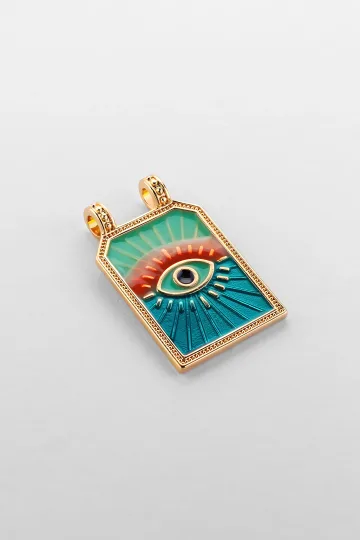
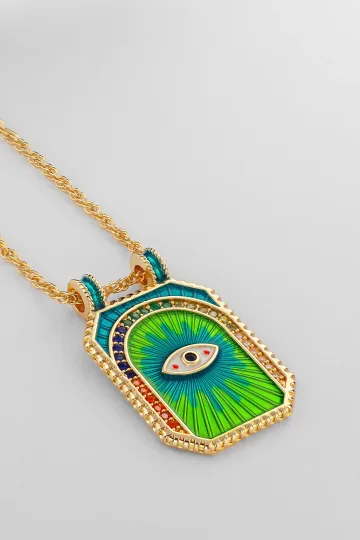
Wear the symbol, don't just read about it. These are in stock:



What is Dioptas
History of the Name and Discovery
Dioptas was scientifically described and named by the French crystallographer René Just Haüy in 1797, with the chemistry established in the same period by the German analyst Martin Heinrich Klaproth. It has been known to science for over 225 years. But it didn't enter the jewellery market significantly until the late 20th century, when specimen-quality stones from Namibia and Congo became available to lapidaries. Scientific knowledge is ancient; its use in jewellery is relatively recent.
Chemistry and Structure
Dioptas is copper silicate: Cu₆(Si₆O₁₈)·6H₂O. Copper is responsible for its deep emerald-green colour, the shade that earned the stone its old nickname of copper emerald. Water, chemically bound to the crystal, gives it special transparency and a living lustre. If water evaporates, dioptas fades and may begin to crack.
The triclinic crystal lattice means low symmetry and increased brittleness. Compared to beryl (emerald, aquamarine, hardness 7.5-8 on Mohs), dioptas is far softer: only 5 on Mohs. This means ordinary glass (5.5) can scratch it. In jewellery, this becomes the primary challenge.
Dioptas density is 3.28-3.35 g/cm³, heavier than most gemstones (compare: emerald 2.76, topaz 3.53). This means even a small dioptas stone will feel noticeably heavier than it looks.
Rarity and Limited Mining
Dioptas forms exclusively in oxidised zones of copper deposits. It's not a primary mineral deep in the earth, but the result of weathering and copper-ore oxidation under water, oxygen, and time. Such conditions are rare, and quality crystals rarer still.
Only a few truly productive deposits are known on the planet. Some are exhausted or inaccessible. Dioptas is mined in microscopic quantities against millions of tons of copper ore. From a one-hectare deposit, only a few kilograms of quality material might emerge. And 90% of found crystals are suitable only for museums or collections, not jewellery.
This directly determines price. Jewellery-quality dioptas trades in a high price segment, well above most green gemstones. For comparison, even good Colombian emerald or fine tsavorite garnet sells for a fraction of the price per weight that clean dioptas commands.
Dioptase belongs on a bare throat, solo. Crowd it with five chains and you have killed a rare stone. Don't.
How to Wear Dioptas
After years working with rare stones, I have learned one thing: dioptas cannot stand noise around it. Here is what actually works, sorted by occasion and by background.
What do I wear dioptas with every day? For a daytime look I recommend a pendant on a thin silver chain over a plain sweater or a shirt in muted tones: grey, sand, warm white, graphite. Against that background the stone reads as an accent, not as a piece that pulls all attention to itself. An open neckline lets the pendant hang freely, at heart level, which is its best position.
Does it work at the office? It does, as long as you keep it restrained. I suggest a small dioptas in a closed silver bezel and a pair of studs. Cool clothing tones (steel, navy, emerald) echo the stone and hold the look together. Warm yellow gold next to dioptas clashes in temperature, so I choose silver, white gold or platinum.
How do I build an evening look? For evening I recommend a dark dress with no pattern, an open neckline and a single visible pendant or brooch, and almost nothing else. The stone loves emptiness around it. If you want layers, add a pearl or clear rock crystal: they set off the green without fighting it.
Which chain length should I choose? I go for a chain shorter than average, 40 to 45 cm, so the stone sits on the chest and does not sink into the neckline. Under a high closed neckline I take a shorter pendant; under an open V-neck the stone can go a little larger.
Who does dioptas actually suit? Thoughtful people, the ones drawn to depth rather than sparkle. And one rule that never fails: one dioptas per look. It is a soloist stone, so do not bury it between five other pendants.

Turn on your camera, pick earrings, a pendant or a ring, and see the piece on yourself in real time.
Switch items in one tap.
Everything runs in your browser: no photo or video is ever uploaded.
Why Dioptas Is So Green
Copper as the source of the colour
The colour of a mineral is born where light meets the atoms of a metal. In dioptas the responsible element is copper, present as the divalent ion. That ion absorbs part of the visible spectrum in the red, orange and yellow region and lets the green and blue-green through to the eye. The result is a dense, cool, emerald tone. The same copper, sitting in slightly different crystal surroundings, colours malachite in banded green, azurite in deep blue and chrysocolla in a soft turquoise. One metal, several minerals, a different seating of the ions in each lattice, and out of a single source comes an entire palette of greens and blues.
This is worth understanding because it explains a common muddle. People who know copper minerals mostly through turquoise-toned chrysocolla or through the blue of azurite sometimes expect dioptas to be blue as well. It is not. Copper is a chameleon, and where it sits in the structure decides the answer.
Why the shade drifts from emerald to turquoise
There is no chemically pure material in nature. Traces of iron, zinc and sometimes calcium mix in alongside the copper, and perception of colour also depends on how much light the stone lets through. A dense, opaque crystal from Kazakhstan reads as almost black-green, because light bogs down inside it and never gets the chance to bring the tone alive. A thin, transparent crystal from Tsumeb glows an even emerald, because the beam passes right through and comes back clean. The bluish shift often seen in Congolese material is largely explained by haze and micro-inclusions that scatter light towards the cooler end of the spectrum.
The practical consequence is that you cannot judge dioptas colour from a photograph taken against a white background under a hard light. Ask to see the stone over a dark surface in ordinary daylight, the way you would judge any transparent green stone, and the true tone appears.
Bound water and the character of the stone
The six molecules of water in the formula are not moisture sitting on the surface. They are part of the construction of the crystal itself. They hold the lattice together and they govern how the stone behaves under heat. Fire a piece of dioptas and the water leaves, the structure collapses, and the green pales and disappears for good.
This is why the kiln treatments used to lighten or deepen the colour of so many other gems cannot be applied here at all. The stone shows exactly the colour nature gave it, which is an honest property from a buyer's point of view and a rare one in the coloured stone trade. When you buy a green dioptas you are buying an untreated green, with none of the questions that hang over heated sapphire or oiled emerald.
Mining History and Deposits
Namibia: The Quality Standard
Southwestern Namibia, Oshikoto region, Chobis district and surroundings of Tsumeb, the main dioptas deposit that set the world standard for quality.
The Tsumeb district became geologically significant in the late 19th century when German mining companies began large-scale copper extraction. Dioptas was found as a byproduct. The first major specimens went to Berlin and London museums in the 1890s. At that time, this was the most beautiful version of the mineral on the planet.
Namibian dioptas is distinguished by:
- Pure, deep green colour with no muddying impurities
- High transparency, often complete
- Large crystals (up to 10-15 mm wide, enormous for dioptas)
- Natural crystal faceting, nearly ready for polishing
The main mining complex in Tsumeb ceased operations in 2011 after 100+ years of continuous work. Copper ran out before economically exhausted reserves (dioptas is too deep and not economically worth separate extraction). Occasionally specimens are found in accessible quartz veins in Namibia, but these are events, not systems.
Result: the overwhelming majority of modern jewellery-quality dioptas on the market was collected in past decades. Collectors, museums, and mineral traders kept it. When a major supplier auctions a batch, it's news in the gemological community.
Congo: Secondary Source
The second most important dioptas base is in Congo, southwestern region (Katanga province, Musanoi district). Material here is slightly inferior: often cloudy, with inclusions, and a colour that leans towards a duller bottle-green rather than the pure emerald tone of the best Namibian crystals. But since Namibia largely stopped, Congolese dioptas became important.
Mining in Congo is irregular, dangerous, and low-tech. Artisanal mining amid geopolitical instability. Quality is unpredictable. Yet every 2-3 years comes news of a quality batch discovery.
Lesser Deposits
Chile (Andauma district, Cordillera de los Andes): historical specimens that form the basis of mineral description. Mining ceased in early 20th century. Modern finds are rare.
Kazakhstan (Moyynkum desert, Aktau deposit): discoveries began in the 1990s post-Soviet. Medium-quality material, often more saturated colour but cloudier.
Nicaragua, Vietnam, France, USA (Arizona): local finds, historically significant for mineralogy, but practically unused in jewellery.
Customer reviews
Zevira is a real jewellery shop. Genuine payments, deliveries and customer thank-yous.
🥰🥰🥰 gracias
Ok, ¡gracias! 🙂
History of Discovery and Misconceptions
The stone that was taken for emerald
The story of dioptas begins with a mistake, which is part of what keeps it alive. In the late eighteenth century, Kazakh specimens of a saturated green reached a trader and then a series of collectors, and some of them were taken for emeralds. The resemblance is genuinely deceptive: the same cool green, the same glassy lustre, the same habit of growing as clean prismatic crystals. The deception came apart when somebody tested the hardness and found that the stone scratched easily. Real emerald does not behave that way. That confusion is where the nickname copper emerald came from, and it has stuck to dioptas ever since.
Who gave the stone its name
The mineral was sorted out definitively by the French crystallographer René Just Haüy, one of the founders of scientific mineralogy, who in 1797 described it and gave it a name from two Greek roots: dia, through, and optazein, to see. Haüy had noticed the cleavage planes inside the crystal, which show through at certain angles, and named the mineral literally for what could be seen inside it. The chemistry was established around the same period by Martin Heinrich Klaproth, the German analyst whose work confirmed the copper content. The name turned out to be well chosen: the ability of dioptas to display its own internal facets is still one of the things that identifies it under a loupe.
The road into collections and museums
For a long time dioptas remained the property of mineralogists rather than jewellers. The best Kazakh specimens went to natural history cabinets, where they were prized for purity of colour and the shape of the crystals rather than for any ornamental use. The turning point came at the end of the nineteenth century, when the Namibian mine at Tsumeb came into production and large transparent crystals began reaching the wider world. Collectors and museums across Europe and America took them up quickly.
This history explains something about the market today. The most famous dioptas specimens sit in mineralogical collections rather than in jewellers' windows, and material reaches the trade one piece at a time out of old private collections. The London and Washington collections referenced later in this guide were assembled in exactly this way, and the pattern has not really changed in over a century.
Upload a photo of your pet, someone you love, or an object. We'll build a 3D model and hand-cast it in pewter.


Varieties and How to Tell It from Similar Stones
Varieties by colour
Dioptas has no formal grading system, but collectors distinguish stones by shade and by origin:
- Emerald green, the most desirable, the Tsumeb classic. Transparent crystals of this colour are rare and are valued above everything else.
- Blue-green, turquoise-leaning, more common, and often characteristic of Congolese material.
- Dark green, almost black in the mass, typical of the dense Kazakh crystals.
- Clouded, hazy, with numerous inclusions. The colour still reads, but the stone is only semi-transparent.
How it differs from emerald and other green stones
The main confusion is with emerald, and for good reason: the colour is very close. The physics, however, is entirely different.
- Emerald is beryl, a beryllium aluminium silicate, hardness 7.5 to 8, density around 2.7, coloured by chromium or vanadium. Emerald is much harder and noticeably lighter, and you will not mark it with the edge of a piece of glass.
- Chrysocolla and malachite are also copper minerals of the oxidation zone, but opaque and distinctly softer, without clean transparent crystals.
- Tourmaline (verdelite), chrome diopside and tsavorite are hard green gems. Unlike dioptas they stand up to being worn and they lack its perfect cleavage.
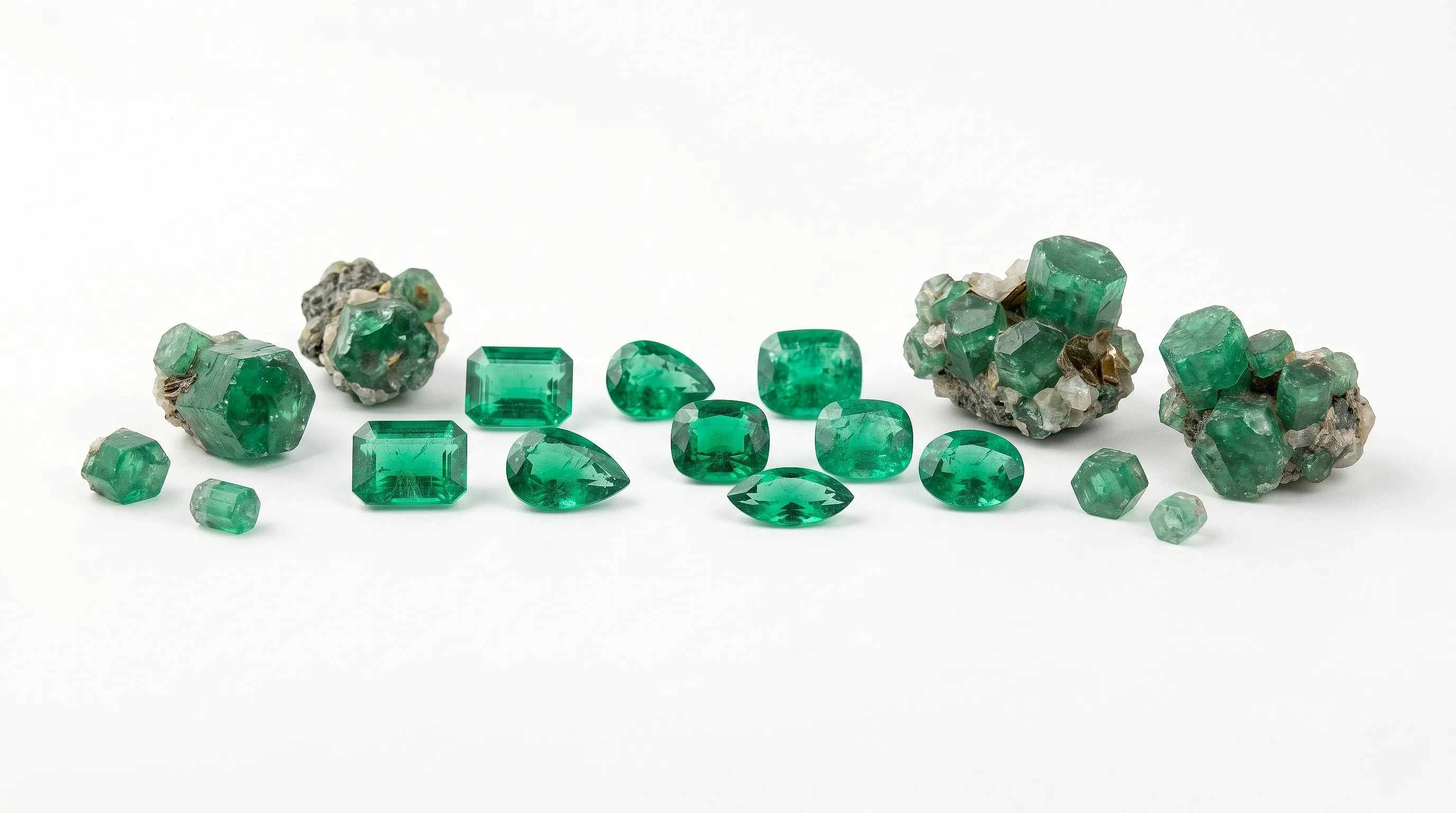
A simple checklist for dioptas: it is soft enough to be scratched by glass, it is dense enough to feel heavier than an emerald of the same size, it shows very strong birefringence so the back facets appear doubled under a loupe, and it typically grows as short six-sided crystals on a copper-bearing host rock.
How to spot a fake
Outright glass imitations of dioptas are barely made at all, because the stone is too niche for mass counterfeiting to pay. What happens far more often is misattribution, where another green mineral is sold as dioptas or a specimen is simply labelled wrongly. The signs of the real thing:
- glass is lighter, at a density of around 2.5, while dioptas is heavy for its size;
- under a loupe, glass shows rounded gas bubbles, while dioptas shows natural inclusions and cleavage cracks;
- glass will not be scratched by ordinary glass, whereas dioptas will;
- birefringence: through a real stone the back edges appear doubled, through glass they do not.
For an expensive purchase it is sensible to rely on a report from an independent gemmological laboratory rather than on any of these tests alone.
Is dioptas treated
Good news for the buyer: dioptas is almost never enhanced, which makes it a rare exception among green stones. Heating is out of the question, since it destroys the bound water in the composition and kills the colour, so the thermal treatment routine for sapphire and aquamarine simply does not exist here. Nor is there oiling of fractures as there is with emerald: there is far too little cuttable dioptas in the world to build an enhancement industry around it.
What does genuinely occur is stabilisation of fragile material. Thin translucent crystals are sometimes set onto a colourless resin or a backing so that they do not crumble while a cabochon is being shaped. Druses on matrix may be stabilised by impregnating the host rock with a colourless compound, leaving the crystals themselves untouched, purely to hold the specimen together. Dyeing and doublets, where a thin slice of stone is glued to a backing, are almost unknown in dioptas because the demand is too narrow to support them. An honest seller will tell you whether a stone has been stabilised, and for natural material with no intervention at all that is a point in favour of the price.
Energy and Symbolism of Dioptas
Creativity and Communication Clarity
In crystal therapy literature, dioptas is credited with unlocking creative channels. It's believed to enhance one's ability to express ideas, translate vague images into clear words and actions. This is linked to its green colour (association with the heart centre) and crystal transparency (visibility, clarity).
The stone is called "a helper for writers, artists, and musicians." Those wearing dioptas jewellery often report enhanced idea flow and greater speech fluency. The scientific basis for this, of course, is absent. But it would be naive to dismiss the placebo effect and psychological impact of a beautiful object on mind and mood.
Healing Heart and Throat
Some schools believe dioptas works simultaneously at the throat chakra level (communication) and heart chakra level (feelings). Supposedly it helps heal emotional wounds and "speak out" unresolved conflicts.
Usage method: wear the stone in a pendant at throat or heart level; meditate with the crystal in hand 10-15 minutes daily.
Protection from Negative Energy
Green has carried protective associations in a number of traditions, from the amulets of the eastern Mediterranean to the green stones set into medieval reliquaries. Dioptas is credited with the role of "spiritual shield," reflecting negative intentions and calming one's own anger. Some wear it during conflict negotiations.
This is mysticism, but mysticism that often works through confidence and mindfulness. Someone who believes they've donned armour behaves more confidently.
The Collector Aspect
For most dioptas jewellery owners, the primary "energy" is the energy of rarity and uniqueness. Each stone is a miracle of formation, a rarity in the modern world, part of global mining history. Wearing or keeping dioptas means participating in the gemological elite. And this energy is quite real, though expressed in a collector's fascination rather than mysticism.



How to Choose Dioptas
Colour: Spectrum of Shades
Ideal emerald green, vivid, saturated, with a faint blue undertone in the depth of the stone and no muddiness at all. This is rare even in Namibian material, and the price is the highest.
Green with a turquoise cast, lighter and cooler, tipping towards the blue end. More common, and worth understanding rather than avoiding: the shift comes from the way light travels through a thinner or less richly copper-bearing crystal. Price is noticeably lower, often by a third to a half.
Dark, bottle green, so saturated it approaches black in poor light. Usually indicates inclusions or a dense growth structure. Rarely seen in Namibian crystals, more common in Congolese ones.
Cloudy, milky green, a serious defect. Usually means the stone has begun to lose its bound water. It may indicate that cracking is on the way.
When buying jewellery-quality dioptas, the key rule: light must pass through the stone. If it looks cloudy or foggy, walk away, however good the colour appears from the front.
Size and Carat
Dioptas rarely exceeds 1 carat in jewellery quality. Stones of 2-5 carats exist but cost disproportionately high (price grows non-linearly, cubed like diamonds). Stones 10+ carats are already collector's rarities at specialised auctions.
For jewellery, recommendations:
- Pendant or brooch: 0.5-2 carats ideal. Stone is noticeable enough, price still reasonable.
- Ring: 0.5-1 carat, as the stone undergoes greater stress.
- Earrings: 0.3-0.8 carat each, in closed setting (not dangling where it would strike).
- Bracelet: rarely, since constant friction. If a bracelet, micro-stones 0.2-0.3 carat in protected setting.
Transparency
Dioptas almost always has inclusions. Completely transparent stones cost 3-5 times more than slightly included ones.
- Transparent: light passes through, no visible defects even close-up.
- Slightly cloudy: visible fine inclusions inside but don't prevent colour perception.
- Visible inclusions: stone looks "soiled," colour fades. Usually 50%+ price discount, but it's a genuine crystal with formation history, not just polished stone.
Origin
Honest sellers specify origin. Namibian dioptas costs 50-100% more than Congolese or Kazakh material of same size and colour. But rarity is also higher.
When buying online, ask for a certificate from an independent gemological lab. Dioptas is sometimes confused with synthetic materials and glass, and a certificate helps confirm authenticity.
Cutting and Polishing
Dioptas is rarely found already cut. Usually it's a polished natural crystal or minimally faceted to highlight its natural form.
- Cabochon cut: polished top, flat base. Classic for jewellery, enhances colour and transparency while reducing sharp-edge damage risk.
- Natural crystal in setting: rare but occurs. Stone remains in pristine form, often hexagonal. Looks more "raw" and authentic but more fragile.
- Brilliant-style faceting: very rare for dioptas, as the stone is too soft. Such cutting requires a professional who understands its peculiarities.
Best choice for jewellery: cabochon with smooth polishing, no sharp edges. This maximally protects the stone and showcases its colour.
Setting the Stone: What the Workshop Has to Do Differently
How a setter protects the stone in its mount
A jeweller works with dioptas not as with a durable gem but as with a fragile guest that has to be looked after. Open claw settings, where thin prongs hold the stone at a few points, are dangerous here: any knock arrives directly on an edge and splits the stone along its cleavage. So the choice falls on a closed bezel, where metal wraps the stone right around the girdle and takes the impacts itself. Between stone and metal the setter often leaves the thinnest cushioning gasket, so that tightening the bezel does not start a crack. The tightening itself is done gently, without sharp force, and frequently finished by hand rather than on a machine.
Why ultrasonic cleaning and heat are banned in the workshop
Many operations that are entirely routine for a jeweller are fatal to dioptas. The ultrasonic bath used to clean most jewellery drives vibration through the stone, and the cleavage answers with micro-fractures. Soldering anywhere near an already-set dioptas is not attempted: the heat drives the water out of the formula and kills the colour outright. The stone therefore goes into its setting at the very last stage, once every hot operation on the metal is finished. That lengthens and complicates production, and it is one more reason why dioptas remains the business of hand workshops rather than of any production line.
The same rules apply to you as the owner and to any high-street jeweller you hand the piece to. If a shop offers to pop your dioptas pendant into the ultrasonic tank while you wait, say no and take it elsewhere. Resizing a dioptas ring is another job that has to be planned around the stone: the stone comes out first, the metal is worked, and the stone goes back in at the end.
Choosing metal for a green stone
The cool green of dioptas gets along with cool metal. Sterling silver, white gold and platinum pick up the temperature of the stone and let it sound clean. Warm yellow gold beside dioptas argues on tone, and the green starts to look muddier than it actually is. If gold is what you want, take a white alloy or a rhodium-plated surface. Matt metal around the stone works better than mirror-polished: it does not pull the light onto itself and leaves the shine to the dioptas.
Dioptas on matrix: the collector's format
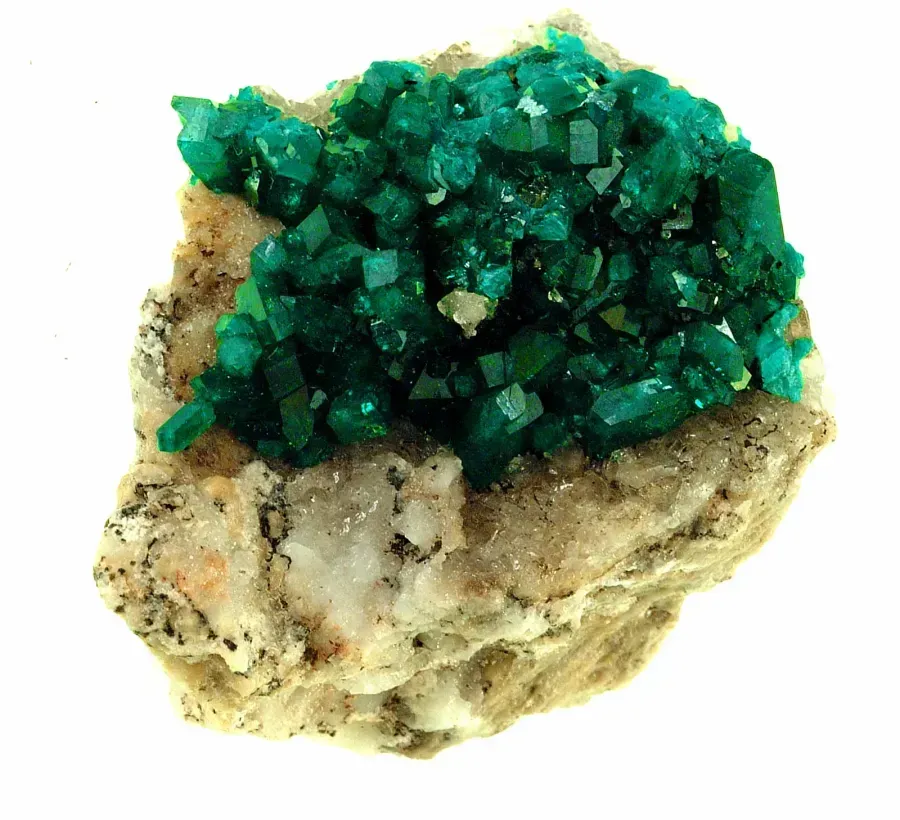
Most dioptas on the market is sold not as separate stones but as crusts of small crystals growing directly on their host rock, the matrix. For a collector this is a normal and even a desirable form. What is valued is the contrast of a bright green crust against a pale matrix, the density and size of the crystals, and the absence of chips on the faces. Pieces like this are not turned into conventional gems. Instead the metalwork is built around the fragment of rock: a pendant holding an untreated fragment, a brooch carrying part of a druse.
A buyer here is largely paying for a mineralogical specimen rather than for lapidary work. The price depends on the quality of the druse, meaning the brightness of the green, the integrity of the crystals and the look of the matrix, while the metal and the making simply frame the find. A pendant of this kind has to be worn with particular care, because projecting crystals catch on clothing and chip along the cleavage very easily. Matrix specimens belong in brooches and in pendants worn occasionally, not on an everyday chain.
Leave your email, we'll send your discount code. No spam, unsubscribe anytime.
The code arrives by email, valid on your first order.
Dioptas in Jewellery: Forms and Styles
Pendant with Dioptas
The safest way to wear it. The stone hangs on a chain, not subject to stress and friction. Silver 925 or 950 setting is recommended, rarely gold (dioptas is too rare to "waste" on precious metal, though such pieces exist).
A pendant with a 1-2 carat stone sits in a high price segment, varying with origin and transparency. Expensive, but typically less than a ring or earring with the same stone.
Setting style:
- Minimalist: simple silver ring around the stone, thin chain. Modern, 2020-2026.
- Victorian: abundant silver, filigree, possibly small accent stones (pearl, tiny diamonds). Vintage, 1990-2010.
- Ethnic: stone in silver with engraving, subtle symbolism. Boho, 2010-2020.
Ring with Dioptas
The riskiest but most impressive way. The stone on your hand undergoes:
- Impacts against tables, doors, other objects.
- Friction with water, soap, clothing.
- Pressure when clenching your fist.
Recommendation: dioptas in a ring only for those prepared to be very careful. Not recommended for daily wear, especially with active lifestyle.
If still a ring:
- Stone maximum 1 carat, ideally 0.5.
- Setting: bezel where stone is fully protected. Open settings with prongs don't work.
- Material: platinum or substantial silver 950, as thin gold will deform.
- Closed setting so the stone doesn't shift.
A ring with a 0.5-1 carat dioptas falls into the upper end of the price range, even higher than a comparable pendant because of the protective setting required.
Earrings with Dioptas
Safer than a ring but less convenient than a pendant. Stone can catch in hair, get snagged by clothing. Studs (stable, short earrings) recommended over dangles.
Dioptas size in earrings: 0.3-0.8 carat each. Silver surround so the stone looks complete and protected. Closed earrings with "bullet" backs so they don't get lost.
A pair sits in a similar high price segment, scaling with stone size and origin.
Brooch with Dioptas
Rare but occurs. Brooch offers creative freedom in setting since stresses are minimal. The stone can be almost unprotected, just firmly mounted. Can use dioptas 1-3 carats, rare for jewellery.
Style: from abstract modern to realistic animal with dioptas as "eye." A brooch is the most interesting and creative use of a rare stone.
An artisan brooch with a 2+ carat dioptas reaches the top of the price range, reflecting both the larger stone and the craftsmanship involved.
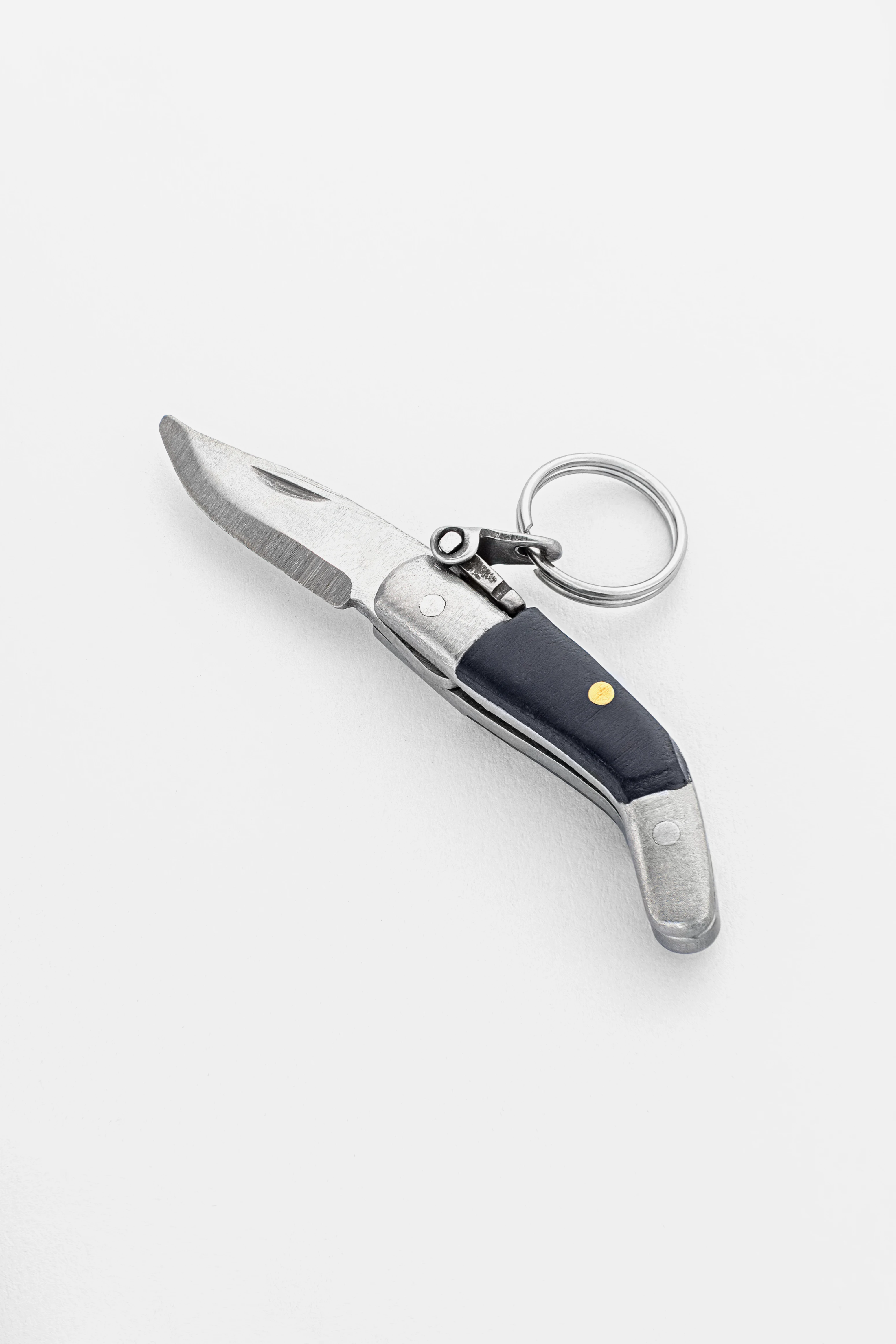
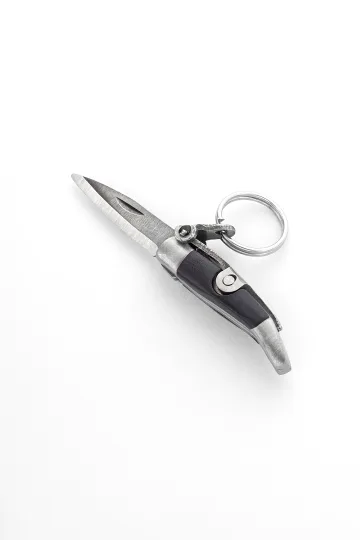
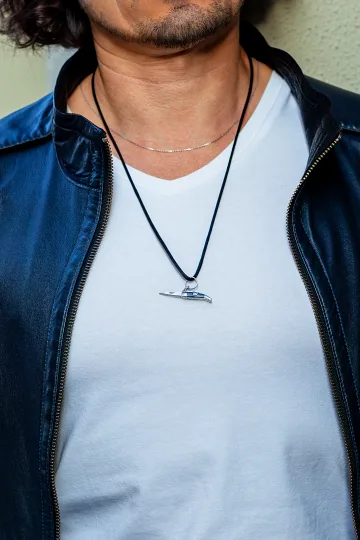
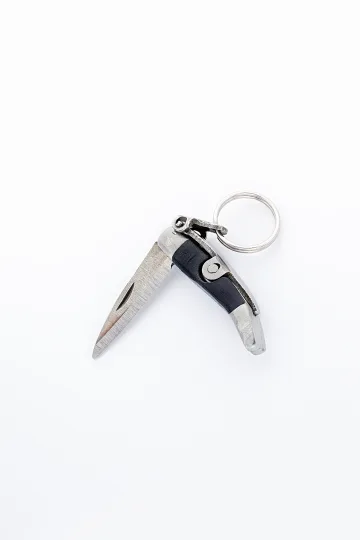
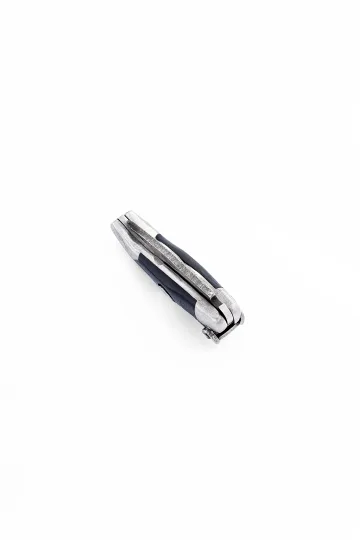
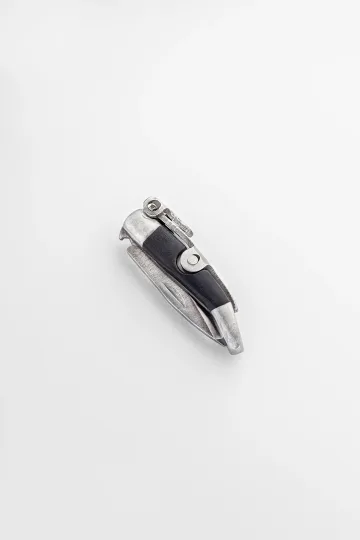
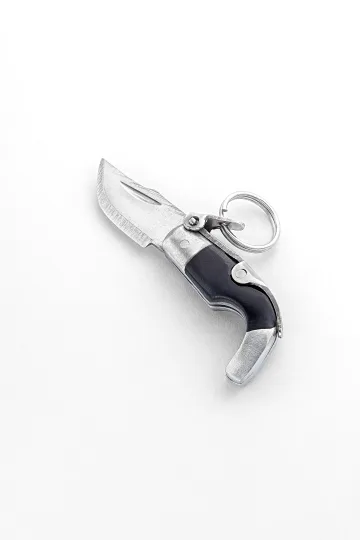
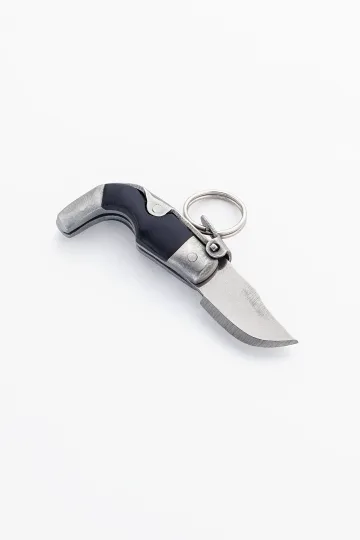
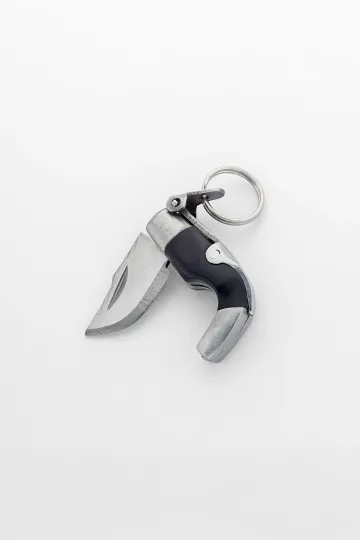
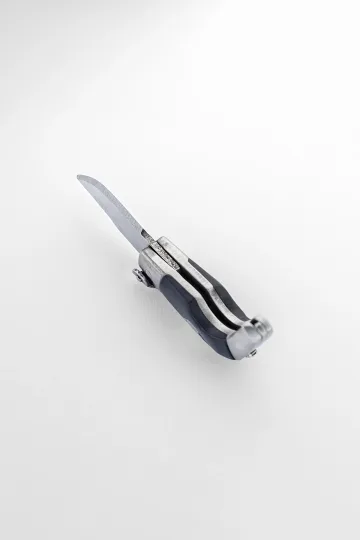
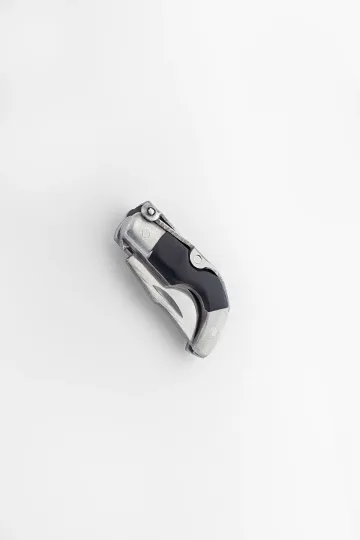
CAPAORA mini knife pendant
The 18th-century Spanish navaja in miniature: 40 mm of stainless steel, a real folding mechanism and a Palanquilla lock that clicks. An affordable gift to remember.
Authentic · Ships from Spain · 14-day returns
Physical and Magical Properties
Hardness and Brittleness
Hardness 5 on Mohs means dioptas is relatively soft. Compare:
- Diamond: 10
- Ruby, sapphire: 9
- Emerald: 7.5-8
- Apatite: 5 (dioptas here)
- Fluorite: 4
- Calcite: 3
Dioptas is easily scratched by the frosted side of glass. Place it next to watch glass and it can leave a trace.
But the real enemy of dioptas isn't hardness so much as cleavage planes. The stone can fracture on its own from temperature change, mechanical pressure in the wrong direction, even from water evaporation inside.
How to care:
- Store at stable humidity (35-55%), in cool place (not by window in direct sun).
- Avoid sudden temperature changes (don't go from hot room to cold air).
- Don't wear during sports, gardening, dishwashing.
- Don't ultrasonic clean or soak in boiling water, as this causes water evaporation from the crystal.
- If stone begins cracking, quickly move it to a climate-controlled room. This may stop the process.
Solubility
Dioptas doesn't dissolve in water at room temperature but slightly dissolves in acidic solutions (vinegar, lemon juice). Don't use such liquids to clean.
Clean with distilled water only, soft brush, without pressure. Air dry, not on a napkin (napkin can catch sharp crystal edges).
"Drying Syndrome"
Long storage in very dry air (desert, 24/7 air conditioning) can cause water evaporation from the stone. Dioptas becomes cloudier and a network of micro-cracks may appear. The process is often irreversible.
Ideal conditions: room temperature (20-22°C), relative humidity 40-50%, no direct sun. Like in a good museum.
History and Collecting
Museum Treasures
Best dioptas specimens are in museums:
- British Museum (London): historic Namibian specimens including the Tsumeb "rosette" from the 1890s.
- National Museum of Natural History (Washington): collection of 20+ specimens of various sizes and origins.
- Heidelberg Museum (Germany): Europe's largest dioptas collection, historic specimens from 18th-19th century German mines.
- Moscow Mineralogical Museum: several fine specimens from Kazakh deposits of the 1990s.
Auction values rise sharply with size and quality:
- A high-quality 5-carat crystal commands a strong premium over jewellery-grade material.
- A 10-carat crystal of Namibian origin and excellent transparency reaches a far higher tier still.
- A rosette (natural crystal assemblage) is the rarest of all and sits at the very top of the market.
Collectors and Market
Modern dioptas market is a narrow circle of mineral collectors, specialised gemological houses (Bonhams, Christie's), online collector platforms.
In demand:
- High-transparency Namibian specimens (price rising).
- Rare Congolese finds with special hues (niche).
- Large crystals >5 carats (scarcity, price stable).
Jewellery with dioptas remains a niche within a niche. Main buyers:
- Mineral collectors wanting to wear their passion.
- Rare-stone enthusiasts with above-average income.
- Artists and creative people attracted by the stone's "creativity" reputation.
There's a secondary market (eBay, Etsy, specialised mineral forums) but with a caveat: fakes are rare (glass is expensive to reproduce convincingly), but misidentification happens. Before buying expensive jewellery, demand a certificate.
Investment Aspect
Dioptas is sometimes discussed as a collectible, but the market is thin and unpredictable. Prices for specific specimens depend on personal collector factors: origin, size, ownership history, documentation. There are no clear price indices like those for diamonds or rubies, and past values are no guarantee of future ones.
Historically, demand for fine specimens has often outpaced limited supply, but this is not a promise of any return. Buy dioptas because you love the stone, not as a financial bet.
Who Dioptas Suits
The collector and the lover of the rare
Above all, dioptas is for someone who values the plain fact of owning something rare. This is a stone with its own history, recognised instantly by anyone who knows minerals and almost unknown to the general buyer. If unusualness and provenance matter more to a person than everyday toughness, dioptas lands exactly on target. That kind of owner understands the rules of the game: the stone is worn carefully, in a pendant or a brooch, and the pleasure comes precisely from the rarity.
Anyone who loves green and has tired of the usual
Emerald, malachite and green agate are long familiar. Dioptas offers the same favourite green in an unexpected register: deeper, cooler, with a mineralogical story underneath it. It is the choice for someone who wants a green stone with character rather than another predictable setting. It also works as a gift for a person of that kind, on the condition that the recipient understands the fragility and is willing to wear it carefully. A dioptas given to someone who wears everything hard and never takes anything off is a gift that will end badly within a season.
Who dioptas will not suit
The honest reverse deserves saying too. If what you need is a stone for every day, in a ring that never comes off, or a piece for an active life and sport, dioptas is a poor choice. It will have to be protected, taken off, stored separately, and anyone who finds that a burden will lose patience quickly. For that case, tough green stones such as tsavorite or green tourmaline are far more sensible, and there is no loss of face in choosing one. Buying a fragile stone and then resenting it does neither party any good.
Send a friend a discount code, they save on their first order.
Facts That Surprise
The name means to see through
Dioptas comes from the Greek for seeing through, and it refers to the internal cleavage planes that show inside the crystal. The same root, opt, sits inside the words optics and optometrist. The mineralogist who named it did so literally for the way the stone reveals its own structure to the eye.
One metal paints three different colours
Copper in dioptas gives green, in azurite blue, in chrysocolla turquoise. All three minerals are born next door to one another, in the same oxidised copper zones. It is effectively one painter with three brushes, and the only difference is how the copper ion is seated in the crystal lattice of each.
Fire kills its colour
Most gemstones are heated to improve or deepen the tone. With dioptas the opposite is true: heat drives the bound water out of the formula, the lattice collapses, and the green disappears without recovery. This is why dioptas is almost impossible to enhance by firing, and why its colour is always natural.
It is heavier than it looks
The density of dioptas is noticeably higher than that of most transparent gems. A small stone feels heavier in the palm than its size suggests it ought to. That unexpected weight helps distinguish a real dioptas from light glass by touch alone, before any test is applied.
It was discovered by mistake, taken for emerald
The first Kazakh specimens were judged to be emeralds on the strength of colour and lustre. The deception only came apart under a hardness test, when the stone proved to scratch far too easily. That episode is where the nickname copper emerald came from, and it has stayed with the mineral permanently.
The best crystals came from the richest mineral locality on earth
The Namibian mine at Tsumeb produced both the finest dioptas and hundreds of rare mineral species, a good many of which occur essentially nowhere else in any quantity. It is one of the most generous mineral localities on the planet, and dioptas came out of it as an incidental treasure alongside the copper and zinc that the mine was actually working.
The stone shows its double bottom under a loupe
Dioptas has very strong birefringence. Look through a polished stone with a loupe and the back edges will be distinctly doubled. Emerald shows almost nothing of the kind. It is a simple, reliable way to tell the copper emerald from the real one in a couple of seconds, and it needs no equipment beyond a ten-times lens.
Popular Questions About Dioptas
How does dioptas differ from aquamarine?
The honest answer is that the two are rarely confused, because aquamarine is blue and dioptas is green. The comparison people actually mean is with emerald, and it is worth setting out properly. Emerald is green beryl (Be₃Al₂Si₆O₁₈), hard at 7.5 to 8 on Mohs, coloured by chromium or vanadium, and available in commercial quantities from several countries. Dioptas is a copper silicate, far softer at 5 on Mohs, coloured by copper, and available in almost no quantity at all. Side by side, fine dioptas often looks the more vivid of the two, because its green is purer and less shadowed by the grey secondary tones common in emerald. What emerald has is durability. Aquamarine, for completeness, is the blue beryl from the same mineral family, harder than dioptas and far cheaper, and it suits rings and bracelets, which dioptas does not.
Can I wear dioptas in a ring every day?
Not recommended. Maximum 2-3 times weekly for special occasions. If you wash dishes daily, exercise, or work with your hands, dioptas in a ring risks cracking within a month.
Is it true dioptas helps creativity?
Not scientifically proven. But if rare-stone jewellery inspires you, makes you more confident and focused, the psychological effect is very real. Placebo that works is still effective.
What dioptas colour costs the most?
A vivid, saturated emerald green of Namibian origin with high transparency. This is the classic dioptas and it sets the benchmark. Cloudy material, stones that drift towards turquoise, and very dark bottle-green crystals of the kind that often come out of Congo cost a third to a half less.
Where is safest to wear dioptas?
A pendant on a chain. The stone doesn't undergo impacts, friction, or pressure. An evening brooch is also safe. Rings are risky; bracelets uncomfortable; earrings on flowing hair can snag.
What if my dioptas darkened or became cloudier?
Silver, gold, engagement rings, symbolic jewellery, paired sets.
Sign of internal water evaporation. Store the stone in a room with 40-50% relative humidity, away from AC and direct sun. The process may slow but rarely reverses completely. The stone loses some beauty.
Can I "charge" dioptas under the moon?
Mysticism. The moon doesn't emit energy that "charges" minerals. But if the ritual inspires you and helps you feel connected to the stone, the psychological effect is real. Just don't leave it exposed outdoors long, as humidity and temperature can change.
How do I tell real dioptas from synthetic or glass?
- Hardness test: try scratching the back with frosted glass. Dioptas scratches, glass doesn't. Synthetic scratches first.
- Weight: dioptas is denser (3.28 g/cm³) than glass (2.5 g/cm³). Hold the stone: genuine dioptas feels heavier.
- Light and transparency: dioptas has soft, even lustre, perfectly smooth, no air bubbles (like in glass). Under magnification, natural inclusions (dioptas) or smooth texture (synthetic).
- Certificate: ask for analysis from an independent lab. The modest cost of a report is small insurance against a costly counterfeit.
Why is dioptas so expensive?
Rarity. Forms exclusively in oxidised copper mine zones, a metastable compound (easily destroyed). Mined in negligible amounts. Jewellery-quality material (transparent, large) is 1% of findings. Constant collector demand, falling supply.
Are there more affordable alternatives?
If you love a saturated green and want something that will survive daily life, the alternatives are all harder and all more available:
- Tsavorite garnet: hard at 7 to 7.5, a bright grass-green coloured by vanadium, priced per carat from the middle of the range upwards. The closest thing to dioptas green in a stone you can genuinely wear on a hand.
- Chrome diopside: hard at 5.5 to 6, a deep forest green, priced per carat at the entry level. Soft enough to need care, but the least expensive route to the colour by a wide margin.
- Green tourmaline (verdelite): hard at 7 to 7.5, ranging from olive to a clear spring green, priced per carat from the entry level up to the middle of the range.
- Emerald: hard at 7.5 to 8, the reference green, priced per carat from the middle of the range into the very top of it depending on origin and clarity.
All of them are cheaper, all of them are less rare, and none of them look quite like dioptas under a light. They are a compromise, and a sensible one if the piece is going to be worn rather than kept.
Dioptas in Culture and Art
Literature and Esotericism
Dioptas is rarely mentioned in fiction, it's a 20th-21st century stone in pop culture. But esotericism books cite it often:
- The standard crystal-healing reference works, of which several have run to many editions since the 1980s, describe dioptas as a stone of creativity and of the heart centre.
- The compendium-style crystal therapy volumes that circulate in the same market treat it at length as a stone said to heal emotional wounds.
These books are popular but shouldn't be taken scientifically. Tradition, folklore, art, not science.
Modern Jewellery Art
A small number of contemporary independent jewellers and ateliers work with dioptas:
- Some focus on minimalist dioptas pendants set in silver.
- Others take commissions for custom rings and brooches built around a single rare stone.
- A few gemology-oriented workshops mix dioptas with other scarce minerals.
Editions are always limited, prices high, and craftsmanship a defining feature of this niche.
Mineral Exhibitions
Annually in Munich, Frankfurt, Denver, Tokyo, mineral exhibitions feature dioptas rarely but it's actively sought. Collectors often meet at these events, trading stones and information.
Buying it as a gift? Each one arrives ready to give.
 A branded Zevira box and a little card come with every order.





Conclusion
Dioptas is a stone at the intersection of natural science, art, and passion. It's rare, fragile, expensive, and beautiful. Not for daily wear, not for classical investment (like diamonds or sapphires), and not for those valuing practicality over feeling.
But if you're a collector, a creative person, a mineral enthusiast, or someone who once fell in love with this green through a museum case, dioptas deserves your attention. It's a letter from millions of years ago, from copper earth, from a crystal lattice that finished growing in an era when dinosaurs were extinct but mammals just beginning to dominate.
Every dioptas carries rarity's story. And that rarity, that uniqueness, that transparency, is what sets it apart from any other stone ever held in human hands.
About Zevira
Zevira is a Spanish jewellery brand based in Albacete, a town with a long metalworking history behind it. Dioptas illustrates something central to the way we think about settings: a rare, fragile stone only comes alive in the right mount, one that protects it and brings out the depth of its colour. Those are exactly the settings we build for collectible and unusual stones.
What you can find with us on this theme:
- Pendants with coloured stones in closed settings, where the stone is shielded by metal around its edge
- Charms and pendants from the Protección collection, carrying protective symbolism
- Minimalist 925 silver settings that highlight a stone's colour instead of competing with it
- Closed cabochon mounts for soft stones that need gentle handling
- Engraved options for those who want to tie a rare stone to a personal story
Every piece can be personalised with engraving by a craftsperson, with the option of personal engraving. Sterling silver 925 and 14-18K gold.