Hiddenite: green spodumene, a rare stone with American roots
In 1879 a mineralogist named William Earl Hidden was prospecting the mountains of North Carolina for platinum, reportedly on a commission tied to Thomas Edison. He never found platinum. What he did find were transparent green crystals that science had not described before. The stone was named after him. That is how hiddenite became one of the very few gems first discovered in the United States and carried from there to a global name.
There is less of it on the market than emerald, and in a decent size it turns up more rarely than tourmaline. This is a stone for anyone after a green gem with a clear geology and a real story behind it, rather than one more nameless little ring.
What hiddenite is
Hiddenite is the green variety of the mineral spodumene. Spodumene, a lithium aluminium silicate, is most often colourless, grey or yellowish in nature. But trace elements sometimes lend it colour, and then it turns into a collector's gem.
Spodumene has two famous coloured forms. The pink-lilac one is called kunzite, the green one hiddenite. They are siblings in the truest sense: one mineral, different colour, different discovery story. Kunzite was described in 1902 and named after the gemmologist George Frederick Kunz. Hiddenite came earlier, described between 1879 and 1881, after Hidden's surname.
The chemical formula of spodumene is LiAlSi2O6. It is a pyroxene, a chain silicate, with lithium atoms sitting in its crystal lattice. That same lithium is mined today for batteries. So the large spodumene deposits of the world are often industrial lithium mines, and gem hiddenite is a rare guest among tonnes of technical ore.
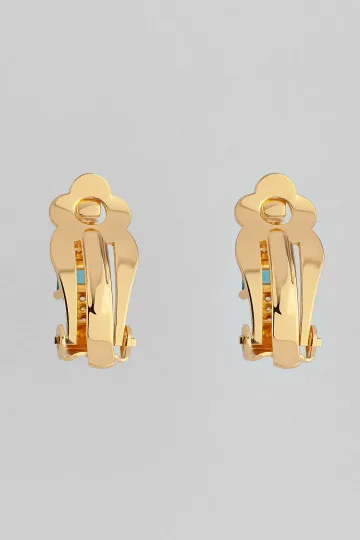
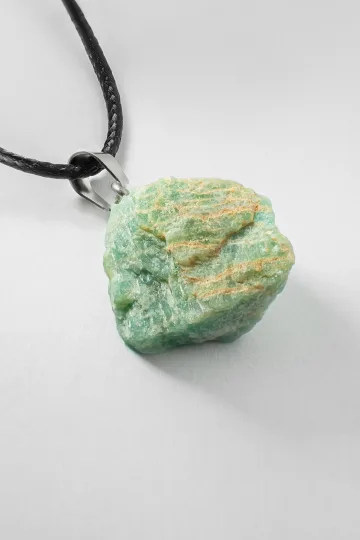
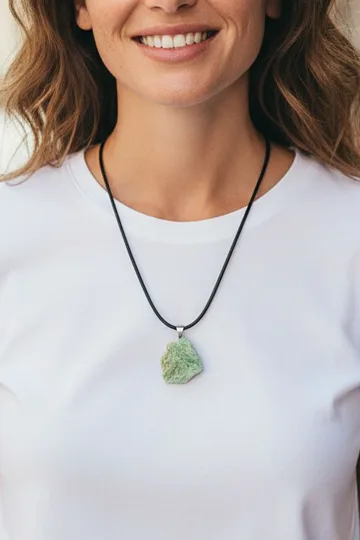
Wear the symbol, don't just read about it. These are in stock:






The colour of hiddenite ranges from a soft yellowish green to a rich grassy green with a faint bluish undertone. The most prized shade is a deep chromium green produced by traces of chromium. Chromium is exactly what makes emerald green, and in rare cases the very same chromium colours spodumene a genuinely emerald-like tone. Such stones are considered true hiddenite in the narrow sense of the word.
This is the source of a long-running debate in gemmology: should any green spodumene count as hiddenite, or only the chromium-coloured type. Some specialists insist that a pale yellowish-green spodumene coloured by iron is simply green spodumene, while hiddenite is strictly the chromium, bright-green stone. For a buyer the conclusion is simple: the greener and cleaner the tone, with no yellow drift, the closer the stone sits to classic hiddenite, and the more it costs.
The physics and optics of the stone
The hardness of hiddenite on the Mohs scale is roughly 6.5 to 7. The stone is hard enough, but it has a weak point: perfect cleavage. Spodumene splits along defined planes under a sharp knock, more cleanly than mica flakes apart. So lapidaries handle it carefully, and an owner should keep the piece away from falls onto a hard floor.
A second trait ties hiddenite to the whole spodumene family: pronounced pleochroism, the property of showing a different shade from different angles. Turn the stone and the green grows brighter, then paler, then bluish, then almost colourless. The reason is that the crystal lattice absorbs light differently along its various axes. So a cutter has to orient the rough correctly, otherwise the finished stone looks dull in its most visible direction.
Quick stone card
- Mineral: spodumene, a lithium aluminium silicate, pyroxene group.
- Formula: LiAlSi2O6.
- Crystal system: monoclinic.
- Variety: green spodumene, sibling of pink kunzite.
- Colour: from yellowish green to a rich grassy green with a bluish note.
- Cause of colour: chromium (the prized tone) or iron (the paler tone).
- Mohs hardness: about 6.5 to 7.
- Density: roughly 3.1 to 3.2 g/cm3.
- Cleavage: perfect, in two directions.
- Lustre: vitreous, pearly on cleavage surfaces.
- Optics: marked pleochroism; colour may fade under prolonged bright light.
- Discovered: 1879 to 1881, North Carolina, USA.
How hiddenite differs from similar green stones
There are many green gems, and a newcomer mixes them up easily. Hiddenite is most often confused with emerald, green tourmaline, peridot, chrysoberyl and even green quartz. Each has its own density, hardness and behaviour in light.
From emerald, hiddenite differs in the softness of its tone and its characteristic pleochroism: emerald barely shifts colour when turned, while hiddenite plays with its shades. From peridot it differs because peridot always drifts toward a yellowish-olive, buttery green, whereas the best hiddenite is cooler and cleaner. From tourmaline, hiddenite is set apart by its cleavage and its lower availability.
One thing matters above all: hiddenite is no cheap stand-in for emerald and no imitation of it. It is a stone in its own right, with its own name, its own geography and its own character.
The history of hiddenite
The history of this stone is short by the measure of gems. Emerald has been known for thousands of years, lapis was mined as far back as the Sumerians, while hiddenite entered science only at the close of the nineteenth century. In return its history is precisely documented, with names, dates and places, something the ancient stones wrapped in legend often lack.
The main milestones:
- 1870s: mineral prospecting in North Carolina.
- 1879: William Earl Hidden finds unknown green crystals.
- 1881: John Lawrence Smith describes them as a new variety of spodumene and gives it the name hiddenite.
- Late nineteenth century: the stone becomes fashionable among collectors on the wave of mineralogical fervour.
- 1902: kunzite, the pink relative of the same spodumene, is described.
- Twentieth century: sources are found in Brazil, Madagascar, Afghanistan, Pakistan and Burma.
The discovery in North Carolina
The setting is Alexander County, North Carolina, near a small settlement that would later take the very name Hiddenite. In the late 1870s people were searching there for mineral wealth. William Earl Hidden, an engineer and mineralogist, was sent out to prospect. By the common account it was Thomas Edison who dispatched him, looking for sources of platinum for his experiments.
There was no platinum in Carolina. Instead the ground yielded elongated green crystals, transparent, with a pleasing grassy tone. The mineralogist John Lawrence Smith studied the samples and in 1881 described them as a new variety of spodumene, giving it the name of the man who found the place. So hiddenite appeared on the mineralogical map of the world.
The surrounding country soon won a reputation among collectors. The mines of Alexander County produced both hiddenite and fine emeralds, so for decades this corner of North Carolina remained one of the few places on earth where the two green gems could be found side by side.
The version that Edison himself sent Hidden to prospect is repeated often in popular accounts of the stone. There is a grain of truth in it: Edison did in those years look for platinum for his incandescent-lamp trials and funded prospecting in several regions. How direct the link was to this particular find is a question for historians, but even as half a legend the detail adds to the stone's charm.
An age of mineralogical fervour
The discovery landed at a fortunate moment. The end of the nineteenth century was the heyday of amateur and scientific mineralogy in America and Europe. Wealthy collectors snapped up rarities, museums competed for the finest specimens, and a new American gem drew an understandable interest: homegrown, local, freshly discovered.
Hiddenite was valued for its rarity and for its clean green colour. Good crystals from North Carolina ended up in private cabinets and museum cases. The stone never became a mass commodity: the deposit was capricious and the mining unsteady. Yet within a narrow circle of connoisseurs the name of hiddenite stuck fast.
Kunzite as a mirror story
In 1902 hiddenite gained a famous relative. George Frederick Kunz described a pink-lilac variety of the same spodumene. The stone was named kunzite, and it quickly grew more popular than its green sibling: the gentle lilac tone sat closer to the taste of the era, and kunzite's deposits proved more generous.
These two stories are curious to read together. One mineral, two colours, two names, two discoverers, set a couple of decades apart. If you like the idea of matched jewellery or a collection, spodumene hands you a ready theme: green hiddenite and pink kunzite as two moods of one rock.
Hiddenite in museums and collections
The best specimens settled over time into museum and private collections. The Carolina crystals from the historic mines are prized especially as relics of the first mining period. For mineralogical cabinets hiddenite matters not for its size, since it is rarely large, but for its provenance and its tie to a recognisable discovery story. A specimen with confirmed Carolina origin is a physical witness to a particular geological and historical episode, which is why documented stones are valued above anonymous ones even at equal colour.
Customer reviews
Zevira is a real jewellery shop. Genuine payments, deliveries and customer thank-yous.
🥰🥰🥰 gracias

Ok, ¡gracias! 🙂

Cold green belongs in silver against a bare collarbone. In yellow gold it sulks, and I refuse to watch that.
How to wear hiddenite
Green spodumene has passed through dozens of my shoots, and it is a temperamental stone: soft, light-sensitive, shifting its shade with the angle. Here is what actually works, sorted by occasion.
What do I wear hiddenite with every day? For daily wear I recommend a small stone: studs or a clean pendant on a thin chain. A green dot lifts a white shirt, grey knitwear, denim, and asks for no extra attention. A ring with soft spodumene I suggest sparing on weekdays, hands take the knocks, so for everyday I choose earrings and a pendant.
What goes with it at the office? At the office I advise a calm setting and a cool palette. A deep green reads cleanly on graphite, navy, bottle green and pure white. For metal I recommend white, silver or white gold, it keeps the tone strict. I leave one accent, earrings or a pendant, so the look never scatters into clutter.
How do I build an evening look? For evening I choose an open neckline and a smooth fabric in a rich colour: black, dark emerald. Drop earrings let the pleochroism play with movement, and a long pendant I suggest under a V-neck, it balances the line. For warm evening light I take a yellowish-green stone in yellow gold, it softens and adds a honeyed note.
Which metal suits the shade? The rule is simple: the cooler and cleaner the green, the better white metal works; the warmer the tone, the more fitting yellow gold. Chromium green I always set in silver or white gold, yellowish-green in yellow. Rose gold I recommend to anyone who likes an unexpected contrast, especially beside a pink kunzite.
Who does hiddenite actually suit? Anyone who loves a stone with a story rather than a shiny pile. Keep it the lead: one noticeable green plus a restrained surround beats a stack of bright pendants. And do not pack hard stones tightly beside it, spodumene is soft, and I advise it quiet company. Want a duo? Place a pink kunzite next to it, its own sibling in the mineral.

Turn on your camera, pick earrings, a pendant or a ring, and see the piece on yourself in real time.
Switch items in one tap.
Everything runs in your browser: no photo or video is ever uploaded.
Geology and deposits
To understand the rarity of hiddenite you need to look into the geology. Spodumene forms in rocks called pegmatites. A pegmatite is a very coarse-grained igneous rock, frozen from a residual melt in the late stage of cooling of a granite body. In such conditions gigantic crystals grow: spodumenes metres long and weighing tonnes have been found in pegmatites.
When a granite magma cools, its last portions of melt are especially rich in volatiles and rare elements: lithium, beryllium, boron, tantalum. From this enriched residue the pegmatite crystallises. Here tourmaline, beryl, topaz and our spodumene are born, which is why hiddenite often sits beside other gems in one and the same vein.
The lithium in its make-up gives spodumene industrial value. Most of the world's output goes not to jewellery workshops but to processing for lithium. Gem quality, meaning transparency, clean colour, the absence of cracks, occurs in a tiny fraction of the raw material. This is one reason fine hiddenite is rare: for every tonne of technical spodumene there are grams of collector crystals.
North Carolina
Alexander County remains the historic home of hiddenite and the place that gave the stone its name. Its pegmatites yielded the green chromium spodumene that connoisseurs treat as the benchmark. Carolina stones are usually small, but their colour and origin make them desirable for collections. Mining here was never on a large scale: it was always pockets and nests rather than continuous veins. So Carolina hiddenite is almost always a one-off matter, and specimens with documented provenance are valued especially.
Brazil, Madagascar and other sources
Brazil, a long-standing supplier of gem rough, yields green spodumene too: the pegmatites of Minas Gerais are famous for tourmalines and beryls, and among that wealth a spodumene of cuttable quality turns up. Madagascar, another important source of coloured stones, also supplies spodumene.
Afghanistan and Pakistan, the region of the magnificent Hindu Kush pegmatites, are known above all for kunzite, but green and yellowish-green spodumenes come from there too, often larger than the Carolina ones. Burmese spodumene is interesting for the quality of individual finds. The overall picture is the same: green spodumene turns up in different corners of the world, but almost always in small amounts and unpredictably, and the debate over whether to call all of it strictly hiddenite goes on.
Neighbours in the vein
Because hiddenite is born in pegmatites, other gems often sit beside it in the same rock. In the Carolina veins, emeralds were found together with hiddenite, which turned Alexander County into a rare spot where two green stones lie side by side in literally the same ground. In the Brazilian and Afghan pegmatites hiddenite keeps company with tourmalines, beryls, topazes, aquamarines. Geologically it makes sense: all of them favour the residual melt rich in rare elements.
Upload a photo of your pet, someone you love, or an object. We'll build a 3D model and hand-cast it in pewter.




Types and shades of hiddenite
Hiddenite is not one even colour but a whole scale of green. Understanding the shades helps you choose a stone deliberately and avoid overpaying for a pale specimen under a grand name.
The classic chromium green
The benchmark for hiddenite is a clean grassy green, sometimes with a faint bluish note, coloured by chromium. This tone sits closest to emerald, though usually lighter and more transparent. It is for this colour that the stone is valued most dearly; chromium hiddenite from North Carolina is treated as the classic of the genre. In such a stone the green looks alive: it drifts neither into a yellow swamp nor into a grey murk, and in the light it gives a pleasing inner play thanks to pleochroism.
Yellowish-green spodumene
The more common variant is a yellowish-green spodumene coloured by iron. It too is often sold as hiddenite, though strict specialists prefer to call it simply green spodumene. The colour here is softer, with a honeyed or olive drift, closer to peridot in mood. This is neither worse nor better, it is different: yellowish-green spodumene is cheaper than the chromium kind, easier to find in a large size, and looks lovely where a warm note matters. You should just understand what you are paying for.
Pale green and transitional tones
There is also a very light spodumene, barely touched with green. Such stones are inexpensive and of interest mainly to collectors of mineral varieties. In the jewellery sense, pale hiddenite wins on clarity: the lighter the stone, the more visible any inclusion, so light specimens are chosen for their transparency. Because of pleochroism and a variable make-up, bluish-green shades also occur, especially striking in the right cut: the stone seems to waver between green and turquoise.
How to describe a shade in words
The word hiddenite by itself says little about colour, so when buying it helps to name the tone precisely by three characteristics. First, the main tone: green, yellowish green, bluish green. Second, the saturation: pale, medium, rich. Third, the purity: clean, or with a grey, murky drift. A stone called rich clean green and a stone called pale yellowish green with grey are two completely different objects in price under one name.
Cut and shape
Because of pleochroism and cleavage, cutting hiddenite is an art of its own. The cutter has to orient the rough so that the richest green faces the table of the stone rather than drifting off to the side: a mistake in orientation, and even a stone good in colour will look pale. Cleavage dictates caution in sawing and grinding: one wrong press and the stone splits along a plane. Most often hiddenite is given step cuts, emerald cuts and oval cuts, which underline the purity of colour and spare the fragile zones. Pale specimens are sometimes worked as cabochons to show an even tone.
Colour and lighting
The very same stone looks different in daylight and artificial light. Cool daylight draws out the cool green and the bluish note, warm evening light adds a honeyed note, especially in iron-bearing stones. This is not a flaw but the liveliness of a natural gem. Experienced buyers view a stone under several light sources, so as not to take a specimen that is beautiful only in the case and dulls at home.








Jewellery with hiddenite
Because of its rarity and relative softness, hiddenite calls for thought: some jewellery formats reveal it better than others.
Rings
A ring is the hardest format for hiddenite and at the same time the most striking. Hard because hands take the most knocks, and spodumene has cleavage. Striking because a green stone on the finger catches the eye at once. If you want a ring, choose a protective setting: a bezel, where the metal wraps the stone all round, guards the edges better than open prongs. Such a ring is sensibly worn as an evening piece rather than as a daily working one.
As a metal, both white and yellow tones suit a green hiddenite. Sterling silver and white gold give a cool, graphic setting in which the green reads cleanly. Yellow gold adds warmth and slightly strengthens the honeyed note in yellowish-green stones. You can read more about silver in the piece on sterling silver.
What to keep in mind when choosing a ring:
- Take a protective setting: a bezel or a low seat with a rim.
- Avoid a high-set stone on open prongs.
- Wear it as an evening piece, not a daily working ring.
- Take it off before sport, cleaning and any work with the hands.
Pendants and necklaces
A pendant is a convenient format for hiddenite. At the chest the stone is better protected from knocks than on the hand, so here you can allow a more open setting and a larger stone. A single faceted stone in a clean setting works, as does a cabochon of pale spodumene, or a composition with small accents. A chain is better chosen sturdy but not coarse, so attention stays on the stone; length is a matter of taste, a short one underlines the neckline, a long one makes the look calmer.
Earrings
Earrings with hiddenite are a happy choice: in the ears the stone is barely subject to knocks. This allows more openwork settings and shows the stone from all sides, playing on the pleochroism, so as the head moves the green shimmers through its shades. Both matched identical stones work well, and asymmetry too, say a green hiddenite in one ear and a pink kunzite in the other. Studs suit everyday wear, drops the evening, when you want the green to move and catch the light.
Bracelets
A bracelet calls for caution: wrists too often suffer knocks against desks and door frames. If you really want a bracelet, it is better to choose models where the hiddenite sits in protected cells rather than sticking out in the open. Bracelets in which green spodumene alternates with harder stones look good: then it becomes an accent rather than a zone of risk. A strong clasp matters: a dropped bracelet is a common cause of chips.
Metals and matched jewellery
Briefly on metals:
- Sterling silver: a clean choice in tone, underlining the cool green.
- White gold: the same cool effect, but with greater durability.
- Yellow gold: warms the stone, gets on well with yellowish-green spodumenes.
- Rose gold: an unexpected but elegant contrast with green, especially beside kunzite.
There is no universal rule, but there is a guide: the cooler and cleaner the green stone, the better it looks in white metal. The kinship of hiddenite and kunzite opens a lovely theme of matched jewellery: the green and pink stones from one mineral look organic together, and out of this come duets of earrings, matched pendants, rings with two stones.
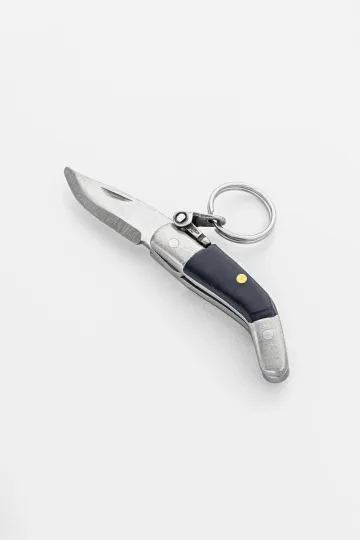
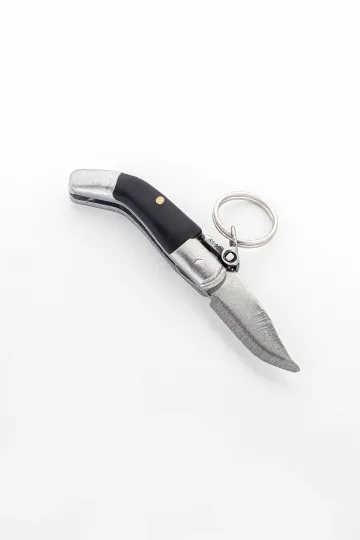
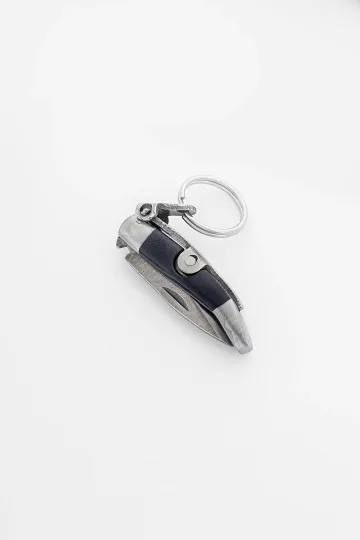
CAPAORA mini knife pendant
The 18th-century Spanish navaja in miniature: 40 mm of stainless steel, a real folding mechanism and a Palanquilla lock that clicks. An affordable gift to remember.
Authentic · Ships from Spain · 14-day returns
Caring for hiddenite
Hiddenite calls for a little more attention than hard stones such as sapphire. That is the price of its beauty and rarity, but the rules are not complicated.
Guard it from knocks
The first commandment is not to drop it or bang it. Because of perfect cleavage, a sharp knock can split the stone along a plane. Take off a ring or bracelet before sport, cleaning, cooking, any work with the hands. A pendant and earrings are safer in this respect, so for an active life they are preferable.
Guard it from prolonged bright light
The green colour of hiddenite can fade under long exposure to intense light and heat. This does not mean the stone cannot go outdoors; it means you should not keep the piece for months under direct sun on a windowsill or under a bright lamp. The fading is considered irreversible, so prevention matters more: keep the stone in shade, and the colour will hold.
How to clean it
- Pour warm, not hot, water and add a drop of gentle soap.
- Gently wipe the stone with a soft cloth or a brush with very soft bristles.
- Rinse with clean warm water and dry with a soft cloth.
- Put it away in a separate compartment of the box, away from harder stones.
What you must not do:
- Ultrasonic cleaning: vibration is dangerous for a stone with cleavage.
- Steam cleaner and hot water: a sharp heating is unacceptable.
- Aggressive chemistry, solvents, abrasive pastes.
- Storing it together with hard stones: they will leave scratches.
How to store it
Store hiddenite separately, in a soft pouch or in a compartment of the box. Spodumene with a hardness of about 6.5 to 7 is easily scratched by harder stones, and may itself leave a mark on something softer. Darkness and a steady room temperature are the best conditions for preserving the colour. A dry place and protection from falls complete the picture. Treated this way, hiddenite is quite durable: cleavage is dangerous only under a sharp knock, not under ordinary careful wear.
The symbolism of hiddenite
Here it matters to speak honestly. No one has proven that stones affect health or fate, and science finds no medical properties in hiddenite, as in any other stone. No jewellery replaces a doctor and medicine. But people have ascribed meanings to gems for thousands of years, and those meanings are part of culture.
Hiddenite is a young stone, so its symbolism took shape recently and rests on colour. Green has been linked in various cultures with spring, renewal and hope, so hiddenite is most often described as a stone of growth and new beginnings. Green stones are placed in tradition within the realm of the heart, the theme of gentleness and emotional openness. In the same row stand unakite, the green-and-pink stone of balance and the light-green prehnite, the stone of intuition.
These are cultural meanings, not proven properties of the stone. The line is simple: telling what people believed and believe is fine, passing belief off as fact is not. Wearing hiddenite as a symbol of change is a good idea; expecting healing from it is not.
Leave your email, we'll send your discount code. No spam, unsubscribe anytime.
The code arrives by email, valid on your first order.
Who hiddenite suits
Hiddenite is a choice for anyone tired of stones that everyone has. It is a gem for a narrow circle, with a precise biography: the year, the place, the name of the man who found it, the tie to an age of mineralogical fervour. If you like a thing to carry a story you can tell, this stone gives you one without mystical exaggeration.
At the same time hiddenite suits those ready to look after a piece. Cleavage and sensitivity to light call for attention: if you take off rings before work and keep your jewellery in a box, the stone will serve a long time. For anyone who leads a very active life and wants a piece on the principle of put it on and forget it, harder gems such as tourmaline or chrysoberyl are worth a look instead. There is nothing wrong with that, every stone simply has its own person.
Comparing hiddenite with other stones
To choose deliberately it helps to compare hiddenite with its neighbours in the green palette. The table below gives a quick guide.
Hiddenite and emerald
Emerald is a beryl, hiddenite a spodumene. Emerald is harder and dearer, it has a centuries-long history and almost always carries inclusions. Hiddenite is younger, cheaper, more often transparent and shows pronounced pleochroism, whereas emerald barely shifts colour. The tone of hiddenite is usually softer and lighter. They are not rivals but different moods of green: the solemn and the light.
Hiddenite and kunzite
Siblings, one mineral spodumene in two colours: kunzite pink-lilac, hiddenite green. Both have cleavage, pleochroism, sensitivity to light and the same hardness, so as a pair they do not scratch each other. They are often gathered into a collection as two faces of one rock.
Hiddenite and peridot
Peridot is always warm, yellowish-olive, a buttery green. Hiddenite can be cooler and cleaner, especially in the chromium variant. Peridot is more common. If you want a warm green, that is peridot; if a cool and rare one, hiddenite. You can read about a green stone of cosmic origin in the piece on peridot and olivine.
Hiddenite, tourmaline, chrysoberyl and quartz
Green tourmaline is harder than spodumene and steadier in wear, so for rings it is more practical, while hiddenite is rarer and more interesting to a collector. Chrysoberyl is one of the toughest gems: its yellowish-green varieties echo iron-bearing spodumene in appearance, but in durability they are not comparable. Green quartz is the most affordable of the look-alikes, and it is exactly the one most often passed off as dearer stones. The main difference to the eye is pleochroism: quartz has no change of shade at an angle, hiddenite does. That is a simple way not to confuse the rare spodumene with a mass-market stone.
How to choose hiddenite and not buy a fake
Hiddenite is rare, and so there is plenty of confusion around it. Here is what to watch for when buying.
Colour. The main criterion of value. The richer and cleaner the green, with no yellow drift, the more valuable the stone. Chromium green is dearer than iron-bearing yellowish green. Ask to see the stone under different lighting and from different angles: the pleochroism of genuine spodumene will inevitably show in a shift of shade.
Transparency. Good hiddenite is transparent and clean. Inclusions, cracks and murky zones lower both beauty and strength, since a stone with cleavage is especially vulnerable at its flaws. The lighter the stone, the more visible any inclusion.
Origin and the nature of the colour. Ask what colours the stone, chromium or iron, and where it comes from. This affects both the price and whether the stone can strictly be called hiddenite. A serious seller will gladly tell you about origin; evasive answers are a reason to be wary.
Imitations. Glass or dyed quartz may be offered under the guise of hiddenite. Glass gives itself away by bubbles inside and an absence of pleochroism. A stone too even and shrilly green at a suspiciously low price is a reason to pause. For a serious purchase it makes sense to request a gemmological report: that is the only reliable way to confirm both the mineral itself and its variety.
A short checklist before buying:
- The colour is rich, with no murky yellow drift.
- The shade shifts on turning, the pleochroism is present.
- The stone is transparent, with no visible cracks in risky spots.
- The seller names the origin and the cause of the colour.
- The setting protects the stone, especially in a ring and a bracelet.
- For a serious purchase there is, or is offered, a gemmological report.
Send a friend a discount code, they save on their first order.
Frequently asked questions about hiddenite
What is hiddenite in simple words?
Hiddenite is the green variety of the mineral spodumene, a lithium aluminium silicate. It is a semi-precious green stone, the sibling of pink kunzite: the same mineral, only a different colour. It was discovered between 1879 and 1881 in North Carolina and named after the mineralogist William Earl Hidden, who came upon these crystals while hunting for platinum. The most prized hiddenite is a clean grassy-green tone coloured by chromium.
Are hiddenite and kunzite the same thing?
Not quite. They are two coloured faces of one mineral, spodumene. Hiddenite is green, kunzite pink-lilac. They have the same chemical make-up, the same hardness of about 6.5 to 7, a shared perfect cleavage, a shared pleochroism and a shared sensitivity to bright light. Only the colour and the discovery story set them apart: hiddenite was described between 1879 and 1881, kunzite in 1902.
Is hiddenite a precious or a semi-precious stone?
There has long been no strict legal division into precious and semi-precious stones in most countries; it is an everyday rather than a scientific classification. By tradition hiddenite is counted among the semi-precious or collector gems. At the same time rare, large and richly green chromium specimens can cost more than many formally precious stones. Price is set not by a label but by colour, clarity, size and origin.
Why is hiddenite so rare?
Several reasons at once. A rich green needs chromium, and chromium is rare in pegmatites. The bulk of spodumene goes to lithium mining, and gem quality is only a tiny fraction of the rough. The stone is capricious to cut because of cleavage and pleochroism, and part of the rough is lost in the work. Finally, the classic North Carolina deposit was never abundant, the mining went by nests.
Can hiddenite be worn every day?
It can, but with reservations. A hardness of about 6.5 to 7 is decent, yet perfect cleavage makes the stone vulnerable to sharp knocks. So for daily wear it is better to choose earrings or a pendant, where the stone is protected from collisions. A ring and a bracelet with hiddenite are more sensibly worn as going-out pieces, taken off before sport, cleaning and work with the hands.
Does hiddenite change colour in the sun?
On short walks, no. But hiddenite has a peculiarity: its green colour may gradually fade under long exposure to intense light and heat. We are talking about months under direct sun on a windowsill or under a bright lamp, not a couple of hours outdoors. To keep the saturation, store the piece in a box, in shade. The fading is considered irreversible, so prevention matters.
How does hiddenite differ from emerald?
Both are green, but they are different stones. Emerald is a beryl, hiddenite a spodumene. Emerald is harder and dearer, it has a centuries-long history and almost always carries inclusions. Hiddenite is younger, more often transparent and shows pronounced pleochroism, shifting shade when turned, whereas emerald barely changes colour. Hiddenite is no imitation and no cheap stand-in for emerald, but a stone in its own right.
How do you tell a real hiddenite from a fake?
Look at three things. Pleochroism: turn the stone, genuine spodumene will shift its shade of green at different angles, while glass will not. Inclusions: glass often shows round air bubbles, uncharacteristic of a natural stone. Colour and price: a stone too even and shrilly green at a suspiciously low price is a reason to be wary. For a serious purchase order a gemmological report, the only reliable way to confirm the mineral and its variety.
What does hiddenite symbolise?
Since the stone is young, its symbolism rests on the green colour. Hiddenite is most often called a stone of growth and new beginnings, by analogy with spring foliage. It is also placed among the stones of the heart. These are cultural meanings, not proven properties: wearing hiddenite as a symbol of change is a good idea, expecting it to cure illness is not.
Is hiddenite suitable for an engagement ring?
Technically yes, but with caution. An engagement ring is worn constantly, while hiddenite, because of cleavage, fears knocks and may suffer over time. If this particular stone is dear to you, choose the most protective setting, a bezel with a rim, a low seat, and get into the habit of taking off the ring before physical work. On choosing a ring in general it is worth reading the piece on the engagement ring. For those who want to put it on and forget it, harder stones are a better look.
Does hiddenite cure illnesses?
No. Science finds no confirmed healing properties in hiddenite, as in any other stone. No jewellery replaces a doctor and medicine. We tell the story of symbolism honestly and promise nothing the stone cannot give.
Where is hiddenite mined?
The historic home is Alexander County in North Carolina, where the stone was discovered. Carolina chromium hiddenites are treated as the benchmark and come with a collector's premium. Green spodumene is also found in Brazil, in the pegmatites of Minas Gerais, in Madagascar, in Afghanistan and Pakistan (the Hindu Kush region) and in Burma. At the same time specialists argue over whether to count all green spodumene as hiddenite or only the chromium, Carolina type.
Which metal goes best with hiddenite?
It depends on the shade of the stone and your style. A cool, clean chromium green looks especially good in white metals, sterling silver and white gold. Yellow gold adds warmth and gets on well with yellowish-green spodumenes. Rose gold gives an unexpected but elegant contrast, especially striking in a composition with pink kunzite.
Can hiddenite be cleaned with ultrasound?
No, ultrasound and steam cleaners are off limits. Vibration and a sharp heating are dangerous for a stone with perfect cleavage and can provoke a split. Clean hiddenite gently: warm water, a drop of mild soap, a soft cloth or a brush with very soft bristles. Avoid aggressive chemistry and sharp swings of temperature, and after cleaning put the stone away in a separate compartment of the box.
What is pleochroism in hiddenite?
Pleochroism is the property of a crystal to show a different shade depending on the direction from which you view it. In hiddenite it is pronounced: turn the stone, and the green grows brighter, then paler, then bluish. The reason lies in how the crystal lattice absorbs light differently along its various axes. This is not a flaw but a natural feature of spodumene, and at the same time a mark of authenticity: glass has no pleochroism.
Is there synthetic hiddenite?
There is no mass-market synthetic hiddenite, unlike synthetic corundums and spinels. Far more often you meet imitations, glass or dyed quartz, passed off as green spodumene, or a pale spodumene sold under the dearer name of chromium hiddenite. Checking pleochroism, inspecting for air bubbles and a gemmological report on a serious purchase all help.
Can hiddenite be worn in water, in the shower or in the pool?
Better not. The matter is not so much the water itself as the accompanying factors: sharp temperature swings, soap, chlorinated or sea water, the risk of a knock against the edge. Perfect cleavage makes the stone vulnerable. Take off hiddenite jewellery before the shower, the bath, the sauna, the pool and the sea. If contact with water happens by accident, a short episode does no harm, just dry the stone carefully.
Which cut suits hiddenite best?
Most often hiddenite is given step cuts (emerald and baguette), as well as oval, pear and cushion. A step cut with long straight facets shows the clean colour of a transparent stone well and spares the cleavage zones. The main rule is not about shape but about orientation: the cutter must turn the stone so that the richest green faces the table. Pale spodumenes are sometimes worked as cabochons.
Can hiddenite's shine be brought back if it has dulled?
If it is a matter of surface scratches, a professional repolish can bring back the shine: a craftsman carefully removes a thin layer and polishes the facets anew. But the fading of the green from prolonged light is, as a rule, irreversible, no new polish will fix it. So shine can more often be restored, but lost colour cannot. Go to a cutter who works with spodumene and knows about its cleavage.
Can hiddenite be given to a man?
Of course. Green is a gender-neutral colour, and the restrained soft green of hiddenite looks good in clean men's jewellery: a signet ring with a protected stone seat, cufflinks, a pendant on a strong cord. For a man's ring a firm, closed setting matters especially, since men's hands are more often physically loaded, and spodumene fears knocks.
Why is hiddenite interesting to a newcomer in stones?
Because it is a handy stone on which to learn to look at gems for real, rather than by the label. Hiddenite shows clearly what pleochroism is: turn it, and the colour changes. It demonstrates the role of trace elements: chromium gives one tone, iron another. It teaches you to read quality through colour, clarity and origin, rather than through a grand name. Plus it carries a clear discovery story.
Buying it as a gift? Each one arrives ready to give.
 A branded Zevira box and a little card come with every order.














Common questions
What to wear hiddenite jewellery with?
Its soft grassy green gets on with almost any palette and quarrels with neither warm nor cool tones. For every day take a small stone in a clean setting: it enlivens a white shirt, grey knitwear, denim. For the evening the green plays strikingly in an open neckline on black or dark emerald. Cool clean green suits white metal, warm yellowish green suits yellow gold.
How do you choose the size of a hiddenite stone?
Start from the jewellery format and your way of life. For everyday earrings and pendants small stones are good: they snag less and do not pull the focus. A large hiddenite is more apt in a pendant or earrings, where it is protected from knocks, than in a ring. Remember that in a large size clean chromium green is rare, and a big rich stone costs noticeably more than a small one.
How long will hiddenite jewellery last?
Treated carefully, hiddenite serves a long time and passes on. It is vulnerable only to sharp knocks because of perfect cleavage, not to ordinary wear. Take off a ring and a bracelet before sport and work with the hands, store the stone apart from hard gems and guard it from months under direct sun. Surface scratches can be removed by a repolish at a craftsman's if needed.
Who should take a closer look at hiddenite?
Anyone tired of stones that everyone has and who values a thing with a clear story: a year, a place and the name of its discoverer. It suits both a gift on the theme of growth and change and a collection of unusual green gems. The main condition is a willingness to look after the piece a little. Fans of the put-it-on-and-forget principle are closer to harder stones.
What can replace hiddenite if you want a sturdier green stone?
If durability matters more than rarity, look at green tourmaline or chrysoberyl: they are harder and take daily wear and knocks more calmly. Green quartz costs the least of all, but it is mass-market and without pleochroism. But if you want exactly a cool green with a story and a play of shades at an angle, there is no full equal to hiddenite in character.
Sterling silver, gold, jewellery with coloured stones, symbolism and matched sets with meaning.
Wear the symbol, don't just read about it. These are in stock:



About Zevira
Zevira is jewellery for those who choose deliberately. We love stones with a history and a character: rare, recognisable, with a story of their own. Hiddenite is one of those, a green spodumene with American roots, the sibling of kunzite.
We tell the truth about stones. Where culture ends and science begins, we say so plainly: here is what people thought for centuries, and here is what the facts confirm. No promises of magical healing, only a beautiful thing, a real story and a careful regard for the material.
In our catalogue: sterling silver, gold, jewellery with coloured stones and symbolism, matched sets. If the idea of a rare green stone appeals to you, or you collect unusual gems, take a look at what is in stock.