Peridot and Olivine: The Green Stone Born of Volcanoes and Meteorites
Introduction: a green stone from the mantle and from space
Hold a peridot up to a window and it does something most green stones refuse to do: it glows warm, like sunlight caught in an apple. There is no cold blue in it, no shadow. That golden-green light is the reason a mineral most geologists consider ordinary becomes, in rare cases, a gemstone worth setting in gold.
Olivine is one of the most common minerals in the Earth's mantle, yet it is a rare guest in the jeweller's tray. For a crystal to become peridot it has to be large enough, clear enough, and coloured a clean yellow-green. That combination does not happen often, which is why a fine peridot holds its own among coloured gemstones while staying friendlier on the wallet than emerald.
The same olivine turns up in pallasite meteorites, where green grains sit locked in an iron-nickel matrix. One mineral ties together the Earth's crust, its volcanoes, and fragments that fell out of the sky. That is not science fiction, it is geology. And behind the geology runs a long, well-documented history: peridot was mined in ancient Egypt, set into the altars of medieval churches, and prized in the salons of nineteenth-century Europe.
Wear the symbol, don't just read about it. These are in stock:


What peridot is: definition, chemistry and geology
Peridot and olivine: one mineral, two names
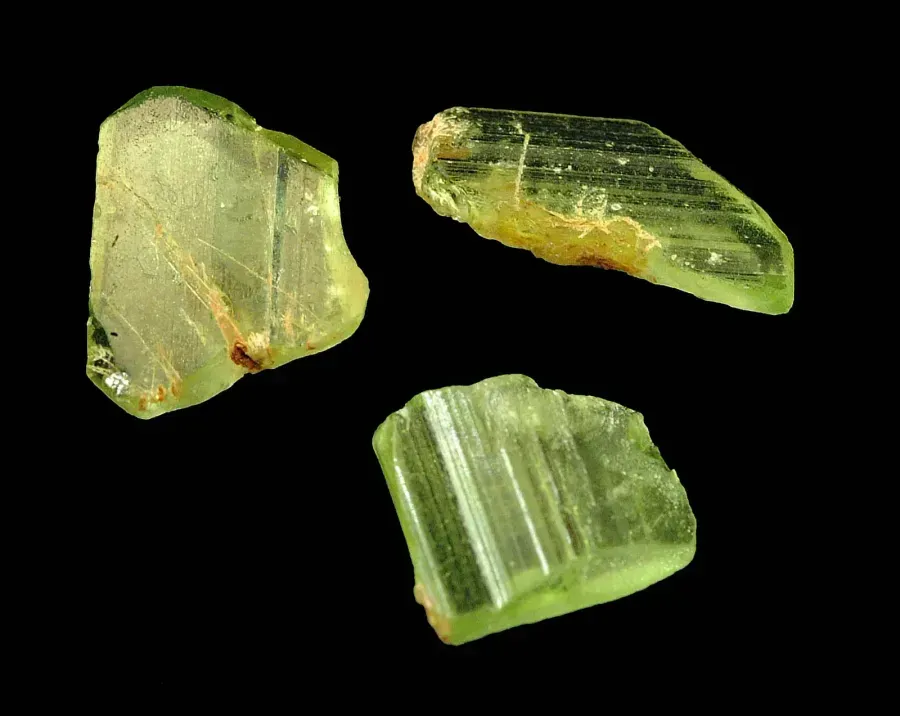
Peridot and olivine are the same mineral called by different names depending on who is talking. Olivine (Mg₂SiO₄) is a magnesium silicate, one of the main building blocks of the mantle. When a crystal of olivine grows large, clear and a handsome yellow-green, it earns the name peridot and a place in jewellery.
A geologist says "olivine". The gem trade says "peridot". In antique catalogues and old novels you will meet "chrysolite", from the Greek for "golden stone".
Olivine is not a single variety but a family of silicates sharing one crystal structure with a shifting ratio of magnesium to iron. The pure magnesium end is forsterite (Mg₂SiO₄), the pure iron end is fayalite (Fe₂SiO₄). Gem peridot sits close to the magnesium side of that series.
Colour: yellow-green, like an unripe apple
The defining feature of peridot is that its colour comes from iron built into the crystal lattice itself, not from trace impurities as in most gems. Because of that, peridot is coloured evenly and always in one register: yellow-green with a warm golden cast. In emerald the green comes from chromium and vanadium, and the tone runs cool, sometimes blueish. Peridot has none of that chill, which is where the comparisons to a young apple and the first spring leaves come from.
Colour quality drives the price hard. The dearest stone is a saturated, clean yellow-green with no brown in it, and it shows up rarely. A bright yellow-green is the standard for good jewellery. A pale, light tone reads as more delicate and costs noticeably less. A brown or olive cast signals a high iron content and is valued lower. Origin plays in too: Burmese peridot tends to be richer, Egyptian and Chinese material lighter.
Hardness and cleavage: the weak point
On the Mohs scale peridot sits at 6.5 to 7 (for reference: diamond is 10, talc is 1). It scratches glass (5.5) and stainless steel with ease, but it is vulnerable to harder stones: corundum (sapphire and ruby, 9), topaz (8) and diamond (10).
The second weakness is cleavage: the crystal has planes along which it splits most readily. A sharp knock at the wrong angle can crack the stone with no visible cause. The practical lesson follows: in a ring, peridot is best protected by its setting, ideally a closed bezel. In a pendant or earrings it takes far fewer knocks, and cleavage barely matters.
Density and optics
Peridot's density is 3.3 to 3.4 g/cm³, higher than quartz (2.65) and close to topaz. The refractive index of 1.65 to 1.69 gives the stone a good shine when cut. Peridot is strongly birefringent: through a large faceted stone you can sometimes see the back facets appear "doubled", and this is one of the signs that tells it apart from glass.
Idiochromatism: why the colour cannot be separated from the stone
Peridot counts as an idiochromatic mineral, and the word is worth unpacking. In most gems the colour comes from an impurity: a minute share of chromium turns colourless corundum into ruby, traces of iron and titanium tint sapphire. Remove the impurity and the stone goes colourless. Peridot works differently. Iron sits in the olivine formula itself, one of the foundations of the crystal rather than a chance guest. That is why colourless peridot effectively does not occur in nature. Here colour is not a coat over the mineral, it is a property the mineral cannot be stripped of.
Several practical consequences follow. Peridot cannot be lightened or deepened with heat the way amethyst and aquamarine are, since that would mean altering the chemistry. The stone is evenly coloured throughout, without the zones and patches typical of colour-zoned amethyst or sapphire. And the tone shifts from one deposit to another exactly as far as the ratio of magnesium to iron in the host rock shifts. The more iron, the denser and warmer the green, running towards brown; the closer to the pure magnesium end of the series, the paler the stone.
Birefringence and pleochroism under a loupe
The strong birefringence of peridot is a plain visible sign, not an abstract gemmological term. The stone has two refractive indices, and a ray entering it splits in two. In a large faceted peridot, looking down through the table, you can see the edges of the back facets appear to double. Glass does nothing of the kind, so that doubling is a quick way to weed out an imitation.
The pleochroism is weak: turn the stone and the shade drifts a little from yellow-green to a greener note, with no abrupt jumps. That sets it apart from tourmaline or tanzanite, where the change of colour along the axes can be dramatic. The calm, near-monotone character of peridot is exactly what the eye reads as an honest, even green that does not play tricks under different lighting.
Inclusions: the fingerprint of depth
A flawless peridot is rare, and inclusions in it are the norm rather than a defect. The most recognisable are known as lily pads: small disc-shaped bubbles with a tiny crystal of chromite or biotite at the centre, ringed by a fine halo of fracture. Under a loupe the picture looks like a water lily leaf on the surface of a pond, hence the name. Needles, gas bubbles and grains of other mantle minerals also occur.
For a gemmologist those inclusions are the stone's passport: a set of lily pads points almost unambiguously to natural peridot and helps rule out glass and synthetics. For a buyer the conclusion is reassuring. Small inclusions that do not interfere with the play of light are normal and barely affect the price. What should give pause is not the inclusions themselves but fractures that reach the surface, and a general cloudiness.
Peridot is a summer creature: give it a tan and an open collar, never the strangle of a necktie. Pale December necks need not apply.
What to wear with peridot
Warm yellow-green peridot has been through dozens of my looks, from weekday to evening. Here is what actually works, by occasion.
What do I wear with peridot every day? For daytime I recommend a slim pendant or studs against a plain top: white, beige, grey, navy. A calm colour works like a canvas where the golden-green spark reads at once. Against denim and natural linen the stone looks especially good, a natural material and a natural gem sound in the same register.
Does peridot work at the office? It does. I suggest small studs or a pendant on a short chain under the V-neck of a blouse or jacket: a living accent to a business suit that never pulls focus. The green tone softens the severity of grey and black, and the golden note adds warmth without extra shine.
How do I build an evening look? For evening I choose an open neckline and a smooth fabric, silk or satin, a deep dark dress. Peridot drop earrings start to play with every movement. For a special occasion I assemble a set: pendant and earrings in one metal, a ring to match, with a larger stone in a closed bezel holding the whole look.
Which metal do I choose for peridot? Yellow gold heightens the golden component and makes the look warm and rich. Sterling silver 925 gives a cool contrast and underlines the green. White gold stays neutral and suits minimalism. Let your skin undertone decide: gold for warm, silver for cool.
Which stones do I pair peridot with? I recommend clear and white stones that do not compete for colour: rock crystal, moonstone, white pearl. Peridot loves layering, slim chains of different lengths and light rings stacked on one hand. One rule that never fails: on an active hand choose a pendant or earrings, and wear a ring in a protected setting.

Turn on your camera, pick earrings, a pendant or a ring, and see the piece on yourself in real time.
Switch items in one tap.
Everything runs in your browser: no photo or video is ever uploaded.
The history of peridot: from pharaohs to the present day
Ancient Egypt: the stone of Zabargad island
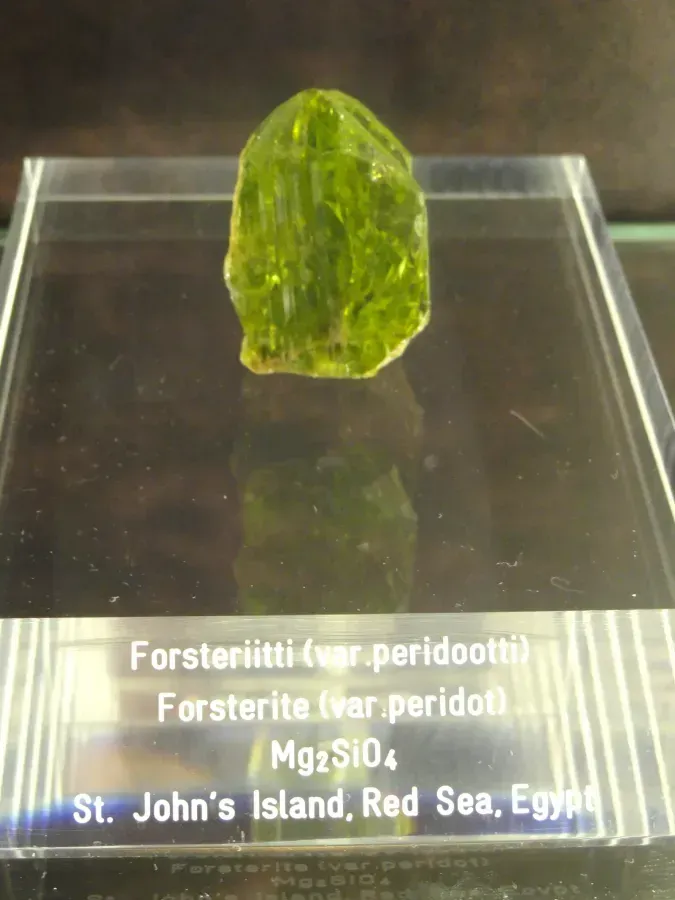
The chief ancient source was an island in the Red Sea that the Arabs later named Zabargad (also known as St John's Island). Volcanic in origin, the island is saturated with olivine, and mining went on there for thousands of years. The Greeks called the stone chrysolite, the Arabs al-zabarjad.
The Egyptians linked the green stone of the sun to the god Ra. It was believed to protect on a journey and in the afterlife, so jewellery set with it was placed in burials. A belief circulated that the stone "glowed in the dark": in truth that was light playing on the facets by torch and candle, but in antiquity the impression felt like a marvel.
In the first century AD the Roman naturalist Pliny the Elder described the stone in his Natural History under the name "topazos", tying it to an island in the Red Sea. It is from these classical texts that the first detailed records of the gem reach us.
The island that was kept hidden
Zabargad stands apart in the history of gemstones for how carefully it was guarded. By the surviving accounts, in the age of the pharaohs the island counted as a state treasure: its position was kept secret, the miners were settled on a rocky scrap of land in the middle of the Red Sea, and an outsider who landed risked death. Fog and awkward navigation made the island close to invisible, and in some centuries Europeans lost sight of it altogether and treated the source of peridot as a legend.
Mining, according to classical authors, went on by night as well: the stones, it was said, showed up better in the dark, when they "glowed". Most likely what lay behind that is simpler. In daylight the green grains vanish against sun-drenched rock, while by torchlight a damp vein throws back a glint and the crystals are easier to pick out by eye. So a miner's practical trick turned into a legend about a glowing stone.
Crusaders and the confusion with emerald
Medieval Europe knew peridot poorly and kept mistaking it for something else. Knights returning from campaigns in the east brought back large, warm green stones and often took them for emeralds. Many an "emerald" in the church treasuries and reliquaries of the period turned out under later examination to be peridot from Zabargad.
The best known example is kept in Cologne Cathedral: the stones on the shrine of the Three Kings, held for centuries to be emeralds, proved on inspection to be large peridots. The mix-up of names ran on for a long while, because until gemmology learned to separate minerals by density and optics, a warm green gem could easily pass for its more expensive cousin. That confusion, incidentally, explains why the colour of "emeralds" in old descriptions often sounds suspiciously yellow-green and warm.
Hawaii: the tears of Pele
Olivine has a story of its own at the other end of the world. In Hawaii volcanic olivine is scattered along the beaches as small green grains, and local tradition calls them the tears of Pele, after the goddess of volcanoes. There is even a famous green beach on the island of Hawaii where the sand carries an olive cast precisely because of olivine washed out of cooled lava.
Almost no gem-quality peridot comes from those grains: they are too small and often cloudy. As a cultural image, though, Hawaiian olivine matters. It shows plainly what Zabargad and the meteorites show too, that olivine is born wherever the fire of the deep is at work, whether on an island in the Red Sea or in the throat of a Pacific volcano.
The Middle Ages: a stone of churches
In the Christian tradition peridot adorned altars, reliquaries and liturgical vessels, and its green was tied to renewal and spiritual clarity. Medieval jewellers prized it as an affordable, brighter alternative to emerald: cheaper, warmer in tone and hard enough for rings and pendants. It was popular above all around the Mediterranean and in Central Europe.
The nineteenth century: fashion across Europe
In the 1800s peridot returned to fashion among European high society. It was set into necklaces, earrings, rings and brooches, paired with pearls and enamel. The warm green stone read as "green luxury": more striking than silver and cheaper than diamond. By the century's end, on the wave of Art Nouveau, peridot rode another peak, and then, after the First World War, the taste for it faded along with the whole "old" palatial aesthetic.
The twentieth and twenty-first centuries: fresh interest
In the 1960s and 70s, with the new enthusiasm for natural materials and crystals, peridot was noticed again. Today the interest holds for several reasons at once. A large share of the fine material comes from Myanmar, and political instability in the mining regions makes supply unpredictable and feeds a sense of rarity. At the same time, demand is rising for natural stones as a counterweight to laboratory-grown ones. The result is a gem that, at its best, turns up more rarely than everyday quartz or citrine, while staying more affordable than emerald and sapphire.
Geology and deposits
How olivine forms
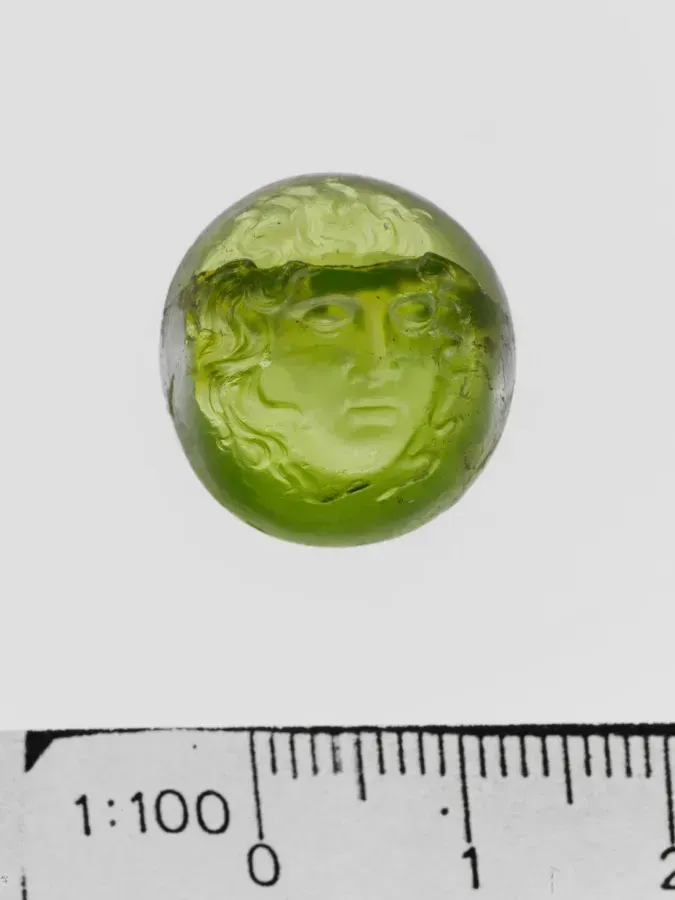
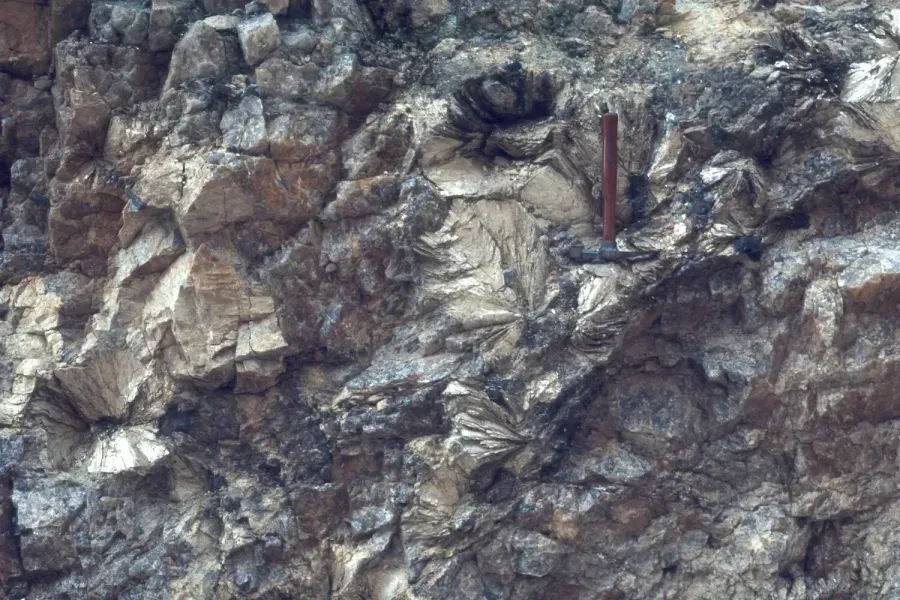
Olivine is born deep, at temperatures above 1000°C, in magma rich in magnesium and iron. Volcanoes carry it to the surface: gem peridot is found in basalts and in pieces of mantle rock dragged up by lava. More rarely, olivine arrives from space inside pallasite meteorites.
Where it is mined
The modern leader for quality is Myanmar (Burma): deposits in the Shan hills yield the brightest, most saturated peridot, sometimes in large crystals. The region is politically unstable, and that makes supply unpredictable.
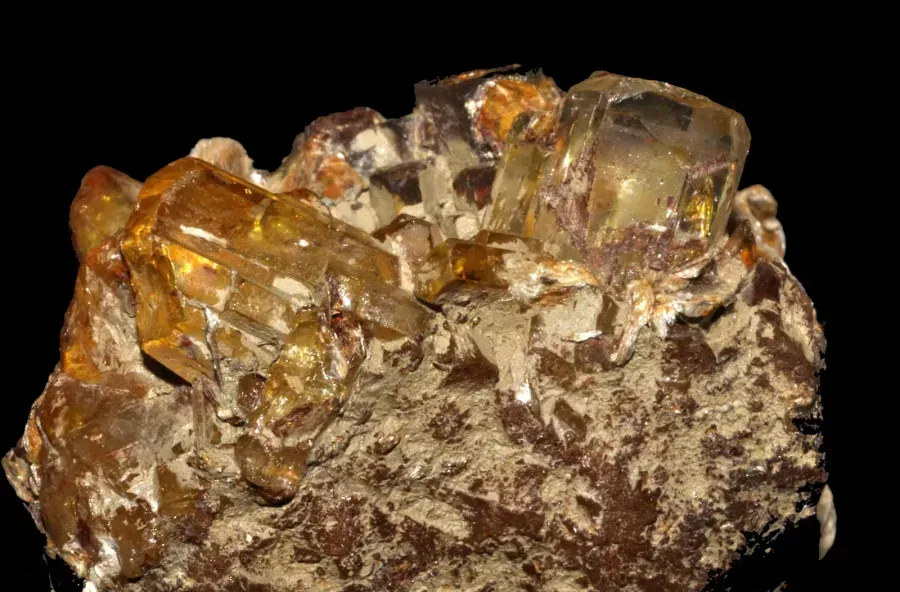
The historic source, Zabargad island in the Red Sea, still works today, but yields a lighter-toned stone in small quantities after millennia of mining. China supplies a great deal of mid-grade peridot for mass-market jewellery. Other notable sources are the United States (Arizona, where peridot is collected on Native American lands, sometimes of excellent quality), Pakistan from the Sapat valley (known for large clean crystals), and Brazil and Australia.
Size: large peridot is rare
Gem-quality peridot is rarely truly large, and that is one of the key factors in its price. Stones up to 1 to 2 carats are common, 3 to 5 carats are noticeably scarcer, and clean saturated stones above 10 carats are a collector's rarity. A large fine peridot costs disproportionately more than a small one precisely because of this shortage of large rough.
Customer reviews
Zevira is a real jewellery shop. Genuine payments, deliveries and customer thank-yous.
🥰🥰🥰 gracias
Ok, ¡gracias! 🙂
Meteorites: olivine from space
In the iron-stone pallasite meteorites, olivine crystals are embedded in an iron-nickel matrix like green stained-glass panes in a metal frame. Cut and polished, the effect is striking, and pallasites are reckoned among the most beautiful meteorites of all.
Using this olivine in jewellery is all but impossible: it sits locked in metal and is usually cloudy, cracked by the impact with the Earth. Small stones are occasionally cut from pallasites, but that is a narrow collector's market. If you see a cheap "meteorite peridot ring" offered online, it is almost certainly a swindle.
Olivine has also been found beyond the Earth: spectral surveys detect it on the surface of Mars and within many asteroids. That underlines once more that olivine is one of the most common minerals in the Solar System.
Upload a photo of your pet, someone you love, or an object. We'll build a 3D model and hand-cast it in pewter.


Peridot in tradition and folklore
Let us be honest from the start: everything below belongs to the beliefs of various cultures, not to medicine or physics. Crystals do not heal and do not replace a doctor. But the traditions around the stone are part of its story, and they are worth knowing.
In crystal lore peridot is tied to the energy of the sun and golden light. By its colour it is assigned to two chakras at once: the yellow solar plexus (will and personal power) and the green heart. From this comes the idea that the stone supposedly helps join will to feeling.
Historically peridot was called a stone of abundance and prosperity, the reasoning being the blend of gold and green: gold as a symbol of wealth, green as a symbol of growth. In feng shui it is placed in the south-east sector of a room, the one tied to prosperity. To the same "solar" group belongs heliodor, the golden beryl, which is likewise linked to warmth and creative energy.
In tradition peridot is held to be a stone of new beginnings: it is suggested as a gift at the start of a project, a move, a new job, or after a hard stretch. The same theme of growth attaches to hiddenite, the green spodumene, which is why these stones are often chosen for similar occasions. Psychology matters here more than magic: a beautiful piece of jewellery lifts the mood and the confidence on its own, and that is a perfectly real effect.
How to choose a good peridot
Colour
Colour is the main criterion. The cleaner and more saturated the yellow-green, free of brown and grey, the higher the grade and the price. A light tone costs less and reads as more delicate. A brown cast (plenty of iron) or a greyness lowers the value. By origin the rule of thumb is simple: Burmese peridot is usually brighter, Egyptian and Chinese material lighter.
Size and clarity
Most jewellery carries stones of 0.5 to 2 carats, a moderate budget segment. Stones of 3 to 5 carats are already scarce, and large saturated stones cost noticeably more for want of rough. Flawless clarity is uncommon, and small inclusions (gas bubbles, tiny crystals of other minerals) are the norm. What should give you pause is cloudiness, visible cracks and a visible haze: they cut both the beauty and the price. Look at the stone against a window or under neutral light.
Cut
Peridot is cut into the usual shapes: round (brilliant cut for maximum sparkle), oval and cushion (handy for rings, holding colour well), pear (for pendants), the emerald cut (a rectangle with clipped corners, demanding a clean stone), and the cabochon for stones with inclusions. A good cut underlines the colour and the shine; with poor proportions and angles even a handsome stone looks dull. The cutter also takes the cleavage direction into account to cut the risk of a chip.
Treatment and certificate
Peridot is usually not enhanced: its colour is natural, and heat and irradiation are barely used. That is a point in the stone's favour for honesty. For costly and large stones (roughly from 3 carats up) a certificate from a reputable gemmological laboratory makes sense: it confirms authenticity, weight, colour, clarity and the absence of treatment.


Jewellery with peridot
The logic of choosing a piece comes down to the cleavage and middling hardness of the stone. The more knocks a piece takes, the sturdier its setting needs to be.
Rings. The most striking, but also the riskiest option for peridot. A solitaire at the centre, a halo of small stones, the classic "three stones", or a vintage Art Deco look: all of it works if the setting protects the stone. Choose a closed bezel or a seat with protection at the edges, and steer clear of open, high prongs on an active hand.
Earrings. The ideal format: the stone takes almost no knocks, wears comfortably every day and plays its colour beautifully by the face. Studs, drop earrings on a chain, versions with enamel, all of it suits.
Pendant. Another safe choice. The stone in a protected setting on a silver or gold chain, on a leather cord in a relaxed style, or paired with other light stones. Both yellow gold and silver flatter the yellow-green.
Bracelet and brooch. A bracelet is lovely but takes plenty of knocks, so a strong fitting and a secure setting matter. A brooch is a rare, almost antique choice, and it bears almost no strain.
Caring for peridot
Peridot is sensitive to acids, alkalis and sudden temperature changes. Cleaning it is simple: warm (not hot) water with a drop of mild soap, a soft brush or cloth, a rinse and drying with a cotton cloth.
What not to do: ultrasonic and steam cleaning, boiling, bleach, acids and alkalis. A sudden temperature change is dangerous because of the cleavage; the stone can split along a plane.
Store peridot away from harder stones (diamond, sapphire, topaz), or they will scratch it: a soft pouch or a separate compartment of a box. Take the piece off for sport, hands-on work and cleaning with chemicals. Every few years it is worth showing the piece to a jeweller to check the fitting and refresh the plating of the setting.
Leave your email, we'll send your discount code. No spam, unsubscribe anytime.
The code arrives by email, valid on your first order.
How to identify peridot: a practical walk-through
There are a great many green stones, and peridot is easy to confuse with several at once. The good news is that it carries a set of marks by which gemmologists and attentive buyers alike recognise it. Here they are in order.
By colour and the temperature of the green
The first thing that gives peridot away is the warm, golden character of its green. Emerald and chrome tourmaline are cool green, sometimes with a blue undertone. Peridot always keeps a yellow note, as though the sun were shining through the stone. If a green stone looks cool, it is probably not peridot. A warm yellow-green with no blue in it is the signature.
By birefringence
Take a large faceted stone and look through the table at the back edges. In peridot the strong birefringence makes them visibly double. Glass, synthetic spinel and garnet show no such doubling. The trick needs no instruments and sifts out most crude imitations while the stone is still in your hand.
By density and weight
Peridot is appreciably denser than glass. A stone the same size as a glass imitation feels heavier in the hand. A gemmologist measures this precisely as specific gravity, but even on the palm the difference between a real peridot and a light piece of glass is sometimes noticeable. Garnet, by contrast, can be denser than peridot, and there colour and birefringence do the deciding.
Peridot against green garnet and chrysoberyl
Green garnet, demantoid or tsavorite, is also warm and bright, but it is singly refractive, so it gives no doubling of the facets, and the lustre of demantoid is markedly stronger, close to adamantine. Chrysoberyl is harder, 8.5 on Mohs, and usually yellower or showing a cat's eye. Green sapphire is cooler in tone and considerably harder. Three signs taken together, a warm tone plus birefringence plus a hardness of about 7, land you on peridot in most cases.
When you need a gemmologist
Home methods weed out crude fakes well, but a firm verdict on an expensive or a large stone is best left to a laboratory. A gemmologist will measure the refractive index and the specific gravity, examine the lily pad inclusions and issue a report. From roughly three carats upwards a certificate earns its keep: it confirms both the nature of the stone and the absence of treatment. In Britain the usual route is a report from a recognised gem laboratory, and any reputable jeweller will arrange one on request.
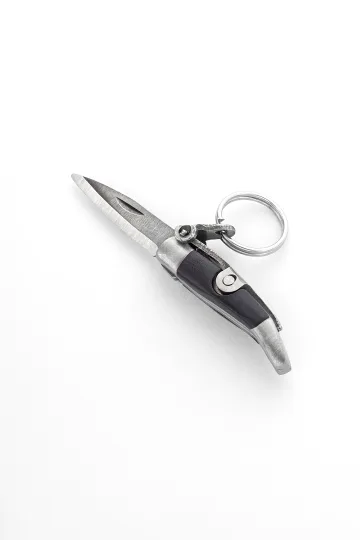
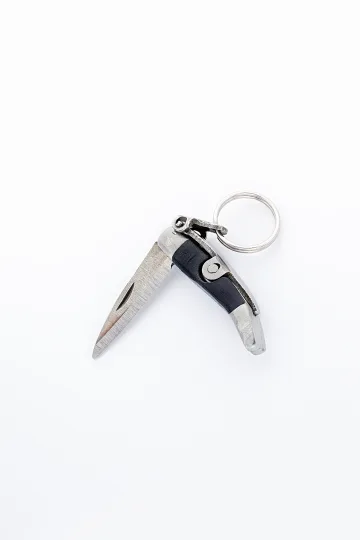
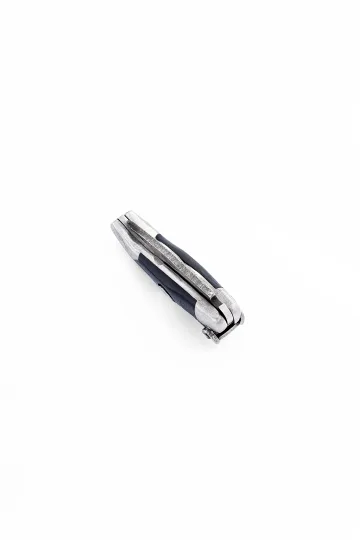
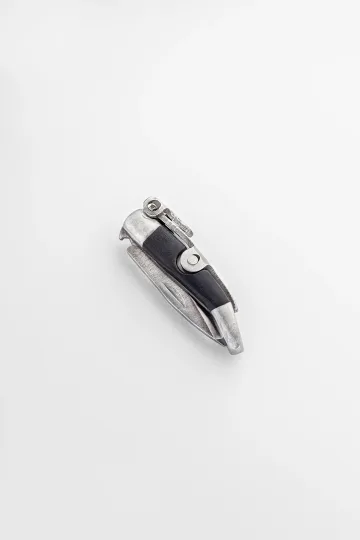
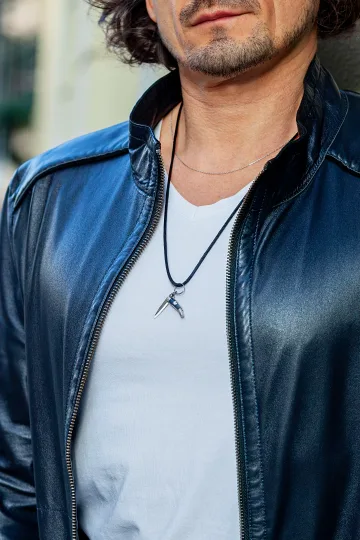
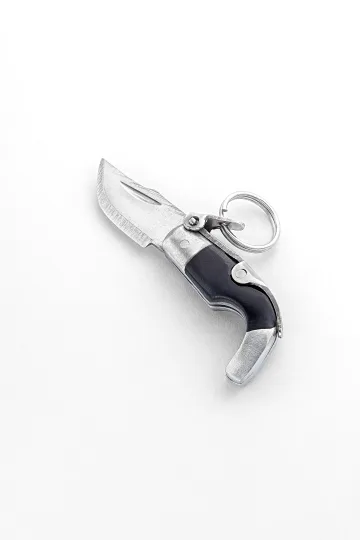
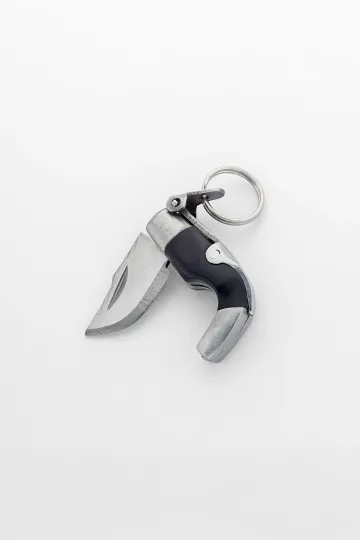
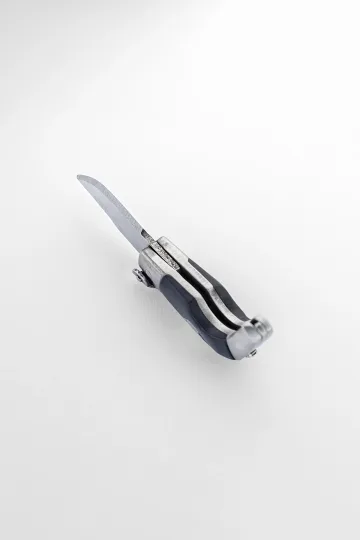
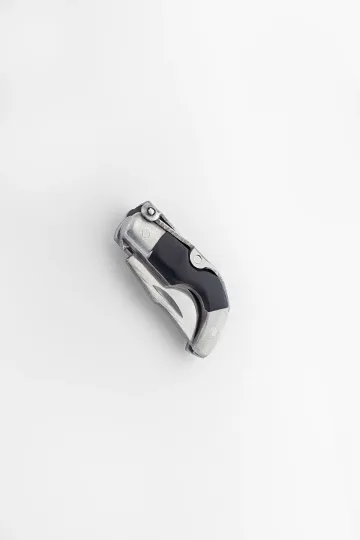
CAPAORA mini knife pendant
The 18th-century Spanish navaja in miniature: 40 mm of stainless steel, a real folding mechanism and a Palanquilla lock that clicks. An affordable gift to remember.
Authentic · Ships from Spain · 14-day returns
Peridot and other stones
Peridot and emerald
Both are green, but they are different minerals with a different character.
| Peridot | Emerald | |
|---|---|---|
| Colour | Yellow-green, warm | Cool green, sometimes blueish |
| Mineral | Olivine (magnesium silicate) | Beryl |
| Hardness | 6.5-7 | 7.5-8 |
| Cleavage | Present, can split on impact | Present, the stone is brittle |
| Price | More affordable | Noticeably dearer |
| Rarity | Rare in large sizes | Very rare in high quality |
The choice is a matter of taste and budget: peridot is warmer and more affordable, emerald is cooler and more prestigious. If you want to compare two greens, there is a separate guide to emerald and its properties.
Peridot and chrysolite
These are one and the same mineral. "Chrysolite" (Greek for "golden stone") is an old name for peridot, met with in antiques, old catalogues and literature. There is no difference in composition, only in the era when the word was used.
Peridot and citrine
Citrine is the yellow variety of quartz. It is common, cheaper and tougher against knocks (hardness 7, with cleavage practically absent). Peridot is rarer, dearer and greener in tone. Both are warm and sunny, and the choice comes down to personal taste.
Myth versus reality
Myth: peridot glows at night. In truth it is light playing on the facets under warm lighting plus a weak luminescence in some stones. In the dark peridot does not glow.
Myth: peridot cures illness. There is no medical effect. A beautiful piece can lift the mood and the confidence, but it does not replace a doctor.
Myth: cheaper means worse. Peridot is more affordable than diamond and emerald not because of quality but because of the market and demand. A good Burmese stone is a fully fledged gem.
Myth: all peridots are the same colour. They run from a pale yellow-green to a deep grassy tone, sometimes with brown. The shade depends on the iron content and the deposit.
Myth: peridot cannot be worn in a ring. It can, but in a protected setting and with the habit of sparing the stone from knocks.
Peridot in numbers and facts
| Characteristic | Value |
|---|---|
| Chemical formula | Mg₂SiO₄ (magnesium silicate) |
| Group | Olivine (forsterite-fayalite series) |
| Hardness | 6.5-7 on Mohs |
| Density | 3.3-3.4 g/cm³ |
| Refractive index | 1.65-1.69 |
| Crystal system | Orthorhombic |
| Colour | Yellow-green |
| Main origin | Volcanic, more rarely meteorites |
| Main deposit today | Myanmar (Burma) |
| Historic deposit | Zabargad island (Red Sea, Egypt) |
| Average size in jewellery | 0.5-2 carats |
| Synonyms | Olivine, chrysolite (historic) |
| Birthstone month | August |
| Associated signs | Leo, Libra (loosely) |
Send a friend a discount code, they save on their first order.
Facts that take people by surprise
Peridot is one of the few gems whose biography reaches beyond the Earth. Here are several things about it that surprise even people who have followed stones for years.
Peridot falls from the sky
This is very nearly the only gemstone that arrives here literally from space. Olivine in pallasite meteorites has travelled the road from an ancient asteroid to the surface of our planet. While you hold a piece of terrestrial peridot, its cosmic twin is flying somewhere in the asteroid belt at that same moment.
NASA found peridot on a comet
The probe of the Stardust mission brought particles of comet Wild 2 back to Earth, and among them were tiny crystals of olivine. The mineral that colours our jewellery was forming inside an icy body born on the outskirts of the solar system. Olivine has also been detected in the dust around distant young stars, which makes it one of the most ubiquitous minerals in the cosmos.
In Hawaii a whole beach is made of it
The green beach at Papakolea on the island of Hawaii is coloured by olivine washed out of lava. In effect it is an enormous scatter of peridot that never was: the grains are too small to cut, yet numerous enough to turn the sand olive.
The stones of Cologne Cathedral were not emeralds
The green gems on one of the great Christian reliquaries of Europe, the shrine of the Three Kings, were held for centuries to be emeralds and turned out to be large peridots. The substitution of names ran on so long precisely because warm green peridot passed so easily for the costlier stone.
Peridot does not fear sunlight
Unlike amethyst, which can fade in strong light, peridot is lightfast. Its colour comes from iron in the lattice itself, so it does not bleach or shift however many years it spends in the light. That makes it an easy stone for a piece worn every day, including through a bright summer.
It is hardly ever faked by synthesis
Growing peridot in a laboratory is technically possible but unprofitable: there is plenty of natural material of middling quality, and copying it in glass costs less. So there is no mass-market synthetic peridot on the shelves, which is more than a good many gems can say.
It has fingerprints of its own
The lily pad inclusions, disc-shaped bubbles with a small crystal at the centre, occur in almost nothing but peridot. From that pattern a gemmologist recognises the stone about as confidently as from a document.
Frequently asked questions
Are peridot and olivine the same thing? Yes. Olivine is the mineral, peridot is its gem variety: large, clear, beautifully coloured. The same composition, different names for different contexts.
Is peridot an expensive stone? It belongs to the affordable segment of coloured gems: cheaper than emerald, ruby and sapphire, but dearer than quartz, amethyst and citrine. The price climbs sharply with size and colour saturation. Stones of 0.5 to 2 carats fit a moderate budget for most jewellery, while a large saturated Burmese stone is another story.
Can peridot be worn every day? Earrings and a pendant are ideal for daily wear: the stone takes almost no knocks. A ring needs a protected setting (a closed bezel) and the habit of taking it off for physical work. Because of its 6.5 to 7 hardness and its cleavage, peridot in an open setting on an active hand risks a chip.
Which metal suits peridot best? Warm metal. Yellow gold heightens the stone's golden component, sterling silver gives a clean cool contrast and underlines the green. White gold is neutral and suits a minimalist look.
How do I clean peridot at home? Warm water with a drop of mild soap, a soft brush, a rinse and drying with a cotton cloth. No ultrasound, steam, boiling water, bleach or acids: a sudden temperature change can split the stone along its cleavage.
Does synthetic peridot exist? Industrial synthesis is not worthwhile, so there is no mass-market synthetic peridot. What you do meet is imitation by glass and by cheap green stones. Telling them apart is helped by density (the natural stone is heavier than glass of the same volume), the warm shine, the marked birefringence and a check by a gemmologist. A very low price for a large "peridot" is a reason to be wary.
Does peridot fade in sunlight? No. The colour comes from iron in the lattice itself, and the stone is light-fast. It does not fade in the sun.
Does peridot suit a man? Yes. The yellow-green tone is neutral and looks good in a signet ring, a pendant on a thick cord, cufflinks or a dark setting of oxidised silver. The stone is not considered "feminine": historically it was worn by priests and rulers.
What pairs with peridot as a meaningful gift? By tradition it is a stone of abundance and new beginnings, so it is given at the start of a project, a move, a new job or after a hard period. You can add a short note about the stone's meaning or a personal engraving on the setting.
Conclusion
Peridot is a rare meeting of geology and beauty. A mineral ordinary in the depths of the Earth becomes a gem only when it grows large, clear and evenly coloured by iron into a warm yellow-green. Behind it runs a long, documented history: an island in the Red Sea, Egyptian burials, medieval altars, the drawing rooms of nineteenth-century Europe.
It is more affordable than emerald, ruby and sapphire, yet lovelier and more interesting than everyday quartz. It needs no enhancement, and its colour is honest, natural. And in a large clear form it is genuinely rare. Wear it believing in solar energy or not: a beautiful piece of jewellery serves a long time, pleases the eye and lifts the mood, and that is a perfectly real effect.
Buying it as a gift? Each one arrives ready to give.
 A branded Zevira box and a little card come with every order.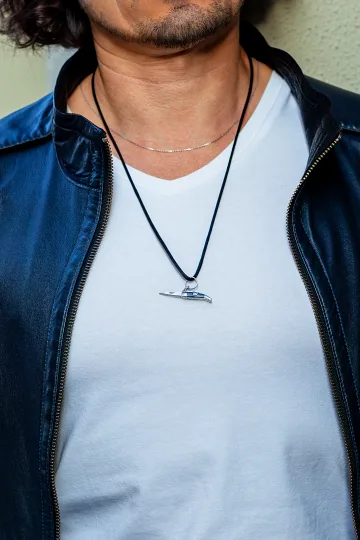





Open the Zevira jewellery catalogue
If you found this information about peridot useful, take a look at our collection of jewellery with green gemstones.
Rings, earrings and pendants with green gemstones in warm settings of sterling silver and gold, with a protected seat for the stone and personal engraving.
About Zevira
Zevira makes jewellery in the artisan tradition of Albacete, Spain. Peridot is a stone of warm yellow-green light, and we match metal and setting to it so that the colour of the stone opens up while the cleavage stays securely protected through daily wear.
What you can find with us on the theme of green gemstones:
- Pendants with green stones on chains of sterling silver and gold
- Stud and drop earrings in which the stone is shielded from knocks
- Rings with a protected closed bezel for safe everyday wear
- Warm settings of yellow gold that heighten the stone's golden tone
- Pairings of a green gemstone with other stones in a single piece
- The option of personal engraving of a date, a name or a word of intent
Each piece is made by hand by a craftsman, with the option of personal engraving. Sterling silver and 14-18K gold.