Tanzanite: the blue stone mined in a single place on Earth
A gram of good tanzanite can cost more than a gram of gold, and beauty is not the reason. Sapphire is prettier, ruby more famous. The reason is geography: tanzanite comes from a few square kilometres in Tanzania, at the foot of Kilimanjaro, and nowhere else. The deposit was found in 1967, and geologists worked out long ago that commercial reserves will run dry in roughly a century. The stone is rare not as a metaphor but literally.
The second quirk is honest physics, no mysticism. In the ground most crystals sit there looking dull, reddish-brown. Heat them to around 400-500 degrees and they turn blue and violet. This is neither paint nor coating but a rearrangement of how vanadium ions in the crystal absorb light. Once heated, the colour is stable and holds for years.
What follows is the concrete stuff: what tanzanite is made of, how hard it is and why that matters on the hand, how it formed, how it differs from look-alike blue stones, how to care for it and how to avoid buying a fake. We will touch on symbolism too, but briefly and without promises.
What tanzanite is: the chemistry and physics
Tanzanite is not a separate mineral but the gem variety of the mineral zoisite. Zoisite has been known since the early nineteenth century and occurs in several colours, but it was the transparent blue and violet form from Tanzania that earned its own trade name.
Composition and formula. Zoisite is a hydrous calcium aluminium silicate, chemical formula Ca₂Al₃(SiO₄)₃(OH). The blue and violet colour comes from traces of vanadium, sometimes chromium. The more vanadium, the deeper the blue.
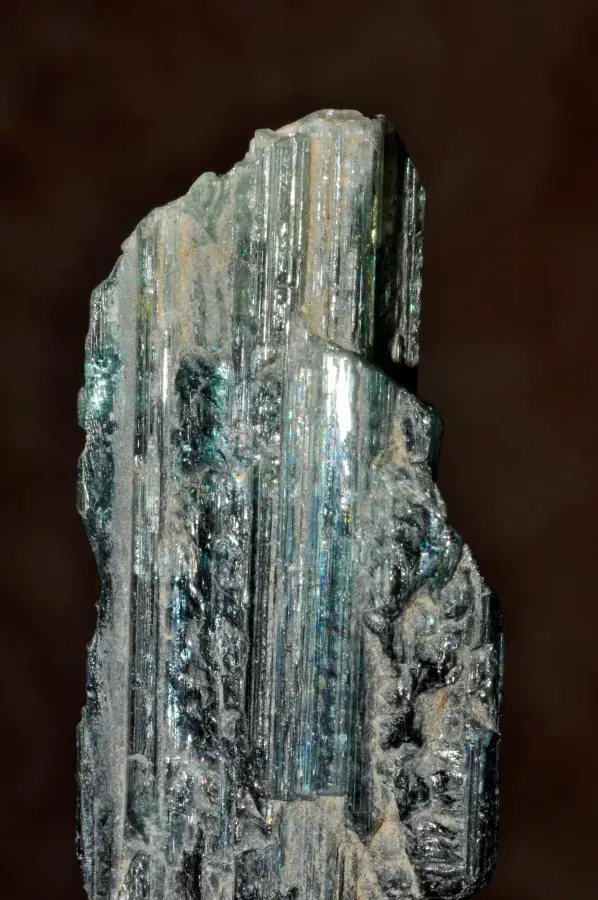
Crystal system and structure. Zoisite crystallises in the orthorhombic system. The crystals are usually elongated and columnar with lengthwise striations. That ordered lattice gives the stone its optical behaviour, including its famous pleochroism.
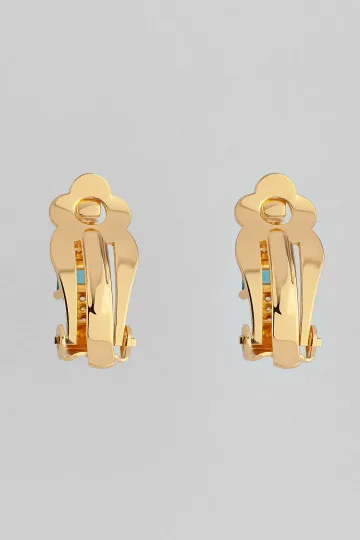
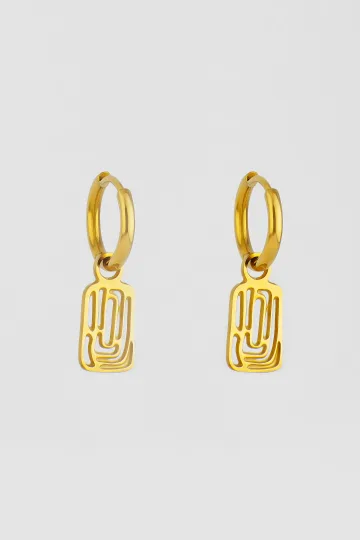
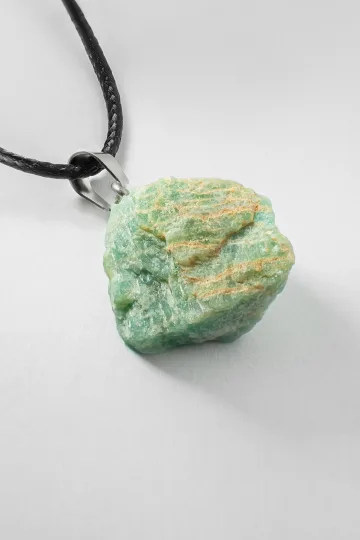
Wear the symbol, don't just read about it. These are in stock:






Hardness. On the Mohs scale tanzanite scores 6 to 6.5. That is softer than quartz (7), noticeably softer than topaz (8) and far softer than corundum, meaning sapphire and ruby (9). In practice it means tanzanite is easily scratched by ordinary household dust, which is full of fine quartz particles, and that it has marked cleavage: it can split along a plane under a sharp knock. This is not a stone for an everyday ring on your working hand.
Density. Specific gravity is around 3.35 g/cm³. By gemstone standards that is mid-range, heavier than quartz, lighter than sapphire.
Optics. Tanzanite's refractive index is roughly 1.69 to 1.70 and its dispersion is low (about 0.021), so the stone does not throw rainbow flashes the way a diamond does. Its beauty lies not in the sparkle of the facets but in a rich, even body colour. The stone is transparent with a glassy lustre.
Pleochroism: three colours in one crystal
Tanzanite's headline optical property is strong pleochroism. That means a single crystal shows different colours depending on the axis you look along.
In tanzanite the pleochroism is three-coloured (trichroism): along its different axes the crystal gives blue, violet-purple, and a reddish-brown or yellowish. Sapphire's pleochroism is mild, tourmaline can be sharper, but tanzanite has one of the most pronounced of any gem.
Pleochroism is the cutter's headache and also their main tool. How the cutter orients the rough relative to the crystal axes decides whether the finished stone reads deep blue or drifts into violet. The cutter sacrifices some weight for better colour: a stone oriented for maximum blue is usually dearer than one where weight was kept at the cost of tone.
Colour under different light: daylight and the lamp
Pleochroism has a close but separate companion: tanzanite visibly shifts its overall tone with the light source. Under daylight or cool white light the stone pulls towards a clean blue. Under a warm incandescent lamp, or by candlelight in the evening, the same stone drifts into violet-purple, sometimes with a lilac cast. This is not pleochroism, which depends on the angle, but a reaction to the spectrum of the light: warm light lifts the stone's purple component.
There is a practical lesson when buying. View the stone under at least two sources: by a window in daylight and under a warm lamp. Sellers know this, and display lighting often flatters the tone. A stone that only looks good under one light will disappoint at home. One that holds a rich colour under both daylight and warm light is worth more.
Heat: where the blue comes from
Almost all tanzanite on the market has been heat-treated, and that is not a flaw but the industry norm. In nature most zoisite crystals from Merelani have a brownish, undefined colour because of how the vanadium ions are distributed across oxidation states. Heating to around 400-500 degrees changes that vanadium state; the brown and yellowish components leave and a clean blue with violet remains.
The treatment is stable and irreversible, and the colour does not fade with ordinary wear. Naturally blue, unheated tanzanite is rare and prized by collectors, but for the ordinary buyer a heat-treated stone is no worse: it is the standard recognised by gemmological laboratories. On a certificate it is written plainly, heated or heat treatment.
Why vanadium in particular gives blue
The colour of a gemstone is nearly always a story about how an impurity swallows part of the visible spectrum and lets the remainder through to the eye. In tanzanite that work is done by vanadium, which has taken the place of aluminium in the zoisite lattice. Vanadium ions absorb light in the yellow and red part of the spectrum, and what reaches the eye is the blue-violet remainder.
Before heating, some of the vanadium sits in a different oxidation state, and that state adds brownish and yellowish notes which get in the way of a clean blue. Warming shifts the vanadium into the form that is wanted, and the absorption spectrum moves so that the brown component disappears. In some crystals a little chromium is present as well, and then a warmer violet cast mixes into the blue. This is why two stones from the same block can be heated identically and still come out with different personalities.
Why zoisite comes in so many colours
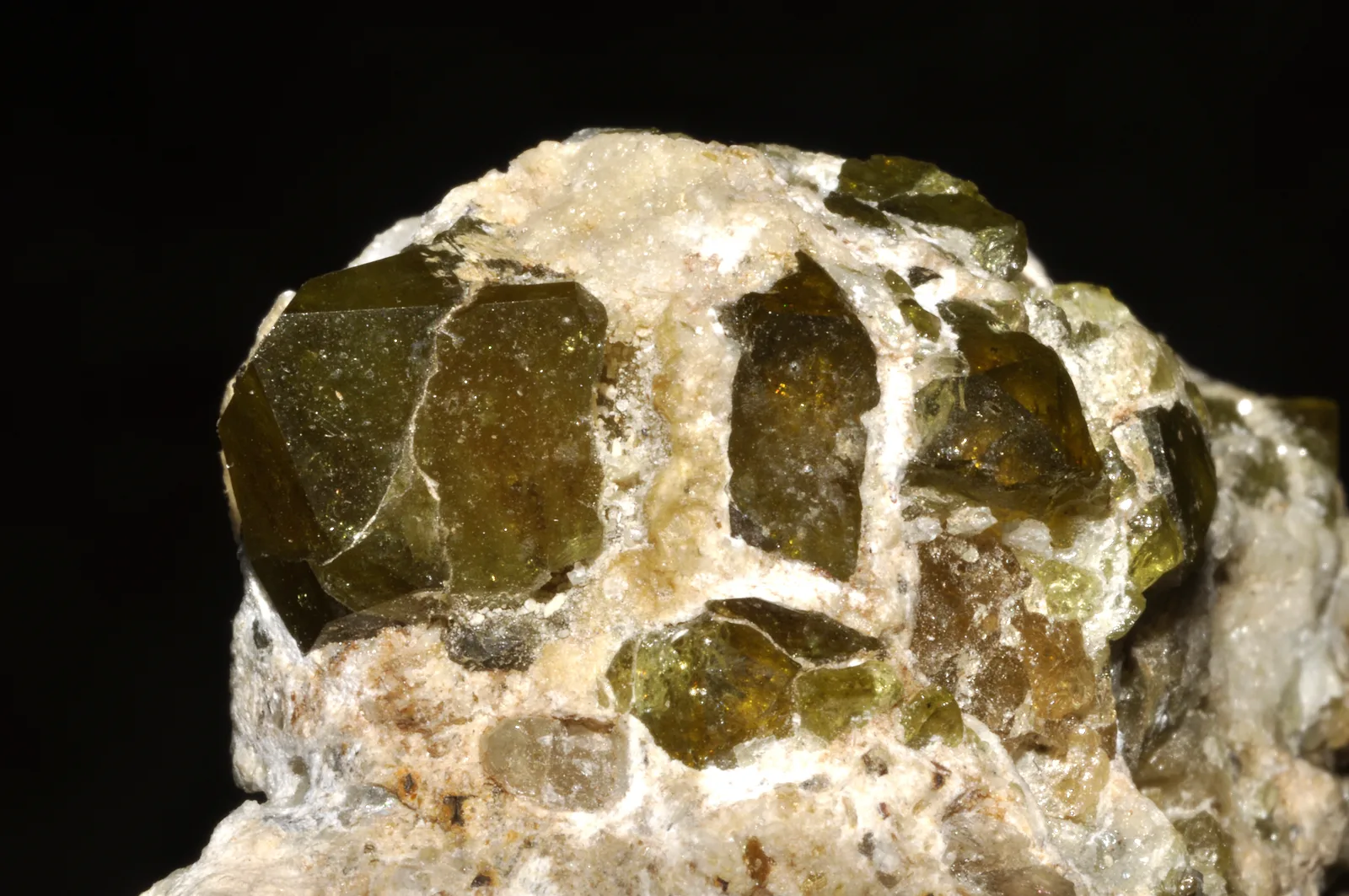
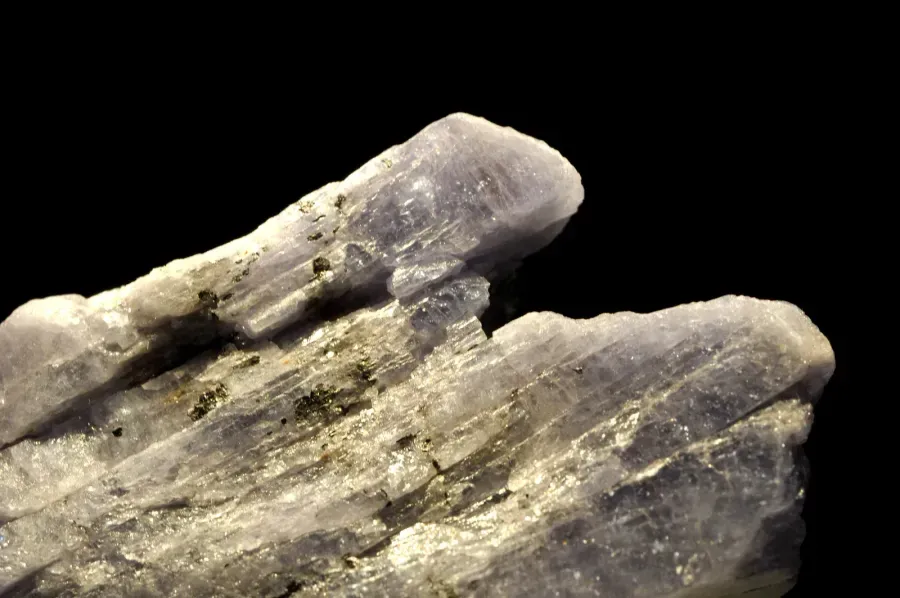
Zoisite as a mineral is under no obligation to be blue. In nature it occurs grey, greenish, yellowish and pink. The pink manganese-bearing variety is called thulite; it has been known in Norway for two centuries and is cut into beads and cabochons. Opaque green zoisite goes into ornamental work, often with ruby crystals sitting in it, a combination familiar from carved figures and paperweights.
It was the transparent blue-violet form from Tanzania that turned out to be rare and striking enough to earn a trade name of its own. So one and the same mineral yields both a modest ornamental material and one of the most expensive blue gems on the planet, and the whole difference rests on a handful of impurity atoms in the lattice.
Cleavage in plain words
Cleavage is the tendency of a crystal to split along even planes set by its internal structure. Diamond has it, quartz has almost none, and tanzanite has it pronounced in one direction. In practice that means the stone is vulnerable to impact rather than to scratching: a sharp point knock from the wrong direction can split the stone along that plane even if the surface has no scratch on it at all.
A cutter knows where the cleavage runs and tries to orient the stone so that the working stresses in the finished piece do not fall along the dangerous plane. For an owner the conclusion is simple enough. Tanzanite is not afraid of dust. It is afraid of a fall onto a hard floor and of catching its edge against a worktop, which is exactly the sort of thing a kitchen does to a ring several times a week.
Geology: how and where tanzanite forms
Tanzanite formed in a metamorphic zone, where ancient rocks recrystallised under pressure and heat. Geologists place its formation in very distant events, on the scale of hundreds of millions of years, linked to the building of the East African orogenic system. The combination of the right starting rock chemistry, the right pressure and the presence of vanadium coincided in one narrow district, and that coincidence proved almost unique.
The single deposit
Commercial tanzanite is mined in the Merelani hills (sometimes written Mererani) near the town of Arusha, in the shadow of Kilimanjaro. The ore field spans a few square kilometres divided into several blocks. For comparison: sapphire is mined in dozens of countries, from Sri Lanka and Myanmar to Australia and Madagascar. Tanzanite is pinned to one point on the map.
Traces of zoisite have turned up elsewhere on the planet, but jewellery-grade blue tanzanite of the right quality and in marketable volumes exists nowhere else. Such a geographic monopoly is rare among gemstones. There is a similar story, for instance, with charoite, the violet stone from a single deposit on Earth: it is mined only in Siberia, and that tie to one place also shapes its price.
Cutting and trade were traditionally done in India and Belgium, and in recent years Tanzania has required that most of the rough be processed inside the country. Mining is carried out by both large companies and small-scale diggers, and for the region around Arusha it is a notable part of the economy.
The Merelani ore field itself has been divided by the Tanzanian authorities into areas historically called blocks. Some are given over to large mechanised mining, some to small licensed diggers who go down narrow shafts hundreds of metres deep by hand. To bring order to smuggling and trade, the state at one point ringed the ore field with a perimeter wall and checkpoints. For the buyer this is not abstract politics: where a stone comes from and its legal path from shaft to shop affect both availability and price.
If responsible sourcing matters to you, ask the seller whether they can confirm the supply chain. A fully transparent history is hard to trace because of the many small intermediaries, but the question itself keeps the seller honest and weeds out the murkiest sources.
Why reserves are small
What makes the stone rare is not only the small footprint but the geology: tanzanite sits in particular rock horizons, and as the workings go deeper, mining gets dearer and harder. Gemmological bodies have repeatedly estimated that at current rates the commercial reserves are finite and measured in decades, not centuries. Nobody can name an exact date, but the fact of the limit is widely accepted.
What a finite supply means for a buyer
A finite supply is neither cause for panic nor a sales device, and it is not empty noise either. Most gemstones have many sources around the world, and if one mine runs down, another picks up the production. Tanzanite has no reserve geography. When the Merelani blocks have worked through the deep horizons, a new deposit will most likely not appear, because the coincidence of conditions was of the rarest kind.
That places tanzanite closer to collectors' rarities than to the everyday gem trade. For anyone buying a stone to wear, the practical sense of it comes down to one thing: choose deliberately and look after the piece, because matching that exact blue again will only get harder. It is also a reason to buy the colour you actually like rather than the grade someone else recommends, since the second attempt may not be there.
Tanzanite and the Maasai: life at the mine
The Merelani ore field lies in land historically associated with the Maasai, and mining has long been part of the local economy. The blocks are worked both by mechanised operations and by thousands of small-scale diggers who descend hundreds of metres into hand-cut shafts. The work is hard and dangerous: heat, cramped ground, the risk of collapse and of flooding. Part of the money stays in the region and part goes to intermediaries.
This is worth holding in mind alongside the geology and the cutting. The story of tanzanite is also the story of particular people at the foot of Kilimanjaro, for whom a blue crystal means a wage. Asking a seller what they know about their supply chain is not a moral performance. It is the one piece of pressure an ordinary buyer can apply, and enough people applying it changes what sellers bother to find out.
Customer reviews
Zevira is a real jewellery shop. Genuine payments, deliveries and customer thank-yous.
🥰🥰🥰 gracias
Ok, ¡gracias! 🙂
Tanzanite keeps cold company: white metal, cool skin, nothing warm in the frame. Park it next to gold and the blue goes flat. Don't.
What to wear with tanzanite
Dozens of blue stones have passed through my hands, and tanzanite is the fussiest of them about its company. Here is what actually works, sorted by occasion.
What do I wear tanzanite with every day? I recommend studs or a slim pendant in silver or white gold. Wear them with a white shirt, a grey jumper, deep indigo jeans: the stone catches the light and lifts a neutral top without turning it formal. Blue wants simplicity around it, so I suggest keeping the rest of the look quiet.
Is tanzanite right for the office? Yes, as long as you keep it restrained. I recommend a pendant on a fine chain under a closed collar and small earrings with your hair tied back. Cool blue sits beautifully on navy, grey and charcoal suits, on white and dusty blue. Steer clear of rust and mustard fabrics nearby: they quarrel with the stone's coolness and dull the blue.
How do I build an evening look? For evening I choose a ring or larger drop earrings on a bare neck. Black, navy, wine, and emerald velvet and satin carry the violet especially well. One large stone beats a scatter of small ones here, so I recommend leaving only smooth metal and clean skin beside it.
Which metal should I pick for tanzanite? The metal choice is almost clear-cut: white gold, platinum or high-grade silver underline the cool tone. Yellow gold adds warmth and dulls the blue, so I use it deliberately and only for contrast. If you wear several pieces at once, I suggest staying with one cool metal and not mixing tanzanite with warm stones such as citrine or garnet.
Who does tanzanite suit best? It suits best those with a cool colouring: fair or cool skin, grey, blue and green eyes. Against that backdrop the blue reads clean. But the rule matters more than looks: the stone should lead, everything else is its backdrop. If you want a set, gather a pendant and earrings in one colour scheme and drop anything bright beside them.

Turn on your camera, pick earrings, a pendant or a ring, and see the piece on yourself in real time.
Switch items in one tap.
Everything runs in your browser: no photo or video is ever uploaded.
History and culture
Tanzanite has no ancient history, and in that it is more honest than many stones. Sapphires and emeralds were known in antiquity, while the first tanzanite reached people only in the 1960s. By the common account, herders spotted the glinting crystals on the surface after grass on the slopes had burned off, and through traders the samples reached specialists. In 1967 the find was identified as a gem variety of zoisite.
The scientific name, blue zoisite, sounded unappealing for trade. The name tanzanite, after the country, was put into circulation in the late 1960s by a New York jewellery house, and it quickly became standard. The stone came into fashion in the 1970s on a wave of interest in blue jewellery, and over half a century it went from a novelty to a recognised gemstone.
Because the history is short, it holds no crowns, no regalia, no legends of kings, unlike sapphire, which was set into jewellery for centuries before tanzanite was ever discovered.
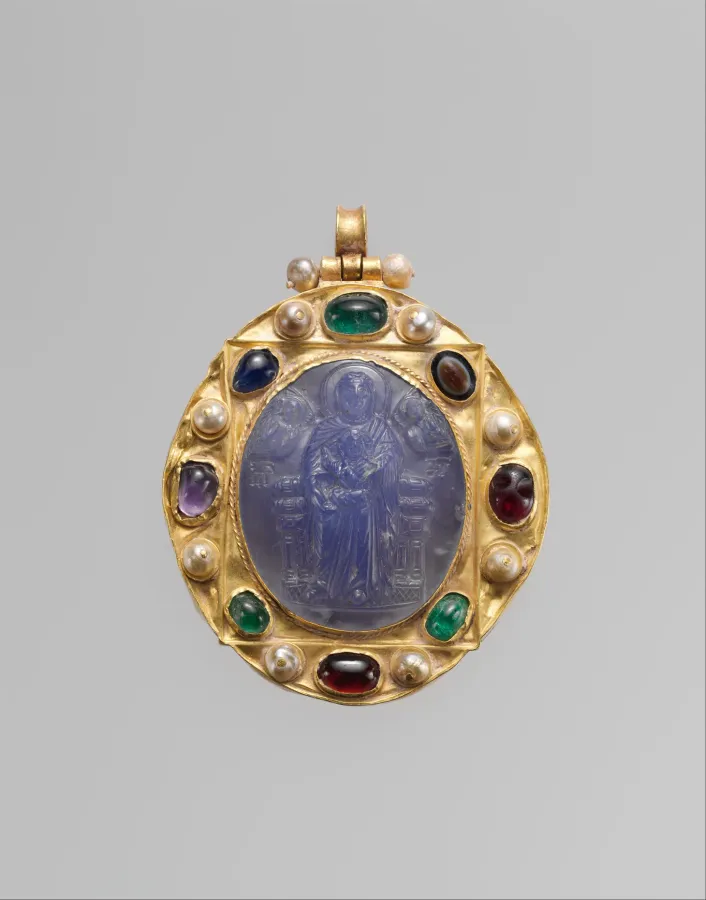
Large tanzanite specimens sit in museum collections. By some accounts, notable examples are held at the American Museum of Natural History in New York. The Smithsonian Institution also keeps mineral specimens of tanzanite. They entered the museums precisely as a rarity and as an illustration of an unusual geological story.
Famous specimens
The largest tanzanite finds become events in the trade. From time to time the Merelani shafts give up giant crystals weighing several kilograms, and stones like that are given names and reach the news. Cut examples of record weight are measured in hundreds of carats and end up in private collections and museums, because wearing such a stone is out of the question and showing it is the only thing left to do with it.
There is a curiosity in this. For tanzanite a large size is both an asset and a test of the cutter's skill: the bigger the rough, the more strongly the orientation along the optical axes tells on the colour, and the more expensive a mistake becomes. A large stone cut for weight instead of for colour is a familiar disappointment, and it is why serious buyers ask what the cutter was aiming at.
Tanzanite in popular culture
In half a century tanzanite has become a recognisable name well beyond jewellery windows. It is listed as one of the December birthstones alongside zircon and turquoise, which fixed its role as a winter gem, cool in tone and suited to the season it belongs to. In Britain that listing does more work than any legend, because a December birthday is a reliable reason to look at a stone somebody might otherwise never consider.
Marketing turned its geography into a narrative: a stone from a single point in Africa, at the foot of Kilimanjaro, which will one day run out. That story of scarcity works harder than any folklore, and it goes a long way to explaining how a young stone entered the working vocabulary of jewellers so quickly.
The psychology of choosing something rare
People value things for their beauty and also for their scarcity. Tanzanite joins both motives: a saturated cool colour and an honest, measurable rarity. Choosing it, a person is often buying less the shade of blue than a share in something that is going away, the sense of holding an object that a generation from now cannot be repeated.
There is no mysticism here, only the ordinary psychology of scarcity. Blue also carries a long reputation for calm and depth, and is associated with concentration and clarity. The addition of those two things, the rarity and the quiet tone, is what makes tanzanite so attractive to people who have no interest in chasing the glitter of a diamond.
Upload a photo of your pet, someone you love, or an object. We'll build a 3D model and hand-cast it in pewter.



Varieties and quality
Tanzanite is not split into many types, but the quality of stones varies a great deal, and price follows.
Colour. The most valuable is a rich blue with a slight violet undertone, free of grey and brown notes. Purely violet stones usually cost less than blue. Pale, washed-out shades are the most affordable.
Clarity. Most tanzanites are transparent, with no inclusions visible to the eye. Stones with noticeable cracks and spots are worth less, because in a fragile stone inclusions also raise the risk of splitting.
Cut. Orientation and proportions decide whether the colour opens up. A well-cut tanzanite looks alive and deep from various angles; a poor cut leaves even a decent colour looking flat.
Weight. The larger the stone at a given quality, the rarer and dearer per carat, because large clean crystals are uncommon.
A note apart: green zoisite and the opaque rocks of zoisite with ruby (ruby-in-zoisite, sometimes called anyolite) are relatives of tanzanite by mineral, but a different material with a different look.
Quality grading and size
In the trade, tanzanite colour is often marked with letter grades. The most saturated blue is labelled AAA, a step down is AA, then A. This is not a strict laboratory standard but a trade designation, and the bar drifts a little between sellers, so you should look at the stone itself, not just the letters in the description.
There is an important pattern: depth of colour is heavily set by size. Small tanzanites up to roughly one carat often look paler, because in a thin stone light has too little path to gather saturation. A truly dense blue tends to open up on larger stones. So a large saturated tanzanite climbs in price per carat not only because big crystals are rare, but because the best colour is physically easier to get in a large stone. If you want a deep tone in a small size, you will have to hunt for it specifically.
How to buy: what to check
A few things to look at before buying, in order of importance.
Colour under two light sources. Daylight by a window and a warm lamp. The stone should hold its tone under both, not only under the display.
Clarity against the light. Turn the stone to the light and look for cracks and spots. In a fragile tanzanite an inclusion is not only a matter of looks but a weak point along which it can split.
Cut orientation. A well-cut stone reads deep blue through the table. If the main colour shows only from the side, the cutter kept weight at the cost of tone.
A closed back. A solid bezel hides flaws and darkens the stone. A setting open at the back shows colour and clarity more honestly, but is also less forgiving of them.
Certificate. For a significant purchase, a document from a respected gemmological laboratory stating natural origin and treatment. It is the only reliable way to separate a natural stone from a lab-grown one and to confirm that what you have is really zoisite.



How to tell tanzanite from similar stones and fakes
There are many blue stones, and tanzanite is confused with several of them. Let us go through it plainly.
Sapphire. The most frequent colour neighbour. The key difference is hardness: sapphire is 9 on Mohs, tanzanite 6 to 6.5. Sapphire is noticeably heavier, has a higher refractive index and almost no pleochroism visible without instruments. If a blue stone shows three different shades as you turn it, that argues for tanzanite, not sapphire.
Iolite (cordierite). The trickiest double, because iolite also has strong pleochroism. But iolite is lighter, has a different refractive index, and its blue usually carries a greyer, inkier cast. They are told apart with instruments.
Blue topaz. Often irradiated and inexpensive. Harder than tanzanite (8), weak pleochroism, colour usually even and single-toned, with no violet play. It is a different mineral with a different structure; the two should not be confused.
Synthetic forsterite and glass. There are imitations of tanzanite made from synthetic forsterite or from dyed glass. Glass has no pleochroism at all and often shows bubbles. Synthetic forsterite is given away by its optical properties under laboratory testing.
Synthetic tanzanite. Lab-grown zoisite exists, with the same formula, and the eye cannot tell it from natural. A gemmological laboratory sees the difference in the character of the inclusions and the spectra. A natural stone always costs more, so it matters that the seller states plainly whether a stone is natural or grown.
The most reliable approach is not home tests but a certificate from a respected laboratory and a check by a gemmologist with a loupe and refractometer.
A simple home test for pleochroism
A proper check is a laboratory job, but a rough impression can be formed with your hands. Take the stone and turn it slowly in even daylight, looking through the table and then from the side. A natural tanzanite will change its shade noticeably from blue to violet depending on the angle, because its trichroism is strong. Dyed glass does not behave that way: its colour is even from every direction, and bubbles are often visible inside.
This is not proof of anything. It is a reason either to be wary or to relax before taking the stone to a specialist. And the test will not separate tanzanite from iolite, whose pleochroism is also strong, so a stone that passes the turning test still needs instruments before any real money changes hands.
Why a certificate matters more than fine words
Descriptions such as deep blue or investment grade guarantee nothing, because every seller sets that bar where it suits them. A document from an independent laboratory shifts the conversation onto facts: whether the stone is natural or grown, whether it has been heated, what it weighs and what it measures.
For a substantial purchase a certificate pays for itself twice, once when choosing and again at a future resale, when the buyer facing you will want exactly the guarantees you once wanted. The dearer the stone, the less sense there is in taking anybody's word for it.
Leave your email, we'll send your discount code. No spam, unsubscribe anytime.
The code arrives by email, valid on your first order.
Caring for tanzanite
Tanzanite needs more care than sapphire or ruby, and the reason is purely physical: hardness 6 to 6.5 plus marked cleavage. That means two things. First, the stone scratches from ordinary dust and from contact with harder jewellery. Second, it can chip or crack from a sharp knock in an unlucky direction.
Cleaning. Warm (not hot) water, a drop of mild soap, a soft brush. Clean gently, rinse, blot with a soft cloth. That is enough for everyday care.
What to avoid. Ultrasonic and steam cleaning are off-limits for tanzanite: vibration and sharp heat can open up microcracks. Skip harsh household chemicals, acids and bleaches too. Sudden temperature swings are no good either, because of the cleavage.
Storage. Apart from other jewellery, in a soft pouch or a compartment of a box, so harder stones cannot scratch the tanzanite. Keep it out of direct sun, as with any coloured stone.
How hardness affects wearability. A pendant and earrings wear slowly; they take almost no knocks. A tanzanite ring is more sensibly worn as a dress piece than every day: hands constantly catch on surfaces, and a ring takes the first hits. If you really want a ring for constant wear, choose a setting that protects the stone with closed corners.
Seasonal habits people forget
Two simple seasonal habits keep tanzanite out of trouble. In winter the danger is a sharp change of temperature: the stone comes in from the cold into a warm room unwillingly, and with pronounced cleavage a sudden thermal jump can in theory open a microcrack. Take the piece off before washing your hands in very hot water, and never leave it on a radiator to warm through.
In summer the enemy is different, household chemistry and chlorine. Before cleaning the house, before a swimming pool and before the sea, the ring or the earrings are better off. Hard water across much of Britain leaves a dull film on a stone as well, which is cosmetic rather than damaging but explains why a tanzanite can look tired without anything having happened to it. None of this turns care into a ritual, yet it is exactly these small things that add up to a long life for a soft stone.
When to take it to a jeweller
Once a year a tanzanite in a ring is worth showing to a jeweller, particularly if the stone sits in claws. Metal wears down over time, claws loosen, and the stone starts to feel knocks more sharply than it did in a new setting. A jeweller will tighten the fittings, check for chips along the edges and, if needed, move the stone into a more protective mount.
Earrings and a pendant need this inspection less often. But if a piece has fallen onto a hard floor, it is worth showing to a specialist even with no visible damage: a crack along the cleavage plane can be invisible to the eye and will announce itself later, at the least convenient moment.
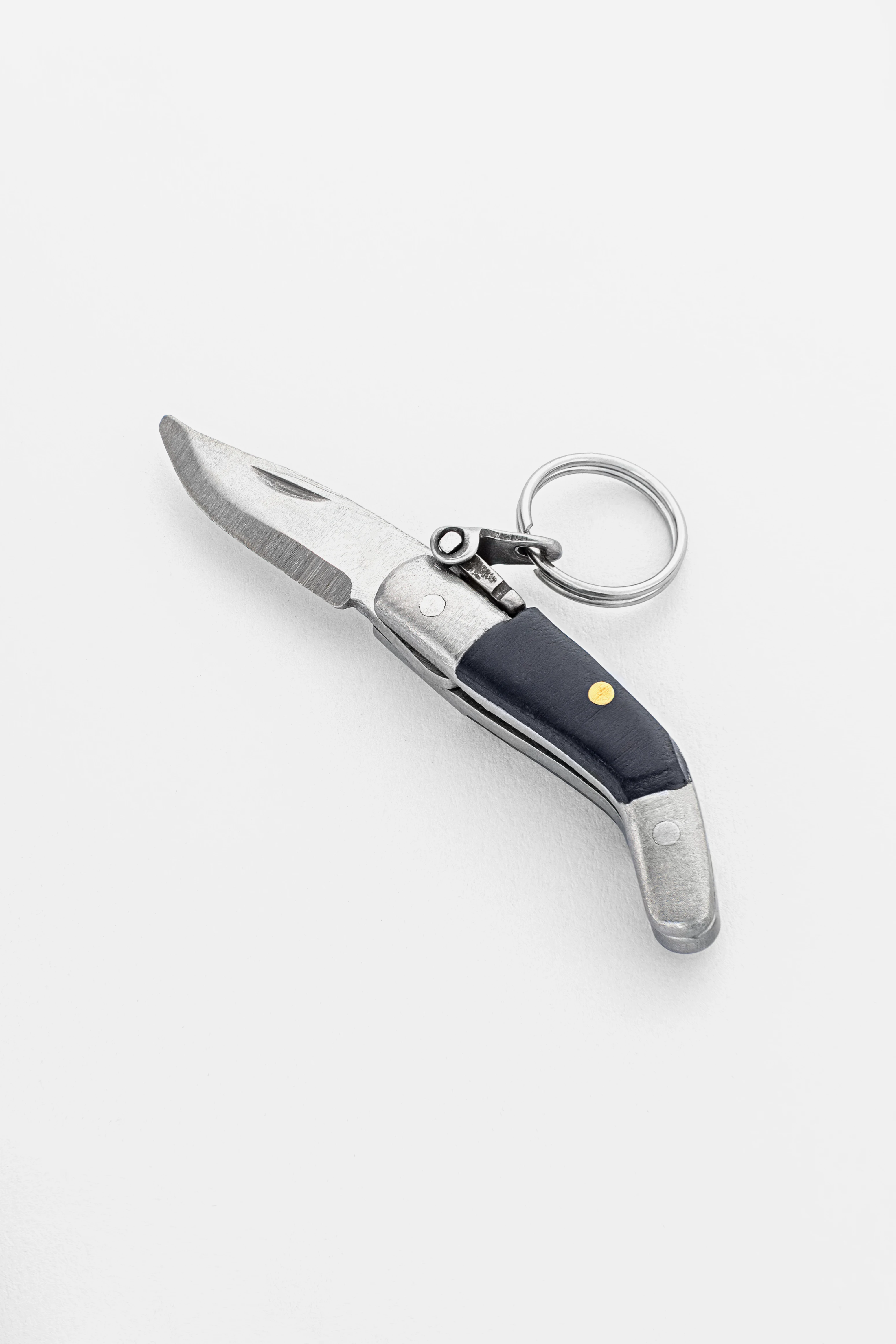
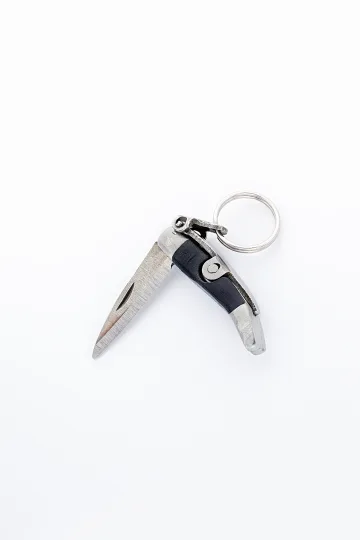
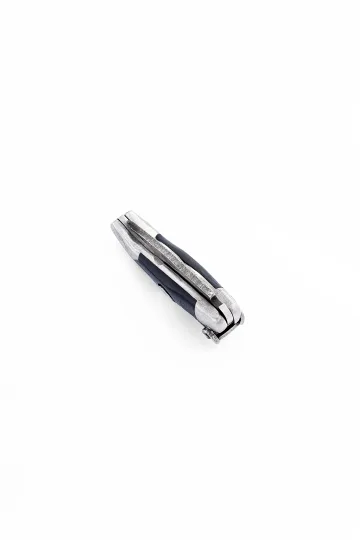
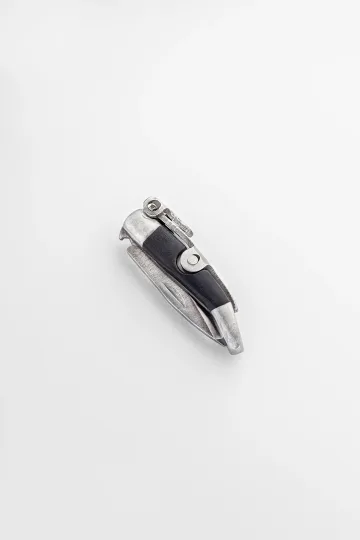
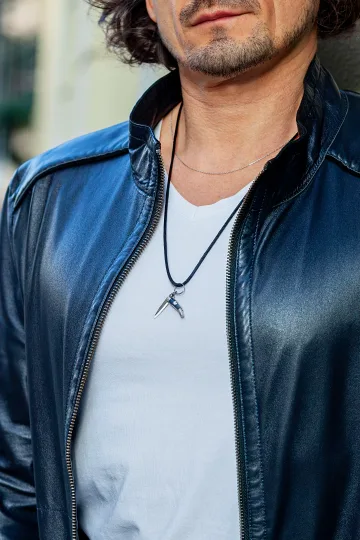
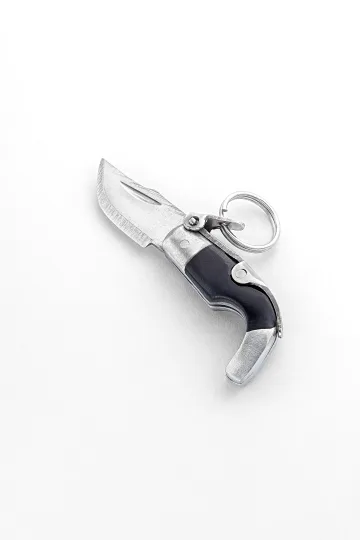
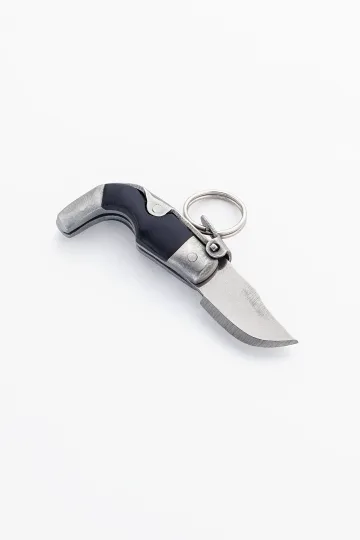
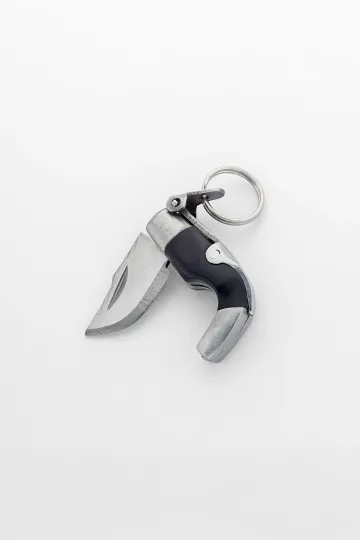
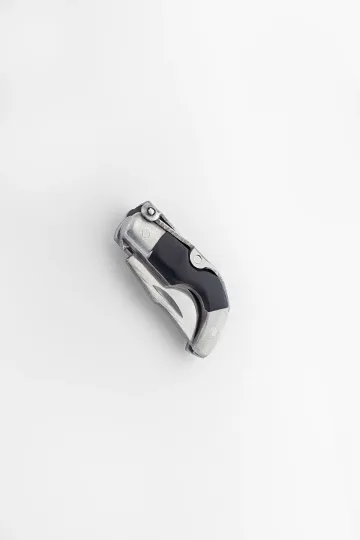
CAPAORA mini knife pendant
The 18th-century Spanish navaja in miniature: 40 mm of stainless steel, a real folding mechanism and a Palanquilla lock that clicks. An affordable gift to remember.
Authentic · Ships from Spain · 14-day returns
Tanzanite in jewellery
The cut for tanzanite is chosen to draw the maximum blue out of the stone. Most often that is an oval, cushion, pear or octagon: shapes with a large table where the colour reads deep. Small stones go into pavé and accents, large ones into the centre.
Rings. Striking, but they call for care because the stone is soft. The setting is usually white gold or platinum, the cool metal supporting the blue. It is sensible to choose a design that protects the stone: a solid bezel or closed corners instead of open, vulnerable points.
Pendants. The most practical format: a pendant takes almost no knocks, so hardness 6 to 6.5 is no problem here. Sterling silver works well with tanzanite because it does not quarrel with its cool tone. It is a comfortable way to wear a rare stone every day without risk.
Earrings. Studs for every day, drops for occasions. Earrings too are almost free of knocks, so tanzanite is a safe format. They are often paired with a pendant in a set.
Small colourless stones in a halo around a central tanzanite strengthen its colour through contrast and add the sparkle that tanzanite itself, with its low dispersion, lacks.
Symbolism: briefly and with scepticism
Tanzanite arrived too late to gather any genuine ancient mythology, but over half a century the mineral literature has managed to assign it a set of meanings. In the crystal-healing tradition it is linked to the colours blue and violet, to themes of self-expression and intuition, and is sometimes called a stone of calm.
The frame is simple: these are cultural associations, not proven effects. There is no confirmed scientific evidence that tanzanite or any other stone heals, or influences sleep, blood pressure, anxiety or creative ability. A stone is a beautiful mineral. If the meaning someone invests in it pleases the owner, that is the whole of its power, with no promise of a result.
Send a friend a discount code, they save on their first order.
Facts that surprise
Tanzanite is young, yet in half a century it has gathered a fair number of curious details. Several of them change how the stone looks to you.
It comes from literally one place on the planet
Sapphire is mined on several continents, and so is emerald. Tanzanite is pinned to an ore field of a few square kilometres. That is one of the tightest geographic monopolies among gemstones anywhere.
The blue is triggered by human hands and natural in substance
In the ground most crystals are a drab brown. The blue sleeps inside them and wakes only after heating. Nothing foreign is introduced into the stone in the process: what changes is the state of vanadium that was already there. The colour is natural in origin and stable once the treatment is done.
One crystal shows three colours at once
The strong trichroism of tanzanite means an uncut crystal casts blue, violet and reddish brown along its three axes. The cutter decides which of those colours to bring up onto the table, and the price of the finished stone follows from that decision.
The colour changes with the light bulb
The same stone reads blue in daylight and slides towards violet under a warm lamp. This is neither a defect nor a deception but a response to the spectrum of the lighting. Experienced buyers therefore always view tanzanite under at least two light sources, and ideally take it towards a window.
It was discovered very recently
While most familiar gemstones were known in antiquity, tanzanite came into use only in the second half of the twentieth century. It has no crowns and no ancient legends attached to it, which makes it one of the youngest gemstones on the market.
Its name was invented for the trade
The scientific name, blue zoisite, sounded too dry for a shop counter. A trade name taken from the country caught on immediately and became a textbook case of successful naming in the jewellery business.
It is softer than its price suggests
A high price is usually associated with hardness and indestructibility, as with sapphire or diamond. Tanzanite breaks that expectation: an expensive stone that is soft and brittle and asks to be handled with care, which is a combination that catches people out.
Frequently asked questions
How does tanzanite differ from sapphire?
They are different minerals. Sapphire is corundum, hardness 9, mined in many countries, known for thousands of years. Tanzanite is zoisite, hardness 6 to 6.5, mined only in Tanzania, discovered in 1967. Sapphire is heavier and harder; tanzanite has stronger pleochroism. Sapphire suits an everyday ring, tanzanite is better protected.
Why is almost all tanzanite heated; is that bad?
No, it is the industry norm. In nature most crystals are brownish; heating to around 400-500 degrees turns them blue, and the colour is stable afterwards. The treatment is recognised by gemmological laboratories and stated on the certificate. Naturally blue unheated tanzanite is rare and interesting to collectors, but heat has no effect on how the stone wears.
What is tanzanite's hardness, and can it be worn every day?
6 to 6.5 on Mohs plus marked cleavage. A pendant and earrings can be worn every day; they take almost no knocks. A ring is better protected and worn for occasions, or set in a mount that shields the stone, because hands so often meet hard surfaces.
How do I clean tanzanite?
Warm water with mild soap and a soft brush. Ultrasonic, steam, acids and sudden temperature swings are ruled out; they can open microcracks. Store it apart from hard stones so it does not get scratched.
Is tanzanite the same as blue topaz?
No. Blue topaz is a different mineral, harder (8), often irradiated, with an even colour and no pleochroism. Tanzanite is zoisite, softer, with strong pleochroism and violet play, and far rarer in origin.
Which is valued more: blue or violet tanzanite?
Usually a deep blue with a slight violet undertone is valued above pure violet, and certainly above pale. But it is also a matter of taste: some prefer the violet.
How do I spot a fake?
Glass gives itself away by the absence of pleochroism and by bubbles. Iolite has a different refractive index and a greyer tone. Synthetic tanzanite cannot be told by eye; a laboratory sees the difference in inclusions and spectra. The most reliable route is a certificate from a respected gemmological laboratory and a check by a gemmologist.
Where is tanzanite mined?
In one place: the Merelani hills near Arusha in Tanzania, at the foot of Kilimanjaro. Traces of related zoisite have been found in other countries, but jewellery-grade blue tanzanite of marketable quality exists nowhere else.
Can tanzanite fade?
Under normal wear, no: the colour after heating is stable. Long direct sun is no good for coloured stones, so it is better stored in a box, but in everyday wear tanzanite does not lose colour. Dullness usually comes from dirt and lifts with a gentle clean.
Rings, pendants and earrings with tanzanite and other rare stones, chosen by hand, in sterling silver and 14-18K gold.
Buying it as a gift? Each one arrives ready to give.
 A branded Zevira box and a little card come with every order.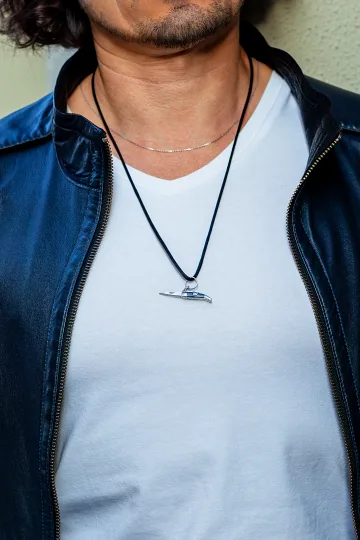





About Zevira
Zevira works with rare coloured stones and selects them one at a time. Tanzanite interests us for exactly what makes it unusual geologically: a single deposit, strong pleochroism, a recognisable blue tone. We speak honestly about the stone's properties, including its softness and the need to protect rings from knocks, because a happy owner comes back and a disappointed one does not.
The collection holds pendants and earrings with tanzanite, the formats that suit everyday wear best, and rings for those ready to wear the stone with care. If you want a similar blue or violet in a harder and cheaper stone, we will suggest alternatives such as indicolite, the blue tourmaline or the opaque lapis lazuli.