Lapis Lazuli Jewelry: The Celestial Stone of Ancient Kings
In ancient Egypt, pharaohs would set gold aside when they could wear lapis lazuli instead. The deep blue stone was rarer than metal and far more sacred. When a queen wore lapis, she wore the night sky itself, the colour the gods were said to live behind. For more than 7000 years people have wanted this stone, not only for its beauty but as a thread to the divine.
The Story of Lapis Lazuli: History of the Stone of Heaven
Lapis lazuli is a blue rock, a mineral wonder born deep underground when limestone is reshaped by heat and pressure. Its blue comes from sulphur trapped as a sulphide ion, and that single element gives the stone its heavenly colour. Hold a piece up to the light and a sky seems to drift inside it.
Where It Comes From: From the Depths of the Earth to the Shoulders of Kings
Lapis is mined in several places around the world, but the true benchmark is Badakhshan in Afghanistan, famous for producing the finest material there is. Here, in the Hindu Kush mountains, above 3000 metres, lie the oldest deposits known. Lapis was first dug from these slopes more than 7000 years ago.
Wear the symbol, don't just read about it. These are in stock:







Mining lapis in Afghanistan still happens almost the old way. Workers use hammers and chisels, dig by hand, and sometimes descend into caves where the stone glitters under torchlight. Behind every block stands a story of centuries of labour and danger.
But Afghanistan is not the only source. Lapis is also mined in Chile, where the deposits sit at around 4500 metres. There the stone is cheaper, though often less intensely coloured. Lapis also turns up in Siberia near Lake Baikal, in Canada, and elsewhere, yet Afghan material remains the standard against which everything else is judged.
From Antiquity to the Renaissance: The Colour of God
In ancient Egypt lapis ranked rarer than gold. Queens wore lapis bracelets, and Cleopatra is said to have ground the stone into powder for eyeshadow. Her attendants mixed the blue dust with fats and brushed it across the eyes, an effect like the heavens settling on a face.
Beauty was only part of it. In ancient belief lapis was a divine stone. Its colour tied it to the sky and the world beyond. Egyptians held that lapis warded off evil and carried wisdom. Lapis ornaments were worn for protection as much as for looks.
In medieval art lapis played a different part. Painters, above all in the Renaissance, ground the stone to powder and mixed it with oil to make a pigment called ultramarine. That pigment cost more than gold. Masters saved it for the most important passages of a panel, the robe of the Madonna, the sky behind a saint. A single gram of ultramarine matched the price of a gram of gold.
So when you look at a Botticelli or a Masaccio, the blue you see is literally crushed lapis lazuli. You are looking at the ornament of ancient kings, reworked into paint. The stone that hung on a pharaoh's chest, painters laid onto a panel. The journey of lapis from a royal neck to a Renaissance altarpiece belongs to the longer history of jewelry making, which runs from the workshops of Sumer to our own day.
Persia and Islam: The Stone of Wisdom
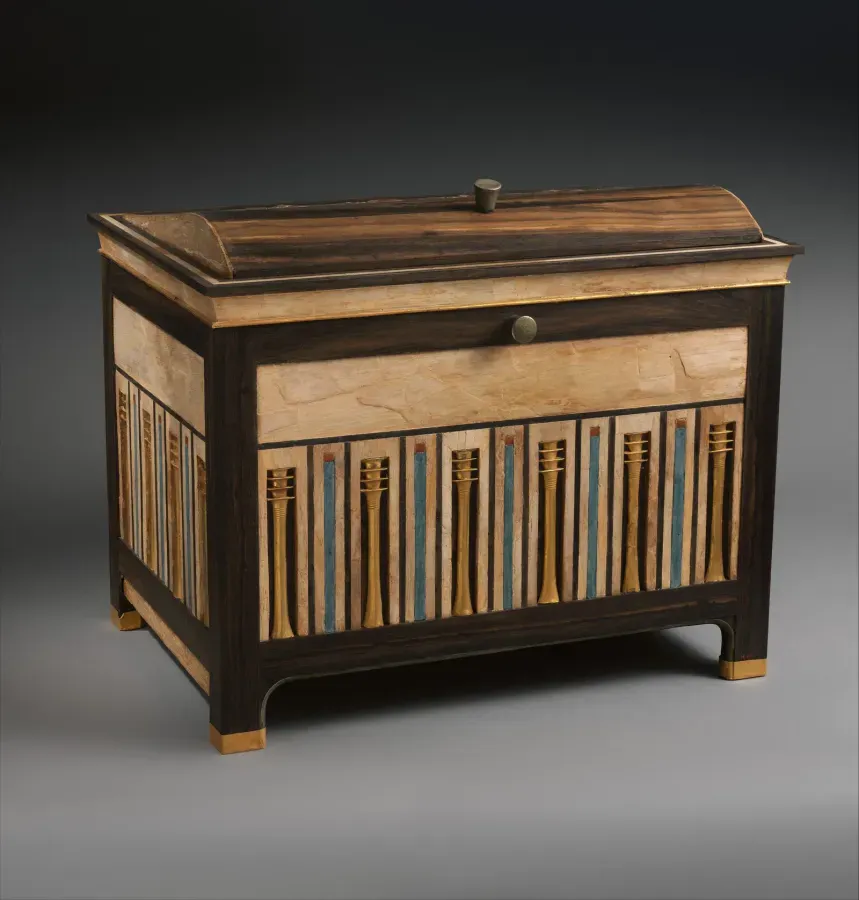
In Persian culture lapis carried an even deeper meaning. Persian sages believed the stone sharpened spiritual sight and helped a person see the truth. Within Sufism the stone was tied to the journey toward the divine.
Persian jewellers built pieces around lapis with Islamic motifs, geometric patterns of gold set into the blue. These ornaments passed down through families as emblems of wisdom and of the inner life.
The Middle Ages and the Trade Routes
In the Middle Ages lapis became one of the most valuable goods reaching Europe along the Silk Road. Merchants from Venice and Genoa bought it in Persia and Afghanistan, then resold it to European artists at staggering prices.
The road from Badakhshan was dangerous. Traders crossed high mountains and deserts on foot, and many never arrived. So the price of lapis in Europe ran ten times higher than at the mine. A single kilogram could cost as much as a small plot of land.
Venetian traders built a near monopoly on lapis in Europe, since only they held the routes and the contacts with Persian suppliers. That gave them enormous leverage. Dukes and bishops paid the Venetians large sums for the pigment that coloured their religious paintings.
The Renaissance: When Paint Cost More Than Gold
The Renaissance, across the fourteenth to sixteenth centuries, was the golden age of ultramarine. The great painters of the period treated ground lapis as a sacred material.
When Botticelli painted the sky of "The Birth of Venus," every centimetre of blue was milled Afghan lapis bound in oil. The picture quite literally holds a treasure inside it.
Giotto spent ultramarine so carefully that he painted skies in pale ochre and added blue only to the most important details. This was not a gap in his skill but a financial decision. For a panel three metres high you needed a kilogram of ultramarine, and that matched the yearly wage of an apprentice.
Contracts between painter and patron always stated, separately, how much ultramarine would be used. It mattered as much as the agreed size of the work. If a painter skimped on the pigment, that counted as fraud.
Part of the genius of Renaissance painters lay in pulling the greatest visual effect from the smallest amount of costly ultramarine. They learned to make the blue read deeper by mixing a little ultramarine with indigo, a cheaper colorant, or by glazing it over a paler ground.
Modern Mining: From Hand Diggings to Industry
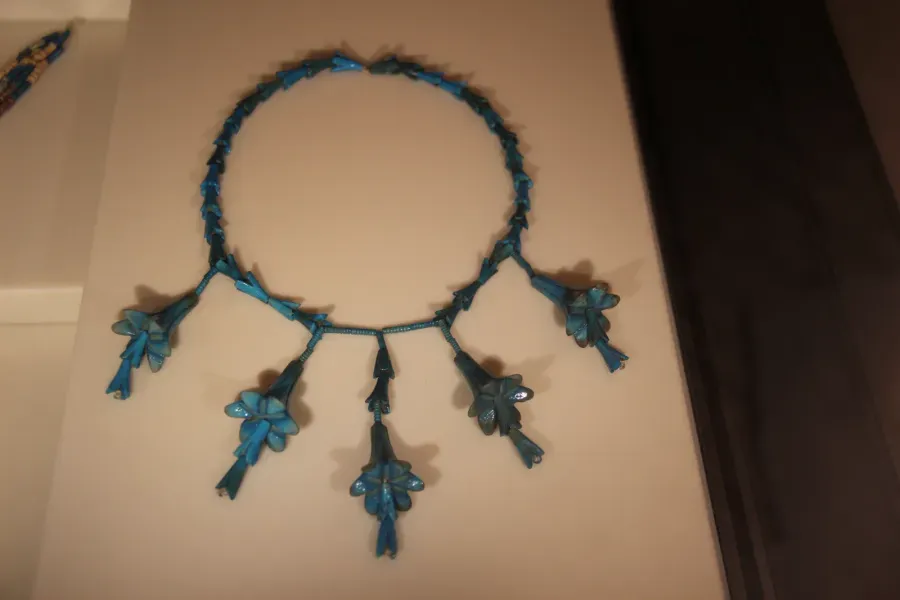
Today roughly 70 percent of the world's lapis still comes from Afghanistan, from the province of Badakhshan. The methods, though, have changed.
Through the twentieth century the work became mechanized. Miners now use explosives to break the rock, then separate the lapis by hand. It is dangerous labour, with many accidents, uncontrolled blasts, and collapses.
Chilean deposits, around Lake General Carrera, are worked more methodically. Excavators and conveyors do much of the lifting. Chilean lapis ranks below Afghan in quality, but its mining is safer and cheaper.
Russian lapis comes from the Baikal region and other parts of Siberia. It often shows an intense blue but appears in smaller quantities.
Canadian lapis, from deposits in British Columbia, is mostly used domestically. Little of it reaches the world market.
Political instability in Afghanistan makes lapis supply unpredictable. When the situation there worsens, prices climb. Some analysts read this as a reason behind the long-term rise in the price of Afghan material.
The Geology of Lapis: Structure, Composition, Deposits
Lapis lazuli is not a crystalline mineral in the usual sense. It is a metamorphic rock made of several minerals. The main one is lazurite, a complex silicate of sodium and aluminium, but the rock also holds calcite (the white veins), pyrite (the golden flecks), and at times sodalite or noselite.
Chemical Composition and Structure
The mineral lazurite has the formula (Na,Ca)8(AlSiO4)6(S,Cl,OH,SO4)2. It builds a cubic structure, and sulphur molecules sit inside the "cages" of that lattice as polysulfide ions.
The lapis rock also contains:
- Calcite (CaCO3), 10 to 30 percent by volume. These are the white and grey veins. Calcite lowers the value of the stone but counts as normal.
- Pyrite (FeS2), 5 to 10 percent by volume. These are golden microscopic crystals. A little pyrite is welcome, since it adds character.
- Dolomite and other carbonates, the remainder of the impurities.
Geology explains it this way: lapis forms through the contact metamorphism of limestone where it meets igneous rock. Limestone contains calcite, so some white calcite always survives in the finished lapis.
Why Lapis Looks Like the Sky
The intense blue of lapis comes from sulphur in the form of a polysulfide ion (S3-, S4-). This is rare in nature. Most blue minerals owe their colour to other elements, copper in malachite and azurite, cobalt in blue spinels. In lapis it is sulphur that creates the magic.
The mechanism works like this: electrons in the sulphide ions sit in an excited state and absorb red and yellow light while reflecting blue. The process is called charge transfer, and it builds a uniquely saturated blue.
When light strikes the surface of lapis, it does not bounce back in the ordinary way. Instead it meets the sulphur molecules and scatters, creating that glow of an inner sky. This is one reason ancient people thought lapis divine, its colour seemed to belong not to the earth but to the heavens above.
The depth of the blue depends on the sulphur concentration: more polysulfide ions, deeper colour. The best lapis carries a sulphur content of 1 to 2 percent by weight.
The World's Deposits
Afghanistan, Badakhshan (the world's best) The deposits lie at 3500 to 4000 metres in the Hindu Kush. The climate is harsh, with snow most of the year, so mining is possible only in summer.
- Quality: ideal, a saturated blue
- Character: often shows visible golden "stars" of pyrite
- Reserves: limited, geologists estimate exhaustion in 50 to 100 years
- Price: the highest in the world
- Politics: mining is controlled by various groups, which makes supply unpredictable
Chile, Lake General Carrera The deposits sit in Patagonia at 500 to 1000 metres.
- Quality: good, but often lighter than Afghan
- Character: less pyrite, sometimes a "cleaner" blue
- Reserves: large, mining could continue for a century
- Price: two to three times lower than Afghan
- Politics: stable mining, reliable supply
Siberia, Lake Baikal and beyond These deposits have been known for a very long time. Today the mining here is minimal.
- Quality: can be excellent, intensely blue
- Character: often less pyrite, more even colour
- Reserves: uncertain, mining largely halted in the twentieth century
- Price: rarely seen on the world market
- Politics: extraction is hampered by geography and cost
Canada, British Columbia The deposit was found in the twentieth century and is worked on a small scale.
- Quality: variable, from good to middling
- Reserves: limited
- Price: above Chilean, below Afghan
- Use: mostly exported to Asia
Other deposits
- Pakistan (high-altitude districts): rare small deposits
- United States (California): microscopic amounts, not for jewellery
- Myanmar (Burma): ancient sources, now exhausted
- Peru: a very small deposit
Signs of Fakes and Synthetic Lapis
A few kinds of imitation circulate on the market:
Dyed calcite or gypsum This is the most common fake. A white or grey stone is dyed blue. Tells: the colour peels off on contact with moisture, the tone is perfectly even, and the stone feels lighter than natural lapis.
Sodalite passed off as lapis Sodalite is a real mineral, but softer and less valuable. It looks like lapis, yet:
- The colour is paler, less saturated
- It usually lacks visible pyrite
- It is softer (lapis sits at 5 to 5.5, sodalite at 6, though in practice sodalite is more brittle)
Synthetic lapis (the French Guimet process) In the late nineteenth century the chemist Jean-Baptiste Guimet created a synthetic ultramarine, an exact copy of natural lapis made in the laboratory. It collapsed the price of natural material.
- Tells of the synthetic: flawless colour, no pyrite at all, total uniformity
- The synthetic is a hundred times cheaper
- Today it appears rarely in jewellery, more often in paint
Reconstituted lapis Fragments of low-grade lapis are pressed together with epoxy resin and dye. Tells: an overly perfect polish, visible "layers" under magnification, and a tendency to fade over time.
Grading and Quality
There is no single official grading scale for lapis as there is for diamonds. But the trade has settled on a rough scale of quality, from premium to commercial. Here is how it works in practice:
Premium quality
- Colour: rich, deep blue with no other undertone
- Pyrite: visible golden "stars" spread evenly across the stone
- Calcite: a minimum of white veining
- Consistency: even colour throughout
- Use: the finest jewellery and collector pieces
- Price: the highest, the top segment
High quality
- Colour: good blue, perhaps a few black inclusions (not a flaw but noselite)
- Pyrite: visible golden flecks
- Calcite: a little white
- Use: the upper tier of the jewellery trade
- Price: high segment
Standard quality
- Colour: good blue with some variation
- Pyrite: visible but less of it
- Calcite: a moderate amount of white
- Use: mass jewellery production
- Price: mid segment
Commercial quality
- Colour: pale blue, with grey or brown undertones
- Pyrite: little or no visible inclusion
- Calcite: noticeable white areas
- Use: mid-tier ornaments, decor
- Price: budget segment
Low quality
- Colour: dull, with pronounced grey or black inclusions
- Use: chips for modelling, inexpensive decor
- Price: the lowest segment
Colour intensity: The best lapis shows a deep, saturated blue with no brown or grey. The stone should be coloured evenly throughout. The most intense blue usually sits at the heart of a deposit.
Golden pyrite inclusions: Not a flaw but a mark of authenticity. A little golden "starlight" of pyrite is considered desirable and adds character. But too much pyrite (over 20 percent) makes a stone look "dirty" or "dusty." The ideal is pyrite that reads as visible accents without dominating.
White calcite veins: This is the most common "problem" in lapis. The white lines come from the way the stone forms (the contact metamorphism of limestone). Small veins are acceptable, but broad white areas cut the value five to ten times. Ideal lapis shows minimal white (under 2 percent). At 10 to 20 percent white the price falls noticeably.
Hardness and brittleness: Lapis rates 5 to 5.5 on the Mohs scale. That makes it softer than quartz (7) but harder than calcite (3). For wear in jewellery it is durable enough, but the stone needs careful handling. The issue is not hardness (resistance to scratches) but brittleness (resistance to blows). Lapis is brittle and can split if dropped.
Lapis and Other Blue Stones: The Differences
Lapis is often mistaken for other blue stones, yet they differ sharply:
Sapphire: A crystalline aluminium oxide (corundum). Sapphire is far harder than lapis (9 on Mohs) and more expensive. Its colour is more even and intense, with no white or golden inclusions.
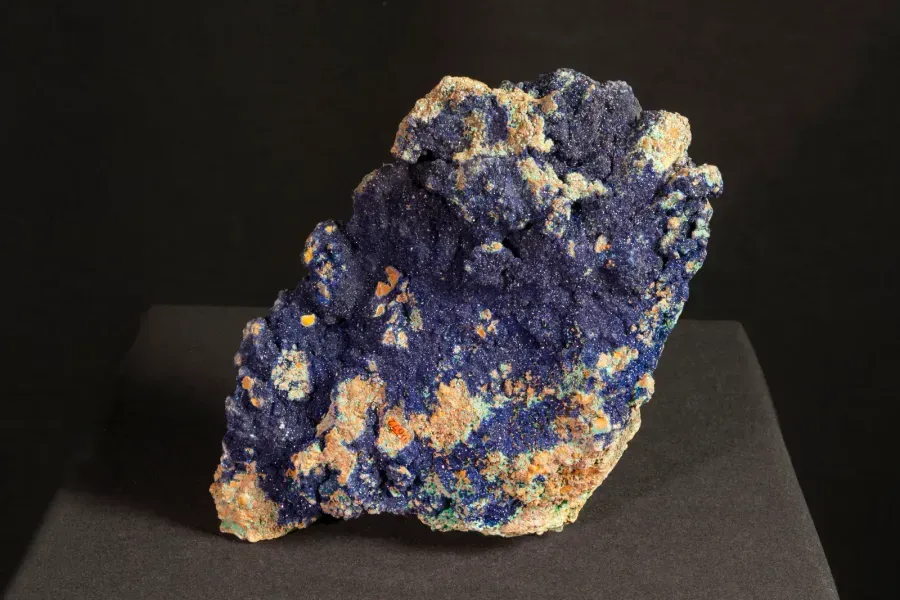
Azurite: A copper mineral, softer than lapis (3.5 to 4 on Mohs). Azurite is darker and built on a different chemistry. It appears rarely in jewelry. Its green cousin in the copper family is malachite, prized for its banded patterns as much as lapis is for the depth of its blue.
Sodalite: Similar to lapis but less intense in colour and less costly. Sodalite is more common than lapis and is often sold in its place.
Customer reviews
Zevira is a real jewellery shop. Genuine payments, deliveries and customer thank-yous.
🥰🥰🥰 gracias
Ok, ¡gracias! 🙂
Lapis wants a bare collarbone, dark silk, and gold only. Five blue stones on one chain is a mineral tray, not a look. Behave.
What to Wear with Lapis
After years on shoots this blue stone has been through dozens of looks with me. Here is what actually works, sorted by occasion and by skin.
How do I wear lapis every day? For an everyday look I recommend a pendant on a thin chain over a plain tee, a linen shirt, or denim. White, grey, and beige up top light the blue, so the stone reads like a detail you found by accident. The deeper the neckline, the longer I suggest the chain, so the ultramarine sits on bare skin instead of hiding under fabric.
Is lapis right for the office? It is, as long as you keep it to one noticeable piece. Neat studs or a ring with a small cabochon add colour to a shirt, a blazer, or a turtleneck without tipping the look into dressy. I keep the hands uncluttered: silver reads more modern, yellow gold warmer and more classic.
How do I build an evening look? For evening I choose dark, solid fabric: black, navy, emerald, wine. Against that depth the ultramarine rings out, especially under the warm light of a restaurant. I reach for a larger pendant or drop earrings that move and catch the light by the face.
Which metal should I pair with lapis? For a special occasion I join the stone with gold: the warm metal draws out its golden pyrite sparks and lifts the look without a single extra stone. When I want cool austerity I go for silver or white gold with a textured fabric like silk or heavy knit.
How do I combine lapis with other jewellery? Lapis likes warm company: yellow-green peridot, honey amber, gold. I never mix it with other blue stones in one layer, or the shades argue. Layers are fine when the chains differ in length and only one stone stands out. To try it, I suggest a medium-length gold pendant: it forgives styling mistakes and fits almost any wardrobe.

Turn on your camera, pick earrings, a pendant or a ring, and see the piece on yourself in real time.
Switch items in one tap.
Everything runs in your browser: no photo or video is ever uploaded.
How to Tell Real Lapis from a Fake
The jewellery market is full of imitations. Here is how to tell that what you hold is truly lapis:
Visual Signs
Golden pyrite flecks: Real lapis often holds microscopic pyrite that looks like tiny stars or sparks. This is not a flaw but a sign of authenticity. If you see scattered gold points across the stone, that is a good sign.
White calcite veins: Some white is normal. In a fake the white either vanishes entirely (because the dye spreads evenly) or sits in strange, unnatural patterns.
Uneven colour: Real lapis rarely shows perfectly even colour. There are usually deeper and lighter passages, shifts in intensity. If a stone looks too uniform, treat it with suspicion.
Practical Tests
Hardness test: Try, gently, to scratch the stone with a knife or sandpaper. Lapis will scratch, but more slowly than soft stones like calcite or azurite. Glass will not scratch at all. Plastic scratches easily.
Weight test: Lapis is a fairly heavy mineral. A lapis ornament should have real heft. If a piece feels suspiciously light, it may be dye or plastic.
Temperature test: Hold the piece against your cheek. Lapis stays cool and warms slowly. Plastic heats quickly.
Microscope: If you can reach a microscope, look at the surface. Lapis shows a grainy structure with individual crystals. Glass looks smooth and uniform. Dye reads as a thin layer.
Warning Signs: When Not to Buy
- A price too low for the size (lapis is a costly stone)
- Perfectly even colour with no variation
- A stone that feels too light
- Visible signs of paint or coating
- A seller who cannot describe where the stone came from
- A piece sold as a "blue stone of unknown origin"
Lapis in Different Cultures: Spirituality, Art, Philosophy
The Ancient East and Spiritual Belief
In ancient Mesopotamia (the Babylonians and Assyrians) lapis was the stone of the goddess Inanna, tied to the sky and to fertility. Babylonian kings carried lapis seals that served as documents of authority.
In ancient India lapis appears in early texts as the "celestial stone." Indian yogis used lapis in meditation, believing it opened the third eye. The belief itself is superstition, yet the psychological effect of contemplating so beautiful a blue stone can genuinely aid focus.
In ancient Egypt lapis held a status close to the divine. It stood for the night sky and the path of the dead into the afterlife. Lapis ornaments were laid in the sarcophagi of pharaohs as a guide into eternity.
The European Renaissance: Ultramarine and Art
The Renaissance was the high point of ultramarine in art. The colour was at once beauty, investment, and a material sign of faith.
Painters built an elaborate hierarchy of blue. The costliest passages were painted in pure ultramarine: the Madonna's robe, the sky above the saints, the wings of angels. Lesser details took a mix of ultramarine with indigo (the plant that yields a cheaper blue) or a glaze over a pale ground.
The weight of ultramarine used measured the standing of the patron. A duke who commissioned a fresco paid a sum tied to the gold and ultramarine the painter would use. The paint itself was a commodity worth more than the labour.
Giotto (1267 to 1337) was known for sparing ultramarine, painting skies in ochre and adding blue only at the top and edges. This was not a fault but a forced economy.
Masaccio (1401 to 1428) used ultramarine generously but with strategy. In his fresco "The Tribute Money" the sky is pure ultramarine, which makes it blaze against the surrounding figures.
Buddhism and Eastern Philosophy
In Buddhist iconography lapis stands for the quality of "clear seeing," the ability to perceive truth behind the illusions of the world. On Tibetan thangkas (sacred paintings) the sky was often painted with natural cobalt or with reconstituted lapis.
Spiritual leaders wore lapis ornaments as a sign of their bond with the heavens and with divine wisdom. Lapis prayer beads served in meditation and prayer.
In the Daoist tradition of China lapis was linked to the element of water and to yin energy. People believed it helped balance the energy of the body.
Modern Crystal Healing: A Critical Look
In modern alternative medicine (crystal healing) lapis is credited with:
- Sharpening intuition and clarity of thought
- Easing stress and anxiety
- Helping with sleeplessness
- Improving communication
Let us be plain: this is superstition. There is no scientific evidence that stones affect health (beyond the placebo effect). If crystal healing helps you psychologically, good, psychological comfort has value. But do not expect lapis to cure an illness or solve a problem.
The beauty, though, is real: an ornament of fine lapis genuinely lifts the mood simply because it is beautiful. That already counts for something.
Upload a photo of your pet, someone you love, or an object. We'll build a 3D model and hand-cast it in pewter.



Colour and Its Shades: From Perfect Ultramarine to Flecks of Pyrite
Perfect Ultramarine: The Colour of Paradise
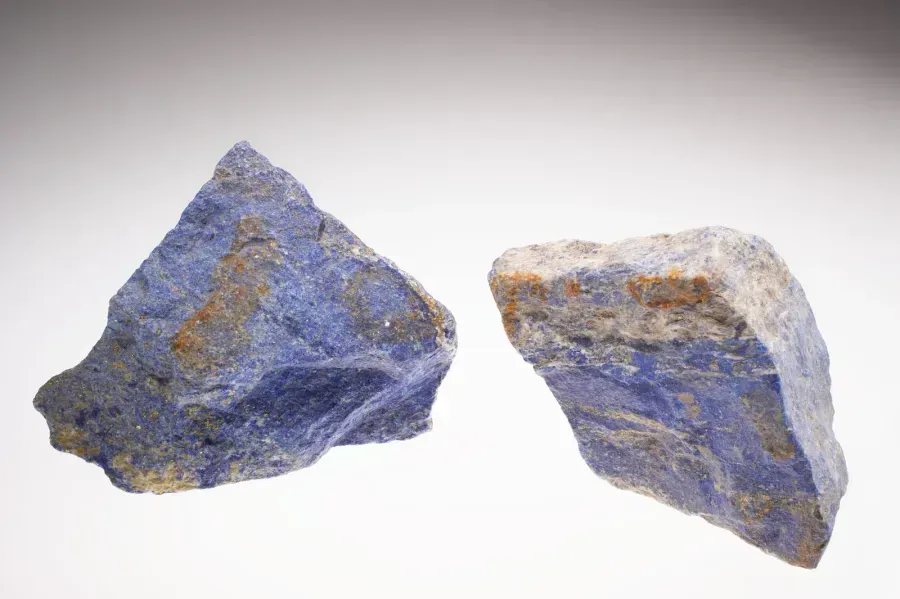
The ideal colour of lapis is described as "royal blue" or "ultramarine." It is a deep, saturated blue with no other undertone. On the spectrum it sits between blue (450 nm) and violet (420 nm).
Premium Afghan lapis usually carries exactly this colour. Seen in daylight, it looks as though a piece of sky has been caught inside.
Colour drives price steeply. Two stones of the same size but different shade can differ in price tenfold. That is because the perfect blue is rare.
Shades of Blue: What the Tones Mean
Pure blue (ideal), high-grade Afghan lapis. The highest price.
Blue with a violet cast, often in Chilean lapis. The violet comes from iron. Not a flaw, just a different colour. Costs less.
Blue with a grey cast, low-grade lapis. The grey means a black mineral is present (noselite). Costs considerably less.
Blue with a brown cast, very low-grade lapis. The brown is a sign of oxidation and decay. It can come from long exposure to the sun.
Golden Flecks of Pyrite
Pyrite (FeS2) creates the visible golden or copper sparks in lapis. This is not a stray impurity but a mineral part of the rock.
A small amount of pyrite (visible but scattered stars) is considered desirable and adds character. It is a mark of authenticity, since synthetic lapis never holds natural pyrite.
When pyrite is heavy (covering more than 20 percent of the surface), a stone looks "dirty" or "dusty." It reads as less clean, even though it is geologically normal.
The best balance is when a quick glance catches a few golden points without their taking over. Look closely under a loupe and you see a host of tiny pyrite crystals, a natural beauty.
White Calcite Veins
Calcite is the white or grey mineral that is part of the lapis rock. The white lines build contrast and add texture.
In a small amount (under 5 percent) white veins can be attractive. They give a sense of nature, a sign the stone is not dyed.
When there is more white (5 to 10 percent), quality drops noticeably. With a lot of white (over 15 percent) the stone looks stained and loses its elegance.
Position matters too. Veins along the edge are less noticeable. White in the centre of the visible face has a far stronger effect on the look.
Choosing a Shade for Your Skin
Fair skin (Fitzpatrick types 1 to 2) Both a deep saturated blue and a lighter shade work. It looks most striking with gold, building a "sky and sun" contrast.
Medium skin (types 3 to 4) A deep, saturated blue is ideal. It sets a natural contrast against the skin without clashing. With silver it reads more modern, with gold more traditional.
Olive and dark skin (types 5 to 6) Lighter shades of lapis (the Chilean kind) fall flat, the contrast is lost. A deep, saturated Afghan blue is ideal. With yellow gold (not white) it builds a "sky and sunset" effect.
The rule: contrast heightens beauty. The greater the difference between skin tone and stone, the more striking the ornament.



Lapis Jewellery: Forms, Sizes, the Practice of Wearing
Rings
A lapis ring is a classic that works in any setting. But there are practical points:
Stone size For a ring, a stone of 3 to 7 carats is the sweet spot. A smaller stone looks washed out, a larger one makes the ring heavy and bulky. An oval or rectangular shape often beats a round one, since it reads as larger at the same weight.
Cut The cabochon (a smooth domed shape) is the standard choice. The stone is polished to a smooth surface that brings out the depth of colour. Lapis is sometimes cut into a flat rectangular tablet, which looks more geometric and modern.
Setting
- To protect the stone, choose a bezel setting (a rim of metal around the stone) over a prong setting (sharp claws). Lapis is brittle, and prongs leave it exposed.
- Metal: gold of any colour, silver, platinum all work. Gold gives a warmer effect, silver a cooler and more modern one.
- Band width: 4 to 6 mm for everyday wear. Narrow bands look more delicate but are less sturdy.
Wearing it A lapis ring is a piece to remove before working with water, chemicals, or anything strenuous. For constant wear, choose either a protective setting or save it for special occasions.
Pendants
A pendant is the happiest choice for lapis, because the stone hangs free, protected from blows and close to the skin.
Stone size For a pendant, lapis is often cut as a tablet of 15 by 20 mm or 20 by 30 mm. The weight is usually 5 to 15 carats. The pendant should be large enough to show the colour well but not so heavy that it drags on the chain.
Shapes
- Rectangle: classic, modern, versatile
- Oval: softer, more feminine
- Square: geometric, severe
- Freeform (asymmetric): interesting, unique
Chain A thin silver or gold chain looks well. A length of 45 to 55 cm is standard, though it depends on your height and taste. A longer chain (60 to 70 cm) gives a more relaxed look.
Mounting Lapis is often set in a simple metal rim with a loop for the chain. That is secure and elegant.
Bracelets
A lapis bracelet is a practical choice, since the stones are guarded on two sides by metal.
Layout A bracelet usually holds:
- 3 to 5 lapis beads (2 to 3 carats each)
- Beads of other stones or metal (for variety and balance)
- Metal beads (gold, silver) between the stone ones
Style
- Elegant bracelet: lapis with silver, minimal, restrained
- Bohemian bracelet: lapis mixed with other blue stones (sodalite, apatite), a natural look
- Luxe bracelet: lapis with gold and other gemstones
Comfort A bracelet should not be too heavy (50 to 100 grams is ideal) and should not chafe. If the stones are sharp, choose polished beads. A bracelet can be worn around the clock, just take it off before water.
Earrings
Lapis earrings are a bold choice, because they sit right by the face.
Size and weight The ideal weight for a lapis earring is 2 to 4 grams each. Heavier earrings can grow uncomfortable. The stone is usually 1 to 2 carats, depending on the ear.
Shapes
- Studs: a small earring, the stone right at the ear, restrained and comfortable
- Drops: the stone hangs on a chain, creating movement that draws the eye
- Hoops: the stone at the centre of a round metal edge, expressive
Mounting metal Silver or white gold gives a cool feel. Yellow gold is warmer. Platinum is the noblest choice, though costly.
Wearing them Earrings can be worn constantly. The one limit: keep them clear of knocks, since they can fall and shatter easily.
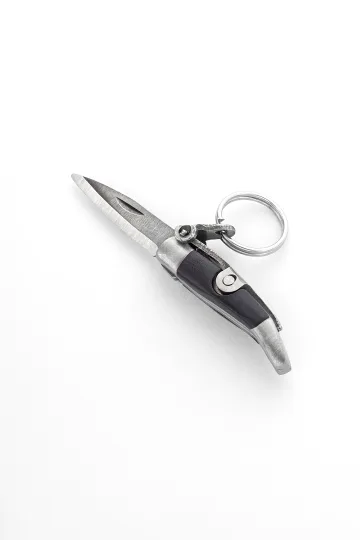
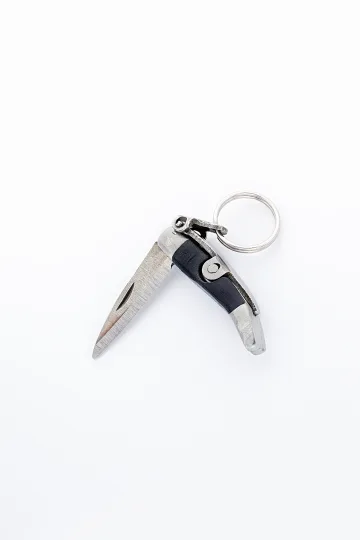
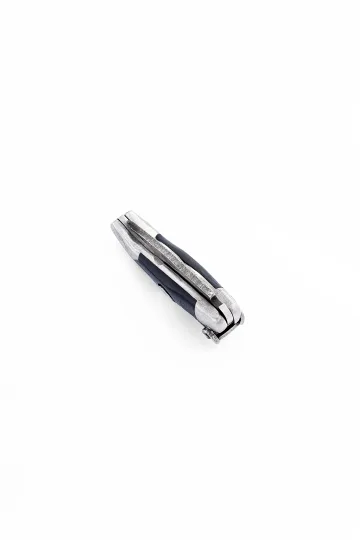
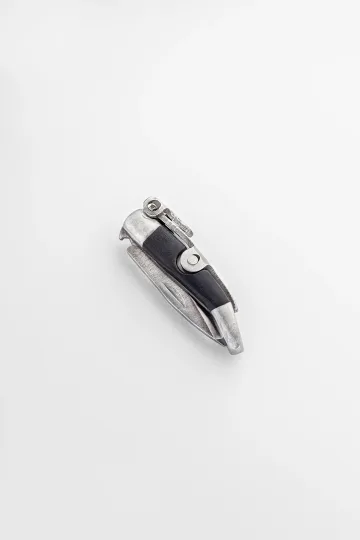
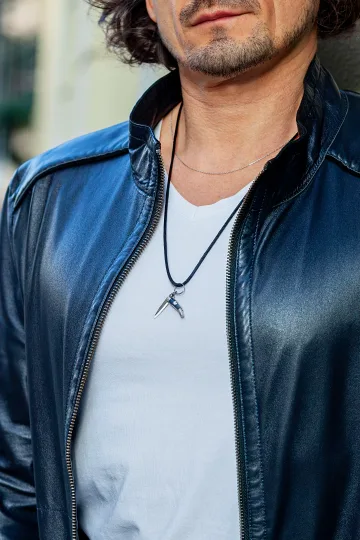
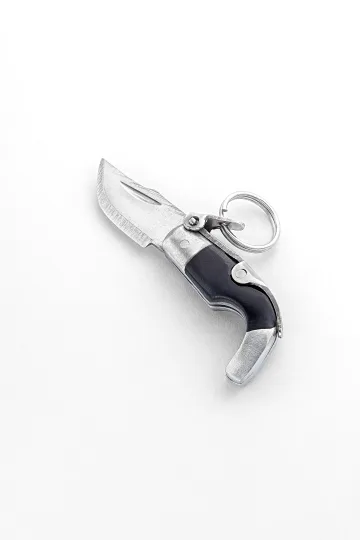
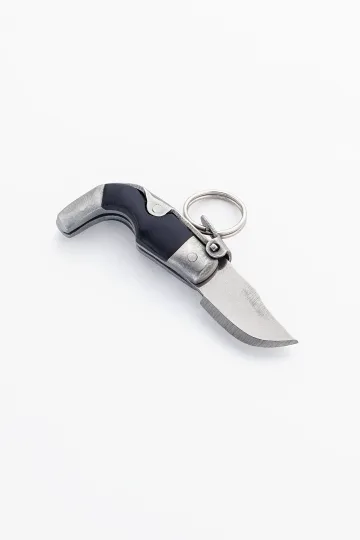
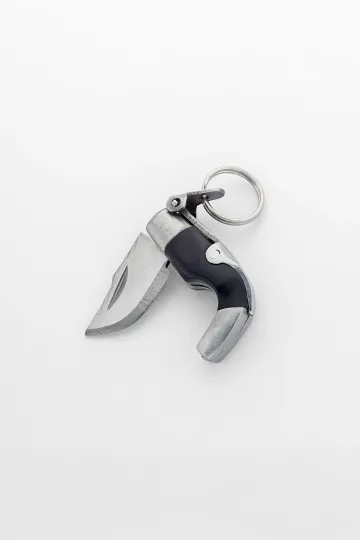
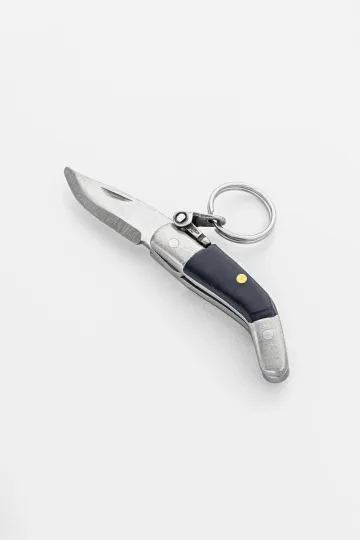
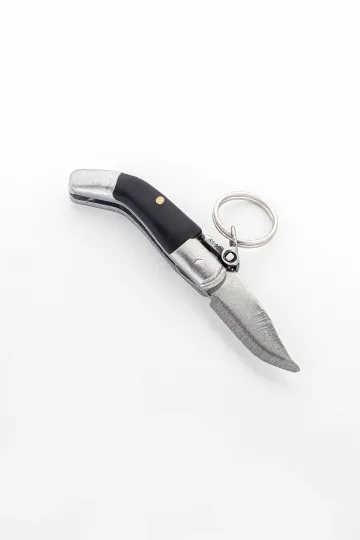
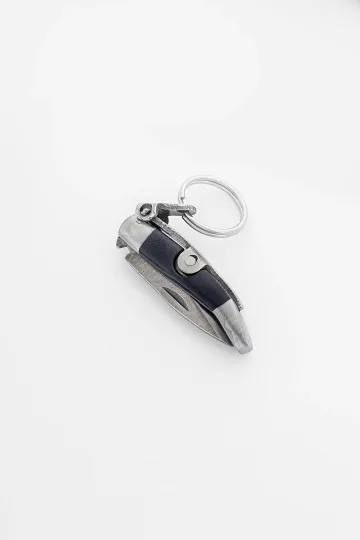
CAPAORA mini knife pendant
The 18th-century Spanish navaja in miniature: 40 mm of stainless steel, a real folding mechanism and a Palanquilla lock that clicks. An affordable gift to remember.
Authentic · Ships from Spain · 14-day returns
Lapis in Modern Jewellery and Fashion
In the twenty-first century lapis has had a revival. Today's designers stopped seeing it as merely a historical relic and started using it as a live element of contemporary jewellery.
Minimalist Pieces
Younger jewellers build spare pieces around lapis, simple rings with a small blue tablet, thin chains with a lapis pendant. That minimalism plays against the stone's historic weight, opening an interesting dialogue between the ancient and the present.
Mixing Textures
Lapis is often combined with gold, silver, rose gold, even black oxidized silver. The contrast between the blue stone and the metal builds a sense of depth and refinement. In color compositions blue lapis sits well beside warm tones, for instance the yellow-green of peridot, giving a play of cool and sunlit shades in one set.
Summer Collections
Blue lapis is a summer stone by definition. It calls up the sea, the sky, freshness. Designers often fold lapis into summer collections, pairing it with light metals and open cuts.
Regional Tastes
In Persia and the Middle East lapis stays a traditional stone, used in pieces handed down through families. In European countries it reads as exotic, intriguing, a little sacred. In Asia it is valued as a stone of meditation and the inner life.
Leave your email, we'll send your discount code. No spam, unsubscribe anytime.
The code arrives by email, valid on your first order.
How to Care for Lapis Jewellery Properly
Lapis needs gentler handling than hard stones. Here is a detailed guide to care:
Daily-Wear Rules
Avoid Water
Lapis is a porous stone. If it stays in water for long, the water seeps into its structure, can swell the minerals, and lead to cracks. So lapis jewellery should not be worn in a pool, in the sea, or even while washing hands.
If a piece gets wet by accident, dry it with a soft cloth and leave it in open air, but not in the sun (sunlight can cause fading).
Avoid Direct Sunlight
Over time lapis can fade under UV light. If you plan a long stretch in the sun, take the piece off or cover it. Store lapis jewellery in a dark place, away from windows.
Be Careful with Chemicals
Perfume, cosmetics, and soap hold compounds that can harm lapis. Put a piece on after applying scent or makeup, and take it off before washing your hands.
Guard Against Impact
Lapis can chip if dropped or struck. If you play sport, work with tools, or simply tend toward mishaps, take the piece off ahead of time.
Cleaning Jewellery
Method 1: Dry Cleaning
The safest way is a soft, dry cloth (microfiber, suede). Gently wipe the piece to lift dust and fingerprints.
Method 2: Light Damp Cleaning
If a piece is badly soiled, you can use a barely damp cloth. Wet it with distilled water (not ordinary tap water), wring it out so it is almost dry, and gently wipe the stone.
Do not wet the whole piece or dip it in water.
Method 3: Professional Cleaning
If a piece is very dirty or coated with something you cannot remove yourself, take it to a jeweller. Professionals have the right tools and know how not to harm the stone.
Storage
Store lapis jewellery in a soft pouch, in a dark, dry place. Avoid plastic bags, where moisture can gather. Use fabric pouches or dedicated jewellery boxes.
Do not store lapis next to hard stones (diamonds, sapphires), which can scratch it.
If you live in a very dry climate, wipe a piece now and then with a damp cloth, since very dry air can dry out the porous stone.
Repairing Damaged Lapis
If a piece cracks or a chip comes off the stone, take it to a craftsman as soon as you can. Small cracks can sometimes be filled with a special resin that is invisible and restores strength. But if part of the stone has broken off, it cannot be rebuilt, only reworked into a piece using what remains.
Does Lapis Really Have Mystical Powers?
The internet is full of articles claiming that lapis "opens the third eye," "sharpens intuition," "guards against the evil eye." Let us look honestly at what is true and what is a pretty invention.
What History Says
Ancient people believed in the mystical powers of lapis. That is a fact. But they believed many things we now call superstition. They also held that the earth was flat and that illness came from an imbalance of humors.
Belief in the mystical powers of stones is an archetypal way of human thinking. A beautiful blue stone recalls the sky, so people gave it heavenly properties. That is psychology, not physics.
The Psychological Effect
Here the ground is firmer. If you believe lapis helps you concentrate, the placebo effect kicks in, you really will concentrate better, because you believe in the stone. The effect is real, but it is psychological, not magical.
A beautiful object can lift the mood, ease stress, inspire. If a lapis ornament makes you happier, that already counts. But it is the value of beauty, not of magic.
A Practical Note
If you like the historical symbolism of lapis, the ancient wisdom, protection, the sky, wear it with that awareness. It costs you two seconds a day and can improve your state of mind. That is not foolish, it is a conscious use of beauty for well-being.
But do not expect lapis to solve your problems. If you need help, turn to a doctor, a psychologist, friends, to real sources of support.
Care and Preservation: Why Lapis Demands Caution
Hardness and Brittleness: An Important Difference
Two ideas are often confused:
- Hardness is the ability of a mineral to resist scratches. Lapis rates 5 to 5.5 on the Mohs scale.
- Brittleness is the ability to resist blows and fracture. Lapis is very brittle.
For lapis the danger is not scratches (they barely affect the look) but splits and cracks from impact.
Contact with Water
Lapis is a porous mineral, with microscopic pores in its structure. When water enters those pores:
- It can seep into cracks and widen them as it dries
- It can dissolve the calcite (one of the components), weakening the structure
- It can swell any clay minerals present
So the rule is simple: avoid long contact with water. If a piece gets wet by accident:
- Wipe it gently with a soft cloth
- Let it air dry (not on a radiator or in the sun)
- Do not use a hair dryer
Do not wear lapis jewellery in a pool, in the sea, or while washing hands. A brief splash of droplets is not dangerous.
Temperature Changes
Sudden swings in temperature can cause micro-cracks in lapis. As the mineral heats, its molecules expand unevenly, building internal stress.
So:
- Do not move a piece straight from cold to heat or the reverse
- Do not leave it on a heater or radiator
- Do not put it in the fridge "to test it"
- Store it in a stable climate (room temperature)
Sunlight and Fading
Long exposure to UV light can lead to:
- Fading: the blue grows paler
- A shift in tone: a yellow or brown cast can appear
This happens slowly, usually over years of constant sun. But if you plan a long stretch on the beach, it is better to take the piece off.
Store lapis jewellery in a dark place, away from windows.
Chemicals
Perfume, cosmetics, soap, alcohol, all of these can harm lapis:
- Alcohol can dissolve epoxy resin if the stone has been repaired
- Acids in some cosmetics can lightly etch the surface
- Oils in cosmetics can leave a film that dulls the shine
The order of things:
- Apply scent and makeup
- Let them settle (5 to 10 minutes)
- Then put on the piece
When taking it off:
- Remove the piece
- Then wash your hands and face
Guarding Against Impact
Lapis can chip if dropped or struck. So:
- If you play sport, take the piece off
- If you work with tools, take it off
- If you tend to knock into things, wear more protected forms (bracelets rather than projecting pendants)
Storing Jewellery
Ideal conditions:
- A soft case (fabric pouch, velvet box)
- A dark place (cupboard, drawer)
- A dry place (not the bathroom)
- A stable room temperature
- Apart from hard stones (diamonds and sapphires can scratch lapis)
What to avoid:
- Plastic bags (moisture gathers in them)
- Direct sunlight
- Near a radiator or humidifier
- Beside hard jewellery
- In the bathroom (humidity)
If you live in a very dry climate, wipe the piece now and then (once or twice a month) with a lightly damp cloth. Very dry air can dry out and crack porous lapis.
Cleaning Jewellery: Three Methods
Method 1: Dry Cleaning (the safest)
- Use a soft, dry cloth (microfiber, suede, cotton)
- Gently wipe the piece, lifting dust and fingerprints
- Do not rub hard, use light strokes
- Frequency: before each wear or once or twice a week
Method 2: Light Damp Cleaning
- Use distilled water (not tap water, which holds minerals and chlorine)
- Wet a cloth so it is barely damp, not wet
- Wring it so there are no drops
- Wipe the stone and the setting
- Let it air dry
- Do not wet the whole piece or dip it in water
Method 3: Professional Cleaning
- If a piece is badly soiled or coated with something you cannot remove
- Take it to a jeweller who works with lapis
- Professionals use the right tools and know how not to harm the stone
- Cost: modest, depending on size and complexity
Repairing Damaged Lapis
Small cracks
- Can be filled with a special epoxy resin (the same used for other stones)
- The resin is invisible and restores strength
- Cost: small
- Epoxy is not forever, over 5 to 10 years it may need redoing
Chips (broken-off pieces)
- Sadly, a broken-off part cannot be restored
- Option: rework the piece with what remains (a smaller pendant, for example)
- Cost: moderate, depending on complexity
A full split
- If the stone is split through, it is better to remove it and rework the piece
- A new stone of the same or similar shade can be set
- Cost: noticeable, depending on the quality of the new stone
General Tips for Preservation
A piece of quality lapis in a good setting can serve for decades if you follow a few simple rules:
- Avoid water and damp
- Guard against blows and falls
- Store in a dark, dry place
- Clean regularly but gently
- Check the setting once a year
If you are new to jewellery care, it helps to show a piece to a jeweller the first time and ask them to confirm all is well.
How to Choose a Lapis Piece the Right Way
When you stand at the counter and see a lapis ornament, what should you check so as not to go wrong?
Checking Quality by Eye
Colour: Look at the stone in natural light (or under the store's LED lighting). The colour should be saturated, deep, with no muddy undertone. If a stone looks greyish or pale, it is either low-grade lapis or a fake.
Inclusions: Golden points of pyrite are good. White veins in moderation are normal. If a stone is wholly blue with no other element, treat it with suspicion.
Setting: Look at how the stone sits in its mount. The setting should be secure, with no play or gaps. If the stone wobbles, that is a bad sign.
Weight: Hold the piece in your hand. Lapis should feel noticeably heavy. A light piece sold as lapis is most likely not lapis.
Questions to Ask the Seller
- "Where was this lapis mined?" (good answer: Afghanistan or Siberia; suspicious answer: "I don't know" or "China")
- "Is this natural lapis or treated?" (treated lapis is fine, but you should know)
- "Is there a certificate of origin?" (for costly pieces a certificate matters)
- "What care does it need?" (if the seller does not know the rules of care, that is a bad sign)
Size and Quantity
For rings and pendants the ideal amount of lapis is 3 to 5 carats for mid-range pieces. Too small a stone (under 1 carat) looks washed out and lost in the design. Too large (over 10 carats) can feel excessive and unwieldy.
For bracelets lapis is often used as beads, several of 1 to 2 carats each, which gives a more interesting effect than one big stone.
Looks with Lapis: When and How to Wear It
Office and Business Style
Lapis is a fine choice for the office. Its calm blue does not distract but adds elegance. A lapis pendant on a simple silver chain or a lapis ring suits a business look perfectly.
Everyday
Lapis is versatile enough for daily wear. A lapis ring, bracelet, or earrings can all be worn with jeans and a tee.
Evening and Going Out
Lapis shines in evening light. The blue grows deeper under artificial light. For the evening, choose more serious pieces, larger pendants, bracelets with many stones.
Summer Looks
Lapis is a summer stone. It is lovely with white, light, airy clothing. Blue lapis with gold gives a sense of summer, of holiday, of freshness.
Regional Context
If you travel to the Middle East or to Persia, a lapis ornament will feel especially fitting. It shows knowledge of, and respect for, the culture.
Send a friend a discount code, they save on their first order.
Lapis as a Purchase for the Years
Should You See Lapis as an Investment?
People often ask: "Does lapis rise in value over time? Is it a good investment?"
Let us be plain: an ornament of a semi-precious stone is not a financial instrument. Buying lapis to make money is unwise, and we promise no rise in value. Prices on the secondhand market are usually below retail, fashion shifts, and the authenticity and quality of a stone are hard to verify without an expert.
It is far more honest to see lapis as a purchase for the years: a beautiful thing that, cared for well, lasts decades and gives the pleasure of wearing, rather than a way to keep or grow money.
What Drives the Price of Lapis
A few factors explain why good lapis costs what it does. This is not a price forecast, only a picture of the market.
Limited deposits. Reserves of quality Afghan lapis are not endless, and mining in the mountains is hard and dangerous. The Chilean deposit is larger, but the colour is usually more modest.
Interest in natural stones. In many cultures, especially in Asia, lapis has been valued historically, and demand for natural stones holds steady.
Unstable supply. A difficult situation in the mining regions makes the supply of Afghan lapis unpredictable, so market prices swing.
Historical context. In the nineteenth century, when synthetic ultramarine appeared, the price of the natural stone fell sharply. Today natural lapis is prized again by lovers of natural materials.
How to Choose Lapis That Will Not Disappoint
If you want a piece that lasts and keeps its look:
Choose quality. A saturated, even blue and a tidy cut read as quality years later too.
Look to Afghan lapis. Stone from Badakhshan has historically been held the most beautiful for the depth of its blue.
Be sensible about size. Larger stones are more striking, but they need a sturdier setting, since lapis is brittle.
Check authenticity. For an expensive purchase ask for documents of origin or a gemological report. That confirms you have a natural stone.
Care for it properly. Gentle storage and care matter more for the life of a piece than the size of the stone.
The Point of Buying Lapis
The main point of buying lapis is to own a beautiful ornament that you like and wear with pleasure.
When you wear a piece of fine lapis:
- You feel the psychological satisfaction of beauty
- You are tied to history and culture (if that interests you)
- You keep alive a tradition that began in the ancient world
- You own a thing that will serve for decades
That already holds a value money cannot measure. If an ornament repays itself in the pleasure of wearing, it has done its work.
Buying it as a gift? Each one arrives ready to give.
 A branded Zevira box and a little card come with every order.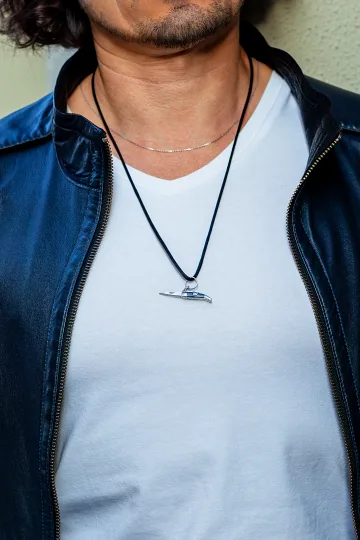




FAQ: Common Questions About Lapis
Q: Does lapis fade? Can the colour peel off?
A: Natural lapis does not fade. Its colour is a property of the mineral, not paint. But poor fakes (dyed stone) can lose colour on contact with moisture or alcohol. That is a good authenticity test, if the colour peels off when wiped with a damp cloth, it is a fake.
Q: Can I wear lapis in a ring every day?
A: You can, but you must be careful. Avoid knocks, take it off when working, washing hands, and before bed, and check the setting regularly. For a ring, choose a protective bezel setting, where the stone is ringed by metal rather than projecting. Rings with an open setting are less durable.
Q: Why is lapis so expensive?
A: Because quality lapis is rare. Most mining happens in Afghanistan, where the political situation is unstable and extraction is hard. Beautiful lapis with good colour and minimal white veining is costly because it is rare. On top of that, lapis was historically more valuable than gold, and that reputation has held.
Q: How do I tell Afghan lapis from Chilean?
A: Afghan is usually more intense in colour (a deep royal blue) with more visible golden pyrite. Chilean is often lighter, can carry a violet cast, and has less pyrite. Afghan usually costs two to three times more. But the difference may only be clear in a direct comparison, so for a beginner it is best to check the documents of origin.
Q: Does natural lapis lighten over time?
A: With proper care and storage away from the sun, no. But if a piece sits in bright sun for years, slight fading can happen. It is a slow process, needing years of constant sun. If you plan a long stretch on the beach, it is better to take the piece off.
Q: Can I clean lapis with ultrasound?
A: No, absolutely not. Ultrasound can damage the structure of the porous stone, cause micro-cracks, and loosen the setting. Use only a soft cloth and barely damp water. Professional cleaning should be mechanical (a soft brush) or dry only.
Q: Is lapis colder than other stones?
A: Yes, to the touch lapis feels colder than plastic. Held against the cheek, a natural stone stays cool for a while, while plastic quickly warms to skin temperature. This is one of the everyday signs that helps tell stone from imitation in a quick check.
Q: Which zodiac signs "suit" lapis?
A: It is traditionally held that lapis "suits" Sagittarius and Aquarius, as air signs tied to the sky and to wisdom. Lapis is also called a stone of justice and honesty. But this is superstition with no scientific basis. In practice lapis looks beautiful on everyone, whatever the sign.
Q: Can lapis absorb smells?
A: No, lapis does not absorb smells, because its pores are too small. Dust and dirt can settle on the surface, though. If a piece has sat in a case for a long time, wipe it with a dry cloth before wearing.
Q: Lapis and silver together, is that a good combination?
A: Yes, an excellent one. Silver (especially oxidised, dark silver) sets a fine contrast with the blue lapis. Silver is cooler in tone, which underlines the cool of the blue. It is a more modern choice than gold. With gold lapis looks more classic and luxe.
Q: How does lapis react to perfume?
A: Perfume holds alcohol, which in quantity can harm lapis. But surface contact (wearing a piece near skin where scent was applied) is relatively safe. The key is to avoid deliberately wetting a piece with perfume. Put it on once the scent has settled and dried.
Q: Is there lapis in engagement rings?
A: Rarely, but yes. Lapis is not hard enough for a ring worn every day. The traditional engagement stones are diamond, sapphire, ruby (all 9-plus on Mohs). But if you love lapis and are ready to be careful, it is possible. An alternative: a lapis ring as a secondary piece worn on special occasions.
Q: Can I give lapis jewellery as a gift?
A: Yes, it is a fine gift. Lapis is a stone of wisdom, protection, and the inner life. Historically it was given as a sign of respect and a wish for clarity of mind. The key is to choose quality lapis and explain to the recipient how to care for it. A lapis piece will serve for decades and become a keepsake.
Pendants, rings, and earrings with blue stones in 925 silver and gold, with protective settings for a brittle stone and personal engraving.
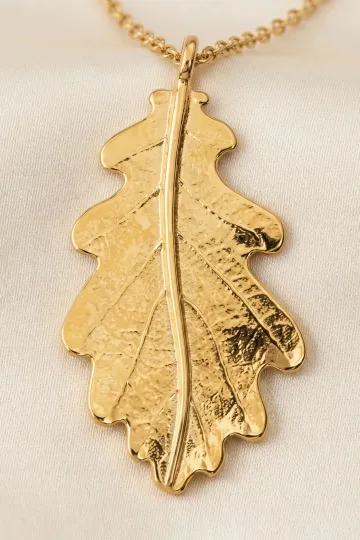
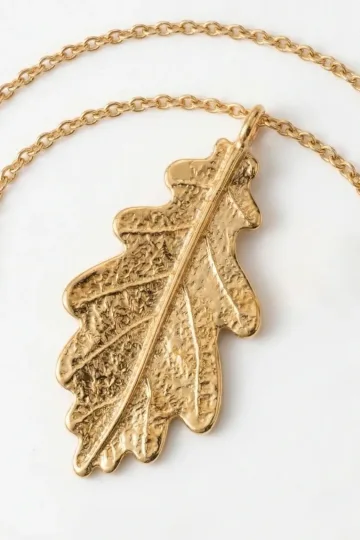
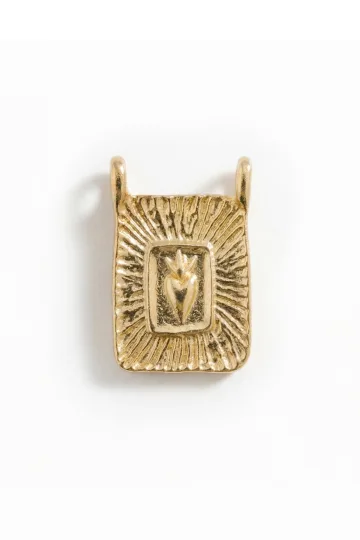
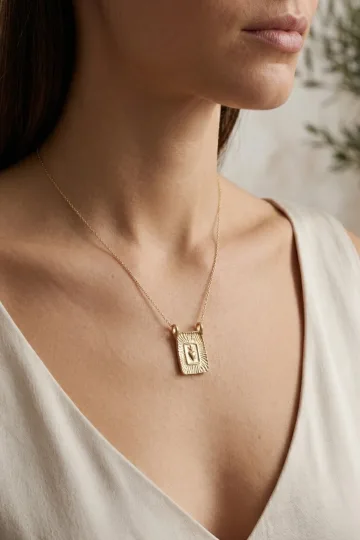
Wear the symbol, don't just read about it. These are in stock:


About Zevira
Zevira creates jewellery for people who value history and beauty. Our collection holds pieces with natural stones, including rare and precious ones such as lapis lazuli. Every piece, like the brand itself, has a story of its own, a link to the ancient world and a character all its own.
For us a piece of jewellery is an invitation into a world of beauty that ties you to the story of humankind. When you wear lapis, you wear a piece of the sky that queens and gods once wore.