Jewellery History: 5,000 Years of Adornment from Ancient Sumer to 2026
Introduction: Objects That Outlive Us
In 2007, archaeologists in Morocco uncovered jewellery made from perforated Nassarius shells. The artefacts date back 75,000 years. They are the oldest known jewellery in human history.
That makes jewellery older than agriculture (10,000 years), older than writing (5,500 years), older than the wheel (5,500 years), and older than most organised religions. Human beings were adorning themselves long before they were "civilised" in any modern sense of the word.
This guide is a walk through 5,000 years of jewellery history. From Sumerian lapis lazuli necklaces to modern 18-karat solid gold bracelets. From the gold masks of Tutankhamun to short-video communities devoted to crystal adornment. From Byzantine icon pendants to permanent jewellery studios offering welded bracelets.
This is not an academic monograph. It is context, so that when you put on a wedding ring, you understand you are doing something human beings have done for over 4,000 years.
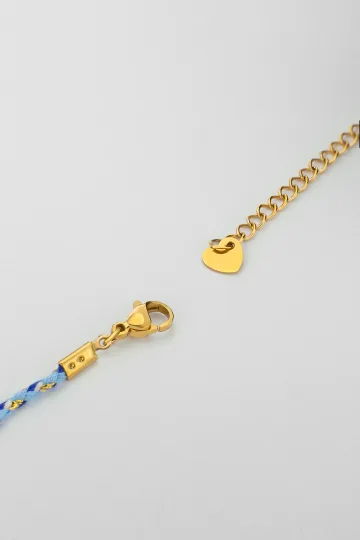
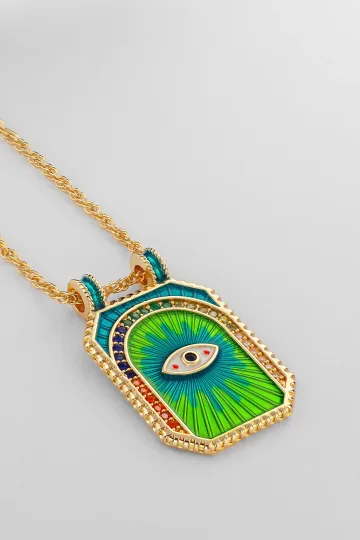
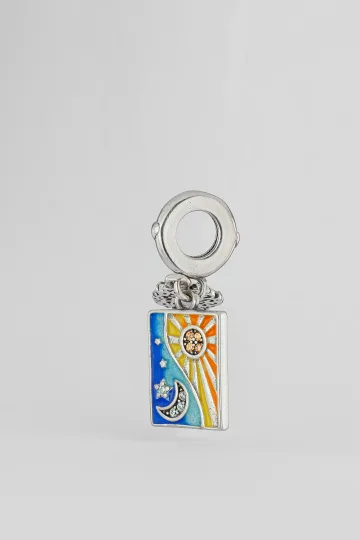
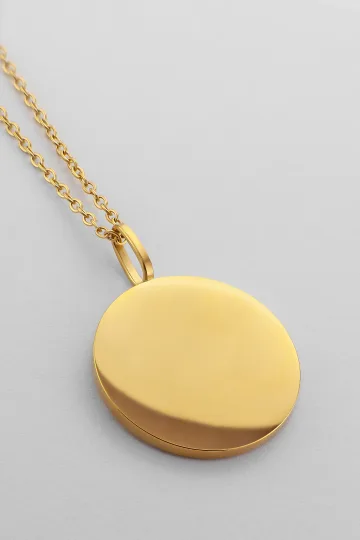
Wear the symbol, don't just read about it. These are in stock:
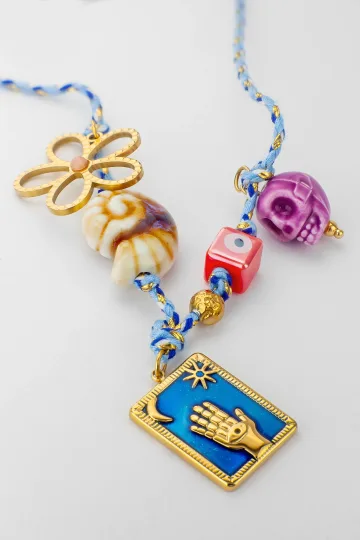
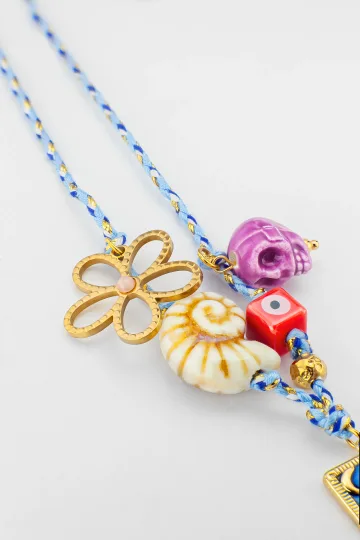
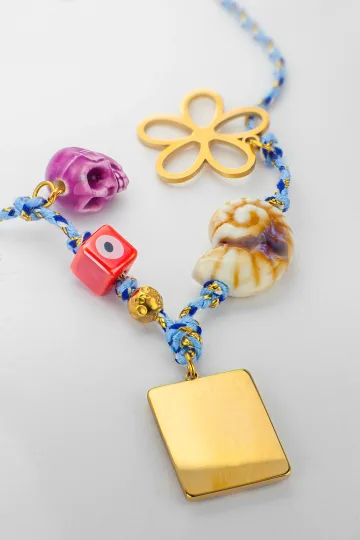



Early Prehistory
Palaeolithic Period (75,000 BCE onwards)
The oldest known jewellery: perforated Nassarius shells from Blombos Cave (South Africa), Skhul (Israel), and Cueva de los Aviones (Spain). All dated to 75,000-115,000 BCE.
The Cueva de los Aviones shells from Murcia, dated to 115,000 years, were coated in pigment, evidence that their makers were thinking about colour as much as about shape. The impulse to adorn is that old.
These early pieces were worn as:
- Pendants (strung on cord)
- Bracelets
- Necklaces
Materials: shells, bone, animal teeth, feathers.
Why these objects functioned as jewellery rather than tools is debated. The most persuasive current view is that they served as social signals: markers of group membership, sexual fitness, or status within small band societies. An individual wearing a necklace of shells or perforated teeth was communicating something about themselves that their unadorned peers were not. That communicative function is exactly what jewellery still performs.
Neolithic Period (10,000-3000 BCE)
As agriculture developed and settlements took root, jewellery became more refined:
- Polished stone (jade in East Asia, obsidian in Mesoamerica)
- Bone and ivory
- Native gold (nuggets found in river beds)
- Cowrie shells (used as currency from Africa to China)
Gobekli Tepe (Turkey, 9500 BCE), the earliest known temple complex, was already decorated with carved ornament. The impulse to decorate sacred space is as old as organised religion.
The Varna Necropolis in Bulgaria (c. 4500 BCE) is among the most significant Chalcolithic finds: its burials contained the earliest known worked gold artefacts, including a gold penis sheath and circular gold plates, buried with a single individual. The concentration of gold in one grave indicates that personal adornment was already being used to distinguish individuals in death, and almost certainly in life. Inequality expressed through jewellery is at least 6,500 years old.
Pick one century and commit. Piling Art Deco onto Baroque isn't eclectic, it's a rummage sale.
How to wear jewellery with history
Over years on shoots I have handled hundreds of pieces with a past, from Byzantine crosses to Art Deco geometry, and I have landed on a few rules that never fail. Here they are, sorted by occasion.
What do I wear a historical piece with every day? For daily wear I recommend a cameo or a locket on a fine chain over plain knitwear or a shirt in a neutral colour. A historical piece pulls the eye, so I keep the background calm and let its detail read. A deep neckline, a V or a square, opens the neck and gives the pendant room. Etruscan granulation and Byzantine enamel I suggest against black, navy or wine: warm gold flares on a cool cloth.
Is a historical piece right for the office? Yes, as long as it stands alone. A signet in the spirit of a Roman intaglio, or restrained drop earrings with a neoclassical line, give a work suit character without turning you into a museum case. The rule is simple: one piece that speaks, the rest kept low. A heavy brooch or three chains at once I would not take to a desk.
How do I build an evening look? For evening I choose layers within one era. Stack rings or hang chains of different lengths, but keep them in one mood: I do not mix light Art Nouveau with heavy Baroque, or the look falls apart. A cameo or a large brooch on smooth silk, velvet or firm crepe reads as though it came down through the family.
How do I combine metals and stones? On metal I recommend holding one temperature: gold to warm skin and fabrics, silver and platinum to cool and graphite tones. You can mix metals, but do it on purpose, say a gold chain with a silver locket as a deliberate contrast. A random warm-and-cool jumble the eye reads as carelessness.
Who actually suits pieces with history? Anyone who likes character and a past over novelty, who builds a look with thought rather than by accident. One piece with a story beats five fashion trinkets. If you are unsure of length, a mid chain of 40 to 45 cm sits at the collarbone and works with almost any neckline.

Turn on your camera, pick earrings, a pendant or a ring, and see the piece on yourself in real time.
Switch items in one tap.
Everything runs in your browser: no photo or video is ever uploaded.
The Bronze Age and Early Civilisations (3000-500 BCE)
Sumer: The Royal Tombs of Ur (c. 2600 BCE)
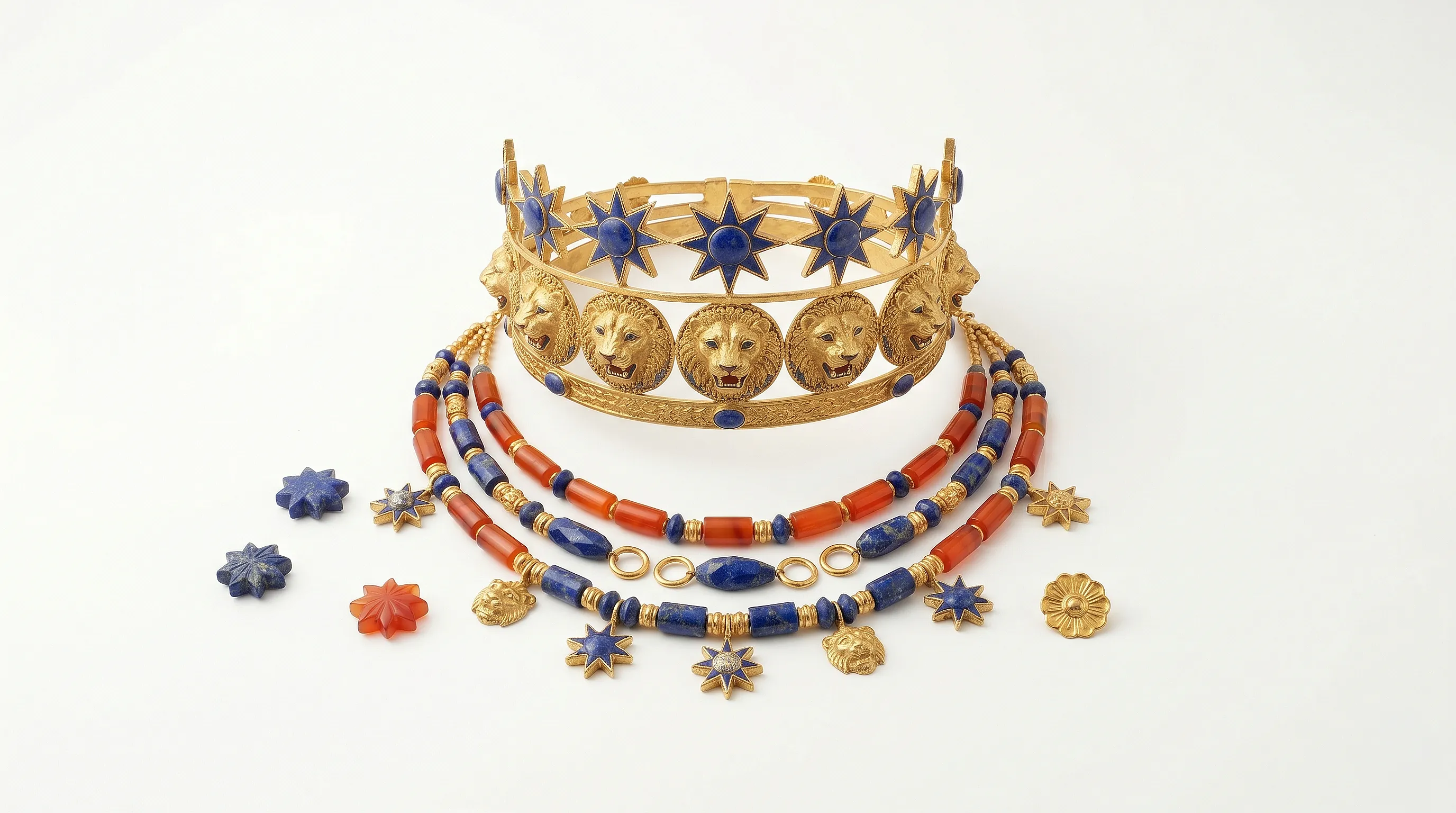
The city of Ur in Mesopotamia gave the world one of the most remarkable jewellery finds in history. In the 1920s, the British archaeologist Leonard Woolley excavated the Royal Cemetery, uncovering the burial of Queen Puabi. On her head sat an elaborate headdress of gold poplar leaves and lapis lazuli pendants. Three strands of gold, lapis lazuli, and carnelian hung at her neck. Around her lay servants, also adorned, also dead, buried alive with their queen.
By 3000 BCE, Sumerian craftsmen were working with:
- Lapis lazuli imported from Afghanistan (thousands of kilometres of trade route)
- Carnelian from the Indus Valley
- Gold via long-distance trade networks
- Silver (at times rarer and more prized than gold)
The techniques already included filigree and granulation, the fusion of microscopic gold beads into patterned surfaces. Skills that subsequent civilisations would struggle to match for millennia.
What the tombs of Ur reveal is not simply technical mastery but a fully formed social system in which jewellery encoded rank, ritual role, and cosmological belief. The lapis lazuli was not chosen for beauty alone: its deep blue colour was linked to the heavens and to divine protection. Carnelian's red was the colour of blood and life. The choice of materials was a theological statement, not a decorative one.
Ancient Egypt (3000-1000 BCE)
The most significant jewellery civilisation of antiquity. Nowhere else were metal, stone, and symbol bound together so completely.
The tomb of Tutankhamun (1323 BCE), opened by Howard Carter in 1922, was the largest jewellery collection from antiquity ever uncovered: more than 5,000 objects. The gold death mask. The lapis lazuli and carnelian pectoral. Scarab rings. Ankh pendants. All of it was not decoration but a system of magical protection for the journey through the afterlife.
Materials:
- Gold (in abundance from Nubian mines, the word "Nubia" derives from the Egyptian "nub," meaning gold)
- Lapis lazuli (imported)
- Turquoise (mined in Sinai)
- Carnelian, faience (synthetic glass-paste)
- Malachite, haematite
Techniques:
- Cloisonne enamel (ancestor of modern enamel work)
- Granulation
- Filigree
- Closed-back cabochon settings
Every amulet had a specific function. The scarab represented the resurrection of the sun. The ankh was the key to eternal life. The Wadjet eye of Horus provided protection. Egyptian jewellery was a theological system expressed in gold and lapis.
Egyptian jewellery was not reserved for the dead. Wall paintings, papyri, and surviving textual records show that living Egyptians of every class wore jewellery as a daily matter. Workers on the Deir el-Medina necropolis wore faience amulets. Noblewomen wore elaborate gold and bead collars called wesekh. Pharaohs wore the Blue Crown, the Double Crown, and the uraeus cobra on their foreheads in life as well as in death. The line between ornament and protective talisman was nonexistent: all jewellery was, simultaneously, both.
Minoan and Mycenaean Greece (2000-1100 BCE)
The early Greek civilisations produced gold jewellery of considerable sophistication. Knossos and Mycenae are famous for their surviving treasures: gold diadems with octopus and dolphin motifs, engraved signet rings depicting ritual scenes.
The so-called Mask of Agamemnon (c. 1550 BCE), discovered by Heinrich Schliemann at Mycenae in 1876, is a hammered gold funeral mask of unknown identity. Whether or not it belonged to Agamemnon is not the point. It is the point that a Bronze Age Greek community invested the technical resources to produce a beaten-gold likeness of a human face for burial, establishing a tradition of golden funerary portraiture that would recur in Egypt, Persia, and later in Scythian burial mounds across the Eurasian steppe.
The Etruscans (700-200 BCE): Italian Masters of Granulation
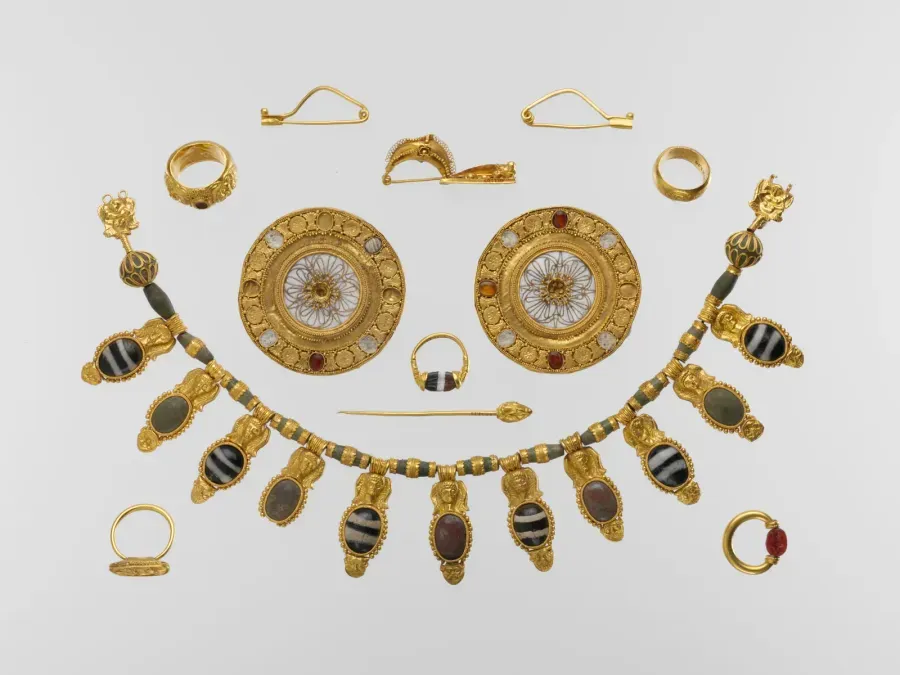
Etruscan craftsmen of central Italy reached, in the seventh to fifth centuries BCE, a level of goldsmithing mastery that was not surpassed for a thousand years after their culture's decline. Their achievements:
- Granulation: microscopic gold spheres attached to a surface in complex patterns, without visible solder. The technique was lost after the fall of Etruscan civilisation and rediscovered only in the nineteenth century.
- Filigree: gold wire drawn to extraordinary thinness and twisted into ornamental patterns.
How Etruscan granulation actually worked was a mystery to subsequent generations. The spheres are too small to be fixed with conventional solder (which would flow and obscure them). Modern analysis has established that the Etruscans used a process now called colloidal hard soldering: copper salts were applied to the gold surface alongside the spheres, then heated. The copper reduced to metal, forming a bond invisible to the eye. This was not rediscovered by accident. Pietro Castellani in Rome spent years studying Etruscan pieces before he reproduced the technique in the 1830s, having consulted a goldsmith in Todi who had preserved an oral tradition of the method.
Finds from the Etruscan necropolises at Cerveteri and Tarquinia are held in major collections including the British Museum, the Villa Giulia (Rome), and the Bargello in Florence.
Ancient China
From the Shang dynasty (1600 BCE):
- Jade (the most prized material)
- Bronze
- Freshwater pearl
Jade was a symbol of imperial power. Burial suits made from over 2,000 jade plaques sewn together with gold, silver, or bronze wire were created for high-ranking nobles of the Han dynasty (206 BCE to 220 CE). The Liu Sheng jade burial suit, excavated in 1968 at Mancheng, Hebei, contains 2,498 plaques and is among the best-preserved examples. Jade was considered capable of preserving the body after death: an entire practice of funerary jewellery was built on this belief.
India
The Indus Valley Civilisation (3000 BCE) already produced refined jewellery. The Indian tradition has continued unbroken to the present. Core techniques:
- Kundan setting
- Meenakari (enamel)
- Filigree
- Jadau
Symbolism is deeply linked to Hindu and Buddhist practice. The mangalsutra, a necklace worn by married Hindu women, is one of the oldest continuously worn categories of jewellery in the world, a direct line from ancient practice to contemporary life.
Mesoamerica
The Olmec, Maya, and Aztec civilisations. Key materials:
- Jade (especially green jadeite)
- Gold
- Obsidian
- Pearl
Aztec gold in vast quantities was transported to Spain in the sixteenth century. Most of it was melted down. The loss is incalculable: we know from the accounts of Bernal Diaz del Castillo, who accompanied Cortes, that the Aztec goldsmiths could produce featherwork combined with gold sheets so thin that they shivered in a breeze. None of the original featherwork gold survives. What we have are the few pieces that escaped the furnace, and the written descriptions of people who watched the rest disappear.
Classical Greece and Rome (500 BCE: 400 CE)
Greece
The Hellenistic period was the golden age of Greek jewellery. Core techniques:
- Granulation: tiny granules of gold fused into intricate patterns. One of the technical summits of ancient craftsmanship.
- Filigree: wire-work of extraordinary delicacy.
- Cameo: carving in relief on sardonyx or chalcedony.
Notable pieces: Hellenistic wreath rings, lion-head rings, Eros pendants. The Greek approach to granulation was no less technically demanding than the Etruscan, and was similarly lost in the early medieval period.
Greek jewellery had strong gender and social dimensions. Women of the classical period wore gold earrings, necklaces, and finger rings as a matter of course, visible markers of household wealth. Men's adornment was more restrained in Athens during the classical period, though rings serving as seals were universal among men of property. In the Hellenistic period following Alexander's conquests, the influx of gold from Persian and Egyptian treasuries loosened these conventions dramatically: both men and women adopted heavier and more elaborate ornament as Greek style spread across the eastern Mediterranean.
Rome (300 BCE: 400 CE)
Roman jewellery had its own distinct types:
- Bullae: gold lockets worn by Roman boys as protective amulets, removed on reaching manhood in the ceremony of assuming the toga virilis
- Cameos: portrait cameos of emperors, worn as political statements. The Gemma Augustea cameo is among the finest surviving examples.
- Intaglios: engraved gemstone rings used as personal seals on documents
- Snake rings (and panther rings): popular across the empire
- Coin pendants: Roman aurei and denarii pierced or set into bezels and worn as wearable currency. The tradition of ancient coins as jewellery runs from Hellenistic Greek staters to the present day.
Roman sumptuary law periodically attempted to restrict the wearing of gold rings to the senatorial class. In practice these restrictions were frequently violated and eventually abandoned. By the late Empire, even freedmen wore gold. The history of Roman jewellery law is a record of status anxiety: the attempt to keep adornment as a legible marker of class, failing as wealth became more broadly distributed.
Pompeii and Herculaneum (79 CE) preserved extraordinary Roman jewellery in volcanic ash. Much of it is now held in the British Museum and the National Archaeological Museum of Naples. The pieces were abandoned in the panic of evacuation, left exactly as they were worn in daily life.
The Cheapside Hoard, discovered in London in 1912, is among the finest surviving examples of Elizabethan and Jacobean jewellery: a collection of around 500 pieces, probably from a goldsmith's stock, buried around 1640. Now in the Museum of London and the Victoria and Albert Museum.
Early Christianity and Byzantium (400-1453)
Early Christianity
The persecution of early Christians drove symbolic discretion:
- Secret symbols: the anchor (in place of the cross), the fish (Ichthys)
- Catacombs as burial sites with jewellery offerings
- Palm branches as symbols of martyrdom
Byzantium
After Constantine the Great (313 CE) legalised Christianity, Byzantium became the centre of rich ecclesiastical jewellery:
- Reliquary crosses containing the relics of saints
- Pectoral crosses worn by bishops
- Imperial regalia: diadems, sceptres
- Enkolpion: double-sided pendants with religious imagery
Techniques:
- Cloisonne enamel: the Byzantine technical peak. Miniature images in coloured glass within gold partitions, with no parallel elsewhere in the contemporary world.
- Niello: black inlay on silver
- Heavy gold work: characteristic Byzantine weight and opulence
The social function of Byzantine jewellery was inseparable from political theology. The emperor's crown, bracelets, and collar were not personal possessions but sacred objects that mediated between earthly rule and divine authority. When Justinian I (527-565) is depicted in the Ravenna mosaics, his jewelled collar and crown are not signs of wealth: they are the visible proof that God has chosen him to reign. This is a completely different conception of jewellery from the Roman one, and it shaped every royal and ecclesiastical tradition in Europe for the next thousand years.
The Crown Jewels of the United Kingdom, held in the Tower of London, represent the accumulated symbolic weight of over a thousand years of royal regalia, some pieces incorporating Byzantine and medieval elements alongside later commissions.
Customer reviews
Zevira is a real jewellery shop. Genuine payments, deliveries and customer thank-yous.
🥰🥰🥰 gracias

Ok, ¡gracias! 🙂

The Middle Ages (500-1500)
Early Medieval Period (500-1000)
Post-Roman Europe was shaped by the jewellery traditions of the Germanic and Norse peoples:
- Animalistic style in metalwork (interlaced beasts in ornament)
- Fibulae: decorative cloak pins
- Garnet cloisonne: red garnets set in gold cells. The technique, inherited from Rome, was refined to its height in Anglo-Saxon England.
- Viking silver and amber
The Sutton Hoo treasure (excavated in Suffolk in 1939), now in the British Museum, is the supreme example of Early Medieval goldsmithing in the British Isles. The shoulder-clasps, the purse lid, and the helmet mounts show a standard of technical and artistic achievement that rewrites assumptions about "Dark Age" craftsmanship.
The shoulder-clasps from Sutton Hoo are particularly instructive for what they reveal about early medieval production. Each clasp is composed of interlocking gold cells filled with garnet cut to precise shapes, with a border of filigree and bosses of millefiori glass. The garnets were sourced from Sri Lanka and India. The millefiori glass came from Roman workshop debris. The gold likely passed through multiple hands before reaching an Anglo-Saxon workshop, possibly in Kent or East Anglia. These are not provincial objects: they are the products of an international material culture that the simple narrative of Roman collapse obscures.
Carolingian Tradition (800-900)
The court of Charlemagne produced the first synthesis of Germanic craft and imperial ambition. Carolingian reliquaries and coronation objects drew on multiple technical traditions simultaneously. The Aachen Marienschrein (shrine of the Virgin, Aachen Cathedral) is the leading surviving example.
High Medieval Period (1000-1300)
The development of craft guilds:
- The London Goldsmiths' Company (founded 1180, granted royal charter 1327)
- French workshops centred on Paris
- Saxon and Bavarian masters in the Holy Roman Empire
The guild system transformed the jewellery trade in ways that still resonate. Before guilds, quality control was a matter of personal reputation. The guild introduced hallmarking: a system of stamps guaranteeing metal purity, applied by the guild's assay office rather than the maker. The British hallmarking system established in the fourteenth century remains in use today in its essentials, making it one of the oldest consumer protection mechanisms in continuous operation.
Gothic jewellery:
- Crucifixes: large processional crosses
- Reliquaries for saints' remains
- Coronation regalia for monarchs
- Heraldic rings with family arms
Gothic jewellery and Gothic architecture developed in parallel: both reach for verticality, for light, for the dissolution of solid mass into open structure.
Late Medieval Period (1300-1500)
The Black Death and social upheaval transformed the jewellery tradition:
- Memento mori: skulls and skeletons as early philosophical jewellery
- Devotional pieces with religious imagery
- Wedding rings became a common tradition among the general population
The fede ring, two clasped hands representing fidelity, was the standard betrothal and wedding ring of medieval Europe. Many surviving examples date to the thirteenth and fourteenth centuries. The Claddagh ring of Irish tradition, two hands holding a crowned heart, is a direct descendant of the fede form, documenting the persistence of medieval symbolic vocabulary into the present.
The Renaissance (1400-1600)
Italy and Northern Europe
The revival of classical culture brought a new vocabulary to jewellery:
- Cameos revived (Renaissance cameos consciously imitated antique models)
- Floral motifs: living nature translated into gold and enamel
- Memento mori earrings and pendants with skulls as philosophical statements
Benvenuto Cellini (1500-1571): sculptor, goldsmith, autobiographer. His treatise on goldsmithing (1568) documents Renaissance metalworking methods with a precision found nowhere else. The Salt Cellar of Francis I (1540-1543), now in the Kunsthistorisches Museum Vienna, is his major surviving work in gold.
Hans Holbein the Younger produced jewellery designs for the English court, including pieces associated with Anne Boleyn and Henry VIII.
The Elizabethan portraits of Elizabeth I show a monarch covered from collar to hem in pearls, rubies, and gold. Jewellery as political theatre. The Cheapside Hoard gives us the actual stock of an Elizabethan jeweller, not court portraits but the real objects that passed through London's gold trade.
The Renaissance also saw the systematic collection of ancient gems and cameos as objects of connoisseurship. The Medici collection in Florence was the largest in Europe. Lorenzo de' Medici had his personal initials, LAV R MED, cut into the bases of his finest antique gems, asserting ownership across centuries. This collecting impulse fed directly into jewellery design: Renaissance craftsmen copied antique cameos not as forgeries but as homages, producing a hybrid language that mixed mythology, heraldry, and portraiture.
Materials:
- Gold
- Enamel
- Precious stones (increasingly well documented)
- Pearl (enormously fashionable at court)
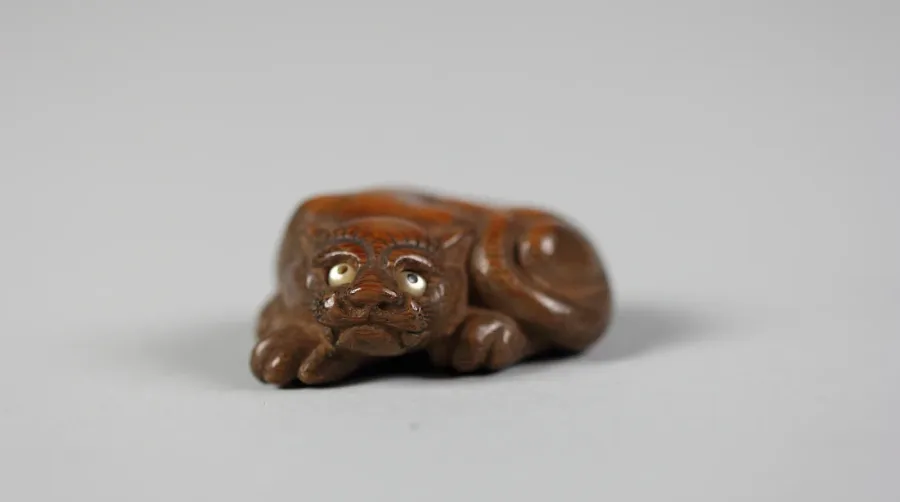
Upload a photo of your pet, someone you love, or an object. We'll build a 3D model and hand-cast it in pewter.




The Age of Discovery and Baroque (1500-1700)
The Spanish Conquests
After 1492, vast quantities of gold and silver from Mexico and Peru entered Europe via Spanish trade routes:
- Colombian emeralds dominated the gem trade (first appearing in Europe in the sixteenth century, immediately displacing European stones)
- Pearl Coast pearls (Venezuela, Panama) flooded the market
- Aztec and Inca treasures were melted down and recast into European forms
Spanish galleons carried this wealth to Seville. Many were lost at sea. The Nuestra Senora de Atocha (sunk 1622, raised 1985) yielded one of the largest jewellery finds of the twentieth century: emeralds, gold chains, and a 74-carat emerald cross.
La Peregrina pearl: a roughly 55-carat pearl found off Panama around 1513, presented to the Spanish crown, later given to Mary Tudor on her marriage to Philip II of Spain, then passed to the Habsburg collection. The provenance of a single object as a map of European political history.
Baroque (1600-1700)
Excess as a deliberate aesthetic:
- Enormous pearl necklaces
- Multi-strand parures
- Carved cameos
- Large stones in elaborate settings
Daniel Mignot (Augsburg, c. 1565-1616): his engraved design sheets circulated across Europe and were a direct source for German Baroque craftsmen.
Gilles Legare (Paris): whose Livres de bijouteries set Parisian taste for a generation.
The regalia of Louis XIV, the Sun King, set the European standard for court jewellery. Versailles became the reference point for luxury from Madrid to St Petersburg.
The Eighteenth Century: Rococo and Neoclassicism
Rococo (1700-1770)
Late Baroque gave way to a lighter, more playful register:
- Floral motifs
- Pastel stones (topaz, amethyst, peridot)
- Girandole earrings (three-drop pendant form)
- Pendants with miniature portrait paintings
The discovery of paste, a high-lead-content glass cut to imitate gemstones, transformed the market in the early eighteenth century. Georges Frederic Strass, a Parisian jeweller working in the 1720s-30s, perfected the formula to such a degree that his paste pieces were compared favourably to diamonds by contemporaries. "Strass" became the generic term for high-quality paste in French and several other European languages. The wider implication is significant: for the first time, the visual vocabulary of fine jewellery became accessible to a broad middle class. The boundary between jewellery as status marker and jewellery as personal pleasure began to shift.
Neoclassicism (1770-1820)
The excavations at Pompeii (begun 1748) inspired a return to classical forms:
- Graeco-Roman motifs
- Cameo brooches
- Diadems in the manner of Roman matrons
- Clean lines with reduced ornament
The Napoleonic period (1800-1815) pushed neoclassicism in an explicitly imperial direction. Josephine de Beauharnais collected cameos. Napoleon crowned himself with a gold laurel wreath in the antique style. The Napoleonic regalia is now in the Louvre.
The Georgian Period (1714-1830)
The Georgian era produced one of the most technically inventive jewellery traditions in European history. The constraints of the period, pre-electricity lighting, a limited range of gem-cutting styles, limited available stones, drove craftsmen toward extraordinary ingenuity:
- Foiled settings: stones were backed with metal foil to intensify colour and reflectivity in candlelight. A rose-cut diamond set over pink foil became a deep rose in firelight. The effect was deliberate, calculated for interior light.
- Repoussage: hammering sheet gold or silver from behind to create raised patterns. Used extensively for mourning lockets and portrait miniature frames.
- Pinchbeck: an alloy of copper and zinc developed by Christopher Pinchbeck around 1720 to simulate gold. Named after its inventor, unlike later frauds, it was openly marketed as an affordable alternative.
- Cut-steel jewellery: faceted steel studs riveted to a base, producing a glittering effect that imitated diamonds. Popular across Europe from the 1760s onwards. The spa town of Woodstock near Oxford was the main English centre of production.
The Georgian period is when the portrait miniature became a common jewellery form. Lockets containing painted miniatures, watercolour on ivory, were exchanged between lovers, given by monarchs to ambassadors, and buried with their owners. They are a form of photography before photography, intimate records of faces.
CAPAORA mini knife pendant
The 18th-century Spanish navaja in miniature: 40 mm of stainless steel, a real folding mechanism and a Palanquilla lock that clicks. An affordable gift to remember.
Authentic · Ships from Spain · 14-day returns
The Nineteenth Century: The Victorian Era
The longest single era in European jewellery history.
Romantic Period (1837-1860)
A young Queen Victoria set the tone. Sentimental jewellery dominated:
- Lockets containing locks of hair
- Snake rings (Prince Albert gave Victoria a serpent engagement ring set with an emerald)
- Pointing-hand brooches (known as fede motifs, symbols of love)
- Acrostic rings: stones whose initial letters spelled a name or word
Mourning Period (1861-1885)
After the death of Prince Albert (1861), Victoria wore mourning for the rest of her life. This defined fashion across the Empire:
- Whitby jet: black jet from the Yorkshire coast
- Onyx and black enamel
- Hair jewellery: locks of the deceased woven into mourning pieces
- Lockets with photographs
An entire industry of mourning jewellery flourished in Britain and spread across Europe.
The Whitby jet industry at its peak in the 1870s employed around 1,500 workers in Whitby alone. Genuine jet, a form of fossilised wood (Jurassic araucaria trees), was being supplemented and eventually largely displaced by cheaper French jet (black glass) and Spanish jet (cannel coal). The distinction mattered intensely to those in the trade and to knowledgeable buyers. A genuine Whitby jet brooch represented skilled carving of a specific material; its glass imitation was just a black shiny object. The market dynamics of authentic craft versus affordable imitation, already visible in the Strass paste story, recur throughout jewellery history.
Late Victorian Period (1885-1901)
A return of colour and light:
- Diamonds (in volume, following the South African discoveries from 1867)
- Aigrettes: feather-and-diamond hair ornaments
- Star and crescent brooches, widely fashionable
The Aesthetic Movement (1860-1900)
Running parallel to the main Victorian line, with Japanese influence:
- Asymmetric designs
- Lilies, peacocks, sunflowers as motifs
- Cloisonne enamel revived
The Twentieth Century
Art Nouveau (1890-1910)
One of the most artistically significant movements in jewellery history. Core ideas:
- Nature: flora and fauna (the woman as flower, dragonflies, hummingbirds)
- Flowing lines: organic curves derived from plant forms
- Plique-a-jour enamel: translucent enamel resembling stained glass
- Non-precious materials elevated (horn, ivory, opal)
Rene Lalique (1860-1945), the master of Art Nouveau jewellery, elevated the dragonfly, the opal, and the deer antler to the status of high art. His work is held in the Lalique Museum in Wingen-sur-Moder (Alsace) and in collections worldwide.
Art Nouveau was a deliberate reaction against the industrialisation of jewellery. From the 1870s onwards, machine production had made mass-market jewellery cheap and ubiquitous. Art Nouveau craftsmen responded by making virtuosity the point: the plique-a-jour enamel that Lalique perfected, cellules of coloured glass held together by metal wire without any backing, could not be produced by machine. Every piece was a demonstration of human hand and eye. The movement was simultaneously an aesthetic programme and an argument about the value of craft in an industrial age, an argument that still runs through contemporary discussions of artisan jewellery.
Edwardian Period (1901-1915)
After the death of Victoria (1901), Edward VII's preference for pleasure and display shaped the era:
- Diamonds and platinum dominated. Platinum had been worked commercially only since the 1820s.
- Garland style: lace-like openwork designs
- Tiaras revived
- Light, white aesthetic throughout
Art Deco (1920-1939)
A reaction against Art Nouveau: geometry against organic form. After the First World War:
- Geometric forms: squares, triangles, stepped patterns
- Egyptian Revival: following the opening of Tutankhamun's tomb (1922)
- Black and white: onyx alongside diamonds
- Platinum: the dominant metal
- Long pearl ropes
The Egyptian revival of 1922-25, triggered by the opening of Tutankhamun's tomb, is the most thoroughly documented instance of archaeology directly shaping jewellery fashion. Within months of the discovery, Paris workshops were producing lotus-flower earrings, scarab bracelets, and papyrus-column brooches. The revival was not historically precise: Art Deco "Egyptian" pieces combined genuine Egyptian motifs with the geometrical aesthetic already characteristic of the period. The result was a hybrid that served both as fashionable novelty and as a way of anchoring contemporary design in the deep legitimacy of antiquity.
In 1953, the Gemological Institute of America (GIA) introduced the 4C system for diamond grading: cut, colour, clarity, carat weight. Before this, assessment was a matter of personal expertise and unverifiable terminology.
Scandinavian Modernism (1950-1970)
Mid-century brought a new wave: the Finnish company Lapponia (founded 1960) became a benchmark for Scandinavian jewellery modernism. Organic forms, matte gold, a minimal aesthetic in direct opposition to Parisian opulence. Tauno Tarnanen, Bjorn Weckstrom, and other Lapponia designers gained international recognition. Their work is now in the permanent collection of the Design Museum Helsinki.
Georg Jensen, the Danish silversmith who established his Copenhagen workshop in 1904, was the forerunner of this Scandinavian tradition. His silverwork, with its flowing organic forms and emphasis on craft over spectacle, had already established Scandinavia as a distinct voice in European jewellery before the mid-century modernists. Jensen's influence on Lapponia and on subsequent generations of Nordic designers is direct and acknowledged.
1960s-70s: Counterculture
- Boho jewellery: widespread
- Crystal healing: rising interest
- Indian, African, Native American influences
- Macrame and semi-precious stones
1980s: Power Dressing
- Heavy gold chains
- Statement brooches
- Oversized earrings
- Branded logos: monogram mania across fashion houses
1990s: Minimalism
A reaction to the excesses of the 1980s:
- Thin gold chains
- Single-stone rings
- Minimal piercings
- Demi-fine segment emerged
Leave your email, we'll send your discount code. No spam, unsubscribe anytime.
The code arrives by email, valid on your first order.
The Twenty-First Century (2000-2026)
2000-2010: The Era of Bling
- Hip-hop influence: heavy chains, diamond-set dental jewellery
- Logo mania: branded heart pendants and bracelets as mass-market desire objects
- Permanent jewellery: the first welded bracelet studios appeared
2010-2020: Direct-to-Consumer Brands
- Young demi-fine brands built audiences directly, bypassing traditional retail
- Demi-fine became a mainstream category
- Lab-grown diamonds: growing acceptance
- Layering: the dominant styling trend
2020-2026: The Spiritual and the Technological
- Short-video communities: a renaissance for crystal and talisman jewellery
- Quiet luxury: anti-logo positioning
- Sustainability: no longer a differentiator but a baseline expectation
- Coloured sapphires: boom in peach, lavender, teal
- Y2K aesthetic revival
- Permanent jewellery: now a mainstream offering
How Jewellery Communicated Social Status
One consistent thread through all these centuries is the use of jewellery as a visible language of rank.
In ancient Mesopotamia, the metals and stones you wore indicated your position precisely. Lapis lazuli, requiring trade routes of several thousand kilometres, was only available to courts and temples. Copper was available to almost anyone. The difference between a lapis pendant and a copper one was not aesthetic: it was the difference between a person connected to the centres of power and one who was not.
Rome tried to codify this with law. The right to wear a gold ring was legally restricted to senators, then expanded to the equestrian class, then to all freeborn citizens, and finally ignored altogether. Each expansion of the right tracked a shift in the social structure. When Diocletian in the late third century CE tried to re-restrict gold rings to the upper classes, the edict was widely disregarded. The material had escaped its original social constraint.
In medieval Europe, sumptuary laws across England, France, and the Holy Roman Empire attempted to specify which ranks could wear which materials. English laws of 1363 barred craftsmen and yeomen from wearing gold or silver buttons. A French ordinance of 1485 prohibited anyone below the nobility from wearing pearls. These laws were passed because they were being violated: the rising merchant class was dressing above its station, and the aristocracy wanted legal backing for the distinction that wealth alone could no longer secure.
After the Industrial Revolution, mass production made the visual vocabulary of fine jewellery available to the middle class for the first time at scale. Gold-filled and gold-plated pieces replicated the appearance of solid gold at a fraction of the cost. The social coding that had persisted for millennia began to erode, and with it the exclusive reading of jewellery as pure status marker. By the twentieth century, wearing a gold necklace communicated almost nothing specific about your position. The meaning of jewellery had shifted from rank to identity.
Craft Workshops and the Transmission of Techniques
The history of jewellery technique is a history of transmission: knowledge passed from master to apprentice, sometimes interrupted, sometimes lost entirely and painfully reconstructed.
The apprenticeship system that formalised this transmission in Europe dates to at least the twelfth century with the establishment of the craft guilds. An apprentice goldsmith in fourteenth-century London typically entered the trade at age twelve to fourteen and served seven years before being admitted as a journeyman, and further years before achieving master status. The system ensured both technical continuity and quality control, but it also created bottlenecks: a technique known only within one workshop could disappear entirely if the workshop closed or the masters died without training successors.
This is precisely what happened with granulation. The Etruscan technique was not written down in any surviving text. When the last workshops practising it closed, sometime in the second or third century CE, the knowledge went with them. Castellani's rediscovery in the nineteenth century required both access to surviving Etruscan pieces for study and an oral tradition in Todi that had preserved a partial version of the method. Neither alone would have been sufficient.
Lost-wax casting, by contrast, survived continuously. Known from at least 3500 BCE, the technique is documented in Egyptian workshop instructions, in Theophilus's twelfth-century De Diversis Artibus, and in Cellini's sixteenth-century treatise. Industrial casting of the twentieth century is, in its fundamentals, the same process. What changed was scale and precision, not the underlying method.
The transmission of Indian goldsmithing techniques follows a different pattern. Hereditary craft communities, the Sonar caste of goldsmiths, maintained techniques across generations through family practice rather than guild structures. Kundan setting, the technique of embedding uncut gems in gold foil without prongs, has been practised continuously in Rajasthan and Gujarat for over two thousand years by craftspeople whose knowledge passes from parent to child. This form of transmission is fragile in different ways from the guild system: if a family leaves the trade, the knowledge is lost from that lineage. But if the community as a whole persists, the technique can survive indefinitely.
Famous Stones with Histories
Some gemstones are historical documents in themselves. Their provenance is a record of wars, alliances, and trade routes.
The Koh-i-Noor ("Mountain of Light"): a diamond with a documented history spanning India, Persia, Afghanistan, and Britain. Passed between empires, each of which treated it as a token of legitimate power. Now in the Tower of London as part of the Crown Jewels.
The Hope Diamond: a unique 45-carat blue diamond, probably mined in India in the seventeenth century. It formed part of the French crown jewels as the "Blue Diamond of the Crown," was stolen during the Revolution of 1792, and resurfaced under a different name. Now in the Smithsonian Institution, Washington.
The Cullinan ("Star of Africa"): the largest gem-quality diamond ever found, 3,106 carats rough. Discovered in South Africa in 1905. Cut into several stones, the largest of which are set in the British Crown Jewels.
Send a friend a discount code, they save on their first order.
Technologies: Lost and Rediscovered
Granulation: the technique of attaching microscopic gold spheres without visible solder. Known to the Etruscans and Greeks. Lost after the fall of classical civilisation. Rediscovered by the Roman jeweller Pietro Castellani in the 1820s-30s after studying Etruscan finds.
Lost-wax casting: known from the Bronze Age. Allows precise metal castings of complex forms. Continuously used and industrialised only in the twentieth century.
Platinum working: platinum was known from the eighteenth century, but industrial processing became feasible only from the 1820s. Before that, its high melting point made it nearly inaccessible to jewellers.
The 4C system for diamonds: a unified international grading system (GIA, 1953). Before this, every seller used their own terminology.
Materials: Bone to Platinum
- Bone and shells (100,000+ BCE)
- Copper and native gold (7,000 BCE)
- Bronze (3,500 BCE)
- Silver at scale (3,000 BCE)
- Glass and faience (Egypt, 2,000 BCE)
- Iron working (1,200 BCE)
- Venetian glass in jewellery (15th-16th century)
- Platinum commercial working (1820s)
- Stainless steel in jewellery (1960s)
- Lab-grown diamonds commercial production (1950s, mass-market from 2000s)
Key Moments in History
| Date | Event | Significance |
|---|---|---|
| 115,000 BCE | Pigmented shells, Cueva de los Aviones | Earliest known ornaments |
| 75,000 BCE | Nassarius shells, Blombos Cave | First confirmed jewellery |
| 4,500 BCE | Varna Necropolis gold | Earliest known worked gold artefacts |
| 2,600 BCE | Tomb of Queen Puabi, Ur | Summit of Sumerian goldwork |
| 1,323 BCE | Tutankhamun's tomb | Largest jewellery collection of antiquity |
| 700-200 BCE | Etruscan granulation masters | Technical peak lost for 1,000 years |
| 313 CE | Christianisation of the Empire | Religious jewellery enters the mainstream |
| 800 | Carolingian regalia | First European imperial style |
| 1180 | London Goldsmiths' Company | Professional guild established |
| 1327 | Hallmarking system formalised | First consumer protection for metal purity |
| 1492 | Discovery of the Americas | Colonial gold enters Europe |
| 1540s | Cellini's Salt Cellar | Renaissance peak in goldwork |
| 1622 | Atocha galleon sunk | Colonial gold on the seabed |
| 1720s | Strass paste perfected | Fine jewellery aesthetics reach the middle class |
| 1748 | Excavations at Pompeii begin | Neoclassical revival |
| 1820s | Platinum worked commercially | New era of white metal |
| 1837 | Victoria becomes Queen | Long era of mourning and sentiment |
| 1912 | Cheapside Hoard discovered | Elizabethan goldsmith's stock revealed |
| 1922 | Opening of Tutankhamun's tomb | Egyptian revival in Art Deco |
| 1953 | GIA 4C system | Diamond grading standardised |
| 1960 | Lapponia, Finland founded | Scandinavian modernism benchmark |
| 1985 | Atocha raised | 17th-century Spanish gold recovered |
| 2010 | Rise of direct-to-consumer demi-fine | Democratisation of fine jewellery |
| 2022 | Permanent pearl choker as social media phenomenon | Permanent jewellery goes mainstream |
FAQ
What counts as the oldest jewellery? Currently, pigmented shells from the Spanish Cueva de los Aviones (115,000 years) and Moroccan cave sites (around 130,000 years) hold the record. Some researchers contest the interpretation: were they jewellery or something else? The presence of ochre on the shells suggests deliberate aesthetic treatment. The Varna Necropolis (c. 4500 BCE) holds the record for the oldest confirmed worked gold jewellery.
How do scientists date ancient jewellery? Multiple methods: radiocarbon dating (organic materials up to 50,000 years), thermoluminescence (inorganic materials), stratigraphy (geological layer of the find), and XRF analysis of metal composition to identify ore sources. Good dating uses several methods together, as each has its own margin of error.
Why did so many ancient goldsmithing techniques disappear? Most were transmitted orally, through apprenticeship, not written down. When workshops closed, when cities were sacked, when the social structures that supported craft patronage collapsed, the knowledge went with the craftspeople. Writing down technical processes in detail was not a Roman or early medieval habit. The survival of Theophilus's De Diversis Artibus (c. 1120) and Cellini's treatise (1568) is exceptional precisely because systematic craft writing was rare.
What is the difference between fine, demi-fine, and fashion jewellery? Fine jewellery uses solid precious metals (gold, platinum, silver) and genuine gemstones throughout. Demi-fine uses solid precious metals but with semi-precious or lab-grown stones, sitting between fine and fashion in price and quality. Fashion jewellery (also called costume jewellery) uses base metals with plating and synthetic or simulated stones. The demi-fine category emerged as a defined market segment only in the 2010s, though the practice of making solid-silver pieces with semi-precious stones is much older.
Will contemporary pieces enter future museum collections? Almost certainly. Lapponia pieces from the 1960s are already in museum collections. Objects representing turning points, the first commercial lab-grown diamonds, the first mass-market permanent jewellery, will document the era.
Where are the best jewellery collections?
- Victoria and Albert Museum (London): finest cross-period collection
- The Louvre (Paris): French regalia, antiquity
- Bargello Museum (Florence): Italian Renaissance and medieval
- Schmuckmuseum Pforzheim (Germany): the leading specialist jewellery history collection in Europe
- Museo del Prado (Madrid): Spanish royal collections
- Kunsthistorisches Museum Vienna: Roman, Habsburg, and Baroque treasures
Buying it as a gift? Each one arrives ready to give.
 A branded Zevira box and a little card come with every order.















Conclusion
Five thousand years of jewellery history point to one conclusion: people do not change, but their tools do. Sumerians wanted beauty and status, as does a contemporary buyer in a premium boutique. An Egyptian priest wore a protective amulet, as does a modern wellness practitioner wearing black tourmaline. A Victorian widow wore mourning jewellery, as does a contemporary goth wearing jet.
Context changes, politics, economics, technology. Why we wear jewellery does not.
Knowing the history changes the way you look at your own jewellery box. These are not merely accessories. They are participation in the longest continuous human tradition after food and language.
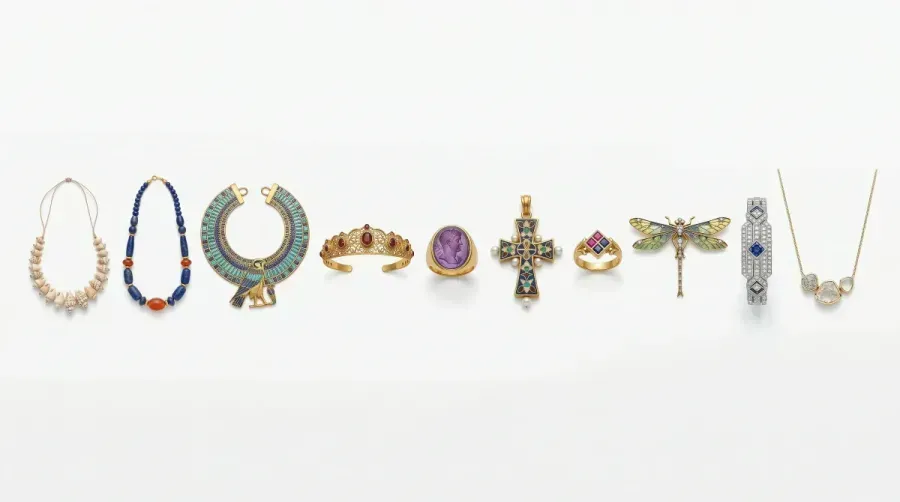
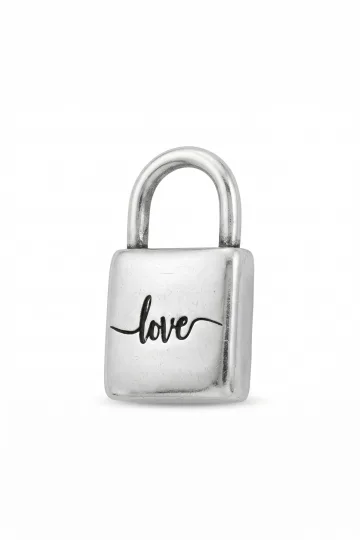
Jewellery with motifs drawn from different eras: Byzantine, medieval, Renaissance, Art Deco.
About Zevira
Zevira is a Spanish jewellery brand based in Albacete. The historical and cultural motifs range is one category within the catalogue. For current availability and details, visit the catalogue.