Quiet Luxury Jewellery: The 2026 Trend, What It Is and How to Build a Collection
Introduction: Jewellery That Speaks in a Whisper
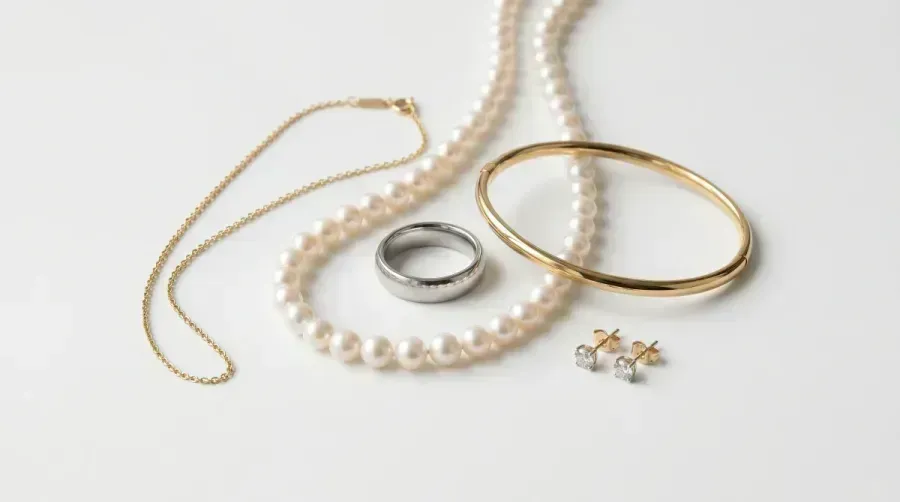
At a wedding reception in a Tribeca loft, a woman in a plain black dress with no visible branding. A slender gold chain with no pendant. Small pearl studs. One ring with a diamond. No label on display, no recognisable house logo, no statement piece.
The entire look costs more than a senior attorney's annual bonus.
This is quiet luxury. The aesthetic of quiet luxury became the defining trend of 2023-2024 and continues to set the tone in 2026. Instead of oversized logos: a fine cashmere turtleneck with no signature. Instead of glittering crystals: matte gold with no stones. Instead of branded chains: a slender chain, made without fanfare by an Italian goldsmith whose name only insiders know.
Quiet luxury is not a moment on a mood board. It is a system of values that has been cycling back into fashion for decades, each time pulling in a new generation that is done performing wealth and ready to simply have it. The 2026 iteration is sharper and more globally understood than any previous wave, but the roots run all the way back to postwar American restraint and the Parisian tradition of never appearing to try.
This guide covers how quiet luxury works in jewellery, how to build such a collection, and why this is considerably more than a passing visual trend.
Wear the symbol, don't just read about it. These are in stock:





The History Behind Quiet Luxury Jewellery
Understanding where quiet luxury comes from matters, because it explains why the aesthetic is so durable. Trends born from boredom fade quickly. Trends born from a genuine philosophy tend to endure.
Italian Sprezzatura and the Centuries-Long Backstory
The philosophical root is Italian. Baldassare Castiglione described it in 1528 in "The Book of the Courtier": sprezzatura, the art of making the difficult appear effortless. A well-born Milanese of the sixteenth century dressed expensively, but the cost was invisible. The better the tailor, the less the suit announced itself. The jewels followed the same logic: gold worn since childhood, a signet ring passed down through generations, pearl earrings that belonged to a grandmother.
That tradition migrated north and west over the following centuries. The English landed gentry refined it into understatement. The French filtered it through their own ideas about elegance. American old-money families on the Eastern Seaboard absorbed it through European finishing schools and turned it into something distinctly their own: the Nantucket summer bracelet, the simple gold hoops worn to prep school reunions, the pearl strand brought out for every event from christenings to funerals.
The 1990s Recalibration
The 1990s saw a burst of anti-logo, anti-spectacle fashion that set the visual template for what we now call quiet luxury. American minimalism at its most sophisticated was working out exactly the aesthetic that would resurface thirty years later. A clean, expensive-looking look. No ornament without purpose. Gold used sparingly and well.
The jewellery of that era was architectural: sculptural gold cuffs, one serious ring, pearl studs. The excess of the 1980s had cleared, and what remained was an appreciation for materials and craft that owed nothing to brand recognition.
2008 and the First Modern Wave
The financial crisis of 2008 forced a genuine rethinking. Public displays of wealth became socially radioactive in ways they had not been since the 1930s. The wealthy did not stop buying jewellery. They started buying differently: quieter, less immediately readable as expensive, more defensible by reference to quality and craft rather than brand and size.
The stealth wealth conversation that circulated in New York and London financial circles at that time was the direct ancestor of everything called quiet luxury today.
2022-2026: The Current Chapter
The cryptocurrency collapse of 2022, the inflation shock of 2022-2023, and the prolonged recalibration of conspicuous consumption that followed created conditions almost identical to 2008, but broader. The very public failure of crypto-wealth braggadocio, the moral complication of flaunting during a cost-of-living crisis, and a generation of high earners who had grown up on Instagram and were actively tired of it all converged into the current moment.
Quiet luxury in 2026 is not a niche conversation for private banking clients. It is the default aesthetic of anyone in American professional culture who cares about how they dress.
One fine chain says more than a fistful of logos. Take off two of your three rings, and don't argue.
How to Wear Quiet Luxury
Years of building looks taught me one thing: quiet luxury lives less in the piece than in everything around it. Here is what I recommend to clients, by occasion.
What do I wear a fine chain with every day? For everyday I recommend a fine gold chain at the collarbone with small ball studs. It reads best against a plain turtleneck, a simple cotton tee or a linen shirt in a neutral tone. I suggest warm yellow gold with sand, olive and cream; for grey and navy I choose white gold or platinum.
What works for the office? For work I recommend pearl studs and a single fine chain at collarbone level, plus a smooth signet on the right hand. Fabrics hold the tone: wool, gabardine, dense cotton. Here I suggest one piece per zone and nothing more, so the jewellery reads as a detail rather than a loud accent.
How do I put together an evening look? For evening I choose a solitaire pendant or a strand of pearls: under candlelight and spot lighting they come alive differently than by day. I recommend an open or V-neckline as a frame for the chain, and I suggest silk, satin or deep-toned velvet because they lift the sheen. One strong piece, not a stack.
And as a wedding guest? As a guest I recommend a strand of pearls, simple studs and one ring, all in a single metal tone. The rule I repeat to everyone: a guest never outshines the couple, so I choose restraint and exactly one accent.
Who does quiet luxury actually suit? It suits anyone who cares more about the look than the jewellery. On styling I keep two markers. First, I match chain length to the neckline: short (40-45 cm) for a high collar, longer for an open one. Second, one metal per look; I mix yellow and white only on purpose, say a white-gold wedding band next to a yellow-gold main piece.

Turn on your camera, pick earrings, a pendant or a ring, and see the piece on yourself in real time.
Switch items in one tap.
Everything runs in your browser: no photo or video is ever uploaded.
The Core Principles of Quiet Luxury Jewellery
Before getting into specific pieces, it helps to understand the rules. They are few, but each one is load-bearing.
No logos. Nothing engraved with a brand name, nothing shaped to be immediately identifiable as a product. The piece should be anonymous to strangers and legible only to those who understand materials.
No loud colour. The palette is yellow gold, white gold, platinum. Stones: diamonds, natural pearl, one coloured stone in a restrained shade. Sapphires in muted peach or pale lavender. An emerald only if the cut is classical and the setting invisible.
Material above design. A plain 18K gold band is worth more than an elaborate sterling construction. The metal does the talking.
Exceptional cut where there is a stone. A 0.3-carat D-VVS in an excellent cut is worth more to the quiet luxury eye than a 1-carat J-SI1. The stone should be as good as you can afford, not as large as you can afford.
Longevity over trend. A thin gold chain in a classical link pattern is indistinguishable in 1995, 2015, and 2045. That is the goal.
One piece per zone. One necklace. One pair of earrings. One ring. The moment you start stacking, you have moved into a different aesthetic register entirely.
Quiet Luxury Jewellery: What to Choose
A Fine Chain Without a Pendant
The cornerstone of quiet luxury jewellery.
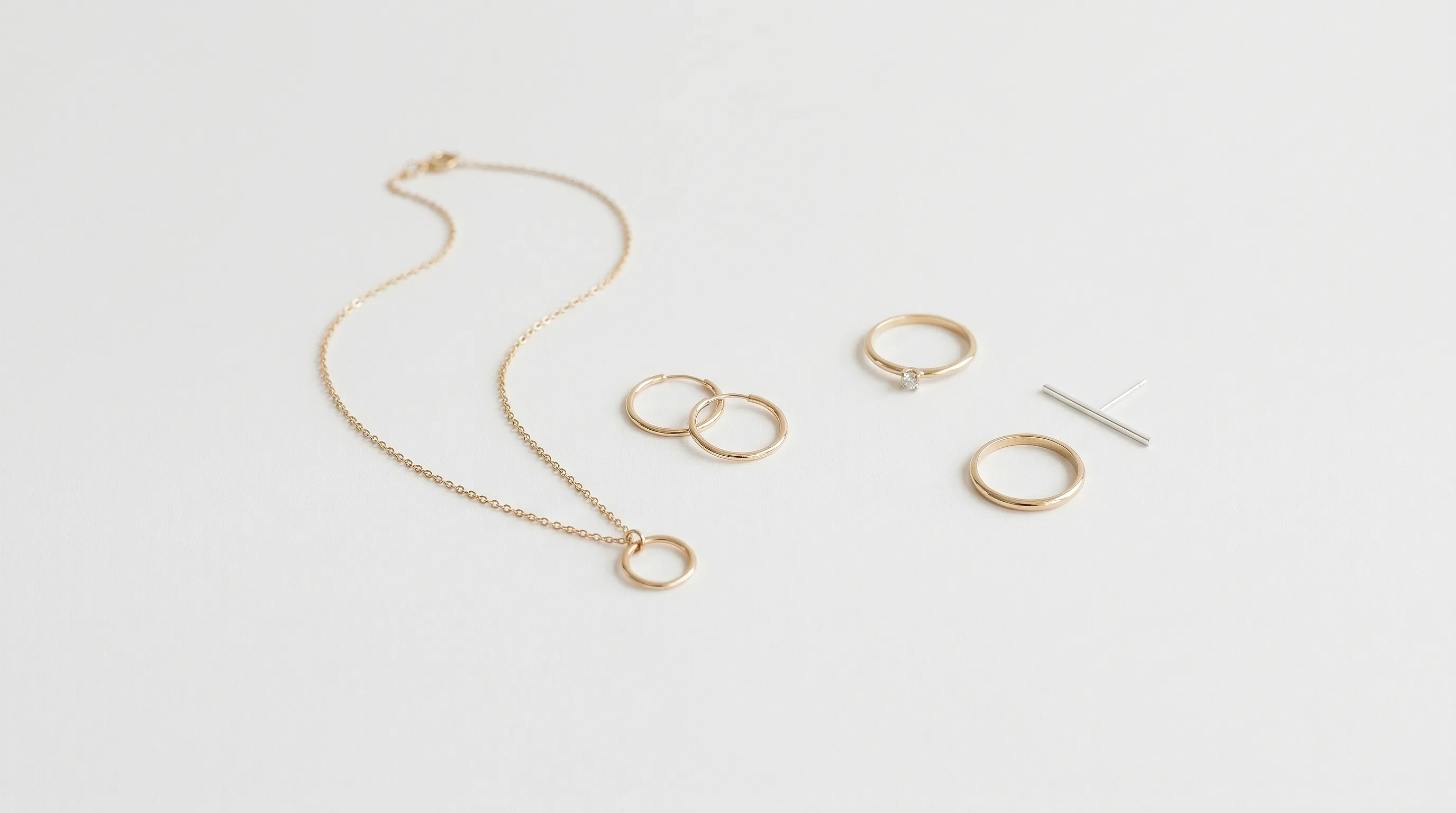
- Anchor chain 40-45 cm in 14K-18K yellow gold -- the classic. Slender, elegant, invisible from a distance. Premium segment.
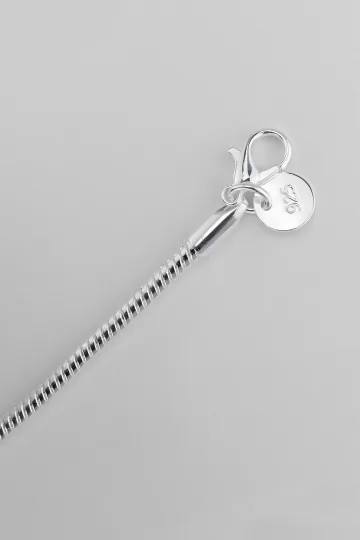
- Box chain or snake chain in white gold or platinum -- a cool, minimalist option. Premium-luxury segment.
- Fine chain with a barely perceptible texture (herringbone weave) -- premium without display. Premium segment.
- Platinum chain -- the final level. Visually indistinguishable from silver to an untrained eye, yet worth many times more. Luxury.
The chain worn alone, without a pendant, is the most clarifying choice in quiet luxury jewellery. There is nothing to look at, which means there is nothing to misread. The only story it tells is the quality of the metal itself.
Studs
The absolute classic of quiet luxury.
- Pearl studs 6-8 mm -- white Akoya or South Sea pearl. Mid-premium segment.
- Diamond studs 0.3-0.5 carat -- simple setting in white or yellow 14K gold. Premium-luxury segment.
- Smooth gold ball studs 4-6 mm -- minimalism at its clearest. Mid-premium segment.
- Sapphire studs in muted tones (peach, lavender, green) -- the 2026 direction. Premium segment.
Stud earrings are the most universally appropriate earring format in quiet luxury because they read the same at every scale of event. The same pearl studs work at a board meeting, a gallery opening, a wedding, and a school pickup. That versatility is the point.
One Ring
Not a stack, not several bands. One elegant ring.
- Engagement ring with a small diamond 0.3-0.5 carat -- the classic. 14K-18K gold, slender band, understated setting. Premium segment.
- Eternity ring with small diamonds around the band -- an anniversary gift. Premium-luxury segment.
- Signet ring -- smooth gold, no engraving or a minimal monogram. Premium segment.
- Ring with a single sapphire or emerald in a bezel setting -- premium-luxury.
- A closed gold bangle with small side screws -- a category unto itself. The solid gold hoop without stones, identifiable only by its weight and the restraint of its form, has become one of the defining shapes of quiet luxury. No brand name is needed. The form itself is the signature.
One Line of Jewellery
Not layering, but one defining piece for each zone.
- Neck: one chain without a pendant or with a small pendant.
- Ears: one pair of studs.
- One hand: one ring plus a fine bracelet or nothing.
- Other hand: a watch or bracelet.
This principle eliminates the visual competition between pieces. Each item gets to be itself. The result is a look that feels considered rather than curated, settled rather than assembled.
Pearl (The Return of a Classic)
Pearl jewellery is one of the defining symbols of quiet luxury in 2026.
- Single pearl strand 50-55 cm -- solitary elegance. Mid-premium to luxury.
- Pearl studs -- the everyday universal.
- Single-strand pearl bracelet -- elegance without announcement.
Pearl carries genuine historical weight in American quiet luxury. The single strand pearl necklace has been a marker of East Coast establishment dressing since the mid-twentieth century. It reads simultaneously as inherited (suggesting old money) and current (because the forms are genuinely timeless). Worn with a simple blazer or a plain dress, it closes the outfit.
The key is quality: Akoya with a clean surface, even nacre, and a lustre that glows from within rather than reflecting light from outside. Poor quality pearl has a flat, chalky appearance that immediately reads as costume jewellery.
A Solitaire Pendant
One stone on a chain. No side stones, no halo, no decorative metalwork. Just one diamond, one sapphire, or one pearl on a fine chain. The restraint of this form is its statement.
The Tennis Bracelet, Reconsidered
A debated entry in quiet luxury. The single row of matched small diamonds on a fine hinge mechanism can fit the aesthetic when: the stones are small and uniform, the setting is barely-there, and the bracelet sits flat against the wrist without sparkle aggression. A bold tennis bracelet with large stones or a heavy link structure exits quiet luxury and enters a different conversation.
A Watch as Jewellery
In quiet luxury, a watch is not merely an accessory but the central jewellery piece.
- Slim rectangular dress watch -- a gender-neutral choice.
- Steel watch with a smooth bezel and no stones -- restrained premium.
- Slim dress watch without decoration -- the peak of horological aesthetic.
A good dress watch communicates more than any necklace. It signals patience, an understanding of craft that is invisible to those who do not look closely, and a willingness to invest in something that improves with wear. The scratches on a watch tell a story that the scratches on a cheap piece simply cannot.
The Materials of Quiet Luxury
Materials define quiet luxury more than design does. Invisible from a distance, but felt close up.
18K Gold (Not 14K)
18K contains 75% pure gold; 14K only 58%. The difference shows in colour, weight, and lustre. 18K looks richer, feels heavier, reads as more costly.
In quiet luxury, 18K is the standard. 14K works well for everyday pieces, but not for the centerpiece of a collection. Solid casting, clean reverse side without adhesive traces, clearly legible hallmark. These details are what separate a properly made piece from something that merely looks similar.
Platinum
The highest premium level. Visually close to white gold but heavier, denser, and purer. It does not oxidise and does not yellow. For a wedding band it is the foundational luxury choice. Platinum requires a platinum hallmark (950 Pt or equivalent) and is noticeably heavier on the hand than gold of comparable size.
925 Silver as an Entry Point
Sterling silver is appropriate in quiet luxury as a starting point on one condition: it must be genuinely 925, with a clear hallmark, and nothing else. No fashion alloys, no unlabeled white metal. The patina that develops on silver over time is part of the aesthetic, not a flaw to be avoided.
High-Quality Pearl
Akoya (Japan) -- the classic. 7-9 mm, high lustre, consistent surface. Tahitian (black) -- exotic. South Sea (white, large) -- the most premium.
Poor pearl is immediately obvious. Fine pearl is barely noticed -- but it reads as expensive. The quality benchmark: Akoya pearl produced in Japan before mass-market techniques reduced nacre thickness. Dense nacre, minimal surface blemishes, even iridescence. This pearl catches light differently from cheaper alternatives. Hold a strand in indirect light and it should seem to glow from inside, not just reflect.
Diamonds with High Specifications
D-F colour, VVS-IF clarity, excellent cut. Not the largest by carat weight, but the finest by quality. A 0.3-0.5 carat D-VVS diamond outperforms a 1-carat J-SI1 in every way that matters to the quiet luxury eye: presence, depth, the quality of light return.
Natural Gemstones
Not synthetic, not treated. Burmese ruby, Colombian emerald, Kashmir sapphire. With a GIA or equivalent certificate. One serious coloured stone, worn one at a time, is a statement within quiet luxury. It is the exception that proves the restraint of everything else.
Matte Finish
High-polish metal shouts. Matte (satin or brushed) metal whispers. Quiet luxury often prefers a matte finish on bands and chains, reserving polish for prongs and settings where it serves the stone.
What to Avoid
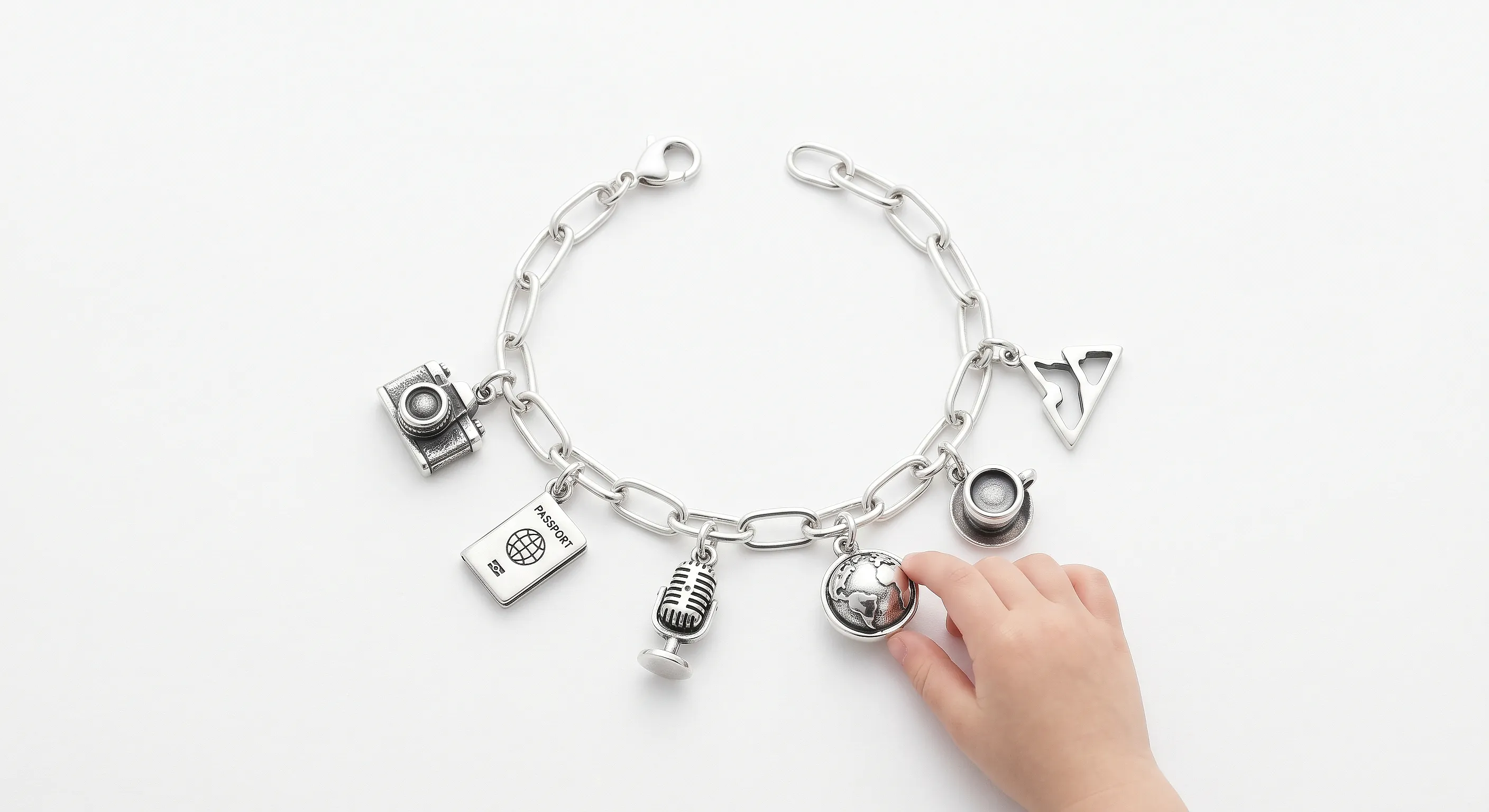
Quiet luxury is as much about absence as presence. The following do not belong: chains wider than 3 mm with large links, any engraved logo or brand mark on the visible surface, clusters of stones, mixed metals in the same look, large decorated hoops, charm bracelets, fluorescent or aggressively saturated stones.
Aesthetic Categories of Quiet Luxury Jewellery
Heritage Maisons
The historic Parisian, Genevan, and New York houses of fine jewellery. Their minimalist iconic collections -- slender bangles, signature rings, smooth medallions -- have become the visual language of quiet luxury. Buyers pay not for a large stone but for a name cultivated over generations and a silhouette that needs no introduction.
American Old Money Tradition
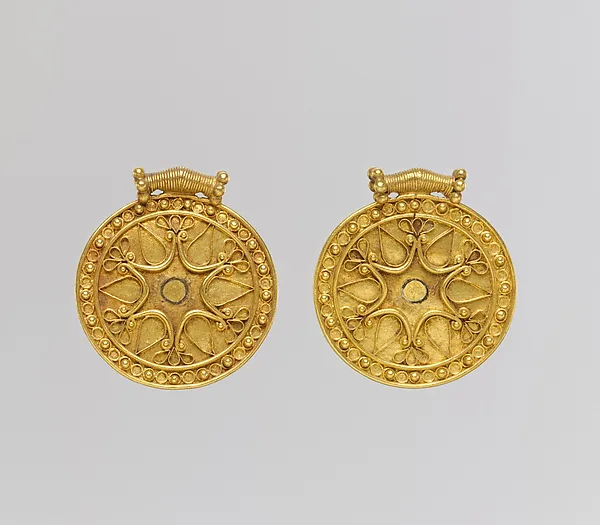
The Eastern Seaboard establishment has its own quiet luxury tradition that predates the French version by nothing -- both are old -- but differs in character. New England summer jewellery is a specific genre: simple gold hoops, a pearl bracelet, a signet ring from college. The WASP aesthetic at its most refined is not concerned with Paris. It is concerned with the Connecticut shore and what one's grandfather wore to the club. This is not cynical; it is genuinely aesthetic, and genuinely useful as a reference point for understanding why quiet luxury resonates so strongly in American professional culture.
Independent Designers
Small jewellery ateliers working by hand. Often specialising in ethical gold, raw stones, or restored Victorian forms. Prices sit in the premium-luxury range; editions are limited; the names are known only to insiders. The appeal is precisely this obscurity: a piece no one else has, from a maker whose name signals connoisseurship rather than brand awareness.
The Japanese School
Japan's approach to pearl remains the world benchmark (Akoya pearl). Running alongside it is a Japanese tradition of ultra-minimalist geometric forms with no ornament: polished gold bars, smooth oval rings, chains so fine they are barely visible. This school is particularly relevant to quiet luxury in 2026 because it offers an alternative to the European heritage house aesthetic that is equally rigorous and equally uninterested in display.
Customer reviews
Zevira is a real jewellery shop. Genuine payments, deliveries and customer thank-yous.
🥰🥰🥰 gracias

Ok, ¡gracias! 🙂

How to Build a Quiet Luxury Collection
Level 1: Foundation (3-5 Pieces)
Start with the essentials that work everywhere:
- Fine gold chain 40-45 cm (14K or 18K)
- Pearl studs (6-8 mm)
- A simple wedding band or slender gold ring
- One small diamond pendant
- A classic slim dress watch
Total: premium segment (if 18K gold) to luxury (if platinum and a Swiss dress watch).
The foundation collection should be buildable over time. There is no requirement to acquire all five pieces at once. One excellent piece worn consistently is better than five average pieces rotated chaotically. Start with whichever piece you will reach for most and build from there.
Level 2: Expansion (5-10 Pieces)
Add specific forms for different occasions:
- A single-strand pearl necklace for evening
- An eternity ring for an anniversary
- Small diamond studs for formal occasions
- A tennis bracelet (restrained, not bold)
- A second fine chain in a slightly different length for rare layering
Total: luxury segment.
Level 3: Collection (15+ Pieces)
Collector-level acquisitions:
- A serious ring with a central stone (emerald, sapphire)
- Vintage Swiss watches from the secondary market
- Unique pieces from independent goldsmiths
- Antique jewellery with verified provenance
Total: collector level.
The Level 3 collection is where quiet luxury meets pieces with real history. Vintage watches from reputable makers, exceptional coloured stones with GIA certificates, and pieces from well-regarded independent jewellers tend to retain genuine collector interest over time, though no piece of jewellery should be bought as a financial product or with any expectation of return. They are also the most personal items in the collection, chosen for specific reasons rather than general utility.
How to Identify Quality: What to Look For
Quiet luxury is verified in the details. These are the checkpoints.
A clean reverse side. Look at the back of any piece before buying it. A well-made item has no adhesive traces, no rough casting seams, no untidy solder lines. The back should be as carefully finished as the front.
Cast settings, no adhesive. Stones should sit in metal settings formed during the casting process. Adhesive is a mass-market production technique and has no place in a quality piece.
Legible hallmarks. All marks should be clear and complete. Gold: 585 (14K) or 750 (18K). Platinum: 950 Pt. Silver: 925. If a hallmark is absent or unclear, this tells you something important about the piece.
Weight proportionate to size. A quality piece feels heavier than it looks. A chain that is nearly weightless is likely gold-plated over hollow metal. Solid precious metal has presence on the body.
Professional polish with no scratches. Under good light, the surface should be even, free of marks, with consistent structure in the finish.
Upload a photo of your pet, someone you love, or an object. We'll build a 3D model and hand-cast it in pewter.




How to Care for Quiet Luxury Pieces
A collection assembled with care deserves corresponding maintenance.
Daily. Soft lint-free cloth (chamois or microfibre). Wipe after removing. No ultrasonic cleaning for pearl.
Storage. Each piece in its own soft pouch or compartment. Pearl should not be stored in airtight containers: it needs a small amount of ambient humidity. Gold and platinum can share storage space; pearl should be kept separately.
What to avoid. No chlorine-based cleaners, no bleach, no vinegar. No ultrasonic baths for pearl, emerald, or treated stones. Remove before swimming, the sauna, or exercise.
Professional cleaning once a year. A jeweller checks prongs and closures, polishes, and re-strings pearl if necessary. For a quiet luxury collection, this is routine maintenance on pieces meant to last.
Long-Term Care and Patina
Quiet luxury has a particular relationship with time. Well-worn pieces take on a patina, the fine matte bloom of use that separates a genuinely lived-in object from something bought last week. On 18ct yellow gold that patina reads as history rather than as damage, and a good deal of the appeal of an inherited chain lies exactly there. Sensible care preserves the material without scrubbing the history off it.
A strand of pearls needs restringing from time to time. The thread inside, usually silk or cotton, stretches with wear, and once gaps appear between the pearls the thread has had its life. Any competent workshop does this quickly and at modest cost. Ignoring it is how people lose pearls one at a time on the pavement.
Gold at 18ct washes in barely warm soapy water with a soft brush. Rinse at once, dry at once. Simple and effective. Silver that has darkened responds to a proper polishing cloth or a non-abrasive paste, and in hard-water areas it dulls faster, so it wants attention more often. Platinum, because of the way the metal moves rather than wears away, is a job for professional polishing; home methods do not suit it.
The Psychology of Quiet Luxury in 2026
Quiet luxury did not emerge from nowhere. Three social forces explain its current hold.
Social media fatigue. When every post contains oversized logos and obviously expensive objects, the image loses force. The absence of a logo has become a stronger signal than its presence. Those who can afford not to shout, do not shout.
Generational shift. Millennials who have reached the wealth-accumulation phase of their careers are buying differently from how they imagined they would at twenty-two. They have watched brands collapse, seen logos age badly, and developed a preference for material quality that is independent of the marketing cycle. The piece they want is the one that will look exactly as good in fifteen years.
Post-crisis recalibration. After the cryptocurrency collapses and the inflation of 2022-2023, the public display of rapidly acquired wealth became associated with instability. Quiet luxury signals the opposite: calm confidence, ownership that predates the current moment, taste that was not assembled in a single shopping session.
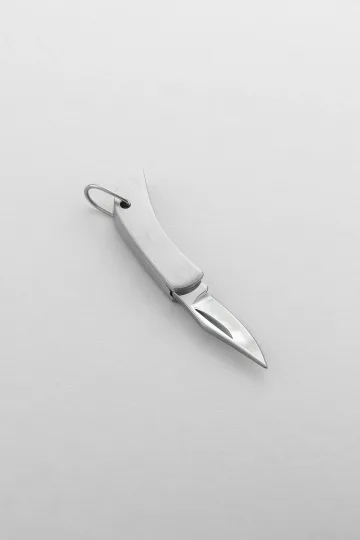
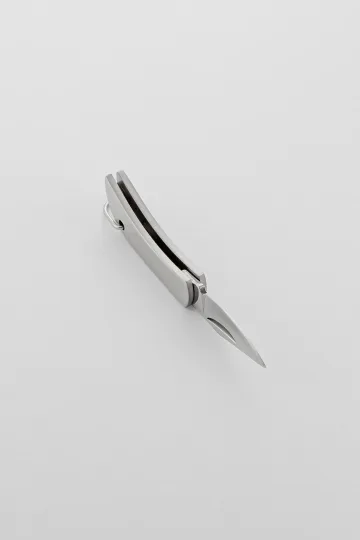
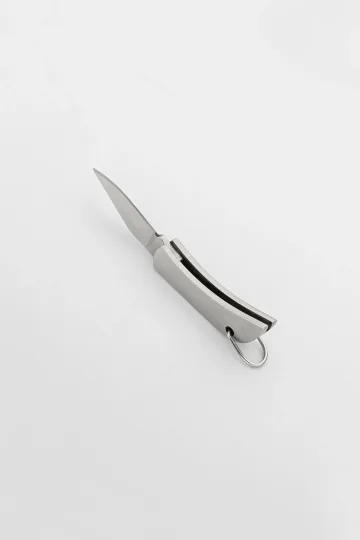
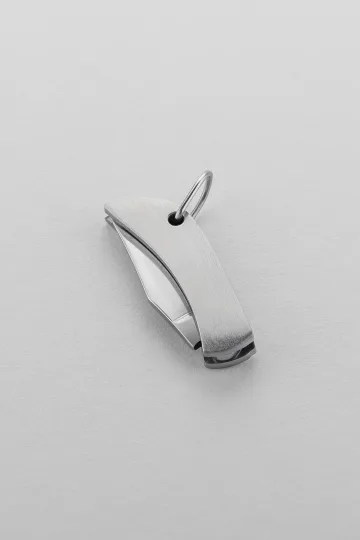
CAPAORA mini knife pendant
The 18th-century Spanish navaja in miniature: 40 mm of stainless steel, a real folding mechanism and a Palanquilla lock that clicks. An affordable gift to remember.
Authentic · Ships from Spain · 14-day returns
The Philosophy of Quiet Luxury
Not Logos, but Materials
Quiet luxury is not about recognisable brands -- it is about the quality of materials. Gold should be 18K. Diamonds should be colour D. Pearl should be natural or near-natural.
Those who understand see this immediately. Those who do not, do not notice. That is the entire principle: you are not attempting to impress everyone.
Not Trends, but Timelessness
Quiet luxury jewellery does not date. The iconic bangle of the premium segment has been in production since 1969 and looks equally relevant throughout a lifetime. Organic minimalist cuffs from the late 1970s remain current in 2026.
In contrast to mass-market jewellery -- trending enamel pendants, new chunky silver -- quiet luxury is built for 50 or more years of wear.
Not Quantity, but Selection
One perfect piece surpasses ten good ones. One 0.5-carat ruby surpasses ten glass imitations. One genuine pearl surpasses a hundred artificial ones.
Quiet luxury collections are small, but each piece is chosen to last.
The Jewellery Serves the Person
Quiet luxury jewellery should not speak over the person wearing it. The dress, the face, the posture are the subject. The jewellery underlines, not replaces.
This is the opposite of statement jewellery: where statement pieces announce, quiet luxury pieces whisper.
Ethics and Sustainability
Contemporary quiet luxury increasingly incorporates an ethical dimension: the origin of gold (recycled or fair trade), the origin of diamonds (conflict-free), the origin of pearl (responsible farms).
This is part of the "invisible" luxury: you know your diamond is ethical, even if no one asks.
Quiet Luxury and Other Styles
Quiet Luxury vs Minimalism
Both aesthetics appear similar but differ in substance:
- Minimalism is about form (clean lines, absence of ornament). It may be inexpensive (mass-market furniture) or costly (a quiet premium brand).
- Quiet luxury is about materials plus timelessness. It is, by definition, expensive -- but invisibly so.
A minimalist silver pendant is not quiet luxury. A minimalist 18K gold pendant with a diamond is.
Quiet Luxury vs Old Money
The old money aesthetic is closely related but distinct:
- Old money is an inherited aesthetic (family gold, vintage watches, armorial signet rings). It implies aristocratic or upper-bourgeois lineage.
- Quiet luxury is more democratic. Anyone who understands the principles can acquire it.
Quiet luxury is the contemporary acquisition of an old money aesthetic by those who did not receive it by inheritance.
Quiet Luxury vs Stealth Wealth
Very close terms. Stealth wealth is practically a synonym. The subtle difference:
- Stealth wealth emphasises concealing wealth (avoiding attention)
- Quiet luxury emphasises taste (you could make a display -- but you choose not to)
Quiet Luxury vs French Elegance
French elegance is the classical antecedent of quiet luxury. It is built on French principles ("take one thing off before you leave"). Quiet luxury is the globalization and modernization of French elegance.
Quiet Luxury vs British Understatement
British understatement is in many ways the original incarnation of the quiet luxury principle. Mayfair or Kensington tailoring -- the discretion of quality without spectacle. A fine wool suit, polished but not showy shoes, one discreet ring. The British upper classes have practised this art for centuries; what is called quiet luxury today is in large part that tradition reasserted for a global audience.
Leave your email, we'll send your discount code. No spam, unsubscribe anytime.
The code arrives by email, valid on your first order.
How to Adapt Quiet Luxury to Different Budgets
With a Tighter Budget
You cannot buy everything in 18K gold with a high-end Swiss watch. But the philosophy remains within reach:
- One quality piece, not many cheap ones
- Akoya pearl studs (mid-segment) instead of costume jewellery
- A thick-layer 14K gold-plated chain instead of fast-fading plate
- Certified small-carat diamonds (0.2-0.3 carat) instead of glass imitations
Mid Budget
- 14K or 18K gold where most visible (chain, ring)
- 925 silver for everyday items
- Realistic pearl (mid-quality Akoya)
- Minimalist silhouettes without logos
High Budget
- 18K gold as the standard
- Platinum for the wedding band
- Natural pearl or premium Akoya
- Certified diamonds D-F, VVS-VS
Collector Level
- Antique jewellery with verified provenance
- Vintage first-tier Swiss watches from the secondary market
- Exceptional stones (Burmese ruby, Kashmir sapphire, Colombian emerald)
- Limited-edition designer collections
The honest truth about budget and quiet luxury is that the philosophy scales, but the aesthetic floor is real. A piece of well-made 925 silver without logos, worn alone, can carry the philosophy. A cheap gold-plated chain from a fast-fashion retailer cannot, regardless of how minimalist its design. The distinction is in the material, not the price tag -- but the material is not free.
Quiet Luxury for Men
A distinct category. Men's quiet luxury jewellery focuses on the same pieces usually recommended as a first piece of jewellery for a man:
- Watch: the central element. A slim dress watch or classic Swiss model without decoration.
- Wedding band: platinum or 18K, unadorned.
- Signet ring: smooth gold, with a monogram or family crest.
- Cufflinks: minimalist, gold or platinum.
- Fine gold chain: worn under a shirt, barely visible but present. At its furthest extreme this is the same logic as a permanent welded bracelet that stays on for years.
To avoid: large visible crosses, chunky chains, cuff bracelets, anything with an overtly showy aesthetic.
Men's quiet luxury in American culture has a specific reference point: the way a certain generation of finance and law professionals dressed in the 1980s and 1990s, when power dressing still meant restraint. A good watch, a plain gold ring, nothing more visible. The banker who wore a flashy sports watch was already pushing it; the serious money was in the slim Swiss dress watch with no date window and a plain leather strap.
Quiet Luxury in Different Settings
At Work
The ideal environment for quiet luxury. Finance, law, consulting, medicine -- the natural audience. Status is communicated through a Swiss watch and understated jewellery, not through display. A pearl stud and a thin gold chain say everything a large statement necklace is trying to say, without the noise.
At a Wedding (as a Guest)
Quiet luxury is universally appropriate. A pearl strand, simple studs, and one ring. The rule is never to outshine the couple. A quiet luxury guest is the easiest guest to dress: the pieces are always right because they are never competing.
At a Wedding (as the Bride)
The jewellery serves the bride, not the reverse. Quiet luxury offers the possibility of underscoring her beauty without competing with it. A fine chain with a small pendant, pearl earrings, one band. The dress is the statement. The jewellery signs off.
At a Dinner or Evening Event
Quiet luxury is perfectly suited to a formal dinner, a private members club, or fine dining. A pearl strand takes on more presence in evening light; the diamond stud catches candle reflection in a way it does not in an office. The pieces themselves do not change -- the setting changes what they say.
Travelling
Quiet luxury is safer: nothing is visibly valuable enough to attract thieves. A practical advantage for insurance, too. The piece that looks like a plain silver chain to a thief but is actually a fine platinum chain is one of quiet luxury's small, practical pleasures.
On Social Media
The paradox: quiet luxury is not designed for photography and does not photograph well. But that is precisely what makes it exceptionally valuable in real life. A flat-lay of a plain gold chain looks like nothing; wearing that chain into a room reads entirely differently.
Quiet Luxury Across the Seasons and Years
Does Quiet Luxury Change by Season?
One of quiet luxury's most practical strengths is its near-total independence from the seasonal rhythm of fashion. The same fine chain, the same pearl studs, the same signet ring work in January and in July. The only concession to season that quiet luxury tends to make is weight: lighter chains in summer, a slightly wider band in winter layers. The core pieces remain constant.
This matters practically because it changes the economics. When you are not buying for a season, you are buying for a decade. The mental accounting shifts from "cost per wear over a season" to "cost per wear over twenty years," at which point a genuinely excellent piece almost always wins the calculation.
How Quiet Luxury Ages on the Body
There is a specific version of quiet luxury that belongs to the young, and a different version that belongs to the middle years, and a third that belongs to later life -- and all three are variations on the same aesthetic, not different aesthetics.
In the early twenties, quiet luxury is aspirational: a fine chain, pearl studs, one good ring. The investment is real but the statement is about who the person is becoming. In the middle years, the collection deepens: a watch acquired for a significant occasion, an eternity ring, a coloured stone that means something. In later life, quiet luxury becomes genuinely quiet: pieces worn without thought because they have always been there, familiar weight, known lustre.
This arc is part of why quiet luxury is worth investing in early. The pieces bought at twenty-five are still the right pieces at fifty-five. They have just become more completely owned.
Quiet Luxury and the Second-Hand Market
The vintage and pre-owned market is one of quiet luxury's most interesting territories. An exceptional Swiss dress watch from the 1970s, in original condition, can communicate everything the concept requires while carrying a history that no new piece can replicate. Victorian gold jewellery, Georgian mourning pieces with hairwork and seed pearl, Art Deco platinum settings: all of these sit naturally within quiet luxury and cost less than equivalent new pieces while often being better made.
The key considerations for buying vintage jewellery in the quiet luxury register: provenance documentation where possible, professional appraisal before purchase, and a conservative approach to repairs (keeping original settings and metal rather than modernizing). A piece that has been worn for fifty years carries a different kind of quiet than a piece made last year. Both are legitimate; the vintage piece is simply more literal about the passage of time.
Quiet Luxury in Different Professional Settings
Working environments are built differently, and quiet luxury looks slightly different in each of them.
In finance it is part of the professional code already. Asset managers, private bankers and law firm partners read the language of jewellery without needing it explained. Pearl studs and a fine gold chain say precisely as much as is wanted in that room: understanding, stability, no need to prove anything. Anything louder does the opposite of what the wearer intended.
In the creative industries the rule holds but relaxes a little. Designers, architects and directors can carry one unusual element, a signet of odd shape, a strand of pearls at an unexpected length. The foundation stays the same: material rather than display.
In academic life quiet luxury works especially well, since a display of wealth has historically not been the norm there. One good piece that is several years old and clearly chosen on purpose says more about settled values than a new and expensive set ever will. The same logic applies in medicine and in the civil service, where visible expense invites a question nobody wants to answer.
Quiet Luxury as a Long-Term Strategy
It is worth thinking of quiet luxury as a long-term approach to jewellery rather than as a set of objects. The difference between a quiet luxury collector and somebody who simply has good taste shows up in both the quality of the pieces and the way they are chosen.
The collector buys slowly and with intent. Research comes before purchase: who made the piece, what the material is, where the stone came from. They know what they own and can say why each piece is in the collection, even when nobody asks.
A person with good taste buys good things. That is fine as far as it goes. But a collection without a strategy falls apart into a drawer of decent chains at different lengths and rings that refuse to sit together. Quiet luxury is unity of intention, not only the quality of individual parts.
The strategy starts with one question: what will I be wearing every day twenty years from now? The answer is far more definite than it sounds. A classic chain. One good ring. Pearl or diamond studs. Those things do not move, and they are where a collection should start.
Building a Quiet Luxury Wardrobe Around the Jewellery
Quiet luxury jewellery is most powerful when the surrounding wardrobe shares its logic. The jewellery and the clothes are doing the same work: communicating quality without noise. A fine cashmere in a neutral colour, well-cut trousers in natural fibre, leather shoes or boots with no visible branding: this is the wardrobe that quiet luxury jewellery is designed to accompany.
The watch faces outward from the cuff of a properly fitted sleeve. The chain rests against the collarbone of a neckline with the right proportion. Pearl studs are most visible when the hair is up and the earring is not competing with an elaborate collar or heavy fabric. Quiet luxury jewellery is not freestanding: it participates in a total composition.
This does not mean you need to rebuild your wardrobe before buying a good piece of jewellery. It means noticing, once you have the piece, how the clothes you wear with it either amplify or undercut what the piece is doing. A fine gold chain against a fast-fashion graphic tee and a quiet luxury chain against a plain merino top are technically the same piece of jewellery in different contexts. One reads; the other disappears.
Send a friend a discount code, they save on their first order.
Quiet Luxury and the Digital Age
Why Quiet Luxury Does Not Photograph Well
Anyone meeting this idea for the first time notices the paradox quickly: quiet luxury does not photograph. A good fine chain in 18ct gold can look on screen exactly like something from a high-street accessories rack. Diamond studs of a third of a carat all but vanish in a picture. Akoya pearl under the right light in a room looks expensive and then dies in an ordinary photograph.
This is not a shortcoming, it is the whole point. Quiet luxury lives in the physical world rather than in the image. It is registered by people close enough to pick the piece up, feel the weight in the hand, see how the light moves on the surface. Weight is the part a camera cannot transmit at all: a solid 18ct chain and a hollow plated one look identical on a screen and feel nothing alike across the palm. To algorithms tuned for large stones and bright logos, this whole category is close to invisible, which is exactly the desired outcome.
If a piece looks superb only in photographs, that is a signal in itself: it was built for the photograph rather than for the wearing. Real quiet luxury runs the other way round, flawless in life and modest in the picture.
Quiet Luxury and Social Media
A niche genre of quiet luxury content has grown up online in recent years: neutral palettes, fine jewellery, expensive knitwear. Some of it is genuine. Some of it is a simulation. The difference shows in the details, since real quiet luxury pieces are boring to an algorithm precisely because they were never meant to interest a wide audience.
When a piece is bought specifically in order to broadcast quiet luxury, that is a separate genre altogether: performative modesty, a marketing version of discretion. It is interesting as a cultural phenomenon and has little to do with the philosophy underneath.
The genuine article needs no audience. The pieces exist for the person wearing them, and their most convincing evidence, the weight of the metal and the way a clasp closes, does not travel through a screen at all.
Common Mistakes When Building a Quiet Luxury Collection
Knowing the rules is no automatic protection against the usual errors. These are the ones that come up most often.
Too much at once. Beginners frequently buy several pieces together, wanting the whole look assembled quickly. The result is that no single piece becomes their own. Quiet luxury runs on patience. One item worn for a few months before the next is added becomes part of a person. Five items bought in one afternoon stay a set.
Trading quality for quantity. Three middling pieces do not add up to one excellent one. Three middling pieces are three compromises stacked together, while one excellent piece is a statement of intent. Choose fewer and better.
Confusing minimalism with quiet luxury. A minimal shape in an unworthy material is not quiet luxury. A fine chain in steel or plated alloy is minimal, and that is all it is. The material is the point of the whole exercise.
Buying for the impression it might make. These pieces are not aimed at an audience. If you are buying while thinking "this will impress people," the principle has already gone. The better question is whether you like the object in itself and whether you will still be wearing it in twenty years.
Neglecting care. Quiet luxury is an investment that requires servicing. Pieces thrown into one drawer without pouches scratch each other. Pearls that are never restrung eventually shed. Gold that is never washed loses its light.
Mixing metals without thinking. Yellow and white gold, or silver and gold, in one look breaks the unity that carries the effect. Where circumstances force it, a white gold wedding band beside a yellow gold main piece for example, that is a considered compromise rather than a rule, and it should look deliberate.
Buying from sellers with no hallmark. In Britain any gold, silver or platinum piece above the exemption weights must carry a hallmark from an assay office, with the sponsor's mark, the fineness figure and the office's own symbol, the leopard's head for London, the anchor for Birmingham, the rose for Sheffield, the castle for Edinburgh. However convincing a piece looks, an absent or illegible mark is the point at which to stop.
Quiet Luxury and Sustainable Consumption
One reason this idea gained new weight over the past few years is its natural fit with sustainable consumption. Buying one superb object that will serve for fifty years is the opposite of fast fashion by definition.
The environmental footprint of a single high-grade piece worn for decades is not comparable to the footprint of twenty middling pieces bought across the same span. This is about the quantity manufactured, the supply chains behind it, and metals mined and melted down again and again, rather than only about money.
Ethical gold, recycled or fairtrade certified, and diamonds free of conflict financing have become an ordinary expectation among these buyers. Not because declaring ethics is fashionable, but because it follows naturally from the philosophy: if you take the trouble to know what you are buying, you want to know where it came from.
The long horizon pushes in the same direction. Something intended to last forty years gets chosen differently from something intended for a season. Quality of finish, the soundness of the construction, a legible hallmark, whether the piece can be repaired at all, these matter not because the buyer is a connoisseur but because the investment is long.
Pearl occupies a particular place here. Well-managed pearl farms, especially in Japan and Australia, work on a cycle that depends on the health of the surrounding water, so the producer has a direct interest in keeping it clean. Good akoya is beautiful, and it is also the product of years of patience and careful husbandry. That is quiet luxury in the most literal sense of the phrase.
Common Misconceptions About Quiet Luxury
"It Is Just Minimalism with an Inflated Price Tag"
No. Minimalism is form with nothing surplus. Quiet luxury is material with nothing surplus. A minimal design can be executed in a cheap alloy: the shape will be right and the substance will not. This category asks for the material itself, 18ct gold, real pearl, a well-graded diamond. Without that you have minimalism and nothing more.
"You Have to Buy from the Well-Known Jewellery Houses"
No. A house name is not a condition of anything here. The conditions are material and workmanship. A well-made gold ring with no logo, from a workshop nobody has heard of, with faultless polishing and a legible hallmark, is quiet luxury. A famous ring with a visible logo on the outside is the opposite of it.
"Quiet Luxury Is for People Embarrassed About Money"
No. This is not shame and not camouflage. It is a position in which the quality speaks without help. You can wear a large diamond if you want one. You choose not to because you have no use for it, not because you fear what somebody might think. The distinction matters.
"Quiet Luxury Is Out of Reach on an Average Budget"
Entirely within reach, once the task is narrowed. Assembling a capsule of five or six pieces across several years is a realistic strategy. One pair of akoya studs of 5 to 6 mm plus one fine gold chain already make a core. A ring follows, then a more serious chain. Somebody who starts at twenty-three has a complete collection by thirty. The secret lies in a sequence of good decisions rather than in one large purchase.
"It Makes No Sense Without an Original House Behind It"
Untrue. By definition this approach is not tied to a name. An unsigned piece of high quality sits closer to the principles than a signed piece with a logo on show. A jeweller with no recognisable name, working in 18ct gold and natural stones to classic patterns, is producing exactly what quiet luxury asks for. What the buyer is checking is the weight in the hand, the fineness mark, the fit on the body, and how the piece behaves after a year of daily wear.
FAQ
Is Quiet Luxury Only for the Wealthy?
In the first instance, yes. But the philosophy -- quality over quantity, timelessness over trend, materials over logos -- can be applied at any budget. Even within a modest price range, you can always choose the best in its category.
Can You Mix Quiet Luxury with Streetwear?
Theoretically yes, but it is demanding. Quiet luxury assumes a general aesthetic (tailored clothes, classic fabrics). Streetwear calls for different jewellery (chunky chains, bright accents). The mix works for those who are confident in both registers simultaneously.
How Do You Recognise Genuine Quiet Luxury?
A certificate (GIA for diamonds, hallmarking for metal), weight (18K is heavier than 14K), and visual comparison with genuine pieces in boutiques. For pearl: visual inspection of the surface and the lustre. A genuine Akoya pearl held against the teeth feels faintly gritty; a glass imitation feels smooth.
Is Quiet Luxury a Marketing Trend?
Partly -- brands do use the term. But behind it lies a genuine philosophy that traces back to the French tradition of elegance and to the minimalist modernism of the mid-20th century. The trend may fade; the aesthetic will not.
Which Quiet Luxury Pieces Are More Affordable?
Mid-quality Akoya pearl studs -- mid-segment. A fine 14K gold chain -- mid-segment. A simple silver ring without diamonds -- entry level. The key is to avoid logos and trend-driven pieces.
How Do You Combine Quiet Luxury with a Bohemian Style?
Possible, but it requires thought. Bohemian style favours natural materials (leather, wood, raw stones). Quiet luxury works with gold and pearl. A workable compromise: an 18K gold chain with baroque pearl, a plain leather bag and a linen dress.
Does Quiet Luxury Suit Young People?
Unusually, yes. A fine gold chain from the premium segment and small pearl studs are a classic for the early twenties. The investment is significant, but it defines taste for life. The benefit of buying one excellent piece at twenty-two rather than ten acceptable pieces is that the excellent piece is still excellent at forty-two.
How Do You Identify Real Pearl?
The tooth test (it feels slightly gritty against teeth), a visual check of the lustre, and the slight irregularities on the surface (no two pearls are identical). Certificates for pearl are less common than for diamonds, but they exist.
How Many Pieces in a Quiet Luxury Collection?
A minimum of 3-5 for a foundational collection. 15-20 for a complete one. Quality, not quantity. One genuine premium-segment bangle is worth more than ten imitations.
Where to Invest First in Quiet Luxury?
Priorities: a classic Swiss dress watch, a wedding or engagement ring (solid gold plus diamond), a pearl strand, one serious ring with a central stone. Everything else follows.
Can You Mix Metals?
The classical answer is no. Quiet luxury favours one metal tone throughout a look. Mixing yellow and white gold, or gold and silver, breaks the visual logic of restraint. If circumstances require it (a yellow gold engagement ring combined with a white gold wedding band), the compromise is acceptable -- but it is a compromise, not the ideal.
Buying it as a gift? Each one arrives ready to give.
 A branded Zevira box and a little card come with every order.
















Conclusion
Quiet luxury is rather more than an aesthetic trend. It is a philosophical position: the value of an object is determined not by its external effect but by its genuine quality and timelessness. A piece of jewellery should serve for decades, not a season. Materials should be real, even when this costs considerably more. Design should complement the person, not announce the brand.
The history of the concept -- from Italian sprezzatura of the sixteenth century through the American East Coast establishment tradition and the crisis recalibrations of 2008 and 2022 -- shows that this is not an invention of social media. It is a return to principles that real elegance has always known.
In a world saturated with mass-market clothing and visual noise, quiet luxury is a form of resistance. You are not attempting to impress everyone. You choose for yourself, for those who understand, for the long run.
Silver, gold, wedding rings, symbolic pieces, paired sets.
About Zevira
Zevira works from Albacete, within the Spanish tradition of artisan craft. We do not operate in the luxury-house segment of Paris or Geneva, but the philosophy of quality, timelessness, and handwork is one we share. Our silver and gold pieces are made to last decades, not a season.
What you can find in line with the quiet luxury philosophy:
- Plain smooth rings without stones, but with an impeccable finish
- Pearl stud earrings in classic round form
- Fine gold chains without pendants
- 925 silver with natural patina
- Sets of 3-5 pieces in a unified aesthetic
- No logos, no visible brand markers
Each piece is made by hand by a craftsperson, with the option of personal engraving. We work with 925 silver and 14-18K gold.