The Sailor's Knot in Jewellery: Meaning, History and Types
A Bond That Doesn't Come Undone
There's an old saying in the Royal Navy: a sailor who can't tie his knots isn't a sailor. On a tall ship working the North Atlantic, you'd need to know thirty knots by feel alone, in the dark, in a gale, with wet hands. Each knot had a job. Some held the mainsail. Some kept a man from going over the side.
But knots turned out to be more than rigging. A loop folded back on itself became one of the oldest symbols of human connection, loyalty and permanence that we know. When that motif crossed from the rope-walks of Plymouth and Portsmouth into jewellery, it carried all of that weight with it.
A pendant with a sailor's knot says roughly the same thing in every port: something holds us together. The knot won't slip on its own.
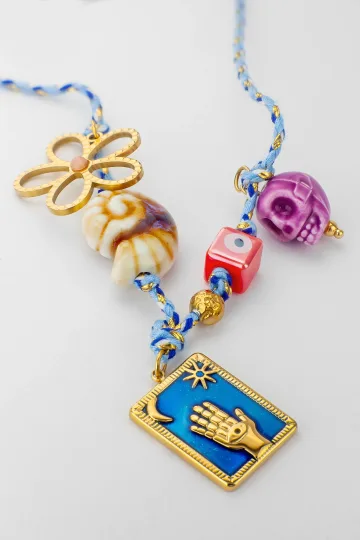
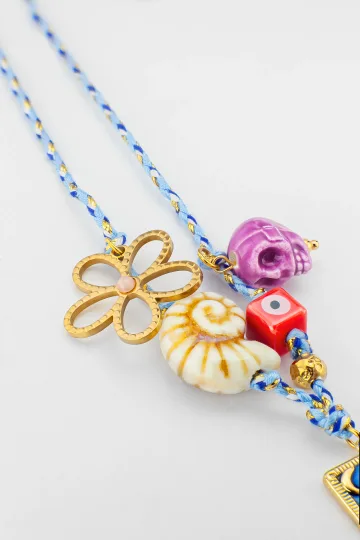
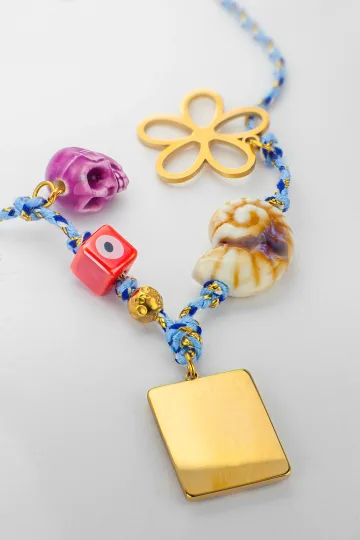
Wear the symbol, don't just read about it. These are in stock:
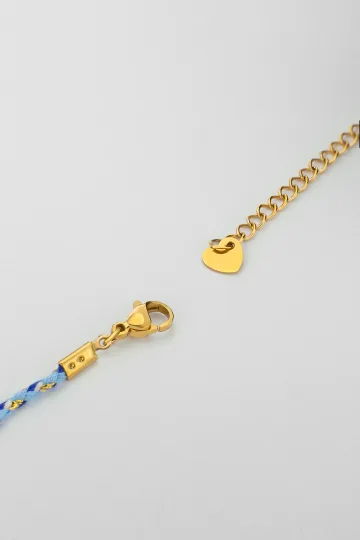

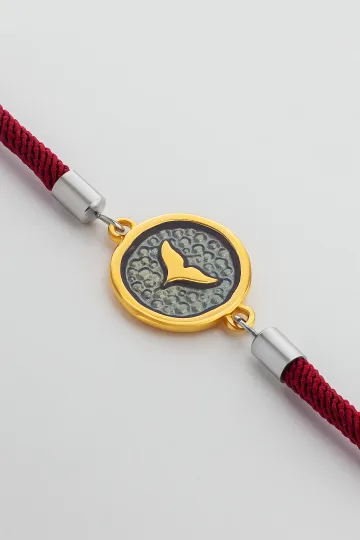
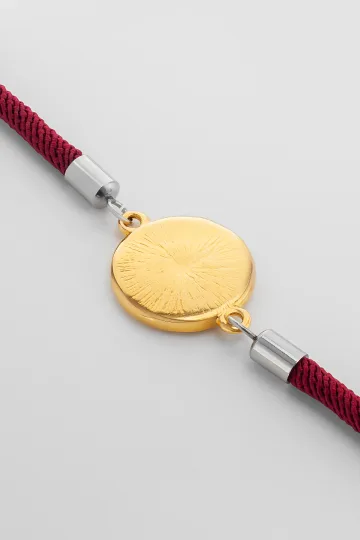
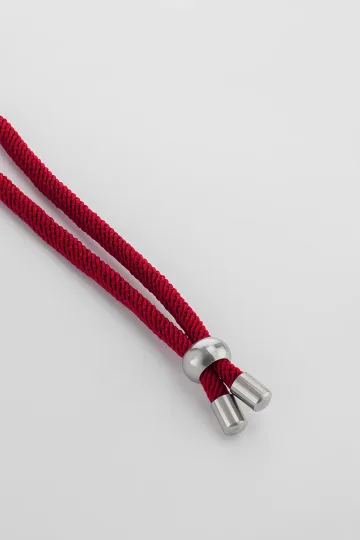
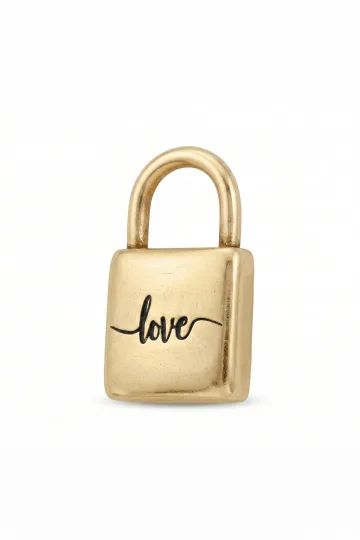
Sailor's Knot Jewellery: What to Look For
Knot Bracelets
The most popular form, and for good reason. A knot bracelet sits on the wrist where it's visible but not showy. Styles range considerably.
- Rope bracelet with a metal knot clasp combines a genuine cord or waxed cotton with a cast metal knot at the centre or closure. The classic coastal look. Often in the lower price segment, easy to give as a gift.
- Fully metal bracelet silver or gold with the knot worked into the structure of the band itself. More formal, better suited to office wear. Mid-range.
- Cord bracelet with precious metal terminals the cord runs through the knot; the ends are finished in silver or gold. A relaxed bohemian feel.
- Matching pair bracelets two identical pieces for partners or close friends. One of the most thoughtful gift ideas for couples or for a best friend moving away.
Knot Pendants
Less common than bracelets but worth knowing about.
- Small round or square pendant with a knot at centre understated, wearable every day. Budget-friendly.
- Mid-size pendant with detailed knot work a more pronounced maritime character. Mid-range.
- Large pendant with an elaborate interlaced knot for those who wear nautical style as a statement. Mid to premium.
Knot Rings
The band itself is formed from two intertwined ropes meeting in a knot. Particularly popular in bridal jewellery.
- Slim knot band a minimal everyday ring, comfortable for constant wear.
- Double wedding band the shank imitates twisted ropes, a visual declaration of two lives bound together. Premium segment.
- Love knot ring a specific form with the knot raised at the top as the focal point.
Knot Earrings
- Small stud earrings in knot form work well as a pair alongside a knot bracelet.
- Drop earrings with hanging knot for coastal and maritime-inspired looks.
Knot Cufflinks
A distinctly British institution. Cufflinks with nautical knots appear in military formal dress, in yachting circles, and as boardroom accessories for those who know their sea heritage.
Wear the sailor's knot in oxidised silver. Mirror polish turns a vow into a doorknob. Don't argue.
What to Wear the Sailor's Knot With
The knot is barely tied to any dress code, and that is its strength. Over years on shoots I have run it through dozens of looks; here is what actually works, by occasion.
What do I wear the knot with every day? For everyday I recommend a thin, minimal knot on a silver chain. It lives happily with a linen shirt, a striped Breton knit and jeans. The maritime theme loves a blue-and-white palette and natural fabrics, so silver sits more naturally here than glossy gold.
Does it work at the office? It does, if you keep it restrained. I suggest a smooth knot with no deep relief on a short chain, small knot studs and a thin ring rather than a massive one. Under a closed collar go shorter so the pendant rests at the collarbone. Under a V-neck a medium pendant is better, filling the open space.
How do I build an evening look? In the evening I choose oxidised silver with deep recesses in the ornament, or yellow gold on dark fabric. The knot then reads as an accent with a history rather than a routine shiny detail. Layering works here: pair a rope chain with a thin plain chain of another length, and stack a knot bracelet with a couple of narrow bracelets in the same metal.
Can I mix metals? You can, but deliberately. Silver with silver and gold with gold pull together more cleanly. If you want a yellow-and-white mix, I recommend repeating it at least twice in the look, so it reads as intention rather than accident.
And for a couple or a special day? For a wedding, an anniversary or a gift to a pair, paired bracelets or engraved knot rings make sense. The knot suits almost everyone, but especially the calm, restrained type who cares more about meaning than volume. Main tip: one knot piece makes the look, two argue with each other. I choose a single accent and keep the rest plain.
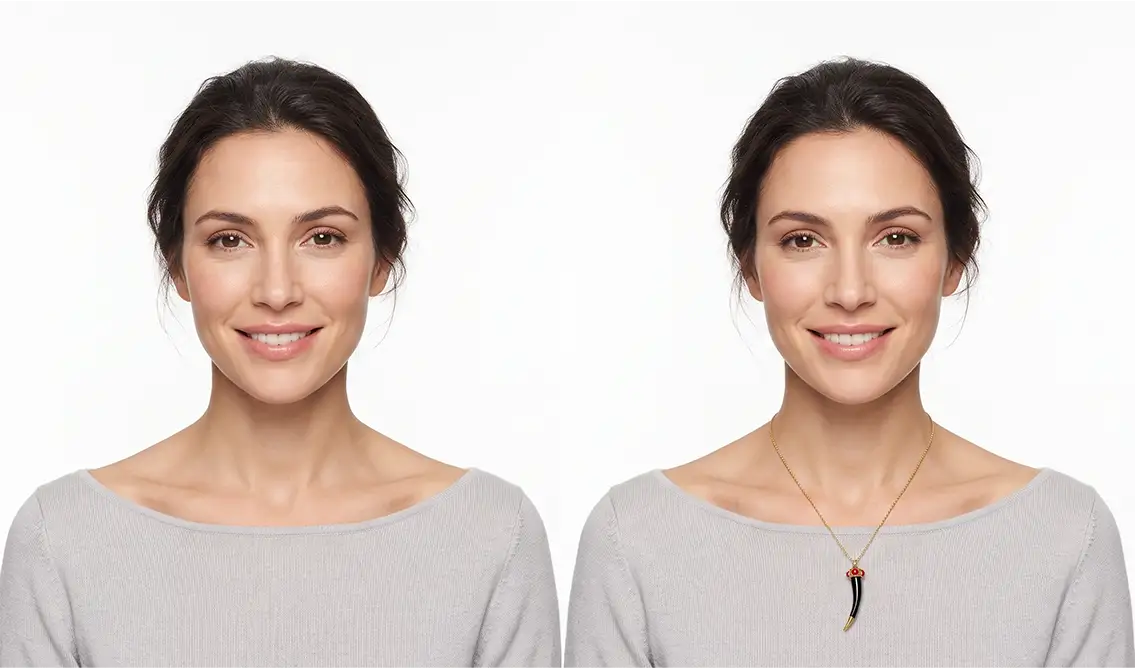
Turn on your camera, pick earrings, a pendant or a ring, and see the piece on yourself in real time.
Switch items in one tap.
Everything runs in your browser: no photo or video is ever uploaded.
Types of Sailor's Knots in Jewellery: History of Each
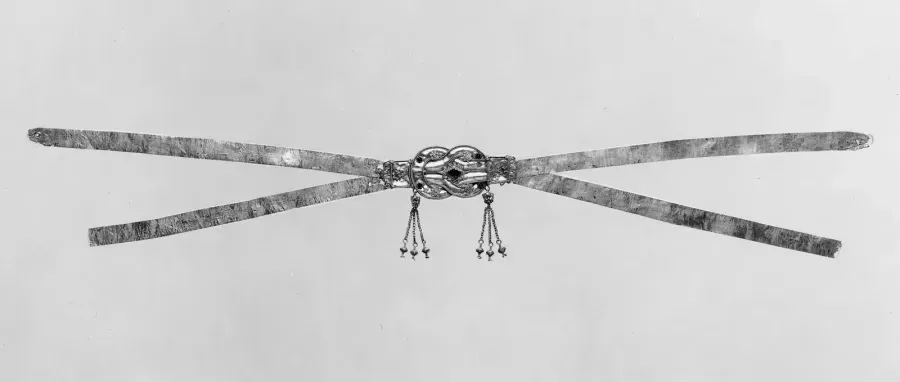
Every knot carries its own lineage. Here are the ones you'll encounter most often in jewellery, along with where they came from and what they mean.
The Reef Knot (True Lover's Knot, Square Knot)
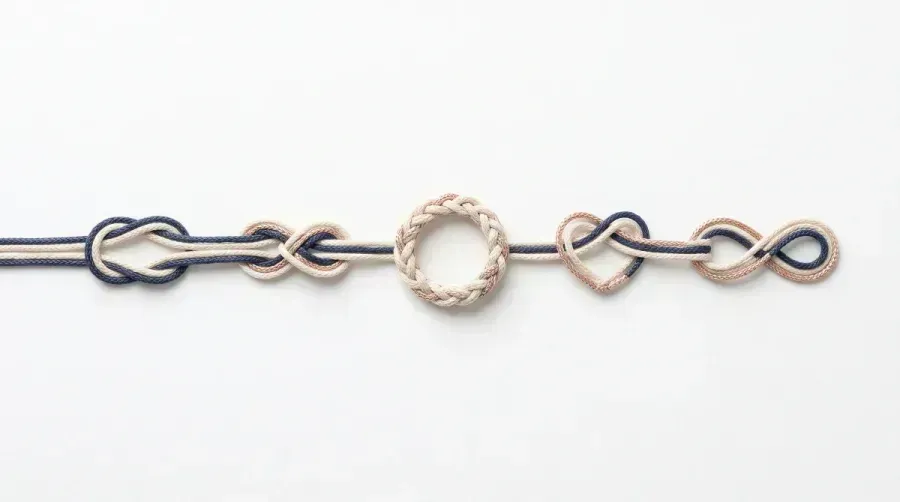
The most recognisable knot in the world. Two ropes crossed symmetrically. Most people can tie it without thinking. In jewellery it's the most common form, and for good reason: it's balanced, readable and unmistakably maritime.
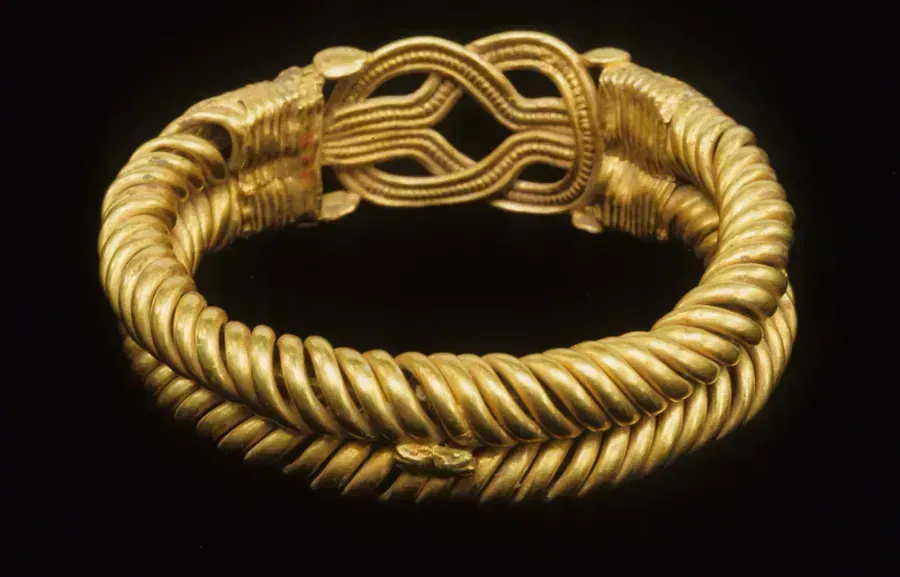
Its history is ancient. Greek sailors called it the Knot of Heracles and believed wounds bound with it would heal faster. Roman brides wore a girdle tied in the same knot on their wedding day; the groom untied it that night. The reef knot has functioned as a marriage symbol longer than most civilisations have existed.
In sailing, it bound two sails together, or secured a reef in the mainsail when the wind came up. Symmetrical, strong on flat surfaces, simple to untie when needed. In jewellery: wedding bracelets, matching sets. The symmetry reads as equality between two people.
There is something structurally important about the reef knot that the symbolism reflects directly. Tie it correctly and load comes down on both ends equally. The knot does not loosen under that even pressure. Two lives sharing a burden rather than pulling against each other. Tie it incorrectly, with both loops going the same direction, and you get the granny knot, which slips under load. The reef knot rewards the person who pays attention to how they make the join.
The Figure-Eight Knot (Infinity Knot, Stopper Knot)
A knot shaped like the numeral 8, also called the infinity knot because the figure-of-eight lying on its side is the mathematical infinity symbol. Sailors used it as a stopper knot to prevent a rope running through a block.
The figure-eight doesn't jam under load the way a simple overhand knot does. It holds, but it can be released. This practical quality translates well into symbolism: commitment that holds but doesn't trap. The endless path of the turned numeral has made it a favourite for couples' jewellery and friendship bracelets across most of the world.
In jewellery: pendants, ring tops, bracelet centrepieces. One of the most versatile knot forms. The figure-eight is also the safest knot in sport climbing, the default tie-in at the harness. That dual life in both maritime and mountain traditions has widened its appeal considerably.
The Bowline (King of Knots)
The "king of knots" in British seamanship. Forms a fixed loop at the end of a line that won't slip, won't jam, and can be released even after taking full strain. It has saved more lives at sea than any other knot. In survival situations, the bowline is the knot you tie one-handed in the dark.
The Royal Navy has drilled the bowline into every sailor for centuries. The mnemonic used in British naval training involves a rabbit coming out of a hole, round a tree, and back down the hole again. That mnemonic is probably four hundred years old.
What the bowline does structurally is form a closed loop that redistributes the load around the curve of the knot rather than concentrating it at a single point. It doesn't saw through itself the way a simple loop can. That structural intelligence is part of what the symbol carries: not brute strength but intelligent design under pressure.
In jewellery, the bowline appears most often in men's rings and heavier bracelets. Its meaning is reliability, rescue, and readiness at the critical moment.
The Carrick Bend
A beautiful decorative knot originally used to join two heavy ropes or hawsers. Highly visual, with the ropes weaving over and under each other in an elaborate pattern. One of the most striking forms in jewellery design, because it looks complex even when cast flat.
The Carrick Bend was used extensively in Cornish and Devonian dockyard work, where the heaviest ropes on the largest ships needed reliable joins. In Cornish silver jewellery, this knot form is one of the most common.
The Carrick Bend has a specific property that distinguishes it from most decorative knots: it lies completely flat under load. This is why it worked on heavy cables rather than ordinary rope. The flattened form makes it exceptionally well suited to jewellery design, where the interlace pattern needs to read clearly from the front.
In jewellery: pendants, ring tops, brooches. Complex enough to serve as a centrepiece, balanced enough not to overwhelm.
The Turk's Head
A cylindrical knot, tight and woven like a turban, traditionally worn by sailors as a rope bracelet on the wrist. That custom is centuries old. In contemporary jewellery it has been recast in silver and gold, keeping the form while upgrading the material.
The Turk's Head was a mark of belonging among maritime communities. A sailor wearing one signalled membership in the brotherhood of the sea. Whitby fishermen wore rope Turk's Heads well into the twentieth century.
The Turk's Head can be tied with any number of strands and any number of passes, which means the complexity of the finished piece is entirely in the maker's hands. A three-lead, five-bight Turk's Head is a simple afternoon's work. A seven-lead, eleven-bight version on a wooden fid takes a craftsman several hours. The intricacy of the knot was a measure of skill and the time a sailor had invested in making something permanent.
In jewellery: one of the most direct translations from rope to metal. A silver Turk's Head bracelet is the same object the sailor wore, made permanent.
The Celtic Knot (Trinity Knot, Triquetra)
A hybrid of Celtic knot interlace and nautical knot traditions. Found throughout Irish, Scottish and Cornish jewellery, and closely associated with the regions where Celtic and maritime cultures have overlapped for centuries.
The triquetra (three-pointed form without beginning or end) read as the Holy Trinity in Christian Celtic tradition and as the triple goddess in earlier pre-Christian use. The knotwork on Irish high crosses and in manuscripts such as the Book of Kells developed from the same visual vocabulary that Viking sailors brought to the British Isles during the Norse settlements.
Cornwall has its own living Celtic tradition, distinct from but related to the Irish one. The knot motifs in Cornish silver jewellery draw on fifteen centuries of continuous craft practice.
The key structural property of Celtic knotwork is that the thread never crosses itself twice in the same place. Every crossing alternates over and under. This mathematical regularity was not always deliberate in the early medieval period, but it produces patterns that can be traced continuously from any starting point without lifting the finger. A line without end is a symbol that predates its religious interpretation.
In jewellery: rings, pendants, earrings. The default choice for anyone of Irish, Scottish, Cornish or Welsh heritage.
The Savoy Knot (Nodo Savoia)
An Italian royal heraldic knot. The House of Savoy, which ruled Piedmont from the eleventh century and became the royal house of unified Italy in the nineteenth, incorporated a stylised knot into its coat of arms. The Savoy knot is a square knot enclosed within a circle, appearing on official documents, coins and military standards from the fifteenth century onwards.
It is one of the few knot forms with a direct royal pedigree. The shape is formal and geometric rather than flowing, which gives it a different character from maritime knots.
In jewellery: the Italian tradition has kept this motif alive. The Savoy knot appears in rings, pendants and brooches, particularly in jewellery with northern Italian heritage.
Solomon's Knot
One of the oldest ornamental knots in the Mediterranean tradition. Two interlaced loops forming four interlocked petals. It appears in Roman floor mosaics, in Moorish geometric decoration, in Renaissance Italian churches.
The most celebrated example is the floor mosaic of the Mausoleum of Galla Placidia in Ravenna (fifth century AD), where Solomon's Knot surrounds a Christian cross. That floor has carried this pattern continuously for over fifteen hundred years.
The association with King Solomon links the knot to wisdom and enduring knowledge. In jewellery it functions as a protective motif and as a symbol of continuity across time.
In jewellery: popular in Italian, Spanish and Greek goldsmithing. Often rendered in oxidised silver to bring out the depth of the interlace pattern.
The Endless Knot (Tibetan Knot, Buddhist Eternal Knot)
One of the eight auspicious symbols of Tibetan Buddhism. A knot without beginning or end, folded back on itself to form a continuous interlace, symbolising the interconnectedness of all things and the endless flow of time.
Unlike maritime knots that emerged from practical use, the endless knot was designed specifically as a symbol. It was drawn on Buddhist ritual objects, woven into textiles and worked in metal.
In jewellery: appears in pendants with meditative or Buddhist-adjacent symbolism, and equally in secular jewellery where the idea of unbroken continuity is the point.
The Anchor Knot
The hitch used to secure an anchor line. In jewellery usually combined with an anchor motif rather than appearing alone.
Meaning: stability, secure mooring, groundedness.
The Friendship Knot
A simple three-strand knot often seen on matching bracelets. Two or three friends wear identical pieces.
Meaning: friendship, fellowship, a shared path.
Customer reviews
Zevira is a real jewellery shop. Genuine payments, deliveries and customer thank-yous.
🥰🥰🥰 gracias
Ok, ¡gracias! 🙂
The Sailor's Knot as a Symbol of Love and Marriage
This is where the history gets particularly interesting for anyone looking at jewellery for a wedding or anniversary.
"Tying the knot." The phrase means getting married. It didn't arise as a metaphor. In medieval Britain, the handfasting ceremony literally bound the couple's wrists together with a cord knotted between them. The knot of the ceremony became the knot of the marriage.
Celtic handfasting. The ancient Celtic practice of binding hands during a wedding ceremony has been revived widely over the past forty years, both in Ireland and among diaspora communities. The couple's hands are tied with a ribbon or cord, the knot is made, and the marriage is sealed. The symbolism is immediate and tactile.
Love knot rings. Rings with the upper surface worked into a knot form. Highly popular across the English-speaking world, particularly in Ireland and Cornwall.
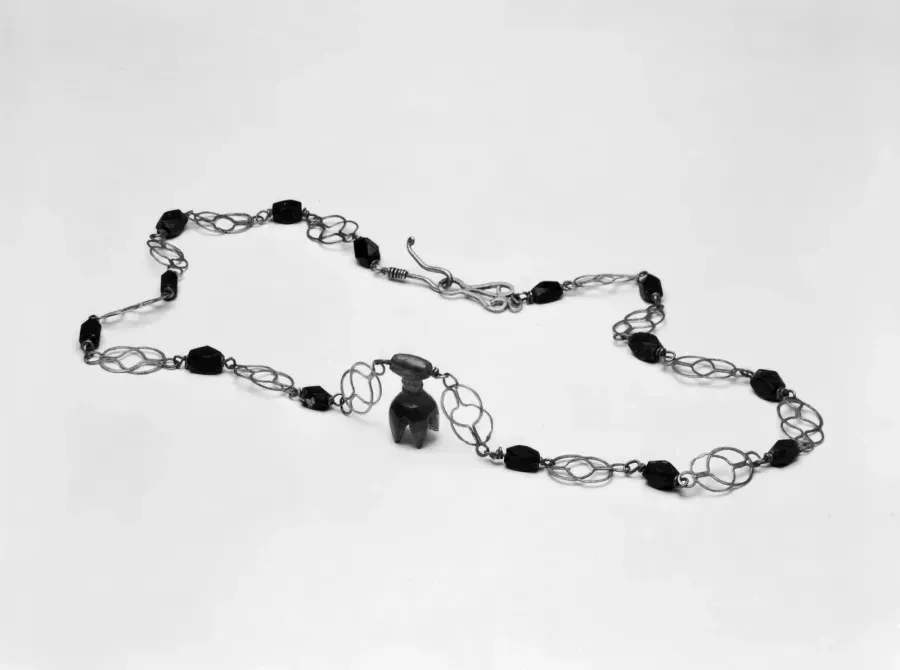
Whitby jet love tokens. Victorian mourning jewellery used locally mined jet from Whitby, North Yorkshire, to create love knots given by sailors to their sweethearts. Some of these pieces survive in museum collections. They are a distinctly British form of the tradition. The Victoria and Albert Museum holds examples.
Wedding bands with a rope shank. In contemporary bridal jewellery, bands where the shank is modelled on twisted rope are consistently among the most requested custom commissions.
Matching knot bracelets. A growing alternative to engagement rings, particularly among couples who prefer a more understated commitment token.
The "true lover's knot" as a specific jewellery form has its own distinct history. It consists of two interlocked loop knots, each tied independently but passing through the other. The two loops cannot be separated without untying at least one of them. The geometry of the thing makes the symbolism unavoidable: two independent structures that cannot come apart without one of them choosing to let go. The Victorians formalised this form in the 1840s and 1850s, but earlier versions appear in British embroidery patterns going back to the Tudor period.
Upload a photo of your pet, someone you love, or an object. We'll build a 3D model and hand-cast it in pewter.
The Maritime Context: Why the Sea Made This Symbol
The sea is not merely a backdrop for knot symbolism. It is the specific environment that gave the knot its meaning as a pledge.
When a ship left Plymouth or Portsmouth on a voyage to the West Indies, or a fishing boat left Whitby for the North Sea fishing grounds, the separation was complete. There was no way to communicate. The sailor could send nothing home and receive nothing in return.
What he could leave was an object. A thing that could be held. A bracelet, a pendant, a knotted length of cord fashioned in spare hours on the mid-watch.
That object said several things at once. First: I exist. I was here. Second: I intend to tie this knot again when I return. Third, and most important: the knot won't slip on its own. It holds until someone consciously releases it.
Safe return was the specific wish embedded in these objects. Not abstract hope but the concrete intention to come back to the person who wore the knot. In Cornish fishing communities, a wife who received a knot from her husband before his voyage wore it until he came home. If he didn't come home, the knot stayed on.
The physical property of a well-tied reef knot reinforces the symbolism directly: it tightens under load. Pressure makes the bond stronger, not weaker.
There is a specific practice among Royal Navy sailors that deserves mention here. The term "making a long splice" referred to joining two rope ends so seamlessly that the join was invisible under load. A long splice could pass through a block without snagging. Sailors used the phrase as an analogy for a good marriage: something joined so thoroughly that you couldn't tell where one person ended and the other began. The splice and the knot were both metaphors in active nautical use, not retrospective literary inventions.



What the Sailor's Knot Symbolises
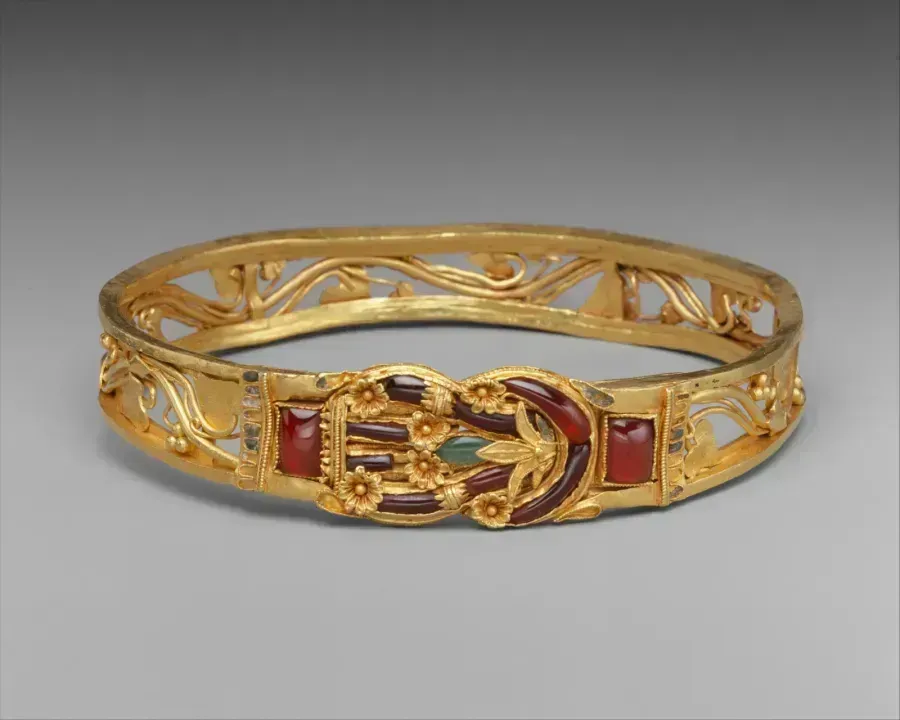
Connection. The most direct reading. A knot joins two ropes into one. Two people become one unit. Two lives become intertwined.
Eternity. A well-tied knot doesn't undo itself. It holds until someone decides to release it. That idea translates naturally into jewellery that marks permanent commitments.
Loyalty. Sailors trusted their lives to their knots. The knot holding the sail is the knot keeping you alive in a storm. The metaphor extends readily to loyal friends, dependable partners and solid alliances.
Friendship and fellowship. Naval brotherhood, fishing communities, seafarers of all kinds have long used knots as markers of membership. Matching bracelets with identical knots are a declaration: we belong to the same crew.
Love. "Tying the knot" is marriage. That linguistic fact reflects something deeper: the knot has become so thoroughly associated with commitment that it functions as wedding jewellery in its own right.
Protection. In Scottish and Irish coastal villages, knotted cords were tied to boats, doorposts and cradles as protective charms. The knot "bound" danger and kept it at bay.
Memory of the journey. Every knot is a specific act: tied by a specific person, at a specific moment, for a specific purpose. A knot on the wrist can mark a journey, a passage, a turning point. See more ocean and sea symbols in jewellery.
Silver and gold jewellery, wedding rings, symbolic pieces, matching sets.
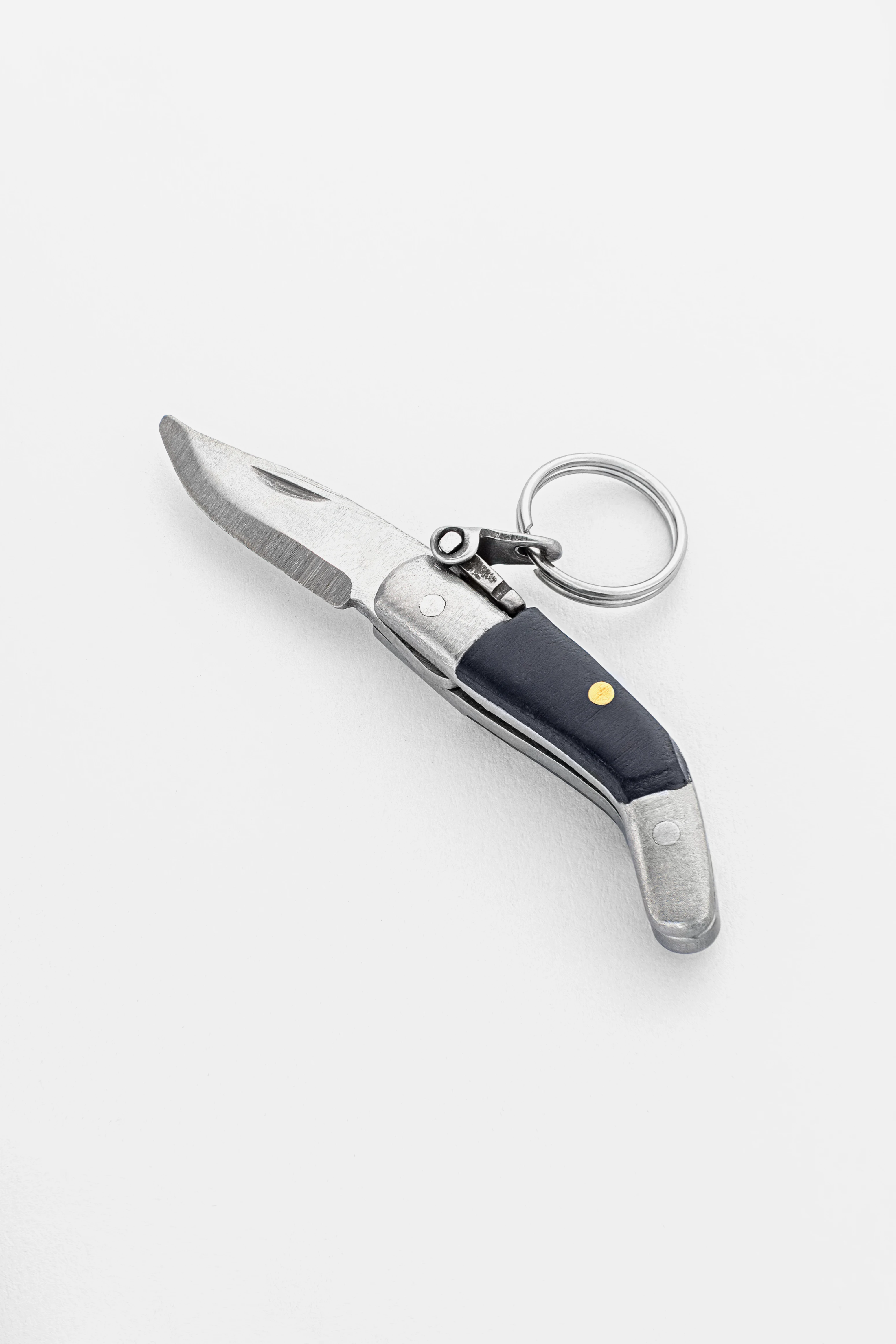
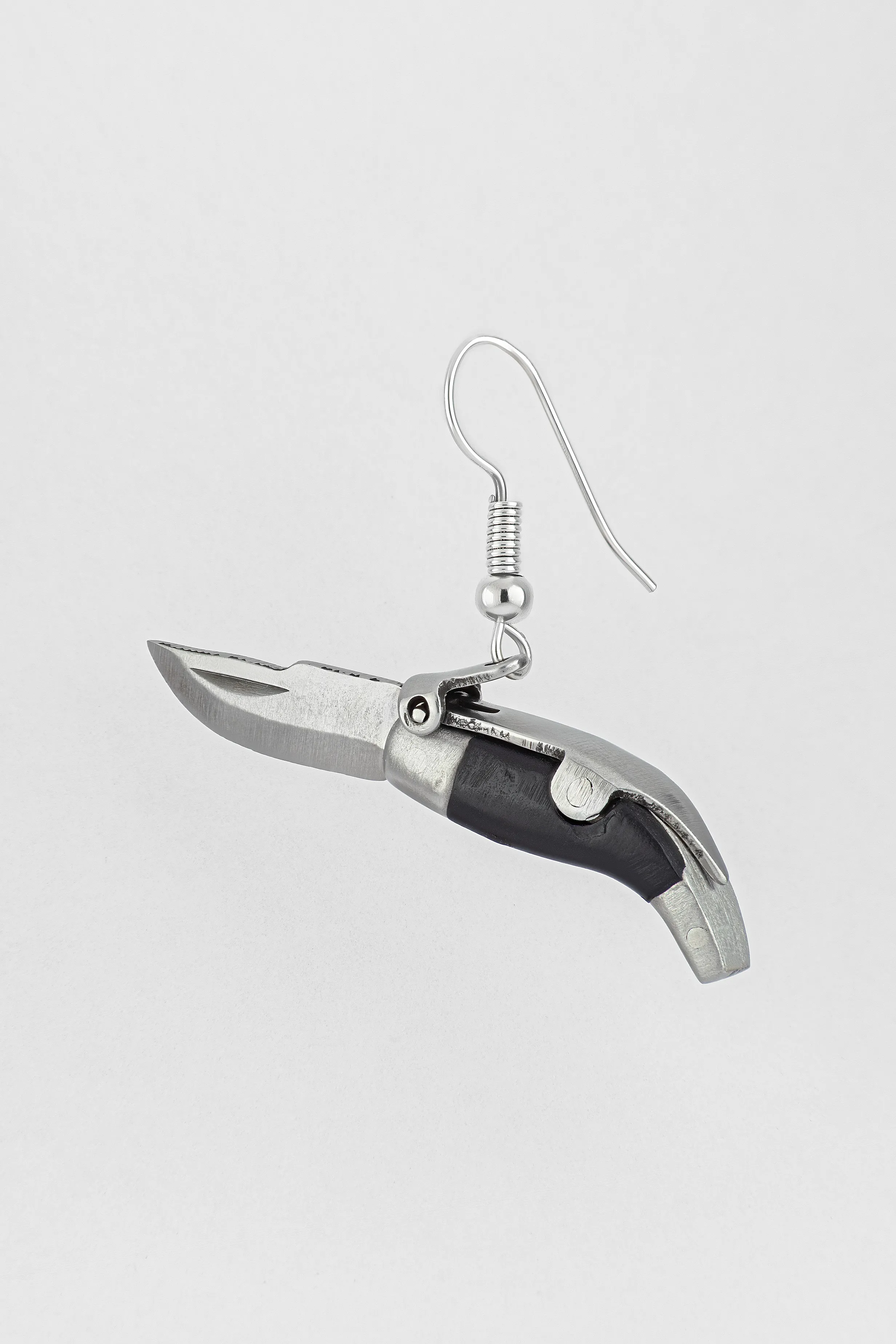
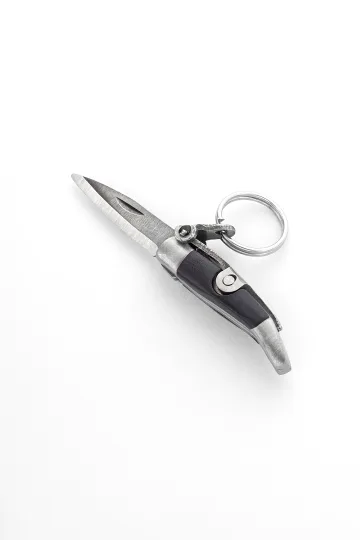
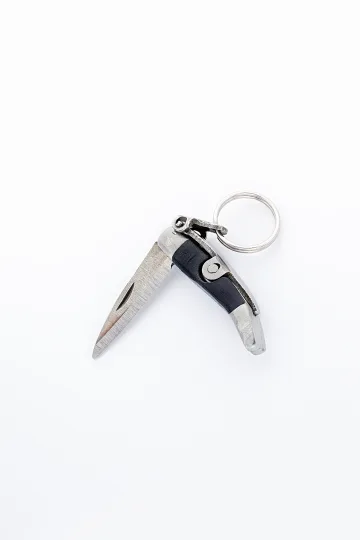
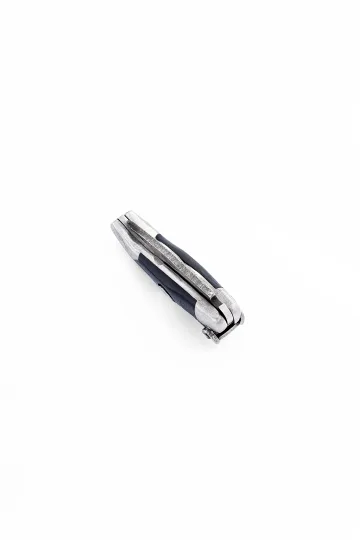
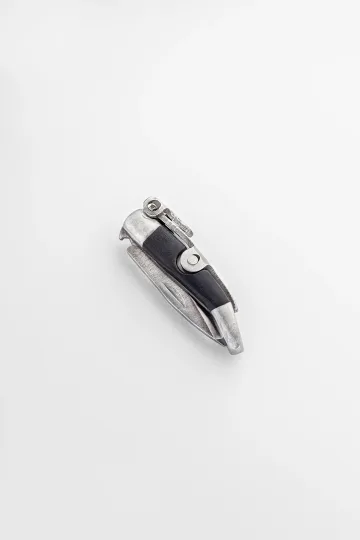
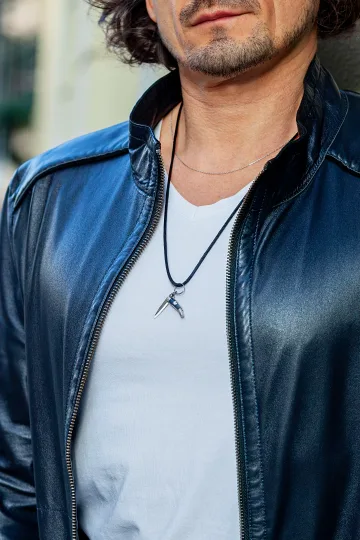
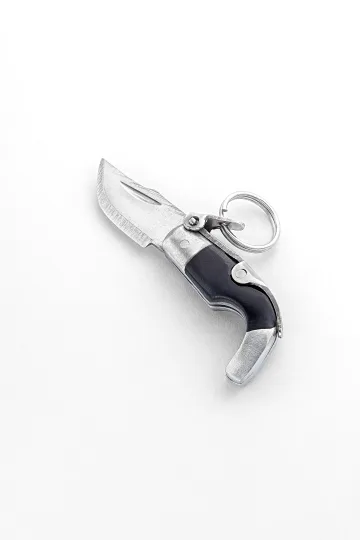
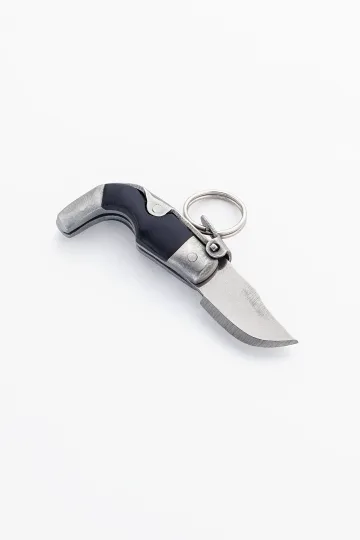
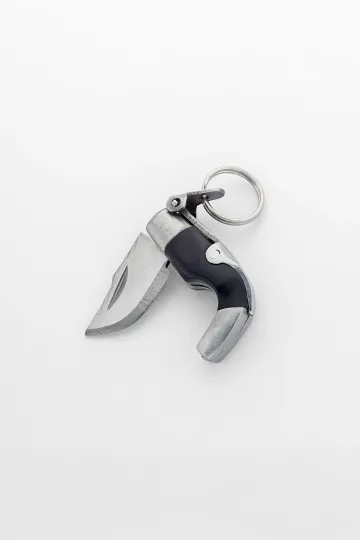
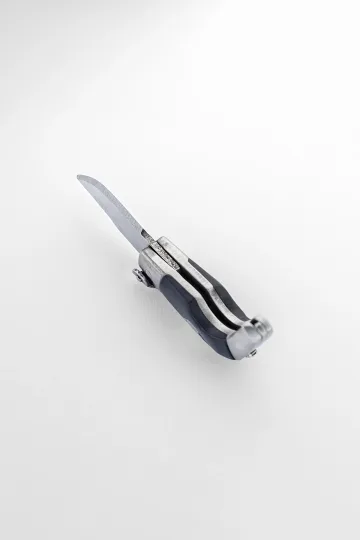
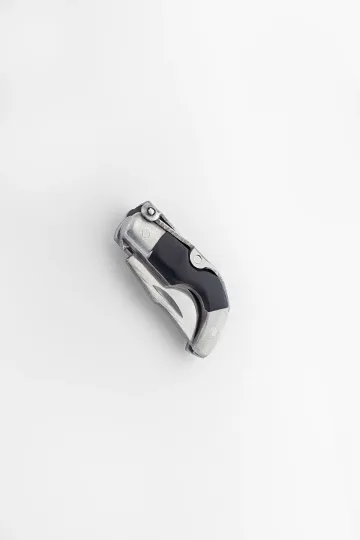
CAPAORA mini knife pendant
The 18th-century Spanish navaja in miniature: 40 mm of stainless steel, a real folding mechanism and a Palanquilla lock that clicks. An affordable gift to remember.
Authentic · Ships from Spain · 14-day returns
Who It Suits
Sailors, fishermen, yachtspeople. Direct professional and recreational symbolism.
Coastal community members. In Cornwall, Devon, Whitby, the Scottish coast and coastal Ireland, maritime motifs are part of local identity rather than a style choice.
Couples and newlyweds. As wedding jewellery or an anniversary gift.
Close friends. Matching knot bracelets as a marker of enduring friendship. One partner wears their version, the other theirs, the pattern is the same.
Siblings. The eternal bond between brothers or sisters expressed through matching pieces with the same knot.
Lovers of coastal and maritime aesthetics. Those drawn to sailing, sea travel, clifftop walks, harbourside towns.
People of Celtic heritage. Irish, Scottish, Cornish, Welsh: knots are woven into these traditions at a deep level.
Those who work with ropes professionally. Climbers, rescue workers, riggers.
People navigating a difficult period. A knot as a symbol of resilience: the tighter the load, the stronger the hold.
Graduates. The close of one chapter and the opening of the next. Knowledge that passes from hand to hand without breaking.
Materials and Styles
The knot is a form that can be rendered in many materials and registers.
Sterling silver 925. The classic choice. Silver holds fine detail well and can be polished bright or oxidised for different effects. Oxidised silver with darkened recesses in the ornament reads as something with age and character, particularly in Celtic-style pieces.
14-18K gold. For more formal pieces. Yellow gold emphasises the warmth of the maritime theme. White gold sits closer to the northern, Scandinavian aesthetic.
Rope chain (twisted chain). A gold or silver chain modelled on twisted rope is itself a knot motif, even without a central knot. The rope chain has been a staple of maritime jewellery for centuries.
Styles of execution:
Minimalist, single line. The knot rendered as a thin engraving or flat silhouette. Modern in feel, wearable every day.
Sculptural, raised relief. The knot elevated from the surface, interlacings three-dimensional. The Celtic tradition at its most recognisable.
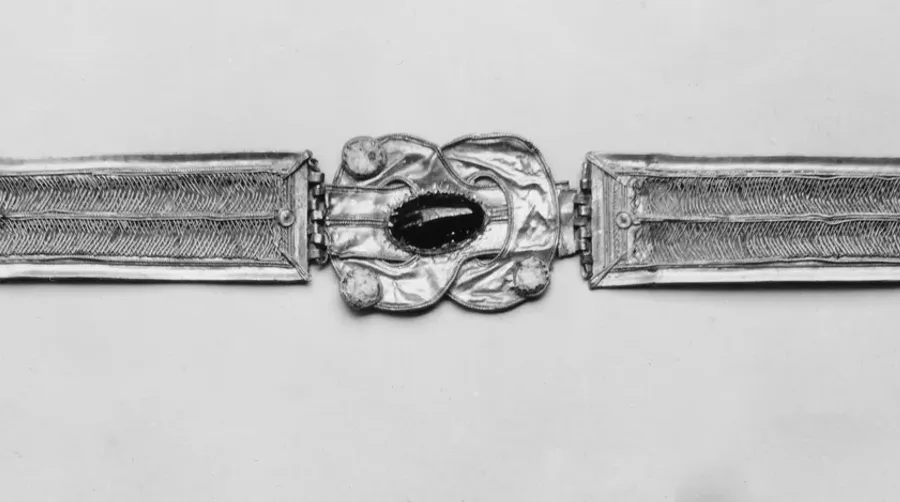
Filigree, openwork. Fine silver wire woven into a knot pattern. Spanish and Italian tradition. Light and intricate.
Black-and-gold contrast. Oxidised silver with gold accents, or black enamel with polished metal. Gothic-maritime.
Engraving. On the inside of a bracelet or ring: coordinates of a harbour, a departure date, a single word, two names. A private history worn invisibly.
The choice of metal finish changes the mood of a knot piece considerably. Bright-polished silver in a reef knot reads as clean, modern and coastal. The same reef knot in oxidised silver with dark recesses reads as ancient, possibly archaeological. Yellow gold takes the knot toward the warm Adriatic tradition of Italian maritime jewellery. Matte-finished gold moves it into the Scandinavian or Japanese minimal register. The knot form itself is stable across all of these readings; what changes is the register.
Leave your email, we'll send your discount code. No spam, unsubscribe anytime.
The code arrives by email, valid on your first order.
A History of Nautical Knots
The craft of knotting is older than written language. People were binding, joining and weaving long before they recorded their thoughts.
The Phoenicians and Early Seafarers
The Phoenicians, who dominated Mediterranean trade between roughly 1500 and 300 BC, carried their seamanship across the ancient world. Several knots still in use today may trace their lineage to Phoenician rope-handlers. The Phoenicians established trading posts from the eastern Mediterranean to the coast of what is now Spain, and the rope-craft of one harbour transferred to another through the ordinary exchange of practical knowledge between working sailors.
Greeks and Romans
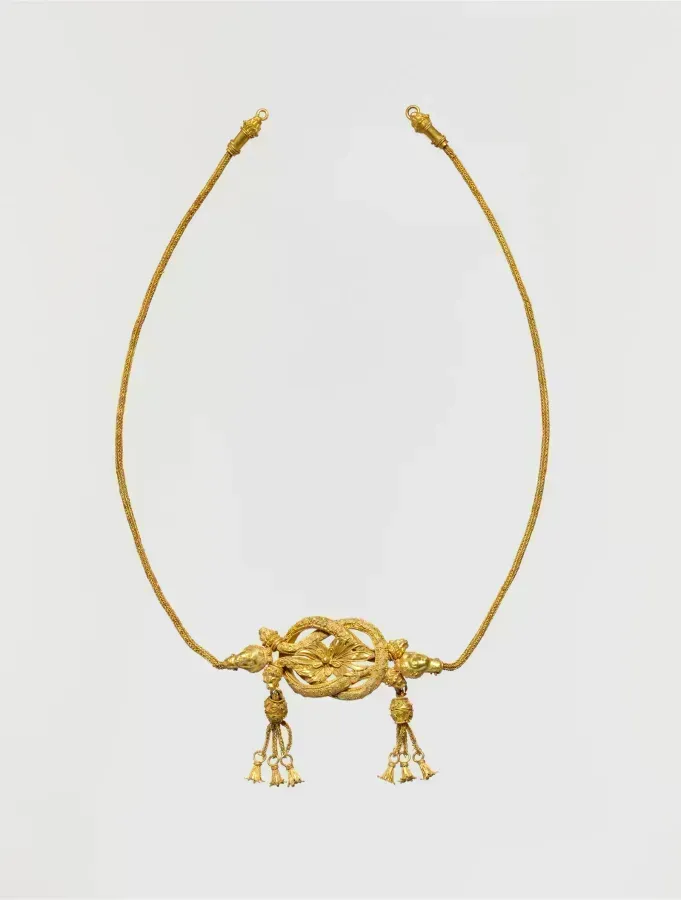
Greek sailors prized the Hercules knot (the reef knot) above all others, for its strength and for its supposed healing power alike. Wounds bound with a Hercules knot were said to close more quickly. Roman brides wore a girdle tied with the same knot on their wedding day. The groom untied it that night. The connection between the knot and marriage is as old as classical civilisation.
Greek and Roman writers mention knots with enough specificity that scholars of the history of technology have been able to identify several still in use. Pliny the Elder, writing in the first century AD, describes the Hercules knot as a standard surgical dressing practice. The same knot in the medical text and in the wedding ceremony is not a coincidence; both uses turned on the knot's specific quality of symmetrical closure.
The Vikings
Scandinavian shipbuilders and sailors were knot virtuosos. The rigging of a longship demanded dozens of different hitches, bends and loops, all maintained in salt water and Arctic conditions. The ships themselves were decorated with carved interlace patterns.
The Celtic knot owes much of its visual language to Viking interlace brought to the British Isles during the Norse settlements. The triquetra, the Celtic love knot, the knotwork found on Irish high crosses: all carry traces of the northern maritime tradition.
Viking knotwork was not purely decorative. The decorative carvings on the prows of Norse ships followed the same interlace grammar as the practical cordage below them. Form and function shared a visual language, which is one reason the transition from rope work to jewellery motif happened so naturally in the Norse world.
The Age of Sail
The sixteenth to eighteenth centuries were the golden age of knot craft in the Royal Navy and in the competing fleets of Spain, the Netherlands and Portugal. Every ship carried rope-workers who knew their knots by name and by feel. Cornwall was a particular centre: Plymouth and Falmouth were major naval harbours, and the local tradition of maritime decorative knotwork is deep and distinct.
Sailor's knots as jewellery emerged in this period. Men at sea for eighteen months or two years would spend idle hours fashioning elaborate knotwork from spare cord, to be given to wives and sweethearts on their return. The practice was known as "scrimshaw" in its broader sense, referring to any decorative work sailors produced from available materials during long voyages.
The quality of sailor-made knot objects varied enormously, from crude loops of tarred rope to elaborate woven bracelets that demonstrate considerable craft skill. The best of them were the work of men who spent years at sea and had mastered the rope through necessity before turning it toward ornament.
The Victorian Era: The True Lover's Knot
Victorian England formalised the tradition. The "true lover's knot" became a recognised jewellery motif, given by sailors departing on long voyages as a pledge of return. Some pieces were made from the sailor's own hair, plaited and sealed in a glass locket. Whitby jet love knots became a recognised category. These pieces appear in the Victoria and Albert Museum and in private collections throughout Britain.
The Victorian period also produced an extensive literature on knot symbolism. Books on knot lore, published in the 1840s through the 1880s, catalogued the symbolic meanings attributed to different knot forms by seafaring communities around the British coast. This literature is not always reliable as history, but it documents the fact that by the mid-Victorian period, knot symbolism had a recognised cultural presence well beyond the dockyard.
The Twentieth Century and After
Steam and diesel reduced the practical role of knotting at sea, but the symbolism held. Knots remained embedded in Royal Navy tradition, in the Scout movement, in yachting clubs from the Solent to the Clyde. The revival of interest in coastal living, maritime heritage and Celtic craftsmanship that began in the 1990s and has continued since has brought sailor's knots back into mainstream jewellery with considerable force.
The Scout movement deserves particular mention here. From its founding in 1907, Scouting incorporated knot-tying as a core practical skill. Generations of children learned the reef knot, the bowline and the clove hitch not as maritime history but as immediate practical knowledge. That exposure created a large population of adults for whom knot forms carry a specific personal association with skill, competence and mutual aid.
Maritime Traditions Across Cultures
Cornwall and Devon
England's westernmost counties have a living maritime craft tradition. Decorative knotwork appears on doorways, harbour furniture and in the work of local silversmiths. The sailor's knot in Cornish jewellery draws on centuries of fishing community practice. Whitby jet pieces from Yorkshire, the black mineral carved into love knots in the Victorian era, are among the most historically specific forms in British maritime jewellery.
Ireland
Celtic knots and sailor's knots exist in continuous overlap in Irish goldsmithing. Galway, Claddagh and Cork have distinct local jewellery traditions where knots are foundational. The Claddagh ring itself is a form of love knot: two hands holding a crowned heart, originating from the fishing village of Claddagh outside Galway.
The Claddagh tradition specifies how the ring should be worn. On the right hand with the heart pointing outward: single. On the right hand with the heart pointing inward: in a relationship. On the left hand: married. That graduated system of wearing positions makes the ring one of the most semiologically precise pieces of jewellery in the world.
Scotland
Viking heritage plus Highland and coastal traditions make knots a natural element in Scottish jewellery. St Andrews, the fishing ports of Fife and the Hebrides all have distinct maritime craft identities.
Scandinavia
Norwegian, Danish and Icelandic jewellery maintains the Viking inheritance. Knots appear frequently alongside runes and longship motifs. In Norway in particular, the tradition of woven silver, a form of metalworking that mimics the structure of rope and braid, connects maritime craft directly to contemporary jewellery.
Brittany, France
Across the Channel, the Celtic-Breton tradition carries similar knot symbolism. The tie between Breton and Cornish maritime culture is historically direct: the same Celtic peoples, the same Atlantic coastline, the same symbol vocabulary. Breton jewellery, particularly the work from Quimper and the harbour towns, treats the knot alongside the triskele as a foundational motif.
Italy: the Maritime Republics
Venice, Genoa, Amalfi. The Italian maritime republics developed their own knot culture, embedded in the silverwork of Ligurian craftsmen and the decorative traditions of the Venetian lagoon. Solomon's Knot in the mosaic floors of Ravenna's fifth-century churches is among the oldest surviving examples of the form in European decorative art.
The Venetian tradition deserves specific mention. The city's cordmakers held a recognised guild status, and the decorative knotwork they produced was considered a distinct craft form separate from practical rope-making. Objects from this tradition appear in the Museo Correr in Venice. The move from practical to ornamental, from rope to jewellery, happened in Venice centuries before it was formalised elsewhere.
Spain: Galicia and the Atlantic Coast
Spain's maritime tradition runs from the Atlantic fishing ports of Galicia and Asturias down through the Mediterranean heritage of the Levant coast. Galicia in particular, where the Celtic tradition meets the Atlantic fishing culture, has its own knot vocabulary. The Costa da Morte, the coast between Finisterre and Malpica, is named for the number of ships lost there. In communities where the sea takes men regularly, the knot as a symbol of holding-on carries a weight it lacks in safer waters.
Paired Knot Jewellery
One of the most enduring formats in knot jewellery is the matching pair: two pieces that share a motif, worn by two people.
The principle is simple. Matching bracelets with identical knots say: we share a history. The knot is not the same object in both cases; it is the same idea in two forms. One person holds their version, the other holds theirs, and the form connecting them is the same. This is a different statement from wearing identical rings, which emphasises sameness. Matching knot bracelets emphasise a shared pattern, which is closer to how relationships actually work: two distinct people, one common thread.
More elaborate versions exist. Some paired pendants are designed so that one piece carries the beginning of a knot and the other carries the end; separately they are incomplete, together they form one. This is technically demanding to design and execute well, but when it works, the metaphor is exact.
Matched ring pairs with the same knot form on both bands are a common choice in bridal jewellery. Some couples choose different metals for the two rings, yellow and white gold, as a way of expressing distinctness within the match. The knot is identical; the material is different. That combination says something specific.
Send a friend a discount code, they save on their first order.
Care for Knot Jewellery
Intricate knotwork requires slightly more attention than a plain band.
Knots with deep relief and fine bridges collect dust and traces of hand cream. A soft toothbrush with warm soapy water every few weeks is enough. Work gently through the recesses, rinse thoroughly, blot dry with a soft cloth.
Avoid ultrasonic cleaning for pieces with oxidised silver detailing. Ultrasound can strip the darkening from the recesses of the pattern, removing the depth and contrast that make the interlace readable. If you need professional cleaning, mention the oxidised finish to the jeweller first.
Silver darkens through contact with air and cosmetics. Store in a closed pouch or box. Polish with a soft silver cloth when needed; avoid abrasive pastes, which will remove the oxidation along with the tarnish.
Gold alloys are less reactive and require less maintenance. A mild soap and warm water clean, followed by a rinse, keeps a gold knot piece in good condition through regular wear. Fine-line engravings may need occasional attention to prevent build-up in the cut.
Frequently Asked Questions
Which knot is physically the strongest?
The bowline is the benchmark for reliability in seamanship: it holds under load without jamming and can be released when needed. The reef knot is excellent for joining two ropes of equal thickness. The figure-eight is the definitive stopper knot. In jewellery, the question is symbolic rather than structural: the strongest knot is the one you wear.
What's the difference between a friendship symbol and a love symbol?
The friendship knot is typically a matched pair of bracelets exchanged between friends, often with a simple three-strand form. The true lover's knot is a specific design with two interlocked loops, historically associated with romantic commitment. The distinction lies in intention as much as form: the same bracelet can be a gift to a best friend or a romantic gesture.
Can you give knot jewellery to someone who isn't connected to the sea?
Absolutely. The symbolism of connection, loyalty and eternity is universal. You don't need to have sailed a boat to find meaning in the image of two ropes holding each other.
What's the difference between a Celtic knot and a sailor's knot?
Celtic knots form a specific visual tradition from Celtic art, often with religious or mythological associations. Sailor's knots come from functional maritime practice. Many knots exist in both traditions: the triquetra, for instance, reads equally well as a Celtic symbol and as a simplified knot form.
Which knot is best for a wedding?
The most popular choices are the reef knot (balanced and symmetrical), the figure-eight (eternity), and the true lover's knot (specifically Victorian in its associations). All three work well for bridal contexts. Choose the one whose shape you find most beautiful.
Are sailor's knots gender-specific?
Not at all. Historically the tradition skewed male because sailors were predominantly male, but the symbolism has never been exclusive. Women's bracelets, rings and pendants with knot motifs are as widely worn as men's. The knot is a human symbol, not a gendered one.
What should I engrave on a knot piece?
Coordinates of a place that matters. A date. A name. The word "always." Something only the two of you understand. The inside surface of a bracelet or ring is a private surface.
Do nautical tattoos and jewellery share the same symbolism?
Yes, broadly. In traditional sailor tattoo iconography, knots appear alongside anchors, swallows and compasses. A tattooed knot signals a connection to the sea or to the person it's tied for. Jewellery with knot motifs carries the same range of meaning.
How do I know if a knot piece is well made?
Look at the junctions. In a cast silver knot, the over-under sequence of the interlace should be clear and consistent. Each crossing should have a visible step between the strand on top and the one beneath. If the junctions are blurred or all at the same height, the cast was not detailed enough to render the knot correctly. Good knotwork reads like a diagram of itself.
What is the difference between a love knot and a friendship knot in practice?
The forms are often similar; the framing is different. A love knot given at a wedding carries a specific meaning by its context. The same piece given between two school friends who are separating to different universities carries a different but equally valid meaning. The knot does not determine the relationship; it records one.
Conclusion
The sailor's knot is one of those symbols that requires no explanation. Everyone grasps it intuitively: intertwined ropes are a metaphor for connection. That metaphor has run continuously for three thousand years of maritime history and shows no sign of tiring.
A piece of jewellery with a sailor's knot says something recognisable whether it's worn in Cornwall or Cork, in Hamburg or Valencia. Something holds us together. The knot won't slip.
Buying it as a gift? Each one arrives ready to give.
 A branded Zevira box and a little card come with every order.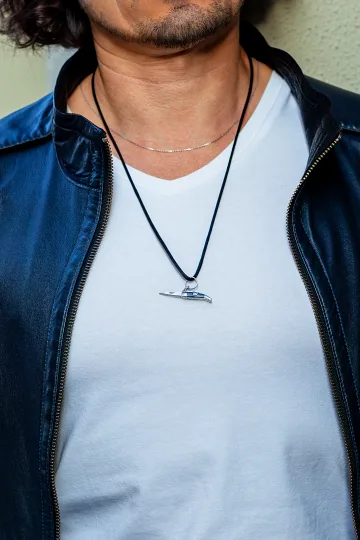




About Zevira
Zevira makes jewellery in the artisan tradition of Albacete, Spain. Spain's maritime tradition runs deep, from the Atlantic fishing ports of Galicia and Asturias to the Mediterranean heritage of the Levant coast. The sailor's knot holds a particular place in our collections as a symbol of connection, one of the oldest and most direct the sea has given us.
What you can find with a knot motif in our range:
- Pendants with the classic true lover's knot
- Matching pair bracelets with a figaro-style knot for two
- Rings with a braided knot band for unbroken connection
- Earrings with a small knot for a restrained maritime accent
- Anchor-plus-knot combination pendants
Each piece is made to order by a craftsperson, with the option of personal engraving. We work in 925 sterling silver and 14-18K gold.