The Valknut: Odin's Knot, the Slain Warriors' Symbol, and What It Really Means
Three triangles that nobody can fully explain
A few years ago, a friend of mine got a tattoo on his forearm. Three interlocked triangles, clean lines, no shading. He told me it was a Viking symbol connected to Odin, the Norse god of wisdom, death, and poetry. When I asked what it meant, exactly, he paused. "Something about warriors who die in battle going to Valhalla," he said. Then he added, honestly: "I'm not totally sure. But it felt right."
That moment captures something essential about the valknut. It is one of the most recognizable symbols from the Norse world, appearing on ancient stones, on ship burials, and today on everything from pendants to patches. Millions of people feel drawn to it. And yet, if you ask what it actually meant to the people who carved it into stone more than a thousand years ago, the honest answer is: we don't entirely know.
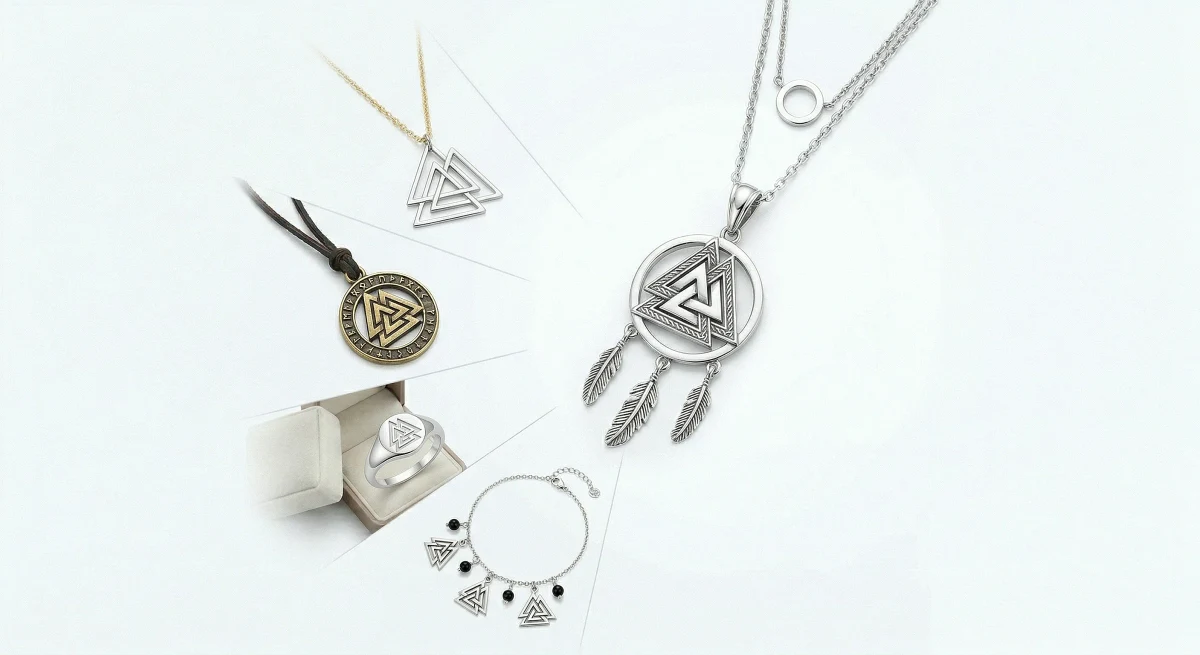
Wear the symbol, don't just read about it. These are in stock:



What we do know is this. The valknut appears consistently in contexts related to death, to Odin, and to the transition between life and the afterlife. It shows up on memorial stones where warriors are being sacrificed or welcomed into the next world. It appears alongside ravens and horses and spears, all symbols of the Allfather. Whatever the valknut meant to the Norse, it was not decorative. It was serious.
This article covers what the valknut is, where it comes from, what the archaeological record actually shows, why scholars argue about it, how modern pagans use it, why it became controversial, and what it means when you wear it as jewellery. No shortcuts, no mystification. Just the symbol, the evidence, and the honest gaps in our knowledge.
What the Valknut Actually Is: Three Triangles, Nine Points, One Mystery
The geometry
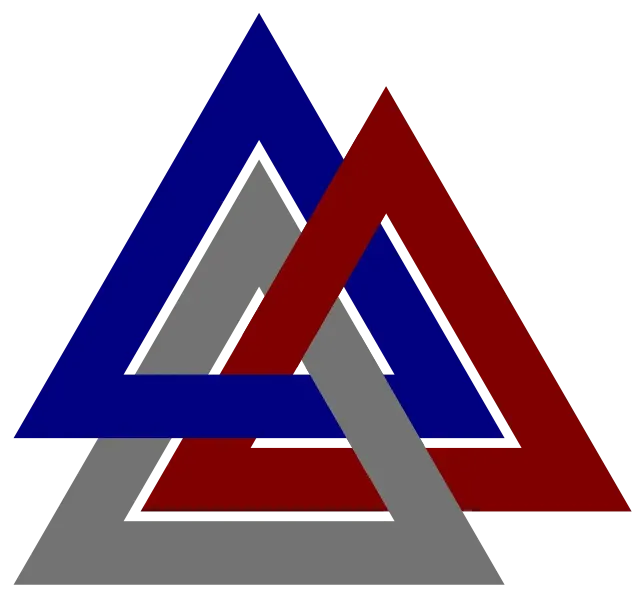
At its simplest, the valknut is three interlocking triangles. That's it. Three triangles, arranged so that they pass through each other in a way that creates a single interconnected figure. You can't remove one triangle without breaking the whole thing.
The design is elegant and immediately striking, which partly explains its longevity. It has the same visual power as other interlocking geometric symbols, the triquetra, the Borromean rings, the endless knot. Your eye follows the lines and keeps finding new paths through the figure. It's the kind of design that feels like it contains more than what you see on the surface.
The triangles are always equilateral (or close to it) in the surviving carvings. The proportions matter. Each triangle is the same size, creating a balanced, symmetrical whole. There's no hierarchy among the three. They're equals, locked together.
Nine points and nine worlds
Three triangles, three corners each, nine points total. And nine is a sacred number in Norse cosmology. The Norse cosmos contains nine worlds, arranged on the great tree Yggdrasil: Asgard (home of the Aesir gods), Midgard (the human world), Jotunheim (land of the giants), Vanaheim (home of the Vanir gods), Alfheim (realm of the elves), Svartalfheim (realm of the dwarves), Niflheim (the world of ice), Muspelheim (the world of fire), and Helheim (the realm of the dead).
Whether the nine points of the valknut were intentionally mapped to the nine worlds, nobody can say for certain. No surviving text makes that connection explicitly. But the number nine recurs throughout Norse mythology with a frequency that can't be coincidental. Odin hung on Yggdrasil for nine nights to gain the runes. The giant Aegir had nine daughters. Every nine years, a great festival was held at Uppsala. Nine is woven into the fabric of Norse sacred thought, and three triangles with nine points fit that pattern precisely.
Two types: Borromean and unicursal
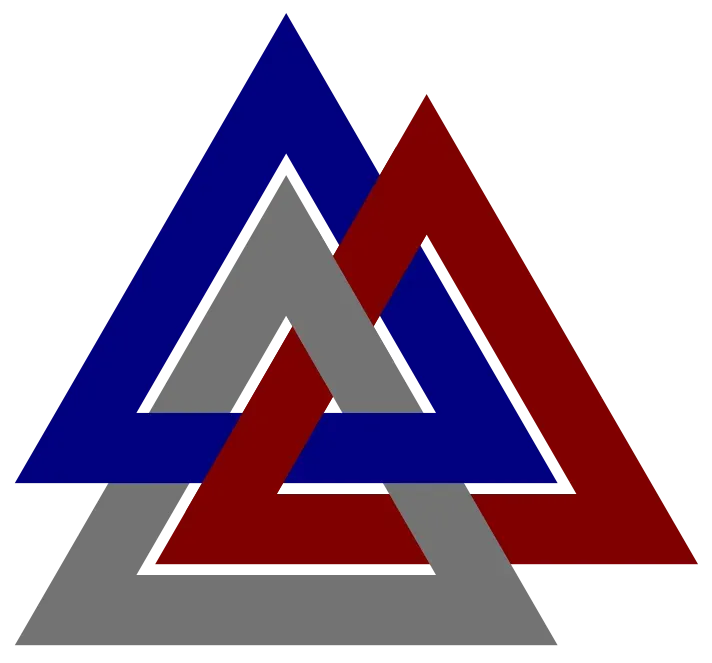
There are actually two distinct versions of the valknut, and the difference matters more than you might think.
The Borromean valknut consists of three separate triangles interlocked in such a way that no two triangles are directly linked. If you removed any one triangle, the other two would fall apart. This is the same principle as Borromean rings in mathematics, named after the Italian Borromeo family who used three interlocked rings on their coat of arms. Each element is held in place by the whole, not by any single connection.
The unicursal valknut is drawn with a single continuous line that creates the appearance of three interlocked triangles but is actually one unbroken path. You could trace the entire figure without lifting your pen. This version appears on some of the Gotland picture stones and has a different feel to it: where the Borromean type emphasises three-becoming-one, the unicursal type emphasises an unbroken journey, a single line passing through multiple forms.
Both types appear in the archaeological record, and both are used in modern jewellery and tattoo art. Neither is more "authentic" than the other. They're different expressions of the same idea, or possibly different ideas entirely. We can't ask the carvers what they intended.
Valknut over a shorter Thor's hammer, two layers deep. One lonely knot on a chain is just dull.
How to wear the valknut
The valknut likes restraint, so it is easiest to build a look around it rather than the other way round. Here is what actually works, sorted by occasion.
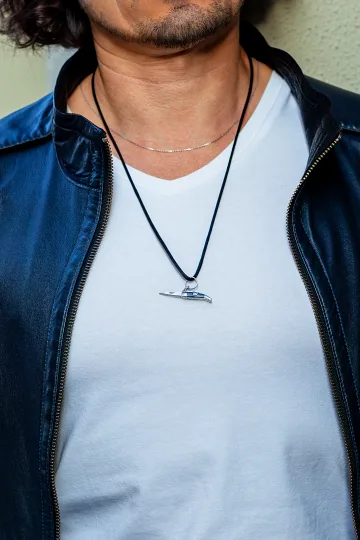
What do I wear the valknut with every day? For daily wear I recommend a silver or steel pendant on a thin chain over a plain tee or a henley, in earthy, grey or black tones. Keep the neckline simple, round or a shallow V, so the knot rests on the sternum and reads without effort. A leather cord instead of a chain adds a rougher, northern texture and sits well with knitwear and denim.
Does it work for the office? Yes. I usually let the valknut go under the shirt, where it stays a private sign only you know about. If you want it visible at work too, I suggest a smaller piece, under two centimetres, in matte silver: it reads as restrained geometry rather than a declaration. Under a shirt with the top button open it sits neatly and does not fight the collar.
How do I build a look for an evening or a celebration? For a special occasion I like to open up the layers. Two lengths do the work: the valknut on a medium chain and a shorter Mjolnir, protection and dedication in one look. Add a ring in the ring-giver spirit, engraved along the band or raised on a signet, and the set reads as one coherent Norse statement instead of a costume. I choose gold over silver to lift the look for a celebration, warmer and more of a status piece.
Who does it actually suit? It suits anyone drawn to a restrained, slightly severe style, someone who values the meaning behind a form over shine for its own sake. It sits equally well on a minimal everyday look and in a considered stack.
Any rules that never fail? Two. First: do not mix metals in one layer, keep silver with silver and gold with gold, or the geometry gets muddy. Second: let the valknut be the only accent up top and move your other pieces down to rings and bracelets, so the eye keeps returning to the knot.
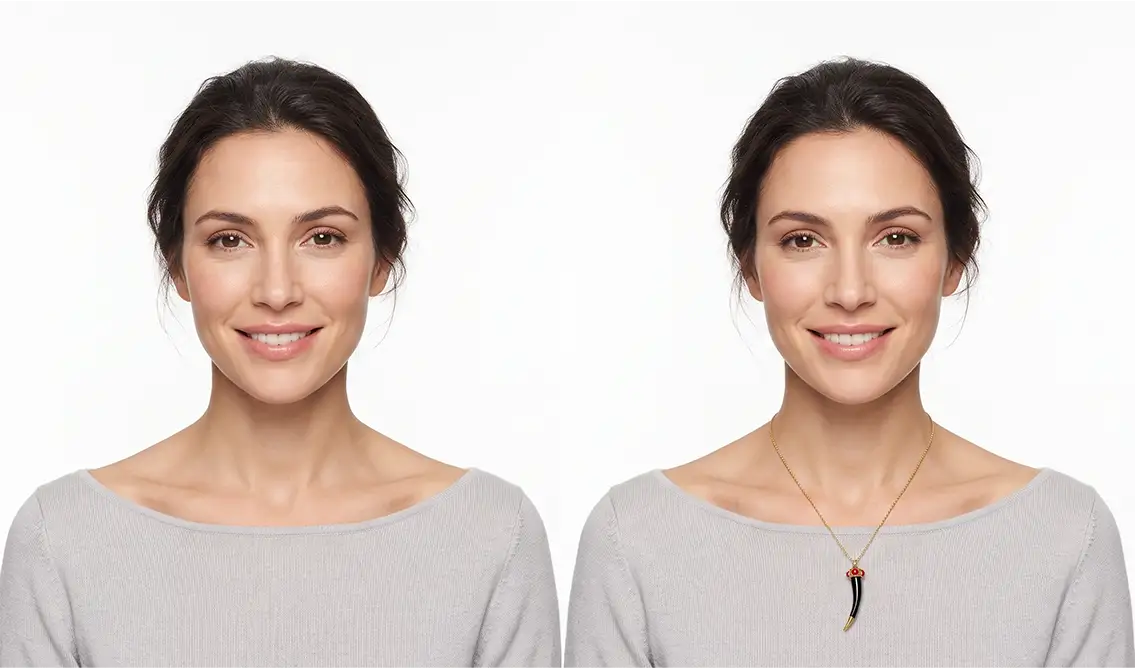
Turn on your camera, pick earrings, a pendant or a ring, and see the piece on yourself in real time.
Switch items in one tap.
Everything runs in your browser: no photo or video is ever uploaded.
The Name Problem: Nobody Called It 'Valknut' Until Modern Times
Val + knut: knot of the slain
The word "valknut" comes from two Old Norse words: valr, meaning "the slain" (the same root as in Valhalla, "hall of the slain," and Valkyrie, "chooser of the slain"), and knutr, meaning "knot." So valknut translates as "knot of the slain" or "knot of the fallen warriors."
It's a powerful name. It immediately connects the symbol to death in battle, to the warrior culture of the Viking Age, and to Odin's role as the god who receives the honoured dead. The name fits the visual evidence perfectly: the valknut appears on stones that depict death, sacrifice, and the afterlife.
When the name appeared
Here's the thing nobody tells you at first: the name "valknut" is modern. It does not appear in any Viking Age text, any saga, any Edda, any runic inscription. The term was coined by Scandinavian scholars, probably in the 19th century, as a convenient label for a symbol that clearly needed a name. It is a reasonable name, well-constructed from genuine Old Norse roots. But it is a scholarly invention, not a historical term.
This doesn't mean the name is wrong, exactly. It means we should hold it lightly. When someone says "the Vikings called this symbol the valknut," that's not accurate. The Vikings had a name for it, almost certainly. We just don't know what it was.
What the Vikings might have called it
There is one intriguing possibility. In the Prose Edda, Snorri Sturluson describes the heart of the giant Hrungnir as being "made of hard stone and pointed with three corners, like the carved symbol that has since been called Hrungnir's heart" (hrungnishjarta). Some scholars believe this description matches the valknut. If so, the Norse may have known the symbol as Hrungnir's heart, at least in some contexts.
But this identification is not universally accepted. Snorri wrote in the 13th century, roughly two hundred years after the end of the Viking Age, and he was a Christian scholar recording pagan traditions that were already fading. He may have been describing the valknut. He may have been describing something else entirely. The text is ambiguous enough to support multiple readings.
Where We Actually Find It: The Archaeological Evidence
The Stora Hammars stone, Gotland
The most important valknut in archaeology sits on a picture stone from Stora Hammars, on the island of Gotland in the Baltic Sea. Gotland is an extraordinary archaeological site, home to hundreds of picture stones dating from the 5th to the 11th centuries. These stones are carved with narrative scenes from mythology, daily life, and ritual, and they provide some of our most vivid visual evidence of Norse belief.
The Stora Hammars I stone (there are several) depicts a scene that most scholars interpret as a human sacrifice. A figure lies on what appears to be an altar or platform. Above the figure, a valknut is prominently displayed. Nearby, there are eagles or ravens (Odin's birds), a figure that may be a Valkyrie, and other elements associated with death ritual.
The placement is significant. The valknut is not tucked away in a decorative border. It is positioned directly in the sacrificial scene, as if marking the moment of transition between life and death. This is the strongest single piece of evidence linking the valknut to death, to sacrifice, and by extension to Odin, who is the god most associated with sacrificial death in Norse religion.
The Tängelgårda stone
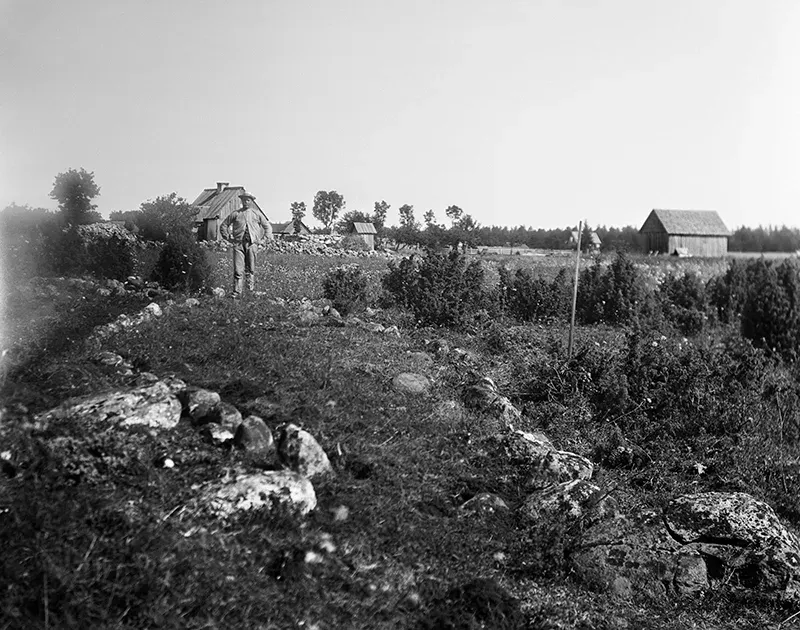
Also on Gotland, the Tängelgårda stone shows a warrior on horseback, likely arriving in Valhalla, being greeted by a woman with a drinking horn (a standard depiction of a Valkyrie welcoming the dead). The valknut appears in this scene as well, reinforcing its connection to the warrior afterlife.
The Tängelgårda stone is less dramatic than Stora Hammars but equally telling. If Stora Hammars shows the moment of death, Tängelgårda shows what comes after: the arrival at Odin's hall, the welcome, the beginning of the eternal feast. The valknut appears in both contexts, bookending the transition from this world to the next.
The Oseberg ship burial
The Oseberg ship burial, discovered in Norway in 1904, is one of the richest Viking Age finds ever excavated. The ship was buried around 834 CE and contained the remains of two women (their identities are still debated) along with an astonishing array of grave goods: a cart, sledges, textiles, animal-head posts, and the ship itself, elaborately carved.
Among the objects found in the Oseberg burial was a bedpost carved with what appears to be a valknut design. This is notable for several reasons. First, it places the symbol in a burial context, consistent with its association with death and the afterlife. Second, the Oseberg burial is firmly dated, giving us a reliable chronological anchor. Third, the fact that it appears on a piece of furniture (not a memorial stone) suggests the symbol had a broader application than just commemorative art.
Anglo-Saxon and Continental finds
The valknut or valknut-like designs also appear outside Scandinavia. There are examples on Anglo-Saxon cremation urns from eastern England, dating to the migration period (5th to 6th centuries). Similar interlocking triangle motifs have been found on Frankish and Alemannic metalwork.
These finds suggest that the symbol was not exclusively Norse but belonged to a broader Germanic symbolic vocabulary. The three interlocked triangles may have been a common Germanic motif that took on specifically Odinic associations in the Scandinavian context, or it may have carried similar meanings across the Germanic world. The evidence is suggestive but not conclusive.
Customer reviews
Zevira is a real jewellery shop. Genuine payments, deliveries and customer thank-yous.
🥰🥰🥰 gracias
Ok, ¡gracias! 🙂
The Odin Connection: Why This Symbol Belongs to the Allfather
Odin's relationship with the dead
Odin is, among many other things, a god of the dead. Not in the way Hel rules the dead in the Norse underworld, passively receiving those who die of sickness or old age. Odin actively seeks out the dead. He chooses them. Through his Valkyries ("choosers of the slain"), he selects warriors who die bravely in battle and brings them to Valhalla, his great hall in Asgard.
This isn't a reward in the Christian sense, not a heaven earned through virtue. Odin collects warriors because he needs them. At Ragnarok, the final battle that ends the world, Odin will lead his army of collected dead (the Einherjar) against the forces of chaos. Every warrior who falls bravely in battle is a soldier recruited for the last war. Odin's interest in the dead is practical, strategic, even desperate.
The valknut's consistent appearance in scenes of death and sacrifice makes sense in this context. If the symbol represents the knot that binds the slain to Odin, or the transition point between life and Odin's service, then every place it appears, on sacrifice stones, on Valhalla arrival scenes, in ship burials, tells a coherent story. The valknut marks the boundary between this world and Odin's.
Sacrifice, hanging, and the spear
Odin is also a god of sacrifice, specifically of self-sacrifice. In one of the most famous passages in Norse literature (from the Havamal, stanza 138), Odin describes how he gained the secret of the runes:
I know that I hung on a wind-battered tree nine full nights, wounded with a spear and given to Odin, myself to myself.
He hung himself on Yggdrasil, pierced by his own spear, for nine nights. He sacrificed himself to himself. This is not a gentle or comforting story. It's violent, paradoxical, and strange, which is very much Odin's character.
Human sacrifices to Odin in the Viking Age often involved hanging and stabbing with a spear, mirroring the god's own self-sacrifice. The Stora Hammars stone, with its valknut placed directly in a sacrifice scene, may be depicting exactly this kind of ritual. The valknut, in this reading, is the symbol that marks the sacrificial act, the knot that ties the offering to the god.
Valhalla and the chosen slain
The concept of Valhalla is central to understanding the valknut. Valhalla (Valholl, "hall of the slain") is Odin's hall in Asgard, where chosen warriors feast every night and fight every day, dying and being reborn each morning to fight again. It's a warrior's paradise, but a strange one: an eternity of combat and feasting, preparing for a battle (Ragnarok) that everyone knows will be lost.
The valknut may represent the binding oath between Odin and his warriors, a symbolic knot that cannot be untied. Once chosen, a warrior belongs to Odin. The three interlocked triangles, impossible to separate, might represent the unbreakable bond between the god, the warrior, and the fate that connects them.
Or the three triangles might represent the three realms the warrior passes through: Midgard (life), the battlefield (death), and Valhalla (afterlife). Three stages, three triangles, one continuous journey. This is speculation, but it's speculation grounded in the consistent visual evidence.
Upload a photo of your pet, someone you love, or an object. We'll build a 3D model and hand-cast it in pewter.
Hrungnir's Heart: The Prose Edda Connection
The duel between Thor and Hrungnir
In the Prose Edda, Snorri Sturluson tells the story of a duel between Thor and the giant Hrungnir. Hrungnir was the most powerful of the giants, with a head of stone and a heart of stone. The duel took place at a location called Grjottunagard, and it ended when Thor threw his hammer Mjolnir at Hrungnir's head, shattering it, while Hrungnir simultaneously threw his massive whetstone, which embedded itself in Thor's skull.
Thor won the fight but was pinned under Hrungnir's enormous leg and had to be freed by his son Magni. It's one of the most vivid combat scenes in Norse mythology, full of the kind of physical detail that makes these stories feel lived-in rather than abstract.
A heart with three corners
Snorri describes Hrungnir's heart as being "made of hard stone and pointed with three corners, like the carved symbol that has since been called Hrungnir's heart" (hrungnishjarta). This is one of the very few passages in Norse literature that seems to reference a specific visual symbol, and it has been the subject of scholarly debate for over a century.
The phrase "pointed with three corners" could describe the valknut. Three interlocked triangles create a figure with multiple points and corners. If Snorri was looking at valknut carvings (which would have still been visible in 13th-century Iceland and Scandinavia) and associating them with Hrungnir's heart, then we have our first textual name for the symbol.
Scholarly debate
Not all scholars are convinced. Some argue that "three corners" more naturally describes a single triangle (a triskelion-type figure) rather than three interlocked triangles. Others point out that Snorri's phrase "like the carved symbol" suggests he was making a comparison to a well-known design, but we can't be sure which design he meant.
The identification of the valknut with Hrungnir's heart is plausible but unproven. If correct, it adds an interesting layer to the symbol's meaning: Hrungnir's heart was made of stone, hard and unyielding, and it belonged to the most formidable opponent Thor ever faced. A heart that cannot be broken, made of the same stuff as mountains. That's a compelling meaning for a symbol that so many people choose to wear close to their own hearts.
For a deeper exploration of Thor's hammer and its meaning, see our guide to Mjolnir: Thor's Hammer.
The Valknut in Modern Asatru and Heathenry
Odin's mark
In contemporary Asatru and Heathenry (modern religions based on pre-Christian Norse beliefs), the valknut is widely regarded as Odin's primary symbol. While Mjolnir is Thor's symbol and the Vegvisir is associated with guidance and navigation, the valknut belongs to the Allfather.
Many Heathens treat the valknut with particular seriousness. It runs deeper than cultural heritage or aesthetic preference. For some practitioners, wearing the valknut is a statement of allegiance to Odin specifically, a declaration that you are, in some sense, one of his.
A pledge to the Allfather
Some practitioners within the Heathen community consider wearing the valknut to be essentially a pledge to Odin, an acceptance that when you die, you are offering yourself to the Allfather's service. This is not a universal interpretation, and many Heathens wear the symbol without this specific intention. But the belief exists and is worth knowing about.
The logic follows from the symbol's historical associations. If the valknut marks the transition from life to Odin's hall, then wearing it is placing yourself within that transition. You are saying: I belong to Odin. When my time comes, take me.
This is obviously a strong commitment, and some Heathen groups explicitly warn newcomers not to adopt the valknut casually. Other groups are more relaxed about it, treating it as a general symbol of Norse heritage rather than a binding oath. The diversity of opinion within modern Heathenry mirrors the ambiguity of the historical record.
What practitioners say
Conversations with modern practitioners reveal a range of attitudes. Some Heathens wear the valknut daily and consider it the most important piece of jewellery they own, more significant than a wedding ring in terms of the commitment it represents. Others wear it as one symbol among many, a way of expressing connection to Norse heritage alongside Aegishjalmur, the Vegvisir, or rune-inscribed jewellery.
What most practitioners agree on is that the valknut should be treated with respect. It's not a fashion accessory in the way that, say, an anchor pendant might be. It carries weight. Whether that weight comes from religious belief, cultural connection, or simply an awareness of the symbol's complex history, it deserves to be worn consciously rather than casually.



The Hard Conversation: White Supremacist Co-option and What It Means for Everyone Else
How the symbol was stolen
This section exists because it has to. Beginning in the 20th century, white supremacist and white nationalist groups began adopting Norse symbols as part of their ideology, falsely claiming that Norse culture belonged exclusively to "white" or "Aryan" people and using Norse imagery to promote racial hatred.
The valknut has been one of the symbols co-opted in this way. It appears alongside other Norse and Germanic symbols (runes, the sonnenrad, the othala rune) in white supremacist iconography. This usage is historically illiterate. The Norse world was far more connected and diverse than modern racists want to believe. Vikings traded with the Islamic world, settled in North Africa, and interacted with cultures across the globe. The idea that Norse symbols represent racial purity is a fantasy that contradicts everything we know about actual Norse society.
But the co-option is real, and pretending it hasn't happened doesn't help anyone.
The ADL listing
The Anti-Defamation League (ADL) includes the valknut in its database of hate symbols, but with an important qualification: the ADL explicitly states that the valknut is "primarily used by non-racist modern heathens" and that its use by white supremacists is secondary. The listing exists not to condemn the symbol but to make people aware that it can be used in hateful contexts.
This is a reasonable position. The ADL's approach is essentially: context matters. A valknut on a pendant worn by someone interested in Norse history is very different from a valknut on a banner at a white nationalist rally. The symbol itself is not hateful. Its misuse by hateful people does not change its fundamental meaning any more than the misuse of a cross by the KKK changes the meaning of Christianity.
Reclaiming what belongs to everyone
The most important response to white supremacist co-option of Norse symbols is not to abandon those symbols but to reclaim them. Scholars, Heathen practitioners, Scandinavian cultural organizations, and millions of individuals who love Norse heritage have made this point clearly: these symbols belong to human cultural heritage, not to racists.
Wearing a valknut because you're interested in Norse mythology, because you follow a Heathen spiritual path, because you appreciate the design, or because you feel a connection to your Scandinavian ancestry is entirely legitimate. The key is context and intent. If someone asks about your valknut pendant, be ready to explain what it means to you. Be aware of the controversy. Don't pretend it doesn't exist. But don't let racists steal a symbol that has been meaningful to people for over a thousand years.
The valknut belongs to everyone who approaches it with respect and genuine interest in Norse culture. Full stop.
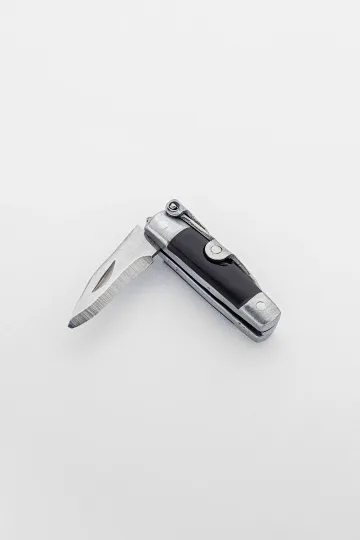
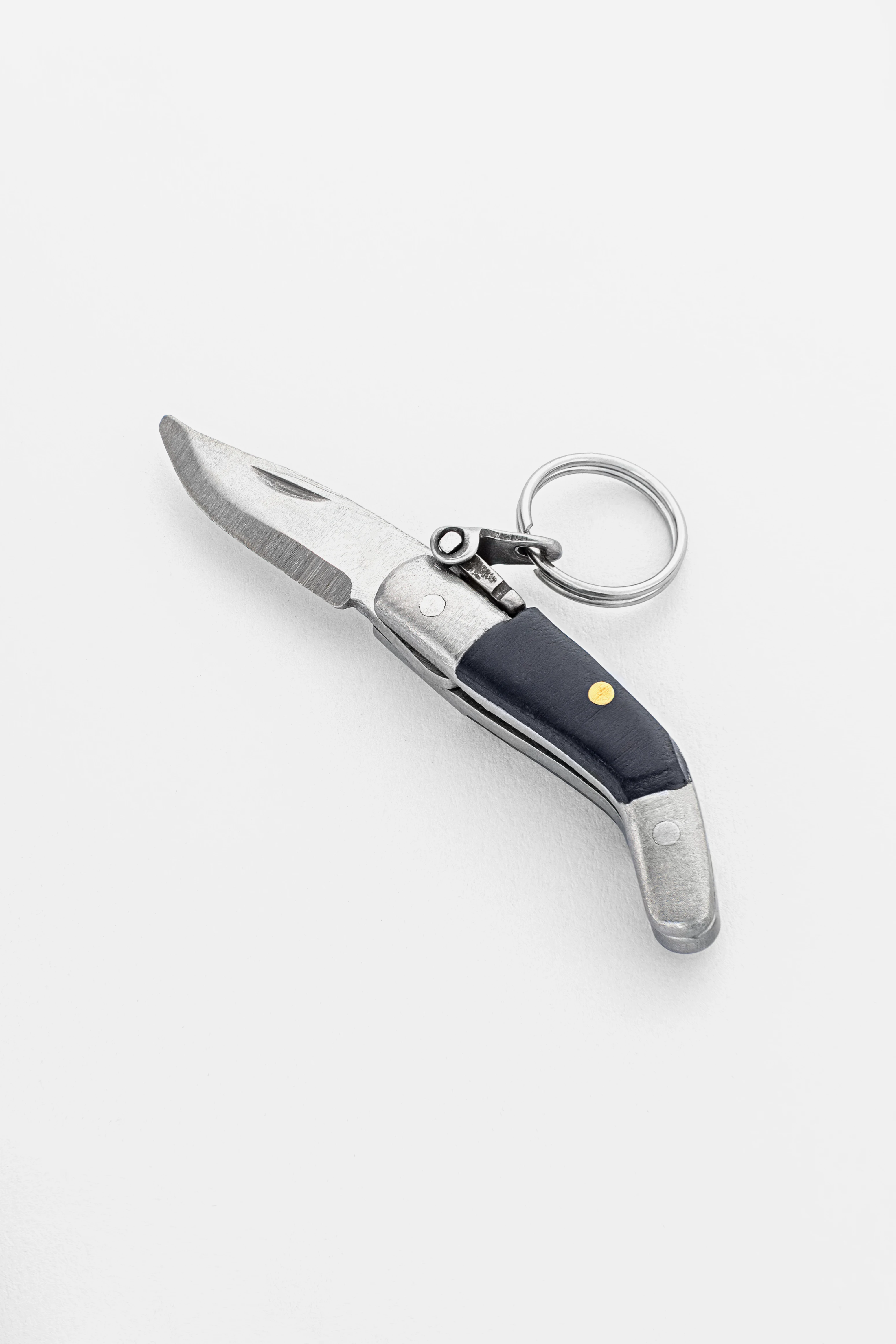
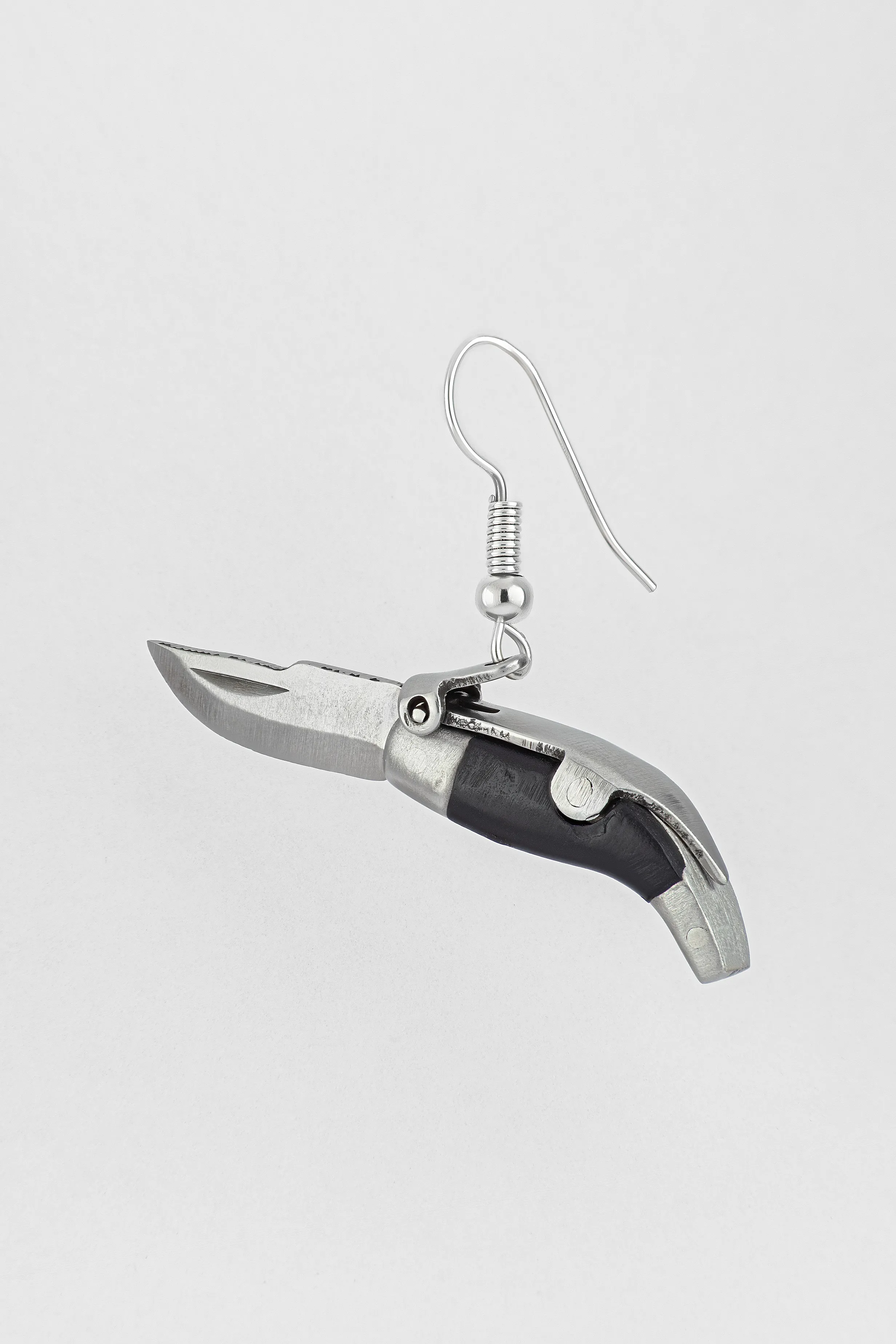
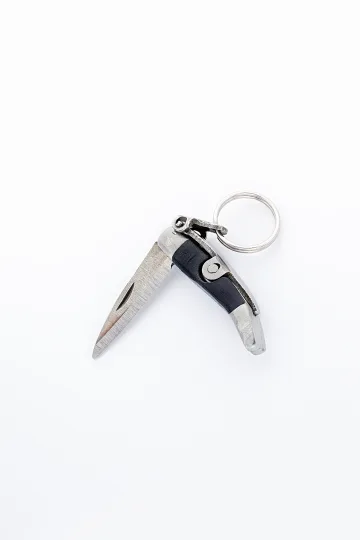
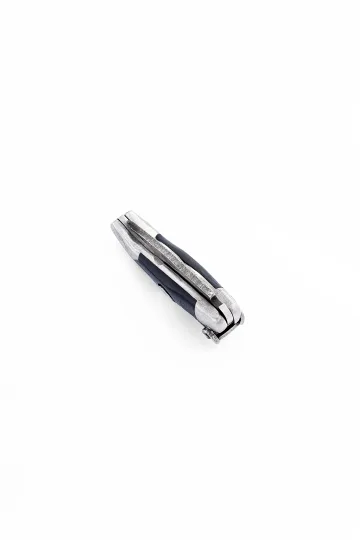
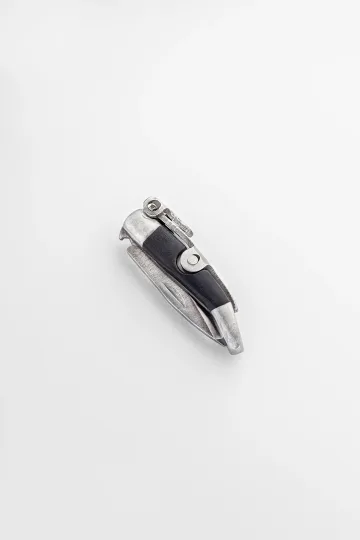
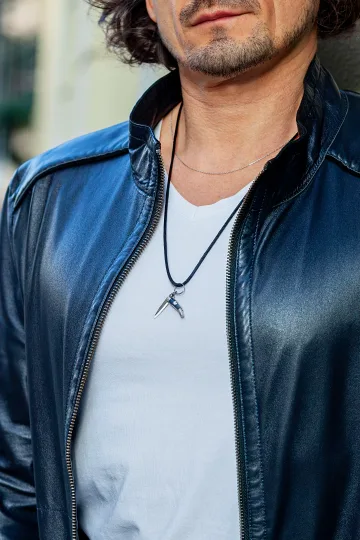
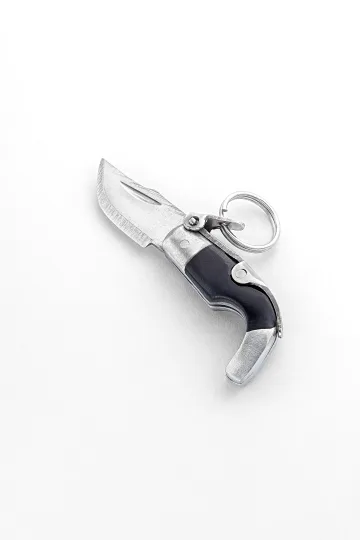
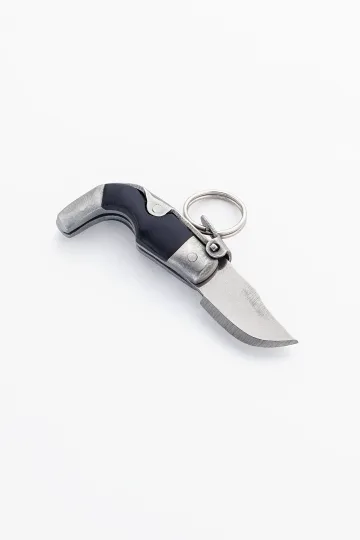
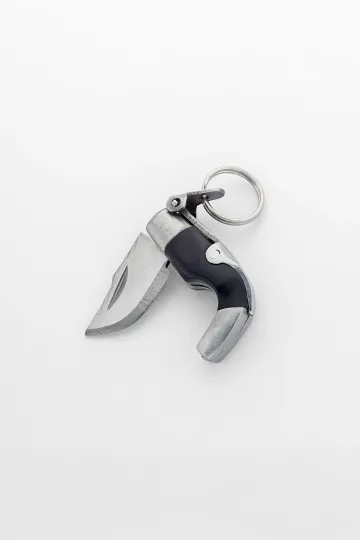
CAPAORA mini knife pendant
The 18th-century Spanish navaja in miniature: 40 mm of stainless steel, a real folding mechanism and a Palanquilla lock that clicks. An affordable gift to remember.
Authentic · Ships from Spain · 14-day returns
The Valknut Among Its Kin: Vegvisir, Aegishjalmur, and Mjolnir
The valknut exists within a family of Norse and Norse-derived symbols, each with its own meaning, history, and level of historical attestation. Understanding how they relate to each other helps put the valknut in perspective.
Mjolnir (Thor's Hammer) is the most widely attested Norse symbol, with hundreds of archaeological examples. It was worn as a pendant during the Viking Age, and we know this for certain because we've found the pendants. Mjolnir is Thor's symbol: protection, strength, consecration. Read our full Mjolnir guide for the complete story.
The Vegvisir is a magical stave found in Icelandic manuscripts from the 17th and 18th centuries. It's often called a "Viking compass," though it postdates the Viking Age by several centuries. It represents guidance and the ability to find your way. See our Vegvisir article for the surprising truth about its origins.
Aegishjalmur (the Helm of Awe) is another Icelandic magical stave, associated with invincibility and inspiring fear in enemies. Like the Vegvisir, its documentation is post-Viking Age, though the name appears in earlier sources. Our Aegishjalmur guide covers its full history.
The valknut sits between Mjolnir (genuinely Viking Age, widely attested) and the Icelandic staves (post-Viking Age documentation). We have Viking Age carvings of the valknut, but no surviving Viking Age pendants. We have a possible textual reference in Snorri, but nothing definitive. The valknut is more historically grounded than the Vegvisir but less well-documented than Mjolnir. In terms of meaning, it's the darkest and most intense of the group: where Mjolnir protects and the Vegvisir guides, the valknut deals in death, sacrifice, and the binding power of Odin.
Valknut Jewellery: What to Look For and How to Wear It
Pendants and necklaces
The pendant is the most natural format for valknut jewellery. The three-triangle design sits beautifully within a circular frame, and the pendant format echoes the historical Mjolnir pendants worn by actual Norse people. A valknut pendant typically hangs at the sternum or slightly below, positioned close to the heart, which feels appropriate for a symbol that may have been called "Hrungnir's heart."
When choosing a valknut pendant, look at the execution of the interlocking triangles. In a well-made piece, the over-and-under weaving of the triangles will be precise and consistent. Cheap versions often flatten the design into a simple outline, losing the three-dimensional quality that makes the valknut visually compelling. The best pendants have depth, with each triangle clearly passing over or under its neighbours.
Size matters for this symbol. An oversized valknut pendant can look aggressive, while a very small one may lose the geometric detail. Something in the range of 2 to 3 centimetres tends to work best: large enough to read clearly, small enough to wear comfortably.
Rings
Valknut rings are popular in Norse-inspired jewellery. The design can be engraved on a flat band, raised in relief on a signet-style ring, or worked into a more elaborate setting with knotwork borders. Rings are a particularly meaningful format because ring-giving was central to Norse culture. A lord who gave rings to his warriors was a "ring-giver" (beag-giefer in Old English), and the exchange of rings represented loyalty, obligation, and honour.
A valknut ring on your finger is, symbolically, a ring from Odin. Some modern Heathens specifically choose ring format for this reason.
Metals and materials
Sterling silver is the most popular metal for Norse jewellery, and for good reason. Silver was the primary precious metal of the Viking Age. The Norse economy ran on silver, weighed and traded by the piece. A silver valknut connects you to the material culture of the actual Viking world.
Gold adds warmth and prestige. Gold was rarer and more valued in the Norse world, associated with the gods and with royal power. A gold valknut pendant makes a stronger visual statement and carries additional connotations of honour and status.
Bronze and brass evoke the earlier Germanic period, when bronze was more commonly used for brooches, fibulae, and other personal ornaments. A bronze valknut has a rougher, more ancient feel.
Stainless steel is a modern option that offers durability at a lower price point. It lacks the historical resonance of silver or gold but wears well and resists tarnish.
Leave your email, we'll send your discount code. No spam, unsubscribe anytime.
The code arrives by email, valid on your first order.
Frequently Asked Questions
What does the valknut mean? The valknut represents the connection between Odin and the dead, particularly warriors slain in battle. The name translates as "knot of the slain." It appears in archaeological contexts related to death, sacrifice, and the afterlife. In modern usage, it symbolises Norse heritage, devotion to Odin, and the courage to face death without fear.
Is the valknut a hate symbol? No. The valknut is a Norse cultural symbol that has been in use for over 1,300 years. It has been misused by some white supremacist groups, and the ADL lists it as a symbol that can appear in hateful contexts. However, the ADL explicitly notes that it is primarily used by non-racist people with an interest in Norse heritage. Context and intent determine the meaning.
What is the difference between the Borromean and unicursal valknut? The Borromean valknut consists of three separate triangles interlocked so that removing any one releases the other two. The unicursal valknut is drawn with a single continuous line. Both appear in the historical record. Neither is more "correct" than the other.
Is the valknut mentioned in the Eddas? Not by the name "valknut," which is modern. However, a passage in the Prose Edda describes Hrungnir's heart as "pointed with three corners, like the carved symbol called Hrungnir's heart." Many scholars believe this describes the valknut, though the identification is debated.
Should I worry about wearing a valknut? If you wear it out of genuine interest in Norse culture, mythology, or spirituality, you have every right to do so. Be aware that some people may associate it with extremist groups. If asked, explain what it means to you. The symbol belongs to Norse cultural heritage, not to any hateful ideology.
Is the valknut connected to Valhalla? Yes, through its connection to Odin and the warrior dead. The valknut appears on stones depicting scenes associated with Valhalla, including warriors being welcomed by Valkyries. It seems to mark the transition between death in battle and arrival in Odin's hall.
Can anyone wear the valknut, or is it only for people of Scandinavian descent? Norse mythology and its symbols belong to world cultural heritage. You don't need Scandinavian ancestry to appreciate or wear the valknut. What matters is respect for the symbol's history and meaning, not your genetic background.
What's the best metal for a valknut pendant? Sterling silver is the most historically resonant choice, since silver was the primary precious metal of the Viking Age. Gold is excellent for a more premium piece. The best choice depends on your style, budget, and what feels right to you.
Silver and gold jewellery, wedding bands, symbolic pendants, paired sets.
The Valknut and the Triskelion: Why Humans Love Threes
The valknut is not the only triple sign that survived into our own time. A similar logic sits behind the triskelion (three spirals or three running legs from a shared centre), the triquetra (three interlaced arcs), the triple spiral carved on the stones of Newgrange in Ireland, and the Sicilian trinacria with its Medusa head and three legs. Different peoples, different eras, and yet one idea keeps returning: three parts folded into an unbreakable whole.
Are these symbols genetically related? Almost certainly not. Archaeologists have no direct evidence that the Norse valknut grew out of the Celtic triskelion or the other way round. A simpler explanation fits better: three is easy on the eye and rich in meaning in nearly any culture. Beginning, middle, end. Birth, life, death. Past, present, future. Three is often the smallest number that reads as many while still holding together in a single shape. The human mind grabs onto threes, they are easy to remember and easy to build rhythm with, in speech and in ornament alike.
The differences matter more than the resemblance. The triskelion turns: its three arms curl the same way, and the eye reads motion, a cycle, an eternal return. The valknut is static and angular: its three triangles do not spin, they lock each other in place, and all of its energy points inward, toward the knot. Where the triskelion speaks of the passage of time, the valknut speaks of connection and of crossing over, often the crossing through death. A fuller look at the spinning triple signs lives in a separate piece on the triskele and triskelion.
For anyone choosing a piece, that is a practical distinction. If the idea of movement, growth and the road ahead feels closer, spiral forms are the place to look. If the idea of memory, loyalty and something that cannot be torn apart feels closer, the valknut lands nearer the mark. Both signs are geometrically strong, but they promise different things, and confusing them means missing the message a piece carries at the throat.
The Valknut in Modern Culture: Screens, Games and the Northern Scene
Interest in Norse symbolism has grown steeply over the past couple of decades, and the valknut rode that wave alongside Mjolnir and the runes. Television series about vikings brought northern aesthetics back into fashion, video games built on Norse myth introduced Odin and the nine worlds to millions who had never opened an Edda, and folk and viking metal made the three triangles a frequent guest on album covers and concert shirts.
This popularity has a flip side worth naming honestly. Mass culture simplifies. On screen the valknut flashes past as a handsome badge of belonging to a war band, with no explanation of what stands behind the geometry. Much of what gets called "authentic viking style" today was invented by artists and designers of recent years rather than dug up in excavations. Horned helmets, faces covered in tattoos, runes on every buckle: that is an image of a viking, not a historical one.
None of this is a disaster in itself. A living symbol has to move and gather new meanings, otherwise it turns into a museum exhibit. The valknut on a concert poster and the valknut on the Stora Hammars stone do different work, but both remain the valknut. The trouble starts where a modern invention is passed off as ancient knowledge: the line "the old vikings charged the valknut for luck in battle" sounds lovely and has no footing in the sources.
For anyone who owns a piece, the guide here is simple. Wearing the valknut because it grabs you visually and points to a culture you love is honest and fine. Believing a seller who promises the magic power of the ancients through a pendant is a reason to be wary. We gathered the full map of northern signs that reached popular culture in an overview of viking jewellery and its symbols.
The Valkyries: Who Really Chose the Fallen
The root valr ties the valknut to Valhalla and to the valkyries alike. The word "valkyrie" (valkyrja) itself means "chooser of the slain," and that was literally their work: at Odin's will they decided which warriors would fall in battle and which to carry to the Allfather's hall. The kinship with the "knot of the slain" here is no poetic stretch, it is a shared root and a shared theme of death on the field.
The earliest valkyries look little like the romantic maiden with a shield. In the oldest texts they are fearsome, at times grim spirits of battle, weaving the cloth of war from human entrails and deciding the fate of armies. They stand closer to the ravens over the field than to beautiful riders. Only later, in poetry and especially in retellings of the Christian era, did the image soften into noble maidens meeting the hero with a horn of mead, as on the Tängelgårda stone.
The valkyries did not divide the fallen alone. The goddess Freyja, by one account, took half of the slain to her hall Folkvang, and only the other half went to Valhalla. That is a reminder that the Norse picture of the afterlife is more layered than "died in battle, went to Odin," and that death in this culture had more than one address.
For the valknut, all of this adds depth. If the symbol marks the passage of the fallen into another world, then the valkyrie is the one who carries that passage out. To wear the valknut and know about the valkyries is to hold both sides of one story in mind: the choosing, and the one who was chosen. A closer look at their image in jewellery lives in the article on the valkyrie.
Send a friend a discount code, they save on their first order.
Who the Valknut Suits: Character Over Gender
The question "is this a men's or a women's symbol" comes up first, and the honest answer is this: the valknut is not about gender. In the Viking Age weapons and warrior signs were not exclusively male territory, and the images of shield-maidens and valkyries are woven firmly into the mythology itself. A woman with a valknut at her throat draws on the same tradition as a man, and looks no less at home in the sign.
The sharper question is not "who by gender" but "who by character." The valknut pulls toward people of a certain cast: those who value meaning behind form, who feel closer to restraint than to shine, who think calmly about the finiteness of life and are not frightened of a sign tied to death. It is a symbol for someone who cares about loyalty, memory and an inner backbone, rather than a light ornament for a moment's pleasure of the eye.
There are also people the valknut will not suit, and that is fine. If what you want is a sign of luck, love or soft femininity, three angular triangles pointing to sacrifice and fallen warriors will sound foreign. The symbol is intense, and it will not pretend to be a neutral trinket: its strength lies exactly in its seriousness, and there is no way to water that down.
Gifts deserve a word of their own. The valknut works well as a gift for someone already drawn to Norse mythology, reenactment or Scandinavian history. Giving it at random, simply as a pretty thing with vikings on it, is risky: the recipient may miss the meaning built in, or read into it something you never intended. A short note with the story of the symbol removes that awkwardness and turns the piece into a considered gesture.
The Valknut as a Personal Amulet Today
Historically we have not a single Viking Age pendant with a valknut, and so calling it an ancient amulet is not accurate. But the modern wearer has a logic of their own, and it deserves an honest conversation without archaeological pretensions.
Most often the valknut is chosen as a sign of memory and inner support. For some it is a reminder of the dead they loved: the knot of the slain becomes a way to keep the departed close, to carry them near the heart in the literal sense. For others it is a personal memento mori, a quiet agreement that life is finite, and a resolve to live it without fear. There is the same soberness in this that runs through the Norse view of fate: the end is set, and the whole question is how you walk toward it.
Psychologically such a choice works as an anchor. A material object on the body helps hold an immaterial stance: composure, faithfulness to one's word, readiness to meet the hard thing without panic. The symbol does nothing on its own, no metal changes fate. The person changes, the one who sees the sign on themselves each morning and remembers why they put it on. In that sense any meaningful amulet is a contract with yourself, not with forces beyond.
This is exactly why the valknut is rarely an impulse buy, unlike light jewellery. People come to it, grow into it, sometimes try a pendant first and a year later decide on a tattoo. It is a calm, deliberate bond with a symbol rather than a passing fancy, and that is its main value to the wearer. A piece you walked toward on purpose sits on a person differently than a chance purchase.
Buying it as a gift? Each one arrives ready to give.
 A branded Zevira box and a little card come with every order.

The Valknut and the Runes: Why They Are Not One System
The valknut is often placed in the same row as the runes, and in esoteric circles you can meet a "runic valknut" or "a formula of runes inside a valknut." This is worth tidying up. The runes are writing, the elder and younger futhark, a set of signs used to record words, names and short spells. The valknut is neither a letter nor a rune: it belongs to no runic row and stands for nothing phonetically.
The historical confusion makes sense. Both runes and the valknut were carved into stone and wood, and both are tied to Odin (by myth it was Odin who won the runes, hanging nine nights on Yggdrasil, pierced by a spear). But the link here is thematic, not systemic. Blending them into a single magical alphabet means passing a modern reconstruction off as ancient practice. Layouts using the valknut did not exist in the Viking Age, they are an invention of twentieth and twenty-first century authors, leaning on a shared northern aesthetic rather than on the sources.
This does not mean runes and the valknut cannot be combined in a piece. On the contrary, a ring with a runic inscription next to a valknut pendant gathers into a whole northern ensemble, where each element honestly holds its place: the runes carry the word, the valknut carries the image. Just understand that you are joining two different languages of one culture, not restoring a single lost code. If the workings of the runic row itself interest you, start with the piece on the Tiwaz rune, the sign of the warrior god Tyr, who sacrificed his hand for the common good.
Wear the symbol, don't just read about it. These are in stock:




The knot that holds
The valknut is a symbol that resists easy explanation, and that resistance is part of its power. We know it's connected to Odin. We know it appears in contexts of death and sacrifice. We know its geometry is deliberate, precise, and endlessly engaging. We know it meant something profound to the people who carved it into stone more than a thousand years ago.
What we don't know, fully, is what that meaning was. And maybe that's appropriate for a symbol associated with Odin, a god who valued questions more than answers, who sacrificed everything for knowledge and still considered the price fair.
The valknut doesn't give you a neat, packaged meaning. It gives you a mystery worth sitting with. Three triangles, locked together, impossible to separate. Nine points for nine worlds. A knot that binds the living and the dead. Whether you wear it as a statement of faith, a connection to heritage, a tribute to the courage of those who came before, or simply because you find it beautiful, you're joining a conversation that has been going on for over a millennium.
That's worth something.
About Zevira
Zevira makes jewellery in the artisan tradition of Albacete, Spain. Norse symbolism speaks to us because its strength lives in geometry and meaning rather than ornament, and the valknut, with its three interlocked triangles, is exactly that kind of piece: a clean form with a whole cosmology behind it.
What you can find with us on the subject of northern symbolism:
- Valknut pendants in both Borromean and unicursal forms, with carefully worked over-and-under triangles
- Pendants and rings with Norse motifs: Mjolnir, Vegvisir, runic inscriptions
- Ring-giver style rings with engraving along the band or relief on a signet face
- Paired and layered sets where the valknut sits alongside Thor's hammer or a rune
- Pieces in sterling silver, the historically grounded metal of the Viking Age
- Options in 14 to 18K gold for those who lean toward warmth and status
Every piece can be personalised with engraving by a craftsperson, with personal engraving available. Sterling silver and 14 to 18K gold.